These Christmas and New Year cake recipes bring together chocolate, fruit, coconut and nut flavours for a festive table. Choose a cake to suit your guests, allow space in the fridge for creamy toppings and use the detailed recipe below each overview. The original recipes use measuring cups; keep the same cup measure throughout rather than substituting a drinking mug. Baking times and portion estimates are guides, and dietary adaptations need testing before an important occasion.
Christmas and New Year cake recipes can bring familiar flavours and a celebratory centrepiece to the table. This collection offers ten ideas, with ingredients, methods and variations to help you choose something suitable for your gathering.
Why cakes work so well at Christmas and New Year
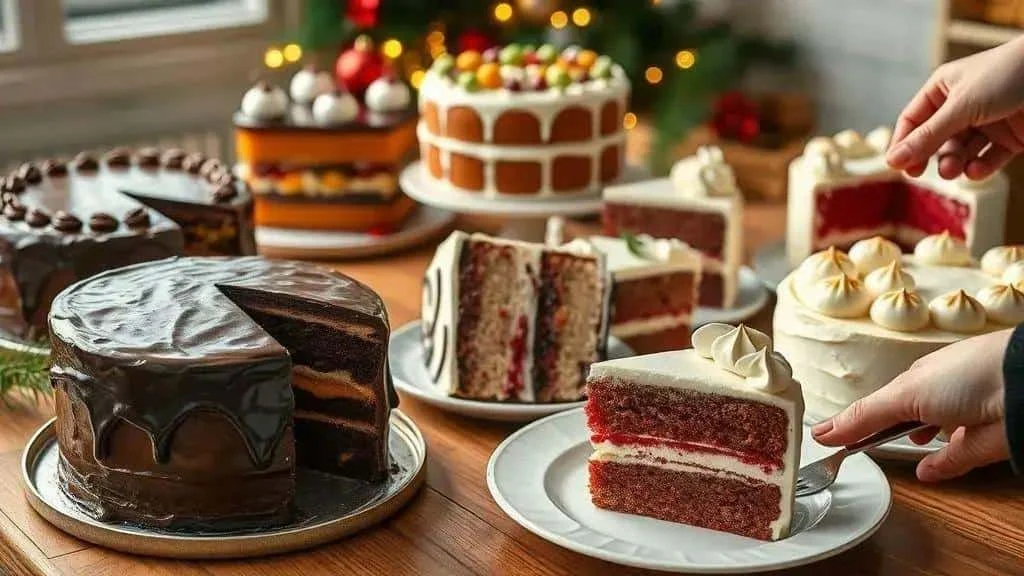
At festive gatherings, cakes have both practical and emotional appeal. Familiar flavours are easy to share, and serving a cake can become part of a family’s celebration.
Tradition and nostalgia
Memories play a part: family recipes, favourite toppings and the scents of cinnamon, candied fruit or chocolate can remind guests of earlier celebrations.
Flavour, texture and presentation
A satisfying cake brings together three things:
- Flavour: familiar combinations such as chocolate, fruit and nuts can complement the rest of the meal.
- Texture: soft sponge, creamy filling and a crisp decoration provide contrast in each slice.
- Presentation: fruit, chocolate curls, sprinkles or whipped cream can turn a simple cake into a centrepiece.
Variations for different guests
Many cake styles have alternatives for different dietary needs, although changing ingredients can affect how a recipe bakes:
- For gluten-free baking, use a suitable tested recipe or a flour blend intended for cakes. Rice flour and ground almonds are not interchangeable with plain flour on their own.
- For vegan cakes, use a tested combination of egg replacements and plant-based ingredients; apple purée, linseed and banana do not behave identically.
- Baking sweeteners or honey can change sweetness, moisture and structure. Follow the product’s recipe guidance rather than assuming a direct swap; honey is not suitable for children under one.
Serving and planning
For the host, cakes offer some practical advantages:
- Portioning: slices make it straightforward to share one bake among several guests.
- Transport and preparation: plain cakes are often easier to carry and prepare ahead than cakes with delicate cream fillings.
- Budget: a single cake can be an economical alternative to individual desserts, depending on the ingredients and portion size.
Sharing the occasion
Cutting the first slice, trying different flavours and exchanging recipes are small ways to make a gathering feel welcoming.
Practical tips for choosing your cake
- Ask about guests’ preferences, allergies and dietary needs before deciding on flavours or decorations.
- Choose a cake whose final decoration can be completed on the day if it includes fresh fruit or whipped cream.
- A fruit-based option can provide a different flavour alongside chocolate or other rich desserts; it is not necessarily lower in sugar or energy.
- Use food-safe Christmas decorations and consider whether they can remain in place during refrigeration.
The appeal: cakes combine familiar flavours, a shared ritual and convenient portions for a festive meal.
Choosing a cake for your guest numbers

Start by estimating the slices you need, then consider the cake’s height, richness and the other desserts on offer.
Approximate portions by cake size
These are broad planning examples, not guaranteed yields; a tall layer cake will portion differently from a shallow sponge:
- 15 cm (6 in): roughly 6–8 modest slices.
- 18–20 cm (7–8 in): roughly 8–12 slices.
- 22–26 cm (9–10 in): roughly 12–20 slices.
- 20 × 30 cm traybake: roughly 20–24 small pieces.
- 30 × 40 cm traybake: roughly 36–48 small pieces for a larger gathering.
Consider your guests
- Young children may prefer half a small adult portion, with more available if wanted. Avoid hard nut decorations where they pose a choking risk.
- Offer smaller slices to anyone who wants them, rather than assuming preferences from a guest’s age.
- Check allergies, intolerances and requests for vegan or gluten-free food, including the ingredients in fillings and decorations.
Cake style and ease of serving
Choose cakes that can be cut and served comfortably at the party. Cream-filled layer cakes, mousse cakes and cheesecakes need refrigeration and more careful handling. Plain or firmer cakes are generally easier to transport.
Planning quantities
- If you want a little spare, allow around 10–15% more portions than the confirmed guest count, while avoiding unnecessary waste.
- Two smaller cakes in different flavours offer more choice than one large cake.
- If other desserts are being served, plan smaller cake portions.
Preparation, transport and assembly
- Choose a cake suitable for the time between preparation and serving. Keep cream, cream cheese and fresh fruit fillings refrigerated at 5°C or below and use chilled transport.
- Carry the cake in a rigid cake box on a level surface, with a cake slice and knife packed separately.
- Add delicate details such as whipped cream or fresh fruit close to serving, keeping perishable components chilled until needed.
A quick checklist
- Confirm your guest numbers before choosing the cake size.
- Provide clear ingredient and allergen information beside each cake, and use separate serving utensils where needed.
- Use a suitable sharp knife and cake slice, keeping them safely away from children.
- Fruit or properly stored ice cream can provide a simple extra dessert if needed.
Ten festive cakes: ingredients and method at a glance

Classic chocolate cake
Ingredients:
- 3 medium eggs – brought briefly to room temperature before mixing.
- 2 cups sugar – reducing to 1¾ cups gives a less sweet variation but can change the texture.
- 2 cups plain flour – use a tested gluten-free adaptation if needed.
- 1 cup unsweetened cocoa powder – not drinking chocolate.
- 1 cup milk – a suitable plant-based alternative is an option; check allergens.
- ½ cup vegetable oil – melted butter is a variation with a different flavour and texture.
- 1 tablespoon baking powder
Method:
- Beat the eggs and sugar: whisk for 3–5 minutes until slightly increased in volume.
- Add the liquids: mix in the oil and milk until combined.
- Fold in the dry ingredients: sift the flour and cocoa, then add gradually without overmixing.
- Add the baking powder: fold it in gently.
- Bake: pour into a greased and lined tin and bake at 180°C (160°C fan), checking from 30–40 minutes. The centre must be set and a skewer should have no wet batter; tin depth may require longer.
Brazilian carrot cake with brigadeiro topping
Ingredients:
- 3 medium carrots, about 300 g – peeled and chopped.
- 3 medium eggs
- 1 cup vegetable oil
- 2 cups sugar
- 2½ cups plain flour – wholemeal flour changes the texture and may need a separate adaptation.
- 1 tablespoon baking powder
- 1 tin sweetened condensed milk, 1 tablespoon butter and 4 tablespoons chocolate powder for the brigadeiro topping. Tin weight is not specified in the source recipe, so check the quantity when planning the topping.
Method:
- Blend the carrots, eggs and oil: process until smooth.
- Combine with the dry ingredients: mix the sugar and flour in a bowl, then fold in the carrot mixture.
- Add the baking powder: fold it in and transfer the batter to a prepared tin.
- Bake: use 180°C (160°C fan) and start checking at 35–40 minutes; a skewer should emerge without wet batter.
- Make the brigadeiro: cook the condensed milk, butter and chocolate powder over a moderate heat, stirring until thick but still spreadable.
- Finish: allow the topping to cool slightly, spread over the warm or cooled cake and decorate if desired.
Candied fruit cake (Brazilian bolo inglês)
Ingredients:
- 200 g candied fruit – raisins can provide a different version; see the detailed recipe.
- 200 g softened butter
- 1 cup sugar
- 3 medium eggs
- 2 cups plain flour
- ½ cup milk
- 1 teaspoon baking powder and optional lemon zest; the full version below also includes optional raisins and flavourings.
Method:
- Cream the butter and sugar: beat until pale and creamy.
- Add the eggs: beat them in one at a time.
- Add flour and milk: alternate the dry ingredients and milk, folding gently.
- Fold in the fruit: toss it in a little of the measured flour before adding; this may help distribution but does not guarantee it will not sink.
- Bake: use a lined tin at 160–170°C (140–150°C fan). Start checking after 50 minutes; the fuller recipe may take 50–70 minutes or longer depending on the tin. Cool before slicing.
Walnut cake with cream cheese topping
Ingredients:
- 1 cup chopped walnuts – plus a few halves for decoration, following the detailed recipe below.
- 1¼ cups plain flour and ½ cup cocoa powder – as in the detailed chocolate sponge below.
- 1 cup soft brown sugar – ordinary sugar gives a different flavour.
- 3 medium eggs
- ½ cup melted butter and ½ cup milk – use the quantities in the detailed recipe below.
- 1 tablespoon baking powder
- For the topping: 200 g cream cheese, 150 ml whipping cream and 3 tablespoons icing sugar.
Method:
- Mix the eggs and sugar: beat until combined.
- Add butter and milk: mix in the melted, cooled butter, then incorporate the milk as you add the dry ingredients.
- Add flour and walnuts: fold in the flour and baking powder, then the chopped nuts.
- Bake: use 180°C (160°C fan), checking from 30–40 minutes. Cool completely before topping.
- Make the topping: beat the cream cheese and icing sugar until smooth, then add the cream and whisk until spreadable. Cover the cold cake and refrigerate.
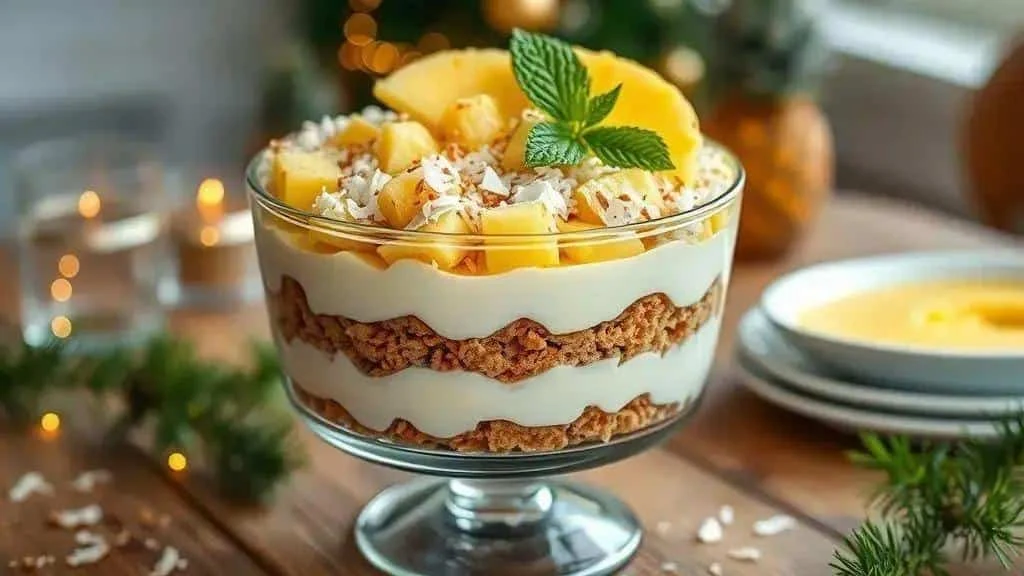
Coconut cake with pineapple filling
Ingredients:
- 1¼ cups plain flour and ½ cup cocoa powder – as in the detailed chocolate sponge below.
- 1 cup coconut milk – other milk changes the flavour; use the detailed method for texture adjustments.
- 1 cup sugar
- 3 medium eggs
- ½ cup vegetable oil
- 1 tin pineapple in syrup, drained and chopped, and 100 g desiccated coconut. Also use 1 tablespoon baking powder, a pinch of salt and the optional milk and cream topping listed below.
Method:
- Combine the wet ingredients: beat the eggs and sugar, then mix in the oil and coconut milk.
- Add the dry ingredients: fold in the flour, baking powder and salt, then the coconut, reserving a little for decoration.
- Bake the sponge: use 180°C (160°C fan), checking from 30–40 minutes. Cool fully before cutting into layers.
- Make the filling: simmer the drained pineapple with a little reserved syrup until thick enough to spread. Follow the detailed recipe rather than adding extra sugar to sweetened tinned fruit automatically.
- Assemble: sandwich the cooled pineapple between the cake layers, add the cream topping if using, and finish with reserved coconut. Keep refrigerated.
Prestígio-style chocolate and coconut cake
Ingredients:
- 1¼ cups plain flour and ½ cup cocoa powder – as in the detailed chocolate sponge below.
- 1 cup sugar
- 3 medium eggs
- 1 cup milk
- ½ cup vegetable oil
- 150 g desiccated coconut, 395 g sweetened condensed milk and 1 tablespoon butter for the filling; 200 g dark chocolate and 200 ml cream for the topping. The sponge also needs 1 tablespoon baking powder and a pinch of salt.
Method:
- Make the batter: beat the eggs and sugar, mix in the oil and milk, then fold in the flour, cocoa, salt and baking powder.
- Bake: use 180°C (160°C fan) and check from 30–35 minutes; the centre must have no wet batter.
- Cook the coconut filling: stir the coconut, condensed milk and butter over a moderate heat until thick and spreadable. Cool before using.
- Assemble and cover: sandwich the filling between the cold cake layers and top with ganache made from the chocolate and cream. Refrigerate.
Festive red velvet cake
Ingredients:
- 2½ cups plain flour
- 1½ cups sugar
- 2 tablespoons unsweetened cocoa powder
- 2 medium eggs
- 1 cup buttermilk – see the full recipe for the milk-and-vinegar alternative; it also includes ½ cup oil, 1 teaspoon vinegar, 1 tablespoon baking powder and a pinch of salt.
- Red food colouring, used according to its label, and 400 g cream cheese, 100 g butter and 2 cups icing sugar for the full topping recipe.
Method:
- Combine the dry ingredients: sift the flour, cocoa, baking powder and salt.
- Mix the wet ingredients: beat the eggs and sugar, then add the oil, buttermilk, vinegar and colouring. Fold in the dry mixture.
- Bake: use 180°C (160°C fan), checking from 25–30 minutes for two shallow cakes and allowing longer for a deeper tin.
- Add the cream cheese topping: beat the cream cheese, softened butter and icing sugar together. Use on completely cold cakes and keep refrigerated.
Lemon cake with meringue
Ingredients:
- 1¼ cups plain flour and ½ cup cocoa powder – as in the detailed chocolate sponge below.
- 1 cup sugar
- 3 medium eggs
- ½ cup melted butter
- Zest of 2 lemons and about 3 tablespoons lemon juice – plus ½ cup milk, 1 tablespoon baking powder and a pinch of salt, as listed in the full recipe.
- 3 pasteurised egg whites suitable for whipping and 6 tablespoons sugar for the meringue. Briefly torching the surface does not cook raw egg throughout.
Method:
- Make the batter: beat the eggs and sugar, add the melted butter, milk, lemon juice and zest, then fold in the flour, baking powder and salt.
- Bake: use 180°C (160°C fan), checking from 30–35 minutes until the centre is cooked.
- Make the meringue: use pasteurised whites labelled suitable for uncooked preparations, whisk to soft peaks, then gradually add the sugar and continue until glossy. Follow the product’s handling instructions.
- Assemble and colour: spread over the cold cake and lightly brown with a kitchen blowtorch if desired. This is for appearance, not a substitute for pasteurisation; refrigerate and serve promptly.
Passion fruit cake with chocolate ganache
Ingredients:
- 1¼ cups plain flour and ½ cup cocoa powder – as in the detailed chocolate sponge below.
- 1 cup sugar
- 3 medium eggs
- 1 cup strained passion fruit juice – plus 1 tablespoon baking powder, a pinch of salt and a little milk only if needed, as explained below.
- ½ cup vegetable oil
- 200 g dark chocolate and 200 ml cream for the ganache.
Method:
- Mix the wet ingredients: beat the eggs and sugar, then add the oil and passion fruit juice.
- Fold in the dry ingredients: sift and add the flour, baking powder and salt without overmixing.
- Bake: use 180°C (160°C fan), checking from 30–40 minutes; a skewer should emerge without wet batter.
- Make the ganache: heat the cream, pour it over the chopped chocolate and stir until smooth. Spread over the cooled cake and refrigerate.
Simple festive cheesecake
Ingredients:
- 200 g crushed biscuits – digestives work for the base.
- 100 g melted butter
- 600 g cream cheese
- 1 cup sugar
- 2 medium eggs
- Lemon zest and berry jam for the topping; the detailed filling also includes 200 ml cream and 1 teaspoon vanilla extract.
Method:
- Make the base: mix the crushed biscuits with the butter and press into a suitable tin.
- Make the filling: beat the cream cheese and sugar until smooth, add the eggs individually, then the lemon zest, vanilla and cream.
- Bake in a water bath: use 160–170°C (140–150°C fan), starting to check at 45–55 minutes. The edges should be set and the centre gently wobble as one mass, not remain liquid.
- Cool and refrigerate: cool gradually, then refrigerate within 1–2 hours of finishing cooking. Chill for at least 4 hours, preferably overnight, before adding jam and serving.
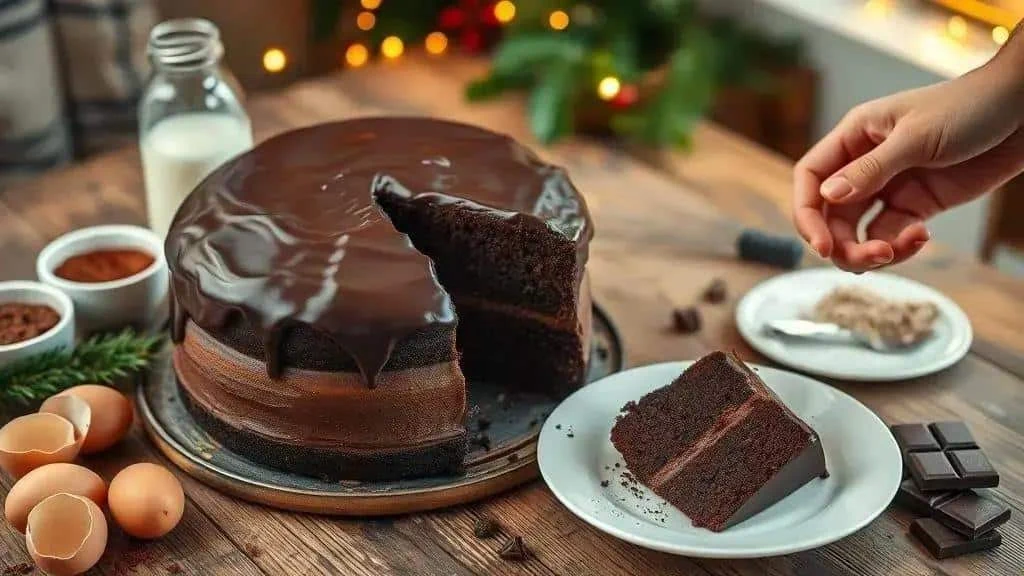
Classic chocolate cake: ingredients, method and variations
Ingredients:
- 3 medium eggs – briefly brought to room temperature for mixing.
- 2 cups sugar – reducing to 1¾ cups gives a less sweet variation but can change the texture.
- 2 cups plain flour – use a tested gluten-free adaptation if needed.
- 1 cup unsweetened cocoa powder – for a pronounced chocolate flavour.
- 1 cup milk – a suitable oat or almond drink is an alternative, with its own allergen considerations.
- ½ cup vegetable oil – or ½ cup melted butter for a different texture.
- 1 tablespoon baking powder
- A pinch of salt
Method
- Prepare the oven and tin: heat to 180°C (160°C fan). Grease and line a deep 20–22 cm tin. Do not fill it more than about two-thirds full; use a second tin for any excess and adjust baking time.
- Beat the eggs and sugar: whisk for 3–5 minutes until paler and slightly aerated.
- Add the liquids: mix in the oil and milk until smooth.
- Sift the dry ingredients: fold the flour, cocoa and salt into the mixture gradually with a spatula.
- Add the baking powder: fold gently just until combined.
- Bake: transfer to the prepared tin and start checking after 30–40 minutes. A deep cake may take longer: the centre must be set and a skewer should show no wet batter.
- Cool: leave in the tin for 10 minutes before turning onto a wire rack. Cool completely before covering.
- Optional ganache: heat 200 ml cream and pour over 200 g chopped chocolate. Stir until smooth, cool to a spreadable consistency and cover the cold cake. Refrigerate once topped.
Variations to try
- Brigadeiro filling: cook 1 tin sweetened condensed milk with 1 tablespoon butter and 3 tablespoons chocolate powder until spreadable. The source does not give the tin weight, so check your quantity and consistency; cool before filling.
- Gluten-free variation: use a cake-suitable gluten-free blend and follow its substitution instructions. Only add xanthan gum if the blend calls for it; the original suggestion of ½ teaspoon is not suitable for every blend.
- Vegan adaptation: the suggested starting point is 3 tablespoons ground linseed soaked in 9 tablespoons water in place of the eggs, with plant milk and vegetable oil. Let the linseed thicken fully and test the adaptation before a party; it will not behave exactly like eggs.
- Deeper chocolate flavour: dissolve 1 teaspoon instant coffee in the milk before mixing.
- Milk syrup: warm ½ cup milk with 2 tablespoons sugar until dissolved, then brush a little over the baked cake rather than saturating it. Refrigerate a milk-soaked cake; omit any optional liqueur for an alcohol-free version.
Brazilian carrot cake with brigadeiro topping: ingredients, method and variations
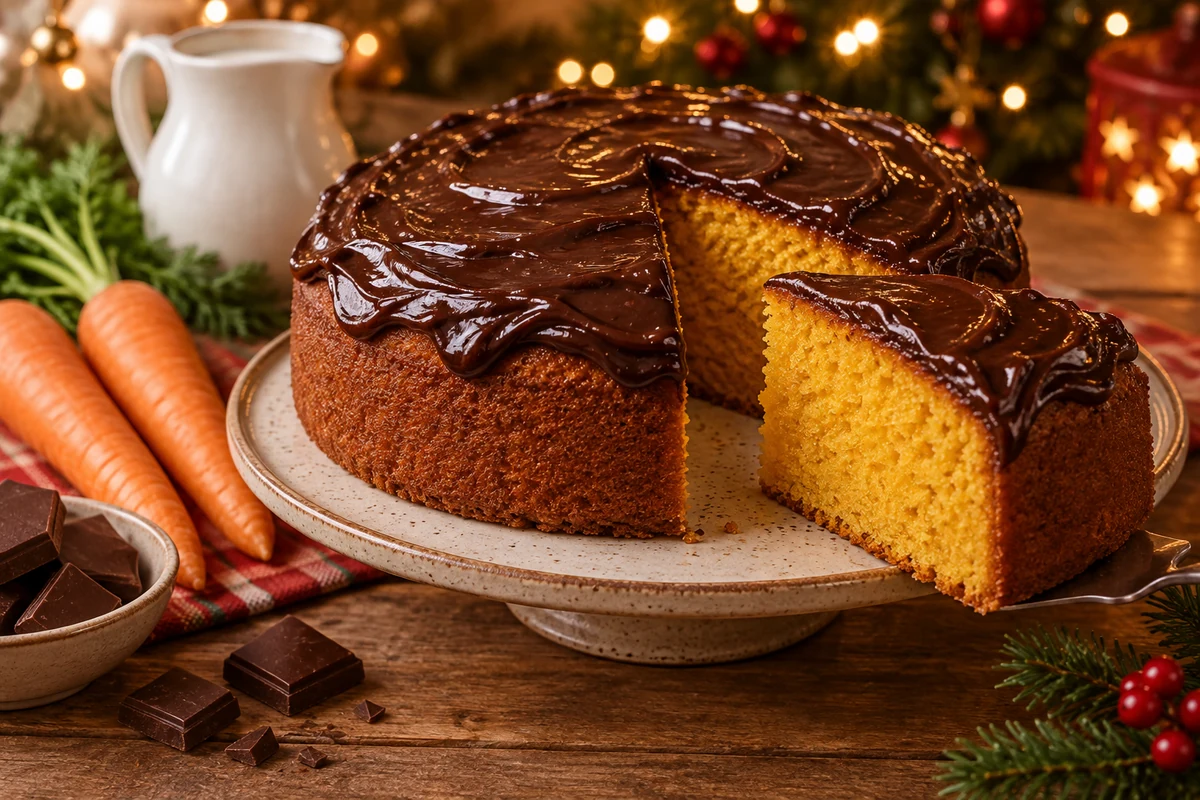
Ingredients:
- 3 medium carrots, about 300 g – peeled and chopped for blending.
- 3 medium eggs – brought briefly to room temperature. For a vegan adaptation, see the notes below rather than assuming a direct egg replacement.
- 1 cup vegetable oil – use the oil quantity here; substituting half that volume of butter would change the recipe substantially.
- 2 cups sugar – a reduction to 1¾ cups can be tested for a less sweet version, but sugar changes also affect structure and moisture.
- 2½ cups plain flour – use a tested gluten-free adaptation if required.
- 1 tablespoon baking powder
- A pinch of salt
- 1 teaspoon vanilla extract, optional
- For the brigadeiro topping: 1 tin sweetened condensed milk, 1 tablespoon butter and 4 tablespoons chocolate powder. The source does not specify the tin weight. Cocoa is less sweet than sweetened chocolate powder; choose deliberately and check the topping consistency. A vegan topping needs suitable plant-based condensed milk and fat.
Method
- Prepare the oven and tin: heat to 180°C (160°C fan). Grease and line a deep 20–22 cm round tin or a suitable traybake tin. Leave space for rising and divide excess batter between tins if necessary.
- Prepare the carrots: chop them into small pieces so they blend evenly with the wet ingredients.
- Blend the wet ingredients: process the carrots, eggs and oil until smooth, usually around 1–2 minutes depending on the blender.
- Mix the dry ingredients: sift the flour, salt and baking powder into a bowl and stir in the sugar.
- Combine: fold the carrot mixture into the dry ingredients, adding the optional vanilla. Stop once the batter is evenly mixed.
- Bake: transfer to the tin and start checking at 35–40 minutes. Continue until the centre is set and a skewer comes out without wet batter; timing depends on the tin depth.
- Cool: leave in the tin for 10 minutes before turning onto a wire rack.
- Make the brigadeiro: stir the condensed milk, butter and chocolate powder in a saucepan over a moderate heat until thickened. Stop while it is still soft enough to spread, rather than cooking to a firm rolling consistency.
- Cover the cake: let the topping stand for about 5 minutes, then spread over the warm or cold cake.
- Decorate if wanted: add chocolate sprinkles, candied carrot shreds or chopped walnuts before the topping sets. Keep the finished cake refrigerated and use within 48 hours.
Variations
- Filled carrot cake: cut the fully cooled cake horizontally and use some of the brigadeiro between the layers before topping.
- With nuts: adding up to 1 cup chopped walnuts gives extra texture but makes the batter heavier; test the variation and declare the nut allergen.
- Adjusting sugar or fat: brown sugar is still sugar. Replacing some oil with apple purée or using a baking sweetener changes the recipe, so follow a tested adaptation rather than presenting it as an automatic lighter equivalent.
- Vegan adaptation: 3 tablespoons ground linseed soaked in 9 tablespoons water is a possible starting point for replacing the eggs, with plant-based condensed milk and fat for the topping. Test the texture first; no extra milk is required by the standard carrot batter.
- Cupcakes: divide between paper-lined bun tins and start checking after 18–22 minutes. Cool, top with brigadeiro and decorate individually.
- Festive flavour: add 1 teaspoon cinnamon or some orange zest to the batter.
Candied fruit cake (bolo inglês): ingredients, method and variations
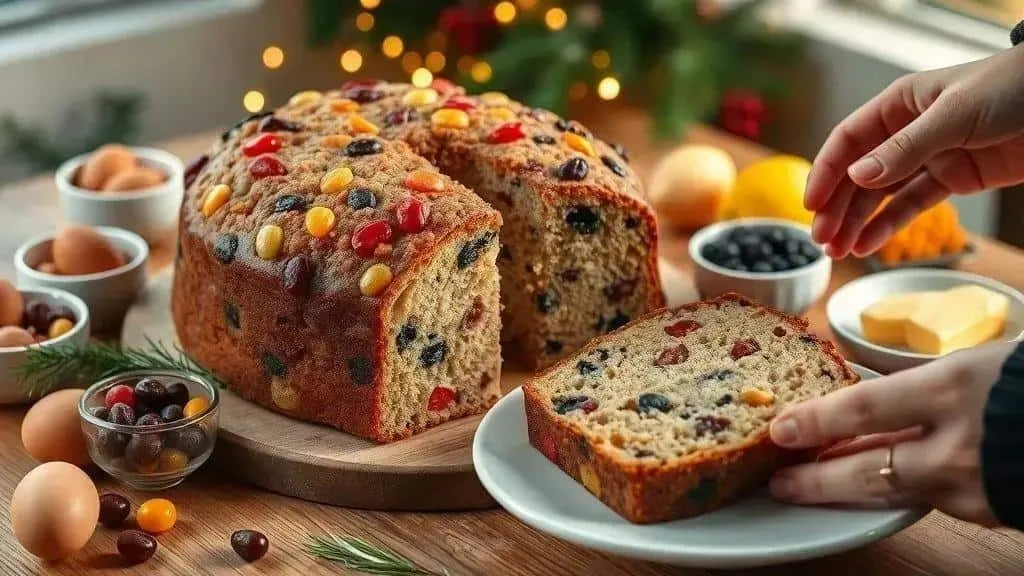
Ingredients:
- 200 g candied fruit – chopped; the alternative suggested in the original is 150 g raisins, which gives a different fruit balance.
- 100 g raisins, optional – in addition to the candied fruit, if wanted.
- 200 g softened butter – for dairy-free baking, choose a suitable baking block and follow its substitution guidance.
- 1 cup sugar – reducing to ¾ cup is a variation to test, not an identical result.
- 3 medium eggs – briefly brought to room temperature. Use a tested vegan fruitcake recipe if eggs need to be excluded.
- 2 cups plain flour – a gluten-free blend requires its own baking guidance.
- ½ cup milk – strained orange juice or a plant-based drink gives a different variation.
- 1 teaspoon baking powder
- Zest of 1 lemon – or 1 teaspoon vanilla extract.
- A pinch of salt
- 2 tablespoons rum, brandy or orange juice – for the fruit; use juice when avoiding alcohol, as baking does not guarantee that all alcohol disappears.
- 50 g chopped walnuts or almonds, optional
Method
- Prepare the oven and tin: heat to 160–170°C (140–150°C fan). Grease and line a deep 20–22 cm tin, leaving room for the cake to rise.
- Soak the fruit briefly: combine the candied fruit and optional raisins with the rum, brandy or orange juice. Leave for 20–30 minutes.
- Prepare the fruit for mixing: drain any excess liquid, then toss with a little of the measured flour to help distribute it through the batter.
- Cream the butter and sugar: beat until light and evenly mixed.
- Add the eggs: beat them in one at a time, mixing after each addition.
- Add liquid and flavouring: mix in the milk or chosen alternative, then the lemon zest or vanilla.
- Fold in the dry ingredients: sift the flour, baking powder and salt, then fold into the batter gradually.
- Add fruit and nuts: gently fold in the prepared fruit and optional chopped nuts.
- Bake: spoon into the tin and bake for approximately 50–70 minutes, checking that the centre is set and a skewer has no wet batter. Allow longer if needed for a deep cake.
- Cool before wrapping: leave in the tin for 10–15 minutes, then transfer to a wire rack. Once completely cold, wrap and store in an airtight container in a cool place; this is a moist sponge-style fruitcake, not a long-keeping matured Christmas cake.
- Optional finish: brush with a little warmed apricot jam or use food-safe decorative wrapping when serving.
Variations
- Alcohol-free: soak the fruit in orange juice or cooled apple tea instead of spirits.
- Gluten-free: use a tested cake blend adaptation and follow the blend’s guidance on binders; do not automatically add extra xanthan gum.
- Spiced fruitcake: add 1 teaspoon cinnamon and ¼ teaspoon nutmeg.
- Honey and nuts: the suggested variation uses ¼ cup honey in place of some sugar and adds nuts. Both alter moisture and structure, so test a small version first; do not serve honey-containing cake to children under one.
- Mini fruitcakes: divide between muffin cases and start checking after 25–30 minutes.
- Wholemeal variation: replacing part of the plain flour with wholemeal flour changes the texture. Reducing sugar and using reduced-fat spreads at the same time requires a tested recipe, rather than several direct swaps.
Walnut cake with cream cheese topping: ingredients, method and variations
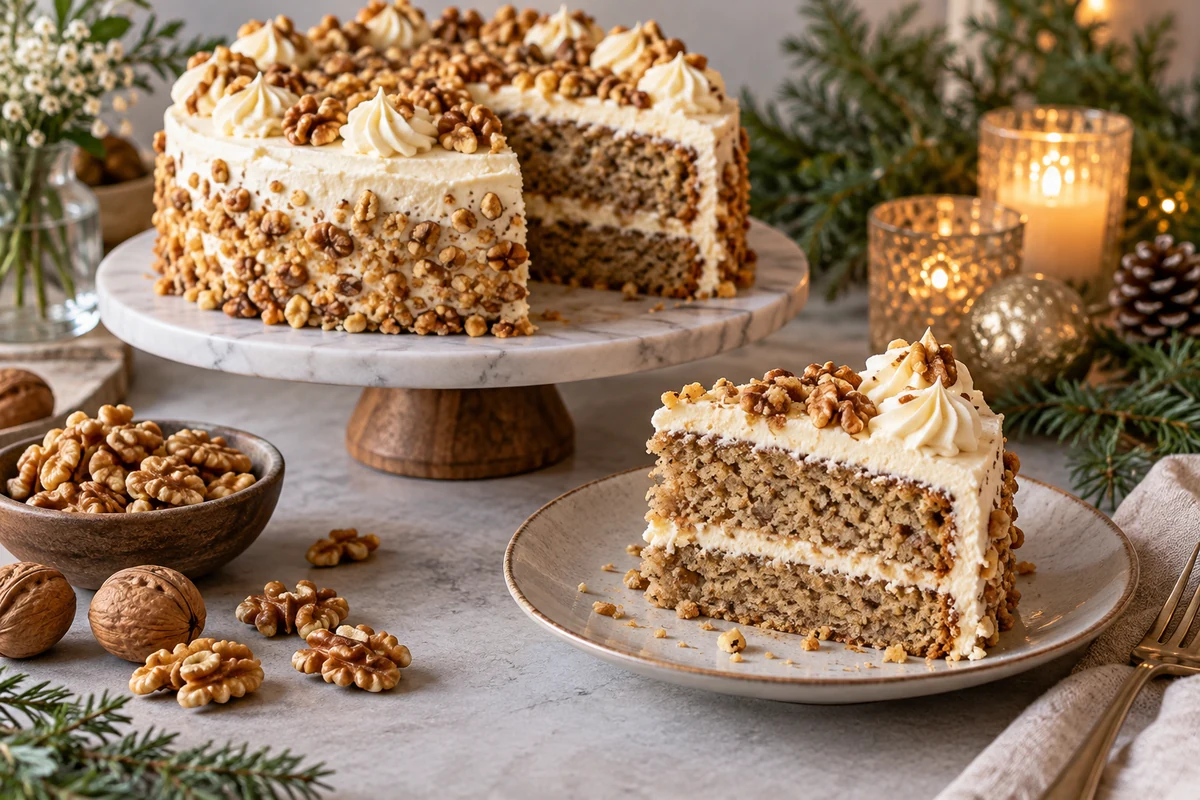
Ingredients:
- 2 cups plain flour – follow a tested adaptation for gluten-free baking.
- 1 cup soft brown sugar – white sugar gives a different flavour; reducing sugar changes the cake’s texture.
- 1 cup chopped walnuts – plus 8 walnut halves for decoration; pecans are an alternative.
- 3 medium eggs – see the vegan adaptation note below if needed.
- ½ cup melted butter – ½ cup vegetable oil gives a different variation. A lactose-free dairy ingredient is not necessarily safe for a milk allergy.
- ½ cup milk – a suitable plant-based drink is an alternative; check its allergens.
- 1 tablespoon baking powder
- A pinch of salt
- For the topping: 200 g cream cheese, 150 ml whipping cream and 3 tablespoons icing sugar. Plant-based alternatives need to be suitable for whipping and spreading.
Method
- Prepare the oven and tin: heat to 180°C (160°C fan). Grease and line a 22 cm round tin, leaving space for the cake to rise.
- Toast the nuts: if desired, toast the chopped walnuts for 5–8 minutes at 160°C (140°C fan), watching closely. Cool before adding, then bring the oven to the cake’s baking temperature.
- Mix the dry ingredients: sift the flour, baking powder and salt into a bowl.
- Combine butter and sugar: mix the melted, cooled butter with the sugar until evenly combined.
- Add the eggs: beat them in one at a time.
- Add milk and flour mixture: alternate them, folding gently with a spatula without overmixing.
- Fold in the walnuts: add the cooled chopped nuts, keeping the decorative halves aside.
- Bake: transfer to the tin and start checking at 30–40 minutes. A skewer should have no wet batter and the centre should be set.
- Cool: leave in the tin for 10 minutes, then turn onto a wire rack and cool completely.
- Make the topping: beat the cream cheese and icing sugar until smooth. Add the cold whipping cream and whisk just until firm enough to spread.
- Decorate: spread the topping over the cold cake and add the reserved walnut halves. Optional honey is unsuitable for children under one, and whole nut decorations are unsuitable for young children.
- Store: refrigerate covered at 5°C or below and use within 48 hours. Take out only the portions needed shortly before serving.
Variations
- Salted caramel: add a thin caramel filling and a little flaky sea salt, checking the caramel’s storage requirements.
- Spiced walnut cake: add 1 teaspoon cinnamon and ¼ teaspoon nutmeg to the batter.
- Gluten-free: use a cake-suitable gluten-free flour blend according to its instructions, including any binder it requires.
- Chocolate and walnut: the suggested variation replaces ¼ cup flour with ¼ cup cocoa powder. Cocoa changes moisture absorption, so test the result before making it for guests.
- Vegan: a possible starting point is 3 tablespoons ground linseed soaked in 9 tablespoons water for the eggs, with plant milk, plant-based fat and vegan topping ingredients. Test the sponge and topping consistency first.
Coconut cake with pineapple filling: ingredients, method and variations
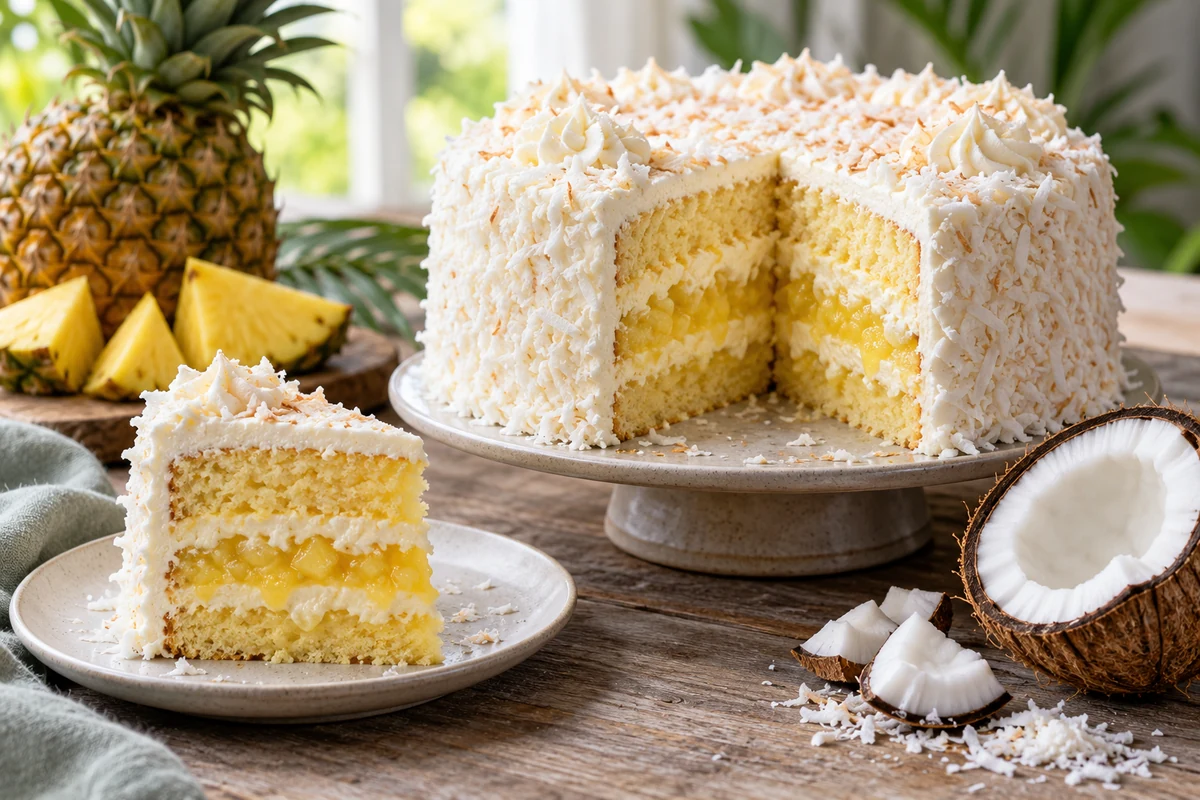
Ingredients:
- 2 cups plain flour – use a tested gluten-free adaptation if required.
- 1 cup sugar – reducing it to ¾ cup or changing the sugar affects flavour and texture.
- 3 medium eggs – briefly brought to room temperature; see the vegan note below for adaptation considerations.
- ½ cup vegetable oil – melted butter is a variation with a different flavour and texture.
- 1 cup coconut milk – replacing it with another milk changes the coconut flavour and richness.
- Up to ½ cup milk, optional – hold this back and add only a little if the batter needs it; do not automatically add the full amount.
- 1 tablespoon baking powder
- A pinch of salt
- 100 g desiccated coconut – reserve a little for decoration. Fresh coconut contains more moisture and changes the result.
- For the pineapple filling: 1 approximately 400 g tin pineapple in syrup, drained and chopped; reserve the syrup. The tin weight is not the drained fruit weight. Fresh pineapple is an alternative, using the separate method below.
- For the topping: 200 ml whipping cream and 2 tablespoons icing sugar, or a suitable plant-based whipping alternative. Ready-sweetened whipped topping does not necessarily need extra sugar.
Method
- Prepare the oven and tin: heat to 180°C (160°C fan). Grease and line a deep 22 cm round tin or suitable traybake tin; leave room for rising.
- Prepare the ingredients: measure the dry ingredients, briefly bring the eggs to room temperature and drain and chop the pineapple.
- Beat eggs and sugar: whisk for 3–4 minutes until lightly foamy.
- Add the liquids: stir in the oil and coconut milk. Reserve the optional ordinary milk until you can judge the mixed batter.
- Fold in the dry ingredients: sift the flour, baking powder and salt, then add gradually without overmixing.
- Add the coconut: fold in most of the desiccated coconut, reserving a little for decoration. If the batter is unusually stiff, mix in the optional milk a spoonful at a time rather than adding it all.
- Bake: transfer to the prepared tin, level the top and check from 30–40 minutes. Continue until a skewer has no wet batter and the centre is set.
- Cook the filling: simmer the pineapple with about one-third of its reserved syrup for 5–8 minutes, or until thick enough to spread. For fresh pineapple, use 2 tablespoons sugar instead of syrup. Optional thickening: stir in 1 teaspoon cornflour mixed with a little cold water and cook until thickened. Cool the filling before assembly.
- Cool the cake: leave in the tin for 10 minutes, then turn onto a wire rack and cool completely before cutting.
- Fill: use a serrated knife to split the cake horizontally. Spread with the cooled pineapple filling and replace the top layer.
- Whip the topping: whisk the cold cream and icing sugar until it holds its shape. Fold in a little of the reserved coconut if wanted.
- Decorate: cover with the cream, sprinkle over the remaining coconut and add drained pineapple pieces or lemon zest if desired.
- Refrigerate: chill for at least 1 hour to firm the filling and topping. Keep covered at 5°C or below and use within 48 hours.
Variations
- Condensed milk variation: a condensed milk and pineapple filling needs its own balanced recipe; adding syrup directly can make the filling too loose for the layers.
- Toasted coconut: toast some coconut in a dry frying pan, watching closely, then cool before scattering over the cake.
- Vegan adaptation: use a tested egg-free coconut sponge with coconut milk, vegetable oil and a plant-based whipping topping. Linseed replacements change the crumb and should be tested before serving to guests.
- Rum variation: if suitable for all guests, add 1–2 tablespoons rum to a little pineapple syrup for brushing the cake. Omit for children or anyone avoiding alcohol.
- Individual cakes: bake cupcake-sized portions, checking from 18–25 minutes, then cool and add pineapple filling and coconut cream.
- Gluten-free: use a cake blend and its recommended substitution method, rather than automatically adding ½ teaspoon xanthan gum to every blend.
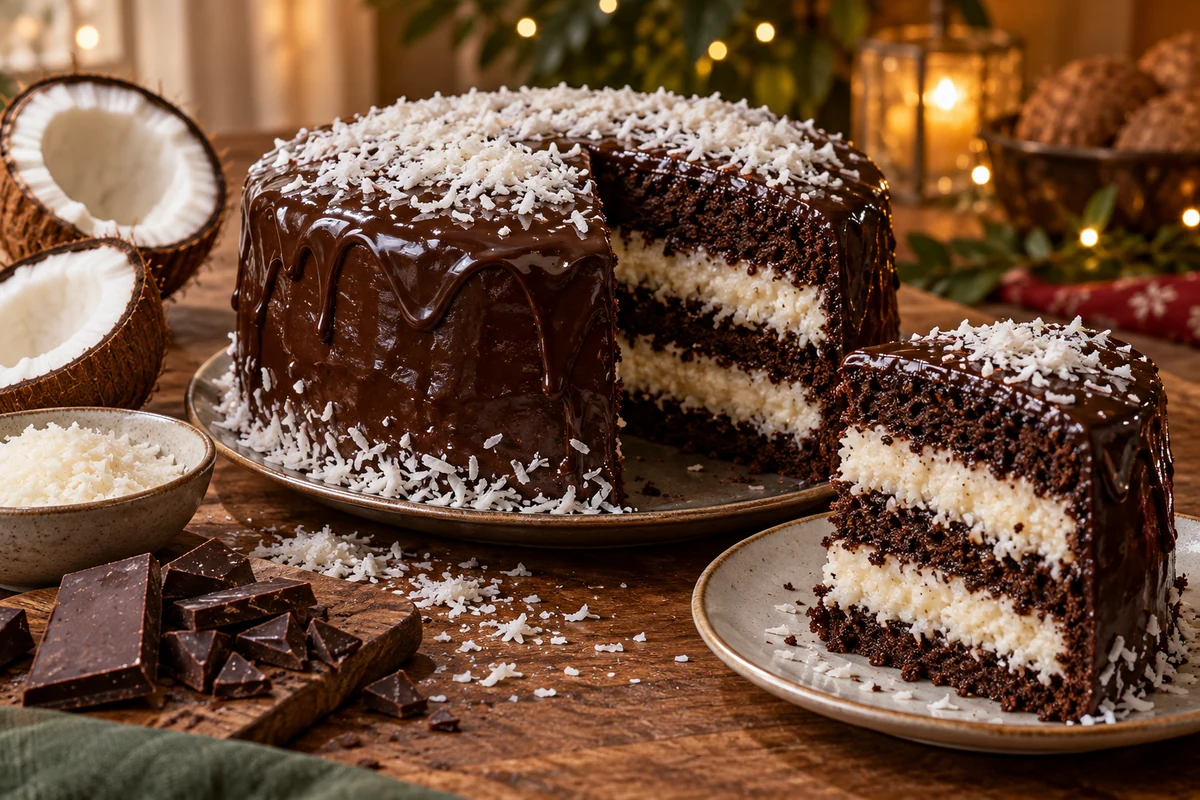
Prestígio-style chocolate and coconut cake: ingredients, method and variations
Ingredients:
- 3 medium eggs – briefly brought to room temperature; vegan substitutions need testing.
- 1 cup sugar – reducing to ¾ cup or changing the sugar is a variation that affects texture.
- ½ cup vegetable oil – or melted butter for a different result.
- 1 cup milk – a suitable plant-based alternative can be used; check allergens.
- 1¼ cups plain flour – use a tested adaptation for gluten-free baking.
- ½ cup unsweetened cocoa powder
- 1 tablespoon baking powder
- A pinch of salt
- For the coconut filling: 395 g sweetened condensed milk, 150 g desiccated coconut and 1 tablespoon butter. Fresh coconut has more moisture; plant-based condensed milk also needs a consistency check.
- For the ganache: 200 g dark chocolate and 200 ml cream; suitable dairy-free alternatives may give a different firmness.
Method
- Prepare the oven and tin: heat to 180°C (160°C fan). Grease and line a 22 cm round tin with enough depth for the batter to rise.
- Beat eggs and sugar: whisk for 2–3 minutes until slightly paler.
- Add the liquids: mix in the oil and milk until evenly combined.
- Fold in the dry ingredients: sift the flour, cocoa and salt, then fold in gradually without overmixing.
- Add the baking powder last: fold gently just until incorporated.
- Bake: transfer to the tin and check from 30–35 minutes. The middle must be set, with no wet batter on a skewer.
- Cook the filling: stir the condensed milk, coconut and butter over a moderate heat until thick and spreadable. It should begin to pull away from the pan without becoming a firm sweet.
- Cool the filling: transfer to a shallow container and cool before assembly. Refrigerate promptly if it will not be used immediately.
- Make the ganache: heat the cream without boiling vigorously, pour over the chopped chocolate, wait 1 minute and stir until smooth.
- Fill the cake: split the cold cake horizontally with a serrated knife, spread the cooled coconut filling over the bottom and replace the top.
- Cover with ganache: spread the cooled, still pourable ganache over the top and sides.
- Decorate and chill: add coconut or chocolate shavings if wanted, then refrigerate for 30–60 minutes to firm the topping.
Variations
- Coconut milk filling: coconut milk does not thicken like condensed milk. Use a recipe designed for it rather than making an unmeasured substitution in this filling.
- Chocolate pieces: stir up to ½ cup chopped chocolate into the cooled filling for extra texture.
- Vegan adaptation: use a tested egg-free chocolate sponge and suitable plant milk, condensed milk, cream and chocolate. A linseed substitution may produce a denser cake.
- Layer cake: bake separate thin layers and adjust the filling to the number of layers. Two unsplit sponges make two layers, not three; check each thin sponge earlier than a deep cake.
- Crunchy filling: add up to ½ cup toasted chopped nuts or coconut flakes, allowing them to cool first and checking guests’ allergies.
- Storage: keep covered in the fridge at 5°C or below and use within 48 hours. Bring out only the portions you plan to serve.
Festive red velvet cake: ingredients, method and variations

Ingredients:
- 2½ cups plain flour – use a tested gluten-free adaptation when needed.
- 1½ cups sugar – reducing to 1¼ cups changes sweetness and texture.
- 2 tablespoons unsweetened cocoa powder
- 2 medium eggs – vegan replacements need testing rather than a guaranteed direct swap.
- 1 cup buttermilk – alternatively, put 1 tablespoon vinegar or lemon juice in the measuring cup and top up with milk to the 1-cup mark. Stand for 5 minutes; this is not identical to cultured buttermilk.
- ½ cup vegetable oil – melted butter gives a different texture.
- Red food colouring – use the manufacturer’s recommended amount. Concentrated gel and liquid colouring are not interchangeable by the tablespoon.
- 1 teaspoon white vinegar
- 1 tablespoon baking powder
- A pinch of salt
- For the cream cheese icing: 400 g cream cheese, 100 g softened unsalted butter and 2 cups icing sugar. Reduced-fat cream cheese can make a looser icing.
Method
- Prepare the oven and tins: heat to 180°C (160°C fan). Grease and line two 20 cm round tins or a suitable traybake tin, leaving room for rising.
- Combine the dry ingredients: sift the flour, cocoa, baking powder and salt into a bowl.
- Combine the wet ingredients: beat the eggs and sugar together, then mix in the oil, buttermilk, vinegar and recommended quantity of food colouring.
- Fold together: gradually add the dry ingredients, mixing just until smooth.
- Check the colour: it need not be intensely red. Do not exceed the colouring manufacturer’s directions or add large quantities of liquid to chase a stronger shade.
- Bake: divide between the tins. Start checking at 25–30 minutes for shallow round cakes or 30–40 minutes for a traybake; a skewer should emerge without wet batter.
- Cool completely: leave in the tins for 10 minutes, then turn onto racks. Warm cake will soften the icing.
- Make the icing: beat the cream cheese and softened butter until smooth, then gradually add the icing sugar until spreadable. Avoid excessive beating if it starts to loosen.
- Assemble: level the cold layers if needed, sandwich them with icing and spread the rest over the top and sides.
- Decorate: add white chocolate shavings, washed and dried berries or a light dusting of icing sugar. Keep refrigerated.
Variations
- Spiced red velvet: add ½ teaspoon cinnamon and ¼ teaspoon nutmeg.
- Gluten-free: use a tested gluten-free cake recipe or follow a suitable blend’s instructions, including its binder requirements.
- Vegan adaptation: the original suggests 2 tablespoons ground linseed in 6 tablespoons water for the eggs, with plant-based milk and icing ingredients. This needs testing; use an established vegan red velvet recipe for a dependable celebration cake.
- Red velvet cupcakes: divide into cupcake cases and check from 18–22 minutes, then cool before icing.
- Berry filling: add a thin layer of berry jam alongside the cream cheese icing for a fruit contrast.
- Storage: refrigerate covered at 5°C or below and use within 48 hours. Take out portions shortly before serving.
Lemon cake with meringue: ingredients, method and variations

Ingredients:
- 2 cups plain flour – use a tested gluten-free version if needed.
- 1 cup sugar – changing to coconut sugar does not automatically make the cake lower in sugar, and baking sweeteners need product-specific guidance.
- 3 medium eggs – briefly brought to room temperature; vegan substitutions require a separate adaptation.
- ½ cup melted butter – or vegetable oil as a variation.
- ½ cup milk – a suitable plant-based drink is an option, but the standard cake still contains eggs and butter.
- Zest of 2 lemons and about 3 tablespoons lemon juice – measure the juice rather than adding all of two unusually juicy lemons. Lime gives a different flavour.
- 1 tablespoon baking powder
- A pinch of salt
- For the meringue: 3 pasteurised egg whites suitable for whipping and uncooked preparations, plus 6 tablespoons sugar. Follow the egg white product’s storage and handling instructions.
- Optional lemon syrup: ¼ cup lemon juice and 2 tablespoons sugar; brush on sparingly rather than soaking the cake.
Method
- Prepare the oven and tin: heat to 180°C (160°C fan). Grease and line a deep 20–22 cm round tin, allowing room for rising.
- Sift the dry ingredients: combine the flour, baking powder and salt.
- Beat eggs and sugar: whisk for 3–4 minutes until paler and lightly aerated.
- Add butter and milk: mix in the melted, cooled butter and milk until combined.
- Add lemon: mix in the zest and measured juice. Do not taste raw batter: uncooked flour and eggs can carry harmful bacteria.
- Fold in the flour mixture: add gradually, using gentle movements and avoiding overmixing.
- Bake: transfer to the tin and check from 30–35 minutes. Continue until the middle is set and a skewer has no wet batter.
- Whip the meringue: in a clean grease-free bowl, whisk the suitable pasteurised egg whites to soft peaks. Add the sugar gradually and whisk until glossy and firm, following the product’s instructions.
- Cool the cake: leave in the tin for 10 minutes, then turn onto a wire rack and cool completely before topping.
- Optional syrup: warm the lemon juice and sugar until dissolved, then brush a little over the cake. Allow it to cool before adding meringue.
- Top and lightly colour: spread the meringue over the cold cake. An adult can lightly brown the surface with a kitchen blowtorch on a heat-safe surface. Torching or briefly grilling does not make raw egg safe throughout; use the specified suitable pasteurised whites.
- Chill and serve: keep the cake refrigerated at 5°C or below and serve promptly, following any shorter egg white product instructions. Meringue can soften or weep during storage.
Variations
- Swiss meringue: use a tested method with appropriate heating instructions and suitable eggs. Simply warming egg whites and sugar to 60°C without a validated holding time is not a reliable safety step.
- Italian meringue: follow a tested recipe with precise syrup temperatures and suitable eggs. Hot sugar can cause serious burns, and pouring syrup into whites does not by itself verify that the whole mixture has been safely heated.
- Gluten-free: use a cake-suitable blend and its instructions; additional xanthan gum is not always required.
- Vegan version: use a tested vegan lemon sponge and aquafaba meringue recipe. Aquafaba is drained pulse cooking liquid, not a powder to hydrate, and a fixed spoonful-for-egg replacement will not suit every cake.
- Limoncello syrup: a small amount diluted with water is an optional adult variation. Omit for children, pregnancy and anyone avoiding alcohol.
- Mini lemon cakes: bake cupcake-sized portions, checking from 18–22 minutes. Cool before adding suitable meringue and refrigerate.
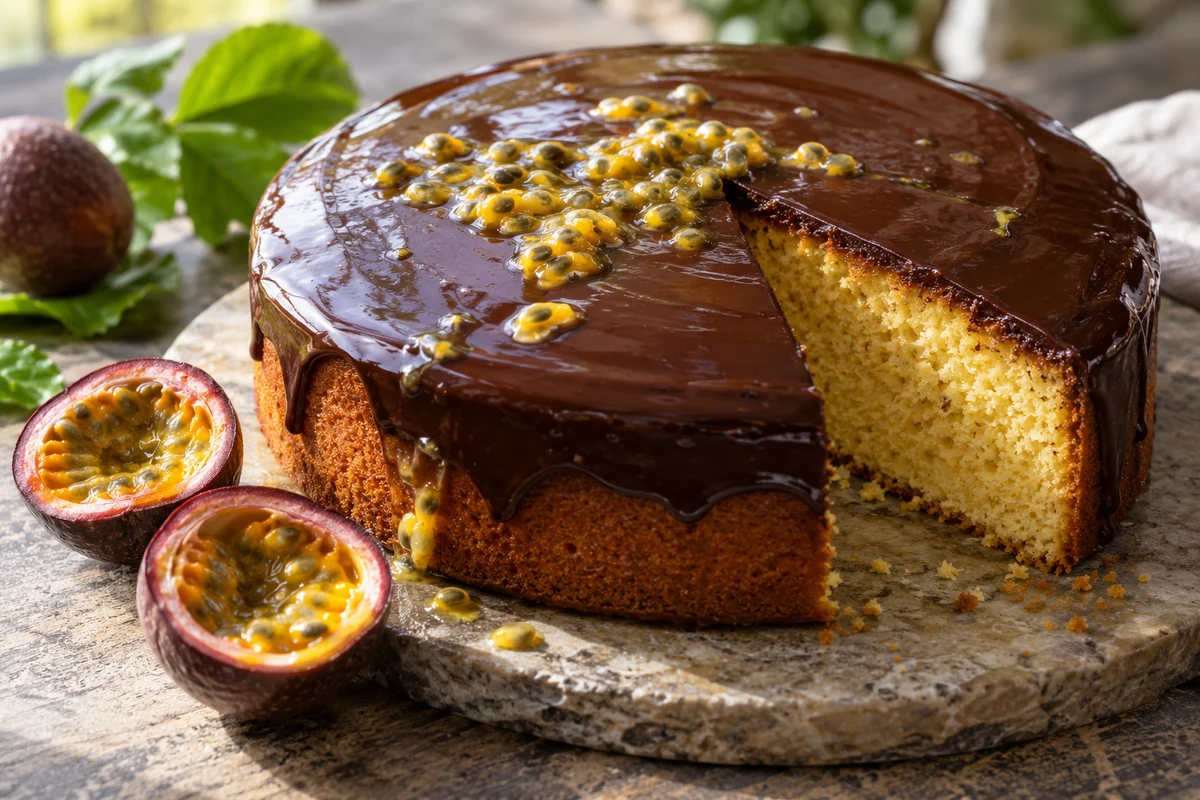
Passion fruit cake with ganache: ingredients, method and variations
Ingredients:
- 2 cups plain flour – follow a tested adaptation for gluten-free baking.
- 1 cup sugar – coconut sugar and baking sweeteners are not guaranteed direct equivalents in sweetness or baking behaviour.
- 3 medium eggs – vegan replacements need testing; see the variation below.
- ½ cup vegetable oil – or melted butter for a different texture.
- 1 cup strained passion fruit juice – use suitable thawed pulp if fresh fruit is unavailable; concentrated products need their own dilution guidance.
- A little milk, only if needed – the original lists ½ cup but its method adds just 1–2 tablespoons to loosen a stiff batter. Reserve the milk and do not add the full amount automatically.
- 1 tablespoon baking powder
- A pinch of salt
- For the ganache: 200 g dark chocolate and 200 ml cream. Optional passion fruit juice can loosen or split ganache, so test a small addition separately rather than adding several tablespoons at once.
- Optional syrup: ¼ cup passion fruit juice and 2 tablespoons sugar, for brushing sparingly over the cake.
Method
- Prepare the oven and tin: heat to 180°C (160°C fan). Grease and line a deep 22–24 cm round tin, leaving room for rising.
- Prepare the juice: strain the pulp to remove seeds and measure 1 cup juice. Follow the manufacturer’s dilution instructions for concentrate rather than treating it as ready-to-use juice.
- Beat eggs and sugar: whisk for 3–4 minutes until paler and slightly aerated.
- Add the liquids: mix in the oil and passion fruit juice at low speed.
- Fold in the dry ingredients: sift the flour, baking powder and salt, then fold in gradually.
- Check the consistency: if unusually stiff, mix in 1–2 tablespoons milk to loosen it slightly. Do not taste raw batter.
- Bake: transfer to the tin and start checking at 30–40 minutes. Continue until the centre is set and a skewer has no wet batter.
- Make the optional syrup: warm ¼ cup passion fruit juice with 2 tablespoons sugar until dissolved. Set aside for lightly brushing the baked cake.
- Make the ganache: place the chopped chocolate in a bowl. Heat the cream, pour over the chocolate, wait 1 minute and stir until smooth. If trying extra passion fruit juice, mix a little into a separate spoonful first to check the texture.
- Assemble: leave the cake in the tin for 10 minutes, then cool on a rack. Brush with a little syrup if using. Spread cooled, still pourable ganache over the cold cake.
- Chill: refrigerate for 30–60 minutes to set the topping. Keep covered at 5°C or below and use within 48 hours, taking portions out shortly before serving.
Variations
- Filled cake: a passion fruit pastry cream filling offers a contrast to the chocolate. Use a tested pastry cream recipe, cool it promptly and keep the assembled cake refrigerated.
- Gluten-free: follow a suitable cake blend’s instructions, adding a binder only if recommended.
- Vegan adaptation: 3 tablespoons ground linseed soaked in 9 tablespoons water is a starting point suggested for replacing the eggs, with plant milk and dairy-free ganache. Test the sponge before an occasion; the texture will differ.
- Extra citrus flavour: add a little lemon zest. Increasing liquid pulp requires recipe adjustment rather than an unrestricted addition.
- Cupcakes: divide between cases and check from 18–22 minutes, then cool before adding ganache and a little fresh passion fruit pulp.
- Festive finish: decorate with fresh passion fruit pulp, white chocolate shavings or washed mint leaves.
Simple festive cheesecake: ingredients, method and variations

Ingredients:
- 200 g crushed biscuits, such as digestives – for the base.
- 100 g melted butter – a dairy-free baking fat requires a texture check. Lactose-free products may still contain milk proteins.
- 600 g cream cheese – briefly softened for mixing; lactose-free cream cheese may be an option for lactose intolerance, not a milk allergy.
- 1 cup sugar – alternative sugars and sweeteners change flavour and texture; use a tested adaptation if required.
- 2 medium eggs – do not replace these with linseed while otherwise following the same cheesecake method; use a tested vegan recipe instead.
- 1 teaspoon vanilla extract
- Zest of 1 lemon, optional
- 200 ml cream – plant-based cream alone does not make this egg-and-cheese filling vegan.
- Berry jam or a suitable fruit sauce – for topping.
Method
- Make the base: mix the biscuit crumbs with the melted butter. Press into a lined 20–22 cm loose-bottomed or springform tin with enough depth for the filling.
- Optional pre-bake: bake the base at 160°C (140°C fan) for 8–10 minutes to firm it, then set aside to cool.
- Mix the filling: beat the cream cheese and sugar until smooth, avoiding unnecessary aeration.
- Add eggs and flavourings: mix in the eggs individually at low speed, then the vanilla and optional lemon zest.
- Add the cream: fold it in gently until evenly combined; do not whip air into the filling.
- Bake in a water bath: protect the tin from leaks with secure foil around the outside or an outer watertight tin. Place in a larger roasting tin and carefully add hot water about halfway up the sides. Bake at 160–170°C (140–150°C fan), checking from 45–55 minutes; the edges must set and the middle should wobble gently as one mass, not remain liquid.
- Cool gradually: switch off the oven and leave the door ajar for about 30 minutes, then remove the cake from the hot water bath carefully. Refrigerate within 1–2 hours of finishing cooking; do not leave it out until completely cold overnight.
- Chill: refrigerate at 5°C or below for at least 4 hours, preferably overnight, before unmoulding.
- Decorate: remove carefully from the tin and spread with berry jam. Add washed fruit, lemon zest or mint if desired.
- Storage: keep covered in the fridge and use within 48 hours. Bring out only the slices needed shortly before serving.
Variations
- Berry cheesecake: use a little thick berry compote as a topping or serving accompaniment; a watery mixture can loosen the filling.
- Gluten-free: use suitable gluten-free biscuits and check all other ingredients and preparation surfaces for cross-contact.
- No-bake cheesecake: follow a separate tested no-bake recipe and omit the raw eggs. Gelatine sheets vary in size and strength, so three unspecified sheets are not a reliable setting quantity for this filling.
- Vegan cheesecake: use a tested recipe designed around plant-based cream cheese and its setting method. Linseed, aquafaba and vegetable gelling agents cannot be exchanged without adjusting the recipe.
- Festive spice: add ½ teaspoon cinnamon to the biscuit base or a small pinch of nutmeg over the topping.
Christmas and New Year cakes offer a way to share familiar flavours, try a different Brazilian-inspired bake and give the dessert table a welcoming centrepiece.
Choose a recipe that suits your guests and fridge space, test significant substitutions beforehand and keep decorations simple and food-safe.
Thank you for reading! Follow us on social media and visit the I Love Christmas blog for more recipes and festive ideas. Enjoy your celebrations!
FAQ: Christmas and New Year cakes
How many slices does each cake size provide?
As a rough guide, a 15 cm cake may give 6–8 modest slices, an 18–20 cm cake 8–12, a 22–26 cm cake 12–20, and a 20 × 30 cm traybake 20–24 small pieces. Height, richness and slice size make a substantial difference.
How should I store cakes until serving?
Keep cakes with cream, cream cheese, moist fruit fillings or milk syrup covered in the fridge at 5°C or below, and use within 48 hours unless an ingredient requires less time. Plain cakes can be kept airtight in a cool place for short-term storage. Chill perishable components promptly and transport them cold.
Can I make gluten-free or vegan versions?
Yes, but choose tested adaptations or follow the relevant flour blend’s instructions. Egg replacements, plant creams and gluten-free flours behave differently from the standard ingredients. Check every filling and decoration, and prevent allergen cross-contact.
How can I transport a decorated cake?
Use a rigid cake box on a level non-slip surface. Keep perishable cakes chilled during transport and add fragile decorations at the destination if possible.
What are simple, inexpensive Christmas decorations for cakes?
Washed berries, chocolate curls, candied fruit and food-safe festive sprinkles can work well. Check nut allergies before using flaked almonds, avoid whole nuts for young children and keep decorative greenery separate from food unless it is an appropriate washed edible herb.
Sources and Further Reading
- UK Government: cooking food safely
- Food Standards Agency: chilling food
- UK Government: safe handling and use of eggs
- UK Government: handling flour safely
- Food Standards Agency: allergen guidance