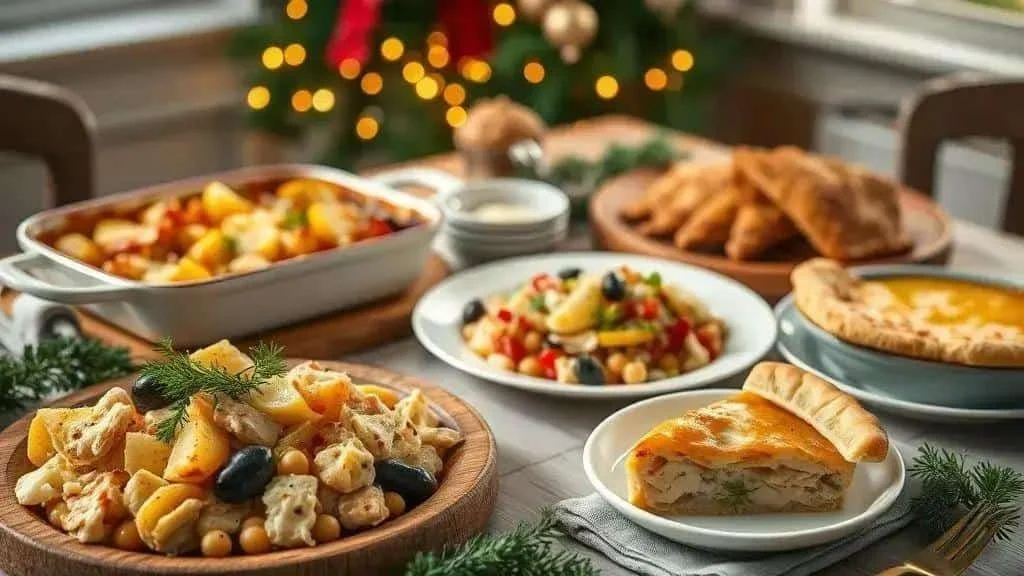
Explore 12 Christmas salt cod ideas, with detailed ingredients and methods for bacalhau à Brás, bacalhoada, a cassava-topped salt cod bake and a chickpea salad. The guide also covers desalting, variations, serving, optional wine pairings and ways to plan a more economical meal.
These Christmas salt cod recipes draw on Portuguese and Brazilian festive cooking. Start with the 12 ideas, then choose from the four dishes explained in detail below. Which would suit your Christmas table?
Why choose salt cod for Christmas?

Salt cod, or bacalhau, is a Christmas favourite in Portugal and Brazil. Its distinctive flavour works in several styles of dish, from simple vegetable bakes to creamy toppings and salads. Allow time for soaking when planning your meal.
What salt cod brings to the table
- Tradition: for many families, salt cod dishes are part of familiar festive celebrations.
- Flavour: it works with delicate herbs as well as richer sauces and toppings.
- Portions: combining fish with potatoes, pulses or vegetables can help a dish serve more people.
- Storage: salted and dried products can be bought ahead, but storage conditions and shelf life vary. Follow the packaging, including any refrigeration instructions.
- Nutrition: cod provides protein. The salt and fat content of the finished meal depend on desalting and the other ingredients used.
- Versatility: try it baked, in a stew, under a creamy topping or cooked and chilled for a salad.
Choosing and serving salt cod
- Quality: buy from a reputable supplier, check the date and storage instructions, and reject damaged packs or signs of spoilage. Appearance and smell alone cannot establish safety.
- Quantity: around 150–200 g of desalted fish per adult is a useful starting point for a fish-led main course; adjust for the recipe, appetites and side dishes.
- Planning ahead: soaking and cooking can be done ahead when storage guidance allows. Cool cooked fish promptly, refrigerate within 1–2 hours and use within 48 hours or freeze.
- Accompaniments: potatoes, olives and eggs are classic partners. Fresh white wines or light fruity reds are optional pairings for adults who drink alcohol.
- Alternatives: another firm white fish, such as hake, can work in similar preparations, although its flavour will differ from salt cod.
Choose a preparation that suits your time, budget and guests, and let the fish and its accompaniments do the work.
Preparing salt cod: desalting and cooking
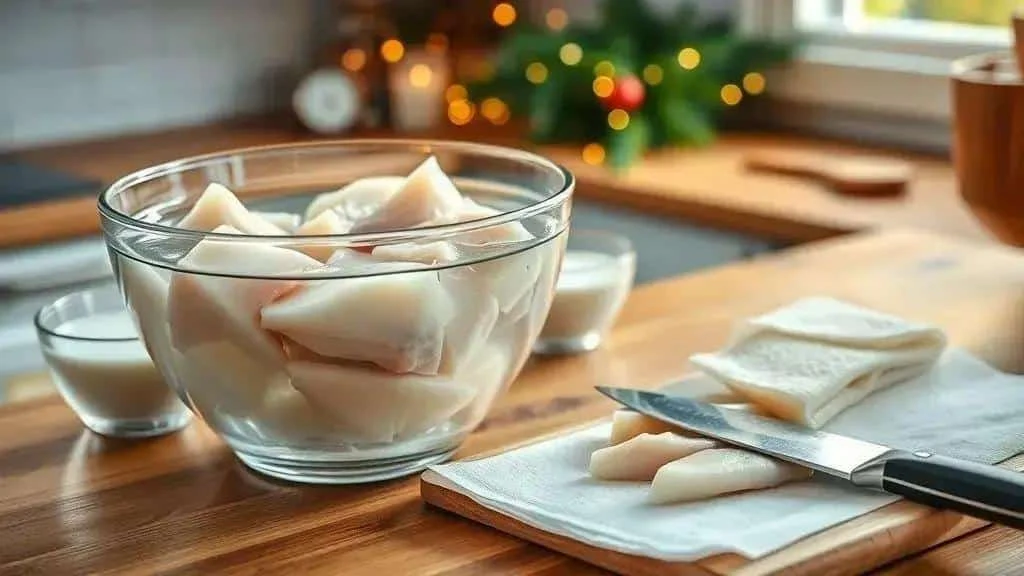
Desalting requires cold water, refrigeration and enough time for the thickness of the fish. Follow the supplier’s instructions first; the guidance below explains the general process.
Ingredients and equipment
- 1 kg salted cod, in pieces suitable for the chosen recipe.
- Cold water, enough to cover the fish generously; roughly two parts water to one part fish is a useful guide.
- 200–500 ml milk, optional, for part of the final soaking liquid if desired for flavour. This does not replace or speed up proper desalting.
- A large food-safe container that holds the fish comfortably and fits inside the fridge.
- A fridge maintained at 5°C or below; the fish must stay refrigerated throughout soaking.
How to desalt the fish
- Remove surface salt: briefly rinse off loose salt with cold water, avoiding splashes. Clean the sink and surrounding surfaces afterwards; rinsing does not make raw fish safe to eat.
- Cover with water: put the fish in its container and add enough cold water to cover it generously. Cover the container and place it in the fridge.
- Choose the soaking time: follow the pack. As a guide, flakes may need around 6 hours with a water change halfway through; ordinary pieces may need about 24 hours with changes every 6 hours.
- Allow longer for thick pieces: thick portions may need roughly 40–48 hours, with water changed about every 8 hours; very thick loins can require up to 72 hours. These are supplier-dependent guides, not a reason to exceed storage instructions.
- Optional milk soak: if desired, replace part of the final water with 200–500 ml milk for the final 2–4 hours, keeping it refrigerated. Do not shorten the required soaking time.
- Check the salt: fully cook a small sample before tasting it. Never taste raw soaked fish. If it remains too salty, continue soaking with fresh cold water only within the supplier’s recommended handling time.
- Drain before cooking: drain thoroughly and pat dry with kitchen paper. Cook promptly, or refrigerate briefly as directed on the pack.
Cooking after desalting
- Roasting or grilling: preheat the oven. Portions may take around 15–25 minutes at 180–200°C, depending on thickness and the dish. Check that the fish is opaque and flakes easily, rather than relying on time alone.
- Poaching: cook gently in hot water rather than at a vigorous boil. Medium portions may take about 8–12 minutes; check they are fully cooked. A clean probe can confirm 70°C for 2 minutes or 75°C for 30 seconds in the centre.
- Flaking for à Brás or fishcakes: poach until fully cooked, using about 8–10 minutes only as a guide. Let it cool just enough to handle, then remove skin and bones and separate the flakes. Continue cooking the dish promptly, or cool and refrigerate safely.
Useful reminders
- Temperature: always soak in the fridge at 5°C or below, never on the kitchen worktop.
- Time and texture: excessive soaking can soften the fish. Use the supplier’s guidance for the cut rather than leaving it indefinitely in water.
- Saving time: choose ready-desalted fish when time is short. Thaw frozen products safely according to their instructions.
- Substitutions: fresh hake or another firm white fish avoids the desalting stage, but gives a different flavour. Cook it fully.
- Storage: cook desalted fish promptly according to its packaging; do not automatically add another two days after a long soak. Freeze only if suitable, then thaw in the fridge and use within 24 hours of full defrosting unless the pack is stricter.
Food safety and quality
Use clean utensils, keep raw fish separate from ready-to-eat food and change the soaking water as directed. Keep everything refrigerated during desalting. The references at the end cover supplier soaking guidance and UK cooking and chilling advice.
12 salt cod dishes to consider

These 12 ideas describe different flavours, textures and serving styles. Four have detailed recipes below; the others are suggestions to explore with a suitable full recipe. Serving estimates for those ideas depend on the quantities you choose.
Bacalhau à Brás
Flaked salt cod with fine potato straws and softly set egg. Difficulty: easy to moderate. Servings: the recipe below serves roughly 4–6 with sides. Key ingredients are salt cod, eggs, potato straws, onion and parsley. Serve hot with olives and lemon.
Bacalhau à Gomes de Sá
A Portuguese dish combining salt cod, potatoes, onion, hard-boiled eggs and olives. Difficulty: moderate. Serving plan: choose a full recipe scaled for your guests, such as 4–6 people. Finish with extra-virgin olive oil and fresh parsley.
Traditional bacalhoada
A rustic salt cod bake with vegetables and potatoes. Difficulty: easy. Servings: the recipe below is intended for 6–8. Cod portions, potatoes, tomatoes, peppers and eggs make a colourful dish to bring to the table.
Salt cod escondidinho
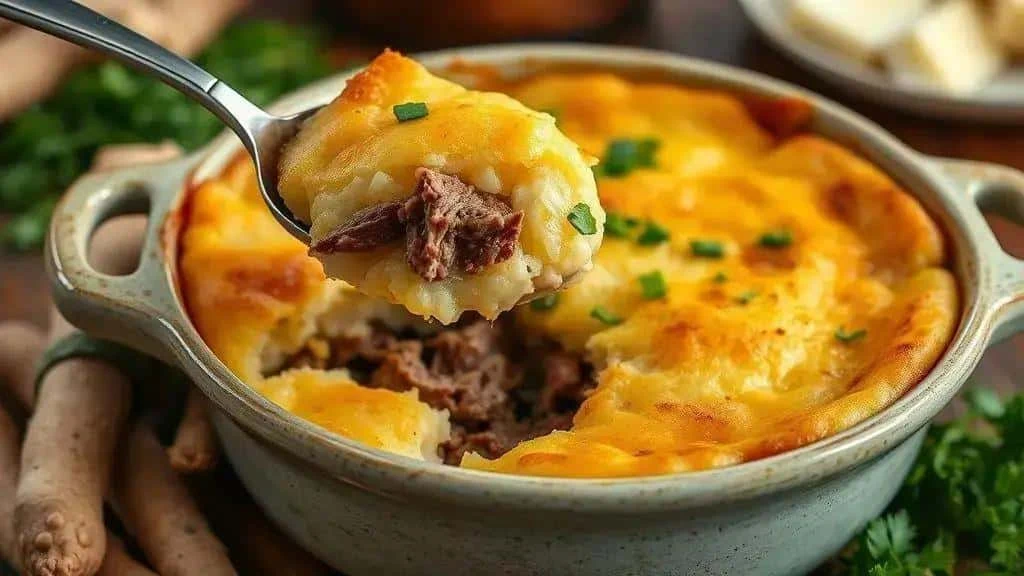
A creamy mash topping covers a moist salt cod filling. Difficulty: easy. Servings: about 6 from the recipe below. Use cassava or potato mash, flaked salt cod and optional cream, then bake until heated through and golden.
Salt cod fishcakes
Crisp outside and soft inside, these suit a starter or small plates. Difficulty: moderate, including frying. Serving plan: choose a measured fishcake recipe and scale its yield to your guests. Typical ingredients are cooked salt cod, potato, egg and parsley. Serve with lemon dressing or seasoned mayonnaise.
Bacalhau com natas
A comforting bake with salt cod, potatoes, onion and cream. Difficulty: moderate. Serving plan: select a full recipe for the number needed, such as 4–6 people. A golden top contrasts with the creamy filling.
Salt cod and chickpea salad
A refreshing starter or side dish made with fully cooked, chilled fish. Difficulty: easy. Servings: about 6 small portions from the recipe below. Chickpeas, red onion, pepper, olive oil, vinegar and herbs complement the cod.
Grilled salt cod with rustic potatoes
A simple way to highlight firm flakes of fish. Difficulty: easy. Serving plan: allow one suitable portion per person; scale potatoes and dressing accordingly. Olive oil, herbs and lemon provide a straightforward accompaniment.
Salt cod brandade
A soft salt cod spread for toast or a side dish. Difficulty: moderate. Serving plan: choose a measured recipe to make the required starter portions. Versions combine cod with olive oil and garlic, sometimes potato. Serve warm with toasted bread.
Salt cod with broa crust
Crumbled Portuguese maize bread, or broa, creates a crisp topping. Difficulty: moderate. Serving plan: choose a full recipe for your group. Salt cod and buttery bread crumbs give contrasting textures; bake until cooked through and golden. Broa may also contain wheat or rye.
Salt cod pie
Puff or shortcrust pastry surrounds a filling of salt cod, onion and, in some versions, egg. Difficulty: moderate. Serving plan: the number of slices depends on the tin and recipe. Prepare ahead only within safe chilling and reheating limits.
Herb or Provençal-style salt cod
Garlic, parsley, thyme, olive oil and lemon give the fish a fresh aromatic flavour. Difficulty: easy. Serving plan: allow an appropriate fish portion for each guest. Finish with lemon zest and serve with vegetables or potatoes.
Bacalhau à Brás: ingredients
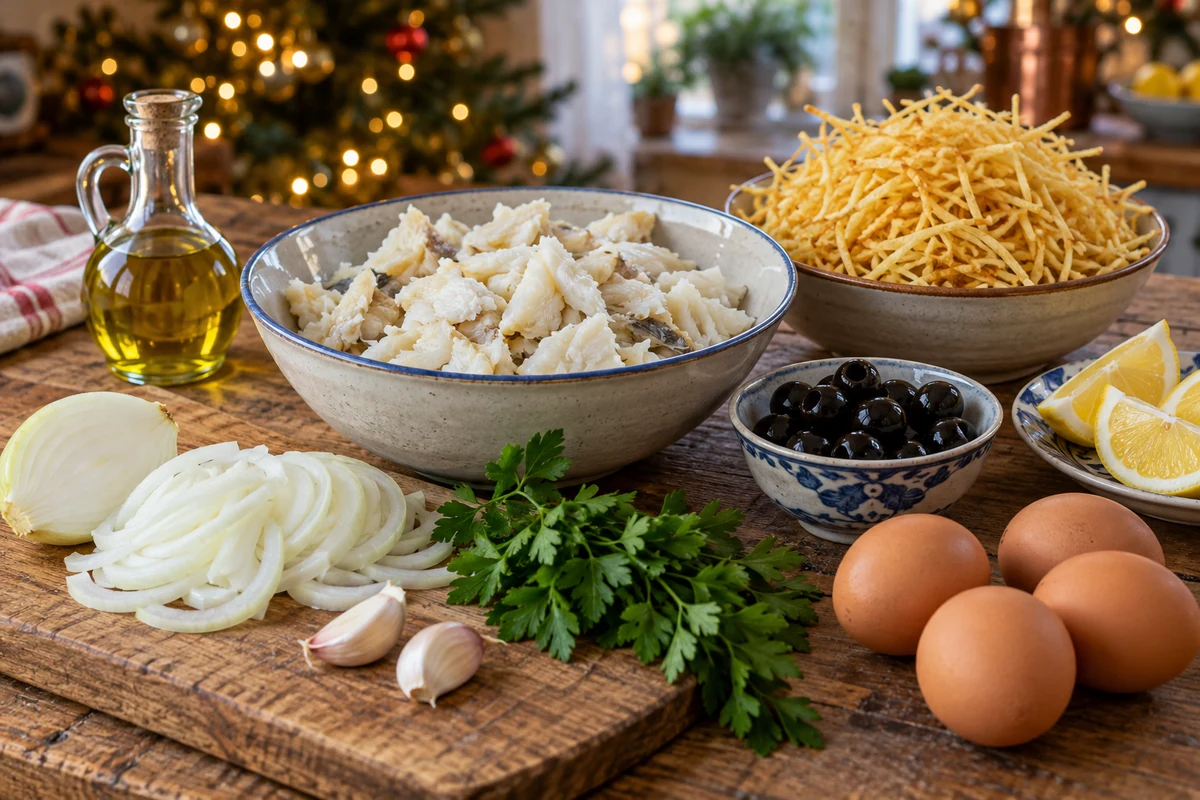
- 500 g desalted salt cod, to be cooked and flaked. If starting with salted fish, soak according to the supplier’s instructions first.
- 400–500 g raw potatoes, cut into very fine matchsticks, or 300 g ready-made potato straws. These are alternative starting amounts, not equal raw and cooked weights. Sweet potato changes the flavour.
- 4 large eggs, lightly beaten; an optional fifth egg gives a softer mixture but must still be cooked through.
- 1 medium onion, thinly sliced into half-moons.
- 2 garlic cloves, finely chopped, optional.
- 4 tbsp extra-virgin olive oil for the onion and fish; replace half with butter if preferred. You will also need separate frying oil if making your own potato straws.
- ½ cup chopped parsley, to finish.
- Pitted black olives, whole or sliced, to taste.
- Lemon wedges, to serve.
- Salt and black pepper, used cautiously because the fish may retain some salt.
Substitutions and preparation tips
- Ready-made potatoes: packaged potato straws save time. Add the final portion just before serving to keep some crunch.
- Frozen fish: ready-desalted frozen cod avoids soaking; follow the pack’s thawing and cooking instructions.
- Using less oil: poach or grill the cod and reduce the sautéing oil if your pan allows. Do not overcook the onion or fish.
- Checking the salt: fully cook a small sample of fish before tasting and deciding whether extra salt is needed.
- Serving: serve promptly after the eggs have cooked through, while the potato straws retain some texture.
Bacalhau à Brás: method
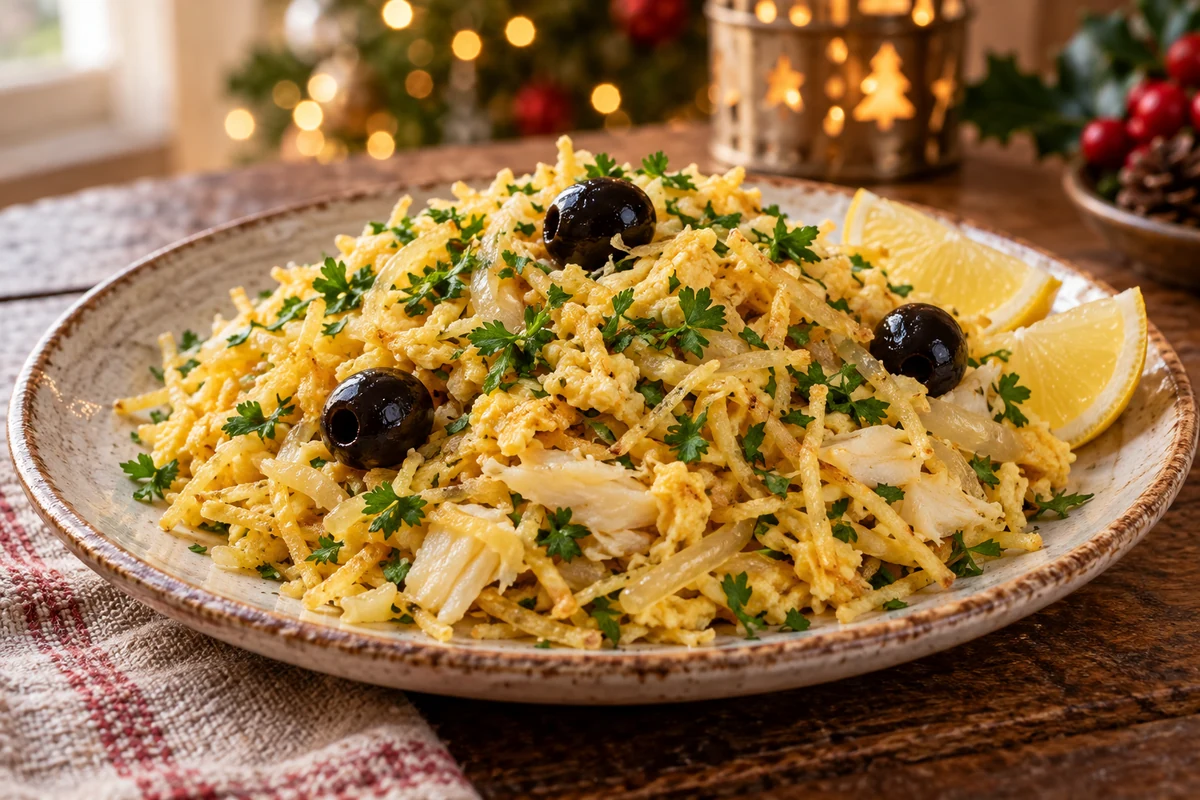
Follow these steps to make bacalhau à Brás, preparing the fish and potatoes before combining them with the eggs.
- Prepare the fish: desalt in the fridge according to its packaging if necessary. Gently poach until opaque and flaking, using 8–10 minutes only as a guide. Cool just enough to handle, remove skin and bones and flake. Continue promptly, or cool and refrigerate safely.
- Prepare the potato straws: cut 400–500 g potatoes into fine matchsticks, or use 300 g ready-made straws. For homemade ones, rinse and dry thoroughly, then fry small batches at 170–180°C until lightly golden, roughly 3–5 minutes. Do not overfill the oil pan; drain on kitchen paper.
- Prepare onion and garlic: slice the onion into thin half-moons and finely chop the optional 2 garlic cloves. Keep the prepared fish and potatoes ready separately.
- Heat the oil: warm the 4 tbsp olive oil in a large frying pan over a medium heat, without letting it smoke.
- Soften the onion: cook for about 6–8 minutes until soft and translucent. Add the garlic, if using, and cook for another 30 seconds without burning it.
- Add the cod: stir in the cooked flakes and cook for about 3–4 minutes to combine the flavours and evaporate excess moisture.
- Add some potatoes: fold in half the potato straws, keeping the rest for the end.
- Beat the eggs: beat the 4 eggs with black pepper and only a little salt if needed. Base that decision on the cooked fish, never on a raw egg mixture.
- Cook the egg mixture: lower the heat, pour in the eggs and stir gently until fully set but still soft. Check the centre reaches 70°C for 2 minutes or 75°C for 30 seconds with a clean probe; do not leave liquid raw egg in the dish.
- Check the seasoning: taste only once everything is fully cooked. A little extra unsalted cooked potato can soften an overly salty flavour, but adding oil does not remove salt.
- Add herbs and olives: remove from the heat, fold in the ½ cup parsley and garnish with pitted black olives.
- Finish with crunch: gently fold in the remaining potato straws and serve immediately with lemon wedges.
- Timing: allow roughly 30–45 minutes for preparation and cooking once the fish is desalted, depending on whether you make the potato straws. Soaking and thawing time are additional.
- Hygiene and storage: keep raw fish and eggs chilled and separate from ready-to-eat food. Cool leftovers and refrigerate within 1–2 hours; use within 48 hours and reheat only once until steaming hot throughout.
Tips and alternatives
- Packaged potato straws: add them towards the end so they do not all soften in the egg mixture.
- Baked potatoes: spread fine potato matchsticks on a lightly oiled tray and bake at 200°C until lightly golden. Start checking early; 20–30 minutes is only a guide and very thin pieces brown quickly.
- Ready-desalted cod: use a suitable frozen product to save soaking time, following its directions and seasoning cautiously.
- A creamier variation: mix 2 tbsp cream into the eggs before adding them to the pan. Cook the whole mixture through; this changes the traditional texture slightly.
- Servings: the version using 500 g desalted fish makes roughly 4–6 portions with side dishes; adjust for appetites.
Bacalhau à Brás: variations

These variations adapt bacalhau à Brás while keeping the central combination of flaked fish, egg and potato. Check ingredients carefully when catering for allergies or dietary requirements.
Flavour and texture variations
- Rich cream version: add 150–200 ml cream with the beaten eggs, then cook the whole mixture through. It will be richer and looser than the basic dish.
- Additional ingredient: 150–200 ml cream, or a suitable plant-based cooking alternative. This replaces the smaller 2 tbsp cream option above; it is not an extra addition on top of it.
- Sweet potato version: replace the raw ordinary potatoes with 400 g finely cut sweet potato for a sweeter flavour.
- Alternative: white or purple sweet potatoes can be fried or baked; cooking times and final texture differ.
- Cauliflower version: replace the potato straws with 300 g grated cauliflower, cooked and well drained before browning. It gives a softer result with less potato starch, rather than the same crunch.
- Oven-baked version: combine the prepared cooked cod, softened onion and cooked potatoes in a baking dish, then add the beaten eggs. Bake at 180°C until the centre is fully cooked; 15–20 minutes is a guide, not a substitute for checking the egg mixture.
- With vegetables: add 150 g pepper strips, softened with the onion, and 100 g peas cooked according to their packaging.
- Broa topping: scatter over 100 g crumbled Portuguese maize bread, lightly moistened with butter, and brown in the oven. Check the bread’s ingredients for wheat or rye as well as maize.
- Small bites: a fully cooked mixture that has been cooled promptly and chilled can be shaped, coated in breadcrumbs and fried until piping hot in the centre. Use a suitable binding and coating recipe; do not briefly fry raw egg mixture or reheat leftovers more than once. Serve with yoghurt and lemon dip.
- Mediterranean flavours: add 50 g chopped sun-dried tomatoes and sliced green olives, then finish with oregano and lemon zest.
- More herbs: increase the parsley to 1 cup and include the 2 garlic cloves already listed in the base recipe.
- Without fish: use 400 g drained hearts of palm or properly cooked shiitake mushrooms instead of cod. Season to taste. The dish still contains eggs, so this is not a vegan version.
Making variations work
- Proportions: the basic recipe uses 500 g fish and 4 eggs, or about 125 g fish per egg. Treat this as a starting point rather than a rule for every substitution.
- Texture: keep some potato straws separate until the final fold-through.
- Seasoning: desalt properly, then taste a fully cooked sample before adding more salt. Partly desalted fish is not a shortcut.
- Presentation: use olives, parsley and lemon wedges for colour and a fresh finish.
Traditional bacalhoada: ingredients
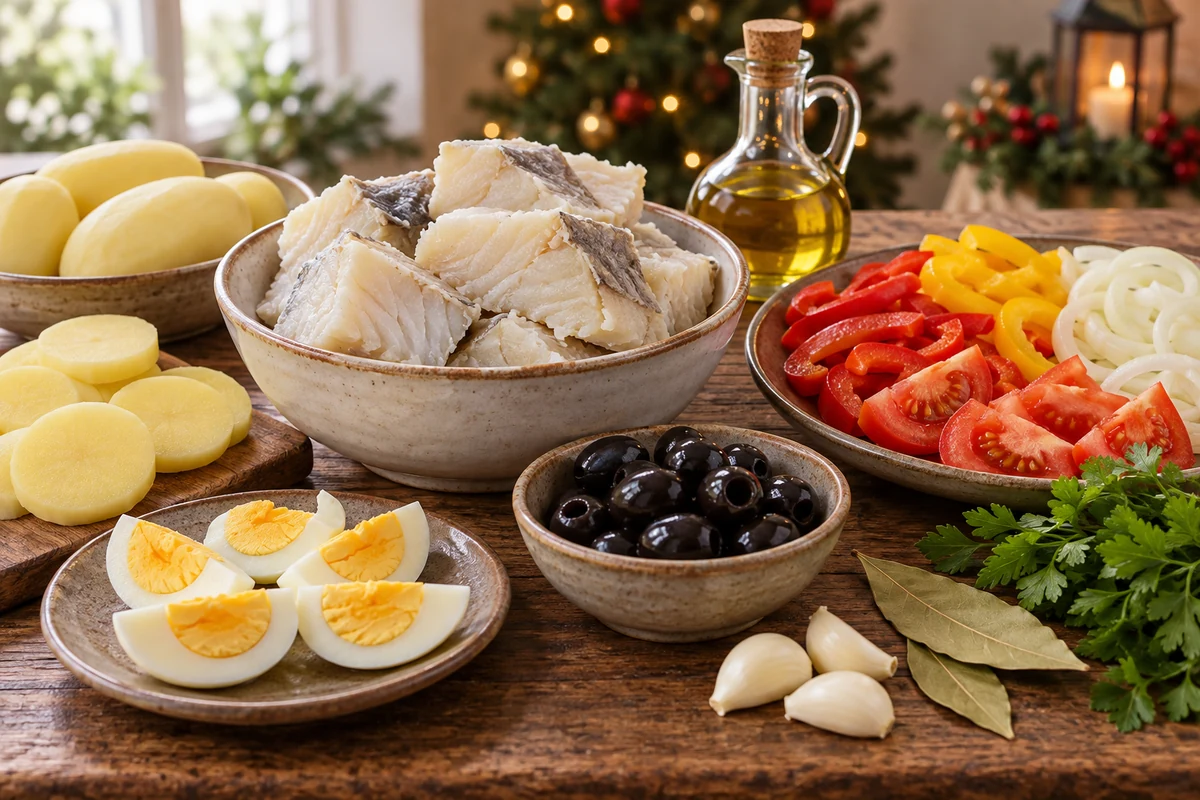
For a generous dish of traditional bacalhoada serving about 6–8 people, gather the following ingredients.
- 1.5–2 kg desalted salt cod portions. If using salted fish, complete the supplier’s refrigerated soaking process first.
- 1.2 kg potatoes, peeled and cut into thick rounds or roasting-sized pieces.
- 3 large onions, thinly sliced.
- 2 peppers, one red and one yellow, deseeded and sliced into strips.
- 4 ripe tomatoes, sliced. Well-drained tinned peeled tomatoes are an alternative; tin sizes vary, so use a quantity appropriate to the dish.
- 4 hard-boiled eggs, quartered.
- 150 g pitted black olives, whole or sliced.
- 100–150 ml extra-virgin olive oil in total, divided between greasing the dish and dressing the layers.
- 3 garlic cloves, sliced or chopped.
- 2 bay leaves.
- Chopped parsley to taste, to finish.
- Salt and black pepper, added cautiously because the cod may retain salt.
- 100 ml dry white wine, optional. Use water or suitable low-salt stock instead if avoiding alcohol; cooking does not guarantee its complete removal.
Substitutions and preparation tips
- Potatoes: sweet potato gives a sweeter variation. The main recipe parboils the potatoes; frying them is unnecessary.
- Fish: fresh hake or another firm white fish can replace salt cod, with a different flavour and no desalting stage.
- Tomatoes: well-drained tinned tomatoes are useful when fresh ones are not ripe.
- Olives: green olives offer a different flavour; both types vary in saltiness.
- Cooking method: layer the ingredients and bake at 180°C, following the detailed method below. A covered hob version needs a suitable pan and careful checks that both potatoes and fish are fully cooked.
- Salt check: fully cook a small sample of desalted fish before tasting it. Never taste the raw fish.
Traditional bacalhoada: method
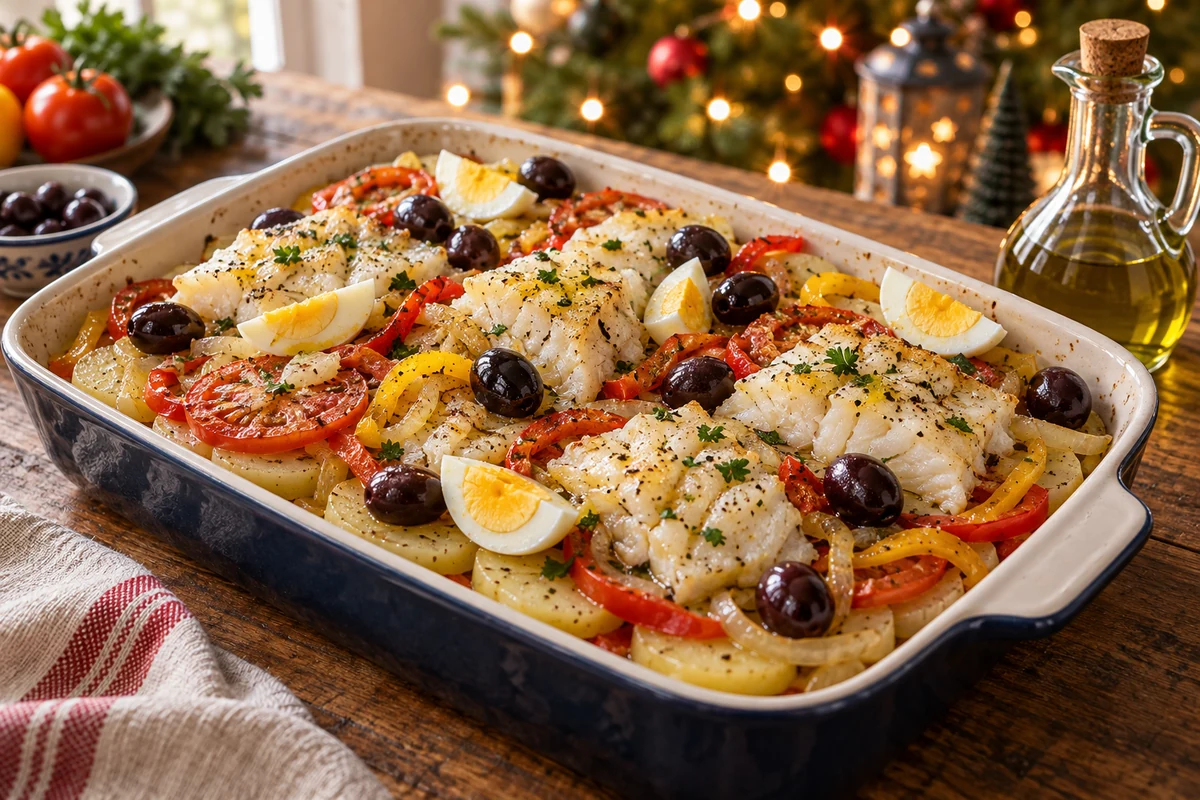
- Preheat the oven: set it to 180°C and lightly grease a large baking dish with a little of the measured oil.
- Prepare the fish: use 1.5–2 kg properly desalted cod portions. Keep them refrigerated until needed and check for bones.
- Prepare the potatoes: peel and slice the 1.2 kg potatoes. Parboil until almost tender, starting to check after 6–8 minutes, then drain well. Thick pieces may need longer.
- Cut the vegetables: slice the 3 onions, cut the 2 peppers into strips and slice the 4 tomatoes. Chop the 3 garlic cloves.
- Start layering: cover the base with half the potatoes, add black pepper and drizzle with a little of the measured oil.
- Add vegetables and herbs: spread over half the onion, peppers, tomatoes and garlic, then add 1 bay leaf.
- Add the first fish layer: place half the cod over the vegetables, skin-side down if keeping the skin. Drizzle with part of the remaining oil and some of the optional 100 ml wine or alternative liquid.
- Repeat: add the remaining potatoes, onion, peppers, tomatoes, garlic, bay leaf and fish. Distribute the remaining oil and liquid across the dish. The 100–150 ml oil and 100 ml optional liquid are totals for the whole bake, not for each layer.
- Add olives and eggs: arrange the 150 g olives and 4 quartered hard-boiled eggs over the dish.
- Cover and bake: cover with foil and bake for about 25 minutes, then uncover for a further 10–15 minutes. These times are guides; deep dishes and thick fish may need longer.
- Check doneness: the potatoes must be tender and the cod opaque and flaking. Check the thickest parts and centre with a clean probe: 70°C for 2 minutes or 75°C for 30 seconds.
- Finish: remove the bay leaves, rest for about 5 minutes and scatter over parsley.
- Serve: bring the dish to the table with rustic bread or rice and optional lemon wedges.
- Store leftovers: divide into shallow containers, cool and refrigerate within 1–2 hours, then eat within 48 hours or freeze. Reheat only once until steaming hot throughout; covering the dish can help retain moisture.
Practical tips
- Salt: taste a fully cooked sample before seasoning the whole bake.
- Browner potatoes: if preferred, lightly brown the parboiled slices in a frying pan before layering, allowing for any extra oil used.
- A lighter version: reduce the measured oil as suggested below. Uncovering the dish helps browning and evaporation, but does not remove the oil already added.
- Making ahead: prepare and chill components separately if their storage instructions allow. Do not extend the raw fish’s storage time after a long soak. A cold assembled dish needs additional cooking time and a thorough centre-temperature check.
- Variations: swap some potatoes for sweet potato, or black olives for green ones.
Traditional bacalhoada: variations

Change the flavour or presentation to suit the occasion while keeping the same principles of proper desalting and thorough cooking.
Flavour and preparation ideas
- Sweet potato bacalhoada: replace up to half the potatoes, about 600 g, with sweet potatoes. Preparation: parboil or roast them until nearly tender before layering; extra frying is not required.
- Roasted vegetables: roast peppers, onions and tomatoes before assembling to concentrate their flavour and reduce excess moisture. Variation: include cooked courgette or aubergine for a different texture.
- Less oil: reduce the total to 60–80 ml and steam or parboil the potatoes. Count any finishing drizzle within that total. Alternative: a light oil spray can help grease the dish without adding a large amount.
- Broa crust: scatter over 100 g crumbled maize bread lightly moistened with butter, then brown for roughly 8–10 minutes while checking the fish is cooked. Watch carefully to prevent burning.
- Herbs and lemon: add parsley, thyme and lemon zest for a fresh aroma.
- Individual servings: use small ovenproof dishes for presentation, adjusting cooking time and checking each portion is fully cooked.
- White wine and caramelised onion: soften and brown the onions, then deglaze with the recipe’s optional 100 ml wine before assembling. Do not add another 100 ml to the layers. Use an alcohol-free alternative where needed.
Choosing a variation
- Available time: precooked, safely chilled components can reduce work on the day, but the finished dish still needs to heat through completely.
- Guests’ preferences: use less oil and more herbs for a less rich dish, or keep the classic combination.
- Salt balance: desalt properly and taste a cooked sample. Bread or sweet potato can change the balance of flavours but will not remove salt from the fish.
- Presentation: eggs, olives and parsley provide contrasting colours in any version.
- Preparing ahead: follow the chilling guidance above. Add bread crumbs shortly before the final browning stage, rather than leaving them to soak overnight.
Salt cod escondidinho: ingredients

For around 6 portions of salt cod escondidinho, gather the following ingredients. This Brazilian bake has a fish filling under a smooth mash topping.
- 600–700 g desalted salt cod, to be cooked and flaked. Ready-desalted frozen fish is an option when time is short; follow its instructions.
- 1 kg cooked cassava, ready for mashing. Use commercially prepared cassava and cook it fully according to its packaging, then weigh the cooked amount. Alternative: 1 kg cooked potatoes for mashing. Do not use raw or inadequately processed cassava.
- 200–300 ml milk, added gradually to adjust the mash. Alternative: unsweetened plant milk or suitable vegetable stock; check all other dairy ingredients too if avoiding milk.
- 2 tbsp butter for the mash. Alternative: 2 tbsp olive oil for a dairy-free mash, although oil is not automatically a lower-calorie substitute.
- 150–200 ml cream, optional. Replace part of the milk with it rather than adding all the liquids at once; the mash must stay firm enough to cover the filling.
- 1 medium onion, finely diced.
- 2 garlic cloves, finely chopped.
- 4 tbsp extra-virgin olive oil in total: 2 tbsp for the filling, 1 tbsp for greasing the dish and 1 tbsp for the topping.
- ½ cup chopped parsley for the filling.
- 100–150 g grated Parmesan or mozzarella for the topping. Alternative: a modest sprinkling of nutritional yeast to taste, rather than an equal weight. Removing cheese alone does not make a fish dish vegan.
- Salt and black pepper to taste, allowing for salt retained by the cod.
- A pinch of nutmeg, optional for the mash.
- Sliced pitted olives or hard-boiled eggs, optional to garnish.
Substitutions and preparation tips
- Salt: fully cook a sample of the desalted fish before tasting and seasoning.
- Less rich mash: use skimmed milk, omit the cream and reduce added butter or oil to taste.
- Replacing cod: fresh hake can be cooked for the filling, or use suitably prepared hearts of palm for a fish-free variation. Both change the flavour and character of the dish.
- Preparing ahead: cook and mash the prepared cassava the day before if needed. Cool and refrigerate within 1–2 hours, then assemble and heat thoroughly within 48 hours of cooking.
- Scaling: halve all the ingredients for roughly 3 portions, using 300–350 g desalted fish.
Salt cod escondidinho: method
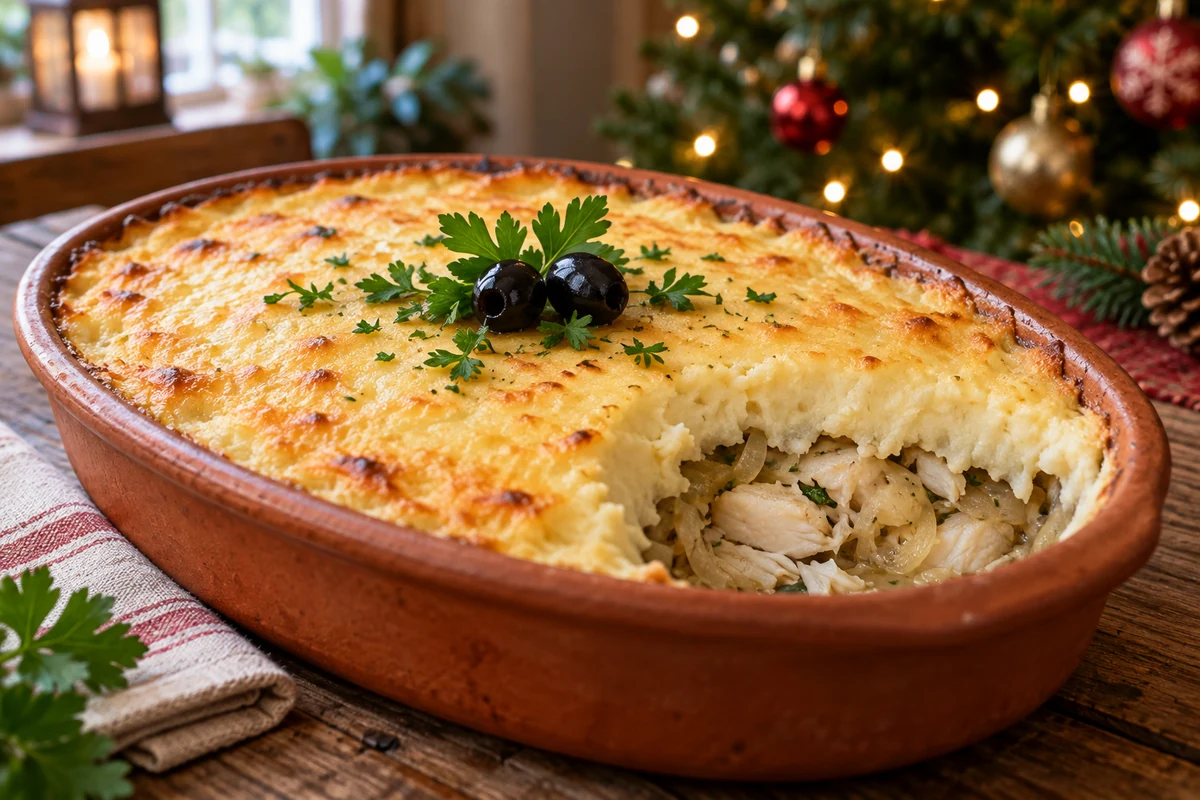
- Prepare the mash base: cook commercially prepared cassava fully according to its packaging, then drain and remove any tough central fibres. Use 1 kg cooked cassava. Alternatively, boil potatoes until tender and weigh 1 kg after cooking. A brief generic boiling time is not a safe processing method for raw cassava.
- Make the mash: mash while hot with the 2 tbsp butter. Gradually add the milk, using only enough for a smooth, firm mash. If using the optional cream, substitute it for part of the milk rather than making the mixture runny.
- Season the mash: add a little salt and the optional pinch of nutmeg, remembering that the filling contains salted fish.
- Cook and flake the cod: gently poach the 600–700 g desalted fish until opaque and flaking, using 8–10 minutes as a guide. Cool just enough to handle, then remove skin and bones and separate into flakes.
- Soften the onion and garlic: heat 2 tbsp of the measured oil in a frying pan. Cook the diced onion for about 6–8 minutes until soft, then add the garlic for another 30 seconds.
- Add the fish: stir in the cooked flakes and cook for about 3–4 minutes to remove excess moisture. Season with black pepper.
- Start assembling: grease a medium baking dish with 1 tbsp of the measured oil. Spread half the mash evenly over the base.
- Add the filling: spread the fish mixture over the mash and sprinkle with the ½ cup parsley.
- Cover: spread the remaining mash over the filling and smooth the surface.
- Finish the top: drizzle with the final 1 tbsp oil and scatter over the 100–150 g cheese. For the optional bread-crumb variation, see the broa suggestion below.
- Bake: place in an oven preheated to 200°C until golden and piping hot throughout. About 15–20 minutes may suit a freshly assembled warm dish; a chilled or deeper one needs longer. Check the centre reaches 70°C for 2 minutes or 75°C for 30 seconds.
- Rest and serve: rest for 3–5 minutes, then portion and garnish with the optional olives or hard-boiled eggs.
- Dairy-free variation: replace milk, butter, cream and cheese with suitable alternatives, checking labels. Plant milk, olive oil and a little nutritional yeast are possible choices. This still contains fish; a vegan version also needs the fish and any egg garnish replaced.
- Food safety: keep desalted fish chilled before cooking. Cool leftovers and refrigerate within 1–2 hours, use within 48 hours or freeze, and reheat only once until steaming hot throughout.
Quick tips
- Salt control: taste only fully cooked fish when deciding how much seasoning to add.
- Mash texture: for a richer mash, use 50–100 ml of the optional cream in place of some milk, or an extra tablespoon of butter. Add gradually so the topping still holds its shape.
- Making ahead: prepare the mash and filling the day before, cool them promptly and refrigerate separately. Assemble within their safe storage time and add cheese or crumbs just before baking.
- Reheating: cover to retain moisture and heat until steaming hot throughout. The time depends on the portion size and starting temperature; do not assume 15–20 minutes is always enough. Reheat only once.
- A less rich version: use boiled mash ingredients, omit cream and moderate the oil and cheese. There is no need to fry cassava for this recipe.
Salt cod escondidinho: variations

The basic structure of salt cod escondidinho is a filling beneath mash. Changing the topping or adding vegetables gives several ways to adapt its flavour and texture.
Practical variations
- Cassava and cheese: use the recipe’s 1 kg cooked cassava for roughly 6 portions and finish with 100–150 g cheese. Alternative: cooked potatoes make a more familiar, milder mash.
- Sweet potato topping: use 800–900 g cooked sweet potatoes instead of cassava for a sweeter flavour; the amount of topping and yield will differ slightly. Flavour suggestion: a little lemon zest complements it.
- Less rich mash: use skimmed milk, omit cream and reduce the cheese. Olive oil can replace butter but is still a fat. Tip: keep added oil moderate when cooking the filling.
- Crisp broa topping: scatter 100 g crumbled Portuguese maize bread, lightly moistened with butter, over the mash before the final browning stage. Check for wheat or rye in the bread.
- Cream-enriched mash: use the optional 150–200 ml cream in place of part of the milk, adding gradually. This is a richer version, not a second full measure of liquid.
- Cauliflower topping: use about 800 g cooked, thoroughly drained cauliflower. Its mash is softer than cassava and may need less liquid.
- With courgette: cook 150–200 g grated courgette, squeeze out excess moisture and mix into the mash.
- Individual portions: use 200–250 ml ramekins, leaving room below the rim. Smaller portions may cook sooner, but check the centre rather than relying on a fixed 12–15 minute timing.
- Fish-free or vegan version: replace cod with 400 g prepared hearts of palm or 500 g cooked young jackfruit. For a vegan dish, replace every dairy ingredient, omit egg garnish and check all labels. The nutritional composition will differ.
- Mediterranean flavour: mix sliced olives, chopped sun-dried tomatoes, oregano or basil into the filling.
Adapting the recipe
- Salt: taste a fully cooked sample after desalting before adding further seasoning.
- Mash consistency: add milk or stock gradually, stopping when the mash is smooth but firm enough to support the filling.
- Crunch: add broa, panko or cheese in time to cook and brown during the final oven stage; do not leave the topping to become soggy in storage.
- Preparing ahead: mash and filling can be made the day before if cooled promptly and kept refrigerated. Assemble and heat thoroughly within 48 hours of cooking, counting from the oldest component.
- Portion sizes: as a serving guide, allow roughly 150–200 g of the finished bake as a side or 300–350 g as a main, adjusted to appetites and other dishes.
Salt cod and chickpea salad: ingredients and method
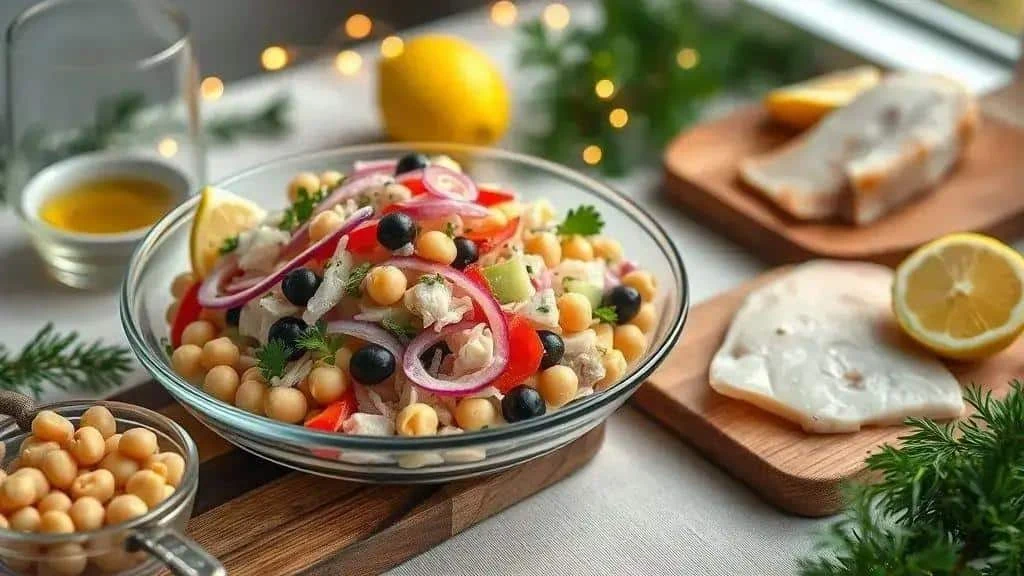
- 500 g desalted salt cod, fully cooked, boned, flaked and chilled before mixing. If still raw, gently poach until opaque and flaking; 8–10 minutes is only a guide. Fully cooked hake is an alternative, with a different flavour.
- 400 g cooked, drained chickpeas. Tinned chickpeas are convenient: rinse and weigh after draining. Cooked white beans are an alternative.
- 1 medium red onion, thinly sliced. Use another onion if preferred; flavour and pungency vary.
- 1 red pepper, deseeded and finely diced. Yellow pepper also works.
- 1 medium cucumber, optional, deseeded and diced. Sliced celery is an alternative, but is an additional allergen.
- 100 g pitted black olives, whole or sliced.
- ½ cup chopped parsley for freshness.
- 4 tbsp extra-virgin olive oil in total. If using 1 tbsp for the optional fish sauté, reserve 3 tbsp for the dressing. Use a little less overall if preferred.
- 2 tbsp white wine vinegar or lemon juice, adjusted to taste.
- 1 small garlic clove, optional, finely chopped.
- Zest of 1 lemon, optional. Extra lemon wedges can be served alongside.
- Salt and black pepper, allowing for the salt in the fish and olives.
Method
- Prepare the cod: desalt according to the pack if needed, then cook thoroughly, remove skin and bones and flake. Cool promptly and refrigerate within 1–2 hours; soaking alone does not make it ready to eat.
- Prepare the chickpeas: cook dried chickpeas according to the packet until tender, then cool and chill promptly. For tinned chickpeas, rinse, drain and weigh 400 g.
- Prepare the vegetables: wash produce, slice the onion and dice the pepper and optional cucumber. Have the olives and chopped parsley ready.
- Optional sauté: immediately after cooking the fish, briefly sauté it in 1 tbsp of the measured oil to remove excess moisture, then cool and chill safely. This is a finishing step for cooked fish, not a 1–2 minute shortcut for cooking raw cod.
- Make the dressing: whisk the remaining oil with 2 tbsp vinegar or lemon juice, the optional garlic and zest, black pepper and only a little salt if needed. Use all 4 tbsp oil here only if you skipped the sauté.
- Combine: put the cold chickpeas and cooked fish in a bowl with the onion, pepper, optional cucumber and olives. Add the dressing and fold gently.
- Finish seasoning: add the chopped parsley, taste and adjust carefully. Extra salt may not be needed.
- Chill: cover and refrigerate for 30–60 minutes to let the flavours combine. Serve chilled and keep the remaining salad refrigerated rather than leaving it out to reach room temperature.
- Serve: garnish with the optional lemon wedges and extra parsley if available. Serve with rustic bread or salad leaves.
Tips and variations
- Making ahead: the salad can be prepared the day before if kept at 5°C or below. Use within 48 hours of cooking the oldest cooked ingredient, or sooner if a pack specifies; assembling it does not restart the clock.
- Yoghurt dressing: replace some oil with a little plain yoghurt for a creamy variation. This adds milk as an allergen.
- Crunch: add 2 tbsp toasted flaked almonds just before serving, only if suitable for your guests’ nut allergies.
- Salt check: taste only fully cooked fish, never a raw piece taken from the soaking water.
Serving, table setting and optional wine pairings

Arrange starters, mains and side dishes so guests can move around the table easily. Keep the serving plan manageable and bring out smaller quantities as needed.
Setting the table
- Choose a focal point: place the main dish, such as bacalhoada, centrally with side dishes nearby.
- Crockery and cutlery: provide serving utensils for each dish as well as individual plates. Keep handles easy to reach and prevent shared utensils crossing between allergen-free and other dishes.
- Practical decoration: low arrangements allow conversation without blocking the view. LED candles avoid an open flame near greenery, napkins and serving hands.
- Labels: name dishes and identify allergens from the actual ingredients, including fish, eggs, milk and wheat where present. Check bread, stock, condiments and substitutions; lactose is not the name of the milk allergen.
Serving the dishes
- Temperature: serve cooked dishes promptly and keep cold salads chilled at 5°C or below. If holding food hot, use equipment that maintains at least 63°C; a warmed platter alone does not guarantee this.
- Practical portions: use smaller serving dishes or an orderly buffet line, replenishing from safely stored food rather than putting everything out at once.
- Order of service: begin with a light starter, serve the fish main with its accompaniments, then offer dessert.
- Texture: add potato straws at the end and brown bread toppings shortly before serving so they stay crisp.
Optional wine pairings
For adults who choose to drink alcohol, these are flavour suggestions rather than rules. Offer water and appealing alcohol-free drinks alongside them.
- Salads and herb-led dishes: a fresh Vinho Verde, Alvarinho or Sauvignon Blanc can complement lemon and herbs.
- Creamy dishes: a lightly oaked or unoaked Chardonnay, Viognier or brut sparkling wine can work with cream-based salt cod and rich mash toppings.
- Rustic bakes and pies: a fuller rosé or light-to-medium red, such as a young Douro or Rioja, may suit tomatoes, peppers and browned pastry.
- Fishcakes and fried bites: brut sparkling wine or a light beer offers a contrasting style.
- Serving wine: follow the bottle’s guidance. Roughly 8–12°C for many whites and 14–16°C for light reds can be useful starting points. Decanting is optional and not necessary for every young red.
Presentation and service tips
- Colour: lemon wedges, parsley and olives make simple garnishes.
- Plating: serve hot dishes on warmed plates, with crisp elements above softer ones, and bring them to guests promptly.
- Timing: prepare suitable components ahead, chill them safely and plan one thorough reheat where needed. Avoid repeated warming and cooling.
- Guests’ needs: check dietary requirements in advance, provide appropriate alternatives and keep allergen information accurate.
Planning a more economical salt cod Christmas meal
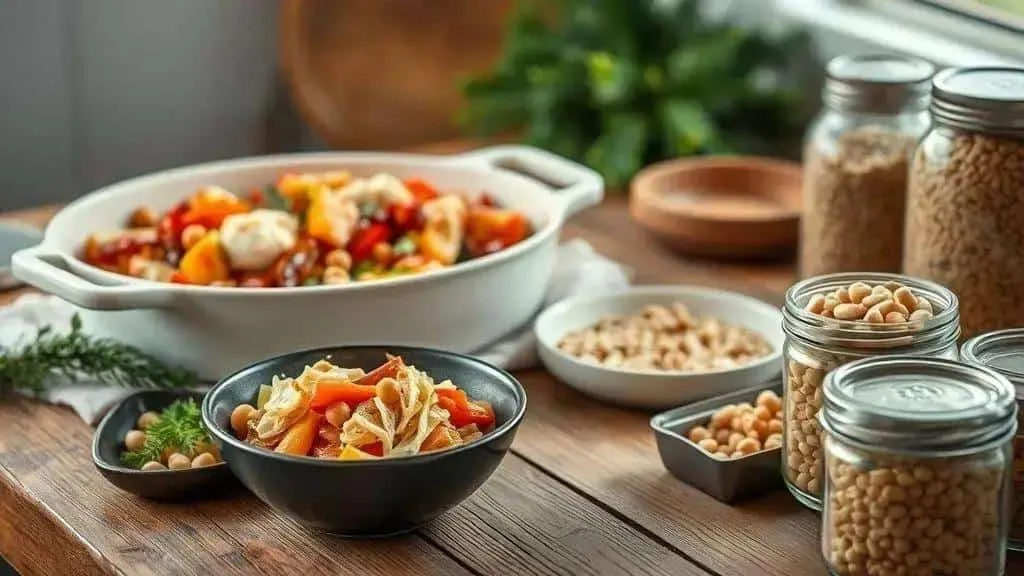
Careful portions, suitable alternatives and less waste can help control the cost of a salt cod meal. Environmental claims depend on the specific fish and supply chain, rather than the recipe alone.
Buying ingredients thoughtfully
- Compare prices: check the price per usable portion of salted, frozen and ready-desalted products. Bulk purchases are worthwhile only if you can store and use them; ready-prepared fish is not always cheaper.
- Choose the right cut: flakes and trimmings suit mixed fillings and salads, so expensive large loins are not needed for every dish.
- Consider alternatives: fresh or frozen hake and other firm white fish may be economical in bakes or salads. Compare prices locally and expect a different flavour.
Making the fish go further
- Add pulses: chickpeas or white beans can extend a salad or stew.
- Use vegetables: potatoes, properly prepared cassava and squash complement the fish and reduce the amount needed per portion.
- Layer the dish: pies, bacalhoada and escondidinho combine fish with a more substantial vegetable base.
Budget-minded variations
- Mixed escondidinho filling: replace some fish with cooked mushrooms or prepared hearts of palm if they are good value locally.
- A larger salad: combine flaked fish with more chickpeas and washed vegetables, adjusting dressing and serving estimates accordingly.
- Fishcakes from leftovers: use safely chilled cooked fish in a suitable measured recipe, cooking the cakes until piping hot throughout. Do not use fish that has already been reheated once.
Reducing food waste
- Use leftovers deliberately: safely stored fish can become a pie filling or spread. Keep within its original storage time and reheat no more than once; turning it into a new dish does not reset either limit.
- Plan portions: roughly 150–200 g desalted fish per adult suits many fish-led mains, but mixed dishes and generous sides may need less.
- Store sensibly: freeze suitable portions promptly in clean, labelled, freezer-safe containers. Thaw in the fridge and use within 24 hours of full defrosting, following any stricter product guidance.
Other practical choices
- Ask about sourcing: look for traceable fish and reliable information about the species, fishery and production method. Being local alone does not establish sustainability.
- Plan oven use: coordinate dishes with compatible temperatures without overcrowding the oven. Use a pressure cooker only for ingredients and methods approved by its manufacturer.
- Handle scraps appropriately: use local food-waste collections or compost suitable vegetable peelings according to your composting system. Not all scraps belong in a domestic compost bin.
Everyday ways to save
- Prepare in stages: schedule desalting in advance and, if useful, cook the fish the day before. Cool promptly and refrigerate safely rather than leaving it on the worktop.
- Keep the menu focused: serve one main fish dish with rice, salad and roasted vegetables instead of several expensive mains.
- Share the cooking: inviting households to bring a dish can spread the cost and add variety. Coordinate allergens and safe transport of hot or chilled food.
A quick way to use cooked fish leftovers
- Gather ingredients: use 300–400 g safely chilled cooked salt cod, some cooked vegetables, 1 cup cooked chickpeas, 2 tbsp olive oil, and chopped onion and garlic to taste. Only use leftovers still within their storage time and not previously reheated.
- Soften the base: heat the 2 tbsp oil and cook the onion until softened. Add the garlic briefly without letting it burn.
- Combine: add the fish, vegetables and chickpeas. Season with pepper and herbs, remembering the fish may already be salty.
- Heat and serve: stir until steaming hot throughout and serve immediately. Do not rely on a fixed 2–3 minutes. If making a pie instead, assemble the safely chilled ingredients and bake once until fully hot, rather than reheating now and baking again later.
These habits help you plan portions, use ingredients thoughtfully and make a festive meal without unnecessary waste.
Enjoy your Christmas meal
Whether you choose a vegetable-filled bacalhoada, softly set à Brás, a mash-topped bake or a chilled salad, salt cod offers several ways to bring Portuguese and Brazilian flavours to Christmas. Plan the soaking and cooking around the time and ingredients you have.
Thank you for reading. Explore our other festive recipes and serving ideas, and adapt the menu to the people sharing your table.
Follow the I Love Christmas blog for more seasonal inspiration. Wishing you a happy Christmas!
Christmas salt cod recipes: frequently asked questions
How long should I soak salt cod before Christmas?
Follow the supplier’s instructions and keep the fish refrigerated at 5°C or below. Flakes can need much less time than whole portions; ordinary pieces may need about 24 hours and thick ones 40–48 hours or more. Some very thick loins need up to 72 hours. Change the water as directed and cook a sample before tasting.
Can I prepare salt cod dishes ahead?
Yes, where the ingredients’ storage instructions allow. Cook suitable components ahead, cool them promptly and refrigerate within 1–2 hours. Use within 48 hours of the oldest component being cooked, and reheat only once until steaming hot throughout. Do not extend raw fish storage after a long soak.
What can I use if I cannot find salt cod?
Fresh hake or another firm white fish can work in bakes and salads. It does not need desalting, but must be cooked fully; the flavour will differ from traditional salt cod.
How do I keep potato straws crisp in bacalhau à Brás?
Keep some potato straws separate and fold them through just before serving, after the egg mixture has cooked through. Store any unused straws separately from moist ingredients.
Which wine goes with salt cod?
For adults who drink alcohol, fresh whites such as Vinho Verde or Sauvignon Blanc can suit salads; Chardonnay or brut sparkling wine can accompany creamy dishes; and rosé or a light red may suit rustic bakes. These are taste suggestions, and alcohol-free drinks are equally welcome.
Sources and Further Reading
- Norwegian Seafood Council: desalting salt cod
- UK Government: cooking food safely
- Food Standards Agency: chilling food
- Food Standards Australia New Zealand: cassava safety