These five Christmas roast pork leg recipes cover citrus, beer and honey, wine and herbs, a farofa-filled joint, and a pressure-cooked version finished in the oven. Find ingredients, preparation guidance, serving ideas and advice on storing leftovers. Cooking times are guides: check the meat and any stuffing are thoroughly cooked.
These Christmas roast pork leg recipes bring Brazilian pernil to the festive table. Here, pernil means fresh, uncured pork leg, not gammon or ready-cooked ham. Choose a flavour combination and plan ahead for marinating and roasting. Oven temperatures below refer to conventional ovens; follow your appliance’s fan-conversion guidance.
Why choose roast pork leg for Christmas?
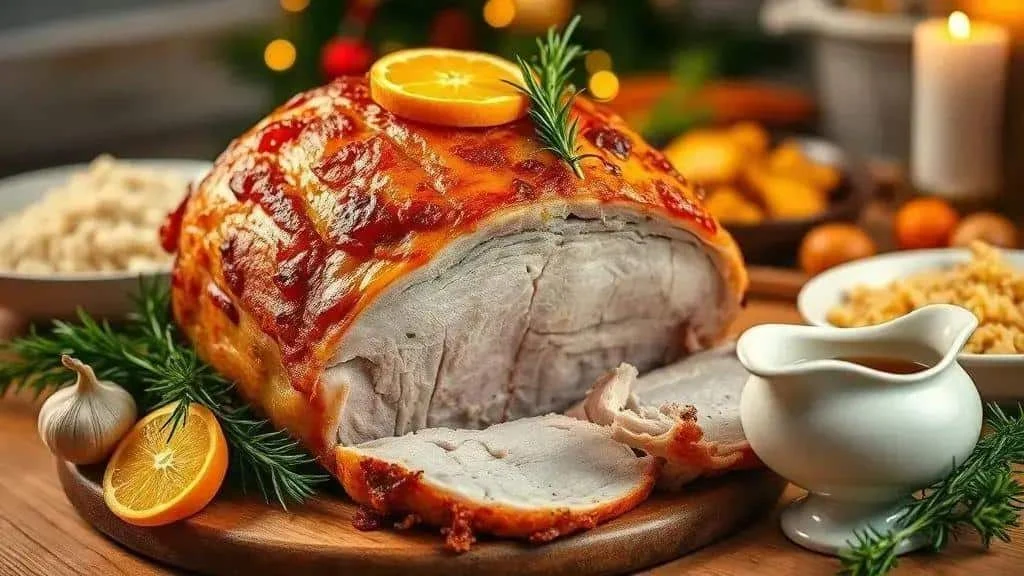
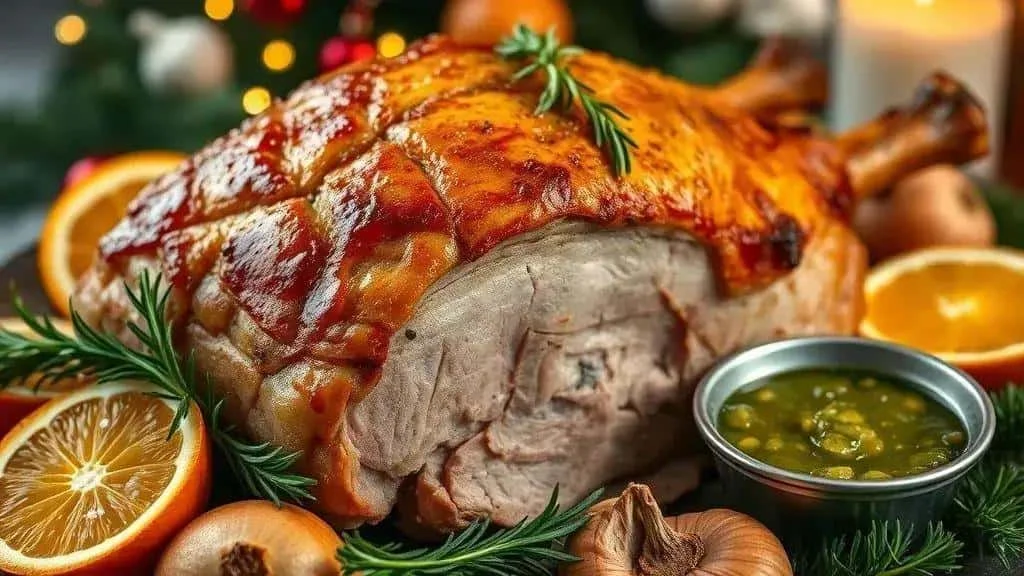
Roast pork leg is a familiar festive centrepiece in Brazil. A large joint works well for sharing, with plenty of scope for different seasonings and side dishes.
- Flavour: garlic, herbs, citrus and a browned crust give the roast its character.
- Budget: compare the cost per usable portion with other cuts, allowing for bone, rind and cooking losses rather than assuming a larger joint is always cheaper.
- Versatility: use different herb and citrus marinades, roast a whole joint or cook smaller pieces. Pressure cooking needs a suitable appliance and its specific instructions.
- Scaling: adjust ingredient amounts for your joint, but do not scale cooking time mechanically: shape, bone and stuffing affect how quickly the centre heats.
- Planning ahead: you can prepare suitable components in advance and safely chill cooked pork, reducing work on the day.
- Side dishes: farofa, rice, roast vegetables and salads offer a choice of textures alongside the meat.
Practical advantages
Plan enough for your guests and, if there are leftovers, portion and chill them promptly for sandwiches, rice dishes or pies within the safe storage time.
- Portions: as a generous shopping guide, allow roughly 300–400 g raw bone-in pork per adult with sides, or up to 500 g for larger appetites and fewer accompaniments. Boneless joints need less allowance for waste; these are not cooked serving weights.
- Time: a 3 kg joint can need several hours in the oven. Allow roughly 3–4 hours or more in your schedule, then follow the joint’s cooking guidance and check its centre; time alone cannot establish doneness.
- Alternative method: suitably sized pieces can be pressure-cooked and then browned in the oven, provided you follow the cooker’s capacity, liquid and timing instructions.
Choosing and preparing the joint
- Choose the cut: an even fat layer beneath the rind helps when aiming for crackling.
- Marinate: combine garlic, salt, pepper, orange juice or wine and herbs. Marinate for 8–24 hours in the fridge where the use-by and thawing limits permit.
- Core temperature: pork must be thoroughly cooked. A clean probe should show at least 70°C held for 2 minutes or 75°C for 30 seconds in the coldest part; check stuffing separately.
- Rest: rest for about 15–20 minutes before carving, without relying on resting to finish an undercooked centre.
With enough preparation time and careful cooking checks, roast pork can be a useful centrepiece for a Christmas meal.
Before you start: choosing pork and planning the cooking
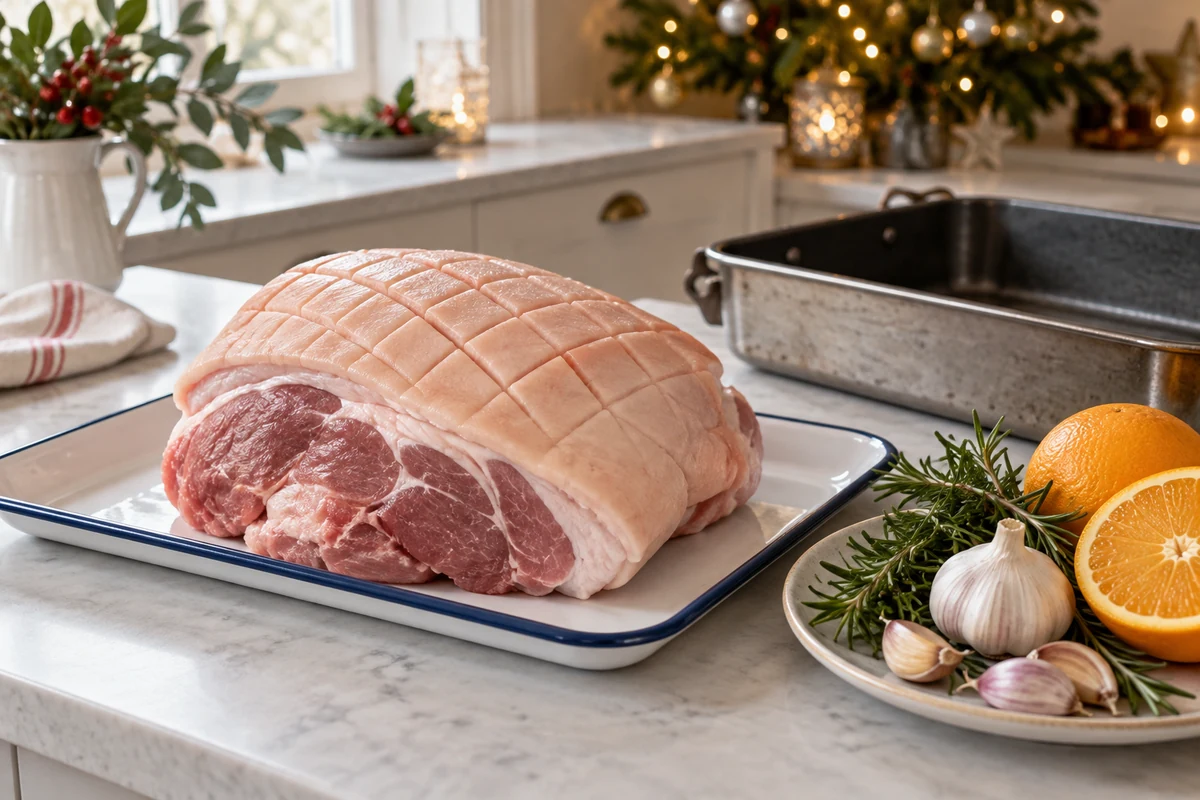
Check the joint, your equipment and the serving schedule before marinating so there are fewer surprises on the day.
Choosing pork leg
- Bone-in joint, around 1.5–4 kg: a traditional presentation, but the bone affects yield and temperature checks. It does not guarantee juiciness or even cooking.
- Boneless joint, around 1–3 kg: easier to carve, although a thick rolled joint may still take a long time to cook through.
- Fat layer: an even layer beneath the rind suits roasting; avoid trimming away everything if you want crackling.
- Rind for crackling: ask the butcher to score it through the skin and fat without cutting deeply into the meat.
- Source and freshness: buy from a reputable supplier, check the use-by date and ask for boning or tying if needed.
Planning portions
- Shopping quantities: around 300–400 g raw bone-in pork per adult is a generous guide with sides, rising towards 500 g for larger appetites. Adjust down for boneless meat and smaller appetites rather than treating this as a fixed requirement.
- Buy at the right time: arrange collection or delivery so you have time to marinate while remaining within the use-by date. Keep raw pork covered on the bottom fridge shelf at 5°C or below.
- Marinating time: allow 8–24 hours where storage limits permit. A shorter 4-hour marinade is possible for flavour, but is not a safety treatment or a reason to leave meat unrefrigerated.
- Equipment: check you have a large roasting tin, a suitable rack, a meat thermometer and foil.
- Work backwards: subtract resting, estimated cooking and preparation time from your serving time, then allow a margin for a joint that needs longer.
Cooking times and methods
Weight, shape, bone, stuffing and oven performance all affect timing. Follow supplier guidance for your cut and use a clean probe to confirm thorough cooking.
- Conventional roasting: a useful industry guide for an unstuffed pork leg is around 30 minutes per 450 g plus 30 minutes at 180–190°C, with a hotter stage for crackling if appropriate. Follow the joint’s instructions first; lower oven temperatures need longer.
- Gentler roasting: a lower oven setting can take several hours, depending on the joint. Use a reliable method for that temperature; neither 3–5 hours nor a browned surface proves the centre is cooked.
- Pressure cooker and oven: use the manufacturer’s instructions for the size of pork pieces, pressure level, minimum liquid and pressure release. Finish in the oven to brown; a universal minutes-per-kilogram rule is not reliable for every cooker.
- Temperature check: confirm 70°C for 2 minutes or 75°C for 30 seconds at the coldest point before taking the meat out. Check more than one place and the centre of any filling.
- Resting: loosely tent the meat with foil for about 15–20 minutes. Avoid tightly covering crisp rind, which can soften in trapped steam.
- Crackling: a final hotter stage around 200–220°C may help brown dry rind. Watch closely, especially with sweet glazes; do not leave it under the grill unattended.
Practical tips
- Dry rind: pat the skin dry and season with salt before roasting. Keep wet marinade off the skin if crisp crackling is your priority.
- Acidic marinades: orange, lemon, vinegar and wine add flavour, mainly near the surface. Too much acid or prolonged soaking can damage texture; it does not disinfect the meat.
- Use a thermometer: a clean instant-read probe gives a better check than colour or roasting time alone.
- When time is short: choose a smaller joint or suitable pork pieces and an established cooking method, rather than rushing a large roast.
Five roast pork leg recipes: ingredients, methods and variations
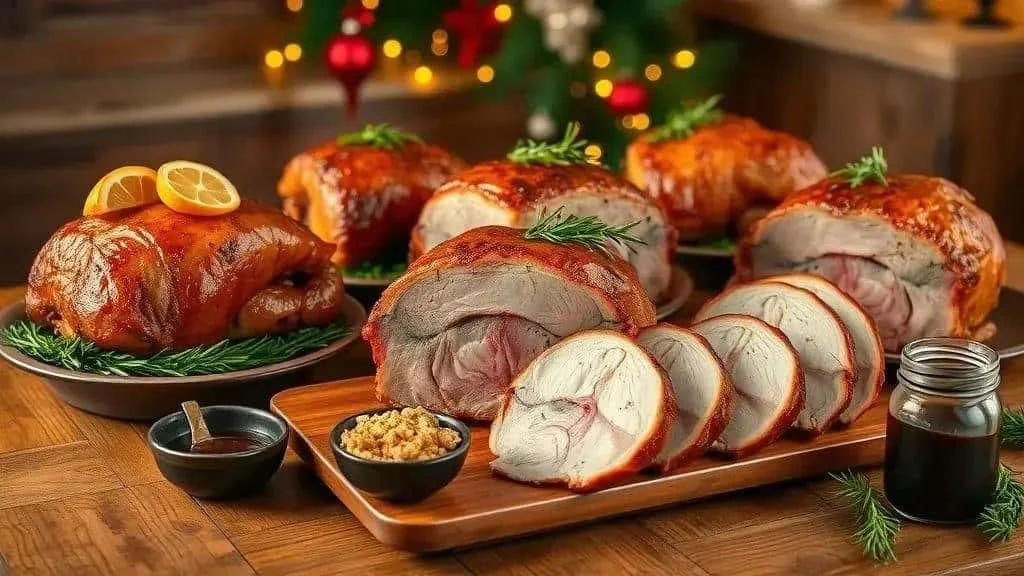
1. Citrus roast pork leg
Garlic, orange and herbs give this roast a bright flavour. Keep the rind dry for a better chance of crisp crackling.
Ingredients:
- 3 kg fresh pork leg with rind, with an even fat layer.
- 6 garlic cloves, crushed.
- 120 ml orange juice. Pineapple juice is an alternative, but fresh pineapple can soften the surface rapidly; avoid a long marinade with it.
- 60 ml white wine or apple cider vinegar. Vinegar gives a sharper result; cooking wine does not guarantee the finished dish is alcohol-free.
- Up to 2 tbsp coarse salt, adjusted to taste and the joint’s seasoning. Coarse and fine salt do not weigh the same by volume.
- 1 tbsp ground black pepper, or less to taste.
- 2 tbsp olive oil.
- 2 rosemary sprigs and 2 bay leaves.
- 1 tbsp paprika, optional; choose smoked paprika only if you want a smoky flavour.
Method:
- Prepare the pork: do not wash raw meat. Pat the rind dry with kitchen paper, discard the paper and wash your hands and any contaminated surfaces.
- Check the scoring: if making crackling, have the skin scored through the rind and fat without cutting deeply into the meat. Deep marinade holes are unnecessary.
- Make the marinade: mix garlic, orange juice, wine or vinegar, oil, pepper, herbs and optional paprika with part of the salt. Rub onto the exposed meat, keeping wet marinade away from the rind. Reserve some of the measured salt for the skin.
- Marinate: keep covered in the fridge for 8–24 hours within the use-by and thawing limits, turning the meat if needed without soaking the rind.
- Preheat: heat the oven to 170°C. Pat the rind dry again and apply the reserved salt.
- Roast: put the joint on a rack in a roasting tin and cover loosely with foil. Allow several hours for a 3 kg joint, following the supplier’s guidance and checking the centre; allow extra time if the centre is not yet fully cooked.
- Brown: remove the foil for the final stage and increase to 200–220°C, watching closely for roughly 20–40 minutes as needed. Stop the hotter stage if the rind or glaze begins to burn.
- Check the centre: use a clean probe in several thick points, avoiding bone. Confirm 70°C for 2 minutes or 75°C for 30 seconds before removing the roast.
- Rest and carve: rest for 15–20 minutes, loosely covered without trapping steam against the crackling, then carve.
Variations:
- Use some lemon juice for a sharper citrus flavour, adjusting to taste rather than making an excessively acidic marinade.
- For a sweeter finish, brush on a little separately reserved honey towards the end and watch it carefully so it does not burn. Honey is unsuitable for children under one year.
- For an alcohol-free version, replace wine with suitable low-salt vegetable stock or use the vinegar option.
2. Pork leg with beer and honey
Honey and mustard balance the beer’s flavour and give the surface a glossy finish.
Ingredients:
- 3 kg fresh boneless pork leg.
- 350 ml pale beer, measured rather than assumed from the size of a can. Use suitable beef stock if avoiding alcohol.
- 4 tbsp honey; unsuitable for children under one year.
- 5 garlic cloves, chopped.
- 2 tbsp Dijon mustard.
- Up to 2 tbsp salt, adjusted for taste and any salt in the stock or other ingredients.
- 1 tbsp black pepper, or less to taste.
- 2 tbsp olive oil.
Method:
- Mix and marinate: combine beer or stock, honey, garlic, mustard, oil and seasoning. Before adding raw meat, put a little mixture in a separate clean covered container for glazing and refrigerate it. Coat the pork with the rest and marinate in the fridge for 8–12 hours within its storage limits.
- Optional browning: drain excess marinade and briefly brown the pork in a suitable large pan if practical. This adds flavour; it does not seal juices inside the meat.
- Roast covered: preheat to 170°C, place the joint in a roasting tin and cover loosely. Allow several hours according to the joint’s size and instructions; 30–40 minutes per kilogram is not a reliable guarantee for a thick rolled joint.
- Glaze: uncover towards the end and brush with the clean reserved marinade, using a clean brush. Brown carefully without burning the honey. Check the pork reaches 70°C for 2 minutes or 75°C for 30 seconds throughout.
- Rest: once fully cooked, rest for about 15 minutes before carving.
Variations:
- Dark beer gives a stronger flavour. Check beer labels for allergens and use stock when alcohol must be avoided.
- Molasses or brown sugar can replace honey to taste; sweetness differs, and all sugary coatings need watching during browning.
3. Pork leg with wine and herbs
Wine, garlic and herbs add an aromatic flavour to a slow-roasted joint. Use the alcohol-free alternative where appropriate.
Ingredients:
- 2.5–3.5 kg fresh bone-in pork leg.
- 240 ml dry red wine, or white wine if preferred.
- 6 garlic cloves, crushed.
- 60 ml olive oil.
- 2 rosemary sprigs and 2 thyme sprigs.
- 1 tbsp salt, adjusted to taste.
- 1 tsp black pepper.
- 1 onion, sliced.
Method:
- Mix: combine the wine, garlic, oil, herbs, salt and pepper.
- Marinate: place onion slices beneath the pork in a food-safe dish, add the marinade, cover and refrigerate for 8–12 hours within its use-by and thawing limits.
- Roast gently: preheat to 160°C and transfer everything to a suitable roasting tin. Allow roughly 4–5 hours as a planning estimate for this size, adjusting as needed and checking the centre rather than cooking by the clock alone.
- Check during cooking: if needed, spoon hot pan juices over exposed meat using clean utensils, but keep them off rind you want to crisp. Do not use raw reserved marinade as a finishing sauce.
- Brown and finish: increase to 200°C towards the end for roughly 20–30 minutes if browning is needed. Confirm 70°C for 2 minutes or 75°C for 30 seconds in the centre, then rest for 15–20 minutes before carving.
Variations:
- Add a small amount of chopped dried apricot or prune for sweetness, keeping it in the cooking juices so it does not scorch.
- Replace wine with grape juice for a sweeter alcohol-free version, or use suitable low-salt stock. Wine does not become reliably alcohol-free simply by cooking.
4. Pork leg filled with farofa
This festive rolled joint contains a Brazilian toasted cassava-meal filling. The filling inside the roast will be moist; serve extra farofa separately if you want a crisp accompaniment.
Ingredients:
- 3 kg boneless fresh pork leg, opened out by the butcher for filling and rolling.
- 2 cups toasted Brazilian cassava meal, farinha de mandioca. This coarse meal is not tapioca starch or fine cassava baking flour.
- ½ cup chopped bacon, or Brazilian calabresa-style sausage cooked according to its packaging.
- 1 medium onion, chopped.
- 2 garlic cloves, chopped.
- ½ cup raisins, optional.
- Parsley and spring onion, chopped, to taste.
- Salt and pepper to taste, plus a little olive oil for coating the outside of the joint. Have food-safe kitchen string ready.
Method:
- Make the filling: cook the bacon thoroughly until browned and its fat has rendered. Soften the onion in the fat, add garlic briefly, then stir in the cassava meal, herbs and optional raisins. Season cautiously. Spread out to cool promptly and refrigerate within 1–2 hours if not assembling immediately.
- Fill and roll: spread a thin even layer of cooled filling over the opened pork without overfilling, roll and tie securely with kitchen string. Keep any surplus filling separate from raw meat and serve it as a side after safe heating.
- Season: rub the outside with a little oil, salt and pepper. Refrigerate the assembled joint, covered, for 4–8 hours only within the storage limits of both pork and filling.
- Roast: preheat to 170°C and roast loosely covered, uncovering near the end to brown. A stuffed 3 kg joint may take longer than 2–3 hours. Check the thickest meat and the centre of the filling both reach 70°C for 2 minutes or 75°C for 30 seconds.
- Rest and carve: rest for about 15 minutes, remove all the string carefully and slice across the roll.
Variations:
- Add chopped nuts and cooked apple to the farofa if suitable for your guests. Note the nut allergen and do not overfill the joint.
- For vegetarian guests, prepare a separate plant-based roast with mushroom and nut filling using a suitable complete recipe. Changing only the filling does not make pork vegetarian.
5. Pork pieces: pressure cooker and oven finish
Pressure cooking can shorten the tenderising stage for suitable pork pieces. The appliance model and piece size determine the settings, so this method must be used with its manufacturer’s instructions.
Ingredients:
- 2–3 kg fresh pork leg pieces, sized to suit the cooker. Cook in separate batches if needed to stay below its maximum fill level.
- 6 garlic cloves, crushed.
- Beef stock or water: use at least the minimum thin-liquid quantity required by your cooker and its pork recipe. A small 120 ml allowance is insufficient for many appliances; follow the specified quantity and do not improvise below it.
- 60 ml soy sauce, or seasoning to taste if replacing it. Check the total liquid still meets the cooker’s requirements.
- 2 tbsp olive oil.
- 1 tbsp black pepper, or less to taste.
- Rosemary or thyme to taste.
Method:
- Brown: heat the oil using the cooker’s approved sauté function or a separate pan. Brown the pieces in batches, roughly 2–3 minutes per side. This develops flavour rather than sealing in juices.
- Add liquid and seasonings: add the required stock or water, soy sauce, garlic, pepper and herbs. Scrape up any stuck browned bits as directed by the manufacturer and check the fill level.
- Pressure-cook: secure the lid and follow the manufacturer’s pork-piece timing, pressure setting and release procedure. Do not calculate it simply as 20–30 minutes per kilogram. Never force the lid open while pressurised.
- Brown in the oven: after safe pressure release, transfer the pieces to a roasting tin and finish at 220°C, watching carefully. About 20–30 minutes is a guide, not a requirement if already browned. Check the thickest pieces reach 70°C for 2 minutes or 75°C for 30 seconds.
- Rest: rest for 10–15 minutes before serving.
Variations:
- Brush on a separately prepared mustard and honey glaze near the end of oven cooking, watching for burning. Do not serve honey to children under one year.
- Use tamari specifically labelled gluten-free instead of soy sauce if required, and check stock and every other ingredient too.
Seasonings and marinades for roast pork
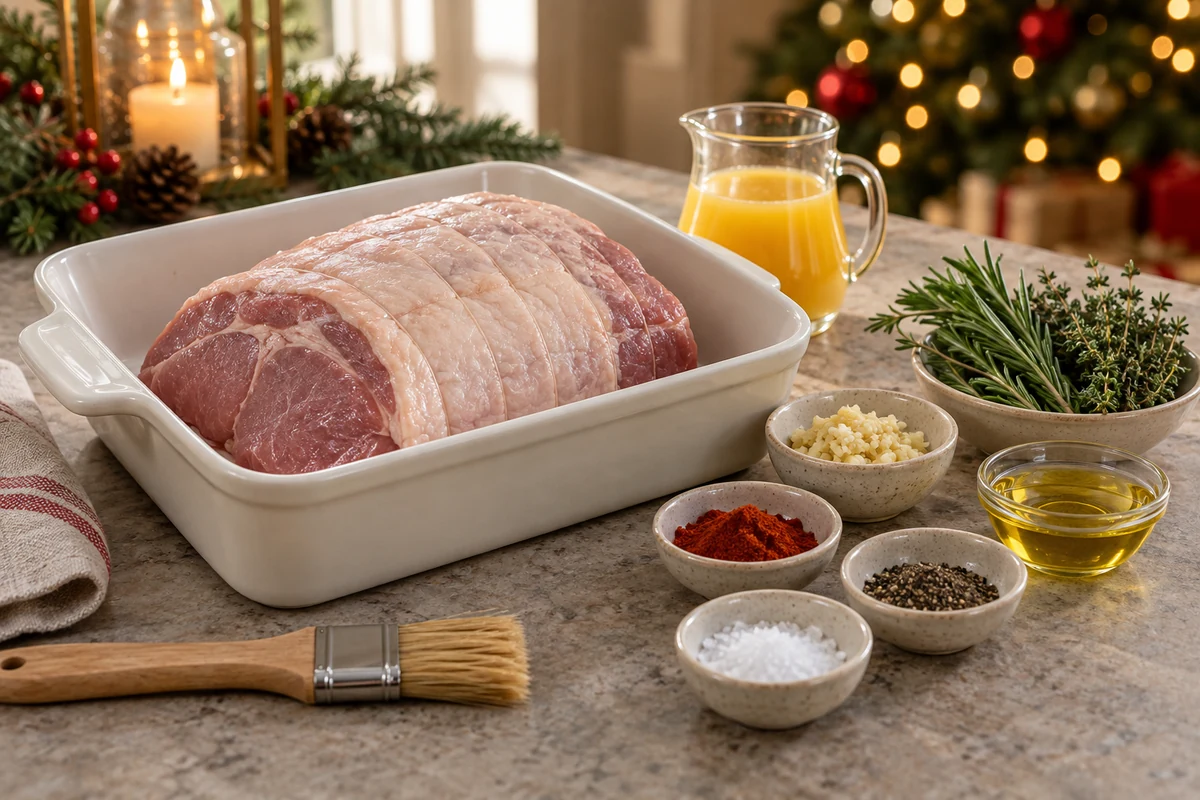
- Salt: season according to the joint and other salty ingredients. Use coarse and fine salt thoughtfully, as equal spoonfuls can contain different weights.
- Acidity: orange, lemon or vinegar brightens the flavour, but prolonged exposure to strong acid can affect the surface texture.
- Oil: olive or vegetable oil helps spread the seasonings over the exposed meat.
- Aromatics: garlic, onion, rosemary, thyme, parsley and orange zest add fragrance.
- Savoury flavour and colour: soy sauce, paprika, mustard and stock can add depth. Check their salt and allergen information before combining them.
- Sweet coatings: honey, brown sugar or molasses can create a glossy surface, but are best watched closely near the end of roasting to prevent burning.
Basic citrus marinade for 1 kg pork
- 120 ml orange juice.
- 3 garlic cloves, crushed.
- 2 tbsp olive oil.
- Up to 1 tbsp salt, reduced to taste and according to any other salty ingredients; do not automatically use the full amount.
- 1 tsp black pepper.
- 1 rosemary or thyme sprig.
Method:
- Mix: combine the orange juice, garlic, oil, salt, pepper and herb leaves in a bowl.
- Coat the pork: rub the mixture onto the exposed meat. Keep the rind as dry as possible if you want crackling; deep holes are not needed.
- Refrigerate: cover and marinate for 8–24 hours within the meat’s use-by and thawing limits. Turn if needed, keeping raw juices contained.
Dry rub and dry seasoning
A dry rub flavours the surface without adding liquid. The following makes a seasoning mixture: use only the amount appropriate to your joint rather than assuming the whole batch is needed. Keep unused seasoning separate from raw meat.
- 2 tbsp salt for the seasoning mixture, not a mandatory amount for every joint.
- 1 tbsp paprika.
- 1 tsp black pepper.
- 1 tsp garlic powder.
- 1 tsp brown sugar, optional.
- Apply: mix the ingredients and rub an appropriate amount onto the exposed meat. For crackling, keep sugary spices off the rind and season the dry skin separately with a little salt.
- Chill: keep the joint on a clean, leakproof tray on the bottom fridge shelf for 12–24 hours only within its storage limits. If leaving the rind uncovered to dry, protect all other food from contact and drips.
Wine and herb marinade for 1 kg pork
- 120 ml red or white wine, or suitable stock if avoiding alcohol.
- 3 garlic cloves, crushed.
- 2 tbsp olive oil.
- 2 rosemary sprigs.
- Salt and pepper to taste.
- Mix: combine wine or stock, garlic, oil, herb leaves and seasoning.
- Marinate safely: place the pork and marinade in a sealed food-safe bag or container on a tray. Refrigerate for 8–12 hours within the meat’s storage limits.
- Prepare to roast: drain excess liquid and pat the rind dry with kitchen paper. Discard used marinade unless it will be thoroughly boiled as part of a cooked sauce.
Marinating and finishing techniques
- Timing: 8–24 hours is a practical flavouring window for many of these marinades, provided the pork stays refrigerated and within its use-by or defrosting limit. Very acidic mixtures may need less time.
- Injecting marinade: this is optional and unnecessary for these recipes. If using a purpose-made injector, follow its hygiene and use instructions carefully, use freshly prepared suitable marinade and cook the centre thoroughly. Injection can carry surface contamination inside the meat.
- Dry seasoning: a dry skin surface can help crackling. Keep the joint refrigerated and safely separated from other foods while drying; do not leave raw pork on the worktop.
- Final glaze: use a clean, separately reserved honey, mustard or beer-based glaze near the end of roasting and watch for scorching.
- Marinade hygiene: always refrigerate marinating meat. Discard marinade that touched raw pork unless it is thoroughly boiled for a sauce. A separately reserved clean portion is the simplest choice for finishing.
Substitutions and practical tips
- Alcohol-free: replace beer or wine with suitable stock, grape juice or water with a little vinegar. Cooking does not reliably remove all alcohol.
- Less salt: reduce added salt and choose lower-salt sauces and stocks as appropriate. A fixed percentage reduction does not make a recipe suitable for every medically restricted diet.
- Herbs: fresh herbs give a different flavour from dried ones. Start with less dried herb and adjust according to its strength and packaging rather than using a universal conversion.
- Sweet marinades: use modest amounts of honey or brown sugar and avoid exposing them to high heat for too long.
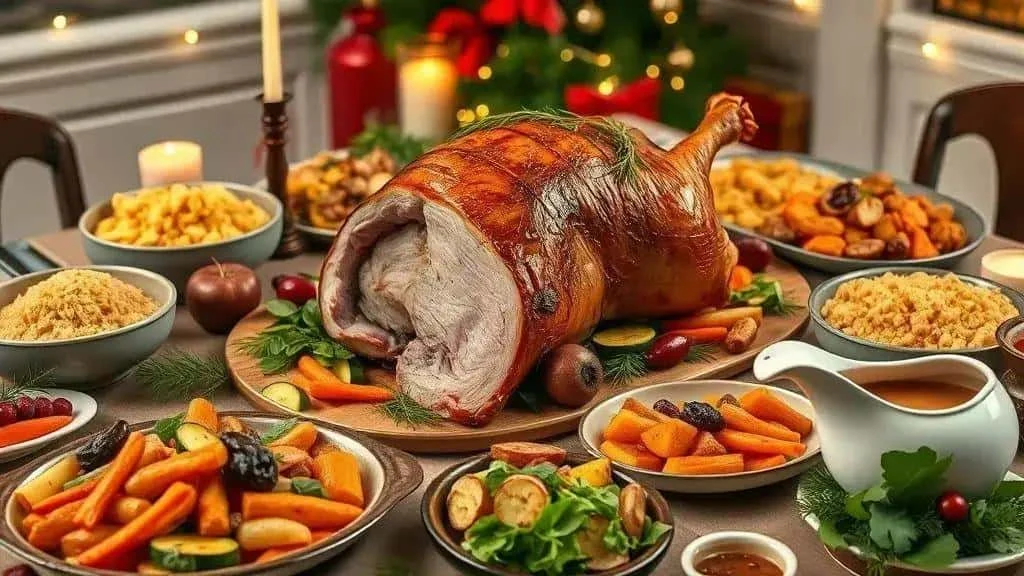
Balance the pork with crisp, fresh and gently sweet accompaniments. The following ideas include Brazilian favourites as well as familiar roast vegetables.
Classic accompaniments
- Christmas farofa: toasted cassava meal with savoury additions, served as a crumbly side.
- Brazilian arroz à grega: colourful rice with vegetables and optional raisins; the name is used in Brazil for this style of side dish.
- Rosemary roast potatoes: a crisp-edged accompaniment to the meat and gravy.
- Roast vegetables: carrots, courgettes and onions add colour and variety.
- Leaf salad with dried fruit: add nuts only where suitable for guests’ allergies.
- Gravy or pan sauce: make it from thoroughly cooked juices, and serve hot alongside the sliced pork.
Christmas farofa ingredients
- 2 cups toasted Brazilian cassava meal, not tapioca starch or fine baking flour.
- ½ cup chopped bacon.
- 1 medium onion, chopped.
- 2 garlic cloves, chopped.
- ¼ cup raisins, optional.
- Chopped parsley and spring onion to taste.
- Salt and pepper to taste. Cook the bacon thoroughly, soften the onion in its rendered fat, add garlic briefly, then stir in cassava meal, raisins and herbs as described in the farofa method below.
Vegetable rice ingredients
- 2 cups uncooked white rice, plus water or suitable stock in the quantity specified for that rice on its packaging.
- 1 medium carrot, grated.
- ½ cup peas, cooked according to the pack before serving.
- ¼ cup raisins, optional.
- 2 tbsp oil or olive oil.
- Salt to taste. Soften the carrot in the oil, add the rice and its required cooking liquid, and cook according to the packet. Fold in cooked peas and raisins near the end. Serve promptly; cool leftover rice quickly, ideally within one hour, refrigerate and use within 24 hours, reheating only once until steaming hot.
Rosemary roast potato ingredients
- 1.2 kg small potatoes.
- 3 tbsp olive oil.
- 2 rosemary sprigs.
- Coarse salt and pepper to taste. Cut larger potatoes into even pieces, parboil until nearly tender, drain and let steam escape. Toss with the oil, rosemary and seasoning, then roast on a separate tray until golden and tender, turning as needed.
Menus for different gatherings
- Small gathering, 4–6 people: choose an appropriately sized citrus pork joint with farofa, vegetable rice and leaf salad. Scale ingredients to avoid unnecessary leftovers.
- Medium gathering, 8–12 people: wine-and-herb pork with roast potatoes, vegetables, rice and gravy, followed by a lighter dessert. Check the joint’s usable yield against your guests’ appetites.
- Larger gathering, over 12 people: two appropriately sized joints, perhaps one citrus and one filled, can offer variety. Add farofa, rice, salads, cheese and bread, checking total portions and safe hot or chilled holding.
Serving tips
- Separate serving areas: organise hot and cold dishes so guests can serve themselves without crowding.
- Keep gravy hot: use suitable heated equipment if holding it before service. Food being held hot should remain at 63°C or above; a switched-off pan is not a reliable warmer.
- Flexible portions: offer a choice of sides so guests can balance meat and vegetables as they prefer.
- Presentation: simple serving bowls for farofa and colourful vegetables provide contrast without elaborate decoration.
- Leftovers: safely cooled and chilled pork can be used the next day in sandwiches or rice dishes. Keep to the shortest storage limit of any combined ingredients.
Roast pork: temperature, resting and carving
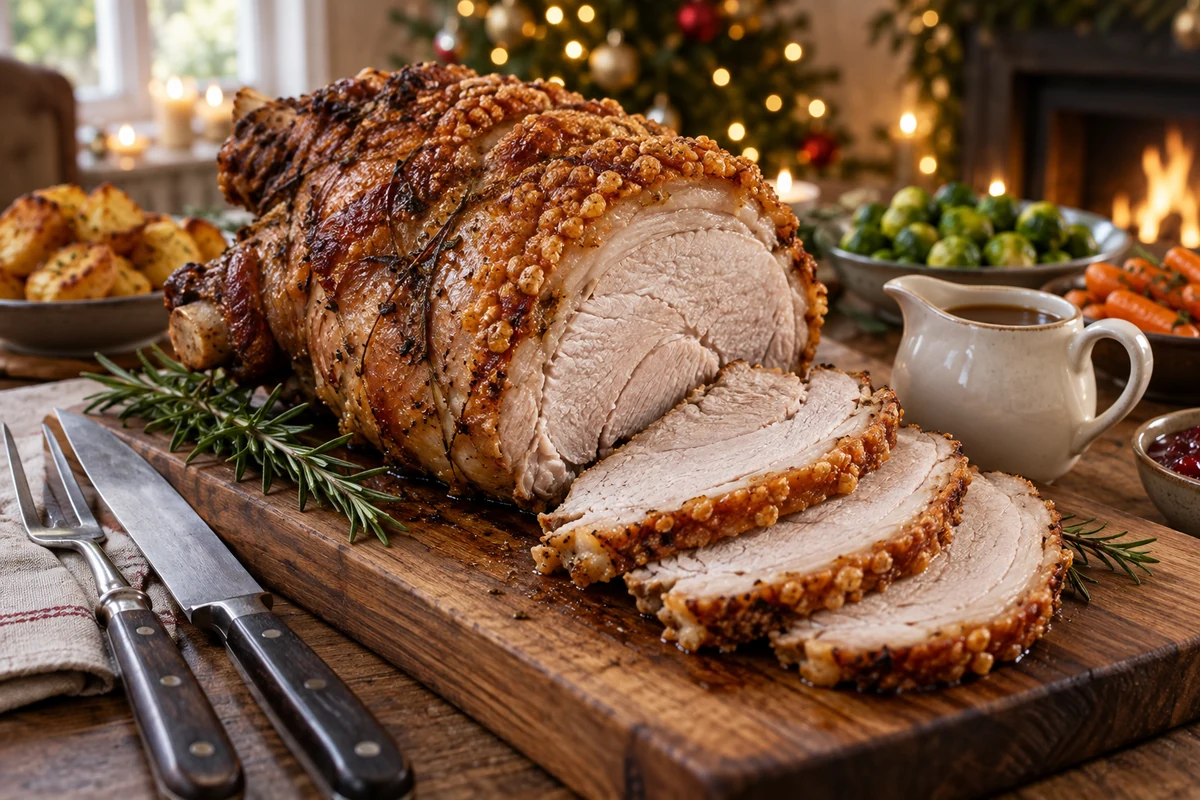
Careful temperature checks, a short rest and carving across the grain can improve the texture of roast pork. None replaces thorough cooking.
Core and oven temperatures
- Core temperature: confirm 70°C for 2 minutes or 75°C for 30 seconds in the coldest part, including any stuffing. Check before removing the joint rather than assuming resting will make it safe.
- Oven setting: use the temperature in your chosen method and the supplier’s advice. A hotter final stage around 200–220°C can brown the rind when needed, with close supervision.
- Residual cooking: temperature may continue to rise while a joint rests, but the amount varies. Do not take pork out below a safe temperature on the assumption it will rise by a fixed number of degrees.
Using a meat thermometer
- Position: insert the probe into the thickest part of the meat, avoiding bone and large fat pockets. For rolled or stuffed pork, check the centre of the roll and filling too.
- Several readings: check different thick areas of an irregular joint to find the coldest point.
- Wait for the reading: let the display settle according to the thermometer’s instructions, and meet the required temperature-and-time combination.
- Clean the probe: clean it before and after use and between checks where needed to avoid cross-contamination.
Resting after roasting
- Resting time: leave the fully cooked joint for about 15–20 minutes, loosely tenting the meat with foil if needed. Keep crisp rind uncovered to avoid softening it with steam.
- Wait before slicing: cutting immediately can release more juices onto the board.
- Keeping it hot: serve after resting. If a longer delay is unavoidable, use equipment that maintains food at 63°C or above and verify the temperature. Do not rely on a switched-off oven or put cloths near oven heat.
Carving step by step
- Tools: use a sharp carving knife and fork, handling them carefully.
- Stable surface: put the joint on a secure board and remove any kitchen string before slicing.
- Find the grain: look at the direction of the muscle fibres.
- Slice across it: cut across the fibres rather than along them for shorter strands in each bite.
- Thickness: adjust slices to preference. Thin slices can feel more tender, although they do not increase the total amount of meat available.
Serving without drying the meat
- Pan juices: strain and thoroughly boil juices intended for gravy, then serve hot. Keep any reserved cooked gravy chilled safely if not using it promptly.
- Reheating: add a little suitable stock or cooked gravy and use an oven-safe lid or foil to limit drying. Heat until steaming hot throughout and reheat only once. Ordinary cling film is not an oven covering.
- Portioning: carve as needed while serving promptly. Keep any food held for longer at a verified safe hot-holding temperature, or cool and refrigerate it safely.
Adaptations: gluten-free sides, fewer starchy accompaniments and smaller portions
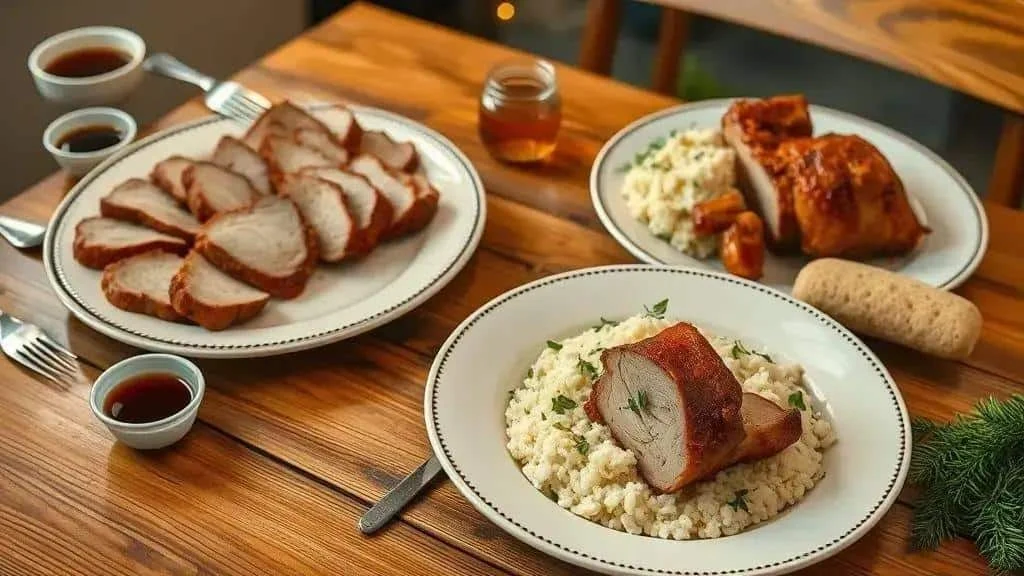
Changing side dishes or joint size can help the meal suit different needs. Check every ingredient for allergies and do not treat a simple substitution as a guarantee of suitability for a particular medical diet.
Gluten-free options
Gluten-free farofa can be made with cassava meal, but check the product and every addition for gluten and cross-contact information.
- 2 cups toasted Brazilian cassava meal, labelled gluten-free where required.
- ½ cup chopped bacon, checked for suitability.
- 1 medium onion, chopped.
- 2 garlic cloves, chopped.
- Salt and pepper to taste.
- Chopped parsley to taste.
Farofa method:
- Cook the bacon: fry over a medium heat until thoroughly cooked and its fat has rendered.
- Soften the onion: cook it in the rendered fat until soft, then add garlic briefly without burning it.
- Add cassava meal: stir in the toasted meal and heat for a few minutes, stirring so it does not catch. Follow any cooking instructions on its packaging.
- Season: add pepper, salt only if needed, and parsley. Serve promptly, or cool and chill safely.
Sauces and marinades: replace ordinary soy sauce with tamari or coconut aminos only when the chosen product is labelled gluten-free. Check stock, spice blends and all other ingredients as well.
Alternatives to starchy sides
Serving vegetables instead of some rice, potatoes or cassava changes the carbohydrate content of the meal. Sweet glazes and sauces still contribute sugar, so look at the whole plate.
Cauliflower rice: ingredients
- 1 medium cauliflower, cut into florets.
- 1 tbsp olive oil.
- 1 garlic clove, chopped.
- Salt and pepper to taste.
Cauliflower rice method:
- Pulse: briefly pulse the washed cauliflower florets in a food processor until they resemble small grains; avoid turning them into a purée.
- Sauté: heat the oil, cook the garlic briefly without burning it, then add the cauliflower.
- Cook: stir-fry for about 5–8 minutes until tender, then season to taste.
Almond farofa-style side: ingredients
- 1 cup ground almonds, suitable only for guests who can eat almonds.
- 2 tbsp butter.
- ¼ cup finely chopped onion.
- Salt and herbs to taste.
Method:
- Soften the onion: cook gently in the butter until translucent.
- Add almonds: stir in the ground almonds and toast lightly, watching closely because they can burn quickly.
- Season and serve: add salt and herbs and serve warm. This is a nut-based alternative, not a nutritionally identical replacement for cassava farofa.
Smaller joints and individual portions
Choose a joint that matches your gathering rather than cooking a large amount unnecessarily. Smaller pieces need their own cooking assessment.
- Small roasting joints: ask the butcher for a 1–1.2 kg piece or other size suited to your guests. This is a sharing joint, not one individual serving.
- Pork pieces: evenly sized seasoned pieces can be roasted on a suitable tray. Avoid crowding or using small moulds that prevent even cooking.
Adjusting portions and time:
- Shopping quantity: use the earlier raw bone-in allowance as a guide and adjust for boneless meat, sides and appetite. Raw purchase weight is not the same as cooked meat on the plate.
- Cooking time: smaller joints often cook sooner, but follow the cut’s instructions and check the centre. A single 35–45 minute-per-kilogram formula is not reliable for all sizes and methods.
- Finishing: increase the heat only if further browning is needed. Watch sugary coatings and already crisp surfaces carefully.
Substitutions and safety reminders
- Choosing flour or meal: cassava meal suits farofa, while rice flour or other flours behave differently. Do not substitute them one-for-one in every preparation. Nut-based alternatives introduce their own allergens.
- Read labels: stock, spice mixtures, sauces and processed meats may contain ingredients unsuitable for your guests.
- Salt: use less added salt where bacon, stock or soy sauce already provides it. Judge the ingredients rather than relying on a fixed reduction percentage.
- Used marinade: discard marinade that has touched raw meat unless it is thoroughly boiled as part of a sauce. Reserve a clean portion before adding meat if you want a finishing glaze.
- Reheating: add a little suitable stock to limit drying, but heat until steaming hot throughout, not merely warm. Reheat only once.
Storage, preparing ahead and using leftovers
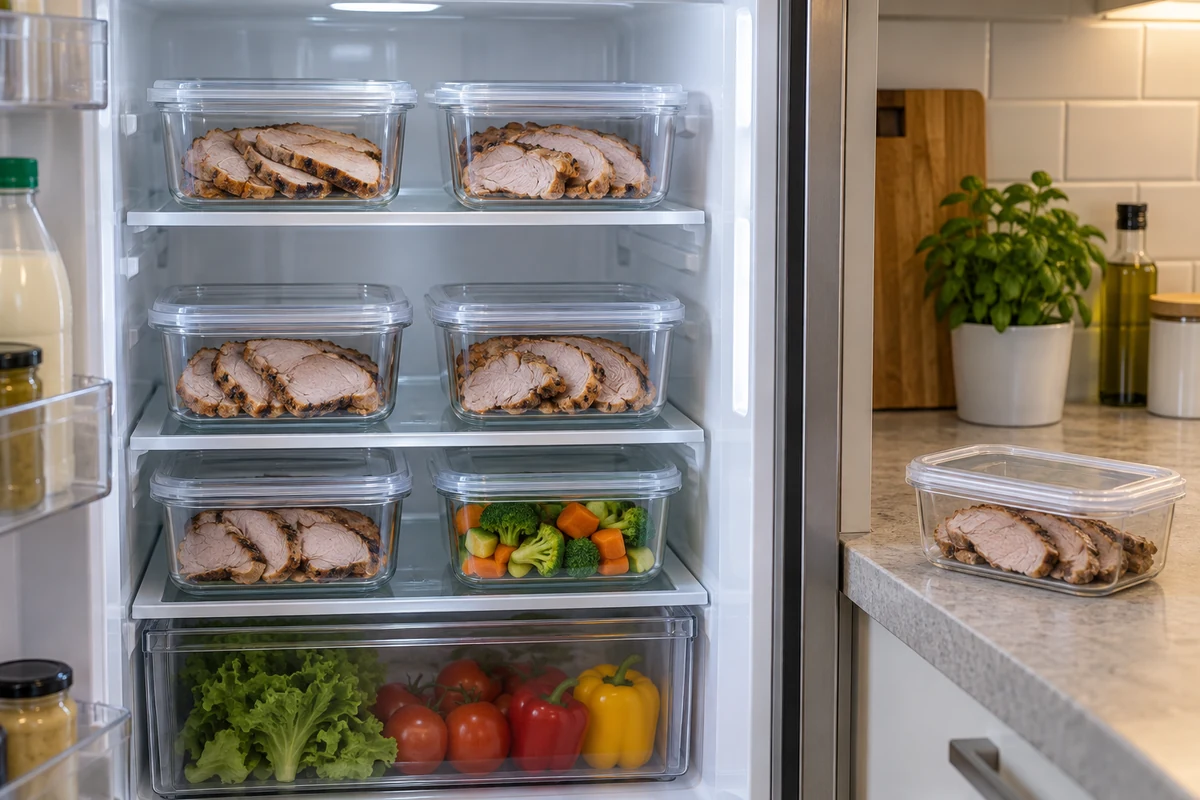
Safe cooling and storage are as important as roasting. Keep track of when the pork was cooked and reheat only the amount you intend to eat.
Preparing ahead
- Marinating: refrigerate for 8–24 hours where the use-by and defrosting instructions allow. Marinating does not extend shelf life.
- Cooking ahead: roasting the day before can be convenient, provided you cool promptly, refrigerate safely and serve within 48 hours of cooking. Reheat once until steaming hot throughout.
- Cool promptly: divide a large cooked joint into smaller portions in shallow containers so it can cool and go into the fridge within 1–2 hours. Do not leave a whole roast cooling overnight.
- Cover: store in clean lidded food-safe containers or suitably wrapped portions, keeping cooked food separate from raw meat.
Fridge storage
- Storage time: keep cooked pork at 5°C or below and eat within 48 hours of cooking, or freeze promptly if it will not be used in time. Follow any shorter limit for mixed dishes, such as rice.
- Containers: choose clean food-safe plastic or glass containers with well-fitting lids.
- Label: record the cooking date and time so the storage window is clear.
- Position: keep cooked pork covered and above raw meat, which belongs in sealed containers on the bottom shelf.
Freezing
- Portion first: freeze usable portions so you do not have to thaw more than you need.
- Package: use freezer-safe bags or airtight containers. Vacuum packing does not remove the need for safe cooling or temperature control.
- Quality: keep the freezer around −18°C and aim to use cooked meat within about 2–3 months for quality, following any product-specific guidance. Freezing does not make poorly handled food safe.
- Defrost safely: thaw in the fridge in a container that catches drips. Allow enough time for the centre to defrost fully; large portions may need more than 24 hours. Use within 24 hours after full defrosting.
Reheating properly
- Oven: put portions in an ovenproof dish with a little stock, cover with a suitable lid or foil and heat at 160–170°C until steaming hot throughout. Timing depends on portion size and starting temperature, not a fixed 15–30 minutes.
- Microwave: use a microwave-safe cover and follow your appliance’s directions. Turn or stir, allow the recommended standing time and check for cold spots.
- Hob: heat slices in a pan with a little stock, turning so they become steaming hot all the way through.
- Temperature: a clean probe can confirm 70°C for 2 minutes or 75°C for 30 seconds throughout. Reheat only once and serve promptly.
Ideas for leftovers
- Festive sandwiches: use safely cooked and chilled pork cold, or reheat it once until fully hot. Add mustard sauce or suitable mayonnaise; do not just warm meat slightly.
- Rice dishes: add pork to freshly cooked rice or a suitable rice bake, heating it thoroughly once. Rice has stricter chilling and storage guidance: cool rapidly, ideally within one hour, refrigerate and use within 24 hours.
- Pie filling: combine safely chilled pork with vegetables and suitable cream cheese, then cook the assembled pie until steaming hot in the centre. This counts as reheating the pork.
- Stock and soup: bones and trimmings that have been handled and stored safely can be used for stock. Strain carefully, cool promptly and refrigerate or freeze; do not use scraps left out for long periods.
Safety and quality reminders
- Hygiene: wash hands and clean utensils after handling raw pork. Keep raw meat and its juices away from cooked or ready-to-eat food.
- Avoid repeated thawing: freeze in portions and do not refreeze thawed cooked leftovers as a routine practice. Raw meat safely thawed and then fully cooked can be frozen as a newly cooked dish, following safe cooling and storage guidance.
- Check dates and handling: discard food with signs of spoilage, but remember that normal smell and appearance do not prove safety. Do not taste-test food that has exceeded safe storage limits.
- Keep records: label portions with quantities and dates so you use older suitable food first and avoid unnecessary waste.
Enjoy your Christmas roast
Choose the seasoning you enjoy, allow enough cooking time and check the centre before resting and carving your roast pork. Scale the joint and sides to your guests and plan safe storage for any leftovers.
Thank you for reading. Share your cooking ideas or questions through our social channels, and explore more festive recipes on the I Love Christmas blog.
Wishing you a happy Christmas and an enjoyable meal together!
FAQ: Christmas roast pork leg
Which pork leg joint should I choose?
Choose fresh, uncured pork leg rather than gammon. A bone-in joint gives a traditional presentation; a boneless one is easier to carve. For crackling, choose rind with a suitable fat layer and ask the butcher to score it. Match the size to your guests, allowing for bone and cooking losses.
How long should I marinate pork?
Many of these recipes allow 8–24 hours in the fridge at 5°C or below, provided the meat remains within its use-by and defrosting limits. Strongly acidic marinades may need less time. Marinating does not make raw pork safe or extend its storage life.
How can I crisp the rind without drying out the meat?
Start with properly scored, dry rind and keep wet marinade away from it. Follow a suitable roasting method and use a hotter final stage only as needed, watching for burning. Check the meat is thoroughly cooked, then rest without trapping steam against the crackling.
How much pork should I buy per person?
Around 300–400 g raw bone-in pork per adult is a generous planning guide with sides; larger appetites or fewer sides may need more. Boneless joints have less waste. These are shopping weights, not cooked serving sizes, so adjust for your guests and avoid buying excess automatically.
How should I store and use leftover pork?
Divide into smaller portions, cool and refrigerate within 1–2 hours at 5°C or below. Use within 48 hours or freeze promptly. Thaw in the fridge and use within 24 hours of full defrosting. Reheat only once until steaming hot throughout; dishes containing rice need the shorter rice storage limit.
Sources and Further Reading
- UK Government: cooking food safely
- UK Government: chilling, freezing and defrosting
- UK Government: cleaning and handling raw food
- AHDB Love Pork: roasting pork and making crackling
- NHS: foods to avoid for babies and young children
- Food Standards Agency: home food facts, including rice storage