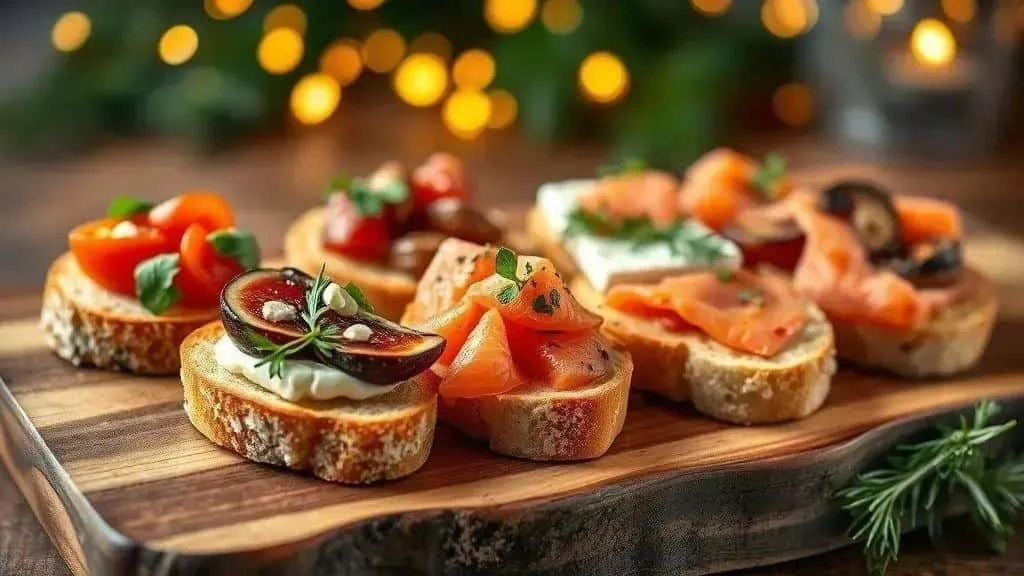
Five festive bruschetta recipes with ingredient lists, step-by-step methods, vegetarian and vegan adaptations, presentation ideas and drink pairings. Choose toppings that suit your guests and assemble shortly before serving.
These festive bruschetta recipes offer five colourful starters for Christmas entertaining. From classic tomatoes to figs and blue cheese, there are plenty of ways to vary crisp toast toppings without making the preparations complicated.
Classic tomato and basil bruschetta: ingredients
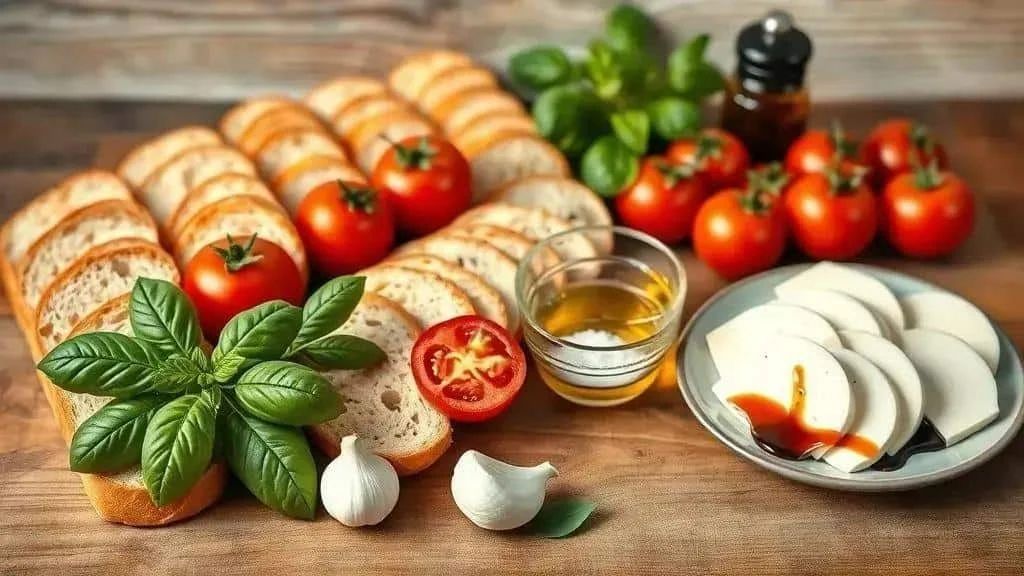
For classic tomato and basil bruschetta, you will need:
- 1 baguette, about 300 g – cut into 1 cm slices; ciabatta or a rustic loaf also works.
- 4 medium ripe plum tomatoes – firm and diced; alternatively use 250 g halved cherry tomatoes, adjusting how much topping you put on each slice.
- 15–20 fresh basil leaves – torn by hand; rocket offers a different, peppery flavour.
- 1 garlic clove – halved for rubbing the toast; use two if you prefer a stronger flavour.
- 4 tablespoons extra virgin olive oil – two for the tomatoes and two for brushing the bread. A milder olive oil is also suitable.
- Sea salt – to taste, up to approximately ½ teaspoon.
- Freshly ground black pepper – to taste.
- Optional: 50 g buffalo mozzarella or 30 g grated hard cheese – divided across the batch. For a vegetarian version, choose cheese made with vegetarian rennet; traditional Parmesan is not vegetarian.
Why these ingredients work together
Ripe tomatoes provide juiciness and acidity, basil adds fragrance, and crisp bread contrasts with the soft topping. Olive oil brings the flavours together, while garlic, salt and pepper finish this simple Christmas starter.
Classic tomato and basil bruschetta: method
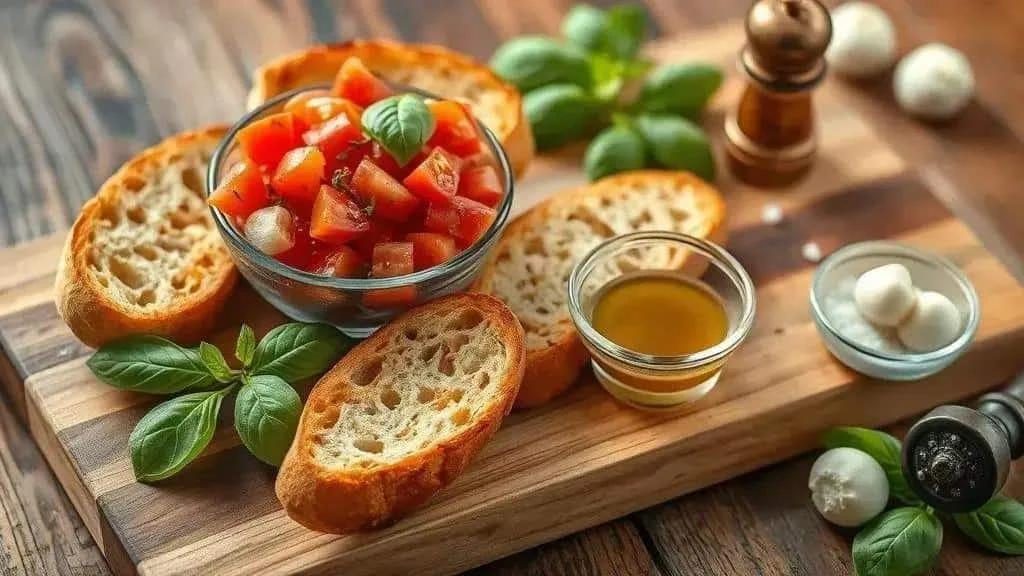
To make classic tomato and basil bruschetta, follow these steps:
- Slice the bread: cut the baguette into slices about 1 cm thick. Use ciabatta if you prefer its more open texture.
- Heat the oven or griddle: preheat the oven to 200°C, or heat a griddle over a medium-high heat. Adjust oven settings for your appliance.
- Brush with oil: distribute the two tablespoons reserved for the bread thinly over both sides of all the slices; do not measure a teaspoon onto every slice.
- Toast: arrange on a baking tray and bake for roughly 5–7 minutes, turning halfway, until golden. On a griddle, start with 1–2 minutes per side and watch closely.
- Rub with garlic: rub the cut clove over the hot toast for a gentle flavour. For a stronger version, mince the garlic and mix it into the measured brushing oil instead.
- Prepare the tomatoes: dice the four tomatoes, remove some of the wet seeds and put in a bowl.
- Season: add the remaining two tablespoons of oil, salt to taste up to ½ teaspoon, and black pepper. Mix gently without crushing the tomatoes.
- Add basil: tear most of the 15–20 leaves into the tomatoes just before assembly, reserving a few for the platter.
- Rest briefly: leave for 5–10 minutes while the toast finishes. Drain excess liquid if necessary; refrigerate the topping if preparing further ahead.
- Assemble: spoon tomatoes onto the toast without soaking it. Divide the optional 50 g mozzarella or 30 g hard cheese between the slices. The measured oil is already in the bread and topping, so an extra drizzle is not needed.
- Serve promptly: arrange on a clean board or platter and finish with the reserved basil. Assemble shortly before eating to keep the bread crisp.
Useful tips
- Tomatoes: choose ripe, firm plum tomatoes; 250 g cherry tomatoes provide an alternative topping quantity.
- Prevent soggy toast: remove very wet seeds and drain excess tomato juice before assembly.
- Variations: try rocket instead of basil, feta instead of mozzarella, or a little balsamic glaze. Check cheese ingredients if serving vegetarians.
- Prepare ahead: toast the bread, cool completely and keep in a dry airtight container for a couple of hours. Keep prepared toppings chilled at 5°C or below until needed.
Quick guide to the five recipes: ingredients and key steps
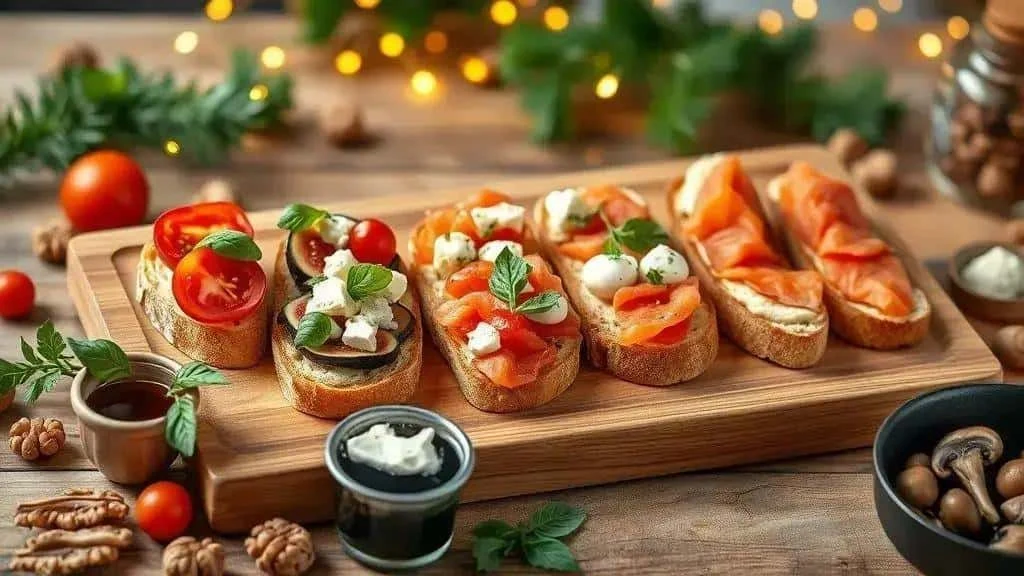
Classic tomato and basil bruschetta
- 1 baguette, about 300 g – cut into 1 cm slices; ciabatta is an alternative.
- 4 medium plum tomatoes – partly deseeded and finely diced.
- 15–20 basil leaves – torn by hand.
- 1 garlic clove – halved for rubbing the toast.
- 4 tablespoons extra virgin olive oil – two for the tomatoes and two for the bread.
- Up to about ½ teaspoon sea salt – adjust to taste.
- Black pepper – freshly ground, to taste.
- Optional: 50 g buffalo mozzarella – sliced or in small pieces, for the whole batch.
- Slice: cut the baguette into 1 cm slices.
- Preheat: heat the oven to 200°C or a griddle to medium-high.
- Brush: divide two tablespoons of the oil thinly over both sides of the bread slices.
- Toast: bake for about 5–7 minutes, turning halfway, until golden.
- Add garlic: rub the cut clove over the hot toast.
- Prepare the tomatoes: combine the diced tomatoes with the remaining two tablespoons of oil, salt and pepper.
- Add basil: tear and fold in the leaves just before assembly.
- Assemble and serve: top the toast with tomatoes and optional mozzarella, then serve promptly.
Fig, Gorgonzola and honey bruschetta
- 1 baguette or ciabatta, about 300 g – sliced.
- 6 fresh figs – thinly sliced.
- 100 g Gorgonzola – crumbled; check rennet if serving vegetarians.
- 2 tablespoons honey – divided across the batch. Do not give honey to babies under one year.
- 2 tablespoons chopped walnuts – lightly toasted.
- 2 tablespoons olive oil – for brushing all the bread.
- Rocket, optional – to finish.
- Toast: brush bread with the oil and bake at 200°C for about 5–7 minutes, until golden.
- Prepare figs: wash, dry and slice thinly.
- Add cheese: divide the Gorgonzola over the toast. During pregnancy, soft blue cheese must be cooked until steaming hot throughout; merely warming it is not enough.
- Add figs: distribute the slices over the cheese, then bake the topped toasts thoroughly if following the pregnancy guidance above.
- Finish: drizzle with the measured honey, sprinkle on walnuts and add rocket if wanted.
Smoked salmon and cream cheese bruschetta
- 1 baguette, about 300 g – sliced.
- 150 g smoked salmon – thinly sliced. Pregnant people and other vulnerable guests should avoid ready-to-eat cold-smoked or cured fish unless cooked until steaming hot throughout; use freshly cooked salmon where appropriate.
- 100 g cream cheese – keep refrigerated until preparation, then stir to soften rather than leaving it out to warm.
- 1 tablespoon lemon juice – for the spread.
- 1 tablespoon chopped fresh dill – or chives.
- 1 tablespoon capers – optional, drained.
- 1 tablespoon olive oil – for finishing this simple version; toast the bread without additional oil.
- Make the spread: stir the cream cheese, lemon juice and dill together. Keep chilled until assembly.
- Toast: toast the bread until crisp outside.
- Spread: add a thin layer of the cream cheese mixture to each slice.
- Add salmon: divide the salmon across the toasts, using the thoroughly cooked alternative for guests who need it.
- Finish: add optional capers, the measured oil and a little black pepper to taste, then serve promptly.
Caprese bruschetta with balsamic glaze
- Ciabatta or baguette, about 300 g – sliced.
- 250 g cherry tomatoes – halved; alternatively use three firm medium tomatoes, diced.
- 125 g buffalo mozzarella – sliced or in small pieces.
- Fresh basil – whole leaves for serving.
- 1 tablespoon balsamic glaze – or gently reduce two tablespoons balsamic vinegar with one tablespoon honey until lightly syrupy, cool, then use to taste. Do not give honey to babies under one.
- 2 tablespoons olive oil – one for the tomatoes and one to finish.
- Salt and pepper – to taste.
- Toast: toast the bread without extra oil until evenly golden.
- Assemble: season tomatoes with one tablespoon of the oil, then divide mozzarella and tomatoes over the toast.
- Drizzle: share the remaining tablespoon of oil and the balsamic glaze across the whole batch.
- Finish: adjust salt and pepper, add basil and serve promptly.
Vegetarian mushroom and garlic bruschetta
- 1 rustic loaf, about 300 g – sliced.
- 200 g mixed mushrooms – such as chestnut or portobello, sliced.
- 2 garlic cloves – finely chopped.
- 2 tablespoons butter or olive oil – for frying in this quick version.
- 1 tablespoon soy sauce – optional; check the label if gluten-free food is needed.
- 1 tablespoon fresh parsley or thyme – chopped.
- Salt, pepper and 1 teaspoon lemon juice – to finish.
- Optional: 30 g grated vegetarian hard cheese – for topping; traditional Parmesan uses animal rennet.
- Heat the fat: melt the butter or heat the oil over a medium heat.
- Fry garlic: cook briefly for about 30 seconds without browning.
- Add mushrooms: cook until tender and golden, starting with 5–7 minutes. Stir occasionally and reduce the heat if the garlic begins to catch.
- Season: add optional soy sauce, pepper and lemon juice; taste before adding salt.
- Toast: toast the bread without extra fat until crisp.
- Assemble: spoon mushrooms over the toast and finish with the herbs and optional vegetarian cheese.
Fig, Gorgonzola and honey bruschetta: full recipe
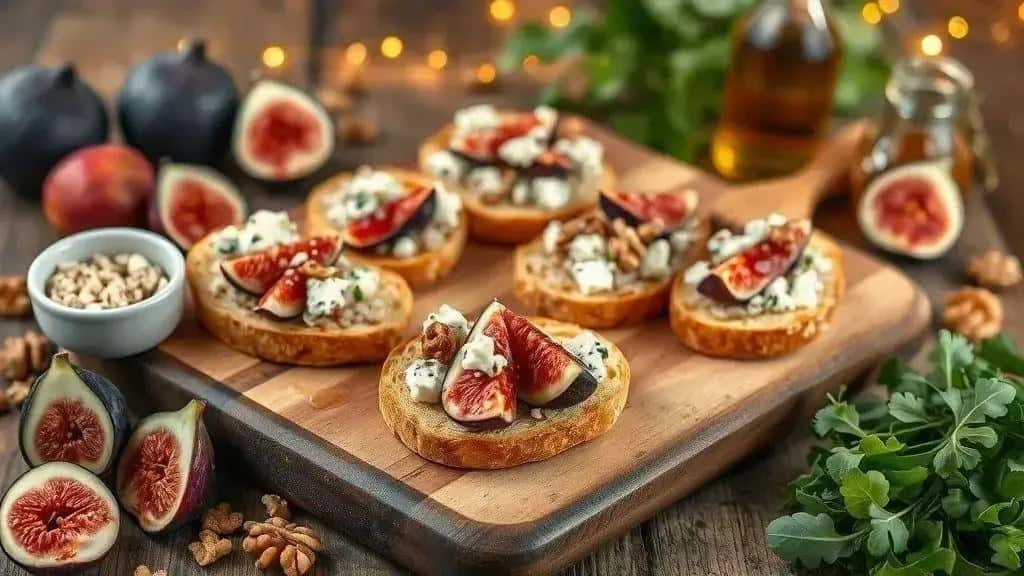
For fig, Gorgonzola and honey bruschetta, use the ingredients and method below:
- 1 baguette, about 300 g – in 1 cm slices; ciabatta or rustic bread is an alternative.
- 6 fresh figs – washed and sliced. Alternatively soak 100 g dried figs in warm water for around ten minutes, then drain and slice; their sweetness is more concentrated.
- 100 g Gorgonzola – crumbled; Roquefort or Dolcelatte give a similar blue-cheese flavour. Check rennet for vegetarian guests, and follow the thorough-cooking advice below for pregnancy.
- 2 tablespoons honey – for the whole batch; keep honey away from babies under one.
- 2 tablespoons chopped walnuts – lightly toasted; pecans or almonds are alternatives, but also tree nuts.
- 2 tablespoons extra virgin olive oil – for brushing all the bread; alternatively use one tablespoon melted butter as a thinner coating.
- Sea salt – a little if needed, bearing in mind the cheese is salty.
- Ground black pepper – to taste.
- Rocket or microgreens, optional, up to 50 g – washed, for serving.
Step-by-step method
- Preheat: set the oven to 200°C with a shelf in the middle, adjusting for your appliance.
- Prepare the bread: cut into 1 cm slices and distribute the measured oil thinly over both sides of the whole batch.
- Toast: bake for about 5–7 minutes until golden, turning halfway.
- Prepare figs: wash and dry fresh figs, then cut into thin slices or small wedges. Drain soaked dried figs if using those.
- Crumble cheese: break into small pieces with clean hands or a knife for even distribution.
- Assemble: divide the cheese and figs over the toast, pressing the fruit gently into place.
- Bake: for a warm starter, return briefly to the oven until the cheese softens. During pregnancy, soft blue cheese must instead be cooked until steaming hot throughout; a brief 2–3 minute warm-up does not establish that it is safe.
- Add honey and nuts: drizzle the two tablespoons of honey across the batch and sprinkle on the toasted walnuts. Use less if preferred, rather than a fixed teaspoon per slice.
- Finish: season lightly if needed and add rocket or microgreens.
- Serve promptly: assemble shortly before eating to keep the toast crisp. The honey can be offered separately if guests prefer to add their own.
Tips and substitutions
- Figs: fresh figs are juicy; use the smaller listed quantity of soaked dried figs for their more concentrated sweetness.
- Cheese: Gorgonzola is strong. Pasteurised soft goats’ cheese without a white mould rind gives a milder alternative; white-rinded goats’ cheese requires the same pregnancy cooking precaution as Brie.
- Walnuts: toast in a dry frying pan for about 1–2 minutes, watching closely and stopping when fragrant.
- Vegan: replace Gorgonzola with suitable plant-based cheese and honey with maple syrup, and use olive oil and suitable bread. Check nuts and other allergens separately.
Smoked salmon and cream cheese bruschetta: full recipe
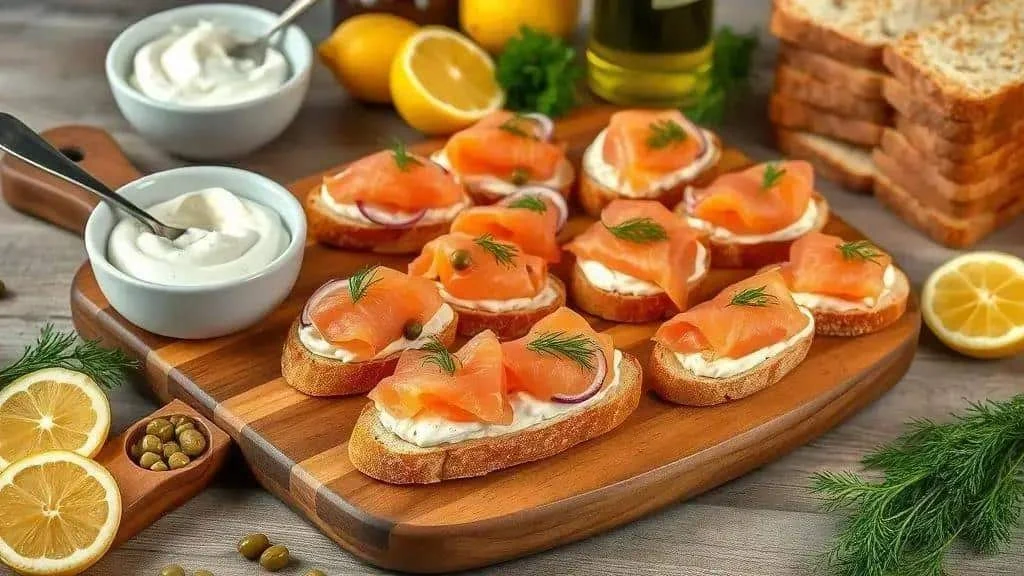
- 1 baguette or ciabatta, about 300 g – in 1 cm slices; a rustic wholemeal loaf is another option.
- 150 g smoked salmon – thinly sliced; gravlax is another cured-fish option. Pregnant people and other vulnerable guests should only eat ready-to-eat cold-smoked or cured fish after cooking until steaming hot throughout. Freshly cooked salmon is a useful alternative.
- 100 g cream cheese – keep chilled until preparation and stir to soften. Blended cottage cheese is an alternative with a different texture; fat content depends on the product.
- 1 tablespoon lemon juice – for the spread; a little lemon zest is optional.
- 1 tablespoon chopped fresh dill – or chives.
- 1 tablespoon capers – optional, drained; finely chopped pickled cucumber is an alternative.
- ¼ red onion – very thinly sliced, optional.
- 2 tablespoons extra virgin olive oil – one for brushing the bread and one for finishing this expanded version.
- Freshly ground black pepper – to taste.
- Salt – only a little if needed. For the optional garlic-rubbed toast, also allow one halved garlic clove.
- Extra dill or washed microgreens, optional – to serve.
Step-by-step method
- Make the spread: stir 100 g cream cheese with the lemon juice and chopped dill until smooth. Add a little salt only if needed and refrigerate until assembly.
- Slice: cut the bread into 1 cm slices and arrange on a baking tray.
- Brush: distribute one tablespoon of oil thinly over the slices, reserving the other for finishing.
- Toast: bake at 200°C for about 5–7 minutes until golden, or griddle for roughly 1–2 minutes per side.
- Optional garlic: lightly rub the halved clove over the hot toast for extra flavour.
- Spread: add a thin, even layer of the cream cheese mixture to each toast.
- Add salmon: divide it between the toasts, using the thoroughly cooked alternative where needed.
- Add the garnishes: distribute drained capers, optional red onion, lemon zest and the reserved tablespoon of oil across the batch.
- Season: add black pepper and taste before adding salt, as the fish and capers already contribute saltiness.
- Serve: finish with dill or microgreens and serve promptly. Keep unassembled fish and cream cheese chilled.
Tips and substitutions
- Yoghurt spread: thick Greek yoghurt can replace cream cheese for a different flavour and texture. It still contains milk, and is not automatically lower in fat or suitable for a milk allergy.
- Fish-free: replace salmon with cooked confit tomatoes and herbs for a vegetarian variation; replace dairy too for a vegan version.
- Prepare ahead: make components separately and keep perishable toppings refrigerated, then assemble shortly before serving.
- Presentation: arrange thin salmon strips neatly and offer lemon wedges alongside. Lemon adds flavour but does not make raw or cured fish safe for vulnerable guests.
Caprese bruschetta with balsamic glaze: full recipe
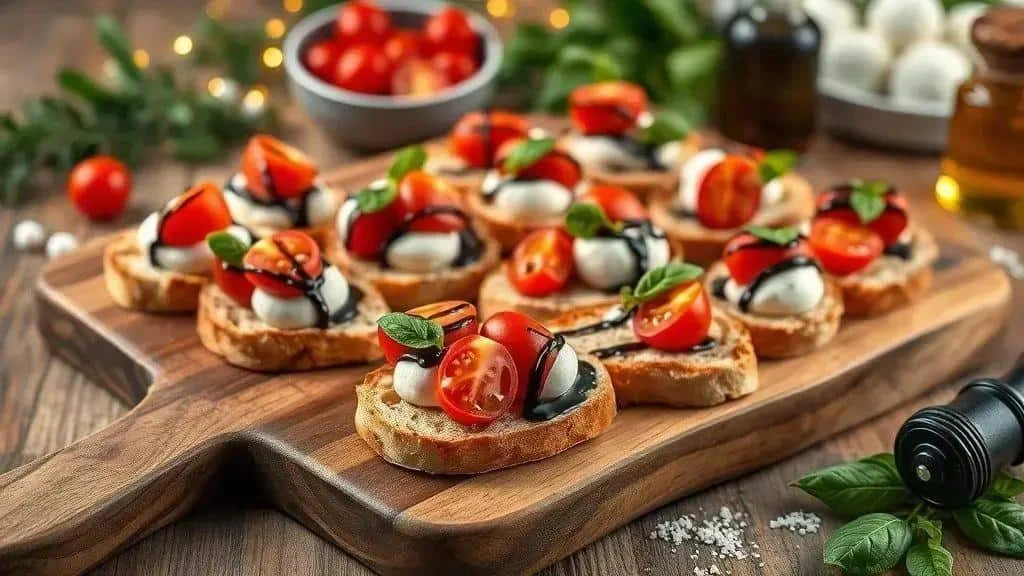
- Ciabatta or baguette, about 300 g – in 1 cm slices; rustic or wholemeal bread also works.
- 250 g cherry tomatoes – halved; three firm medium tomatoes, diced, are an alternative.
- 125 g buffalo mozzarella – sliced or in small pieces; ordinary mozzarella or pasteurised soft goats’ cheese without a mould rind gives a different flavour.
- 15–20 fresh basil leaves – or rocket for a peppery variation.
- 1 tablespoon balsamic glaze – alternatively reduce two tablespoons balsamic vinegar with one tablespoon honey until lightly syrupy, then cool and use to taste. Honey is unsuitable for babies under one year.
- 2 tablespoons extra virgin olive oil – one for the tomatoes and one for finishing; toast the bread without extra oil.
- Sea salt and black pepper – to taste.
- Optional: lemon zest – or a little pesto; check pesto for cheese, nuts and other relevant allergens.
Step-by-step method
- Preheat: heat the oven to 200°C and arrange the bread on a baking tray.
- Toast: bake for about 5–7 minutes until golden, turning halfway.
- Season the tomatoes: gently combine the cut tomatoes with one tablespoon of oil, a little salt and pepper.
- Slice mozzarella: halve small balls or slice the cheese into pieces that fit the toast.
- Assemble: divide the mozzarella, tomatoes and basil between the slices.
- Add glaze: drizzle the measured tablespoon lightly across the entire batch. If making your own, use to taste rather than a fixed teaspoon on every toast.
- Finish: distribute the remaining tablespoon of oil, add optional zest or pesto and adjust the seasoning. Serve promptly while the bread is crisp.
Tips and substitutions
- Prevent soggy toast: drain very juicy tomatoes and assemble just before serving.
- Larger batch of homemade glaze: gently simmer 120 ml balsamic vinegar with one tablespoon honey or sugar until lightly syrupy, checking from about eight minutes. It thickens further on cooling, so do not rely on a fixed reduction time or force it down to an exact volume. Use only what the bruschetta needs and refrigerate the remainder in a clean covered container.
- Other cheeses: fresh cheese, burrata or thinly shaved hard cheese give different textures. Check pasteurisation, rennet and the needs of your guests.
- Prepare ahead: toast and cool the bread, then store dry. Keep prepared tomatoes and mozzarella refrigerated at 5°C or below and assemble shortly before eating.
Vegetarian mushroom and garlic bruschetta: full recipe
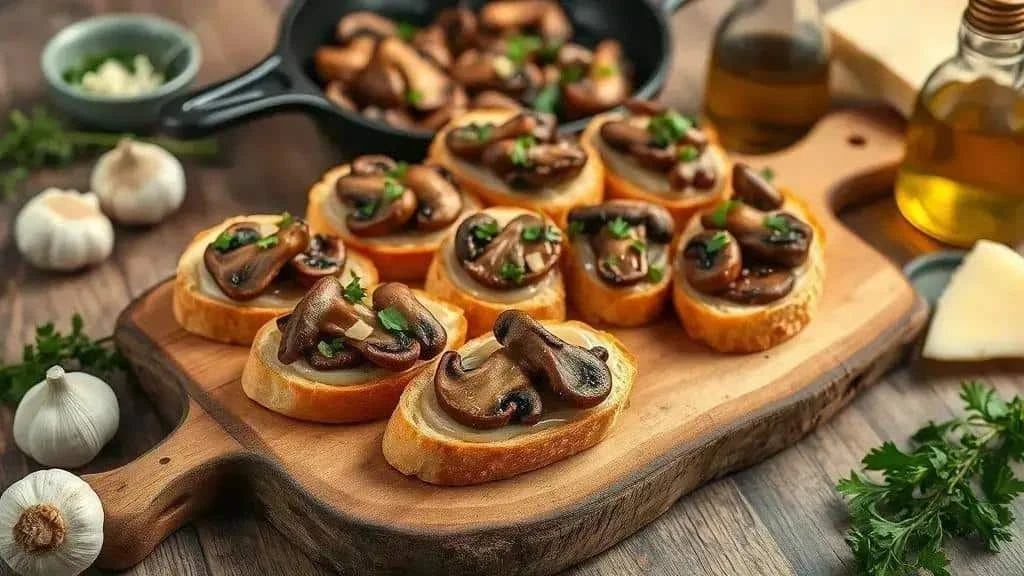
- 1 rustic loaf, about 300 g – in 1 cm slices; ciabatta or baguette also works.
- 200 g mushrooms – cleaned and sliced, such as chestnut, portobello or shiitake; use one type or a mixture.
- 2 garlic cloves – finely chopped or crushed; alternatively use one teaspoon garlic powder with the seasoning rather than frying it on its own.
- 2 tablespoons extra virgin olive oil – one for the bread and one for the pan. Alternatively use the same measured amount of melted butter where suitable.
- 1 additional tablespoon butter, optional – for the pan; omit for a vegan version.
- 1 tablespoon soy sauce, optional – for savoury flavour. Alternatively season with salt to taste, up to ½ teaspoon, and optionally a little sugar; this will not reproduce soy sauce’s flavour. Check labels if gluten-free food is needed.
- 1 tablespoon chopped fresh parsley or thyme – or one teaspoon dried herbs.
- Salt and black pepper – to taste; taste before salting if using soy sauce.
- 1 teaspoon lemon juice, optional – to finish.
- 30 g grated vegetarian hard cheese, optional – for topping. Traditional Parmesan is not vegetarian; use nutritional yeast to taste for a vegan variation.
Step-by-step method
- Slice: cut the bread into 1 cm slices and arrange on a baking tray.
- Toast: brush the slices with one tablespoon of the oil and bake at 200°C for roughly 5–7 minutes, turning halfway, until golden and crisp.
- Heat the pan: warm the remaining tablespoon of oil and optional butter over a medium heat.
- Cook fresh garlic: stir for around 20–30 seconds until fragrant, without burning. If using garlic powder, add it later with the seasoning.
- Cook mushrooms: add them and increase to a medium-high heat. Cook until tender and golden, starting with 4–5 minutes and allowing longer if needed; avoid crowding the pan or burning the garlic.
- Season: add optional soy sauce, pepper and garlic powder if using. Cook for about another minute, tasting before adding salt.
- Finish: take off the heat, add herbs and optional lemon juice, and stir gently.
- Assemble: divide the mushrooms over the toast, draining excess liquid first if necessary.
- Optional cheese: sprinkle on the vegetarian hard cheese and return briefly to the oven to soften it. This short finishing step is for freshly cooked hot mushrooms, not for safely reheating cold leftovers.
- Serve promptly: finish with herbs and serve while the bread is crisp and mushrooms hot.
Tips and substitutions
- Prevent soggy toast: drain very juicy mushrooms before assembly.
- Extra flavour: a small splash, such as ½ teaspoon, of white wine or balsamic glaze changes the flavour. Brief cooking does not guarantee that alcohol has disappeared; omit wine if avoiding it.
- Vegan: use olive oil, omit the optional butter and replace cheese with nutritional yeast to taste, checking the bread and seasonings too.
- Presentation: slice larger mushrooms thinly and overlap them neatly on the toast.
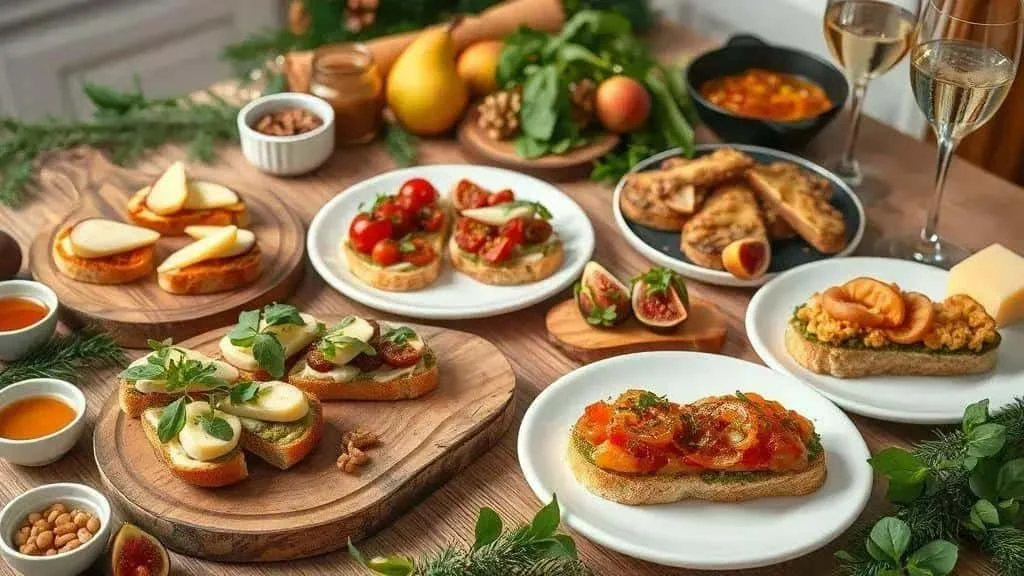
Adapt the toppings to your Christmas menu with these further combinations.
Creative variations
- Pear, Brie and honey: combine one sliced pear, 100 g Brie, one tablespoon honey and chopped walnuts. During pregnancy, Brie must be cooked until steaming hot throughout, not just served warm. Do not give honey to babies under one.
- Coppa, fig and rocket: use thin slices of cured pork coppa, four sliced figs, 50 g rocket and a drizzle of oil on firm bread. During pregnancy, cured meat should be thoroughly cooked until steaming hot before eating.
- Caramelised onion and goats’ cheese: top toast with two caramelised onions, 80 g goats’ cheese and thyme. Pasteurised soft goats’ cheese without a mould rind is different from white-rinded chèvre; the latter needs thorough cooking during pregnancy. Serve freshly prepared and hot.
- Pesto and confit tomatoes: combine two tablespoons pesto, 150 g confit tomatoes and grated vegetarian hard cheese. Check the pesto’s cheese as well as the separate topping; ordinary Parmesan does not make a vegetarian dish.
Presentation tips
- Even slices: cut bread to a consistent thickness for even toasting and a tidy platter.
- Simple serving pieces: clean wooden boards and white plates show off the toppings’ colours.
- Group by flavour: arrange different toppings separately and label ingredients and allergens clearly, with dedicated serving utensils where needed.
- Simple garnishes: washed microgreens, lemon zest and suitable chopped nuts add colour and texture.
- Manage moisture: drain wet toppings and assemble just before serving.
- Vary the display: use stable little bowls and serving dishes without creating precarious stacks or blocking access to the food.
Pairings for Christmas entertaining
- Drinks: brut sparkling wine or prosecco can accompany creamy toppings; a light Sauvignon Blanc suits fish, and Pinot Noir offers another option with stronger cheeses. Sparkling water with citrus or an alcohol-free drink provides an alternative; alcohol is not recommended during pregnancy.
- Main courses: serve bruschetta before roast pork, chicken or grilled fish, choosing portions to suit the rest of the meal.
- Other dishes: citrus salads, a suitable cheese board and a selection of breads offer different flavours alongside the toasts.
- Serving order: you might start with tomato or suitable salmon toppings, follow with freshly cooked mushrooms, and finish with fig and Gorgonzola. Bring out small batches and follow guests’ needs for thoroughly cooked fish, cheese or cured meat.
- Portions: allow around two or three small bruschettas per person when there are other starters, or four or five if this is the only pre-dinner snack. Adjust for slice size and appetite.
Bringing the platter together
Christmas bruschetta is easy to vary and makes a colourful starter for friends and family.
Choose from the five recipes, adjust seasonings to taste and keep components separate until serving. A little planning helps the bread stay crisp and the toppings fresh.
Thank you for reading! Follow us on social media for more Christmas recipes and ideas, and visit the I Love Christmas blog for festive inspiration. We would love to see your versions!
Festive bruschetta FAQ
How many bruschettas should I allow per person?
Allow roughly two or three small pieces when serving other starters, or four or five if bruschetta is the only pre-dinner snack. Adjust for the size of the bread slices and the rest of the menu.
Can I prepare bruschetta ahead?
Toast and cool the bread, then keep it in a dry container. Prepare toppings separately and refrigerate perishable ingredients at 5°C or below, assembling shortly before serving.
How should I store leftovers?
Store unused toppings separately in covered containers in the fridge at 5°C or below and use within 24 hours, or sooner if the ingredient’s use-by or opened-pack instructions require. Do not save food that has been left out too long. Refresh plain toast briefly in the oven, but reheat cooked toppings only once until steaming hot throughout, such as 70°C for two minutes or 75°C for 30 seconds; a quick surface warming is not enough.
Which simple substitutions work?
Try ciabatta instead of baguette, suitable goats’ cheese instead of Gorgonzola, thick Greek yoghurt instead of cream cheese, or rocket instead of basil. Check dietary needs: yoghurt still contains milk, and vegetarian or vegan versions require suitable cheese, fat, bread and other ingredients.
What can I serve to drink?
Sparkling wine can complement creamy toppings, light white wine can accompany fish, and a light red such as Pinot Noir offers an option with stronger cheeses. Also offer sparkling water with citrus or an alcohol-free alternative, and avoid alcohol during pregnancy.
Sources and Further Reading
- NHS: foods to avoid during pregnancy
- UK Government: cooking and reheating food
- UK Government: chilling and defrosting food safely
- NHS: foods to avoid for babies and young children