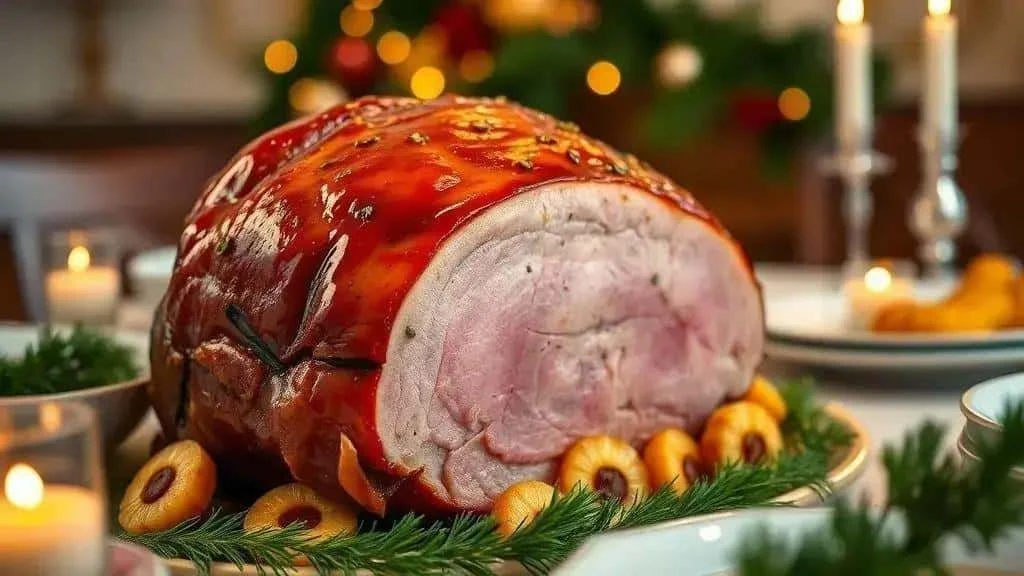
These five festive ham preparations cover pineapple, honey and mustard, a nut-and-herb crust, wine with dried fruit, and small party bites. Find ingredient lists, glaze variations, side dishes and storage guidance, with an emphasis on using the correct type of ham and following its heating instructions.
These festive glazed ham recipes take inspiration from Brazilian tender, a smoked ham often served at Christmas. Every recipe here assumes a fully cooked ham joint labelled suitable for eating cold or reheating. It does not mean chicken tenders, pork tenderloin or an uncooked gammon joint. If your product needs cooking, cook it fully according to its own instructions before using these glaze ideas. Oven settings below are conventional unless the pack states otherwise.
Why choose ham for a festive meal?

A cooked ham joint makes a convenient centrepiece, with a savoury flavour that works well with different glazes and side dishes.
Versatile flavours
Ham works with many glazes, from sweet-and-sour to spicy. Fruit, honey, mustard and herbs offer a range of combinations.
Straightforward preparation
Using a ham that is already fully cooked reduces preparation work. Check the product instructions first, then add your chosen glaze and heat as directed; smoked or cured does not automatically mean ready to eat.
A centrepiece for the table
Glossy slices, pineapple rings and clean fresh herbs can turn a simple ham into a festive serving platter. Remove whole cloves and any securing picks before serving.
Cost and portions
Prices vary, but a larger ham can provide several meals. Compare the cost per serving with other options rather than assuming a joint will always be cheaper.
Dietary adjustments
Compare salt levels on labels and choose suitable dairy-free glazes where needed. Fresh roast pork or chicken can be alternative mains, but they require their own cooking instructions and are not direct substitutes for ready-cooked ham.
Preparing ahead
Make glazes ahead and refrigerate them appropriately. For the simplest routine, heat the ham once near serving time. If you glaze and heat it in advance, cool and chill it promptly and plan to serve the safely stored leftovers cold rather than repeatedly reheating them.
Side dishes
Ham pairs well with mash, Brazilian farofa, fresh salads, festive rice and roast vegetables. Balance a sweet glaze with fresh or sharp accompaniments.
Serving safely
Follow the ham’s heating instructions and serve promptly. If holding hot, keep it at 63°C or above. Use a stable board and a sharp knife for carving.
Making use of leftovers
Leftover ham can be used in sandwiches and salads. Plan portions for later meals, cooling and storing them safely. A cooked dish is only suitable if it does not mean reheating the same food repeatedly.
Quick buying tips
- Choose an intact pack from a reputable supplier with a suitable use-by date.
- Compare the labelled salt content if this is relevant to your meal planning.
- Check whether the joint is boneless, how much rind or fat it has, and whether it is fully cooked.
A simple festive finish
A honey-and-mustard glaze, fruit and fresh herbs can make an attractive platter without elaborate decoration. Use maple syrup instead of honey for food intended for a baby under 12 months, and choose an age-appropriate meal overall.
Choosing and preparing the right ham
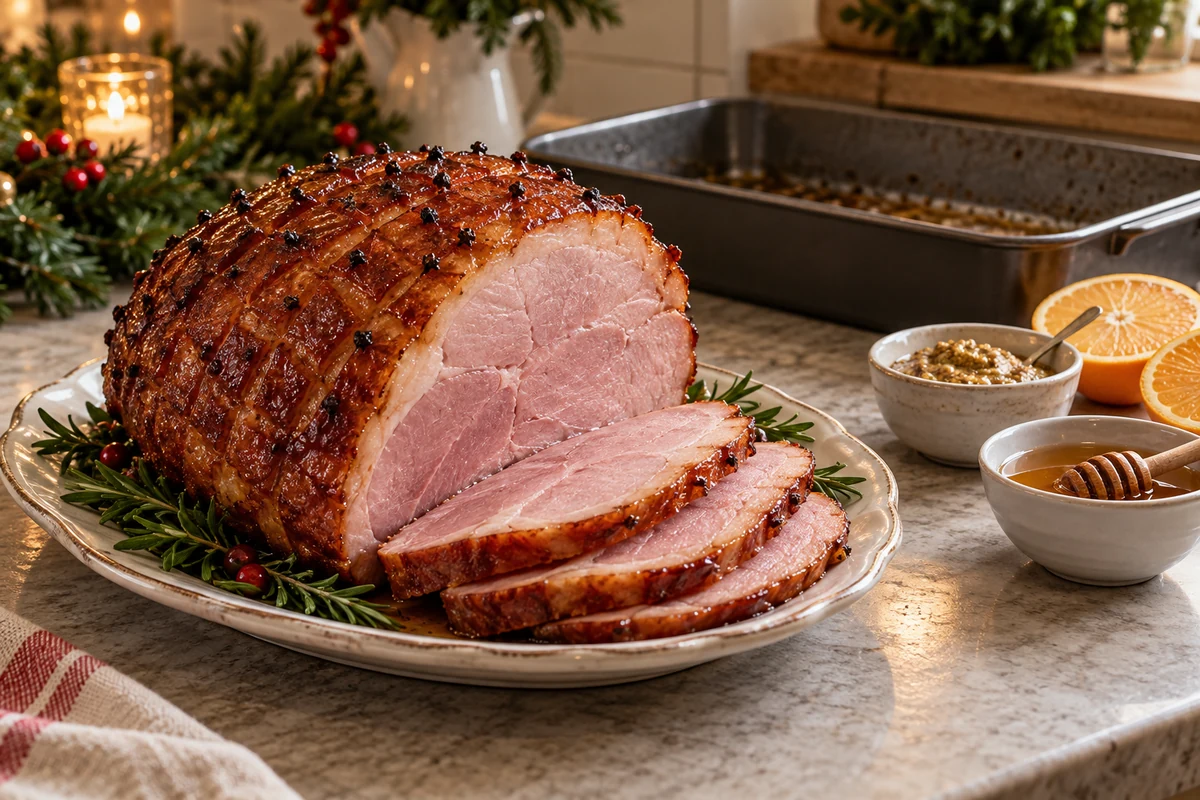
Start with the size, label and storage instructions when choosing ham for these recipes. Buy a fully cooked joint from a reputable supplier, with a suitable use-by date and clear reheating guidance.
Choosing the joint
- Size: allow roughly 150–200 g of boneless ham per person when serving several side dishes; adjust for appetites and any rind or bone.
- Type: use a fully cooked smoked ham for the methods below. Raw gammon, partly cooked ham and fresh pork need their own full cooking process first.
- Label: check use-by, chilled or frozen storage, whether it is ready to eat, and ingredient and allergen information.
- Condition: choose intact packaging and follow the date and storage instructions; appearance alone does not establish safety.
Storage and initial preparation
If frozen, thaw fully in the fridge according to the pack. A joint may take 24–48 hours or longer depending on its size; use within 24 hours of full thawing. Remove all packaging, pat dry if needed and prepare promptly rather than deliberately leaving it out to warm on the worktop.
A simple glaze
This glaze is an alternative starting point to the recipes below. Choose one glaze rather than layering every mixture onto the same ham.
- 120 ml honey, or maple syrup or loosened apricot jam, adjusting sweetness and consistency; no honey for babies under 12 months.
- 3 tbsp Dijon mustard, or a milder mustard to taste.
- 50 g soft brown sugar, or coconut sugar if preferred. Extra honey is another option, but changes the consistency and is not a lower-sugar guarantee.
- 30 ml orange juice, or pineapple juice.
- Up to 1 tsp ground cloves, optional and adjusted to taste; use whole cloves only as removable decoration, not as an equivalent spoonful to eat.
Preparing glazed ham
- Preheat: use the temperature specified by the ham manufacturer; the glaze recipes commonly use 160–180°C conventional.
- Prepare the joint: remove wrapping and any casing that the pack says to remove. Pat dry and score a shallow diamond pattern in the surface fat if present, without cutting deeply into the meat.
- Optional decoration: arrange pineapple rings on or around the ham if using them. Secure only with suitable cooking picks if necessary, and count and remove all picks and whole cloves before serving.
- Mix the glaze: combine the honey, mustard, sugar and juice, with a little ground clove if chosen.
- Prepare for heating: place the ham in a suitable tin. Keep the glaze for the finishing stage unless the manufacturer specifically advises applying it earlier.
- Heat according to the pack: cover with foil if directed. Do not rely on a universal minutes-per-weight formula: joint shape and starting temperature vary, and some products have specific instructions.
- Glaze near the end: uncover and brush with glaze for the final 15–20 minutes where compatible with the pack instructions. Watch closely and lower the heat or cover if the sugar darkens too fast.
- Check thoroughly heated: follow the pack and ensure it is steaming hot throughout. A food thermometer can confirm 70°C for 2 minutes or 75°C for 30 seconds. A brief reading of 60–65°C is not a general reheating standard.
- Rest briefly: once fully heated, allow 10–15 minutes before carving if the pack permits, then serve promptly.
- Carve: use a sharp knife on a stable board and cut thin slices across the grain where visible.
Safe storage of leftovers
Cool portions within 1–2 hours, refrigerate at 5°C or below and use within 48 hours or freeze. If the ham has already been reheated for this meal, use the safely stored leftovers cold, such as in sandwiches or salads, rather than heating them again.
Main flavour combinations: ingredients and methods

Sweet-and-sour pineapple ham
Ingredients for pineapple ham
- 2 kg fully cooked ham from a reputable supplier; use a smaller 1.5 kg joint for fewer people and scale the glaze as appropriate.
- 1 tin pineapple rings, 565 g total pack weight, reserving juice for the sauce; the drained fruit weight is different. Fresh pineapple rings with separate juice are an alternative.
- 100 g soft brown sugar, or coconut sugar; see the detailed version for a honey alternative.
- 80 ml pineapple juice, or orange juice.
- 45 ml cider vinegar, or white wine vinegar.
- 30 g butter, or a suitable dairy-free spread.
Making pineapple ham
- Preheat: use 160–170°C only where compatible with the ham pack’s heating instructions; otherwise follow the pack.
- Prepare the ham: remove wrapping and any non-edible casing as instructed, pat dry and lightly score surface fat where present.
- Arrange the pineapple: place rings on or around the ham. If using cooking picks, remove every one before serving; whole cloves are also removable decoration, not food to bite into.
- Make the sauce: gently heat the juice, sugar, vinegar and butter in a small pan, stirring until the sugar dissolves and the sauce looks glossy.
- Heat the ham: follow its specific reheating instructions, covering with foil if directed. Reserve the sauce for the final glazing stage and serving.
- Glaze: uncover for the final 15–20 minutes if compatible with the pack guidance, brush with sauce and watch closely as it colours. Keep some clean sauce aside to serve.
- Check, rest and slice: ensure the centre is steaming hot, checking 70°C for 2 minutes or 75°C for 30 seconds with a thermometer. Rest briefly, remove picks and cloves, then carve thinly.
Pineapple ham variations
- Use apricot jam instead of brown sugar, adjusting the amount to its sweetness and thickness.
- Add a little chopped fresh red chilli for gentle heat.
- Use freshly grilled pineapple for browned edges and a different texture.
Honey-and-mustard glazed ham
Ingredients for honey-and-mustard ham
- 2 kg fully cooked ham, adjusting the joint size to the guest list.
- 120 ml honey, or maple syrup or loosened orange marmalade; no honey for babies under 12 months.
- 3 tbsp Dijon mustard, or milder mustard if preferred.
- 50 g soft brown sugar, optional, for a sweeter glaze.
- 30 ml soy sauce, optional; it adds salt as well as savoury flavour, so avoid automatically adding more salt.
Making honey-and-mustard glazed ham
- Preheat: follow the ham pack’s instructions, using 160–175°C conventional only where appropriate for that product.
- Mix the glaze: stir together honey, mustard, optional brown sugar and optional soy sauce until combined.
- Prepare the surface: lightly score surface fat if present. Keep the glaze ready for the final heating stage rather than letting its sugar scorch during prolonged heating.
- Heat covered if directed: use a suitable roasting tin and follow the product’s reheating instructions; a single time-per-weight formula is not reliable for every joint.
- Finish with the glaze: uncover and brush on the mixture during the final 15–20 minutes if suitable for the pack instructions. Watch the honey carefully and check the centre is thoroughly heated, not just the surface browned.
- Rest and carve: once steaming hot throughout, rest briefly if directed, then carve thinly and serve.
Honey-and-mustard variations
- Add orange zest for citrus aroma.
- Try a different honey, such as wildflower honey, for a change in flavour.
- Add a pinch of black pepper or smoked paprika.
Ham with a nut-and-herb crust
Ingredients for nut-crusted ham
- 2 kg fully cooked ham, as a whole joint for coating.
- 120 g chopped Brazil nuts, walnuts or almonds. Pumpkin or sunflower seeds can be an alternative only if suitable for the individual allergy and free from relevant cross-contact.
- 50 g breadcrumbs, or suitable gluten-free breadcrumbs.
- 30 ml mustard to help the crust adhere.
- 30 ml olive oil to moisten the mixture.
- 2 tbsp chopped fresh parsley, rosemary or thyme.
Making nut-crusted ham
- Preheat: follow the ham’s heating guidance; 170°C is a possible crust-finishing temperature, not a universal instruction for every product.
- Mix the crust: combine chopped nuts, breadcrumbs, herbs and oil to make moist crumbs. Taste before adding any salt, since the ham is already salty.
- Heat, then coat: first heat the joint for most of the time required by its pack, covered if directed. Carefully brush a thin mustard coating onto the hot joint for the finishing stage.
- Add the crust: use the back of a spoon to press the nut mixture onto the mustard, taking care around the hot tin.
- Finish baking: allow about 20–30 minutes for the crust to colour, watching closely, as part of the ham’s full reheating process. This short finishing time alone is not enough to assume a cold 2 kg joint is thoroughly heated.
- Check and carve: confirm the centre is steaming hot, using 70°C for 2 minutes or 75°C for 30 seconds as a thermometer check. Rest briefly, then carve carefully through the crust.
Nut-crust variations
- Use pistachios for a different colour and flavour, provided they are suitable for your guests.
- Add grated Parmesan for a savoury crust; omit it for a dairy-free version. This does not make the ham vegetarian.
- Add lemon zest alongside the herbs for a fresh aroma.
Sweet-and-sour pineapple ham: detailed recipe
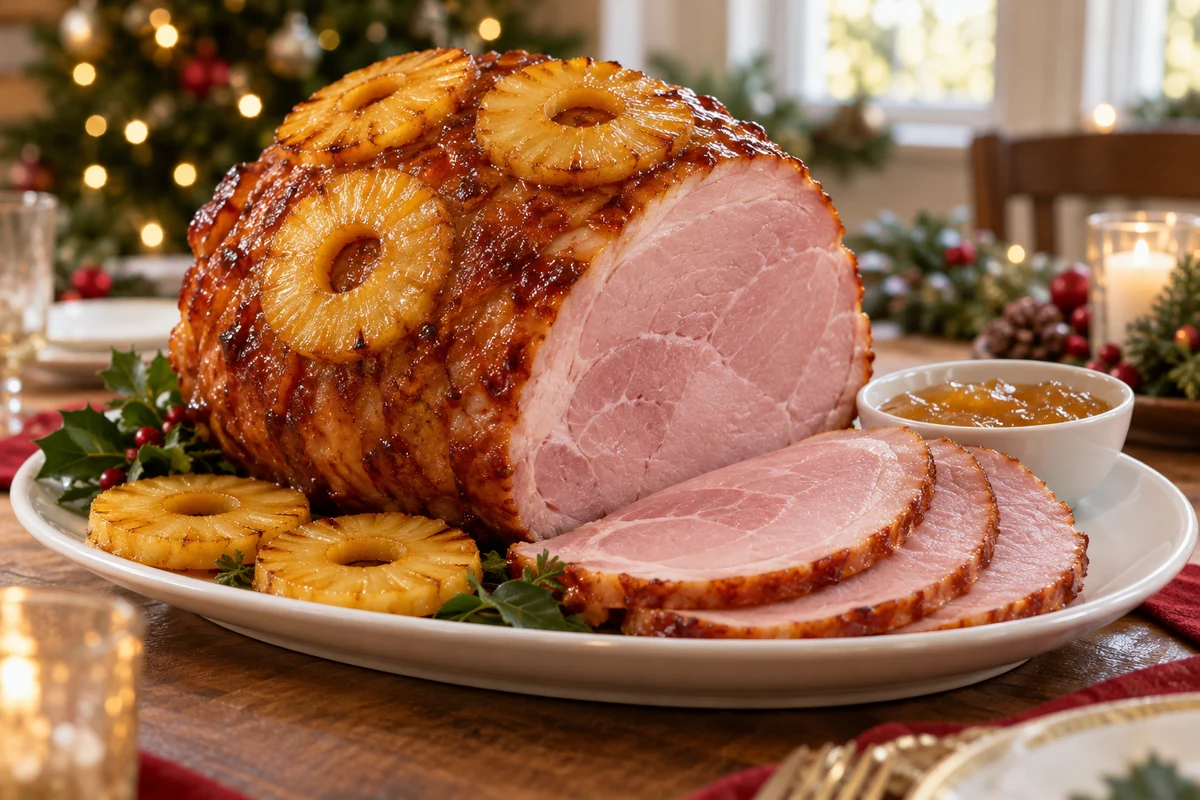
Sweet-and-sour pineapple ham
Ingredients
A 2 kg boneless joint serves approximately 10–12 with side dishes:
- 2 kg fully cooked ham; a 1.2–1.5 kg joint suits around 6–8 smaller portions with sides. Scale the glaze to the joint and appetites.
- 1 tin pineapple rings, 565 g total pack weight, reserving the juice. Alternatively, use 200–250 g fresh pineapple as a topping with separately measured juice; this is not an equal drained-weight conversion.
- 100 g soft brown sugar, or 115 g honey, adjusting sweetness to taste; no honey for babies under 12 months.
- 80 ml pineapple juice, or orange juice.
- 45 ml cider vinegar, or white wine vinegar.
- 30 g butter, or a suitable dairy-free spread.
- Up to 20–24 whole cloves, optional for removable decoration and aroma; they are not to be eaten whole.
- Salt and black pepper to taste, using little or no extra salt because the ham is already salted.
Method
- Preheat according to the pack: use the stated heating temperature, with 160–170°C suitable only where the product instructions allow. Position the tin centrally.
- Prepare the joint: remove packaging and any casing as directed, pat dry and score shallow diamonds in the surface fat, without cutting deeply into the ham.
- Arrange the pineapple: set rings on or around the ham. Add optional cloves to the surface for flavour. If picks are needed to hold fruit, use suitable cooking picks and count them so all can be removed later.
- Make the sauce: heat the pineapple juice, sugar, vinegar and butter in a small pan, stirring until the sugar dissolves. Simmer for about 5–7 minutes until slightly reduced, watching closely.
- Reserve sauce for finishing: divide it into a portion for glazing and a clean portion for serving, so the serving sauce does not share a used brush.
- Heat the ham: place in the tin and cover with foil if the pack directs. Follow its full reheating time and temperature; do not assume 40–60 minutes will be sufficient for every 2 kg joint.
- Glaze near the end: uncover and brush with sauce during the final 15–20 minutes where suitable. A brief 180–190°C finish can add colour, but watch for burning and keep checking that the centre is properly heated.
- Check the centre: it must be steaming hot throughout. Use a thermometer to check 70°C for 2 minutes or 75°C for 30 seconds, following the product instructions. Do not stop at a momentary 60–65°C reading.
- Rest briefly: allow 10–15 minutes once fully heated if the pack permits, then remove every clove and pick before carving.
- Slice and serve: cut thin slices across the grain where visible, arrange on a warmed platter and serve with the reserved sauce, gently reheated until hot.
Substitutions and tips
- Try apricot jam or marmalade instead of brown sugar, adjusting the quantity to the fruit preserve’s sweetness and thickness.
- For a less sweet glaze, reduce the sugar and add 1 tbsp Dijon mustard.
- For a stronger fruit flavour, replace part of the juice with pineapple concentrate and add orange zest; check the concentrate’s strength and sweetness.
Honey-and-mustard glazed ham: detailed recipe
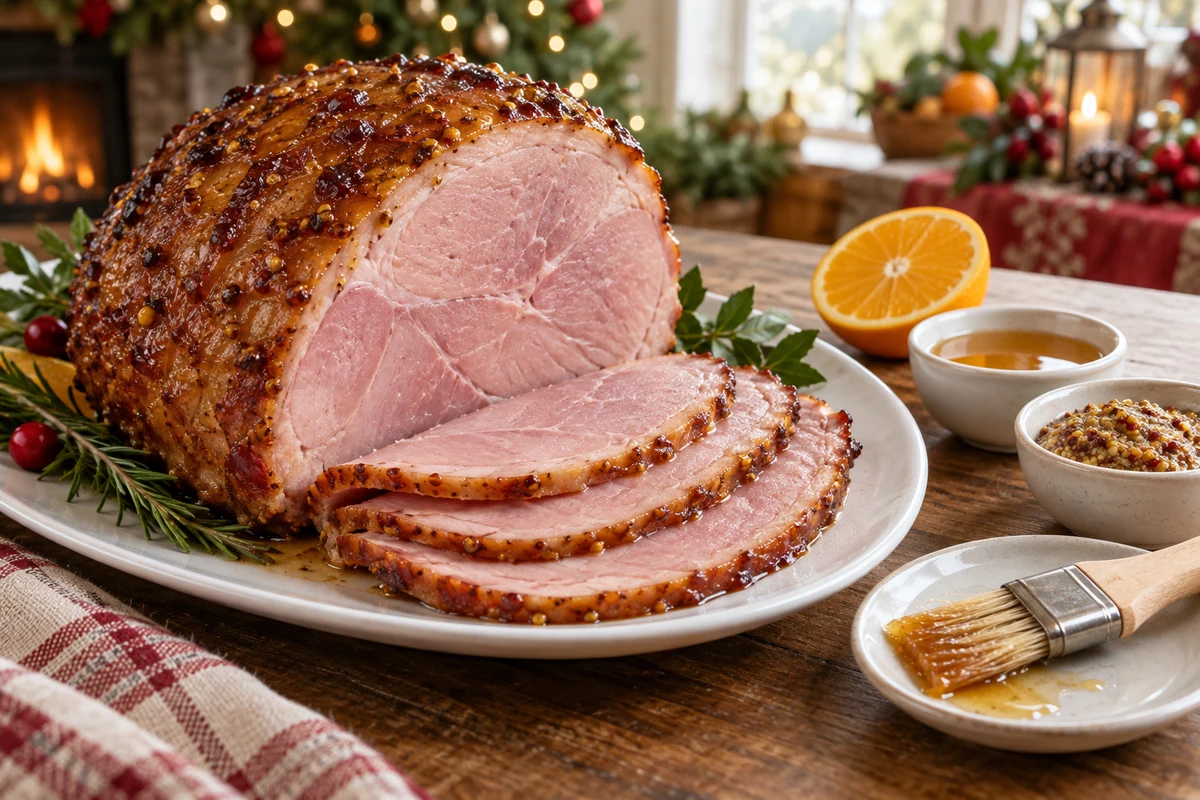
Honey-and-mustard glazed ham
Ingredients
A 2 kg boneless joint serves approximately 10–12 with side dishes:
- 2 kg fully cooked ham; use 1.2–1.5 kg for approximately 6–8 smaller portions with sides, scaling the glaze appropriately.
- 120 ml honey, or maple syrup or loosened orange marmalade; no honey for babies under 12 months.
- 3 tbsp Dijon mustard, or yellow or wholegrain mustard.
- 50 g soft brown sugar, optional; coconut sugar or a little extra honey changes flavour and consistency rather than automatically making it healthier.
- 30 ml soy sauce, optional, for savoury flavour; avoid extra salt and check gluten or soya requirements.
- 30 ml orange juice, or pineapple juice.
- 12–16 whole cloves, optional for aroma; remove them before serving. Pineapple can be added separately as an optional garnish.
- Black pepper to taste; the ham and optional soy sauce already contribute salt.
Method
- Preheat: follow the ham pack’s directions, using 160–175°C conventional only if appropriate for the product.
- Prepare the ham: remove packaging and casing as directed, pat dry and proceed promptly. There is no need to deliberately leave it warming at room temperature.
- Score lightly: make a shallow diamond pattern through surface fat if present, not 1 cm-deep cuts into the meat. Insert optional cloves and remember to remove them later.
- Mix the glaze: stir together honey, mustard, optional sugar, optional soy sauce and juice. Warm gently for 2–3 minutes if needed to dissolve the sugar, adding black pepper to taste.
- Put the ham in the tin: use a suitable roasting tin and rack if directed. Keep the glaze ready for finishing so it does not scorch during the main heating period.
- Heat as directed: cover with foil if specified and follow the pack’s time and temperature. A cold 2 kg joint may need longer than a simple 40–60-minute estimate.
- Glaze carefully: uncover for the final 15–20 minutes where compatible with the instructions and brush on thin layers of glaze. A brief 180–190°C finish may add colour, but watch constantly for scorching.
- Check with a thermometer: ensure the centre is steaming hot throughout, confirming 70°C for 2 minutes or 75°C for 30 seconds. Browning alone does not show that the centre has heated sufficiently.
- Rest: allow a brief 10–15-minute rest under loose foil once fully heated, if permitted by the pack, then remove whole cloves or picks.
- Carve: cut thin, even slices across the grain where visible and serve promptly.
Tips and variations
- Add orange zest and a little extra juice for a stronger citrus note.
- For less sweetness, reduce the brown sugar to 2 tbsp and add 1 extra tbsp mustard.
- Use wholegrain mustard for a different texture.
- For a large joint, an oven-safe probe thermometer can help monitor the centre without repeatedly opening the oven; follow its instructions and clean the probe properly.
- Cool leftovers within 1–2 hours and refrigerate for up to 48 hours or freeze. If the ham was already reheated, use safely stored leftovers cold in sandwiches or salads rather than reheating again.
Nut-and-herb-crusted ham: detailed recipe
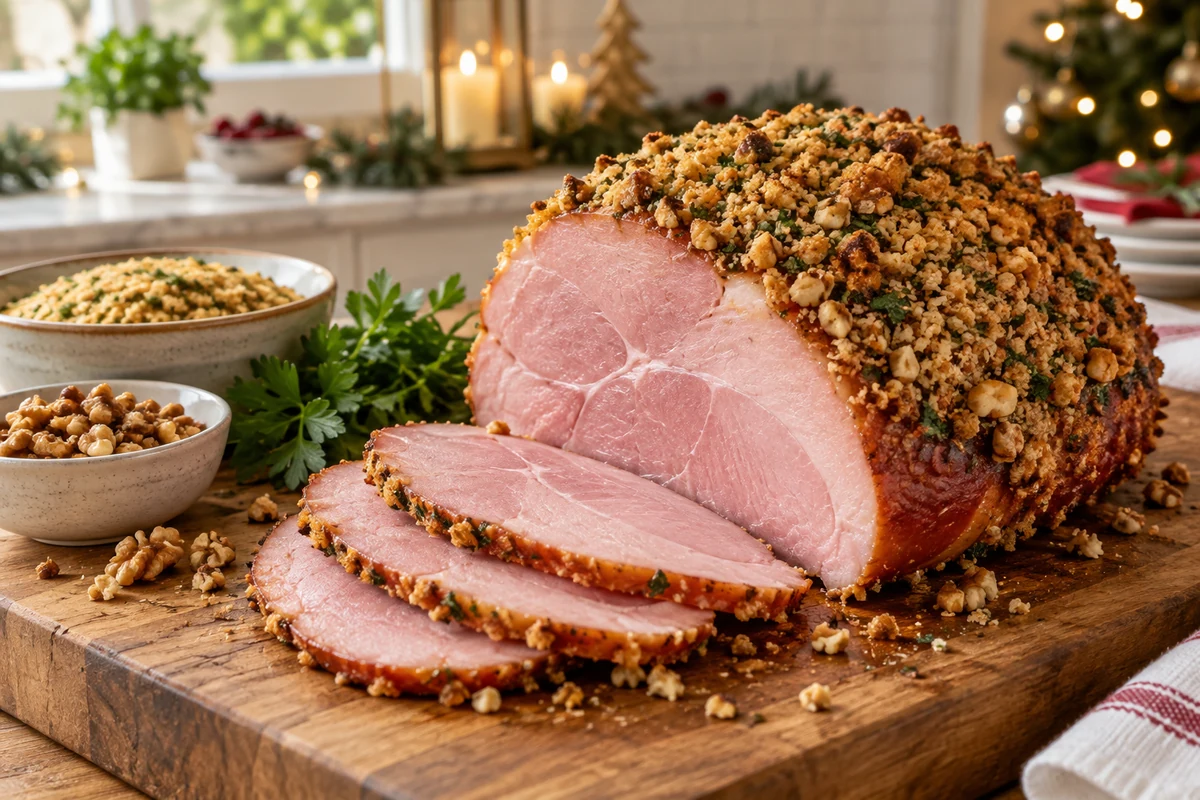
A 2 kg boneless joint serves approximately 10–12 with side dishes:
Ingredients
- 2 kg fully cooked ham; use 1.2–1.5 kg for roughly 6–8 smaller servings with sides, scaling the crust appropriately.
- 120 g chopped Brazil nuts, walnuts or almonds. Seeds can be an alternative only if suitable for the individual’s allergies and free from relevant cross-contact; they are not automatically allergy-free.
- 50 g breadcrumbs, or labelled gluten-free breadcrumbs if needed.
- 30 ml Dijon or yellow mustard to help the coating adhere.
- 30 ml olive oil to moisten the crumbs.
- 20 g grated Parmesan, optional; omit for a dairy-free crust. Omitting cheese does not make a ham dish vegetarian.
- 2 tbsp chopped fresh parsley, rosemary or thyme, or 1 tbsp dried herbs, adjusted to taste.
- Salt and black pepper to taste; add little or no salt because the ham and Parmesan may already be salty.
Method
- Preheat: follow the ham pack’s heating instructions. The crust can finish at around 170°C conventional if compatible with those directions.
- Mix the crust: combine nuts, breadcrumbs, optional Parmesan and herbs. Stir in the oil gradually to make moist crumbs that hold together when pressed; season lightly.
- Prepare and heat the ham: remove packaging and casing as directed, pat dry and place in a suitable roasting tin. Begin heating according to the pack, covered if required, rather than leaving the joint on the worktop first.
- Prepare the surface: if there is surface fat, score it lightly before heating. Avoid deep cuts into the meat; a shallow surface is enough for the mustard coating.
- Add mustard near the end: once the joint has completed most of its prescribed heating time, carefully uncover and brush with the measured mustard.
- Press on the crust: use the back of a spoon to press the nut mixture onto the mustard. Take care around the hot tin and do not handle the hot joint with bare hands.
- Finish the crust: bake uncovered for about 20–30 minutes, watching until the crust is golden. Treat this as a finishing period within the full heating process, not the total time for a cold 2 kg ham. Cover lightly if the nuts brown before the centre is ready.
- Check the centre: follow the pack and ensure the ham is steaming hot throughout. A thermometer can confirm 70°C for 2 minutes or 75°C for 30 seconds; a brief 60–65°C reading is not a general reheating target.
- Optional extra browning: if necessary, briefly increase to 180–190°C for the last few minutes, watching the nuts constantly. Skip this if the crust is already golden.
- Rest and slice: allow a brief rest once fully heated, then carve thinly through the crust and serve. Loose foil should not press into and soften the coating.
Substitutions and practical tips
- Chopped pumpkin or sunflower seeds can replace nuts where safe for the individual guest. Check labels and cross-contact; seeds themselves can cause allergies.
- A food processor can chop nuts quickly; use short pulses to retain some texture rather than making a paste.
- Press the crust onto the mustard with a spoon so it adheres during the finishing stage.
- For a dairy-free crust, omit Parmesan and check breadcrumbs and mustard. This recipe already uses olive oil rather than butter.
- Use a suitable rack inside the roasting tin if needed to keep the ham above accumulated liquid; do not put a loose tin or joint directly over an unsafe support.
Ham with red wine and dried fruit: detailed recipe

Ham with red wine and dried fruit
Ingredients
A 2 kg boneless joint serves approximately 10–12 with side dishes:
- 2 kg fully cooked ham; use 1.2–1.5 kg for approximately 6–8 smaller servings with sides and scale the sauce appropriately.
- 240 ml red wine, such as Merlot or Cabernet. For an alcohol-free version, use red grape juice with 1 tbsp balsamic vinegar, counted as the vinegar allowance below.
- 120 ml port or brandy, optional; omit entirely if avoiding alcohol. Reducing the sauce does not guarantee all alcohol evaporates.
- 120 ml chicken or vegetable stock, or water.
- 100 g soft brown sugar, or 115 g honey, adjusting sweetness to the fruit and juice; no honey for babies under 12 months.
- 150 g chopped dried fruit, such as apricots, dates, figs, raisins or prunes; remove any stones.
- 30 g butter, or olive oil for a dairy-free alternative with a different flavour.
- 15 ml balsamic vinegar, optional to balance sweetness; do not add it twice if already used with grape juice.
- 1 tsp ground cinnamon, optional, adjusted to taste rather than assuming a teaspoon always weighs 5 g.
- Up to 20 whole cloves, optional, for removable decoration and aroma.
- Salt and black pepper to taste, allowing for salt already in the ham and stock.
Method
- Preheat: follow the ham’s heating instructions, using 160–170°C conventional where appropriate for the product.
- Prepare the ham: remove packaging and any casing as instructed, pat dry and prepare promptly without a deliberate room-temperature rest.
- Score lightly: make shallow diamonds in surface fat if present, without deep cuts into the meat. Add optional cloves, counting them for removal before serving.
- Soften the fruit: put the wine, optional port or brandy, stock, sugar and dried fruit in a saucepan. Bring gently to a simmer; use the alcohol-free alternatives if needed.
- Reduce: simmer for approximately 10–15 minutes, stirring occasionally, until the fruit softens and the liquid reduces. The actual time depends on the pan and whether the optional extra liquid was used; stop before the mixture becomes sticky or scorches.
- Finish the sauce: add the vinegar if using, butter and optional cinnamon. Stir until glossy and lightly thickened, then adjust pepper and any salt carefully.
- Reserve the finishing sauce: divide the sauce and fruit into a glazing portion and a clean serving portion. Put the ham in its roasting tin, using a rack if directed.
- Heat the ham: follow its complete pack instructions, covering with foil where directed. Do not assume 40–60 minutes is adequate for every 2 kg joint.
- Add the glaze and fruit: during the final 15–20 minutes, where compatible with the pack, uncover, brush with sauce and add some softened fruit. A brief 180–190°C finish may add colour, but watch closely and protect the fruit if it starts to burn.
- Check the centre: ensure the ham is steaming hot throughout, with a thermometer check of 70°C for 2 minutes or 75°C for 30 seconds. Follow any more specific product guidance.
- Rest briefly: once fully heated, rest for 10–15 minutes under loose foil if the pack permits, then remove all whole cloves or picks.
- Carve and serve: slice thinly and spoon over the reserved hot sauce and fruit, or serve the sauce separately.
Variations and tips
- For an alcohol-free version, replace red wine with red grape juice, omit port or brandy and use the listed 1 tbsp balsamic vinegar for acidity. Do not rely on simmering to remove all alcohol.
- For a thicker sauce, simmer a little longer or mash some softened fruit with a fork, watching closely to prevent scorching.
- Add a little grated nutmeg, or use cardamom instead of cinnamon, for a different spice profile.
- Cool unused sauce promptly and refrigerate within its safe storage limit. It can accompany cold ham sandwiches the next day; do not repeatedly reheat sauce that has already been reheated.
Ham and pineapple party bites: ingredients and method
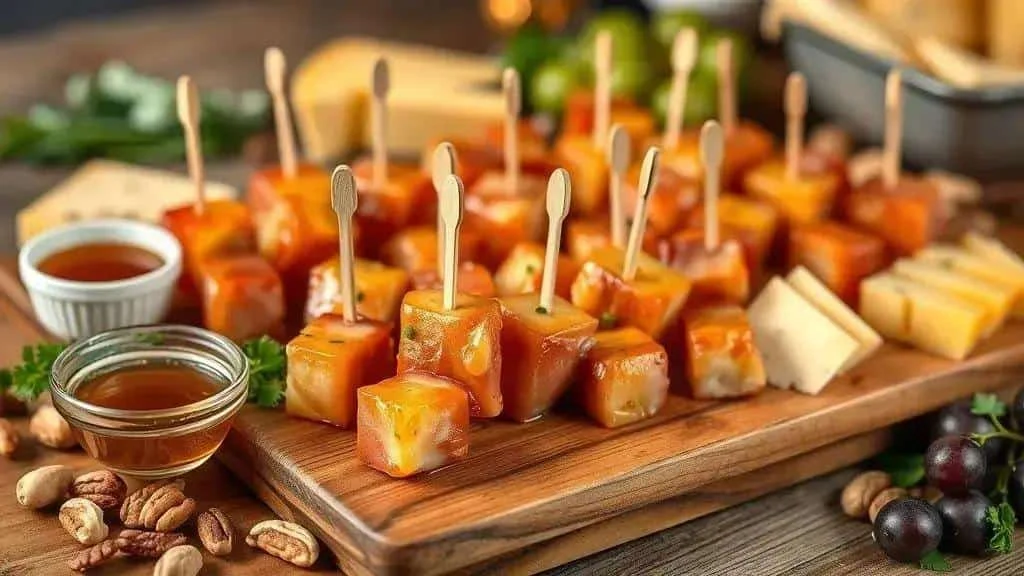
Ham and pineapple party bites
Ingredients (number of bites depends on cube size)
- 800 g fully cooked ham, cut into even 3–4 cm pieces. This may make more than 12 bites; prepare enough fruit and picks for the actual number. A fully cooked turkey joint can be an alternative with its own heating instructions.
- 12 small pineapple rings to start, fresh or tinned, cut into suitable bite-sized pieces. Use soaked dried apricots for a different fruit option, or omit fruit altogether.
- 80 ml honey, or about 80 g apricot jam loosened as needed; these are flavour alternatives, not identical volume-to-weight conversions. No honey for babies under 12 months.
- 2 tbsp Dijon mustard, or a milder mustard.
- 25 g soft brown sugar, optional; use less or omit for a less sweet glaze.
- 15 ml orange juice, or pineapple juice.
- Suitable serving cocktail sticks, one for each finished bite; add them after cooking, and remove before serving food to young children.
- A pinch of black pepper; extra salt is usually unnecessary. If pan-frying, use a little olive oil as needed for the pan.
- Fresh parsley or chives, optional, to finish.
Method
- Cut the pieces: cut the fully cooked ham into even 3–4 cm pieces so they heat at a similar rate. Count the portions rather than assuming 800 g makes exactly 12 cubes.
- Mix the glaze: stir the honey or jam, mustard, optional sugar, juice and black pepper together until combined.
- Coat the ham: toss the pieces with part of the glaze and refrigerate for 10 minutes if desired. Reserve a clean portion for finishing or dipping before using any utensils on the food.
- Prepare for heating: arrange ham pieces and bite-sized pineapple pieces in a suitable pan or baking dish. Heat them without decorative cocktail sticks, which may not be oven-safe.
- Heat and brown: pan-fry over moderate heat with a little oil, or bake at 180°C where compatible with the product guidance. Turn as needed and heat thoroughly; 1–2 minutes a side or 8–10 minutes in an oven is only a browning estimate and may not heat the centre of larger pieces.
- Add the finishing glaze: brush on thin layers near the end, watching that the sugar does not scorch. Keep any clean dipping sauce separate.
- Check and assemble: ensure the ham is steaming hot throughout, checking 70°C for 2 minutes or 75°C for 30 seconds in larger pieces. Assemble with serving picks after cooking, taking care with the hot food.
- Arrange the bites: place on a clean platter and finish with chopped herbs and a little black pepper.
- Offer a dip: serve the clean glaze reserved before use as a dipping sauce, or prepare a separate portion. Do not offer a bowl shared with a used brushing utensil.
- Preparing ahead: cut and coat the ham up to 6 hours ahead, cover and refrigerate within its use-by and opened-pack limits. Heat close to serving time and add serving picks afterwards.
Serving ideas and variations
- For a sharing board, add suitable cheeses, grapes and nuts, considering allergies and age-appropriate preparation for children.
- For vegetarian bites, use a suitable vegetarian grilling cheese or smoked tofu instead of ham. For vegan bites, use tofu and maple syrup rather than honey, and check the mustard and other ingredients.
- Arrange finished bites on a clean serving board with herbs. Keep any decorative picks out of the oven unless specifically rated for cooking, and remove sharp picks for young children.
- Allow around 2–3 bites per person for a party starter, adjusting for the size of the bites and other food available.
Side dishes for festive ham

Serve ham with accompaniments that balance sweetness, acidity and texture. Choose a few from the following ideas.
Familiar accompaniments
- Mashed potatoes: cook 1 kg peeled potatoes until tender, drain and mash with 50 g butter and up to 200 ml warmed milk, adding milk gradually and seasoning to taste. Sweet potato gives a sweeter variation.
- Festive rice: use 2 cups uncooked rice for roughly 6–8 side portions, cooking with the water quantity and method on the rice pack. Fold in suitable dried fruit and toasted nuts to taste. Cool leftover rice ideally within 1 hour, refrigerate and use within 24 hours; reheat only once.
- Crisp farofa: Brazilian toasted cassava meal with softened onion and butter, or olive oil and suitable nuts for a vegan version. Use farinha de mandioca, not tapioca starch.
Roast accompaniments
- Roast vegetables: toss carrots, potatoes and onion with oil and herbs and roast at 200°C for around 30–40 minutes, adjusting to piece size. Add quicker-cooking broccoli later so it does not burn.
- Potato wedges: season with rosemary and salt and roast until tender inside and golden outside.
Salads and fresh options
- Creamy vegetable salad: combine cooked, cooled potato, carrot and peas with apple and a plain-yoghurt herb dressing. Keep chilled until serving; yoghurt does not by itself make the whole dish low-fat.
- Mixed leaves with citrus dressing: lettuce, rocket and watercress with an orange vinaigrette provide a fresh contrast to a sweet glaze.
Sauces
- Sweet-and-sour sauce: reserve a clean portion to serve over the carved ham.
- Wine and dried-fruit sauce: serve a small amount alongside the ham, with the alcohol-free variation where required.
Vegetarian and vegan alternatives
- Grilled smoked tofu: use maple syrup and suitable mustard for a vegan glaze and follow the tofu’s cooking instructions.
- Vegan sweet potato gratin: use a suitable plant-based cream and breadcrumbs in a dedicated gratin recipe, cooking until the potatoes are tender.
Portions and presentation
- Portions: allow around 150–200 g boneless ham per person with several accompaniments, adjusting for appetites and other mains.
- Serving: keep dishes separate so guests can choose their own combinations and use separate serving utensils.
- Temperature: serve mash and sauces hot, or hot-hold at 63°C or above. Roast vegetables close to serving time for better texture.
Planning ahead
- Prepare suitable sauces and farofa the day before, cool within 1–2 hours and refrigerate; use within 48 hours and reheat only once. Rice needs faster cooling, ideally within 1 hour, and refrigerated use within 24 hours. All reheated dishes should be steaming hot throughout.
- If preparing roast vegetables ahead, cook them fully, cool promptly and refrigerate, then reheat once until steaming hot. Do not leave partly cooked vegetables warm for an extended period while waiting for the ham.
- Set the table while the food is cooking, leaving space for the serving platter so the hot ham need not sit out during a long decorating session.
Presentation, table decoration and budgeting

A few practical details can make the table inviting without adding much expense or work.
Presenting the food
Make the ham the centrepiece, with side dishes arranged around it. Carve near serving time and fan the slices on a warmed platter if desired.
- Vary heights safely with stable, purpose-made serving stands, rather than unstable stacks of books under cloth near hot food.
- Choose simple crockery to show off the glaze, with coordinated cutlery and napkins.
- Mix textures with clean wooden boards, ceramic platters and glass bowls appropriate for the food temperature.
Affordable festive decoration
Reuse suitable decorations and add small handmade touches rather than buying a complete new table setting.
- Greenery: use clean culinary rosemary around food. Keep ornamental pine or eucalyptus separate from food and out of reach of children and pets; do not treat decorative foliage as edible garnish.
- Fruit: oranges, pomegranates or grapes in separate bowls add colour; wash any fruit intended to be eaten.
- Lighting: battery-operated candles or suitable warm-white lights give a cosy effect without an open flame among fabric and greenery.
- Handmade details: kraft-paper place cards, twine bows and dried-orange decorations can add character. Keep loose decorative materials away from serving dishes.
Practical organisation
Plan access so guests can reach the ham, sauces and serving utensils without leaning over hot dishes.
- Choose a central platter and arrange accompaniments around it with enough space for safe serving.
- Separate hot and cold dishes and use proper temperature control rather than relying on their position on the table.
- Set up a drinks area with glasses, openers and an ice bucket, keeping the main serving route clear.
Keeping costs manageable
Compare practical options and plan quantities to avoid buying more than you need.
- Shop ahead where suitable: compare offers, but check use-by dates, storage space and whether the product can be frozen.
- Reuse decorations: refresh existing items with a new ribbon or simple handmade detail.
- Make sauces and sides: homemade versions may be economical, depending on quantities and the ingredients already available.
- Plan portions: use 150–200 g boneless ham per person as a guide and allow for the accompaniments to limit unnecessary leftovers.
Reuse and reduce waste
Choose reusable items you already own where practical, and follow local recycling guidance for packaging.
- Use washable cloth napkins if available.
- Clean jars can hold suitable cold drinks or decorations; do not assume ordinary jars are heatproof candle holders or suitable for hot liquids.
- Turn safely chilled ham into sandwiches or cold salads. If it has already been reheated, do not heat it again in a new pasta dish.
Checklist before serving
- Check the ham is thoroughly heated according to its pack, allow any brief rest and remove all cloves and picks.
- Switch on suitable decorative lights and battery candles, keeping cables away from food and walkways.
- Have a stable carving board, sharp knife, tongs and serving spoons ready.
- Use clean cloths and utensils, keeping food covered and at the appropriate temperature until serving.
Common questions and dietary substitutions
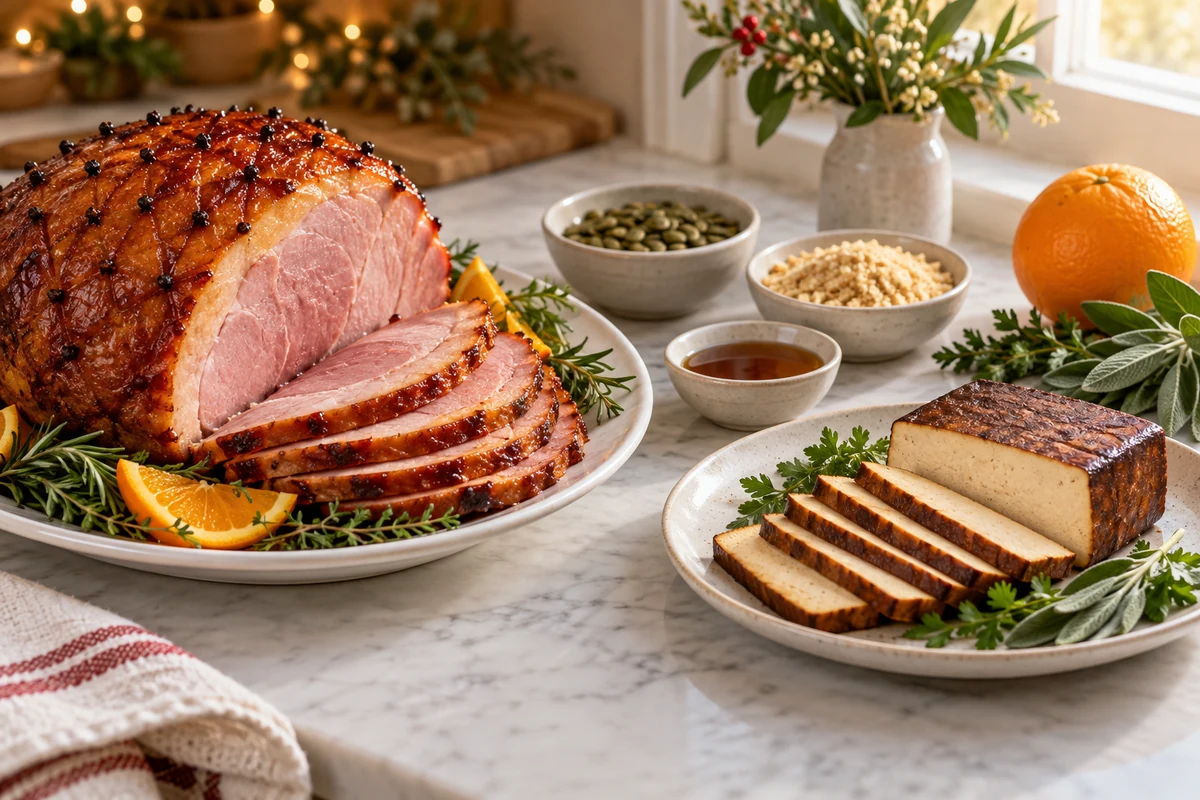
The following notes cover handling and adapting fully cooked ham. Substitutes such as tofu or seitan need their own preparation instructions rather than the ham’s reheating time.
How should I reheat cooked ham safely?
- In the oven: follow the product’s directions. For an appropriate portion of cooked ham that has not already been reheated, a covered dish with a little suitable sauce helps limit drying; use the stated temperature rather than assuming one setting fits every product.
- Time and temperature: heat until steaming hot throughout, checking 70°C for 2 minutes or 75°C for 30 seconds where using a thermometer. A fixed 10–15 minutes cannot guarantee this for every portion or joint.
- In the microwave: use a microwave-safe covered container, follow the appliance and food instructions, and turn or rearrange pieces to avoid cold spots. Check the centre and allow the specified standing time; a fixed 1–2 minutes is not universal.
- Reheat only once: heat just what you need. If the cooked ham has already been reheated for the festive meal, enjoy safely stored leftovers cold rather than reheating them again.
Reducing added salt
- Compare labels: choose a lower-salt ham where available and appropriate for your needs.
- Choose the glaze carefully: fruit, honey and vinegar can provide flavour without adding soy sauce or other salty condiments. They do not remove salt already in the ham.
- Use herbs and citrus: fresh herbs and lemon juice add flavour without extra salt.
Vegetarian and vegan alternatives
- 800 g smoked tofu: use a suitable date or maple syrup, mustard and spice glaze, following the tofu’s cooking instructions rather than the ham timings.
- 1–1.2 kg seitan: choose a suitable roast recipe and apply a compatible glaze. Seitan contains wheat gluten and is not suitable for a gluten-free meal.
- 1.5 kg prepared shredded young jackfruit: use in an appropriate savoury recipe with a sweet-and-sour sauce. This makes a different dish for salads or sandwiches, not a like-for-like roast joint or protein substitute.
Gluten-free options
- Ground almonds or finely chopped suitable seeds: can replace breadcrumbs in a crust, adjusting gradually to a mixture that adheres. They are not a universal one-cup replacement, and allergies still need checking.
- Gluten-free breadcrumbs: are the closest direct substitution for the listed breadcrumb quantity. Check mustard, soy sauce, stock and the ham label as well.
Dairy-free options
- Suitable dairy-free spread or olive oil: replace butter in glazes as appropriate to their consistency and flavour. Start with the listed amount and adjust rather than assuming every spread performs identically.
- Plant-based cream: can be used in suitable accompanying mash and sauce recipes; check its ingredients and other allergens.
Alcohol-free sauces
- 240 ml red grape juice: use with stock and balsamic vinegar in the wine-sauce variation, adjusting sweetness. A labelled alcohol-free wine is another possibility if its actual alcohol content is suitable for your requirements.
- Port or brandy: omit the optional amount, or replace with stock in a sauce that needs more liquid. Add balsamic vinegar to taste within the recipe’s measured allowance, rather than doubling it inadvertently.
Adapting for nut allergies
- Pumpkin or sunflower seeds: may work in a crust only if safe for the particular person. Check the product and cross-contact; a seed substitution alone does not guarantee an allergy-safe meal.
- Suitable oat flour or breadcrumbs: can help bind a nut-free crust if tolerated. Use gluten-free-certified oats where required and adjust the oil and quantity to the changed texture.
How long do leftovers keep?
- In the fridge: cool within 1–2 hours, store covered at 5°C or below and use within 48 hours, or sooner if the opened-pack instructions require it.
- In the freezer: freeze suitable portions promptly in freezer-safe packaging, aiming to use meat within 2–3 months for quality. Thaw in the fridge and use within 24 hours of full thawing; do not repeatedly reheat or refreeze thawed leftovers.
Calculating portions
- Per person: allow around 150–200 g boneless ham with several side dishes, adjusting down if there are several other mains or substantial starters.
Children and individual dietary needs
- Remove cloves and picks: check every serving for whole cloves, cocktail sticks and decorations. Cut food appropriately for young children and consider choking risks from whole nuts, grapes and firm chunks.
- Adjust the meal: avoid honey for babies under 12 months, keep added salt modest and choose food suitable for the child’s age or the guest’s specific dietary advice.
Quick glaze substitutions
- 100 g brown sugar: try 115 g honey or a suitable apricot-jam amount, adjusting consistency and sweetness. This is a flavour change, not a guarantee of less sugar or a healthier glaze.
- 3 tbsp Dijon mustard: substitute yellow or wholegrain mustard to taste.
- 120 ml honey: use maple syrup or loosened fruit jam for a honey-free glaze. The glaze may be vegan, but a ham dish is not; use a suitable plant-based main as well.
Plan your festive ham
Choose one of these five preparations and adapt the flavour to your table, keeping the ham’s product instructions at the centre of the heating method.
Try a variation, choose suitable accompaniments and plan safe cold meals with any ham that remains after reheating.
For more festive ideas, visit the I Love Christmas blog and follow our social channels.
Share your favourite combinations, and enjoy the celebrations.
Festive ham: frequently asked questions
How long should I heat a 2 kg cooked ham?
Follow the exact ham pack’s reheating instructions: shape, starting temperature and product type affect the time. Do not assume 40–60 minutes is sufficient for every joint. Add a sugary glaze near the end, generally during the final 15–20 minutes where compatible with the instructions, and check the centre is thoroughly heated.
How can I check the ham is ready without drying it out?
Follow the pack, cover where directed and add the glaze late. The centre should be steaming hot throughout; a thermometer can confirm 70°C for 2 minutes or 75°C for 30 seconds. A momentary 60–65°C reading is not a general reheating standard. Allow any brief rest recommended by the pack before carving.
How can I reduce added salt?
Compare ham labels, leave out optional soy sauce, and use fruit, herbs and citrus for flavour rather than extra salt. A glaze does not remove salt already present in the ham.
How should I store and use leftover ham?
Cool within 1–2 hours, refrigerate at 5°C or below and use within 48 hours, or follow a shorter opened-pack limit. Suitable portions can be frozen, ideally used within 2–3 months for quality. Thaw in the fridge and use within 24 hours. If the ham has already been reheated, use the leftovers cold rather than reheating again.
Can these ideas be adapted for vegetarians or vegans?
Yes, but they become different dishes: use suitable tofu, seitan or young jackfruit recipes and adapt the glazes. Replace honey with maple syrup and omit dairy for vegan options, checking all ingredients. Follow the substitute’s cooking method, not the ham timings; seitan is not gluten-free.
How do I stop the glaze burning?
Heat the ham according to its pack, covering where directed, and apply sugary glaze near the end rather than leaving it exposed throughout. Brush on thin layers, watch closely and reduce the heat or cover lightly if it colours before the centre is ready. Browning is not a substitute for checking thorough heating.
Sources and Further Reading
- Perdigão: Brazilian smoked tender product information
- UK Government: safe cooking and reheating
- UK Government: chilling and defrosting food safely
- NHS: foods to avoid for babies and young children
- Food Standards Agency: home food facts including rice storage