Five festive rice ideas: coconut and cashew, vegetables and pomegranate, saffron and walnuts, mushrooms and thyme, and citrus and pistachio. Includes a full coconut rice method and flavour suggestions for the other four, with ingredient swaps, presentation and storage advice.
Looking for festive Christmas rice ideas? This guide offers one detailed coconut and cashew rice recipe plus four flavour variations to help you plan a colourful side dish.
Why Try a Different Christmas Rice Dish?

A few changes to seasonings or toppings can make Christmas rice feel special without making the meal more complicated.
What a Variation Can Offer
- Colour: vegetables and varied toppings make the table look festive.
- Flavour: dried fruit, nuts and fresh herbs add different tastes and textures.
- Dietary needs: suitable dairy-free or vegan ingredients can accommodate guests, provided all labels and preparation methods are checked.
- Seasonal ingredients: choose produce that is in season where you live and compare prices.
- Less waste: use ingredients already bought for other dishes, keeping within safe storage limits.
- Planning: preparing toppings ahead can reduce work on the day.
Keeping It Simple
- Try one variation: test a small batch before serving it to a larger group.
- Familiar ingredients: add a favourite dried fruit or use a different rice, following that grain’s cooking instructions.
- Balance seasoning: taste cooked ingredients and adjust salt, acidity and richness.
- Prepare ahead: toast nuts and organise ingredients the day before. Rice needs prompt cooling and a short chilled storage period if cooked ahead.
- Finish neatly: add herbs, toasted nuts or suitable seeds just before serving.
- Offer a choice: a plain option alongside a flavoured rice can suit different tastes.
Thoughtful choices make Christmas rice an appealing part of the meal without unnecessary work.
Choosing Fresh Ingredients
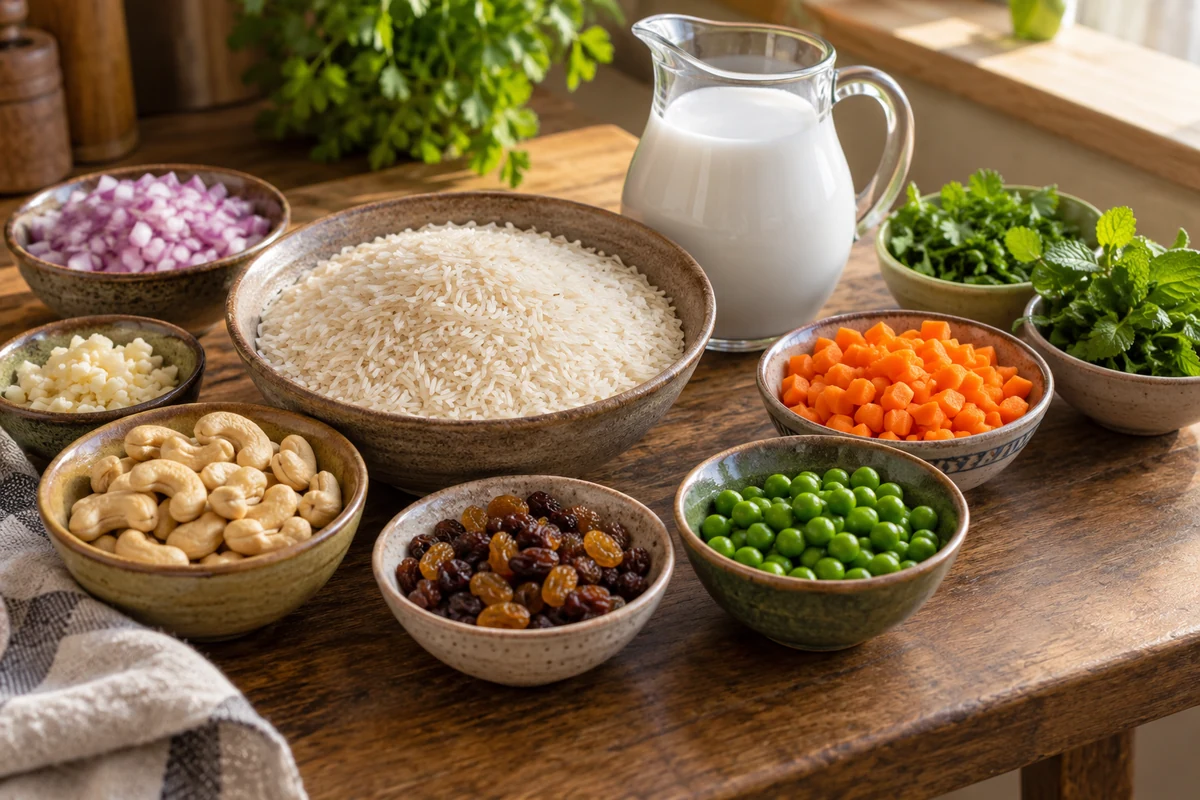
Buy from reliable suppliers and check condition, packaging and dates. Appearance and smell help assess quality but cannot prove that food is safe.
Quality Checks
- Vegetables: choose firm produce without mould, damaged leaves or spoiled patches.
- Fruit: look for sound skins and ripeness appropriate to when you will use it.
- Herbs: choose fresh-looking leaves and avoid slimy or badly wilted bunches.
- Fish for accompanying dishes: buy from a reliable chilled display, follow use-by dates and storage instructions, and keep separate from ready-to-eat ingredients.
- Meat for the main course: check intact packaging, use-by dates and chilled storage. Colour alone is not a safety test.
- Nuts: avoid rancid-smelling or mouldy nuts and follow the pack’s storage guidance.
- Rice and grains: choose intact packs without moisture, insects or signs of mould.
Where to Shop
- Local markets: compare seasonal produce and ask about its origin.
- Butchers and fishmongers: ask about storage and preparation instructions for any accompanying meat or fish.
- Specialist shops: useful for nuts, cheeses and less familiar ingredients.
- Online suppliers: check delivery conditions, dates and how chilled goods will be kept cold.
Shopping and Storage
- Plan by date: buy suitable dry goods ahead and fresh ingredients nearer the meal.
- Fruit and vegetables: choose quantities you can use while in good condition. Ripe fruit may suit a dessert, but spoiled fruit should be discarded.
- Meat and fish: plan around use-by dates, or freeze before that date where the label permits.
- Herbs: store according to the type and pack guidance; many keep well covered in the fridge.
- Separate storage: keep dry goods cool and dry. Store raw meat and fish covered below ready-to-eat food and use suitable freezer containers when needed.
Useful Ingredient Swaps
- Dried fruit: dates or dried figs can replace apricots, with a different sweetness and texture.
- Nuts: walnuts, Brazil nuts or almonds offer alternatives to cashews if suitable for your guests.
- Creamy ingredients: coconut milk can replace dairy cream in some variations, but changes the flavour and consistency.
- Rice: Arborio makes a different, risotto-style dish; brown rice needs its own liquid ratio and longer cooking method.
- Herbs: basil or coriander gives a different flavour from parsley.
Keeping Costs Down
- Compare seasonal produce with frozen alternatives and choose what offers good value.
- Buy nuts in quantities you can store properly; portion and freeze if the product’s guidance permits.
- Ready-cooked rice can save time when used according to the pack. Homemade leftover rice must have been cooled promptly and used within 24 hours.
A little planning can reduce waste and make the meal easier to prepare.
Five Rice Ideas at a Glance
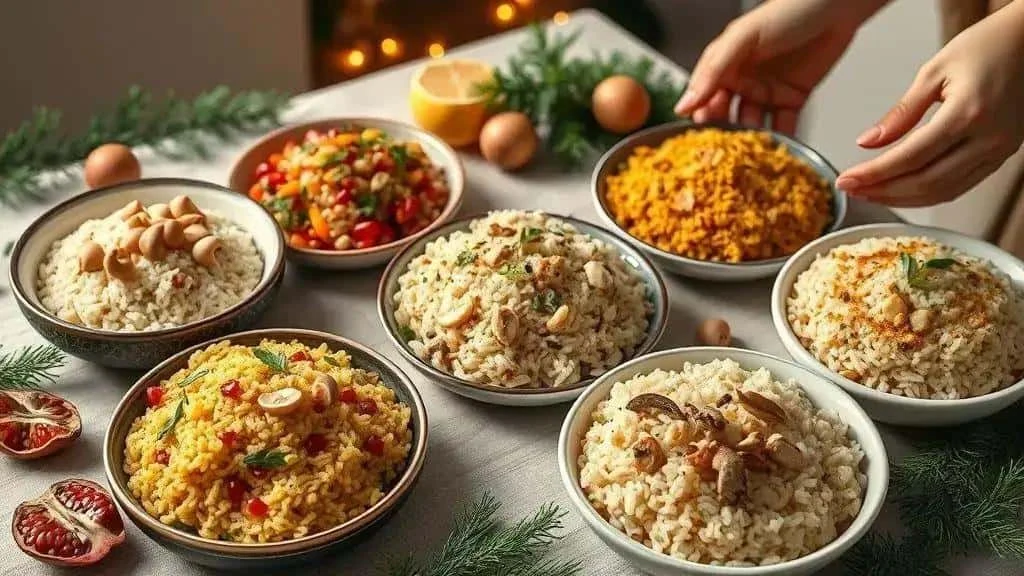
- Coconut rice with cashews — coconut milk and toasted nuts give a rich, gently tropical side dish. The detailed recipe follows.
- Vegetable and pomegranate rice — combine cooked vegetables with fresh herbs and pomegranate seeds for colour.
- Saffron rice with toasted walnuts — golden rice with a delicate aroma and crunchy topping.
- Mushroom and thyme rice — a risotto-style option with sautéed mushrooms.
- Citrus, herb and pistachio rice — orange zest, herbs and toasted pistachios add fragrance and texture.
More Flavour Ideas
The last four are flavour suggestions rather than complete measured recipes. Use an appropriate base rice method and adapt the toppings.
Coconut Rice with Cashews: Ingredients
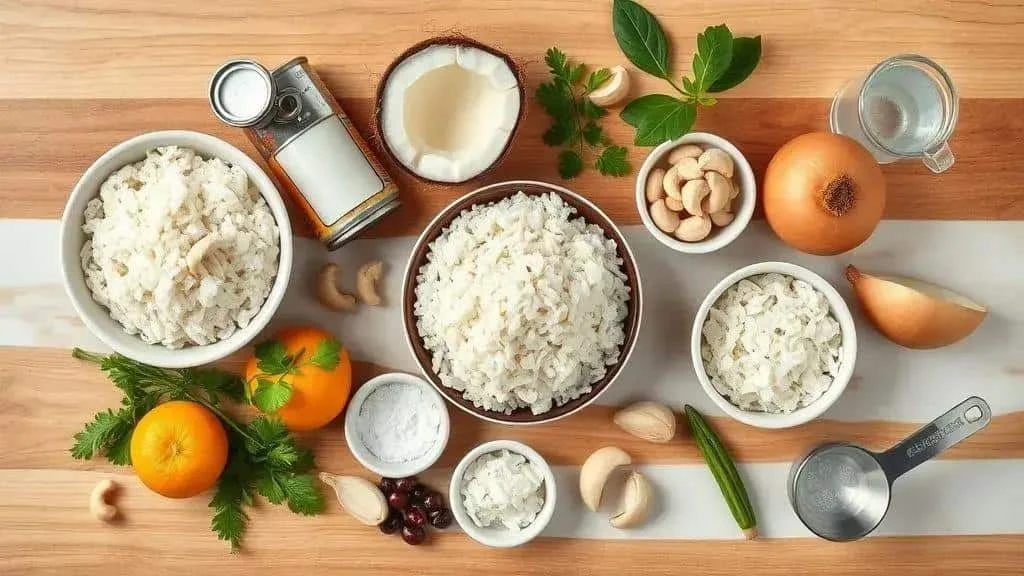
For coconut rice with cashews, gather the following. Cup measures are 240 ml, tablespoons 15 ml and teaspoons 5 ml.
Ingredients
- 2 cups long-grain rice, rinsed and drained if the pack recommends it. Arborio or brown rice requires a different cooking method and liquid allowance.
- 400 ml coconut milk; full-fat gives a richer result. Plant-based cream changes the flavour and may need a different dilution.
- Up to 3 cups water or vegetable stock, 720 ml; adjust to the rice’s instructions, counting the coconut milk as part of the total liquid. You may not need all the stock.
- 1 tbsp butter, or coconut oil for a dairy-free version
- 1 medium onion, finely chopped
- 2 garlic cloves, chopped or crushed
- 1 bay leaf, optional; remove before serving
- Up to ½ tsp salt, adjusted for the stock
- Up to ½ tsp ground black pepper, optional
- ½ cup cashews, chopped and lightly toasted; suitable walnuts, pistachios or almonds are alternatives
- ¼ cup unsweetened desiccated coconut, toasted, optional
- Finely grated zest of ½ orange or lemon, optional
- 2 tbsp chopped parsley
- ¼ cup raisins or pomegranate seeds, optional
- 1 tsp sugar, optional, if you prefer a slightly sweet coconut flavour
Servings and Notes
Makes approximately six generous side portions, depending on the rest of the meal. Follow the rice’s liquid and timing guidance; this recipe has not been kitchen-tested for the translation.
How to Make Coconut Rice with Cashews
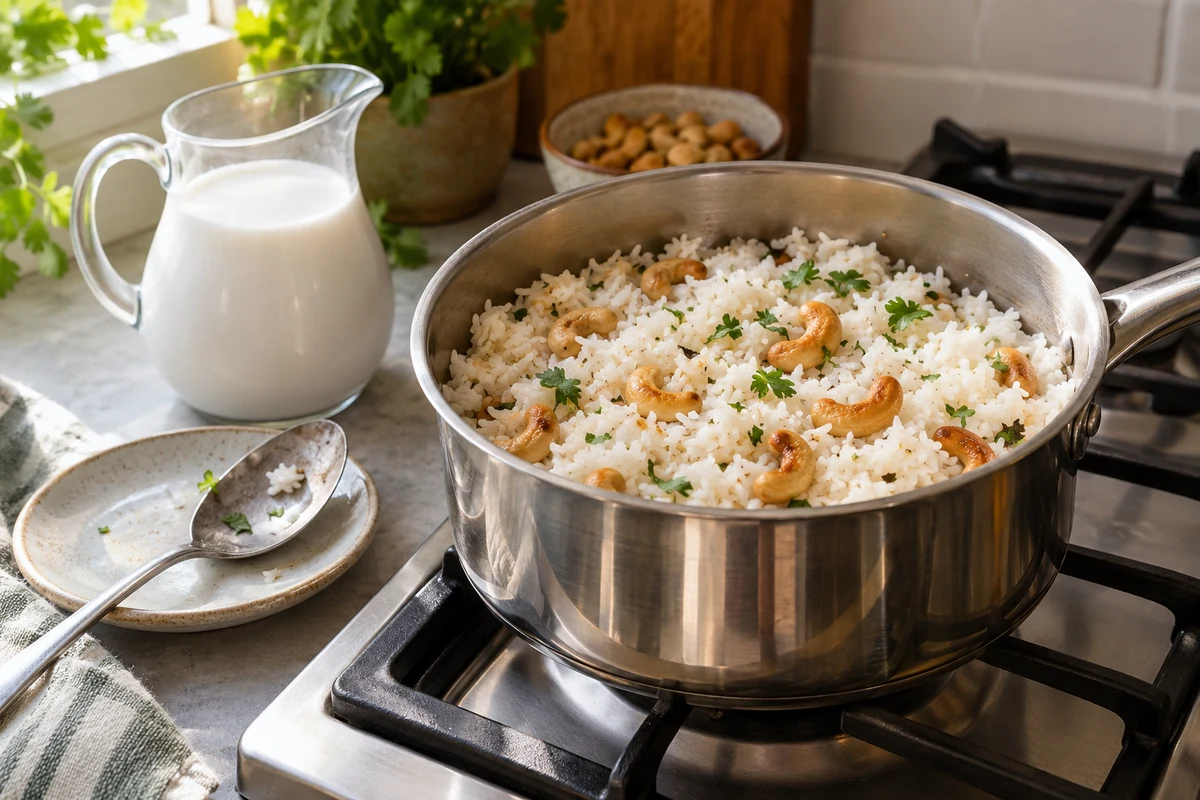
Follow these steps for coconut rice with cashews:
Equipment
- A saucepan with a well-fitting lid
- A frying pan for the nuts
- A wooden spoon and measuring utensils
- Toast the nuts: warm a dry frying pan over medium heat. Stir the ½ cup chopped cashews until lightly golden and fragrant, watching closely, then set aside.
- Cook the aromatics: heat the tablespoon of butter or coconut oil. Soften the chopped onion, then add garlic for around 30–40 seconds without burning it.
- Add rice: stir the 2 cups of drained rice into the seasoned fat for 1–2 minutes.
- Add liquid: combine the 400 ml coconut milk with enough water or stock for the rice’s required total liquid. Add bay, salt, pepper and optional sugar, then bring to a gentle boil.
- Simmer: cover and reduce the heat. Follow the long-grain rice’s timing, checking that the coconut mixture does not scorch. Different rice varieties need their own method.
- Check tenderness: if the grains are still firm and the pan is drying out, add a small splash of hot water, cover and continue cooking until tender.
- Rest: turn off the heat and leave covered for 5 minutes. The measured butter was used at the start; no extra tablespoon is required.
- Add toppings: remove the bay leaf. Fold in toasted cashews and the optional toasted coconut, citrus zest, raisins or pomegranate.
- Finish: adjust seasoning, add the parsley and serve promptly.
Practical Tips
- Liquid control: add hot water gradually if the rice needs longer, rather than flooding the pan.
- Dairy-free option: use coconut oil, coconut milk and suitable dairy-free stock.
- Risotto-style texture: Arborio requires a suitable risotto method and sufficient hot stock, not simply the same covered-pan timing.
- Preparing ahead: toast nuts in advance. If cooking rice ahead, cook it fully, cool quickly, ideally within an hour, refrigerate and use within 24 hours. Reheat only once.
Coconut Rice Variations and Other Flavour Ideas
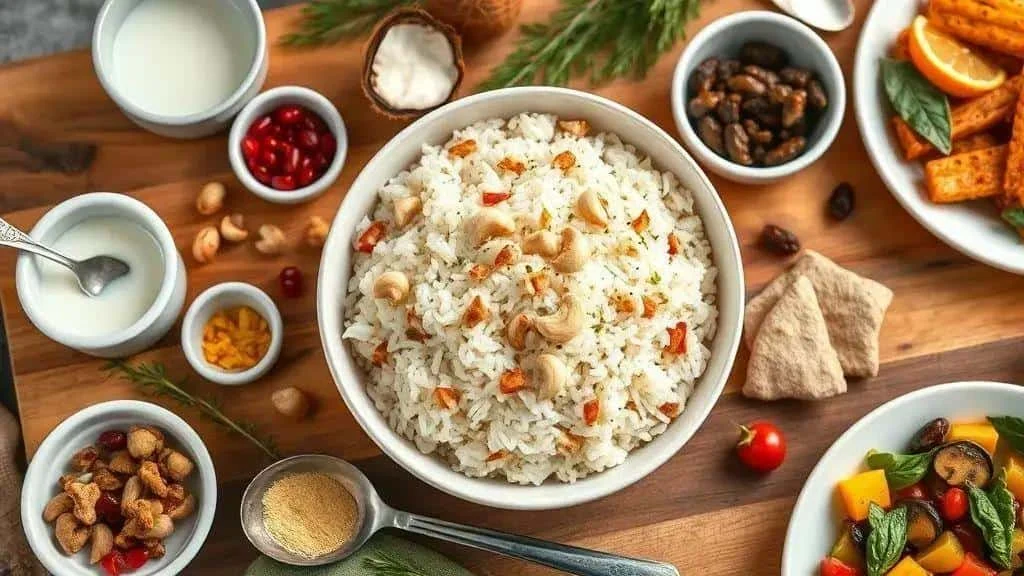
Adapt coconut rice with cashews to your guests, checking all ingredient labels and avoiding cross-contact where allergies are involved.
Variations
- Vegan: use coconut oil instead of butter, coconut milk and vegetable stock. There is no condensed milk in the base recipe to replace.
- Dairy-free: use oil and a suitable plant-based creamy ingredient. A lighter coconut milk produces a less rich result.
- More crunch: increase suitable toasted nuts to ¾ cup, reserving some for the top. A little toasted pumpkin seed is another option if safe for your guests.
- Sweet and savoury: use ¼ cup well-drained soaked raisins or around ⅓ cup pomegranate seeds. Add the optional sugar only if wanted.
- Citrus: try the zest of 1 orange with 1 tbsp juice, and ¼ cup chopped pistachios where suitable.
- Risotto variation: use Arborio with a suitable measured risotto method, adding hot stock gradually. An extra ½ cup alone is not a reliable total liquid adjustment.
- Less rich: replace half the coconut milk with vegetable stock and reduce butter to ½ tbsp, adjusting the total cooking liquid.
Suggestions for the Other Four Ideas
- Vegetables and pomegranate: cook evenly cut vegetables until tender, then combine with cooked rice. Add pomegranate and herbs at the end, with lemon juice or a little balsamic vinegar to taste. Use vegetable stock for a vegan version.
- Saffron and walnuts: steep 0.1 g saffron threads in 2 tbsp hot water, counting this in the cooking liquid. Stir into a suitable base rice recipe and finish with lightly toasted walnuts.
- Mushrooms and thyme: sauté 200–300 g mushrooms until cooked and golden, then use in a suitable rice or risotto recipe. Choose stock and liquid quantities for that recipe. Optional wine does not necessarily cook off completely.
- Citrus and pistachio: add the zest of 1 orange and around 1 tbsp juice to cooked rice. Finish with herbs and about ⅓ cup lightly toasted chopped pistachios.
Portions and Preparing Ahead
- Scaling: use the base recipe’s approximate six generous side servings as a guide, adjusting for appetites. Doubling it gives roughly twelve similar servings, not a fixed ten.
- Make ahead: fully cook the rice, cool rapidly, ideally within an hour, and refrigerate at 5°C or below. Use within 24 hours and reheat only once until steaming hot throughout.
- Reheating: add a little water or stock, cover and heat thoroughly, stirring to remove cold spots. Do not merely warm the surface.
- Avoid excess moisture: drain soaked dried fruit well and add delicate toppings at the end.
- Serving: herbs, citrus zest and suitable nuts give a colourful finish.
Adapting to Budgets and Dietary Needs
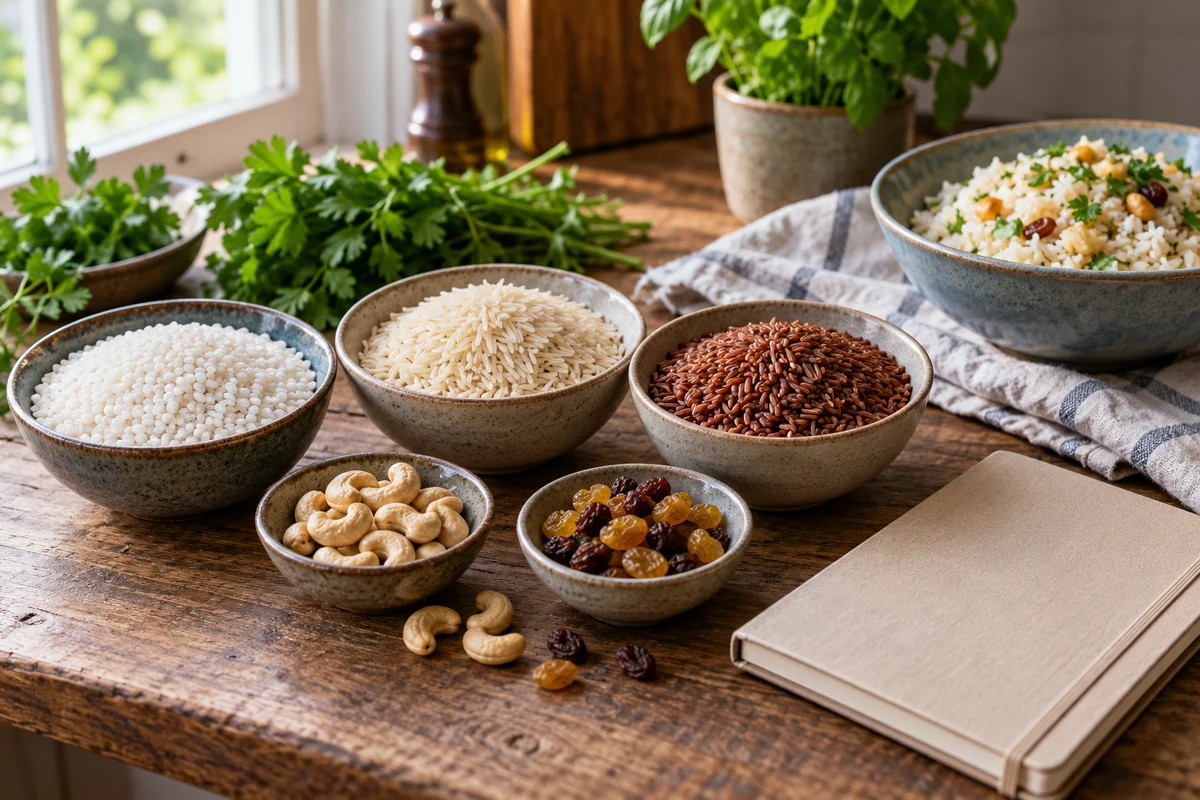
Small changes can make a dish more affordable or suitable for particular guests. Ingredient swaps may alter the method, texture and allergen profile.
Saving Money
- Compare unit prices: larger packs may offer value if you can use and store them.
- Seasonal produce: compare local seasonal options with frozen ingredients.
- Economical accompaniments: a modest portion of cooked meat can accompany rice if it suits the meal.
- Alternative toppings: toasted pumpkin or sunflower seeds may cost less than some nuts, but are not automatically safe for someone with an allergy.
- Use leftovers safely: cooked vegetables or meat can be added within their original storage time. Adding them to rice does not extend that time.
- Frozen vegetables: convenient for small quantities; cook according to the packet.
Dietary Adaptations
- Vegan: use oil, suitable plant-based milk and vegetable stock. Check toppings for animal ingredients.
- Dairy-free: replace butter and dairy cream with suitable alternatives, checking every label.
- Gluten-free: plain rice is naturally gluten-free, but stock, seasonings and toppings must also be suitable and prepared without cross-contact.
- Nut allergies: omit nuts and ask the guest which alternatives are safe. Seeds and croutons can introduce other allergens and cannot be promised risk-free.
- Less salt: choose unsalted or lower-salt stock and season with herbs, spices and citrus.
- More vegetables: serve a smaller portion of rice with extra vegetables, or cook grated cauliflower separately and combine. Cauliflower needs much less liquid than rice.
Planning Purchases
- Write a menu and list: plan quantities and dates before shopping.
- Portion sensibly: start with the recipe’s serving estimate and adjust to the rest of the meal; ½ cup raw rice per person can be a large side portion.
- Prepare components: toast nuts and prepare stock ahead, following storage guidance. Cooked rice must be cooled quickly and used within 24 hours.
- Share tasks: invite guests to bring a dish where appropriate.
Quick Substitution Notes
- Coconut milk: a suitable plant-based cream or drink gives a different flavour and thickness. Dairy milk does not become vegan by adding vegan spread.
- Nuts: consider other toppings only after checking guests’ allergies and product labels.
- Rice varieties: long-grain rice can be served creamy, but does not behave exactly like Arborio. Use its own cooking guidance.
- Dried fruit: compare apricots, dates and figs. Soaking can soften dry but sound fruit; it does not make spoiled fruit usable.
Storage and Leftovers
- Reheat once: add a little hot liquid if needed and heat until steaming hot throughout.
- Different serving ideas: safely chilled rice can be used in another dish within its original 24-hour limit. Do not repeatedly reheat it.
- Freezing: cool rapidly and freeze in small portions promptly, keeping crunchy toppings separate. Defrost in the fridge and use within 24 hours, reheating only once.
Plan around ingredients, storage and your guests rather than making substitutions solely for appearance.
Presentation, Pairings and Storage
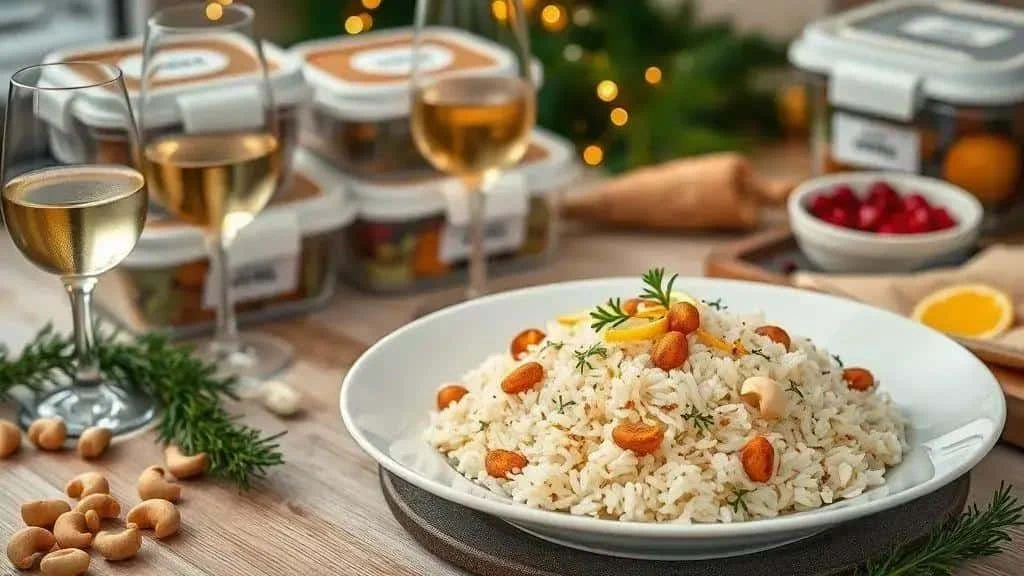
Good presentation makes Christmas rice inviting. Use colour and texture without making serving complicated.
Presentation
- Clean serving dishes: wipe the rims before taking them to the table.
- Shape: a serving ring can mould individual portions if the rice’s texture allows it.
- Colour: add herbs, citrus zest or pomegranate at the end.
- Crunch: reserve suitable toasted nuts for the top.
- Finish simply: a few herb leaves and a little citrus zest provide fragrance.
Pairings
- Drinks: light white wines or sparkling wine are options for adults who drink alcohol; sparkling water with citrus is an alternative.
- Main courses: serve with a roast or grilled main and a fresh salad.
- Complementary flavours: parsley, coriander and suitable nuts add contrast. A little chutney or pomegranate dressing can balance a rich rice dish.
- Keep the menu balanced: if the rice has several strong flavours, choose simpler accompaniments.
Cooling and Reheating Rice
- Cool promptly: if saving rice, cool it as quickly as possible, ideally within an hour. Do not leave a large pot standing until completely cold.
- Divide into portions: use shallow containers and refrigerate promptly at 5°C or below, or freeze suitable portions after rapid cooling.
- On the hob: add a little water or stock, cover and stir as needed until steaming hot throughout.
- In the oven: use a covered ovenproof dish and heat thoroughly. The time depends on quantity and depth; a fixed 10–15 minutes is not a reliable safety guide.
- In the microwave: follow the appliance’s guidance, stir to remove cold spots and allow the recommended standing time. Reheat only once.
- Storage time: use refrigerated rice within 24 hours. Smell and appearance cannot tell you whether badly stored rice is safe.
Serving Tips
- Finish at the table: add herbs and suitable crunchy toppings just before serving.
- Manage portions: choose a platter or individual bowls that make serving straightforward.
- Identify ingredients: tell guests what is in each dish. Only label it vegan or free from an allergen when ingredients and preparation support that claim.
Conclusion
These five Christmas rice ideas offer different flavours, with a full coconut and cashew recipe as a starting point. The remaining combinations are suggestions to use with a suitable base recipe.
Try your chosen variation ahead, plan portions and check dietary needs so the meal is easier to organise.
Thank you for reading. Follow our social channels and visit I Love Christmas for more festive recipes and ideas.
Christmas Rice: Frequently Asked Questions
Can I replace the coconut milk?
A suitable plant-based cream or drink is an option, but changes the coconut flavour and consistency. Adjust the total cooking liquid and check the product’s ingredients.
How much rice should I make per person?
This base recipe makes around six generous side portions. Adjust to appetites and the other dishes; do not assume ½ cup raw rice is needed for every side serving.
How should I store rice prepared ahead?
Fully cook it, cool rapidly, ideally within an hour, and refrigerate in small portions at 5°C or below. Use within 24 hours, or freeze promptly after cooling.
How can I reheat it without drying it out?
Add a little water or stock and reheat once until steaming hot throughout. Stir where possible to remove cold spots; the time varies with the method and quantity.
What can I use for crunch if a guest has a nut allergy?
Omit the nuts and ask the guest which alternatives are safe. Seeds and croutons are not automatically allergy-safe; check ingredients and avoid cross-contact.
How do I make the coconut rice vegan and dairy-free?
Use coconut oil instead of butter, coconut milk and vegetable stock. Check all toppings and packaged ingredients for animal products and relevant allergens.
Sources and Further Reading
- Food Standards Agency: cooking food safely
- Food Standards Agency: chilling food safely
- Food Standards Agency: safe catering guidance, including rice
- Food Standards Agency: allergen guidance