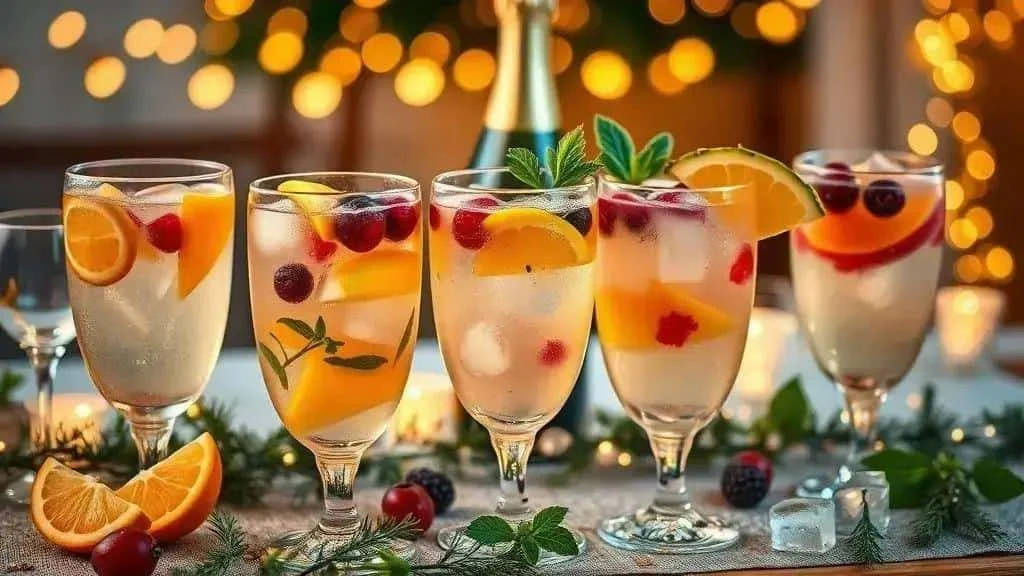
These five New Year’s Eve punches combine fruity bases, alcoholic and alcohol-free options, make-ahead guidance and serving ideas. Quantities vary by recipe; allow extra bowl capacity for fruit and ice, and add sparkling ingredients at the last moment.
New Year’s Eve punch recipes can make serving drinks easier. Here are five colourful options, with variations for guests avoiding alcohol.
Why serve punch on New Year’s Eve?
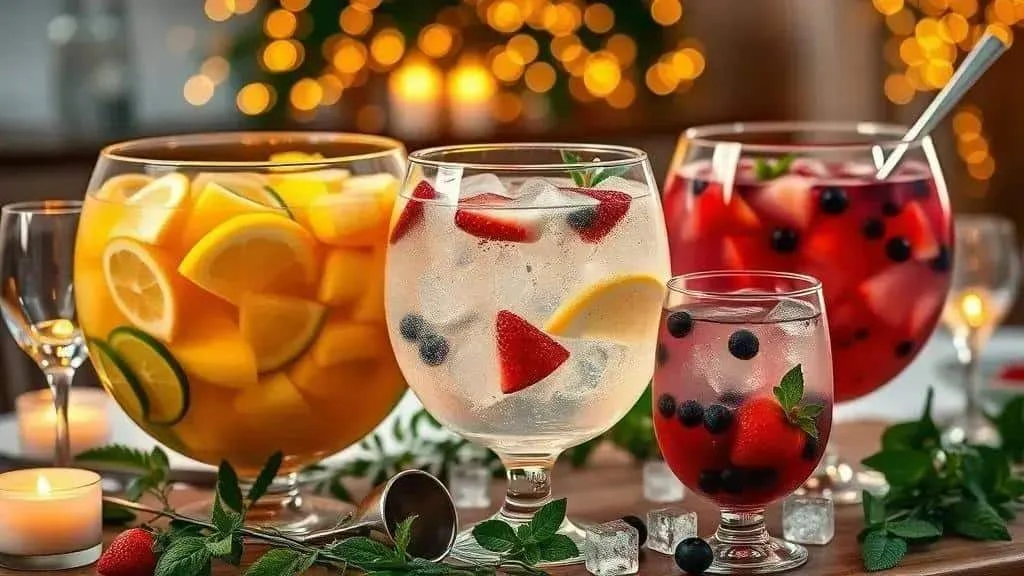
Punch combines flavour with convenient serving. A prepared jug or bowl lets you offer drinks to several people without mixing every glass individually.
Main advantages
Variety: make alcoholic or alcohol-free versions with fruit, herbs and sparkling ingredients to vary the flavour.
- Easy serving: a large bowl and ladle simplify serving.
- Scalable recipes: multiply the ingredients for larger groups, checking bowl capacity and portion sizes.
- Budget flexibility: choose readily available ingredients to suit your spending plan.
- Colour: floating fruit and contrasting colours make punch part of the table display.
- Choice for guests: provide a clearly labelled alcohol-free version alongside alcoholic drinks.
Practical tip: refrigerate the base a few hours ahead, then add ice and sparkling wine or water just before serving. A clear bowl and clean ladle make serving straightforward.
Offer suitable glasses and small labels with the punch name, alcohol information and suggested food pairings, such as citrus starters or mild cheeses. This keeps the drinks table useful as well as attractive.
Punch ingredients and bases
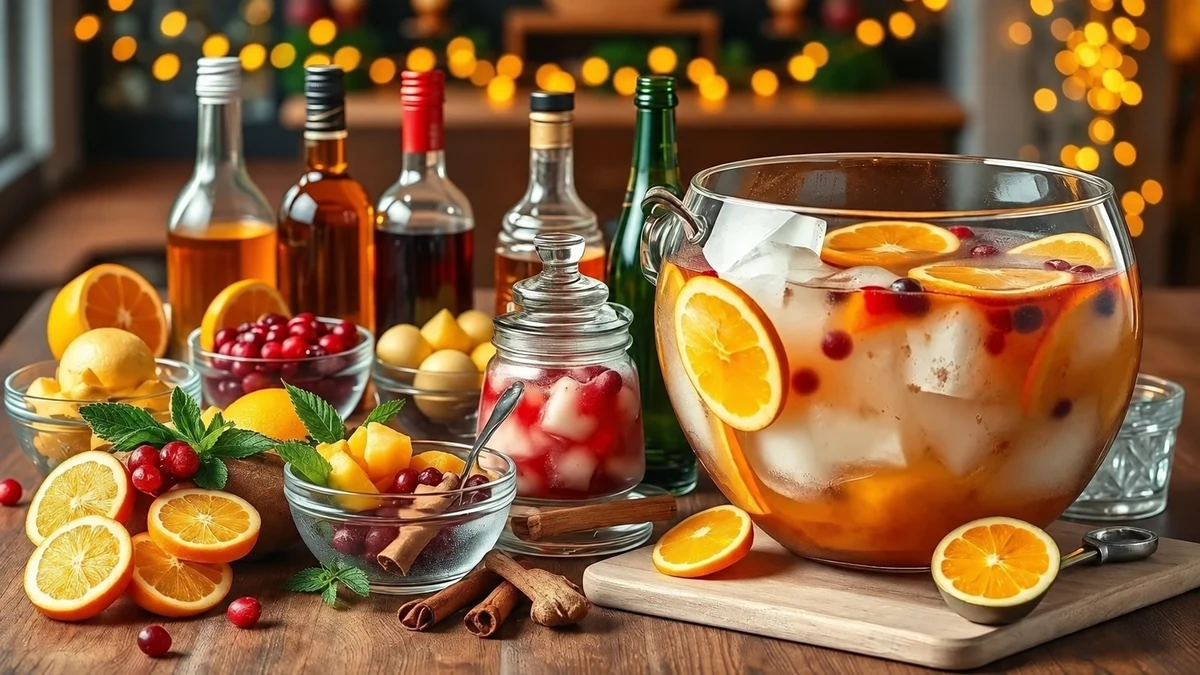
Balance the base, sweetener and fruit. Fresh ingredients and measured quantities make it easier to reproduce the recipe and adjust it to taste.
Choosing a base
Alcoholic options: rum, vodka, cachaça and sparkling wine give different flavours. For a roughly two-litre batch, some recipes use 250–400 ml spirit or 500–750 ml sparkling wine, with juice and water making up the rest. These are recipe proportions, not safe drinking allowances; strength depends on ABV and serving size.
Alcohol-free bases: combine cooled tea, juice and sparkling water. One two-litre starting point is 1.5 litres juice or tea plus 500 ml sparkling water. Added syrup and fruit increase the final volume.
Ingredients to choose from, not one combined recipe
- 1 litre fruit juice, such as orange, pineapple or cranberry – apple juice offers a milder alternative; choose unsweetened juice if preferred, but it still contains sugar.
- 500 ml sparkling water – tonic adds bitterness and may also add sugar.
- 250–400 ml white rum or vodka – an alcoholic option; using 125–200 ml reduces the alcohol added but does not make it alcohol-free.
- 500–750 ml sparkling wine – or sparkling apple juice for an alcohol-free option. Ordinary British cider contains alcohol.
- 120 ml cooled simple syrup – made with equal weights of sugar and water. Honey and agave differ in sweetness, so start with less and taste rather than applying a fixed conversion.
- 2 sliced oranges – or mandarins for a different citrus flavour.
- 2 sliced limes – lemon is an alternative.
- ½ pineapple, diced – or mango.
- 150–200 g berries – strawberries or raspberries add colour and tartness; pomegranate seeds give a different texture.
- A handful of mint – basil gives a different aroma.
- 1–2 kg ice available for service – add only what is needed to glasses or the bowl; do not put the whole supply into a two-litre container.
- Cinnamon sticks or ginger slices – for spiced versions; remove whole spices before drinking.
Proportions and adjustments
Measure the total: flexible ranges such as 40–60% juice or tea, 20–35% sparkling liquid and 10–20% spirit do not automatically add to 100%. Follow one complete recipe, count syrup in the liquid total and allow additional space for fruit and ice. Alcohol strength must be assessed separately.
Start with less sweetener and adjust to taste. If serving different preferences, make separate, clearly labelled alcoholic and alcohol-free bowls; never assume dilution removes alcohol.
Presentation and storage
Presentation: use clear bowls, sliced fruit and washed herbs. Provide clean ladles and ingredient information, including relevant allergens such as sulphites where present in wine. Honey is not vegan or suitable for babies under one.
Storage: prepare the still base up to 24 hours ahead and refrigerate promptly in a covered container. Add ice and sparkling ingredients just before serving; follow shorter ingredient storage instructions where applicable.
Five punches: ingredients and methods
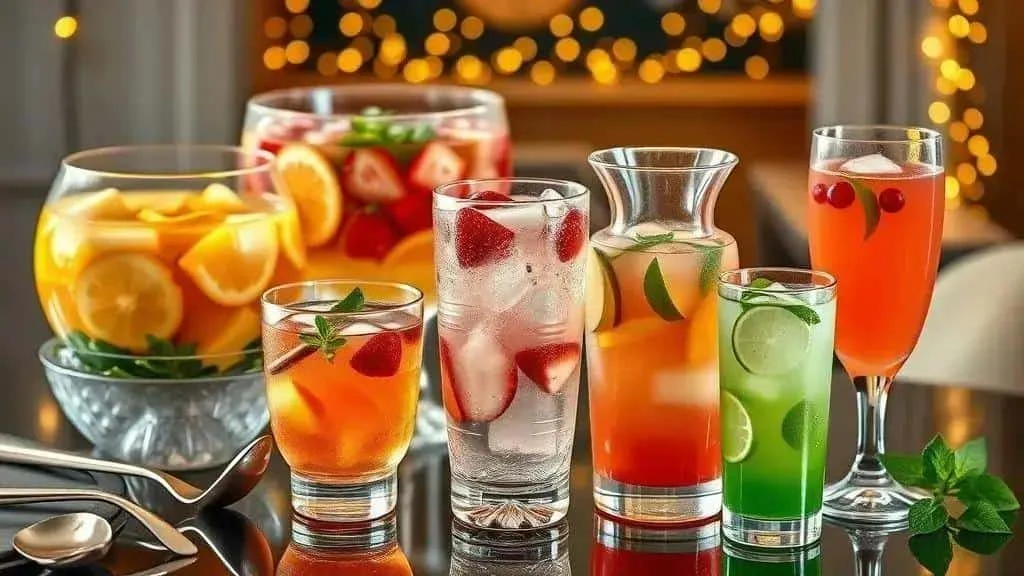
These recipes make roughly 1.9–2.3 litres of liquid before fruit and ice, depending on the options used. Choose a generously sized bowl and scale the whole recipe if needed.
Tropical citrus punch ingredients
- 1 litre pineapple juice – dilute concentrate according to its instructions before measuring.
- 500 ml orange juice – or mandarin juice.
- 250 ml lemon juice – lime is an alternative; add gradually if your fruit is particularly sharp.
- 300 ml white rum – replace with 300 ml apple juice for an alcohol-free version.
- 150 ml simple syrup – adjust to the juices’ sweetness.
- ½ pineapple, diced – fresh or well-drained tinned fruit.
- 2 oranges, thinly sliced – washed, with peel on.
- A handful of mint – washed leaves.
- Ice for serving – have 1–1.5 kg available, adding only what fits the glasses or bowl.
How to make tropical citrus punch
- Combine the juices: mix 1 litre pineapple juice, 500 ml orange juice and up to 250 ml lemon juice in a large bowl.
- Sweeten: stir in the syrup, starting with less if the juices are already sweet.
- Add the rum: stir in 300 ml, or use the apple juice alternative.
- Add fruit: put in the pineapple and orange slices.
- Chill: refrigerate for one to two hours.
- Serve: add mint and ice at the last moment, then ladle into glasses.
Tropical citrus punch variations
Use vodka instead of rum for a different flavour. Blended mango can replace some pineapple juice for a thicker texture; keep the overall liquid quantity in mind.
Sparkling wine punch ingredients
- 1 litre orange juice – the citrus base.
- 500 ml cranberry juice – or pomegranate juice.
- 500 ml chilled sparkling wine – brut or demi-sec to taste.
- 200 ml orange liqueur, optional – such as triple sec; use 100 ml or omit if preferred.
- 100 ml sugar syrup – adjust to taste.
- 1 firm apple, diced
- 150 g strawberries, sliced – washed and hulled.
- Ice, as needed – add when serving.
How to make sparkling wine punch
- Mix the juices: combine the orange and cranberry juices in a large bowl.
- Sweeten: stir in the syrup, adjusting to taste.
- Add optional liqueur: stir in the chosen amount.
- Chill: refrigerate the base for at least an hour.
- Add sparkling wine: pour in the chilled wine just before serving and stir gently.
- Finish: add the apple and strawberries, then serve with ice if wanted.
Sparkling wine punch variations
For an alcohol-free version, replace sparkling wine with sparkling apple juice and omit the orange liqueur or replace it with orange juice. Sliced peaches make another fruity addition.
Festive alcohol-free punch ingredients
- 1 litre chilled hibiscus tea – brewed according to the product instructions.
- 500 ml apple juice – naturally sweet, but not sugar-free.
- 500 ml chilled sparkling water
- Up to 150 ml honey syrup or agave syrup – add gradually to taste; syrup concentrations differ. Use agave for a vegan version and no honey for babies under one.
- 200 g pomegranate seeds – for colour and texture.
- 1 sliced orange – washed.
- Mint leaves – washed.
- Ice, as needed
How to make festive alcohol-free punch
- Brew the tea: prepare it according to the packet, cool promptly and refrigerate.
- Mix the base: combine 1 litre chilled tea with 500 ml apple juice.
- Sweeten: stir in syrup gradually, up to 150 ml, tasting as you go.
- Add fizz: stir in 500 ml sparkling water just before serving.
- Add fruit: put in the pomegranate seeds and orange slices.
- Serve chilled: add mint and ice to the bowl or individual glasses.
Alcohol-free punch variations
Infuse the hibiscus tea with ginger for a spicier flavour, or replace apple juice with white grape juice. Check herbal ingredients against any individual dietary or medical advice.
Ginger and orange punch ingredients
- 1 litre orange juice
- 500 ml chilled ginger infusion – prepared using the ginger below.
- 250–300 ml cachaça or vodka – measure the amount used and label the punch.
- 120 ml simple syrup – reduce if the juice is very sweet.
- A 2 cm piece of fresh ginger, sliced – for the infusion.
- 1 orange, cut into half-moons
- 2 cinnamon sticks – for aroma.
- Ice, as needed
How to make ginger and orange punch
- Make the ginger infusion: simmer the sliced ginger in 500 ml water for ten minutes. Strain, top back up to 500 ml with freshly boiled water if evaporation reduced it, cool promptly and chill.
- Combine: mix the orange juice with the chilled ginger infusion.
- Sweeten: stir in up to 120 ml simple syrup to taste.
- Add the spirit: stir in 250–300 ml cachaça or vodka.
- Add aromatics: put in the cinnamon sticks and orange slices.
- Chill and serve: refrigerate for an hour, remove the cinnamon if the flavour is strong enough and add ice when serving.
Ginger and orange punch variations
For an alcohol-free version, replace the spirit with the same volume of apple juice; dilute concentrate according to its label first. Extra ginger or a little cardamom changes the spice profile.
Mint and lime green tea punch ingredients
- 1 litre chilled green tea – brewed gently; it contains caffeine unless labelled decaffeinated.
- 500 ml sparkling water
- 250 ml gin, optional – use 250 ml coconut water instead for an alcohol-free version.
- 150 ml fresh lime juice
- 100 ml simple syrup
- A large handful of mint – lightly bruise some leaves.
- Lime slices for garnish
- Ice, as needed
How to make mint and lime green tea punch
- Prepare the tea: brew according to the packet, cool promptly and refrigerate until fully chilled.
- Mix the liquids: combine 1 litre chilled tea and 150 ml lime juice.
- Sweeten: stir in up to 100 ml simple syrup to taste.
- Add gin or coconut water: stir in 250 ml of the chosen ingredient, keeping the two versions separate and labelled.
- Bruise the mint: press the leaves lightly and add them to the punch.
- Chill and finish: refrigerate for 30–60 minutes. Just before serving, stir in the listed 500 ml sparkling water, then add lime slices and ice.
Mint and lime punch variations
White tea gives a different flavour but also usually contains caffeine. Add a cucumber slice for a fresh garnish. For a caffeine-free version, choose a suitable caffeine-free infusion rather than assuming white tea is caffeine-free.
Punch 1: tropical citrus ingredients, method and variations
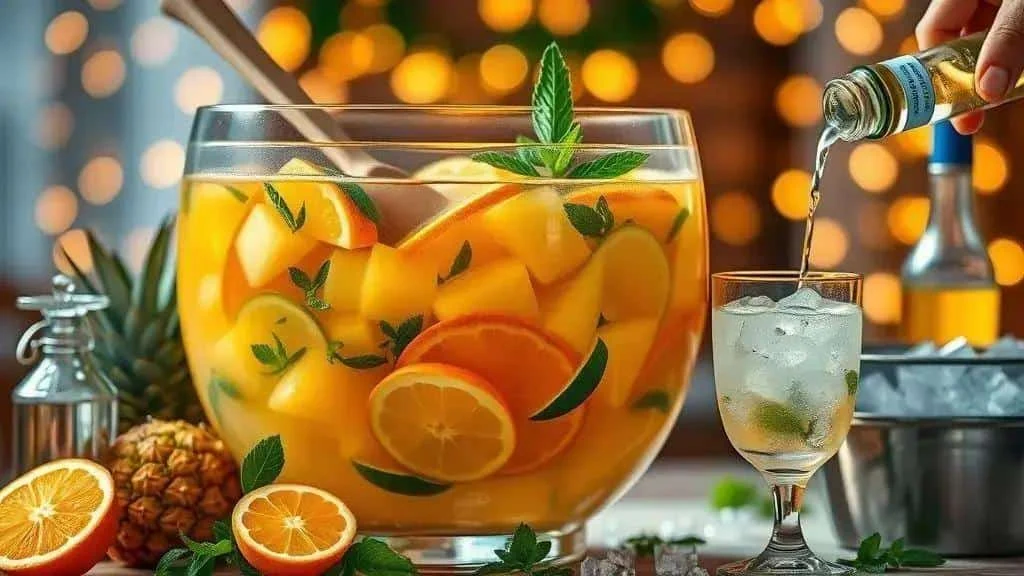
This expanded version makes about 2.2 litres of liquid before optional sparkling water, fruit and ice. Use a bowl with plenty of extra space.
Ingredients
- 1 litre pineapple juice – fresh or made from concentrate diluted as instructed.
- 500 ml orange juice – mandarin gives another citrus flavour.
- 250 ml lemon juice – lime is an alternative; add gradually to taste.
- 300 ml white rum – replace with 300 ml apple juice or sparkling water for an alcohol-free version, adding sparkling water last.
- 150 ml cooled simple syrup – made with equal weights of sugar and water. Honey or agave changes sweetness; add gradually rather than assuming a fixed conversion.
- ½ pineapple, diced – fresh or well-drained tinned fruit.
- 2 oranges, thinly sliced – washed, with peel on.
- A handful of mint – washed leaves.
- 150 ml sparkling water, optional – add just before serving.
- Ice for serving – have 1–1.5 kg available, but add only what fits the bowl and glasses.
Method
- Mix the juices: combine the pineapple and orange juices, then add lemon juice gradually, up to 250 ml.
- Sweeten: stir in the syrup to taste, starting with less if the juices are sweet.
- Add rum or its replacement: stir in 300 ml rum or apple juice. Reserve sparkling water if using that alternative.
- Add fruit: put in the pineapple and orange slices.
- Chill: refrigerate for one to two hours.
- Finish before serving: add mint, ice and any sparkling water being used.
- Serve: ladle into glasses with a little fruit and mint.
Variations
Thicker tropical version: blend 100–150 g mango with a little pineapple juice and stir it into the base.
Sparkling wine version: replace 200–300 ml rum with the same amount of chilled sparkling wine, adding the wine at serving time. Any rum not replaced remains in the recipe.
Less spirit: use 125 ml rum and 300–350 ml sparkling water. This reduces the spirit added but is still an alcoholic punch.
A little heat: infuse three or four thin ginger slices or a small slice of red chilli, tasting carefully and removing before serving.
Quick tips
Taste and plan: start with less syrup and measure the alcohol used. Refrigerate the base up to 24 hours ahead and add ice and fizz only when serving.
Punch 2: sparkling wine ingredients, method and variations
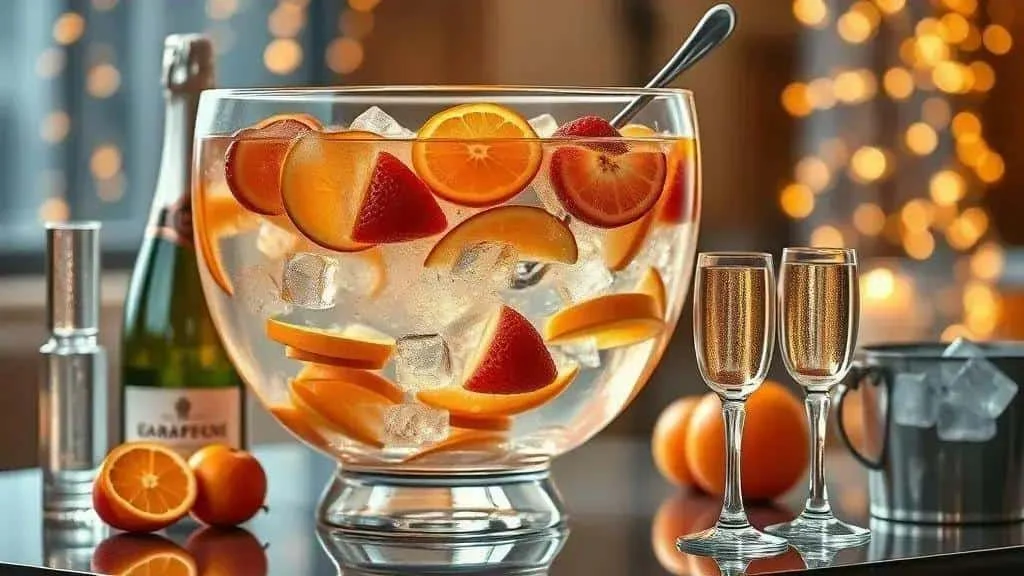
This expanded recipe makes about 2.3 litres of liquid with the full optional liqueur and syrup quantities, before fruit and ice. Reduce all ingredients proportionally if you need a smaller batch.
Ingredients
- 1 litre orange juice – freshly squeezed if preferred, or mandarin juice.
- 500 ml cranberry juice – pomegranate juice changes the flavour; juice alone does not add the texture of seeds.
- 500 ml chilled sparkling wine – brut or demi-sec. Use sparkling apple juice for an alcohol-free version and omit the liqueur as well.
- 200 ml orange liqueur, optional – use 100 ml or omit if preferred; omitting it does not make a wine-based punch alcohol-free.
- 100 ml simple syrup – made with equal weights of sugar and water, cooled and adjusted to taste.
- 1 firm apple, diced
- 150 g strawberries, sliced – washed and hulled.
- 1 orange, thinly sliced – washed, with peel on.
- Ice for serving – have 1–1.5 kg available and add only what is needed.
Method
- Mix the juices: combine the orange and cranberry juices in a large bowl.
- Sweeten: stir in up to 100 ml syrup to taste.
- Add optional liqueur: stir in the chosen quantity.
- Add fruit: put in the apple, orange and strawberries.
- Chill the still base: refrigerate for 45–60 minutes; the sparkling wine has not yet been added.
- Add the fizz: gently stir in 500 ml chilled sparkling wine just before serving.
- Serve with ice: add ice to glasses or the bowl and serve promptly.
Variations
Alcohol-free: replace the wine with sparkling apple juice or a mixture of apple juice and sparkling water. Omit the liqueur or replace it with orange juice; check all alternative product labels.
More fruit: add 150 g sliced peaches and a teaspoon of orange zest.
Less sweet: choose brut sparkling wine and reduce syrup to 50–75 ml, or less to taste.
Quick tips
Preserve the bubbles: refrigerate the still base up to 24 hours ahead and add sparkling ingredients only when serving.
Punch 3: festive alcohol-free ingredients, method and variations
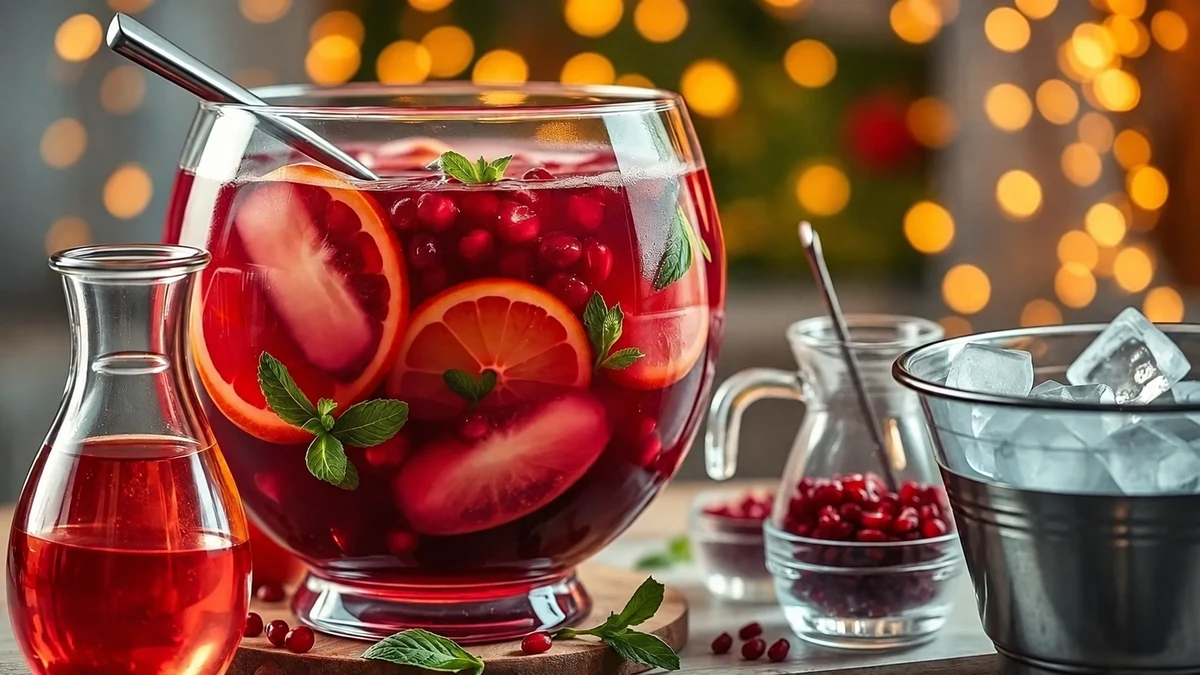
This version makes about 2.15 litres of liquid with the full syrup quantity, before fruit and ice. It is colourful and alcohol-free, but not automatically suitable for every dietary requirement.
Ingredients
- 1 litre chilled hibiscus tea – or rooibos for a different flavour; brew according to the packet.
- 500 ml apple juice – pear juice is an alternative.
- 500 ml chilled sparkling water – tonic water gives a more bitter flavour and may add sugar.
- Up to 150 ml agave syrup or honey syrup – start with less and adjust to taste. Agave is the vegan option; honey must not be given to babies under one.
- 200 g pomegranate seeds – berries are an alternative.
- 1 sliced orange – washed, with peel on.
- 1 sliced lime – lemon is an alternative.
- A handful of mint leaves – basil gives another aroma.
- Ice for serving – have 1–1.5 kg available; use as needed.
Method
- Make the tea: brew 1 litre, cool promptly and refrigerate until cold.
- Mix the base: combine the chilled tea with 500 ml apple juice.
- Sweeten: stir in syrup gradually, up to 150 ml, tasting as you go. Undiluted honey and honey syrup are not equivalent measures.
- Add fruit: gently stir in the pomegranate seeds, orange and lime.
- Chill: refrigerate for 30–60 minutes.
- Add sparkling water: stir in the 500 ml just before serving.
- Finish: add ice and mint, then ladle into glasses.
Variations
More fruit: add 150–200 g sliced strawberries or 100 ml pomegranate juice.
Less sweet: reduce syrup to 75–100 ml or less, and adjust citrus to taste. The punch will still contain sugars from juice and fruit.
More aroma: infuse a ginger slice with the tea, then remove it.
Practical tips
Finish at serving time: keep the base chilled and add ice and sparkling water last. A clear bowl shows the fruit, while a clean ladle makes serving easier.
Presentation, glasses and food pairings
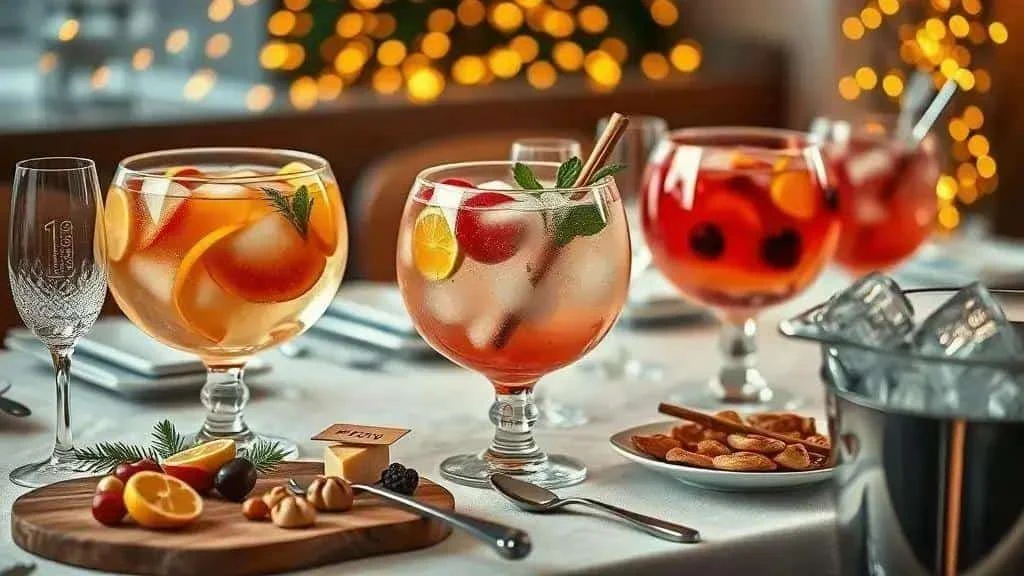
Colour, visible fruit and fresh herbs help the punch fit the table. Choose a presentation that is easy to serve as well as attractive.
Choosing glasses
- Sparkling wine glass: suits a small portion of sparkling punch; avoid fruit pieces too large for the opening.
- Highball glass: provides room for ice, fruit and sparkling water.
- Tumbler: works for smaller measured servings or drinks with less ice.
- Coupe: offers a vintage appearance for a small sparkling serving.
- Large clear bowl: shows the fruit and allows ladled servings; choose sufficient capacity.
Arranging the drinks table
- Visible fruit: use thin slices and manageable cubes, with contrasting orange, pomegranate and pineapple colours.
- Herbs and spices: mint, citrus peel and cinnamon add aroma. Keep whole spices easy to remove rather than drinking them.
- Ice: a large block or ring melts more slowly than small cubes, though all ice eventually dilutes the punch.
- Serving tools: provide clean ladles, tongs and glasses, with clear alcohol and ingredient labels.
- Colour: clear jugs show fruit and liquid colour; layers may blend once stirred.
Pairing with the meal
Start with flavour: citrus punches can contrast with fish and salads; sweeter tropical flavours can complement grilled or spiced dishes. These are taste suggestions, not rules.
- Citrus or sparkling punch: try with seafood, sushi or light starters.
- Tropical rum punch: try with grilled meats, skewers or dishes with sweet spices.
- Ginger and orange punch: try with gently spiced dishes.
- Alcohol-free hibiscus punch: try with fruit desserts or mild cheeses.
Serving arrangements
- Separate bases and fizz: refrigerate them separately and combine just before serving.
- Offer two versions: use separate bowls and utensils for alcoholic and alcohol-free drinks.
- Manage ice: keep a clean covered ice supply with a scoop; refill glasses as needed rather than repeatedly diluting the whole bowl.
- Label clearly: identify alcohol and relevant allergens from the actual ingredients, including sulphites where present. List honey and garnishes for guests with other dietary requirements.
- Plan quantities: a 200–300 ml serving can be used for catering calculations, but is not an hourly drinking recommendation. Offer smaller portions, water and alcohol-free options.
Last-minute touches
Finish simply: add a fruit slice and washed herb when serving. Warm lighting and suitable glassware can make the table inviting without elaborate decorations.
Preparing ahead and storing punch
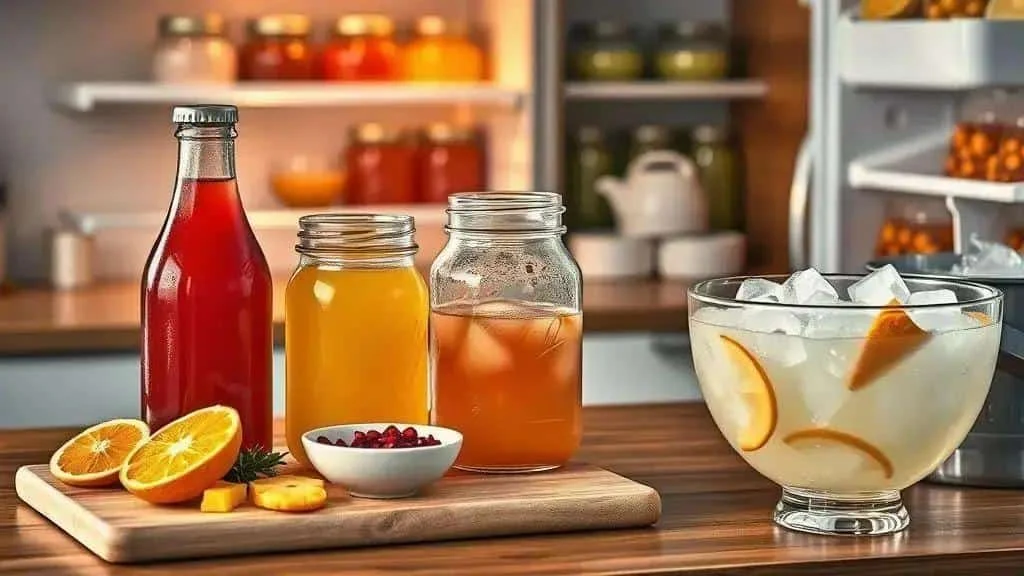
Make-ahead bases reduce work during the party. Plan the ingredients, keep them refrigerated and add ice and fizzy components at the last moment.
Preparing ahead: step by step
- Choose the base: check the opened-storage instructions for juices, tea and syrup. Prepare up to 24 hours ahead for freshness, following any shorter ingredient limit.
- Prepare fruit: wash, cut and refrigerate firm fruit such as apple, pineapple and orange in covered containers.
- Mix still ingredients: combine juice, syrup and any measured spirit in a covered jug and refrigerate promptly.
- Prepare ice in advance: freeze cubes or a ring well before the event, but add them to the drink only when serving. Ice cannot be made instantly at serving time.
- Keep fizz separate: chill sparkling wine and water separately and open them when needed.
Storage guidance
- Containers: use clean food-safe covered containers to protect the mixture from contamination and fridge odours.
- Temperature: keep at 0–5°C and serve small batches, returning them promptly to refrigeration. Avoid leaving cut-fruit drinks out for prolonged periods, especially in warm conditions.
- Storage time: make fruit punch within 24 hours of serving for freshness. Refrigerated leftovers should be used within 48 hours of preparation or the shortest ingredient limit, provided they have been handled safely; this is not a guarantee for every mixture.
- Keep versions separate: label alcoholic and alcohol-free drinks clearly. Added spirits do not make fruit punch shelf-stable.
Finishing before serving
- Taste and adjust: add small amounts of syrup or citrus as needed, using a clean tasting spoon.
- Add fizz: pour in sparkling wine or water shortly before serving.
- Add ice and fruit: finish the bowl or glasses with prepared fruit and ice.
- Keep serving hygienic: use clean ladles and tongs, and washed fresh garnishes.
Flavoured ice and freezing
- Fruit ice cubes: freeze washed fruit or herbs in drinking water for decoration. They still dilute the drink as they melt; cubes made from a matching juice alter the flavour less.
- Large ice blocks: melt more slowly, though they do not eliminate dilution.
- Freezing leftovers: freeze only safely handled, still-fresh alcohol-free base in suitable portions, leaving expansion space. Fruit texture and fizz may change; thaw in the fridge and use within 24 hours. Freezing does not rescue a punch left warm too long.
Practical serving checks
- Identification: use written labels as well as colour to distinguish alcoholic and alcohol-free containers.
- Quantity: calculate from glass size and guests’ preferences, without assuming everyone should drink a fixed amount each hour. Alcohol units depend on the actual recipe and serving size.
- Ingredients: provide information on nuts, dried fruit, honey and other garnishes, and check product labels for relevant allergens such as sulphites.
- Final check: taste with a clean spoon shortly before serving, confirm the labels and keep spare punch chilled.
Final thoughts
Punch offers colour, flavour and convenient serving for New Year’s Eve. Separate alcoholic and alcohol-free versions let guests choose what suits them.
Prepare and chill the base ahead, keep sparkling ingredients and ice separate, and adjust sweetness before serving. Simple, practical presentation is enough.
Thank you for reading. Follow our social channels, share your photographs if you wish and visit I Love Christmas for more seasonal recipes and ideas.
New Year’s Eve punch: frequently asked questions
How far ahead can I prepare the punch base?
Prepare the still base up to 24 hours ahead for freshness and refrigerate promptly in covered containers at 0–5°C. Follow the shortest storage instruction among the ingredients; add sparkling liquids and ice when serving.
How can I make an appealing alcohol-free version?
Use chilled tea, juice and sparkling water, retaining the fruit garnishes. Replace every alcoholic component, including liqueur, and check alternatives such as cider and flavourings. Alcohol-free does not automatically mean caffeine-free or sugar-free.
How do I stop the punch becoming watery?
Chill the base before serving and add ice only at the last moment. Large blocks melt more slowly; fruit-filled water ice still dilutes the drink. Keep sparkling wine and water separate until serving to preserve their bubbles.
How much punch should I allow per person?
Choose a serving size and consider other refreshments and guests’ preferences. A 200–300 ml glass can be a catering estimate, not a recommended hourly intake or safe alcohol allowance. Offer smaller servings, water and alcohol-free options, and calculate units from the recipe’s actual alcohol content.
Which fruits work well in punch?
Firm apple, pineapple and citrus slices hold their shape, while strawberries and pomegranate seeds add colour. Avoid overripe fruit that breaks down quickly, wash produce and adapt pieces to guests’ needs.
Can I reduce the sugar while keeping the flavour?
Yes. Start with less syrup, choose unsweetened juice and adjust with tea or citrus to taste. Juice and honey still contain sugars; reducing sweetness does not make the punch sugar-free.
Sources and Further Reading
- Food Standards Agency: chilling and storage
- NHS: alcohol units
- NHS: foods to avoid for babies and young children