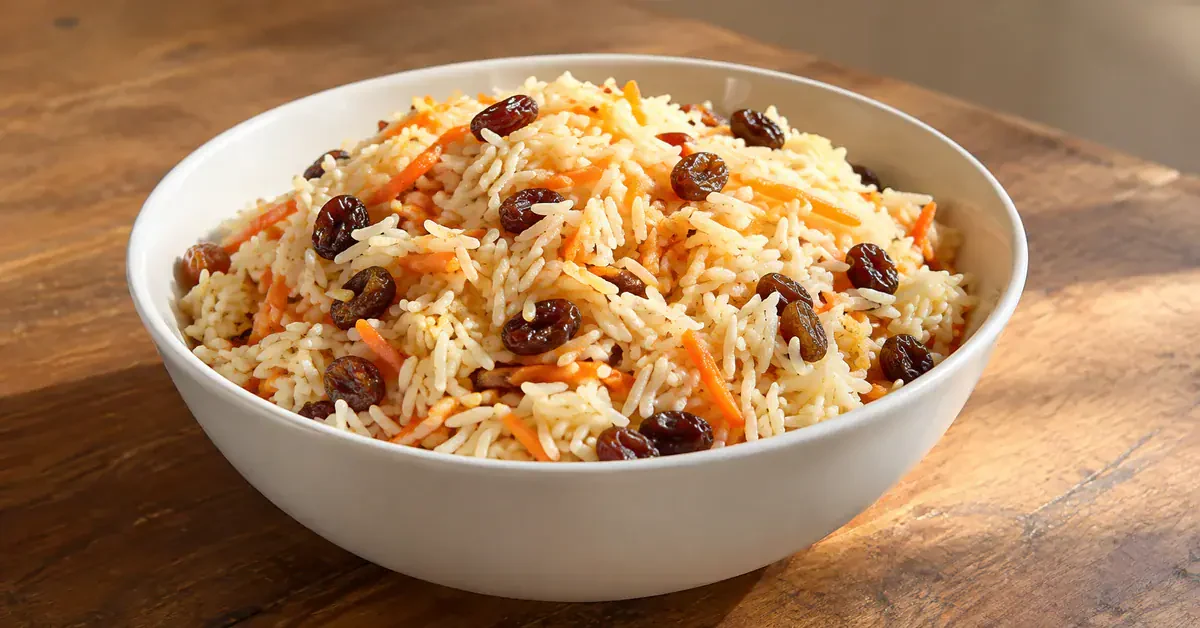
Christmas rice with carrot and raisins turns a simple side dish into a colourful addition to the festive table. Gently cook onion, garlic and carrot, add uncooked rice and water, then cook until tender. Stir in the raisins at the end for a little sweetness.
Christmas rice with carrot and raisins brings colour and gentle sweetness to a festive meal. Optional cinnamon and nutmeg add a warmer flavour, while the aim is rice with separate, tender grains rather than a heavy or sticky texture.
The images illustrate this recipe and its preparation; the appearance of your finished dish may vary.
This method uses grated carrot, with small dice offered as an alternative. Keep the spices optional and adjust the raisins to your preference rather than making the dish sweeter than you enjoy.
Ingredients and quantities
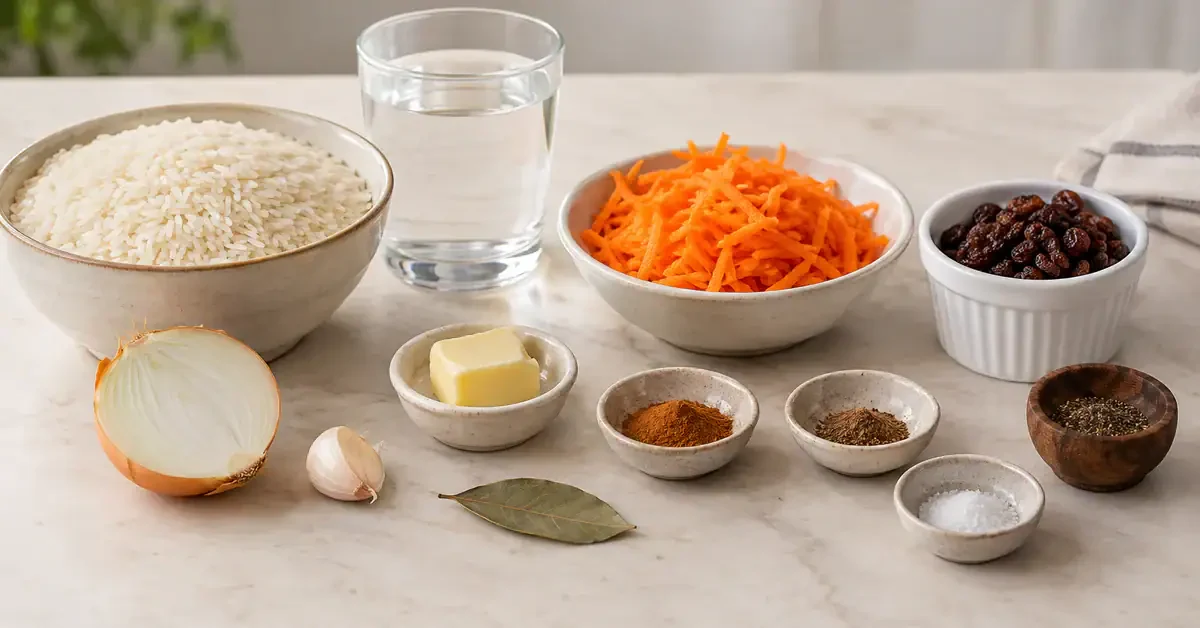
This recipe makes approximately three portions. Measure the rice and liquid with the same cup, and check the cooking guidance for your rice.
Main ingredients
- 1 cup uncooked white rice, rinsed and drained
- 2 cups water or vegetable stock
- ½ cup grated carrot, raw
- ¼ cup raisins
- ½ medium onion, chopped
- 1 garlic clove, chopped
Fat and seasonings
- 1 tablespoon butter or olive oil, for cooking the vegetables
- ½ teaspoon ground cinnamon, optional
- ¼ teaspoon ground nutmeg, optional
- 1 bay leaf, optional
- Salt, to taste
- Black pepper, to taste, optional
Yield: approximately three portions. Time: allow roughly 25–30 minutes, depending on preparation and the rice used.
Step-by-step method
Cooking the rice
- Heat 1 tablespoon butter or olive oil in a medium saucepan over a medium heat. Add the chopped half onion and garlic clove. Cook gently for about 3–4 minutes, stirring occasionally, until the onion softens; avoid letting the garlic brown or burn.
- Add ½ cup grated carrot and cook for another 1–2 minutes to soften it slightly.
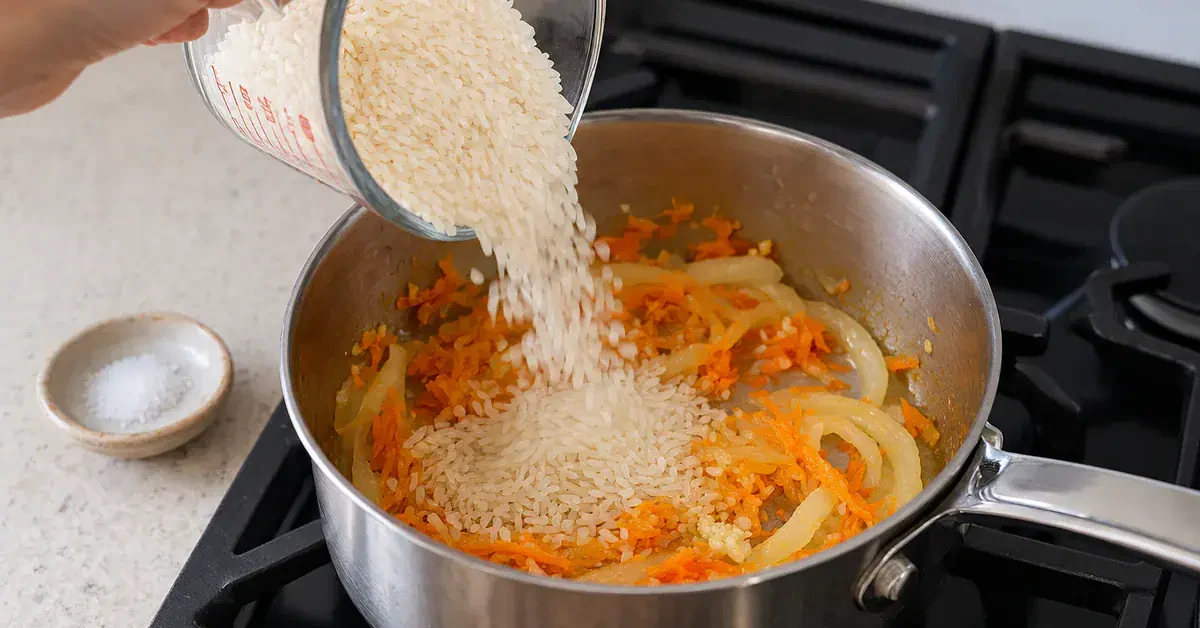
- Add 1 cup rinsed, drained uncooked white rice. Stir for 1–2 minutes to coat the grains with the cooking fat.
- Pour in 2 cups water or vegetable stock and add the bay leaf, if using. Season lightly with salt, particularly if the stock is already salted. Add the optional ½ teaspoon cinnamon and ¼ teaspoon nutmeg at this stage if desired, then bring to the boil.
- Reduce to a gentle simmer, partly cover and cook for about 15 minutes, until the liquid is absorbed and the rice is tender. Timing and liquid needs vary by rice variety, so check the packet and the grains rather than relying on time alone. Avoid frequent stirring.
- Turn off the heat and gently fold in ¼ cup raisins. Remove the bay leaf, if used, before serving.
- Cover and leave for 2–3 minutes, then gently fluff with a fork. Taste and adjust the salt and optional pepper before serving promptly.
Checking the texture
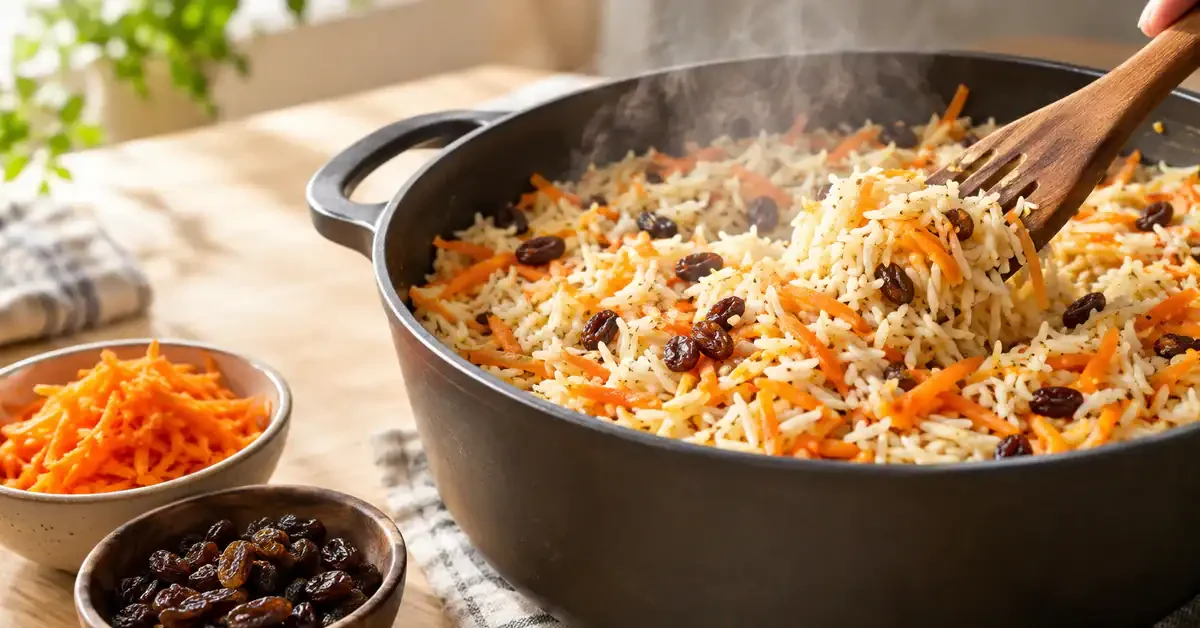
The finished rice should have separate grains that are tender through the centre. Grated carrot adds colour and a little sweetness, while the raisins provide small, sweeter bites.
What to look for
- Separate grains: once the liquid has been absorbed, check that the rice is cooked inside. If it remains firm, add a tablespoon or two of hot water, cover and cook gently for a few more minutes, then check again.
- Tenderness: cooking time varies with the rice. Aim for tender grains that hold their shape, avoiding unnecessary stirring that can encourage a sticky texture.
- A short rest: leave the covered pan off the heat for 2–3 minutes, then use a fork to separate the grains gently. This is a brief finishing step, not a method for cooling leftovers.
- Raisins: stir them in at the end so they warm through in the rice. If particularly dry, soak them in warm water for about five minutes beforehand and drain well.
- Final seasoning: taste after the short rest and add only small pinches of salt if needed.
Substitutions and variations
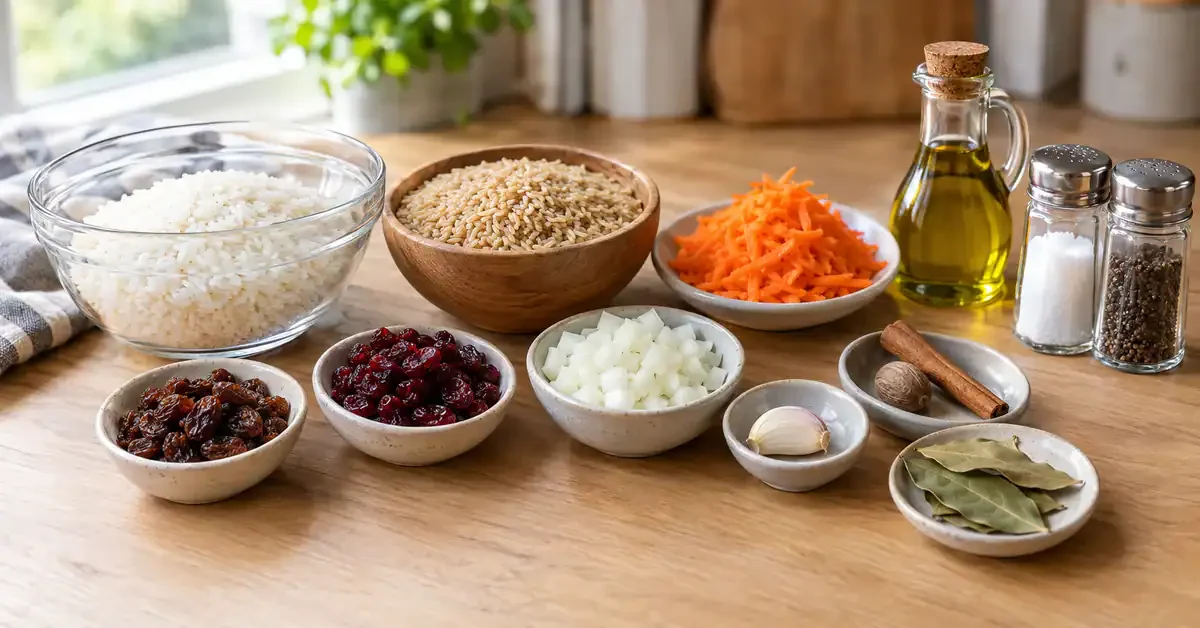
These options change the flavour or texture of the basic dish. Some are simple swaps; a different rice variety needs its own cooking instructions rather than an assumed identical liquid ratio.
Ingredient alternatives
- White rice: brown rice can be used as a separate variation, but follow its packet’s liquid and cooking guidance. Do not assume the white-rice method, two-cup liquid quantity or 15-minute timing will work unchanged.
- Water or vegetable stock: either can provide the cooking liquid. Stock adds flavour; check its salt content and season accordingly.
- Carrot: small dice give a different texture from grated carrot. Grated courgette is another possible variation, but adds more moisture and does not provide the same colour or sweetness; start with about ½ cup.
- Raisins: try ¼ cup chopped dried apricots or dried cranberries if preferred. Their sweetness varies, especially when fruit has added sugar, so check the product and adjust to taste.
- Onion: reduce it if you prefer a milder flavour, or try finely sliced leek. The leek version is a variation rather than a separately tested formula.
- Garlic: try about ¼ teaspoon garlic powder in place of the clove. Follow the product guidance and avoid scorching it in the pan.
- Butter or olive oil: a suitable vegetable oil is another option. Retain the recipe’s tablespoon of cooking fat for the basic method.
- Cinnamon and nutmeg: both are optional and may be omitted. A very small pinch of ground cloves or a little orange zest offers a different aroma; use sparingly so it does not dominate.
- Bay leaf: omit it if unavailable. A little thyme or rosemary can be tried as a different seasoning, rather than an exact replacement for its flavour.
- Salt and pepper: adjust at the end, allowing for any salt already present in the stock.
Changing the finished dish
- Brown rice gives a firmer texture and needs a different cooking schedule. Check its own instructions and allow enough time; a fixed white-rice liquid ratio should not be carried over automatically.
- Grated carrot blends through the grains, while small dice remain more distinct. Check that diced carrot is cooked to your liking before serving.
- For a less sweet result, reduce the raisins. Do not assume dried apricots or cranberries always contain less sugar; the product and any added sweetener matter.
- The carrot provides the orange colour. Keep the stated ½ cup for the basic version, or use a smaller amount if that better suits your preference.
Storage and serving
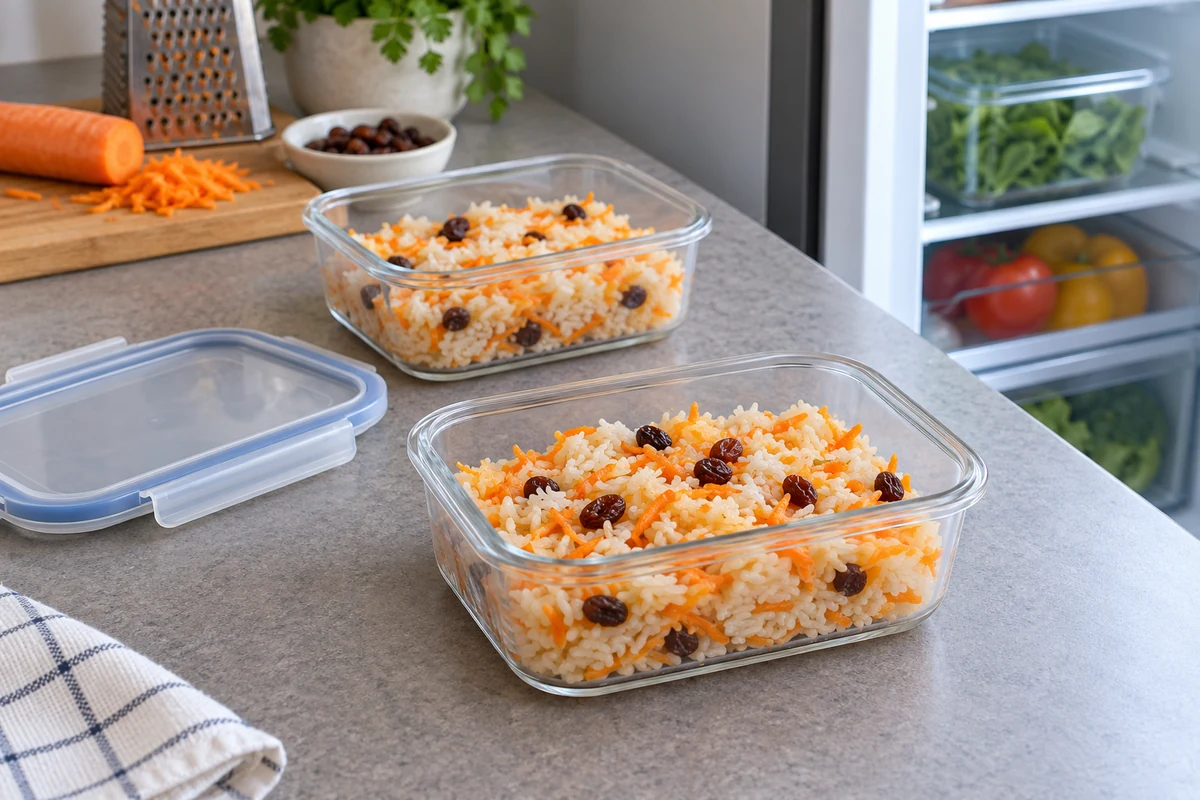
Serve the rice promptly after cooking. If keeping leftovers, safe cooling and reheating matter more than preserving a particular texture.
Storing leftovers
Food Standards Agency guidance is to cool leftover rice quickly, ideally within one hour, then refrigerate and use within 24 hours. Divide it into small, shallow portions rather than leaving a large pan or tall jar to cool. Reheat only once, until steaming hot throughout, and eat immediately. A splash of water may help the texture, but gentle warming alone is not sufficient. Source: Food Standards Agency: cooling and reheating rice
Serving ideas
- Serve hot, fluffing the grains gently with a fork. The carrot and raisins give colour without needing an elaborate garnish.
- Taste after the short finishing rest and adjust the seasoning to balance the savoury rice and sweet fruit.
- If desired, add a little freshly washed and grated carrot as a garnish immediately before serving.
Finishing well
Avoid repeatedly stirring the rice as it cooks. Check tenderness, rest it briefly off the heat and fluff gently before serving.
For a first attempt, use the stated white-rice version. If you later try brown rice, follow that product’s cooking and liquid guidance rather than treating it as an identical swap.
Christmas rice with carrot and raisins: frequently asked questions
How can I keep the rice grains separate?
Coat the drained rice in the cooking fat, then simmer gently without frequent stirring. Check that the grains are tender and the liquid absorbed, fold in the raisins, rest covered for 2–3 minutes and fluff with a fork. Rice varieties differ, so use the packet guidance as well as the texture check.
Can I use brown rice instead of white?
Yes, as a variation with different cooking requirements. Follow the brown rice packet for liquid and time; do not automatically use the white-rice ratio or timing. Finish with the raisins and season to taste once the rice is cooked.
Can I use diced carrot or grated courgette?
Small carrot dice are an option, provided they cook through. Grated courgette changes moisture, flavour and colour, so it should be treated as a variation rather than an identical substitute. Start with about ½ cup of the vegetable component.
Are cinnamon and nutmeg essential?
No. Leave them out if preferred. A small amount of orange zest or a very small pinch of ground cloves can provide a different aroma, but neither is necessary for the basic dish.
When should I add the raisins?
Gently stir in ¼ cup after turning off the heat. They warm in the rice during the short rest. Particularly dry raisins can be soaked in warm water for about five minutes and drained before adding.
How should I serve and season the rice?
Remove the bay leaf, fluff with a fork and serve hot after the brief rest. Taste first, then add salt or pepper only as needed, especially when using salted stock.