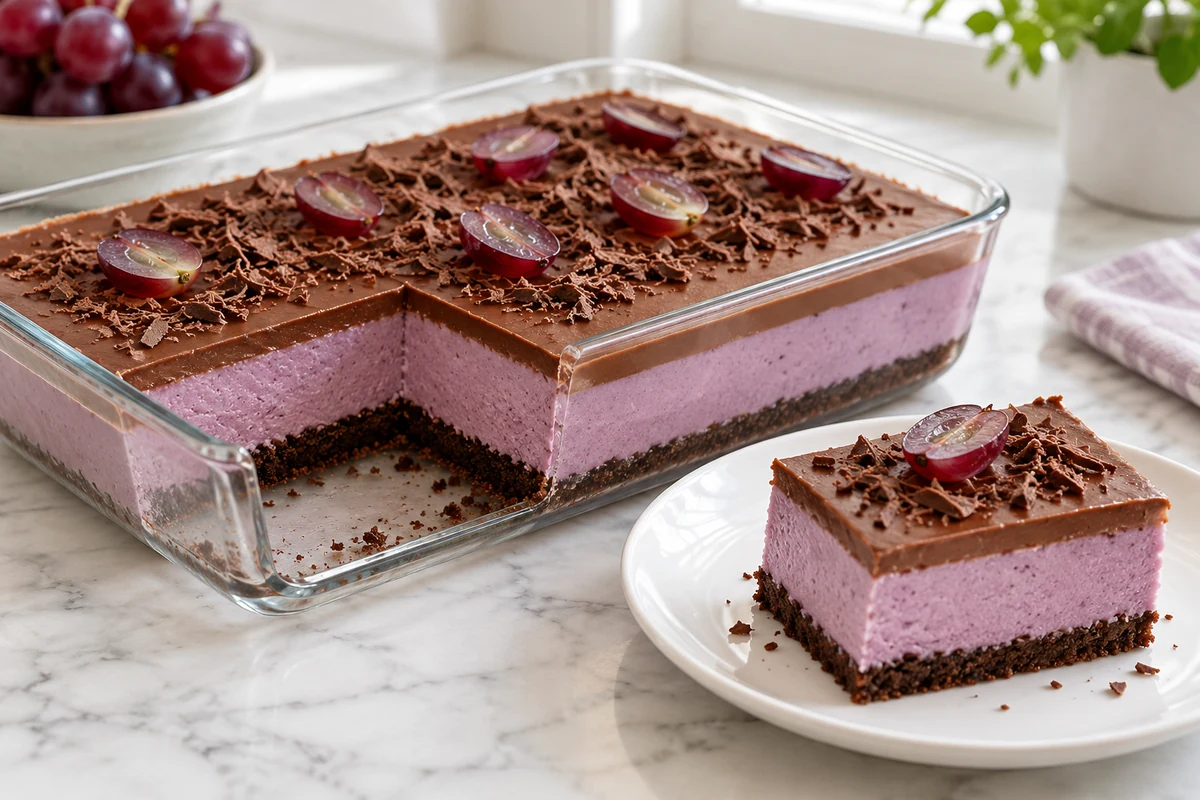
This chocolate and grape layered dessert has a chocolate biscuit base, a grape-purée filling with condensed milk and cream, and a milk chocolate topping. Chill between stages so the layers set before serving portions from the dish.
Chocolate and grape layered dessert is this recipe’s take on Brazilian bombom de uva na travessa. Here, grape purée and gelatine form the filling over a biscuit base, rather than whole grapes folded through a cooked cream.
The images illustrate this recipe and its preparation; the appearance of your finished dish may vary.
The ingredient quantities and method below guide you through the three layers. Give the filling time to set before adding the topping, and check its consistency rather than trying to rush the chilling stages.
Ingredients
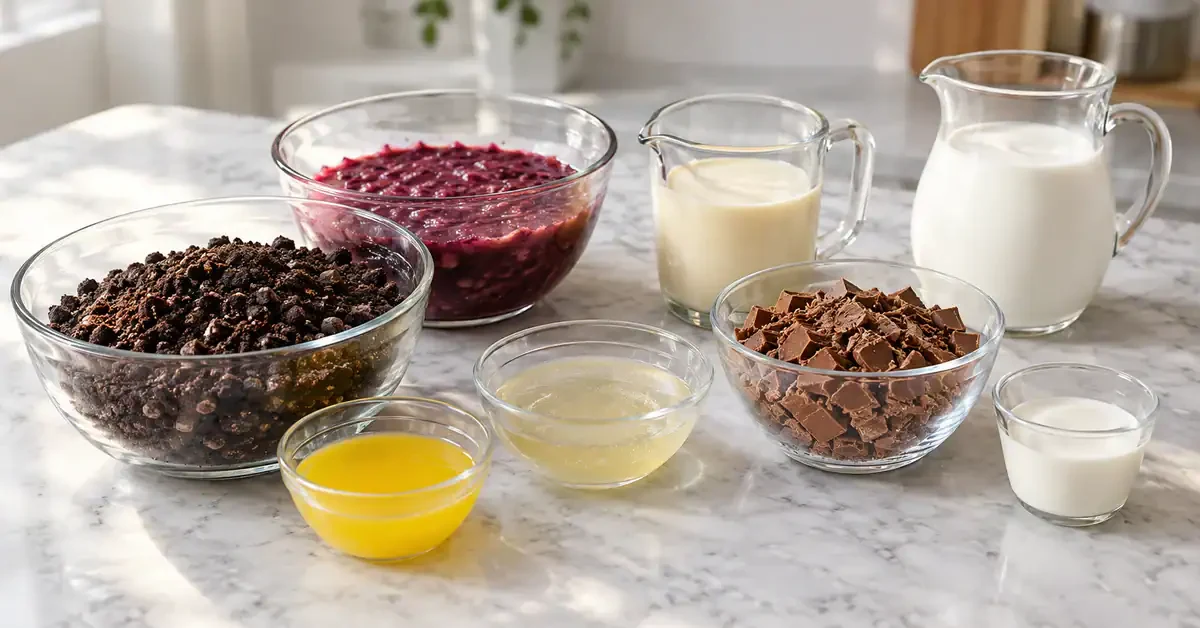
- 200 g chocolate biscuits, crushed
- 80 g butter, melted
- 350 g sweet grape purée, with seeds removed
- 120 g sweetened condensed milk
- 200 ml fresh cream, for the filling
- 10 g unflavoured powdered gelatine, prepared with 60 ml water according to its packet instructions
- 150 g milk chocolate, chopped
- 30 ml cream, for the topping
Method
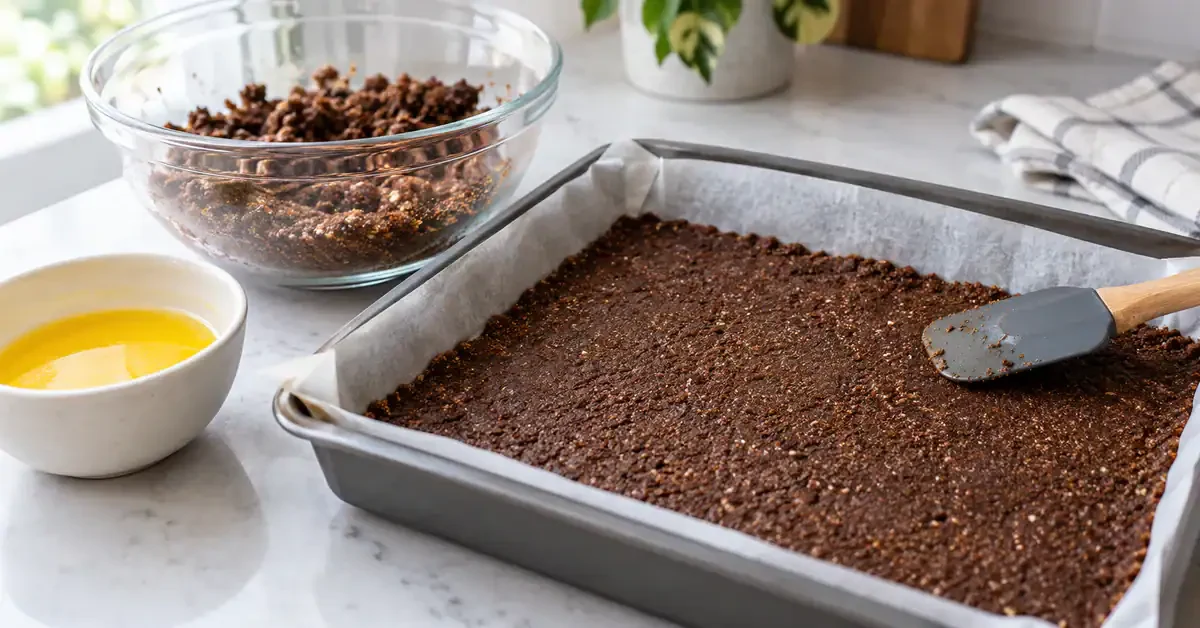
- Make the biscuit base: crush the 200 g chocolate biscuits in a food processor or sealed bag until finely crumbed. Mix with the 80 g melted butter. Press evenly into the bottom of a serving dish with a spatula or the back of a spoon. Refrigerate for about 30 minutes to firm up.
- Make the grape filling: combine the 350 g seedless grape purée, 120 g condensed milk and 200 ml fresh cream. Prepare the 10 g gelatine using the 60 ml water: follow the packet’s blooming and dissolving directions, rather than tipping dry powder straight into warm liquid. For gelatine that requires cold blooming, use the measured water cold first, then warm gently as directed without boiling. Stir a little filling into the dissolved gelatine, then combine evenly with the rest. Spread over the chilled base, level, and refrigerate for approximately 4 hours, or until set.
- Add the chocolate topping: melt the 150 g chopped milk chocolate with the 30 ml cream over a gentle bain-marie or in short microwave bursts, stirring until smooth. Let it cool until still spreadable but no longer hot before spreading over the firm filling. Refrigerate for roughly 15–30 minutes, or longer if needed, until the topping is firm enough to serve.
- Serve: cut portions from the chilled dish and lift out with a broad spatula. Chocolate shavings or pieces of fresh grape make optional decorations.
Checking that the layers have set
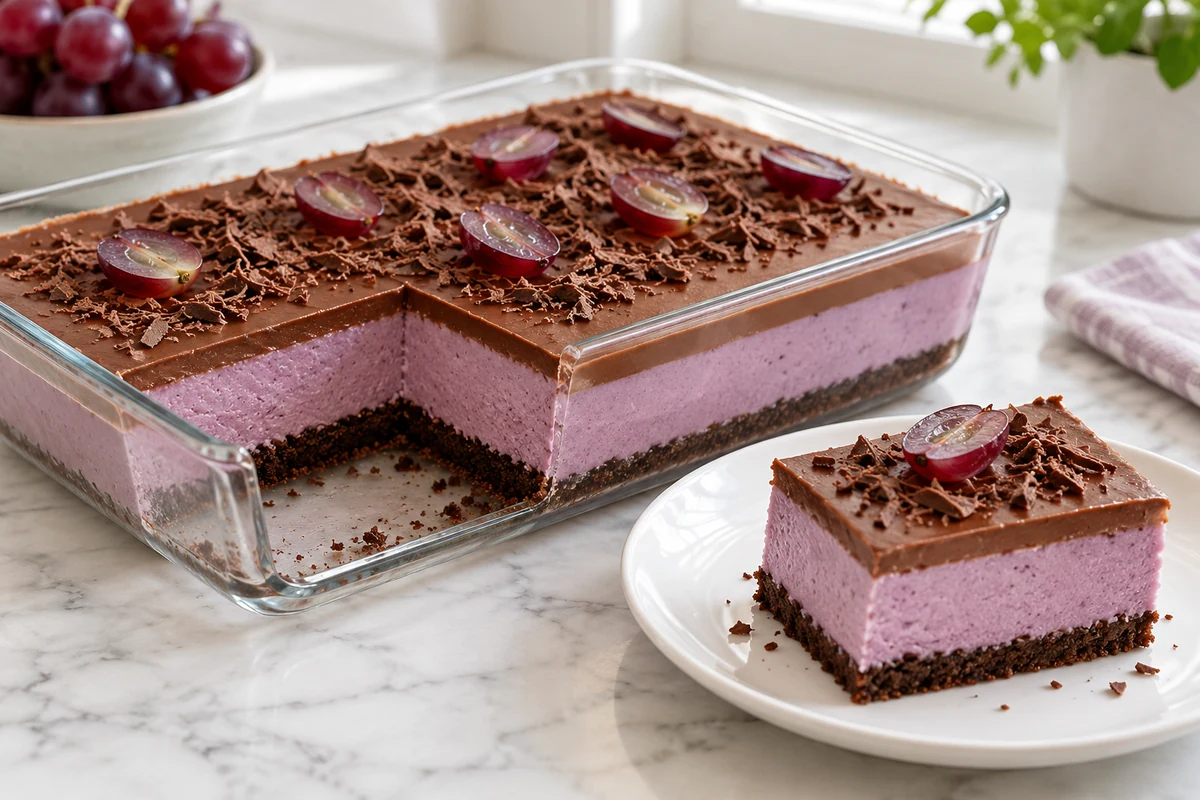
The filling should support the chocolate topping, and the topping should stay in place when you portion the dessert. Check the layers themselves after chilling rather than treating a glossy surface as proof that everything is ready.
- Appearance: look for an even chocolate layer without pools of liquid. Chilled chocolate may be less shiny; a matt surface alone does not mean the dessert has failed.
- Firmness: check gently at the edge with a clean utensil. The topping should not flow, and the filling beneath should not collapse under it. Avoid repeatedly touching the surface with your fingers.
- Portioning test: make a small cut at the edge. The layers should hold together well enough to lift with a spatula rather than run into the space left behind.
- Chilling time: check the topping after about 15–30 minutes. Give it longer if necessary; the temperature and depth of the dish affect how quickly it firms up.
Keep the dessert refrigerated until serving. A set topping is useful for neat portions, but it does not replace proper chilling and storage of the cream filling.
Common problems and how to avoid them
Most difficulties arise from adding the next layer before the previous one has set, or from unevenly dissolved gelatine. The following checks apply at the relevant preparation stage.
Loose base, uneven filling or too much liquid
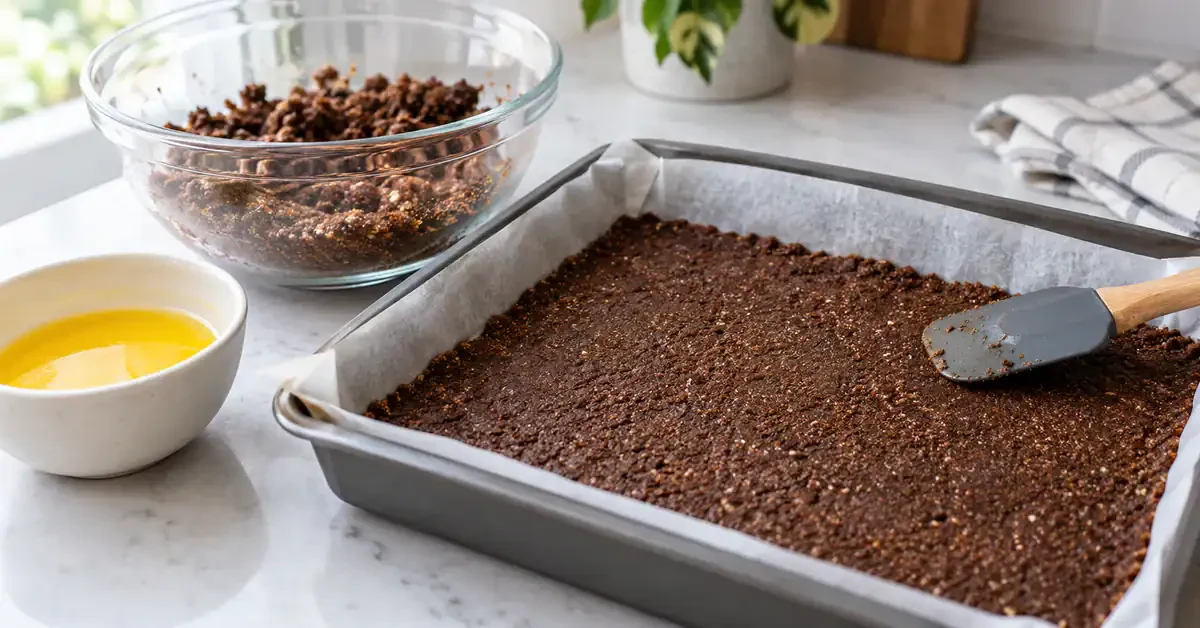
- A loose biscuit base is best corrected before adding the filling. Press it evenly into the dish, especially around the edges, and chill again until firm. Once the filling is on top, do not try to press through it to compact the crumbs underneath.
- For a lumpy filling, check that the gelatine has dissolved fully and is evenly incorporated before pouring it over the base. Mix gently enough to avoid excessive foam and smooth with a spatula. Do not blend an already set layer in an attempt to remove bubbles.
- A fluid filling immediately after mixing is not necessarily a fault: gelatine needs refrigeration to set. Allow the full chilling stage before adding the chocolate. If it still will not set, check the measured quantities and gelatine directions rather than boiling the cream-and-gelatine mixture to reduce it.
Avoid improvised thickening fixes
- Heating a prepared gelatine filling to reduce it is not a reliable repair and may affect its setting. Keep the recipe’s measured liquid quantities and prepare the gelatine according to the packet from the outset.
- Mix the dissolved gelatine evenly into the filling before assembly. After pouring, level the surface and leave it undisturbed in the fridge so the layer can set properly.
- Unspecified thickeners or spoonfuls of dulce de leche are not part of this formulation. Adding them to a failed batch changes the flavour and proportions without guaranteeing a repair. A filling that has not set should not be presented as a reliably sliceable dessert.
Serving and storage
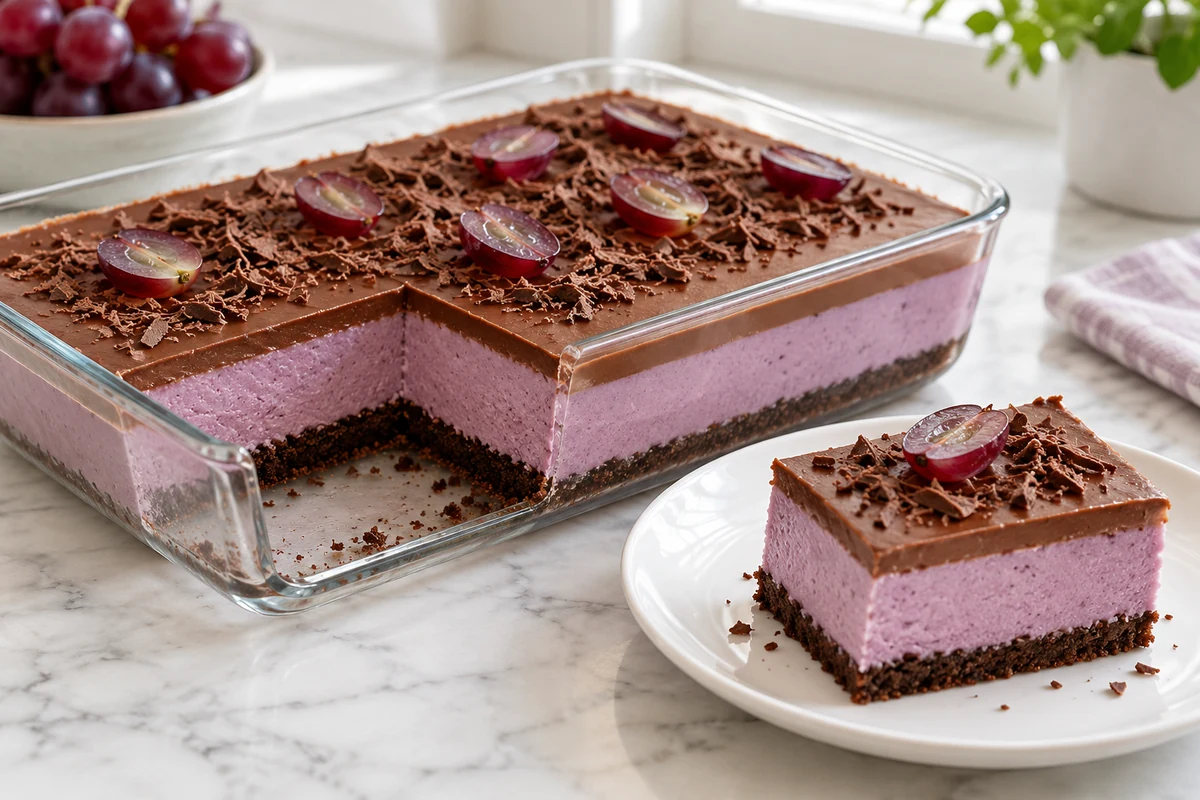
Plan your portions before cutting, and keep the dish cold until it is time to serve. A broad spatula helps support the biscuit base as you lift each piece.
Decorating with grapes and chocolate
- Place the dish on the table just before serving, with pieces of grape arranged over the top if desired.
- A few fresh grape pieces show the flavour of the filling without covering the entire chocolate layer.
- Scatter a little chocolate vermicelli or chocolate shavings over the surface as an optional finishing touch.
Use a clean knife to mark portions and a broad spatula to transfer them, supporting all the layers from underneath.
Refrigeration and keeping the layers intact
Store covered in the fridge and use within 48 hours, or sooner if an ingredient’s label requires it. Refrigerate promptly after serving, within 2 hours. The Food Standards Agency recommends chilling leftovers promptly and using them within 48 hours. Source: Food Standards Agency: cooking and storing leftovers
If liquid separates from an assembled dessert, stirring the whole dish will destroy the layers and is not a reliable repair. Do not reheat it to restore the filling. Good storage and a correctly prepared gelatine layer matter more than trying to restore the appearance afterwards.
Ready to serve
Keep the dish refrigerated until needed. Check that both the filling and topping are set before cutting, and serve promptly rather than leaving it out while waiting for other parts of the meal.
For a simple finish, choose chocolate shavings or pieces of grape. These are optional decorations, so you can keep the topping plain if you prefer.
Chocolate and grape dessert: frequently asked questions
How do I know when the chocolate topping is ready to cut?
It should remain in place when you make a small cut at the edge, with the filling underneath supporting it. Check after approximately 15–30 minutes in the fridge and allow longer if needed. Gloss alone is not a reliable guide, because chilled chocolate can become matt.
What if the filling is runny or bubbly?
Mix gently and level before chilling. A freshly mixed gelatine filling needs time in the fridge, so allow the stated chilling stage before judging it. If it remains runny, check the quantities and gelatine preparation; boiling it down or adding an unspecified thickener is not a reliable fix.
Which utensils help keep the layers even?
Crush the biscuits in a food processor or sealed bag, then mix with the melted butter. Press the base with a spoon or spatula, use a spatula to level the filling, and support finished portions with a broad server.
How should I organise the chilling stages?
Chill the biscuit base for about 30 minutes. Add the filling and refrigerate for approximately 4 hours, until set. Spread over the melted chocolate mixture only once it has cooled enough not to melt the filling, then chill for around 15–30 minutes or until ready to portion.
How can I serve it neatly?
Keep the dish cold, cut the portions with a clean knife, and lift with a broad spatula. Optional chocolate shavings or grape pieces can decorate the surface. Serve directly from the dish rather than attempting to unmould the whole dessert.