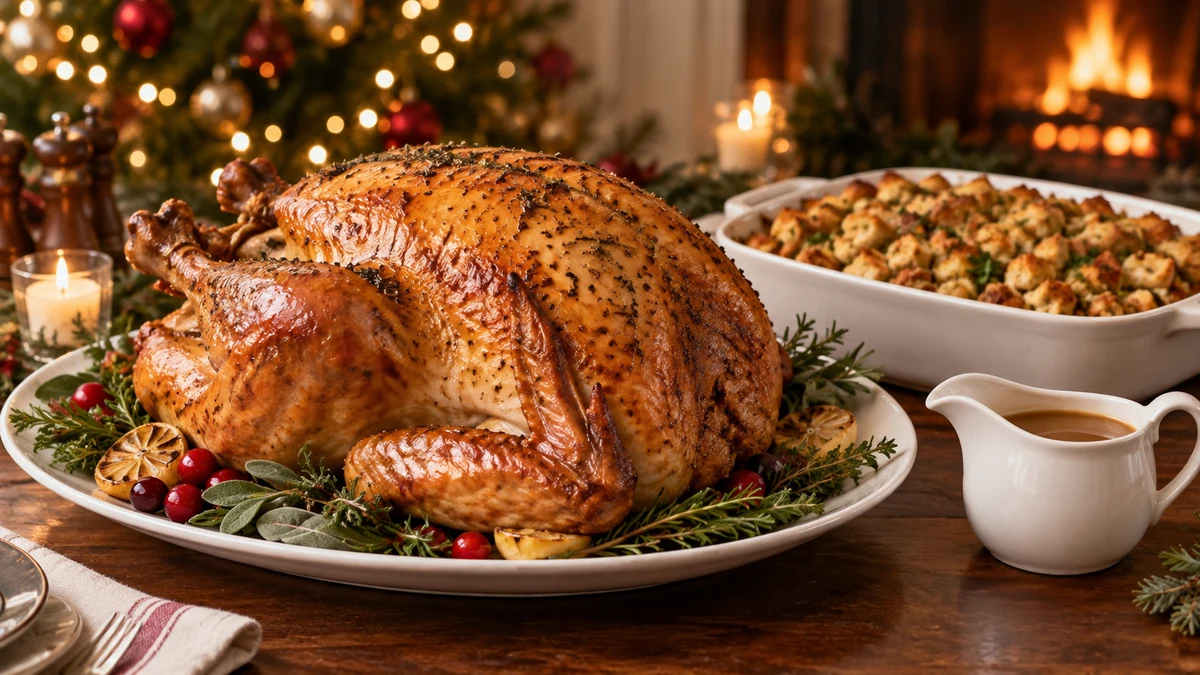
This Christmas turkey uses lemon, garlic and herb butter, with bread stuffing baked in a separate dish. The method includes pan gravy and optional side dishes. Follow your bird’s packaging for roasting and defrosting, and use a food thermometer to check it is cooked throughout.
This Christmas turkey recipe combines herb butter with a bread-and-sausage stuffing served alongside. Baking the stuffing separately makes cooking easier to manage. The quantities below are for a 4–5 kg turkey; timings are planning guides, not a substitute for checking your particular bird. This editorial adaptation has not been kitchen-tested by us.
Ingredients for Christmas turkey with herb butter
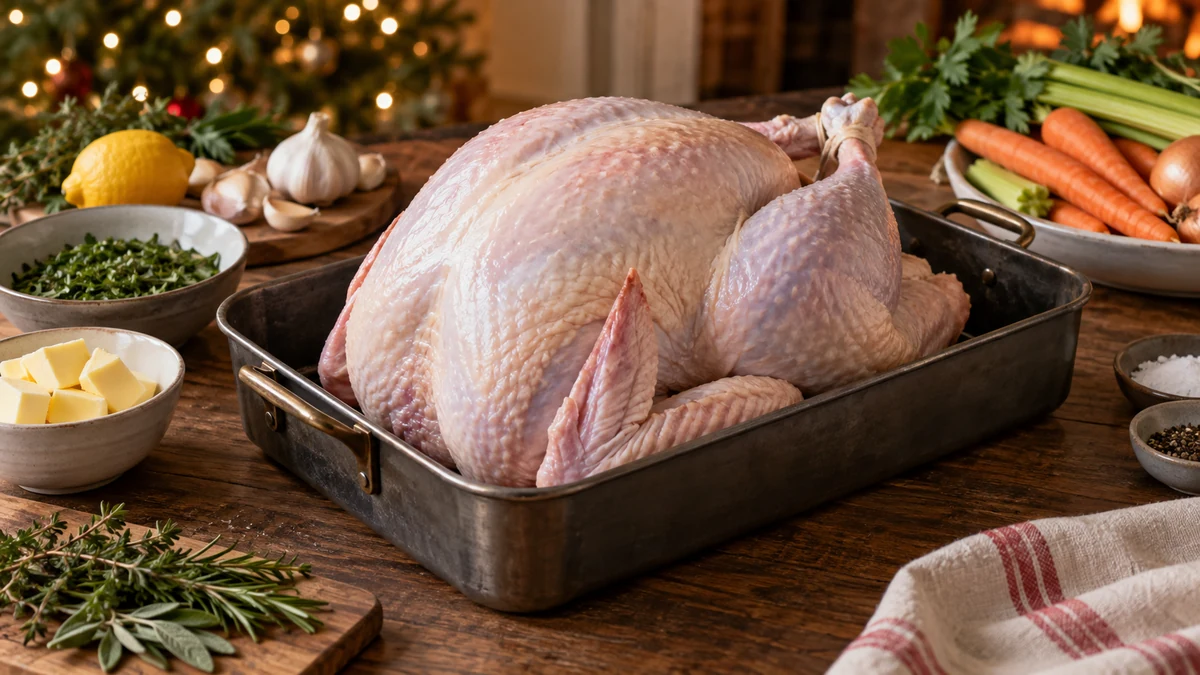
For the Christmas turkey and its main bread stuffing, gather the following ingredients. The herb-butter section later explains the same butter mixture, not a second batch. Alternative stuffings and sides have their own ingredient lists.
- 1 whole turkey, 4–5 kg — fully defrosted if frozen, with any neck and giblet bag removed; reserve them separately if making stock.
- 200 g unsalted butter, softened, for the herb butter — use a suitable dairy-free alternative if required, checking all ingredients and cross-contact risks.
- 4 tbsp olive oil, available for the stuffing pan, greasing and coating the bird as needed; you may not need it all.
- 6 garlic cloves, finely chopped — four for the herb butter and two for the stuffing.
- 1 large onion, chopped, for the stuffing.
- 2 medium carrots, cut into large pieces, for the roasting tin.
- 2 celery sticks, chopped, for the stuffing — chopped leek is an alternative, with a different flavour.
- 2 lemons — use the zest of one and 1 tbsp juice in the butter; keep the rest for seasoning or serving rather than packing the cavity.
- 240 ml chicken or vegetable stock for the stuffing, plus 240 ml for the roasting tin if not using wine and 120 ml for the gravy. Choose a suitable low-salt stock where possible.
- 300 g day-old bread, cubed, for the stuffing — use suitable gluten-free bread if needed and check every other ingredient too.
- 200 g calabresa sausage, casing removed and diced, optional — this is a Brazilian sausage; a suitable smoked sausage is an alternative. For a meat-free stuffing, use mushrooms and vegetable stock instead.
- 2 apples, cored and chopped, optional — pears can be used for a different texture.
- 100 g diced bacon, optional, for the stuffing — omit it for the mushroom version; replacing sausage alone does not make a stuffing vegetarian.
- 1 tbsp sweet paprika, optional, to add to the butter or reduce to taste; smoked paprika gives a different flavour.
- Salt to taste and 1 tsp freshly ground black pepper, divided between the butter and stuffing. Check whether the turkey and stock are already salted before adding more.
- 2 tbsp chopped fresh sage — one for the butter and one for the stuffing, or use a smaller quantity of dried sage to taste.
- 1 tbsp chopped rosemary, 1 tbsp thyme and 4 tbsp parsley — rosemary, thyme and half the parsley for the butter; remaining parsley for the stuffing.
- 240 ml dry white wine, optional, for the roasting tin instead of stock — use stock for an alcohol-free version; roasting does not guarantee that all alcohol disappears.
- A little extra oil or butter for greasing if needed. For optional gravy thickening, have 1 tsp cornflour and cold water ready; 15 g extra butter can be stirred in for richness.
Ingredient Notes
Prepare the chopped herbs and softened butter before handling the raw bird. The optional dishes below are alternatives, not a requirement to cook every one. Butter contains milk, bread commonly contains wheat, celery is an allergen, and sausage or stock may contain others. Substituting olive oil for butter changes the fat composition but does not make the meal fat-free.
Prepare and roast the turkey step by step
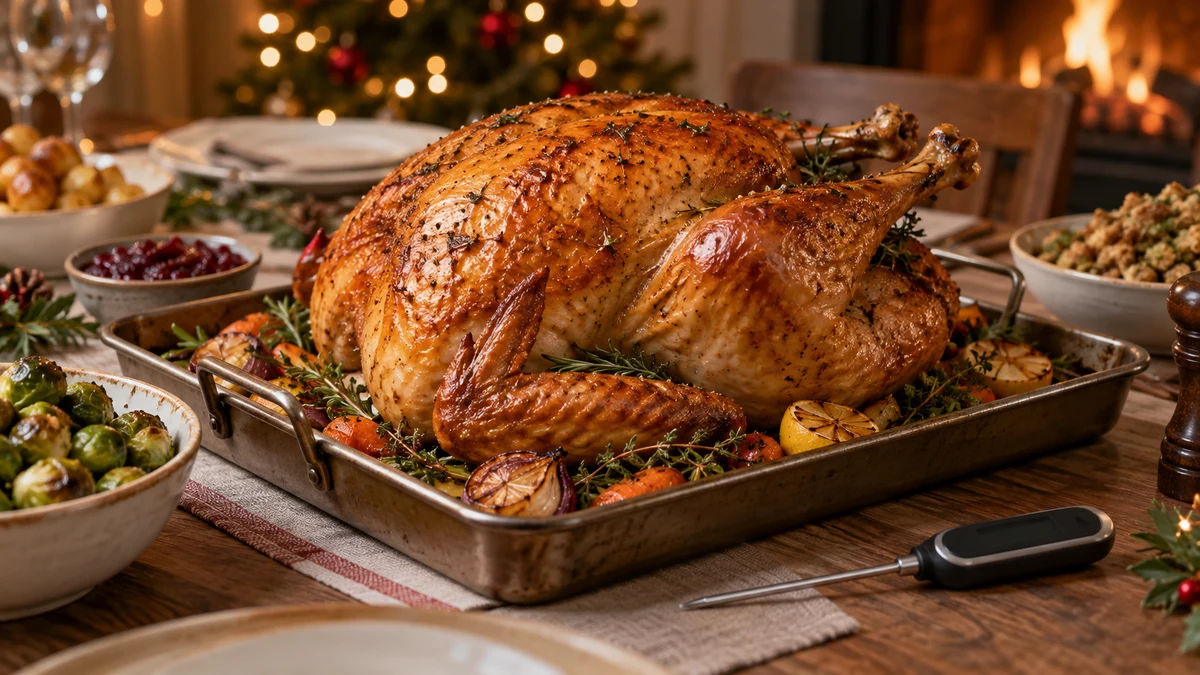
- Defrost and prepare: Follow the packaging and thaw in a covered tray on the bottom shelf of the fridge. Allow enough time for the centre to defrost; a large bird can need several days. Remove the giblets. Do not wash raw poultry; pat dry with disposable kitchen paper if needed.
- Check the seasoning: A pre-brined or pre-seasoned turkey may need little additional salt. This method does not require a separate wet brine. Do not rinse the bird or leave it on the worktop to soak.
- Preheat the oven: Follow the bird’s packaging; the general guidance below uses 180°C conventional / 160°C fan / gas 4. Put the carrots in a sturdy roasting tin and fit a rack if using one.
- Make the herb butter: Mix the 200 g softened butter with 2 tbsp parsley, 1 tbsp each thyme and rosemary, 1 tbsp sage, zest of one lemon, 1 tbsp lemon juice and four chopped garlic cloves. Season cautiously and add the optional paprika if wanted.
- Apply the butter: Gently loosen the breast skin without tearing it. Spread some butter underneath and the rest over the outside. Keep any utensils that touch the raw bird separate from ready-to-eat food.
- Prepare the separate stuffing: Cook the sausage and optional bacon in a frying pan, then soften the onion and celery in the pan fat or a little oil. Add the remaining garlic briefly. Combine with bread, optional apples, remaining sage and parsley, and 240 ml stock. Transfer to a greased baking dish; do not put it inside the turkey.
- Position the bird: Keep the main cavity empty and arrange the legs as directed on the packaging. If using cooking string, tie loosely rather than closing the cavity tightly. Do not use ordinary string, plastic ties or decorative ribbon.
- Add the roasting liquid: Set the turkey breast-side up over the carrots and pour 240 ml wine or stock into the tin, not over the butter. Add a little of the measured oil if desired. Keep the tin level when moving it.
- Check with a thermometer: Test thick parts of the thigh and breast, avoiding bone. One suitable UK cooking check is 75°C held for 30 seconds at the centre, or an equivalent safe time-and-temperature combination. Clean the probe before and after use.
- Roast according to the bird’s weight: Use the package instructions and the planning guidance below. Do not rely on a universal 3-hour timing or skin colour alone. Bake the stuffing separately until piping hot throughout; its depth and ingredients affect how long it takes.
- Protect the surface: Loosely cover the bird with foil if it browns too quickly. Basting is optional and does not replace a cooking check; avoid opening the oven frequently. If the tin dries out, add a little hot stock or water carefully.
- Check both dishes: Confirm the turkey is cooked in more than one thick area and the separate stuffing is hot at its centre. A stuffing containing sausage or bacon also needs thorough cooking. Return either dish to the oven if necessary.
- Rest before carving: Transfer the cooked turkey to a clean board and cover loosely with foil for 20–30 minutes. Use clean utensils for carving and keep the serving and leftover-storage plan in mind.
-
Make Gravy from the Roasting Juices
- Separate excess fat: Carefully pour the roasting juices into a heatproof jug. Let the fat rise and spoon off the excess, keeping the savoury juices underneath.
- Loosen the browned bits: Add 120 ml stock to the roasting tin and scrape gently. Put the tin on the hob only if it is suitable for direct heat; otherwise transfer the liquid and scrapings to a saucepan.
- Strain and simmer: Strain into the saucepan, add the reserved juices and bring to a simmer. Reduce to the flavour and consistency you prefer, adding more stock if too concentrated.
- Thicken if needed: Mix 1 tsp cornflour with a little cold water, stir into the simmering gravy and cook until thickened. An optional 15 g extra butter adds richness but is not essential.
- Finish the seasoning: Taste the cooked gravy and adjust pepper, salt or a small squeeze of lemon. Serve hot alongside the carved turkey and stuffing.
Herb butter: preparation and application
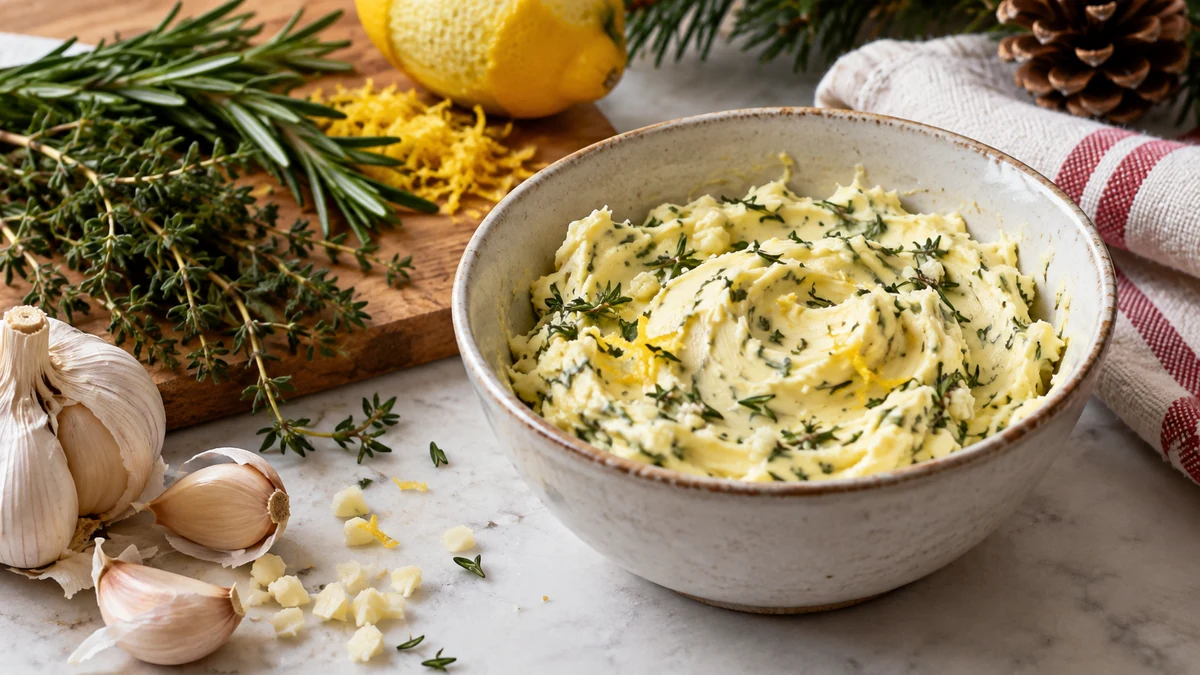
Herb butter gives Christmas turkey lemon, garlic and herb flavours. This section repeats the butter component of the main recipe for convenience: do not add a second 200 g batch unless deliberately scaling the recipe.
- 200 g unsalted butter, softened — a suitable dairy-free spread is an alternative. Lactose-free dairy butter still contains milk proteins and is not suitable for a milk allergy.
- 2 tbsp finely chopped fresh parsley — chopped chives give a different flavour.
- 1 tbsp fresh thyme leaves, chopped, or 1 tsp dried thyme.
- 1 tbsp finely chopped fresh rosemary, or 1 tsp dried rosemary.
- 1 tbsp chopped fresh sage, optional; the other tablespoon in the main list is for the stuffing.
- 4 garlic cloves, finely chopped or crushed — use garlic powder to taste if preferred.
- Zest of 1 lemon and 1 tbsp lemon juice.
- Salt to taste and ½ tsp freshly ground black pepper; use less salt for a pre-seasoned bird.
- 1 tbsp olive oil, optional, taken from the main recipe’s oil allowance if needed to make spreading easier.
Mix the Herb Butter
- Soften briefly: Take the butter out only long enough to become spreadable. It should not be melted or left in a warm kitchen for hours.
- Prepare the herbs: Wash and dry fresh herbs, remove tough stems and chop finely so they distribute through the butter.
- Combine: Mix butter, herbs, garlic, lemon zest and juice, seasoning and optional oil into an even paste. Add the main recipe’s optional paprika here if using it.
- Taste before handling poultry: Use a clean spoon to check the butter now. Do not taste it once a hand or utensil that touched raw turkey has been in the mixture.
- Cover and chill: If preparing it the day before, refrigerate promptly in a clean covered container. Soften only the amount you need shortly before use. Label and freeze a clean, unused portion if storing it longer.
- For a smoother texture: Chop the herbs and garlic more finely before mixing. There is no need to strain the butter and discard the flavouring ingredients.
Apply It to the Turkey
- Under the breast skin: Gently spread roughly two-thirds of the butter beneath the loosened skin, taking care not to tear it.
- Over the surface: Spread the remainder over the bird for flavour and browning.
- Keep it spreadable: Soft butter is easier to position than melted butter, which tends to run into the tin.
- Leave the cavity open: Do not fill it with butter, bread or tightly packed aromatics. The stuffing in this recipe is baked separately.
- Prepare ahead if helpful: Mix and refrigerate the butter the day before, then soften briefly when ready to prepare the turkey.
- Avoid unnecessary extra butter: The measured mixture is sufficient for this method. If you baste, use the roasting juices carefully and keep oven-door opening to a minimum.
- Vary the flavour: Orange zest can replace lemon zest, or a little smoked paprika can replace sweet paprika. Choose one variation rather than adding every option together.
Separate stuffings and practical side dishes
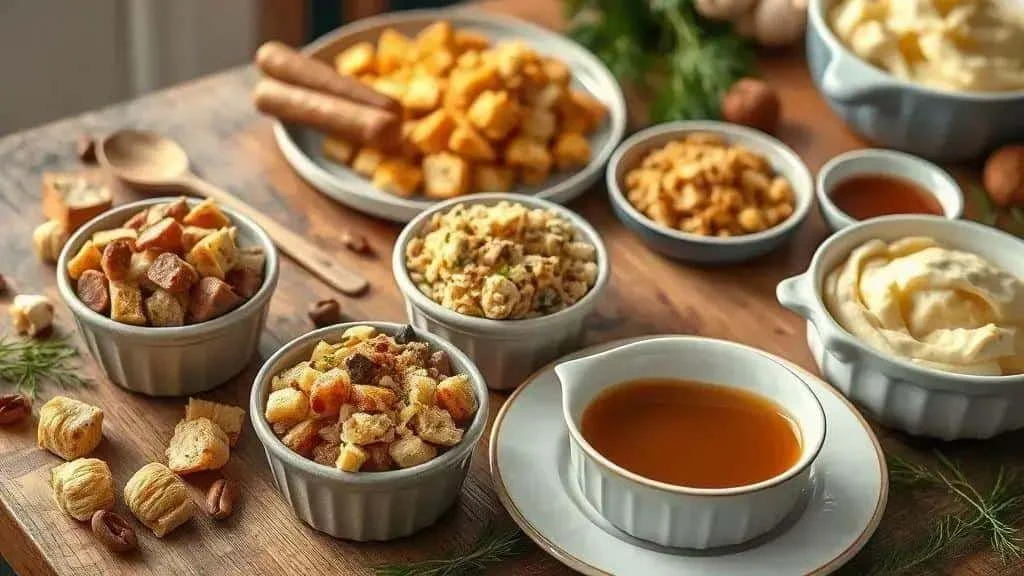
The following are alternative stuffing and side-dish ideas with their own quantities. Choose what suits your menu; they are not all required for the main turkey recipe. Bake every stuffing in a separate greased dish, checking that the centre is thoroughly hot before serving.
Bread and Sausage Stuffing
- 300 g day-old bread, cubed — suitable gluten-free bread can be used if all other ingredients and preparation also meet your needs.
- 200 g calabresa or another suitable sausage, casing removed and diced — mushrooms are a meat-free alternative; bacon is still pork.
- 1 large onion, chopped.
- 2 celery sticks, chopped.
- 2 apples, cored and chopped, optional.
- 240 ml chicken or vegetable stock, added gradually according to the bread’s absorbency.
- 2 tbsp chopped parsley, salt and pepper to taste, plus a little oil if needed for the pan and dish.
- Cook the sausage: Fry the diced sausage, following its cooking requirements, until cooked through and lightly browned. Set aside; cook mushrooms until their excess liquid evaporates if using the alternative.
- Soften the vegetables: Cook the onion and celery in the same pan with a little fat or oil until softened.
- Combine: Mix the bread, cooked sausage, vegetables, optional apples and stock. The mixture should be moist but not waterlogged; fold gently rather than compressing it.
- Season and bake separately: Stir in parsley and seasoning, transfer to a greased shallow baking dish and bake at the turkey oven setting until piping hot throughout and browned on top. Check the centre; depth and moisture affect the timing.
Apple, Herb and Bread Stuffing
- 300 g wholemeal bread, cubed — white bread is an alternative.
- 2 apples, cored and finely diced.
- 1 small onion, chopped.
- 2 tbsp chopped fresh sage, or dried sage to taste, starting with less.
- 120 ml vegetable stock, plus a little more if the bread needs it.
- 1 tbsp butter or olive oil, plus a little for greasing; salt and pepper to taste.
- Soften the onion and apple: Heat the butter or oil, cook the onion until soft and add the apple for a few minutes.
- Add bread and herbs: Combine with the bread, sage and stock until lightly moistened. Add more stock gradually only if needed.
- Bake as a side dish: Transfer to a greased dish and bake until hot at the centre and crisp on top. Keep it separate from the raw turkey and serve alongside.
Mushroom and Walnut Stuffing
- 400 g mushrooms, sliced, such as chestnut mushrooms or portobellos.
- 100 g walnuts, chopped — other nuts change the flavour and do not make it suitable for a nut allergy.
- 2 garlic cloves, chopped.
- 200 g bread, cubed.
- 120 ml vegetable stock, plus a little oil for frying and greasing; parsley, salt and pepper to taste.
- Cook the mushrooms: Heat a little oil and cook the mushrooms until their liquid evaporates and they begin to colour.
- Add garlic and walnuts: Stir in garlic briefly, then add the nuts and combine with bread and stock.
- Season and bake: Add parsley, salt and pepper, transfer to a greased dish and bake until hot throughout. Keep it away from turkey juices if serving to vegetarian guests.
Simple Brazilian Farofa
- 2 tbsp oil or butter.
- 1 medium onion, chopped.
- 200 g coarse Brazilian cassava flour (farinha de mandioca) — not tapioca starch.
- Salt to taste and 1 tbsp chopped parsley and spring onion.
- Soften the onion: Heat the oil or butter and cook the onion until soft and lightly golden.
- Toast the flour: Add the cassava flour gradually and stir over moderate heat until loose and lightly toasted, taking care not to burn it.
- Finish: Season and stir in the chopped herbs. Serve as a crumbly side dish.
Creamy Mashed Potato
- 1 kg potatoes suitable for mashing, such as Maris Piper.
- 50 g butter or 3 tbsp olive oil.
- 120 ml milk or an unsweetened plant drink suitable for your guests.
- Salt and nutmeg to taste.
- Cook: Peel and cut the potatoes into similar-sized pieces, then simmer in water until tender.
- Mash: Drain well, mash and gradually mix in the butter and warmed milk to your preferred consistency.
- Season: Add salt and a little nutmeg to taste, then serve hot.
Serving and Budget Ideas
- Plan leftovers — a little stuffing or mash can form part of another meal if cooled and stored safely. Do not keep remaking the same leftovers through repeated reheating.
- Choose a manageable selection: One stuffing and one or two sides may be enough. Smaller portions can give variety without filling the fridge with surplus food.
- Compare seasonal ingredients: Use what suits your budget and menu; local or seasonal produce is not always the cheapest option.
Christmas turkey variations
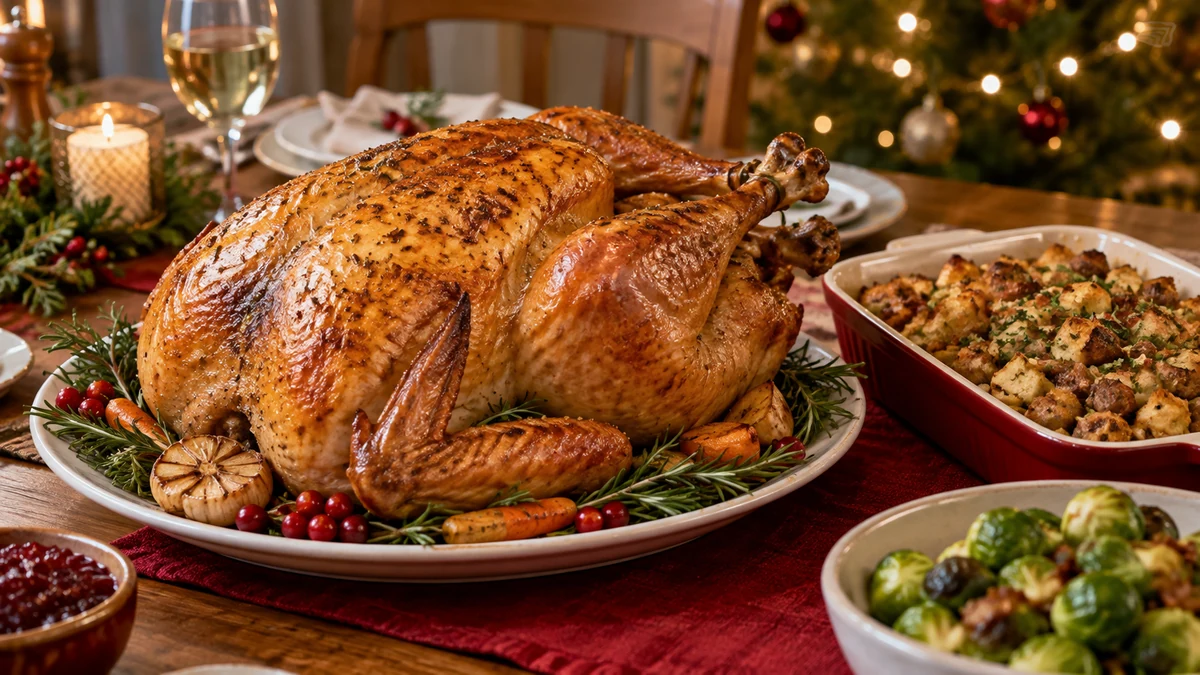
Adapt the Christmas turkey flavouring to your preferences. These are alternatives to the main method, not extra stages to combine with it. Use the same safe cooking checks and follow the packaging for the size and cut you buy.
Turkey with Less Butter
- 1 turkey, 4–5 kg, fully defrosted if frozen.
- 100 g unsalted butter, softened — this reduces butter compared with the main version, but the recipe still contains fat.
- 3 tbsp olive oil.
- Chopped parsley, thyme and rosemary to taste.
- 4 garlic cloves, crushed.
- Salt and pepper to taste.
- Mix the coating: Combine softened butter, oil, garlic, herbs and seasoning.
- Apply: Spread beneath the loosened breast skin and over the surface, handling the raw bird hygienically.
- Roast for the particular bird: Follow the package instructions and verify doneness as described in the main method. Less butter does not change the need for thorough cooking.
Citrus and Herb Turkey
- 1 turkey, 4–5 kg, prepared as above.
- Zest and juice of 2 lemons — orange gives a different flavour.
- 2 tbsp olive oil.
- 1 tbsp chopped thyme and 1 tbsp chopped sage.
- 4 garlic cloves, chopped.
- 240 ml vegetable stock for the roasting tin, plus seasoning to taste.
- Marinate in the fridge: Coat the bird with lemon, oil, garlic and herbs and refrigerate, covered, for 4–8 hours within its safe storage period. Discard raw-poultry marinade rather than serving it as a sauce.
- Roast: Use the package’s oven setting and timing, or the main method’s general guidance if none is given. Confirm the turkey is cooked throughout using a clean thermometer.
- Watch the tin: Add the stock at the start and top up carefully if needed to stop the juices burning.
Fruit and Nut Stuffing Served Alongside
- 300 g day-old bread, cubed.
- 2 apples, cored and diced.
- 100 g walnuts or cooked chestnuts, chopped; check suitability for your guests.
- 1 onion, chopped, plus a little oil for frying and greasing.
- 1 tbsp chopped sage and 1 tbsp thyme leaves.
- 120 ml stock, plus more if needed, and seasoning to taste.
- Cook the base: Soften the onion in a little oil, then add the apples, nuts and herbs.
- Combine with bread: Add bread and stock gradually until moist but not tightly packed.
- Use a separate dish: Transfer the mixture to a greased baking dish rather than filling the bird’s cavity.
- Bake and check: Bake until piping hot at the centre and lightly crisp on top. Serve beside the fully cooked turkey.
Gluten-Free and Dairy-Free Adaptations
- 1 turkey with any pre-seasoning checked for suitability.
- 200 g suitable dairy-free spread — lactose-free dairy butter is not a milk-allergy alternative.
- Suitable gluten-free bread for a separate stuffing; cooked quinoa needs its own tested recipe rather than a direct volume swap.
- Herbs and garlic for flavouring.
- Suitable gluten-free stock, with other allergens checked as needed.
- Adapt the stuffing: Use a reliable gluten-free stuffing recipe and bake it separately. Different breads absorb liquid differently.
- Choose the right spread: Check its ingredients and cooking suitability before applying it under the skin and over the bird.
- Check the whole preparation: Review stock, sausages, seasoning and thickener, and prevent cross-contact. One substituted ingredient does not make the whole meal safe for an allergy or coeliac disease.
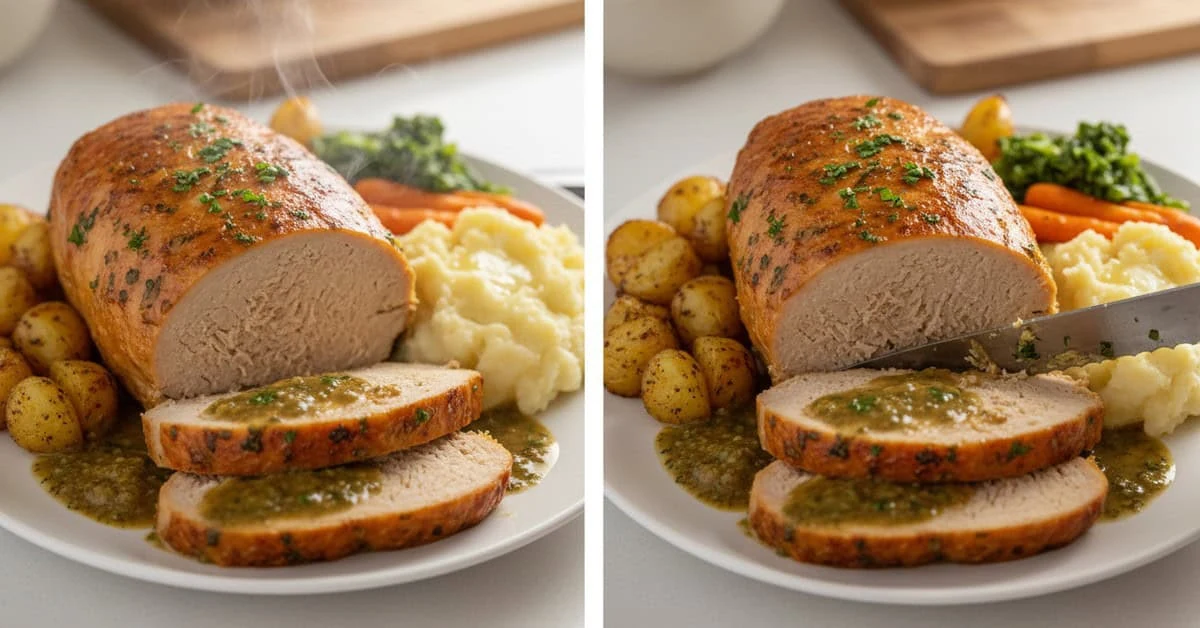
Turkey Breast for a Smaller Gathering
- 1 boneless turkey breast joint, 1–1.5 kg, with packaging instructions retained.
- 50 g butter or 2 tbsp olive oil.
- Chopped fresh parsley and thyme to taste.
- 2 garlic cloves, chopped.
- Salt and pepper to taste.
- Season: Coat the joint with butter or oil, garlic, herbs and seasoning.
- Roast according to the joint: Follow its specific instructions rather than assuming 40–60 minutes is enough. Check the thickest centre with a clean thermometer before removing it from the oven.
- Rest: Cover loosely and rest for 10–15 minutes before slicing with clean utensils.
Quick Flavour Variations
- Orange and honey: Add a little orange zest and 1 tbsp honey to the butter; watch browning carefully. Honey is not suitable for children under one year old, even when cooked.
- Smoky flavour: Add 1 tsp smoked paprika to the herb butter, adjusting to taste.
- Mediterranean-inspired: Use olive oil, lemon, garlic and chopped olives as a coating. Reduce added salt if the olives are salty.
Roasting time, resting and food safety
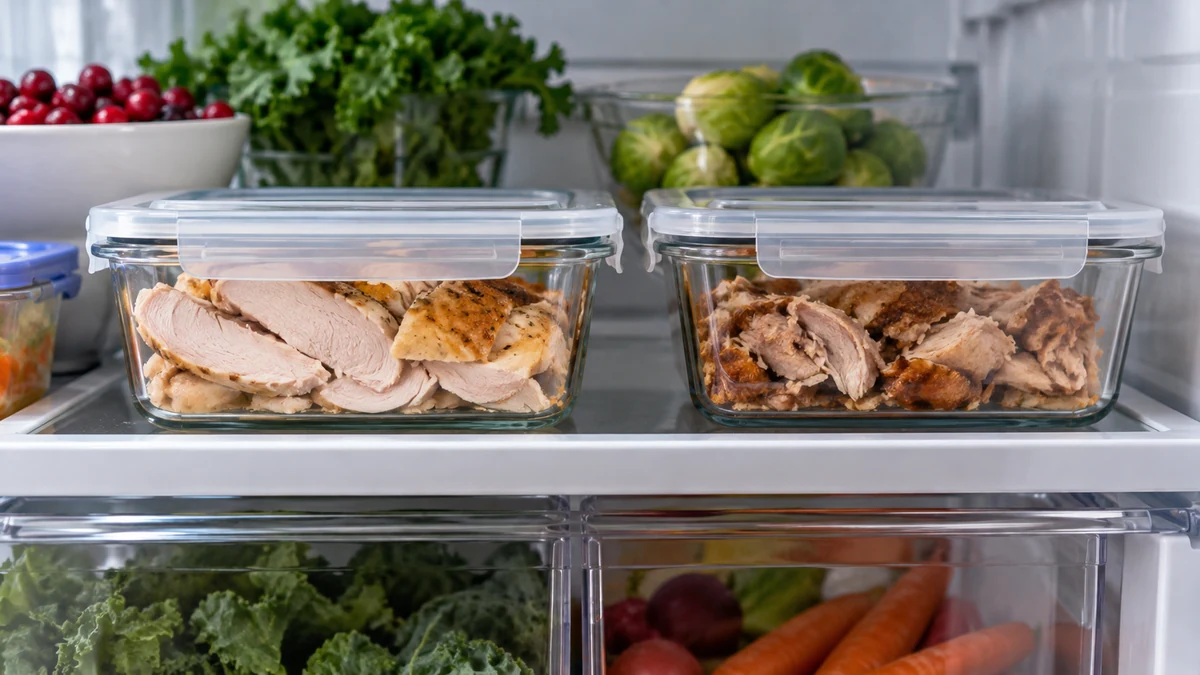
Roasting time and food safety need attention before the day of the meal. Check your packaging, fridge space and thermometer, then work backwards from serving time. The guidance below is for a fully defrosted, unstuffed whole turkey unless the manufacturer specifies otherwise.
General Timing Guide at 180°C Conventional / 160°C Fan
- Under 4.5 kg, unstuffed: if no instructions are supplied, allow roughly 45 minutes per kg plus 20 minutes.
- 4.5–6.5 kg, unstuffed: the general planning allowance is 40 minutes per kg.
- Over 6.5 kg, unstuffed: the general allowance is 35 minutes per kg; confirm doneness rather than relying on the clock.
- Stuffing: bake it in a separate dish. The estimates above do not cover a stuffed bird.
Using the Thermometer
- Probe the thickest meat without touching bone, checking more than one location.
- Check breast and thigh, and check the separate stuffing at its centre too.
- Safe cooking check: 75°C for 30 seconds, or an equivalent such as 70°C for 2 minutes. Continue cooking if any checked area falls short.
Practical Oven Tips
- Use the instructed oven setting rather than combining unrelated high-heat and low-heat timings. Preheat fully.
- Baste only if useful; repeatedly opening the door can slow cooking and does not guarantee moist meat.
- If browning too quickly: cover loosely with foil while the inside finishes cooking.
- Keep the roasting juices from burning: add a little hot stock or water if the tin becomes dry.
Resting after Roasting
- Rest the cooked turkey for 20–30 minutes, loosely covered, before carving.
- Prepare to serve: use a clean board and knife, and keep accompaniments ready so the meal is not left waiting unnecessarily.
Safe Handling and Leftovers
- Defrost safely: follow the label and allow several days if needed. Keep the bird refrigerated in a drip-catching tray, not at room temperature.
- Avoid cross-contamination: wash hands and clean equipment after handling raw poultry. Do not wash the turkey itself.
- Chill leftovers promptly: divide into smaller portions, cool and refrigerate within 1–2 hours. Use within 48 hours or freeze.
- Reheat once: heat the portion needed until steaming hot throughout; do not repeatedly warm and cool the whole batch.
- Store stuffing separately: cool and refrigerate it promptly too, following the same careful leftover handling.
Before-Serving Checklist
- Cooking checks passed in thick breast and thigh areas and at the centre of the separate stuffing.
- Turkey rested for 20–30 minutes, loosely covered.
- Clean board and utensils ready for carving and serving.
- Leftover containers ready so portions can be cooled and refrigerated promptly.
Bring the Meal Together
A Christmas turkey with herb butter and a separate stuffing can form the centre of a festive meal. Prepare ingredients in advance, follow the bird’s instructions and use cooking checks rather than promises of a perfect result.
Choose a manageable number of sides and adapt flavours to your guests. If catering for allergies or coeliac disease, check every ingredient and the preparation process, not just the obvious substitutions.
Visit I Love Christmas for more seasonal recipes and planning ideas. Keep your own notes on the bird, oven and timing so you can plan the next occasion more confidently.
FAQ — Christmas Turkey and Herb Butter
How should I defrost a turkey?
Follow the package instructions and thaw it in the fridge in a covered tray that catches drips. A whole bird can take several days; check it is fully thawed before using a method intended for a defrosted turkey.
Should I put the stuffing inside the turkey?
This recipe bakes stuffing separately. That makes it easier to cook both dishes thoroughly and keeps the whole-bird timing guidance applicable.
How do I know the turkey is cooked?
Use a clean thermometer in thick breast and thigh areas, avoiding bone. A suitable check is 75°C for 30 seconds or an equivalent safe combination. Do not judge only by browned skin.
Can I make the herb butter ahead?
Yes. Make it the day before and refrigerate it promptly in a clean covered container. Soften briefly before applying it, and keep utensils used on raw poultry out of any portion you intend to save.
How can I reduce added butter or salt?
Use the smaller-butter variation and season cautiously, especially with pre-seasoned turkey or stock. Herbs and citrus add flavour, but replacing butter with oil still adds fat.
How should I store and reheat leftovers?
Cool in small portions and refrigerate within 1–2 hours, then use within 48 hours or freeze. Reheat only the portion needed until steaming hot throughout, and do not reheat it more than once.
Sources and Further Reading
- Food Standards Agency: Christmas food hygiene
- Food Standards Agency: cooking food safely
- Food Standards Agency: chilling freezing and defrosting