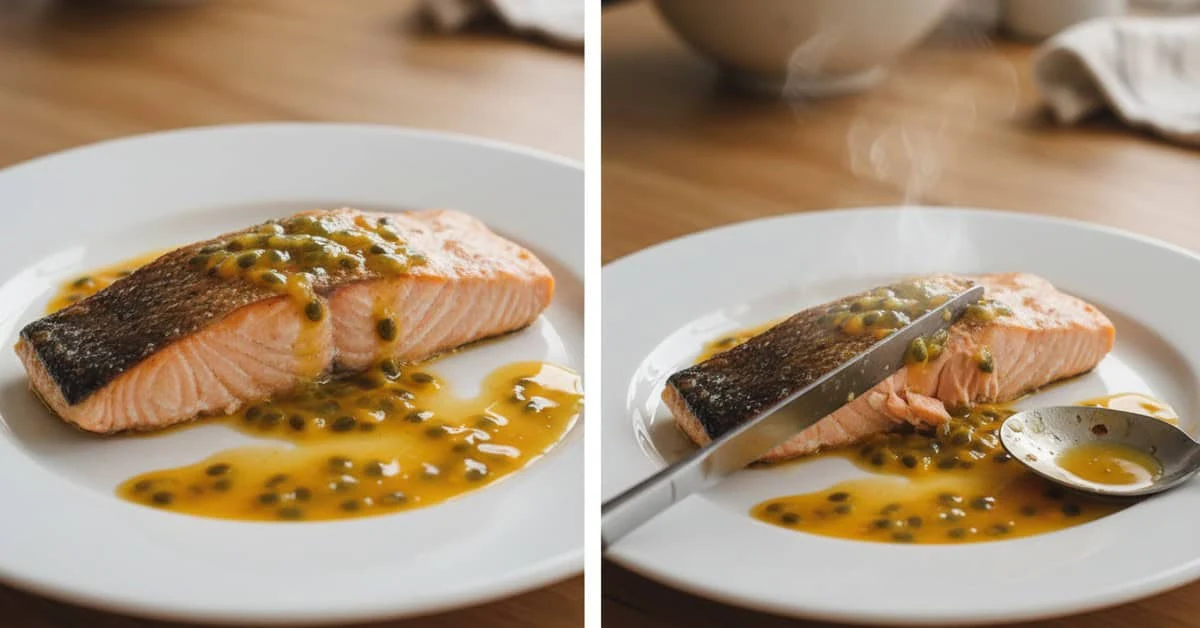
Christmas baked salmon with passion fruit sauce combines fish with a sweet-sharp sauce made from fruit pulp, honey and lemon. Bake at 200°C conventional/180°C fan until the fish is opaque and flakes readily, then serve with herbs and your chosen sides. Keep raw fish chilled and refrigerate leftovers promptly.
Christmas baked salmon offers a different centrepiece from a meat roast. Passion fruit brings a sharp, fragrant contrast to the fish. This recipe has been editorially reviewed, but not kitchen-tested; check your fish supplier’s cooking instructions and adjust for the thickness of the portions.
Ingredients for baked salmon with passion fruit sauce
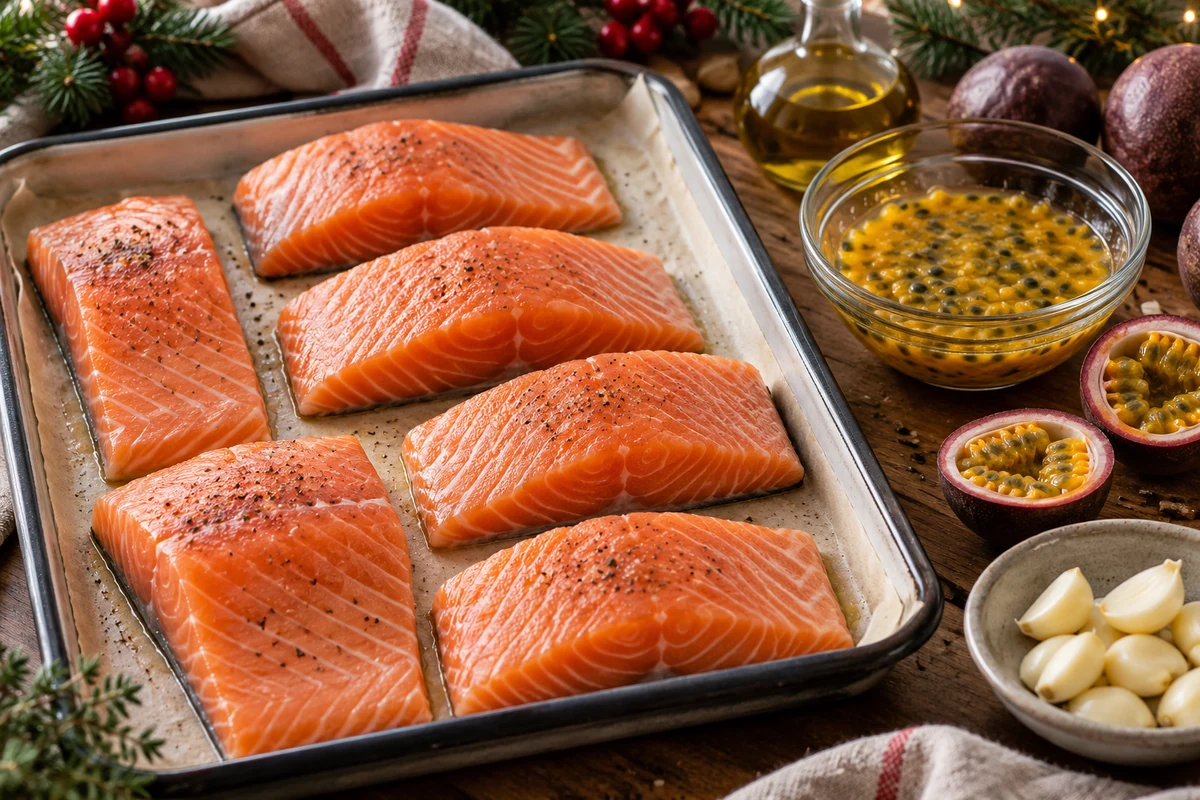
For baked salmon with passion fruit sauce, prepare the following quantities. The main recipe makes about six portions with side dishes.
- 1.2 kg salmon fillets – for example, 6 portions of about 200 g each, preferably skin-on. Check carefully for pin bones.
- 240 ml passion fruit pulp – measure the pulp, as the number of fruit needed varies greatly. Thawed unsweetened frozen pulp is an alternative; dilute concentrate according to its label before measuring.
- 2 tbsp honey – or maple syrup for a different flavour. Changing the sweetener does not make a salmon dish vegan.
- 2 tbsp olive oil – 1 tbsp for the tray and 1 tbsp for the fish, or use a neutral vegetable oil.
- 15 g butter, optional – for the sauce. Omit or use a suitable dairy-free alternative if required, checking all ingredients.
- 2 garlic cloves – crushed, or ½ tsp garlic powder.
- 1 tbsp lemon juice – lime juice gives a different citrus note.
- Up to 1 tsp salt – season to taste and reduce if using soy sauce.
- ½ tsp ground black pepper – or white pepper if preferred.
- 1 tsp Dijon mustard, optional – check the mustard allergen and other ingredients.
- Up to 1 tbsp soy sauce, optional – add gradually to taste; it contributes salt and may contain wheat.
- 2 tbsp chopped fresh dill or parsley – chives are another option.
- Lemon slices and washed salad herbs or suitable ready-to-eat microgreens – to garnish, following any pack instructions.
Ingredient notes and substitutions
Fresh passion fruit gives visible seeds and texture; strain it if preferred. Reduce the honey to 1 tbsp for a less sweet sauce. For a vegetarian alternative, use firm tofu and adjust the quantity and method. White fish can replace salmon, but is not vegetarian. Taste the sauce separately from raw fish before adjusting seasoning.
How to make baked salmon with passion fruit sauce
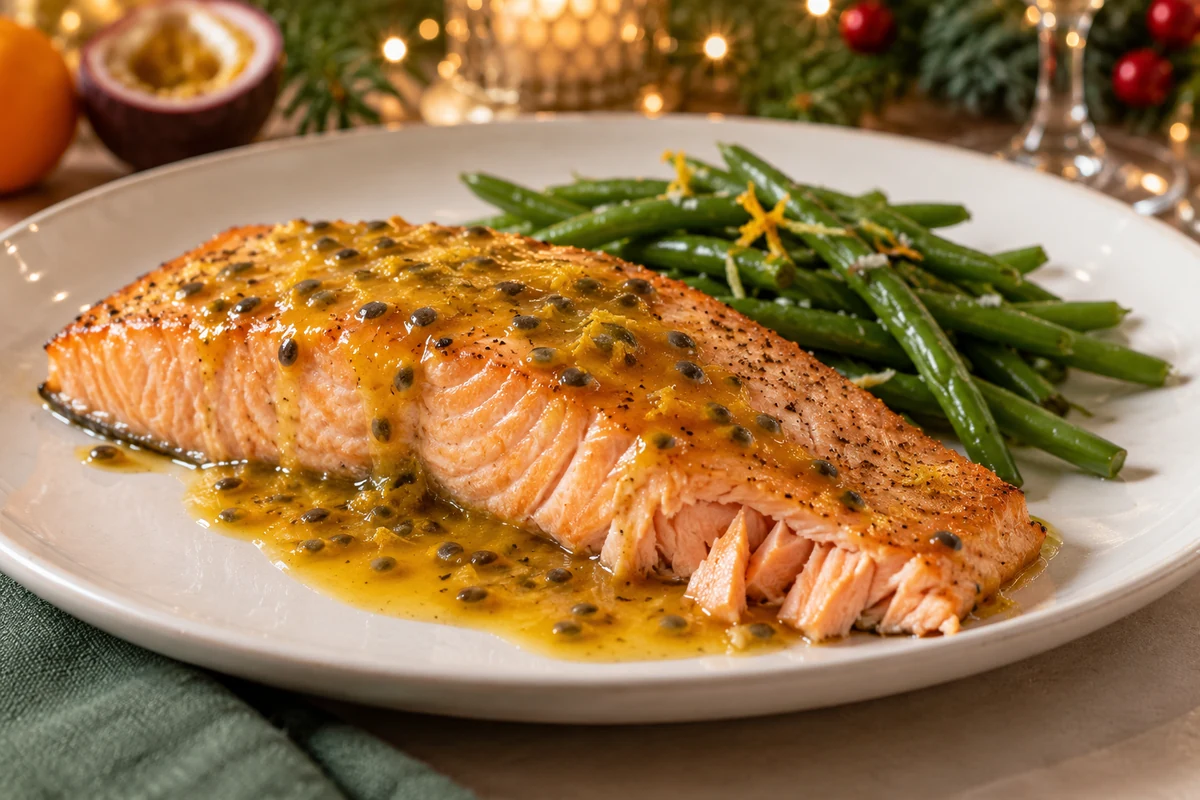
Follow these steps for baked salmon with passion fruit sauce, keeping the sauce separate from raw fish during preparation.
- Preheat the oven: set it to 200°C conventional/180°C fan, unless the fish’s product instructions specify otherwise.
- Prepare the fillets: pat dry with kitchen paper, check for bones, and coat the flesh with the garlic, 1 tbsp oil, salt and pepper. Keep the skin on if supplied; do not wash raw fish or splash juices around the sink.
- Prepare the tray: line a baking tray with oven-safe baking parchment and brush with the other 1 tbsp oil. Check the paper’s maximum temperature.
- Bake: arrange the fish skin-side down with space between portions. For fillets about 2 cm thick, start checking after 10–14 minutes; thicker pieces may take longer. This is a checking point, not a guarantee that every portion is ready.
- Check that it is cooked: the centre should be opaque rather than translucent, and the flesh should separate readily into flakes. Follow the supplier’s instructions; if using a thermometer, 75°C for 30 seconds or 70°C for two minutes is a food-safety time–temperature option. This guide does not recommend partially cooked fish.
- Make the sauce: meanwhile, combine the 240 ml passion fruit pulp, honey, lemon juice, optional butter and mustard in a small pan. Simmer, stirring, until slightly reduced, approximately 5–7 minutes depending on the pan and pulp.
- Adjust the sauce: taste and add a little salt or the optional soy sauce gradually. Strain if you prefer not to have seeds, and loosen with a splash of water if it becomes too thick.
- Add the sauce: spoon or brush some over the fully cooked salmon. If briefly using an overhead grill for colour, transfer to a grill-safe dish without baking parchment and watch constantly; sugary sauce burns quickly.
- Pause briefly before serving: a short rest of about 3 minutes is enough. Do not use resting to finish cooking fish that is still underdone.
- Finish: scatter over the chopped herbs and add lemon slices and suitable washed garnish. Offer the remaining sauce separately, using clean utensils.
Practical tips
Fresh pulp provides seeds and texture; thawed unsweetened pulp also works. For smaller portions, judge the cooking time by thickness rather than weight alone. For salmon steaks, allow for bones and a different shape, following the cut’s cooking instructions.
Variations on salmon with passion fruit sauce

These variations change the flavour or main ingredient of baked salmon with passion fruit sauce. Choose one rather than adding every topping to the same dish, and check allergens.
- Less sweet citrus version: reduce the honey to 1 tbsp and follow the main cooking method, checking the fish rather than relying on a fixed time.
- Ginger and chilli: add 1 tsp grated ginger and up to ½ tsp chilli flakes to the sauce, adjusting to your guests’ preferences.
- Herb and Parmesan topping: combine 2 tbsp grated Parmesan, 1 tbsp ground almonds and 1 tbsp chopped herbs, then press onto the fish before baking. Check doneness underneath the crust and note the milk and nut allergens.
- Nut topping: add a handful of chopped toasted pistachios or pecans at serving time for crunch. Keep separate if guests have nut allergies.
- Less added sweetener: try 1 tsp honey or omit it if you enjoy a sharp sauce. Agave syrup is also a sugar source, so substituting it does not automatically make the sauce low in sugar.
- Tofu alternative: use a 400 g block of firm tofu for about two main portions, or scale up for more people. Press and slice it, season with a little oil and herbs, and cook according to its pack instructions until hot through and golden. Serve with freshly made sauce; for a vegan version use maple syrup and omit butter or choose a suitable plant-based alternative.
- With roast vegetables: cook carrots and sweet potato on a separate tray before adding the fish to the oven, because they usually take longer. Add asparagus nearer the end, checking each vegetable for tenderness.
Quick adjustments
Timing: thicker pieces need longer, but there is no fixed extra time that suits every cut. Sauce balance: add a little honey if very sharp, or lemon juice if too sweet. Presentation: passion fruit seeds and washed herbs add texture and colour.
Baking the fish without drying it out
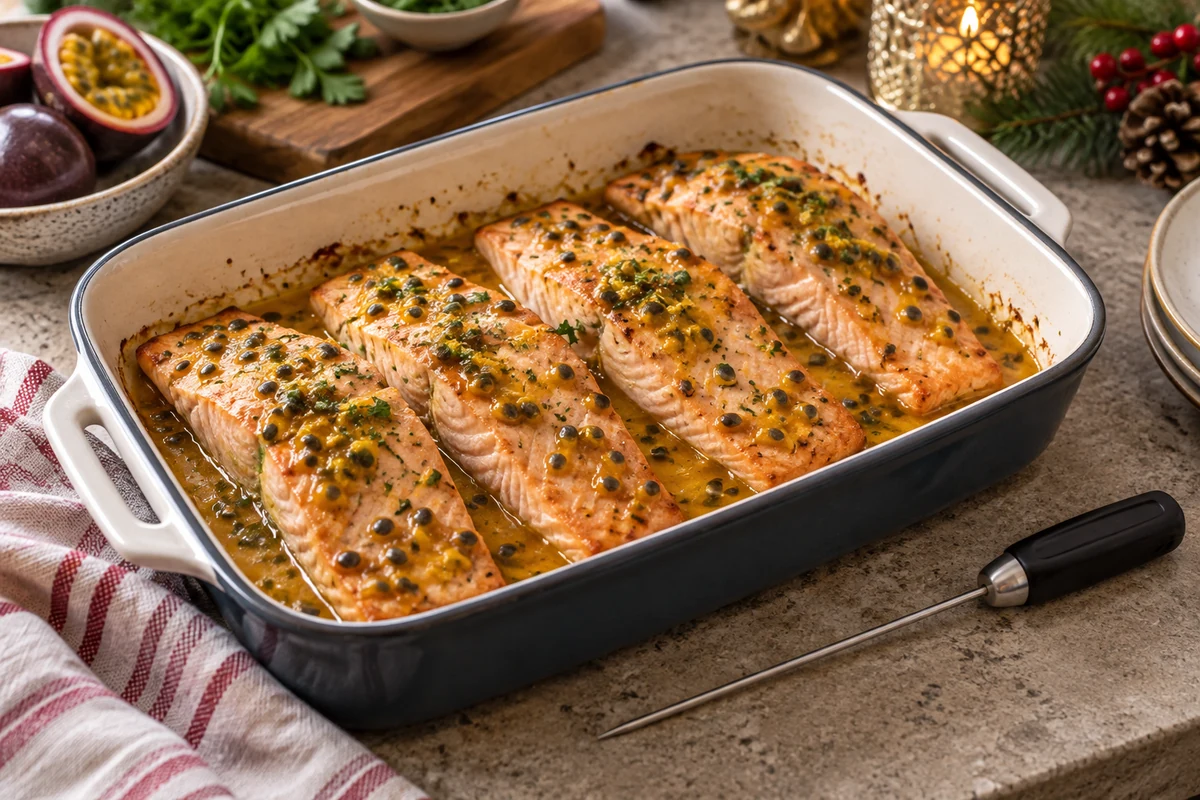
- Pat the fillets dry before seasoning, then clean hands and any surfaces that have touched raw fish.
- Bake skin-side down when using skin-on fillets, and avoid moving fragile portions unnecessarily.
- Use the stated oven setting – 200°C conventional/180°C fan for the main method – and check thinner portions first.
- Season moderately, allowing for any soy sauce and for guests who prefer less salt.
- Serve promptly after a brief rest; avoid keeping cooked fish in the oven indefinitely while finishing other dishes.
Checking the centre
Cook until the flesh is opaque and flakes readily, following the supplier’s guidance. Do not rely on residual heat during resting to make undercooked fish safe. A clean thermometer can provide an additional check using the time–temperature guidance above.
Other cooking approaches
- Lined baking tray: use oven-safe parchment and a thin coating of oil, keeping the tray out of direct grill heat.
- Barbecue or grill: use a suitable fish method and clean equipment, turn carefully and check the thickest part is cooked. Prevent raw juices from contacting ready-to-eat sides.
- Pan-frying: start skin-side down with a little oil, then finish according to the fillet’s thickness. Browning the skin alone does not cook the centre.
- Cooking in a parcel: use oven-safe parchment or suitable foil with herbs and lemon, following a parcel-cooking method. Open carefully away from your face because hot steam escapes.
- Glazing at the end: spoon over the sauce after cooking. If grilling briefly, use a grill-safe dish without parchment and supervise continuously.
Preparation and finishing
- Simple seasoning is enough: the main recipe does not need a separate brining or rinsing stage. Pat dry and use the listed seasoning rather than adding another salt mixture.
- Keep marinades brief and chilled: a little lemon, herbs and oil can flavour fish over 15–30 minutes in the fridge. Acid changes its texture but does not replace proper cooking.
- Avoid extra fat by default: the main recipe already includes oil and optional butter. You do not need an additional tablespoon for every fillet.
- Avoid repeated oven opening: check near the expected finishing time, then give thicker portions longer as needed.
- Serve portions intact or separate gently along the flakes, offering sauce on the side.
Defrosting and preparing ahead
Defrost fish in the fridge, following the pack instructions, and use within 24 hours of complete defrosting unless stricter guidance applies. Thickness determines cooking time; do not rely on a universal number of extra minutes per centimetre. A little warm sauce can improve the serving texture, but cannot reverse overcooking.
Side dishes and presentation for Christmas
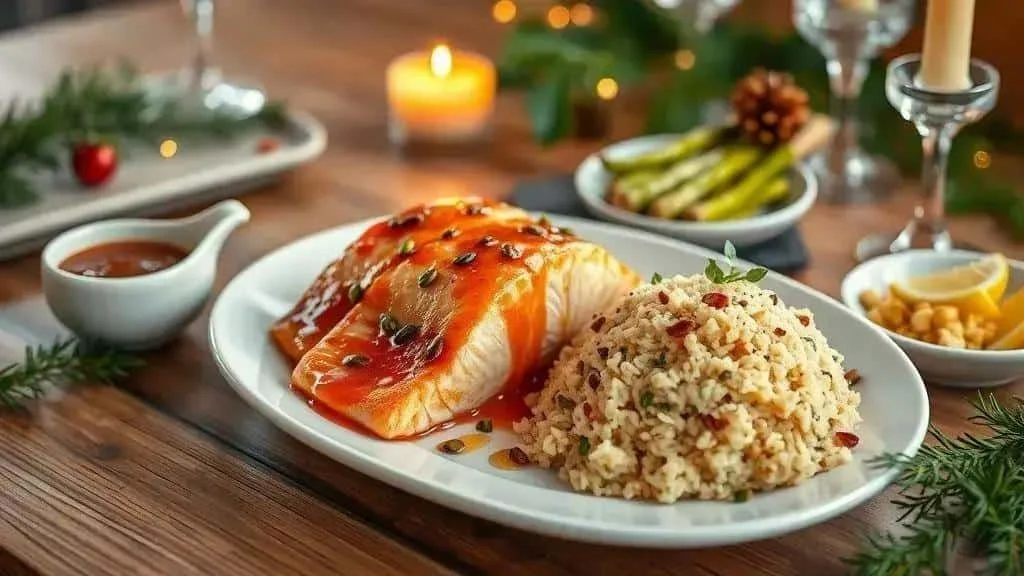
Serve baked salmon with passion fruit sauce with sides that balance its sweet-sharp flavour and fit your oven space.
Suggested side dishes
- Lemon and herb rice: combine about 300 g freshly cooked rice with the zest of 1 lemon and 2 tbsp chopped parsley, scaling up for the number of guests. Cool leftover rice within one hour, refrigerate and use within 24 hours; reheat only once until steaming hot.
- Sweet potato or arracacha mash: mash 500 g cooked sweet potato, or Brazilian mandioquinha if available, with 30 g butter and about 60 ml milk. Mandioquinha is arracacha, not cassava; check the preparation instructions for the vegetable you buy.
- Roast vegetables: season carrots and cubed sweet potato with oil and rosemary and roast at 200°C conventional/180°C fan until tender. Start them before the fish and add asparagus later; sizes affect timing.
- Citrus salad: combine washed leaves, orange segments and thinly sliced red onion, then dress with oil and lemon shortly before serving.
- Herbed quinoa: toss cooked quinoa with toasted pumpkin seeds and chopped mint, preparing enough for your guest count.
Presentation ideas
- Portions: allow roughly 150–200 g raw salmon per adult for a main course with sides, adjusting for appetite and other dishes.
- Serving dishes: a clean white plate or food-safe platter makes the yellow sauce stand out.
- Arrange simply: place the fish alongside the sides, then add a modest spoonful of sauce rather than covering everything.
- Add texture and colour: offer chopped nuts separately and finish with washed herbs or lemon zest, keeping allergies in mind.
- Offer extra sauce: use a clean jug so guests can choose how much to add.
Planning and serving
- Prepare components ahead: make the sauce and prepare side dishes in advance, cooling and refrigerating as appropriate. Do not partially cook fish, hold it, and finish it later; cook it fully in one session.
- Coordinate serving: have the sides ready so the fish can be served soon after it is fully cooked.
- Reheat leftovers thoroughly: use a covered oven-safe dish with a little sauce or water and heat until steaming hot throughout. A fixed five- or seven-minute reheating time is not reliable for every portion; reheat only once.
- Keep dishes accessible: put platters and sauces within reach, leaving space for serving utensils and guests who need help.
Drinks to accompany the meal
- Optional wine: a dry sparkling wine, Sauvignon Blanc or dry rosé can suit the fruit sauce if your guests choose to drink alcohol.
- Alcohol-free options: sparkling water with lemon or a chilled fruit infusion makes a simple alternative.
- Optional beer: a citrus-style wheat beer is another flavour pairing; check allergens and offer alcohol-free choices too.
Enjoy your festive meal
Baked salmon with passion fruit sauce brings a different set of flavours to Christmas dinner. Measure the fruit pulp, check the fish carefully and choose a few sides that are easy to serve together.
Thank you for reading. Share the variation you tried and follow our updates for more festive cooking ideas.
Explore the I Love Christmas blog for more recipes, serving suggestions and seasonal inspiration.
Baked salmon with passion fruit sauce: frequently asked questions
How can I avoid drying out the salmon?
Use portions of similar thickness, bake skin-side down where possible and start checking near the expected finishing time. Cook until opaque and easily flaked, following the supplier’s guidance, then serve promptly rather than continuing to bake unnecessarily.
Can I use frozen passion fruit pulp or concentrate?
Yes. Use 240 ml thawed unsweetened pulp, or dilute concentrate according to its label before measuring. Fruit products differ in acidity and added sugar, so adjust the honey after tasting the sauce.
How long should salmon fillets bake?
For pieces about 2 cm thick at 200°C conventional/180°C fan, start checking after 10–14 minutes. Thicker portions may take longer; the centre must be properly cooked, rather than relying on a fixed time or a translucent texture.
How can I make a vegetarian version?
Use firm tofu, allowing about 400 g for two main portions, and cook according to its pack instructions. Serve with a separate batch of passion fruit sauce. For a vegan version, use maple syrup instead of honey and omit butter or use a suitable plant-based alternative.
How should I store and reheat leftovers?
Cool and refrigerate within one to two hours, keep covered at 0–5°C and eat within 48 hours or freeze promptly. Reheat only once until steaming hot throughout. Covering the fish with a little sauce can help its texture, but a short fixed reheating time does not establish safety.
Sources and Further Reading
- Food Standards Agency: Cooking Your Food
- Food Standards Agency: Chilling, Freezing and Defrosting Food