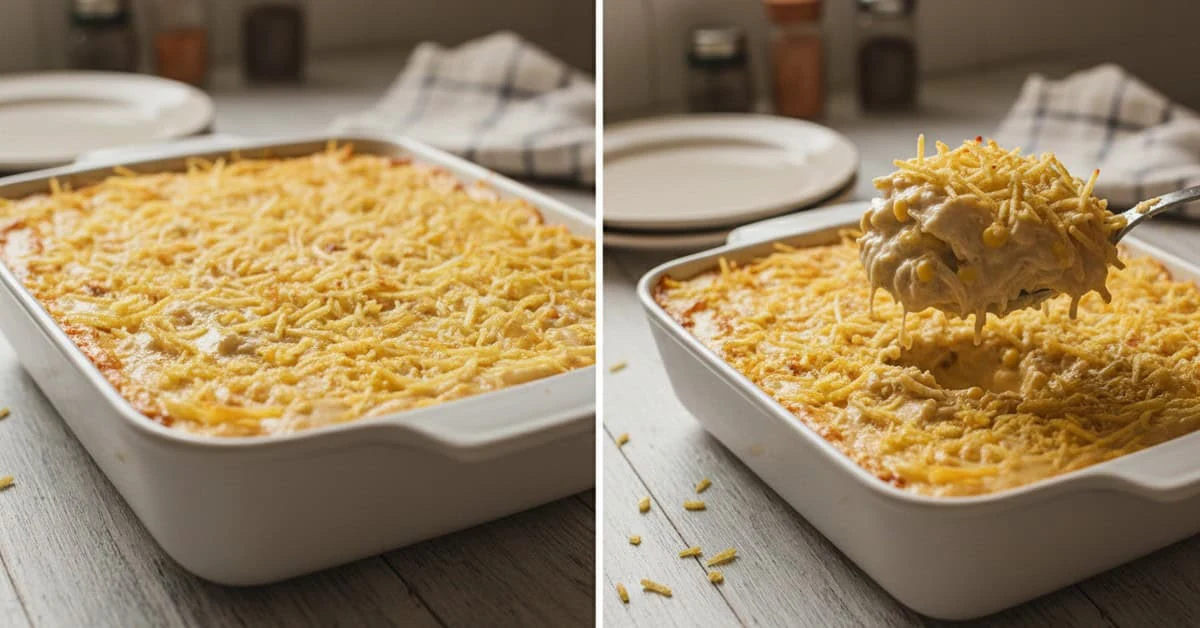
Brazilian chicken fricassê is a creamy baked dish made with shredded cooked chicken, sweetcorn, cream and requeijão or cream cheese. Finish with cheese and breadcrumbs, and serve hot. Plant-based substitutions need to cover every animal-derived ingredient; cool leftovers promptly and avoid repeated reheating.
Brazilian chicken fricassê is a comforting option for a Christmas meal. This Brazilian-style bake differs from a classic French fricassee. The recipe has been editorially reviewed, but not kitchen-tested; the amounts below use cooked chicken weight and make roughly six main portions with sides.
Ingredients for chicken fricassê
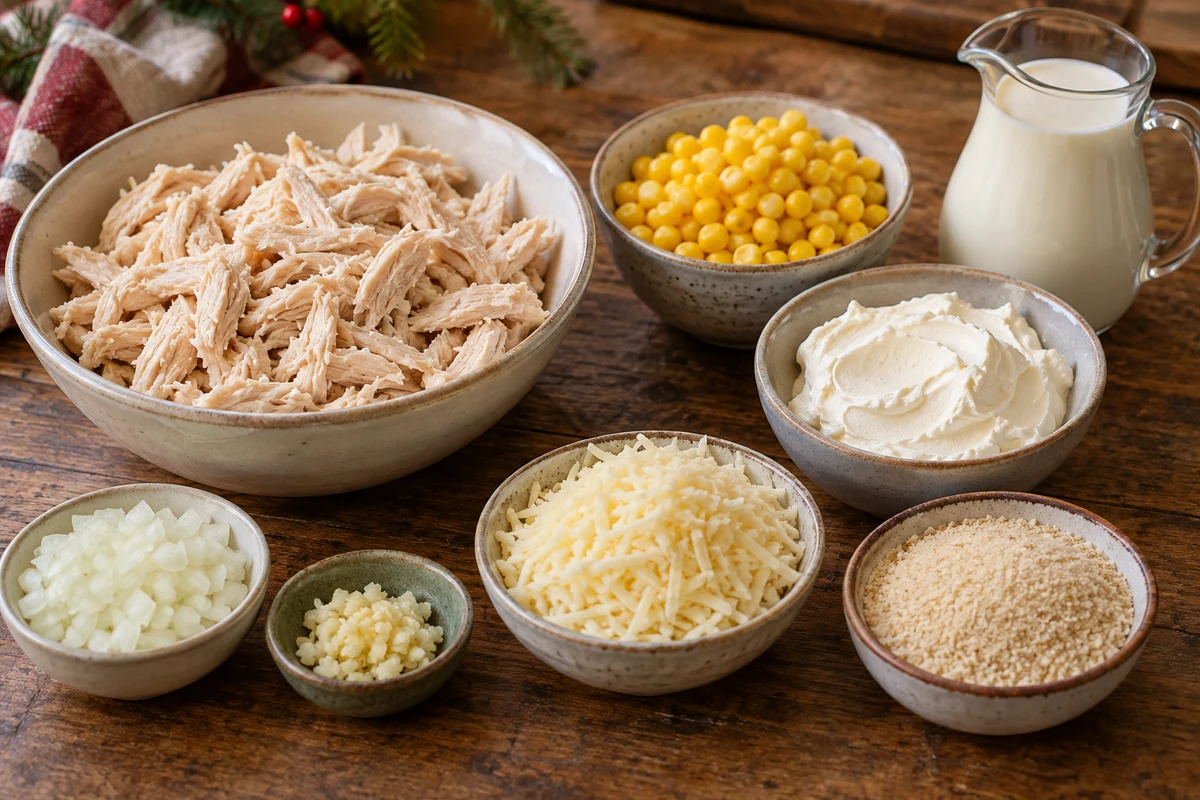
For a creamy chicken fricassê, gather the following ingredients:
- 500 g fully cooked, shredded chicken breast – weigh after cooking. If starting with raw chicken, buy extra to allow for cooking losses. For the vegetarian variation use 500 g drained canned hearts of palm, not raw frozen chicken as a direct substitute.
- 200 g drained sweetcorn – use the drained weight on the tin, or cook frozen sweetcorn according to its pack instructions and drain.
- 200 g cream – Brazilian creme de leite or a suitable cooking cream. A plant-based cooking cream is an alternative with a different flavour.
- 200 g creamy requeijão – a Brazilian spreadable cheese. Plain cream cheese is a practical UK substitute; yoghurt changes the texture and is not a direct equivalent.
- 1 small onion, chopped – or 1 tbsp dried onion, following its preparation instructions.
- 2 garlic cloves, chopped – or 1 tsp garlic powder.
- 2 tbsp olive or vegetable oil – plus a little for greasing the dish; butter is an alternative if suitable.
- 100 g grated cheese – mozzarella, Parmesan or a mixture. For a vegetarian version check the rennet; for a vegan version use a suitable plant-based product.
- About 150 g sliced, drained olives, optional – omit if preferred, or use a little diced pepper, cooked with the onion.
- About 80 g dried breadcrumbs – for a thin topping. Ground almonds are an alternative, with different texture and a nut allergen.
- Salt and black pepper, to taste – allow for the salt in cheese, stock and olives.
- Chopped parsley or chives – to finish. Also have 60–120 ml freshly prepared chicken stock or cooking liquid available to loosen the filling.
Ingredient notes
Drain the sweetcorn well and avoid adding excess chicken cooking liquid. Requeijão and cream cheese give different results, so add stock gradually. Replacing only the cream does not make the whole dish lactose-free: the spreadable cheese and topping need checking too. Adjust salt after combining the fully cooked ingredients, since cheese and olives already contribute plenty.
How to make chicken fricassê
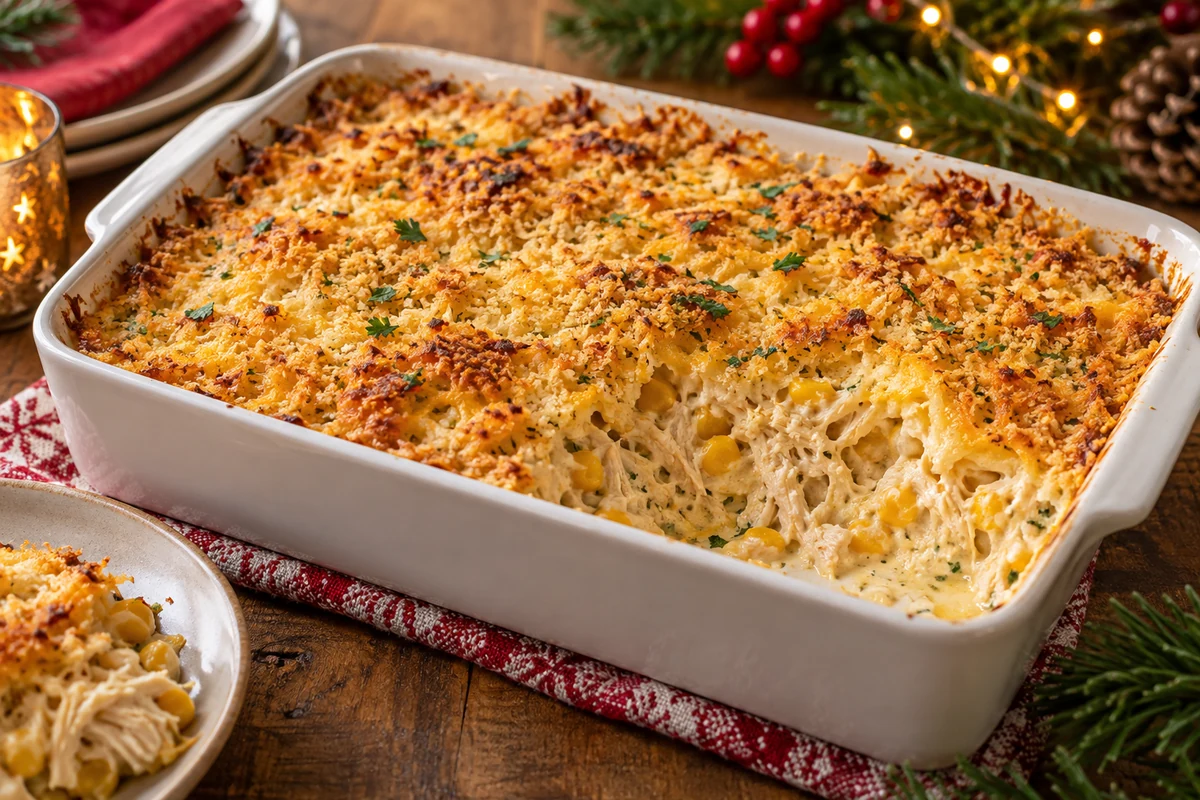
Get ready: preheat the oven to 200°C conventional/180°C fan and lightly grease a medium oven-safe baking dish.
- Cook the chicken if starting from raw: poach according to the cut’s instructions until cooked through, checking 75°C for 30 seconds or 70°C for two minutes in the thickest part. Do not rely on a fixed 20-minute time. Weigh out 500 g cooked meat and reserve up to 120 ml fully cooked liquid or use fresh stock.
- Shred: once safe to handle, use two clean forks to separate the chicken. Continue preparing the dish promptly rather than leaving cooked chicken on the worktop.
- Soften the aromatics: heat the 2 tbsp oil, cook the chopped onion until softened, then add the garlic and cook briefly without burning it.
- Add chicken and corn: stir the shredded chicken and drained sweetcorn into the pan. If wanted, reserve 2 tbsp corn for the topping; do not add a second tin.
- Mix the creamy filling: whisk the 200 g cream with the 200 g requeijão or cream cheese and 60 ml stock. Add up to another 60 ml only if necessary. A blender is optional; never seal hot liquid into one unless it is designed for that use.
- Combine: stir the cream mixture into the chicken over gentle heat until evenly hot. Add parsley or chives and season to taste, allowing for the olives and cheese.
- Assemble: transfer to the baking dish and level the filling. Add the grated cheese and a thin layer of breadcrumbs, using up to the listed 80 g. Scatter over any reserved corn and optional olives.
- Bake: allow about 15–20 minutes when the filling is already hot, until bubbling and steaming hot at the centre. A chilled dish takes longer. For extra colour, use a grill-safe dish under the grill briefly, watching continuously.
- Rest briefly and serve: leave for about 5 minutes, then serve hot with rice, farofa or salad. If using previously chilled cooked chicken, this bake is its one reheating; do not plan to reheat it again.
Useful tips
- Drain the corn thoroughly before adding it so the filling does not become watery.
- For a dairy-free version, replace the cream, spreadable cheese and grated topping, and avoid butter. Lactose-free dairy still contains milk proteins and is not suitable for a milk allergy.
- If using shop-bought cooked chicken, follow its storage and reheating instructions. Heat the whole bake thoroughly, not just long enough to mix in the flavours, and reheat only once.
- To prepare ahead, assemble without the crumb topping, cool promptly and refrigerate or freeze. Defrost fully in the fridge before the final bake, add the topping, and heat thoroughly; do not put a frozen glass dish straight into a hot oven.
Variations for different preferences
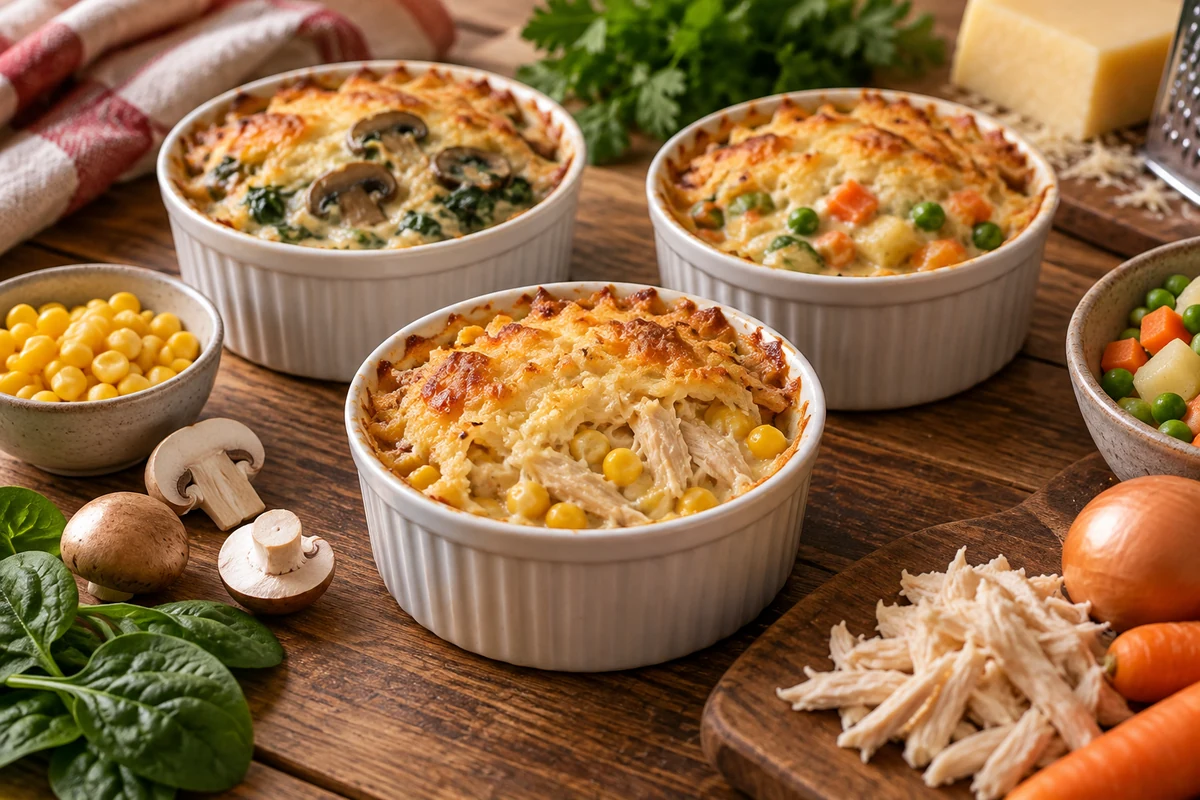
Adapt chicken fricassê with one of the following options. These change parts of the base recipe rather than adding every listed ingredient together.
Using Catupiry-style cheese
Catupiry is a Brazilian brand of creamy cheese often used in baked dishes. Use it in place of the spreadable cheese in the base recipe.
- 500 g cooked, shredded chicken, as in the base recipe.
- 200 g Catupiry-style cheese instead of the requeijão or cream cheese.
- 200 g drained sweetcorn, as in the base recipe.
- 100 g grated mozzarella for the topping.
- Mix the spreadable cheese into the cream before adding it to the filling so it is distributed evenly.
Using less cream and cheese
This variation changes the dairy quantities; the overall fat and calorie content depends on the products and portions used.
- Replace the cooking cream with 200 g plain Greek yoghurt if you like a tangier result. Heat gently, as yoghurt may split.
- Use 100 g reduced-fat spreadable cheese instead of 200 g, checking the label rather than assuming every product is lower in fat.
- Reduce the grated topping to 50 g. Well-drained cottage cheese is another option, but it will not melt in the same way.
- Season with fresh herbs and add stock sparingly to maintain a thick filling.
Vegetarian, vegan and dairy-free options
These are different requirements. Check every ingredient and prepare separately where needed to avoid cross-contact.
- For a vegetarian or vegan main ingredient, replace chicken with 500 g drained, chopped canned hearts of palm or an appropriate plant-based chicken alternative, following its cooking instructions.
- For a vegan version, use 200 g plant-based cooking cream and 200 g vegan spreadable cheese, along with vegetable stock.
- Choose vegan grated cheese and suitable breadcrumbs for the topping, and grease the dish with oil rather than butter.
- Check labels for animal-derived ingredients and relevant allergens. A product described as lactose-free is not necessarily vegan or milk-free.
A topping without breadcrumbs
Almonds or cheese provide a different topping. This substitution alone does not establish that the complete dish is low in carbohydrate.
- Replace the breadcrumbs with a thin layer of ground almonds or finely grated Parmesan-style cheese and herbs. Check nut, milk and vegetarian requirements rather than adding a whole extra cup automatically.
- If preferred, use 150 g spreadable cheese in the filling and add stock a little at a time; a fixed extra amount may make it too loose.
- Bake until the centre is thoroughly hot and the topping golden, keeping an eye on nuts and cheese so they do not burn.
Chilli and smoked paprika version
For a warmer flavour, choose the amount of chilli to suit the people eating it.
- Add 1 small red chilli, finely chopped, or 1–2 pickled jalapeños, drained and sliced. Start with less if uncertain about their heat.
- Stir 1 tsp smoked paprika into the softened onion and garlic.
- Use 100 g grated Cheddar instead of the original topping cheese.
Herb and lemon variation
Lemon zest and herbs bring a fresher flavour without adding more liquid.
- Add the finely grated zest of 1 lemon to the filling.
- For a different finish, use 2 tbsp of the already measured cream with 50 g Parmesan-style cheese, replacing part of the original cheese rather than adding another full topping.
- Finish with chopped parsley, chives and thyme and the optional sliced olives.
Quick variation tips
- Taste the fully cooked filling before adding extra salt, especially when using strong cheese or olives.
- If freezing ahead, leave off the breadcrumbs and add them immediately before the final bake.
- Adjust the consistency with small amounts of stock; the filling should be creamy rather than runny.
Keeping the filling creamy
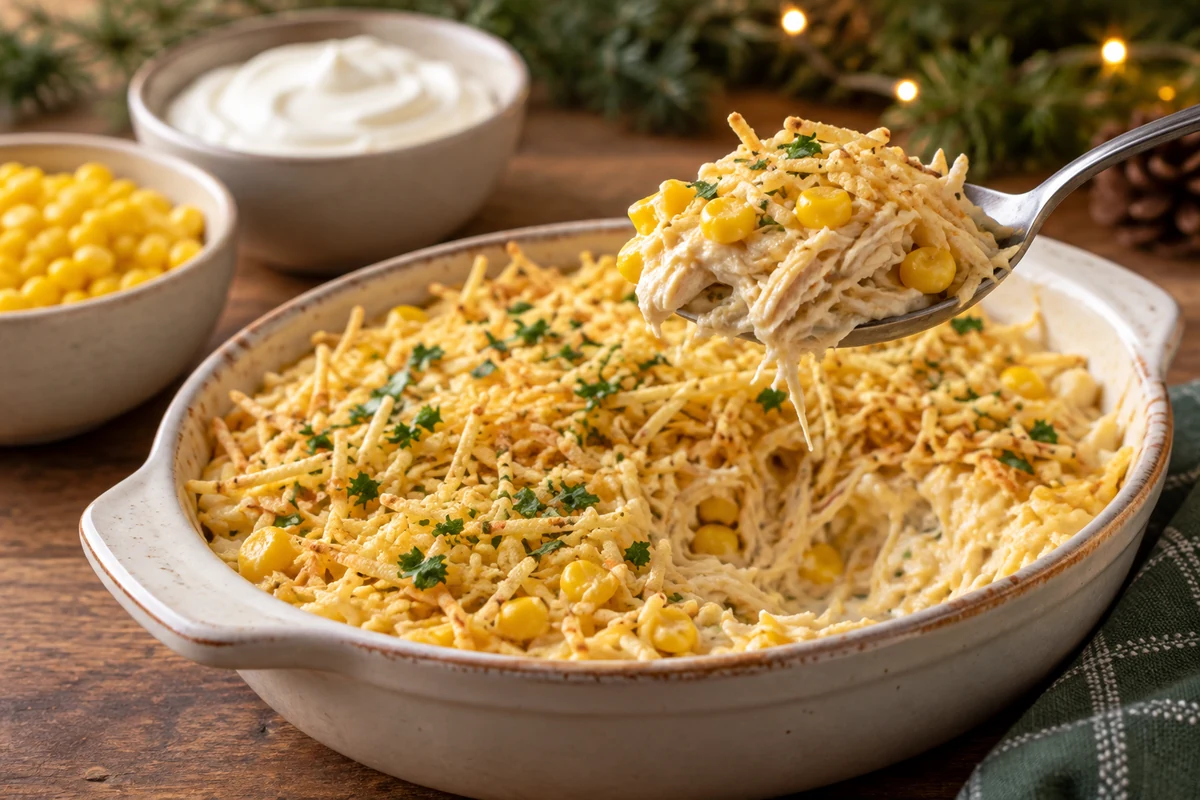
A few simple choices help the texture of chicken fricassê without repeatedly adding more cream or cheese.
Building the filling
- Add stock gradually: have 60–120 ml available and start with the smaller amount. You may not need it all.
- For a smoother corn sauce: blend a little of the measured corn with the measured cream before combining with the chicken. Keep the chicken shredded rather than turning it into a paste, and follow blender instructions for warm ingredients.
- Adjust the cheese ratio: the base uses 200 g cream and 200 g spreadable cheese; a 150 g cheese variation will have a different consistency.
- Use the listed cooking fat: soften the aromatics in the 2 tbsp oil or chosen alternative without adding more by default.
Heating carefully
- Use gentle hob heat after adding dairy and stir to avoid catching, while still ensuring the completed dish is thoroughly hot.
- Cook chicken fully before shredding, then avoid unnecessary prolonged cooking that dries it out. Tenderness alone does not establish safety.
- Taste before extra salt: cheese, stock and olives all contribute seasoning.
Texture and finishing
- Divide the topping cheese if preferred: mix a little of the measured 100 g into the filling and use the rest on top.
- Keep the crumb layer thin: too much dry topping can overwhelm the filling. A small drizzle of oil is optional rather than essential.
- Rest for about 5 minutes: the bubbling filling settles slightly and is easier to portion.
Useful substitutions
- For a dairy-free dish, replace all the dairy components, including the grated topping and any butter, and check stock and breadcrumbs.
- Plain Greek yoghurt can replace some cream for a tangier filling, but its fat content varies and it may split under high heat.
- The recipe does not need an extra egg yolk for thickening. Use the measured cream cheese and add less stock if the filling is too loose.
Common mistakes to avoid
- Adding undrained corn or too much stock makes the filling watery.
- A chilled bake takes longer to heat than a hot filling. Use a dish suitable for the temperature change and follow the manufacturer’s instructions; do not preheat an empty glass dish or expose it to thermal shock.
- A thick layer of very hard cheese may brown before the centre is hot. Use an even topping and check the filling separately.
Serving fricassê at Christmas
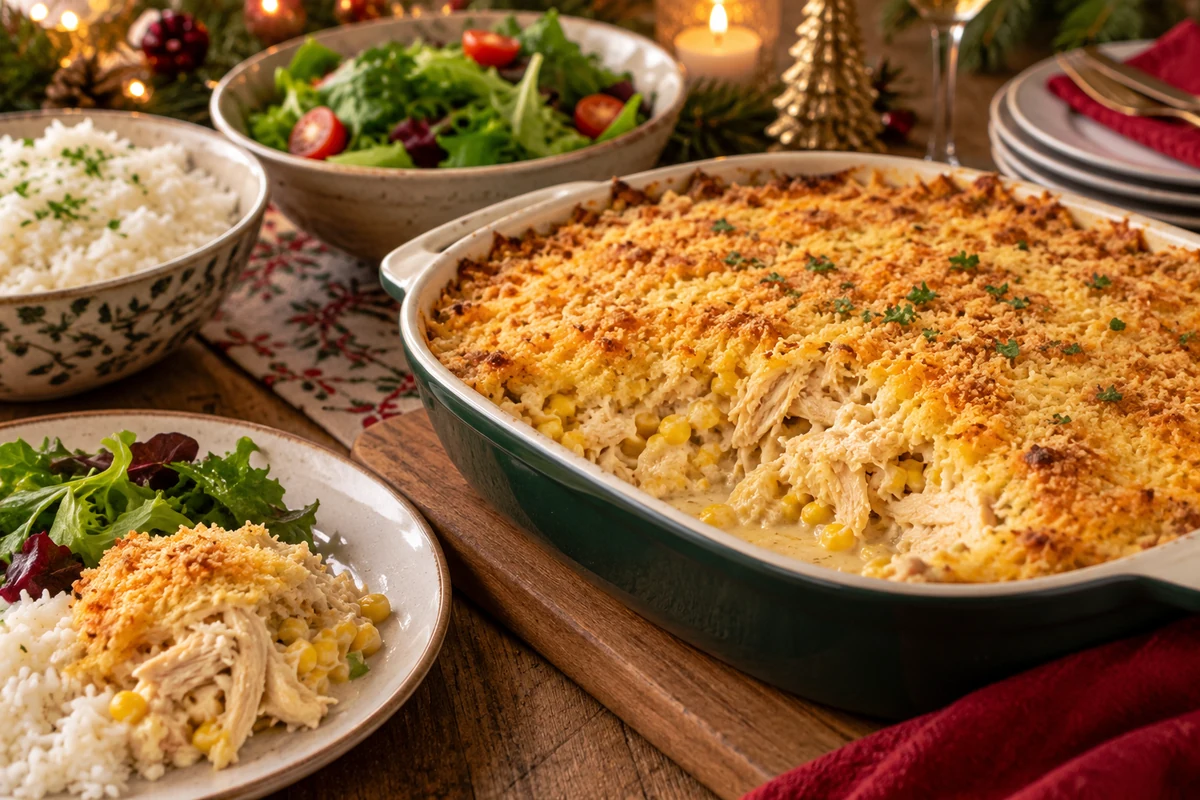
Place the fricassê on a heatproof mat and arrange the sides within reach, leaving space for safe serving.
Table layout
- Keep the hot dish stable: use a level, heat-resistant surface away from table edges and children reaching across it.
- Create a simple flow: put plates and cutlery before the main dish, followed by the side dishes.
- Separate hot and cold food: bring salads and cold desserts out of the fridge near serving time rather than leaving them in a merely cool corner.
Side dishes
- White rice: allow around 50–75 g dry rice per adult as a side, adjusting for the rest of the meal; this is not the same weight as cooked rice.
- Farofa: offer a few spoonfuls per person in a separate bowl, with more available if needed.
- Green salad: about 30–50 g leaves per person is a starting estimate, with other salad vegetables as desired.
- Bread or toast: 1–2 small slices per person are optional.
- Extra olives or corn: offer small bowls if wanted, allowing for what is already in the bake.
Presentation and decoration
- Finish with herbs: scatter over washed chopped parsley or chives and any reserved cooked corn.
- Keep displays stable: use secure stands for cold serving items, without raising a heavy hot baking dish precariously.
- Add a festive touch: coloured napkins and battery LED candles are simple options. Keep decorative greenery away from food and avoid flames near cloth or foliage.
- Choose practical crockery: a plain oven-safe dish and a broad serving spoon are more useful than elaborate presentation that makes the meal difficult to serve.
Portions and planning
- Main-course estimate: around 200–250 g of the finished bake per adult is a rough guide when serving sides; appetite and the menu will vary.
- Plan any extra deliberately: a modest reserve can be helpful, but avoid automatically making more than you can cool and store safely.
- Assemble ahead if needed: cool and refrigerate promptly, leaving the crumb topping off until the final bake. Keep track of whether the chicken has already been reheated.
Serving the dish hot
- Coordinate the meal: finish the bake near serving time. For prolonged hot holding, use suitable equipment and food-safety guidance rather than leaving it in a warm spot.
- Heat thoroughly: a chilled dish may need substantially longer than 10–15 minutes. Cover if the topping browns too soon and check that the centre is steaming hot; reheat only once.
- Use separate utensils: provide a broad serving spoon for the bake and individual spoons for sides and special-diet portions.
Guest comfort
- Choose an easy service style: serve individual portions or organise a buffet with room to move.
- Leave enough space: arrange seats and dishes so guests can eat comfortably and reach what they need.
- Identify dietary portions clearly: label suitable versions accurately and keep their serving utensils separate. Do not rely only on remembering which dish is which.
Small planning details
- Set out plates and cutlery before guests arrive so hot food does not wait while the table is arranged.
- Keep a discreet waste container accessible without placing it beside uncovered serving dishes.
- Prepare drinks in advance where practical, leaving enough attention for serving the main dish safely.
Side dishes and make-ahead preparation
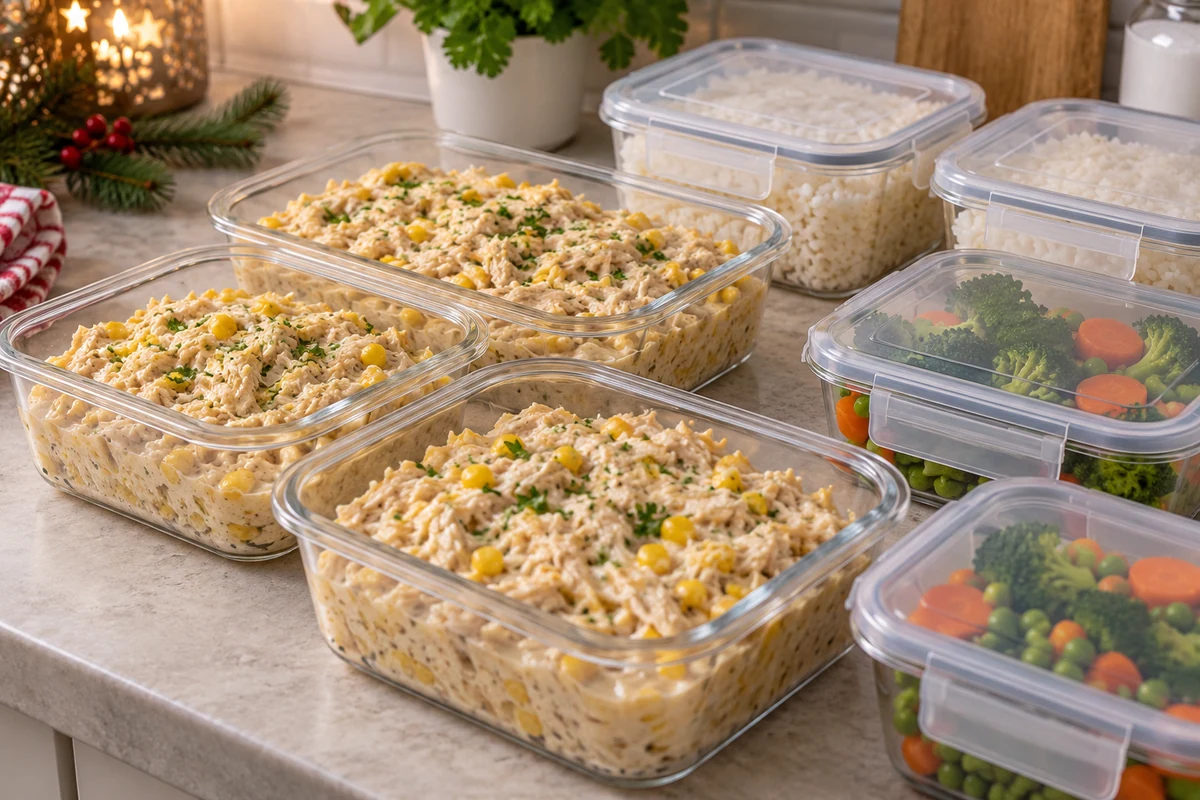
Choose a few sides for chicken fricassê and plan which components can be prepared ahead without repeated cooling and reheating.
Suggested accompaniments
- White rice – allow about 50–75 g dry rice per adult as a side. If prepared ahead, cool within one hour, refrigerate and use within 24 hours; reheat only once until steaming hot.
- Simple farofa – a few spoonfuls per person, made with coarse toasted cassava flour, onion and butter or oil. Use flour sold for farofa, not tapioca starch, and check any added bacon or nuts.
- Green salad – lettuce, rocket and cherry tomatoes, with the dressing served separately.
- Sautéed potatoes – about 150 g per person as a starting estimate; cook until tender before browning in butter or oil.
- Bread or toast – optional small slices alongside the creamy filling.
- Pickles and extras – small bowls of drained olives, corn or pickles add variety without needing another large dish.
Balancing the menu
- Choose one starchy side, such as rice or potatoes, a crunchy accompaniment if wanted, and a salad. You do not need to serve every suggestion.
- If guests need a vegan or dairy-free option, prepare and identify it separately, using ingredients and equipment appropriate to their needs.
A practical make-ahead plan
- The day before: prepare suitable sides, cool cooked food promptly and refrigerate. Rice needs cooling within one hour and using within 24 hours, so time its preparation accordingly. Keep salad undressed and chilled.
- Prepare the filling: cook fresh chicken fully, shred, combine and assemble without crumbs. If not baking immediately, cool promptly in suitable portions and refrigerate within one to two hours.
- Before the final bake: preheat to 200°C conventional/180°C fan. Keep the filling chilled until needed and use a dish rated for the temperature change, transferring to a suitable dish if necessary.
- Bake and serve: add the topping and allow enough time for the chilled centre to become steaming hot. The 15–20 minute estimate applies only to an already hot filling, not every make-ahead dish.
- Count reheating stages: the final bake reheats previously chilled cooked chicken. Do not then cool and reheat it again; prepare only the amount you intend to serve hot.
- Freeze before the final bake: cool promptly and freeze without crumbs for up to about two months for quality. Defrost fully in the fridge, use within 24 hours of thawing, add the topping and heat thoroughly once. Follow the dish manufacturer’s temperature guidance.
Storage and service reminders
- Keep food covered in the fridge at 0–5°C. Use cooked leftovers within 48 hours of the initial cooking or freeze promptly; assembling a new dish does not reset the storage clock.
- Store sauces and salad components separately to preserve texture and avoid unnecessary time outside the fridge.
- Label portions with their contents, cooking date and any reheating already carried out, especially when preparing several versions.
Finishing touches
- Use the reserved corn and herbs rather than adding another full quantity at the end.
- Bring the main dish and hot sides to the table together, using suitable warmed serving dishes and heatproof mats.
Enjoy your Christmas fricassê
This Brazilian-style chicken bake combines a creamy filling with a crisp topping. Use the cooked chicken weight, add stock gradually and choose a preparation schedule that avoids repeated reheating.
Share the variation you tried and visit the I Love Christmas blog for more festive recipes and serving ideas.
Thank you for reading. Adapt the flavours to your household and tell us how your meal turned out. Happy Christmas!
Chicken fricassê for Christmas: frequently asked questions
How long does it take to prepare and bake?
Allow time to cook raw chicken thoroughly if needed, plus about 15 minutes for the filling and assembly. An already hot filling may need 15–20 minutes in the oven; a chilled bake takes longer and must be steaming hot at the centre.
How can I make it creamy without becoming watery?
Drain the corn well, use the measured cream and spreadable cheese, and add stock gradually. Blending a little corn into the cream is optional; the chicken can stay shredded.
What needs changing for dairy-free or vegan versions?
Replace all cream, spreadable cheese, grated cheese and butter for a dairy-free version. A vegan version also needs hearts of palm or suitable plant-based chicken, vegetable stock and vegan breadcrumbs. Lactose-free dairy is not the same as milk-free or vegan.
Can I freeze it ahead?
Yes: prepare with freshly cooked chicken, cool promptly and freeze before the final bake, without the crumbs. Defrost fully in the fridge, add the topping and heat thoroughly once. Two months is a quality guide, not a replacement for safe handling.
How should I store and reheat leftovers?
Cool and refrigerate within one to two hours and use within 48 hours of the original cooking, or freeze promptly. Reheat only once until steaming hot throughout. If the bake already reheated previously chilled chicken, do not reheat it again; safely chilled portions can be eaten cold within the storage limit.
How much should I allow per person?
Around 200–250 g of the finished fricassê per adult is a rough main-course estimate with sides. Adjust for appetite and the number of other dishes; the recipe makes roughly six such portions.
Sources and Further Reading
- Food Standards Agency: Cooking Your Food
- Food Standards Agency: Chilling, Freezing and Defrosting Food