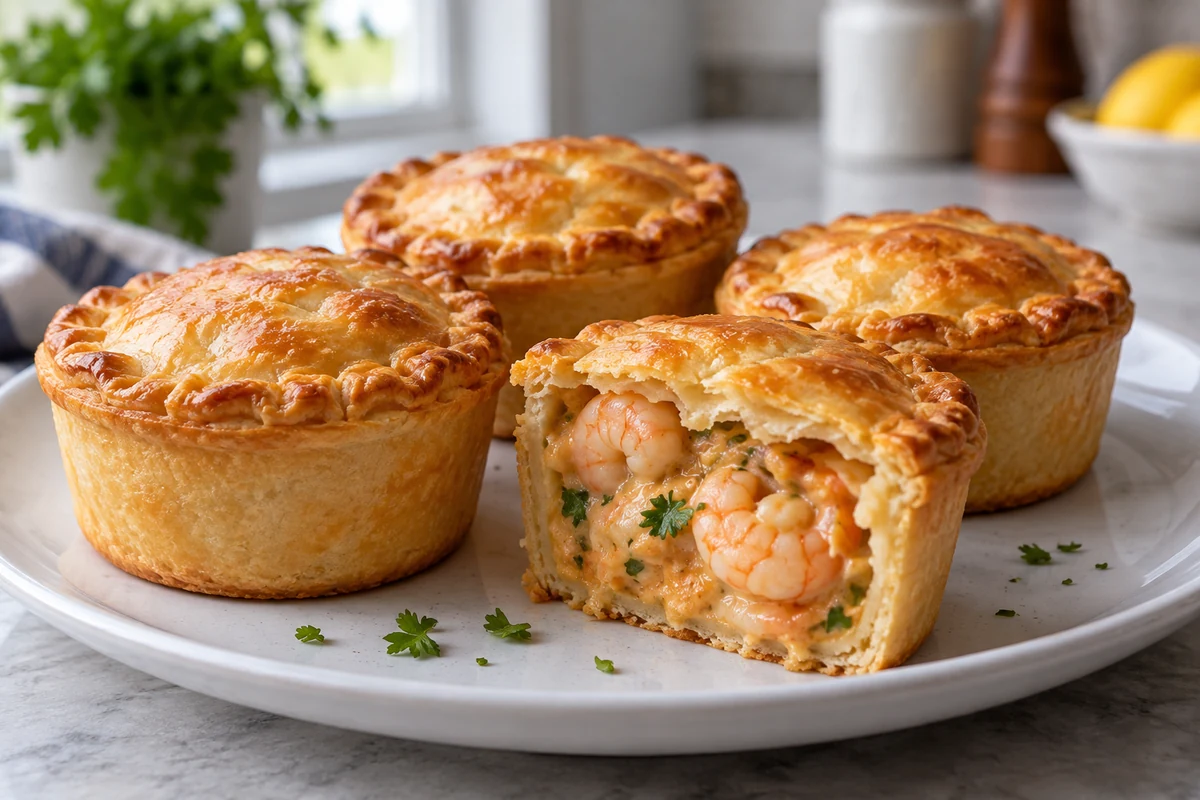
Brazilian prawn empadas are small, round shortcrust pies with a creamy prawn filling. This recipe covers the pastry, filling and assembly, with cheese and chilli variations, ideas for alternative fillings, and practical storage and reheating guidance. Serve them at a party or as part of a meal.
Brazilian prawn empadas combine rich, crumbly pastry with a savoury seafood filling. Learn how to keep the pastry cool, prepare a filling that is not too wet and shape the pies neatly for a festive table.
Ingredients for Brazilian prawn empadas
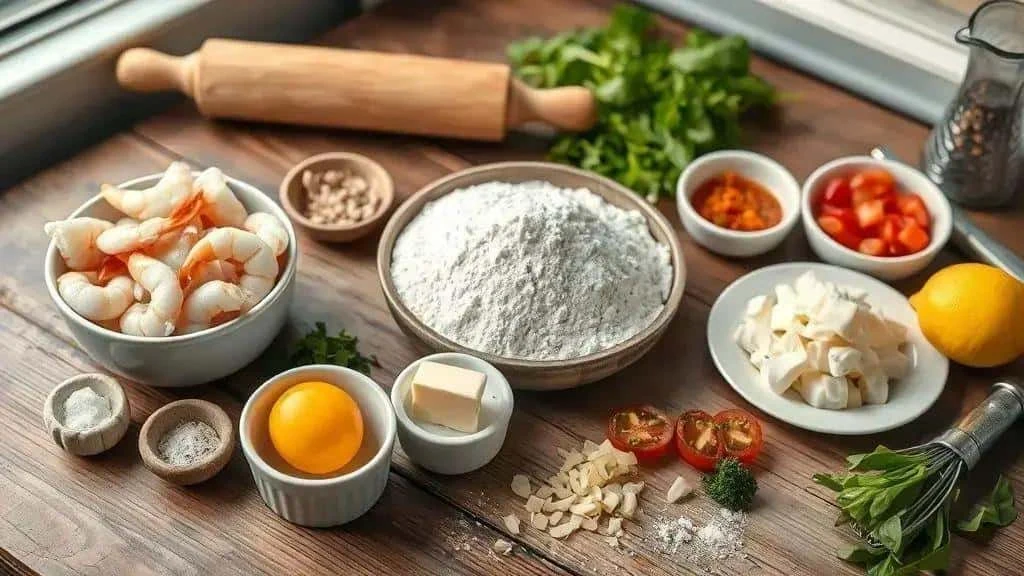
Gather the ingredients for these Brazilian prawn empadas before starting. Expect approximately 12 medium pies, depending on the size and depth of your tins and the pastry thickness.
For the pastry
- 300 g plain flour – plus a little for rolling. Wholemeal flour gives a more rustic result but may need different hydration; it is not an identical swap.
- 200 g cold butter – cubed. Firm baking margarine is an alternative; avoid low-fat spreading products with a high water content.
- 1 large egg – beaten, to bind the pastry.
- ½ tsp salt – reduce if using salted butter.
- 2–3 tbsp ice-cold water, only as needed – add gradually rather than automatically using it all.
For the filling and glaze
- 400 g raw peeled prawns – cleaned, deveined where necessary and roughly chopped. Fully cooked shredded chicken can be used for a different, seafood-free filling.
- 1 medium onion, finely chopped
- 2 garlic cloves, finely chopped – or about 1 tsp garlic paste.
- 1 medium tomato, deseeded and chopped – or 1 tbsp tomato purée for a more concentrated flavour.
- 120 ml cream – or a suitable cooking cream alternative. Brazilian requeijão gives a thicker, cheesier result.
- 2 tbsp olive or vegetable oil
- Salt and freshly ground black pepper, to taste
- Chopped parsley and chives – approximately 2 tbsp in total, or to taste.
- Juice of ½ lemon – added gradually to taste.
- 1 egg yolk for glazing the batch – beaten. Olive oil can replace the glaze, but this does not make the egg-containing pastry egg-free or the prawn pies vegan.
Before you start: use properly chilled prawns, or defrost frozen prawns in the fridge according to the pack. Cook them through without unnecessary extra cooking. The finished filling should be creamy but thick enough to stay on a spoon.
How to make Brazilian prawn empadas
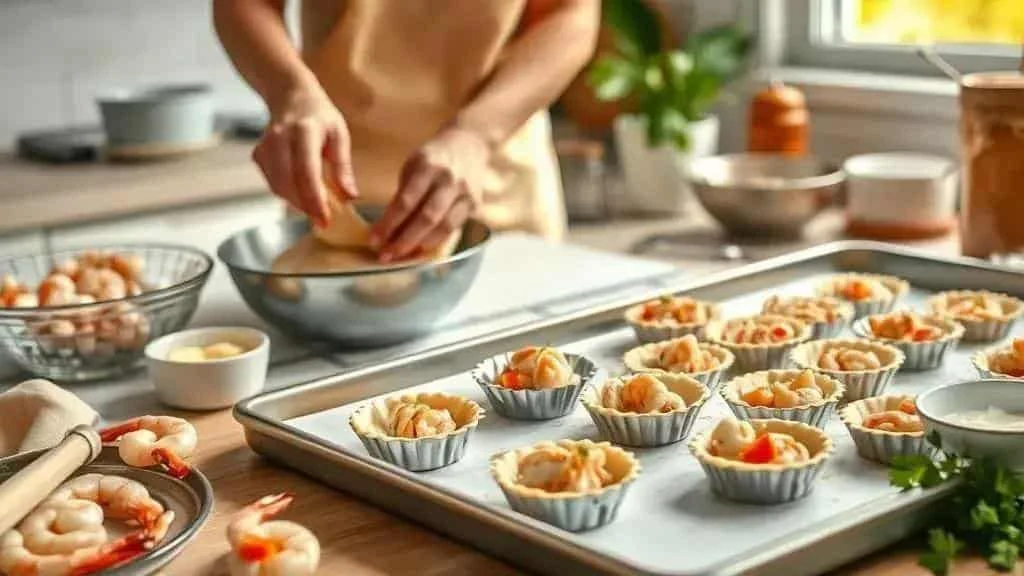
- Organise the ingredients: thaw frozen prawns in the fridge, drain and pat dry. Keep them refrigerated while preparing the pastry. Measure the flour, butter, egg and cream, and keep raw seafood separate from ready-to-eat foods.
- Keep the butter cold: cut it into cubes and return it to the fridge until needed.
- Make the pastry: combine flour and salt, then rub in the cold butter with your fingertips until the mixture resembles coarse breadcrumbs. Mix in the beaten egg. Add cold water a little at a time only if needed to bring the dough together. Do not knead.
- Rest the pastry: wrap and refrigerate for about 30 minutes. Chilling makes this rich dough easier to handle.
- Start the filling: heat the oil and cook the onion until softened. Add garlic and tomato, then cook for another couple of minutes, allowing excess tomato liquid to evaporate.
- Cook the prawns: add the chopped prawns and cook until opaque and cooked through, stirring as necessary. Small pieces may take around 2–3 minutes, but size and heat vary. Add seasoning and lemon juice to taste; lemon does not replace cooking.
- Finish the filling: stir in the cream and herbs and heat through. If the mixture is runny, reduce it gently rather than adding it wet to the pastry. Transfer to a shallow clean container, cool promptly and refrigerate within 2 hours. Chill before assembly.
- Roll and cut: roll the pastry on a lightly floured surface to 3–4 mm thick. For small tins, circles around 8–9 cm for bases and 6–7 cm for lids may suit, but measure against your tins and adjust.
- Line the tins: lightly grease individual empada or small pie tins. Gently fit in the larger circles without stretching them, leaving enough pastry to seal the lids.
- Fill and seal: add 1–2 tbsp chilled filling to each case, according to its size, leaving room at the rim. Add a pastry lid, press the edges together and make a small steam hole in the top.
- Glaze: brush the tops lightly with the beaten yolk, sharing it across the batch. An oil glaze is an alternative, but the pastry still contains egg.
- Bake: preheat to 200°C conventional/180°C fan. Bake for approximately 20–25 minutes, or until the pastry is cooked and golden and the filling is steaming hot throughout. Larger or deeper pies may need longer; colour alone is not a doneness test.
- Rest and unmould: leave in the tins for about 5 minutes before carefully removing. The filling will be hot.
- Freeze if needed: freeze assembled unbaked pies made with a properly cooled filling, or cool baked pies promptly before freezing. Wrap well, label whether baked or unbaked, and thaw in the fridge before cooking or reheating. Do not rely on a fixed number of extra minutes from frozen.
- Reheat baked pies: use a preheated oven around 180°C conventional/160°C fan and heat until steaming hot throughout. Reheat only once. An oven gives crisper pastry than a microwave; timing depends on size and starting temperature.
- Serve: add parsley and lemon wedges, with green salad or a mild chilli sauce alongside.
Quick tips
- Handle gently: overworking develops gluten and can make shortcrust pastry tough.
- Use chilled filling: warm filling softens the butter and can make the pastry difficult to handle.
- Check seasoning: taste the fully cooked filling with a clean spoon before chilling, and adjust salt and pepper.
- Add variety: a little requeijão or chopped chilli changes the flavour. Reduce the cream if adding a substantial amount of soft cheese.
Prawn empada filling and pastry variations
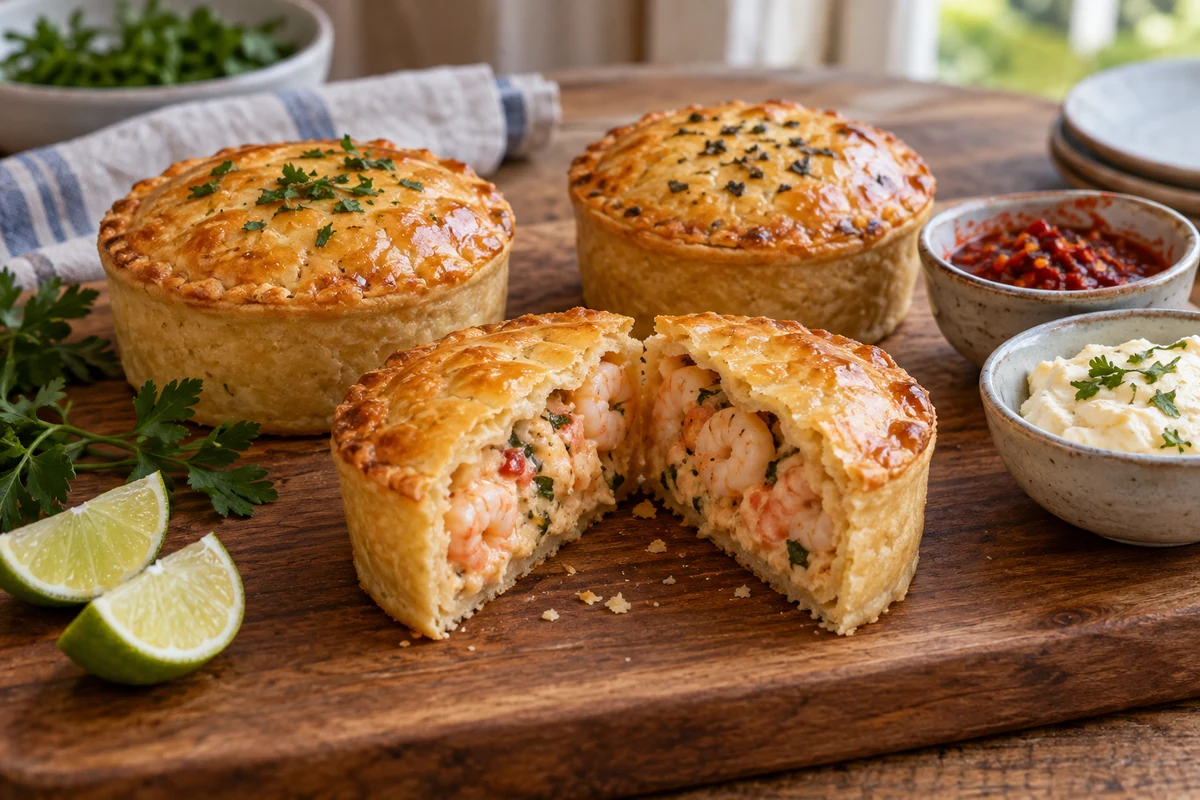
Adapt Brazilian prawn empadas with different herbs, cheeses or fillings, bearing in mind that substitutions may change texture and cooking time.
Catupiry and cream cheese
For the 400 g prawn filling, use 80–100 g Catupiry, cream cheese or requeijão in place of some of the cream. Add only enough remaining cream to make a thick, spoonable filling; too much liquid can soak the pastry.
A little chilli
Add finely chopped fresh chilli or up to ½ tsp chilli flakes, starting with less and adjusting to taste. Coriander and lemon can complement the heat.
White sauce and herbs
Use 120 ml thick béchamel instead of cream for a more structured filling. Try a little chopped dill or tarragon, starting sparingly. Check the sauce ingredients for wheat and milk.
Dairy and lactose alternatives
A suitable lactose-free cream or plant-based cooking cream can replace the cream, though flavour and thickness vary. Lactose-free dairy still contains milk proteins. For a dairy-free pie, the pastry fat must also be suitable. Low-fat spreads and coconut oil are not straightforward equivalents to cold butter, and a fan oven does not remove fat from pastry.
Gluten-free pastry
Use a tested gluten-free shortcrust recipe or a ready-made pastry intended for pies, following its hydration and handling instructions. Gluten-free flour blends vary, so replacing the flour gram-for-gram and adding a fixed amount of xanthan gum is not a guaranteed substitute. Check every filling ingredient and avoid cross-contact.
Vegetarian filling
Replace prawns with around 300–350 g drained chopped hearts of palm or prepared mushrooms. Cook off excess liquid and season with garlic, tomato and a little soy sauce if desired. Crumbled firm tofu or vegetarian cheese can add substance. Ordinary cheese is not a plant-based ingredient; choose suitable substitutes for a vegan version of both filling and pastry.
Mini empadas
Use smaller tins and cut pastry circles to fit. A base circle around 4–5 cm and roughly 1 tsp filling may suit very small moulds. Baking time will be shorter, but the pastry must still cook fully and the centre must become steaming hot. Freeze and thaw safely as described below.
Seasoning and texture tips
- Salt and acidity: adjust seasoning at the end, using the listed lemon juice to taste rather than adding another half lemon automatically.
- Herbs: parsley and chives are a simple combination. Thyme or tarragon can suit a white-sauce version.
- Texture: leave recognisable pieces of prawn rather than puréeing the filling.
Tips for good shortcrust pastry
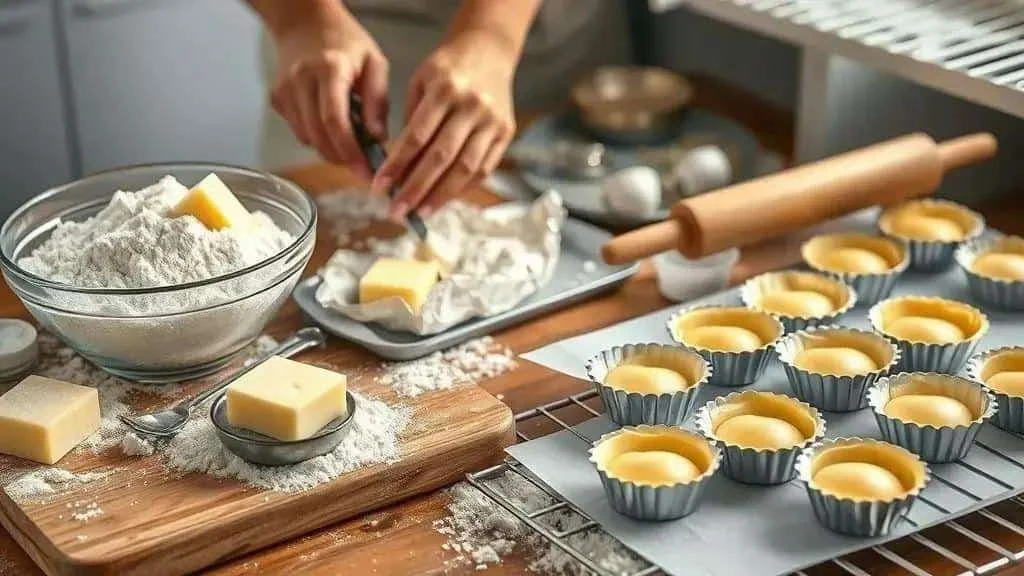
Cold ingredients, gentle handling and time to rest help this rich pastry hold its shape and bake with a tender, crumbly texture.
Essential pastry tips
- Cold butter: use chilled cubes and work quickly so the butter does not become greasy.
- A breadcrumb texture: rub the fat into the flour rather than beating the mixture into a paste.
- Add water gradually: use only enough of the measured cold water to help the dough hold together after adding the egg.
- Do not knead: bring the dough together gently and stop once it is cohesive.
- Rest in the fridge: chill wrapped dough for 30–60 minutes. Let it soften just enough to roll if it becomes too firm.
- Even thickness: aim for 3–4 mm for medium pies. Very thin pastry tears easily; thick pastry needs longer to cook.
- Avoid a wet base: for these lidded pies, use thick, chilled filling and bake on a heated baking tray. Blind-baking is an option for a separately tested open-tart method, but a short partial bake is not a universal solution for sealed empadas.
- Preheat the oven: glaze lightly and bake at the stated temperature, checking both pastry and centre.
- Keep filling cold: do not fill pastry cases with a warm mixture.
- Changing the fat: butter gives a rich flavour. A butter-and-shortening pastry is another option, but use a tested ratio if changing this recipe rather than expecting identical results.
- Gluten-free handling: follow the selected pastry recipe or pack, supporting delicate dough as you transfer it to the tins.
Common pastry problems
- Tough pastry: excessive working or water can cause toughness. Chilling helps handling but cannot undo overworked dough; handle the next batch less.
- Shrinking pastry: avoid stretching the dough into the tin. Let it rest and fit it gently into the corners.
- Soggy bottoms: reduce excess filling liquid, cool it properly and ensure the pastry base has time to cook. Do not rely on a coat of raw egg white to solve a wet filling.
- Cracking dough: if too cold, let it soften briefly. If genuinely dry, work in a teaspoon of cold water at a time, handling as little as possible.
- Greasy dough: stop and chill it before adding more flour. Extra flour changes the recipe and can make the pastry heavy.
Final pastry checks
- Metal tins: small metal pie tins help conduct heat to the base.
- Oven temperature: if results are inconsistent, an oven thermometer can help check the actual temperature.
- Baked texture: the pastry should be cooked through, tender and crumbly, without a raw or doughy base. This is shortcrust rather than laminated puff pastry.
Freezing, storing and reheating prawn empadas
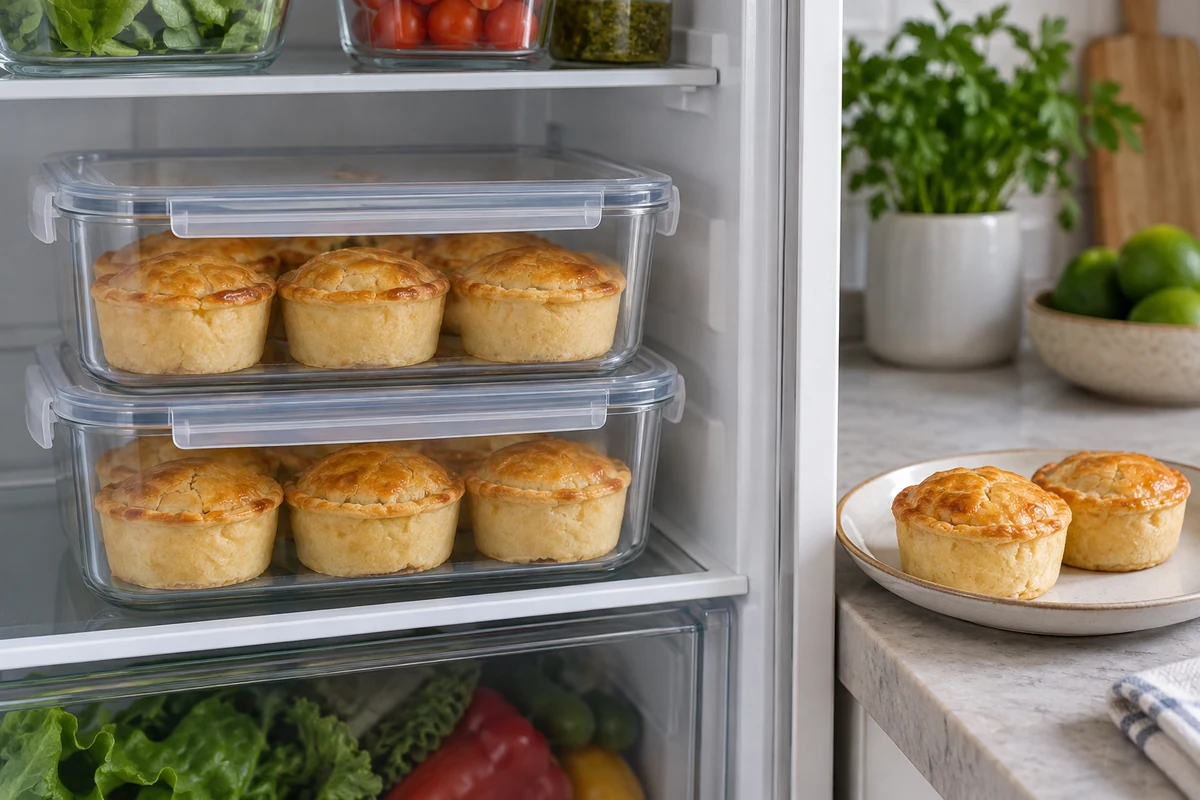
Plan storage around the seafood filling. Cool cooked food promptly, label packages clearly and reheat thoroughly rather than judging only by the pastry colour.
How to freeze
- Prepare safely: assemble unbaked pies with chilled, fully cooked filling, or cool baked pies promptly. Refrigerate or freeze cooked food within 2 hours; do not leave a large warm batch standing for hours.
- Freeze separately: place the pies in a single layer on a lined tray in the freezer until firm enough to pack without sticking.
- Wrap well: use freezer-safe wrapping or airtight containers, with baking paper between layers where useful.
- Label and date: state the filling, date and whether the pies are baked or unbaked. Plan to use within about 3 months for quality; freezing does not make previously mishandled food safe.
Fridge and freezer storage
- In the fridge: keep baked pies covered at 5°C or below and use within 48 hours, or sooner if an ingredient’s instructions require it.
- In the freezer: store at −18°C or below. Freeze properly prepared unbaked or fully baked pies, not partly cooked pies with an uncertain cooking history.
- Avoid repeated cycles: thaw only what you need. Reheat baked pies once and do not refreeze reheated leftovers.
Thawing the pies
- Use the fridge: thaw covered, allowing enough time for the centre to defrost fully. Overnight may suit small pies, but check rather than relying on a fixed time. Cook or reheat within 24 hours of fully defrosting.
- Avoid improvised shortcuts: do not use a cold oven as a thawing method. Microwave defrosting should be followed immediately by cooking; fridge thawing is easier to control for this recipe.
Reheating while keeping the pastry crisp
- Oven: put thawed baked pies in a preheated oven around 180°C conventional/160°C fan and heat until the centre is steaming hot. Check a representative pie with a clean food thermometer: 75°C for 30 seconds is one suitable combination. Unbaked pies need the full baking process, not just reheating.
- Air fryer: follow the appliance instructions, leave space for circulation and check the filling temperature. A crisp outside does not prove the centre is hot.
- Microwave: pastry will soften. Use a microwave-safe plate, rotate or rearrange as needed and follow standing-time instructions, checking for cold spots. Do not assume 40–60 seconds will heat every pie safely.
- Before serving: confirm that the filling is hot throughout, then allow a brief rest to reduce the risk of burning your mouth.
Practical storage tips
- Glaze before baking: brush thawed unbaked pies shortly before they go into the oven.
- Prevent sticking: use baking paper between frozen pies and keep packages well sealed.
- Check each batch: tin size, oven performance and starting temperature all affect timing.
- Reheat small batches: heat only what will be eaten and leave room between pies.
Accompaniments and serving ideas
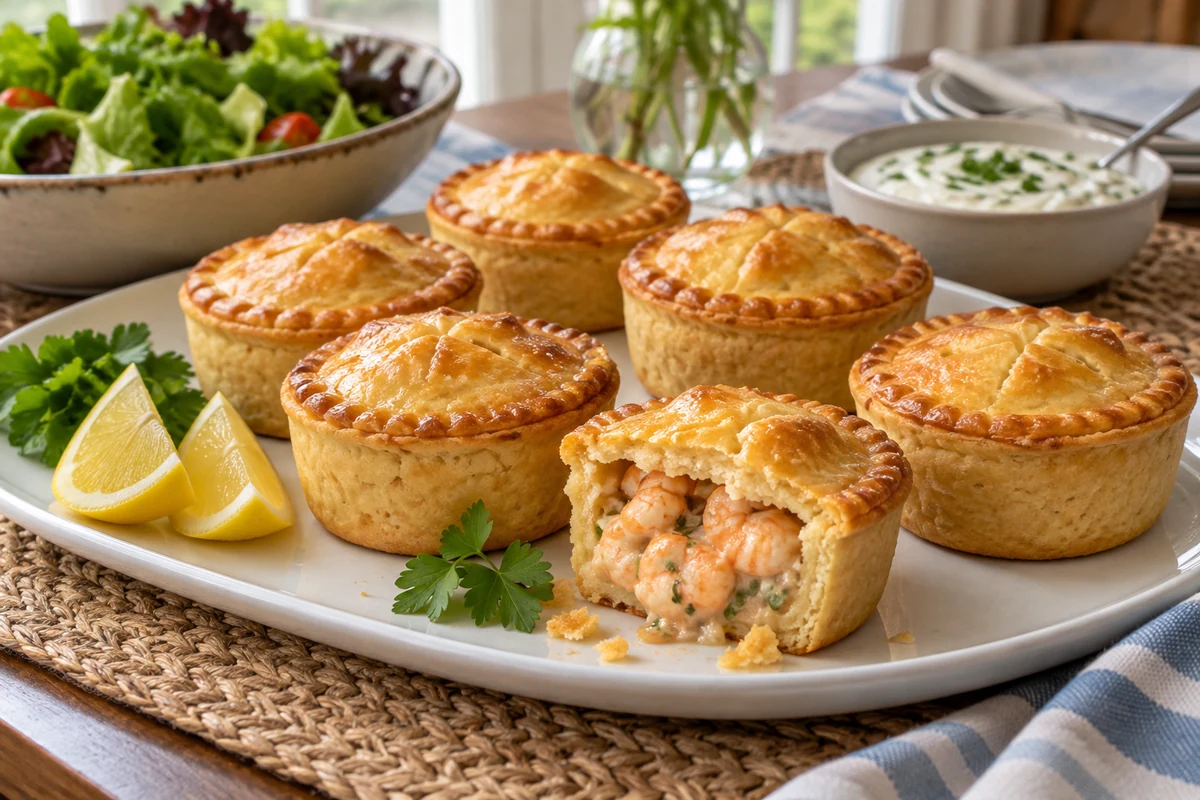
- Green salad: mixed lettuce, rocket or watercress with a citrus dressing provides a fresh contrast to the creamy filling.
- Dips: offer seasoned mayonnaise, lemon yoghurt sauce or a mild chilli sauce. Keep chilled sauces cold until serving.
- Lemon wedges: let guests add a little acidity to taste.
- Crunchy sides: carrot and cucumber sticks or commercially prepared cassava crisps add a different texture.
Plating the empadas
- Vary the display: arrange pies on a platter or food-safe board with space to lift them easily.
- Fresh herbs: a little parsley or chives adds colour.
- Choose simple serving ware: white plates and plain boards show off the golden pastry.
- A final touch: add a little black pepper or lemon zest just before serving.
Drinks to serve
- White wine: Sauvignon Blanc or Vinho Verde is an option for adults who drink alcohol.
- Beer: a light lager can accompany the savoury filling.
- Alcohol-free options: sparkling water with lemon or citrus iced tea also works well.
Serving at parties
- Mini portions: make small pies for finger food. Around 3–4 per person may suit a snack selection, depending on size and what else is served.
- Keeping food hot: if holding pies for service, use equipment that keeps the food itself at 63°C or above and check with a thermometer. A low oven setting alone does not confirm a safe food temperature; serving freshly heated small batches is simpler.
- Allergen labels: identify crustaceans, wheat, milk and egg in the standard recipe, plus any allergens introduced by substitutions. Lactose-free is not the same as milk-free.
Practical presentation ideas
- Colour: fresh leaves, lemon and sliced chilli contrast with golden pastry.
- Individual servings: small plates with a separate dip are easy for guests to handle.
- Transport: chill the pies and carry them in a suitable cool bag with ice packs, then reheat thoroughly at the destination. A cardboard box alone will not keep seafood pies cold.
Final thoughts
Cold pastry, a thick chilled filling and thorough baking are the key points for these prawn empadas. Prepare in stages if helpful, keeping track of safe cooling and storage times.
Thank you for reading. Visit the I Love Christmas blog for more festive recipes and serving ideas.
Brazilian prawn empadas: frequently asked questions
How do I keep the pastry tender?
Use cold butter, add water only as needed and avoid kneading. Rest the wrapped dough in the fridge for 30–60 minutes, then roll gently and bake in a preheated oven.
How can I avoid a soggy base?
Use a thick, fully chilled filling, avoid overfilling and allow the pastry base to cook properly. A preheated baking tray can help. Blind-baking requires a suitable separate method and is not automatically needed for these lidded pies.
How should I freeze the empadas?
Freeze assembled unbaked pies with chilled cooked filling, or promptly cooled baked pies. Firm them on a tray, wrap well and label the date and cooking status. Thaw in the fridge before baking or reheating thoroughly.
How long can I store them?
Keep baked pies covered in the fridge at 5°C or below for up to 48 hours. For frozen storage at −18°C or below, plan to use within about 3 months for quality. Once fully thawed, cook or reheat within 24 hours and reheat only once.
Can I use a lactose-free cream alternative?
Yes, use a suitable lactose-free or plant-based cooking cream, adjusting to keep the filling thick. Check the pastry fat too if avoiding dairy. Lactose-free dairy products still contain milk proteins and are unsuitable for a milk allergy.
How do I make mini empadas for a party?
Use smaller tins, cut pastry circles to fit and add a small amount of filling without overfilling. Bake until the pastry is cooked and the centre is steaming hot. Allow roughly 3–4 per person as part of a snack selection, depending on size.
Sources and Further Reading
- Food Standards Agency: cooking and reheating safely
- Food Standards Agency: chilling, freezing and defrosting safely