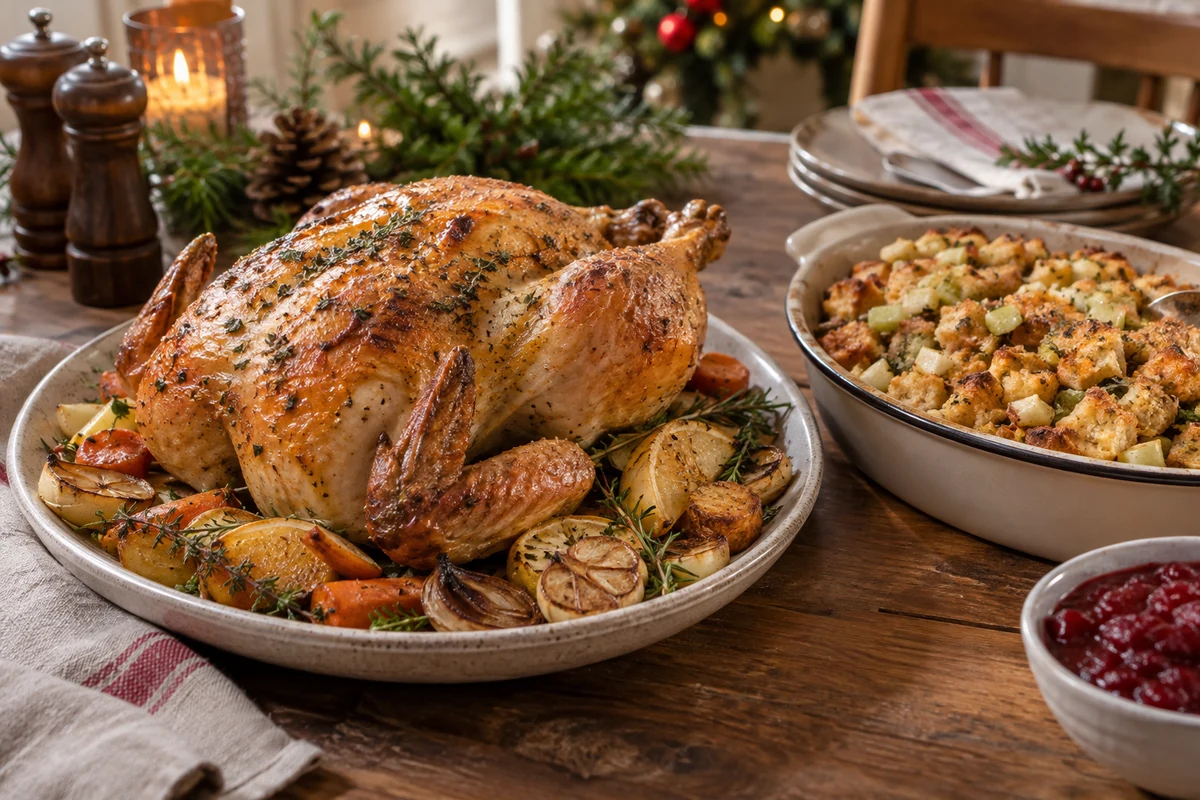
Christmas chicken with stuffing can be an economical alternative to a larger festive roast. This version pairs a whole herb-seasoned chicken with bread or Brazilian farofa-style stuffing baked in a separate dish for more even cooking. Simple vegetables, optional fruit and practical leftover ideas complete the meal.
Budget Christmas chicken offers a welcoming festive meal without requiring an oversized joint. The original Brazilian recipe fills the bird; in this version, the stuffing cooks alongside it in its own dish, making both easier to check. Choose affordable ingredients and sides that suit your guests.
Ingredients for Christmas Chicken with Stuffing
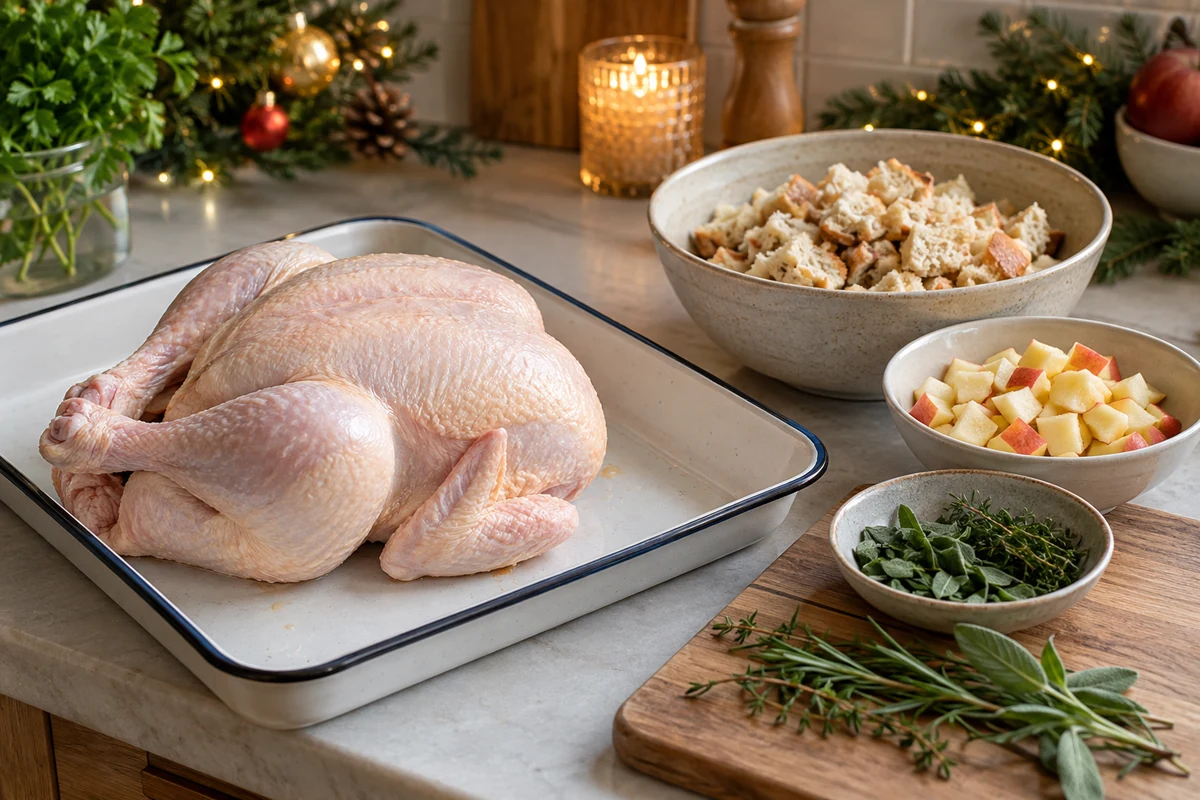
Gather the ingredients for Christmas chicken with stuffing below. Choose either bread or farofa for the stuffing, adjusting moisture to its texture rather than assuming every crumb mixture absorbs the same amount.
- 1 whole chicken, 2–2.5 kg – giblets removed if supplied, fully defrosted if previously frozen. Do not wash raw chicken.
- Salt, to taste – account for seasoned farofa, bacon, stock and any pre-seasoning on the bird.
- 1 teaspoon ground black pepper – or white pepper if preferred.
- 4 garlic cloves, crushed – divide between chicken and stuffing. A little garlic powder can be used instead, adjusted to taste.
- 1 medium onion, chopped – or two shallots for a different flavour.
- 45 g butter in total – use about 30 g for the chicken and 15 g for the stuffing. Alternatively, use 3 tablespoons olive oil, divided in the same two-to-one proportion.
- 200 g fresh bread crumbs or prepared farofa – farofa is a toasted, usually cassava-based Brazilian mixture. Very dry breadcrumbs need different hydration; measure by weight and add liquid gradually.
- 1 egg – beaten, to bind the stuffing. For an egg-free version, omit it and add a little mashed potato as needed for texture; this is not an exact two-tablespoon equivalent.
- Up to 100 ml milk – add gradually to the stuffing. An unsweetened plant drink is an option, but also change the butter and check all ingredients if avoiding dairy.
- 100 g chopped bacon, optional – omit to reduce cost, or use a suitable sausage cooked fully according to its instructions.
- 1 medium carrot, grated – adds colour and moisture to the stuffing.
- 1 chopped green apple, optional – or a firm pear for a sweeter note.
- 2 tablespoons chopped parsley and chives – for the stuffing.
- 1 tablespoon chopped fresh rosemary – or about 1 teaspoon dried. Thyme is another option.
- Juice of 1 lemon – for flavour; lemon juice does not disinfect raw chicken.
- A small trayful of chopped roasting vegetables – potatoes, carrots and onions, enough for a shallow bed beneath the bird. Prepare additional vegetables separately if needed for serving.
- 250 ml chicken stock or water – for the roasting tin. Have a little extra stock available for an optional gravy, and check the salt content and dilution instructions of stock cubes.
Budget-Friendly Alternatives
- Leave out the optional bacon and let onions, carrot and herbs provide the stuffing’s flavour.
- Omitting bacon and using less added fat reduces fat more directly than exchanging equal amounts of butter and oil. Olive oil is useful for a dairy-free version but is still a fat.
- Prepared farofa is convenient; sound leftover bread can be a cheaper alternative. Do not use mouldy bread, and adjust the milk to the moisture of the crumbs.
- For measured chopped herbs, about one-third as much dried herb is a useful starting point, adjusted to taste.
- Season the chicken and refrigerate for one to two hours if convenient. There is no need to cut holes in the skin or leave the bird at room temperature to improve flavour.
How to Make Christmas Chicken with Stuffing
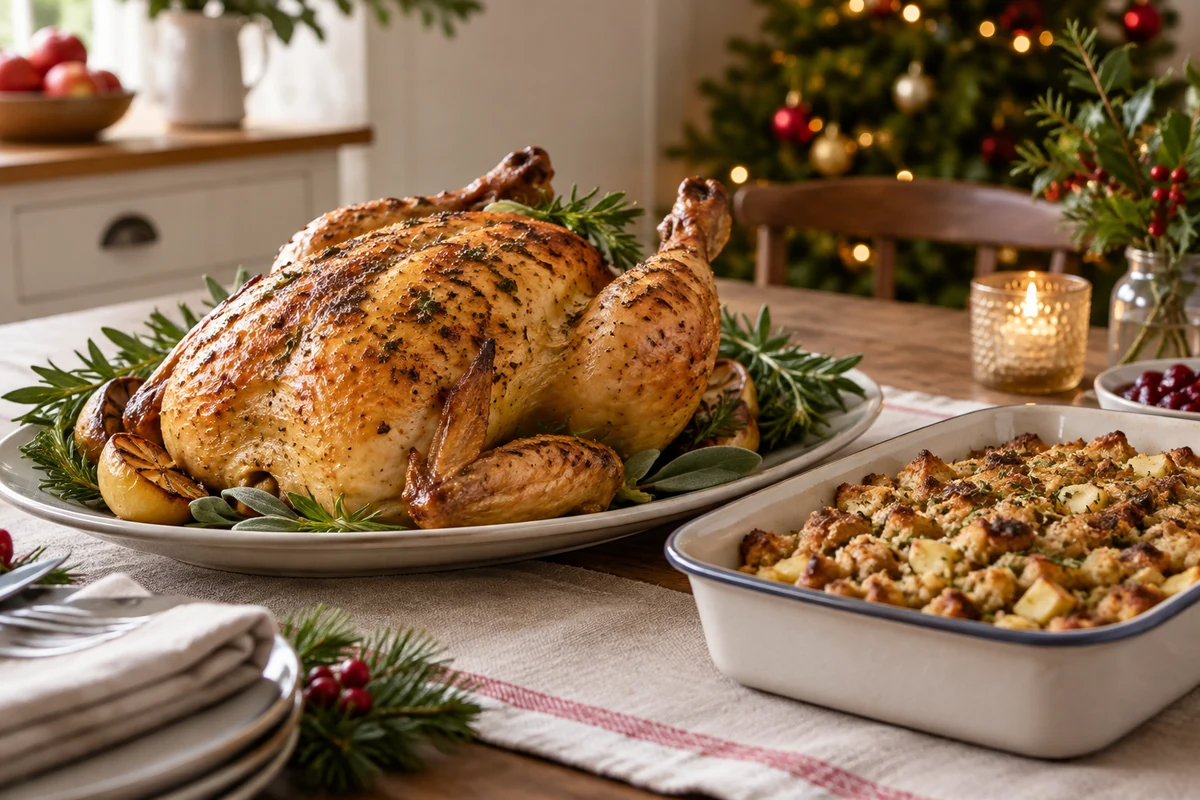
- Prepare the chicken: remove giblets and packaging, then pat the bird dry with kitchen paper without washing it. Keep raw poultry away from prepared food and clean hands and equipment afterwards.
- Season: mix the chicken’s 30 g butter or 2 tablespoons oil with two of the garlic cloves, lemon juice, rosemary, pepper and a cautious amount of salt. Rub over the bird and, if practical, gently beneath the breast skin without tearing it. Cover and refrigerate for one to two hours, or overnight within its use-by date. Keep the cavity empty.
- Prepare the stuffing: cook the optional bacon fully in a pan, then add the stuffing’s 15 g butter or 1 tablespoon oil as needed. Soften the onion, remaining two garlic cloves and grated carrot. Take off the heat and let this mixture cool briefly before combining with 200 g bread crumbs or farofa, herbs, optional apple and beaten egg. Add milk gradually until moist but not wet. Do not partly cook the egg for a few minutes and then store the mixture.
- Bake the stuffing separately: spoon it loosely into a suitable shallow ovenproof dish. Bake alongside the chicken until set, steaming hot throughout and 75°C for 30 seconds or 70°C for two minutes at the centre. Start checking at about 25–30 minutes, allowing longer if needed. Keeping it outside the bird avoids relying on heat reaching a packed cavity.
- Position the bird: tuck the wing tips underneath if practical and place breast-side up in the tin. Truss loosely only if needed; do not seal a stuffed cavity, because the stuffing is in its own dish.
- Prepare the roasting tin: spread the chopped vegetables in a shallow layer and place the chicken above them, using a rack if useful. Pour 250 ml stock or water into the bottom. The measured fat on the bird will baste the vegetables; an additional 125 ml oil is not required.
- Roast: follow the chicken’s packet instructions for its weight. For an unstuffed bird at 180°C conventional or 160°C fan, 45 minutes per kilogram plus 20 minutes is a planning guide, not proof of doneness. A 2–2.5 kg bird therefore needs substantially more than an assumed 70–90 minutes at this setting. Check the centre as described below and continue cooking if necessary.
- Monitor during cooking: baste occasionally if desired, keeping oven openings brief. Add a little hot water if the tin becomes dry and cover the skin loosely with foil if it browns before the meat is ready.
- Check doneness: use a clean thermometer in the thickest parts of the breast and thigh, avoiding bone, to confirm 75°C for 30 seconds or 70°C for two minutes. Check the separate stuffing too. Clear juices or browned skin alone are not a substitute for checking the centre.
- Rest before carving: once fully cooked, move the bird to a clean board, cover loosely and rest for 15–20 minutes. Remove any string before carving.
- Finish the stuffing: if it needs longer, leave its separate dish in the oven while the chicken rests. Serve only once it is fully cooked and hot at the centre, rather than treating an extra five minutes as an automatic safety step.
- Make an optional gravy: transfer the roasting juices to a saucepan, skim excess fat and add a little extra stock, or up to 120 ml white wine if wanted. Bring to a full boil, then simmer. For a thicker sauce, mix 1 teaspoon cornflour with cold water and add gradually, simmering until thickened. These are optional gravy ingredients; use stock rather than wine if avoiding alcohol.
- Final checks: keep stuffing separate, check both dishes with a thermometer and wash equipment that touched raw poultry before using it for cooked food. Patting the skin dry helps browning, but safety comes before crispness.
Seasoning and Marinade Ideas
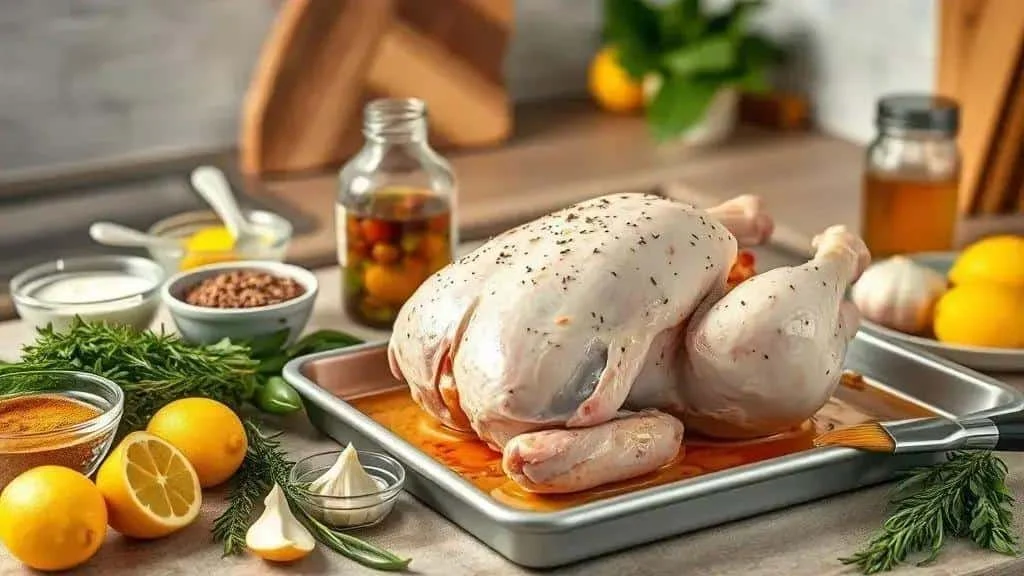
Choose one seasoning approach for the chicken rather than layering every marinade on top of the main recipe. These are flavour variations, not a claim that each has been physically tested here.
- Citrus marinade: combine the juice of one lemon, 3 tablespoons oil, two crushed garlic cloves, a little salt and pepper, and 1 tablespoon chopped herbs. Refrigerate the bird in it for one to four hours. This replaces the main seasoning, not the stuffing ingredients.
- Yoghurt marinade: mix 200 g plain yoghurt, 1 tablespoon lemon juice, 1 teaspoon sweet paprika, two garlic cloves and a little salt. Refrigerate for four to eight hours within the chicken’s use-by date. Yoghurt adds milk as an allergen.
- Dry seasoning: use salt to taste, 1 teaspoon each of pepper, paprika, garlic powder and onion powder, and optional brown sugar. Season and refrigerate for 30–60 minutes if convenient. Sugar can burn, so use it sparingly and watch the surface.
- Soy and ginger marinade: combine 3 tablespoons soy sauce, 1 tablespoon honey, 1 tablespoon rice vinegar, 1 teaspoon grated ginger and 1 teaspoon sesame oil. Refrigerate for 30 minutes to two hours. Avoid extra salt and check soy, wheat and sesame allergens; ordinary soy sauce is not gluten-free.
- Herb butter: soften 3 tablespoons butter with 1 tablespoon parsley, 1 teaspoon lemon zest and one crushed garlic clove. Spread gently beneath the breast skin as an alternative to the main chicken seasoning, using separate fat for the stuffing if required.
- Brining, if using another recipe: it is not needed for this method. Follow a reliable brine recipe matched to the bird and container, keep refrigerated and avoid brining pre-seasoned poultry. A single litre may not cover a 2–2.5 kg chicken, and simply adding water changes the concentration.
Applying Seasonings
- Pat dry without washing: kitchen paper removes surface moisture without spreading raw-poultry splashes around the sink.
- Contain liquid marinades: use a covered food-safe dish or a sturdy bag inside a leakproof tray, kept on the bottom fridge shelf.
- Apply dry seasoning or butter: distribute evenly. If loosening the skin, work gently and wash hands and tools afterwards.
- Allow time if available: even a short refrigerated seasoning period can add flavour. Follow the chosen method and the bird’s use-by date; longer is not always better.
- Keep chilled until preparation: do not leave the chicken out for half an hour in an attempt to bring the whole bird to room temperature.
- Discard used marinade: for this method, do not reuse marinade that touched raw chicken. Reserve a clean portion beforehand if a sauce is wanted.
Substitutions and Reminders
- Fresh and dried herbs: about 1 teaspoon dried herb can replace 1 tablespoon chopped fresh herb as a starting point, adjusted to taste.
- Oil and butter: both add flavour and fat. Oil is a useful dairy-free alternative, but the rest of the dish must also be checked if avoiding milk.
- Lemon and vinegar: both add acidity with different flavours. Excessive acid or long marinating can affect texture; neither makes raw poultry safe to eat.
- Check cooking: confirm 75°C for 30 seconds or 70°C for two minutes in the thickest meat and the separate stuffing, using clean equipment.
- Optional glaze: a little clean honey mixture near the end gives shine, but watch closely to prevent scorching. Never use raw-poultry marinade as a final glaze.
Budget and Festive Stuffing Variations
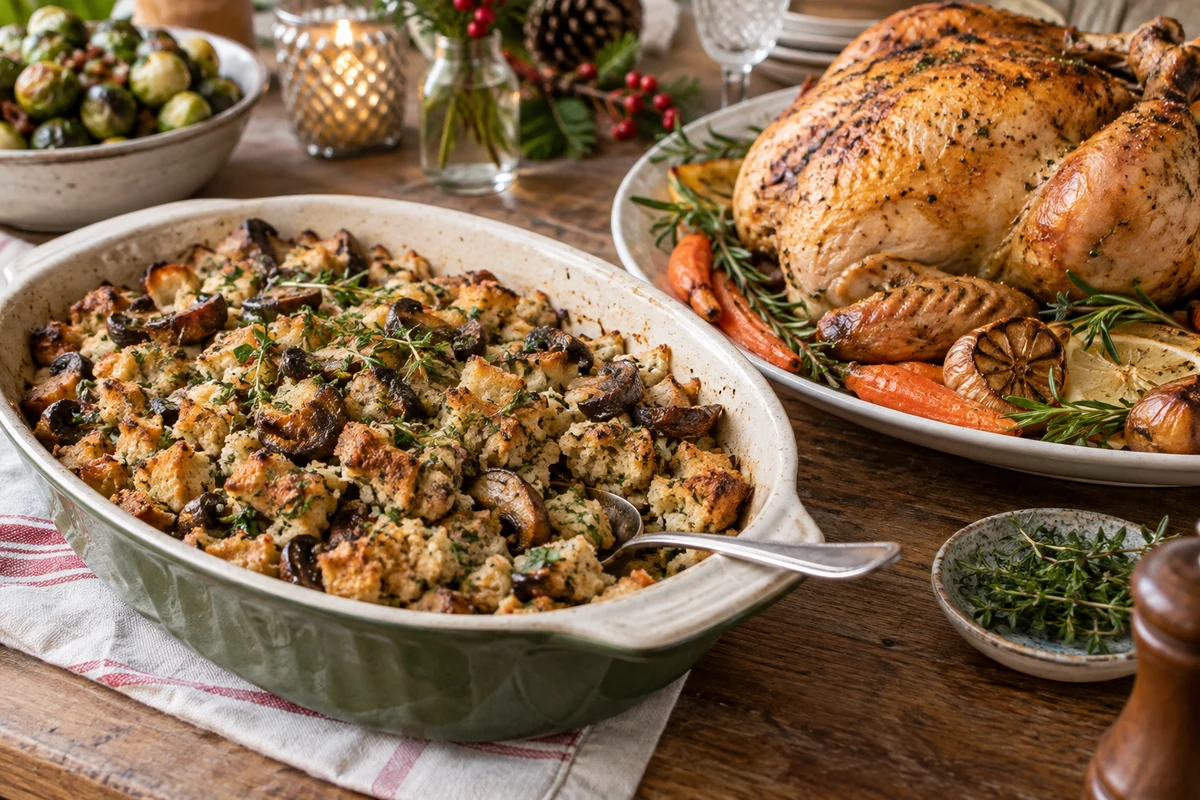
Adapt Christmas chicken with stuffing to the ingredients and budget available. Bake every stuffing in a separate dish, and keep vegetarian portions away from the chicken and its juices.
- Simple budget stuffing: use the main recipe’s 200 g bread or farofa, softened onion, carrot, egg, herbs and milk added gradually. Sound leftover bread can reduce cost; very dry crumbs need different moisture from fresh ones.
- Fruit and nuts: add the optional chopped apple or pear, a small handful of raisins and up to 50 g walnuts to the basic mixture. A little extra butter is optional. If adding up to 50 ml wine, reduce other liquid and keep it out of an alcohol-free version; check nut allergies.
- Creamy cheese variation: add 150 g cream cheese or well-drained ricotta, with up to 50 g grated hard cheese, herbs and lemon zest. Reduce milk as needed so the mixture stays spoonable rather than wet, and bake in its own dish until cooked through.
- Vegetarian side dish: cook 200 g mushrooms with onion, then combine with cooked lentils or properly handled cooked rice and parsley. Use vegetarian stock and separate utensils. It remains vegetarian only if cooked and served separately from the chicken and its juices.
- Rustic farofa: use about 100 g fully cooked diced bacon or sausage, a small bowl of prepared farofa and a little cooked or canned sweetcorn. Cook raw sausage as directed before combining; do not assume every Brazilian-style calabresa product is ready to eat.
- Yoghurt and vegetable version: choose the yoghurt marinade above and serve roasted vegetables and herbs alongside. Its fat content depends on the yoghurt and other additions, so it is not automatically a low-fat meal.
Choosing a Variation
Consider cost, time and dietary needs. Simple bread stuffing can feed a table economically, while fruit or nuts add contrast. For every version: cook stuffing separately and check its centre as well as the chicken. Do not judge a meat-free stuffing as vegetarian if it has contacted poultry.
Tips for Every Version
- If preparing ahead, cool cooked stuffing components promptly and keep them refrigerated separately from the raw bird. Combine and bake as directed rather than storing a pre-stuffed chicken overnight.
- Leave the cavity empty and position the chicken securely; tight trussing or sealing the cavity is unnecessary.
- Check the roasting liquid occasionally and cover the skin loosely if it browns too quickly.
- Vegetables beneath the chicken take on its juices and must be cooked thoroughly. They are not suitable for vegetarian guests.
Side Dishes and Table Planning
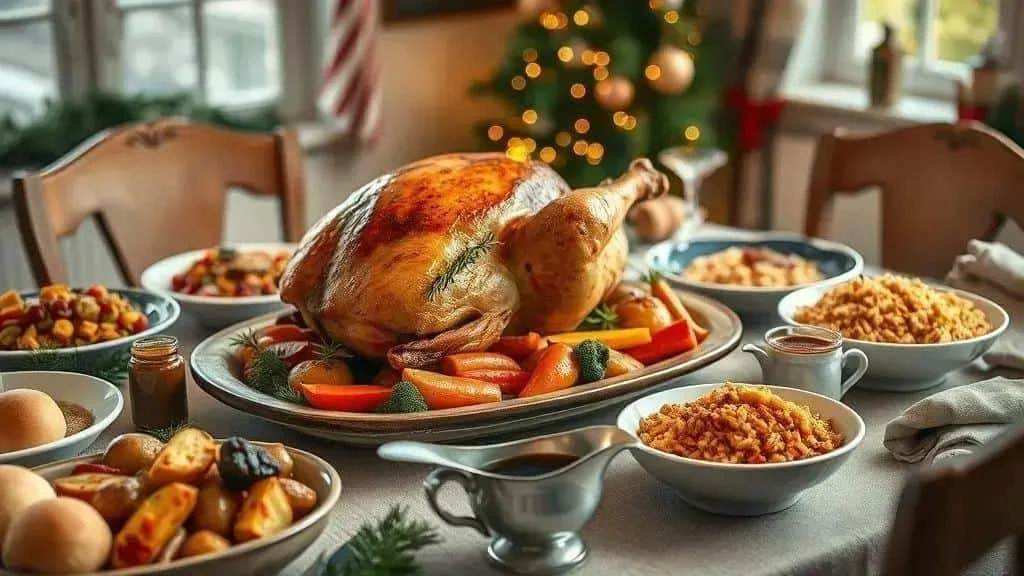
Choose a manageable selection of sides, allowing space in the oven and fridge. Preparation ahead can help, provided cooked and chilled components are handled safely.
- Rosemary potatoes: roast medium pieces with a little oil, salt and rosemary until tender and golden. Their timing depends on size and oven temperature; 40–50 minutes is only a starting guide, not a promise that they finish with the chicken.
- Festive farofa: enrich prepared farofa with cooked onions, grated carrot and optional raisins, then serve in its own dish.
- Herb rice: cook plain rice according to the packet, then stir in parsley and chives before serving.
- Colourful roast vegetables: carrots, squash and broccoli make a useful mix. Add faster-cooking broccoli later so everything is tender rather than burnt or undercooked.
- Fresh salad: combine leaves, cherry tomatoes and cucumber, dressing just before serving with oil, lemon and a little salt.
- Gravy: boil the roasting juices with extra stock or optional wine, then simmer and adjust seasoning. Transfer to a saucepan unless the roasting tin is suitable for the hob.
- Bread: small rolls or garlic toast can accompany the gravy, though you may not need them alongside bread stuffing and potatoes.
- Fruit relish: apple chutney or cranberry sauce gives a sweet-sharp contrast. Follow the product or recipe’s storage instructions.
Portions and Timing
- Plan for appetites: a 2–2.5 kg chicken often suits roughly four to six adults with generous sides, depending on carving yield and appetite. Raw weight includes bones and does not equal an edible meat portion; avoid assuming it feeds everyone from a fixed 250 g allowance.
- Choose practical sides: rice and potatoes are easy to scale, but also check pan capacity, cooling space and how many portions are actually needed.
- Prepare ahead selectively: wash salad ingredients with clean equipment and chill them. Cooked vegetables or stuffing components can be prepared ahead if cooled promptly and kept within their storage deadlines.
- Work backwards from serving: allow the chicken’s full cooking time plus 15–20 minutes of resting, then fit the stuffing and sides around that schedule. Do not plan to roast a whole chicken in the final 30–40 minutes.
Arranging the Table
Present the chicken on a central platter with its roasted vegetables, and serve stuffing, other sides and gravy separately. Keep enough room for safe carving and passing dishes.
- Simple decoration: fresh herbs and lemon slices add colour without hiding the food.
- Easy serving: provide a utensil for each dish and avoid reaching over hot trays or candles.
- Individual servings: small bowls for starters or selected sides can make serving easier, but do not leave chilled foods out while waiting.
Reducing Last-Minute Work
- Use suitable serving dishes: warmed oven-safe dishes can help keep the meal pleasant to eat, but are not a guarantee of safe hot holding.
- Keep hot-held food at 63°C or above: check the food itself if holding cooked dishes while the chicken finishes. An oven setting alone does not establish the temperature at the centre of a dish.
- Plan leftovers: promptly chilled chicken can be used in sandwiches, salads or a thoroughly reheated pie within its original storage deadline.
- Identify allergens: note ingredients such as wheat, egg, milk and nuts, and keep vegetarian sides separate from poultry juices and utensils.
Using Leftovers Without Waste
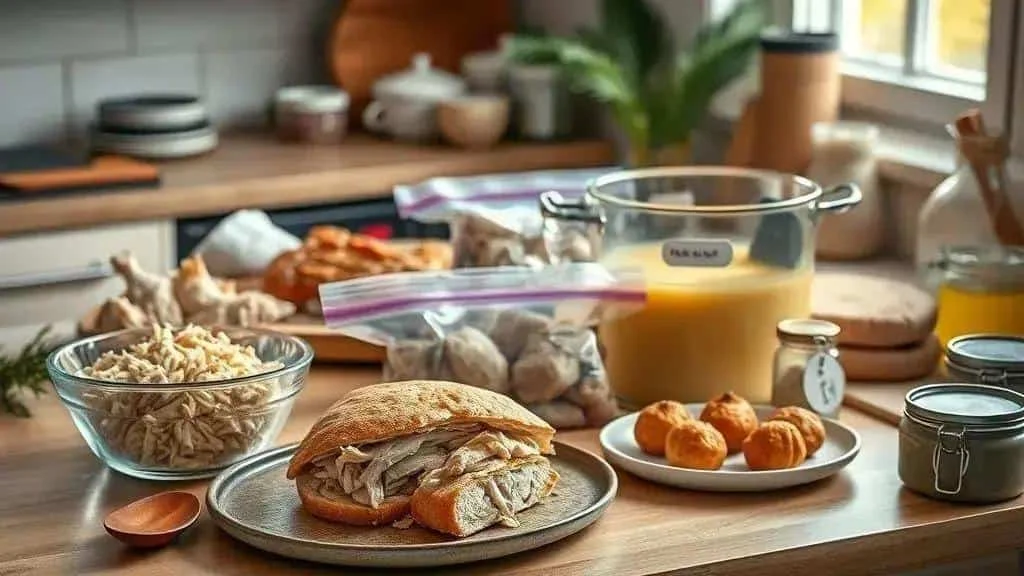
Leftover Christmas chicken can become another meal if cooled and stored correctly. A new recipe does not restart the storage clock or permit repeated reheating.
Creamy Chicken Sandwich Filling
A practical next-day filling. Keep it refrigerated until serving, and use a cool bag with ice packs if taking it out.
- 200 g safely chilled cooked chicken, shredded
- 3 tablespoons mayonnaise or plain yoghurt
- 1 tablespoon mustard, optional
- ¼ red onion, finely chopped
- 1 small grated apple or 2 tablespoons raisins
- Salt, pepper and parsley, to taste
- Combine the chilled chicken, mayonnaise or yoghurt and optional mustard using clean utensils.
- Add the onion, apple or raisins and herbs, then adjust seasoning.
- Fill fresh bread or toast, adding leaves if desired. Keep the filling chilled and within the chicken’s original 48-hour refrigerated deadline.
Chicken Batter Pie
- 2 cups shredded cooked chicken – for this leftover idea, use a 240 ml measuring cup and do not pack it tightly.
- 1 small onion, chopped – with 1 tablespoon oil for softening it.
- ½ cup cooked sweetcorn or peas, optional
- 3 eggs
- 1 cup milk
- ½ cup plain flour – fine cornmeal produces a different texture and is not a guaranteed like-for-like gluten-free replacement.
- 1 teaspoon baking powder
- Salt, pepper and chopped parsley or chives, to taste
- Soften the onion in the tablespoon of oil, then take off the heat and let it cool briefly. Combine with chilled chicken and cooked vegetables immediately before baking rather than partly reheating the chicken and storing it again.
- Whisk eggs, milk, flour and baking powder until smooth.
- Combine with the filling and pour into a suitable greased shallow ovenproof dish or individual dishes, leaving room for expansion. This is a soft batter bake rather than a pastry-crusted pie.
- Bake at 180°C conventional or 160°C fan, starting to check after 30 minutes. The centre must be set and steaming hot throughout, with 75°C for 30 seconds or 70°C for two minutes as a thermometer check. Dish depth changes the time. This counts as the chicken’s one reheating; serve promptly.
Chicken Stock from the Carcass
A promptly handled carcass and trimmings can provide flavour for stock. Use them straight after carving, or chill or freeze them promptly; do not use bones that have sat out throughout a long meal.
- The chicken carcass and suitable bones
- 1 onion, halved
- 2 carrots, cut into pieces
- 2 celery sticks
- 1 bay leaf and a few black peppercorns
- Enough water to cover
- Put the bones, vegetables and seasonings in a large pan and cover with water.
- Bring to the boil, then simmer gently for one to two hours, checking the liquid level.
- Strain carefully to remove all bones. Divide the stock into shallow containers and cool promptly, refrigerating within two hours rather than leaving a deep pan overnight. Remove chilled surface fat if desired.
- Use promptly in soup or risotto, or freeze suitable cooled portions in freezer-safe containers. Label and date them; small portions make it easier to heat only what is needed.
More Leftover Ideas
- Fried rice: use rice cooled quickly, ideally within one hour, then refrigerated and used within 24 hours. Heat with chicken, cooked egg and vegetables until steaming hot throughout. Reheat rice and chicken only once.
- Chicken salad: combine safely chilled chicken with leaves, grains and dressing for a cold salad. If choosing warm chicken, heat it thoroughly once and serve promptly.
- Chicken patties: use a reliable recipe with a suitable binder, then cook until the centre is hot throughout. A little flour alone does not guarantee that every mixture holds together.
- Fillings: cooked chicken can go into pancakes, pasta or lasagne if the complete dish is heated through and this is its only reheating. Keep the original storage deadline.
Leftover Storage
- Refrigerate shallow portions within two hours at 5°C or below and eat within 48 hours, or freeze promptly. Rice has the shorter cooling and storage guidance above.
- Freeze promptly in suitable labelled containers and aim to use within three months for quality; do not wait three months before freezing.
- Divide into useful portions so that only what is needed is thawed in the fridge. Use within 24 hours after full defrosting.
- Reheat once until steaming hot throughout, confirming 75°C for 30 seconds or 70°C for two minutes if using a thermometer. Bubbling liquid at the edge does not prove the middle is hot.
- Handle bones promptly for stock, or chill or freeze them separately without leaving them out for hours.
Keeping Costs Manageable
- Use suitable trimmings for stock where practical, with the same care over storage as the rest of the chicken.
- Compare unit prices for bread, farofa and vegetables. Larger packs save money only if you can use or store them without waste.
- Plan realistic portions and a few useful leftover meals rather than preparing excessive quantities.
- Use simple flavourings such as herbs and lemon to add variety without buying many specialist ingredients.
Conclusion
Christmas chicken with stuffing offers a flexible festive meal. Baking the stuffing separately, checking the meat’s centre and planning a few affordable sides keep the preparation straightforward.
Thank you for reading. Follow our social channels for more seasonal recipes and practical ideas for your Christmas table.
Visit the I Love Christmas blog for recipes, decorations and festive inspiration. Wishing you a happy celebration.
FAQ — Easy Budget Christmas Chicken with Stuffing
How can I tell whether the chicken is cooked?
Check the thickest breast and thigh with a clean thermometer, avoiding bone, for 75°C for 30 seconds or 70°C for two minutes. Check the separate stuffing too. Browned skin and clear juices alone are less reliable than checking the centre.
Can I prepare it the day before?
You can season the chicken and refrigerate it within its use-by date. Prepare and chill cooked stuffing components separately. Do not store the bird already filled, and do not leave it out to reach room temperature before roasting.
Which stuffing substitutions help reduce cost?
Use sound leftover bread instead of bought farofa, leave out bacon and let onions, carrot and herbs add flavour. Adjust liquid to the crumbs’ texture. Apple is an optional addition; expensive nuts are unnecessary.
How should I store and use leftovers?
Refrigerate shallow portions within two hours at 5°C or below and eat within 48 hours, or freeze promptly. Thaw in the fridge and reheat only once until steaming hot throughout. Using the meat in another recipe does not restart its storage time.
How do I encourage golden skin without drying the breast?
Pat the bird dry without washing, season with the measured fat and follow its roasting guidance. Check doneness with a thermometer, cover areas that brown too quickly and rest briefly after cooking. A very hot start is optional in some methods, not a guarantee of juiciness.
Is a meat-free stuffing vegetarian if cooked with chicken?
No. Stuffing that contacts chicken or its juices is not vegetarian. Bake a mushroom, rice or lentil variation in a separate dish with suitable ingredients and clean utensils if serving vegetarian guests. This recipe cooks all stuffing separately for easier temperature checks.
Sources and Further Reading
- Food Standards Agency: cooking food safely
- Food Standards Agency: chilling, freezing and defrosting food
- Food Standards Agency: Christmas food hygiene and stuffing
- Food Standards Agency: cooking and reheating safely, including rice