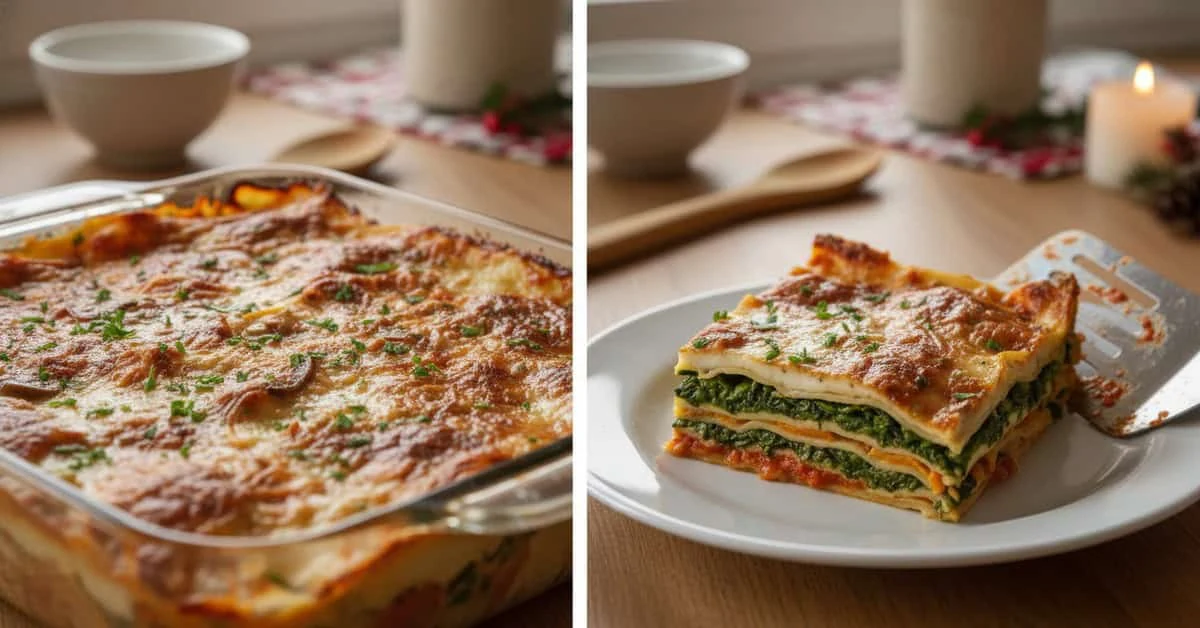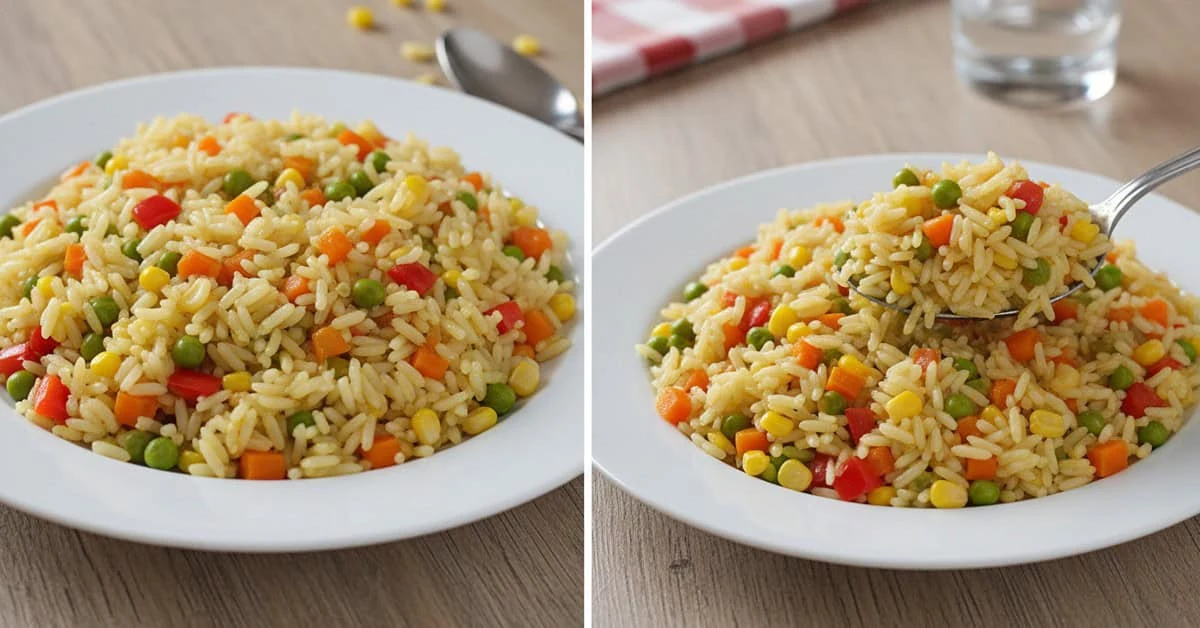
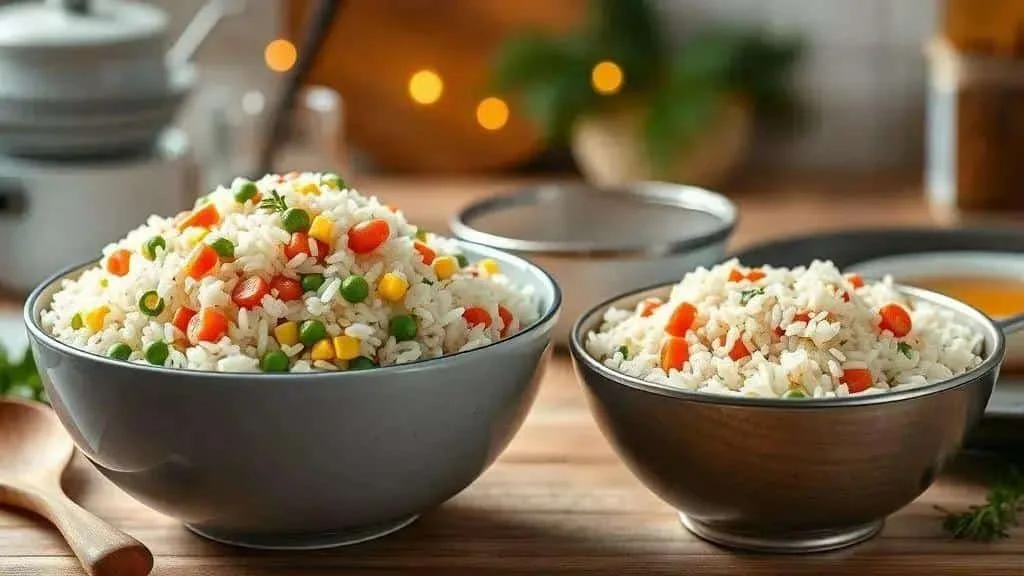
Brazilian arroz à grega is a colourful Christmas rice dish with carrots, peas, sweetcorn and optional olives and raisins. The name means Greek-style rice, but this recipe follows the Brazilian festive style. Gently cooked aromatics, measured hot stock and a short covered rest help produce separate grains. Variations include roasted vegetables, dried fruit and nuts.
Christmas vegetable rice brings colour to a festive meal without an elaborate preparation. This Brazilian arroz à grega combines familiar vegetables with optional sweet and salty additions, making it easy to adapt to the rest of your menu.
Ingredients for Christmas Vegetable Rice
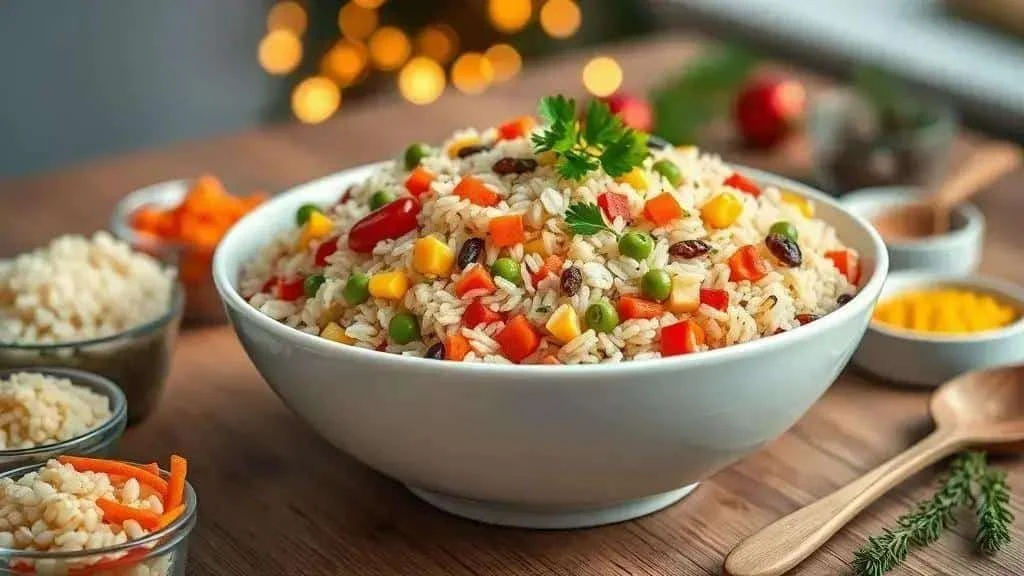
- 2 cups long-grain white rice – rinsed and drained if directed on the packet. Brown rice is a separate variation: follow its own packet quantity, liquid ratio and cooking time rather than substituting an unexplained extra half-cup.
- 3 tablespoons vegetable oil or olive oil – for the pan. Alternatively, use 2 tablespoons butter for a buttery version.
- 1 medium onion, chopped – the aromatic base.
- 2 garlic cloves, chopped – or 1 teaspoon garlic powder.
- 1 large carrot, finely diced – approximately 1 cup; frozen mixed vegetables are an alternative.
- 1 cup peas – fresh or frozen.
- 1 cup sweetcorn kernels – fresh or tinned and drained.
- ½ red pepper, chopped – or yellow pepper if preferred.
- 50 g raisins – optional; soak in warm water for 10 minutes and drain if particularly dry.
- 50 g sliced green olives – optional, pitted.
- 3 cups hot water or vegetable stock – the original recipe’s starting amount; check your rice packet and adjust if it specifies a different absorption ratio. Chicken stock is an option for a non-vegetarian version. Measure rice and liquid with the same cup.
- Up to 1 teaspoon salt, or to taste – start with less if using salted stock or olives.
- Ground black pepper, to taste – optional.
- 2 tablespoons chopped fresh parsley – to finish.
Substitutions and Variations
Vegan version: use oil and suitable vegetable stock, avoiding butter and animal-based additions.
Extra colour: add small pieces of roasted carrot or yellow pepper.
A festive touch: replace some sweetcorn with dried cranberries for a sweet-sharp contrast, or add toasted nuts for crunch.
Salt control: reduce added salt when using bought stock and adjust after tasting the cooked rice.
How to Make Christmas Vegetable Rice
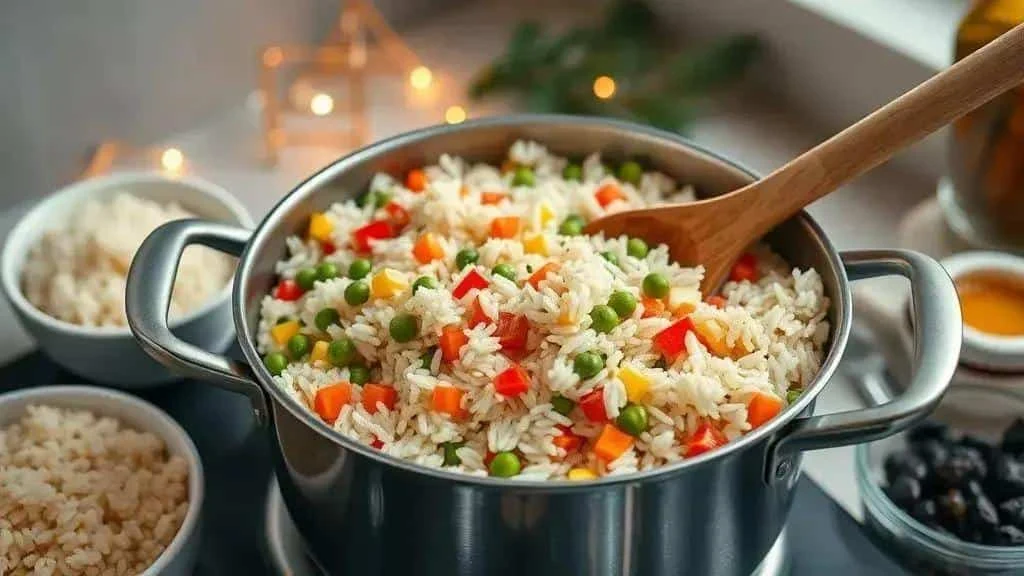
For this Christmas vegetable rice, keep the heat gentle once the liquid is added and check the instructions for your particular rice.
- Measure and rinse: place 2 cups rice in a sieve and rinse if recommended on the packet, then drain well.
- Heat the oil: warm 3 tablespoons vegetable or olive oil in a suitably sized saucepan over medium heat.
- Soften the aromatics: add the chopped onion and cook until softened, then add the 2 chopped garlic cloves briefly without letting them burn.
- Start the vegetables: add the finely diced carrot and cook for 3–4 minutes. Stir in the peas and sweetcorn for another 1–2 minutes. Alternatively, cook these separately according to their packet instructions and fold them in at the end for firmer texture.
- Add the rice: stir the drained grains into the aromatic oil for 1–2 minutes, coating them evenly.
- Add the pepper and optional ingredients: stir in the chopped half pepper and, if using, the 50 g olives and 50 g drained raisins.
- Add liquid and seasoning: pour in 3 cups hot water or stock, or the adjusted quantity required by your rice. Add salt cautiously and pepper to taste, then stir briefly.
- Simmer gently: bring to the boil, turn the heat low and cover. Cook for approximately 15–18 minutes, or according to the packet, until the liquid is absorbed and the grains are tender. Avoid repeated stirring.
- Rest and finish: turn off the heat and leave covered for 5–10 minutes, then fluff gently with a fork and fold in the 2 tablespoons parsley and any separately cooked vegetables.
- Final adjustments: taste and adjust seasoning. If the grains are still firm and the pan is dry, add a little hot water, cover and cook gently for a few more minutes, checking again rather than assuming a fixed time will be enough.
Practical Tips
Avoid stirring repeatedly while the rice cooks, as it can break the grains and release starch. Stock adds flavour, but may also add salt.
For brown rice: follow the packet’s liquid ratio and longer cooking time. The original’s brown-rice quantities were inconsistent, so do not use its reduced water ratio; cook delicate vegetables separately and combine when the rice is tender.
Keeping vegetables colourful: cook peas and sweetcorn separately and fold in at the end if you prefer them firmer. Frozen vegetables must be cooked as instructed, not merely thawed in warm rice.
Christmas Vegetable Rice Variations
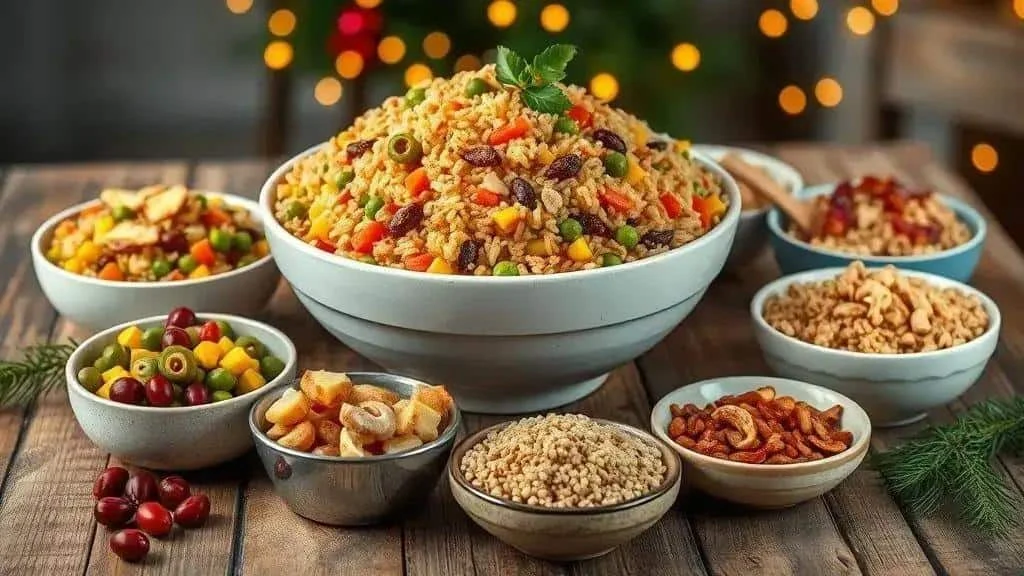
- Brazilian festive style: white rice with carrot, peas, sweetcorn, raisins and olives gives the familiar combination. Suggestion: use the optional 50 g raisins and 50 g sliced olives; soften particularly dry raisins in warm water and drain before adding.
- Colourful vegan version: use olive oil and vegetable stock, adding roasted courgette, aubergine or peppers and toasted cashews. Alternative: use dried cranberries instead of raisins for a sweet-sharp note.
- Brown rice with quinoa: combine cooked brown rice and cooked quinoa in a 2:1 ratio if you enjoy their different textures. Tip: cook them separately according to their packet instructions, as they need different liquid quantities and cooking times.
- Dried fruit and nuts: add chopped dried apricots, cranberries and toasted walnuts or Brazil nuts. Fold fruit in after softening and draining if needed, and add nuts just before serving for crunch.
- Tropical variation: pineapple pieces, yellow pepper and a small amount of curry powder or turmeric give a different flavour alongside poultry or fish. Add sparingly to suit your menu.
- Smoky variation: add thoroughly cooked bacon or Brazilian calabresa-style sausage. Follow the sausage’s cooking instructions, reduce added salt and finish with parsley.
Choosing and Adapting Variations
- Flavour balance: sweet additions such as dried fruit or pineapple contrast with olives or cooked bacon.
- Texture: add toasted nuts at the end, along with delicate vegetables that have been cooked separately.
- Colour: avoid prolonged cooking of peas and sweetcorn if you want them to remain bright; cook as required, then fold into the finished rice.
- Seasoning: stock provides flavour, but check its salt content before seasoning further.
- A practical shortcut: frozen mixed vegetables reduce chopping time; follow their cooking instructions.
Tips for Colourful Rice with Separate Grains
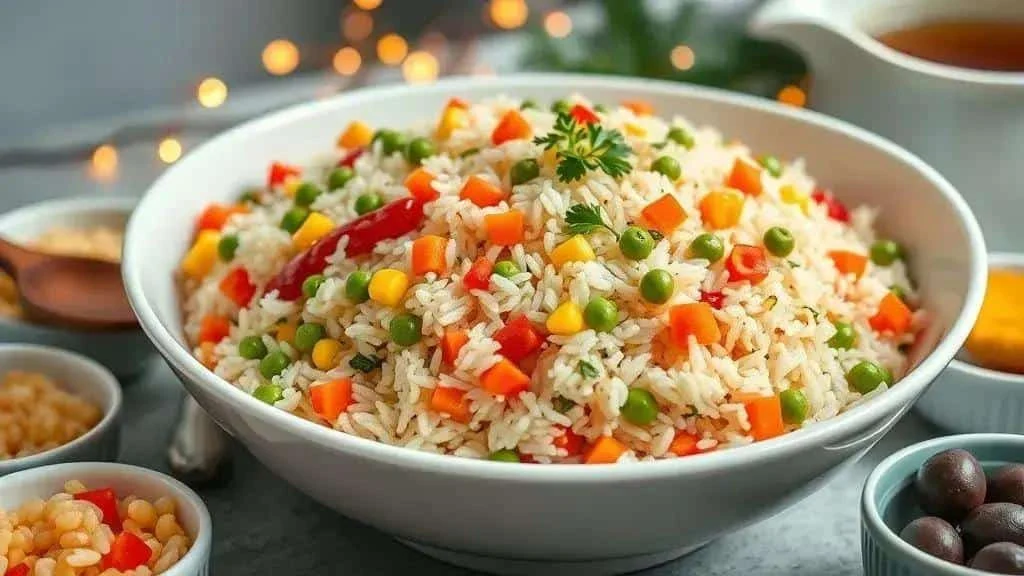
- Rinse and drain if appropriate: rinsing removes some surface starch; follow your rice packet, then drain before adding to the pan.
- Coat the rice in oil: stir for 1–2 minutes in the recipe’s oil and aromatics before adding liquid. This adds flavour, but correct liquid measurement and gentle cooking still matter.
- Use hot liquid: have the water or stock ready so it comes back to a simmer promptly.
- Measure the ratio: some long-grain white rice uses around 1 part rice to 1½–2 parts liquid for absorption cooking. Check the packet rather than treating that as a universal rule.
- Cook gently without repeated stirring: once boiling, reduce the heat and keep covered until tender and the liquid is absorbed.
Keeping the Vegetables Colourful
- Cook vegetables appropriately: small carrot pieces, peas and green beans can be cooked separately until tender. Timing depends on size and product instructions; a universal 1–2-minute blanch is not sufficient for every vegetable.
- Sauté separately if preferred: cook diced carrots, peppers and sweetcorn until tender before folding them into the rice, avoiding prolonged overcooking.
- Add at the right time: fold separately cooked peas and sweetcorn into the hot rice after its short rest, then serve promptly.
A Moist, Glossy Finish
- Rest covered: allow 5–10 minutes after cooking before fluffing, so moisture distributes through the grains.
- Optional final richness: stir in 1–2 tablespoons butter or olive oil if you want a richer finish; this is additional to the cooking oil and not essential.
- Season cautiously: taste after cooking when using salted stock. Excess salt affects flavour; it is not the main cause of dry rice.
- Fluff with a fork: lift the grains gently without crushing them.
Presentation: finish with chopped parsley and a few cooked peas. Optional lemon zest or a small drizzle of olive oil adds aroma.
Vegetarian and Vegan Adaptations
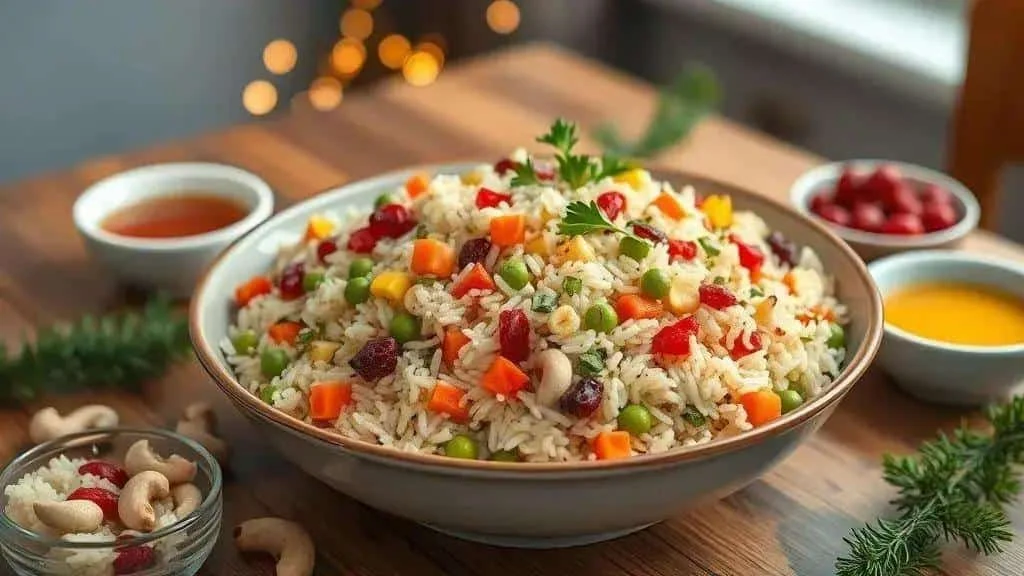
To make Christmas vegetable rice vegetarian or vegan, use suitable stock and fat and check any additions. The vegetables and optional nuts provide plenty of colour and texture.
Ingredient Substitutions
- Stock: replace chicken stock with suitable homemade or bought vegetable stock, using the liquid quantity required for your rice.
- Fat: use 2–3 tablespoons olive oil instead of butter; a neutral vegetable oil is another option.
- Peas and sweetcorn: retain 1 cup of each, using fresh or frozen vegetables cooked as appropriate.
- Raisins: keep the optional 50 g, or use dried cranberries if preferred.
- Olives: use 50 g sliced, pitted olives. Check flavoured or stuffed products for ingredients unsuitable for your guests.
- Texture: add toasted nuts or pieces of cooked crisp tofu, noting the relevant nut or soya allergens.
Adapted Method
- Heat the stock: prepare the measured vegetable stock, checking the rice packet before using the original 3-cup quantity.
- Cook the aromatics: warm 3 tablespoons olive oil, soften the chopped onion and add the 2 chopped garlic cloves for about another minute.
- Add the vegetables: cook the diced carrot for 3–4 minutes, then stir in the peas, sweetcorn and chopped pepper. Alternatively, cook delicate vegetables separately and add them at the end.
- Add the rice: stir in 2 cups drained rice for 1–2 minutes to coat it in the oil and aromatics.
- Add the liquid: pour in the hot stock, season cautiously with salt and pepper, and bring to the boil. Include the optional drained raisins and olives if using.
- Simmer without repeated stirring: reduce the heat, cover and cook for approximately 15–18 minutes or the packet’s recommended time, until tender and the liquid is absorbed.
- Rest and finish: leave covered off the heat for 5–10 minutes. Fluff, then fold in parsley, any separately cooked vegetables and optional toasted nuts or cooked tofu.
Flavour and Texture Tips
- Roast extra vegetables: roasted peppers, courgette or aubergine can be folded in for a different flavour.
- Soften dried fruit: soak particularly dry raisins or cranberries in warm water for around 10 minutes, then drain.
- Check seasoning: taste the cooked rice before adding more salt, especially with bought stock.
- Keep the crunch: add toasted nuts just before serving.
- Gluten-free requirements: check stock and all processed additions are suitable and prevent cross-contact with gluten-containing ingredients.
What to Serve with Christmas Vegetable Rice
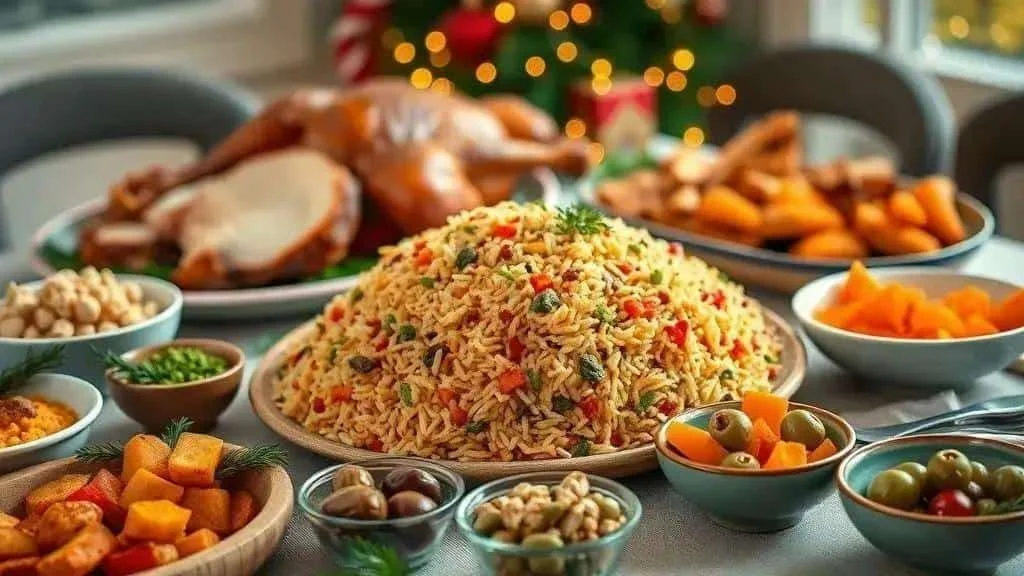
- Roast poultry – turkey or chicken works well. Chester, mentioned in the Brazilian original, is a branded poultry product rather than a separate bird species.
- Pork or beef – roast loin, pork leg or sliced roast beef make suitable mains, with sauces served separately.
- Fish and seafood – prepared salt cod or grilled fish provides another main-course option.
- Salads – a citrus-dressed green salad gives a fresh contrast; Brazilian mayonnaise potato salad is another traditional buffet accompaniment.
- Roast vegetables – squash, carrots and peppers add more colour.
- Crunchy sides – Brazilian farofa made with toasted cassava meal, with nuts or cooked bacon if wanted, contrasts with the rice.
- Festive additions – cranberries, softened raisins and sliced olives provide optional sweet and salty accents.
Pairing with Main Courses
Christmas vegetable rice can sit alongside rich roasts or a menu of fish and salads. Serve strongly flavoured sauces, such as a sweet-and-sour sauce or demi-glace, separately so guests can choose how much to add.
Serving and Presentation
- Choose accessible dishes: use a serving dish for rice and smaller bowls for accompaniments, leaving enough room for guests to reach them.
- Separate utensils: give each dish its own serving spoon, particularly where ingredients or allergens differ.
- Garnish: add chopped parsley, a few cooked peas or optional cranberries.
- Colour: alternate green, orange, yellow and red dishes for an inviting table.
- Levels: use only stable food-safe stands, keeping hot dishes secure and easy to reach.
- Portion guide: allow around 120–150 g cooked rice per adult as a side, adjusting for other dishes and appetites. This vegetable-rich batch may provide more portions than the original’s 5–6 estimate; weigh the finished dish if precise portions matter.
Timing and Serving Safely
- Preparing ahead: cool cooked rice as quickly as possible, ideally within 1 hour, in small shallow portions. Refrigerate at 5°C or below and use within 24 hours. Do not leave a large pan on the worktop to cool slowly.
- Reheating and hot holding: reheat rice only once until steaming hot throughout. A bain-marie is for holding already hot food, not slowly reheating cold rice. If holding hot for service, keep the food at 63°C or above.
- Prevent drying: add a little hot stock when reheating and mix gently, checking the whole portion is thoroughly hot. Added liquid does not make incorrectly stored rice safe.
- Organise the buffet: keep hot dishes hot and cold salads chilled until needed. Put out manageable amounts and replenish rather than leaving everything on the table for hours.
Helpful labels: identify dishes and relevant allergens, and keep spare serving utensils available.
Common Rice Problems and How to Avoid Them
- Soggy rice: too much liquid, excessive cooking or repeated stirring can make rice mushy. Next time, measure according to the packet and avoid unnecessary stirring. Overcooked grains cannot be fully restored.
- Soft or faded vegetables: cook them separately until just tender and fold them in at the end, rather than keeping them in the pan throughout a long rice-cooking time.
- Firm grains: the rice may need more liquid or cooking time. Add a small amount of hot water if the pan is dry, cover and continue gently, checking again for tenderness.
- Too much salt: mix with additional unsalted cooked rice or vegetables to dilute the seasoning, or serve a smaller portion with unsalted accompaniments. A potato does not selectively draw salt out of the rice.
- A burnt base: turn off the heat and transfer only unburnt rice to a clean pan without scraping the bottom. Discard burnt portions. Use a heavy-based pan and gentler heat next time.
- Sticky texture: the rice variety, excess surface starch and overcooking all matter. Rinse if appropriate for the product, measure liquid carefully and handle the cooked grains gently.
- Hard dried fruit: soften dry raisins or cranberries in warm water for about 10 minutes and drain before adding.
Improving Rice That Is Slightly Too Wet
- Assess the rice: these steps may reduce excess moisture in freshly cooked rice, but will not repair badly overcooked grains or make unsafe rice fit to eat. Discard burnt or improperly stored food.
- Drain if necessary: if there is free liquid, drain carefully through a clean sieve without pressing or crushing the grains.
- Spread in a shallow tray: a short spell in an oven around 160°C may help evaporate surface moisture. Check frequently, gently turning if needed, and serve promptly rather than leaving rice lukewarm.
- Alternatively, use a pan: gently toss freshly cooked wet rice in a wide pan with a little oil to evaporate moisture. Avoid repeated stirring that breaks soft grains.
- Finish lightly: a small amount of butter or oil is optional for flavour; it cannot reverse overcooking or unsafe storage.
Quick Ways to Avoid Problems
- Measure liquid: have the correct amount of hot stock or water ready before starting.
- Cook vegetables separately if needed: follow cooking times appropriate to their size and packaging, then add when the rice is ready.
- Keep the lid on: avoid repeatedly opening and stirring during absorption cooking.
- Control the heat: bring to the boil, then use a low heat until tender and the measured liquid is absorbed.
- Taste at the end: make final salt and pepper adjustments after cooking, especially if using seasoned stock.
- Use a suitable pan: a heavy base and well-fitting lid help distribute heat and retain steam.
To Finish
Christmas vegetable rice adds a colourful Brazilian touch to a festive meal. Measured liquid, gently cooked rice and vegetables added at the right stage help achieve a balanced result.
Thank you for reading. Follow our social channels and visit I Love Christmas for more seasonal recipes and ideas.
If you try the recipe, share how it turned out. Wishing you an enjoyable festive meal.
FAQ — Christmas Vegetable Rice
What is the water-to-rice ratio for this recipe?
The original uses 2 cups white rice and 3 cups liquid, a 1:1½ ratio. Check your rice packet and adjust if needed; some varieties require more. Use the same cup for rice and water and cook gently until tender.
Can I make the rice ahead, and how should I store it?
Yes, with careful cooling. Divide into shallow portions and cool quickly, ideally within 1 hour. Refrigerate at 5°C or below and use within 24 hours. Reheat only once until steaming hot throughout. Rice left warm for too long cannot be made safe simply by reheating.
How do I keep the vegetables colourful and firm?
Cook them separately until just tender, following packet instructions for frozen vegetables, then fold into the hot rice after its short rest. Avoid prolonged cooking and do not assume every vegetable is ready after a 1–2-minute blanch.
How do I make a vegan version?
Use suitable vegetable stock and olive oil instead of chicken stock or butter. Optional toasted nuts or cooked crisp tofu add texture. Check labels on processed ingredients and consider nut or soya allergies.
What can I do if the rice is too wet?
For freshly cooked rice with a little excess moisture, drain free liquid and spread briefly in a shallow oven tray or warm gently in a wide pan. This may dry the surface, but cannot restore mushy grains or correct unsafe storage.
How many portions does the recipe make?
It depends on the cooked yield and the vegetables added. Around 120–150 g per adult is a guide for a side portion, but this batch may provide more than the original estimate of 5–6 servings. Weigh the finished rice if you need an accurate portion count.
Sources and Further Reading
- Food Standards Agency: cooking food safely
- Food Standards Agency: chilling, freezing and defrosting food
- Food Standards Agency: cooking and reheating rice safely