This creamy Christmas hot chocolate combines milk, dark chocolate and gentle festive spices. Follow the measured recipe, explore vegan, orange and adult-only variations, and find ideas for toppings, panettone pairings and storing leftovers.
Christmas hot chocolate is a comforting drink for a winter gathering, with a rich texture and the aroma of cinnamon or orange. Here is a straightforward version to share after Christmas dinner.
Ingredients for Creamy Christmas Hot Chocolate
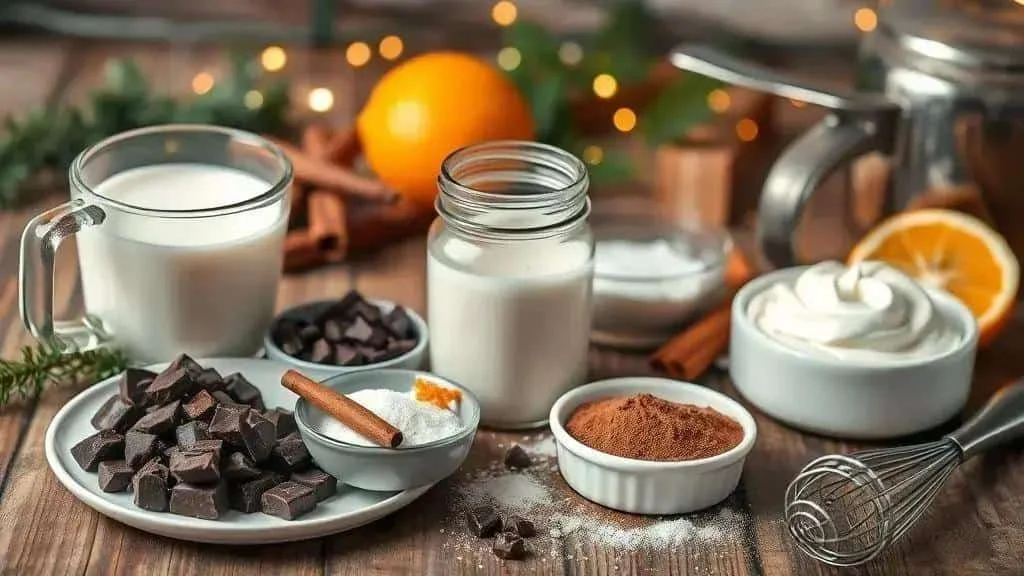
For this creamy Christmas hot chocolate, gather the ingredients below. The rich mixture makes about four small servings; the final volume depends on whether you include the cream.
- 500 ml whole milk — or an unsweetened oat or almond drink. Reserve 2 tbsp (30 ml) of this measured amount for the cornflour.
- 200 ml single cream, optional for extra richness — for a dairy-free version, use 150 ml coconut milk and check all the other ingredients too.
- 150 g dark chocolate, 60–70% cocoa, chopped — milk chocolate makes a sweeter variation. Cocoa powder and sugar alone are not a like-for-like replacement for a chocolate bar; see the separate cocoa version below.
- 2 tbsp unsweetened cocoa powder, optional — adds intensity; omit it for a milder drink made with the chocolate bar alone.
- Up to 2–3 tbsp sugar, to taste — you may need little or none with sweeter chocolate. Brown sugar is an alternative; honey is not vegan and must not be given to children under one. Follow the label when using a sweetener.
- 1 tbsp cornflour, mixed with the reserved 2 tbsp cold milk — this thickens the drink. Wheat flour and tapioca have different cooking properties and are not direct one-for-one substitutes here.
- A pinch of salt — helps balance the chocolate flavour.
- 1 cinnamon stick — or up to ½ tsp ground cinnamon, which will leave a less smooth texture.
- Finely grated zest of 1 washed orange, avoiding the bitter white pith — or ½ tsp vanilla extract or flavouring. Check the label if avoiding alcohol entirely.
- Whipped cream to serve, optional — a plant-based topping is another option. Marshmallows are optional for older children and adults; omit them for young children because of the choking risk.
- Cocoa powder and ground cinnamon for dusting, optional — use a light sprinkle just before serving.
Substitutions and Quick Notes
Milk and cream: plant-based drinks vary in flavour and thickness. A dairy-free drink also needs suitable chocolate and toppings; replacing the milk alone is not enough.
Sweeteners: add gradually and taste a cooled spoonful. Chocolate varies in sweetness, so the full suggested amount may be unnecessary.
Thickening: mix cornflour with cold liquid first, then cook it properly in the milk before melting in the chocolate.
Spices: cinnamon and orange zest work well together. A small pinch of nutmeg gives another variation without overwhelming the chocolate.
How to Make Creamy Christmas Hot Chocolate
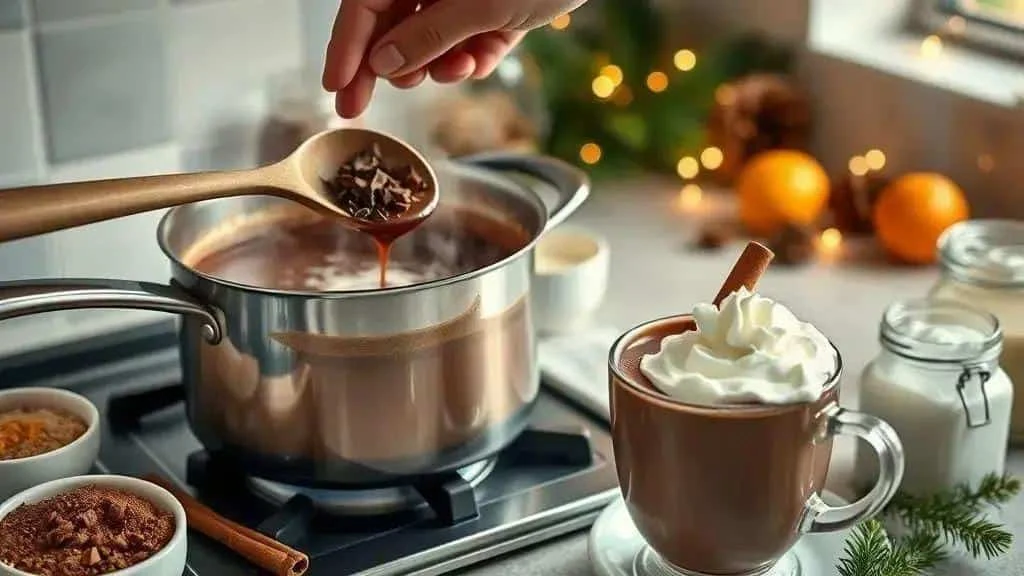
Follow these steps for creamy Christmas hot chocolate. Cooking the milk and cornflour first lets the starch thicken while keeping the chocolate away from prolonged direct heat.
- Measure everything: set out 500 ml milk, the optional 200 ml single cream, 150 g chopped chocolate, optional 2 tbsp cocoa, up to 2–3 tbsp sugar, a pinch of salt, cinnamon and orange zest. Mix 1 tbsp cornflour with 2 tbsp cold milk taken from the measured 500 ml.
- Warm the milk and flavourings: put the remaining milk and optional cream in a medium saucepan with the cinnamon stick and orange zest. Heat gently until steaming, stirring to prevent a skin or scorching.
- Make a cocoa paste: if using cocoa, mix it with a little warm milk from the pan until smooth. Stir in a modest amount of sugar; you can adjust the sweetness later.
- Cook the cornflour: return the cocoa paste to the pan. Stir the cold cornflour mixture again, then whisk it into the milk. Bring just to a gentle simmer, stirring continuously, and cook for about 1–2 minutes until thickened; avoid a vigorous boil or letting the bottom catch.
- Melt in the chocolate: remove the saucepan from the heat. Add the chopped chocolate a little at a time and stir until melted and smooth. Use only very gentle heat briefly if a few pieces remain.
- Adjust the flavour: stir in the pinch of salt and vanilla if using it instead of orange. Taste a cooled spoonful before adding more sugar. If the drink is too thick, add a small splash of milk; do not keep boiling it after adding the chocolate.
- Remove the whole spices: take out the cinnamon stick. For an especially smooth drink, strain through a fine sieve into a heatproof jug, taking care with the hot liquid.
- Finish and serve: pour into stable mugs and let the drink cool to a comfortable sipping temperature. Add whipped cream or a light dusting of cocoa and cinnamon. Keep whole spices and marshmallows out of young children’s servings.
- Try a variation: use the dairy-free ingredients below for a vegan version. For a darker flavour, choose a less sweet chocolate and adjust the optional cocoa; adding cocoa is not an equal replacement for the chocolate’s fat and solids.
Quick Tips
Avoid boiling the finished drink: the cornflour mixture needs its brief cooking stage, but prolonged heating after adding chocolate can spoil the texture and scorch the pan.
Mix cornflour with cold milk: this helps prevent lumps. Stir the slurry again immediately before adding it, as the starch settles.
Choose chocolate you enjoy: a 60–70% cocoa bar gives a useful starting balance of sweetness and intensity, but brands differ.
Whisk for a little froth: use a hand whisk in the saucepan. Do not blend hot liquid in a sealed jug blender: steam and splashes can cause burns. Use any powered frother only as its instructions allow.
Christmas Hot Chocolate Variations
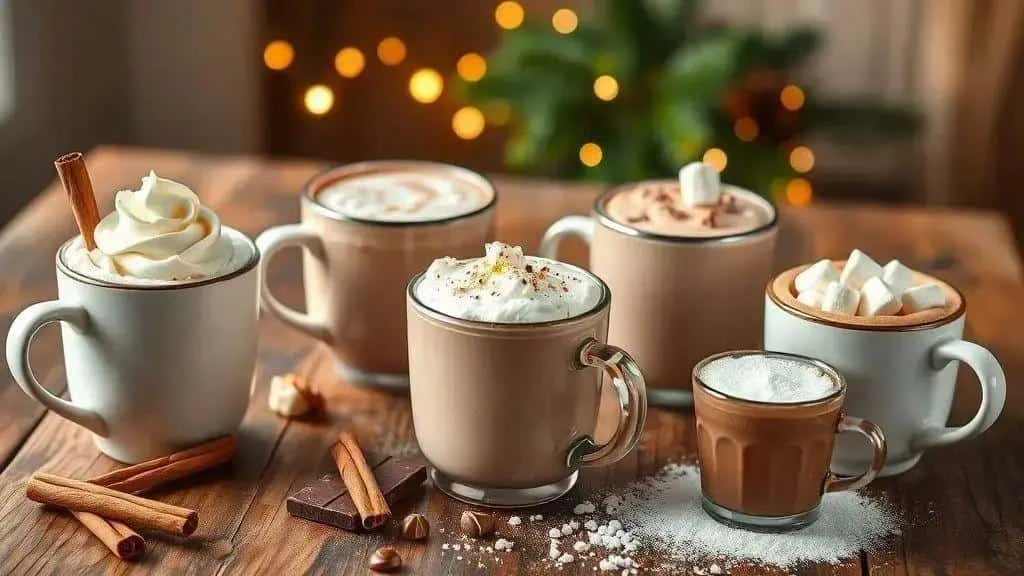
These variations change the flavour or richness of Christmas hot chocolate. Treat the ingredient lists as separate options rather than adding every variation to the main batch.
Vegan Hot Chocolate
- 500 ml unsweetened oat or almond drink
- 150 g vegan dark chocolate, chopped
- 150 ml coconut milk, optional for richness
- 2 tbsp unsweetened cocoa powder, optional
- Up to 2 tbsp coconut sugar or another suitable sweetener, to taste
- Replace the dairy milk and cream with the plant drink and optional coconut milk listed above. Check the chocolate, sweetener and toppings are vegan; coconut sugar is still sugar.
- Warm the plant drink and coconut milk gently. Mix the cocoa and a little sugar with a small amount of warm liquid before returning the paste to the saucepan.
- Add the chopped vegan chocolate off the heat and stir until smooth. The coconut milk goes in only once. This variation contains no cornflour and may be thinner than the main recipe; let it cool slightly before serving.
Christmas Spice Variation
- 1 cinnamon stick
- 3 whole cloves
- Up to ¼ tsp ground nutmeg, starting with a pinch
- Orange zest or up to 1 tsp vanilla flavouring, checking the label if avoiding alcohol
- Infuse the milk with the cinnamon, cloves and orange zest during the initial warming stage. These replace the main recipe’s flavourings; do not double them. Add vanilla after heating if using it instead.
- Strain out the cloves and cinnamon stick before adding the chocolate, and continue with the main method.
- Finish with a little orange zest and nutmeg, using no more than the amount chosen for the batch.
Adult-Only Liqueur Variation
- 1–2 tbsp (15–30 ml) dark rum, orange liqueur or Amarula for the whole batch
- Dark chocolate with around 70% cocoa, using the main recipe’s 150 g quantity
- Prepare the hot chocolate using the main method, then remove it from the heat. Set aside all alcohol-free servings first with clean utensils.
- Stir in the chosen spirit or liqueur only to the adult batch, away from flames. The drink remains alcoholic; adding alcohol to warm chocolate does not make it suitable for children.
- Serve in clearly identified mugs with optional orange zest or whipped cream. Keep this batch separate from the family version.
Chocolate Orange Variation
- Finely grated zest of 1 washed orange
- Up to 1 tbsp orange juice, optional and best tested in a small portion first
- Dark chocolate, using the main recipe’s 150 g quantity
- Infuse the zest in the warming milk for a citrus aroma without adding acidity.
- Test a few drops of juice in a small portion before adding any to the batch: acidic juice can curdle dairy milk. Zest alone is the more reliable option.
- Combine with the chocolate following the main method, then garnish with a little fresh zest. An orange slice can sit on a separate saucer rather than steeping in the milk.
White Hot Chocolate Variation
- 150–180 g white chocolate, chopped
- 400 ml milk and 100 ml single cream — this is a separate small batch; omit the dark chocolate, cocoa and cornflour from the main recipe.
- Warm the milk and cream gently until steaming. White chocolate scorches easily, so remove the pan from the heat before adding it.
- Stir in the white chocolate until smooth. Use brief, very gentle heat only if needed; this version will have a different thickness from the cornflour recipe.
- Add a pinch of salt and a little vanilla to taste. It is usually sweet enough without extra sugar; serve in small portions once comfortably warm.
Cocoa Version with Less Added Sugar
- 500 ml skimmed milk or an unsweetened plant drink
- 30–40 g unsweetened cocoa powder, starting with the smaller amount
- A suitable sweetener, to taste, following its label rather than substituting spoon for spoon
- Optional vanilla-flavoured protein powder — only if suitable for the intended drinker and for warming, as directed on the product label
- Use this separate milk-and-cocoa mixture without the main recipe’s chocolate bar or cream. It will be less rich, and using less added sugar does not make it sugar-free or a treatment for any health condition.
- Include protein powder only if you want it, in an amount and at a temperature allowed by its instructions. It is unnecessary for the recipe, and a token spoonful does not turn the drink into a balanced meal.
- Warm gently, whisking the cocoa first with a little milk to make a smooth paste. Adjust the sweetness and allow the drink to cool enough to sip.
Practical tip: make a half batch when trying a variation. Adjust sweetness and spice gradually, and remember that changing ingredients can also change thickness.
Serving, Decorating and Pairing Ideas
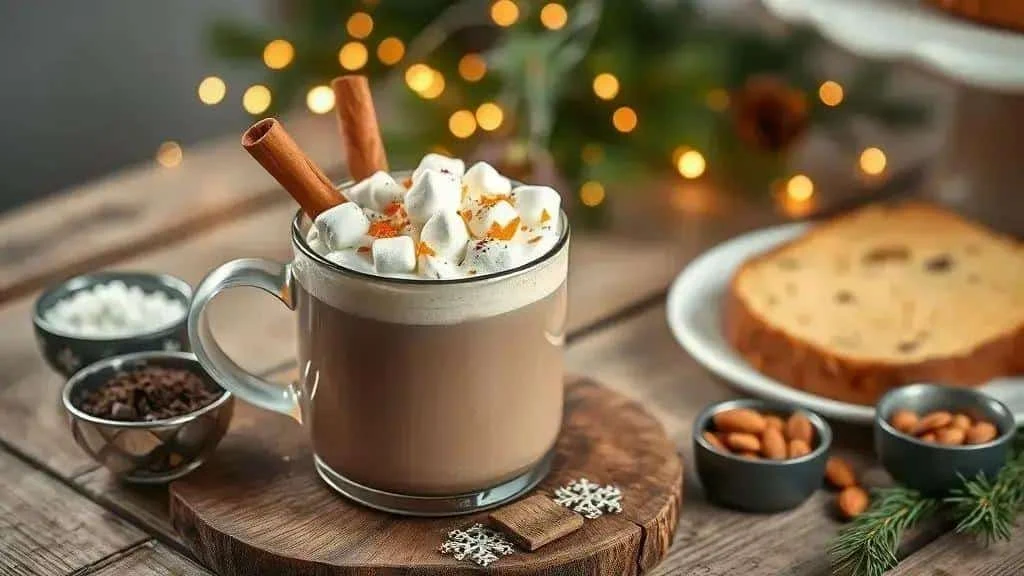
Serve creamy Christmas hot chocolate in small, stable mugs with simple toppings. The drink is rich enough that modest portions often work best alongside dessert.
Choosing Mugs and Serving Temperature
Mugs: use sturdy, heatproof mugs. Adults’ mugs can be warmed with hot water and emptied carefully before filling; do not give a young child a hot mug to hold.
Temperature: let the drink cool to a comfortable sipping temperature. A drink at 60–65°C can still scald; it is not a guaranteed safe serving range. Children’s drinks should be lukewarm and checked by an adult, with hot mugs kept out of reach.
Toppings and Decorations
- Whipped cream and marshmallows: use a modest topping for older children and adults. Leave marshmallows out of young children’s portions; check gelatine and dairy ingredients when serving vegan guests.
- Cinnamon stick: an adult can use a food-grade stick to stir, then remove it. Do not put whole spices in children’s mugs.
- Orange zest: a little finely grated zest adds colour and aroma without large pieces of peel floating in the drink.
- Cocoa and ground cinnamon: dust lightly over the top rather than adding a thick, dry layer.
- Chocolate shavings: scatter a few on whipped cream for a simple finish.
What to Serve Alongside
- Panettone or fruit cake: a small slice complements the rich drink, especially when the chocolate is not overly sweet.
- Butter biscuits or shortbread: their crisp texture makes a pleasing contrast.
- Brazilian rabanada or toasted brioche: these soft, comforting accompaniments work well in small portions. Rabanada is Brazil’s Christmas-style French toast.
- Roasted walnuts or almonds: offer crunch alongside adult servings, checking allergies. Whole nuts are unsuitable for children under five because of choking risk.
- Mascarpone or sweetened ricotta: a small portion as part of a dessert can complement hot chocolate. Keep dairy accompaniments chilled until needed.
- Adult option: offer a measured splash of rum, orange liqueur or Amarula separately and label alcoholic servings clearly.
Planning a Hot Chocolate Station
- Set up safely: arrange sturdy mugs and labelled toppings, keeping cream chilled until required. Serve the hot drink in manageable batches; an adult should pour for children, away from the edge of the table.
- Portions and safety: give children small, lukewarm servings in suitable cups. Keep alcoholic versions separate and mark relevant allergens, including milk, nuts and any ingredients in toppings.
- Finishing touch: place a biscuit on a separate small plate, keeping the mug on a stable surface while taking photos or serving.
A Couple of Useful Tricks
Texture: whisk gently before pouring to smooth the surface. Leftovers: cool promptly, refrigerate within 1–2 hours and use within 48 hours. Reheat only once until steaming throughout, then let each serving cool to a comfortable temperature.
Hot Chocolate at Christmas: History and Traditions
For many households, hot chocolate at Christmas is associated with comfort and time together. These associations vary between countries, climates and families.
A Brief History
Cacao has a long history in the Americas, and Indigenous peoples prepared chocolate drinks well before its arrival in Europe. European drinking chocolate developed through trade and changing tastes, including sweetened and milk-based preparations. It is too simple to credit one European inventor with adding milk: the Natural History Museum notes that milk-based chocolate was already known in Jamaica before Hans Sloane’s visit.
Regional Traditions
- Brazil: Christmas falls in summer, so hot chocolate is a household preference rather than a universal seasonal drink. It can still be enjoyed in cooler areas or evenings, perhaps alongside panettone, biscuits or rabanada.
- Europe: in colder settings, including Christmas markets in Germany and Austria, hot chocolate offers an alternative to spiced alcoholic drinks.
- North America: marshmallow and whipped-cream toppings are familiar additions to hot cocoa at winter gatherings, though each family has its own preferences.
Flavour Notes and Historical Beliefs
- Chocolate was historically promoted for medicinal and sometimes aphrodisiac purposes. Those historical beliefs are not evidence that this sweet drink treats illness or has such effects.
- Cinnamon, cloves and orange give chocolate a flavour profile often associated with Christmas baking and winter drinks.
- White hot chocolate offers a sweeter, paler alternative, with different ingredients and a different balance from a dark-chocolate drink.
Small Festive Rituals
Offering hot chocolate can be a simple gesture of hospitality. Choosing mugs, sharing toppings and sitting down together can become part of a family’s celebration without needing an elaborate recipe.
Practical Observations
- A small pinch of salt can balance sweetness and make the cocoa flavour more distinct; add sparingly.
- Plant-based versions make it possible to adapt the drink to some dietary preferences, provided the chocolate, toppings and other ingredients are checked too.
- A supervised hot chocolate station lets guests choose their own toppings. Keep hot liquids away from children and offer them lukewarm servings prepared by an adult.
Make It Your Own
This creamy Christmas hot chocolate offers a starting point for a cosy gathering. Try one variation at a time and adjust the sweetness and spices to suit the people sharing it.
If you make it, share a photo and tell us which variation you chose. Notes about your ingredients and adjustments can also help other readers.
Thank you for reading. Follow our social channels for more festive ideas and visit the I Love Christmas blog for further inspiration. Happy Christmas!
FAQ: Creamy Christmas Hot Chocolate
Can I make this hot chocolate vegan?
Yes. Use a suitable plant drink, coconut milk instead of dairy cream, and vegan chocolate and toppings. Check every ingredient, including marshmallows, which may contain gelatine. The separate vegan variation above gives measured quantities; cocoa and sugar alone are not an equal replacement for a chocolate bar.
How can I use less added sugar?
Start with little or no optional sugar and taste a cooled spoonful. Unsweetened cocoa adds intensity, while the separate cocoa version uses no chocolate bar. Follow the label if using a sweetener. Milk and chocolate can still contain sugars, so less added sugar does not mean sugar-free.
How do I make the drink creamier?
The optional cream and chocolate add richness. The main recipe also uses 1 tbsp cornflour mixed with cold milk; cook this briefly in the milk until thickened before melting in the chocolate off the heat. A higher cocoa percentage alone does not guarantee a creamier result.
Can I make it ahead and keep leftovers?
Yes. Cool promptly and refrigerate within 1–2 hours in a covered container at 5°C or below. Use within 48 hours, reheating only once until steaming throughout. A splash of milk can loosen the texture but does not extend the storage time. Cool each serving enough to drink comfortably.
Can I add alcohol?
For adults only, add 1–2 tbsp (15–30 ml) rum or liqueur to the whole batch after taking it off the heat. Set aside alcohol-free servings first, use separate utensils and label the adult version. The alcohol remains in the drink.
How do I heat it without burning the chocolate?
Cook the milk and cornflour gently first, stirring continuously. Remove the pan from the heat before adding the chocolate, then stir until melted. Avoid boiling the finished drink; when reheating leftovers, stir over gentle heat until steaming throughout, then cool to a comfortable sipping temperature.
Sources and Further Reading
- Food Standards Agency: chilling, freezing and defrosting food
- NHS: baby and toddler safety, including hot drinks
- NHS: preparing food safely and avoiding choking hazards
- Natural History Museum: Hans Sloane and the history of milk chocolate
- Library of Congress: cacao and chocolate history