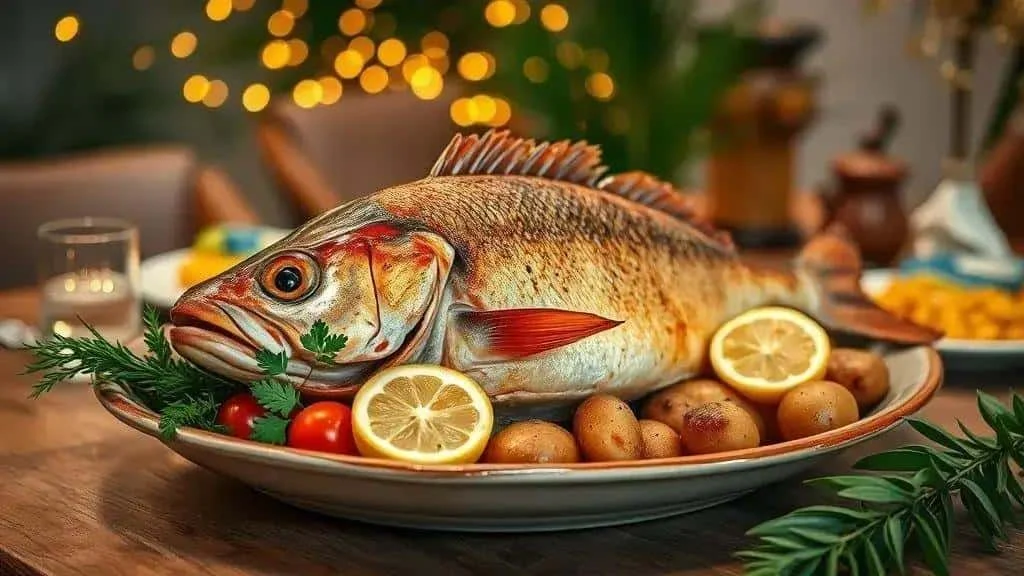
Whole roast fish makes an attractive centrepiece for New Year’s Eve. This guide covers lemon and herb seasoning, preparation, roasting and side dishes, with advice on checking doneness and removing bones. A 1.5–2 kg whole fish may provide 6–8 small servings with generous accompaniments, but edible yield varies with the species and whether the stated weight includes the head and bones.
Whole roast fish for New Year’s Eve is a welcoming dish to share: fragrant herbs, citrus and a tray of vegetables bring colour and flavour to the table. Here are practical steps for choosing the fish, seasoning it and serving it carefully.
Ingredients for Whole Roast Fish
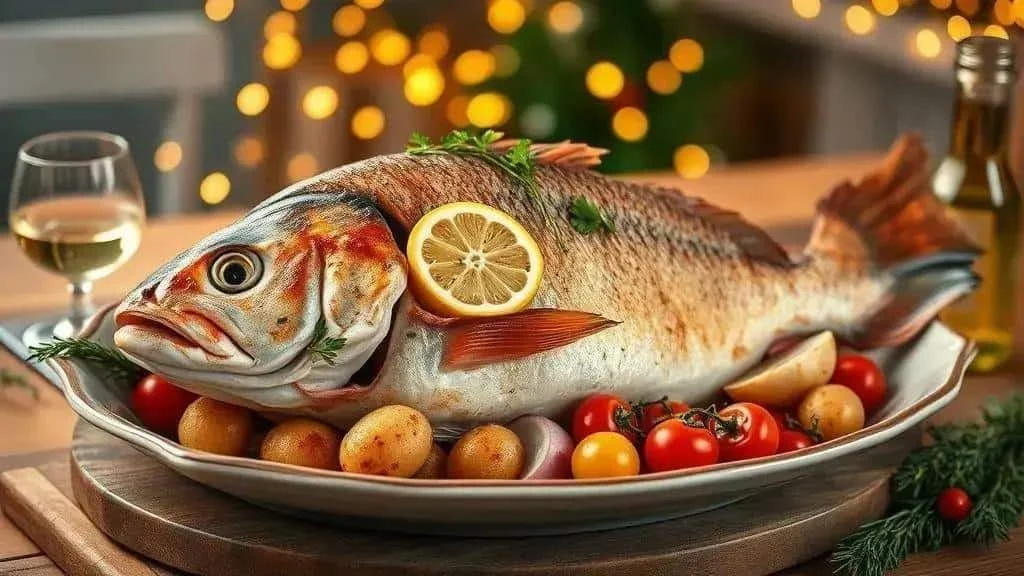
Choose fresh ingredients and check the fish’s likely edible yield with your fishmonger. A whole fish this size may provide 6–8 small servings; plan accordingly if fish is the main course.
- 1 whole fish, 1.5–2 kg — scaled and gutted. Sea bass, sea bream or snapper are options to discuss with a UK fishmonger; tilapia is another possibility. Availability, size and cooking time vary.
- 3 tbsp olive oil — for brushing the fish and lightly coating the tray; sunflower oil is an alternative.
- 2 tbsp butter — optional, for flavour. Use a suitable dairy-free spread or a little more oil if avoiding butter; the fish dish itself is not vegan.
- 4 garlic cloves — chopped or crushed; alternatively, use 1 tsp garlic powder.
- 1 medium onion — thinly sliced, for the tray and cavity.
- 1 red pepper — cut into strips; yellow or green pepper also works.
- 1 lemon — use part for juice and slice the rest for the cavity.
- 150 g small potatoes — halved and parboiled until nearly tender, around 8–10 minutes depending on size. This is a small tray garnish, not a full potato side for 6–8 people; cook extra potatoes separately if wanted.
- 10 cherry tomatoes — to roast around the fish.
- ¼ cup dry white wine — or the same volume of fish stock or water for a version without wine. A squeeze of lemon can be added separately to taste.
- A small bunch of parsley — chopped, with some reserved to finish; coriander or chives give a different flavour.
- 2 sprigs thyme or rosemary — for the cavity.
- Salt, to taste — use sparingly inside and over the skin.
- Freshly ground black pepper — to taste.
- 1 tsp sweet paprika — optional, for colour. Sweet paprika is not necessarily smoked; choose smoked paprika only if that is the flavour you want.
Substitutions and practical notes
Choose fish from a reliable supplier and keep it refrigerated until preparation. Clear eyes and a mild smell are useful quality clues, but cannot prove safety or replace storage and use-by instructions. Oil can replace butter for a different flavour without making the dish automatically lower in calories. Preheat the oven to 200 °C, or 180 °C fan.
How to Prepare Whole Roast Fish
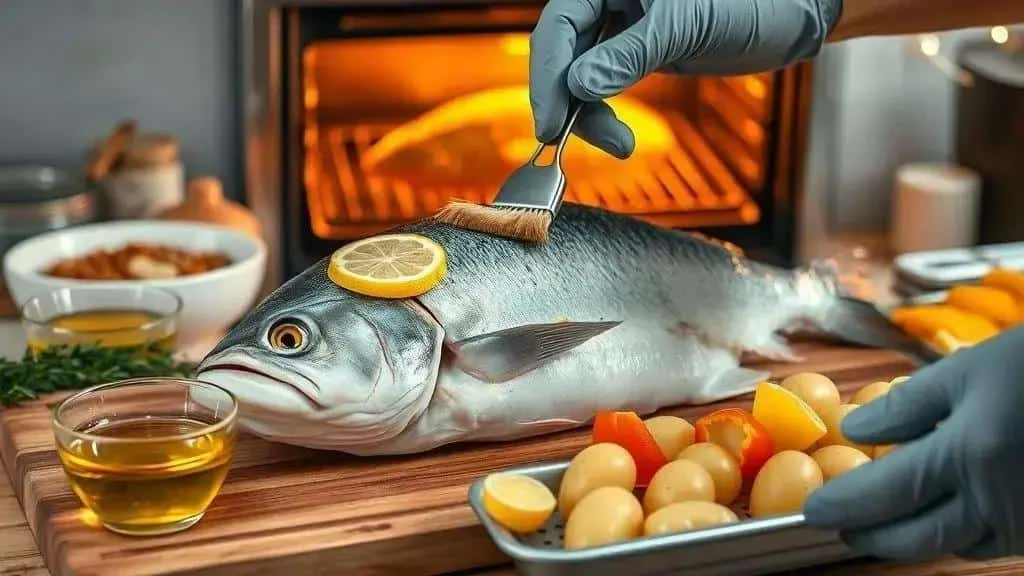
- Preheat the oven to 200 °C, or 180 °C fan with a shelf in the centre. Lightly oil a roasting tin large enough for the fish and vegetables.
- Check and dry the prepared fish: ask the fishmonger to scale and gut it. Check the cavity for debris and pat dry with kitchen paper. Remove any accessible loose bones with clean fish-bone tweezers; a whole fish will still contain its backbone and other bones.
- Score the sides: using a sharp knife on a stable board, make 3–4 diagonal cuts through the skin and into the thick flesh on each side without cutting through the backbone.
- Season inside and out: lightly season the cavity and skin with salt, pepper, lemon juice and crushed garlic. Place the lemon slices, herb sprigs and half the parsley loosely inside; do not pack the cavity tightly.
- Brush the skin: combine the oil with the melted butter, if using, and paprika. Reserve a little of this mixture for the vegetables, then brush the rest over the fish. Avoid adding more salt if it is already seasoned.
- Arrange the vegetables: drain the parboiled potatoes and combine with the sliced onion, pepper strips and cherry tomatoes. Lightly coat with the reserved oil mixture, season and spread around the fish without overcrowding.
- Add the liquid: pour ¼ cup wine, stock or water into the tin around the fish. There is no need to add a second allowance of butter after using the measured ingredients above.
- Roast: allow approximately 35–45 minutes as a starting point for a 1.5–2 kg fish. Thickness and oven performance matter more than the clock alone, so start checking before the end and continue if needed. Basting is optional and will soften the skin.
- Check doneness: the thickest flesh should be opaque, steaming hot and separate readily from the bone. For a temperature check using UK food-safety guidance, aim for 75 °C for 30 seconds, or 70 °C for two minutes in the thickest flesh, with the clean probe away from bone. Check any stuffing separately.
- Brown the skin if wanted: once the fish is cooked, a brief spell under the grill can add colour. Watch continuously; allow up to 3–5 minutes, but stop sooner if it browns quickly.
- Rest briefly: remove from the oven and let the fish settle for a few minutes while you arrange the serving dishes. A loose foil cover retains warmth but softens crisp skin; serve promptly.
- Portion and serve: remove woody herbs and loose lemon slices from the cavity. Lift the cooked flesh away from the backbone with suitable serving utensils, checking each portion carefully for bones. Serve with the roasted vegetables and reserved parsley.
Practical tips for beginners
Use proper fish-bone tweezers for loose bones and keep the fish refrigerated until you are ready to prepare it. Do not leave it out to reach room temperature. Use a timer as a reminder, then check the fish itself rather than relying only on minutes.
If the surface browns too quickly, reduce the oven to 180 °C, or 160 °C fan and loosely cover the top with foil. Continue cooking and check the thickest part; a lower oven setting may extend the time.
For a butter-free version, use oil sparingly and keep the onion, lemon and herbs in the cavity. Check any spread or stock if you are avoiding milk because of an allergy.
Whole Roast Fish Variations
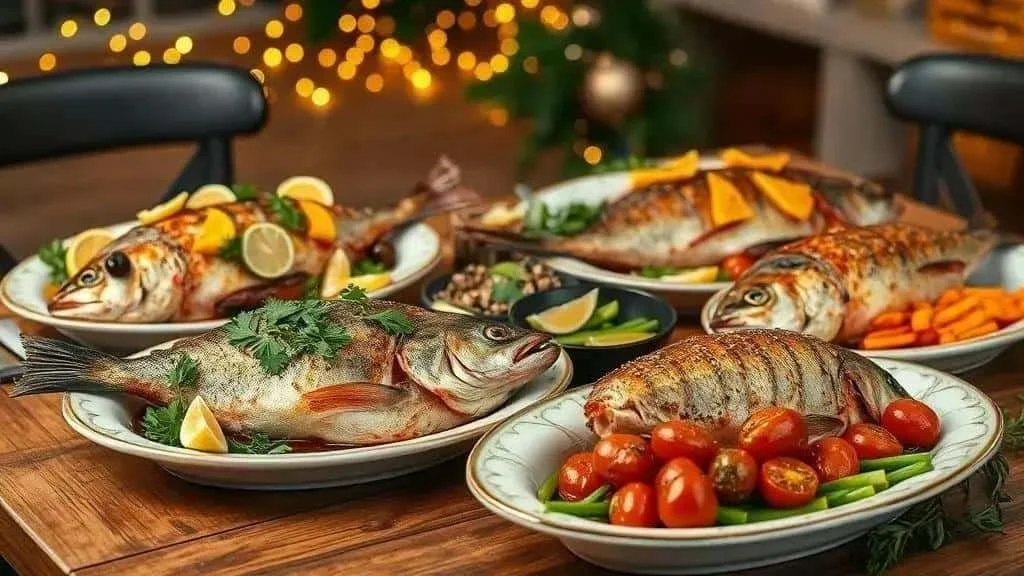
These flavour ideas adapt whole roast fish to different tastes. Use one seasoning approach instead of adding every variation to the main recipe.
Mediterranean style: lemon, herbs and olives
Lemon, olive oil and herbs give the fish a fresh, aromatic flavour. The following amounts replace the main seasoning.
- 1.5–2 kg whole prepared fish — sea bass, snapper or another suitable variety.
- 3 tbsp olive oil — extra virgin if you enjoy its flavour.
- 2 lemons — some sliced, some juiced, adding juice to taste.
- ⅓ cup sliced olives — black or green, with stones removed.
- Thyme sprigs and parsley — for the cavity and to finish.
Tropical style: coconut, lemon and coriander
Coconut milk adds a creamy sauce that works well with fresh salads. It will not produce the same dry, crisp skin as an uncovered oil-brushed fish.
- ½ cup coconut milk — a reduced-fat product can be used if preferred.
- Zest and juice of 1 lemon — add the juice to taste.
- Fresh coriander leaves — chopped, to finish.
- Pineapple or mango slices — to roast alongside, checking that they do not burn.
Ginger, soy sauce and spring onion
A short refrigerated marinade gives a stronger savoury flavour. Check soy sauce for soya and wheat, and sesame products for sesame allergens.
- ¼ cup soy sauce — reduced-salt if preferred; do not add the main recipe’s salt automatically.
- 1 tbsp freshly grated ginger.
- 2 tbsp honey or soft brown sugar — to help the surface caramelise; watch closely as sugar can burn.
- Spring onions and sesame seeds — to finish.
Brazilian style: crisp farofa and roast tomatoes
Toasted cassava flour, known as farofa, adds a contrasting texture. Serve it separately rather than packing a dense filling into the fish.
- 1 cup prepared farofa — seasoned with onion and butter, or oil.
- 10 cherry tomatoes — roasted around the fish.
- 1 sliced onion — roasted in the same tin.
- Chopped parsley — to finish.
Butter-free fish with herbs
Omit butter and use a modest amount of oil with plenty of herbs. This changes the fat used; it does not automatically establish a low-fat or low-calorie recipe.
- 3 tbsp olive oil in total — use as the main cooking fat, without adding the butter.
- Mixed parsley, thyme and basil — about 2 tbsp chopped.
- Juice of 1 lemon — add to taste.
- A little sea salt — according to taste and the other ingredients.
Charcoal barbecue variation
For an outdoor barbecue, a suitable fish basket helps support the whole fish. Manage the heat carefully and confirm that the centre is cooked, even if the skin has browned.
- Olive oil, garlic and pepper — brush over the fish before cooking.
- A controlled medium charcoal heat — use the barbecue outdoors only, with an indirect area if needed to finish cooking without burning.
- Rosemary sprigs — place in the cavity for aroma rather than using loose sprigs as a support over flames.
Fish with prawn farofa
A prawn, onion and herb farofa makes a festive accompaniment. Cooking it separately makes it easier to check both the prawns and the fish. If you choose to put filling inside the fish, the centre of that filling must also reach a safe cooking temperature.
- 200 g small prawns — peeled, cleaned and cooked thoroughly.
- 1 cup prepared moist farofa — made with butter and onion.
- Chopped parsley and spring onion — 2 tbsp in total.
Applying the variations
Adjust cooking time to the fish’s thickness and the filling or sauce used, checking doneness rather than relying on a fixed duration. Short acidic marinades of about 15–30 minutes help preserve texture; keep them refrigerated. Acid may change the flesh’s appearance, but it does not make raw fish safely cooked. Finish with a contrasting accompaniment and fresh herbs.
Choosing, Preparing and Arranging the Fish
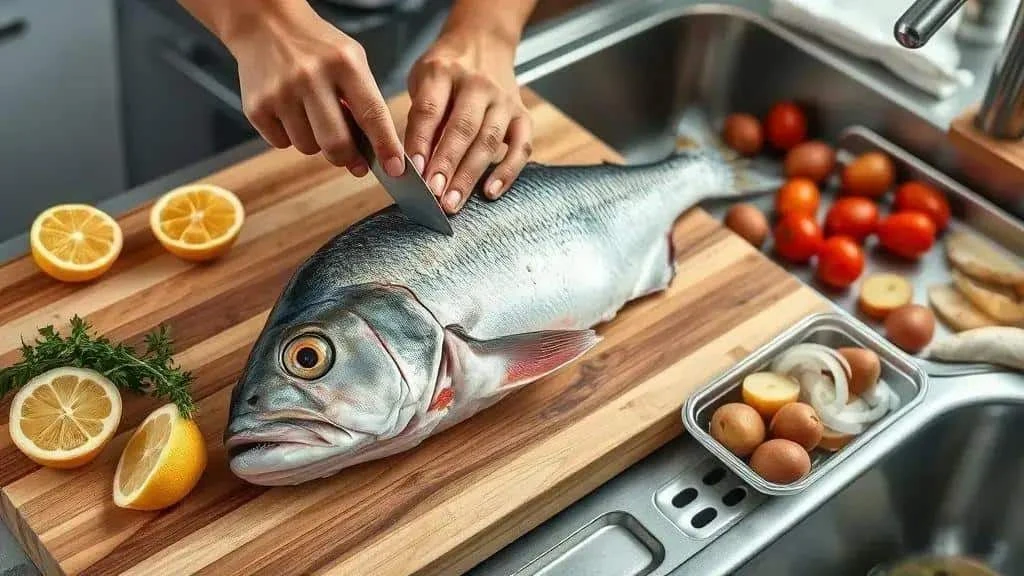
A whole fish weighing 1.5–2 kg loses a substantial part of that weight as head, bones and other inedible parts. Ask the fishmonger whether it will provide the portions you need; 6–8 is an estimate for smaller servings with sides, not a guaranteed main-course yield.
Quality checks when buying
- Clear, prominent eyes — a useful quality sign in a fresh whole fish.
- Fresh-looking red or pink gills — rather than dark, slimy gills.
- A mild smell — avoid fish with a strong unpleasant or ammonia-like odour.
- Firm flesh — another quality clue. None of these checks replaces proper chilling, use-by dates or advice from a reliable supplier.
Equipment and initial preparation
- A sharp kitchen knife — for scoring the prepared fish.
- Clean food-use fish-bone tweezers — do not use personal grooming tweezers.
- A large, stable chopping board — reserved for the raw fish during preparation.
- Kitchen paper and a roasting tin — large enough for safe handling.
Checking a cleaned whole fish
- Scaling: the simplest option is to ask the fishmonger to do this. If experienced in scaling at home, use a scaler on a stable surface and contain loose scales. Avoid splashing raw-fish juices around the sink and worktop.
- Gutting: have the fishmonger remove the internal organs and clean the cavity, especially if you have not done it before. Keep raw fish and its juices away from ready-to-eat foods, and check the prepared cavity before cooking.
- The head is optional: ask the fishmonger to remove it if you prefer, or retain it for a whole-fish presentation. Remember that this affects the meaning of the purchased weight.
- Loose bones: remove any accessible loose bones with clean fish-bone tweezers in good light. Do not expect to remove every bone from an intact whole fish before roasting.
- Drying: pat the surface and cavity dry with kitchen paper, then discard the paper. A drier surface browns more readily.
- Check the cavity: remove visible loose debris with kitchen paper. If the fish has not been properly prepared, ask the supplier for help rather than cutting blindly around the backbone.
- Score the skin: make 3–4 diagonal cuts through the skin and into the thick flesh on each side, keeping clear of your fingers and without cutting the fish into pieces.
Arranging the roasting tin
- Season the cavity: add a little salt and lemon juice, then loosely arrange lemon slices and thyme, rosemary or parsley inside.
- Brush the skin: use the measured oil and garlic mixture, with a little paprika if wanted.
- Optional additions: thin onion slices, herbs or a few stoned olives can go loosely in the cavity. Serve substantial prawn or farofa fillings separately, or check their centre temperature as well as the fish.
- Set the fish in the tin: arrange parboiled potatoes, onion and tomatoes around it, then add the measured ¼ cup wine or stock.
- Protect from over-browning: cover loosely with foil if needed, removing it towards the end for colour. Keep foil away from the grill element.
- Oven position: use the middle shelf and the main recipe’s 200 °C, or 180 °C fan, as the starting setting. Adjust only as needed and keep checking doneness.
Quick reminders
- Keep the fish chilled: take it out only when ready to prepare and cook. There is no need for a 20–30 minute room-temperature rest.
- Season cautiously: salty stock, soy sauce and olives can supply much of the salt required.
- Prevent cross-contamination: wash hands with soap after handling raw fish, and thoroughly clean boards, knives and surfaces. Drying hands alone is not sufficient. Use clean utensils for cooked portions.
Seasonings and Marinades for Roast Fish
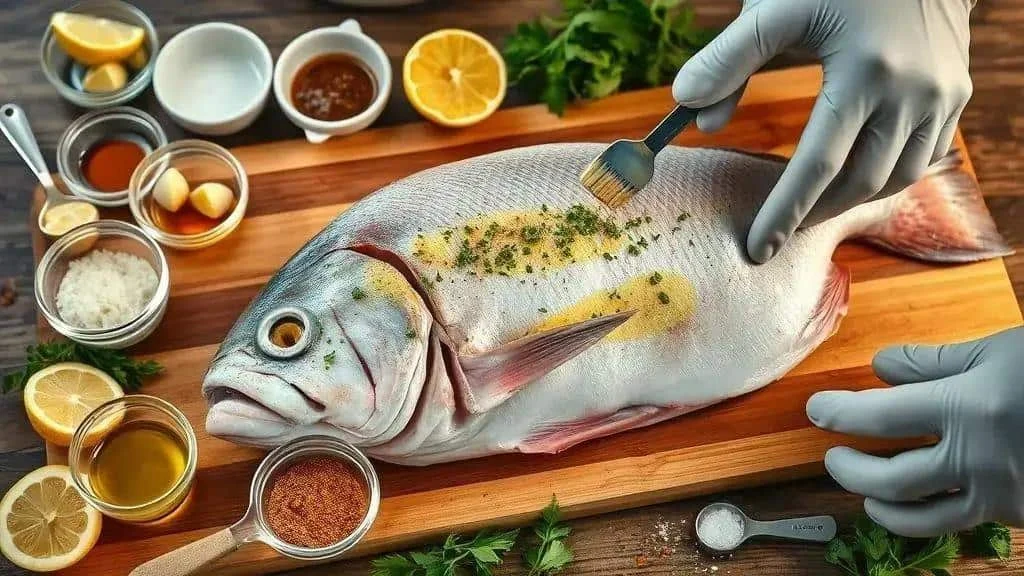
Choose one of these seasoning ideas rather than combining all their salt, oil and liquid with the main recipe. The quantities below describe alternatives.
Short marinades
- Lemon and herbs: combine juice from 2 lemons, 4 tbsp olive oil, 2 crushed garlic cloves and 1 tbsp chopped parsley, with salt and pepper to taste. Use only enough juice to suit the fish and refrigerate for 20–30 minutes.
- White wine and thyme: use ¼ cup dry white wine, 2 tbsp olive oil, 1 tsp lemon zest, 1 thyme sprig and 2 sliced garlic cloves. Refrigerate for 15–30 minutes; use stock instead of wine if avoiding alcohol.
- Coconut and chilli: combine ½ cup coconut milk, zest of 1 lemon, up to 1 tsp chopped fresh red chilli and coriander to taste. Refrigerate for about 20 minutes.
- Soy and ginger: combine ¼ cup soy sauce, 1 tbsp honey, 1 tbsp grated ginger and 2 tbsp sesame oil. Refrigerate for about 15 minutes. This is a separate marinade from the sweeter variation above; check soya, wheat and sesame allergens.
Applying a marinade
- Pat the fish dry: remove excess surface moisture with kitchen paper.
- Score carefully: make a few diagonal cuts through the skin into the thick flesh.
- Season the cavity: spread a little marinade inside.
- Coat the outside: brush the rest over the skin. Keep any sauce for serving in a separate clean container before it touches raw fish.
- Refrigerate for the short marinating time: about 15–30 minutes is a texture guideline for these acidic mixtures, not a preservation method. Discard used raw-fish marinade unless it is thoroughly cooked as part of the dish; never pour it raw over the finished fish.
Dry seasoning alternatives
- Simple paprika seasoning: mix 1 tsp sweet paprika and ½ tsp black pepper, then add salt sparingly. A whole tablespoon of salt may be excessive, particularly with salted stock. Season shortly before roasting and keep the fish chilled.
- Spiced rub: mix 1 tbsp ground cumin, 1 tbsp ground coriander and up to 1 tsp chilli flakes. This is a bold seasoning blend; apply only as much as suits your taste rather than treating all of it as compulsory.
Building flavour
- Taste before adding more salt: season lightly at the start, then assess the cooked sauce and accompaniments.
- Herbs in the cavity: loosely arranged herbs and lemon slices release aroma during cooking.
- Optional herb butter: spread a little of the measured butter in the scoring cuts or cavity. There is no need to prise delicate fish skin away from the flesh.
- Optional basting: spoon over a little hot tray liquid if the surface looks dry. Repeated basting adds moisture but works against crisp skin.
- Finish with acidity: add a small squeeze of lemon or a little suitable vinegar to the cooked fish if needed.
- Add contrast: offer farofa, toasted nuts or crisp potatoes separately.
- Taste cooked components: adjust the seasoning of safely cooked vegetables and sauce before serving. Do not taste raw fish or its uncooked marinade.
Practical flavour tips
- Avoid lengthy acidic marinades: delicate white fish changes texture quickly; short refrigerated marinating is enough for these recipes.
- Use fresh herbs and citrus: they give a clear aroma without relying on heavily salted seasoning mixes.
- Balance the flavours: taste for salt, acidity and richness in the cooked dish rather than adding every optional ingredient.
Side Dishes for a Festive Fish Meal
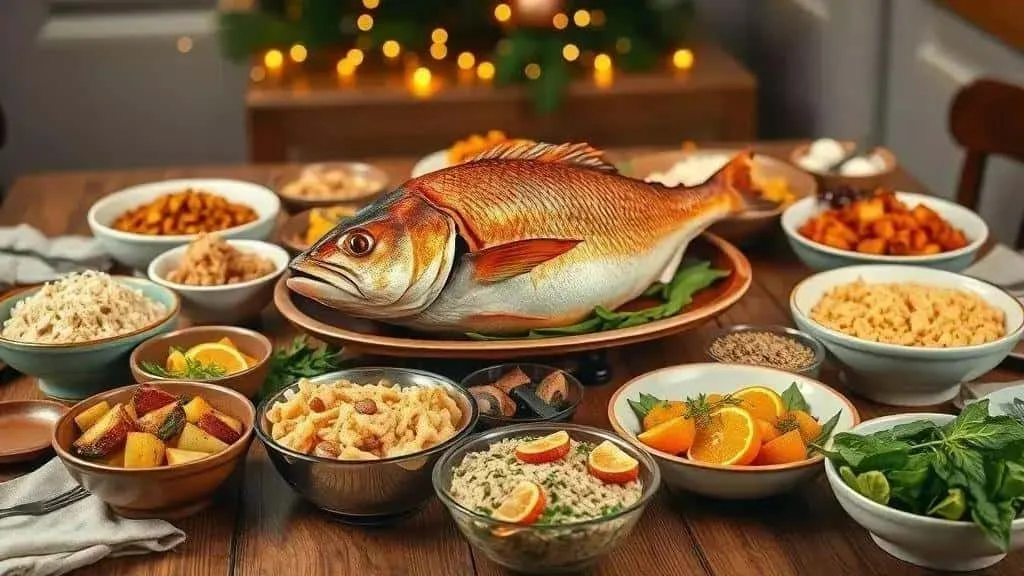
Choose a few complementary accompaniments rather than preparing every dish below. These are separate recipes with their own ingredients, not additions to the fish’s measured oil and butter.
Crisp Brazilian farofa
- 1 cup cassava flour suitable for farofa — follow its packet instructions; it is not tapioca starch.
- 2 tbsp butter — or olive oil for a butter-free version.
- ½ chopped onion.
- 2 tbsp diced bacon — optional; omit it and use toasted nuts for a meat-free version, checking allergies.
- Chopped parsley and spring onion, to taste.
- Soften the onion in the butter or oil.
- Add the bacon if using and cook thoroughly. For the nut version, skip the bacon entirely and fold in the toasted nuts near the end.
- Stir in the cassava flour and cook, stirring, until lightly toasted and cooked according to its packet.
- Remove from the heat, add the chopped herbs and adjust the seasoning.
Rice with raisins and almonds
- 2 cups white rice — rinse if required by its packet.
- Water or vegetable stock according to the rice packet — allow approximately 3 cups, but the correct amount depends on the variety.
- ⅓ cup raisins — soak in warm water for 10 minutes, then drain.
- ⅓ cup flaked almonds — toasted.
- 1 tbsp butter or olive oil.
- Coat the rice in the butter or oil over the heat for 1–2 minutes.
- Add the measured liquid and cook according to the packet until the rice is tender.
- Fold in the drained raisins and almonds and rest briefly, covered. Serve promptly; cool any leftovers quickly, ideally within one hour, refrigerate and use within 24 hours. Reheat only once.
Potato salad with yoghurt dressing
- 500 g potatoes — diced, cooked and cooled promptly.
- 1 medium carrot — diced, cooked and cooled.
- ½ cup peas — cooked and cooled.
- ½ cup plain yoghurt — for a tangy dressing.
- 2 tbsp mayonnaise — use a suitable commercial product made with pasteurised egg.
- Salt and pepper, to taste, plus chopped herbs.
- Combine the cooled vegetables in a clean bowl.
- Fold in yoghurt and mayonnaise until evenly coated.
- Season and chill for about 30 minutes before serving. Keep refrigerated at 5 °C or below until needed, rather than leaving it on the counter while the fish cooks.
Mashed potatoes
- 1 kg potatoes — peeled and boiled until tender.
- ½ cup milk — or a suitable unsweetened plant drink.
- 2 tbsp butter — or olive oil added gradually to taste. Replacing butter with a larger quantity of oil does not automatically make the dish lighter.
- Salt and a pinch of nutmeg.
- Drain and mash the potatoes while still hot.
- Add the butter and milk gradually until the mash has the consistency you like.
- Season with salt and a little nutmeg, then serve hot.
Roasted vegetables with herbs
- 400 g carrots, courgettes and peppers — cut into reasonably even pieces, with firmer carrots cut smaller.
- 3 tbsp olive oil
- 1 tbsp fresh rosemary or thyme.
- Salt and pepper, to taste.
- Toss the vegetables with the oil, herbs, salt and pepper.
- Spread in a separate roasting tin without piling them up. Roast at 200 °C, or 180 °C fan, for around 20–30 minutes, continuing until tender.
- Turn halfway through for more even colour.
Green salad with citrus
- Mixed salad leaves — such as lettuce, rocket and watercress, washed as required.
- 1 orange, segmented — remove the peel and pips.
- ¼ cup toasted walnuts — optional where allergies are a concern.
- Dressing: 3 tbsp olive oil, 1 tbsp vinegar, salt and pepper.
- Arrange the leaves on a platter and add the orange segments.
- Scatter over the walnuts and dress just before serving.
Quinoa with herbs
- 1 cup quinoa — rinsed according to its packet.
- 2 cups water or stock — or the amount specified on the packet.
- 2 tbsp chopped parsley and chives.
- Juice of 1 lemon, added to taste, and 2 tbsp olive oil
- Cook the quinoa according to its packet until tender; allow around 12–15 minutes.
- Fold in the herbs, lemon and oil, then adjust the seasoning.
Choosing accompaniments
- Contrast textures: pair crisp farofa or nuts with creamy mash or potato salad.
- Include something fresh: a citrus salad balances a richer butter or coconut sauce.
- Serve separately: offer side dishes in their own bowls, with separate utensils and clear information about allergens such as fish, crustaceans, milk, egg, soya, wheat, sesame and nuts.
Presentation and Serving a Whole Fish
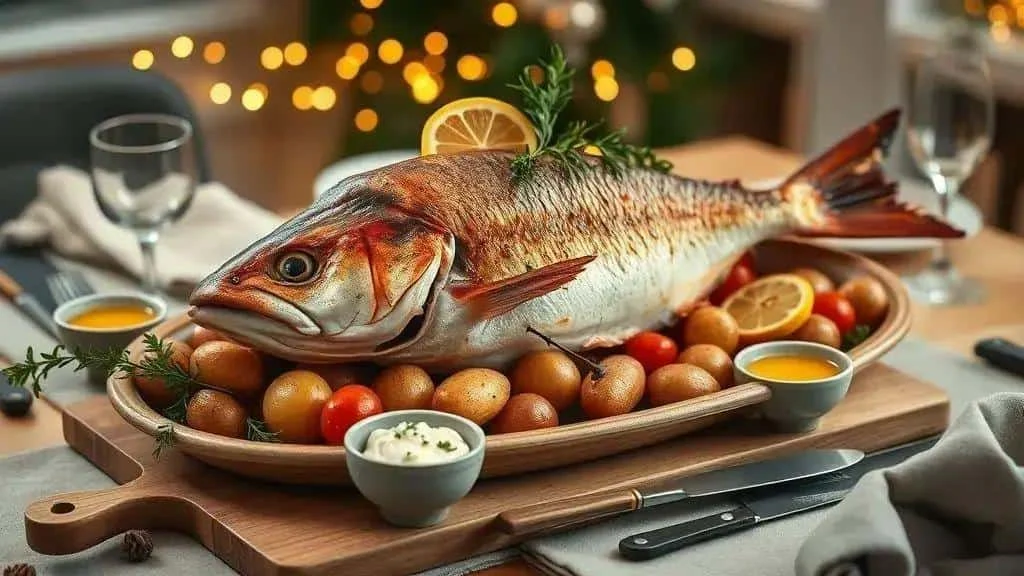
A whole roast fish needs a stable platter, an easy serving route and careful removal of bones as well as attractive colours.
Choose a suitable platter slightly larger than the fish, with a rim to hold the sauce. Use heat-resistant crockery and avoid sudden temperature changes with glass.
Arrange vegetables in small groups around the fish rather than piling them over it: potatoes on one side, tomatoes and peppers on the other. Serve additional sides separately if the platter is crowded.
Simple decoration
- Lemon slices add colour, but remove loose pips and make it easy for guests to set rind aside.
- Fresh herbs such as parsley or coriander add colour. Remove woody thyme or rosemary stalks before eating.
- A crisp accompaniment can be offered in a separate bowl so guests add it as they like.
- Add colour with vegetables such as roast tomatoes and red pepper around the golden fish.
Serve promptly on a warmed, suitable platter. Covering tightly softens the skin; leaving food out for a long time is not the answer. Cool leftovers promptly, refrigerate and use within 48 hours unless another ingredient requires a shorter time; rice needs the shorter guidance given above.
Set up for easy serving: provide broad fish-serving utensils and small spoons for sauces. The host can portion the flesh onto individual plates, checking carefully for bones.
- Place the platter securely: position the fish and side dishes where they can be reached without leaning over hot food.
- Lift flesh away from the bones: work along one side of the backbone, remove the skeleton carefully when exposed, then portion the remaining flesh. Check for small bones; no method guarantees that every portion is bone-free.
- Offer sauces separately: use clean sauce jugs for citrus sauce or herb butter.
- Serve promptly: help anyone who needs assistance with bones or hot dishes, including children, rather than leaving portions to cool while the whole table is arranged.
- Use only cooked tray juices: spoon a little hot sauce over portions if wanted. Never add leftover raw marinade at the table.
Finish simply: a little olive oil and chopped herbs add gloss and aroma. Taste before adding any extra salt.
If adding edible flowers or citrus segments, use food-grade ingredients, remove pips and keep non-edible decorations away from the food.
A festive centrepiece
Whole roast fish makes an attractive New Year’s Eve centrepiece. Choose a suitable fish, keep the seasoning balanced and check doneness carefully rather than aiming for a particular colour alone.
Try one of the flavour variations with a few well-chosen side dishes. Adjust the cooking time to the fish’s thickness, and remember that tender flesh and crisp skin require different handling.
Thank you for reading. Follow us on social media and visit I Love Christmas for more festive recipes and ideas. You can also share a photo of your celebration with us.
Enjoy your festive meal and the time spent around the table.
Whole Roast Fish: Frequently Asked Questions
Which fish is best for roasting whole?
Ask a fishmonger for a whole fish suitable for roasting, such as sea bass, sea bream or snapper. A 1.5–2 kg fish does not provide that weight in edible flesh; 6–8 servings may be small, so discuss portions if it will be the main course. Tilapia is another option where available.
How do I judge a fish’s quality when buying?
Look for clear eyes, fresh-looking gills, a mild smell and firm flesh, and buy from a reliable supplier. These are quality clues, not proof of microbiological safety. Follow chilling and use-by instructions.
What oven temperature and cooking time should I use?
Start at 200 °C, or 180 °C fan. A 1.5–2 kg fish may take roughly 35–45 minutes, but thickness, filling and the oven can change that. Check the thickest flesh, away from bone: it should be opaque, steaming hot and separate readily. A UK temperature check is 75 °C for 30 seconds or 70 °C for two minutes.
How can I get crisper skin without drying out the fish?
Pat the fish dry, lightly brush with oil and avoid repeated basting. A brief, closely watched finish under the grill can help once the fish is cooked. Sauces, coconut milk and tight covers soften the skin, so choose the finish you prefer.
How long should I marinate it?
For the acidic marinades here, about 15–30 minutes in the fridge is enough to flavour the fish without excessively changing its texture. Non-acidic mixtures may be used for longer refrigerated marinating, but follow a suitable recipe and the fish’s storage limits. Acid does not safely cook raw fish, and used marinade must not be served raw.
How should I clean it and handle the bones?
Ask the fishmonger to scale and gut the fish. At home, check the cavity, pat dry and remove accessible loose bones with clean food-use tweezers. Keep raw-fish juices away from ready-to-eat foods and clean hands and equipment thoroughly. After roasting, lift flesh away from the skeleton and check every portion for remaining bones.
Sources and Further Reading
- Food Standards Agency — cooking food safely
- Food Standards Agency — chilling, freezing and defrosting
- NHS — fish and shellfish