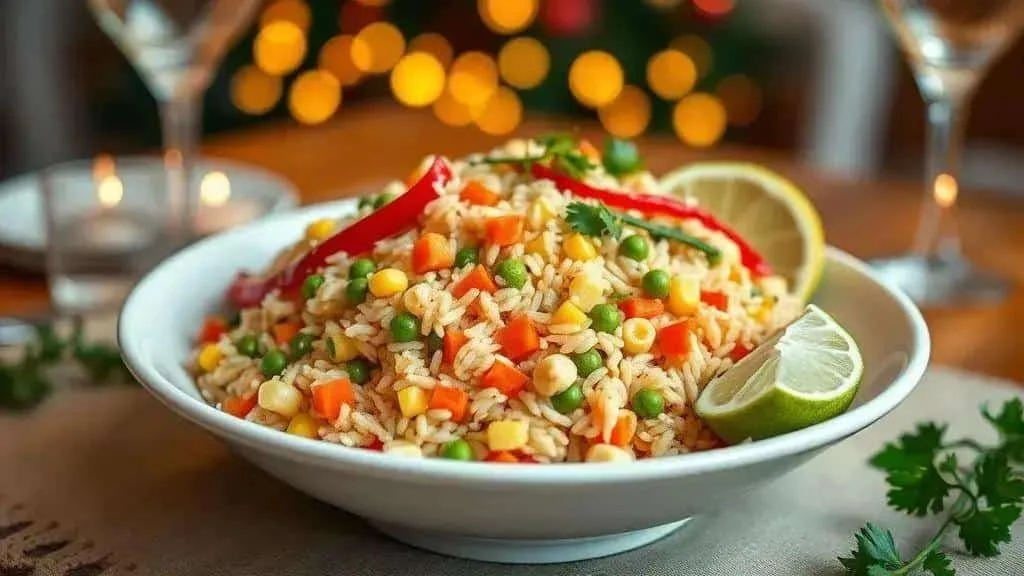
Brazilian arroz à grega is colourful rice with carrots, peas, sweetcorn and peppers, often with raisins or olives. Sauté the vegetables, cook the rice with suitable stock and finish with herbs for a festive side to meat, fish or a plant-based main.
Brazilian vegetable rice, or arroz à grega, adds colour to a New Year’s Eve table. Despite its Portuguese name meaning Greek-style rice, this article presents the Brazilian festive dish, with simple steps and several variations.
Ingredients for colourful Brazilian vegetable rice
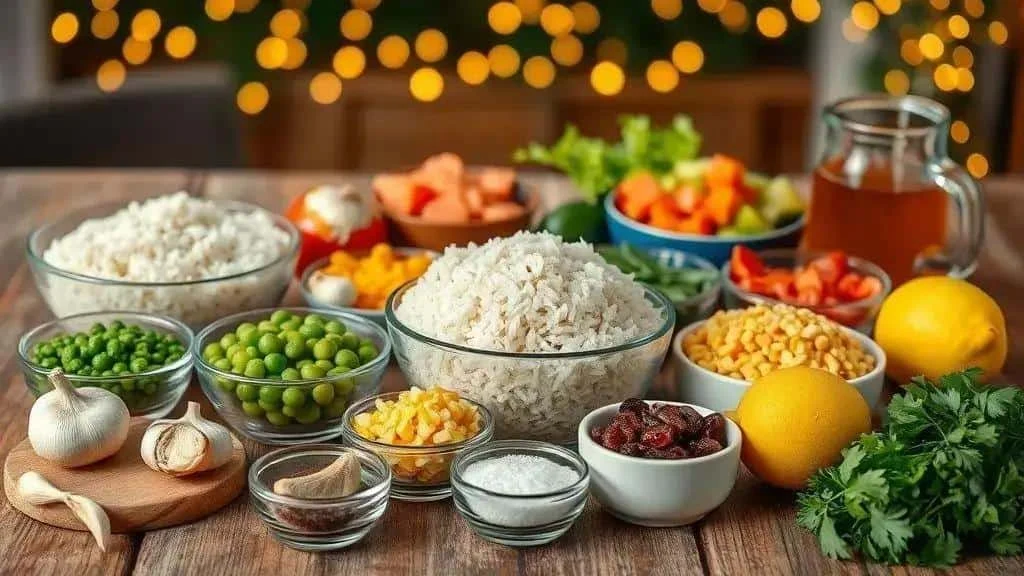
For this Brazilian vegetable rice for New Year’s Eve, measure and prepare the following ingredients:
- 2 cups long-grain white rice – basmati or jasmine are alternatives, but their water requirements may differ. Rinse if the packet recommends it and drain well.
- 3 tablespoons olive oil OR 2 tablespoons butter – oil avoids milk ingredients, but this quantity is not automatically lower in calories than the butter option.
- 1 medium onion – finely chopped.
- 2 garlic cloves – chopped or crushed.
- 2 medium carrots – finely diced, approximately 1 cup depending on size.
- 1 cup peas – fresh or frozen, cooked as required by the packet.
- 1 cup cooked sweetcorn – drained tinned sweetcorn is convenient.
- ½ red pepper – finely diced.
- ½ green pepper – finely diced, optional.
- ½ cup raisins, optional – soak briefly in warm water and drain if particularly dry.
- ⅓ cup green olives, optional – pitted, chopped and drained.
- Hot vegetable stock or water, according to the rice packet – allow approximately 3 cups for 2 cups rice, but this ratio is not suitable for every variety. Use the same measuring cup throughout.
- 1 bay leaf, optional – remove before serving.
- Salt – to taste; start cautiously because stock and olives may already be salty.
- Freshly ground black pepper – to taste.
- 2 tablespoons chopped parsley – to finish.
- Zest of 1 lemon, optional – finely grated, avoiding the white pith.
Substitutions and ingredient tips
Frozen peas and sweetcorn are convenient, but cook them according to the packet rather than merely warming them. For a vegan version, choose oil and suitable vegetable stock. Stirring the rice briefly in the oil before adding stock can add flavour. Raisins can be replaced with chopped dried apricots. Taste before adding more salt.
How to make Brazilian vegetable rice
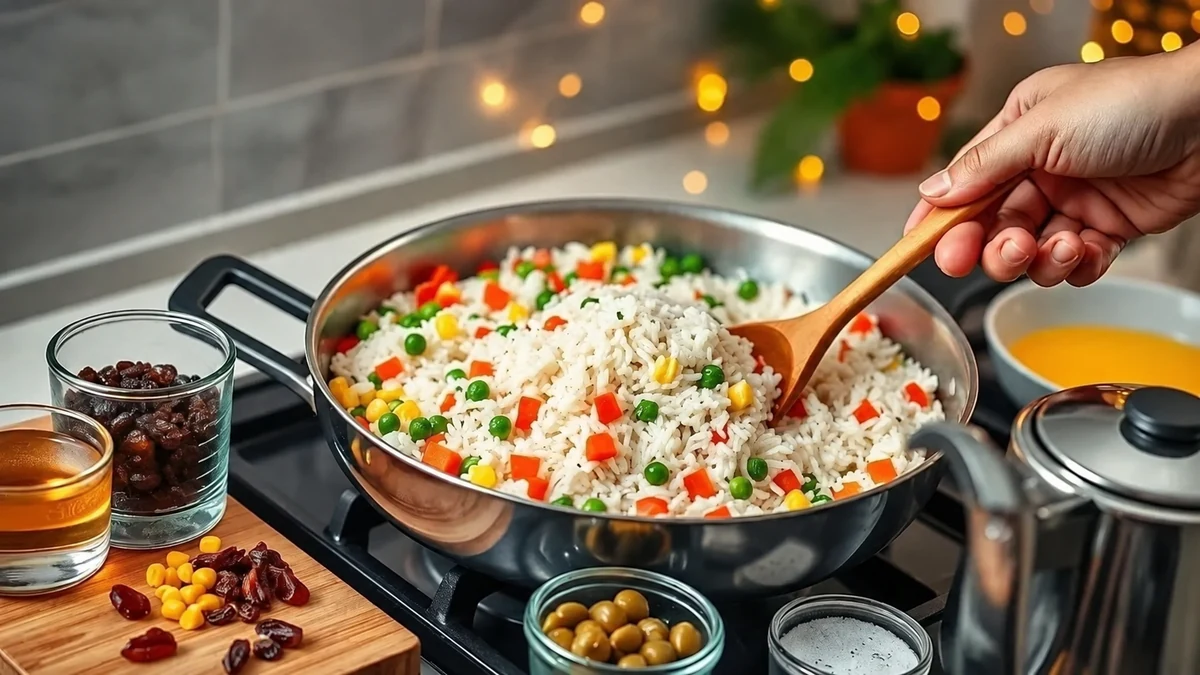
- Prepare the rice: measure 2 cups and follow its rinsing instructions, then drain well. Soaking is not essential and changes the water and cooking requirements, so only do it when the packet method calls for it.
- Heat the stock: prepare the amount required for your rice. The 3-cup measure is a starting reference, not a universal ratio.
- Prepare the vegetables: chop the onion, garlic, carrots and peppers. Measure the peas and sweetcorn, and prepare any raisins and olives you plan to use.
- Soften the onion: heat the oil or butter in a large pan over medium heat. Cook the onion for about 2–3 minutes until beginning to soften.
- Add garlic and carrots: stir the garlic for about 30 seconds, then add the finely diced carrots and cook for 3–4 minutes.
- Add the peppers: cook for a further 2 minutes. The peas and cooked sweetcorn can be cooked separately as needed and folded in towards the end, which avoids unnecessarily softening them during the full rice cooking time.
- Add the rice: stir the drained rice through the fat and vegetables for 1–2 minutes. Add pepper, a little salt if needed, and the optional bay leaf.
- Pour in the hot stock: use the measured amount appropriate to the rice, stir once to level it and bring to the boil.
- Cover and simmer: reduce the heat and cook according to the packet, often around 15–18 minutes for white rice. Avoid repeatedly stirring or lifting the lid. Check that the rice is tender and the liquid absorbed; continue cooking with a little extra hot water if necessary.
- Rest briefly: once cooked, take the pan off the heat and leave covered for 5–10 minutes before fluffing. Resting is not a substitute for completing the cooking of hard grains.
- Finish: remove the bay leaf, fluff gently and fold in the hot cooked peas and sweetcorn. Add the optional drained raisins and chopped olives, parsley and lemon zest. Serve promptly while hot.
- Taste and serve: adjust seasoning and transfer to a serving dish. A few washed parsley leaves finish the presentation.
- Storage: cool rice quickly, ideally within an hour, and refrigerate below 5°C. Use within 24 hours, reheating once until steaming hot throughout. Rice left warm too long may remain unsafe even after reheating.
Quick tips
Stir the rice in the fat briefly before adding stock if you enjoy that flavour. Use a suitable stock amount, season cautiously and choose oil with vegan stock for a plant-based dish. Add lemon zest at the end for freshness.
Brazilian vegetable rice variations
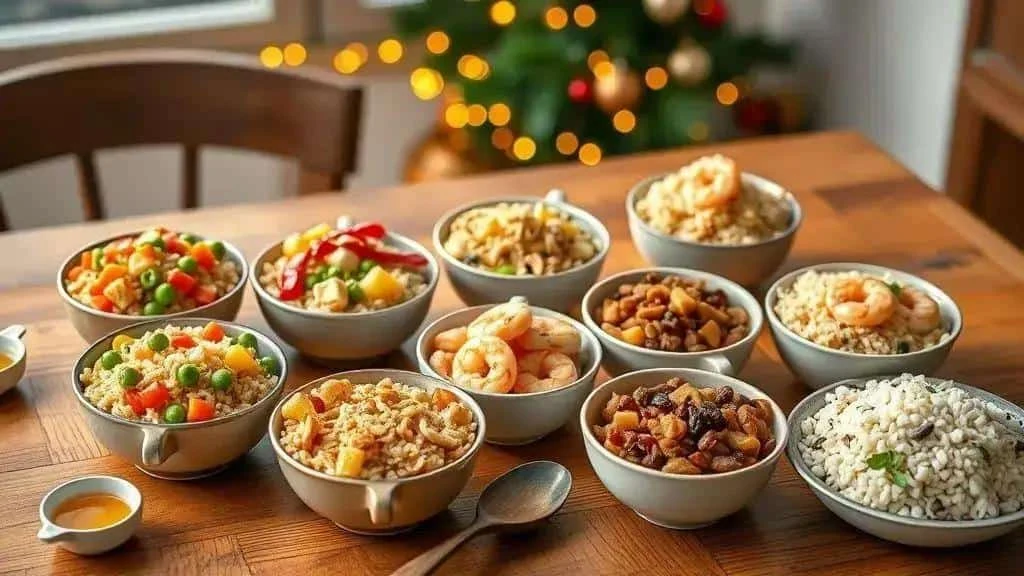
Adapt colourful Brazilian vegetable rice with one of these options. Keep the main onion, garlic and vegetable base as desired, and treat the additions as alternatives rather than combining them all.
Vegan variation
Choose plant-based ingredients throughout; replacing butter does not by itself establish a low-calorie dish.
- 3 tablespoons olive oil – instead of butter.
- Hot vegetable stock – use the rice packet’s quantity; choose lower-salt stock if preferred. Organic does not automatically mean lower-salt.
- 2 cups long-grain white rice
- 1 cup peas and 1 cup sweetcorn – cook as required.
- Up to ½ cup chopped green olives, optional – this variation uses a little more than the base recipe; season accordingly.
Optional addition: fold in cooked tofu cubes for extra protein and texture. Check soy and any marinade allergens.
Prawn variation
Prawns turn the rice into a more substantial dish and introduce a crustacean allergen.
- 300 g medium prawns – peeled, heads removed and cleaned; note whether they are raw or already cooked.
- 2 tablespoons olive oil – for cooking the prawns.
- 2 cups rice and stock in the quantity required by its packet
- ½ red pepper and ½ green pepper, finely diced.
Method: season raw prawns with pepper and a little lemon, then cook until opaque, firm and hot throughout; 1–2 minutes per side is only a size-dependent guide. Fold into the finished hot rice. Follow packet directions for precooked prawns and avoid unnecessary repeated heating. Lemon does not replace cooking.
Pineapple and nut variation
Pineapple gives a sweet contrast, while toasted nuts add crunch.
- 1 cup diced pineapple – fresh or well-drained tinned fruit.
- ⅓ cup toasted nuts – such as cashews or almonds; disclose nut allergens.
- 2 cups rice and stock according to the rice packet
- Zest of 1 lemon – to finish.
Serving tip: add the nuts just before serving to retain their crunch. Whole nuts are unsuitable for children under five; choose an age-appropriate texture.
Olives and cheese variation
This salty, tangy version pairs well with roast vegetables or a main course of your choice.
- ½ cup chopped olives – pitted Kalamata or green olives.
- 100 g crumbled feta – or a suitable goat’s cheese. Check milk allergens and vegetarian suitability where relevant.
- ½ cup halved cherry tomatoes, optional
Seasoning: add the cheese before deciding whether the rice needs more salt.
Brown rice variation
Brown rice offers a different texture and generally more fibre than white rice, although the finished dish depends on all its ingredients.
- 2 cups brown rice – instead of white rice.
- Hot stock according to the brown rice packet – allow approximately 3½–4 cups, but the appropriate amount depends on the variety and cooking method.
- ½ cup cooked quinoa, optional – fold in hot at the end, rather than treating it as uncooked grain.
Timing: follow the packet, often around 35–45 minutes, then rest as instructed. Cook the vegetables separately so they do not soften excessively during the longer rice cooking time.
Raisins and apricots
Dried fruit adds the sweet-and-savoury contrast often associated with Brazilian festive rice.
- ½ cup raisins – soak briefly in warm water and drain if needed.
- ⅓ cup chopped dried apricots, optional – check for sulphites if relevant to guests.
- 2 cups rice and stock in the packet’s recommended quantity
Flavour tip: season moderately and add lemon zest for a citrus contrast.
Black rice or mixed grains
Contrasting grains change both the colour and texture of the dish.
- 1 cup white rice plus 1 cup black rice or wild rice – cook separately unless a packaged mixture provides its own instructions.
- Stock or water for each grain’s cooking method – do not apply one 3–3½ cup ratio to grains with different requirements.
- ¼ cup suitable seeds, optional – such as sunflower seeds, for texture; choose a form suitable for the guests.
Method: cook each grain according to its packet and combine while hot at the end. Separate cooking also helps preserve contrasting colours.
Colour, texture and ingredient variety
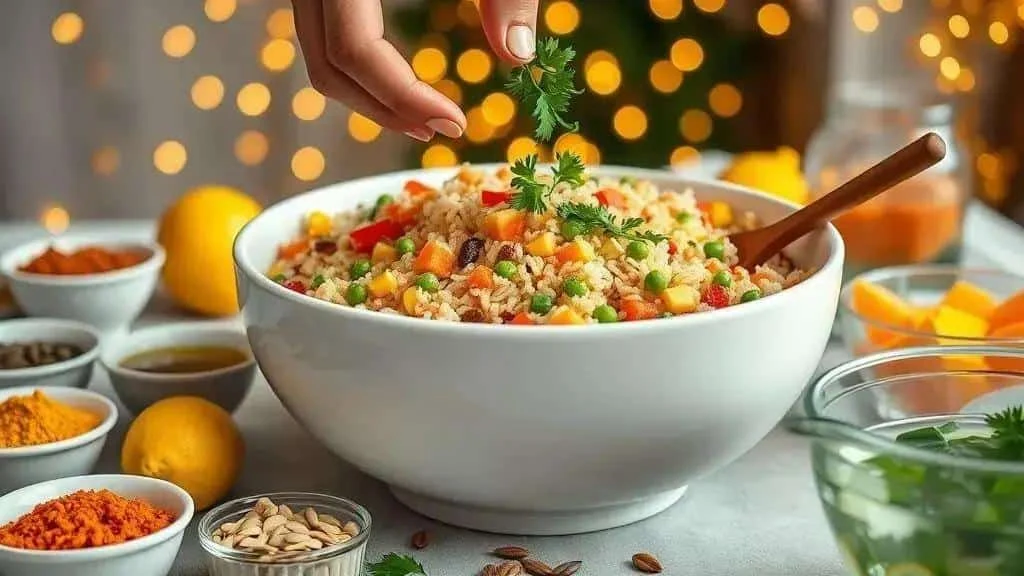
- Choose colourful vegetables: the base recipe’s carrots, peas, sweetcorn and red and green peppers provide a useful mix. Their cut size affects cooking time.
- Cook vegetables appropriately: small carrot cubes can be briefly blanched if preferred, but 1–2 minutes will not cook every size or vegetable. Follow frozen-vegetable instructions. If cooling in clean iced water, drain well and reheat appropriately for the finished hot dish.
- Sauté for flavour: soften onion and peppers in some of the recipe’s oil, adjusting the time to the texture you prefer rather than adding another full oil allowance.
- Use colour-giving spices sparingly: try ½ teaspoon turmeric or 1 teaspoon annatto mixed into part of the oil. Both change the flavour as well as the colour.
- Vary the grains: replace some white rice with separately cooked brown rice or quinoa, matching cooked quantities and texture rather than assuming identical water needs.
- Add a sweet contrast: a smaller addition of ½ cup pineapple or ⅓ cup drained raisins is another option instead of the fuller fruit variations above.
- Finish with crunch: add up to ⅓ cup toasted nuts or suitable pumpkin or sunflower seeds at serving time, considering allergies and children’s needs.
- Add herbs last: fold in the parsley or chopped chives and optional lemon zest shortly before serving.
- Watch the salt: stock, olives and cheese can supply plenty, so taste the completed dish before adjusting.
- Presentation: a plain serving dish and a few washed herbs let the vegetable colours stand out.
Quick tips
Cooking tip: briefly stir rice in the oil before adding liquid if desired. Fold separately cooked delicate vegetables in at the end instead of relying on a last-minute warm-through to cook them safely.
What to serve with the rice
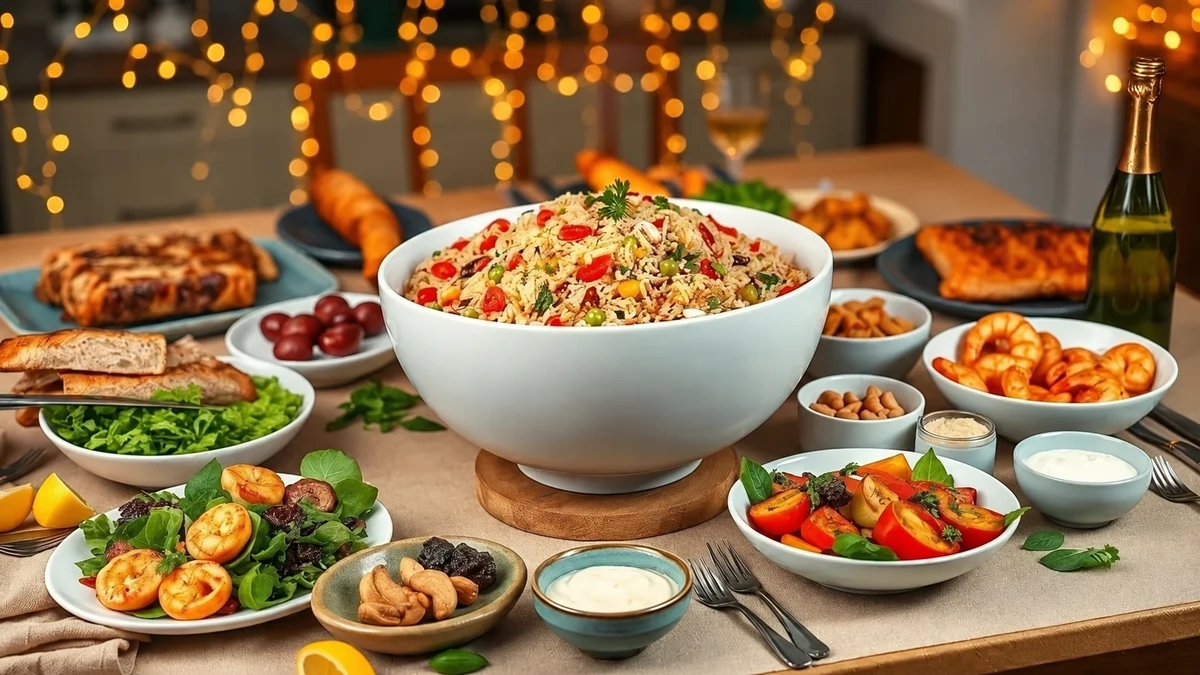
- Roast meat: pork leg, herb-roasted chicken or pork loin pair well with the vegetables. Offer gravy separately so the rice does not become saturated.
- Fish and seafood: grilled salmon, baked fish fillets or cooked prawns complement the optional lemon zest.
- Vegetarian and vegan mains: tofu, beans or lentils can provide a more substantial protein component. Roast aubergine and mushrooms add flavour but are not protein-equivalent substitutes for those foods.
- Salads: cherry tomato vinaigrette, green leaves with lemon dressing or chickpea salad provide contrast.
- Crisp sides: Brazilian farofa, roast vegetables, sweet potato crisps or toasted nuts add different textures; choose a few rather than all of them.
- Sauces and finishes: offer herb yoghurt, herb butter or a little olive oil with lemon zest as optional additions, checking dietary needs.
- Drinks and dessert: sparkling water with citrus, juice or optional wine suits a celebration. Fruit salad or passion fruit mousse provides a contrasting finish, although mousse is not automatically a light nutritional choice.
Balancing flavours
A rich main course can be balanced with sharper salad dressings and simply cooked vegetables. Choose combinations your guests enjoy rather than treating pairings as fixed rules.
Balancing textures
Fluffy rice works with crunchy farofa, nuts or roast vegetables. Keep optional toppings separate when allergies or preferences differ.
Portions and serving
- Per adult: around 1 cup cooked rice mixture with a moderate main-course portion can be a starting point. Adjust for appetites, age and the number of other dishes rather than applying a fixed serving to everyone.
- At the table: put the rice in a central serving dish with mains and salads arranged for easy access.
- Keep sauces separate: guests can add them to taste.
Example celebration menus
- Brazilian-style spread: roast pork, farofa, chilled potato salad and arroz à grega.
- Fish-based meal: grilled salmon, green salad and rice with peas and carrots.
- Vegan meal: cooked tofu, roast vegetables and colourful rice made with vegan ingredients; add nuts only if suitable for the guests.
Portioning and storing leftover rice
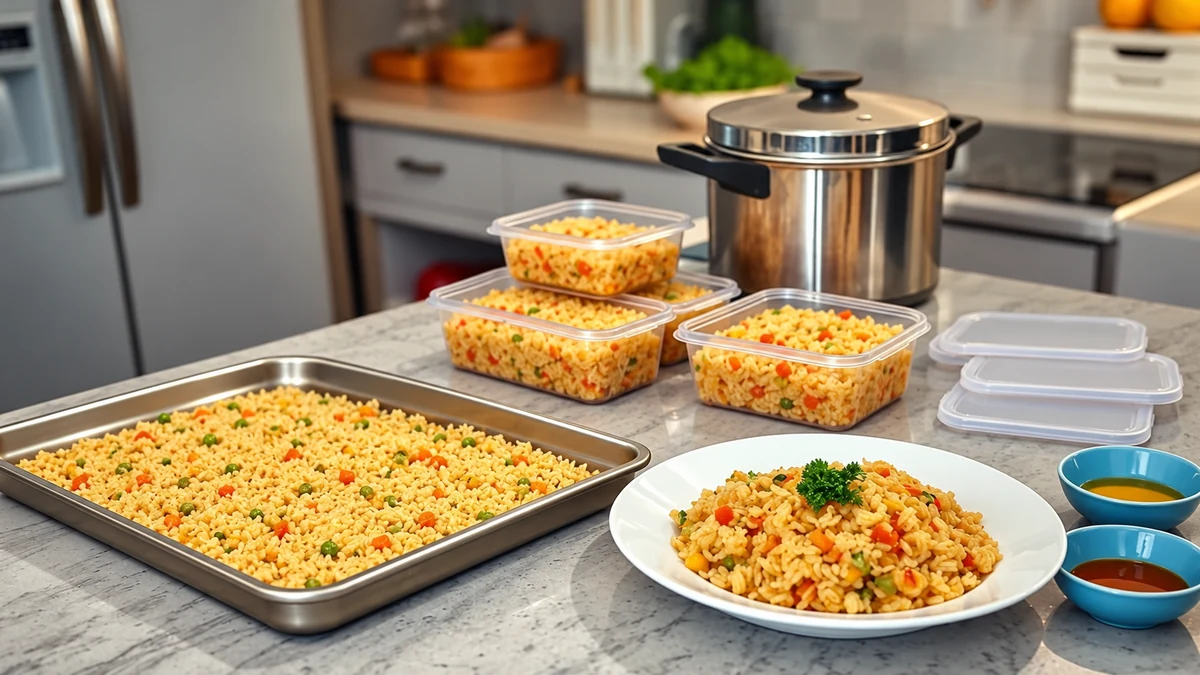
Plan portions and storage before the meal so leftover rice can cool quickly. Do not leave it sitting in a warm pan throughout a long party.
Portion guides
- As a side: roughly 1 cup cooked rice mixture per adult may suit the meal. The weight varies with the cup size and vegetables; 150–200 g is only an estimate.
- For children: start with a smaller portion, such as ½ cup for an older child, and adjust to age and appetite. Adapt nuts and other pieces to avoid choking hazards.
- Yield: 1 cup dry rice often produces around 3 cups cooked, but varieties differ and the vegetables increase the final quantity.
Cooling and portioning
- Start promptly: set aside rice intended for later rather than leaving it in the serving pan for hours.
- Use shallow portions: spread it in a clean shallow container or tray to release heat faster.
- Cool quickly: aim to get it cooled and into the fridge ideally within an hour. Slow cooling can allow bacteria such as Bacillus cereus to multiply.
- Divide into meal-sized containers: use shallow food-safe tubs rather than one deep mass of warm rice.
- Cover and label: record the cooking date and time so the storage period is clear.
- Refrigerate: keep below 5°C and use within 24 hours.
- Freeze if needed: freeze promptly cooled portions in suitable containers. About 2 months is a quality guide; freezing does not make badly stored rice safe.
- Keep sauces separate: mayonnaise and some creamy additions can split when frozen. Check storage guidance for every ingredient and use the shortest applicable limit.
Reheating rice
- Reheat once only: take out just what you intend to eat.
- On the hob: add a little water or stock, cover and heat, stirring as needed so no cold patches remain. One or two tablespoons liquid per portion is a texture guide, not a fixed requirement.
- In the microwave: use a suitable vented cover with a little water. Stir or turn between intervals and observe the appliance’s standing time.
- Check thoroughly: the rice must be steaming hot throughout before serving. Reheating cannot reliably undo toxins formed during poor storage.
- Do not rely on smell: discard spoiled-looking rice, but normal smell and appearance do not prove safety if its storage history is unsuitable or unknown.
Texture and flavour after reheating
- Replace lost moisture: a little water or stock helps soften the grains; oil alone does not replace water.
- Finish freshly: add washed herbs, lemon zest or suitable toasted nuts at serving time.
- Thaw safely: small portions are convenient to defrost in the fridge. If using a microwave defrost setting, continue straight into thorough reheating; do not thaw in a lukewarm water bath.
- Keep batches distinct: do not mix older leftovers with a fresh batch or reset their storage time.
Presentation and rice-themed party favours
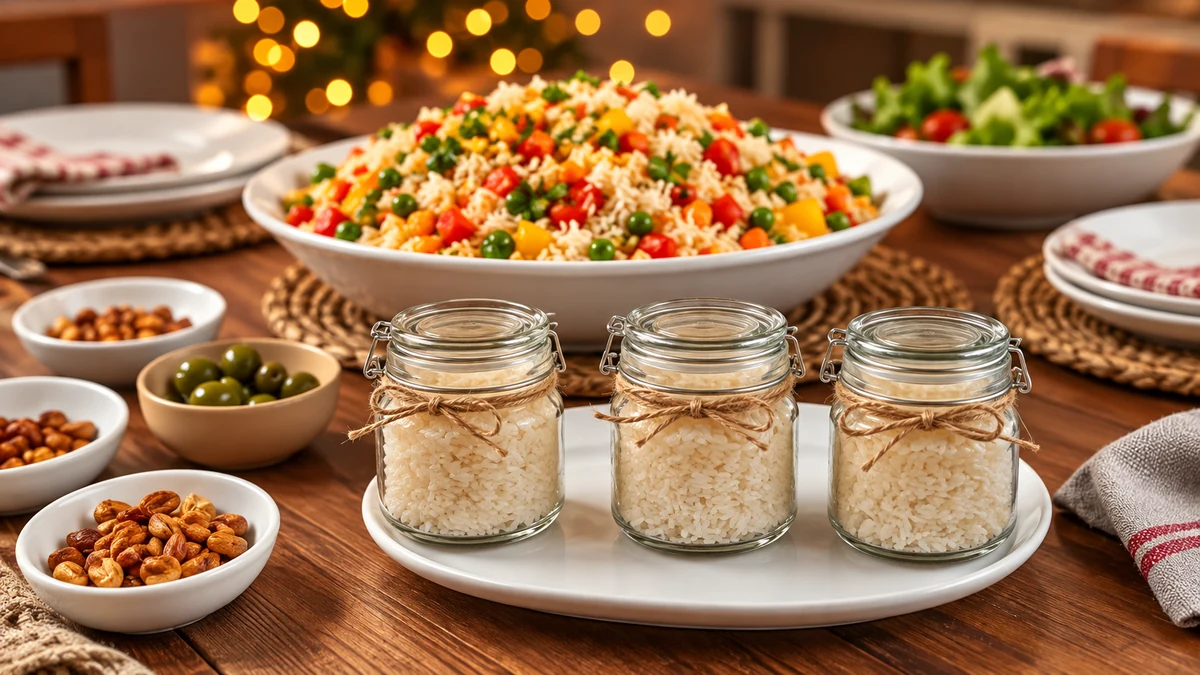
Present arroz à grega in a simple dish that shows its colours. Small optional toppings can make it easy for guests to personalise their portions.
- A central platter: use a large white dish with mains and salads within easy reach.
- Individual portions: a clean food ring can shape the rice on a plate. Finish with parsley or zest and serve promptly.
- Separate toppings: small bowls of raisins, olives or nuts let guests choose, with clear allergen information and separate spoons.
- Final texture: add suitable seeds or toasted nuts just before serving to retain crunch.
Making a practical party favour
Avoid giving cooked rice as a take-home favour without reliable temperature control. A dry cooking ingredient gift is more practical. Any association with prosperity is a festive tradition, not a promise of good fortune.
- Choose a container: use a clean, fully dry food-safe jar with a lid, large enough for the chosen weight of rice. Jar capacity should be checked rather than confused with ingredient weight.
- Add dry rice: around 150–200 g uncooked long-grain rice can make a small gift, provided the jar has enough room.
- Keep additions suitable for food: any dried spice or citrus peel must be food-grade, properly dried and suitable for storage. Keeping additions in a separate sealed packet is simpler than mixing decorative material into the rice.
- Optional extras: attach a small sealed seasoning packet with its ingredients and date information. Never mix non-food decorative seeds, glitter or ornaments into edible ingredients.
- Include instructions: copy the rice packet’s cooking and storage guidance, identify ingredients and allergens, and keep the original best-before information. Attach the label outside the jar.
Presentation ideas
- Colour palette: the rice’s white grains, orange carrots, green peas and yellow sweetcorn provide plenty of colour.
- Gift packaging: use paper and ribbon outside the food container; a rustic appearance alone does not establish an environmental benefit.
- Personalisation: offer either a labelled jar of dry rice or a sealed spice packet, adapted to the recipient’s dietary needs.
- At each place setting: place the sealed favour beside a name card rather than where it interferes with serving food.
Final check: garnish the cooked dish only at serving time and keep favour decorations separate from ready-to-eat food.
Conclusion
Colourful Brazilian vegetable rice brings a flexible side dish to New Year’s Eve. Use the rice packet’s cooking method, choose the vegetables and additions you enjoy, and plan cooling and leftovers in advance.
If you try it, share your photographs and practical tips with other readers.
Thank you for visiting. Follow our social channels and find more festive ideas on the I Love Christmas blog.
FAQ: colourful Brazilian vegetable rice
How long does Brazilian vegetable rice take to prepare?
Allow roughly 35–45 minutes for a white-rice version, depending on chopping and the rice packet’s cooking time, including a short rest. Brown or wild rice takes longer and may be best cooked separately from the vegetables.
Can I make the rice ahead?
Yes, provided it is cooled quickly, ideally within an hour, refrigerated below 5°C and used within 24 hours. Alternatively freeze promptly cooled portions. Reheat once until steaming hot throughout; do not leave the pan warm for hours.
How do I keep the vegetables colourful?
Cut them evenly, cook to the texture you enjoy and avoid unnecessary prolonged cooking. Cook frozen vegetables according to their packets, then fold them into the hot rice near serving time.
Can it be vegan or gluten-free?
Use oil and suitable vegan stock for a vegan version, avoiding cheese and other animal additions. Rice itself is gluten-free, but check stock, seasonings and every packaged ingredient, as well as cross-contact if preparing for someone with coeliac disease.
How can I reheat it without drying it out?
Add a little water or stock and heat with a suitable cover, stirring or turning to eliminate cold patches. Serve once steaming hot throughout. Only reheat safely stored rice, once; extra moisture cannot make poorly stored rice safe.
Sources and Further Reading
- Food Standards Agency — home food fact checker, including rice storage
- Food Standards Agency — chilling, freezing and defrosting
- Food Standards Agency — food allergies and intolerances