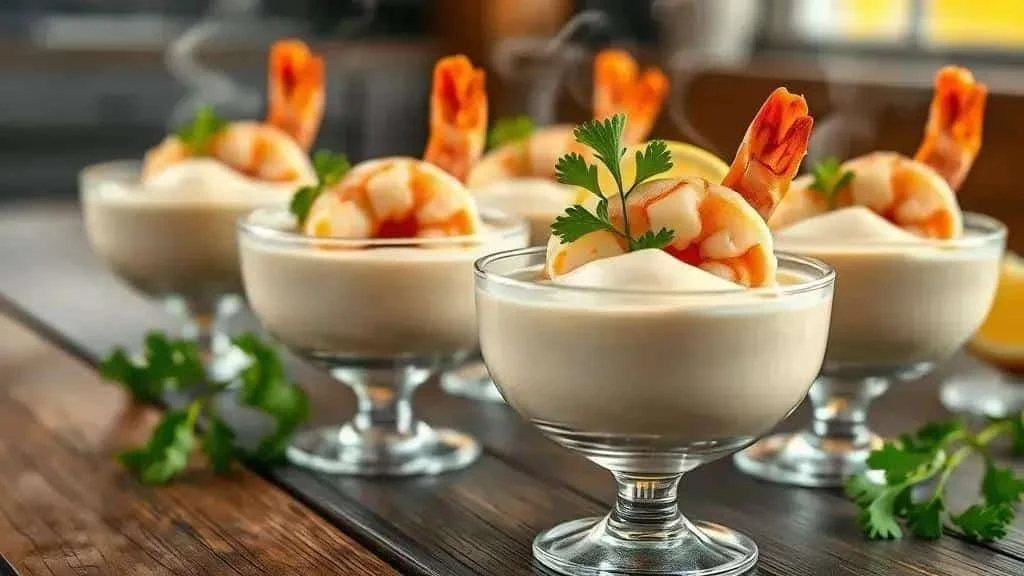
This creamy prawn starter combines cooked prawns with a tomato, onion and garlic base, milk and cream. Cornflour can thicken the sauce if needed. Serve it freshly made in small heatproof glasses or cups, topped with a cooked prawn, lemon zest and herbs for a festive first course.
A creamy prawn starter makes a colourful first course for a Christmas or New Year’s gathering. The method below explains how to prepare the sauce, cook the prawns and serve small portions without leaving them standing lukewarm.
Creamy prawn starter ingredients
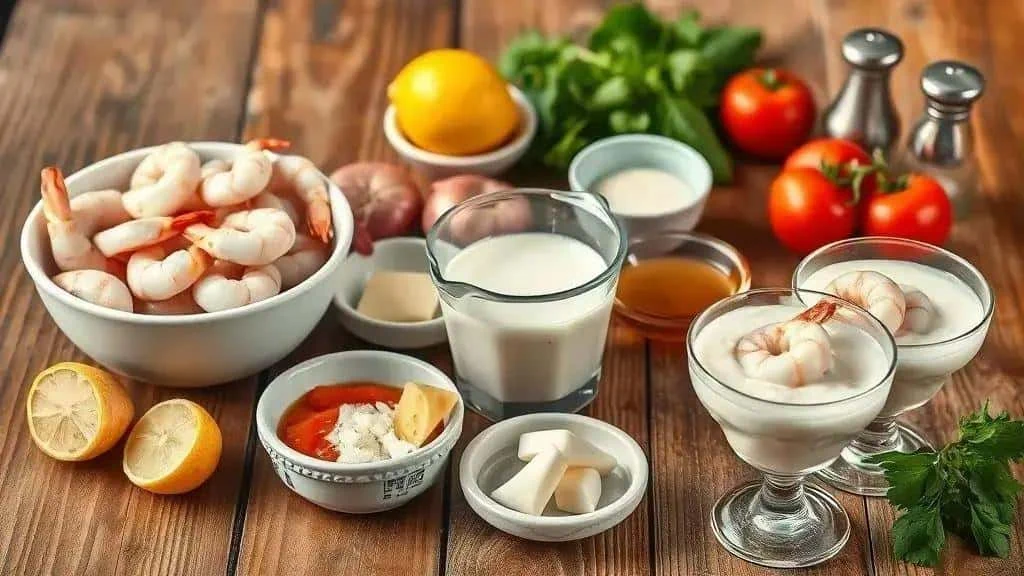
For this creamy prawn starter, gather the following ingredients. The finished yield depends on how much liquid you use and the size of your serving glasses.
- 500 g peeled, deveined raw prawns – fresh or frozen and safely defrosted, weighed after draining. A 400 g pack also works, but gives a slightly smaller amount of prawns.
- 1 tablespoon butter – or 1 tablespoon olive oil for a different flavour; oil is not automatically lower in calories.
- 1 small onion, finely chopped.
- 2 garlic cloves, finely chopped or crushed.
- 2 ripe tomatoes, peeled, deseeded and chopped, or 120 ml passata.
- 200 ml single cream – alternatively, use 200 ml whole milk and the optional cornflour below; do not add a second tablespoon of cornflour automatically.
- 100 ml milk, with a little extra only if needed to loosen the sauce.
- Up to 1 tablespoon cornflour mixed with 2 tablespoons cold water, optional, to thicken.
- 120 ml vegetable or fish stock – homemade or prepared according to the packet. For the wine variation, use 60 ml dry white wine plus 60 ml stock; reduce the wine in the pan before adding the dairy.
- Salt, to taste – taste at the end, especially if using salty stock. Start with a small pinch rather than a full teaspoon.
- Freshly ground black pepper, to taste.
- Juice of up to ½ lemon, added gradually to taste at the end.
- Fresh parsley, chopped, to finish.
- A whole prawn for each serving, optional – reserve these from the 500 g, cook them fully and keep separate for garnishing. You may reserve 10–12 for very small tasting portions, but this does not guarantee 10–12 full starter servings.
Substitutions and quick tips
Yoghurt alternative: thick plain yoghurt gives a tangier sauce. Follow the separate yoghurt variation below, thickening the milk base before adding the yoghurt to reduce the risk of splitting.
Thickening: cornflour gives a smooth sauce when mixed with cold water first and properly cooked. For a gluten-free dish, check the cornflour, stock and every garnish; ordinary panko contains wheat.
Stock: homemade and prepared stock both work. Use the packet dilution and check for salt and allergens rather than assuming half a cube is right for 120 ml.
Frozen prawns: defrost according to the packet, preferably in the fridge, and drain well. Check whether the product is raw or already cooked, as the method differs.
How to make the creamy prawn starter
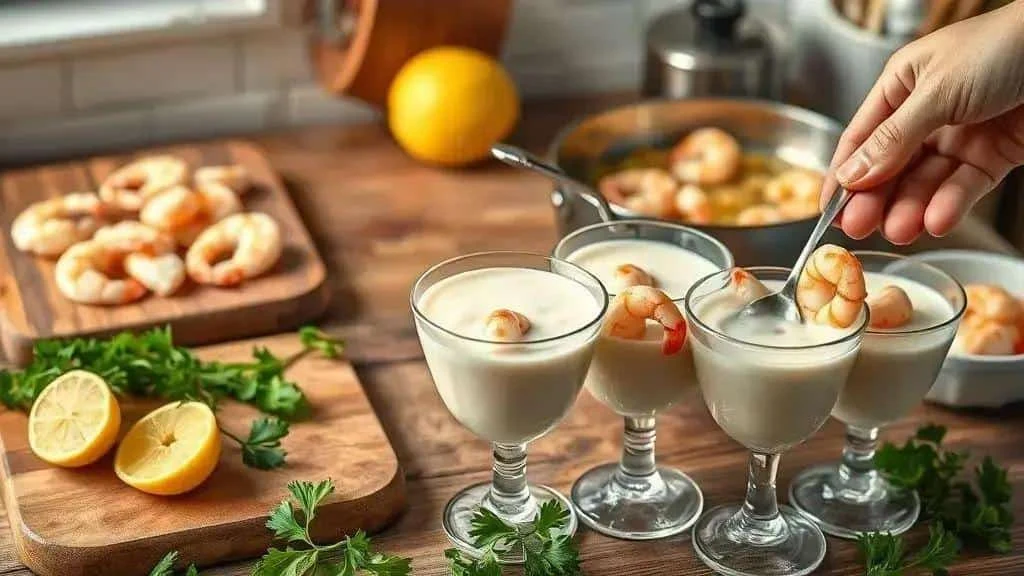
Follow these steps to prepare the creamy prawn starter. Have the serving glasses ready before the final heating stage.
- Prepare the prawns: use 500 g peeled, deveined raw prawns. Reserve whole prawns for the garnish and cut the rest into bite-sized pieces if large. Keep chilled while preparing the sauce, and wash hands and utensils after handling raw seafood.
- Optional shell stock: if you bought shell-on prawns, buy enough to give 500 g after peeling. Simmer the clean shells in about 240 ml water for 5–10 minutes, strain carefully and measure out 120 ml. Otherwise use prepared fish or vegetable stock.
- Soften the onion: heat the butter or oil in a pan over a medium-low heat. Add the onion and cook for about 3–5 minutes, until soft and translucent.
- Add garlic and tomato: cook the garlic for 30 seconds, then add the chopped tomatoes or passata. Cook for about 3–4 minutes, or until the tomato has softened. If using wine, add it now and simmer to reduce before adding the cream.
- Cook the prawns: in a separate frying pan with a little oil, cook both the pieces and the whole garnish prawns until firm, opaque and cooked through. Small prawns may take only a few minutes, but size and heat vary. Transfer to a clean plate and continue immediately; keep the whole garnish prawns separate.
- Make the sauce: add the cream, milk and measured stock to the tomato base. Heat gently, stirring, until evenly hot.
- Thicken if needed: stir the cornflour slurry again, add it a little at a time and bring the sauce to a gentle simmer, stirring until thickened and the cornflour is cooked. Do not add it all unless the consistency needs it.
- Blend the sauce: take the pan off the heat. Use a stick blender with its head fully submerged to avoid splashes, following the appliance instructions. If using a jug blender, check that it is suitable for hot liquids, allow the sauce to cool as directed and never seal steaming liquid in an unsuitable blender. Strain if you want an extra-smooth sauce.
- Return the prawns: put the sauce back on the hob, fold in the cooked prawn pieces and heat gently until steaming hot throughout. Avoid prolonged boiling, which can make the prawns tough and split the sauce.
- Finish: adjust salt and pepper. Off the heat, add lemon juice gradually, tasting as you go, then stir in parsley. Too much acid added at once can split a dairy sauce.
- Fill the glasses: use small heatproof glasses or cups, not ordinary wine glasses that may crack with heat. Add the hot sauce and prawns, then a fully cooked garnish prawn, a few drops of olive oil and lemon zest. Serve promptly.
- Store leftovers: cool promptly in shallow containers and refrigerate within 2 hours at 5°C or below. Eat within 48 hours, or sooner if an ingredient’s instructions require it. Reheat only once until steaming hot throughout, stirring to avoid cold spots.
Important tips
Cook through without overcooking: prawns need to be fully cooked, including those used for garnish. Remove them from direct heat once firm and opaque, then bring the finished dish to serving temperature promptly.
Adjust the consistency: add a little milk for a looser sauce or a small amount of cornflour slurry for a thicker one. Cook any added cornflour properly before serving.
Choose a variation: use the yoghurt method below for a tangier sauce, or 60 ml wine plus 60 ml stock in the main recipe. Cooking does not reliably remove all alcohol; use stock alone when alcohol must be avoided.
Serving creamy prawns in small glasses

These ideas help present the creamy prawn starter neatly while keeping service practical.
- Choose suitable glasses: small heatproof cups or glasses of around 180–220 ml give space above the food for a garnish. Check that they are designed for hot food.
- Serve promptly: plate the dish hot and let guests allow their portion to cool enough to eat. Do not hold the whole batch at 45–55°C. If hot-holding before service, keep it at 63°C or above using suitable equipment.
- Portion size: allow roughly 120–150 g for a starter or 90–100 g for a tasting portion. Weigh the finished batch to work out the number of servings rather than assuming a fixed yield.
- Texture: distribute the prawn pieces evenly through the sauce. Add toasted panko only at the last moment if you want it to remain crisp.
- Garnish: place a fully cooked prawn on top, with a little lemon zest, chopped parsley and a few drops of olive oil. Remove tails if easier eating is the priority.
- Carry carefully: arrange the glasses on a stable tray and serve immediately, with suitable spoons.
Garnishes and flavour combinations
- Whole prawn: use one fully cooked prawn per portion, seasoned lightly.
- Lemon zest: a small pinch adds fragrance without overwhelming a small serving.
- Parsley or chives: scatter a little finely chopped herb over the top.
- Toasted panko or chopped Brazil nuts: add a small spoonful for crunch. Mention wheat or nuts to guests, and choose a suitable alternative where needed.
- Extra virgin olive oil: finish with a few drops for aroma and shine.
Presentation and pairings
Clear heatproof glass shows the sauce and prawns well against a dark plate or board. Offer thin toast or small slices of brioche alongside. Dry white wine or sparkling wine is optional; sparkling water with lemon is a simple alternative.
Making ahead and transporting
You can prepare the dish a day ahead if you cool it promptly, refrigerate within 2 hours and keep it at 5°C or below. Transport in a cool box with ice packs, with garnishes separate. Reheat once until steaming hot throughout before serving. A bain-marie is useful for holding already-hot food, but should not be relied on to slowly reheat a cold seafood dish.
Avoiding common mistakes
Taste before adding salt when using prepared stock. Heat gently enough to protect the sauce, but ensure it is hot throughout. Cook every garnish prawn fully; keeping a sauce smooth must not take priority over safe heating.
Creamy prawn variations
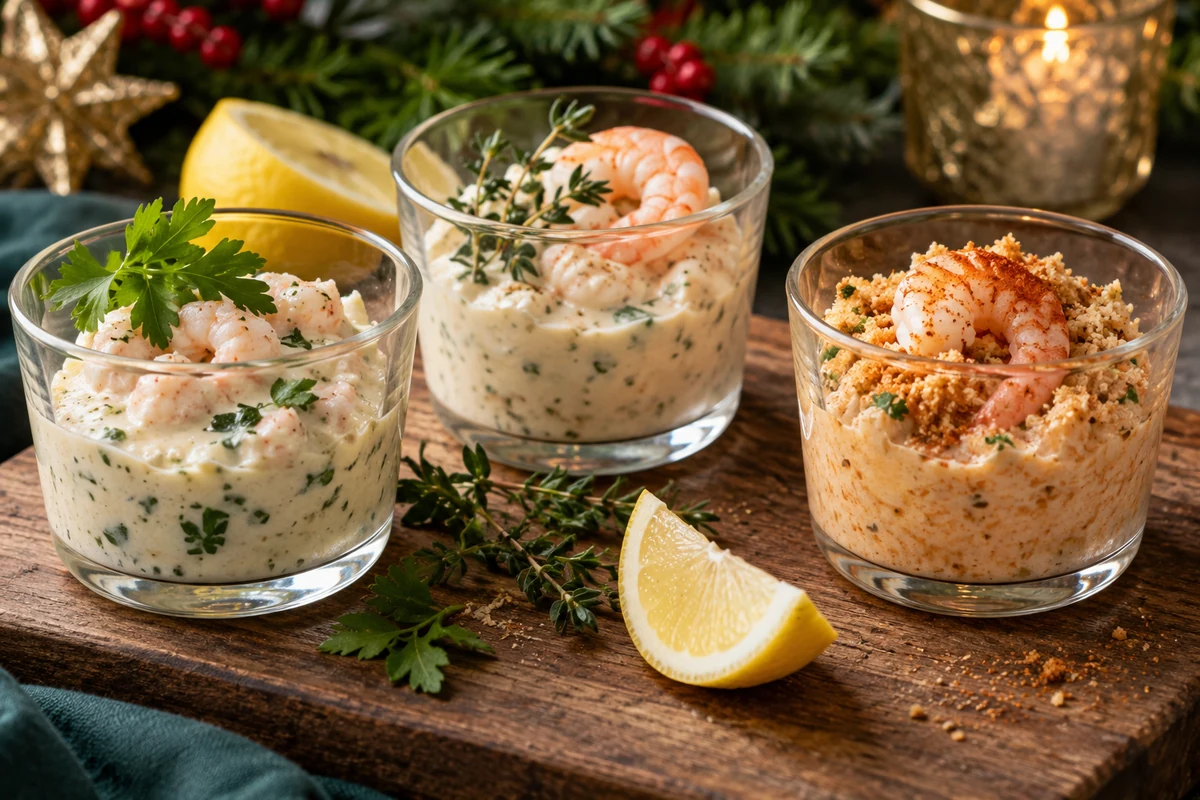
Try one of these versions of the creamy prawn starter. Each has its own ingredient list and method, so treat it as an alternative to the main recipe rather than adding everything to the same pan.
Yoghurt and milk version
This version has a tangier flavour and uses yoghurt instead of cream. Its fat content depends on the products chosen; olive oil itself is not a low-fat substitute.
- 500 g peeled, deveined raw prawns.
- 1 tablespoon olive oil.
- ½ onion, finely chopped.
- 1 garlic clove, crushed.
- 200 g thick plain whole-milk yoghurt.
- 100 ml skimmed milk, with a little more if necessary.
- Up to 1 tablespoon cornflour, mixed with cold water; add gradually, as the amount needed depends on the yoghurt.
- Salt, pepper and juice of up to ½ lemon, to taste, plus chopped parsley to finish.
- Soften the onion in the oil, then briefly cook the garlic without browning it.
- Cook the prawns until firm and opaque throughout, removing them to a clean plate as soon as done. Reserve any whole cooked prawns for garnish.
- Add the milk to the onion base. Stir in a little cornflour slurry and simmer until thickened and the cornflour is cooked, before adding the yoghurt.
- Temper the yoghurt by stirring a little warm sauce into it, then add it to the pan off the heat. Return the prawns and warm gently until the dish is hot throughout, without prolonged boiling. Thin with a little milk if needed.
- Season with salt and pepper, then add lemon juice cautiously because the yoghurt is already tangy. Finish with parsley and serve promptly.
White wine and herb version
A wine-and-herb variation for a special occasion. Some alcohol can remain after cooking; replace the wine with extra stock if it needs to be avoided.
- 500 g peeled, deveined raw prawns, fresh or safely defrosted.
- 1 tablespoon butter.
- ½ onion and 1 garlic clove, finely chopped.
- 60 ml dry white wine.
- 200 ml single cream.
- 60 ml fish or vegetable stock, plus a little extra if needed.
- 1 teaspoon chopped tarragon or thyme leaves.
- A little lemon zest, to finish, with salt and pepper to taste.
- Soften the onion in the butter, then add the garlic briefly. Cook the prawns separately in a little extra oil until fully cooked, and set aside on a clean plate while finishing the sauce.
- Add the wine to the onion pan and simmer until reduced by about half. This concentrates flavour but does not remove all alcohol.
- Stir in the cream and stock, then heat gently and adjust the consistency.
- Fold in the cooked prawns and herbs. Heat until hot throughout without prolonged boiling.
- Finish with lemon zest, taste for seasoning and serve promptly.
Smoky paprika and crunchy crumb version
A lightly smoky sauce with toasted crumbs added at the last moment for contrast.
- 500 g peeled, deveined raw prawns.
- 200 ml single cream or 200 g crème fraîche, plus about 120 ml fish or vegetable stock to loosen.
- Up to 1 teaspoon smoked paprika, according to its strength and your taste.
- About 30 g panko breadcrumbs, toasted, or a gluten-free alternative if needed.
- A little oil or butter for cooking.
- Salt, pepper and chopped coriander or chives, to taste.
- Season the prawns lightly with salt, pepper and paprika.
- Cook in a little hot oil or butter until firm and opaque throughout, then transfer to a clean plate. Avoid scorching the paprika.
- Make the sauce in the same pan with the cream and stock, stirring gently over a low heat.
- Return the prawns, heat through and serve immediately with toasted panko and herbs scattered over the top.
Adjusting portions and flavour
Use a little more stock and less cream if you prefer a lighter sauce, adjusting thickness with a small amount of cooked cornflour slurry if needed. Replace wine with stock when avoiding alcohol. Blend the sauce before adding the prawns for smoothness, using an appliance suitable for its temperature.
Buying and handling prawns
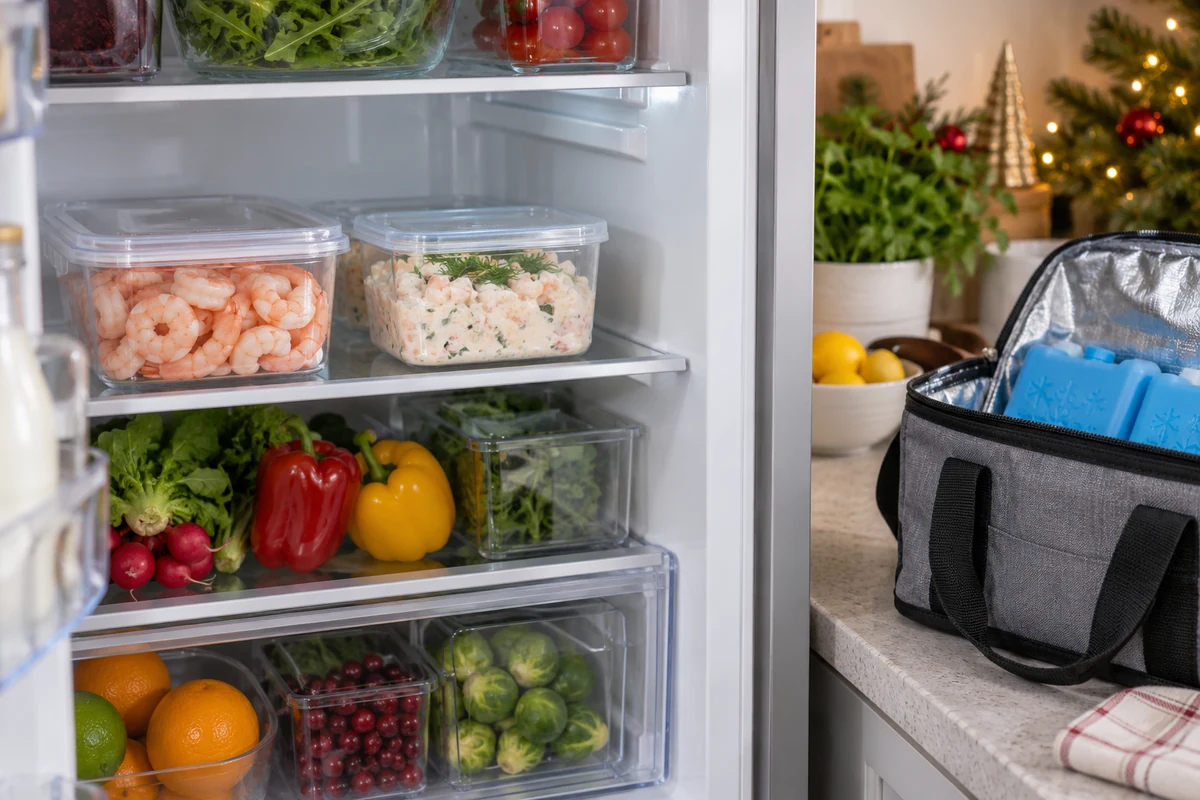
Prawns are versatile seafood, but good storage and thorough cooking are essential. Treat the creamy sauce and cooked garnish as perishable food too.
A few useful facts
- Nutrition: prawns provide protein and nutrients including iodine and selenium. Their composition varies, and the cream, butter and garnishes also contribute to the finished dish’s nutritional content.
- Cholesterol: prawns naturally contain cholesterol. This recipe is not personalised dietary advice; if you have been given a cholesterol-management diet, follow your clinician’s or dietitian’s guidance for the whole meal.
- Varieties: prawns may be farmed or wild-caught, from freshwater or marine environments. Size, flavour and cooking time vary with the product.
Checking quality
- Smell: a strong unpleasant or ammonia-like smell is a warning sign. However, a normal smell cannot prove that prawns are safe; check the use-by date and storage history too.
- Appearance: raw colours vary between species, and cooked prawns look different again. Avoid damaged packaging or obviously deteriorated seafood, and do not rely on colour alone to judge safety.
- Texture: discard prawns that are unexpectedly slimy or mushy, and do not taste questionable seafood to test it.
Storing and defrosting safely
- Refrigeration: keep chilled prawns at 5°C or below, or at the lower temperature specified on the pack. Follow the use-by date and opened-pack instructions; do not assume every product can be kept for another 48 hours.
- Freezing: follow the supplier’s freezing instructions and keep frozen food at about −18°C. Freeze suitable fresh prawns before their use-by date, in sealed portions. The pack’s storage guidance takes priority over a generic number of months.
- Defrosting: thaw in a covered container in the fridge, allowing enough time for the pack size. Follow the packet, and use within 24 hours of fully defrosting unless it specifies a shorter time. Do not thaw on the worktop.
Hygiene and cooking
- Preparation: remove shells and the dark digestive tract where necessary. Avoid splashing raw seafood juices around the kitchen, and clean hands, surfaces and utensils afterwards.
- Separate raw and cooked food: use clean plates and utensils for cooked prawns. Keep raw seafood covered and away from ready-to-eat food in the fridge.
- Cooking: prawn flesh should become firm and opaque throughout. Small prawns may cook in a few minutes, but follow the product instructions and do not use a fixed time or pink colour alone as proof of doneness.
Considering the source
- Check sourcing information: buy from a reputable supplier and look for clear information about origin and any independently verified fishing or aquaculture certification.
- Ask questions: whether prawns are wild-caught or farmed is useful information, but neither description alone guarantees a lower environmental impact.
Allergies and dietary needs
- Allergies: prawns are crustaceans and can cause serious allergic reactions; cooking does not make them suitable for someone with a prawn allergy. This dish also contains milk, with possible fish, celery, wheat or nuts in stock and garnishes. If someone has signs of anaphylaxis, use their prescribed adrenaline auto-injector if available and call 999.
- Pregnancy and individual advice: NHS guidance allows thoroughly cooked shellfish during pregnancy and advises against raw shellfish. Serve this dish hot, use pasteurised dairy and avoid the wine variation when alcohol must be excluded. Follow any individual medical advice you have been given.
A small starter with plenty of flavour
This creamy prawn starter pairs a smooth sauce with tender cooked prawns. Choose a variation to suit the meal, adjust the seasoning and keep the serving plan simple so every portion reaches the table freshly prepared.
Follow our social channels for more festive recipes and serving ideas. If you make the dish, share a photo of your version.
Thank you for reading. Visit the I Love Christmas blog for more ideas for your festive table.
Creamy prawn starter: frequently asked questions
Can I use frozen prawns?
Yes. Check whether they are raw or already cooked, defrost according to the packet in the fridge and drain well. Use the drained weight in the recipe. Fully cook raw prawns; for ready-cooked products, follow their reheating instructions rather than repeating the raw-prawn cooking stage.
How do I stop the sauce splitting?
Heat gently and stir, avoiding prolonged boiling. Add lemon juice gradually off the heat. For the yoghurt variation, thicken the milk base first, then temper the yoghurt into it. Leftovers still need reheating once until steaming hot throughout; gentle heat does not mean serving a cold centre.
How can I tell whether prawns are fresh?
Buy from a reputable supplier, check the use-by date and keep them correctly chilled. Discard prawns with an unpleasant smell, unexpected slime or obvious deterioration. Normal smell and appearance alone cannot prove that food is safe.
How long will the creamy prawns keep in the fridge?
Cool promptly and refrigerate within 2 hours at 5°C or below. Eat within 48 hours, or sooner if the ingredients’ instructions require it. Reheat only once until steaming hot throughout. Do not keep reheating the batch or restart the storage period after serving.
Can I make this ahead for a party?
Yes, up to a day ahead with prompt cooling and correct refrigeration. Transport chilled in a cool box with ice packs, then reheat once until steaming hot throughout. Keep the cooked garnishes separate and add at service. If hot-holding, use equipment that maintains at least 63°C.
What should I serve with it?
Thin toast, small slices of brioche or crusty bread work well. Optional drinks include dry white wine or sparkling wine; sparkling water with lemon is a refreshing choice without alcohol. Check bread and garnish allergens for your guests.
Sources and Further Reading
- Food Standards Agency: cooking seafood and reheating food
- UK Government: cooking and hot-holding food safely
- NHS: fish and shellfish
- NHS: foods to avoid in pregnancy
- NHS: anaphylaxis