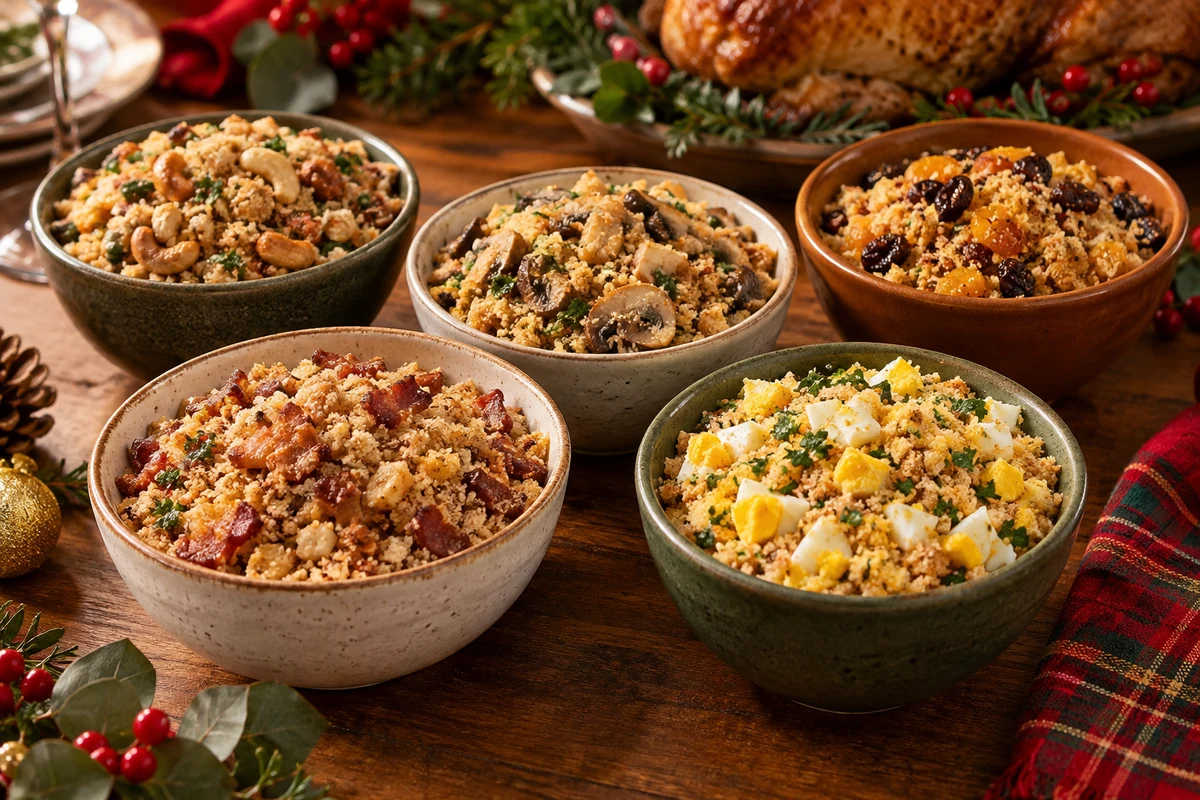
These Christmas farofa recipes offer five variations on Brazil’s toasted cassava or maize accompaniment: bacon, nuts and herbs, vegan mushrooms, dried fruit, and onion with egg. Find ingredients, methods, substitutions and serving ideas, plus guidance on chilling leftovers promptly and keeping crunchy toppings separate.
These Christmas farofa recipes bring a Brazilian touch to your festive table. Choose a classic bacon version, crunchy nuts or a vegan option, then prepare only as much as your menu needs. Farofa is a crumbly toasted accompaniment, rather than a sauce or a stuffing cooked inside the bird.
Why Serve Farofa at Christmas?
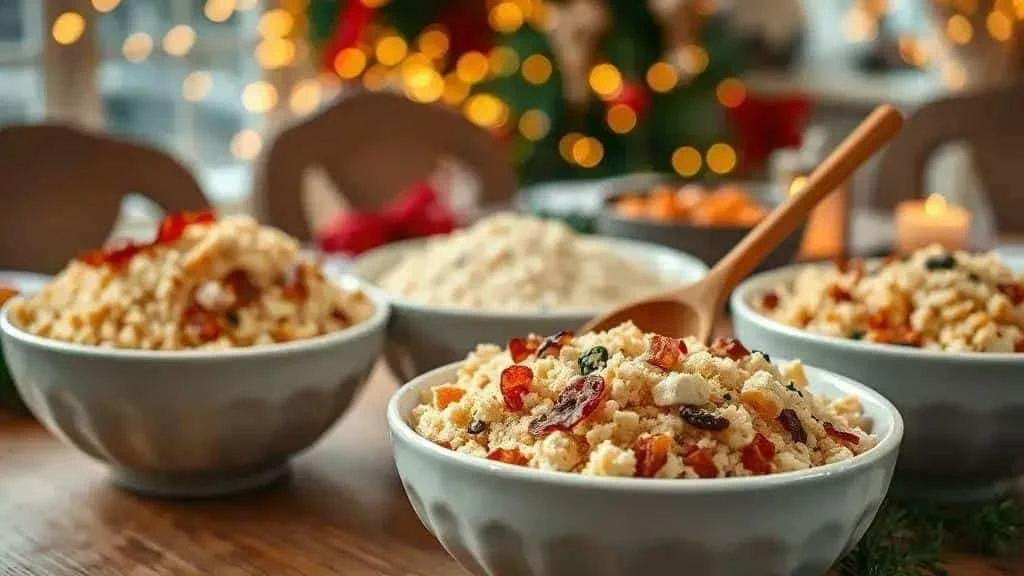
Farofa adds texture, flavour and a distinctive Brazilian character to dinner, balancing saucy dishes and complementing roast meat or poultry.
How Farofa Complements the Meal
Here are some reasons to include it:
- Contrasting textures: toasted crumbs contrast with smooth sauces and tender vegetables, making each mouthful more interesting.
- Soaking up flavour: a little farofa catches gravy or cooking juices on the plate. Add it just before eating to retain some crunch.
- Versatility: savoury and sweet additions both work, including bacon, nuts, dried fruit and herbs.
- Convenient preparation: it can be made ahead, chilled promptly and reheated thoroughly once before serving.
- Different dietary options: vegan or gluten-free versions are possible with suitable ingredients and careful preparation; check every label rather than assuming all farofa is suitable.
- Colour and presentation: herbs, nuts and fruit give each bowl its own appearance.
Small changes make a noticeable difference: well-browned onion adds sweetness, nuts bring richness and crunch, and fresh herbs brighten the finish. Use these contrasts to match the rest of your Christmas menu.
Practical Tips
- Offer a choice: serve two or three small bowls of different farofas so guests can choose.
- Keep additions recognisable: visible bacon, walnuts or raisins help distinguish the recipes, but still label allergens clearly.
- Prepare ahead safely: cool within one to two hours, cover and refrigerate at 5°C or below. Reheat once until steaming hot throughout; a frying pan can help restore the texture.
Farofa is an easy way to bring tradition, variety and a little crunch to the Christmas table.
Choosing Ingredients and Textures
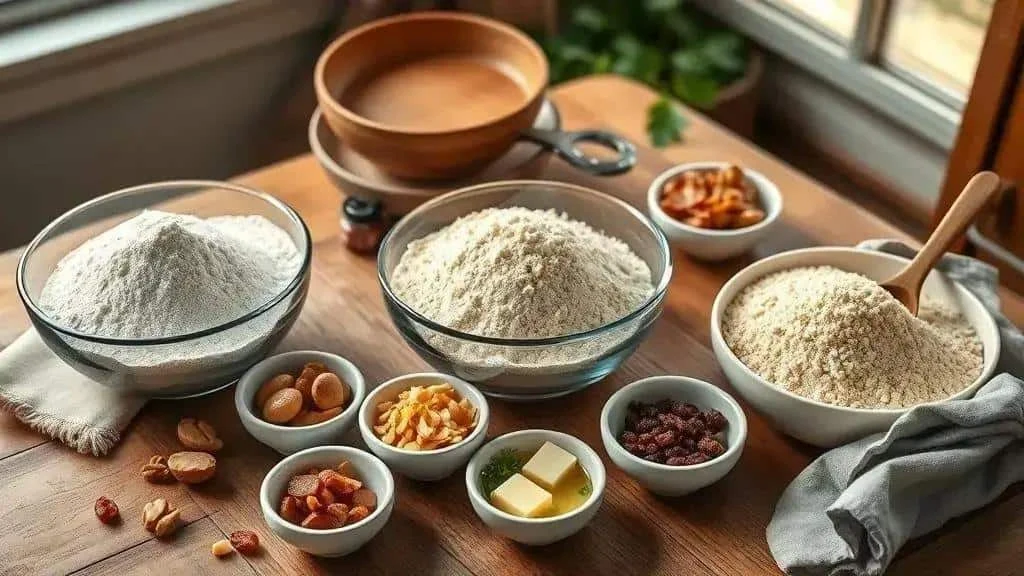
For a well-balanced farofa, choose a suitable toasted base, enough fat to coat it and a few contrasting additions.
Choosing the Base
The base determines the flavour and texture. These quantities make generous batches for six to eight people, or more small side portions; choose one base and adjust the recipe accordingly.
- Toasted cassava meal, or farinha de mandioca: 400 g provides the traditional crumbly texture. It is not tapioca starch or fine cassava baking flour.
- Brazilian maize meal suitable for farofa: 300 g gives a golden, grainy finish. Choose the ready-to-use or pre-cooked type specified by the supplier, not British cornflour, which is a starch.
- Panko or toasted breadcrumbs: 250 g makes a lighter, more open-textured variation. These normally contain wheat.
- Gluten-free toasted cassava meal: 400 g keeps the traditional texture. Cassava itself is gluten-free, but check the product and other ingredients for gluten and cross-contact.
Fats and Aromatics
Use the quantities in your chosen recipe as a starting point:
- Butter or olive oil: three to four tablespoons; butter adds richness, while olive oil suits a vegan recipe.
- Bacon: 150 g, diced or cut into strips, adds savoury flavour. For a vegan version use mushrooms or a suitable plant-based alternative, and replace any butter too.
- Onion: one large onion, slowly browned, adds sweetness.
- Garlic: two chopped cloves add flavour without overwhelming the other ingredients.
Combining Textures
Combine crunchy, tender and sweet ingredients to suit the meal rather than following a fixed percentage formula:
- Crunch: nuts, such as a 100 g portion, crisp bacon or fried onion provide bite.
- Tenderness: browned onion, butter, small cubes of cooked grilling cheese or chopped hard-boiled egg soften the mixture.
- A sweet contrast: 50 g raisins, chopped dried apricots or a little candied fruit can balance savoury ingredients.
Classic Combinations and Variations
Here are some combinations to try:
- Classic bacon: toasted cassava meal, bacon, onion, butter and parsley.
- Nuts and herbs: toasted cassava meal, 100 g walnuts or Brazil nuts, butter, lemon zest, parsley and spring onion.
- Vegan mushrooms: suitable Brazilian maize meal, olive oil, sautéed mushrooms, nuts and spring onion.
- Sweet Christmas farofa: panko, butter, 50 g raisins, dried apricots and a little cinnamon.
Useful Substitutions
If an ingredient is unavailable, consider these alternatives:
- Bacon: crisp cooked ham, a suitable plant-based bacon or mushrooms seasoned with a little smoked paprika.
- Butter: ghee gives a rich flavour but still comes from milk; olive oil is the vegan alternative.
- Nuts: toasted pumpkin seeds may provide crunch, but first check the person’s allergies and the product’s cross-contact information. Seeds are not automatically safe for everyone.
- Base: combine equal weights of toasted cassava meal and a suitable pre-cooked Brazilian maize meal for a different texture.
Keeping the Texture
Toast the base evenly over a moderate heat, stirring so it does not burn. Cook moist additions separately to reduce excess liquid, then combine near the end. Serve different farofas in separate bowls; reheat chilled portions thoroughly rather than merely warming the surface.
Storage and Serving
- These recipes contain cooked additions such as onion, bacon or egg, so they are not shelf-stable. Cool promptly, refrigerate covered at 5°C or below and use within 48 hours.
- Reheat once in a frying pan, stirring until steaming hot throughout. The time depends on the quantity and starting temperature.
- Set out two or three small bowls with separate serving spoons so guests can try different combinations.
Five Farofa Recipes: Ingredients, Methods and Variations

Choose from these five recipes, then use the serving and storage guidance below to plan your Christmas meal.
Classic Bacon Farofa
Ingredients:
- 400 g toasted cassava meal — farinha de mandioca, the traditional base.
- 150 g bacon — diced or cut into strips. A vegan version needs both plant-based bacon and oil instead of butter.
- 1 large onion — finely chopped.
- 2 garlic cloves — chopped.
- 3 tablespoons butter — or olive oil, using less if the bacon releases plenty of fat.
- Salt and black pepper — to taste.
- 2 tablespoons chopped parsley — to finish.
Method:
- Cook the bacon: fry it in a large frying pan over a medium heat until thoroughly cooked and crisp. Set aside a little for the topping.
- Cook the aromatics: add enough of the butter or oil to the rendered bacon fat to coat the onion. Fry the onion until golden, then add the garlic for about 30 seconds without letting it burn.
- Add the meal: stir in the toasted cassava meal gradually, coating it evenly and toasting it lightly.
- Season: taste only once all the ingredients are cooked. Add pepper and, if needed, a little salt; bacon may already provide enough.
- Finish: remove from the heat and stir in the parsley and reserved bacon. Serve promptly, or cool and refrigerate as described below.
Variations:
- Add chopped hard-boiled egg for a softer, richer texture.
- Replace some of the cassava meal with panko for a lighter texture, noting the added wheat allergen.
Nut and Herb Farofa
Ingredients:
- 400 g toasted cassava meal.
- 100 g Brazil nuts — chopped; alternatively use 100 g walnuts or almonds.
- 3 tablespoons butter or olive oil.
- 1 medium onion — chopped.
- Finely grated lemon zest, to taste — start with a little; up to two tablespoons gives a very pronounced citrus flavour. Avoid the bitter white pith.
- 3 tablespoons chopped parsley and spring onion.
- Salt and pepper — to taste.
Method:
- Toast the nuts: heat in a dry frying pan for about two to three minutes, stirring until fragrant but not burnt. Set aside.
- Brown the onion: cook in the butter or oil until soft and lightly caramelised.
- Add the meal: stir in the toasted cassava meal and cook for a few minutes, turning it regularly for even colour.
- Add nuts and zest: mix in the toasted nuts and add lemon zest gradually to taste.
- Season and finish: adjust the salt and pepper, stir in the herbs and serve promptly.
Variations:
- Use pistachios or cashews instead of Brazil nuts for a different flavour.
- Add small cubes of cooked Brazilian queijo coalho or another suitable grilling cheese; this adds milk and means the dish is no longer vegan.
Vegan Mushroom and Nut Farofa
Ingredients:
- 350 g Brazilian maize meal suitable for farofa — a pre-cooked or ready-to-use variety, not cornflour starch; alternatively use toasted cassava meal.
- 200 g shiitake or button mushrooms — sliced. Rehydrated dried mushrooms add depth, but are not necessarily smoky.
- 100 g walnuts or cashews — chopped.
- 4 tablespoons olive oil.
- 1 small onion — chopped.
- 2 garlic cloves — chopped.
- 2 tablespoons parsley — chopped.
- Salt and pepper — to taste.
Method:
- Sauté the mushrooms: heat two tablespoons of the oil and cook the mushrooms until their liquid evaporates and they begin to brown.
- Cook the onion and garlic: in another large pan, soften the onion in the remaining oil, then briefly cook the garlic without browning it too much.
- Add the nuts: stir in the chopped nuts and toast for one to two minutes.
- Add the base: gradually stir in the suitable maize meal or toasted cassava meal, following any cooking instructions on its packet.
- Combine: fold in the cooked mushrooms, season with salt and pepper and finish with parsley.
Variations:
- Add a little thyme or finely chopped rosemary for a more herbal flavour.
- A little cooked, well-drained quinoa makes a softer variation rather than a direct replacement for the dry meal. Cool and store it promptly if preparing ahead.
Sweet Christmas Farofa with Dried Fruit
Ingredients:
- 300 g panko or toasted cassava meal — these give different textures; panko normally contains wheat.
- 50 g raisins — soaked in hot water for ten minutes, then drained thoroughly.
- 50 g chopped dried apricots or dates.
- 50 g walnuts or other nuts — chopped.
- 3 tablespoons butter — or a suitable vegan baking spread.
- 1 teaspoon ground cinnamon — optional; use less for a subtler flavour.
- Orange zest — one teaspoon, finely grated.
- 1 pinch of salt.
Method:
- Soak the fruit: cover the raisins and apricots with hot water for ten minutes, then drain very well and pat away excess moisture.
- Melt the butter: heat gently and add the nuts, stirring to toast them lightly without burning the fat.
- Add the base: stir in the panko or toasted cassava meal and toast evenly.
- Add fruit and flavourings: mix in the drained fruit, orange zest and cinnamon. Add a small pinch of salt to taste.
- Cool briefly: remove from the heat and let it cool enough to serve. Refrigerate any portion being kept for later promptly.
Variations:
- Add a little toasted desiccated coconut for a tropical flavour.
- For extra sweetness, add a tablespoon of honey or agave syrup when serving. Honey is not vegan and must not be given to babies under one year.
Onion and Egg Farofa
Ingredients:
- 350 g toasted cassava meal.
- 4 eggs — hard-boiled and chopped, or thoroughly scrambled separately.
- 2 large onions — thinly sliced.
- 3 tablespoons butter or olive oil.
- Salt and pepper — to taste.
- Chopped parsley and spring onion — two tablespoons.
Method:
- Cook the eggs: hard-boil until both yolks and whites are set; the time depends on their size and starting temperature. Cool briefly, peel and chop. Alternatively cook scrambled eggs fully in a separate pan.
- Brown the onions: cook in the butter or oil over a medium heat until golden and lightly caramelised.
- Add the meal: stir in the toasted cassava meal and toast for a few minutes, mixing evenly with the onions.
- Add the eggs: fold in the cooked eggs, heat through and season with salt and pepper before removing from the heat.
- Finish with herbs: scatter over the parsley and spring onion just before serving.
Variations:
- Replace some of the butter with olive oil and add chopped olives, reducing the added salt if needed.
- Add a little finely chopped, deseeded mild red chilli for gentle heat.
Making Bacon Farofa Crisp
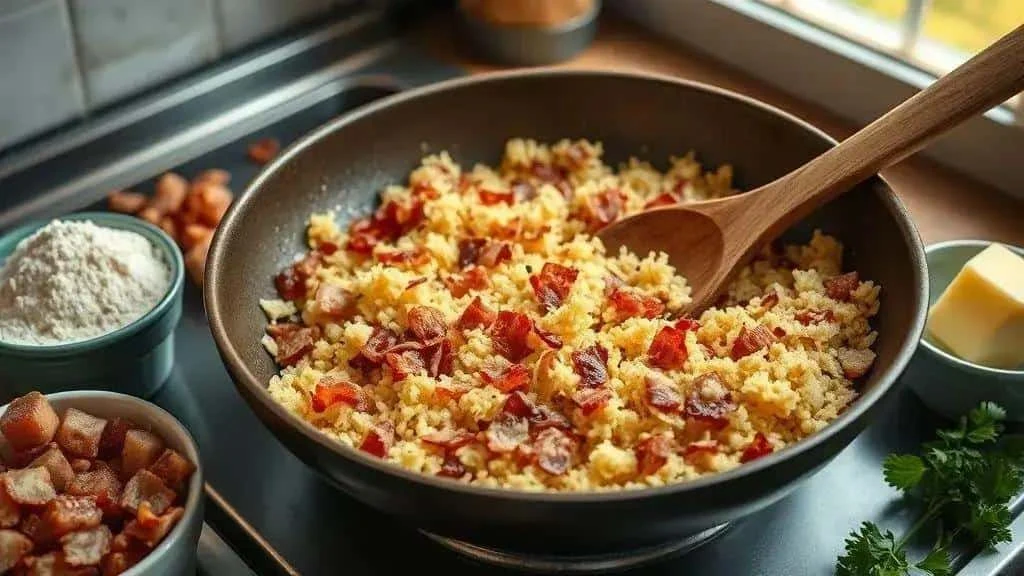
For crisp bacon farofa, pay attention to the bacon, the amount of fat and how gradually you add the meal.
Key Points for Crunch
- Choose suitable bacon: streaky bacon with some lean meat and fat works well; use roughly 120–180 g with 400 g toasted cassava meal, depending on preference.
- Cut evenly: small dice or thin strips cook more evenly.
- Pat dry if necessary: use disposable kitchen paper to remove surface moisture, then discard it and wash your hands after handling raw bacon.
- Use a moderate heat: let the fat render without burning the bacon, then raise the heat slightly if necessary to crisp it.
- Reserve some bacon: remove a few fully cooked crisp pieces before adding the meal, then return them at the end.
- Control the fat: toast the meal gradually in the rendered fat, adding butter only if needed to coat it evenly.
Step-by-Step Crisping Method
- Prepare the bacon: dice 150–180 g and pat dry with kitchen paper if necessary.
- Render the fat: place the bacon in a frying pan over a medium heat and cook gently, often around six to eight minutes, depending on its thickness.
- Finish cooking: continue until thoroughly cooked and crisp, adjusting the heat to prevent burning. Reserve about one third.
- Cook the aromatics: soften and brown one chopped large onion in the bacon fat, then add two chopped garlic cloves for about 30 seconds.
- Add the meal gradually: stir in 400 g toasted cassava meal in stages and toast evenly for roughly three to five minutes, adjusting the heat as needed.
- Reduce excess moisture: continue stirring over a moderate heat if the mixture is damp. Avoid very high heat, which burns the crumbs before the moisture evaporates.
- Return the reserved bacon: stir it through at the end to preserve its crunch.
- Serve or store safely: serve promptly; if made ahead, cool and refrigerate, then reheat once until steaming hot throughout.
Substitutions and Adaptations
- Vegan version: use crisp plant-based bacon or mushrooms with smoked paprika, and oil instead of all bacon fat and butter. Check the alternative’s ingredients.
- Gluten-free version: choose labelled gluten-free toasted cassava meal and suitable bacon, seasonings and toppings. Use clean equipment to avoid cross-contact.
Common Mistakes
- Adding all the meal at once can make it harder to distribute the fat evenly and break up clumps.
- Starting with very high heat can burn the outside of the bacon before it is thoroughly cooked.
- Cooking every piece of bacon in the mixture for too long reduces the contrast; reserve a few crisp pieces for the finish.
Vegan Nut Farofa: An Extra Variation
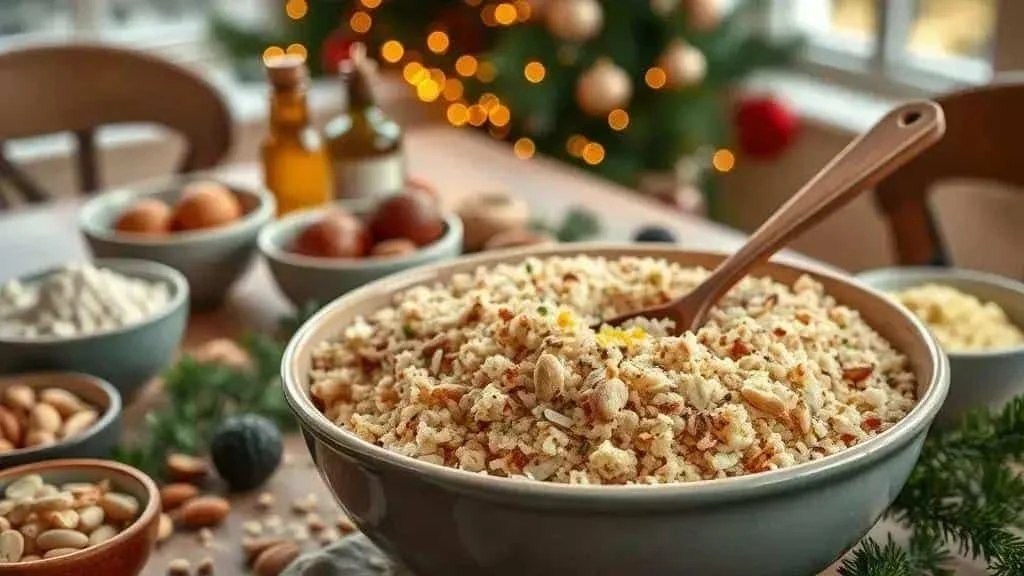
- 400 g toasted cassava meal — or an equal-weight mixture of this and suitable pre-cooked Brazilian maize meal.
- 100 g Brazil nuts — chopped; replace with the same weight of walnuts or cashews if preferred.
- 50 g almonds — chopped, optional for extra crunch.
- 1 medium onion — finely chopped.
- 2 garlic cloves — chopped.
- 4 tablespoons olive oil — or a suitable neutral vegetable oil.
- Salt, to taste — start with less than one teaspoon and adjust after cooking; salted nuts need less added salt, while unsalted nuts do not add saltiness.
- 2 tablespoons parsley — chopped, to finish.
- Zest of 1 lemon — optional; add gradually to taste.
Method
- Chop the nuts: cut the Brazil nuts and almonds into small, manageable pieces for an even texture.
- Toast the nuts: stir in a dry frying pan over a medium heat for about two to three minutes until fragrant. Set aside before they scorch.
- Cook the onion and garlic: soften the onion in the oil until lightly golden, then add the garlic for about 30 seconds.
- Add the nuts: return them to the pan and stir for about one minute.
- Add the meal: gradually stir in the toasted cassava meal and cook for roughly three to five minutes until evenly toasted. Do not taste uncooked flour or meal.
- Check the texture: keep stirring over a moderate heat to evaporate excess moisture without burning the crumbs.
- Season and finish: adjust the salt after cooking, remove from the heat and stir in the parsley and lemon zest. Serve promptly.
Variations
- With mushrooms: sauté 150 g sliced mushrooms until their liquid evaporates, then add them for a savoury flavour.
- With dried fruit: add 50 g raisins or chopped dried apricots for sweetness.
- Extra crunch: finish with suitable ready-made crisp fried onions, or toast the meal a little longer without allowing it to burn.
Storage and Presentation
- Cool within one to two hours, refrigerate in a covered container at 5°C or below and use within 48 hours. Reheat once until steaming hot throughout; this can also improve the crumbly texture.
- Serve in a ceramic bowl with a small dish of chopped nuts and lemon zest alongside, clearly identifying allergens.
- For a buffet, set out small quantities and replenish from safely stored reserves. A merely warm serving bowl does not keep food at a safe hot-holding temperature.
Sweet Farofa: Serving It with Desserts
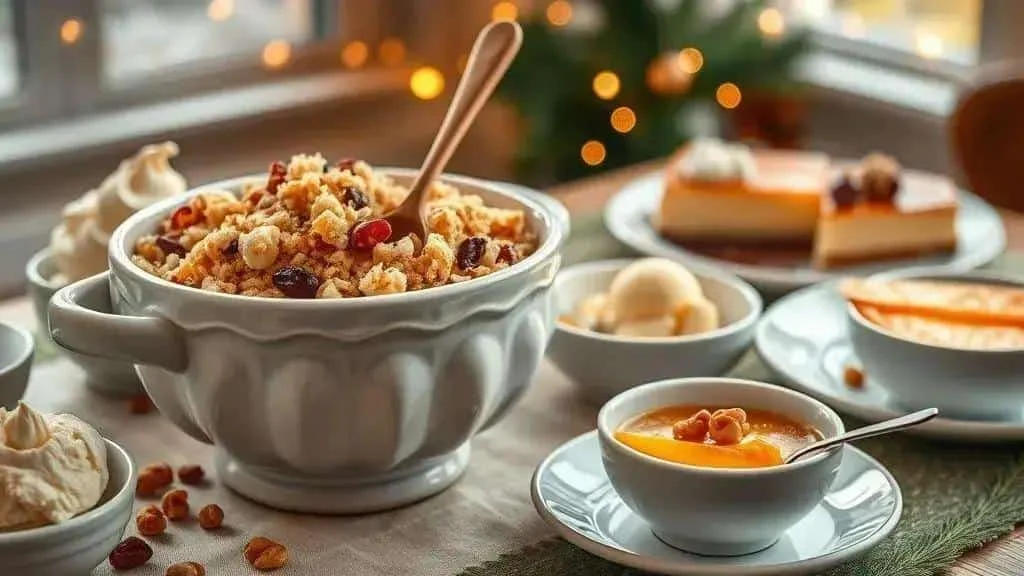
Sweet Christmas farofa works as an unusual side or a crunchy dessert topping. Use a little at a time so it does not overwhelm delicate flavours.
When to Serve It
- Alongside creamy desserts: ice cream, caramel custard and mousse benefit from a contrasting crumbly topping.
- As a topping: sprinkle over vanilla ice cream or cheesecake just before serving.
- In individual bowls: let guests decide how much they would like.
- After savoury dishes: dried fruit provides a sweet contrast as the meal moves on to dessert.
- On a tasting table: pair small portions with mild cheeses and preserves.
Pairing with Desserts
- Vanilla, dairy or coconut ice cream: try dried-fruit farofa with orange zest, allowing one or two tablespoons per serving.
- Caramel custard and coconut pudding: use a lightly toasted version with little cinnamon so the pudding’s flavour remains prominent.
- Cheesecake and creamy tarts: nut farofa adds texture; serve it separately so the base does not become soggy.
- Chocolate desserts: try a version with toasted coconut or a small amount of candied fruit.
- Baked or grilled fruit: cinnamon farofa works well, with a little honey if appropriate. Do not serve honey to babies under one year.
Portions and Presentation
- Suggested quantity: allow a small portion alongside dessert, or just one to two tablespoons as a topping; adjust to the richness of the pudding and your guests’ appetites.
- Serving temperature: set out only the amount being served promptly. Keep the rest chilled; if reheating, heat thoroughly once rather than giving it a brief warm-up.
- Presentation: use individual bowls or a shared dish with a clean serving spoon.
- Allergens and substitutions: suitable toasted seeds may replace nuts only after checking individual allergies and cross-contact. Vegan spread or oil can replace butter; check the breadcrumbs too.
- Balancing flavour: citrus zest adds a fresh aromatic note without extra sweetness.
Buffets and Advance Preparation
- Prepare no more than 48 hours ahead and refrigerate promptly in a covered container at 5°C or below, or freeze a suitable portion for longer storage.
- Place the farofa beside complementary desserts with a dedicated spoon, keeping nut-containing mixtures away from other dishes.
- Reheat only the portion required until steaming hot throughout, then serve promptly. Do not repeatedly warm leftovers from the buffet.
Building a Farofa Tasting Board
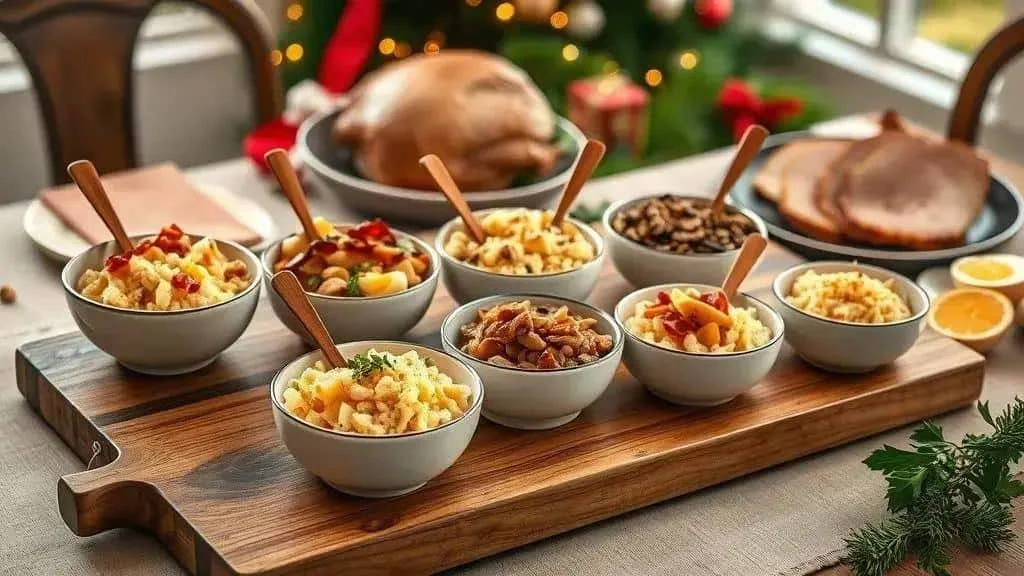
A few small bowls on a board or tray let guests compare flavours, from mild herbs to smoky bacon or sweet dried fruit.
What to Include
- Variety: choose three to five small samples, such as bacon, nuts, vegan mushrooms, dried fruit and egg, scaling the recipes down to avoid excessive leftovers.
- Bowls: small shallow dishes make the mixtures easy to see and serve.
- Utensils: provide a separate clean spoon for each recipe to reduce mixing and allergen cross-contact.
- Extra toppings: offer small amounts of chopped cooked egg, crisp onion, citrus zest and chopped nuts. Keep perishable reserves chilled.
- Arrangement: group bowls from mild to strongly flavoured, with clear ingredient labels.
Assembling the Board
- Choose a base: use a clean board or tray large enough for three to five small bowls without crowding.
- Arrange the bowls: leave enough space between them for serving spoons and small dishes of toppings.
- Add utensils: give each bowl and topping its own spoon or small pair of tongs.
- Add toppings: set out small portions of chopped egg, crisp onion, nuts, dried fruit or washed herbs beside the relevant farofas.
- Finish neatly: garnish with edible herbs or citrus zest and leave the edges clear for guests to reach the dishes.
Pairing with Christmas Dinner
- Roast meat: bacon or onion farofa pairs well with roast pork and other juicy roasts.
- Roast poultry: nuts and citrus zest complement turkey or chicken without overpowering the meat.
- Fish and vegetable dishes: try mushroom or herb farofa as a savoury accompaniment.
- Desserts and cheese: reserve the sweet variation for mild cheese or as a crunchy ice-cream topping.
Quantities and Serving
- Portions: around 30–50 g of finished farofa per person is a modest side among several dishes. For six to eight guests, that means roughly 180–400 g in total across all variations, not per bowl. The full recipes make substantially more.
- Replenishment: keep reserves refrigerated or properly hot-held, and bring out small fresh portions in clean bowls.
- Serving: serve freshly cooked farofa promptly. For chilled portions, reheat once until steaming hot throughout; do not rely on a fixed one- or two-minute warm-up.
Dietary Requirements
- Identify allergens: label ingredients such as nuts, wheat, milk and eggs, and keep separate utensils for each bowl. Ask guests about their requirements.
- Vegan and gluten-free choices: include a genuinely plant-based version and use suitable gluten-free meal, seasonings and toppings where required, prepared with clean equipment.
Simple Presentation Tips
- Use food-safe ceramic bowls in contrasting colours to distinguish the recipes.
- Add washed edible herbs and a little citrus zest for colour and aroma.
- Place the tray centrally or on a side table, with plates and serving spoons within easy reach.
Making Ahead, Storage and Leftovers
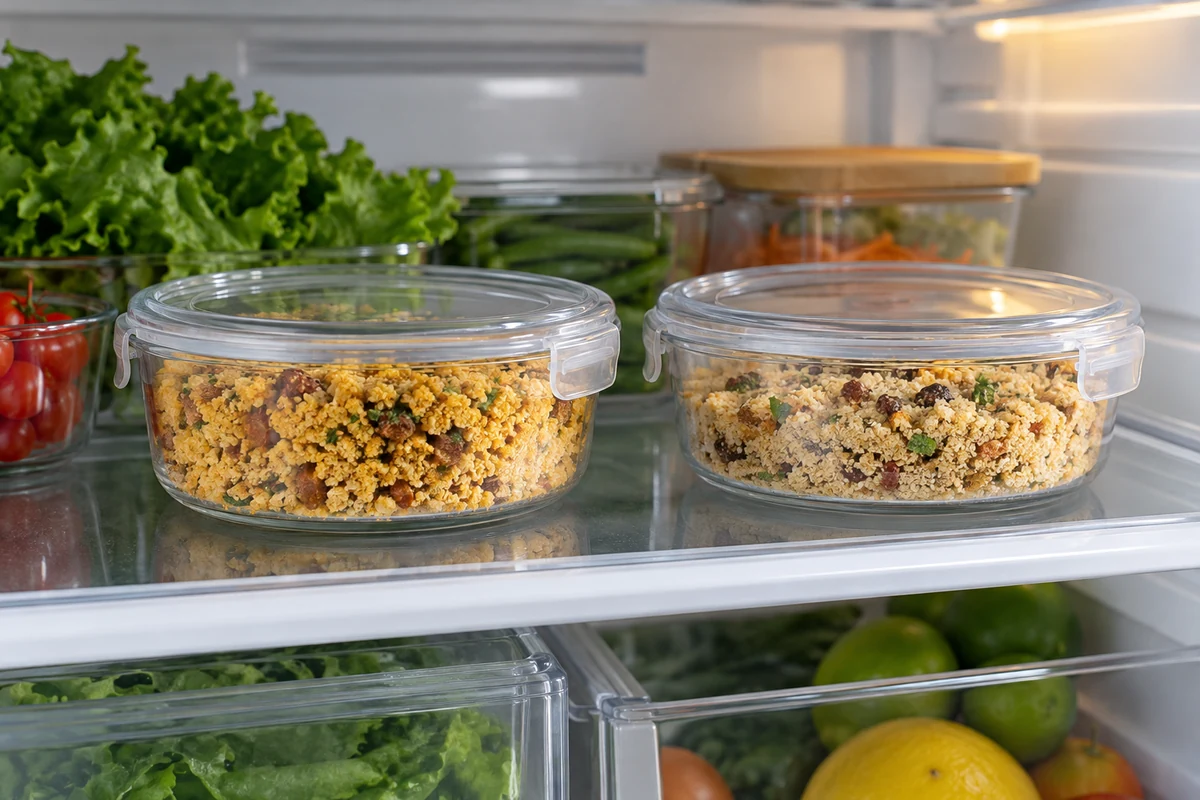
Planning ahead helps Christmas cooking run smoothly, provided cooked farofa is chilled promptly and reheated safely.
Preparing Ahead
- Cool promptly: divide into shallow portions and allow steam to escape briefly, then refrigerate within one to two hours. Do not leave a large batch out until it becomes completely cold.
- Portion it: use small covered containers so you can take out only what you need.
- Separate crunchy additions: keep cooked bacon refrigerated separately; store packaged crisp onions and dry nuts according to their labels, then add when serving.
- Use suitable containers: choose clean food-storage boxes or freezer-safe bags, allowing room for safe cooling before freezing.
Safe Storage
- At room temperature: serve promptly and minimise time out of refrigeration. Cooked farofa with onion, bacon, egg or mushrooms is not safe to leave out overnight.
- In the fridge: keep covered at 5°C or below and use within 48 hours of cooking, or sooner if an ingredient’s instructions require it.
- In the freezer: freeze promptly in small portions. Two to three months is a useful quality guide; thaw in the fridge and use within 24 hours of fully defrosting.
- Avoid prolonged cooling: let steam escape briefly from shallow portions, then cover and chill within one to two hours. Condensation is less important than safe cooling.
Reheating
- In a frying pan: stir over a moderate heat until steaming hot throughout, breaking up cold clumps. Reheat only once.
- In the oven: spread in a shallow ovenproof dish and heat at around 160°C, or 140°C fan, stirring as needed until thoroughly hot. There is no reliable fixed reheating time for every quantity.
- In the microwave: follow your appliance’s instructions, stir between intervals and ensure the centre is steaming hot. A brief pan finish may improve texture as part of the same reheating session.
- Restore crunch: add suitable crisp toppings at the end, keeping any perishable toppings safely chilled until needed.
Using Leftovers
- A baked topping or filling: use safely chilled farofa in stuffed vegetables or a savoury bake, heating it thoroughly. Do not put leftover stuffing inside a raw bird.
- Egg and farofa: heat a chilled portion thoroughly and combine with freshly cooked scrambled egg, ensuring the whole dish is hot and the egg is set.
- Fritters or croquettes: combine with suitable mashed potato or cooked shredded meat and use a reliable recipe that cooks the centre thoroughly; this counts as the leftovers’ one reheating.
- Vegetable bowls: sprinkle freshly reheated farofa over warm grains or grilled vegetables and eat promptly.
Quick Reminders
- Label containers: record the cooking date and, if frozen, the freezing date.
- Check seasoning after heating: taste only when thoroughly cooked and hot, adding salt sparingly.
- Replenish carefully: use clean bowls and safely stored portions rather than topping up food that has been standing out.
Conclusion
Farofa brings crunch and variety to Christmas dinner. Choose the flavours that suit your menu and scale the quantities to the number of side dishes you are serving.
Prepare ahead if useful, chill promptly and keep crisp toppings separate. A little planning gives you an appealing accompaniment without unnecessary waste.
For more festive recipes and practical ideas, explore the I Love Christmas blog and follow our social channels.
Frequently Asked Questions About Christmas Farofa
Which farofa is suitable for vegans?
Choose olive oil, sautéed mushrooms, nuts and suitable toasted cassava or pre-cooked Brazilian maize meal. Avoid bacon, butter, eggs and cheese, and check any packaged alternatives.
How do I keep farofa crisp at Christmas dinner?
Toast the meal evenly, cook excess liquid out of moist additions and reserve crisp toppings separately. If made ahead, chill promptly and reheat once until steaming hot throughout before adding the toppings.
Can I make farofa in advance?
Yes. Cool within one to two hours and refrigerate covered at 5°C or below for up to 48 hours. For longer storage, freeze promptly; two to three months is a quality guide. Thaw in the fridge, use within 24 hours and reheat only once.
What can replace nuts for someone with a nut allergy?
Suitable toasted pumpkin or sunflower seeds may provide crunch, but check the person’s specific allergies and the product’s cross-contact information first. Seeds are not a universally safe substitute.
How much farofa should I allow per person?
As one of several sides, allow roughly 30–50 g of finished farofa per person. For six to eight guests, that is about 180–400 g across all the bowls combined; adjust for appetite and the rest of the menu.
How can I use leftover farofa?
Use safely chilled leftovers as a vegetable stuffing or baked topping, with freshly cooked egg, or in a suitable fritter recipe. Reheat thoroughly once, within the storage time limit, and do not use leftovers that have been standing out too long.
Sources and Further Reading
- Food Standards Agency: cooking food safely
- Food Standards Agency: chilling and leftovers
- UK food labelling: allergens