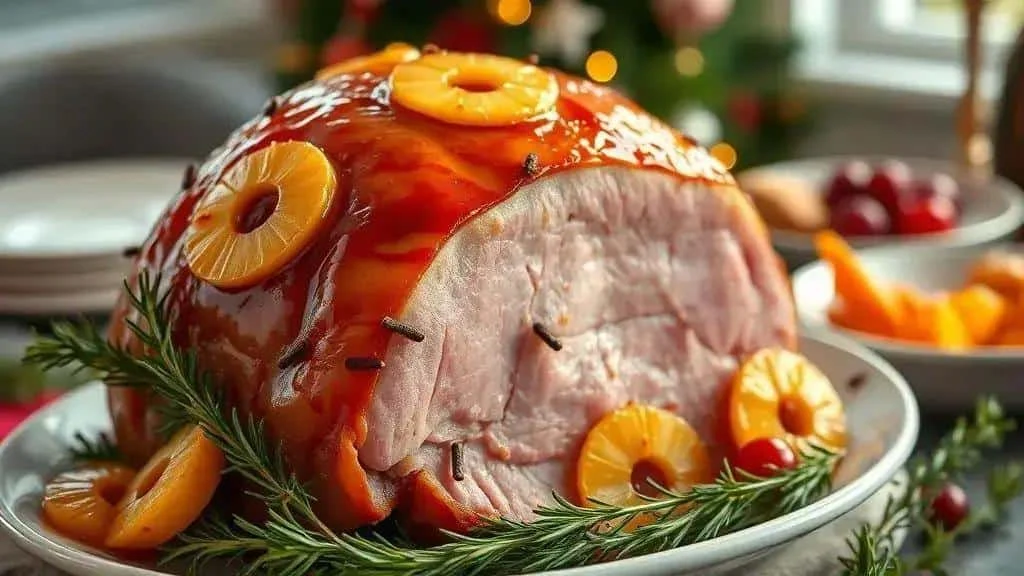
Seven Christmas glazed ham recipes inspired by Brazilian tender, with pineapple, honey and mustard, orange and ginger, and other toppings. Includes ingredients, methods, budget variations and serving ideas. Use a fully cooked ham suitable for reheating and follow its packet instructions; raw gammon needs a separate full cooking method.
Looking for Christmas glazed ham recipes? These seven options take inspiration from Brazilian tender, a festive cooked ham often served with sweet glazes. The recipes have been editorially reviewed, but have not been kitchen-tested for this translation.
Why Choose Glazed Ham for Christmas?
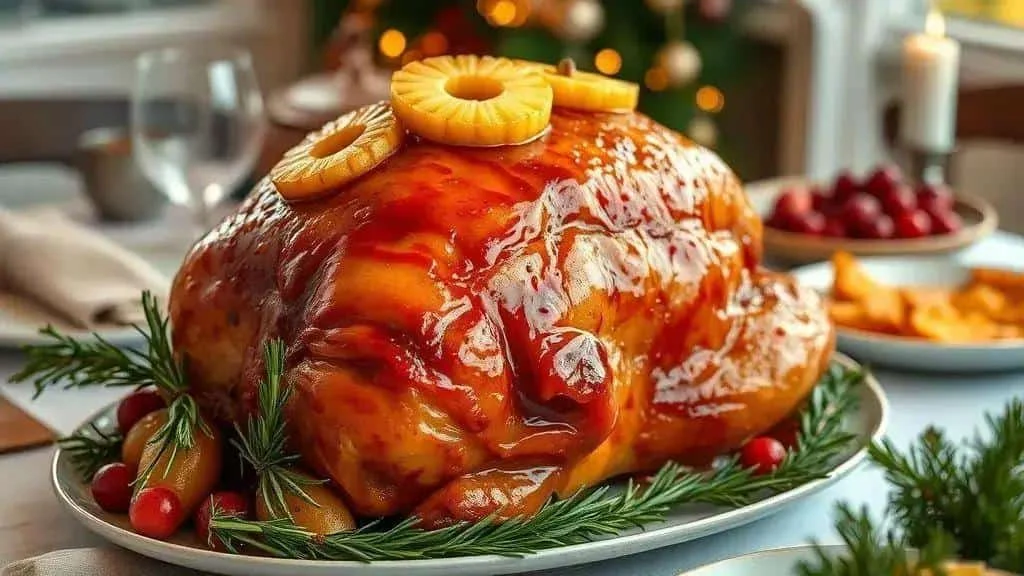
Christmas glazed ham offers familiar festive flavours and convenient preparation when you start with a fully cooked product. Here is how to choose and prepare one.
Reasons to Serve Ham
- Convenience: Brazilian tender is commonly sold cooked, but always check the label. In the UK, raw gammon is not an interchangeable shortcut.
- Familiar flavours: smoky ham and sweet glazes sit well alongside traditional Christmas dishes.
- Presentation: pineapple, cloves and herbs make an attractive centrepiece.
- Variety: try honey, mustard, orange or spices with savoury or sweet accompaniments.
- Portion planning: roughly 150–200 g cooked boneless ham per adult is a useful main-course guide.
- Leftovers: cool and refrigerate within 1–2 hours, then use within 48 hours or the product’s shorter limit. Cold slices work well in sandwiches.
- Value: compare prices per edible portion with other main courses.
- Product choice: compare ingredients and salt content rather than assuming an artisan or preservative-free label makes a product better.
Quick Buying Tips
- Check dates and salt content: choose a product that suits your needs. Rinsing a cooked ham is not a reliable way to reduce its overall salt content.
- Allow enough: plan around 150 g per adult with several sides, or 200 g for a larger main-course serving.
- Look at the cut: a modest fat cap can hold a glaze, but some tender-style hams have little visible fat.
- Drinks: fruity white wine or a light beer can suit sweet glazes; sparkling water with citrus is an alcohol-free option.
These points can help you decide whether glazed ham suits your Christmas menu.
Buying and Preparing the Ham
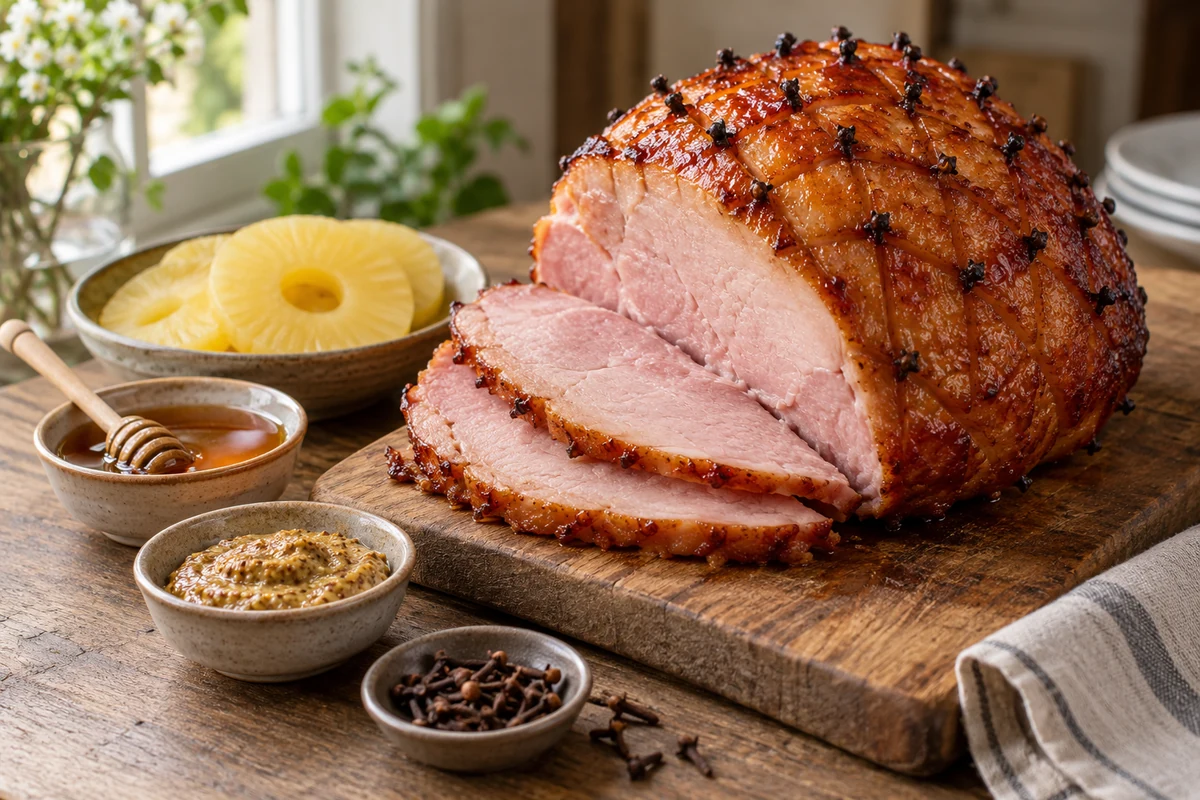
Start with a suitable fully cooked ham. The checklist below helps with buying, preparation and glazing.
What to Check
- Weight: allow 150–200 g cooked boneless ham per person; a 1.5–2 kg joint gives eight guests generous portions with some flexibility.
- Use-by date: check that the sealed pack is intact and the date covers your plans.
- Ingredients: compare salt content and check allergens.
- Type: choose a cooked smoked or unsmoked ham suitable for reheating. Follow its label.
- Fat cap: a moderate layer works well with a scored glaze; it is not essential for every product.
Shopping Checklist
- 1 fully cooked ham, 1.5–2 kg, adjusted for your guests
- 1 tin pineapple rings for decoration; orange slices are an alternative
- A small jar of whole cloves for decoration; remove before eating
- 4 tbsp honey for a glaze, or apricot jam; do not serve honey to babies under one
- 3 tbsp mustard, with Dijon offering a stronger flavour
- 2 tbsp soft brown sugar for a sweet glaze
- Juice of 1 orange, or pineapple juice, depending on the chosen recipe
- Oven-safe wooden cocktail sticks or small skewers if needed for decoration; remove every one before serving
- Kitchen foil to help protect the surface during reheating
Preparation Before Glazing
- Defrost ahead, if necessary: thaw in the fridge in a tray, following the pack’s instructions and allowing enough time for the centre to thaw fully.
- Unwrap: remove plastic, clips and any covering not intended for oven use.
- Pat dry if needed: use clean kitchen paper. Do not routinely rinse the ham.
- Avoid improvised soaking: only soak a product if its manufacturer specifies this. Choose a lower-salt ham and less salty sauces instead.
- Score lightly: where there is a fat layer, make shallow diamond cuts without cutting deeply into the meat.
- Add decoration: arrange pineapple rings and cloves if using. Keep track of any wooden sticks and remove them and the cloves before serving.
- Keep chilled: leave the ham refrigerated until you are ready to prepare and heat it; there is no need for a prolonged rest at room temperature.
- Prepare equipment: have a roasting tin, foil and a pastry brush ready.
Heating and Glazing Tips
- Preheat: follow the ham’s reheating instructions. The temperatures below are recipe guides, not a replacement for the product’s directions.
- Cover initially: a loose foil cover helps protect the surface while the centre heats.
- Uncover near the end: allow the glaze to colour, watching so its sugar does not burn.
- Check the centre: when serving reheated ham, heat until steaming hot throughout and follow the label. A clean probe can confirm 75°C for 30 seconds or an equivalent safe time and temperature.
The ham is then ready to glaze and serve according to your chosen method. A glossy surface alone does not confirm that its centre is hot.
Seven Glazed Ham Recipes
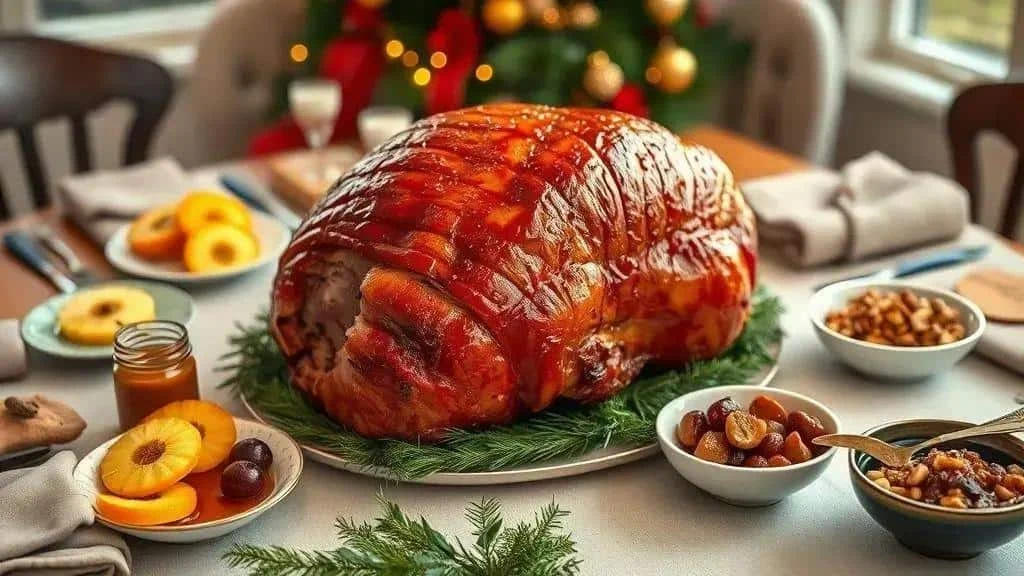
These seven ham recipes use fully cooked joints. Cup measures are 240 ml, tablespoons 15 ml and teaspoons 5 ml. Heat according to the pack and check the centre; the suggested oven times are only guides.
Pineapple-Glazed Ham
Ingredients
- 1 fully cooked ham, 1.5–2 kg
- 1 tin pineapple rings, about 565 g including juice; reserve 120 ml juice
- 4 tbsp honey, or apricot jam
- 2 tbsp soft brown sugar
- ½ cup pineapple juice, 120 ml
- Whole cloves for decoration; remove before serving
Method
- Preheat: use 160°C/140°C fan if compatible with the ham’s reheating instructions.
- Prepare the ham: ensure it is fully thawed, remove packaging and pat dry if necessary. Do not rinse.
- Score: make shallow diamond cuts in the fat where present.
- Decorate: arrange pineapple rings and cloves, using suitable wooden sticks if needed. Remove sticks and cloves before serving.
- Mix the glaze: combine pineapple juice, honey and brown sugar.
- Heat covered: brush with glaze and cover loosely with foil. Allow roughly 40–50 minutes as an initial guide, but follow the pack and continue until steaming hot throughout.
- Colour the glaze: uncover near the end, around the final 10 minutes, and watch closely.
Variations
- Use fresh pineapple rings with separate pineapple juice, adjusting sugar to taste.
- A little pink peppercorn adds fragrance; check suitability for guests with allergies.
Honey and Mustard Glazed Ham
Ingredients
- 1 fully cooked ham, 1.2–1.8 kg
- 4 tbsp honey
- 3 tbsp Dijon mustard, or milder yellow mustard
- 2 tbsp cider vinegar
- 1 tbsp olive oil
- Black pepper to taste
Method
- Preheat: use 170°C/150°C fan if suitable for the product.
- Prepare: pat dry and lightly score any fat layer.
- Mix: combine honey, mustard, vinegar, oil and black pepper.
- Brush and cover: apply the glaze and heat under foil according to the pack. Check after around 30 minutes, basting occasionally.
- Finish uncovered: allow roughly 10–15 minutes for colouring, watching for burning. Continue until the centre is steaming hot.
Variations
- Add orange zest for citrus fragrance; juice provides acidity.
- Try a different honey for a change of flavour.
Orange and Ginger Glazed Ham
Ingredients
- 1 fully cooked ham, about 1.5 kg
- 1 cup fresh orange juice, 240 ml
- 2 tbsp grated fresh ginger; if using ground ginger instead, start with a small amount and adjust to taste
- 3 tbsp honey or soft brown sugar
- 2 tbsp soy sauce, optional; omit or reduce for a less salty glaze
Method
- Preheat: use 170°C/150°C fan if compatible with the ham’s instructions.
- Make the glaze: combine juice, ginger, honey or sugar, and optional soy sauce.
- Score: lightly mark the fat in diamonds where present.
- Brush and heat: reserve some clean sauce for serving. Brush the ham, cover and heat according to the pack; 35–45 minutes is only an initial guide, not a guarantee.
- Reduce the serving sauce: simmer the reserved clean sauce until slightly thickened. Serve with the ham once it is steaming hot throughout.
Variations
- A little orange liqueur adds flavour, but cooking does not guarantee removal of all alcohol.
- Use mandarin juice for a different citrus flavour.
Ham with Red Wine and Cherry Sauce
Ingredients
- 1 fully cooked ham, about 1.5 kg
- 1 cup red wine, 240 ml
- ½ cup pitted fresh or drained tinned cherries; cranberries are a tarter alternative and may need longer cooking
- 2 tbsp sugar
- 1 tbsp butter
Method
- Reduce the wine: simmer with the sugar until roughly halved. The finished sauce is not necessarily alcohol-free.
- Add the cherries: cook until tender, initially around 3–4 minutes, allowing longer if needed.
- Prepare the ham: lightly score the fat and preheat to 170°C/150°C fan, or follow the product’s instructions.
- Heat and glaze: reserve some clean sauce for serving, brush the ham and heat under foil. Check after around 35–45 minutes and continue as needed until steaming hot throughout.
- Finish the sauce: stir butter into the reserved hot sauce and spoon over the carved ham.
Variations
- Port gives a richer, sweeter sauce; it still contains alcohol.
- Cranberry sauce or jam offers a different shortcut topping; adjust the added sugar.
Honey and Nut-Crusted Ham
Ingredients
- 1 fully cooked ham, 1.3–1.8 kg
- 1 cup chopped walnuts, Brazil nuts or almonds; breadcrumbs give a different crust and are not an allergy-safe substitute without checking all ingredients
- 3 tbsp honey, reserving a little to help the crust adhere
- 2 tbsp melted butter
- 1 tbsp mustard
Method
- Toast the nuts: lightly toast in a dry pan or oven, watching closely, then chop coarsely.
- Mix the topping: combine nuts, most of the honey, melted butter and mustard.
- Prepare the ham: score the fat lightly and brush with the reserved honey.
- Apply the crust: press the mixture over the surface.
- Heat and brown: follow the ham’s reheating instructions under a loose foil cover. Check after about 30–40 minutes and uncover towards the end to colour the crust. The centre must be steaming hot.
Variations
- Add a little finely chopped herb to the nuts.
- Unsweetened granola makes a different crunchy topping; check its ingredients and allergens.
Ham with Dried Fruit Farofa
Ingredients
- 1 fully cooked ham, about 1.5 kg
- 1 cup prepared farofa or panko breadcrumbs; these give different textures
- ½ cup chopped dried fruit, such as apricots, raisins or dates
- 2 tbsp butter
- Chopped parsley to taste
Method
- Make the farofa: melt the butter, add the farofa or panko and dried fruit, and stir until hot and lightly toasted. Fold in the parsley.
- Prepare the ham: score the fat lightly and preheat to 170°C/150°C fan, or the temperature on its pack.
- Arrange for serving: heat the ham separately from the farofa. This avoids needing an unlisted honey or jam coating.
- Keep the farofa separate: spoon it around or over the sliced ham at serving time for a crunchy accompaniment.
- Heat the ham: follow the pack, initially covered, then uncover briefly if desired. The centre should be steaming hot throughout; do not rely on a fixed 30–40 minute time.
Variations
- Add suitable chopped nuts for more crunch.
- A prepared cassava-based farofa keeps the Brazilian character of the dish.
Barbecue Ham with Caramelised Onions
Ingredients
- 1 fully cooked smoked ham, about 1.5 kg
- 1 cup barbecue sauce, 240 ml
- 2 large onions, sliced
- 2 tbsp olive oil
- 1 tbsp soft brown sugar
Method
- Cook the onions: warm the oil, add onions and sugar, and cook gently until soft and golden, stirring regularly.
- Prepare the ham: score the fat lightly and preheat to 170°C/150°C fan, or follow its pack.
- Glaze: brush the ham with barbecue sauce.
- Heat covered: follow the product’s reheating time, brushing occasionally with more sauce. Check the centre rather than assuming 30–40 minutes is enough.
- Add onions: spoon over the cooked onions near the end and heat through. Serve once the ham is steaming hot throughout.
Variations
- Use a smoky barbecue sauce for a stronger flavour.
- Add a little chipotle for heat.
Pineapple-Glazed Ham: Detailed Ingredients
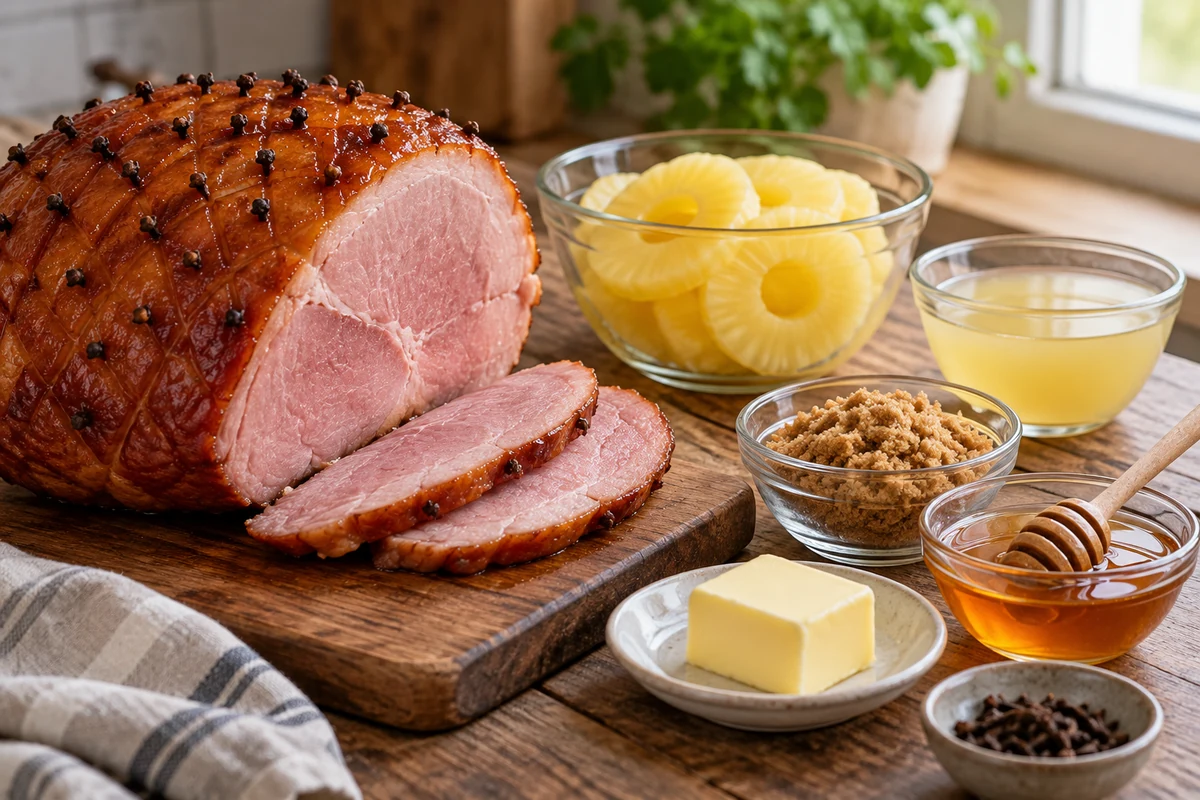
For the more detailed version of pineapple-glazed ham, gather:
- 1 fully cooked ham, 1.5–2 kg; allow roughly 150–200 g per person
- 1 tin pineapple rings, about 565 g including juice, reserving the juice; fresh rings with separate juice also work
- 4 tbsp honey, or apricot jam or agave syrup
- 2 tbsp soft brown sugar, adjusted to taste
- ½ cup pineapple juice, 120 ml; orange juice is an alternative
- 1 tbsp butter, optional
- Whole cloves for decoration; remove before eating
- Oven-safe wooden cocktail sticks or small skewers if needed; count and remove before serving
- 1 tbsp cider vinegar or lemon juice, optional
- Freshly ground black pepper, optional
How to Make Pineapple-Glazed Ham
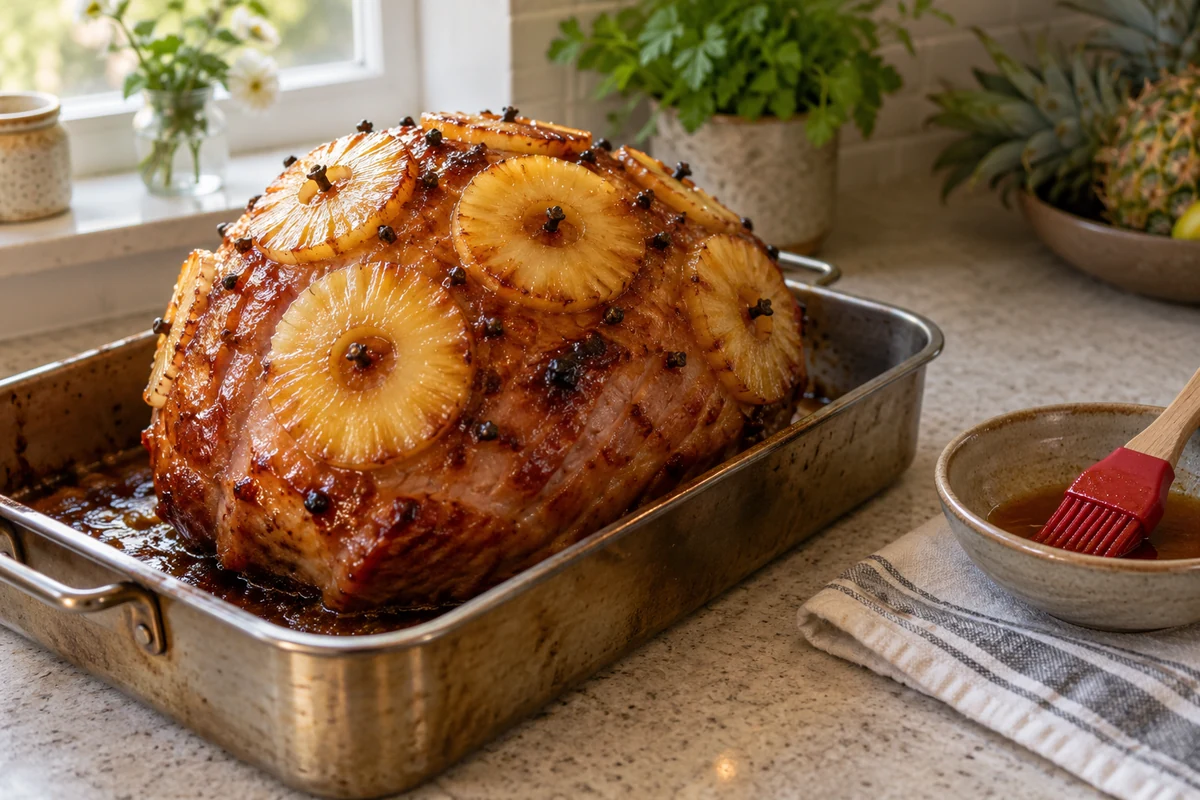
- Preheat to 160°C/140°C fan, if consistent with the ham’s instructions.
- Unwrap and pat dry: remove unsuitable packaging and dry the surface if needed, without rinsing.
- Check the product: use fully cooked ham suitable for reheating. Do not soak it unless instructed by the manufacturer.
- Score lightly: cut a diamond pattern into any fat layer without cutting deep into the meat.
- Add pineapple: arrange the rings with cloves for decoration. Use suitable wooden sticks only if needed, removing them and the cloves before serving.
- Cover: place in a foil-lined roasting tin and cover loosely with foil.
- Start heating: follow the pack’s timing. A 35–50 minute period is only a guide; size, shape and starting temperature affect the time needed.
Making the Glaze
- Measure: use 120 ml pineapple juice, 4 tbsp honey and 2 tbsp brown sugar, plus the optional 1 tbsp butter and 1 tbsp cider vinegar or lemon juice.
- Warm: gently heat juice, honey and sugar until dissolved and slightly reduced, stirring.
- Finish: stir in the optional butter, vinegar or lemon juice and black pepper.
- Taste: adjust sweetness and acidity before the sauce touches the ham.
- Brush occasionally: briefly lift the foil and apply glaze. Reserve a clean portion separately for serving.
- Uncover near the end: allow approximately 10–15 minutes for colouring, watching closely for burning.
- Check heating: follow the label and ensure the centre is steaming hot throughout. A probe can confirm 75°C for 30 seconds, or an equivalent safe time and temperature; touching the surface is not enough.
- Rest briefly: wait 8–10 minutes before carving.
- Carve and serve: remove all sticks and cloves, slice with a sharp knife and serve with pineapple and the reserved hot sauce.
Quick Tips
- Gentle brushing: avoid dislodging the pineapple while applying glaze.
- Alternative sweetness: try apricot jam or maple syrup instead of honey.
- Planning time: allow for preparation, the product’s full reheating instructions and resting; do not promise that every joint takes only an hour.
- Presentation: add a few sprigs of suitable culinary rosemary or parsley.
Pineapple Ham Variations

- Fresh pineapple and citrus: use fresh rings and a reduced juice glaze; orange juice gives a different citrus finish.
- Peppery notes: add a little crushed pink peppercorn, or black pepper with a pinch of chilli flakes. Check allergies.
- Apricot and mustard: replace honey with apricot jam and add Dijon mustard to taste. Marmalade offers another flavour.
- Nut topping: press suitable chopped nuts over the glaze near the end. Granola is a different alternative; neither option is automatically allergen-free.
- Wine and red fruit: reduce red wine with sugar and cherries or cranberries for a serving sauce. Port is sweeter; these are not alcohol-free sauces.
- Crunchy farofa: serve toasted dried-fruit farofa alongside the ham, or use a thin jam coating to hold a little topping. Panko gives a different texture.
- Barbecue and onions: use barbecue sauce and cooked caramelised onions instead of pineapple glaze.
- Ginger and soy: add grated ginger and a little soy sauce. For a gluten-free version, use a product specifically labelled gluten-free and check every other ingredient.
Using the Variations
- Glaze balance: start with roughly 120 ml juice and 2–4 tbsp honey, sugar or jam, then adjust acidity. Jam already contains sugar and may need less extra sweetness.
- Taste first: check the warm glaze before brushing it onto the ham.
- Holding a crust: a thin honey or jam layer can help nuts or crumbs stick.
- Colouring: uncover towards the end and watch sugary toppings closely.
- Flavour combinations: citrus works with nuts and ginger; wine sauces pair with red fruit or darker jams.
Honey and Mustard Ham: Detailed Ingredients
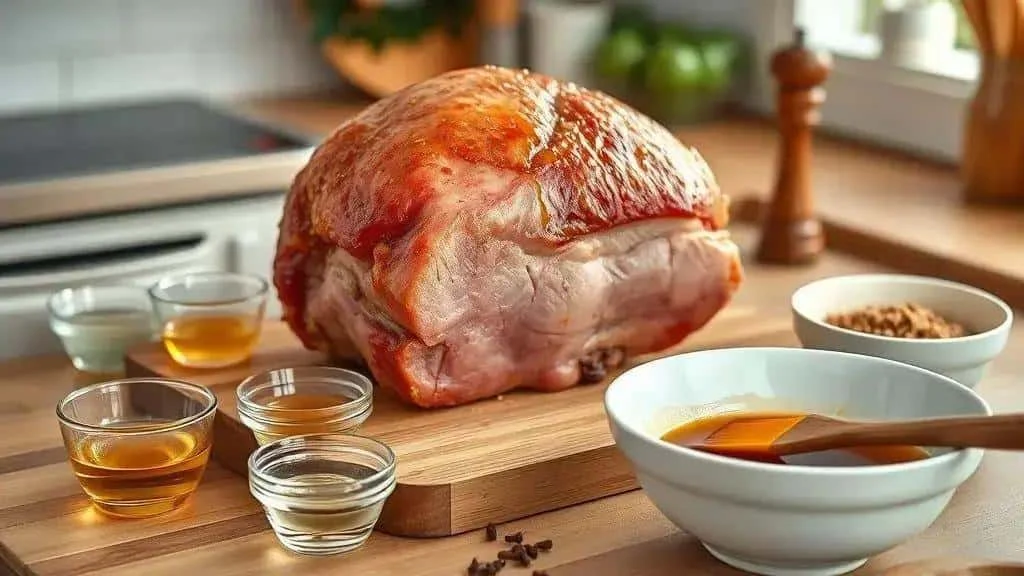
For honey and mustard glazed ham, gather:
- 1 fully cooked ham, 1.2–1.8 kg; adjust for your guests
- 4 tbsp honey, 60 ml, or apricot jam or maple syrup
- 3 tbsp Dijon mustard, or milder yellow mustard
- 2 tbsp cider vinegar, 30 ml, or lemon juice
- 1 tbsp olive oil or melted butter
- 1 tbsp soft brown sugar, optional
- 1 garlic clove, finely chopped, optional
- Freshly ground black pepper to taste
- Whole cloves, optional decoration; remove before eating
- Up to ¼ cup warm water or fruit juice, 60 ml, only as needed to loosen the glaze
How to Make Honey and Mustard Glazed Ham
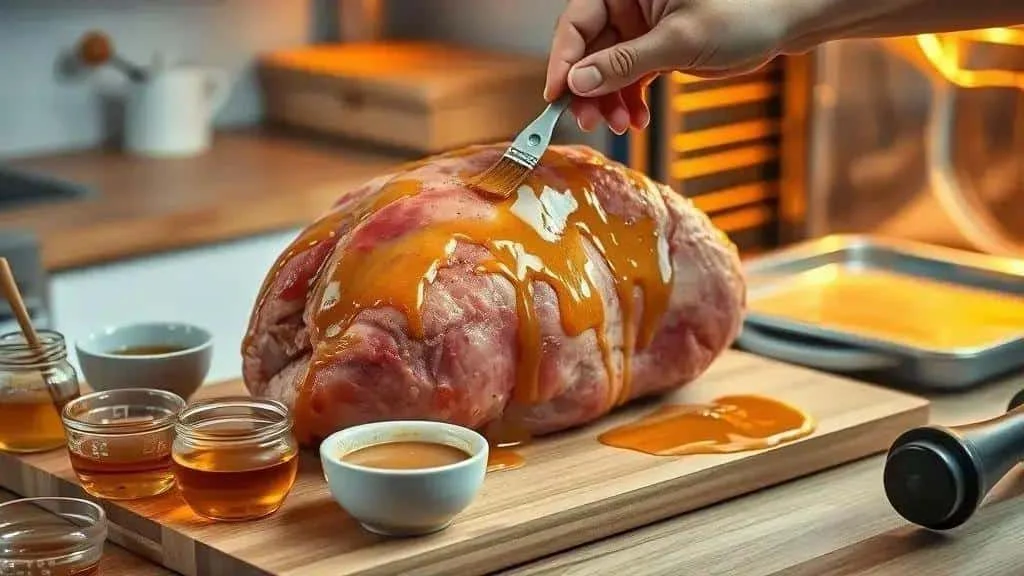
- Preheat to 170°C/150°C fan, or follow the product’s instructions.
- Unwrap: remove plastic, clips and any unsuitable covering.
- Pat dry: use kitchen paper if necessary. Do not routinely rinse or soak a cooked ham.
- Score: lightly mark the fat layer in diamonds, without cutting deeply.
- Prepare the tin: line a suitable roasting tin with foil and position the ham securely.
- Mix the glaze: combine 4 tbsp honey, 3 tbsp mustard, 2 tbsp vinegar, 1 tbsp oil or melted butter, black pepper and the optional sugar and garlic.
- Loosen if needed: add warm water or juice a tablespoon at a time; you may not need the full allowance.
- Brush: spread a thin layer over the ham. Add optional cloves, keeping track so they can all be removed.
- Cover and heat: loosely cover with foil and place in the oven.
- Follow the pack: the original 30–40 minute estimate may be insufficient for a large joint. Use its product-specific reheating instructions and check the centre.
- Brush occasionally: add another thin layer of glaze without leaving the oven open for long. Reserve clean sauce separately if serving extra.
- Finish uncovered: allow time for the glaze to colour, watching closely. There is no need to increase the heat if it is already browning.
- Check the centre: it must be steaming hot throughout. A clean probe can confirm 75°C for 30 seconds or an equivalent safe combination.
- Rest: wait 8–10 minutes before carving.
- Serve: remove any cloves or sticks, slice neatly and serve with reserved clean hot sauce.
Tips and Variations
- Instead of honey: try apricot jam, maple syrup or marmalade.
- Citrus: zest adds fragrance; a little lemon juice adds acidity.
- Heat: add a pinch of chilli flakes or extra black pepper.
- Gloss: a little extra butter stirred into the warm glaze adds richness, if desired.
- Toppings: pineapple rings or a little chopped nut topping offer different textures. Remove decorative cloves and sticks before serving.
- Timing: account for weight and shape, and use the product’s instructions and a thermometer.
Quick and Budget-Friendly Variations
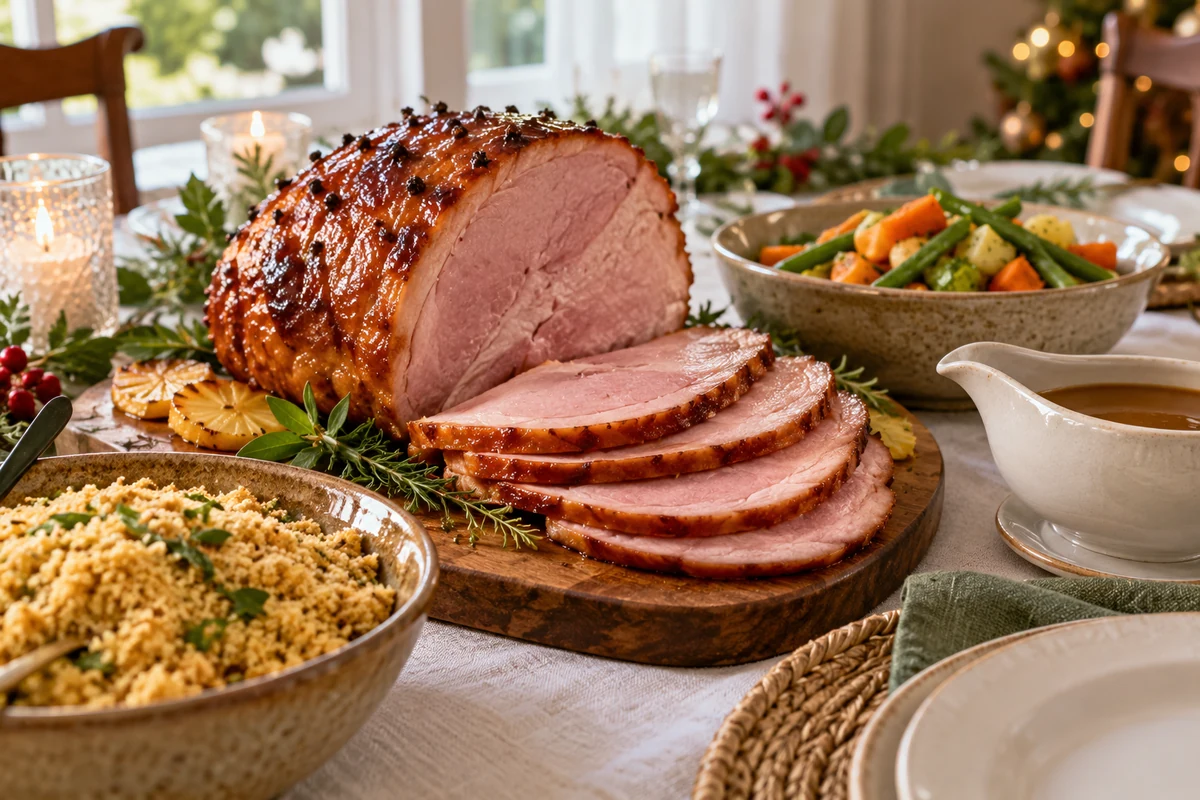
A simple glaze and well-chosen sides can keep the meal affordable. Compare prices and use what fits your guests and kitchen.
- Simple glaze: warm 3 tbsp ketchup, 2 tbsp brown sugar and 1 tbsp mustard, then use as a topping.
- Tinned fruit: pineapple or marmalade can be convenient alternatives to fresh ingredients.
- Smaller joint: serve a modest ham with rice, vegetables and chilled potato salad.
- Offers: buy a suitable product on offer, keeping within its storage and use-by instructions.
- Smaller servings: sliced or shredded ham works in sandwiches and appetisers.
- Honey and lemon glaze: warm 3 tbsp honey with the juice and zest of ½ lemon, then brush on.
- Breadcrumb topping: seasoned toasted breadcrumbs can replace nuts for a different crust; check allergens.
- Vegetarian alternative: a substantial lentil or chickpea dish can serve as a separate main course.
Adapting a Glaze
- Choose a base: ketchup, jam or fruit juice each gives a different result.
- Balance sweetness: add a little honey or sugar only if the base needs it.
- Add acidity: a little cider vinegar or lemon juice balances sweetness.
- Heat properly: brush the cooked ham, heat according to its label and uncover near the end to colour. The centre must be steaming hot throughout.
- Use leftovers: promptly chilled slices work in cold sandwiches or salads within 48 hours or a shorter product limit. Do not repeatedly reheat the ham.
Saving Money
- Compare staple prices: rice, potatoes and farofa can make economical accompaniments.
- Share the cooking: invite guests to contribute a dish if that suits your celebration.
- Plan oven space: coordinate dishes with compatible temperatures, allowing enough airflow and cooking time.
- Simple presentation: arrange slices on a platter with herbs.
- Plan useful leftovers: reserve a sensible amount for cold meals, cool promptly and refrigerate.
Finishing, Serving and Drink Pairings

- Rest briefly: leave the fully heated ham for 8–10 minutes before carving.
- Slice evenly: slices around 0.5–1 cm thick are easy to serve.
- Serve promptly: after reheating thoroughly, bring the ham to the table. If holding it hot, keep the food at 63°C or above.
- Finishing sauce: spoon over a reserved clean portion of glaze or hot fruit sauce.
- Contrast: serve tender ham with crisp farofa, toasted nuts or breadcrumbs where suitable.
Presentation
- Arrange slices: fan them across a platter or overlap them in an easy-to-serve row.
- Colour: pineapple, cranberries, orange zest and culinary rosemary make a festive arrangement.
- Serving dish: a plain platter shows off the glaze; serve excess sauce separately.
- Final seasoning: add a little black pepper and sauce just before serving.
Drink Pairings
- Sparkling wine: brut or demi-sec styles offer different balances with a sweet glaze.
- White wine: fruity, fresh styles such as Sauvignon Blanc or a young Chardonnay can suit citrus toppings.
- Rosé: a dry rosé is another option.
- Light red wine: Pinot Noir or a softer young red can suit cherry and wine sauces.
- Beer: a pilsner or wheat beer offers a different pairing; brown ale can suit caramelised flavours.
- Alcohol-free drinks: sparkling water with orange, diluted apple juice or a cranberry mocktail are simple options.
Side Dishes
- Crunchy farofa: try dried-fruit farofa or toasted panko.
- Mash: potato or Brazilian mandioquinha mash provides a soft accompaniment.
- Roasted vegetables: carrots, sweet potatoes or broccoli add colour.
- Cold salads: potato salad or leaves with a citrus dressing balance the richer dishes; keep chilled until serving.
- Citrus: orange segments or a citrus sauce can balance sweetness.
Portions and Leftovers
- Serving guide: plan roughly 150–200 g cooked boneless ham per adult, adjusting for appetites and sides.
- Holding temperature: if not serving immediately after thorough reheating, keep the food at 63°C or above. A covered platter alone does not ensure this.
- Leftover ideas: promptly chilled slices make cold sandwiches and salads. Respect the original storage time and avoid repeated reheating.
- Festive simplicity: herbs, suitable fruit and a glossy glaze can be enough decoration.
Conclusion
We hope these glazed ham ideas help you plan a practical Christmas meal. Choose a topping that suits your family and follow the ham’s heating instructions.
Follow our social channels for more ideas and visit I Love Christmas for festive recipes and inspiration. Enjoy your celebration!
Christmas Glazed Ham: Frequently Asked Questions
How should I defrost the ham?
Thaw it in the fridge in a tray, following the manufacturer’s instructions and allowing enough time for the centre to thaw fully. Use within the specified period after defrosting.
How can I make the meal less salty?
Choose a lower-salt product and use less salty sauces and sides. Do not routinely soak or rinse a cooked ham; follow its manufacturer’s preparation instructions.
What temperature and cooking time should I use?
For fully cooked ham, follow the pack’s reheating directions. The recipe oven temperatures and times are guides only. Heat until steaming hot throughout, using a clean probe where possible, then colour the glaze without burning it.
Can I prepare it the day before?
You can make the glaze and prepare suitable decorations ahead, keeping everything covered and refrigerated as required. Heat and glaze the ham on the day, within its use-by date.
How should I store leftovers?
Cool and refrigerate within 1–2 hours at 5°C or below. Use within 48 hours or any shorter product limit, or freeze promptly if the label permits. Avoid repeated reheating.
Which side dishes and drinks go well with glazed ham?
Try farofa, mash, roasted vegetables and salad. Fruity white wine, dry rosé or light beer are options for adults who drink alcohol; sparkling water with citrus or diluted apple juice works too.
Sources and Further Reading
- Food Standards Agency: cooking food safely
- Food Standards Agency: chilling food safely
- NHS: foods to avoid for babies and young children