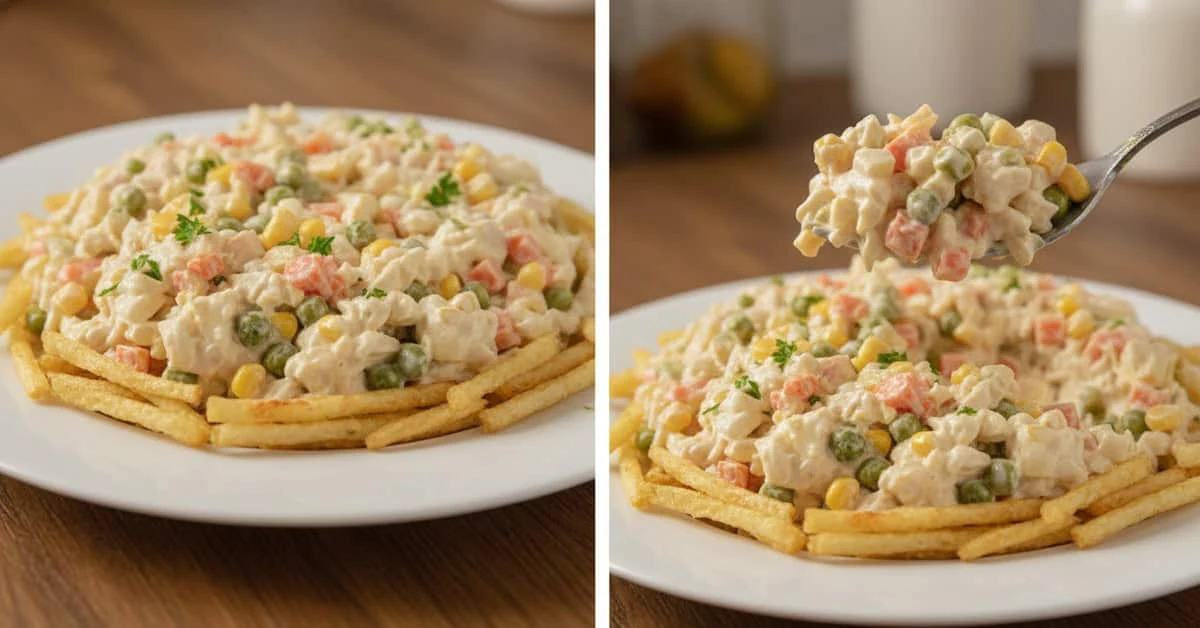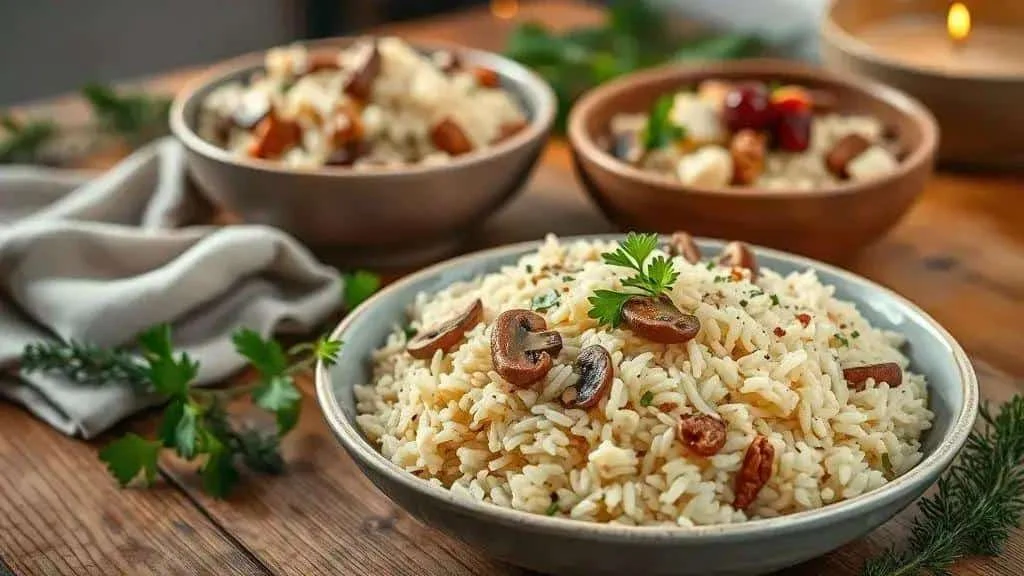
These Christmas rice ideas include creamy mushroom rice, nuts and dried fruit, baked rice, coconut rice and wholegrain combinations. Start with ten flavour ideas, then explore two detailed recipes, variations, vegetarian options and practical serving and storage advice.
These Christmas rice recipes bring festive flavours to the table, with inspiration from Brazilian Christmas meals. Choose a creamy side, a nutty combination or a vegetable-based dish to suit your guests. Use the same measuring cup throughout a recipe and follow your rice packet where its liquid quantities or cooking times differ from the guides below.
Why serve rice at Christmas?
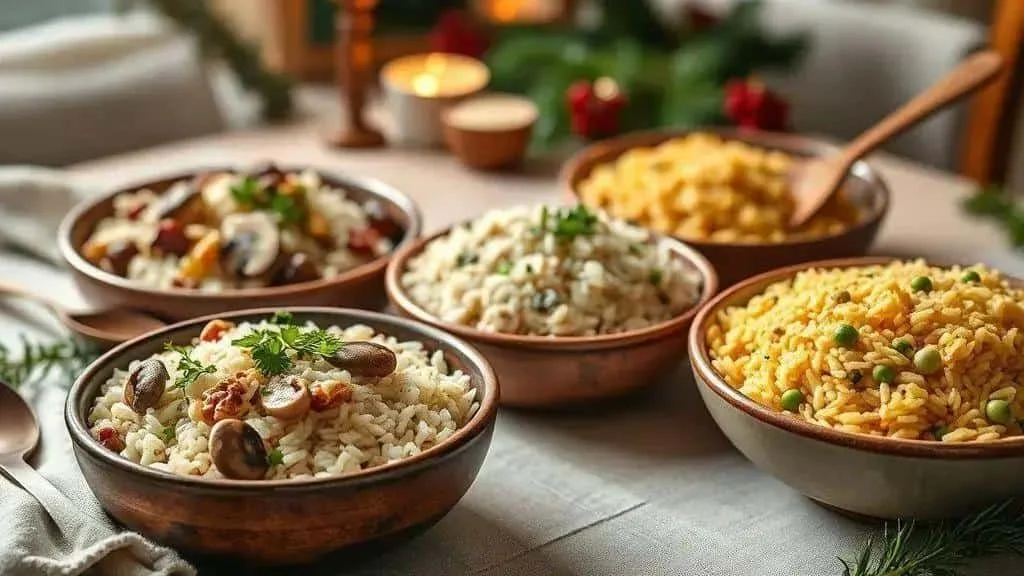
Rice is a versatile accompaniment that can suit different tastes without making the meal unnecessarily complicated.
Practical advantages
- Versatility: rice works with herbs, nuts, dried fruit and spices, whether you want a simple side or something more elaborate.
- Value: a bag of rice can provide several portions; compare prices and choose additions that fit your budget.
- Straightforward preparation: basic techniques and the correct liquid ratio make these dishes approachable for beginners.
Adapting to dietary needs
- Vegetarian and vegan options: choose vegetable stock and suitable ingredients throughout. Vegan versions also need alternatives to butter, cream, cheese and honey.
- Gluten-free options: plain rice is naturally gluten-free, but check stocks, sauces and other additions and prevent cross-contamination when cooking for someone with coeliac disease.
Practicality on the day
- Larger quantities: rice can serve a crowd when you scale the ingredients appropriately and use pans large enough for even cooking.
- Advance preparation: prepare garnishes ahead. If cooking rice in advance, cool it quickly, ideally within an hour, refrigerate and use within 24 hours; reheat only once.
- Using leftovers: properly chilled rice can become fritters, a cold salad or a filling within that same 24-hour window. Reusing it does not restart the storage clock.
Flavour and appearance
- Texture and colour: nuts, cranberries and herbs bring contrast to a bowl of rice.
- Pairings: rice complements meat, poultry, fish and salads, making menu planning more flexible.
Quick tips
- Liquid ratio: follow the instructions for the particular rice you are using.
- Aromatic base: soften onion and garlic before adding the rice for extra flavour.
- Finishing touches: a little butter or olive oil and fresh herbs add gloss and aroma.
Rice offers a practical starting point for a festive side dish. Choose ingredients that suit your guests and a method you can manage alongside the rest of the meal.
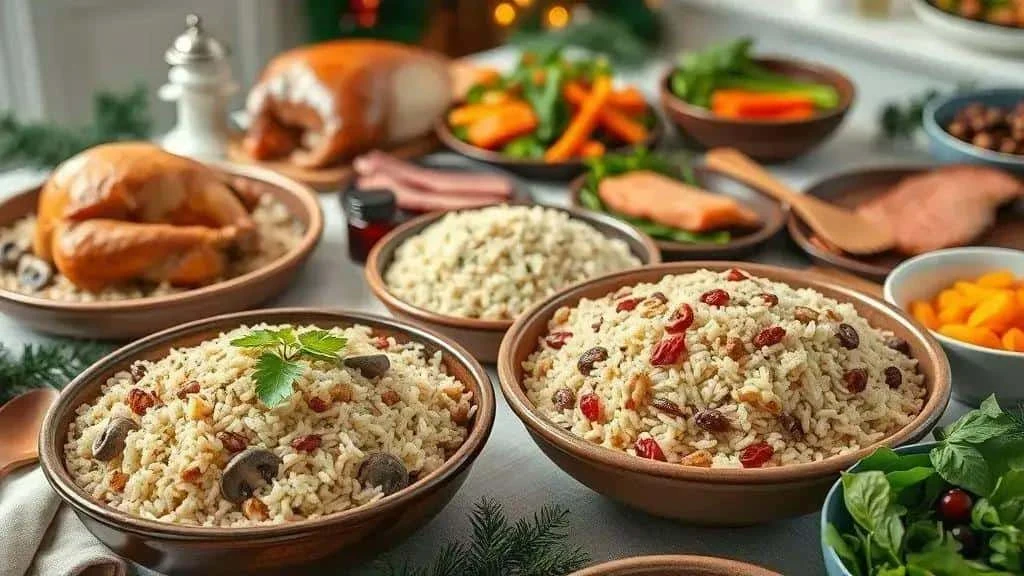
A well-matched menu considers flavours, textures, portions and the ingredients available, so that the dishes complement one another.
Building the meal
- Protein: pair rice with roast meat, poultry, fish or plant-based choices such as chickpeas and tofu.
- Vegetables: include roasted vegetables, a fresh salad or sautéed greens for variety.
- Sauces and dressings: offer a suitable sauce, creamy accompaniment or vinaigrette alongside plainer rice.
Planning portions
- Uncooked rice: about 60 g per adult is a useful starting point for a side dish, yielding roughly 180 g cooked depending on the variety.
- Protein: the original menu allowance is around 150–200 g of prepared meat or a plant-based main per person. Adjust for appetite and the other dishes; this is a catering estimate, not individual nutrition advice.
- Vegetables: allow roughly 100–150 g per person across salads and hot sides, adjusting to your menu and guests.
Contrasting textures and colours
For a larger gathering, a creamy rice dish and one with crunchy nuts or seeds give guests a choice. Dried fruit adds another texture and a sweet contrast; several different rice dishes are not essential for a small meal.
Special dietary requirements
- Vegetarian or vegan: replace meat stock with vegetable stock and consider lentils, chickpeas or smoked tofu. Check dairy ingredients and cheese suitability too.
- Gluten-free: check every packaged addition, especially stock and soy sauce, and avoid cross-contact with gluten-containing foods.
- Adjusting richness: use less finishing butter or cream if preferred. Brown rice or quinoa changes the flavour and texture, but does not automatically make a dish low in calories.
Planning and organisation
- Choose the dishes: for a varied buffet, pick two rice styles, such as creamy and herby, that complement the main dishes.
- Shopping list: group shared ingredients such as herbs, stock and nuts to avoid unnecessary purchases.
- Portions: calculate quantities for your guests. A small extra allowance, such as 10%, is optional if you expect larger appetites; do not deliberately overproduce food you cannot store safely.
Preparing ahead
- Cooking grains ahead: if you cook rice earlier, cool it quickly, ideally within an hour, and refrigerate at 5°C or below. Use within 24 hours and reheat once until steaming hot throughout.
- Separate components: prepare sauces and toasted nuts ahead and store them appropriately in separate containers.
- Finish near serving time: stir in delicate herbs and dried fruit at the end to retain their colour and texture.
Presentation and service
- Shared dishes: put different rice preparations in separate serving dishes so guests can choose.
- Garnishes: fresh herbs, citrus zest, toasted nuts and cranberries provide colour and aroma.
- Temperature: serve promptly or use suitable hot-holding equipment to keep the rice at 63°C or above. A warm serving dish alone does not keep food safely hot.
Pairing ideas
- With poultry: walnut and cranberry rice offers a sweet-and-savoury contrast.
- With fish: citrus or herb rice complements roasted and grilled fish.
- With red meat: mushroom rice with a little red wine works with fuller flavours; use stock instead if avoiding alcohol.
Managing costs
- Choosing rice: compare the unit prices of long-grain and easy-cook rice rather than assuming one type is always cheaper.
- Seasonal ingredients: choose vegetables that are good value locally.
- Yield: pick recipes you can scale without overcrowding pans or compromising cooking.
Food safety
- Chilling rice: cool it as quickly as possible, ideally within an hour, in small shallow portions. Refrigerate at 5°C or below and use within 24 hours; do not leave it cooling in a large pan.
- Reheating: reheat rice only once and make it steaming hot throughout. A clean thermometer can confirm 75°C for 30 seconds or 70°C for 2 minutes. A little water or stock helps restore moisture but does not make badly stored rice safe.
Ten festive rice ideas at a glance
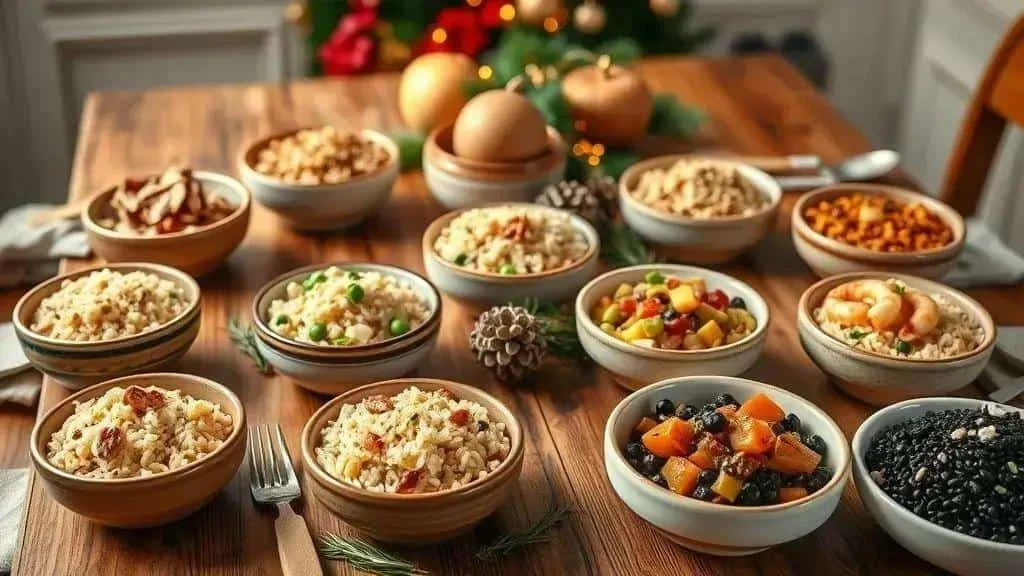
- Creamy mushroom rice: sautéed mushrooms, cream and fresh herbs give this dish a velvety texture.
- Nut, cranberry and herb rice: toasted nuts and dried cranberries create a colourful sweet-and-savoury combination.
- Baked rice with bacon and cheese: crisp cooked bacon and melted cheese turn rice into a comforting oven dish.
- Coconut rice with prawns: coconut milk, cooked prawns and lemon zest make an aromatic combination.
- Saffron rice with peas and almonds: golden rice contrasts with green peas and toasted almonds.
More flavour combinations
- Lemon and herb rice: lemon zest, parsley and chives make a fresh-tasting accompaniment.
- Brown rice with lentils and walnuts: a hearty vegan combination of grains, pulses and nuts.
- Rice with dried fruit and shredded turkey: combine safely stored cooked turkey with dried fruit and mild spices, reheating the finished dish thoroughly only once.
- Vegetable rice with soy sauce: crunchy vegetables, a savoury sauce and a touch of sesame offer another flavour direction.
- Black rice with roast squash and goat’s cheese: dark grains contrast with sweet squash and tangy cheese. These ten descriptions are ideas; the recipes and variations below provide further preparation details.
Creamy mushroom rice: ingredients
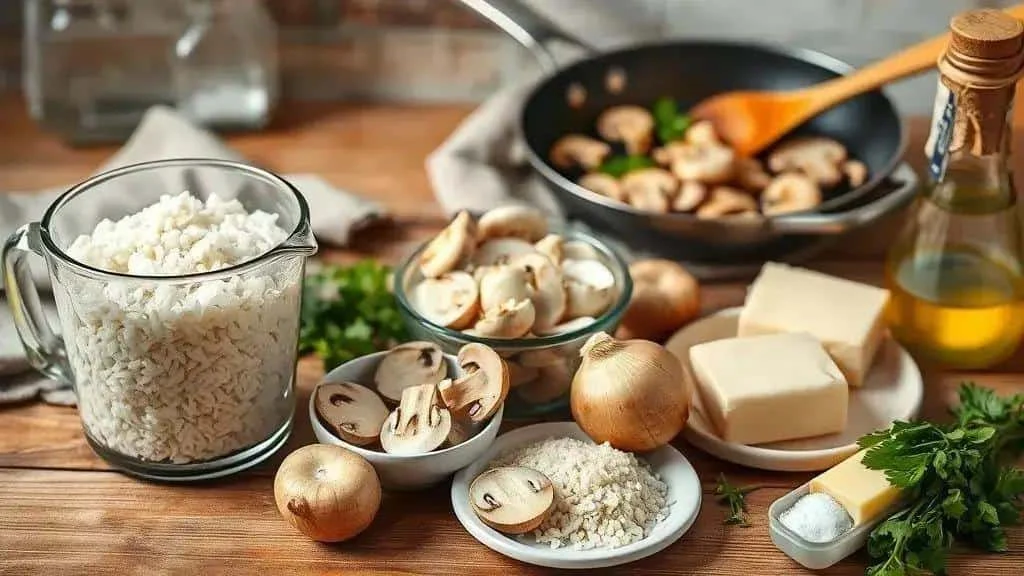
For approximately six side portions of creamy mushroom rice, gather the following ingredients:
- 2 cups long-grain rice, rinsed and drained if recommended on the packet. Arborio or brown rice requires a different cooking method or timing, as explained below.
- 3 tablespoons olive oil or another cooking oil, for the pan. Butter can replace it if preferred.
- 1 medium onion, chopped, for the aromatic base.
- 2 garlic cloves, chopped, or to taste.
- 250 g sliced button mushrooms, fresh or well-drained tinned mushrooms. Shiitake or a mushroom mixture also works.
- ½ cup dry white wine, optional. Omit it and use stock if avoiding alcohol; cooking does not guarantee that all alcohol disappears.
- About 4 cups hot chicken or vegetable stock, adjusting to the rice packet’s liquid ratio. Any stock used instead of wine comes from this measured total; add extra only if the rice needs it.
- ½ cup cream, or 150 g Brazilian requeijão, a creamy cheese spread. Cream cheese is an alternative; use ½ cup plant-based cream for a vegan version.
- ½ cup grated Parmesan, optional. Choose a vegetarian hard cheese when needed, since traditional Parmesan is not vegetarian, or a suitable vegan alternative.
- 2 tablespoons butter, to finish, or olive oil for a dairy-free option.
- Salt and black pepper to taste; stock and cheese may already provide plenty of salt.
- Chopped parsley to taste, to finish.
Substitutions and notes
- Vegan version: use vegetable stock, plant-based cream, olive oil instead of all the butter, and vegan cheese or omit the cheese.
- Brown rice: follow its packet for liquid quantity and cooking time; do not simply double the stock for every variety.
- Fresh mushrooms: sauté them until their released liquid has reduced and they begin to brown before adding them to the rice.
- Extra creaminess: use the arborio method below, or add a little more cream or cheese spread at the end if desired.
- Yield: approximately six side portions; adjust quantities to appetite and the rest of the meal.
How to make creamy mushroom rice
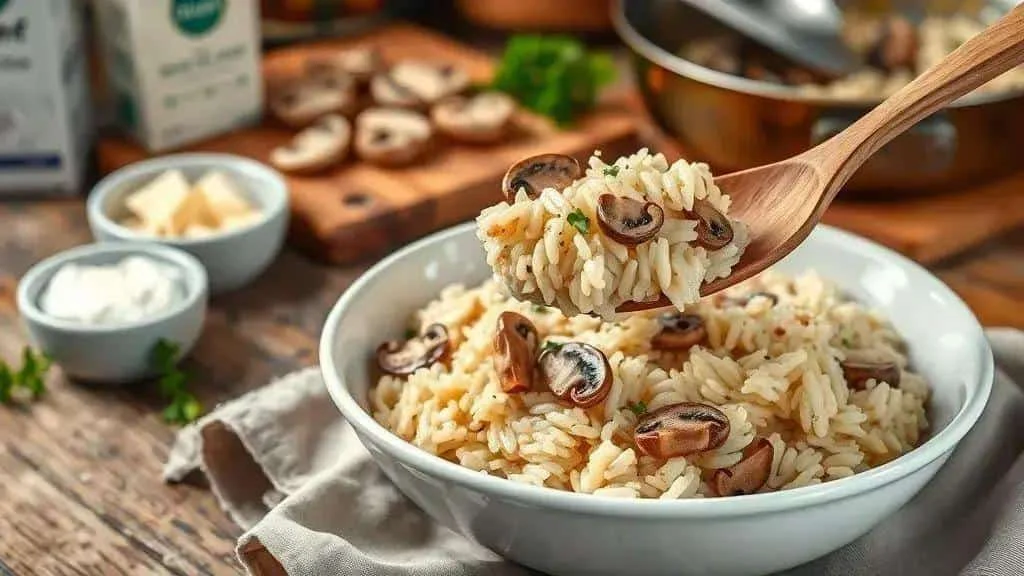
Prepare the ingredients for creamy mushroom rice before starting, then work through the steps below.
- Get organised: measure 2 cups rice, slice 250 g mushrooms, and chop the onion and garlic. Have hot stock ready in the amount required by your rice, using the recipe quantity as a guide.
- Heat the pan: warm the 3 tablespoons oil, or your chosen butter substitute, over a medium heat.
- Soften the aromatics: cook the onion until translucent, about 2–3 minutes, then add the garlic for about 30 seconds without burning it.
- Sauté the mushrooms: add them to the pan, raise the heat and cook until their liquid reduces and they begin to brown, roughly 3–5 minutes. Season lightly and lift the mushrooms out into a clean bowl to add back later.
- Coat the rice: add the drained rice to the pan and stir for 1–2 minutes to coat the grains in the aromatic oil.
- Deglaze, if using wine: add ½ cup wine and let it reduce until nearly dry. Alternatively, use a little of the measured stock to loosen any browned bits; do not assume wine becomes alcohol-free through reduction.
- Cook the rice: add the remaining measured hot stock and follow the packet’s covering and simmering instructions. Long-grain rice may take around 15–18 minutes; check rather than relying on that time for every variety, and avoid unnecessary stirring.
- Return the mushrooms: when the rice is nearly tender, gently fold in the reserved cooked mushrooms.
- Make it creamy: stir in the cream or cheese spread, the optional grated cheese and the 2 tablespoons finishing butter. Warm gently until hot throughout, without boiling vigorously, then take off the heat.
- Adjust the seasoning: taste for salt and pepper. If the mixture is too thick, loosen it with a little hot stock.
- Rest and garnish: cover for 3–5 minutes, then finish with the chopped parsley.
- Serve: bring it to the table promptly, either in a serving dish or individual portions.
Tips for consistent results
- Hot stock: adding hot rather than cold stock helps the pan return to a simmer promptly.
- Rice choice: arborio releases more starch for a creamy risotto-style dish; long-grain rice keeps a more separate texture.
- Manage moisture: reduce the mushrooms’ released liquid before folding them into the rice.
- Vegan finish: use plant-based cream and optional vegan cheese, with vegetable stock and oil throughout.
Common mistakes to avoid
- Adding cream too early: cook the grains first, then stir in cream near the end and heat gently.
- Guessing the liquid ratio: check the rice packet and use a suitable pan; excess stock can leave the grains waterlogged.
- Oversalting: taste after adding stock and cheese before adding more salt.
Creamy mushroom rice variations
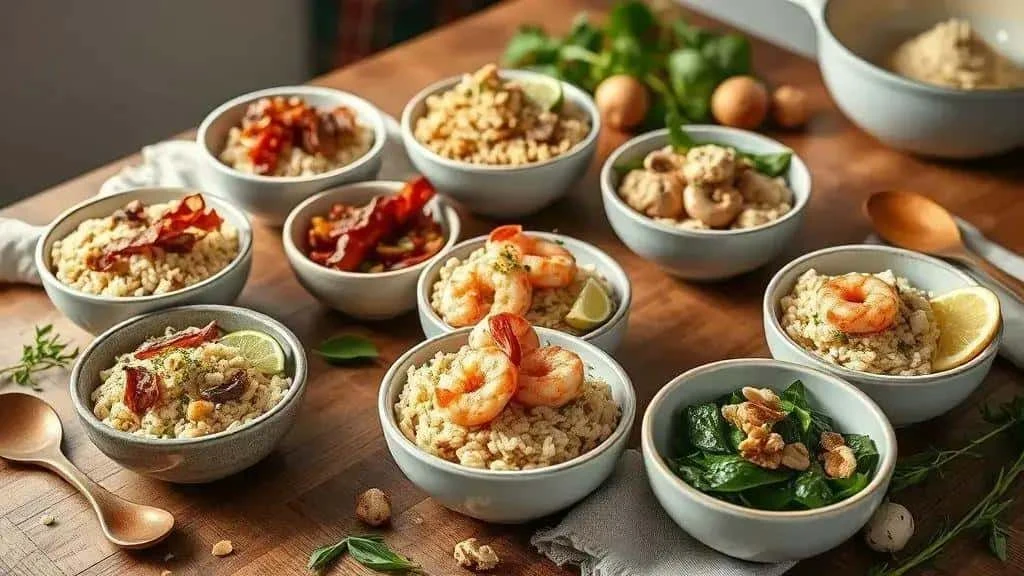
- Arborio mushroom rice: replace the long-grain rice with 2 cups arborio. Have about 5 cups hot stock available, adding it gradually and stirring regularly until the grains are tender; the exact amount varies. Up to ¾ cup cream can be stirred in at the end if you want a richer finish.
- Bacon and caramelised onion: cook 150 g chopped bacon thoroughly until crisp. Slowly soften and caramelise a large onion, adding a little sugar only if desired, then fold both into the finished rice.
- Vegan cashew cream: replace the dairy cream with up to 1 cup cashew cream or ½ cup plant-based cream, adding it gradually to the desired consistency. Use vegetable stock and olive oil throughout, and replace cheese with 3 tablespoons nutritional yeast.
- Red wine and mixed mushrooms: replace the white wine with ½ cup red wine and use a mixture of button, shiitake and shimeji mushrooms. Reduce the wine before adding stock; choose stock instead for an alcohol-free dish.
- Spinach and ricotta: fold in 200 g cooked, well-drained spinach and 150 g crumbled ricotta near the end. Warm through, add a little lemon zest and adjust the seasoning.
- Lemon and herbs: add the zest of 1 lemon, 2 tablespoons chopped chives and ¼ cup parsley. Reduce the cream to ⅓ cup if you want the herbs to stand out.
- Prawns and coconut milk: cook 300 g seasoned prawns separately until pink, opaque and firm. Replace the cream with coconut milk, adding up to 1 cup gradually as needed rather than pouring it all into already wet rice. Fold in the hot cooked prawns at the end and garnish with coriander or parsley.
- Yoghurt and olive oil: use ½ cup plain full-fat yoghurt instead of cream, stirring it in off the heat to reduce splitting. Replace the finishing butter with 2 tablespoons extra virgin olive oil; this changes the flavour but is not automatically a low-fat option.
- Toasted nuts and truffle oil: add ½ cup toasted walnuts or pecans, use ¼ cup grated Parmesan instead of the base recipe’s cheese quantity, and finish with a small drizzle of truffle-flavoured oil.
- Brown rice, mushrooms and lentils: use 2 cups brown rice, following its packet for stock and cooking time. Fold in 1 cup cooked lentils near the end and heat thoroughly.
Adjusting the texture
- Creamier: use arborio, add stock gradually and stir regularly, then finish with cream if desired.
- Separate grains: choose long-grain rice, follow its liquid ratio and avoid excessive stirring.
- Dairy alternatives: plant-based cream, yoghurt or a suitable cheese spread will give different textures; check labels for dietary suitability.
Practical cooking tips
- Brown the mushrooms: let their released water reduce to concentrate the flavour before adding them to the rice.
- Season gradually: taste after adding salty ingredients such as stock and cheese.
- Finish gently: stir in cream and cheese near the end, warm through without a hard boil, then take the pan off the heat.
- Taste and adapt: adjust richness with butter or oil and freshness with a little lemon juice. Add wine earlier in cooking rather than using it as a final alcohol-free seasoning.
Nut, cranberry and herb rice: ingredients
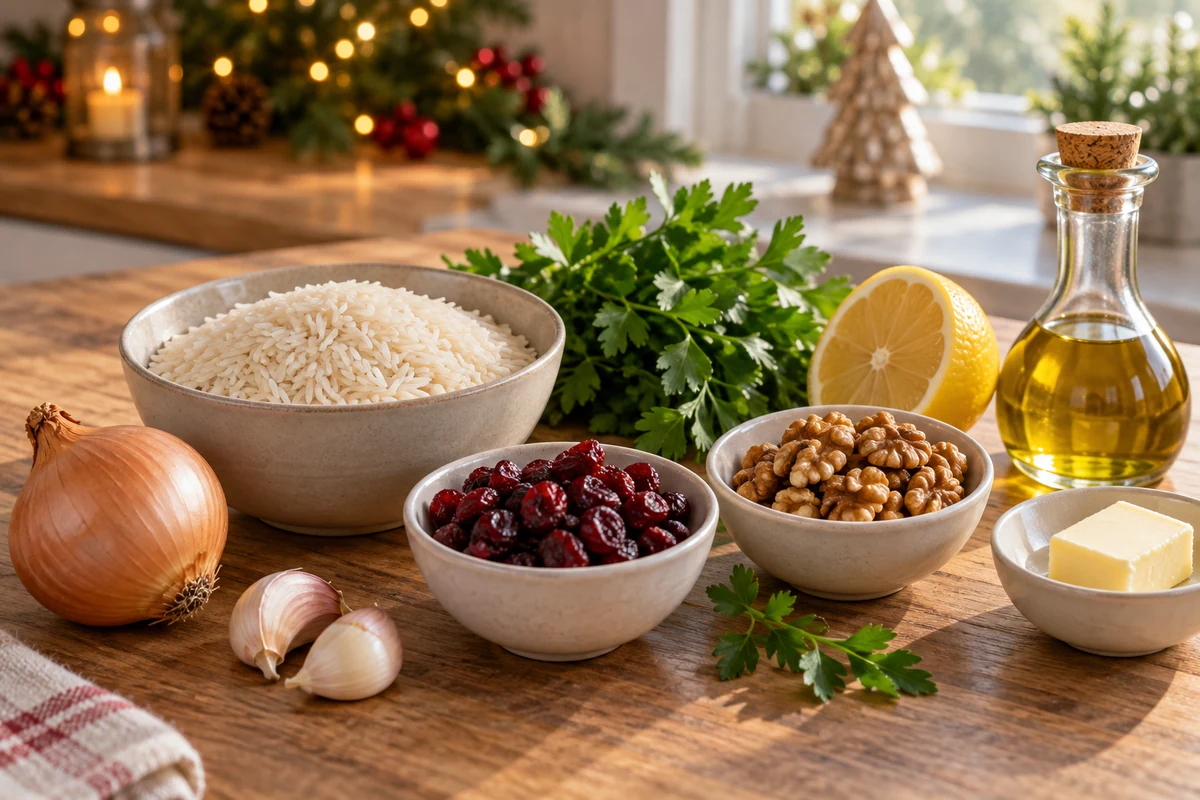
For approximately six side portions of nut, cranberry and herb rice, gather these ingredients:
- 2 cups long-grain rice, rinsed and drained if the packet recommends it. Brown rice can be used with its own liquid ratio and cooking time.
- 3 tablespoons olive oil or 2 tablespoons butter, reserving 1 tablespoon of your chosen fat for the finish. Use suitable plant-based butter for a dairy-free version.
- 1 medium onion, chopped, or 2 finely chopped shallots.
- 2 garlic cloves, chopped, or to taste.
- ½ cup dried cranberries, soaked in warm water for 10 minutes and drained. Raisins or chopped dried apricots are alternatives.
- 1 cup chopped nuts, such as walnuts, pecans or almonds, toasted.
- About 4 cups hot vegetable or chicken stock, adjusting to your rice packet. Water is also suitable; season to taste.
- Up to 1 teaspoon salt, depending on the saltiness of the stock and optional cheese.
- Freshly ground black pepper, to taste.
- 2 tablespoons chopped parsley, or a mixture of parsley, chives and thyme.
- 1 tablespoon finely grated lemon zest, optional, to balance the sweetness of the cranberries.
- ¼ cup grated Parmesan, optional. Use vegetarian hard cheese where needed, or nutritional yeast for a vegan version.
- 1 tablespoon honey or agave syrup, optional. Omit for a less sweet dish. Use agave rather than honey for vegans, and never give honey to babies under 12 months.
- Yield: approximately six side portions.
Substitutions and notes
- Toasting nuts: warm in a dry frying pan for roughly 2–3 minutes, watching closely and stirring until fragrant.
- Soaking cranberries: a 10-minute soak softens firmer dried fruit; drain well before adding it.
- Gluten-free preparation: check packaged stock and all other additions, and prevent cross-contamination.
- Separate grains: use long-grain rice and avoid stirring too much. Arborio requires a different, gradual-stock method for a creamy result.
- Storage: cool quickly, ideally within an hour, then refrigerate at 5°C or below and use within 24 hours. Reheat only once until steaming hot throughout.
How to make nut, cranberry and herb rice
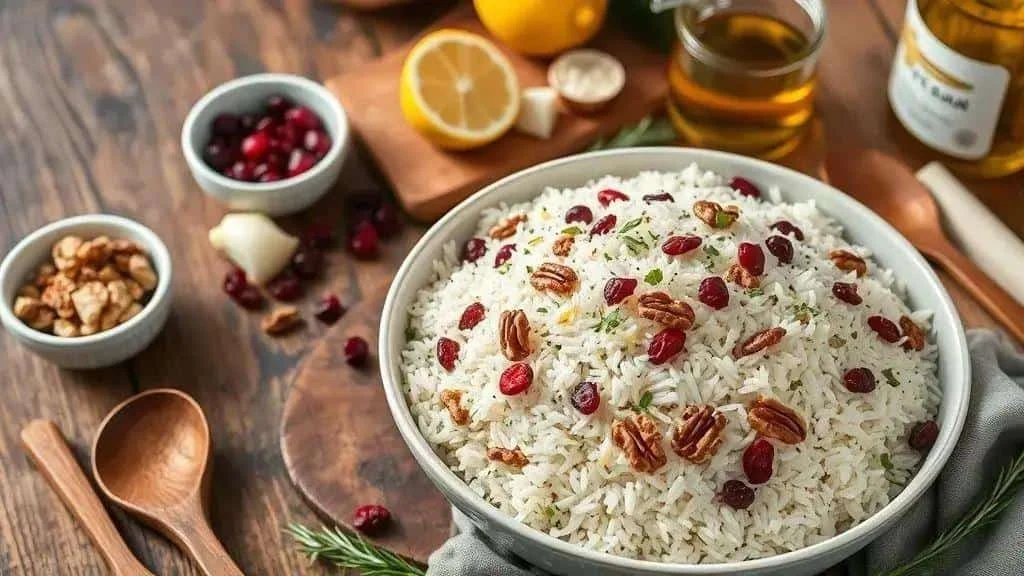
Follow these steps to prepare nut, cranberry and herb rice, keeping garnishes ready for the final stage.
- Prepare the ingredients: measure the rice, nuts and cranberries, chop the onion and garlic, and have hot stock ready in the amount your rice needs.
- Soak the cranberries: leave them in warm water for 10 minutes, then drain thoroughly.
- Toast the nuts: stir them in a dry frying pan over a medium heat for about 2–3 minutes until fragrant and lightly coloured. Set aside.
- Heat the fat: reserve 1 tablespoon of the measured oil or butter for finishing, then warm the remainder in a saucepan over a medium heat.
- Soften onion and garlic: cook the onion until translucent, about 2–3 minutes, then add the garlic for about 30 seconds.
- Coat the rice: add the drained rice and stir for 1–2 minutes to coat it in the aromatic fat.
- Add the stock: pour in the amount specified for your rice, using 4 cups as the recipe guide. Season lightly, then cover and simmer as the packet directs, often around 15–18 minutes for long-grain rice.
- Check the grains: if the liquid has gone but the rice is still firm, add a little hot stock, cover and continue cooking, checking again before adding more.
- Add fruit and nuts: when the rice is tender, gently fold in the drained cranberries and three-quarters of the toasted nuts.
- Finish: take off the heat and stir in the herbs, reserved tablespoon of oil or butter, optional zest and cheese. Add the optional honey or agave only if you want a sweeter finish, observing the dietary notes above.
- Rest briefly: cover for 3–5 minutes before serving.
- Garnish: transfer to a serving dish, scatter over the remaining nuts and serve promptly.
Practical tips
- For crunch: add nuts at the end and keep some for the top.
- Vegan version: use vegetable stock and olive oil or vegan butter, replace or omit the cheese, and choose agave rather than honey if sweetening.
- Brown rice: follow the packet’s liquid ratio and timing rather than applying a fixed extra amount of stock.
- Avoid mushy rice: simmer gently, measure the liquid and avoid excessive stirring.
- Prepare components ahead: toast nuts and keep them dry in an airtight container. If soaking cranberries ahead, drain, cover and refrigerate them.
Nut, cranberry and herb rice variations
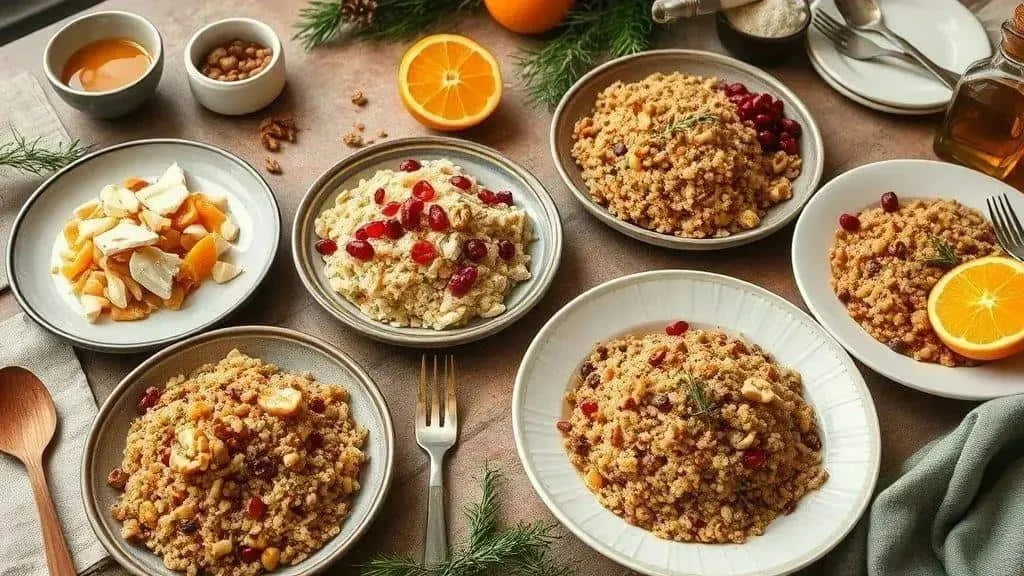
- Goat’s cheese and honey: add 100 g crumbled goat’s cheese and drizzle with 1 tablespoon honey instead of the base recipe’s optional sweetener. Omit honey for children under 12 months.
- Creamy vegan version: use vegetable stock and olive oil for cooking. Replace finishing butter and cheese with ½ cup cashew cream and 2 tablespoons nutritional yeast, warming through gently before adding herbs. Omit honey or use agave.
- Shredded chicken and apricots: add 250 g cooked shredded chicken and ½ cup chopped dried apricots. Heat thoroughly before finishing with 2 tablespoons parsley. Use safely chilled chicken that has not already been reheated, and observe the shortest storage limit of the ingredients.
- Brown rice, quinoa and walnuts: use 1 cup brown rice and 1 cup quinoa. Cook them separately according to their packets, as their times and liquid requirements differ, then combine and top with 1 cup toasted walnuts.
- Orange and rosemary: add the zest of 1 orange and 1 teaspoon finely chopped rosemary for a fragrant accompaniment to poultry.
- Seeds and chilli: add ⅓ cup toasted pumpkin seeds and ½ teaspoon chilli flakes for crunch and gentle heat.
- Truffle-style finish: use the recipe’s optional ¼ cup grated Parmesan and add a little truffle-flavoured oil at serving time; no extra cheese quantity is needed.
- Green apple and celery: fold in 1 diced green apple and 1 finely chopped celery stick for a crisp, slightly tart contrast.
- Mushrooms and white wine: sauté 200 g mixed mushrooms, add ½ cup white wine and reduce before folding into the rice. Use stock if avoiding alcohol.
- Balsamic finish: drizzle with 2 tablespoons balsamic reduction to complement the nuts and cranberries.
Substitutions and adaptations
- Replacing nuts: seeds or crisp onions provide a different crunch, but are not automatically safe for every allergy. Check the individual guest’s requirements and all packaging.
- Less sweetness: reduce cranberries to ¼ cup and omit the optional honey or syrup. Soak in water and drain well.
- Dairy-free: use olive oil or suitable vegan butter and omit dairy cheese, choosing a compatible alternative if desired.
- Larger portions: scale the ingredients for the required yield, follow the rice’s liquid ratio and use appropriately sized pans. Cook separate batches if necessary rather than adding an arbitrary percentage of extra liquid.
Quick preparation tips
- Toast the nuts: this brings out their aroma; watch closely to prevent burning.
- Soften dried fruit: soak firmer cranberries in warm water for 10 minutes and drain.
- Balance sweet and savoury: taste before adding a sweetener, and add a little lemon juice or vinegar if needed.
- Finish off the heat: add fresh herbs and optional cheese at the end to preserve their flavour.
- Keep a garnish: reserve some nuts and cranberries to scatter over the serving dish.
Presenting and garnishing festive rice
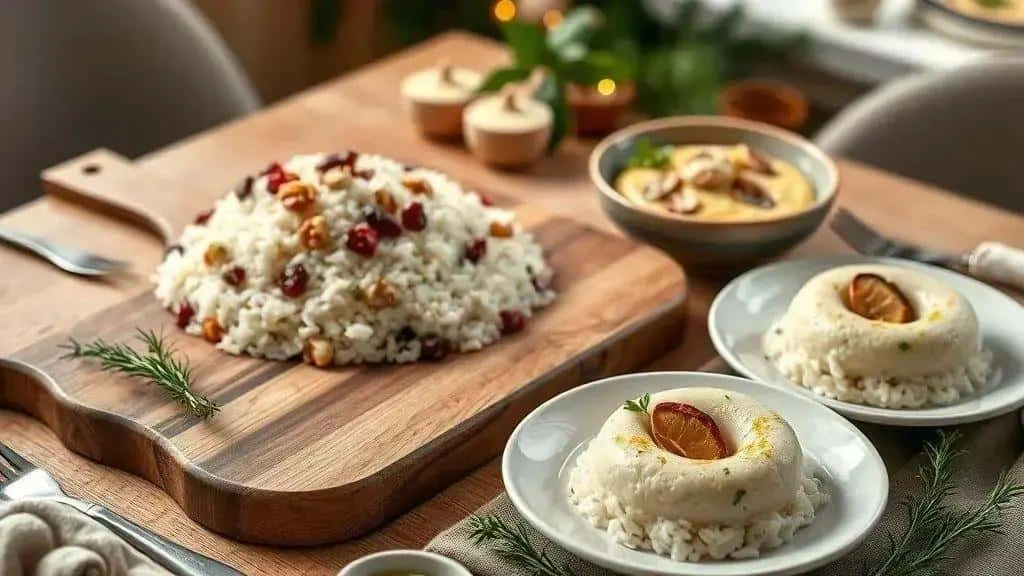
- Vary the height safely: use stable, purpose-made serving stands where appropriate. Do not balance heavy hot dishes on stacked plates, books or improvised supports.
- Mix shapes and colours: combine round and rectangular dishes, with one statement piece and simpler serving bowls alongside it.
- Leave some space: avoid overfilling dishes and keep their rims clean so the rice and garnishes stand out.
Colour and texture combinations
- Colour: green herbs and red cranberries contrast well with pale rice.
- Texture: combine tender rice with toasted nuts, seeds or crisp onions.
- Gloss and moisture: a little olive oil, melted butter or an appropriate sauce can give the finished dish an appealing sheen.
Serving dishes and individual portions
- Arrange the base: spoon the rice into a gentle mound without packing the grains tightly.
- Layer the garnish: scatter nuts and dried fruit over part of the rice, leaving some grains visible.
- Add fresh herbs: sprinkle parsley, chives or suitable edible microgreens on just before serving.
- Individual portions: use a food-safe serving ring if you want a neat shape, remove it before serving and add citrus zest or nuts as a garnish.
Garnishes and decorative touches
- Fresh herbs: parsley, coriander, chives and thyme add colour and aroma.
- Citrus: finely grated lemon or orange zest balances sweeter ingredients.
- Crunch: toasted nuts, seeds or a little Brazilian farofa provide contrast. Farofa is a toasted meal accompaniment, often made from cassava.
- Subtle Christmas touches: use edible ingredients such as a little rosemary or cranberries, rather than putting decorative foliage or ornaments in the food.
Common presentation mistakes
- Too many toppings: leave the rice visible instead of covering it completely.
- Very wet garnishes: drain soaked fruit and other moist additions so they do not make the rice soggy.
- Seasoning only at the start: taste again after adding stock, cheese and fruit, then adjust salt or acidity if needed.
Serving tips for Christmas dinner
- Keep it safely hot: serve promptly, or hold at 63°C or above using suitable equipment. A pre-warmed bowl is useful for serving but is not a substitute for hot holding.
- Separate toppings: offer nuts and herbs in small bowls, with separate utensils and clear allergen information.
- Useful serving utensils: choose clean, food-safe spoons that make it easy to serve without spilling.
Vegetarian and vegan Christmas rice options
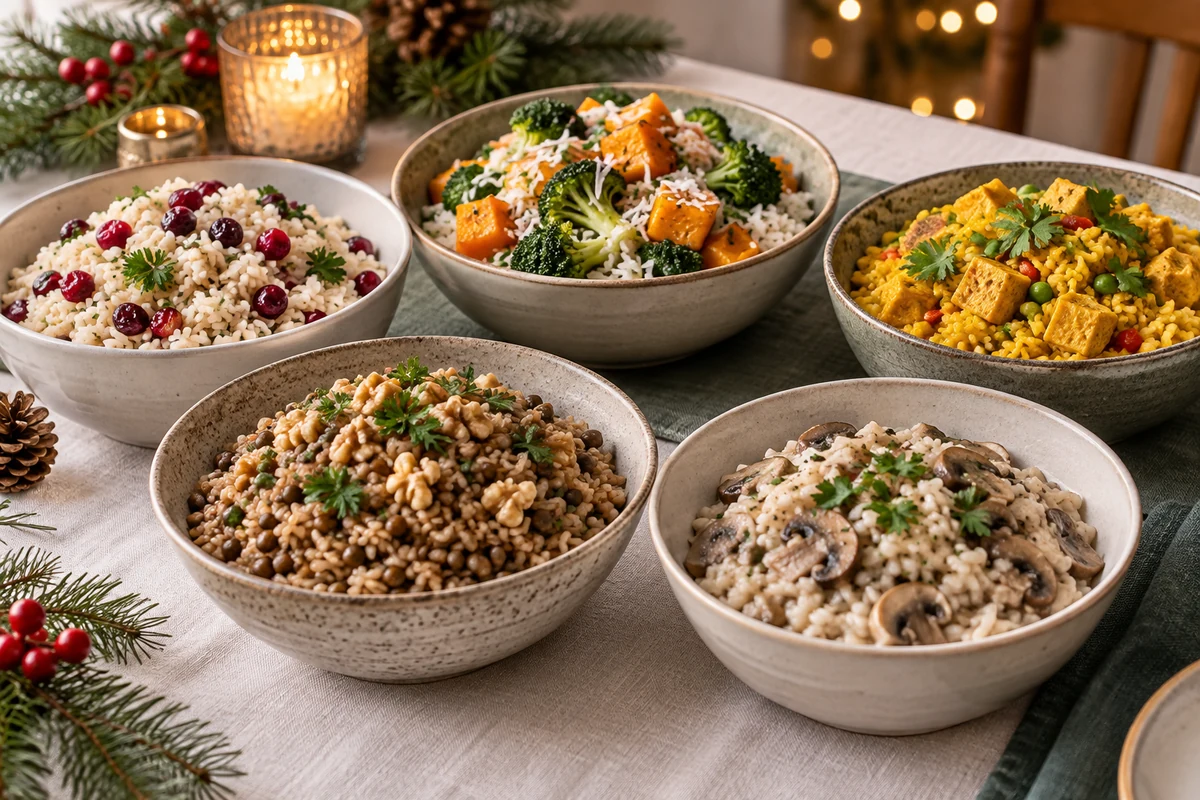
These five preparations offer vegetable-based alternatives, with ingredient lists and practical methods. Follow the liquid ratios and timings for your particular rice, and check every ingredient when cooking for a specific dietary need.
Brown rice with lentils and walnuts: vegan
- 2 cups brown rice, prepared according to its packet.
- 1 cup cooked lentils, tender but still holding their shape.
- 1 cup chopped walnuts, toasted.
- Hot vegetable stock, starting from the original recipe’s 4-cup guide but using the quantity specified for your brown rice; water is also suitable.
- 1 medium onion, chopped.
- 2 garlic cloves, chopped.
- 2 tablespoons olive oil.
- Chopped parsley and black pepper, to taste.
- Soften the aromatics: warm the oil, cook the onion until translucent, then add the garlic for about 30 seconds.
- Coat the rice: stir in the brown rice for about a minute.
- Add stock: use the liquid amount specified on the rice packet, cover and simmer until tender. Some varieties take around 30–35 minutes, but follow the pack rather than treating that as a fixed time.
- Add the lentils: fold in the cooked lentils near the end and continue until everything is thoroughly hot.
- Finish: take off the heat, add the walnuts and parsley, then taste and adjust the seasoning.
Nut, cranberry and herb rice: vegan
- 2 cups long-grain rice, rinsed and drained if the packet recommends it.
- 1 cup chopped toasted nuts, such as walnuts, pecans or almonds.
- ½ cup dried cranberries, soaked for 10 minutes and drained.
- About 4 cups hot vegetable stock, adjusted to your rice packet.
- 3 tablespoons olive oil.
- 2 tablespoons chopped parsley and chives.
- Zest of 1 lemon.
- Toast the nuts: if not already toasted, warm in a dry frying pan for roughly 2–3 minutes until fragrant, then set aside.
- Heat the oil: warm the measured olive oil in a saucepan. This simple version does not require the onion and garlic used in the earlier recipe.
- Cook the rice: stir the rice in the oil for 1–2 minutes, add the measured stock, then cover and simmer according to the packet, often around 15–18 minutes.
- Add the extras: once the rice is tender, fold in the drained cranberries and three-quarters of the nuts. Take off the heat and stir in lemon zest and herbs.
- Garnish: scatter the remaining nuts over the top and serve promptly.
Coconut rice with roasted vegetables: vegan
- 2 cups white rice.
- 1 cup coconut milk, plus water or mild vegetable stock to make the total liquid required by the rice packet. The original guide uses 3 cups additional liquid, but the correct total depends on the rice.
- 300 g prepared vegetables, such as diced squash and carrot with broccoli florets, for roasting.
- 2 tablespoons coconut oil or olive oil.
- Salt, pepper and fresh coriander, to taste.
- Cook the rice: combine the coconut milk with the measured water or stock and cook the rice until tender, checking the base of the pan so the milk does not scorch.
- Roast the vegetables: toss them with the oil and seasoning, then roast at 200°C in a conventional oven until tender and coloured, roughly 20–25 minutes depending on size. Add quick-cooking broccoli later if necessary.
- Combine: gently fold the hot roasted vegetables into the cooked rice and ensure the dish is hot throughout.
- Finish: adjust seasoning and scatter with fresh coriander before serving.
Curry rice with quinoa and tofu: vegan
- 1 cup rice and ½ cup quinoa, prepared as their packets direct.
- 1 tablespoon curry powder.
- 300 g firm tofu, cubed and seasoned with soy sauce and ginger to taste; a little cooking oil for the pan, as needed.
- Vegetable stock, using the original 4 cups as a guide but measuring the correct amount separately for the rice and quinoa.
- 1 carrot and 1 courgette, diced.
- Cook the grains: cook rice and quinoa separately if their packet timings differ, dividing the curry seasoning between them. Combine when both are tender; do not assume they will cook evenly together in 15–18 minutes.
- Cook the tofu: fry the seasoned cubes in a little oil until golden and thoroughly hot, following the product instructions.
- Add vegetables: sauté the carrot and courgette until tender, then fold them into the hot rice and quinoa.
- Serve: arrange the tofu over the grains. Chopped chives are an optional extra garnish.
Creamy mushroom rice: vegetarian, with a vegan option
- 2 cups arborio or long-grain rice, using the appropriate method for each.
- 250 g mixed mushrooms, such as button, shiitake and shimeji.
- About 4 cups hot vegetable stock, adjusted to the rice and method; have extra available if using arborio.
- ½ cup cream, or up to 1 cup cashew cream for a vegan version, added gradually to the desired consistency.
- 2 tablespoons butter or olive oil, divided between cooking and finishing; salt, pepper and optional fresh herbs to taste.
- Sauté the mushrooms: use some of the measured butter or oil to cook them until their liquid reduces and they start to brown. Set aside.
- Cook the rice: for arborio, add hot stock gradually while stirring. For long-grain rice, follow the packet’s liquid ratio and covered simmering method. Fold the mushrooms back in near the end.
- Finish the texture: stir in your chosen cream and the remaining measured butter or oil, warming gently until thoroughly hot. Use oil and cashew cream throughout for the vegan version.
- Season: taste for salt and pepper and add fresh herbs if desired.
Tips for vegetarian and vegan variations
- Savoury depth: mushrooms, nutritional yeast, miso or soy sauce add flavour. Check soy and gluten labelling where relevant.
- Texture: combine separately cooked grains and seeds for variety.
- Richness: olive oil, coconut oil or plant-based creams provide different flavours; choose according to the dish.
- Advance preparation: roast vegetables and toast nuts ahead, cooling and storing each appropriately.
- Taste and adjust: balance salt, acidity and sweetness before serving. Choose agave or maple syrup for vegan dishes; honey is not vegan and is unsuitable for babies under 12 months.
Budget-friendly rice dishes and larger quantities
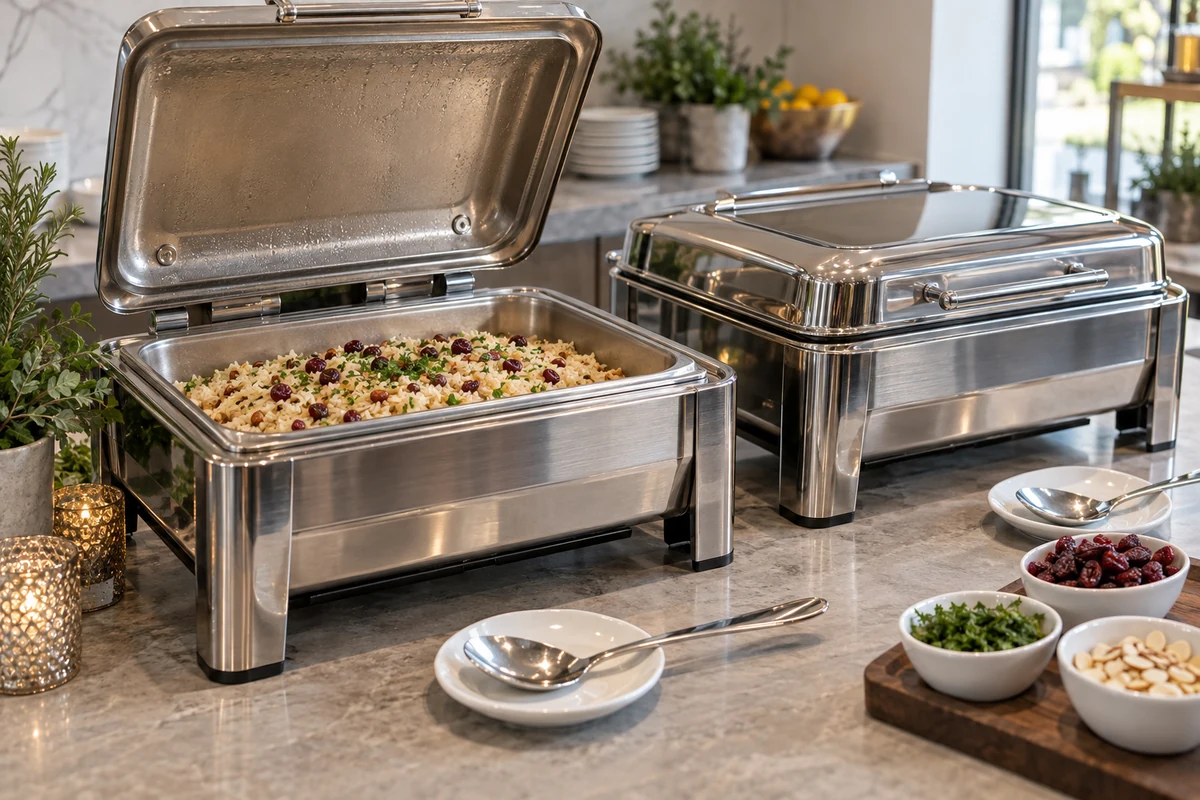
Cooking for a crowd calls for realistic portions, suitable equipment and ingredient choices that fit your budget without sacrificing flavour.
Planning quantities
- Basic allowance: start with about 60 g uncooked rice per adult as a side dish, yielding roughly 180 g cooked. For 20 adults, 60 g × 20 gives 1.2 kg uncooked rice.
- Optional extra: a 10% allowance would bring that example to 1.32 kg. Add it only if useful for the appetites and menu you expect.
- Pack sizes: compare unit prices and the quantities of nuts, dried fruit and stock you will actually use before buying larger packs.
Scaling recipes correctly
- Use a scaling factor: divide the portions you need by the recipe’s original yield, then multiply ingredients by that factor. Do not multiply a whole recipe by the number of guests.
- Measure cooking liquid: follow the rice’s ratio and account for pan size and method. Add seasoning and finishing cream gradually to taste, but do not arbitrarily reduce the water needed to cook the grains.
- Cook in batches: if one pan cannot comfortably hold the rice, use two or three similar batches for more even cooking.
Practical substitutions
- Rice: compare prices for long-grain, easy-cook and brown rice. Adding quinoa changes the texture but may cost more, so check before substituting.
- Protein: safely stored cooked turkey or chicken can be added to rice. Use it within its storage limit and only if it has not already been reheated; heat the finished dish thoroughly once.
- Nuts: replacing some nuts with pumpkin or sunflower seeds may reduce cost while retaining crunch. Check prices and individual allergies.
- Cream and cheese: compare the cost of cream, cheese spread and plain yoghurt before substituting. Homemade cashew cream is an option for vegan dishes, though nuts are not necessarily the cheapest choice.
Cooking larger quantities step by step
- Organise the workspace: have suitable pans, ladles, measuring cups and hot stock ready before starting.
- Prepare aromatics in batches: soften onions and garlic without overcrowding the pan, then distribute evenly between the rice batches.
- Keep batches consistent: divide the rice into similar quantities and use comparable pans where possible.
- Keep stock ready: heat it in a suitable pan near cooking time, rather than leaving it lukewarm on the counter.
- Finish near serving: add delicate herbs and dried fruit at the end to preserve colour and texture.
Storage, transport and reheating
- Cool rice quickly: divide into small shallow portions, cool as quickly as possible, ideally within an hour, and refrigerate at 5°C or below. Use within 24 hours.
- Transport: keep chilled food cold in a cool box with sufficient ice packs, and keep hot food at 63°C or above using suitable equipment. A covered dish or insulated box alone does not verify a safe temperature. Pack garnishes separately.
- Reheat once: use a suitable covered oven dish, saucepan or microwave-safe container. Add a little stock if needed and stir where possible, continuing until steaming hot throughout; do not assume a fixed 10–15 minutes is enough for a large portion.
Serving a larger group
- Offer clear choices: place different rice dishes in separate serving areas, bringing out manageable quantities rather than one oversized dish.
- Separate garnishes: nuts, herbs and cranberries can be offered in small bowls with separate utensils and allergen information.
- Consistent portions: use an appropriately sized ladle or serving spoon. Around 180–200 g cooked rice may suit a side portion, but adjust to appetite and the menu.
Reducing cost without losing flavour
- Compare bulk prices: larger bags may offer better value, but only buy quantities you can use and store appropriately.
- Use leftovers carefully: cooked roast meat can flavour rice, provided its chilling history and remaining storage time are suitable and the dish will not be reheated repeatedly.
- Herbs and citrus: parsley, chives and lemon zest can add plenty of flavour without a long ingredients list.
- Plan the service: choose serving dishes and safe hot-holding arrangements before cooking, so food can be served promptly without repeated reheating.
A short pre-dinner checklist
- Calculate roughly 60 g uncooked rice per adult, adjusting for the menu; an extra 10% is optional.
- Check pan capacity, serving dishes and available hob space.
- Prepare garnishes and sauces separately and store them appropriately.
- Toast nuts ahead; if soaking dried fruit the day before, drain, cover and refrigerate it.
Storing and reheating leftover rice safely
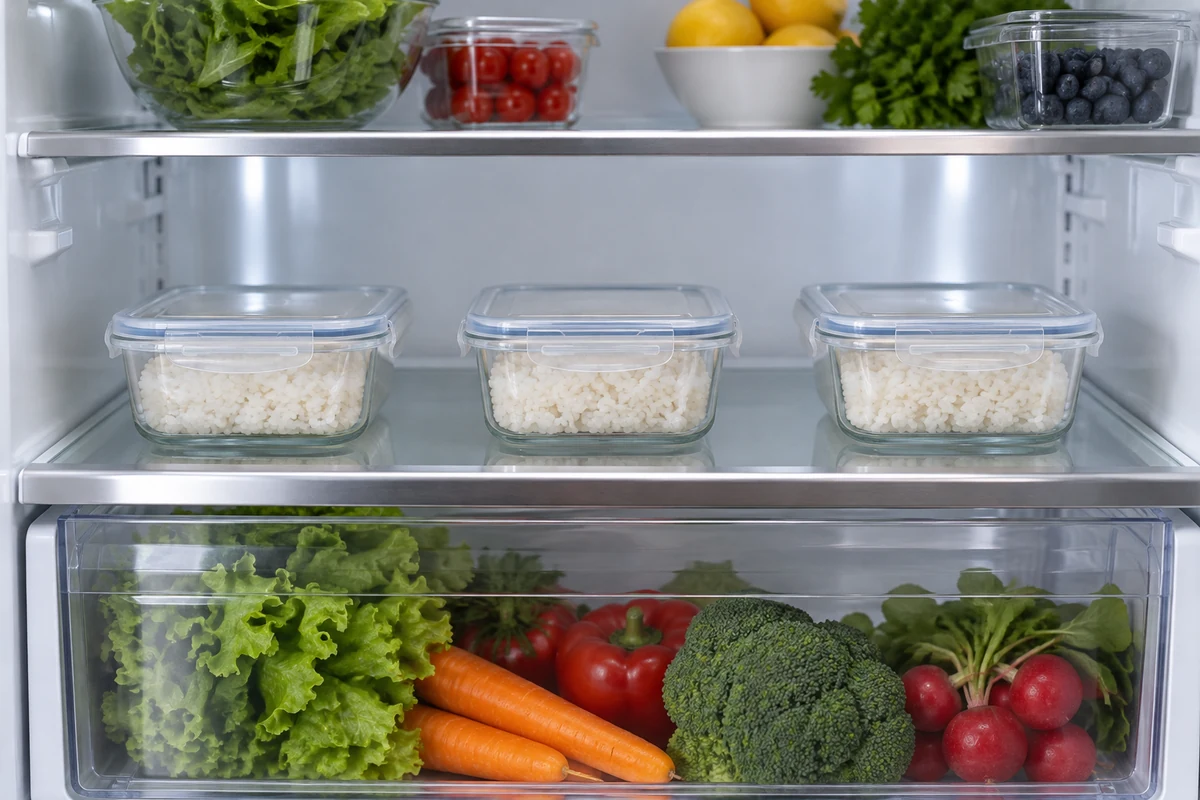
Rice needs particular care after cooking. Prompt cooling and correct storage matter because reheating does not necessarily remove toxins that can develop in badly stored rice. Use clean containers and do not rely on its appearance or smell alone.
Cooling and storage
- Cool quickly: divide rice into small shallow portions and cool it as quickly as possible, ideally within an hour, before refrigerating. Do not leave a large pan standing out to cool slowly.
- Containers: use clean, food-safe containers with suitable lids. Choose containers intended for the relevant fridge, freezer or reheating use.
- Portions: small portions cool faster and let you reheat only what you need.
- Storage temperatures: keep the fridge at 5°C or below and the freezer at around −18°C.
- Storage time: use refrigerated rice within 24 hours. If freezing, do so promptly after safe cooling; around a month is a useful quality target, not a way to rescue rice that was left out too long.
Labelling and organisation
- Label containers: record the contents and preparation date and time so you can track the short storage window.
- Fridge position: keep cooked, ready-to-eat food covered and above raw meat or poultry to prevent drips contaminating it.
Reheating safely
- Choose a suitable method: a saucepan, oven or microwave can work. Divide large quantities into manageable portions for more even heating.
- Restore moisture: add a little water or stock, starting with 1–2 tablespoons per portion if needed, to prevent drying.
- Check the centre: make the rice steaming hot throughout. A clean food thermometer can confirm 75°C for 30 seconds, or 70°C for 2 minutes, including the coldest parts.
- Microwave: use a microwave-safe container and vented cover, following the appliance’s instructions. Stir during heating and check several places, allowing the recommended standing time; a fixed minute or two may not be enough.
- Hob: heat in a covered pan with a little liquid, stirring as needed until thoroughly steaming hot throughout.
- Oven: use an oven-safe covered dish at around 160–180°C conventional. The time depends on depth and quantity, so check the centre rather than relying on a fixed 10–20 minutes.
- Reheat only once: heat only the portion you intend to eat. Do not chill and reheat the same rice repeatedly; discard uneaten reheated portions.
Defrosting safely
- In the fridge: thaw in the refrigerator and use within 24 hours of defrosting, reheating thoroughly once.
- In the microwave: use the defrost function if needed, then reheat immediately until steaming hot throughout. Do not leave rice thawing at room temperature or in a lukewarm water bath.
When to discard leftovers
- Unusual smell: discard rice with a sour or unexpected smell, but remember that a normal smell does not establish that rice is safe.
- Slimy texture: unusual slime is a reason to discard it. Stickiness alone may come from the rice variety, so use storage history rather than texture as your safety test.
- Mould or suspicious patches: discard the food rather than removing only the affected area.
Using safely stored rice
- Try another dish: rice can become fritters, a bake, a cold salad or a filling, provided it was cooled and stored correctly and is used within 24 hours. Baking or frying it counts as reheating; do not reheat it again.
- Fresh seasoning: herbs, lemon zest or a little olive oil can refresh the flavour, but cannot make unsafe leftovers suitable to eat.
- Freeze portions: freeze safely cooled rice in small portions and take out only what you need.
Final food-handling reminders
- If in doubt, discard: do not taste questionable rice to check its safety.
- Keep things clean: wash hands and utensils before handling cooked food and keep it separate from raw ingredients.
Bringing it all together
Rice can be a colourful addition to Christmas dinner, whether you choose mushrooms and cream, toasted nuts and cranberries, or a vegetable-based combination. Match the dish to your guests and the rest of the menu.
Adapt flavours to your preferences, check dietary requirements and taste the freshly cooked food before serving to adjust its seasoning.
Thank you for reading! Follow our social channels for more festive recipes and ideas.
Visit the I Love Christmas blog for more recipes and inspiration for the festive table.
Save these ideas and let us know which dish you try. Happy cooking and happy Christmas!
Christmas rice recipes: frequently asked questions
Which rice is best for a creamy dish?
Arborio or carnaroli suits a creamy risotto-style method with stock added gradually. Long-grain rice gives more separate grains. Follow the liquid requirements and method for the variety you choose.
How can I adapt these dishes for vegetarians or vegans?
Use vegetable stock and suitable dairy alternatives. For vegan dishes, replace butter and cream, omit or replace cheese, and use agave or maple syrup instead of honey. Traditional Parmesan is not vegetarian, so choose an appropriate hard cheese if needed.
How much rice should I allow for a group?
Around 60 g uncooked rice per adult is a starting point for a side dish, producing roughly 180 g cooked. Adjust for appetite and other dishes; an extra 10% is optional rather than essential.
Which substitutions can help keep costs down?
Compare rice prices, consider seeds instead of some nuts, and use seasonal vegetables. Safely stored cooked meat can be added if it has not already been reheated. Quinoa, cashews and cheese alternatives are not necessarily cheaper, so compare unit prices.
How should I store and reheat leftover rice?
Cool it quickly, ideally within an hour, refrigerate at 5°C or below and use within 24 hours. Reheat only once until steaming hot throughout, checking 75°C for 30 seconds or 70°C for 2 minutes if using a thermometer. Poor storage cannot reliably be corrected by reheating.
Which garnishes make rice look festive?
Fresh herbs, citrus zest, toasted nuts and cranberries add colour and contrast. Keep some aside for the top, check guests’ allergies and use only edible garnishes in contact with the food.
Sources and Further Reading
- Food Standards Agency: rice storage and reheating
- UK Government: safe cooking and reheating
- UK Government: chilling and defrosting food safely
- NHS: foods to avoid for babies and young children