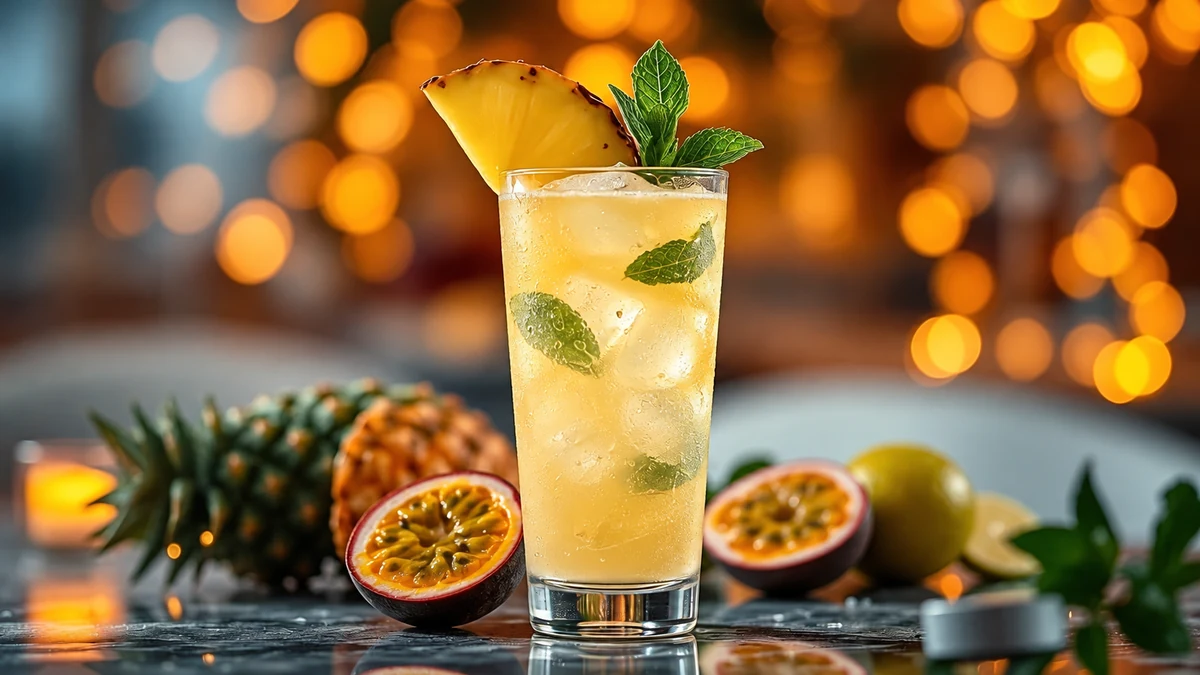
This tropical gin cocktail combines 60 ml gin, pineapple juice, passion fruit, lime and a little syrup, topped with sparkling water or tonic. An optional sparkling-wine addition makes a different adult version. Reduce the measured gin or replace all alcohol for a separate mocktail, and add fizzy ingredients only after shaking.
A tropical gin cocktail brings pineapple, passion fruit and citrus flavours to a New Year’s Eve gathering. The basic method is simple: shake the still ingredients with ice, strain, then add the sparkling mixer and a small garnish.
Ingredients for a tropical gin cocktail
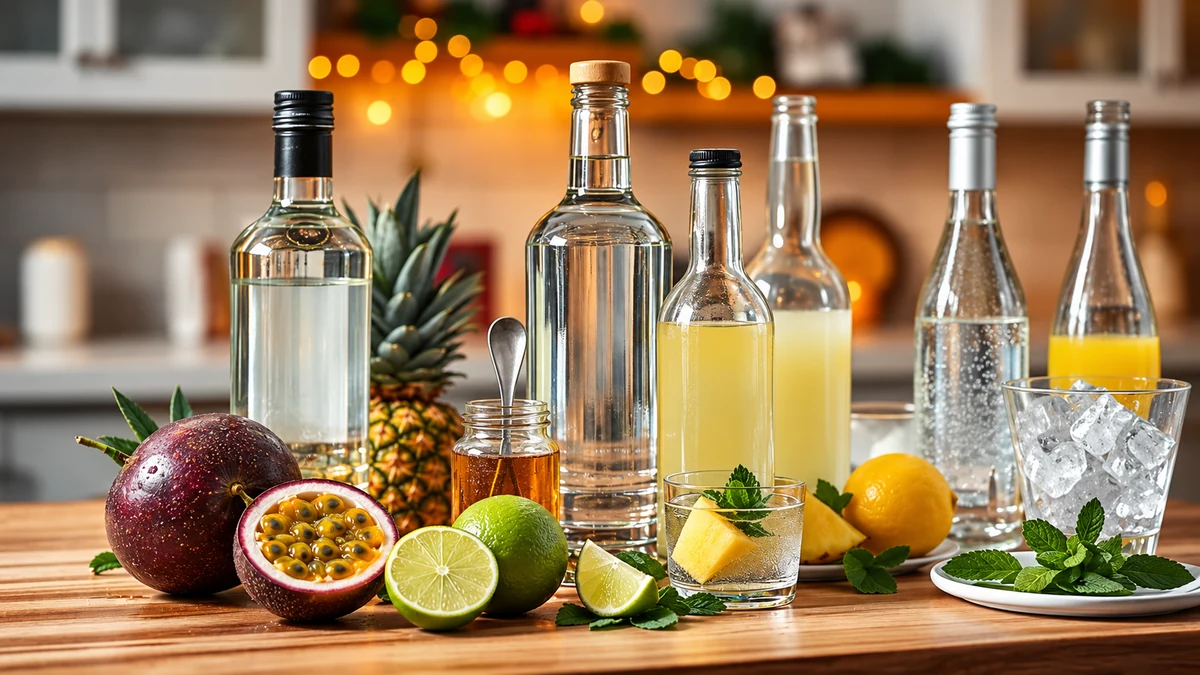
For one tropical gin cocktail, measure the ingredients below. The original recipe is a generous alcoholic serving: 60 ml gin at 40% ABV contains 2.4 UK units before any optional wine.
- 60 ml London Dry gin — reduce to 40 ml if preferred. For a separate alcohol-free drink, use a suitable alcohol-free alternative or the juice-based recipe below, and omit alcoholic sparkling wine too.
- 90 ml pineapple juice — fresh or bottled, with no added sugar if preferred. Muddled pineapple can provide a different texture, but a couple of slices is not a reliable volume equivalent.
- 30 ml passion fruit pulp — approximately one fruit, depending on size. Alternatively, use passion fruit juice prepared from concentrate according to its label, then measure 30 ml.
- 15 ml lime juice — roughly half a lime, but measure the juice. Lemon gives a different citrus flavour rather than an identical substitute.
- 15 ml simple syrup, or less to taste — one tablespoon. Honey or agave differ in sweetness and thickness; dilute if needed and start with less rather than treating them as exact equivalents.
- 60–90 ml sparkling water or tonic water — sparkling water gives a drier result; tonic adds bitterness and may add sugar.
- Ice cubes — for shaking and fresh ice for serving.
- Four to six mint leaves — for aroma and garnish. A small basil sprig is an alternative.
- A thin lime slice and a small pineapple wedge — optional garnishes.
- A little extra passion fruit pulp — optional, if you prefer some seeds and texture.
- 30 ml brut sparkling wine, optional — an additional adult-only topping that adds alcohol. Use sparkling water or an appropriate alcohol-free alternative for a mocktail.
Substitutions and quick tips
Choose juice you enjoy and taste before adding the full syrup measure. For an alcohol-free version, replace the gin and omit or replace the wine. Check labels on commercial alternatives if avoiding traces of alcohol matters. Keep all ingredients chilled until needed.
How to make the tropical gin cocktail
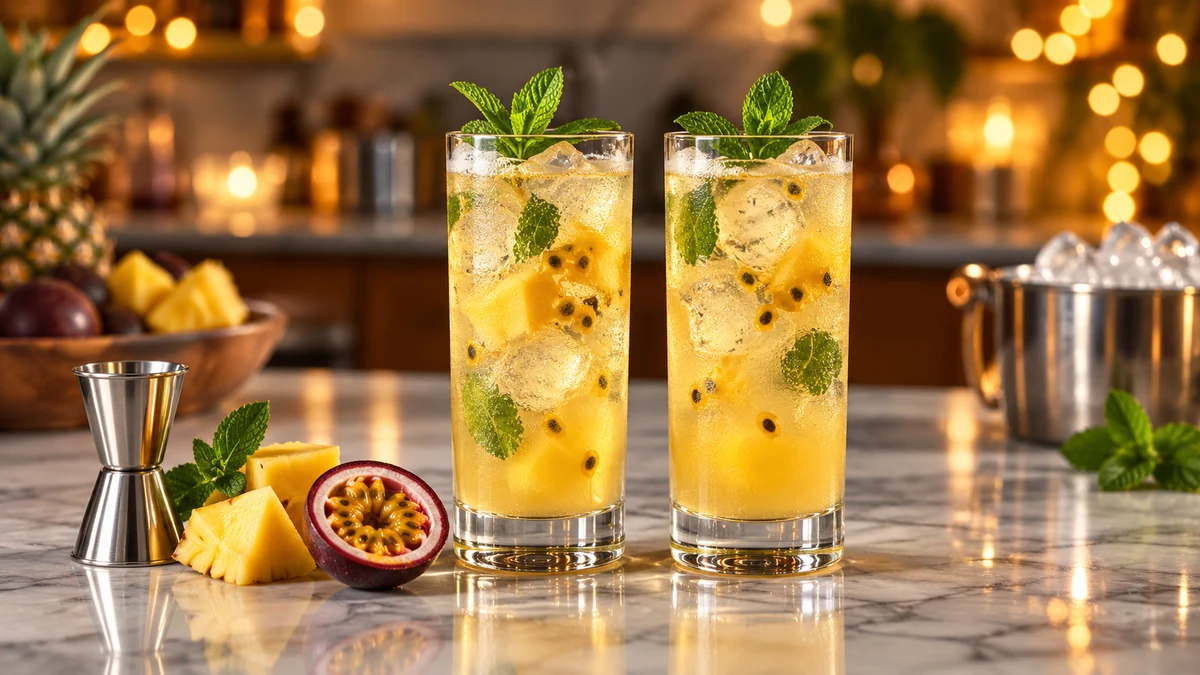
- Prepare your equipment: use a large highball or Collins glass, a cocktail shaker, a measuring jigger and a strainer. The recipe makes about 270–300 ml before optional wine and dilution, so allow enough room for ice or divide it into two smaller servings.
- Chill the glass: fill it with ice while preparing the drink, or refrigerate suitable glassware beforehand.
- Combine the fruit ingredients: add 90 ml pineapple juice and 30 ml passion fruit pulp to the shaker, followed by up to 15 ml simple syrup and 15 ml lime juice. Stir gently; the juice-based recipe does not require muddling extra pineapple chunks.
- Add the gin: measure 60 ml gin into the shaker, or use the smaller measure you have chosen. Keep alcohol-free portions separate and clearly identified.
- Shake with ice: add ice, close the shaker securely and shake for about 10–15 seconds until cold. Never shake tonic, sparkling water or sparkling wine in a sealed shaker.
- Strain: empty the chilling ice from the glass and add fresh ice. Strain the cocktail over it, using a fine strainer if you want to remove seeds and fibres.
- Add the bubbles: top with 60–90 ml sparkling water or tonic. For the optional alcoholic variation, add 30 ml brut sparkling wine, leaving sufficient headroom.
- Mix gently: use one or two slow turns of a long spoon to combine the drink without driving off the fizz.
- Garnish: add a small pineapple wedge, mint and, if wanted, a little passion fruit pulp. A half passion fruit can sit securely on a sufficiently wide glass, but keep the rim clear enough to drink from. Express a small piece of citrus peel over the surface for aroma.
- Taste and scale carefully: adjust syrup or lime in small measured amounts. For a jug, multiply the chosen recipe by the number of servings, keep the still base refrigerated and add ice and fizzy ingredients at service. Measure the alcohol rather than pouring by eye.
Practical tips
Use a balanced juice combination and avoid crushing citrus pith, which can taste bitter. Tonic’s bitterness may compete with delicate fruit flavours. Taste alcohol-free alternatives separately; they do not always need the same sweetness as gin.
Tropical gin cocktail variations
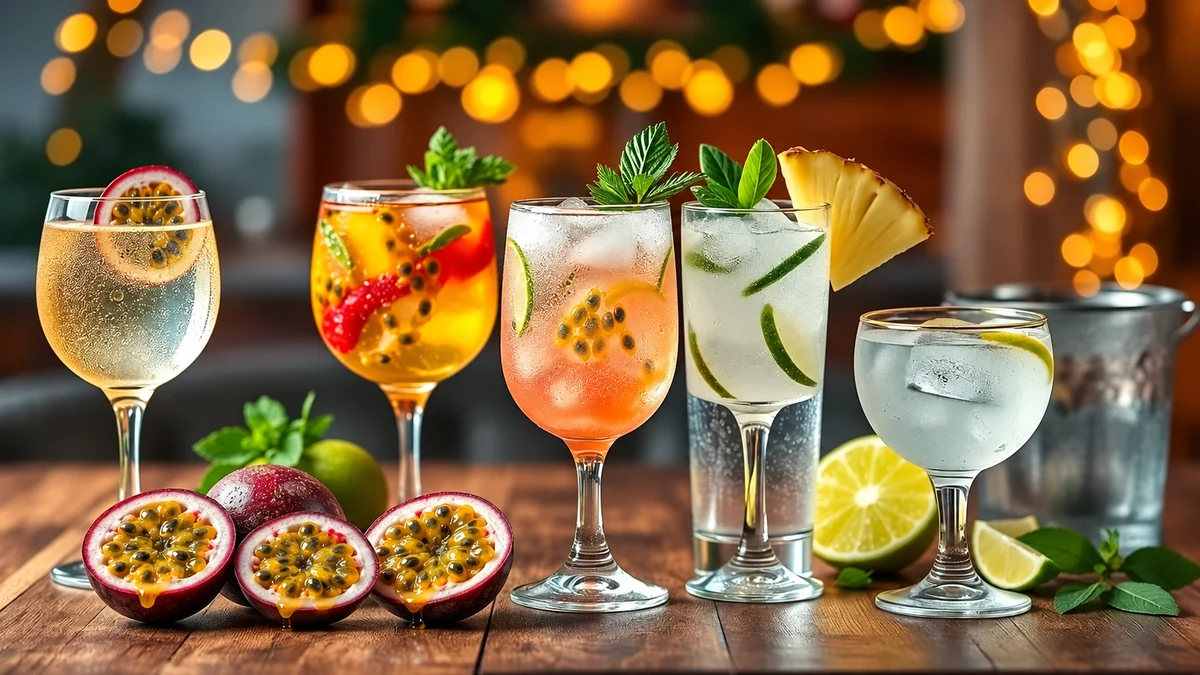
Tropical sparkling-wine spritz
This adult variation uses sparkling wine instead of the main recipe’s water or tonic. It contains alcohol from both gin and wine.
- 45 ml gin
- 60 ml pineapple juice
- 15 ml passion fruit pulp
- Up to 15 ml simple syrup, to taste
- 60 ml brut sparkling wine
- Ice
- A mint sprig and small pineapple slice, to garnish
- Combine: gently stir the passion fruit pulp and syrup in a shaker.
- Add the still liquids: pour in gin and pineapple juice, then add ice.
- Shake: shake briefly until thoroughly chilled, keeping the sparkling wine out of the shaker.
- Pour: strain into a glass with fresh ice and top with sparkling wine.
- Finish: garnish with mint and a small pineapple slice.
Alcohol-free tropical mocktail
This juice-and-water version contains no added spirits or wine. Adjust the portion and garnish for the guest; a sugary fruit drink is an occasional treat rather than a drink suitable without limits for every age.
- 90 ml pineapple juice
- 30 ml passion fruit pulp
- Up to 15 ml agave syrup, optional — taste first, as the fruit may be sweet enough.
- 60–90 ml sparkling water, plain or suitably flavoured
- Ice for adult servings, if wanted — omit hard ice cubes for young children.
- Lime and mint to garnish — omit loose garnishes where unsuitable for the guest.
- Mix: combine pineapple juice, passion fruit pulp and optional syrup in a jug.
- Chill: use refrigerated ingredients, adding ice only where appropriate for the person drinking it.
- Add fizz: pour in sparkling water immediately before serving.
- Serve: pour into suitable glasses and add a simple garnish, or strain and serve without garnish for someone who needs a smoother drink.
Blended frozen tropical cocktail
A slushy variation for guests who enjoy a frozen drink. Use equipment designed to crush ice and frozen fruit.
- 60 ml gin, or a suitable alcohol-free alternative
- 120 g chopped frozen pineapple
- 30 g frozen passion fruit pulp — follow any preparation instructions on bought products.
- Up to 20 ml simple syrup, to taste
- Crushed ice as needed
- Blend: place the pineapple, pulp, gin or alternative, and syrup in a suitable blender.
- Add ice gradually: blend to a slushy consistency without exceeding the appliance’s limits. Do not blend carbonated ingredients in a sealed container.
- Taste: adjust sweetness with a small amount of syrup if needed.
- Serve promptly: pour into a chilled glass and add a small pineapple garnish.
Tropical gin and tonic
A simple built-in-the-glass version with pineapple and lime.
- 50 ml gin
- 100–120 ml tonic water
- 30 ml pineapple juice
- 10 ml lime juice
- Large ice cubes
- A strip of lime peel and a small basil sprig
- Prepare the glass: add ice, leaving enough room for all the liquids.
- Add gin and juice: pour in the measured gin, pineapple juice and lime juice.
- Top up: add tonic water and stir gently once.
- Finish: express the lime peel over the glass and add basil.
A drier version with less added syrup
This version uses less gin and syrup than the main recipe. It is not alcohol-free, and its total sugar and calories depend on the ingredients and serving size.
- 40 ml gin
- 60 ml pineapple juice
- 15 ml lime juice, or less to taste
- 5–10 ml simple syrup, optional — or a suitable sweetener used according to its own label; concentrations vary.
- Sparkling water, to top up
- Ice and lime peel
- Combine: put the gin, pineapple juice, lime juice and optional syrup into a mixing glass with ice.
- Stir: mix briefly until chilled.
- Strain: pour into a glass with fresh ice and add sparkling water.
- Serve: garnish with a little lime peel.
Quick variation ideas
Change the herbs — a small amount of mint, basil or culinary thyme gives a different aroma. Add syrup gradually and taste, rather than assuming all juices have the same sweetness.
Glasses, garnishes and New Year’s Eve presentation
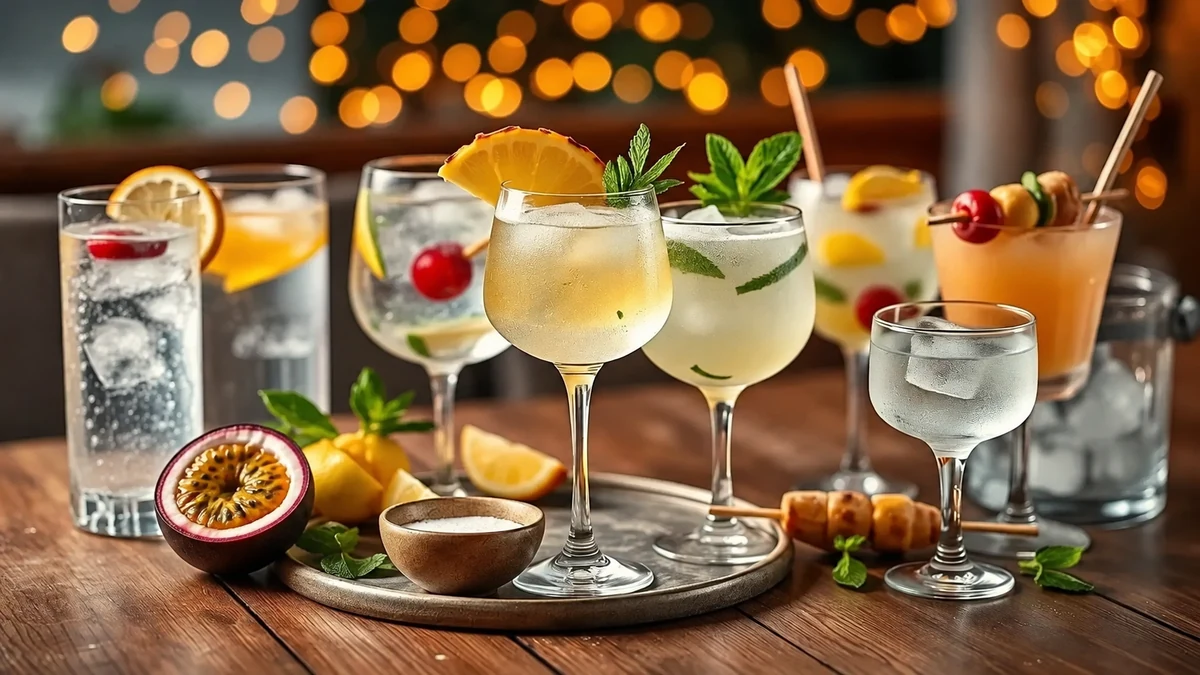
Present the tropical gin cocktail with a simple garnish that complements the fruit and leaves the glass easy to handle.
Choosing a glass
- Highball or Collins: useful for a long drink topped with tonic or sparkling water; check its capacity against the recipe and ice.
- Balloon gin glass: leaves room for ice and a small aromatic garnish.
- Wine or spritz glass: suits the sparkling-wine variation.
- Coupe or tumbler: can suit a smaller frozen serving; scale the recipe to fit.
- Jugs and dispensers: are useful for parties, provided fruit does not block the spout. Keep the still base chilled and add fizzy ingredients at service.
Garnish ideas
- Passion fruit: a small spoonful of pulp adds colour and texture. A half fruit is optional and should sit securely rather than obstruct the rim.
- Pineapple slices: lightly grilling a small wedge gives a toasted aroma; cool it before adding it to a chilled drink.
- Thin lemon slices: provide a different citrus aroma from lime. Remove pips and use sparingly.
- Mint or basil: gently bruise a small sprig to release its aroma without shredding it into the drink.
- A sugared rim: is optional for sweeter versions. Use a little caster sugar, with finely grated citrus zest if wanted; coating only part of the rim gives guests a choice.
- Cocktail picks: can hold small fruit pieces for adult drinks. Keep sharp picks out of children’s portions and remove before eating the garnish.
Preparing glasses and garnishes
- Chill the glass: use ice briefly or put suitable glassware in the fridge before assembly.
- Coat the rim if wanted: rub part of it with a citrus wedge and dip lightly into sugar or sugar mixed with zest.
- Prepare a small garnish: thread manageable pineapple pieces onto an adult cocktail pick, or simply place a thin wedge on the rim. Avoid a heavy stack that could tip the glass.
- Keep herbs fresh: wash and dry them and keep them chilled until needed, following appropriate storage for the herb.
- Add citrus aroma: gently twist a small strip of peel over the finished drink.
Party presentation tips
- Choose a stable tray: a plain surface lets the fruit colours stand out without crowding the glasses.
- Use comfortable lighting: festive lights create atmosphere while leaving enough light to read labels and pour safely. Keep flames away from decorations and bottles.
- Label the drinks: clear names and an alcohol-free label on the separate mocktail prevent mix-ups.
- Mix close to service: keep a measured still base refrigerated, adding ice and sparkling ingredients when the guests are ready.
- Consider the guest: strain seeds and fibres where appropriate and omit hard or sharp garnishes. A wider straw is a serving preference, not a solution for someone with swallowing difficulties; follow their usual dietary advice.
Finishing the presentation
Keep the garnish balanced: yellow passion fruit and green mint can complement the drink without overwhelming it. At a larger gathering, simple garnishes prepared hygienically in advance are easier to serve consistently.
Adjusting sugar and alcohol
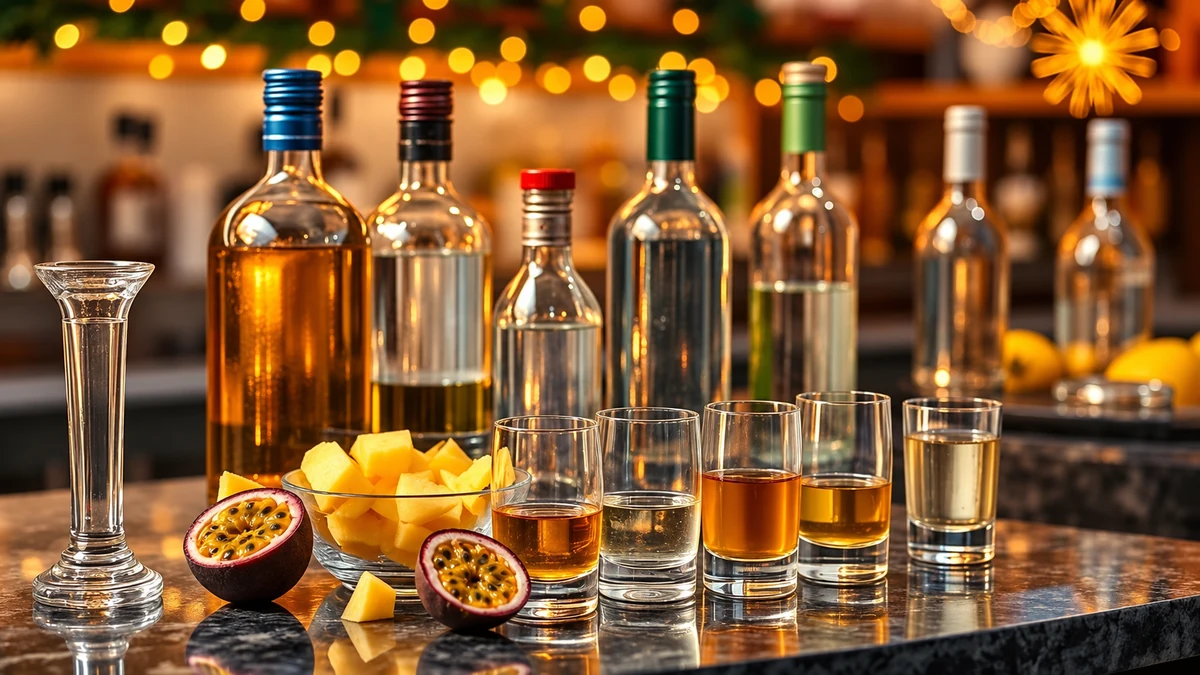
Measured changes let you adapt the tropical gin cocktail to different preferences. Keep a lower-alcohol drink distinct from a genuinely alcohol-free alternative.
Adjusting sweetness
Add sweetener gradually and taste a small sample between changes. Syrup mixes more readily into a cold drink than dry sugar.
- 15 ml simple syrup — the main recipe’s upper starting amount, equivalent to one tablespoon.
- 5–10 ml syrup — a smaller addition if the fruit juice is already sweet.
- Other sweeteners: honey and agave still contain sugars and differ in sweetness from simple syrup. Erythritol and stevia products vary considerably in concentration; use their label directions, not a universal drop count or one-to-one conversion. Honey is not vegan.
- Taste the fruit first: ripe pineapple may reduce the need for added syrup, though the fruit and juice still contribute sugar.
Adjusting alcohol
You can reduce the measured gin, replace some or all of it, or dilute the drink. Dilution lowers concentration but does not remove the alcohol already poured into the glass.
- Use less gin: choose 40 ml or 30 ml instead of 60 ml, and omit optional sparkling wine if reducing alcohol is the aim.
- Add a mixer: sparkling water, tonic or juice changes volume and flavour. Adding more mixer to the same dose of gin does not reduce the total units consumed if the whole drink is finished.
- Choose an alcohol-free base: use a suitable botanical alternative according to its serving guidance, or make the juice-and-water mocktail. Check actual alcohol content where necessary.
- Simple mocktail proportions: 90 ml pineapple juice, 30 ml passion fruit pulp and 60–90 ml sparkling water, with optional syrup to taste. No gin or alcoholic wine is needed.
A small taste test
- Start with measured proportions: use a small scaled-down sample of the base recipe to judge the flavour, keeping its ingredient ratios consistent.
- Try less gin: compare a small sample using the equivalent of a 40 ml rather than 60 ml gin serving; there is no need to make and drink several full cocktails to test the recipe.
- Reduce syrup: try the equivalent of 10 ml rather than 15 ml. Taste before changing the lime, as less sugar can make the existing acidity more noticeable.
- Test the mocktail separately: use the alcohol-free base and adjust sweetness to suit its different flavour.
- Record the chosen version: scale its measured ingredients for the required number of servings, keeping sparkling mixers separate until service.
Balancing the flavour
Balance sweetness and acidity together: reducing syrup does not automatically call for more lime. Taste first; add a few drops only if the drink needs more acidity. Mint or basil can add aroma to a lower-alcohol or alcohol-free version.
Serving clearly labelled versions
Keep alcohol-free drinks separate, with their own labelled jug and utensils. For a shared batch, record the measured alcohol and the intended number of portions. Do not use an unlabelled concentrated base that guests might mistake for a finished drink.
Snacks and desserts to serve alongside
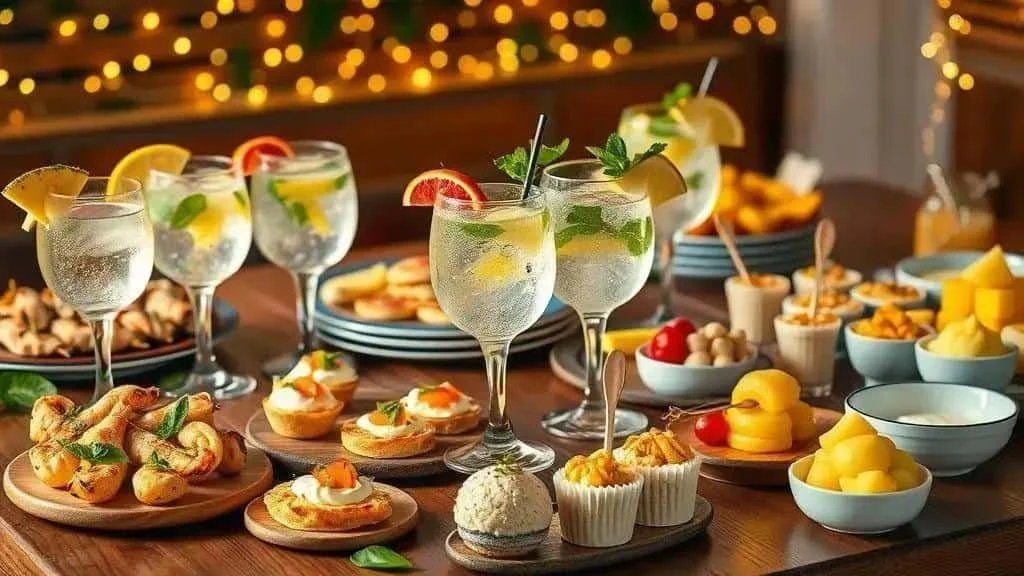
Pairing the tropical gin cocktail with small savoury bites and desserts can create an enjoyable menu. Food does not cancel the effects of alcohol, so offer water and alcohol-free choices too.
Savoury suggestions
- Cooked prawns with lemon — a citrus finish complements the drink. Keep cooked seafood properly chilled until serving.
- Chicken and grilled pineapple bites — cook chicken thoroughly and serve it promptly; sweet pineapple contrasts with the savoury meat.
- Goat’s cheese crostini with passion fruit — creamy cheese contrasts with the fruit’s tartness. Check dietary suitability and allergens.
- Citrus seafood cups — cooked seafood offers a simpler option than raw-fish ceviche. Citrus juice alone does not make raw fish safe; raw preparations require appropriate sourcing and parasite controls.
- Cheese bites or Brazilian pão de queijo — savoury cheese flavours provide a contrast to the fruit drink.
Dessert suggestions
- Small passion fruit mousses — echo the cocktail’s fruit flavour in modest portions.
- Caramelised pineapple tartlets — combine a crisp base with soft fruit.
- Tropical fruit with white chocolate — serve on small plates or adult dessert picks, adapting the presentation for children.
- Lemon sorbet — a sharp, cold contrast to a sweeter dessert course.
- Brazilian coconut pudding cups — a creamy cocada-style dessert that suits the tropical theme.
Why these flavours work together
Fruit acidity echoes the citrus notes in the drink, while moderately sweet desserts offer contrast without repeating too much syrupy sweetness. Savoury cheese and crisp pastry bring a different texture to the menu.
Serving the food
- Prepare small portions: cups, plates and manageable bites simplify service. Avoid sharp picks in children’s food.
- Separate serving areas: group savouries and desserts clearly, with labelled dietary alternatives.
- Maintain safe temperatures: keep cold perishable food refrigerated until service and bring out small batches. Cook hot foods thoroughly and serve promptly; do not leave chicken or seafood merely lukewarm on a buffet.
- Offer suitable accompaniments: small bowls of citrus sauce, mayonnaise or passion fruit preserve allow guests to choose. Keep perishable sauces chilled and label allergens.
- Plan quantities: four to six savoury bites and one or two mini desserts per guest may suit a short gathering alongside other food. Increase the provision if it replaces a meal, allowing for appetites and portion size.
Presentation ideas
Vary colour and height modestly while keeping trays stable and food easy to reach. Mint and basil can connect the menu visually. Clearly label alcohol-free drinks and vegetarian options, checking ingredients rather than assuming suitability.
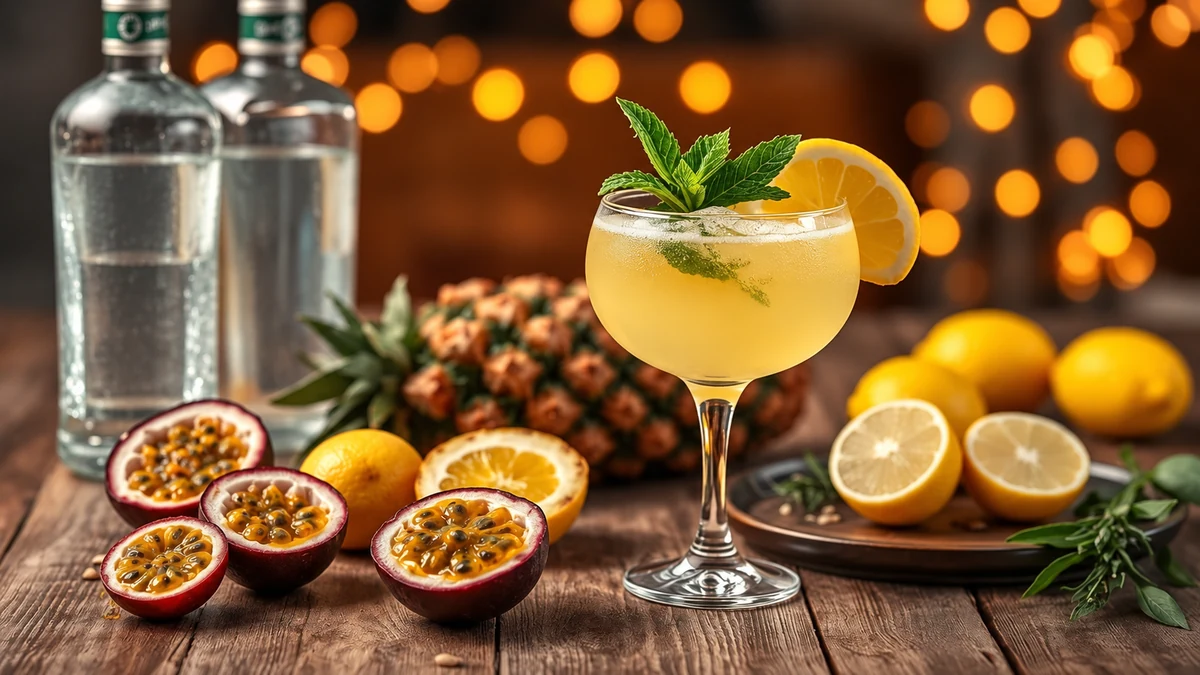
A brief note about a botanical or fruit can help guests choose a drink. Keep descriptions accurate and focus on the flavours actually present.
Gin’s defining flavour
Gin is associated with juniper, alongside other botanicals that vary by producer. London Dry is one familiar style, while some contemporary gins emphasise floral or citrus notes. Read the producer’s description rather than treating every bottle as interchangeable.
Botanical notes that suit tropical fruit
- Juniper: its resinous character can contrast with pineapple and passion fruit.
- Coriander seed: often contributes a citrus-like, gently spicy note.
- Citrus peel: lemon, lime and mandarin aromas complement fruit-based mixers.
- Floral notes: orange blossom or lavender can dominate quickly. If adding a flavouring yourself, use only culinary products suitable for food and small amounts according to their label.
Choosing the fruit character
Passion fruit seeds provide texture, while pineapple juice brings sweetness and a recognisable tropical aroma. Strain the pulp if you prefer a smoother drink. Lemon and lime have distinct flavours; neither is automatically milder in every recipe, so taste before changing the amount.
Combinations worth trying
- Gin and passion fruit: a fragrant, tart combination that can suit floral styles of gin.
- Gin and grilled pineapple: a lightly toasted garnish adds a different aroma from raw fruit; cool it first.
- Gin and coconut: a small amount of suitable coconut ingredient changes both texture and sweetness. Trial it separately rather than adding a large amount to the whole jug.
Using these ideas on the menu
- Add a short, factual note about the dominant fruit or botanical so guests know what to expect.
- Offer a separate mocktail with herbs and juice or a suitable botanical alternative, adjusting sweetness independently.
- Try a small, cooled grilled pineapple wedge as a simple aromatic garnish.
Temperature and texture
Temperature and texture affect the experience of the drink. Serve promptly while chilled, strain seeds if preferred, and add sparkling mixers to a prepared cold base only at service.
To finish
Thank you for exploring this tropical gin cocktail. We hope the measured recipe, variations and serving ideas make planning your New Year’s Eve gathering easier.
If you try a version, share your presentation ideas and photographs with us on social media.
For more recipes, decorations and seasonal inspiration, visit the I Love Christmas blog and follow our updates.
Enjoy the celebrations, and happy New Year!
FAQ — Tropical Gin Cocktail for New Year’s Eve
Can I make an alcohol-free version?
Yes. Replace the gin and omit or replace any alcoholic sparkling wine. The juice-based mocktail uses pineapple, passion fruit and sparkling water, with optional syrup. Check labels on commercial alternatives when avoiding traces matters.
Can I prepare a large batch for a party?
Yes. Multiply a measured version of the recipe by the required servings, keep the still base covered in the fridge and add ice and sparkling ingredients at service. Label alcohol-free batches separately and record the alcohol measures.
What can I use instead of fresh passion fruit?
Use prepared passion fruit pulp or juice made from concentrate according to its label. A tart berry purée gives a different variation, with sweetness adjusted to taste. Follow any cooking instructions on frozen fruit products before using them cold.
How can I reduce alcohol without losing all the flavour?
Reduce the measured gin, for example from 60 ml to 40 ml, omit alcoholic wine and add herbs or a suitable mixer. Adding more mixer without reducing the original alcohol dose lowers concentration but not the total units in the finished drink.
Which garnishes work well?
A small pineapple wedge, a thin citrus slice, mint or a little passion fruit pulp are enough. Cool grilled fruit first and keep heavy fruit halves and sharp picks away from guests for whom they are unsuitable.
How can I make the drink taste drier?
Start with 5–10 ml syrup or omit it, and use sparkling water instead of a sweet mixer. Taste before adding more lime: reducing sugar already makes acidity more noticeable. Adjust in small amounts.
Sources and Further Reading
- Blackpool Teaching Hospitals NHS — alcohol units
- Food Standards Agency — chilling, freezing and defrosting food
- GOV.UK — no and low alcohol labelling guidance consultation