
Red, green and gold have several Christmas associations rather than one fixed meaning. Red can suggest love and, in Christian interpretations, sacrifice; evergreen foliage evokes continuing life and hope; gold suggests light and celebration. Religious traditions, winter greenery and changing decorative fashions all contribute to the familiar palette.
Christmas colour meanings appear in ribbons, baubles and festive lights. Why do red, green and gold feel so familiar together? Explore their associations and try a few practical ways to bring this palette into your home.
How Christmas colour traditions developed

Christmas decoration draws on several overlapping traditions, not a single origin story. In European winter settings, evergreen branches brought colour indoors when many other plants were bare. Green could therefore suggest continuing life and hope.
Light also has a strong place in winter celebrations and Christian Christmas symbolism. These associations developed in different ways; it is too simple to claim that every modern decoration descends directly from one ancient solstice ritual.
Religious symbolism and colour
Red can be interpreted as love or Christ’s sacrifice, while gold can suggest divine light and kingship. Decorative symbolism is not the same as a church’s liturgical colour scheme: for example, Church of England guidance uses white for the Christmas season, with gold or white for certain great festivals.
Familiar plants also help shape the palette. The poinsettia has colourful bracts rather than large red petals and has roots in Mexico. The decorated Christmas tree is strongly associated with German traditions, later popularised more widely in Europe and beyond. Source: Natural History Museum: Christmas plants
A few historical reference points
- Winter greenery: evergreen plants have long featured in seasonal decoration; their meanings vary across places and traditions.
- Medieval churches and homes: surviving records describe winter displays of holly and ivy, with Christian associations of enduring life. Source: English Heritage: the history of Christmas greenery
- Christmas trees: German tree traditions helped shape the decorated tree familiar in many homes today.
- Changing domestic fashions: ornaments, textiles, printing and trade have all influenced how households combine festive colours.
These religious, seasonal and decorative layers help explain the familiar palette. Red, green and gold can carry personal meanings too; you do not need to assign every decoration a historical or religious explanation.
Red: meanings and decorating ideas
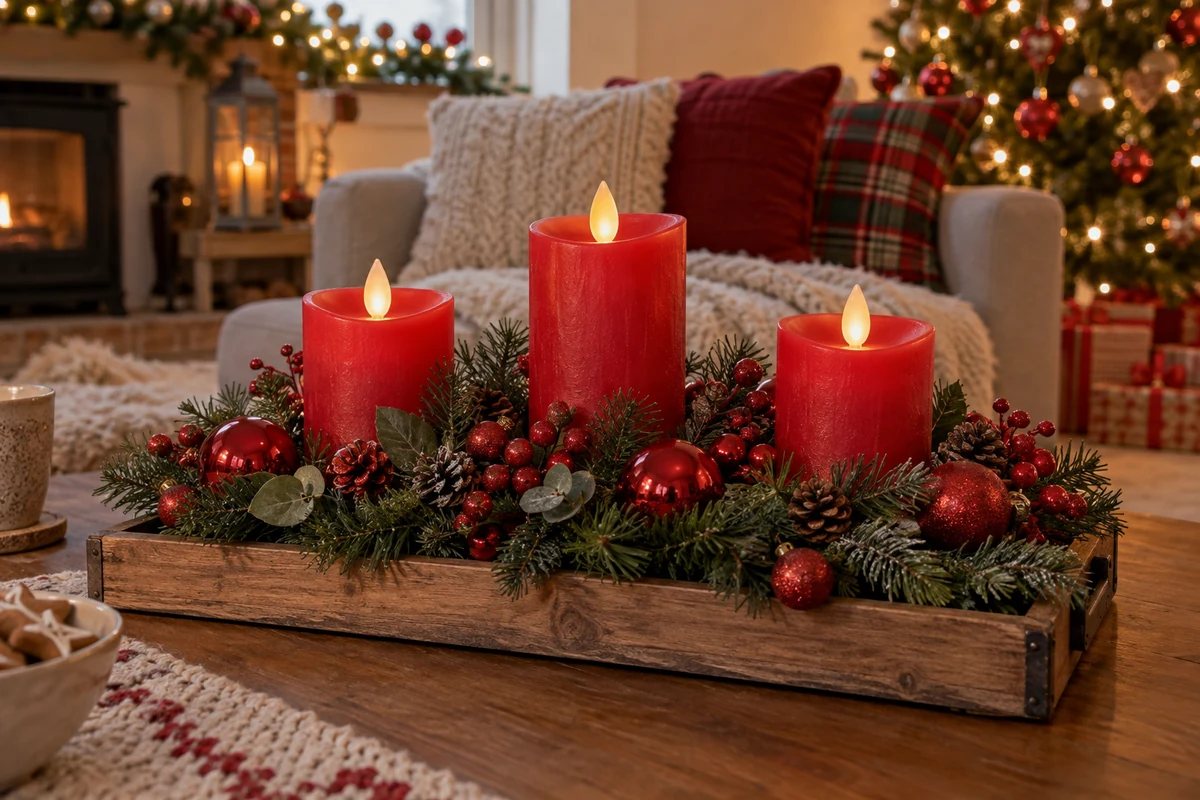
At Christmas, red is often associated with warmth, love and celebration, as well as sacrifice in some Christian interpretations. As a decorating choice, it makes a strong focal point, though people’s responses to colour differ.
Ways to use red
- On the tree: mix red baubles in different sizes and finishes, with warm electric lights if you like the effect.
- In textiles: red cushions, throws or a tablecloth can add a cosy touch. Velvet and linen provide contrasting textures.
- In a centrepiece: combine red battery-operated LED candles with greenery and gold decorations. Keep real flames away from foliage and other combustible materials. Source: London Fire Brigade: candle safety
- With plants: a poinsettia provides a bold patch of colour in a simple pot; follow its care instructions and keep plants out of reach of children or pets who may chew them.
- On presents: red ribbon and textured wrapping can repeat the colour without filling the whole room with it.
- At the entrance: add a red bow to a wreath. Any outdoor lights must be rated for outdoor use.
Balancing red with other colours
- Start with accents: a few red details may be enough. There is no required percentage; adjust the amount to suit your room and taste.
- Mix textures: try glossy baubles with velvet ribbon or a matt surface for contrast.
- Add neutrals: white, beige and natural wood can provide a quieter background.
- Try metallic accents: gold, copper or silver can all work with red. Test a small grouping before committing to a whole scheme.
- Check the lighting: colours look different under warm and cool light, so view your decorations in the room where they will be used.
Quick ideas
- A simple wreath: add red bows and a few ornaments to a green base.
- A table accent: combine red napkins, neutral napkin rings and a plain runner.
- Small colour details: a vase, ribbon or decorative holder may be enough to repeat the festive theme.
DIY: a simple red centrepiece
Make a low arrangement that leaves room for food and conversation:
- Gather: a low container or tray, three red battery LED candles, suitable greenery or artificial foliage, decorative berries and a gold ribbon. Keep small loose decorations away from young children and pets.
- Arrange the base: place the foliage in the container or across the tray, leaving stable spaces for the LED candles.
- Position the lights: stand the battery candles securely and follow their instructions. Use models with secured battery compartments, especially where children are present.
- Add details: secure a few decorative berries and tie the ribbon around the container. Decorative berries are not food; keep them away from plates and serving dishes.
- Finish: adjust the heights and remove loose or overcrowded items. This foliage arrangement is intended for LED candles, not real flames.
A few changes let red become a lively accent without dominating the room. Keep the arrangement practical as well as attractive.
Green: meaning, plants and table arrangements
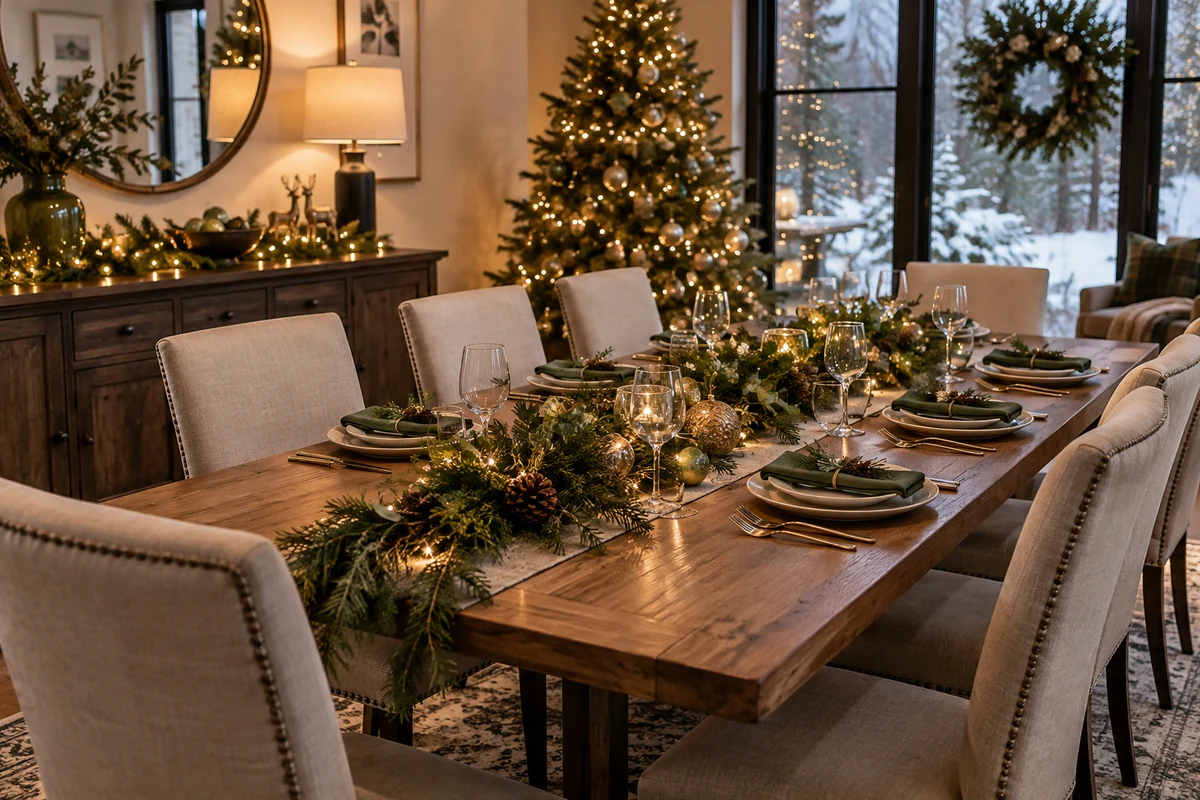
Green is commonly associated with life, renewal and hope. Evergreen foliage makes that connection particularly easy to understand in a European winter, though Christmas falls in summer in Brazil and other parts of the southern hemisphere.
Plants and basic care
- Fir or pine — a cut Christmas tree needs a suitable water-holding stand and regular checks. Keep it away from heat; a living potted tree has different care requirements.
- Holly — glossy leaves suit wreaths and small arrangements. Its berries must not be eaten, and prickly foliage needs careful handling.
- Mistletoe — a traditional hanging decoration, but not an edible plant. Keep it and fallen berries away from children and pets; remove deteriorating material rather than relying on a fixed weekly schedule.
- Eucalyptus — its leaves add shape and scent and can be used dried. Keep decorative stems away from food and flames, and out of reach of pets that may chew them.
- Pine and cypress sprigs — useful for arrangements, but freshness and care vary. Keep them away from heat and never spray water onto electrical lights or fittings.
Arrangements for the festive table
Start with a simple tray or low container and combine a few green textures. Metallic accents or battery LED candles can complement the green without making the arrangement too tall or crowded.
- Use a foliage runner along the table with secure LED lights and small containers, keeping serving areas clear.
- Arrange greenery in a tray with a small vase, ensuring leaves, berries and decorative moss cannot fall into food.
- Group miniature potted trees where they do not obstruct plates, sightlines or the route around the table.
DIY: a green garland table runner
- Prepare a base: use a long tray or a protective runner suitable for your table. Test any adhesive on an inconspicuous area first.
- Build the garland: alternate suitable fir and eucalyptus stems, or reusable artificial foliage, for a varied texture.
- Add accents: use a few pine cones, secure ornaments and battery LED candles. Keep real flames out of the foliage.
- Secure and adjust: use floral wire carefully, turning sharp ends inward, and keep the runner within the centre of the table.
DIY: a small grouped foliage arrangement
- Choose containers: use stable pots or clean, undamaged reused jars as foliage containers, not improvised candle holders.
- Arrange the greenery: add short suitable stems, keeping potentially harmful plants and loose berries away from children, pets and food.
- Add texture: include a few clean twigs or reusable decorative pieces and, if you like, a discreet gold ribbon.
- Position the group: leave enough space for plates, glasses and serving dishes, and protect the table from water.
Care and reuse
- Choose materials thoughtfully: real, local or artificial does not automatically mean lower impact. Reuse suitable items you own and check local disposal guidance for untreated plant material.
- Keep reusable pieces: clean, dry pots, ribbons and pine cones can be stored for another year.
- Avoid unnecessary coatings: glitter, paint and mixed materials can make disposal more difficult. Choose a few durable accents you will keep.
Gold: festive symbolism and restrained accents
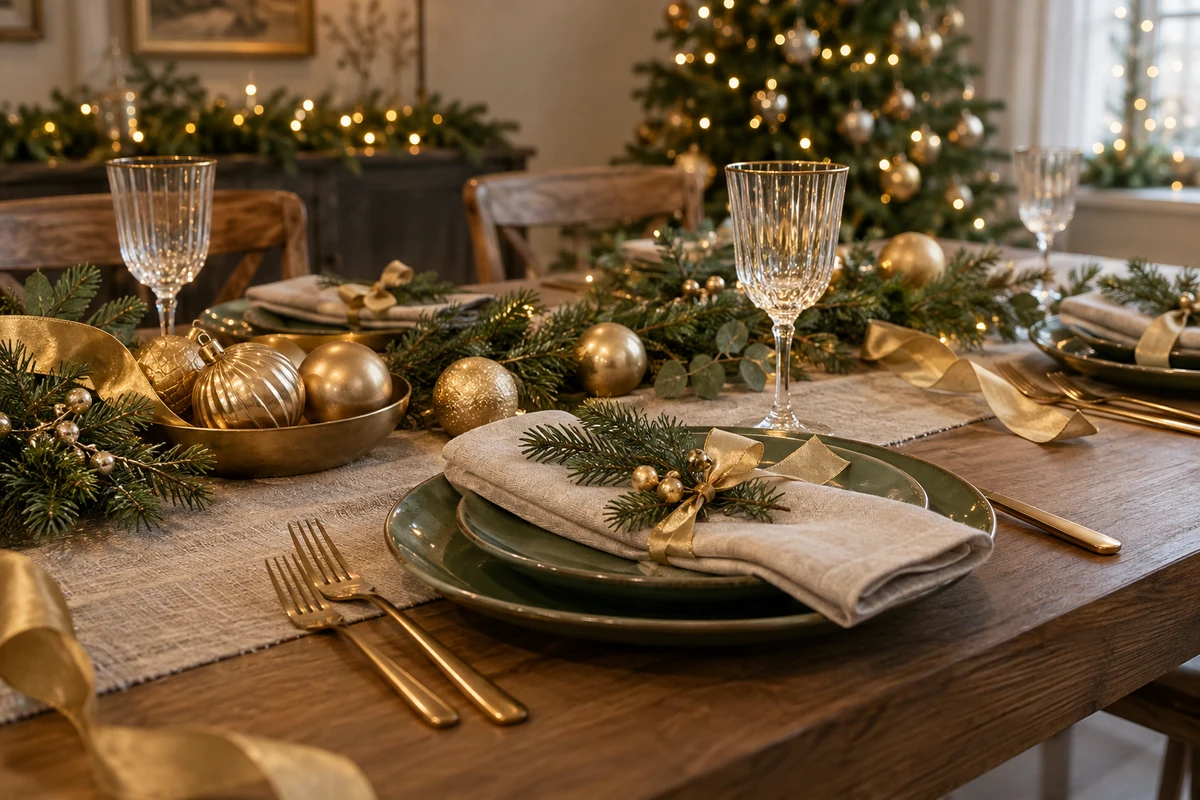
Gold is associated with light, celebration and richness. Its reflective finish can add brightness, while its symbolic meaning depends on the religious, cultural or personal setting.
Why gold feels festive
In Christian Christmas imagery, gold can recall kingship and the gifts of the Magi. In home decoration, it also reflects light and provides a metallic contrast to greenery and fabric.
Using gold as an accent
- Choose a few focal points: try gold on a centrepiece, present ribbons or selected tree decorations.
- Judge by the overall effect: there is no compulsory 10–25% rule. Start small and add more only if you like the balance.
- Mix finishes: combine a little shine with matt or brushed surfaces for contrast.
- Use a neutral background: wood, linen and off-white can soften a bright metallic finish.
- Keep details simple: thin ribbon, metallic edges or a few small ornaments may be enough.
Finishes and combinations
- Bright gold: use it where you want a highlight, perhaps beside a deep red ornament.
- Matt or aged gold: try it alongside green foliage and natural wood.
- Rose gold and copper: these offer warmer alternatives that you can test with neutral or pastel colours.
- Mixed metals: silver and gold can share a scheme. Repeat the finishes deliberately if you want the combination to feel connected.
DIY: adding gold details to existing ornaments
- Prepare the item: clean and dry a suitable bauble, pine cone or decorative twig.
- Protect the work area: cover the surface and mask sections you want to leave unpainted.
- Choose a suitable finish: use compatible craft paint or decorative metal leaf with the recommended adhesive. Follow the product’s ventilation and handling instructions; do not paint electrical parts or food-contact surfaces.
- Add small details: once the first finish is dry, use a fine brush for an edge or pattern if desired.
- Seal only if needed: use a compatible sealer according to its instructions, and let the item dry fully before displaying it.
A few selected objects can give gold a clear role in the scheme. Refreshing existing decorations may also avoid buying an entirely new set.
Combining red, green and gold
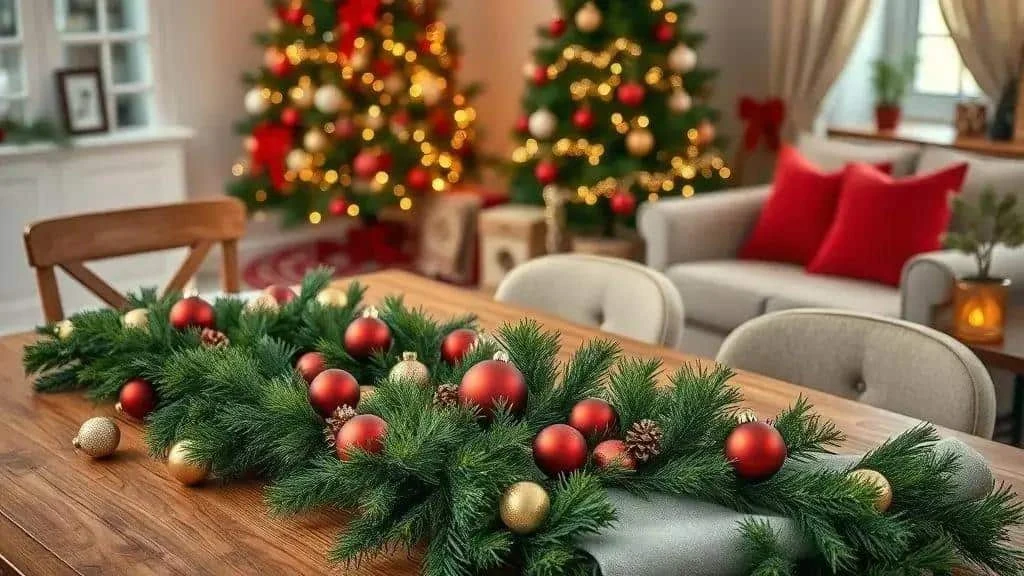
A simple way to combine red, green and gold is to choose a main colour, a supporting colour and a metallic accent. This is a design option, not a rule that every room must follow.
Choosing proportions
- Main colour: use green for a foliage-led scheme or red for a more striking effect.
- Supporting colour: repeat the other colour in a few places to connect the display.
- Metallic accent: add gold where you want a highlight, then step back and assess the balance without measuring fixed percentages.
Palette ideas
- Classic: deep green (#0B3D2E), dark red (#8B0000) and a gold-like yellow (#D4AF37).
- Rich and contemporary: green (#046A38), ruby red (#9B111E) and muted golden brown (#B8860B).
- Rustic: olive green (#556B2F), burnt orange-brown (#8B4000) and warm tan (#A67B5B).
- Soft and understated: grey-green (#9CAEA9), muted red (#C14B4B) and pale golden beige (#E0C97F). These digital references suggest colours, not the reflective finish of real metal or an exact paint match.
Materials, textures and lighting
Combine velvet cushions, linen runners and wood for texture. Warm electric lights or battery LED candles can highlight gold without placing a flame among decorations.
Ideas for different spaces
- Living room: keep the tree mainly green, with selected red baubles and narrow gold ribbons.
- Dining room: try a green runner, neutral plates, red napkins and gold accents with LED candles if desired.
- Entrance: add red bows and a few gold ornaments to a green wreath, choosing materials suitable for the conditions outdoors.
Easy changes to try
- Pair a neutral tablecloth with a green runner for a simple change of emphasis.
- Replace a few tree ornaments with matt gold ones if you want a different balance of light and texture.
- Repeat one red element, such as ribbon or a bauble, in several parts of the room.
DIY: a coordinated set of ornaments
- Gather materials: red baubles in three sizes, suitable reusable foliage, compatible gold craft paint and narrow ribbon.
- Paint and dry: add gold to selected sections of the baubles, following the paint instructions and allowing them to dry completely.
- Assemble: tie ribbon to the ornaments and attach small foliage accents securely, covering any sharp wire ends.
- Arrange: group some ornaments in a stable basket and hang others securely on the tree, out of reach of young children and pets.
Choosing a few repeated textures can bring red, green and gold together. Adjust the balance to your room and the decorations you enjoy using.
Lower-waste decorating with familiar Christmas colours

A lower-waste Christmas scheme starts with what you already own. Reusing decorations and choosing a limited palette can reduce unnecessary purchases without making broad claims about every material’s environmental impact.
Simple principles
- Reuse previous years’ ornaments before buying more.
- Choose durable materials you can use again. Natural materials are not automatically harmless or lower-impact, and collecting them should not damage plants or habitats.
- If painting, follow the product label for ventilation, surface suitability and drying. A water-based product still needs appropriate handling.
- Use suitable energy-efficient LED lights and switch them off when not needed, following the manufacturer’s instructions.
DIY: a wreath using materials you have
- Gather: a sound reusable wreath frame, suitable branches, red ribbon scraps and a few clean pine cones. Wire work is a task for an adult with appropriate tools.
- Prepare the frame: check it is stable and cover sharp wire ends before adding foliage.
- Attach the branches: overlap small bunches and secure them with strong thread or floral wire, keeping ends safely tucked away.
- Add colour: use red bows made from fabric scraps and suitable greenery or artificial foliage you already have.
- Finish: tie on a few pine cones and reused gold ornaments, checking that everything is secure before hanging the wreath.
DIY: paper and pine-cone decorations
- Materials: clean scrap kraft paper, suitable craft glue, string and clean pine cones. Use paper you no longer need rather than damaging a useful book.
- Add paper details: wrap a suitable ornament with strips of paper or attach small paper accents to a pine cone using compatible glue.
- Paint sparingly: add small red or gold details with a suitable craft paint, following its instructions rather than diluting it arbitrarily.
- Finish: let everything dry, attach a secure hanging loop and keep the decorations away from heat or flames.
Keeping the scheme personal and affordable
- Red: repeat existing ribbon, bows or secure decorative berries in small areas.
- Green: use appropriate foliage or reusable greenery, keeping decorative plants separate from food and away from children or pets who might eat them.
- Gold: concentrate metallic details on small objects or refresh part of an existing ornament.
- Wood, jute and linen can provide texture alongside coloured accents. Use suitable pieces you have instead of buying every material in a suggested scheme.
Storage and durability
- Photograph arrangements you like and store clean, dry decorations in labelled reused boxes.
- Replace a worn ribbon or another small part where practical instead of discarding the whole decoration.
- Buy only what you need, checking quality and sourcing. A local product is not automatically cheaper or environmentally preferable in every case.
- Reuse wrapping paper or fabric where practical, and keep ribbons for another occasion.
Ways to begin today
- Gather a small kit of existing ribbons, pine cones, fabric scraps and suitable paint.
- Choose a limited palette to help avoid buying decorations that do not fit what you already have.
- Consider swapping sound decorations with friends or family when everyone is happy to do so.
Bringing your own meaning to the palette
Thank you for exploring these Christmas colour associations. Use the ideas that suit your home, traditions and taste, without feeling tied to a single interpretation.
Save your favourite arrangements or share your own creations with friends. A decoration’s personal history can matter as much as its colour.
Visit I Love Christmas for more festive ideas and practical guides throughout the year.
Wishing you a joyful festive season!
Christmas colour meanings: frequently asked questions
What do red, green and gold mean at Christmas?
Common associations include love and sacrifice for red, continuing life and hope for green, and light or celebration for gold. These are interpretations, not universal meanings shared by every culture or church.
How can I balance the colours in a room?
Choose a main colour, a supporting colour and a few gold accents if that approach appeals to you. Adjust by eye and use neutrals or varied textures; fixed percentages are not necessary.
Which plants can I use, and how should I care for them?
Fir, eucalyptus and holly can suit arrangements, with care depending on the plant and whether it is cut or potted. Keep foliage away from heat, electrical fittings and food; holly and mistletoe berries must not be eaten. Follow appropriate care advice rather than misting all decorations. Source: Royal Horticultural Society: plants and poisoning
How can I add gold without buying lots of new items?
Reuse ribbon or ornaments, or add a small compatible painted detail to an existing piece. Try matt and shiny finishes together, allowing painted items to dry fully before use.
How can I reduce waste while using traditional colours?
Reuse decorations, repair small damaged parts and limit new purchases. Use appropriate LED lighting, store items carefully and follow local recycling or garden-waste guidance; painted or glued materials may need different disposal.
Sources and Further Reading
- English Heritage: the history of Christmas greenery
- Church of England: liturgical colours
- Natural History Museum: Christmas plants
- Royal Horticultural Society: Christmas greenery
- London Fire Brigade: candle safety
- Royal Horticultural Society: plants and poisoning