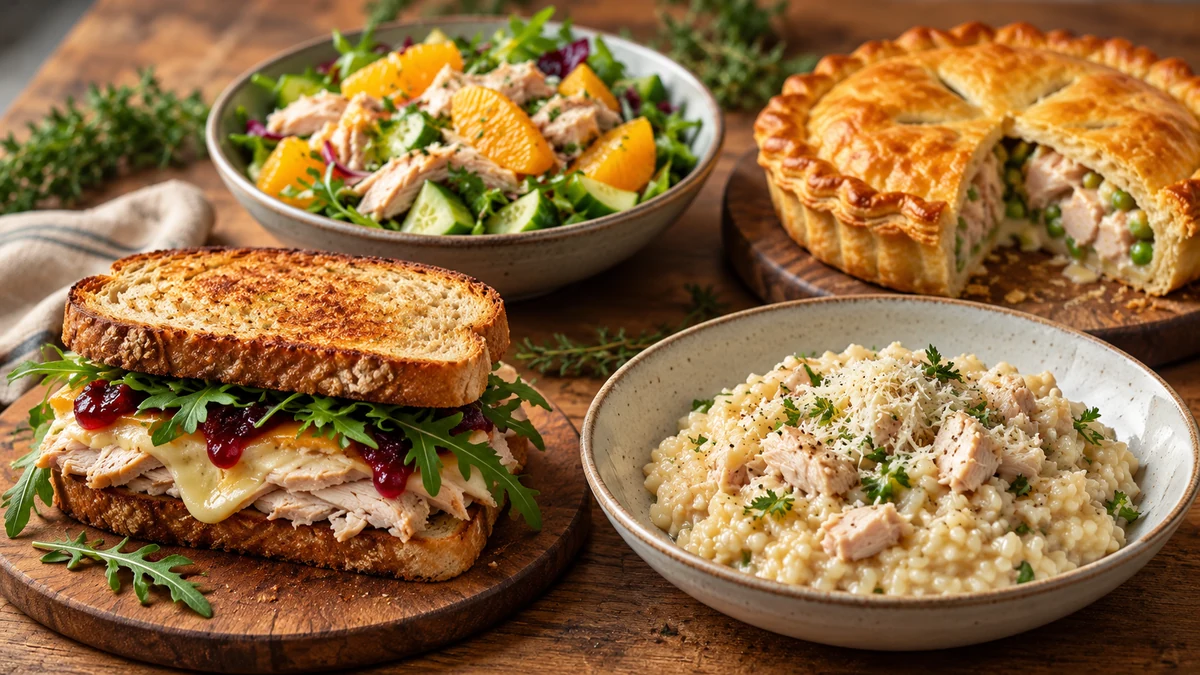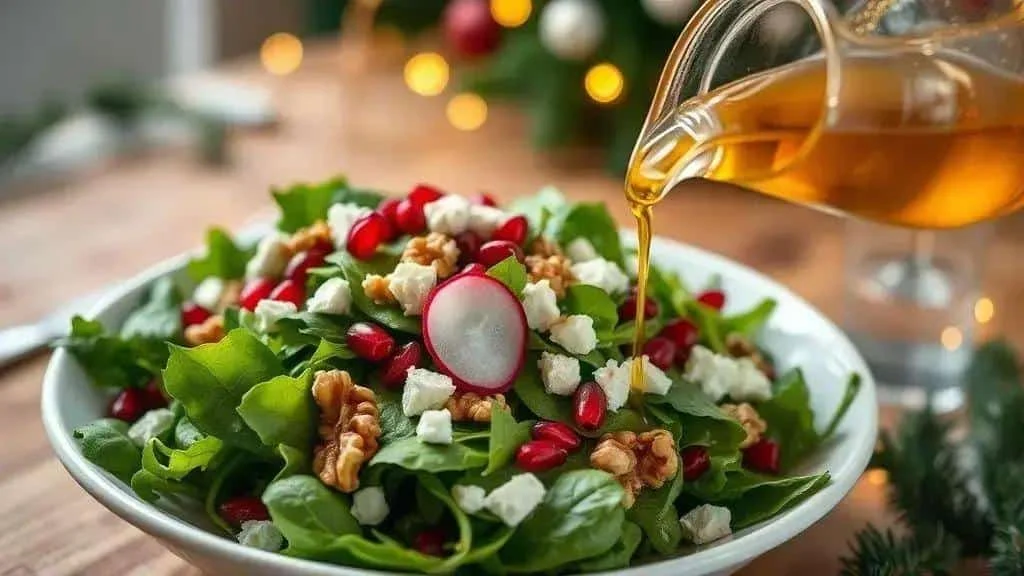
Christmas green salad combines mixed leaves, pomegranate seeds, toasted walnuts and a balsamic dressing. Its contrasting colours and textures make a fresh accompaniment to roasted dishes. Adapt it with vegan cheese or tofu and maple syrup, and dress it just before serving.
Christmas green salad adds a fresh contrast to a festive meal. The simple dressing is easy to adjust, and the toppings can be changed to suit your guests.
Christmas green salad and dressing ingredients
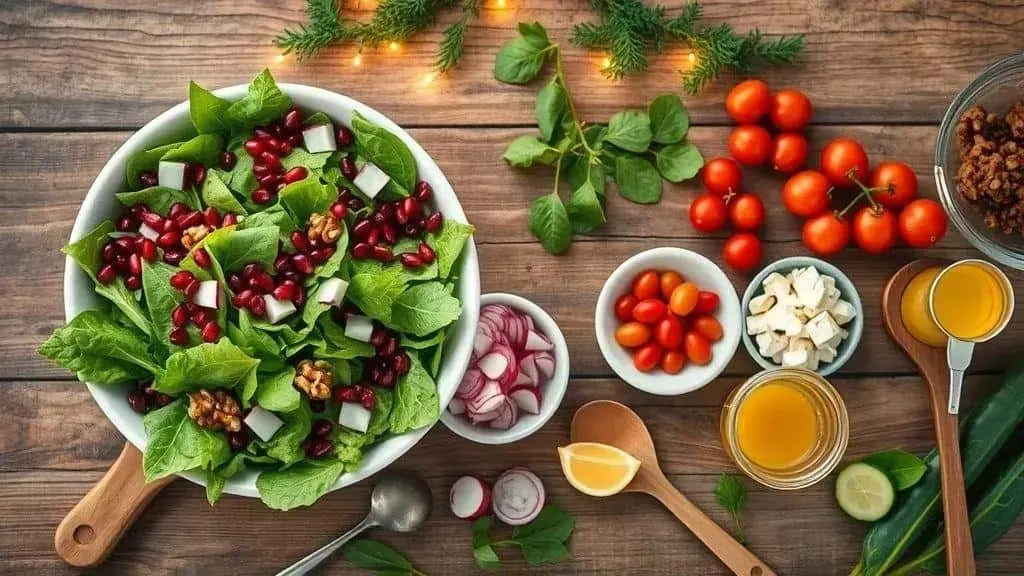
Gather fresh ingredients for your Christmas green salad with balsamic dressing. The lists below separate the salad from the dressing and include suggested alternatives.
For the salad
- 4 cups mixed leaves, such as romaine, rocket and baby spinach, washed and dried. Iceberg or a ready-prepared salad mix also works; follow the pack’s washing instructions.
- 1 cup pomegranate seeds; dried cranberries offer a sweeter, chewier alternative, added to taste rather than necessarily in the same quantity.
- ½ cup toasted walnuts, chopped; flaked almonds or Brazil nuts give a different flavour.
- 6 radishes, thinly sliced; thin carrot slices are a sweeter alternative.
- 100 g feta, crumbled; goat’s cheese is an alternative but is not automatically lactose-free. For a dairy-free version, use a suitable vegan cheese alternative or tofu. Choose vegetarian feta where required.
- ½ cucumber, cut into thin half-moons; small cucumbers also work.
- ½ cup cherry tomatoes, halved; baby plum tomatoes are another option. A little chopped date gives a sweeter variation.
- ¼ red onion, thinly sliced. Soak briefly in cold water and drain well if you want a milder flavour.
- Juice of ½ lemon, optional, to adjust the acidity before serving.
For the balsamic dressing
- 4 tablespoons extra virgin olive oil; avocado oil is another option.
- 2 tablespoons balsamic vinegar; cider vinegar gives a different, less dark dressing.
- 1 teaspoon Dijon mustard; another smooth mustard can be used, adjusted for strength.
- 1 tablespoon honey, or less to taste; replace with maple syrup for a vegan dressing.
- 1 small garlic clove, optional, finely crushed. Alternatively, use up to ½ teaspoon garlic powder, adding gradually to taste.
- Salt, to taste; use no more than ¼ teaspoon to start and allow for the salty feta.
- Freshly ground black pepper, to taste.
- 1 tablespoon chopped fresh herbs, optional, such as parsley or a smaller amount of thyme to taste.
Assemble shortly before serving for crisp leaves. Taste the dressing first: add a little more honey or maple only if needed, or use lemon juice for extra sharpness.
How to make Christmas green salad
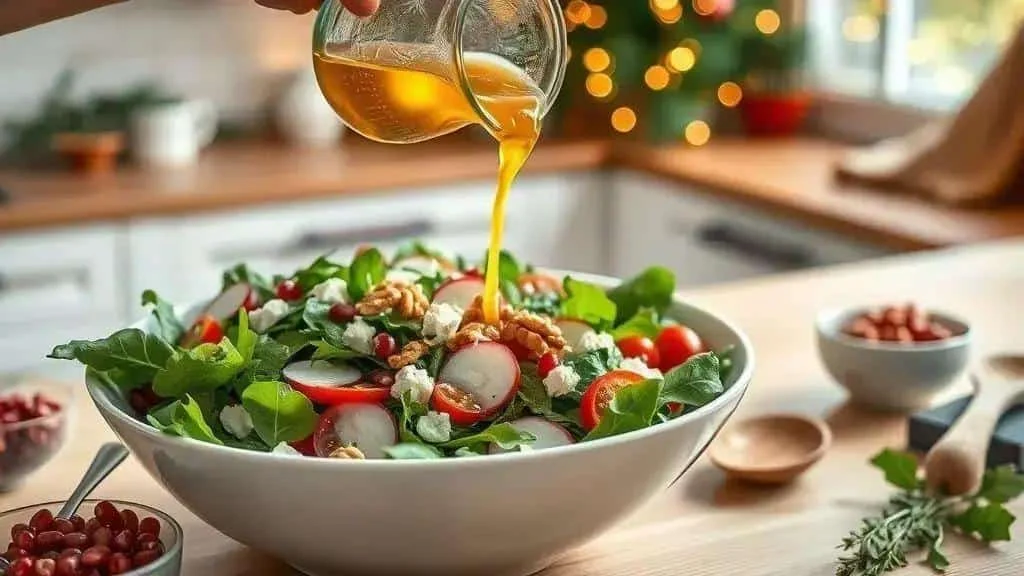
Follow these steps to prepare your Christmas green salad with balsamic dressing.
Making the dressing
- Combine the ingredients: put 4 tablespoons olive oil, 2 tablespoons balsamic vinegar, 1 teaspoon Dijon mustard, 1 tablespoon honey or maple syrup, the optional crushed garlic and a little salt and pepper in a small jar.
- Shake: close the lid securely and shake for 10–15 seconds until evenly mixed and slightly thickened.
- Adjust to taste: use a clean spoon to taste. Add up to ½ tablespoon extra honey or maple if needed, or a little vinegar or lemon juice for more acidity.
- Add herbs, if using: stir in the chopped parsley or thyme, adjusting strong herbs to taste.
Assembling the salad
- Wash and dry the leaves: wash 4 cups mixed leaves in clean cold water, gently moving them to release dirt, then rinse under running water. Dry in a salad spinner or with clean kitchen paper. For ready-to-eat bagged leaves, follow the label.
- Prepare the toppings: thinly slice 6 radishes and ¼ red onion, cut ½ cucumber into half-moons, halve ½ cup cherry tomatoes and crumble 100 g feta. Drain any soaked onion thoroughly.
- Toast the walnuts: stir ½ cup chopped walnuts in a dry pan over a medium heat for about 2–3 minutes, watching closely, until fragrant. Cool before adding.
- Combine: put the dry leaves in a large bowl with the pomegranate, cooled walnuts, radishes, cucumber, tomatoes, onion and feta.
- Dress gently: start with 2–3 tablespoons dressing and toss with salad servers, taking care not to crush the leaves.
- Taste and finish: adjust the seasoning and add more dressing a little at a time if needed. You may not need the whole jar.
- Serve promptly: for advance preparation, keep the salad ingredients and dressing chilled separately and combine shortly before serving.
Christmas green salad variations
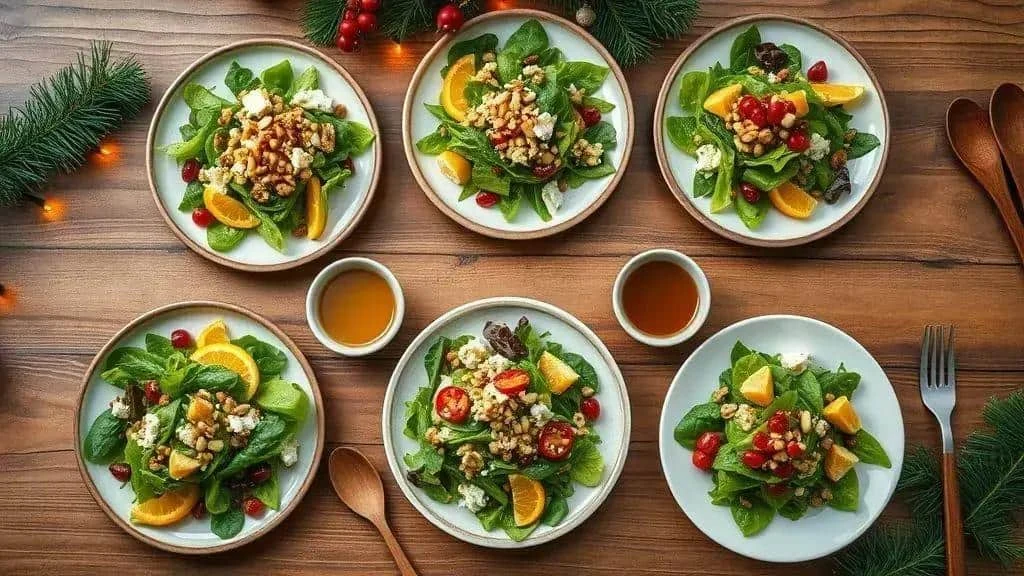
Adapt your Christmas green salad with balsamic dressing using these simple swaps.
Vegan variation
Replace the animal-derived ingredients with vegan alternatives while keeping the festive colours and crunch.
- 4 tablespoons olive oil as the dressing base.
- 1 tablespoon maple syrup in place of honey.
- Crumbled vegan cheese alternative, or 2 tablespoons extra chopped walnuts instead of feta.
- Dried cranberries as an alternative to pomegranate, added to taste.
Dairy-free variation
Use tofu instead of dairy cheese and add seeds for texture. If avoiding milk because of an allergy, check all packaged ingredients and prevent cross-contact.
- 100 g seasoned firm tofu in place of feta.
- ¼ cup toasted pumpkin seeds for extra crunch.
- Dressing: keep the oil, vinegar and mustard. Honey contains no dairy, but use maple or omit it if also making the salad vegan.
Less sweet variation
Reduce sweet additions if you prefer a more savoury salad. This recipe has not been analysed to establish a particular carbohydrate or calorie target.
- 4 cups mixed leaves as the base.
- Use less pomegranate and add 2 tablespoons walnuts if desired. Nuts change the nutritional profile but do not automatically reduce calories.
- Add up to 1 teaspoon extra mustard and reduce the sweetener or balsamic to taste, balancing the dressing with a little lemon juice if needed.
Crunchy seed variation
Toasted seeds and nuts provide another layer of texture.
- ⅓ cup mixed sunflower and pumpkin seeds, lightly toasted.
- ½ cup walnuts or almonds, roughly chopped and toasted.
- Replace up to 1 tablespoon of the olive oil with sesame oil for a toasted flavour, adding gradually as it can be strong. Sesame is an allergen.
Sweet and tangy fruit variation
Fresh citrus and dried fruit add sweetness and colour.
- 1 cup mandarin or orange segments in place of some of the pomegranate.
- ¼ cup dried cranberries for a chewy, sweet-tart addition.
- Dressing: add 1 tablespoon orange juice to the balsamic dressing and taste before adding more sweetener.
Milder variation for children
Choose milder leaves and cut the ingredients into shapes and sizes appropriate to the child’s age and eating skills.
- Mild lettuce, such as iceberg or a soft-leaf variety, cut into manageable pieces.
- Cherry tomatoes quartered lengthways and thin cucumber pieces. Do not offer whole nuts to children under 5.
- Dressing: replace mustard with 1 tablespoon plain dairy or plant-based yoghurt if preferred. Add only a little sweetener if needed; never use honey for babies under 1 year. Keep yoghurt dressing refrigerated.
Choosing and washing salad leaves
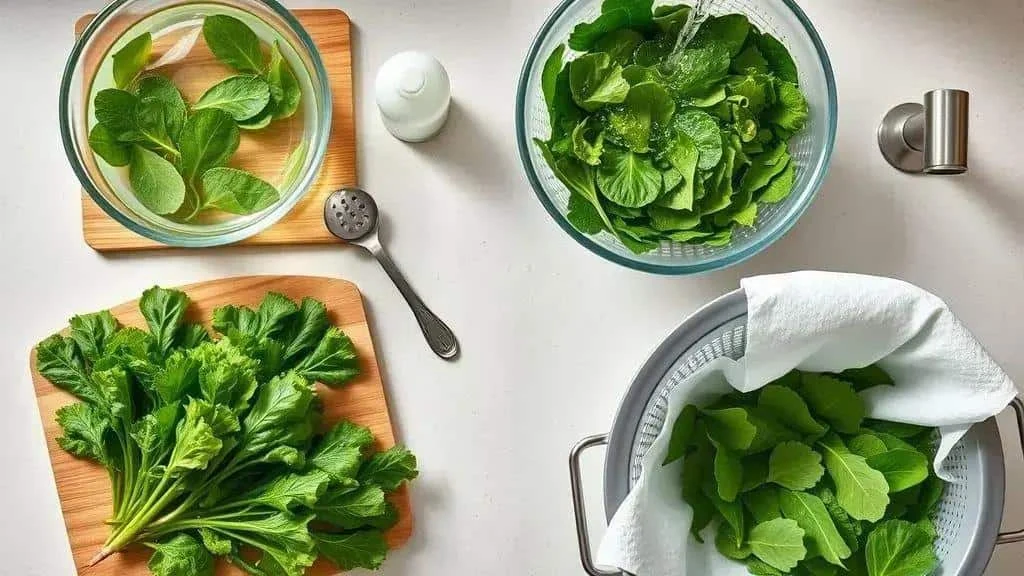
Careful selection, washing and storage help reduce contamination risks and keep the leaves crisp. Washing is not a guarantee that raw produce is free of every pathogen.
Choosing the leaves
- Appearance: look for fresh, firm leaves without extensive dark patches, slime or wilting.
- Texture and smell: avoid leaves with an unpleasant smell, slimy texture or liquid collecting in the packet.
- Mix textures: combine crisp romaine with softer baby spinach or peppery rocket.
- Dates and storage: check the use-by date and refrigeration instructions when buying packaged leaves.
Washing the leaves
- Separate and inspect: remove damaged or spoiled leaves before preparation.
- Rinse away visible dirt: wash under clean running water, handling the leaves gently.
- Use clean water: if the leaves are sandy, swish them in a clean bowl of cold water. Vinegar is not a reliable disinfectant for salad leaves. Do not use washing-up liquid or household disinfectants on food.
- Lift out the leaves: gently move them through the water to release grit, then lift them out so the dirt remains behind. Change the water if needed.
- Rinse again: rinse under clean running water. Follow the label for ready-to-eat packaged salads rather than assuming every product needs the same treatment.
- Dry thoroughly: use a clean salad spinner or pat with clean kitchen paper. Dry leaves hold dressing better and are less likely to make the salad watery.
- Refrigerate: keep prepared leaves in a clean covered container with kitchen paper to absorb moisture, at 5°C or below. Use promptly and follow the pack’s use-by date and after-opening instructions.
Practical washing tips
- Avoid storing wet leaves overnight. If preparing ahead, dry them thoroughly and keep chilled.
- Use clean equipment, including bowls, knives and the salad spinner, and keep raw meat separate from ready-to-eat food.
- For guests with a weakened immune system, follow their healthcare team’s food-safety advice. Do not assume a vinegar soak or produce wash makes raw salad suitable for every medical situation.
Presenting the salad at Christmas

Use the ingredients’ colours and textures for a festive presentation that remains easy to serve.
Sharing dishes and individual portions
- Sharing platter: arrange the salad on a large dish. Around 120–150 g per person is a useful starting point for a side, adjusted to appetites and other dishes.
- Individual portions: small bowls or plates are convenient for a seated meal.
- Wreath shape: arrange the leaves in a ring, then add mandarin segments, pomegranate and toasted nuts where suitable.
- Visible layers: a glass bowl shows off the leaves and toppings. Assemble close to serving so heavier ingredients do not compress the leaves for too long.
Festive finishing touches
- Edible colour: pomegranate seeds resemble small red decorations. Use only food-grade herbs for garnish, keeping woody stems out of portions to be eaten.
- Colour contrast: dark green leaves, red pomegranate or cranberries and pale feta give a seasonal palette.
- Optional glazed nuts: a little honey or maple can coat toasted walnuts, although it adds sweetness and can make them sticky. Omit where unsuitable for guests.
- A delicate garnish: use washed herbs or flowers specifically sold as edible. Do not use decorative florist flowers on food.
Pairing with the meal
- Roasted meats: the sharp dressing contrasts with roast pork, chicken or turkey.
- Richer dishes: crisp leaves and vegetables offer a fresh contrast between mouthfuls.
- Drinks: sparkling water with citrus is a simple alcohol-free pairing. Adults who choose to drink may prefer a dry white, rosé or sparkling wine.
Timing and serving
- Prepare ahead: wash and thoroughly dry leaves 6–12 hours before serving if convenient, then refrigerate covered with kitchen paper.
- Keep dressing separate: refrigerate the garlic-and-herb dressing and add only shortly before serving. Use homemade dressing within 48 hours, or sooner if ingredients require it.
- Serve small batches: replenish the serving bowl from the fridge during a longer meal. A bowl over ice can help, but keep meltwater away from the salad and do not rely on appearance alone to judge temperature.
- Temperature: serve chilled and keep spare portions refrigerated at 5°C or below. There is no need to leave the whole salad warming before the meal.
Buffet service and allergen information
- Suitable utensils: wide salad servers help lift portions without crushing leaves.
- Separate toppings: offer the salad undressed with toppings and dressings alongside, using dedicated utensils for each.
- Clear labels: identify vegan or dairy-free variations and relevant allergens, such as nuts, milk, mustard or sesame. Check ingredient labels when preparing for allergies.
- Stable presentation: use sturdy boards or low stands if raising dishes, and keep decorative foliage away from the food.
Vegan swaps and less sweet alternatives

Adapt your Christmas green salad with balsamic dressing using practical substitutions. The options below are flavour variations, not nutritionally verified diet plans.
Vegan substitutions
These swaps retain a mix of soft and crunchy textures:
- 100 g feta → 100 g seasoned firm tofu or a suitable crumbled vegan cheese alternative.
- 1 tablespoon honey → up to 1 tablespoon maple or agave, adjusted to taste.
- 1 tablespoon dairy yoghurt in a creamy dressing → 1 tablespoon plain plant-based yoghurt, such as soya or coconut.
- Walnuts or other nuts retain the crunch; use about ½ cup or adjust to taste, allowing for allergies.
- Dressing: combine olive oil, balsamic, mustard and a little maple for a vegan option.
Reducing sweet additions
Use fewer sweet toppings if preferred, without assuming the result meets a specific low-carbohydrate target:
- Pomegranate: reduce the original cup to a smaller garnish, such as 2 tablespoons. Dried cranberries are not automatically lower in sugar, even if no sugar has been added.
- Honey: omit it and balance the dressing with the other ingredients. If choosing a non-sugar sweetener, follow its label rather than substituting concentrated products spoon for spoon.
- Avocado: add ½ medium avocado, sliced, for a creamy texture.
- Tomatoes: keep them or use thin pepper strips for a flavour change; there is no need to remove them solely because they contain natural sugars.
- Seeds: add up to ⅓ cup sunflower or pumpkin seeds for crunch, adjusting the overall portion size to your meal.
Tips for every version
- Taste as you adjust the dressing, adding citrus or vinegar for sharpness and sweetener only if needed.
- Keep varied textures by combining crisp and soft leaves with suitable toasted nuts or seeds.
- Label the versions accurately, such as vegan or with nuts, and offer dressing separately. Avoid unverified nutritional labels.
A fresh festive accompaniment
A green salad adds crisp vegetables and contrasting textures to Christmas dinner. A well-balanced dressing ties the ingredients together without overwhelming them.
Thank you for reading. Follow our social channels and visit the I Love Christmas blog for more seasonal recipes and practical ideas.
Christmas green salad: frequently asked questions
Can I prepare the salad ahead?
Yes. Wash and thoroughly dry the leaves up to 12 hours ahead, then refrigerate covered with kitchen paper. Keep the dressing and toppings separate until serving, following any shorter storage instructions on the ingredients.
How do I keep the leaves crisp?
Dry them thoroughly after washing, keep chilled with kitchen paper to absorb moisture, and add dressing only shortly before serving. Use just enough to coat the leaves.
Which swaps make the salad vegan?
Replace feta with seasoned tofu or a suitable vegan cheese alternative, honey with maple syrup, and dairy yoghurt with plain plant-based yoghurt if using a creamy dressing.
How can I make a less sweet version?
Omit the honey, use a smaller pomegranate garnish and try avocado, nuts or seeds for texture. This recipe has not been analysed for a specific carbohydrate target, so it should not be assumed to meet a prescribed diet.
What should I do for a guest with a nut allergy?
Confirm their requirements, check every ingredient label and prepare a separate suitable portion with clean equipment before handling nuts. Keep it covered and use separate serving utensils. Labelling alone, or removing visible nuts from a prepared salad, does not prevent cross-contact.
Sources and Further Reading
- FoodSafety.gov: handling and cleaning produce
- Food Standards Agency: chilling, freezing and defrosting food
- NHS: foods to avoid for babies and young children