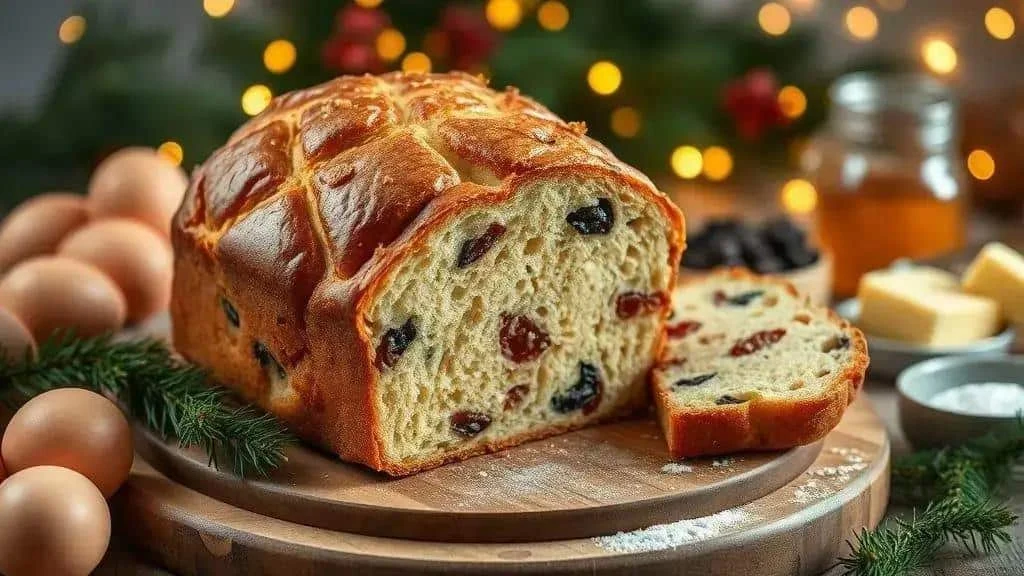
Christmas panettone is an enriched Italian sweet bread, usually made with candied fruit and raisins. This home version uses commercial yeast, two rises and careful kneading to develop a light crumb. Chocolate and nut variations are possible; vegan and gluten-free versions need their own tested formulas.
The scent of homemade Christmas panettone brings a festive warmth to the kitchen. Here is a practical guide to mixing, proving and baking this rich fruit bread, with advice on the stages that need patience rather than a rigid timetable.
Ingredients for Homemade Christmas Panettone
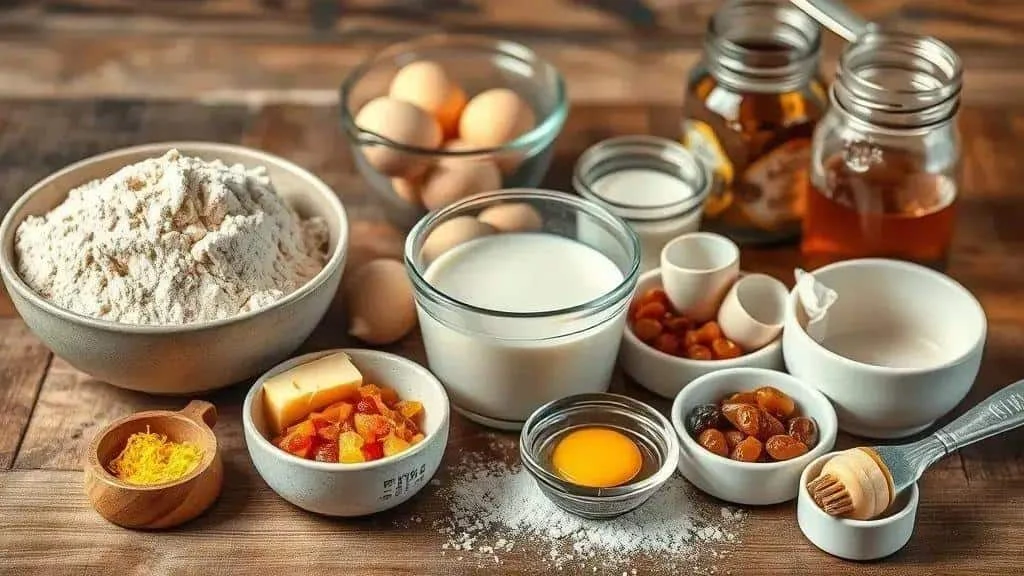
Gather these ingredients for your homemade Christmas panettone. The mixture is substantially more than one 750 g loaf: weigh the finished dough and divide it between suitable paper moulds according to their recommended dough capacity. The final baked weight depends on moisture loss.
- 500 g strong white bread flour — choose flour suitable for enriched bread; the label ‘00’ alone does not indicate its strength.
- 100 g sugar — or 80 g for a less sweet loaf.
- 10 g salt — weigh it rather than treating this as one teaspoon.
- 10 g dried yeast (or 25 g fresh yeast; check the manufacturer’s conversion guidance).
- 200 ml lukewarm milk — whole milk gives a rich result.
- 4 medium eggs — lightly beaten.
- 150 g unsalted butter — softened, to be added gradually after the initial kneading.
- 200 g candied fruit — chopped; alternatively use a dried fruit mixture.
- 100 g raisins — soak for 10–15 minutes, then drain thoroughly.
- 1 tablespoon honey (optional) — for flavour; maple syrup is an alternative, but neither makes this recipe sugar-free.
- 1 teaspoon vanilla extract (5 ml).
- Zest of 1 orange — optional.
- 50 ml rum or brandy (optional) — for soaking the raisins; use orange juice or water for an alcohol-free version.
- 1 extra egg yolk — optional, for brushing the top before baking.
Ingredient Notes and Substitutions
Flour: strong bread flour is preferable for this rich dough. Plain flour may give less structure; extra kneading cannot fully compensate for a lower protein content.
Yeast: follow the packet instructions. Active dried yeast may need activating, whereas instant yeast can usually be mixed directly into flour. Dissolve fresh yeast in some of the measured milk.
Sugar and honey: the optional honey can be omitted or replaced with maple or agave syrup. Changing the sugar substantially also changes the dough, so avoid making several adjustments at once.
Butter: use softened butter, not melted butter. A suitable solid plant-based baking fat is an alternative to explore, but replacing butter alone does not remove the milk or eggs from the recipe.
Fruit: replace the candied fruit with 150–200 g chocolate chips if preferred. Dried cranberries can replace the raisins.
Soaking: soak raisins or dried fruit in rum, brandy, orange juice or water for 10–30 minutes, then drain well. Do not add the soaking liquid on top of the measured milk without adjusting the dough’s hydration.
How to Make Christmas Panettone: Step by Step
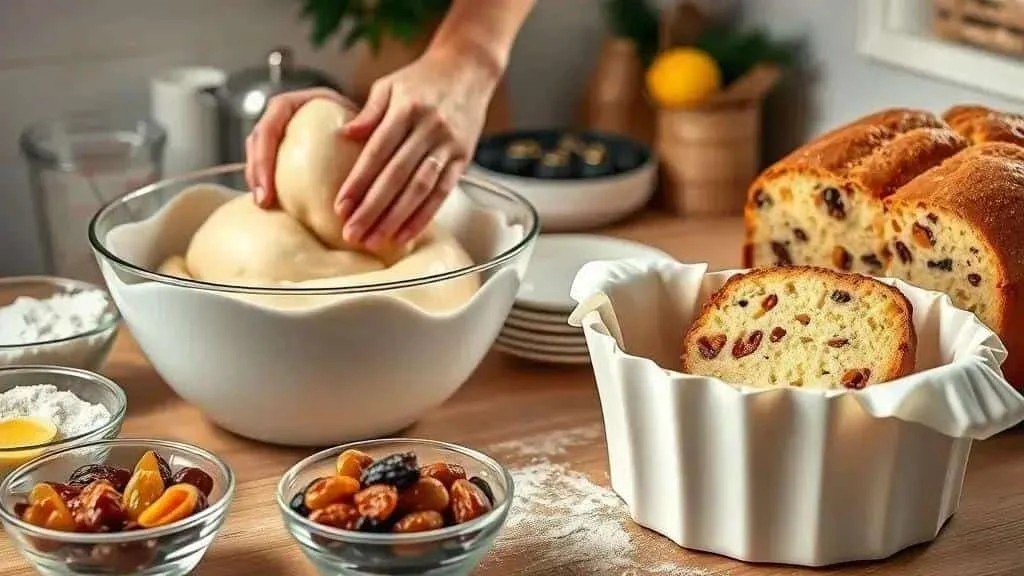
Follow these stages to make homemade Christmas panettone. Rich dough can rise slowly: allow two rises and judge its development as well as the clock.
Detailed Method
- Prepare the yeast: if your dried yeast requires activation, mix it with 50 ml of the measured lukewarm milk and 1 teaspoon taken from the measured sugar. Follow its packet temperature and standing-time instructions; about 8–10 minutes is a guide. Instant yeast can go directly into the flour.
- Combine the dry ingredients: mix the 500 g flour, remaining measured sugar and 10 g salt in a large bowl. Add instant yeast here if using it, keeping concentrated salt and yeast separate until mixing.
- Add liquids and flavourings: add the 4 beaten eggs, vanilla, optional honey and orange zest, plus the prepared yeast. Gradually add the rest of the measured milk. If using instant yeast, all 200 ml is available at this stage. Hold back the butter for now.
- Knead: work the dough until it begins to become smooth and elastic. The original timing of 8–12 minutes by hand or 6–8 minutes with a dough hook is only a starting guide; this enriched dough may take longer. Follow your mixer’s speed and load limits.
- Add the butter gradually: knead in all 150 g softened butter in small pieces, allowing each addition to be absorbed. Continue until the dough is glossy and elastic. This is the only butter addition to the dough.
- First rise: put the dough in a lightly greased bowl, cover and leave in a warm, draught-free place until roughly doubled. Allow about 60–90 minutes as an initial guide, but longer may be needed. Avoid a hot spot that melts the butter.
- Prepare the fruit: drain the soaked raisins thoroughly and pat them dry. Chop the candied fruit. A light dusting of flour can make sticky pieces easier to separate, but will not guarantee that fruit stays suspended.
- Fold in the fruit: gently stretch the dough on a lightly floured worktop, scatter over the fruit and fold it through until evenly distributed, without crushing the pieces.
- Divide and shape: weigh the dough and divide it between panettone moulds, following their stated dough capacity. Shape into balls, rest for 10 minutes, then shape again and place in the moulds. Do not put this entire mixture into a single 750 g mould.
- Second rise: cover loosely and leave until the dough is well expanded and approaching the mould’s recommended baking height. Start checking after 45–60 minutes, allowing longer if needed. Do not wait for it to overflow or collapse.
- Prepare to bake: preheat the oven to 180°C conventional. If desired, carefully score a shallow cross in the top and brush lightly with the optional extra egg yolk.
- Bake: baking time depends on the weight and shape of each loaf. For a mould holding around 750 g dough, begin checking at 30 minutes; it may need longer than 40 minutes. Loosely cover with foil if browning too quickly. The centre must be fully baked, without wet dough on a skewer.
- Cool upside down where appropriate: for moulds designed for suspended cooling, use suitable long skewers through the base and secure them on stable, heatproof supports. Follow the mould’s guidance and keep the hot loaf and sharp ends away from children. Cool completely; do not balance it precariously between bottles.
- Finish: once completely cold, wrap the panettone well for storage or gifting. Any optional finishing butter would be additional to the 150 g already used in the dough.
Practical Tips
- Temperature: use lukewarm rather than hot milk, following the yeast packet. Milk around 35–38°C is a guide for yeast that requires activation, not a rule for every product.
- Fruit: rum or orange juice adds flavour, but drain thoroughly. Use juice or water if alcohol needs to be avoided; baking does not guarantee its complete removal.
- Vegan baking: replacing four eggs with flaxseed mixtures is not a reliable direct swap in this dough. A vegan version must also replace milk, butter, honey and the egg glaze; use a tested vegan panettone recipe.
- Stand mixer: a dough hook can save effort. Follow the manufacturer’s kneading speed and avoid overheating either the machine or the dough.
Proving and Resting for a Light Crumb
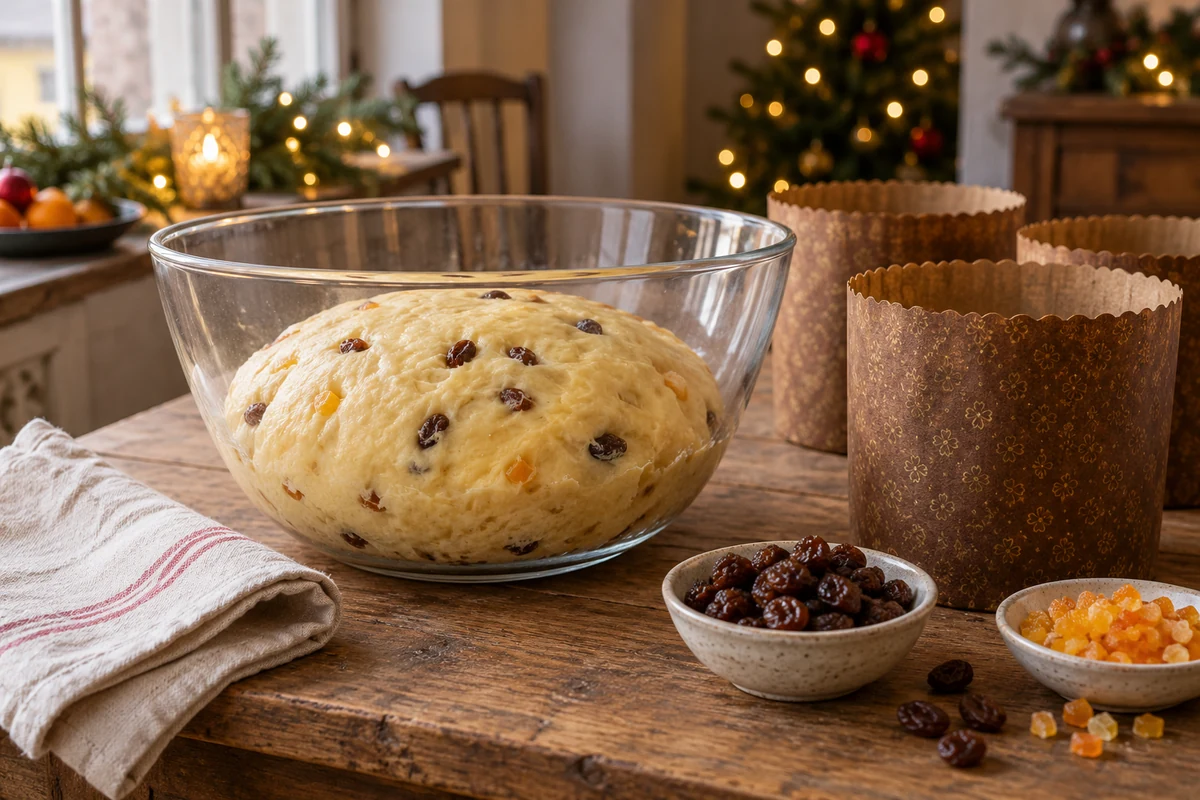
Good dough development and controlled proving help produce a light, soft crumb. Time and temperature are guides, while the dough’s condition tells you when to move on.
Temperature and Timing
- First rise: start with 60–90 minutes in a warm place, but allow longer as needed. The original guide of 27–30°C is warm enough to soften butter considerably, so avoid overheating and watch the dough rather than forcing the temperature.
- Second rise in the mould: begin checking after 45–60 minutes. The dough should be expanded and aerated, not merely have spent a set time resting.
- Optional refrigerated rise: an overnight method needs planning for the yeast quantity and dough temperature. Do not simply add 8–24 hours of refrigeration to two completed rises; use a tested overnight schedule if you want to prepare ahead.
- Milk temperature: 35–38°C is a guide for activation where required. The yeast manufacturer’s directions take priority.
How to Judge the Rise
- Gentle indentation: press lightly with a clean finger. A slowly and partially returning indentation can help indicate readiness, alongside the dough’s volume and texture.
- Volume: aim for roughly doubled volume during the first rise.
- Overproving: a collapsing, very slack dough or an unusually strong alcoholic smell may indicate that it has gone too far.
- Insufficient development: poor expansion and a dense baked crumb can result from underproving, weak yeast or inadequate kneading; they do not necessarily mean more yeast was needed.
Ways to Improve the Crumb
- Kneading: develop a smooth, elastic dough before relying on it to hold the weight of the fruit.
- Butter: incorporate it gradually, allowing the dough to recover its structure between additions.
- Gentle folds: a few folds early in the first rise can help organise a slack dough. Avoid repeated handling once it is fully risen.
- Hydration: enriched dough should feel soft and tacky. Add the measured milk gradually rather than trying to fix an overly wet dough with handfuls of flour.
- Fruit preparation: soaking can soften dry raisins, but they must be drained and dried on the surface before folding in.
Common Problems
- Slow rise: move the covered bowl to a gently warm, draught-free spot. If using a switched-off oven, ensure it is not hot and cannot be accidentally turned on.
- Rise too fast: move the dough somewhere cooler and check it more often. Refrigeration slows yeast but does not repair a collapsed dough.
- Very sticky dough: continue kneading and allow a short rest before adding flour. Use only a little extra if necessary, as too much makes the loaf heavy.
- Stiff dough: during mixing, incorporate any reserved measured milk gradually. A dry crust caused by leaving dough uncovered is best prevented by covering it properly.
Final Proving Tips
- Avoid draughts and keep the dough covered so its surface does not dry out.
- Fill each mould according to its recommended dough weight, leaving sufficient room for expansion.
- Suspended cooling: when suitable for the mould and recipe, cooling upside down supports the fragile crumb while it sets. Use secure equipment.
- Keep baking notes on dough weight, temperature, rise and baking time for your next batch.
Christmas Panettone Variations
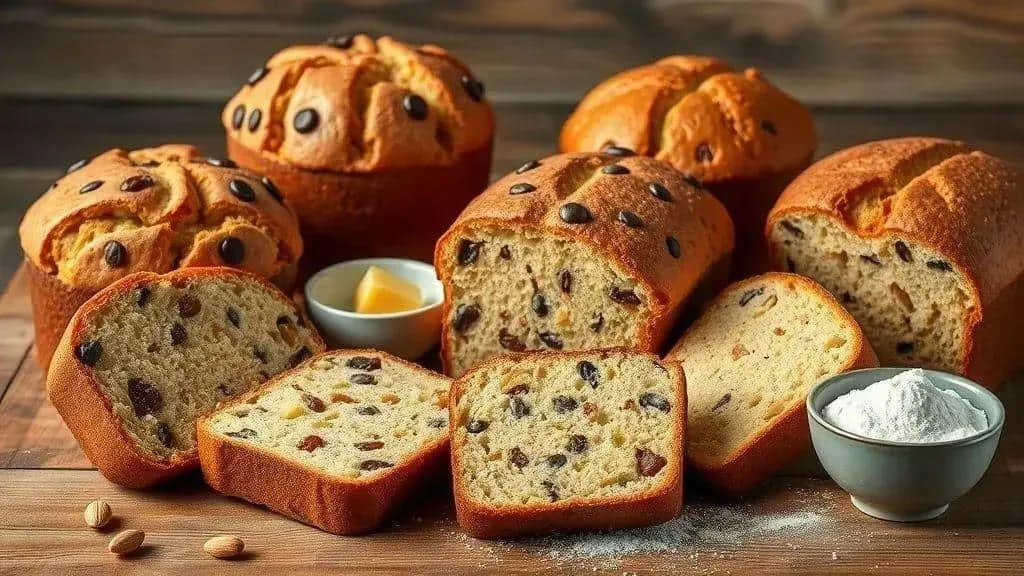
You can vary the inclusions in homemade Christmas panettone. Changes involving eggs, gluten or dairy need more care than swapping one type of fruit for another.
Chocolate Chip Panettone
Chocolate chips are an alternative to candied fruit, giving pockets of chocolate through the crumb.
- 150–200 g chocolate chips — dark chocolate balances the sweetness. Omit the raisins as well if you want a completely fruit-free loaf.
- Cocoa dough: use a tested chocolate dough formula rather than adding 50 g cocoa and making an arbitrary flour reduction; cocoa changes the liquid balance.
Nut and Spice Panettone
For a different texture, replace the fruit with chopped nuts and add spices.
- 150 g chopped nuts — such as walnuts, almonds, pecans or Brazil nuts. Check guests’ allergies.
- 1 teaspoon cinnamon and ¼ teaspoon nutmeg add a festive aroma.
Planning a Vegan Version
A vegan panettone is possible, but this egg-rich recipe has not been validated with simple one-for-one replacements.
- Egg replacement: a flax mixture of 1 tablespoon ground flaxseed and 3 tablespoons water per egg does not reproduce the structure of four eggs in this dough. Use a tested vegan recipe instead of assuming that substitution will work.
- Dairy: a vegan formula needs suitable plant-based milk and baking fat, not just a change of butter.
- Honey and glaze: choose maple or agave syrup if the tested recipe calls for it, and use its egg-free glazing method.
Planning a Gluten-Free Version
Gluten-free enriched bread needs a dedicated balance of flour, liquid and binders; kneading cannot build gluten where there is none.
- Flour: do not assume that 400 g gluten-free bread mix plus 100 g rice or almond flour will directly replace the wheat flour. Follow a tested gluten-free panettone formula.
- Binders: xanthan gum and psyllium are not interchangeable spoon for spoon, and some flour mixes already contain binders. Use the amount specified for the chosen mix and recipe.
- Mixing: follow that recipe’s mixing and proving method rather than the wheat dough’s kneading instructions.
Filled Panettone
Fill a fully baked and cooled panettone to make a richer dessert. Perishable fillings change how it must be stored.
- Chocolate ganache: 150 g chocolate with 150 ml cream makes a soft filling; cool until thick enough before using. Its consistency depends on the chocolate and cream.
- Pastry cream: prepare using a suitable recipe, chill promptly and pipe into the cooled loaf. Keep the filled panettone refrigerated and use within 48 hours, or sooner if an ingredient requires it.
Mini Panettones and Extra Flavour
Small panettones bake more quickly and make useful individual gifts. Divide dough by weight so they bake evenly.
- Orange zest and an optional tablespoon of liqueur add flavour. Leave out the liqueur for anyone avoiding alcohol.
- Baking time: for portions of around 100–150 g dough, begin checking before the suggested 20–25 minutes and bake until the centres are done; size and oven performance vary.
Adapting the Recipe Carefully
- Liquid balance: changes to flour or cocoa affect absorption and should be made through a tested formula, not an assumed universal adjustment.
- Even distribution: fold fruit or chocolate through gently and evenly; a flour coating alone cannot prevent settling in weak dough.
- Small trial: try a modest batch before making gifts, especially after changing ingredients.
Storing, Wrapping and Gifting Panettone

Let the Christmas panettone cool completely before wrapping. Trapped warmth creates condensation; handle the loaf carefully to preserve its shape.
Storage
- Plain fruit panettone: wrap well and keep in a cool, dry place. Enjoy it fresh and freeze portions you will not eat soon. This homemade formula has no validated 7–10-day shelf life.
- Cream-filled panettone: keep refrigerated at 5°C or below and use within 48 hours, or the shortest ingredient use-by period. Refrigeration does not justify keeping it for 15 days.
- Freezing: wrap an unfilled loaf or slices tightly in food-safe film and a freezer bag. Label with the date and thaw in the wrapping. Filled versions need storage instructions suited to their filling.
- Moisture and heat: keep away from direct sun and damp conditions. Discard mouldy bread rather than trimming off the visible patch.
Wrapping Materials
Choose food-safe materials that protect the loaf. A close-fitting wrap limits drying, while a rigid outer box protects its shape.
- Simple wrapping: food-safe film followed by a food-grade clear gift bag and ribbon.
- Gift box: keep the loaf in its paper mould and place it in a sturdy box, with food-safe baking paper between food and decorative materials.
- Transport: secure the wrapped loaf with clean cushioning outside the food-contact layer so it cannot slide around.
- Foil can provide an extra protective layer, but it does not keep a perishable filling safely chilled on its own.
How to Wrap a Panettone Gift
- Protect the loaf: use food-safe baking paper or film to separate it from decorative paper.
- Seal: wrap only when completely cool, enclosing the loaf to limit drying.
- Box or bag: choose a container that holds the loaf securely without crushing the top.
- Decorate: attach ribbon, a dried orange slice or other decorations outside the sealed food packaging. Add an ingredients and preparation-date label.
- Close: finish with tape or a decorative seal on the outer packaging.
Information to Include with a Gift
- Ingredients label: list ingredients and allergens, the preparation date and the actual weight if stated.
- Storage: explain whether refrigeration is needed and when it should be eaten; do not invent a long shelf life.
- Personal touch: include a card or handwritten message.
Transport and Small-Scale Gifting
- Short journeys: use a firm box, keep the loaf upright and avoid stacking.
- Perishable fillings: maintain refrigeration during transport with suitable chilled packaging. Insulation without a cold source is not enough for a long or warm journey.
- Individual portions: mini loaves and wrapped slices are convenient for sharing. If selling food, check the food-business and allergen requirements that apply to you.
Christmas Panettone: Origins and Traditions
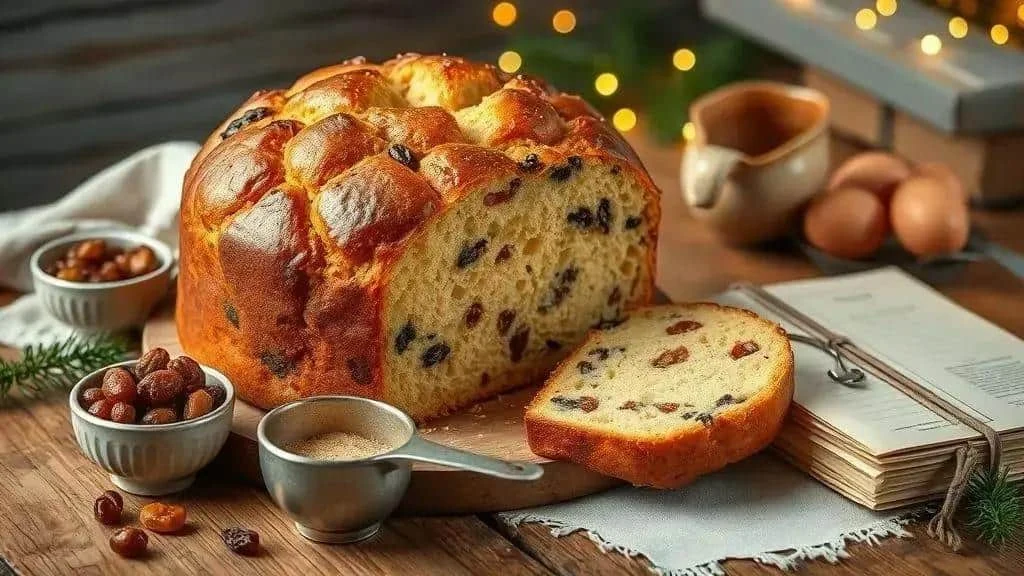
Christmas panettone is associated with Milan and has become a seasonal favourite far beyond Italy. Its history combines established baking traditions with stories that should be understood as legends.
Origins and Legend
One familiar story credits a young kitchen worker called Toni with rescuing a failed dessert by improvising a rich bread. Accounts differ, and the story is a legend rather than a proven account of panettone’s invention.
A Tradition That Travelled
Panettone became established outside Italy, including in Brazil, where Christmas versions include chocolate chips, creamy fillings and small gift-sized loaves.
Baking Details
- Candied fruit gives the classic loaf its sweet citrus character; chocolate and dried fruit mixtures offer alternatives.
- Two rises help develop the structure in this home recipe. Traditional naturally leavened panettone uses a more involved process.
- Upside-down cooling supports delicate loaves while the crumb sets, provided the mould and supports are suitable.
Bakery and Home Versions
Commercial and artisan panettones vary widely in ingredients, fermentation and texture. A commercial-yeast home loaf is its own practical approach; it should not be presented as identical to a long-fermented artisan panettone.
Serving Notes
- Portions: panettone is a rich sweet bread containing butter and sugar, so serve it as a festive treat rather than making nutritional promises.
- Soaked raisins bring a softer texture and extra flavour when well drained.
- Mini panettones are easy to wrap individually and share.
Useful Observations
- Loaf size affects both baking and cooling, so a large display-style panettone cannot use the timing for a small mould.
- Vegan and gluten-free panettones offer more choice, but require recipes developed for those ingredients.
- Recording temperatures, dough weights and timings makes it easier to understand and repeat a successful bake.
Conclusion
Making homemade Christmas panettone takes patience. Careful mixing, an unhurried rise and thorough baking matter more than rushing to meet a fixed timetable.
Keep notes, start with a small trial and make one change at a time. That gives you a sounder basis for preparing festive gifts or a loaf for your own table.
For more seasonal recipes and ideas, visit the I Love Christmas blog. If you make a panettone, share the variation and baking notes that worked for you.
FAQ — Homemade Christmas Panettone
How long should panettone dough rise?
Begin with about 60–90 minutes for the first rise and check the second after 45–60 minutes, but rich dough often needs longer. Follow its expansion and texture, not only the clock. An overnight version needs an appropriate schedule rather than extra refrigeration added to two completed rises.
Can I make this panettone vegan?
Use a tested vegan formula. Replacing four eggs with flaxseed mixtures is not a reliable direct substitution here; milk, butter, honey and egg glaze also need suitable alternatives.
How can I avoid a dense or collapsed loaf?
Develop the dough properly, add the butter gradually, avoid overproving and bake the centre thoroughly. Divide the mixture between moulds with suitable capacity. Where the mould permits, cool upside down on secure supports.
How should I store homemade panettone?
Wrap plain fruit panettone once completely cool, keep it in a cool, dry place and freeze what you will not eat soon. Cream-filled versions need refrigeration at 5°C or below and should be used within 48 hours or the shortest ingredient use-by period. A long shelf life has not been established for this recipe.
Can I replace the flour with a gluten-free mixture?
Not as a dependable direct swap. Gluten-free panettone needs its own balance of flour, liquid and binders. Follow a tested formula, especially if the bread mix already contains xanthan gum or another binder.
Sources and Further Reading
- Italia.it: panettone history and legends
- King Arthur Baking: a tested overnight panettone recipe
- King Arthur Baking: refrigerating bread dough
- Food Standards Agency: chilling, freezing and defrosting food