Christmas in Senegal can be an occasion for hospitality between Christian and Muslim relatives, friends and neighbours. Documented examples include families sharing Christmas and Muslim festive occasions while retaining distinct beliefs. A social visit or meal does not mean that everyone observes the religious celebration, and customs differ between households and communities.
Christmas in Senegal offers a useful way to explore everyday relationships across faiths. The most revealing examples are specific accounts of invitations, meals and family life, rather than sweeping claims that all Senegalese people celebrate in the same way. Here are some documented examples and practical ways to approach a visit respectfully.
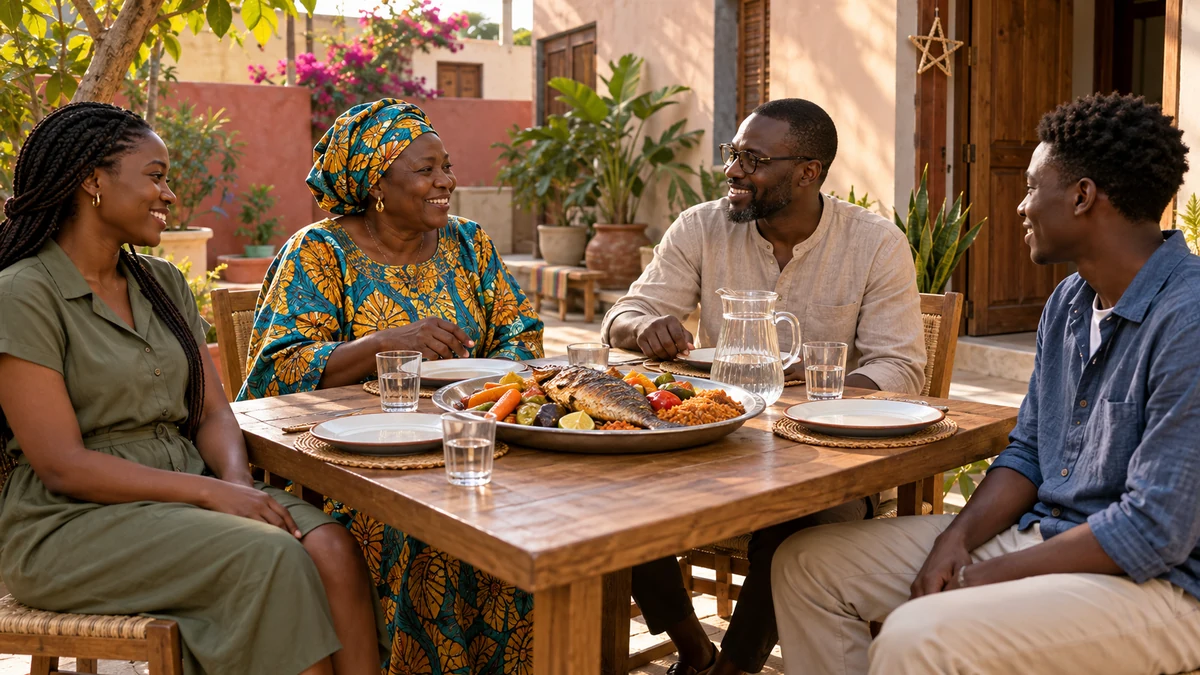
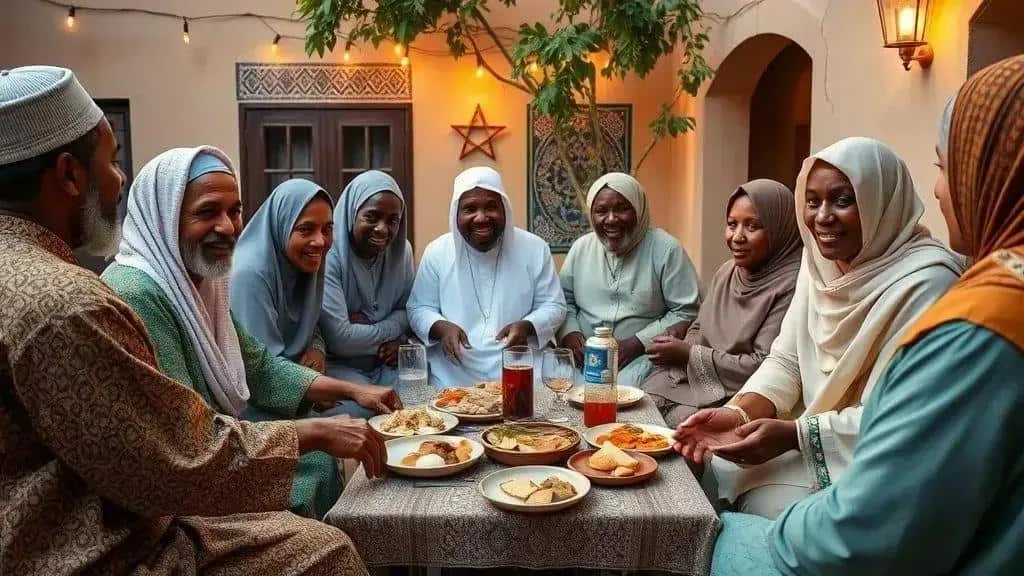
Illustrations in this article are conceptual images, not documentary photographs or evidence of a particular historical event, destination, venue or access route.
Senegal’s religious and cultural setting
Senegal has a Muslim majority and established Christian communities. Religion can shape family life, public celebrations and personal routines, but the country’s communities and individual households should not be treated as a single uniform group.
Islam: Sufi traditions and religious brotherhoods, including the Tijaniyya and Mouride traditions, have an important place in Senegalese religious life. Religious leaders can be influential locally, while individual practices and relationships vary.
Christianity: Catholic and Protestant communities form part of the country’s religious landscape. Christmas worship belongs to those Christian traditions; welcoming a neighbour to a meal is a separate social choice.
Cultural connections between neighbours
Music, family gatherings and hospitality can create opportunities for people of different beliefs to meet. Senegalese music such as mbalax belongs to a wider cultural setting, not to a single shared Christmas ritual. The meaning of any gathering depends on the people involved.
It is helpful to distinguish national institutions from relationships at home. A shared school, workplace or neighbourhood can bring people of different religions together, but it does not tell us how a particular family marks Christmas. Local reporting and people’s own accounts provide a firmer basis for understanding those experiences.
- Greetings and visits: relatives or neighbours may exchange good wishes and invitations on occasions that matter to one another.
- Meals and food gifts: a host may share food with friends of another faith, taking their dietary needs into account.
- Community gatherings: weddings, funerals and local events can bring different people together, although access and expectations vary.
- Everyday cooperation: relationships also develop through work, education and mutual help outside the festive calendar.
There is no reliable shortcut from a person’s clothing, neighbourhood or place of worship to their views about another religion. Nor should city life and rural life be assigned contrasting stereotypes. Ask about the particular setting and listen to the people who live there.
Visitors can show consideration by following local dress expectations at places of worship, asking before taking photographs and responding courteously to invitations. You can appreciate hospitality without taking part in a religious practice or accepting every offer.
The useful distinction is between maintaining a religious identity and sharing social life. Hospitality can connect people without making their beliefs, ceremonies or Christmas traditions interchangeable.
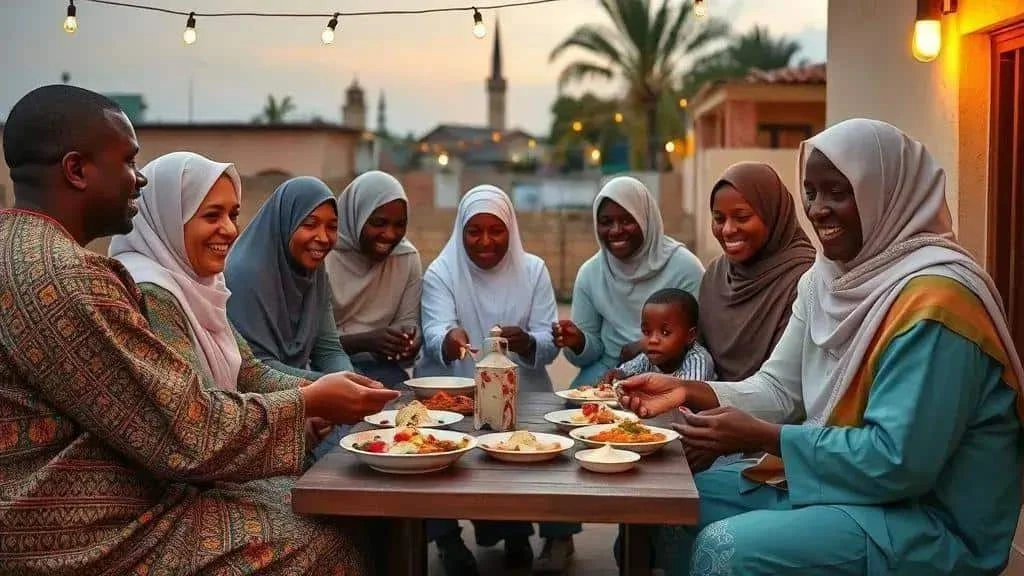
Visits, greetings and meals are ways that families and neighbours may acknowledge one another’s celebrations. The examples below describe possible forms of participation; they are not a measure of how often this happens throughout Senegal.
Different forms of hospitality
- Shared meals: a family may invite friends or relatives of another faith to eat together, with food chosen to suit those attending.
- Visits and greetings: a short visit or message can acknowledge an important day without involving participation in worship.
- Religious and public events: some events welcome visitors, but attendance and participation are different things. Ask what is appropriate rather than assuming that every service or ritual is open to everyone.
- Civic and cultural gatherings: markets, performances and local celebrations can offer settings for social contact beyond religious services.
Occasions to ask about
- Christmas: Christian households may welcome Muslim relatives or neighbours for a visit or meal. This should not be described as all Muslims celebrating Christmas religiously.
- Eid al-Fitr and Eid al-Adha: known in Senegal as Korité and Tabaski, these Muslim festivals can likewise provide occasions for social visits across faiths when hosts extend invitations.
- Weddings and funerals: social and family connections may bring different communities together. Respect the particular family’s wishes and any boundaries around ceremonies.
- Local festivals: music, dance and other cultural events may be open to a wider public. Check actual programmes instead of assuming a festival takes place at Christmas.
Taking part considerately
- Ask before entering a place of worship: check visiting times, clothing and any instructions about shoes, seating or areas reserved for worshippers.
- Dress appropriately for the occasion: ask your host if you are unsure. Expectations at a family meal may differ from those at a service.
- Ask before photographing: people may want privacy, particularly during worship or a personal family moment.
- Let conversation develop naturally: avoid turning an invitation into an unsolicited theological debate or asking someone to speak for an entire religion.
- Check before bringing a gift: a small present can be thoughtful, but ask what would be welcome, especially if you are considering food or drink.
What these connections can mean
Shared occasions can create opportunities for friendship and practical cooperation. Community projects and mutual help may grow from those relationships, but it would be too strong to claim that a shared meal automatically removes tensions or represents everyone’s experience. Particular accounts are more useful than an idealised national picture.
Practical advice for visitors
- Respond courteously: confirm whether you can attend and how long you can stay. It is also acceptable to decline politely.
- Observe and ask: follow practical guidance from your host, but ask before joining a religious action rather than simply copying it.
- Express your thanks: a personal thank-you or a short message afterwards recognises the time and care your host has offered.
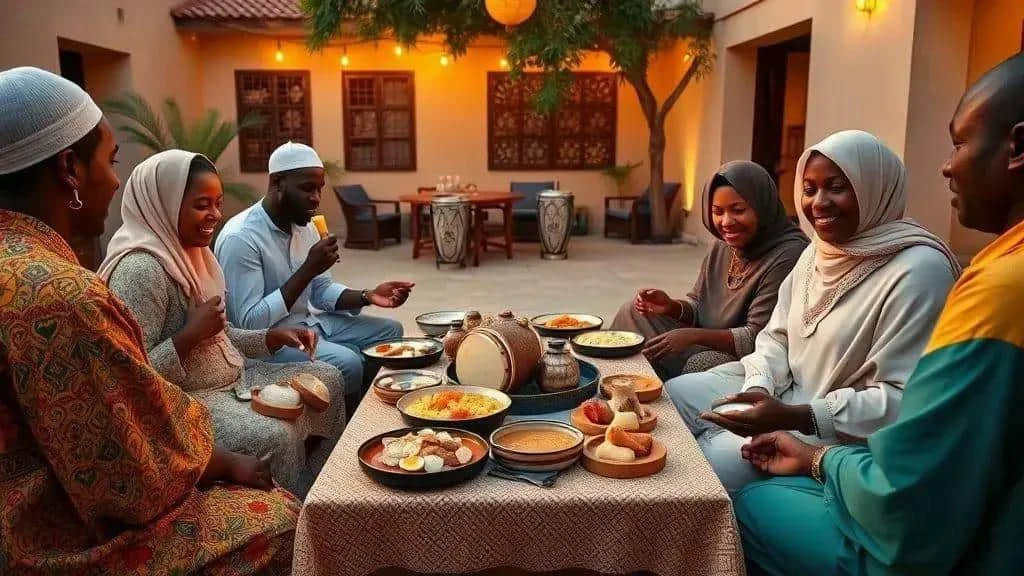
Food and conversation can give a festive visit its character. A meal in a courtyard, a family gathering or a cultural event should be understood on its own terms, rather than presented as evidence that different religions have merged their rituals.
Meals and dishes to discuss with your host
You may hear names such as thieboudienne, also known as ceebu jën, yassa and domoda when discussing Senegalese food. These are not a fixed national Christmas menu. Tea, often called attaya, can also be part of a social visit. Ask what is being served and how it is prepared rather than inferring ingredients from a name alone.
- Ceebu jën: UNESCO describes this culinary tradition, associated with Saint-Louis, as a dish of fish, broken rice and vegetables, with shared eating and the transmission of knowledge among its social dimensions. Its heritage recognition does not make it specifically a Christmas dish. Source: UNESCO: the culinary art of ceebu jën
- Yassa: preparations commonly feature onion and a citrus marinade with chicken or fish. Ask about the actual ingredients if you have allergies or dietary requirements.
- Domoda: recipes and uses of the name vary across the region. Do not assume that a Senegalese dish described this way is the same as a Gambian peanut stew, or use the name as an allergy guide.
- Sweet food and baking: hosts may offer cakes, biscuits or other treats. Find out what the household enjoys rather than expecting one standard festive dessert.
Music and dancing
Senegal’s varied musical landscape includes mbalax, sabar drumming and the kora, alongside different forms of Christian singing. These should not be bundled into a supposedly universal Christmas performance. Ask which musicians, songs or traditions are actually part of the event you attend.
If there is dancing, let the organisers or your host guide you about participation. Enjoying a performance does not require joining in, and a quiet family meal may have no organised music at all.
Decorations and their meaning
A household may use lights, a tree, handmade decorations or none of these. Fabric patterns and colours are not reliable indicators of someone’s religion. Ask about a decoration’s meaning if its owner is happy to explain, rather than assigning a religious identity to it.
Social participation and religious boundaries
Sharing a festive meal can be an act of friendship while religious observance remains distinct. The same applies when Christians accept an invitation from Muslim friends on another occasion: social hospitality alone does not imply participation in a religious rite.
- Sharing food: ask about preferences and dietary requirements before offering a dish.
- Meeting local religious leaders: listen to what an individual says in context, without presenting that statement as a universal position.
- Community assistance: if an event includes fundraising or practical help, ask the organisers what is needed and how contributions are handled.
Respect can be shown by listening, thanking your hosts and appreciating the occasion. You do not need to eat food that is unsuitable for you or join a ceremony to demonstrate goodwill.
Documented examples of hospitality in Senegal
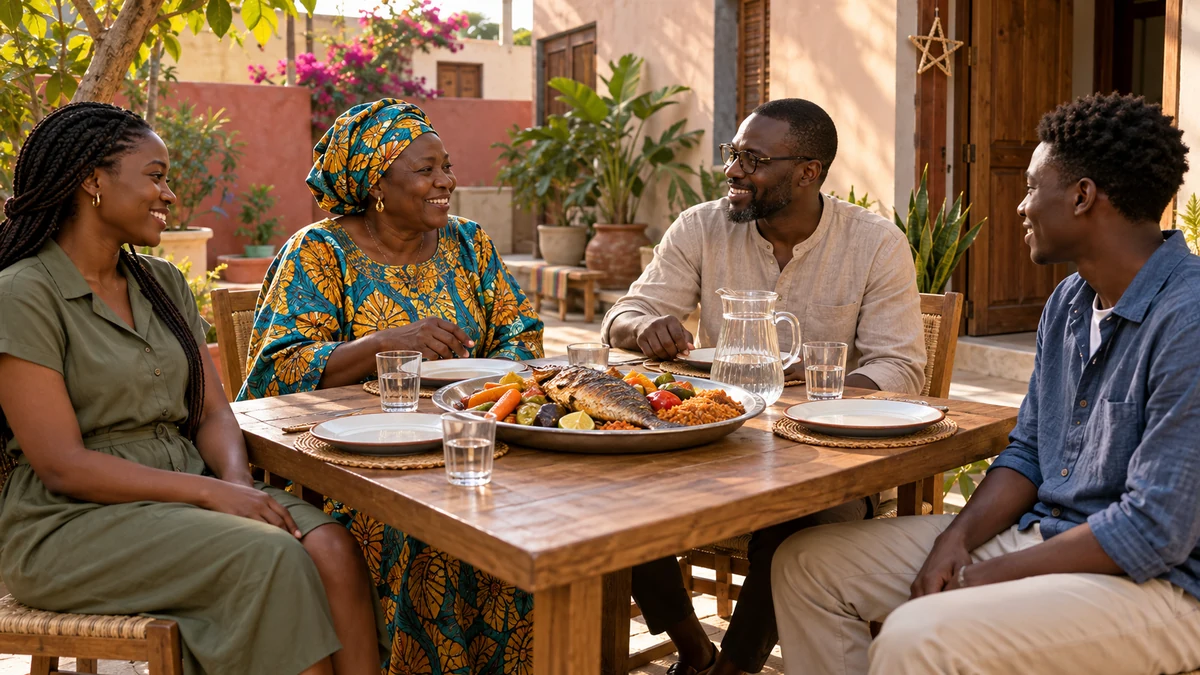
In a report published on 2 March 2026, Agence de Presse Sénégalaise visited the Diatta–Badiane family in the Kenia neighbourhood of Ziguinchor. The report describes Aïssatou Badiane, who is Muslim, and her Catholic husband Jean Diatta, and records their children’s accounts of marking both Korité and Christmas at home. It is a specific example of family life across faiths, not proof that every Senegalese household follows the same pattern. Source: APS: the Diatta–Badiane family in Ziguinchor, 2 March 2026
A separate APS report from 7 June 2025 describes Imam Moussa Cissé’s comments about Muslim–Christian relations in Popenguine. He referred to mixed-faith families and Muslim households welcoming Christian pilgrims. This account concerns pilgrimage hospitality and the wider relationship between communities; it is not a report of a particular Christmas dinner. Source: APS: the imam of Popenguine on Muslim–Christian relations, 7 June 2025
Illustrative ways a visit might be arranged
- A church-linked meal in Dakar: as a hypothetical example, an organiser might invite neighbours to a meal after a service, perhaps serving thieboudienne. This is not an advertised event: confirm the date, invitation and arrangements directly rather than arriving on the assumption that it exists.
- A neighbourhood market: a public market or cultural gathering could provide a setting for meeting local people. Check whether there is an actual festive programme and which activities are open to visitors.
- A village gathering with music: an organiser might include sabar drumming or another performance. This is an illustrative possibility, not a claim about a named village or a guarantee that visitors can join a private celebration.
A speech or greeting by a religious leader should be attributed to that person and event. The documented Popenguine example shows why precise reporting is more useful than inventing generic scenes of leaders routinely giving joint Christmas addresses.
Different generations may take different roles in a gathering, from preparing food to choosing music or welcoming guests. Ask who does what in the particular family rather than assuming that age determines everyone’s role.
A tray of attaya, a shared meal or a musical performance may make a meaningful photograph, but only with permission and an accurate caption. Illustrative images are not documentary evidence of the reported families or events.
- Practical suggestion: ask your host about timing, food and whether a gift would be welcome. Let them explain the occasion instead of treating it as a ready-made cultural experience.
- Respectful observation: dress for the setting and ask before taking or publishing photographs, particularly of children and private family spaces.
Symbols, practices and respect at Christmas
Hospitality does not erase differences in belief. A visitor can appreciate a Christmas gathering while recognising that religious symbols and actions may have a particular meaning for some people present and not for others.
Understanding what you see
A nativity scene or Christmas star may be displayed in a Christian home. Patterned fabrics or rugs should not automatically be labelled Islamic, and sharing attaya is a social interaction rather than evidence of a common religious ceremony.
Minarets and church towers can mark places of worship in a landscape, but their presence alone cannot tell you about every relationship between local residents. Use accurate photographs and local information when identifying a building or place.
Considerate behaviour during a visit
- Ask before taking photographs, particularly during worship or around objects that people regard as sacred.
- Remove your shoes when asked in homes or places of worship, following the instructions for that setting.
- Follow the dress expectations of the place you are visiting. Ask beforehand if you are uncertain about covering shoulders, legs or your head.
- Avoid disruption by keeping conversations and phone use away from prayers, speeches or other moments requiring quiet.
Small gestures of consideration
A greeting, a thank-you and attention to a host’s instructions are useful ways to show goodwill. Tea or food may be offered, but you can decline courteously. Hospitality should leave room for everyone’s comfort and personal boundaries.
If you receive an invitation
- Observe before acting: ask what visitors may do and what is reserved for worshippers. Watching quietly can be an appropriate form of attendance.
- Discuss food requirements: explain allergies and other needs in advance, and ask about ingredients and preparation without making assumptions about a person’s practice.
- Thank your hosts: a sincere acknowledgement of their welcome is more valuable than a rehearsed claim about their culture.
Boundaries matter
Not every practice, room or family moment is open to visitors. Respecting a refusal is part of a considerate visit. People can maintain different beliefs and still value one another’s company.
Family stories and memories across faiths
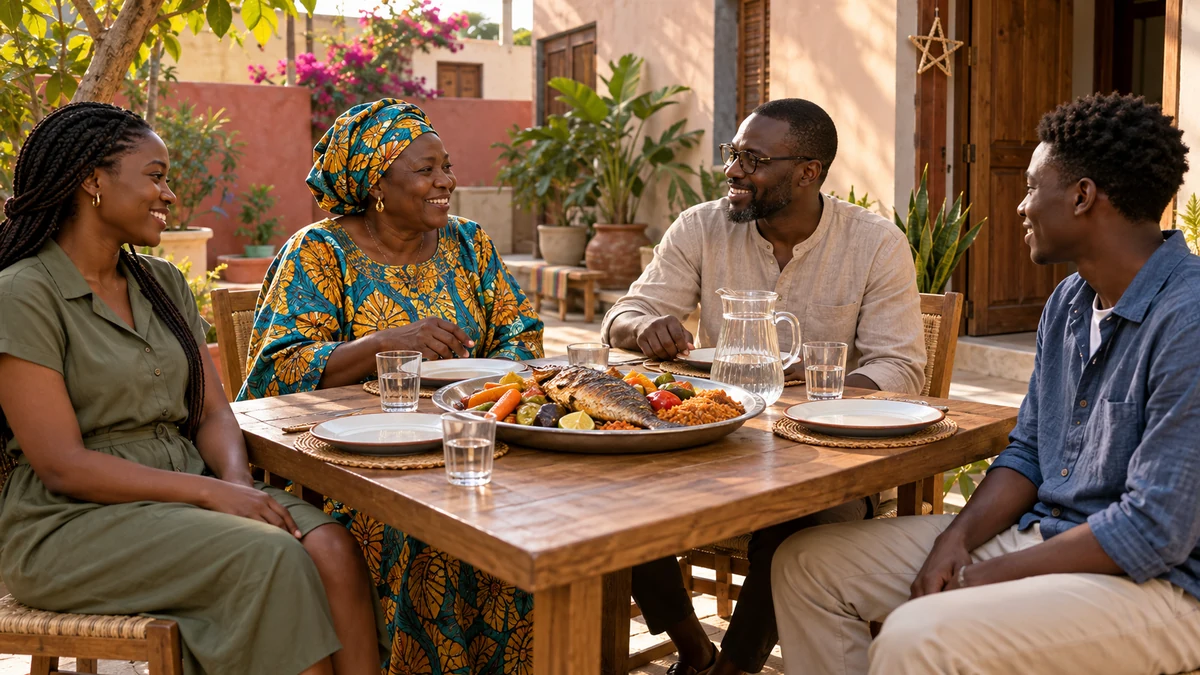
Family accounts can show how relationships work in everyday life, as the APS report from Ziguinchor illustrates. They should be attributed and represented accurately. The suggestions below are ways to listen to such stories, not invented testimonials from unnamed Senegalese families.
Questions that invite genuine accounts
Shared meals: ask whether a person remembers a particular festive invitation, who attended and what made it meaningful. Let them describe their own experience instead of supplying an idealised story about neighbours, songs and grandparents.
- Gifts and exchanges: if the family exchanges presents or food, ask how the practice began. Do not assume it is expected or that every household can afford it.
- Oral history: listen to accounts of mutual help with attention to who was involved and when. Distinguish a personal recollection from a claim about the whole community.
- Tea and conversation: ask what sharing attaya means to the person speaking, rather than assigning it a fixed interfaith meaning on their behalf.
Different generations, different memories
Games, music and meals can feature in people’s memories of growing up, but their interpretations may differ. Listening to several generations can reveal those differences without claiming that a particular childhood experience always produces the same attitude later in life.
- Songs and rhythms: ask which music was actually played, by whom and on what occasion. Avoid inventing a shared repertoire of Christmas songs or instruments.
- Family ceremonies: a wedding or funeral may be an important memory, but let the family decide which details are appropriate to discuss or share publicly.
Preserving and sharing stories carefully
Ask before recording or photographing, and explain how the material will be used. A person’s agreement to a conversation is not automatically permission to publish their name, image or private religious experiences.
- Listen attentively: ask open questions about the experience and its meaning, leaving space for answers that differ from your expectations.
- Seek permission to document: agree on photographs, recordings and quotations before making them, particularly at religious or family occasions.
- Publish with care: check attribution, respect agreed anonymity and leave out details the speaker does not want made public.
Advice for an invited visitor
Be curious without being intrusive. Join the conversation at your host’s pace and explain any food or participation limits politely. Small expressions of gratitude can acknowledge a welcome without turning a private occasion into material for an article or social-media post.
A practical guide to visiting respectfully
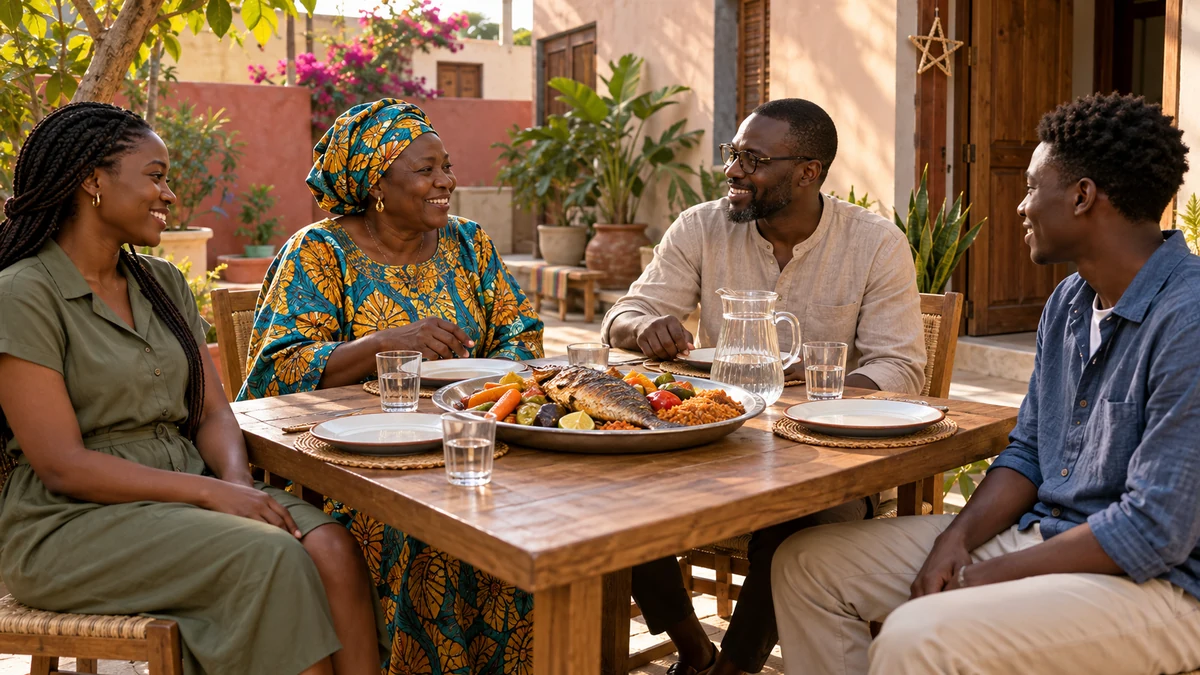
Clothing and conduct: choose suitable clothing for the venue and ask about any particular expectations. What is appropriate for a casual meal may differ from what is expected inside a place of worship.
Permission and photographs
Always ask before photographing people, and accept a refusal without argument. Obtain permission separately before sharing an image publicly; be especially careful with children and private ceremonies.
Entering a home or religious space
- Remove shoes when requested, and ask where to leave them.
- Wait for your host’s guidance before sitting down, entering another room or handling a religious object.
- Ask about any seating or access arrangements rather than assuming them from people’s gender or clothing. If you are uncomfortable with participation, explain your preference courteously.
Joining a meal
- Discuss dietary needs, including allergies, religious requirements or fasting, before the meal where possible.
- Ask whether to bring anything rather than arriving with food whose ingredients or preparation may not suit the household.
- Follow the host’s guidance on serving and eating. Accept only food that is suitable for you; politeness does not require eating something that conflicts with your health or beliefs.
Conversation and greetings
Use a greeting you understand, whether in French, Wolof or a language your host prefers. Ask how names are pronounced, listen respectfully and avoid assuming that everyone uses the same language or wants to discuss religion.
Gifts, donations and practical help
If you would like to contribute, ask your hosts or the organisers what would be useful. Agree on an appropriate way to help rather than arriving with unsolicited donations or taking over arrangements.
During prayers and ceremonies
- Keep your phone quiet and move discreetly where visitors are permitted.
- Avoid interrupting a ceremony to ask questions or take photographs; wait for an appropriate moment afterwards.
- If invited to join an activity, ask what it involves and decide whether you are comfortable participating. Quiet observation may be preferable.
Non-verbal communication and personal boundaries
Do not assume that everyone wants a handshake or other physical greeting. Follow the person’s lead, ask if uncertain and use the right hand for offering items where that is appropriate to the setting.
Final practical reminders
- Confirm the time and nature of the event so that your arrival does not interrupt worship or preparations.
- Respond to invitations in advance and tell your host if your plans change.
- Thank your host personally, with a follow-up message if appropriate to your relationship.
Understanding hospitality without generalising
Documented accounts from Senegal show that people of different faiths can share family celebrations and offer one another hospitality while retaining distinct religious practices. Specific examples are valuable precisely because they describe real relationships, not a claim that everyone celebrates Christmas in the same way.
If you are invited to a gathering, ask about the arrangements, respect boundaries and appreciate the welcome on its own terms. Permission, accurate attribution and ordinary consideration matter more than arriving with a ready-made picture of the occasion.
Thank you for reading. Visit the I Love Christmas blog for more articles about Christmas traditions and the different ways people mark the season.
You are welcome to share a relevant experience or question in the comments. Please distinguish personal experience from assumptions about a whole community and respect other people’s privacy.
Frequently asked questions about Christmas and interfaith hospitality in Senegal
How often do Muslims and Christians share celebrations in Senegal?
There are documented examples of shared family occasions, visits and hospitality, but this article does not establish a national frequency. Practices vary between households and communities, and a social invitation does not necessarily involve shared religious observance.
Can a visitor join a Christmas meal with a family of different faiths?
Yes, if the hosts invite you and the occasion is open to visitors. Confirm the arrangements, explain any dietary needs and ask what participation is appropriate. Do not assume a private meal is a public cultural event.
Which dietary requirements should I check?
Ask your hosts and guests about ingredients, preparation, allergies and religious needs. Alcohol-free or vegetarian food is not automatically suitable for everyone or automatically halal. Confirm rather than relying on assumptions.
May I photograph people and ceremonies?
Ask permission before taking photographs and again before publishing them. Some moments and spaces may be private, and a refusal should be respected. Take particular care with children and religious ceremonies.
How can I show respect during an interfaith visit?
Follow the venue’s dress and visiting instructions, greet people courteously and ask before joining religious practices. Thank your hosts, respect personal boundaries and avoid treating anyone as a representative of an entire faith.
What is a useful way to help during a celebration?
Ask the hosts or organisers what they need and how they prefer to receive help. A practical task, agreed contribution or suitable gift may be welcome, but do not assume prepared food or unsolicited donations are appropriate.
Sources and Further Reading
- APS: the Diatta–Badiane family in Ziguinchor, 2 March 2026
- APS: the imam of Popenguine on Muslim–Christian relations, 7 June 2025
- UNESCO: the culinary art of ceebu jën