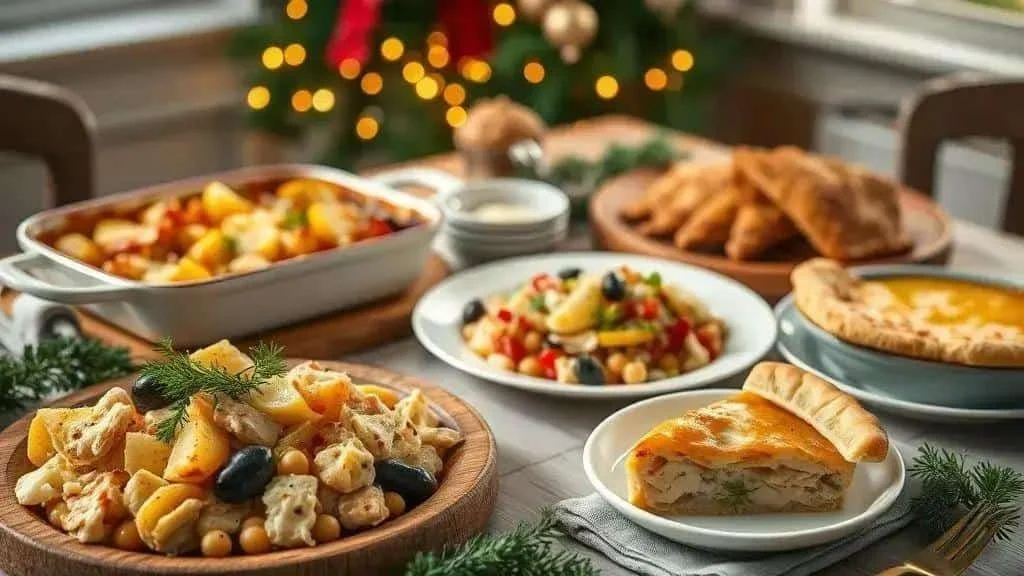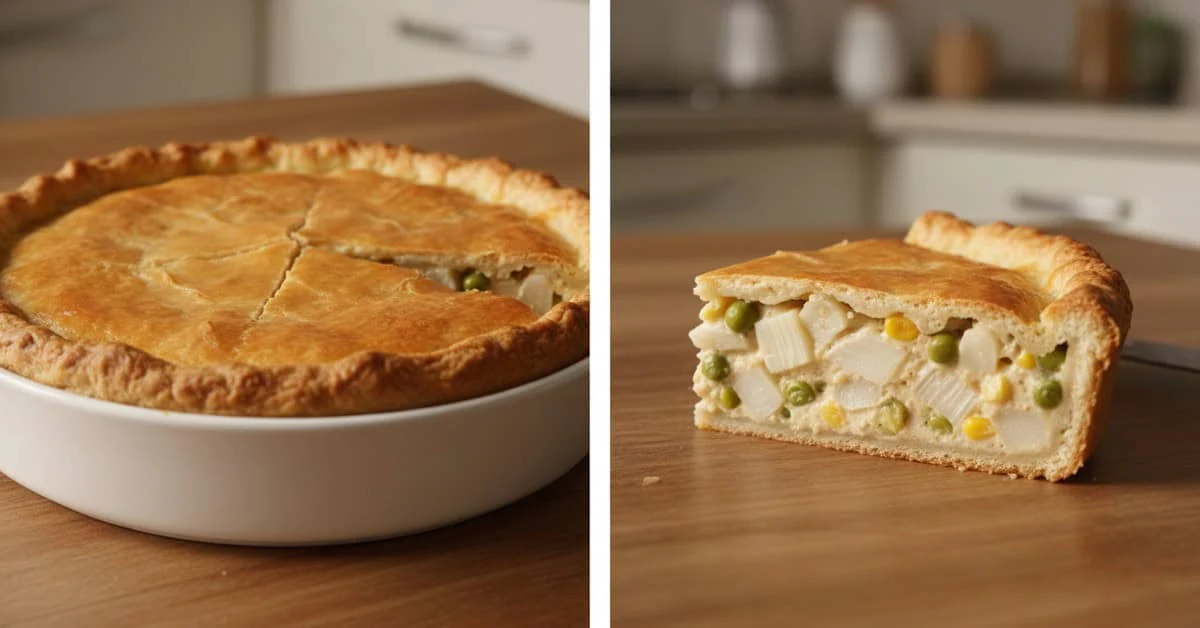
Vegan hearts of palm pie, or empadão de palmito, combines a crisp pastry shell with a creamy savoury filling. Cashew cream, roast vegetables or a suitable gluten-free pastry offer variations for a festive table. Careful cooling and storage help when preparing it ahead, although freezing can change the texture.
Vegan hearts of palm pie is a comforting Brazilian dish for a family meal or Christmas supper. Here is how to make the pastry and filling, assemble the pie and adapt it to suit your table.
Ingredients for Vegan Hearts of Palm Pie
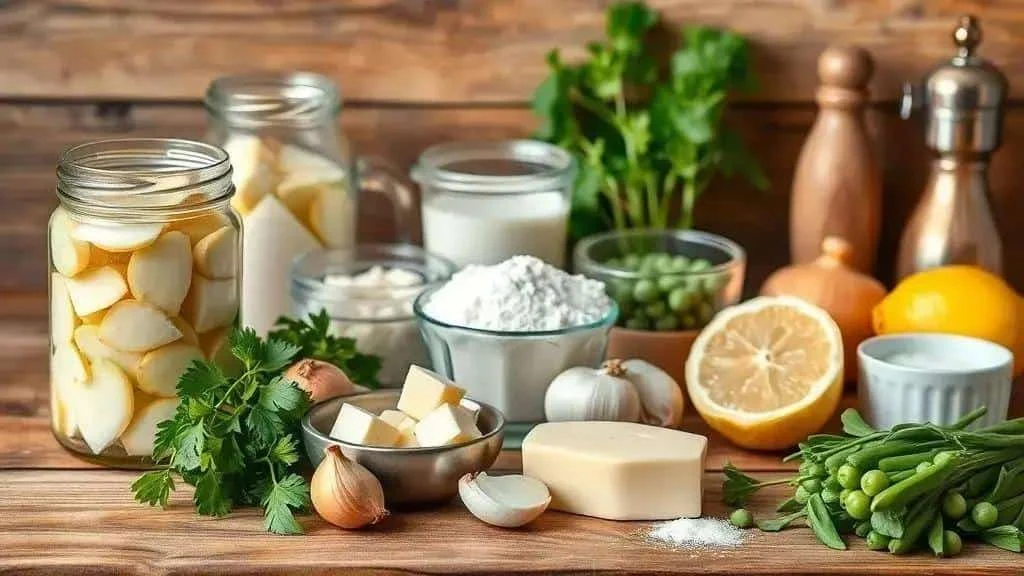
For a medium vegan hearts of palm pie in a 20–24 cm round tin or pie dish, prepare the pastry and filling ingredients separately. Yield depends on the dish’s depth and how generously you slice it.
For the Pastry
- 300 g plain flour – weigh it for consistency. A gluten-free version needs a blend suitable for shortcrust pastry and its recommended liquid and binder adjustments.
- 150 g chilled vegan block butter, cubed – use a product suitable for baking. Soft tub spreads and liquid oil do not behave identically in this pastry.
- 1 teaspoon salt – reduce if your vegan butter is already salty.
- 1 teaspoon baking powder, optional – for a slightly softer crust; this is not essential to shortcrust pastry.
- 60–80 ml ice-cold water or unsweetened plant milk – add gradually, stopping as soon as the dough comes together.
For the Filling
- 400 g tinned or jarred hearts of palm, drained and chopped – use the drained weight, as jar sizes vary, and follow any preparation instructions on the label.
- 1 medium onion – finely chopped.
- 2 garlic cloves – chopped or crushed.
- 2 tablespoons olive oil – or vegetable oil.
- 200 g vegan cream cheese or thick plant-based cream – a pouring cashew or oat cream can also work, but may need more reduction or thickening.
- 1 tablespoon cornflour mixed with 2 tablespoons cold water, to thicken as needed. Plain flour is an alternative but needs a different mixing method and contains gluten.
- ½ cup cooked peas or sweetcorn, optional – drained well.
- ¼ cup chopped parsley – or a mixture of parsley and spring onion greens.
- Juice of ½ lemon, optional – add to taste.
- Salt and black pepper – to taste.
- A small pinch of grated nutmeg, optional.
- A little plant milk or olive oil – for brushing the pastry lid.
Yield: approximately eight slices. For a slightly creamier filling, try up to 50 g extra plant cream, keeping the mixture thick enough to hold inside the pastry.
How to Make Vegan Hearts of Palm Pie
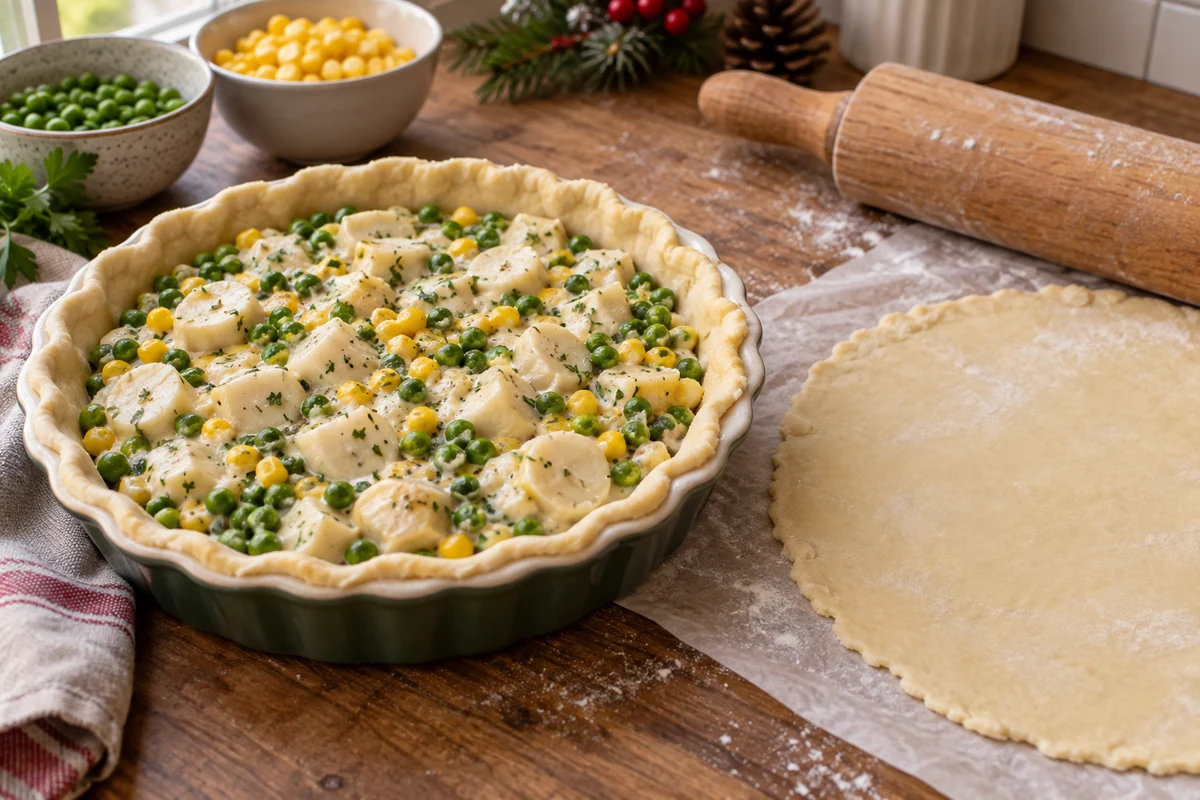
- Preheat the oven to 200°C conventional or 180°C fan when you are ready to assemble. Lightly grease a 20–24 cm round tin or pie dish, lining where appropriate with baking parchment.
- Make the pastry: mix 300 g plain flour, the salt and optional baking powder. Rub in 150 g cold cubed vegan butter with your fingertips until the mixture resembles coarse crumbs.
- Bring the dough together: add 60–80 ml ice-cold water gradually, using only enough to bind it. Do not knead. Wrap and chill for 30 minutes to help keep the shortcrust tender.
- Prepare the hearts of palm: drain, pat dry and weigh 400 g, then cut into roughly 1 cm pieces. Follow any additional preparation directions on the product’s label.
- Soften the filling base: heat 2 tablespoons olive oil, add the chopped onion and cook until translucent. Add the garlic and cook briefly without browning it too far.
- Add the vegetables: stir in the hearts of palm and optional cooked peas or sweetcorn. Cook for 3–4 minutes, then season with pepper and lemon juice to taste. Add salt cautiously because preserved hearts of palm and vegan cream cheese may already be salty.
- Thicken the filling: stir in 200 g vegan cream cheese or plant cream. Mix the cornflour with 2 tablespoons cold water, add gradually and simmer, stirring, until thick and spoonable. You may not need all the slurry. Add the chopped herbs and optional nutmeg, then check seasoning.
- Cool the filling: spread it in a shallow dish to cool promptly before assembly. Hot filling melts the pastry fat. Refrigerate within two hours if not using straight away; do not leave it out for the rest of the day.
- Roll the pastry: lightly flour the worktop and divide the dough into a larger piece for the base and a smaller piece for the lid. Roll each to about 2–3 mm thick.
- Line the dish: ease in the larger piece without stretching it, covering the base and sides. Leave enough at the edge to seal to the lid. Add the cooled filling and level it.
- Add the lid: lay over the second piece of pastry, seal the edges with your fingers or a fork, and cut a few small steam vents. Brush lightly with plant milk or oil.
- Bake and rest: bake at 200°C conventional or 180°C fan, starting to check after 30–40 minutes. Continue until the pastry is cooked and golden and the filling is steaming hot at the centre. Let it rest for 10–15 minutes before slicing.
Practical Tips
- Gluten-free pastry: choose a blend intended for pastry and follow its guidance on liquid and binders. A straight flour swap does not work equally well with every blend.
- Creamier filling: add plant cream a little at a time. Extra cornflour makes the filling firmer, not creamier, so use only enough to prevent it running out of the pie.
- Freezing: freeze an assembled unbaked pie with a fully cooled filling in a suitable container for up to two months for best quality. Thaw in the fridge before baking and check the centre is thoroughly hot; a fixed extra 10–15 minutes is not a reliable rule.
- Browning too quickly: cover the top loosely with foil while the pastry and filling finish cooking. Use dishes within their temperature limits.
Vegan Hearts of Palm Pie Variations
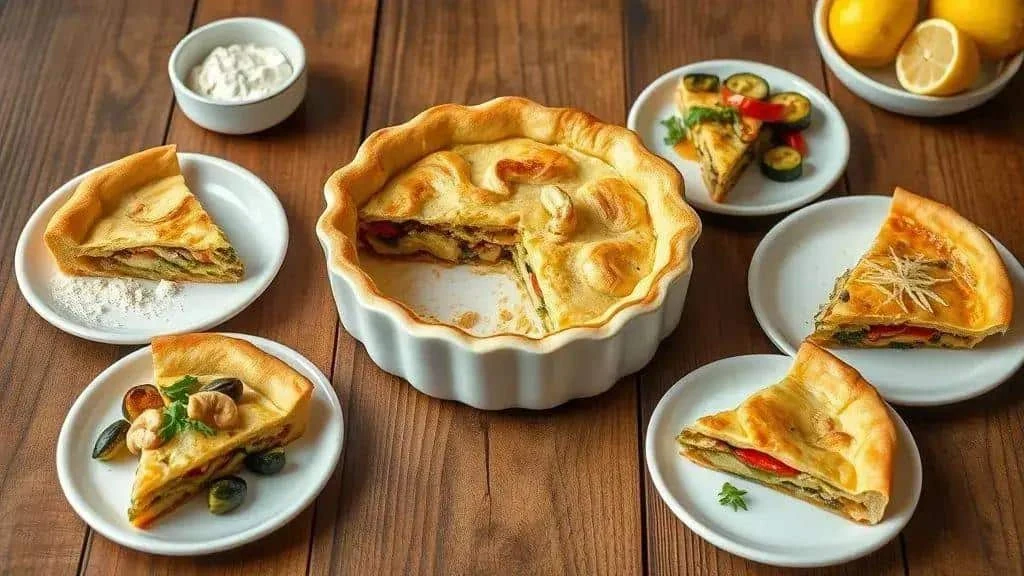
Try these variations on vegan hearts of palm pie, adjusting the filling’s consistency and avoiding overfilling the dish.
Gluten-Free Version
- Pastry: use a gluten-free shortcrust recipe or blend with instructions for replacing plain flour. Add xanthan gum only if the blend’s instructions call for it; some already contain a binder.
- Liquid: add cold water gradually according to the blend’s guidance. The dough should hold together without becoming sticky.
- Baking: follow the pastry method’s recommended temperature and check the filling is hot throughout. Cover browning edges if needed; different blends do not all bake at the same rate.
Cashew Cream Filling
- Make the cream: soak 200 g raw cashews in the fridge for about four hours, drain, then blend with 150–200 ml fresh water until smooth. This makes more cream than the pie needs.
- Quantity: measure 200 g of the prepared cashew cream to replace the plant cream in the filling. Chill any unused cream promptly and use within 48 hours or freeze. This version contains nuts.
- Texture: blend thoroughly for a smooth sauce and adjust salt and lemon after incorporating it into the filling.
Roast Vegetable and Hearts of Palm Filling
- Vegetables: roast 1 cup cubed courgette, ½ cup sliced red pepper and ½ cubed aubergine at 200°C conventional or 180°C fan until tender, starting to check around 20 minutes. Let excess moisture evaporate.
- Assembly: fold the cooked vegetables into the hearts of palm filling and cool before use. This increases the filling quantity; reserve any excess rather than overfilling the pastry.
- Seasonal alternatives: roasted squash or carrots also work; cook them until tender before adding.
Vegan Cheese and Potato Version
- Vegan cheese: stir in up to 150–200 g grated or soft vegan cheese, adjusting cream and salt to keep the filling balanced. Use only as much filling as fits comfortably.
- Potato: up to 200 g cooked mashed potato gives a firmer, thicker filling. Add gradually rather than assuming every sauce needs the full amount.
- Optional topping: a little vegan cheese can be scattered over the pastry during the final ten minutes, if desired. Watch closely as brands brown differently.
Herb Pesto and Lemon
- Quick vegan pesto: blend ½ cup basil leaves, ¼ cup parsley, 30 g suitable nuts, 2 tablespoons olive oil and lemon juice to taste into a rough paste. This version contains nuts but no cheese.
- Using it: stir about 2 tablespoons pesto into the finished filling, or spread a thin layer beneath it.
- Herb alternatives: rocket or coriander gives a different flavour. Check the ingredients if using ready-made pesto, which may contain cheese.
Individual Empadinhas
- Shaping: divide the pastry and filling between small pie tins, around 8–10 cm across, leaving space to seal each lid.
- Baking time: at 180°C conventional or 160°C fan, start checking small pies around 18–25 minutes and larger individual pies around 25–30 minutes. Depth and filling temperature affect timing; the pastry must be cooked and the centre steaming hot.
- Serving: individual pies are convenient for parties and let you offer different fillings with clear ingredient labels.
Tips for Every Variation
- Cool the filling: a cool, thick filling helps keep the pastry from becoming soggy. Refrigerate promptly when making ahead.
- Consistency: add cornflour slurry gradually to a thin filling, or a little plant cream to a very firm one.
- Seasoning: salt, pepper and a small pinch of nutmeg complement hearts of palm. Taste before adding more.
Pastry Tips and Substitutions
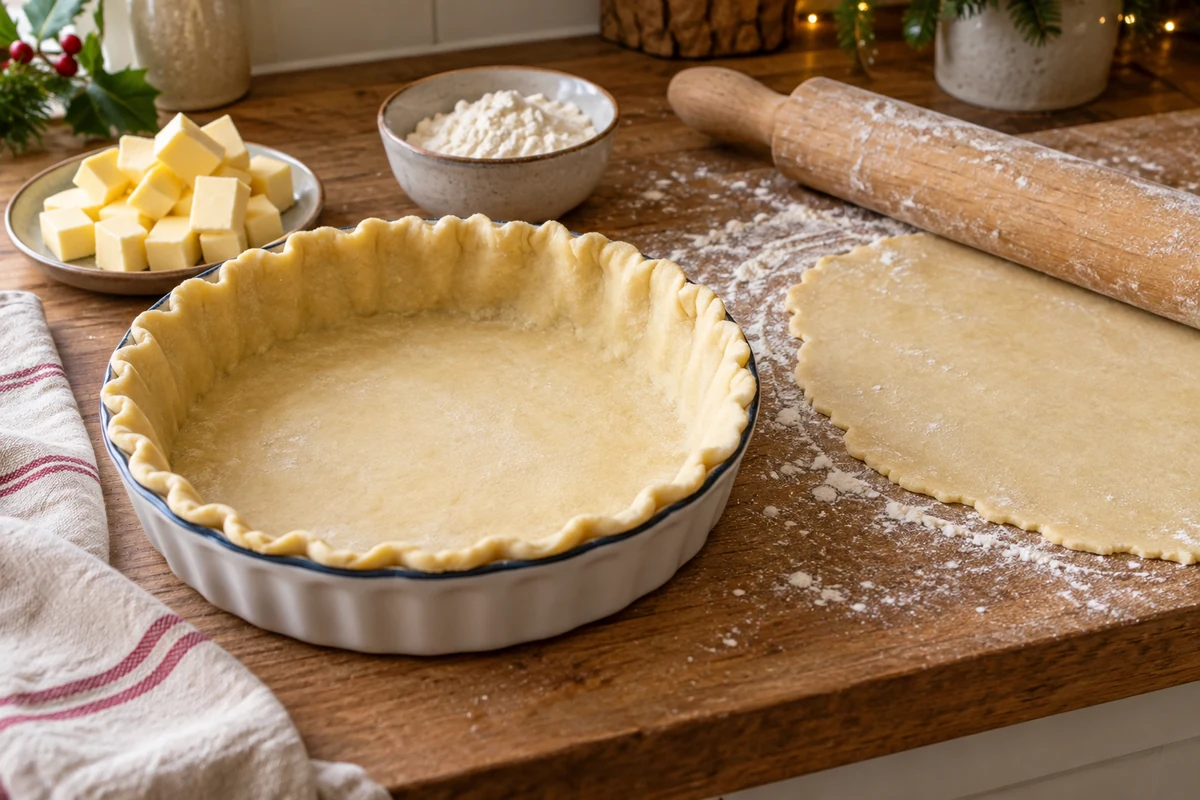
Careful handling makes a noticeable difference to the pastry of your vegan hearts of palm pie. Keep the ingredients cold and avoid overworking the dough.
Getting the Dough Right
- Cold vegan butter: use 150 g chilled block butter suitable for baking. Cold fat and gentle mixing help produce a tender shortcrust; this is not a laminated puff pastry.
- Water: start with 60 ml and add only enough extra cold water to bind the crumbs. The dough should not feel sticky.
- Minimal handling: bring the pastry together without kneading, which can make a wheat-based crust tough.
- Resting: chill for 30 minutes before rolling. If very hard, let it soften just enough to roll without cracking.
Temperature and Technique
- Oven: for the main pie, preheat to 200°C conventional or 180°C fan and bake on a suitable shelf for even cooking.
- Rolling: lightly flour the surface, roll outwards from the centre and lift or turn the pastry to stop it sticking.
- Blind baking: the main method uses a cooled, thick filling without blind baking. If using a separate blind-baked pastry method, line with parchment before adding baking beans, then remove both and finish drying the base as that method directs. Do not put loose beans straight on the dough.
- Brushing: a thin layer of plant milk or oil helps the lid colour. Do not saturate it.
Useful Substitutions
- Gluten-free flour: choose a pastry-specific blend or reliable gluten-free pastry method, and follow its binder and hydration instructions.
- Oil-based pastry: liquid oil and solid coconut oil behave differently from vegan block butter. If using either, follow a pastry recipe designed for that fat rather than assuming a fixed direct swap will give the same result.
- Plant milk: use unsweetened milk appropriate for your dietary needs, or cold water to bind the dough.
- Filling thickener: cornflour mixed with cold water can thicken the filling without wheat flour. Check product suitability if avoiding gluten.
Common Pastry Problems
- Soggy base: drain the hearts of palm well and use a cooled, thick filling. Make sure the base is cooked, not just the lid browned.
- Crumbly dough: add cold water a teaspoon at a time and gently bring it together. Too much water at once can make it sticky.
- Heavy pastry: check the fat and liquid amounts and avoid kneading. Shortcrust is not supposed to rise like bread; the optional baking powder changes its texture rather than rescuing overworked dough.
- Uneven browning: shield darkening edges with foil while the rest finishes cooking.
Preparing Pastry Ahead
- In the fridge: keep the wrapped dough chilled for up to 48 hours. Let it soften briefly only if too firm to roll.
- Freezing dough: wrap well and freeze for up to two months for best quality. Thaw in the fridge before use.
- Freezing an unbaked pie: use a fully cooled filling and freeze promptly in a suitable container. Thaw in the fridge before baking; allow enough cooking time for the centre to become thoroughly hot.
Final Pastry Checks
- Measurements: weigh flour and fat for a more consistent result.
- Feel: the dough should hold together and yield slightly to pressure without sticking to your fingers.
- Seasoning: keep the crust simply seasoned and adjust pepper, nutmeg and lemon in the filling.
Assembling and Baking the Pie
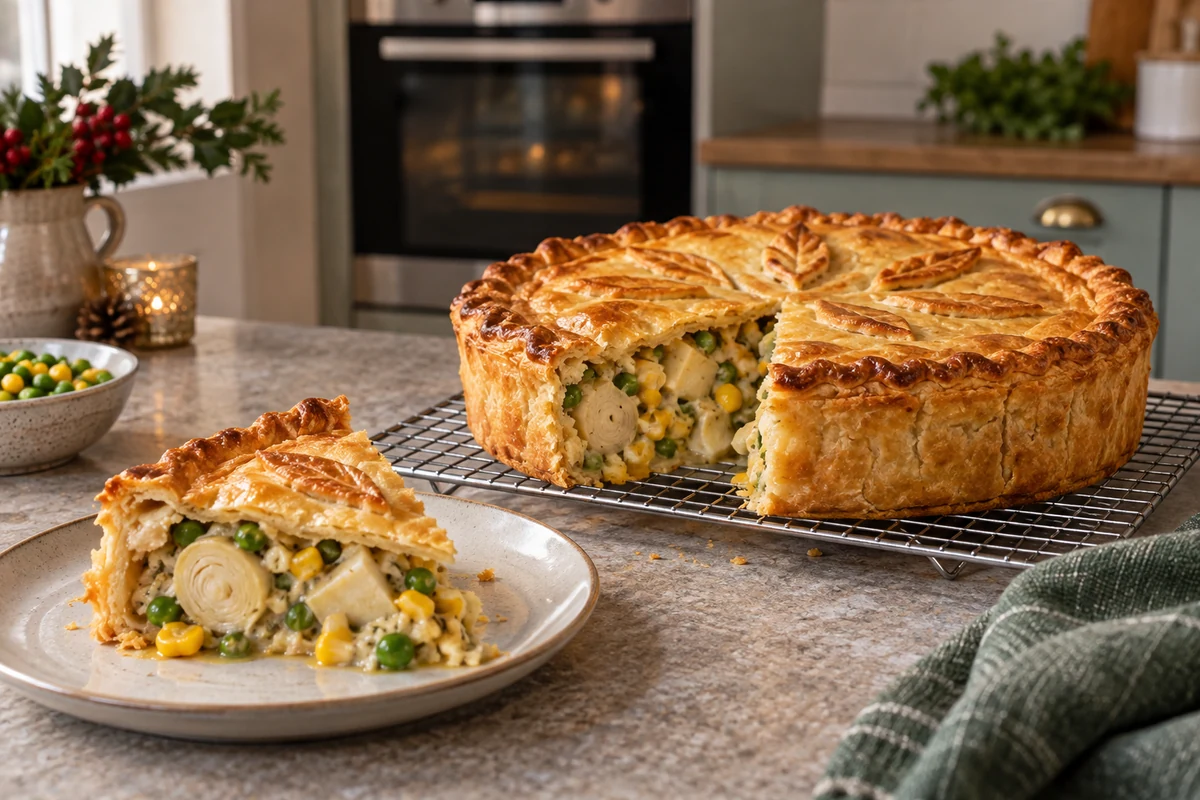
Use this assembly checklist for your vegan hearts of palm pie once the pastry has rested and the filling is cool.
- Preheat the oven: set it to 200°C conventional or 180°C fan before assembly.
- Prepare the dish: lightly grease a 20–24 cm round pie dish or tin, lining with baking parchment where useful for removal.
- Roll the base: roll the larger piece of pastry to about 2–3 mm thick and ease it into the base and sides without stretching.
- Trim carefully: leave a small overhang for sealing. Stretching the pastry can cause it to shrink during baking.
- Add the cooled filling: spread it evenly, keeping excess liquid out and leaving room to fit and seal the lid.
- Roll the lid: place the smaller rolled piece over the filling without pulling it tight.
- Seal: press the pastry edges together with your fingers or a fork and trim neatly.
- Vent: cut a few small slits or a central opening to let steam escape.
- Brush: apply a thin layer of plant milk or oil to the lid.
- Bake: start checking after 30–40 minutes at 200°C conventional or 180°C fan. Continue until the pastry is cooked and golden and the centre of the filling is steaming hot; the exact time depends on the dish and starting temperature.
- Shield if needed: cover browning edges loosely with foil while the rest finishes cooking.
- Rest: allow 10–15 minutes before slicing so the filling settles.
Assembly Tips
- Shrinking dough: if it springs back when rolled, let it rest briefly in the fridge before trying again.
- Loose filling: thicken it in the pan with a little cornflour slurry, simmer until cooked, then cool before assembly. Do not add dry starch directly to the filled pie.
- Tender crust: keep the fat and water cold and work quickly without kneading.
- Small pies: use 8–10 cm tins and start checking at the shorter times in the individual-pie variation. Check both pastry and filling rather than relying on the clock alone.
Storage, Leftovers and Festive Serving
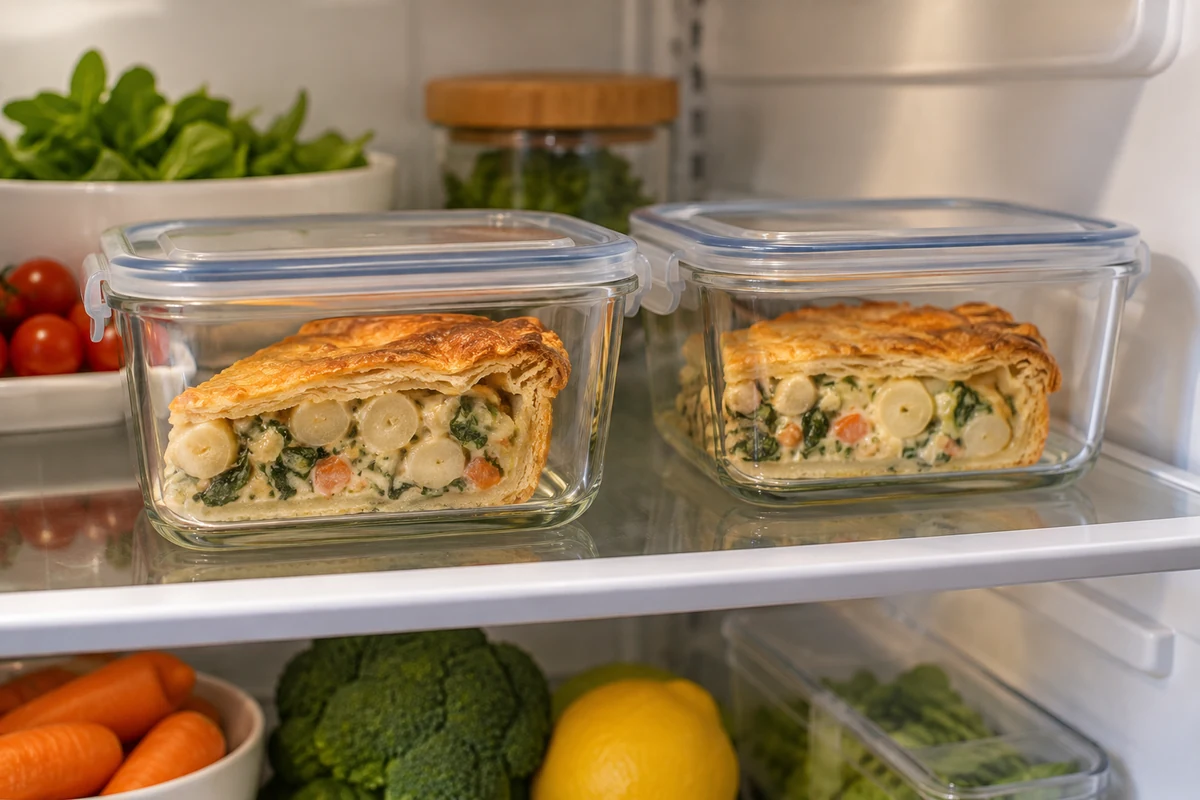
Store your vegan hearts of palm pie promptly and reheat only the portions you need. Repurposing leftovers does not restart their storage time.
Fridge Storage
- Temperature and time: keep covered at 5°C or below and eat within 48 hours, or freeze.
- Prompt cooling: divide into smaller portions if needed so it cools quickly, and refrigerate within two hours. Do not wait for a whole pie to sit out for hours before chilling it.
- Portioning: store slices separately, with baking parchment between them if useful, so you can remove only what you need.
Freezing
- Unbaked pie: assemble with a cooled filling, wrap well and freeze in a suitable dish or container for up to two months for best quality.
- Baked pie: cool promptly and freeze in portions, aiming to use within two months for best quality. Thaw in the fridge before reheating.
- Defrosting: thaw fully in the fridge, allowing longer for a whole pie than for slices. Use within 24 hours of defrosting. Follow the dish manufacturer’s guidance to avoid temperature shock, especially with glass or ceramic.
Reheating
- Oven: heat thawed slices at 180°C conventional or 160°C fan until steaming hot at the centre, shielding the crust if needed. A whole pie takes longer; fixed times cannot guarantee it is hot throughout.
- Microwave: use a microwave-safe plate and cover, heat in intervals and allow the recommended standing time. Check the centre is steaming hot. An oven can restore some crispness as part of the same reheating process; do not put filled pie in a pop-up toaster.
- Reheat once: heat only the portion you plan to eat. A crisp or browned surface does not prove that the filling is hot enough.
Using Leftovers in Other Ways
- Small pies: safely stored filling can be used in suitable ready-made vegan pastry. Bake until the pastry is cooked and the centre steaming hot; this counts as reheating.
- Toast and canapés: thoroughly reheat the filling and serve on toast with suitable vegan pesto or fresh herbs.
- Pasta sauce: loosen a portion of filling with plant milk, heat thoroughly and combine with freshly cooked pasta.
- Gratin: put the filling in an ovenproof dish, add vegan cheese and bake until hot through as well as golden on top.
- Hot sandwich: a thoroughly reheated slice can be served in bread with leaves and a little mustard, if that is how you enjoy it. Check the bread and condiments for dietary needs.
Serving at Christmas
- Portions: begin with one of the roughly eight slices per guest and adjust for appetite and accompaniments. A slice does not have a fixed weight across different tins and variations.
- Sides: a green salad with citrus dressing, vegan farofa, roast vegetables or freshly prepared rice and lentils complement the pie.
- At the table: serve on a suitable platter with the sides separately. Bring it out when guests are ready to eat, rather than leaving it lukewarm for hours.
- Making it earlier in the day: cool promptly, refrigerate within two hours and reheat once until steaming hot throughout before serving. A switched-off oven is not safe storage for a pie baked in the morning and served that evening.
Food Safety
- Cooling and storage: refrigerate leftovers promptly and within two hours, not only on hot days.
- Reheating temperature: heat until steaming hot throughout. With a clean food thermometer, check the centre reaches 70°C for two minutes or 75°C for 30 seconds.
- Avoid repeated cycles: thaw only what you need and reheat once. Do not repeatedly freeze, thaw and reheat portions.
A Brazilian Pie for Your Festive Table
Vegan hearts of palm pie brings a creamy filling and tender pastry together in a generous dish for sharing. Careful draining, cooling and baking make as much difference as the choice of filling.
Try a variation that suits your guests, adjust seasoning to taste and keep any extra filling for a safely stored separate portion rather than overfilling the pie.
Thank you for reading. Share your photos, follow us for more ideas and visit the I Love Christmas blog for further festive recipes.
Vegan Hearts of Palm Pie FAQ
Can I use gluten-free flour?
Yes, but choose a blend intended for shortcrust pastry or follow a gluten-free pastry method. Use its guidance for water and binders rather than assuming every blend is a direct swap. Check the filling ingredients and avoid cross-contact too.
How do I keep the pastry from becoming soggy?
Drain the hearts of palm thoroughly, cook the filling until thick and let it cool before assembly. Make sure the pastry base cooks through. If following a blind-baked method, use parchment under the baking beans and finish drying the base as that method directs.
How should I store a baked pie?
Cool promptly, refrigerate within two hours at 5°C or below and eat within 48 hours, or freeze in portions for up to two months for best quality. Thaw in the fridge, use within 24 hours of defrosting and reheat only once until steaming hot throughout.
How do I make tender pastry without dairy butter?
Use chilled vegan block butter suitable for baking, rub it into the flour gently and add only enough cold water to bind. Do not knead, and chill for 30 minutes before rolling. This gives shortcrust pastry rather than puff pastry.
What filling variations work for Christmas?
Try cashew cream, cooked roast vegetables, or vegan cheese and mashed potato. A little vegan herb pesto adds freshness. Adjust the consistency, check allergens and avoid overfilling the pastry.
Sources and Further Reading
- Food Standards Agency: cooking food safely
- Food Standards Agency: chilling, freezing and defrosting food