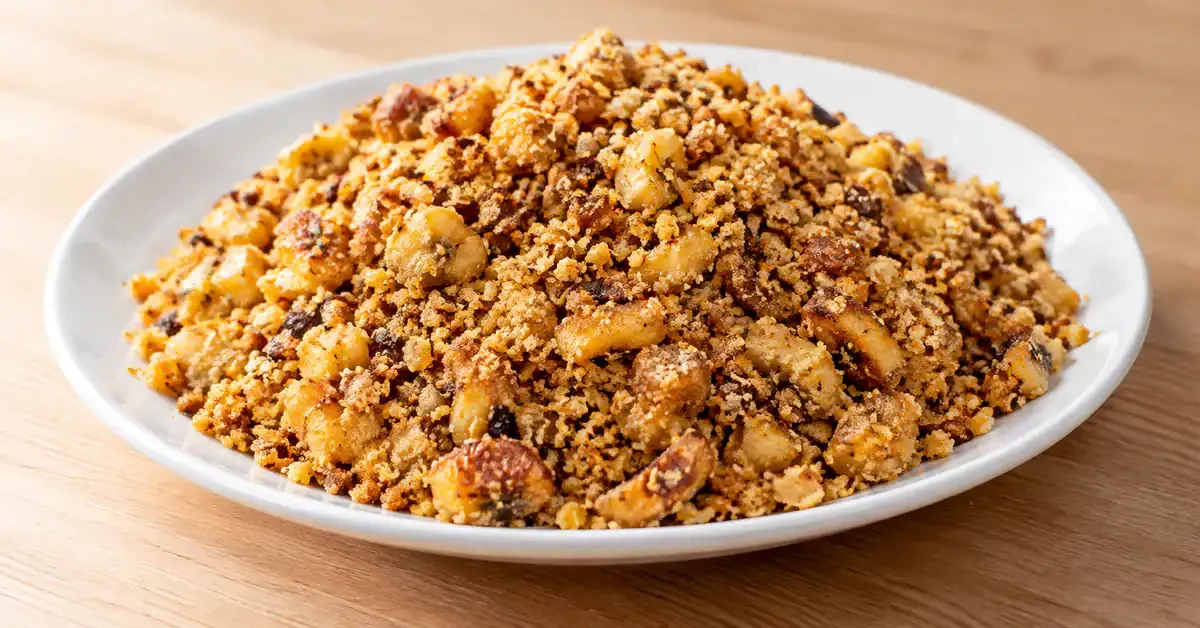
Plantain farofa is a gently sweet Brazilian side dish made by cooking onion and garlic in butter or oil, adding sliced ripe plantain and folding through toasted cassava meal. The plantain should be tender but hold its shape, with a crumbly toasted coating and optional bacon.
Easy plantain farofa for Christmas dinner adds a little sweetness and a toasted, crumbly texture alongside a roast. It uses banana-da-terra, the Brazilian cooking banana commonly described as plantain in English.
The images illustrate this recipe and its preparation; the appearance of your finished dish may vary.
The method is straightforward: cook the aromatics, let the plantain become tender and lightly golden, then fold in the toasted cassava meal. Gentle handling helps the slices stay intact.
Ingredients and yield
Approximately 6 side portions. Allow around 30 minutes for preparation and cooking, adjusting to the ripeness of the plantains.
- 2 medium ripe plantains, peeled and cut into 1.5 cm slices
- Approximately 80 g toasted Brazilian cassava meal (farinha de mandioca torrada), not tapioca starch
- 2 tablespoons unsalted butter, as needed for frying if not using the rendered bacon fat
- 1 medium onion, chopped
- 2 garlic cloves, chopped
- 100 g diced raw bacon, optional
- Salt and black pepper, to taste
- 2 tablespoons chopped parsley, or to taste
- 1 tablespoon olive oil, optional
Method
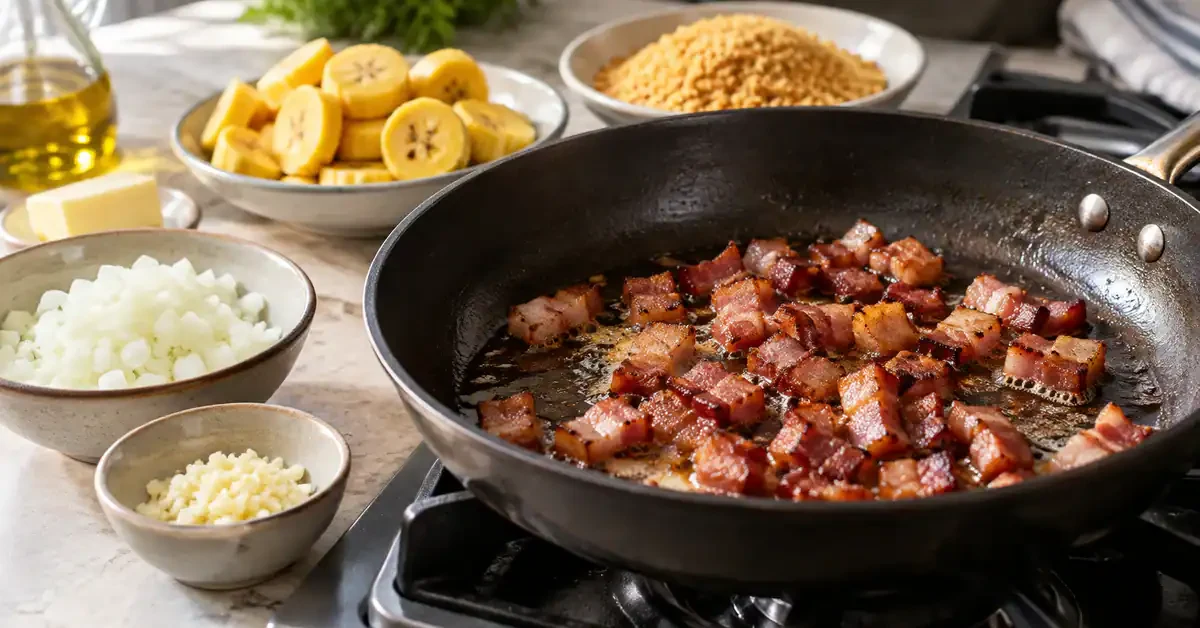
- Cook the optional bacon: fry the diced bacon in a wide frying pan until thoroughly cooked and crisp, following its pack directions. Lift out with a slotted spoon. Keep enough rendered fat for the onion and garlic, rather than automatically adding all the butter as well.
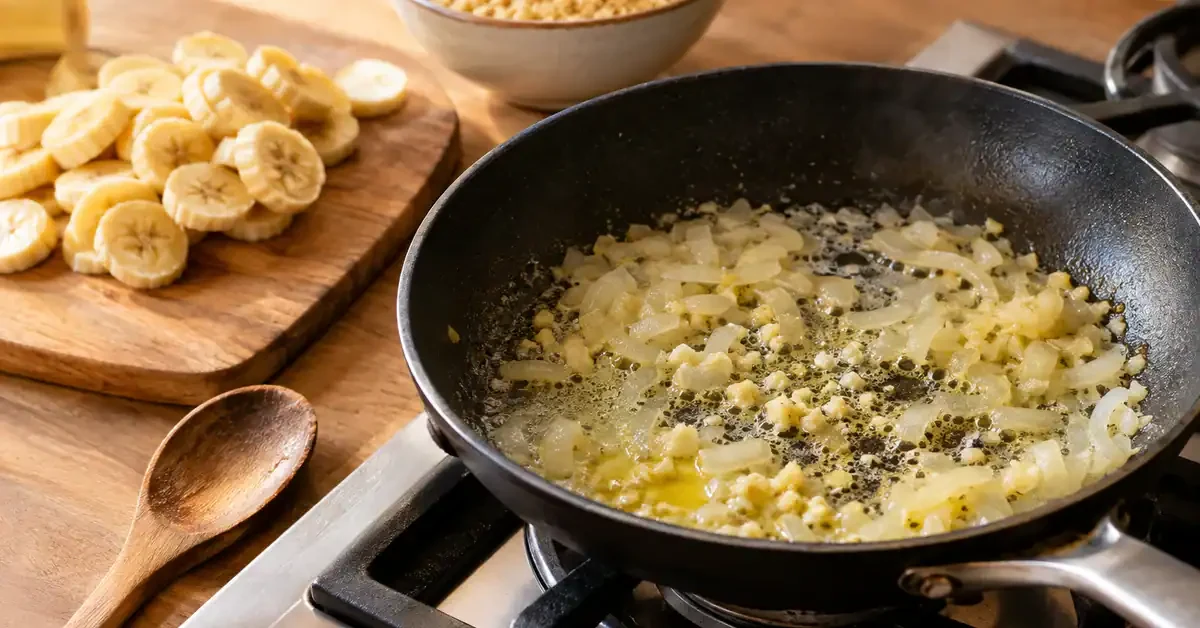
- Cook the onion and garlic: use the bacon fat if available, or melt the 2 tablespoons butter with the optional tablespoon of olive oil. Cook the onion over a medium heat, stirring, until translucent, about 3–4 minutes. Add the garlic and cook for another 30 seconds without letting it burn.
- Return the bacon: if using, stir it back into the pan for 1–2 minutes to combine with the onion.
- Add the plantain: add the slices and turn gently. Start checking after 2–3 minutes, but continue until tender through the centre and lightly golden. Ripeness and slice thickness affect the time; lightly coloured edges alone do not mean the plantain is tender.
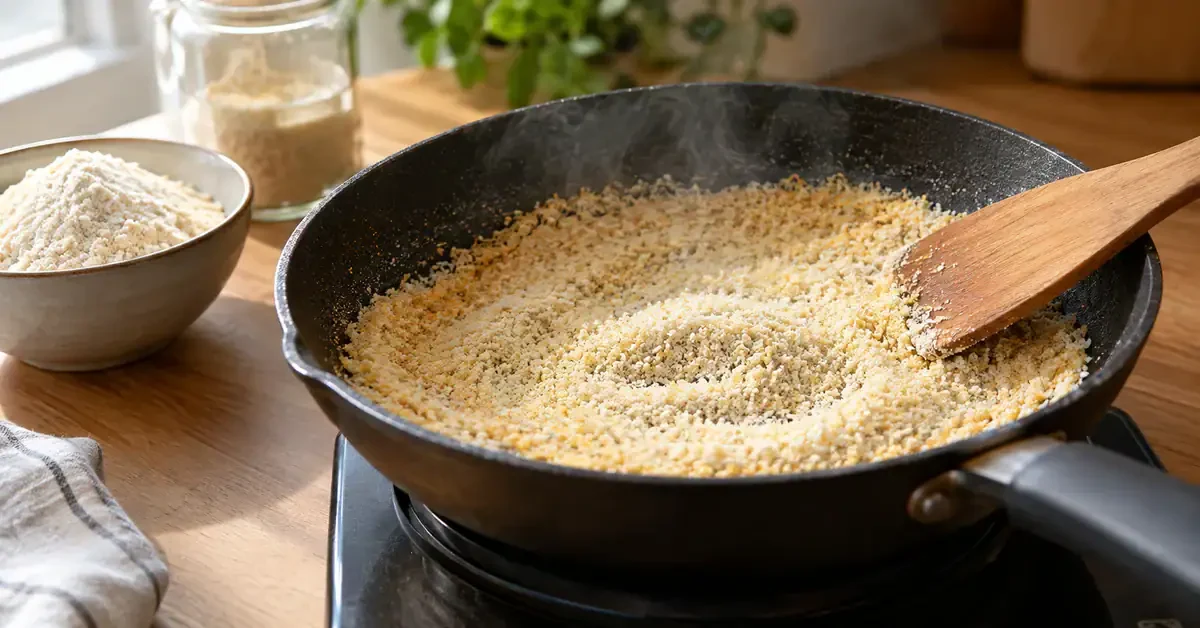
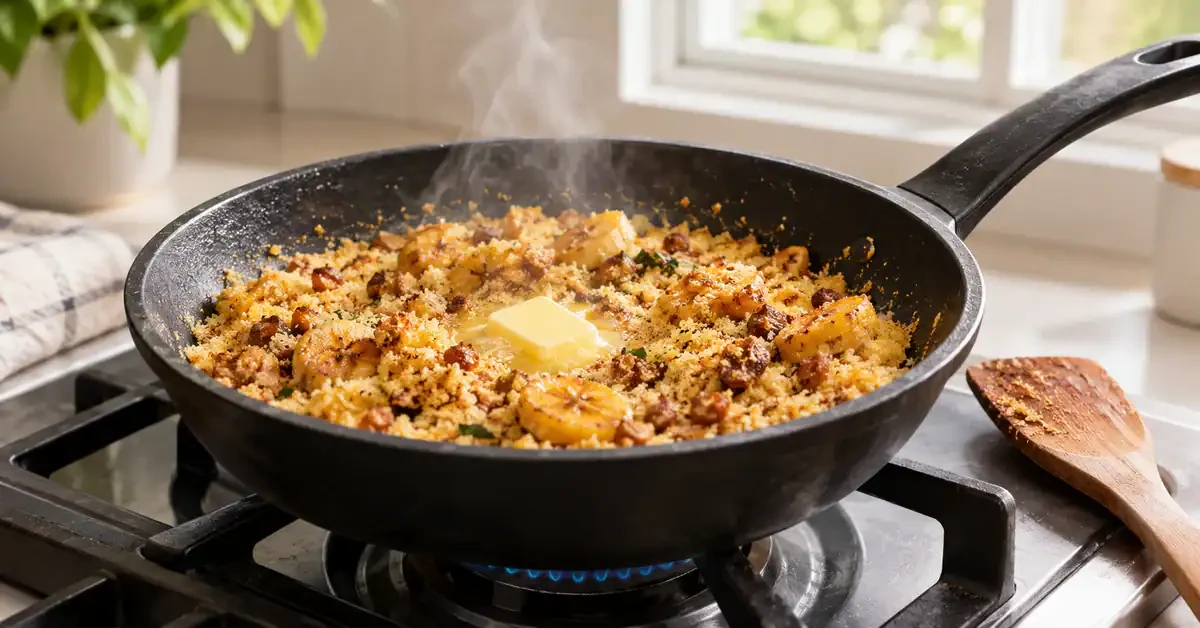
- Fold in the cassava meal: add the toasted meal and turn gently to coat the ingredients. Heat for another 1–2 minutes, stirring enough to prevent scorching, until hot and aromatic.
- Season: taste and adjust salt and pepper, remembering that bacon adds salt. Avoid vigorous stirring that would mash the plantain.
- Finish: remove from the heat and fold through the parsley.
- Serve: serve hot as a side dish with Christmas dinner.
Texture, common mistakes and adjustments
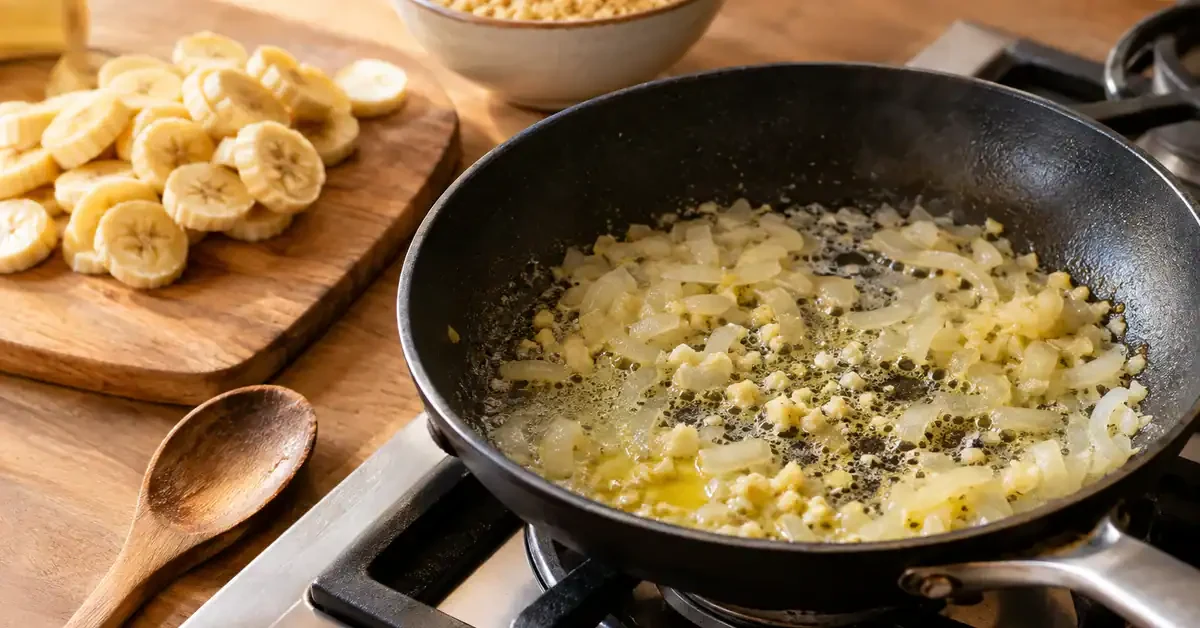
A good farofa contrasts tender plantain slices with toasted cassava crumbs. The slices should hold their shape without remaining hard in the middle, and the meal should be crumbly rather than saturated with fat.
How to judge the result
- Aroma and colour: the onion should be translucent, the garlic fragrant and the plantain lightly golden at the edges. Avoid burnt garlic or a harsh, scorched smell from the butter.
- Cassava texture: the toasted meal should coat the ingredients with a light, crumbly texture rather than forming a paste.
- The finished bite: the farofa should be hot, with tender plantain that still holds together and a gently crisp toasted coating.
- No excess liquid: avoid pools of fat or juice. Use enough fat to cook and coat the ingredients, without making the crumbs greasy.
Common mistakes and how to avoid them
- Too much heat: reduce the heat if the garlic, plantain or meal starts to scorch. Stir regularly once the cassava meal is in the pan.
- Plantain breaking up: use ripe but not collapsing fruit, turn gently and stop once tender. For a later batch, adjust the cooking time to the fruit’s ripeness rather than leaving plantain raw by adding it at the very end.
- Untoasted flavour: use the specified toasted cassava meal. A further minute or two over a low heat can refresh its aroma, but watch closely so it does not burn.
- A dry pan: use the stated butter or oil if the bacon has not provided enough fat to cook the onion and garlic. Add cautiously rather than doubling the fat automatically.
- Too much seasoning: taste at the end and add salt gradually, especially when using bacon.
- Excessive stirring: fold the cassava meal through gently so the plantain slices remain recognisable.
Substitutions and variations
These options change the flavour while keeping the idea of a crumbly cassava side dish. Different fruit or meat may need different cooking times.
Possible substitutions
- Optional bacon: omit it for a meat-free version, using butter or oil for the aromatics. Chopped smoked sausage is another variation, but cook it according to its label; smoked does not always mean ready to eat.
- Cooking fat: olive oil can replace butter if preferred. Use enough to cook the aromatics and coat the meal without leaving pools in the pan.
- Plantain: a firm dessert banana creates a softer, sweeter variation and usually needs less cooking. It is not identical to plantain, so turn it gently and adjust the cooking time.
- Cassava meal: choose toasted Brazilian farinha de mandioca. If using a commercially prepared untoasted cassava meal, follow its cooking directions and toast gently, stirring, before use. Tapioca starch or ordinary fine baking flour will not give the same crumbly texture.
- Parsley: chopped spring onion greens or a little dried parsley can provide a different finish if fresh parsley is unavailable.
Variations
- More toasted flavour: warm the cassava meal a little longer over a low heat, stirring regularly. Leaving it unstirred can burn patches rather than make the whole dish more evenly crisp.
- More sweetness: use riper plantains, provided they are firm enough to handle. Taste before adding the final seasoning.
- Without butter: use olive oil instead. If making the dish lactose-free, check the labels of any bacon, sausage or other added ingredients as well.
- Softer plantain: cook the slices until tender, turning carefully. Shorter cooking does not make an underripe plantain softer; ripeness and sufficient cooking matter more than adding it at the last moment.
Storage and serving ideas
Storage
Refrigerate leftovers promptly, within 2 hours, in a covered container, and use within 48 hours. Reheat only once, until steaming hot throughout, following Food Standards Agency guidance. The texture may soften during storage. Source: Food Standards Agency: cooking and storing leftovers
- Storing: use a clean, covered container and keep refrigerated until needed.
- Reheating: heat gently in a frying pan, stirring, or in the oven until steaming hot throughout. A little butter or oil can help prevent sticking, but cannot guarantee restoration of the original crispness.
- If using bacon: avoid carrying excessive rendered fat into the finished dish. Reheat the whole portion thoroughly, not just until the crumbs feel warm.
Serving suggestions
Plantain farofa works alongside roast turkey, chicken or other roast meats, and with plain rice. Serve promptly while hot to enjoy the contrast between the tender fruit and toasted cassava.
- Offer modest side portions and add a little chopped parsley if desired.
- A final grind of black pepper or a few extra parsley leaves can finish the dish.
Ready to serve
Keep the heat moderate and turn gently once the plantain is added. Cook the slices until tender before folding through the toasted cassava meal, then serve promptly.
For a butter-free version, use olive oil for the onion and garlic and check the other ingredients if catering for a dietary requirement. Serve as a side with roast meat or rice, keeping its Brazilian character.
Plantain farofa: frequently asked questions
What texture should plantain farofa have?
The cassava meal should be toasted and crumbly, while the plantain is tender but holds its shape. Look for lightly golden edges and fragrant onion and garlic, without a burnt smell or greasy pools.
How do I stop the plantain breaking up?
Use ripe but firm plantains, turn gently and avoid vigorous stirring. Cook until tender, adjusting the time to ripeness. Adding raw plantain only at the end is not a substitute for cooking it through.
Can I use olive oil instead of butter?
Yes. Use olive oil to cook the onion and garlic, adding enough to coat without making the farofa greasy. Check all other ingredients too if the purpose is to avoid lactose.
Can I use ordinary bananas instead of plantains?
A firm dessert banana can be used as a variation, but it becomes softer more quickly and may taste sweeter. Handle gently and shorten the cooking as needed; it will not be quite the same as plantain farofa.
How should I store and reheat it?
Refrigerate within 2 hours and use within 48 hours. Reheat only once until steaming hot throughout, in a pan or oven. A little fat may prevent sticking, but the stored farofa may be softer than when freshly made.