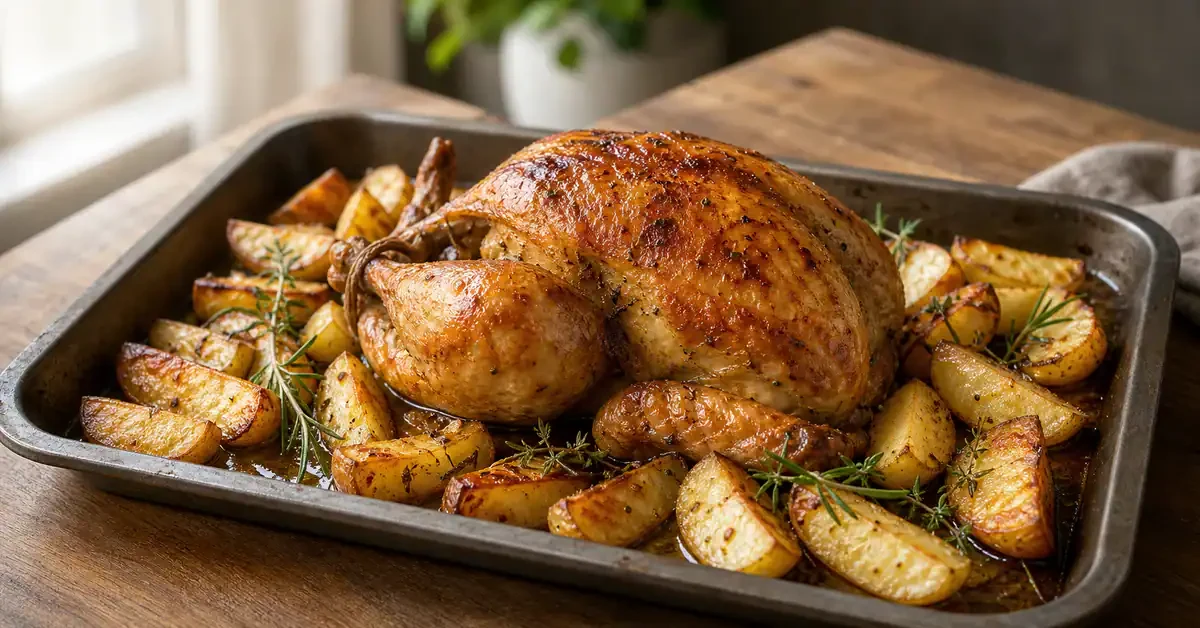
Roast chicken with potatoes is a simple one-tray centrepiece for a budget-conscious celebration. Dry the skin, add straightforward seasonings and roast until the chicken is cooked safely through and the potatoes are tender.
Budget roast chicken with potatoes brings a main course and side together in one tray. Garlic, paprika and optional herbs provide flavour without a long shopping list. Cooking time still depends on the size of the bird, so use its packaging and a thermometer rather than relying only on the clock.
The images illustrate this recipe and its preparation; the appearance of your finished dish may vary.
Ingredients and portions
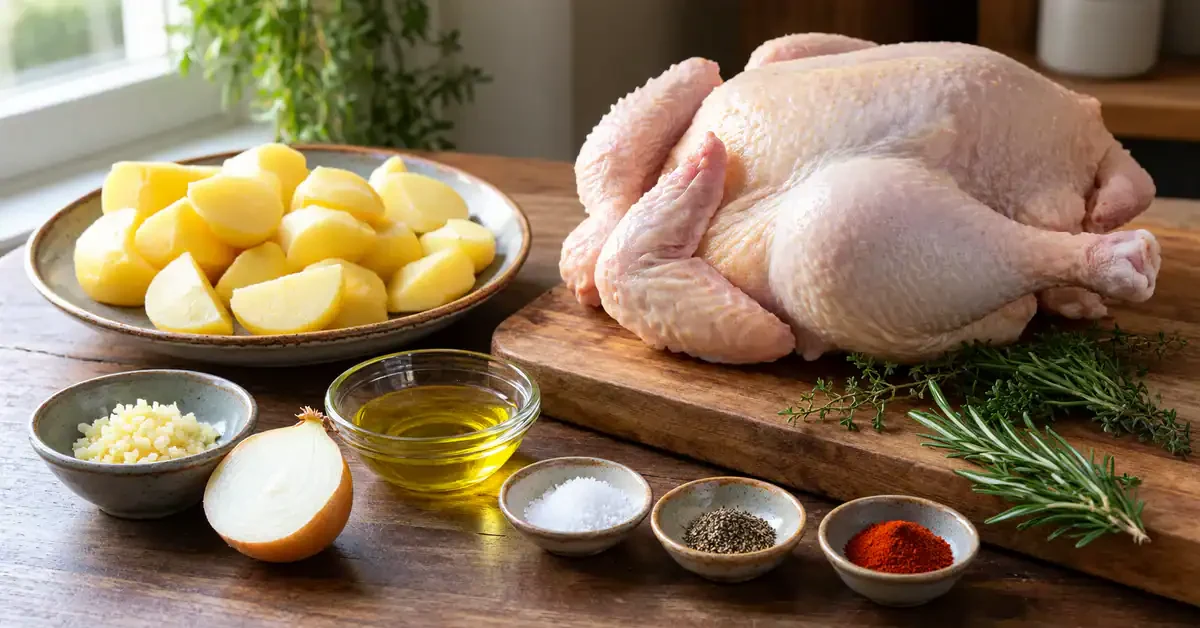
These ingredients make a straightforward roast. The original recipe does not specify the chicken’s weight, so its suggested timing and four-portion yield are approximate rather than promises for every bird.
Ingredients
- 1 whole chicken, raw, skin on; check its weight and cooking directions
- 900 g potatoes, peeled and quartered into similar-sized pieces
- 4 garlic cloves, chopped
- 1 medium onion, quartered, optional
- 2 tablespoons olive oil
- 1 teaspoon salt
- ½ teaspoon freshly ground black pepper
- 1 teaspoon sweet paprika
- Thyme, to taste, optional
- Rosemary, to taste, optional
Approximate yield and options
The original suggests 4 portions, but the number depends on the bird’s size and the other dishes served. You can roast the chicken without potatoes, or replace some potatoes with carrots or sweet potato. Changes to the cut of meat or size of vegetables require fresh cooking checks.
Initial preparation
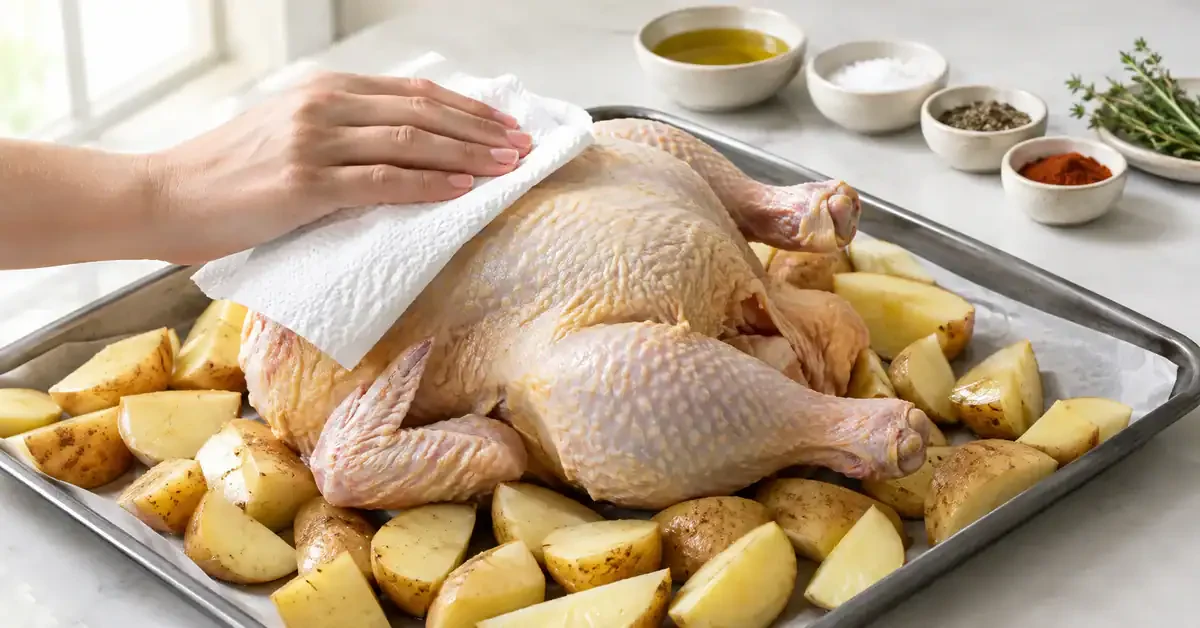
Preparing the chicken and potatoes
Do not wash raw chicken: splashes can spread bacteria around the kitchen. If needed, blot excess surface moisture with kitchen paper and discard it immediately. Wash hands and clean equipment after handling the raw bird, following Food Standards Agency advice. Prepare the potatoes separately, peeling and cutting them into similar-sized quarters, then dry their surfaces. Put the potatoes and optional onion in the roasting tray, add the garlic and seasonings, and position the chicken breast-side up. Use the stated oil and seasonings across the tray rather than adding a second unmeasured quantity. Source: Food Standards Agency: food safety and hygiene
Drying the chicken skin
Blot surface moisture carefully if necessary so the skin can brown. Do not rinse the bird before or after seasoning, and do not leave it unrefrigerated to dry for a prolonged period. Keep raw poultry and its juices away from foods that will be eaten without further cooking.
Arranging the roasting tray
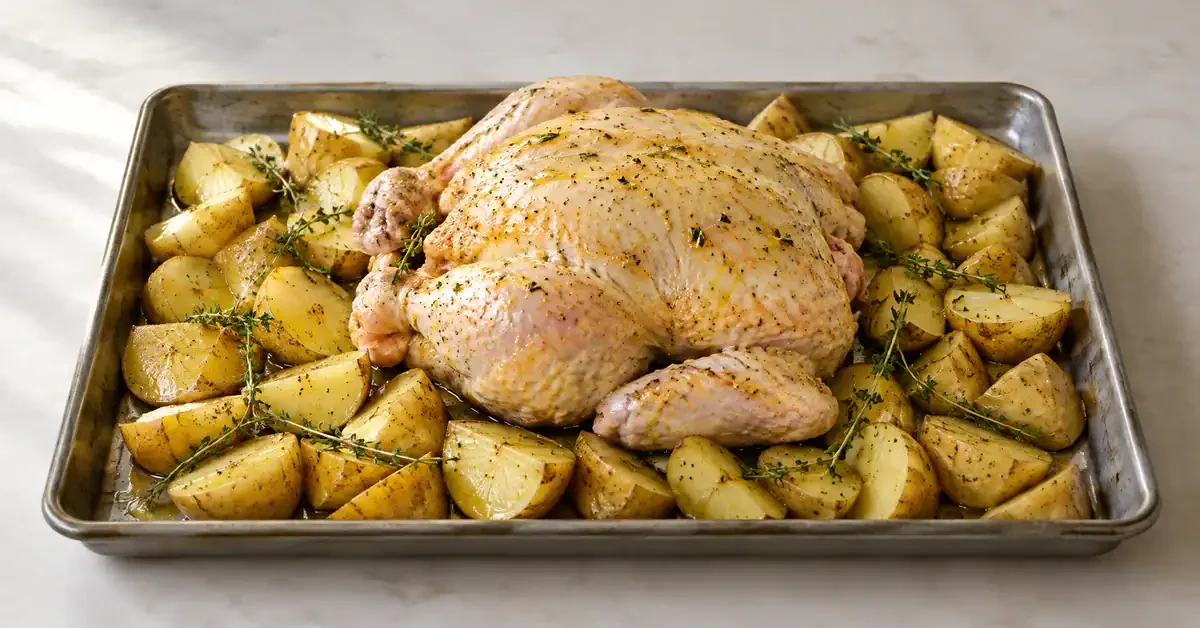
Positioning the ingredients
- Spread out the potatoes: arrange in a roomy, rimmed roasting tray in a single layer as far as possible. Pieces hidden directly beneath the chicken may become tender in the juices without crisping as much as exposed potatoes.
- Add the chicken: place it breast-side up on or among the potatoes. Keep the arrangement stable; fastening the legs is optional and is not necessary for this method.
Potatoes and seasoning
- Season the tray: use the 2 tablespoons oil, 1 teaspoon salt, ½ teaspoon black pepper and 1 teaspoon sweet paprika across the chicken and potatoes, with the chopped garlic. Toss the potatoes to coat. These are the total listed quantities, not separate amounts for each component.
- Add the aromatics: tuck the optional onion quarters, thyme and rosemary around the chicken and potatoes. Avoid leaving small pieces of garlic exposed where they can scorch before the meat is cooked.
Oven temperature, timing and cooking checks
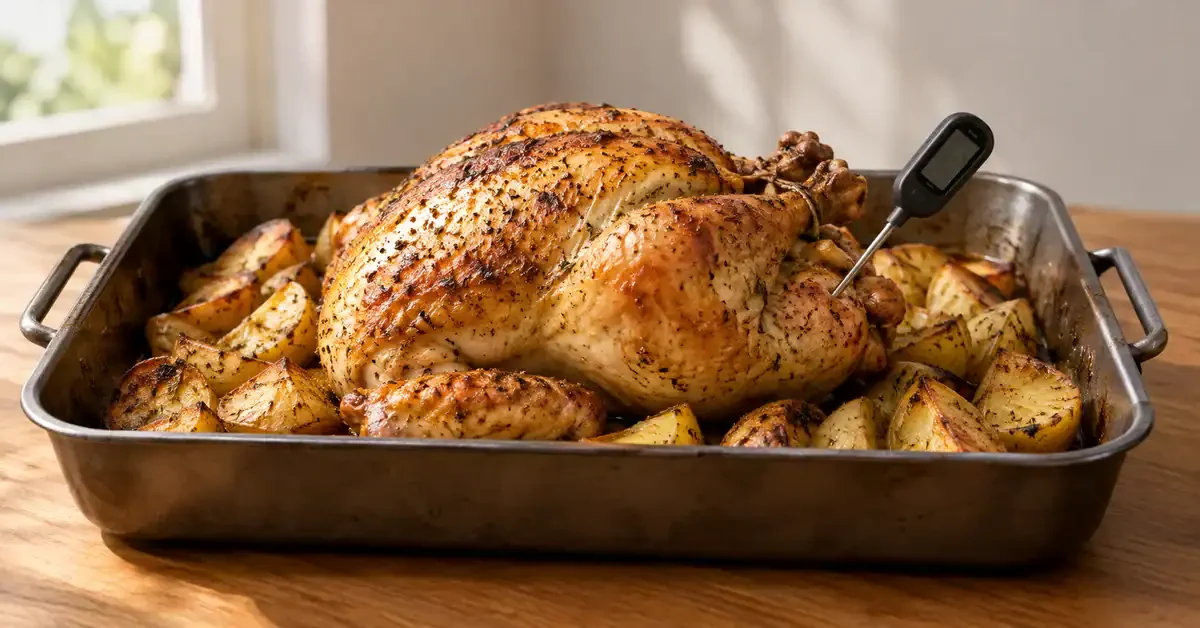
Oven temperature
Preheat to 200°C conventional or 180°C fan, unless the chicken’s packaging requires different directions. Allow the oven to reach temperature before adding the tray.
Estimated cooking time
The original gives 70–90 minutes, but without a chicken weight this cannot be a dependable timetable. Use the pack’s directions for the actual bird and begin checking accordingly. Continue cooking until the temperature check is satisfied, even if the potatoes are already tender or the skin is golden.
How to check that it is cooked
Use a clean food thermometer in the thickest parts, checking the thigh and breast without touching bone. One Food Standards Agency time-and-temperature combination is 75°C held for 30 seconds; 70°C for 2 minutes is another. The chicken must be cooked throughout. If no thermometer is available, check for steaming-hot meat throughout, no pink flesh and clear juices together; skin colour or firmness alone is insufficient. Test the potatoes with a fork as well. Source: Food Standards Agency: cooking and storing leftovers
Common mistakes and how to avoid them
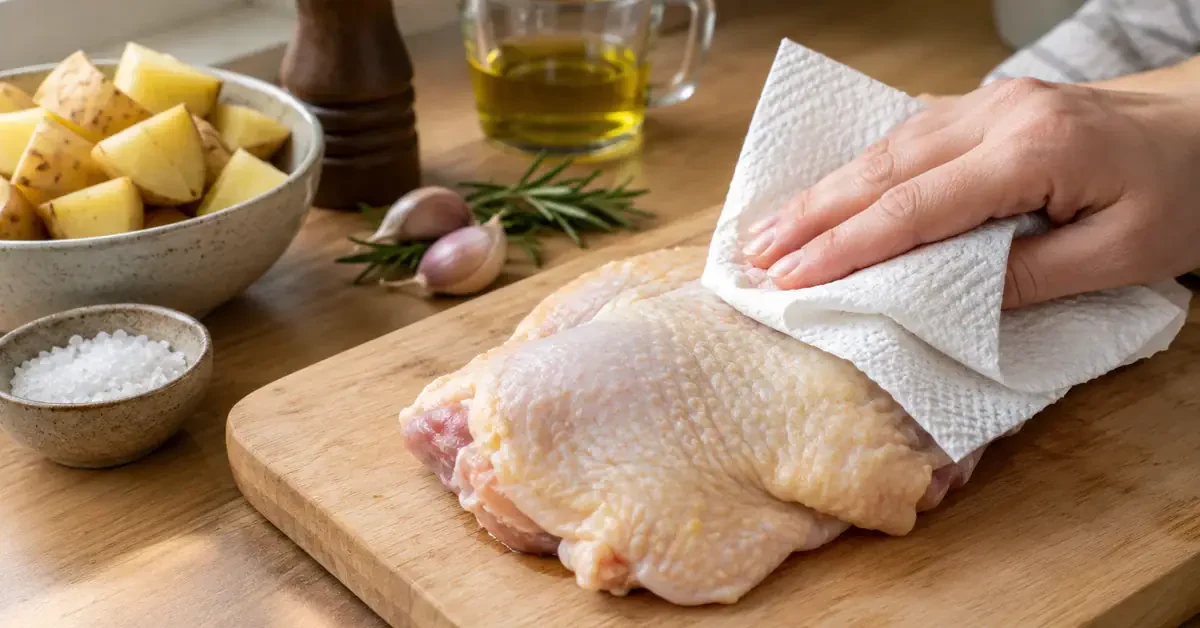
The main difficulties are excess moisture, overcrowded potatoes and assuming the outside colour shows whether the chicken is done. Separate the checks for browning from those for safe cooking.
Too much moisture for crisp skin
Blot the skin if necessary, without washing the chicken. Dry the potato surfaces before adding the oil and avoid crowding the tray. Roast uncovered for browning, but if the skin colours too quickly, shield it loosely with foil and keep cooking until the centre is done.
Potatoes that do not brown
Spread the potatoes out, coat them with the measured oil and preheat to 200°C conventional or 180°C fan. Potatoes underneath the bird receive juices and less direct heat, so they may remain softer. Once the chicken is safely cooked, you can move it to rest and let the potatoes brown further if needed.
More even cooking
Position the tray in the centre of the oven and rotate it if your oven browns unevenly. Turn accessible potatoes carefully with a utensil. Hot juices can burn, and juices from an undercooked chicken need further cooking; do not pour them directly over ready-to-eat food. If vegetables finish first, remove them only once they too are thoroughly cooked after any contact with raw poultry juices.
Substitutions and variations
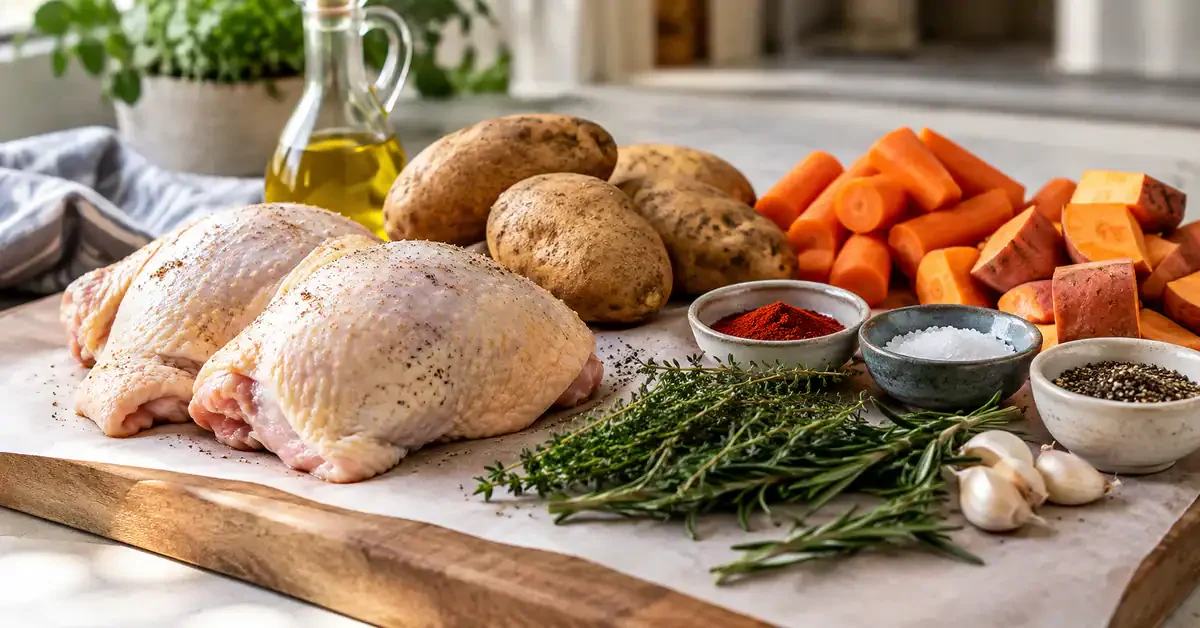
These ideas keep the same simple roast format, but a different chicken cut or vegetable can change the cooking time. Check each component rather than assuming the original estimate still applies.
Ingredient substitutions
- Chicken: skinless chicken or bone-in portions can be used as a variation. The yield and timing will differ. Follow the product’s directions and use the same safe internal temperature checks; do not cook one small portion for a whole bird’s estimated time.
- Vegetables: carrots or sweet potatoes can replace some or all of the potatoes. Cut evenly and check tenderness separately, as they may cook at different rates.
- Oil: a neutral cooking oil such as sunflower oil can replace olive oil, keeping a light coating over the vegetables.
- Seasonings: adjust salt and pepper to taste, or replace some sweet paprika with smoked or hot paprika. A change in flavour does not remove the need to check the chicken’s cooking temperature.
- Herbs: thyme and rosemary are optional. A little sage or oregano can give a different flavour without changing the basic method.
Flavour and serving variations
- For a smoky flavour, use smoked paprika instead of some or all of the sweet paprika, according to taste.
- For more colour after the chicken is fully cooked, a brief spell under the grill can brown the skin or potatoes. Watch continuously for burning; grilling the surface does not make an undercooked centre safe.
- Garlic powder can provide a different garlic flavour, but it is more concentrated than fresh garlic and is not a clove-for-spoon substitution. Follow the product’s guidance and avoid scorching it.
- Serve with plain rice, a green salad or steamed vegetables, depending on the rest of the meal.
Serving and storage
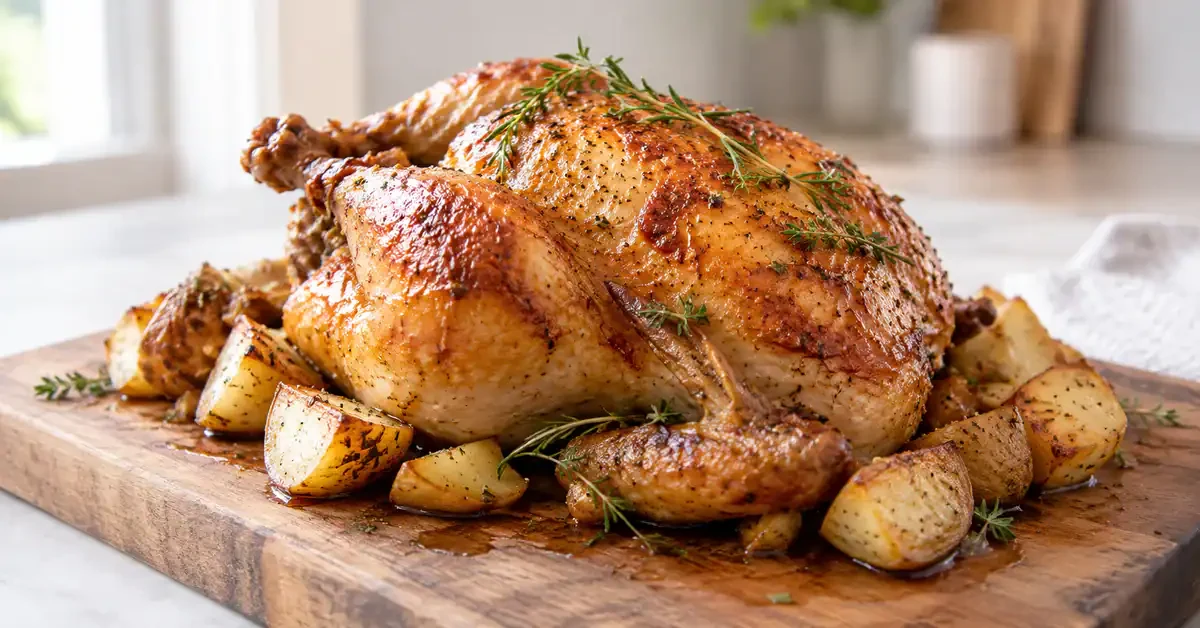
Once fully cooked, rest the chicken for 5–10 minutes before carving. Arrange the potatoes around it on a serving platter. Resting can make carving easier, although the skin may soften slightly rather than becoming crisper.
Presentation ideas
- Place the chicken breast-side up with the cooked potatoes around it, ready for carving.
- Spoon over a little of the fully cooked roasting juices if desired. Do not use juices reserved while the chicken was still raw or undercooked without cooking them thoroughly first.
- Finish with the optional thyme or rosemary if available.
- Keep the accompaniments simple: a green salad, rice or vegetables can complete the meal.
Leftovers and reheating
- Cool leftovers promptly in smaller portions, refrigerate within 2 hours and use within 48 hours, following Food Standards Agency guidance. Keep any cooked juices covered and refrigerated too.
- Reheat only once until steaming hot throughout. An oven set to 180°C can help preserve the surface texture, but the oven setting is not proof that the centre is hot. Check the thickest pieces before serving.
- Reheat properly stored cooked juices thoroughly with the meat if using them. Add only what you need; soaking the potatoes in liquid will soften their crisp edges.
Ready to serve
Rest the fully cooked chicken for 5–10 minutes before carving, then serve with the hot potatoes. Use the temperature check to decide when roasting is finished, not the colour of the skin.
For another version, replace some potatoes with evenly cut carrots or sweet potato. Check their tenderness separately and adjust the timing rather than assuming they will cook in exactly the same time.
Roast chicken and potatoes: frequently asked questions
How can I check the chicken without a thermometer?
A thermometer is the more dependable method: check thick parts without touching bone, using 75°C for 30 seconds or 70°C for 2 minutes. Without one, check that meat is steaming hot throughout, with no pink flesh and clear juices. Golden skin or firmness alone does not establish that it is safely cooked.
Why are the potatoes not golden?
They may be crowded, wet or covered by the chicken. Spread them out, coat with oil and use the preheated oven. Potatoes underneath the bird tend to be softer; after the chicken is cooked and removed to rest, they can brown further. Watch carefully if using the grill.
Can I use chicken portions instead?
Yes, as a variation, but portions have a different yield and cooking time. Follow the product’s instructions and confirm safe internal temperatures. Check the potatoes separately as well.
Can I use carrots or sweet potatoes?
Yes. Cut into similar-sized pieces and adjust cooking until tender. Different vegetables may soften sooner or later than ordinary potatoes, so use a fork to check rather than relying on one fixed time.
How should I serve and store leftovers?
Rest the cooked chicken for 5–10 minutes before carving. Refrigerate leftovers within 2 hours and use within 48 hours. Reheat only once until steaming hot throughout; an oven can help with texture but does not replace a check of the centre.
How long should the chicken roast?
The original estimate is 70–90 minutes, but no bird weight is supplied. Use the actual chicken’s packaging for timing and confirm safe cooking in the thickest parts. A different cut needs its own timetable; do not stop simply because the skin is brown or the potatoes are tender.