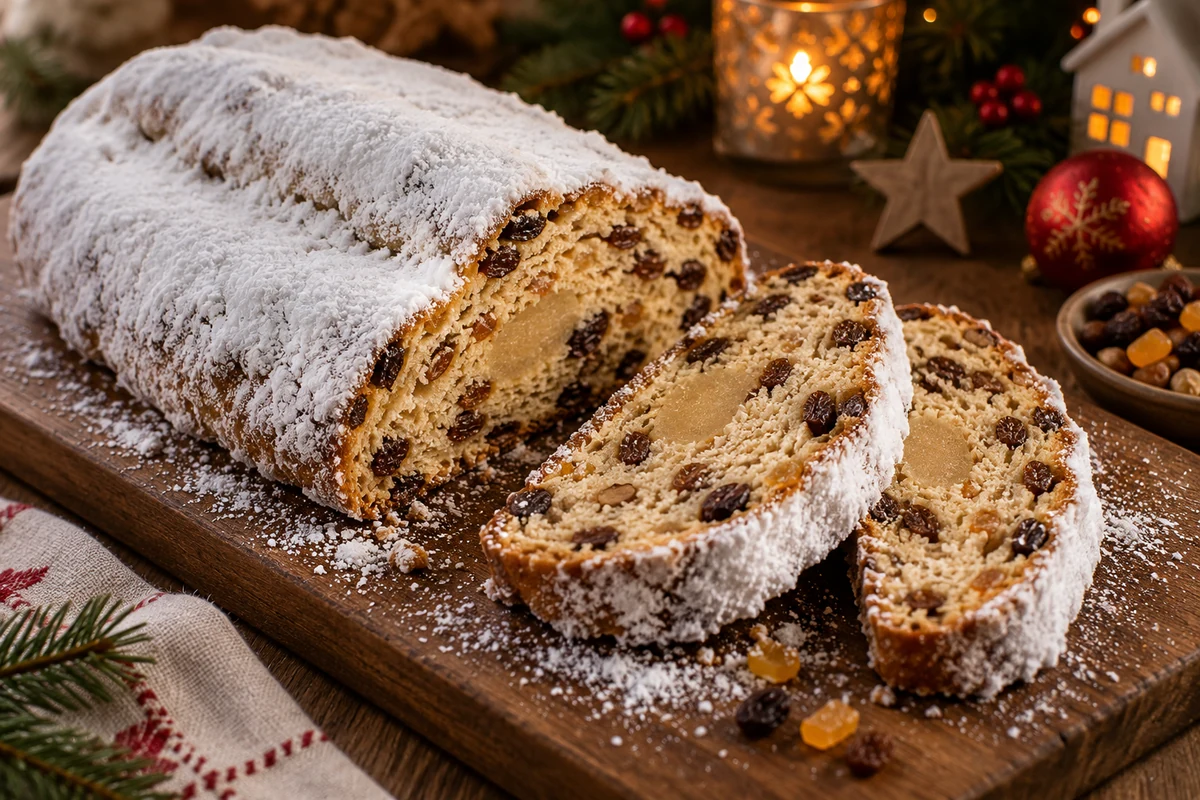
This Christmas stollen recipe makes two rich, fruit-filled loaves with butter, candied peel and optional marzipan. Allow time for the enriched dough to rise, bake until the crumb is cooked through, then finish with butter and icing sugar. It is a home adaptation of German stollen, not a recipe claiming the protected Dresden designation.
This Christmas stollen recipe brings together dried fruit, citrus peel and a buttery dough. The method includes practical guidance for two manageable loaves, plus ideas for changing the flavours without treating every ingredient as interchangeable.
Ingredients for homemade stollen
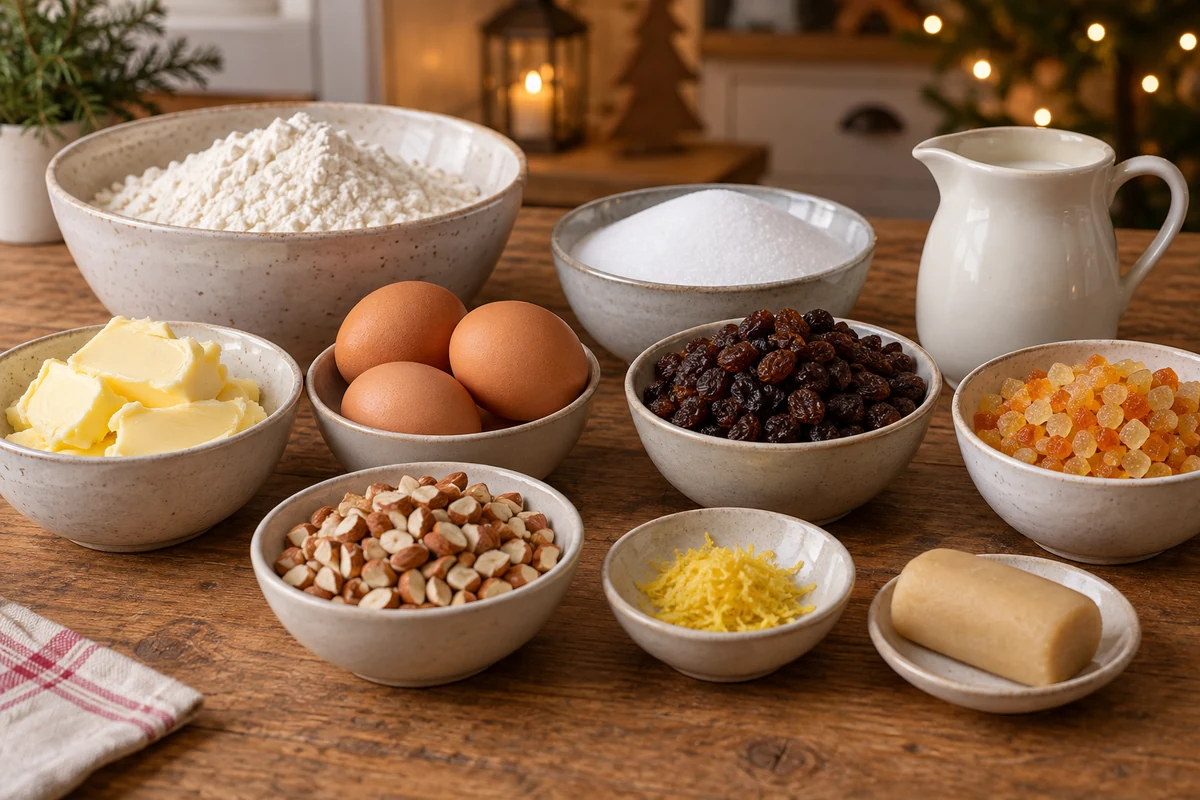
To make two smaller stollen loaves, gather the following ingredients:
- 500 g strong white bread flour – gluten-free flour is not a direct replacement in this kneaded dough.
- 100 g caster sugar – keep the measured amount for this dough rather than substituting an unmeasured quantity of sweetener.
- 10 g fine salt – to balance the flavour.
- 10 g fast-action dried yeast – or the equivalent fresh yeast according to its instructions, commonly around 25–30 g.
- 200 ml lukewarm milk – a suitable unsweetened plant drink can replace the milk, but that alone does not make the recipe vegan.
- 2 large eggs – for structure and richness; an egg-free loaf needs a separately developed recipe rather than a guaranteed flaxseed swap.
- 150 g unsalted butter, softened – a firm plant-based baking block changes the flavour and may change the dough; low-fat spread is unsuitable.
- 1 tsp vanilla extract – for aroma.
- Finely grated zest of 1 washed, unwaxed lemon – or orange zest.
- 200 g finely chopped candied fruit and citrus peel – use a mixture you enjoy.
- 150 g raisins or sultanas – dried cranberries can replace some for a sharper flavour.
- 100 g chopped almonds – walnuts or hazelnuts are alternatives; toast lightly and cool if desired.
- 50–80 ml rum or orange juice – for soaking the fruit; drain any excess before adding it to the dough.
- 100–150 g marzipan, optional – divide between the two loaves and check its ingredients for allergens.
- About 50 g icing sugar, or enough to coat, plus 30 g melted butter for finishing both loaves.
Ingredient tips
Soaking fruit: soak the dried fruit and peel in rum or orange juice for at least 30 minutes. Use juice if avoiding alcohol; baking does not guarantee that all alcohol disappears.
Flour and texture: the dough should be soft and slightly tacky. Knead before adding more flour, since too much makes a dry loaf. Gluten-free stollen needs different proportions and handling.
Vegan baking: plant milk and baking fat can replace dairy in an adapted recipe, but removing the eggs affects hydration and structure. Use a complete vegan stollen recipe and check the marzipan rather than assuming a simple one-for-one substitution.
How to make stollen
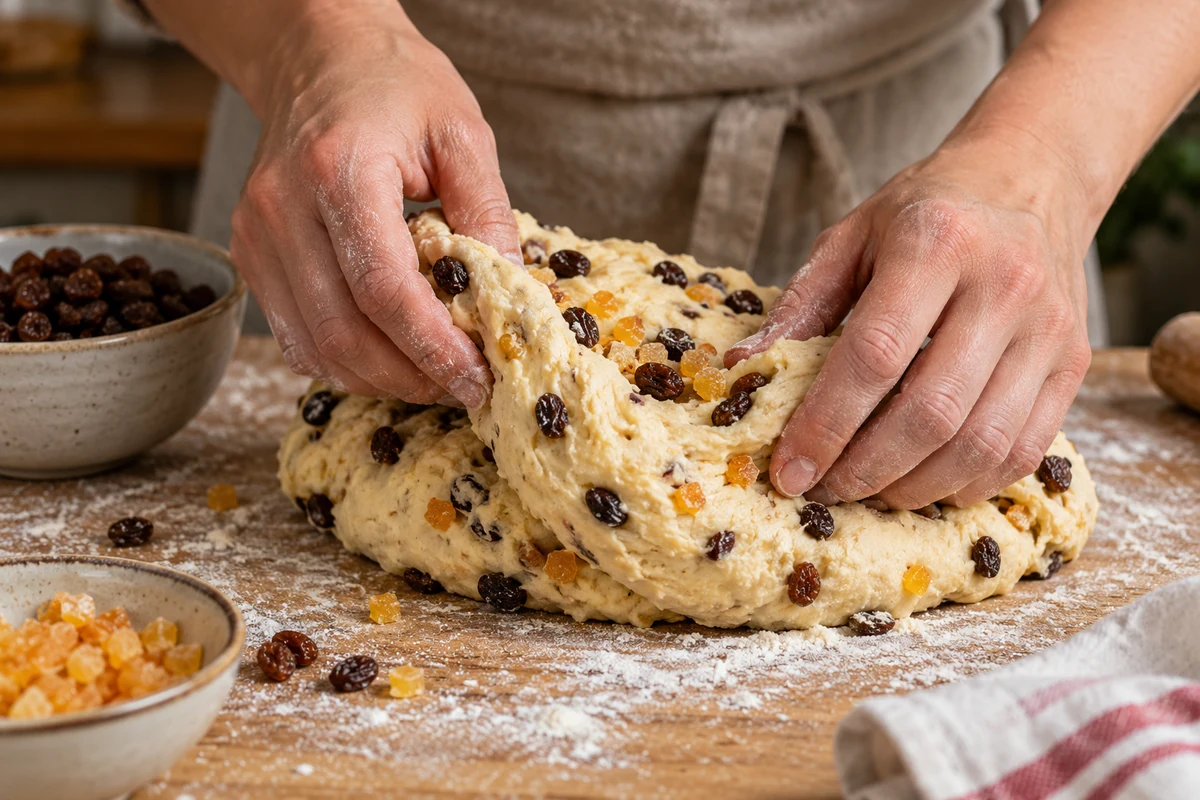
Step-by-step stollen method
- Soak the fruit: combine 200 g chopped candied fruit and peel with 150 g raisins or sultanas and 50–80 ml rum or orange juice. Leave for at least 30 minutes, then drain any excess liquid.
- Prepare the yeast and milk: warm 200 ml milk until lukewarm, not hot. 10 g fast-action yeast can usually be mixed directly with flour; if using a different yeast, follow its activation instructions.
- Mix the dry ingredients: combine 500 g bread flour, 100 g caster sugar and 10 g salt. Add fast-action yeast as directed, mixing it through rather than leaving it in concentrated contact with salt.
- Make the dough: add the milk, 2 eggs, 1 tsp vanilla and lemon zest. Mix and knead until the dough begins to come together, then work in 150 g softened butter a few pieces at a time.
- Knead: continue until smooth and elastic, about 10–15 minutes by hand or as needed with a dough hook. Stop a mixer if it is overheating. The dough should stretch into a thin membrane before the fruit is added, although timing varies.
- First rise: place in a lightly greased bowl, cover and leave in a comfortably warm place until noticeably expanded, usually 1½–2 hours but sometimes longer. Rich dough can rise slowly, so watch the dough rather than the clock.
- Add fruit and nuts: gently flatten the dough, scatter over the drained fruit and peel and 100 g chopped almonds, then fold and knead gently until evenly distributed.
- Divide and shape: divide into two equal pieces and flatten each into an oval about 2 cm thick. If using 100–150 g marzipan, split it into two short logs and place one slightly off-centre on each oval. Fold the dough over it to make the characteristic off-centre ridge, pressing gently to seal.
- Second rise: place the loaves well apart on a baking-paper-lined tray, cover loosely and leave until visibly puffy, often 45–90 minutes. They need not double in size at this stage.
- Heat the oven: preheat to 180°C conventional / 160°C fan, with a shelf near the centre.
- Bake: bake the two loaves for approximately 35–45 minutes, checking from 30 minutes. Cover loosely with foil if browning too fast. The crumb should be cooked through; a probe in the dough, avoiding fruit and marzipan, should read around 88–90°C.
- Finish with butter and sugar: rest the loaves on a rack for about 5 minutes, then brush their tops and sides with the 30 g melted butter, divided between them. Dust with icing sugar and add a little more sugar once cool if needed.
- Cool and wrap: cool completely before wrapping in baking paper and foil or storing airtight in a cool, dry place. The flavour settles by the next day; freeze any portion you will not eat within about 3–4 days.
- Practical reminders: add extra flour sparingly, drain soaked fruit well and let toasted nuts cool before mixing them in. Treat vegan or gluten-free versions as separately formulated recipes.
Stollen flavour variations
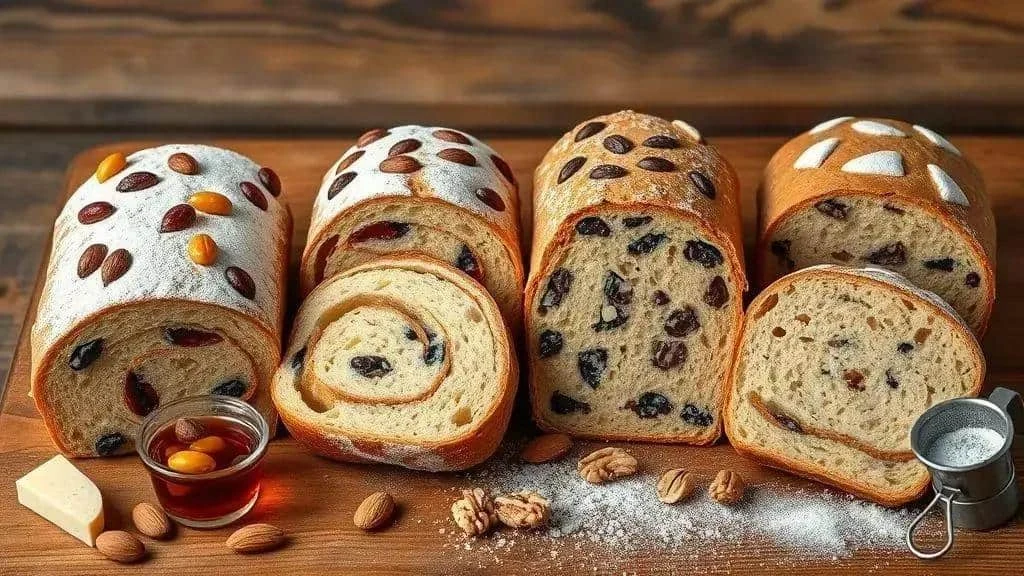
You can vary the flavours of stollen while keeping the dough balanced. Try a small batch before preparing gifts or changing several ingredients at once.
Variation ideas
- Fruit and peel: use the main recipe with raisins, candied citrus peel and the butter-and-icing-sugar finish.
- Marzipan centre: add the optional almond-paste log for a sweeter, softer centre.
- Without candied peel: replace some peel with raisins or sultanas. A completely fruit-free loaf will have a different yield and character; do not automatically replace all fruit with the same weight of nuts.
- Chocolate and nuts: replace a modest portion of the dried fruit with chocolate chips. Adding cocoa to the dough needs liquid and flour adjustments, so it is not included as an unmeasured extra.
- Vegan stollen: use a complete egg-free, dairy-free formula with suitable plant-based fat, milk and marzipan.
- Gluten-free stollen: follow a dedicated recipe that accounts for flour blend, binding agent and hydration; ordinary kneading does not create gluten in a gluten-free dough.
Tips for adapting the flavours
- Soaking liquid: use orange juice for anyone avoiding alcohol, including children’s portions.
- Sweetness: choose less candied peel and more unsweetened dried fruit if preferred, but remember that dried fruit still contains sugar.
- Dough texture: keep the specified butter and liquid quantities. Extra butter is not a reliable last-minute cure for dry dough.
- Nuts: light toasting adds aroma; cool them before incorporating.
- Resting: wrap only once fully cool and leave until the next day if possible.
- Smaller gifts: divide into mini loaves, adjusting baking time and checking the centre rather than using the full-size timing.
Choosing a variation
The fruit-filled version is a good starting point, with marzipan as an optional addition. Check allergies and dietary needs before choosing nuts, chocolate or alternative products.
Proving, baking and storage advice
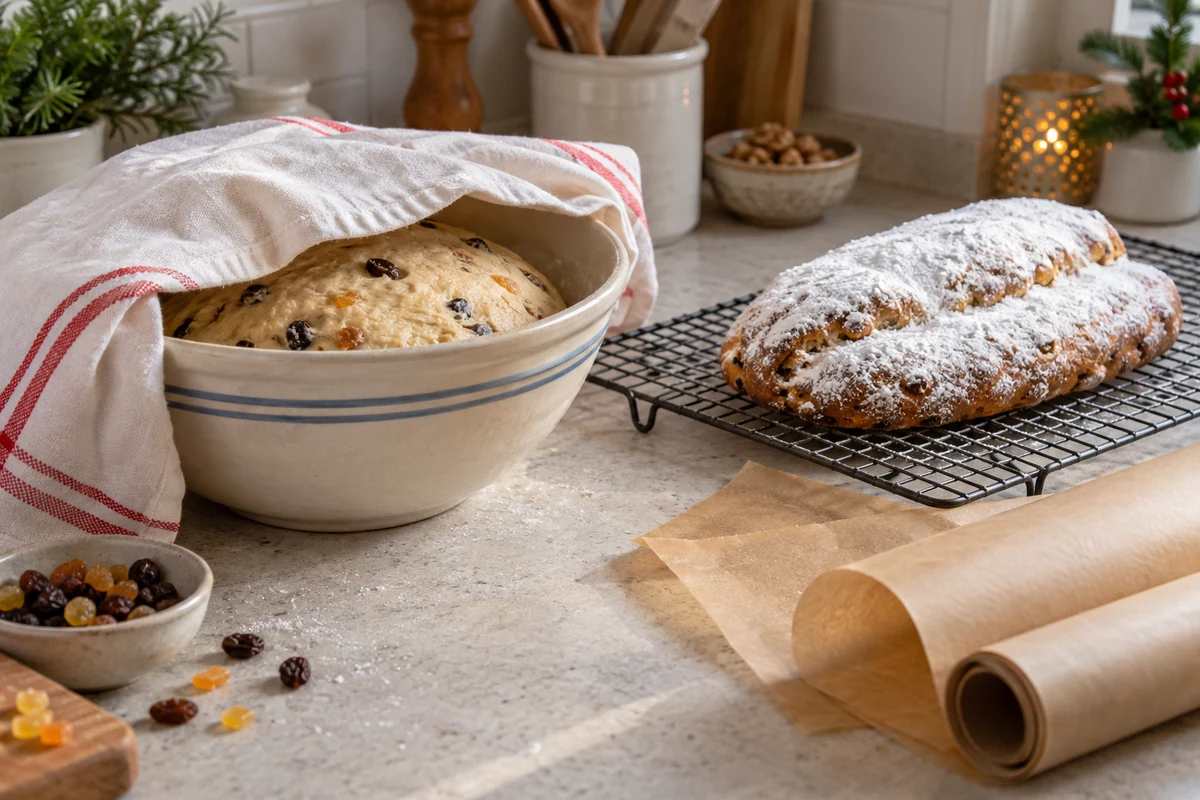
Practical tips for a well-risen stollen
- First rise: cover the dough in a lightly greased bowl and keep it comfortably warm, roughly 24–26°C. Allow longer in a cooler kitchen rather than increasing the heat sharply.
- Check the dough: it should look expanded and feel airy. During the final proof, a light indentation should recover slowly rather than springing back immediately or collapsing.
- Overnight preparation: this method is written for same-day proving. With 10 g yeast, do not add an unplanned 24–48-hour fridge rise after the dough has already fully risen; use a recipe designed for an overnight schedule.
- Second rise: allow the shaped loaves to become puffy before baking, checking their appearance rather than insisting on exactly one hour.
- Liquid temperature: use lukewarm milk and follow the yeast maker’s guidance. Hot liquid can damage yeast, while cooler dough simply takes longer.
- A cold kitchen: find a draught-free spot. If using an unheated oven with its light on, check that it stays gently warm and make sure nobody switches the oven on with the dough inside.
- Avoid over-proving: bake once the final rise is ready. Dough that has collapsed may produce a dense loaf; reshaping is not a guaranteed repair, especially after fruit and marzipan are added.
- Checking the bake: colour alone can mislead in a rich fruit loaf. Check the centre of the dough with a probe, avoiding marzipan and fruit, and look for a cooked crumb rather than wet dough.
- Cooling: cool completely on a wire rack before wrapping to avoid trapped condensation.
- Finishing: brush the warm loaves with the measured melted butter and dust with icing sugar.
- Room-temperature storage: keep tightly wrapped in a cool, dry place and aim to eat within 3–4 days. This moist home adaptation should not be assumed to have the long storage life of a commercially made traditional stollen.
- Freezing: wrap fully cooled loaves or slices well and freeze for up to 3 months for quality. Thaw wrapped in the fridge, then bring portions to room temperature for serving.
- Gentle warming: warm individual slices briefly in a low oven if desired; the sugar coating may melt, so avoid overheating.
- Troubleshooting: give sticky dough time to develop before adding flour. If it is dry, add milk a teaspoon at a time before the fruit stage. If it will not rise, check the yeast and temperature rather than adding more yeast blindly.
Storage reminders
- Butter and sugar coating: this helps limit drying but does not make the loaf immune to spoilage.
- Resting overnight: gives the fruit and citrus flavours time to mingle.
- Gifting: wrap fully cooled loaves in food-safe packaging and include the baking date, storage guidance and ingredients or allergens.
Butter, icing sugar and other finishes
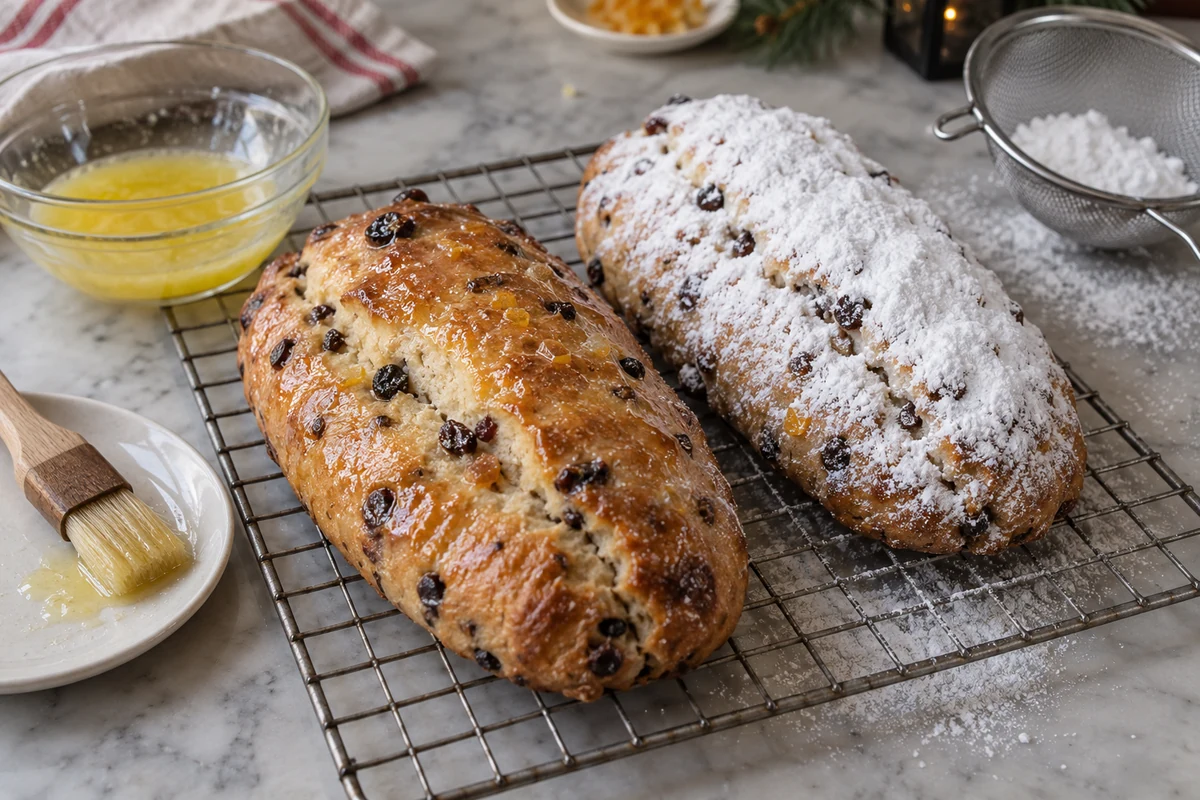
The familiar snowy finish of stollen comes from melted butter and icing sugar. Apply them neatly without turning the coating into a substitute for proper storage.
The classic butter-and-sugar finish
- Rest after baking: put the loaves on a rack and leave for about 5 minutes.
- Brush with butter: divide 30 g melted butter between both loaves, brushing the warm tops and sides.
- Dust with sugar: sift icing sugar over the buttered surface. Add another light dusting after cooling if some has dissolved.
- Avoid unmeasured extra layers: the listed butter is the total finishing amount for both loaves. A second sugar dusting is optional.
Alternative finishes
- Simple icing: mix 100 g icing sugar with orange juice a teaspoon at a time to make a drizzle. Apply to a cooled loaf instead of the classic finish.
- Apricot glaze: warm a little apricot jam until brushable and apply a thin layer for a fruity gloss.
- Chocolate drizzle: drizzle melted dark chocolate over a cooled loaf for a different finish.
- Spiced sugar: add a small pinch of cinnamon to the icing sugar if preferred; nutmeg needs only a light touch.
- Optional egg wash: a little additional beaten egg before baking gives a glossy crust, although it is unnecessary beneath the classic snowy coating. Do not take it from the two eggs measured for the dough.
- Nuts: a few toasted almond flakes can be added to the finish, with allergens clearly identified.
Presentation and keeping tips
- Butter while warm: brush after the brief initial rest so it soaks into the surface.
- A snowy finish: sift evenly, adding a little more icing sugar when cool if needed.
- Wrap for gifts: use baking paper and foil or another food-safe wrap before adding decorative paper.
- Serve in slices: cut with a serrated knife once fully cool; gently warm portions only if desired.
- Keep or freeze: plan on 3–4 days in cool, dry storage for this home recipe, or freeze well wrapped for up to 3 months for quality.
Stollen and its Christmas history
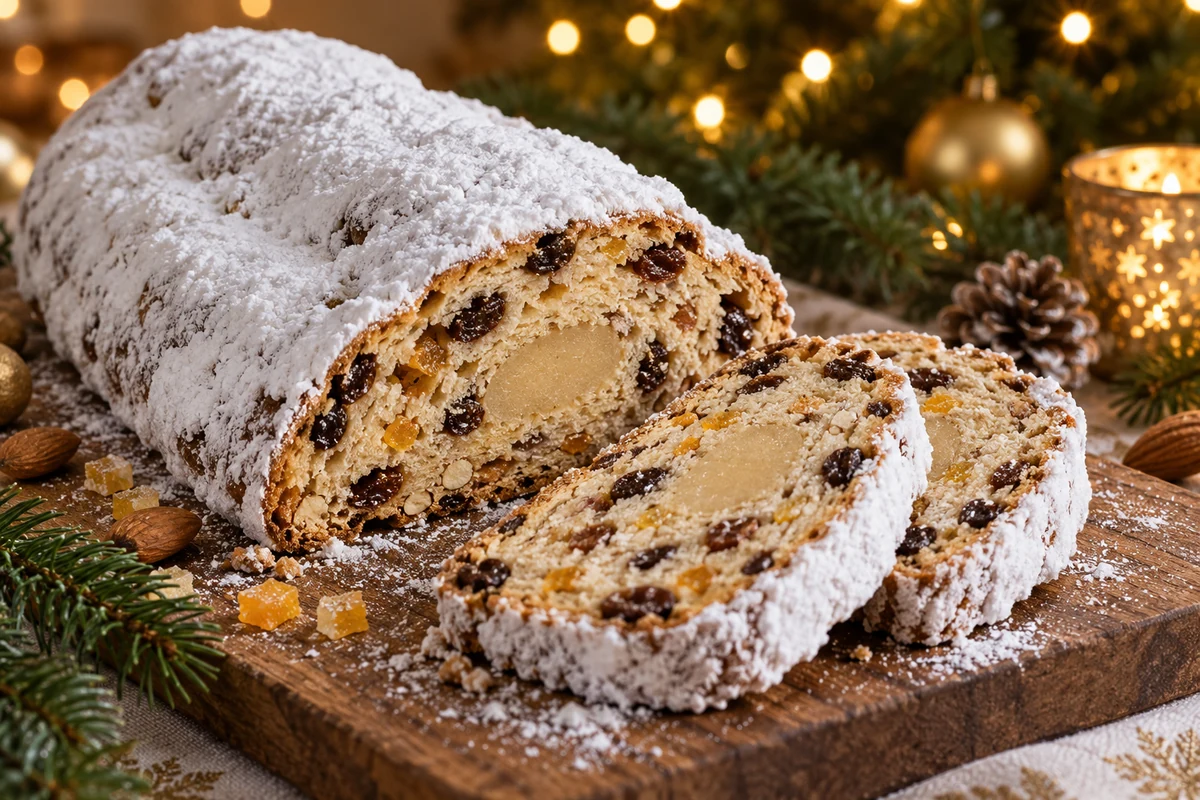
Stollen belongs to a long German baking tradition. Its rich modern forms developed over time, and Dresden is especially associated with the Christmas loaf.
A historical tradition
The Dresden Stollen Association describes a development from a simpler fasting bread to a richer festive bake, including the historical permission to use butter. The present recipe is a home adaptation rather than a reconstruction of an early version.
Dresdner Christstollen
The name Dresdner Christstollen has protected geographical status and defined production requirements. A homemade loaf made elsewhere should simply be called stollen, even when inspired by that tradition.
Symbolism and gift giving
The folded shape and white sugar covering are traditionally associated with the swaddled Christ Child. Stollen is also given as a Christmas gift; keeping times depend on the recipe and should not be transferred automatically from one version to another.
Different styles
Marzipan-filled, nut-rich and chocolate variations offer different flavours. Vegan and gluten-free adaptations are also possible, but need formulas designed for their ingredients.
A few points of interest
- Stollenfest: Dresden celebrates its baking tradition with a festival that includes a giant stollen.
- Resting: allowing a home-baked loaf to rest overnight can make slicing easier and let flavours settle.
- Marzipan: it is an optional filling in this recipe, not a requirement for every style of stollen.
- Personal touches: different fruit, peel and spice choices give home bakers room to adapt the flavour.
Understanding the distinction between regional traditions and home adaptations helps you enjoy the loaf without making inaccurate claims about its origin.
Bake your own Christmas stollen
Homemade stollen rewards patient proving and careful baking. Start with the measured recipe, watch the dough as it rises and let the loaves cool before wrapping or slicing.
Thank you for reading. Follow our social channels for more festive baking and gift ideas, and visit the I Love Christmas blog for more inspiration.
Stollen: frequently asked questions
Can I make stollen without alcohol?
Yes. Soak the fruit in orange juice instead of rum and drain it before adding to the dough. This is preferable to assuming that baking removes all alcohol.
How far ahead should I bake this stollen?
The day before is a convenient choice. For this home adaptation, plan to eat it within about 3–4 days in cool, dry storage, or freeze it well wrapped for up to 3 months for quality.
How should I store homemade stollen?
Cool it completely, then wrap tightly in food-safe paper and foil or use an airtight container in a cool, dry place. Freeze portions you will not use promptly; thaw wrapped in the fridge before bringing to serving temperature.
Can I make a vegan or gluten-free version?
Yes, using a complete recipe designed for that diet. Eggs, gluten and butter each affect dough structure, so flaxseed, gluten-free flour or a low-fat spread are not guaranteed direct substitutes here.
What if my stollen dough is slow to rise?
Check that the yeast is in date, the milk was not too hot and the dough is in a gently warm place. Rich dough rises more slowly than lean bread; allow extra time rather than heating it aggressively.