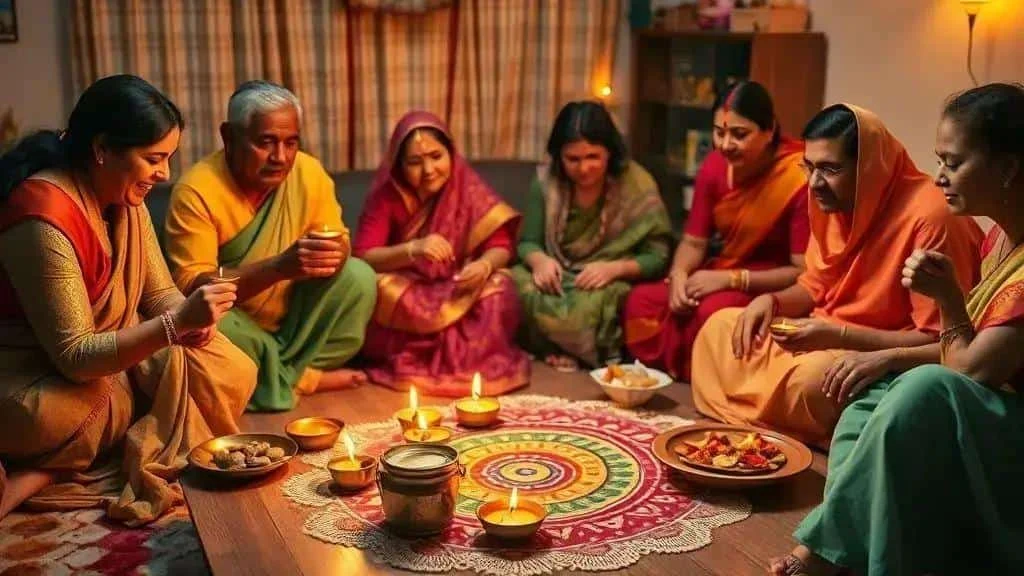
New Year in India has many forms. Alongside 1 January, communities observe regional new years such as Gudi Padwa, Ugadi and Puthandu. Diwali is followed by Gujarati New Year, while Pongal and Baisakhi have distinct harvest and religious meanings. There is no single date, ritual or menu shared by everyone.
New Year in India offers a fascinating introduction to the country’s varied calendars, beliefs and family traditions. This guide explores those differences, explains the festivals often confused with one another and suggests respectful ways to learn more.
Illustrations in this article are conceptual images, not documentary photographs or evidence of a particular historical event, destination, venue or access route.
Why New Year Dates Vary Between Regions and Communities
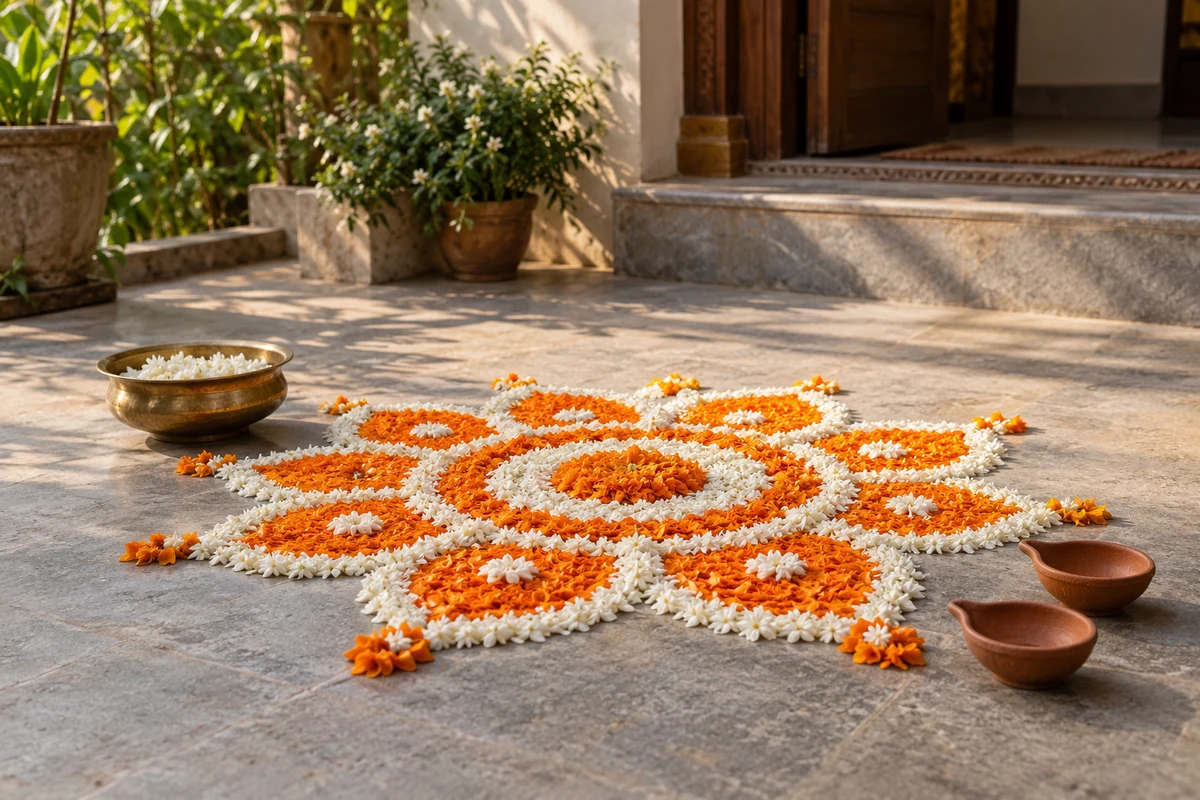
Different communities in India follow different calendars. Many traditions use a lunisolar calendar, while others follow solar systems or a separate religious calendar. The Gregorian calendar also places the civil New Year on 1 January.
Why the Dates Change
- Lunar, lunisolar and solar calendars: lunar calendars follow the Moon; lunisolar calendars also adjust to the solar year. Solar calendars follow the Sun’s annual cycle. These systems do not always align with Gregorian dates.
- Regional calendars: systems such as Vikram Samvat, Shaka and the Bengali and Tamil calendars differ in their month names, year counts and starting points.
- Harvests and seasonal change: festivals can celebrate agricultural renewal without being New Year’s Day. Pongal is a Tamil harvest festival; Puthandu is Tamil New Year.
- Religious and community identity: Hindu, Sikh, Parsi and Muslim observances have distinct meanings. Navroz and the Islamic New Year, for example, should not be treated as versions of one shared Hindu festival.
- Local practice: public holidays and community events also vary by state. A festival may be central to one family’s year and not observed by another.
Examples of Dates and Festivals
- Gujarati New Year: falls in the Diwali period, generally in October or November. It follows Diwali rather than making Diwali itself a universal Indian New Year’s Day.
- Gudi Padwa and Ugadi: usually fall in March or April. Gudi Padwa is associated with Maharashtra; Ugadi is observed in Karnataka, Andhra Pradesh and Telangana, with regional variations.
- April celebrations: Puthandu, Pohela Boishakh, Vishu and Baisakhi occur around mid-April, but their calendars and meanings differ. Baisakhi is particularly important as a Punjabi harvest festival and a Sikh commemoration.
- Pongal and Makar Sankranti: occur around mid-January. They mark harvest and solar-seasonal traditions in different regions, rather than a single nationwide new year.
- Navroz: dates depend on the calendar followed. Some communities observe the spring equinox, while many Parsis in India observe a date in August. Check the particular community’s calendar. Source: Government of India: Navroz greetings in August 2025
- Islamic New Year: begins with Muharram. Its Gregorian date moves roughly 10–11 days earlier each year. Observance is not necessarily festive; Muharram includes periods of solemn remembrance, especially for Shia Muslims.
Calendar calculations and regional practice can be complex, so check the relevant local calendar or organiser’s information before arranging a visit or sending greetings.
Diwali, Pongal, Gudi Padwa and Baisakhi: Different Meanings
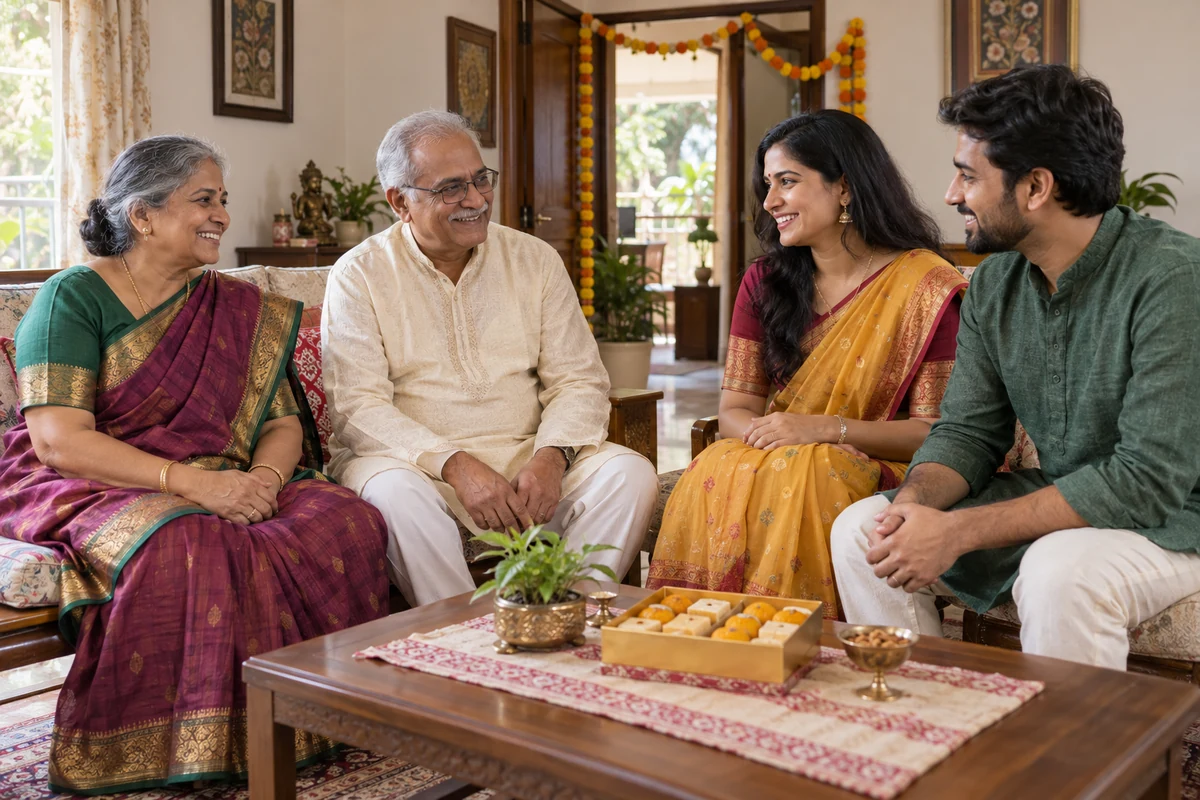
These festivals illustrate India’s cultural variety. Some mark a new year, some celebrate a harvest and others have particular religious significance. Understanding those distinctions is more useful than grouping them all under one label.
Diwali
Diwali is the festival of lights, usually celebrated in October or November. It is associated with new beginnings and business traditions in some communities, and Gujarati New Year follows it.
- Customs: many Hindu households light diyas, clean and decorate their homes and hold a puja to Lakshmi. Practices differ, and fireworks are subject to local rules and restrictions.
- Typical sweets: ladoo, jalebi and other mithai are shared with family, friends and neighbours.
- Atmosphere: illuminated homes, gifts and family visits are familiar features, although celebrations are not identical across communities.
Pongal
Pongal is a Tamil harvest festival held in January, with thanksgiving for the harvest and the natural world. It is distinct from Puthandu, Tamil New Year in April. Source: Government of India: Tamil New Year celebrations
- Customs: households may cook newly harvested rice until the pot overflows, create kolam designs and make offerings associated with thanksgiving to the Sun.
- Typical food: sakkarai pongal is a sweet rice preparation made with jaggery. Sugar cane is also associated with the festival.
- Atmosphere: family gatherings, decorated homes and exchanges of good wishes form part of many celebrations.
Gudi Padwa and Ugadi
Gudi Padwa in Maharashtra and Ugadi in Karnataka, Andhra Pradesh and Telangana mark regional new years in March or April, following lunisolar calendars. Source: Government of Goa: Gudi Padwa and Ugadi
- Customs: raising a decorated gudi is a Gudi Padwa tradition. New clothes, family worship and temple visits may also feature, but practices vary between regions and households.
- Typical food: puran poli is associated with Maharashtra. In Telugu Ugadi celebrations, Ugadi pachadi combines contrasting tastes as a reminder of life’s different experiences.
- Atmosphere: family visits, good wishes and community programmes accompany the start of the year.
Baisakhi
Baisakhi, also called Vaisakhi, falls in mid-April. It celebrates the harvest in Punjab and, for Sikhs, commemorates the founding of the Khalsa in 1699. Describing it simply as Sikh New Year misses this central religious meaning. Source: SGPC: Guru Gobind Singh and the founding of the Khalsa
- Customs: visits to gurdwaras, Nagar Kirtan processions and community service may feature. Langar is the communal meal served in gurdwaras.
- Regional food: Punjabi dishes include makki di roti and sarson ka saag. These are examples of the region’s cooking, not a compulsory Baisakhi menu.
- Atmosphere: harvest celebrations, bhangra, fairs and religious gatherings reflect different aspects of the occasion.
Practical Points for Visitors
Dates and practices vary by community and year. Before joining an event, check its calendar, entry arrangements and expectations for visitors. Not every place of worship admits non-members or permits photography.
Puja, Diyas, Rangoli and Family Blessings
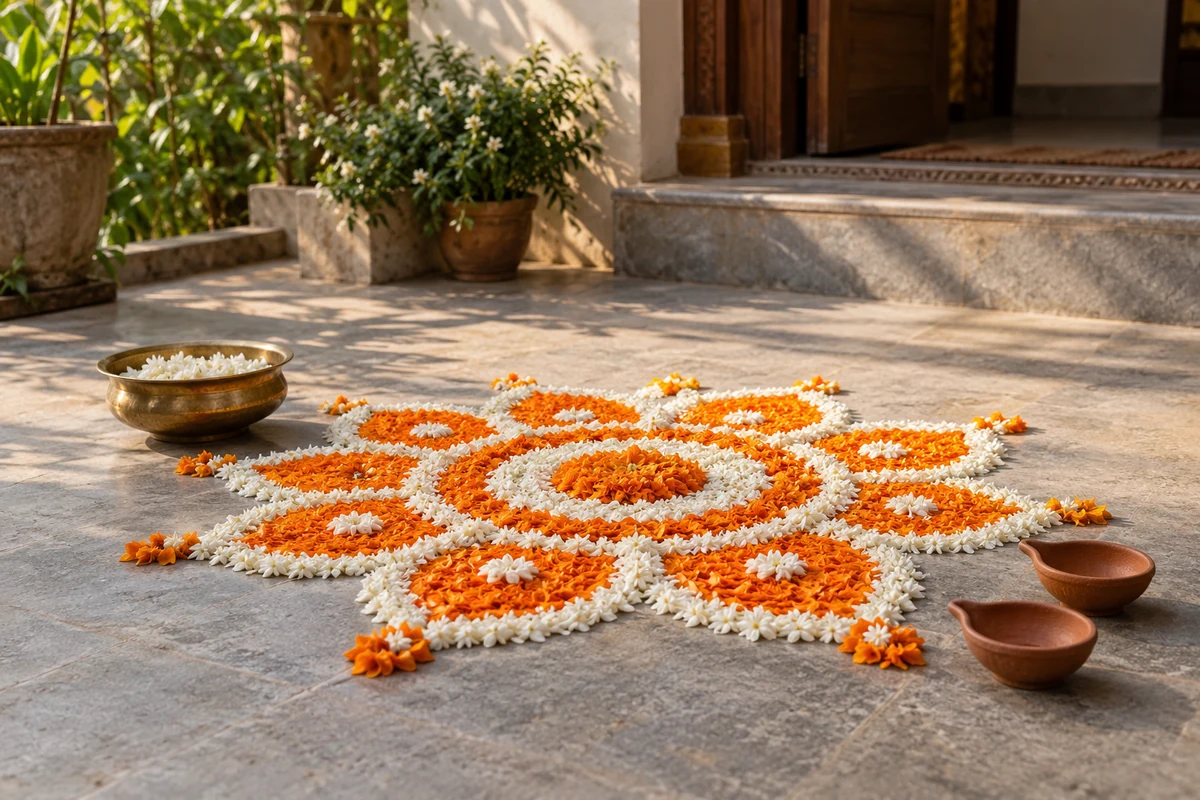
These symbols are associated with particular Hindu traditions, rather than every New Year celebration in India. Their meanings and use depend on the household, region and occasion.
What a Puja May Involve
A puja is an act of worship. The following are examples of what a household ceremony may include, not a universal sequence or an instruction to reproduce another family’s religious practice.
- Preparing the space: a clean area, cloth or mat may be arranged for worship.
- Preparing a puja thali: a tray may hold flowers, rice, water, incense and a diya, or oil lamp.
- Lighting a lamp or incense: these may accompany prayers, with suitable ventilation and fire precautions.
- Making offerings: flowers, rice or sweets may be offered before a sacred image or symbol.
- Reciting prayers: worshippers may recite or listen to prayers and mantras appropriate to their tradition.
- Sharing prasad: food offered during worship may then be shared with those present.
Diyas: Light and Symbolism
Diyas are small earthenware or metal lamps, traditionally fuelled with oil or ghee. Their light can symbolise knowledge, hope and the overcoming of darkness.
- Choose a stable, heat-resistant surface rather than a draughty window or busy doorway.
- For decorative activities with children, use battery-operated lights instead of open flames.
- Keep any flame well away from curtains, clothing, flowers and other combustible materials, and never leave it unattended.
Rangoli: Colour and Welcome
A rangoli is a decorative floor design associated with welcome and auspicious occasions. Materials may include coloured powders, rice or flower petals; related regional traditions have their own names and techniques.
- Start with a simple outline: circles or other geometric shapes are approachable for a craft activity.
- Choose suitable materials: petals or craft powders intended for this use can provide colour. Keep loose materials away from small children and pets.
- Choose the location carefully: use a sheltered area that does not obstruct a walkway or make a floor slippery.
Family Blessings and Etiquette
In some households, younger family members receive blessings from elders. A tilak may be applied to the forehead in certain Hindu traditions, but it is not a universal Indian custom.
- Ask permission before photographing anyone, particularly during worship.
- Follow the host’s or venue’s guidance on clothing, footwear and head coverings.
- A modest gift can be thoughtful, but ask about dietary restrictions and suitable offerings first.
Materials, Safety and Respect
A few practical considerations help make participation more considerate.
- Use stable, heat-resistant holders for lamps and candles.
- Do not pour water onto burning oil or ghee. Choose LED lights for a home craft display if you cannot manage open flames safely.
- Follow local fireworks rules and avoid adding noise or smoke to crowded celebrations.
- Respect restrictions on photographs, clothing and entry to sacred spaces.
Joining a Celebration
If you are invited to a puja or family gathering:
- Ask whether sweets, flowers or another small gift would be appropriate.
- Arrive at the time requested rather than assuming all gatherings have the same schedule.
- Observe respectfully and ask what participation is welcome; you need not imitate an unfamiliar religious gesture.
- Ask before touching sacred objects or entering private or restricted areas.
Festive Foods and Their Meanings
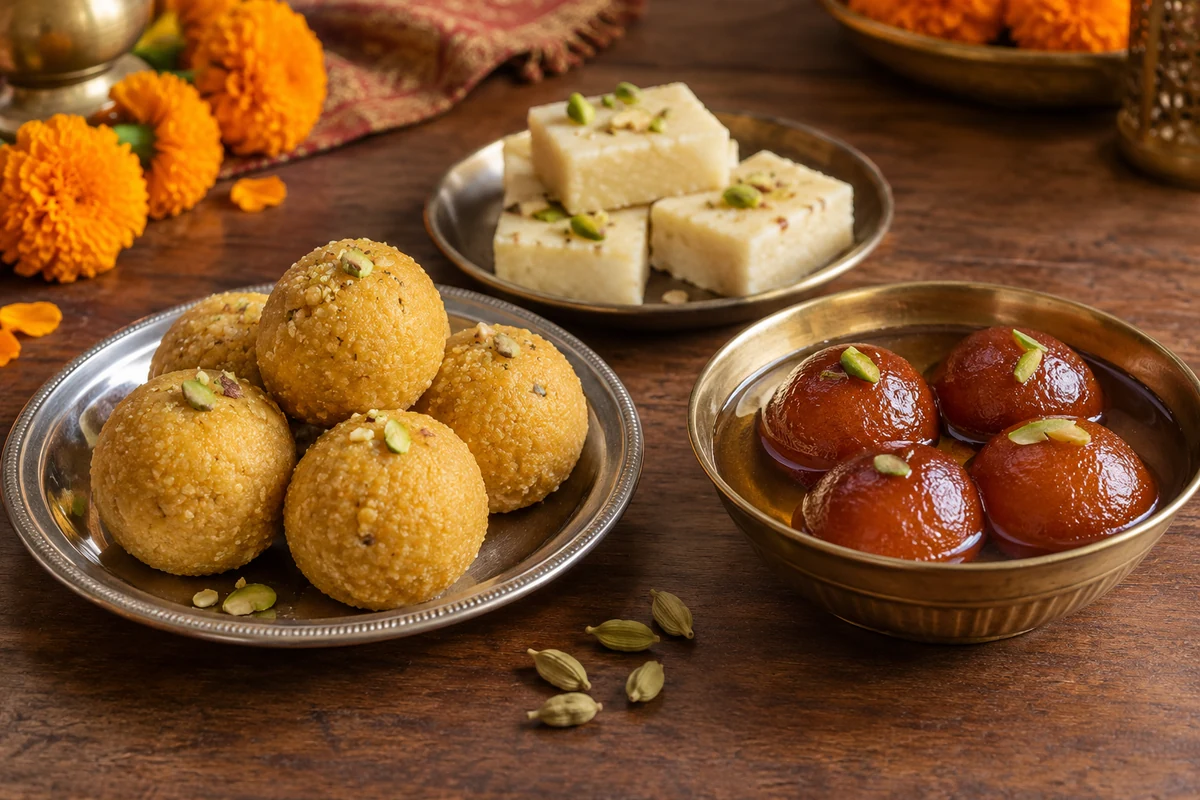
Food can express hospitality, gratitude and good wishes. Menus differ greatly across India’s communities, and the examples below belong to particular festivals or regions.
Diwali Sweets
Diwali is associated with sharing mithai, or sweets. Offering something sweet is a familiar way to express affection and wishes for a happy beginning.
- Ladoo: round sweets with many variations, often made from flour, sugar and ghee; some contain nuts or seeds.
- Gulab jamun: fried milk-based sweets, commonly made with khoya or milk powder, soaked in a fragrant sugar syrup.
- Jalebi: crisp fried spirals coated in sugar syrup.
- Barfi: a firm sweet, often milk-based, with variations flavoured with ingredients such as cardamom, coconut or nuts.
Pongal and Harvest Food
Pongal celebrates the harvest. Its sweet rice dish is part of the thanksgiving tradition, rather than evidence that the festival is Tamil New Year.
- Sakkarai pongal — an illustrative ingredient list follows. It is not a complete cooking recipe: the cooking liquid and method are not included, so use a tested recipe before preparing it.
- 1 cup rice, washed
- 1/2 cup yellow moong dal, or split, hulled mung beans
- 1 cup jaggery, an unrefined sugar; brown sugar is a substitution with a different flavour
- 2 tablespoons ghee; a suitable vegetable oil changes the traditional flavour
- 1/4 teaspoon ground cardamom
- Nuts and raisins for a garnish, according to preference and dietary needs
Ugadi and Six Contrasting Tastes
Ugadi pachadi combines six contrasting tastes, symbolising the varied experiences of life. The ingredients below describe that tradition; they are not a measured recipe. Source: Ministry of Tourism: Ugadi and the six tastes of pachadi
- Traditional Ugadi pachadi ingredients and flavours:
- Tamarind and raw mango contribute contrasting sour and tangy notes.
- Jaggery contributes sweetness.
- Salt supplies the salty taste.
- Chilli contributes heat.
- Neem flowers provide bitterness in traditional preparations. These are not interchangeable with neem oil or unidentified foraged plant material; use a reliable recipe and ingredients intended for food.
Baisakhi and Punjabi Cooking
Punjabi harvest celebrations reflect agricultural life and hospitality. The region’s substantial breads, vegetables and sweets offer a starting point for learning about its food.
- Makki di roti: a flatbread made with maize flour, cooked on a griddle and often served with butter or ghee.
- Sarson ka saag: a preparation of mustard greens and other leafy vegetables, cooked with seasonings and often finished with ghee.
Meaning and Table Etiquette
Festive food carries social meaning as well as flavour:
- Sweetness: can express wishes for happiness and a favourable beginning.
- Sharing: reinforces family relationships, hospitality and community care.
- Harvest dishes: celebrate agricultural work and seasonal abundance.
- Respect: follow your hosts’ guidance. In settings where eating or passing food with the right hand is customary, observe that practice where possible.
Family Gatherings, Gifts, Clothes and Music
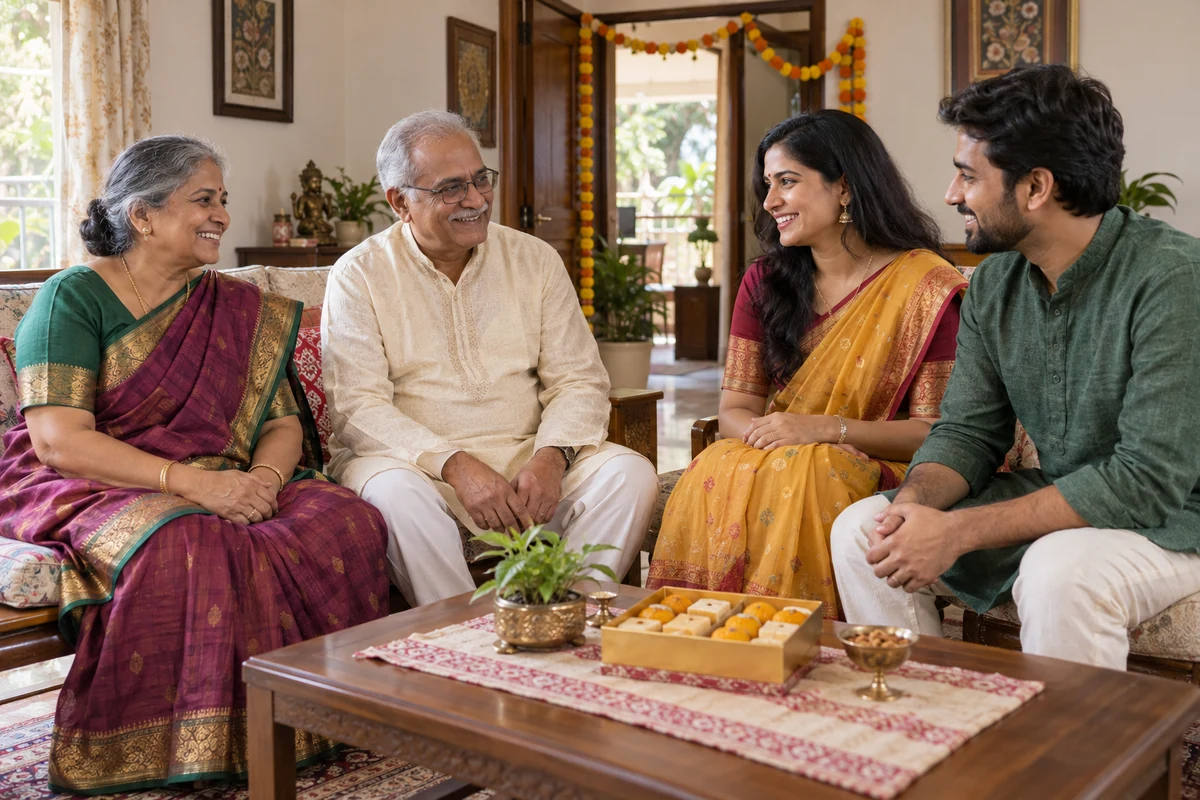
Many celebrations bring generations together over food, visits and shared activities. The details depend on the particular festival and family rather than a single national pattern.
Gathering at Home
Some Hindu households prepare rangoli, lights and a space for worship. Others follow different traditions. Activities may begin in the morning or take place after a visit to a place of worship.
- Family visits: relatives and neighbours may call to exchange greetings.
- Prayer or blessings: some households include worship before a meal; others mark the occasion differently.
- Shared meals: large dishes can make it easier for several generations to eat together.
Gifts and Exchanges
Gifts are often an expression of goodwill rather than a competition in spending.
- Traditional sweets: boxes of mithai can be welcome when they suit the recipients’ diet.
- New clothes: festive clothing may symbolise a fresh beginning; ask about preferences before buying garments for someone else.
- Money in an envelope: in some communities, a gift of money, sometimes described as shagun, accompanies good wishes.
- For a gathering across faiths, ask what the host would appreciate. Fruit, flowers or a small household gift may be suitable, but no gift is universally appropriate.
Clothing and Local Expectations
Festive clothing reflects personal taste, region and the occasion. Visitors do not need to dress in traditional clothes unless the hosts request it.
- Examples of festive dress: saris and salwar kameez are among the many garments worn for celebrations.
- Other regional styles: kurtas, kurta-pyjama sets and sherwanis may feature, alongside contemporary clothing.
- Choose clean, comfortable clothes suited to the weather and venue, and ask about any specific requirements.
- Remove footwear where requested. Some places of worship also require a head covering; follow the guidance at the entrance.
Music, Dance and Activities
Music can be central to a celebration, but styles and expectations vary by community and setting.
- Traditional music: instruments such as the tabla, dhol, harmonium and flute feature in different devotional and folk traditions.
- Dance: bhangra is associated with Punjabi celebrations. Other dances belong to different occasions; garba, for example, is particularly associated with Navratri, not every regional new year.
- Popular music: some family parties include film songs and contemporary playlists alongside regional favourites.
- Children may enjoy games, dancing and sweets, depending on the family’s plans.
Considerate Participation
A few simple habits make it easier to join in respectfully.
- Ask whether to bring a small gift and what would be suitable.
- Follow the invitation’s arrival time, particularly for a ceremony or organised meal.
- Ask before photographing people or religious activities.
- Follow local customs for receiving food and greeting elders, and thank your hosts.
- Participate in rituals only when invited, and ask if you are unsure what a gesture means.
Regional Traditions Across India
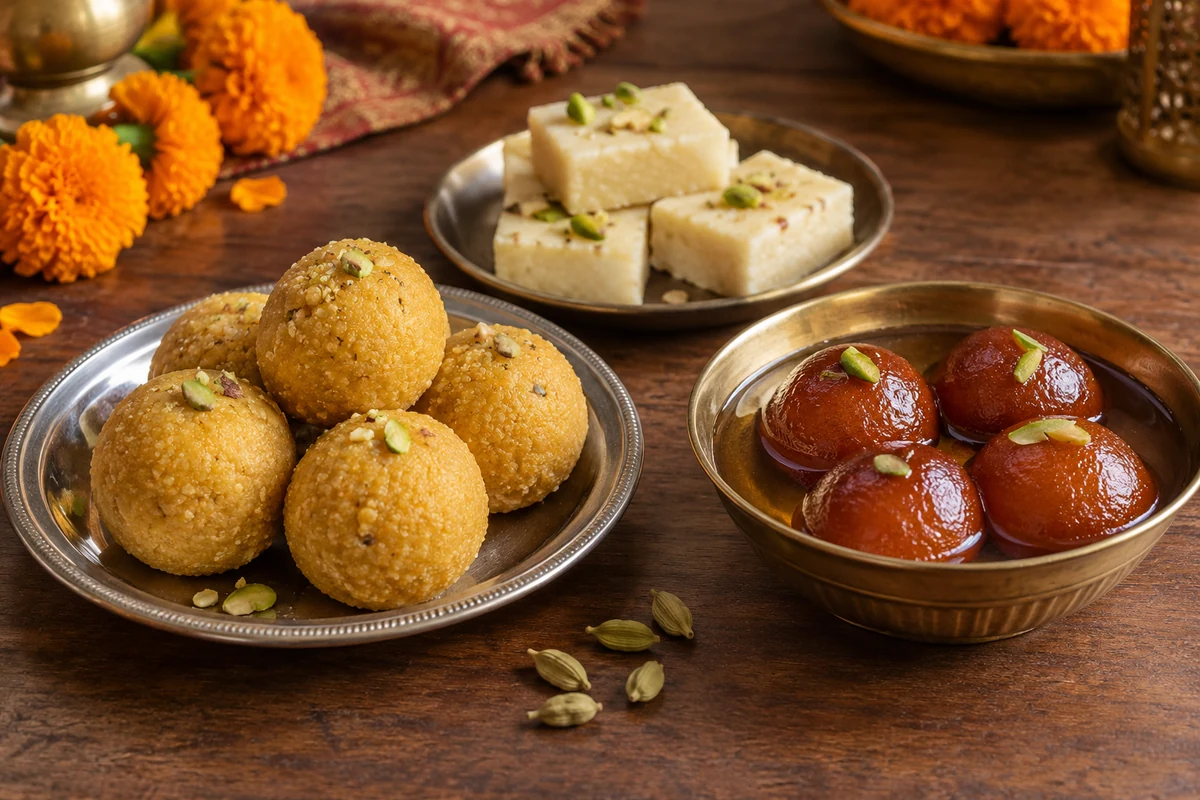
Broad regional groupings can help introduce the subject, but they do not capture every community. Language, religion and local calendars create further differences within each region.
Northern India
In Punjab, Baisakhi has harvest and Sikh religious significance. Lohri is a separate January seasonal festival. Bonfires, gurdwara visits and bhangra belong to particular celebrations, not an interchangeable list of New Year customs.
- Religious gatherings may include processions, prayers and langar, the communal meal at a gurdwara.
- Food varies with the season and household, including breads, vegetables and regional sweets.
- Fairs, music and outdoor gatherings feature in some community celebrations.
Southern India
Distinguish the Tamil harvest festival Pongal from Puthandu, Tamil New Year. Other southern communities observe Ugadi or other festivals. Floor decorations such as kolam and rangoli also have regional forms.
- At Pongal, cooking newly harvested rice in a pot until it overflows is a recognisable tradition.
- Sweet and savoury rice dishes, jaggery and sugar cane feature in different harvest celebrations.
- Household decoration and family visits vary by festival; they are not identical across southern India.
Eastern India
Pohela Boishakh marks the Bengali New Year. Cultural programmes, music, visits and trading traditions are among its expressions, with differences between communities and locations.
- Some celebrations include temple visits, public performances or community gatherings.
- Festive meals and sweets such as rosogolla may be shared, depending on family preferences.
- Fairs and cultural events offer opportunities to welcome the new year together.
Western India
In Gujarat, the new year follows Diwali. In Maharashtra, Gudi Padwa marks a different regional new year in spring. These are separate calendar traditions.
- During Diwali and Gujarati New Year, some households clean and decorate their homes, light diyas and hold worship associated with prosperity.
- Mithai and savoury snacks may be shared with relatives, friends and neighbours.
- Illuminated homes, busy shops and family visits can form part of the festive period.
Understanding the Differences
Dates and practices depend on the community and calendar. Check locally and ask your hosts about their own customs rather than assuming that a regional summary describes every family.
- Follow entry rules and dress requirements at places of worship.
- Ask before handling sacred objects or joining a ritual.
- Choose a modest gift that suits the hosts’ dietary and religious preferences.
Learning About Indian New Year Traditions at Home
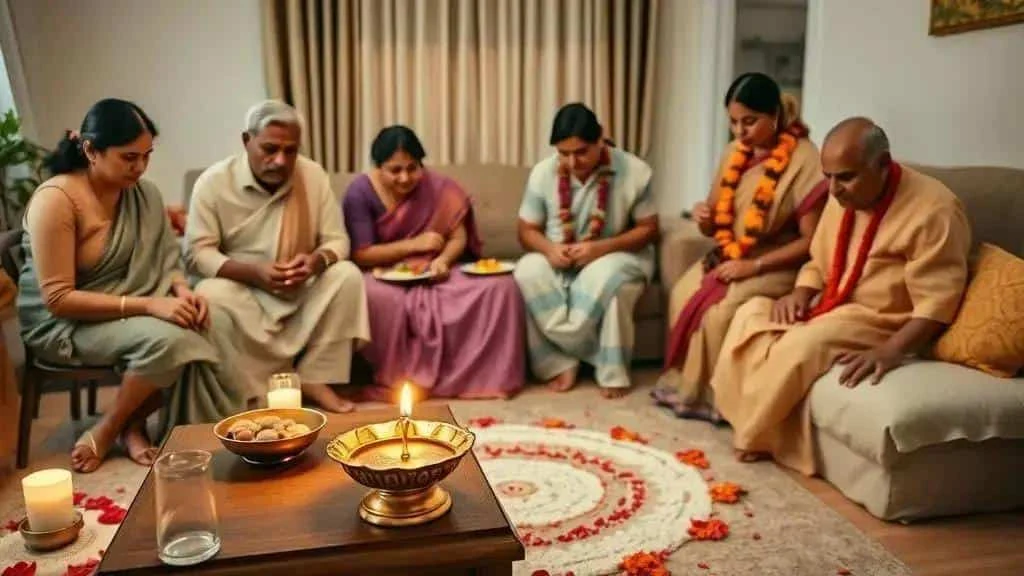
- Begin with respect: learn which community and festival you are exploring. At an invitation, follow the host’s guidance on timing, footwear and photographs.
- Choose a thoughtful craft: a simple rangoli-inspired design can introduce the art form. Explain its origins and use LED lights if you want a decorative glow.
- Give considerately: a small box of suitable sweets, fruit or flowers may be welcome; check rather than guessing about another household’s customs.
Learning About Puja Without Treating It as a Party Activity
- Understand the setting: a household shrine or worship space has religious meaning, not simply decorative value.
- Learn about the objects: lamps, incense, flowers, rice, water and offerings can have different roles in different traditions.
- Seek appropriate guidance: if you practise the faith and want to hold a puja, follow your family’s or community’s guidance rather than a generic checklist.
- Observe respectfully: at an invitation, ask before making offerings or touching sacred images and objects.
- Respect personal boundaries: blessings, gestures and the application of a tilak should follow the family’s practice and the participant’s consent.
- Food and dietary needs: label ingredients clearly and discuss allergies. Vegetarian food may still contain milk, nuts or wheat; swapping jaggery for brown sugar does not make a dish allergen-free.
- Clothing and behaviour: wear comfortable, appropriate clothes and follow venue requirements. Treat religious observances as occasions for respect rather than a photo opportunity.
- Music and activities: learn about the music associated with the particular region and festival. Avoid presenting a mixture of unrelated traditions as one authentic ceremony.
- Safety and waste: choose LED lights for children’s activities, use suitable materials and clear away loose powders or petals responsibly.
- Welcoming guests: explain your plans, ask about dietary needs and make clear that any craft activity is an introduction rather than a substitute for a religious celebration.
- A simple learning day: read about one festival, explore its regional art or music and share food from a reliable recipe. There is no need to recreate worship to appreciate its cultural significance.
A Final Thought
India’s New Year traditions become more interesting when their differences are understood. Learning which calendar, community and occasion a custom belongs to allows curiosity to go hand in hand with respect.
Follow our social channels for more articles about celebrations and family traditions, or explore the I Love Christmas blog for further reading.
Enjoy discovering new traditions, one community and one celebration at a time.
Frequently Asked Questions About New Year in India
Why do New Year dates vary so much in India?
Alongside the civil New Year on 1 January, communities use different lunar, lunisolar and solar calendars. Regional new years therefore fall on different dates. Harvest festivals such as Pongal should not automatically be described as New Year celebrations.
How should I behave when invited to an Indian celebration?
Follow your hosts’ guidance on arrival time, clothes, footwear, gifts and participation. Ask before photographing people or worship. Customs vary by household and faith, so checking is more respectful than assuming.
What food might be served, and can dietary needs be accommodated?
Depending on the occasion, you might find regional rice dishes, breads, vegetables and sweets such as ladoo or gulab jamun. Discuss allergies and dietary needs in advance; vegetarian dishes can still contain milk, nuts, wheat or other allergens.
Can I hold a puja at home as a cultural activity?
Puja is worship, not simply a themed activity. Practitioners should follow their family’s or community’s guidance. Visitors can learn respectfully or join when invited; a craft, reading or food activity is a better option if you are not taking part in the religious tradition.
When should I visit India to experience these celebrations?
Choose a region and festival first. Gudi Padwa and Ugadi usually fall in March or April; Puthandu and Baisakhi are in April; Gujarati New Year follows Diwali in October or November. Pongal is a separate January harvest festival. Confirm exact dates locally each year.
Sources and Further Reading
- Government of India: Tamil New Year celebrations
- Government of India: Navroz greetings in August 2025
- SGPC: Guru Gobind Singh and the founding of the Khalsa
- Ministry of Tourism: Ugadi and the six tastes of pachadi
- Government of Goa: Gudi Padwa and Ugadi
- Incredible India: Diwali