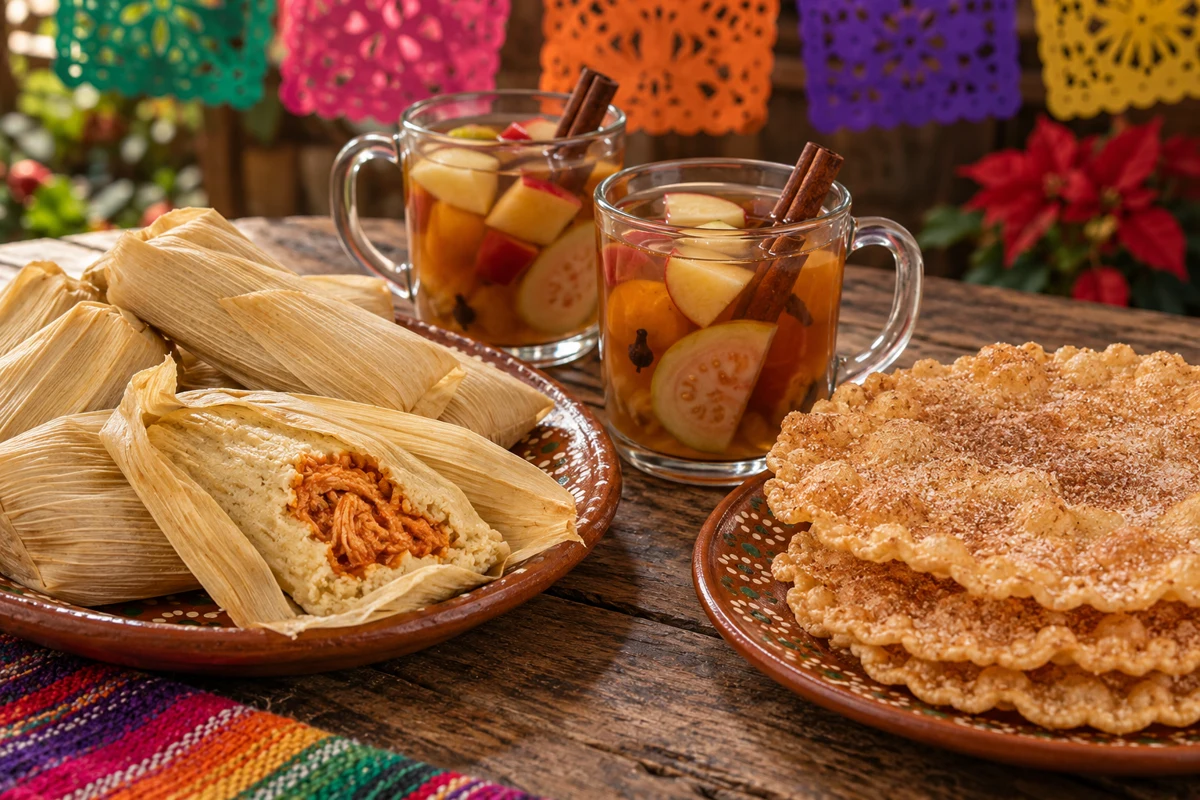
Las Posadas are Mexican celebrations held from 16 to 24 December. Rooted in religion, they recall Mary and Joseph seeking lodging and bring together singing, hospitality and shared food. Mexico’s National Commission of Natural Protected Areas describes the tradition and how it has changed. Families and communities do not all celebrate in the same way.
How a posada unfolds
One group represents the pilgrims asking for shelter; another responds as hosts until the symbolic welcome. Prayer, songs and a meal may follow. The verses used to pedir posada have a particular role in this dialogue; they are not simply any Christmas song. At a local celebration, follow the organisers’ lyrics and guidance rather than presenting invented verses as traditional.
The piñata and practical care
The seven-pointed star has a Catholic interpretation connected with the seven deadly sins, as described by Mexico’s Secretariat of Agriculture. Modern shapes and uses vary. A piñata is opened or broken, not burned.
For a home activity, consider a pull-string version or simply handing out small gifts, always with supervision. Avoid clay containers, sharp pieces and contents unsuitable for the children’s ages. If using a stick, keep everyone out of reach and allow collection only after the activity stops and the stick is put away. Never send children running beneath someone still swinging. LED lights avoid carrying flames close to paper and clothing.
Chicken tamales: about 12 medium pieces
This is a simplified home version. Use nixtamalised masa harina suitable for tamales: ordinary cornmeal, polenta and Brazilian flaked maize are not direct substitutes.
- 250g masa harina, 100g lard and 5g baking powder
- 350–450ml lukewarm chicken stock and ½ teaspoon salt, reduced if the stock is already salty
- 300g cold filling: 200g cooked shredded chicken mixed with 100g ready-made thick red salsa
- 12 large food-grade dried corn husks, plus extra for lining the steamer; water for soaking and steaming
- Soak the husks in warm water for about 30 minutes, or as directed on the packet, until flexible; drain.
- Beat the lard until creamy. Combine the masa harina, baking powder and salt, then work into the lard alternately with 350ml stock. Rest for 10 minutes and add the remaining stock gradually, only until soft and spreadable rather than runny.
- Divide the dough and filling into 12 portions. Spread the dough over the broad part of each husk, leaving clear edges. Put about 25g filling in the centre, enclose it with dough as you fold the sides, and fold the narrow end upwards.
- Stand upright, open ends facing up, in a lined steamer basket without packing tightly. Keep the water below the basket, not touching the tamales. Cover and steam for about 60–90 minutes, carefully replenishing with hot water when necessary.
- Test one: the dough should release from the husk and be cooked without a raw pasty section. The chicken filling should reach 75°C for 30 seconds. Rest for 10 minutes before opening. The husk is not eaten.
Use properly refrigerated chicken within 48 hours of cooking that has not already been reheated. Steaming will be its reheating step; prepare what you will serve and do not reheat it again. For a make-ahead approach without this limitation, choose a recipe whose filling and storage are planned from the outset. Do not replace lard with an equal amount of oil without adjusting the formula.
Alcohol-free fruit ponche: approximately 12 portions
- 3 litres water, 150g soft brown sugar or chopped piloncillo and 2 cinnamon sticks
- 300g cored chopped apple, 300g prepared guava and 80g pitted prunes
- 250g orange segments without seeds, peel or white pith
Bring the water, sugar and cinnamon to the boil until the sugar dissolves. Add the apple and simmer for 10 minutes; add the guava and prunes and simmer for another 20 minutes. Add the orange for the final 5–10 minutes. Remove the cinnamon and serve small portions of fruit with the liquid. For children, remove hard seeds and let it cool to a suitable temperature. Apple is an accessible adaptation for the tejocote used in many Mexican versions; it is not the same fruit.
Thin cinnamon buñuelos: 12 pieces
- Dough: 300g plain flour, 30g sugar, 5g baking powder and a pinch of salt
- 1 medium egg, 40g melted butter cooled to lukewarm, and 100–120ml milk
- Finishing: 30g sugar mixed with 1 teaspoon cinnamon; up to 15g flour for rolling
- Vegetable oil for frying: enough for approximately 3cm in a deep pan, without filling more than one-third of the pan’s height
- Combine the dry ingredients, then add the egg, butter and 100ml milk. Knead until smooth, adding the remaining milk gradually only if needed. Cover and rest for 30 minutes.
- Divide into 12 portions and roll very thin discs approximately 15cm across on a lightly floured surface.
- An adult heats the oil to 170–180°C using a suitable thermometer. Fry one disc at a time for approximately 1–2 minutes on each side until golden and crisp.
- Drain and sprinkle with cinnamon sugar while warm. Serve the same day.
Keep children away from frying, dry utensils and never leave hot oil unattended. If the oil overheats, turn off the heat; never add water. This version is a thin fried disc, not a risen doughnut.
Hosting respectfully and planning the food
Agree with guests whether the gathering is religious or cultural and who will handle each task. Make the ponche ahead, allow the full tamale cooking time and leave frying to an adult with a clear workspace. State ingredients and allergens. Cool leftover ponche in shallow containers, refrigerate within 2 hours at 0–5°C and use within 48 hours; reheat once.
Adapted recipes can introduce people to a tradition when they are described honestly as adaptations. Listening to those who celebrate Las Posadas and valuing their stories matters as much as choosing decorations.
AI-generated illustration; it does not document a particular community’s celebration or recipe.