Cities with Christmas lights offer everything from decorated shopping streets to markets and ticketed light trails. This guide suggests ten destinations and ways to plan a manageable visit, take photographs and enjoy the atmosphere. It is an editorial selection, not a measured world ranking; programmes change each year.
Looking for cities with Christmas lights to inspire a festive trip? These ten suggestions combine familiar traditions with different urban settings. Use them as a starting point, then confirm the current season’s displays, access arrangements and opening dates before booking.
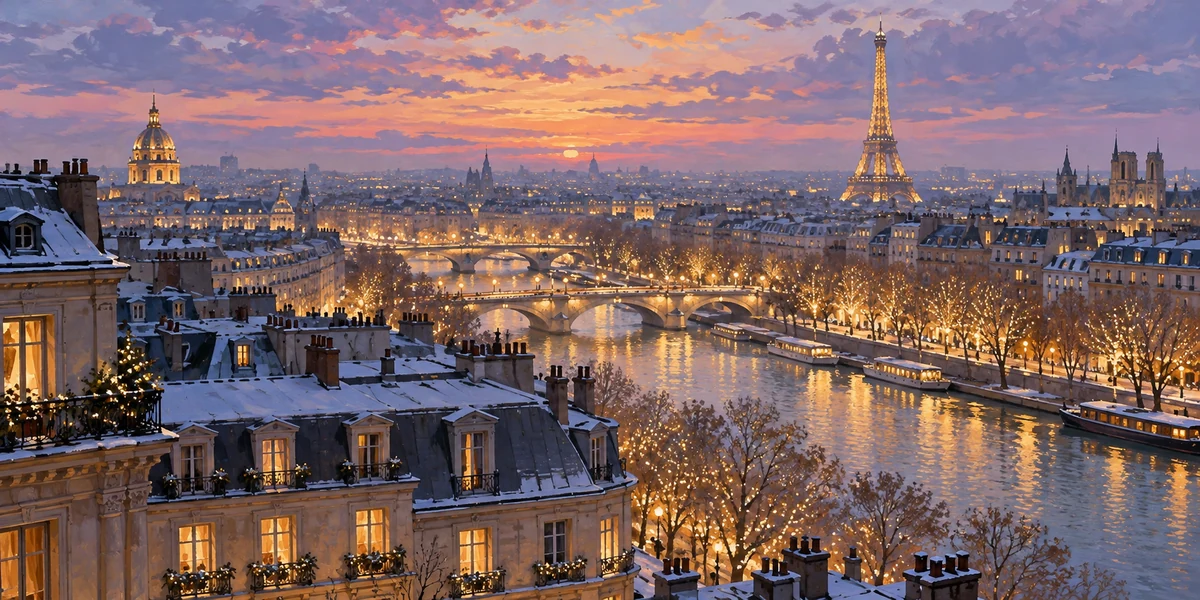
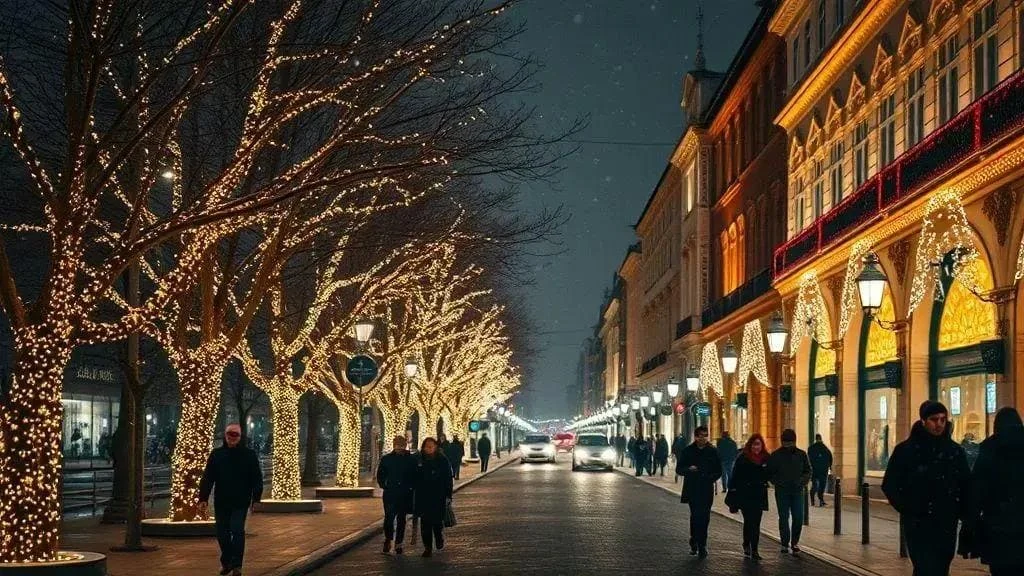
Illustrations in this article are conceptual images, not documentary photographs or evidence of a particular historical event, destination, venue or access route.
Why Christmas lights feel special
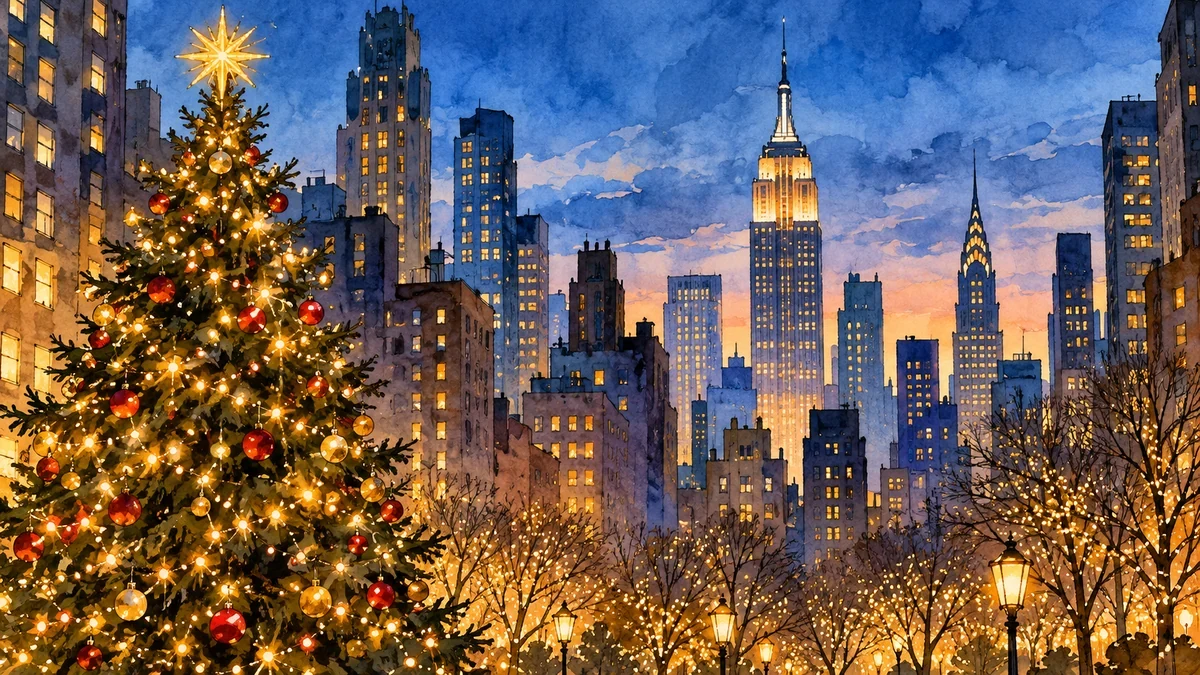
Lights can transform familiar streets and buildings into a festive setting. For many people, an evening walk becomes part of the pleasure of the season.
Memories and personal associations
A display may bring back childhood memories, family outings or earlier holidays. Warm colours and familiar decorations can suggest comfort and connection, although everyone’s response is different.
A shared community experience
Decorated streets and squares give people places to gather. Markets, performances and local events can become annual traditions for residents as well as visitors.
Seeing a city differently
Carefully placed lighting draws attention to façades, trees and architectural details. Reflections and contrasts can make a familiar route feel different after dark.
Colour, movement and atmosphere
Gold and amber lighting often creates a warm impression, while other colours and moving effects offer a different style. Flashing displays can be uncomfortable for some visitors, so check the format if anyone in your group is sensitive to them.
Enjoying the view
Check the switch-on time, use designated viewpoints and try your camera’s night setting if helpful. Follow signs and keep pedestrian routes clear rather than stopping in an entrance or roadway for a photograph.
Energy use and technology
LEDs and sensible operating hours can reduce energy use compared with equivalent older lighting. A display’s overall impact also depends on its scale, duration, materials and travel involved; a bright show is not automatically sustainable.
How to choose a Christmas-light destination
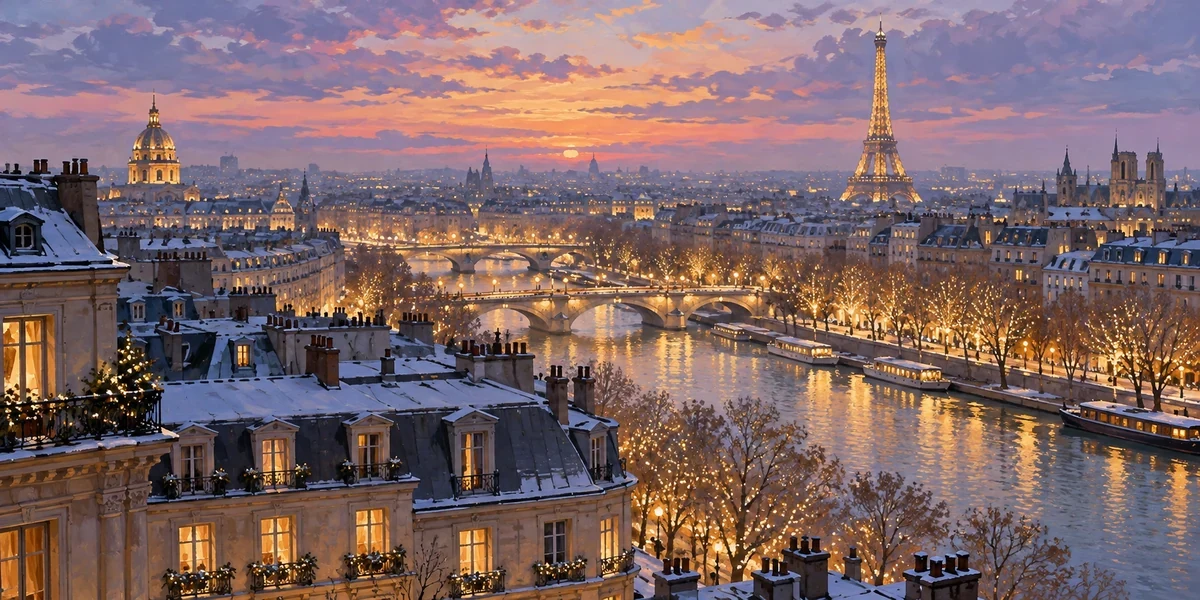
The list below offers ideas to compare, not scored winners. Think about the kind of display you enjoy and the practical experience of visiting it.
Useful points of comparison
- Design and variety: look for the mix of trees, street decorations, window displays or projections that interests you.
- Distances between displays: several nearby stops may make a better evening than spectacular sites spread far apart.
- Other seasonal activities: markets, concerts and exhibitions can add variety where they are included in the current programme.
- Energy and resource use: read specific information about lighting and operating hours rather than relying on broad green claims.
- Access and visitor facilities: check transport, toilets, step-free routes and places to sit or warm up.
- Local character: community decorations and independent shops may be as memorable as a large central display.
- Recent visitor information: photographs and practical accounts can help you understand crowds and sightlines, but are not a substitute for official access notices.
Checking information before travelling
- Official sources: use the organiser or tourist board for current dates, locations and ticket details.
- Photographs and videos: check when they were taken. An image from an earlier season may show a display that has changed or ended.
- Visitor comments: look for useful details about queues and facilities without treating a handful of reviews as a representative survey.
- Environmental claims: prefer specific published information over an unsupported label such as eco-friendly.
- Personal priorities: weigh cost, journey time, accessibility and atmosphere for your own group; no numerical ranking has been calculated here.
- Final confirmation: check again close to departure for closures, weather changes and transport notices.
Ten cities and places to explore
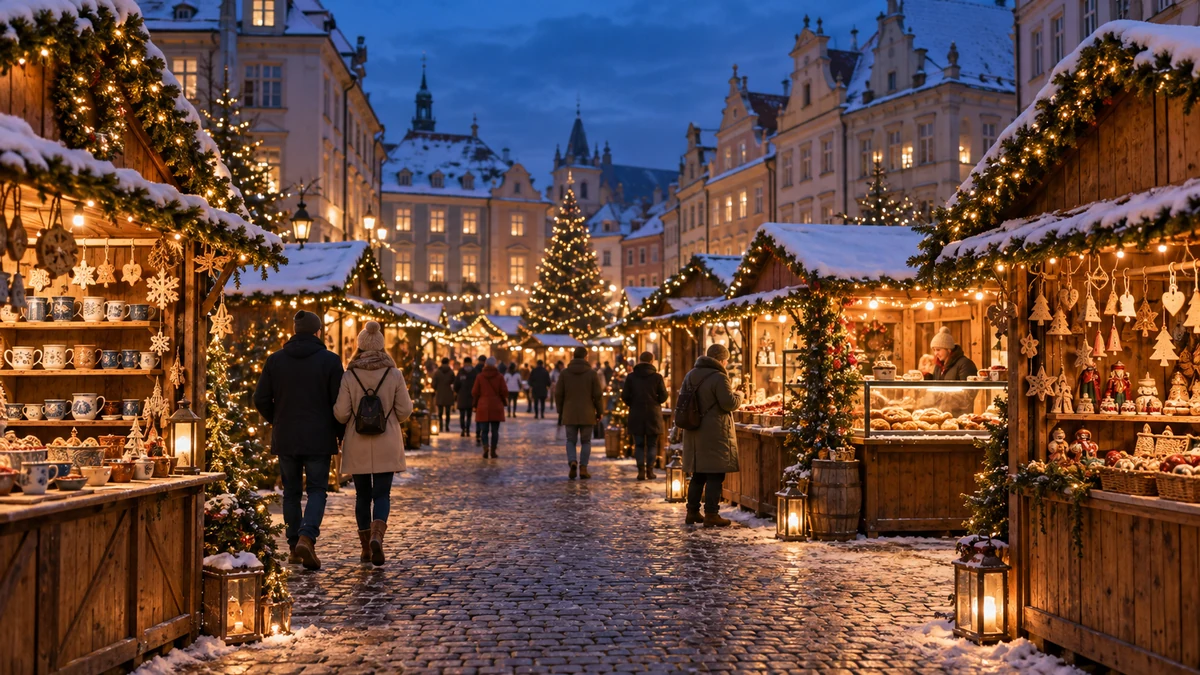
These destinations offer different ways to enjoy Christmas lights. The numbering is for navigation, not a claim that one city is objectively better than another.
1. New York, USA
Large-scale decorations and neighbourhood displays give New York several distinct festive settings.
- Rockefeller Center: check the official tree-lighting and viewing schedule. Ice skating is a separate activity with its own booking arrangements. Source: Rockefeller Center: Christmas tree visitor information
- Dyker Heights, Brooklyn: seasonal decorations are displayed on private homes. Stay on public routes, respect residents and do not assume every house participates.
- Fifth Avenue windows: browse the current department-store displays, which vary between shops and seasons.
- Practical tip: allow for crowds and security restrictions around major sights, and keep camera stops clear of entrances.
2. London, United Kingdom
Central shopping streets, riverside events and park attractions offer several ways to plan a festive evening.
- Oxford Street and Regent Street: look for the season’s street lights and decorated shop windows.
- Hyde Park Winter Wonderland: a large seasonal attraction with rides, stalls and lights. Check entry-ticket requirements and book the appropriate arrival slot; individual attractions may cost extra. Source: Hyde Park Winter Wonderland: official visitor information
- Southbank Centre: its Winter Market offers food and craft stalls under festive lighting beside the Thames. Check current dates rather than assuming every riverside activity runs throughout winter.
- Practical tip: plan the return journey using current transport information, especially around Christmas and New Year holidays.
3. Paris, France
Decorated avenues and department stores are a familiar part of the Paris Christmas season.
- Champs-Élysées: consult the current illumination schedule and route rather than assuming every section has the same display or hours. Source: Paris tourism: Christmas illuminations
- Galeries Lafayette Haussmann: check the seasonal window displays, indoor tree and store access information.
- Smaller neighbourhood walks: places such as the Marais can be combined with independent-shop browsing; check any particular market before making a special journey.
- Practical tip: choose a short route with an indoor stop and allow for queues at popular shops.
4. Tokyo, Japan
Tokyo’s winter illuminations range from tree-lined streets to larger themed installations. Some continue beyond Christmas, while others have shorter runs.
- Omotesando and Roppongi: check the current official illumination listings for the areas and dates taking part.
- Marunouchi: its winter illumination is associated with the streets around Tokyo Station and Marunouchi Naka-dori. Use the current programme rather than relying on an old Shiodome light-show listing. Source: Tokyo tourism: Marunouchi illumination
- Shibuya and other districts: compare the current city tourism guide for seasonal displays; a bright commercial façade is not necessarily a Christmas event.
- Practical tip: confirm the last train as well as the lights’ closing time. Do not assume public transport runs all night.
5. Vienna, Austria
Historic streets and squares provide a setting for Advent markets and seasonal decorations.
- Rathausplatz: the Christmas market beside City Hall is a major seasonal stop; confirm its dates and any separately ticketed activities. Source: Vienna tourism: Christmas markets
- The Innere Stadt: combine decorated central streets with a concert or other indoor visit if it suits your plans.
- Historic buildings: illuminated façades add to the evening atmosphere, although ordinary architectural lighting is distinct from a special Christmas display.
- Practical tip: make room for a warm drink and a seated break between outdoor stops.
6. Strasbourg, France
Strasbourg promotes itself as a Christmas capital, with markets and decorated streets across its historic centre.
- Place Kléber: this is the setting for the Grand Sapin, the city’s large Christmas tree. It is not in the cathedral square. Source: Strasbourg: official Christmas map
- Christmas markets: consult the official map to choose nearby craft and food stalls and understand access arrangements.
- Practical tip: compare accommodation early and allow extra time for busy weekends and controlled pedestrian access.
7. Prague, Czechia
Prague’s historic centre offers a striking setting for seasonal markets and evening walks.
- Old Town Square: the Christmas market includes a decorated tree and stalls; check the current programme for music and other activities. Source: Prague tourism: Old Town Square Christmas market
- Charles Bridge: an evening walk offers views of the river and lit buildings. It is a sightseeing stop, not a guaranteed special Christmas-light installation.
- Practical tip: dress for the forecast and allow for cobbles, cold and crowded pedestrian routes.
8. Medellín, Colombia
Medellín is known for its Alumbrados Navideños, a large seasonal lighting programme organised by EPM.
- The official Alumbrados route: locations, themes and installations change between editions. Check EPM’s current map instead of assuming an older river or park route still applies. Source: EPM: 2025 Alumbrados programme as an example of changing editions
- Neighbourhood displays: use local official listings to find participating areas and any associated performances.
- Practical tip: plan transport between approved viewing areas and check current travel advice as well as the event programme.
9. Lisbon, Portugal
Lisbon’s Christmas lighting combines decorated shopping streets with the character of its historic centre. Source: Lisbon tourism: Christmas lights
- Baixa and Chiado: check the current route through central streets and squares for the season’s installations.
- Avenida da Liberdade: include it where it forms part of the current official illumination programme.
- Practical tip: a viewpoint may offer a wider city panorama, but consider hills, steps and the walk back after dark.
10. Rio de Janeiro, Brazil
Rio offers a summer Christmas setting, with seasonal decorations and events that can vary considerably by year and neighbourhood.
- Official seasonal attractions: consult Riotur for the current tree and lighting events. Do not assume an older Praça Mauá, waterfront or lagoon programme has returned unchanged. Source: Riotur: Christmas in Rio programme information
- Neighbourhoods and shopping centres: check the specific venue’s dates, opening hours and programme before setting out.
- Practical tip: plan trusted transport, review current local advice and prepare for summer heat and possible rain.
Using these suggestions: choose a few nearby stops rather than trying to cover an entire city in one evening. Confirm access and opening times, charge your phone and leave room for a relaxed break.
Choosing dates and seasonal events
Match your travel dates to the particular displays you want to see. The general Christmas season is not a guarantee that every market or installation will be operating.
When to look for programmes
- Late November to early January: a common period for many northern-hemisphere displays, but individual runs can be shorter or longer.
- December: often offers a wide choice, although markets may finish before Christmas and holiday closures still apply.
- Southern-hemisphere Christmas: events take place in summer. Check heat, rain and sunset times instead of expecting a European winter experience.
Types of seasonal attraction
- Tree-lighting ceremonies: check access controls and the announced programme; music or performances are not universal.
- Christmas markets: combine stalls, seasonal food and decorations where included in the programme.
- Projection shows: some events animate buildings with images and sound at scheduled times.
- Light trails and tunnels: may involve ticketed entry, timed slots or one-way routes.
- Drone shows and other performances: attend only where officially scheduled; weather or operational conditions may affect them.
Choosing a visiting time
- Around dusk: can offer a balance of sky colour and visible lights, provided the display has switched on.
- Weekdays: may be quieter than weekends, but popular locations can still be crowded.
- Holiday evenings: check closures, transport and event-specific crowd arrangements for Christmas Eve and New Year’s Eve.
Practical planning
- Check the official calendar: confirm the current season’s dates, daily hours and any ticket requirements.
- Book where needed: reserve paid events or guided visits through the official booking route and read cancellation conditions.
- Plan public transport: check the journey home, not just the outward route, including holiday timetables.
- Charge your devices: a suitable power bank can be useful for a long evening, subject to venue rules.
- Keep the route manageable: two or three nearby stops may be plenty, depending on queues and the people travelling with you.
Weather and comfort
Check the forecast and event notices for rain, wind or closures. Dress in layers in cold weather and prepare for heat or rain in tropical destinations. Use designated routes and follow local instructions; lighting alone does not make every area safe.
Finding special seasonal programmes
Use official websites and verified organiser channels for announcements rather than relying on old social posts. Compare accommodation and book required tickets in advance when a popular event is central to your trip.
Photographing Christmas lights
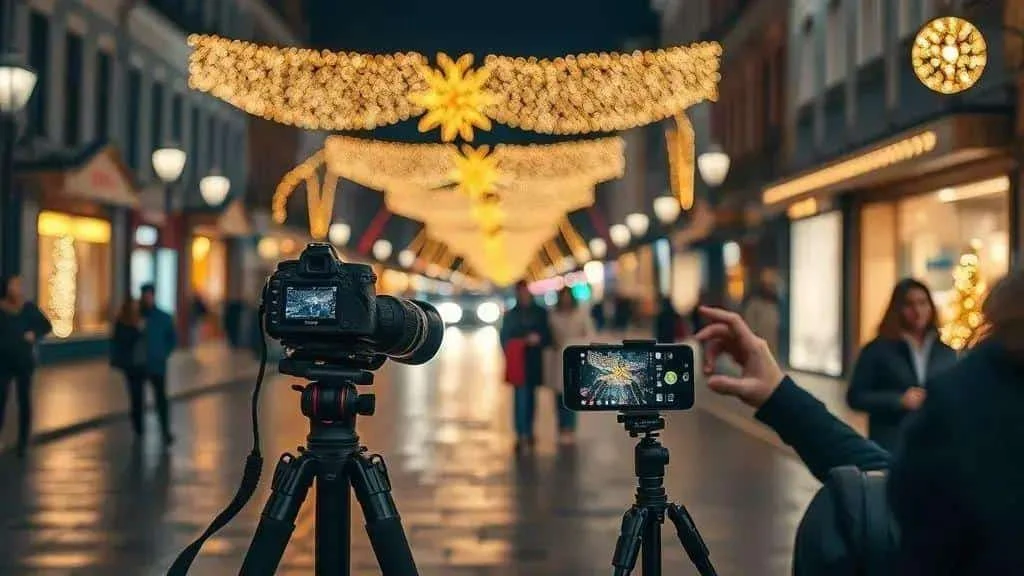
Watch the changing light: the period around dusk can give a deep-blue sky behind the decorations. Its timing varies with the location, weather and season, so a fixed number of minutes will not suit every trip.
Camera techniques to try
- Support the camera: use a tripod or stable support where permitted, without creating an obstruction. A timer or remote release can reduce movement.
- Start with a modest ISO: around 100–400 may work with a supported camera and longer exposure; increase it when needed for handheld or moving subjects.
- Try a mid-range aperture: settings such as f/5.6–f/11 can suit a city scene, depending on the lens, light and desired depth of field.
- Experiment with exposure time: a longer exposure can turn moving lights into trails, while a shorter one helps keep people sharp.
- Phone night mode: hold the device steady while it captures the image; results depend on both movement and lighting.
Composition ideas
- Try an off-centre subject: place a tree or installation to one side if it balances the scene.
- Include people thoughtfully: they can show scale, but respect privacy and ask before making someone the main subject.
- Look for reflections: wet paving can add colour and interest; remain on safe pedestrian routes.
- Vary the framing: use wider views for the setting and closer photographs for ornament details.
- Use background blur: out-of-focus lights can make an attractive backdrop to a portrait or decoration.
Equipment and settings
- Battery and storage: start with charged equipment and enough space for the evening’s photographs.
- Lens choice: a wider view suits streets and squares; a standard lens can work well for closer scenes and portraits.
- RAW format: where available, it provides more flexibility for later adjustments, at the cost of larger files.
- White balance: try automatic or an appropriate manual setting, then check that warm lights still look natural rather than forcing every scene to the same colour.
Considerate photography
- Keep routes clear: do not block pavements, crossings or entrances while taking photographs.
- Look after equipment: use straps and keep bags close without losing awareness of your surroundings.
- Follow restrictions: respect barriers, staff instructions and rules about tripods or photography.
- Avoid unnecessary flash: it can disturb others and usually does little for distant light displays.
Editing and sharing
- Adjust exposure gently: preserve detail in bright lights rather than brightening everything equally.
- Keep colours believable: use small changes instead of making a display look different from what visitors will see.
- Crop with purpose: remove distractions while keeping the subject and setting clear.
- Give useful context: name the public venue and the date of your visit, without sharing private details or suggesting an unsafe vantage point.
Lower-cost decorating and thoughtful celebrations
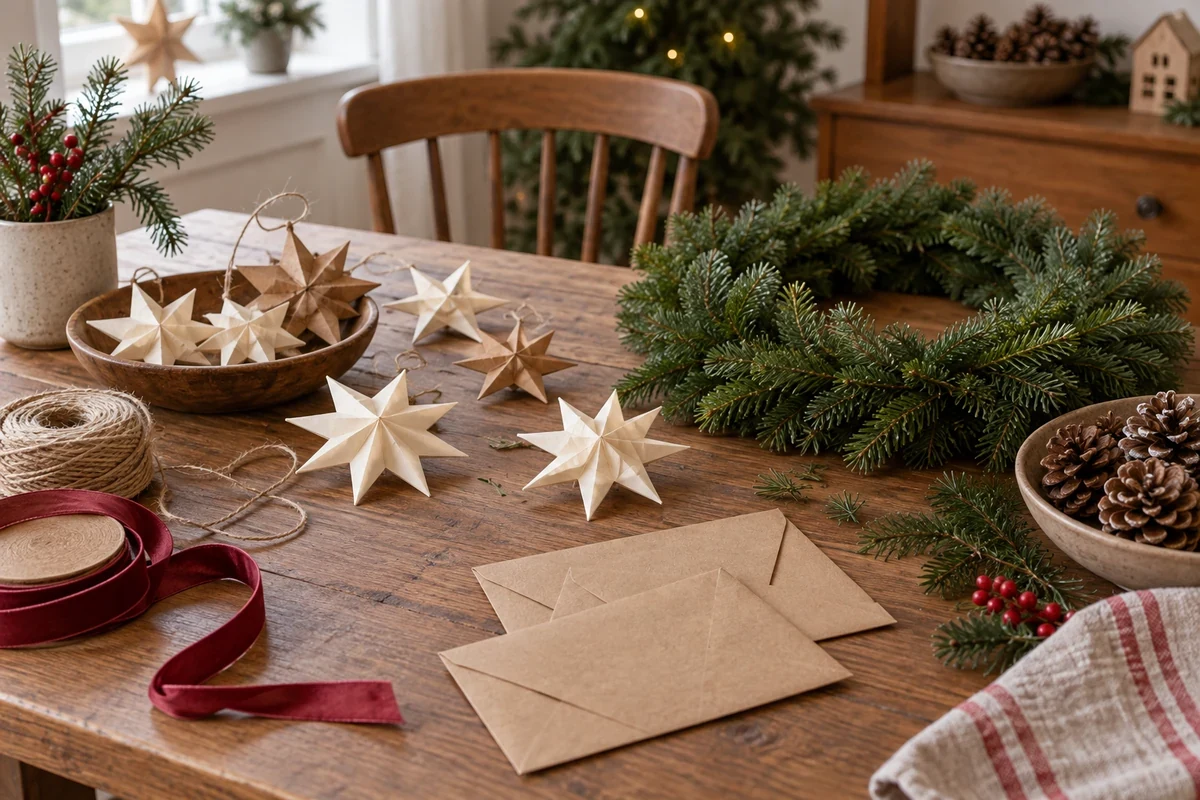
You can enjoy festive lighting without an expensive trip or an elaborate home display. Reusing suitable decorations and keeping the setup modest are useful starting points.
Lighting and equipment
- LED products: usually use less electricity than comparable traditional filament lighting. Check the product’s wattage and use only suitable, undamaged sets.
- Timers: can limit unnecessary operating hours, but still switch lights off when going out or to bed as advised for the product.
- Solar or rechargeable options: can suit some locations, although winter daylight affects charging and outdoor suitability must be confirmed.
- Damaged equipment: do not mend cables or connectors yourself. Replace damaged sets, and change bulbs only where permitted using the exact specified type. Source: Electrical Safety First: Christmas lighting safety
Reused materials and simple crafts
- Glass containers: use them for unlit decorations rather than enclosing unsuitable lights or batteries. A purpose-made LED lantern is a simpler illuminated option.
- Fabric offcuts: turn clean material into bows, bunting or lightweight ornaments, kept clear of heat sources.
- Natural details: use suitable pine cones or twigs gathered with permission, avoiding toxic plants and keeping small parts away from children and pets.
Making a simple unlit wreath
- Gather materials: suitable flexible greenery, twine or craft wire, adult-handled scissors and a few lightweight decorations.
- Form the base: secure small bundles into a ring, covering sharp wire ends and checking that the structure holds together.
- Add decorations: tie on ribbons and suitable ornaments securely; adults should handle any hot glue.
- Finish and hang: check the attachment and place the wreath away from heat, flames and routes where it could fall onto someone.
Trees and simple alternatives
- A living tree: may be suitable where a reputable rental or growing arrangement exists. Its survival and environmental benefit depend on care, transport and what happens afterwards.
- A flat wall display: can use less space, provided it is securely attached without damaging cables or blocking exits. Avoid unstable improvised structures.
- Reuse or buy second-hand: inspect decorations carefully, particularly any electrical items, and keep useful pieces for another year.
Community ideas
- Decoration swaps: exchange suitable ornaments with friends or neighbours rather than buying everything new.
- Craft sessions: share materials and skills, with tools and supervision appropriate to the group.
- Shared displays: work with the relevant organiser or property owner, with permissions and qualified electrical installation where required.
Storage and disposal
- Recycle electrical items: use an appropriate collection point for unusable lights and separate batteries as directed locally.
- Store carefully: keep cables loosely coiled without crushing or sharp bends, in dry storage suited to the product.
- Limit operating hours: avoid leaving decorative lighting on unnecessarily and follow switch-off advice.
Before buying: make a list of what you already have and what can safely be reused. Choose any additions for durability and a real purpose.
Making a family outing memorable
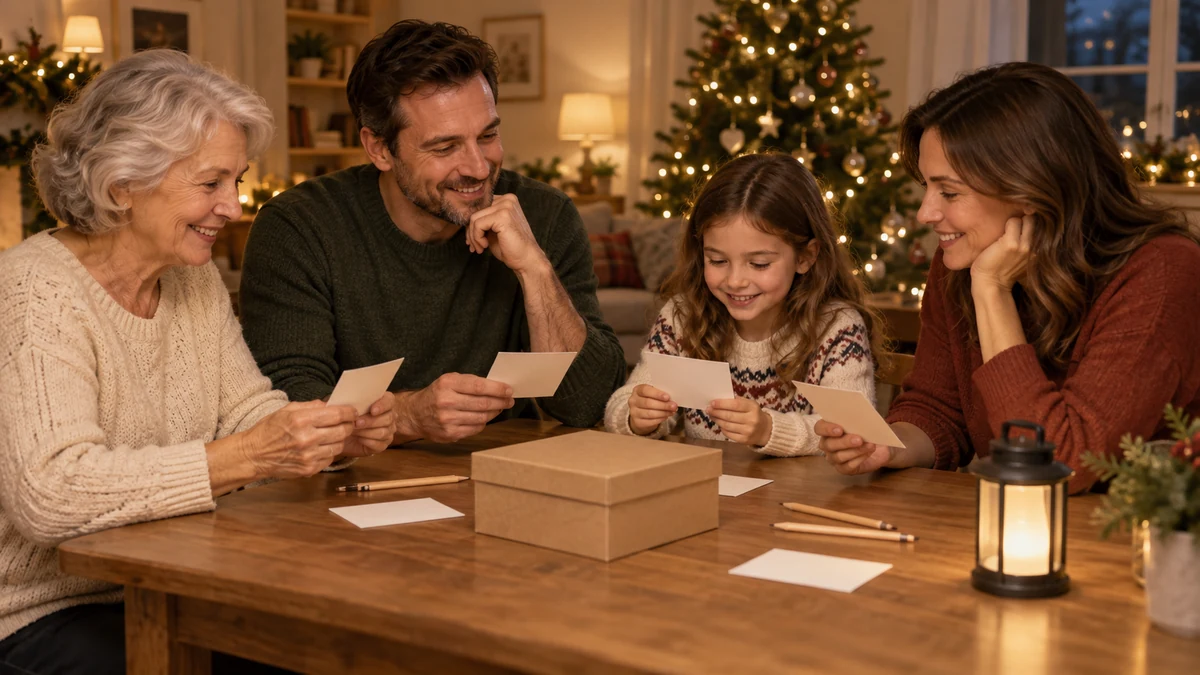
A simple plan and a few shared activities can make a visit enjoyable without turning it into a race between attractions.
Planning the evening
- Choose a small number of stops: two to four nearby places may work, but one good outing can be enough for your group.
- Check timings: fit the display’s actual hours around meals, rest and the journey home.
- Share useful tasks: someone can check the route while another keeps tickets ready; supervising children remains an adult responsibility.
Activities for different ages
- A light-spotting game: look for a star, a decorated tree or a particular colour while staying together on the route.
- A short workshop: include a children’s activity if one is available and suitable for their age and needs.
- A food stop: try a suitable local snack together and take a break from walking.
Taking photographs without missing the experience
- A short photo list: choose a handful of pictures, such as the group, a tree and a favourite detail, rather than documenting every moment.
- Brief video clips: a few 10–20 second clips can be enough for a personal holiday film; follow recording rules.
- Back up your pictures: copy them to a secure location when convenient, checking data costs and sharing settings if using cloud storage.
Keeping the route comfortable
- Group nearby sights: avoid unnecessary journeys across the city between stops.
- Allow flexible visiting time: roughly 45–90 minutes may suit some locations, while a short street display needs less and a ticketed trail may need more.
- Take breaks as needed: plan access to seats, toilets and refreshments rather than waiting until everyone is exhausted.
- Adapt to the group: consider mobility, sensory needs and energy levels across all ages.
Physical and digital keepsakes
- Choose a meaningful souvenir: ask about its maker if local craftsmanship matters to you, and avoid buying something only to discard it later.
- Keep a small journal: add tickets, photographs and a few notes about favourite moments.
- Share an album privately: invite family members to contribute, with everyone’s agreement about the photographs included.
After the trip
- A photo evening: look through your pictures together and choose the moments you most enjoyed.
- A small printed album: ten or twenty favourite photographs can make a manageable keepsake.
- A personal playlist: save songs that remind you of the trip using your usual music service.
Comfort and practical details
- Bookings and contacts: keep essential confirmations and relevant emergency numbers accessible offline.
- A small day bag: carry suitable water, tissues, a charged phone and any essential personal supplies, within venue restrictions.
- Respect everyone’s limits: shorten the route if someone is tired or uncomfortable. Completing a checklist is not the aim.
A final thought
Christmas lights bring together decoration, public space and seasonal traditions in many different ways. With current information and a realistic route, you can enjoy the atmosphere without trying to see everything.
Choose displays that suit your interests, leave room for breaks and take a few photographs to remember the evening. A local walk can be just as meaningful as a long-distance trip.
Thank you for reading. Follow our social channels and visit the I Love Christmas blog for more festive travel, decorating and family ideas.
Frequently asked questions about Christmas-light trips
When should I plan a trip to see Christmas lights?
Many displays run between late November and early January, but dates vary widely. Check the specific event and daily switch-on time before booking, including holiday closures and the return journey.
Do Christmas-light outings have to be expensive?
No. Public street decorations can be free to view, while trails, rides and private attractions may need tickets. A short local route with a clear budget can be as enjoyable as a larger trip.
How can I photograph lights with a phone?
Keep the phone steady, try its night mode and check the exposure so bright lights retain detail. Avoid blocking routes, follow venue rules and back up your favourite images afterwards.
Are LED displays automatically sustainable?
LEDs can use less energy than equivalent older lighting, but the size of the display, operating hours, materials and travel all matter. Look for specific information rather than assuming a technology alone makes an event sustainable.
How can I keep a family outing from becoming tiring?
Choose nearby stops, allow for meals and breaks, and consider access and sensory needs. Keep the route flexible and finish earlier if necessary; there is no minimum number of displays to visit.
Sources and Further Reading
- Rockefeller Center: Christmas tree visitor information
- Hyde Park Winter Wonderland: official visitor information
- Paris tourism: Christmas illuminations
- Tokyo tourism: Marunouchi illumination
- Vienna tourism: Christmas markets
- Strasbourg: official Christmas map
- Prague tourism: Old Town Square Christmas market
- EPM: 2025 Alumbrados programme as an example of changing editions
- Lisbon tourism: Christmas lights
- Riotur: Christmas in Rio programme information
- Electrical Safety First: Christmas lighting safety