The decorated Christmas tree developed in German-speaking Europe against a wider background of winter greenery traditions. Its history cannot be reduced to one proven pagan origin or a single act of Christian adoption. Today, it can carry Christian meanings of hope and light, as well as secular associations with family and celebration. Source: Victoria and Albert Museum: Victorian Christmas traditions
Christmas tree history and symbolism bring together several different stories. Here we distinguish the background of evergreen decoration from the later Christmas tree, explore Christian interpretations and suggest ways to share meaningful traditions at home.
Illustrations in this article are conceptual images, not documentary photographs or evidence of a particular historical event, destination, venue or access route.
Before the Christmas tree: greenery and sacred-tree traditions

Trees have carried religious and cultural meanings in different societies. Ideas such as a world tree belong to particular mythologies; they should not all be treated as versions of the same belief, or as proof of a direct line to the modern Christmas tree.
Separating different customs
Stories about sacred trees often mention offerings, seasonal gatherings or decorated branches. Each example needs its own historical context. A similar-looking gesture does not establish that today’s baubles descend directly from an ancient rite.
- Ribbons and tokens: their meanings depend on the community and occasion; they are not evidence of one universal tree ritual.
- Food and drink: these may feature in religious offerings or festive hospitality, which are different practices.
- Yule logs and winter fires: these are separate seasonal customs and should not be confused with the origin of the decorated indoor tree.
Why evergreens are meaningful
Green leaves or needles in winter can suggest continuity when much other vegetation is bare. That makes evergreens an understandable image of hope, without requiring every culture to have given them an identical meaning.
- Renewal: winter greenery can evoke the expectation of returning growth.
- Protection: some people attach a protective spiritual meaning to particular plants or objects; that is a belief rather than a physical effect.
- Remembering the past: trees and inherited decorations can provide a focus for family stories.
- A connection between worlds: this is a theme in certain mythological traditions, not a universal explanation of Christmas trees.
Hanging an ornament today may connect you with family memories, but it is not necessarily the continuation of a ritual thousands of years old. The distinction makes the history more interesting, rather than less meaningful.
German-speaking Europe and the decorated Christmas tree
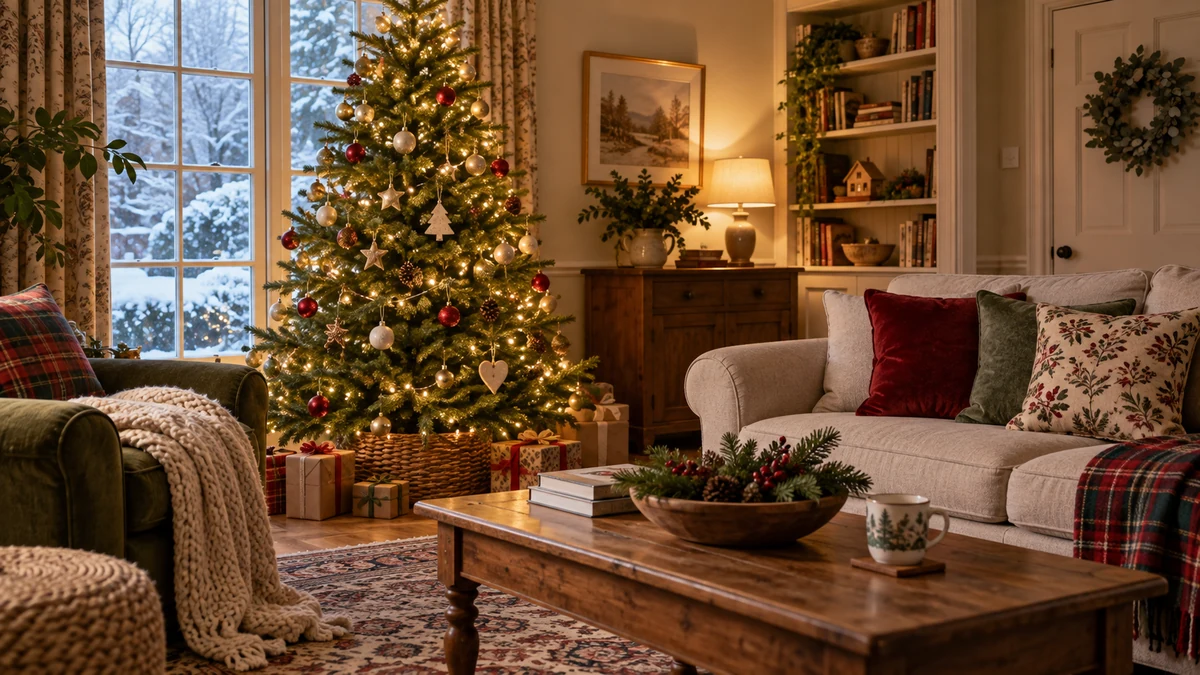
The indoor decorated Christmas tree developed in German-speaking Europe. It is useful to distinguish this custom from older uses of loose greenery, sacred trees or seasonal fires, even where they share themes of life and light.
Decorations and their changing forms
Early tree decorations included simple objects and edible treats. Apples, nuts, sweets and ribbons are familiar parts of accounts of older festive decoration, though dates and combinations varied between places.
- Greenery in homes: an older and broader practice than setting up a fully decorated Christmas tree.
- Paradise-tree explanations: medieval religious drama is often discussed in accounts of the tree’s development, but it should not be presented as a single settled origin.
- Candles and lights: the story that Martin Luther first lit a tree to imitate the stars is a popular legend, not an established invention record.
- Hanging treats and gifts: these connect decoration with hospitality and giving, with arrangements changing over time.
Norse mythology is a different strand of history
The Norse world tree, Yggdrasil, is an example of the world-tree idea. Its presence in mythology does not demonstrate that the Christmas tree originated from its worship. Similar themes of life or renewal are not enough to prove direct descent.
From regional custom to a wider family tradition
Christmas trees spread beyond German-speaking communities over time. In Britain, Queen Charlotte used a decorated tree before Prince Albert’s era; later royal celebrations helped make the custom more widely fashionable. Source: Royal Collection Trust: a royal Christmas
Modern decorations combine materials, shapes and meanings from different periods. Some are inherited, others are recent inventions, and their appearance alone does not establish an ancient origin.
Christian interpretations of the Christmas tree
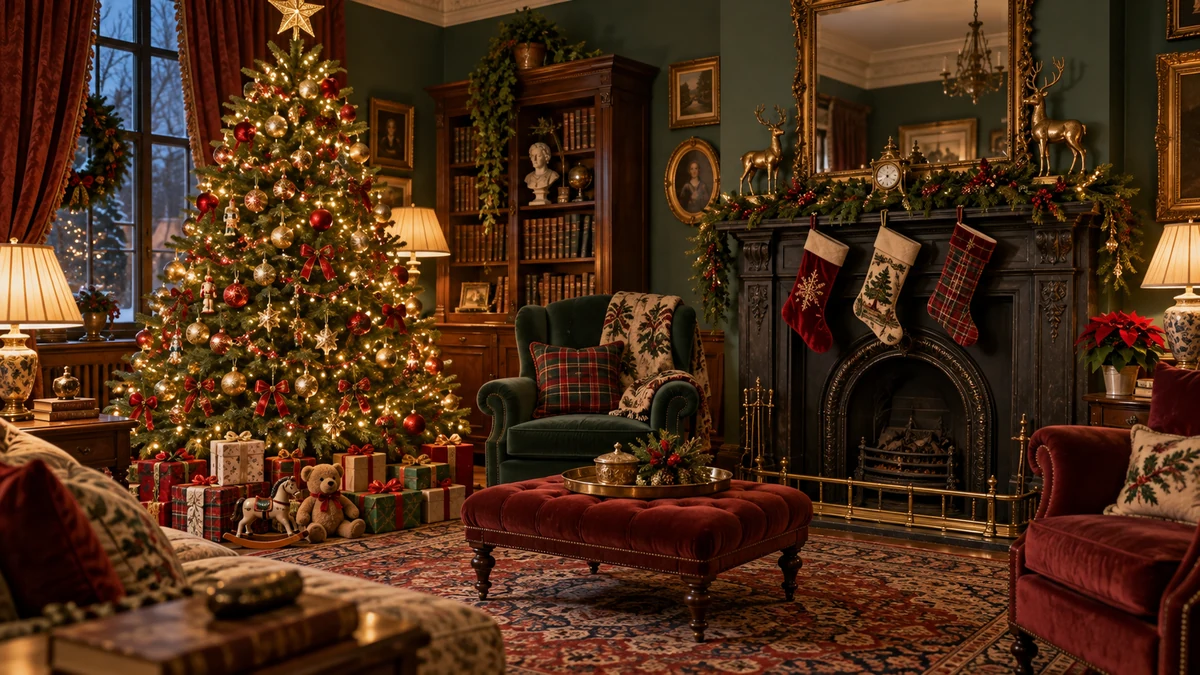
Christians have given the tree and its decorations meanings connected with their faith. This is different from claiming that church leaders introduced one organised policy to convert a particular pagan tree rite into Christmas.
How symbols acquire meaning
Families and religious communities can interpret familiar objects through biblical stories. A symbol’s meaning in a modern Christian household need not settle the historical question of where the decoration first came from.
- Evergreen foliage: can represent enduring life and Christian hope.
- Lights: may recall the Christian description of Christ as the light of the world.
- A star at the top: can refer to the Star of Bethlehem in the Nativity story.
- Gifts and generosity: can prompt reflection on the Magi’s gifts or on caring for others.
Stories, evidence and popular explanations
A story about Martin Luther lighting a tree may be memorable, but it should be introduced as a legend. For a documented British example, the Royal Collection describes the illustration of Victoria and Albert’s family around their tree published in the Illustrated London News in 1848. Source: Royal Collection Trust: a royal Christmas
Different religious attitudes
Attitudes to Christmas decoration have varied between communities. It is misleading to describe all Protestants or all Christian authorities as either opposing or promoting the tree, or to claim sweeping tree bans without identifying reliable evidence for the place and period.
- Religious disagreement: people may interpret a custom differently without sharing the same historical explanation.
- Family meaning: a tree can become a domestic tradition as well as, or instead of, a religious symbol.
- Public visibility: illustrations of royal Christmas celebrations helped spread interest in the custom.
Different meanings today
A tree may stand alongside a Nativity scene, carol singing and worship, or form part of a non-religious celebration. Neither approach requires pretending that the custom has one simple, uninterrupted history.
Making the tradition meaningful at home
Choose the themes that matter to your household: memory, faith or togetherness. Explain your own symbols to children, make room for questions and consider a practical act of generosity alongside decorating.
Stars, lights and ornaments with Christian meanings
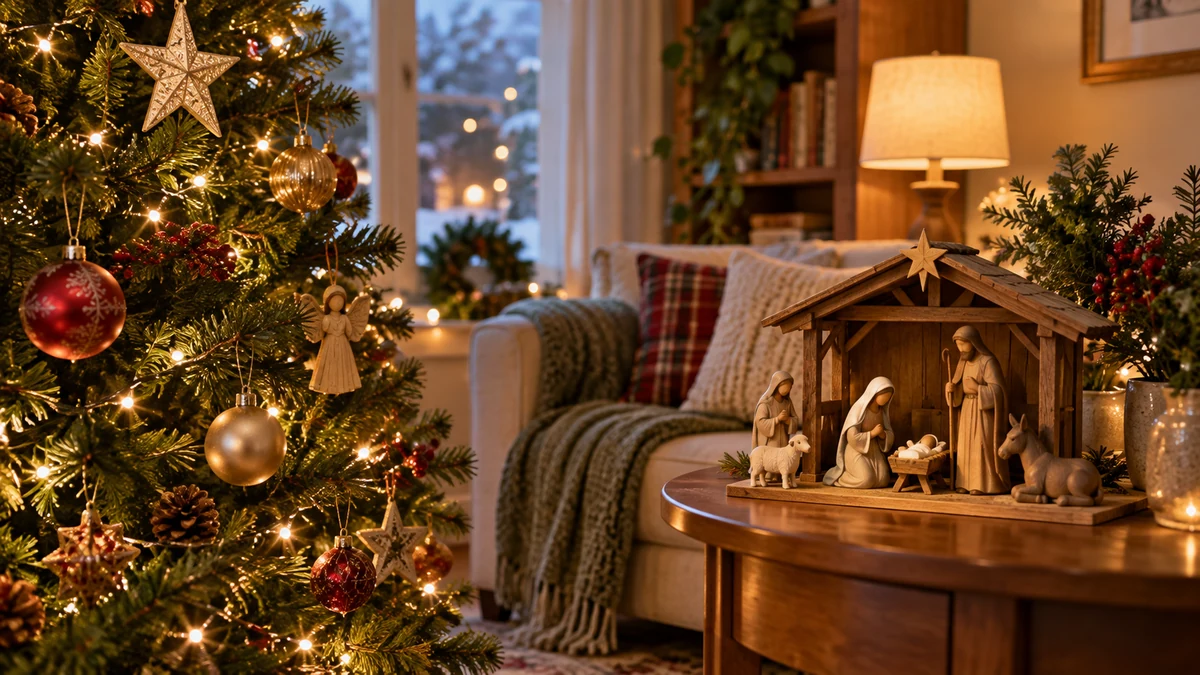
Decorations can act as reminders of religious stories and family practices. Their meaning comes from how people understand and use them, rather than from an obligatory rule for every tree.
The star and the Bethlehem story
A star at the top can recall the Star of Bethlehem and the Magi’s journey in the Christian Nativity narrative. It can express guidance and hope for a household that chooses that interpretation.
Lights as a reminder of hope
Christians may associate the tree’s lights with Christ as the light of the world. Real candles were used historically, but they are not a safe choice for a tree today; use suitable electric lights according to their instructions.
- White or golden lights: can create a restrained display that some families find reflective.
- Candle-shaped electric lights: suggest the older appearance without an open flame, though electrical and battery safety still matter.
Ornaments with religious associations
Angels, bells and Nativity figures can connect a tree with Christian stories. Choosing thoughtfully helps a decoration become a conversation about meaning rather than simply another purchase.
- Angels: recall divine messengers in Christian belief.
- Bells: may suggest worship, celebration or familiar seasonal music.
- Fruit and bread motifs: can represent gratitude, hospitality or sharing for the family choosing them.
- Small religious figures: may reflect a household’s particular faith and inherited traditions.
Decorating with a purpose
If a Nativity scene is part of your celebration, display it where everyone can see it safely. Make a few ornaments together and explain what they mean to your family, while recognising that other households may choose differently.
Practical tips
- Safety first: use lights suitable for the location, check for damage, follow the manufacturer’s instructions and keep open flames away from the tree. Source: GOV.UK: fire safety when celebrating
- Decorations that last: reuse well-kept wooden or fabric ornaments; keep breakable glass pieces out of reach of young children and pets.
- Include generosity: set aside gifts requested by a local organisation and explain why you are giving them.
Christmas trees in Brazil: memory, decoration and faith
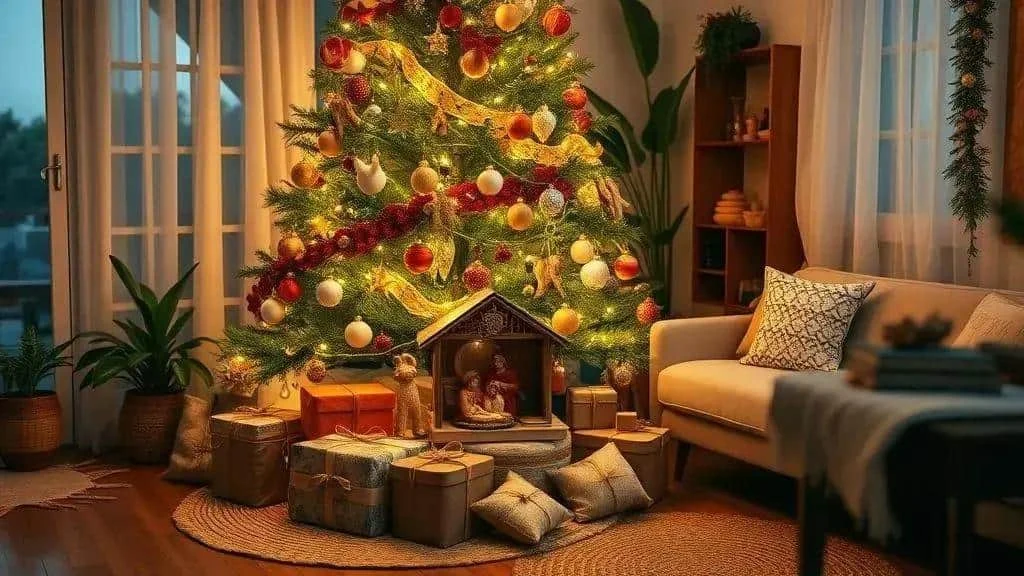
In Brazil, Christmas trees can hold family memories, provide a creative display and express religious belief. Christmas falls in summer there, although many decorations use imagery associated with a northern winter.
Memories and family customs
Older ornaments and handmade pieces carry stories. Keeping them can help families remember people and events without buying an entirely new set each year.
- Inherited decorations: choose a piece that recalls someone or a shared occasion.
- Family photographs: use lightweight, unbreakable frames if you want a more personal display.
- An evening of stories: share the background of a few decorations while putting them up.
Creative decorating with less waste
Reusing materials can keep costs down and make a display personal. Buying something labelled natural, local or recyclable does not automatically make it the best environmental choice; start with what you already have.
- Regional craft: if buying, consider a durable ornament made by a local craftsperson and learn about its actual origin.
- Creative reuse: turn suitable fabric offcuts and clean paper into decorations; leave broken glass out of children’s craft activities.
- Efficient lighting: suitable LED lights use less electricity than comparable older lighting, but still need safe installation and sensible operating hours.
Faith and different ways of celebrating
Some households display a tree with a Nativity scene and Christian ornaments, while others focus on family memories or seasonal colour. Do not assume that everyone sharing a home attaches the same religious meaning to the display.
- A Nativity scene: can make the religious focus clear for a family that wants one.
- Meaningful ornaments: stars, angels or short biblical quotations on cards can help explain a Christian interpretation.
- Practical giving: supporting an organisation’s requested work can connect the celebration with care for others.
Bringing memory, decoration and faith together
A few simple choices can give a display meaning without making decorating complicated.
- Choose a focus: family memories, regional craft or reuse can guide your choices without requiring new ornaments each year.
- Make something together: set aside a short session for suitable crafts and conversation.
- Create a giving corner: collect agreed donations or write down practical ways to help someone.
- Store carefully: wrap fragile items and label boxes so they can be used again.
Combining memories and present-day choices can turn the tree into a meeting point between generations, whether the household approaches it religiously or otherwise.
Sharing Christmas tree history with children
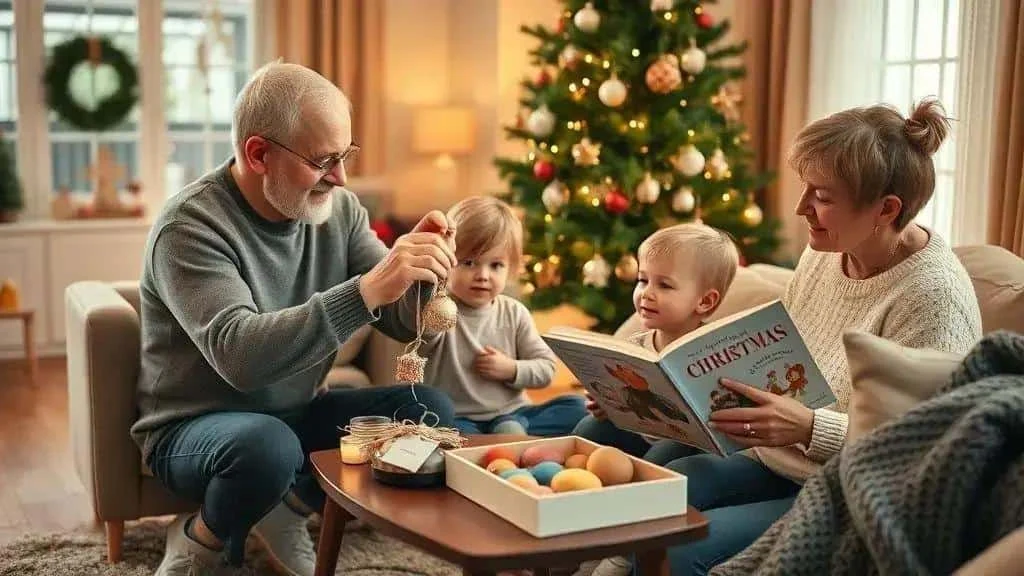
Use short explanations, objects and hands-on activities. Separate what is known from a legend, and keep the discussion appropriate to the child’s interests and understanding.
Tell a clear, engaging story
Explain that people have decorated with winter greenery for a long time, while the decorated Christmas tree developed later. Use a picture or familiar ornament, then ask what the child notices or would like to know.
- Use objects: show a safe, age-appropriate ornament or a photograph of an older family tree.
- Ask questions: try, ‘What does the star remind you of?’
- Keep the history honest: use simple words without presenting an uncertain origin story as a proven fact.
Crafts and practical activities
Choose manageable projects using paper, fabric or other age-appropriate materials. A short note about who made each piece can become part of the family’s record.
- Paper ornaments: decorate stars together, with adults handling cutting where needed, and add the year on the back.
- Salt-dough ornaments: these are decorations, not food. Adults should manage baking, and the dough and finished pieces must stay away from pets and children who might eat them.
- A memory box: keep photographs or suitable keepsakes, storing small objects securely away from young children.
Simple family rituals
Repeated activities can become familiar traditions: telling a story before switching on the lights, or choosing an existing ornament to remember someone special.
- A story evening: make time to share memories without requiring everyone to speak.
- A memory ornament: let each person choose or make a piece connected with their year.
- A helpful action: involve children in an age-appropriate act of giving without pressuring them to surrender treasured possessions.
Preserving objects and memories
Explain how decorations can be cared for and why the stories matter. Clean items as appropriate to their materials, protect fragile pieces and record what is actually known about their origin.
- Label boxes: note the contents and any special handling instructions.
- Photograph ornaments: make a private digital album with captions the children help write.
- Ask about earlier celebrations: invite relatives or trusted family friends to share memories, without assuming every child has grandparents available.
Including everyone and respecting beliefs
Explain that families celebrate in different ways and some do not celebrate Christmas. Let children describe their own ideas without asking them to profess a belief or take part in a religious practice.
Keeping activities safe and manageable
- Suitable materials: avoid small parts for young children and keep sharp tools, cords and breakable ornaments under appropriate adult control.
- Safe lighting: use suitable electric lights and keep battery compartments secure; do not use real candles on or close to a tree.
- Short sessions: begin with around 15 minutes if that suits the children, and stop or take a break when they lose interest.
Stories, practical activities and familiar routines can help children engage with a tradition. Leave room for them to enjoy it in their own way as they grow.
Christmas trees bring together different layers of history, religious interpretation and family memory. Recognising the limits of the historical evidence helps us appreciate those meanings without inventing a single origin story.
Thank you for reading. Follow our social channels for more seasonal history, decorating ideas and family activities, and visit the I Love Christmas blog for further inspiration.
Share a favourite decoration or family memory below. Wishing you a thoughtful and happy festive season.
Frequently Asked Questions about Christmas Tree History
Where did the Christmas tree originate?
The decorated indoor Christmas tree developed in German-speaking Europe. Older uses of greenery provide a wider background, but a single direct pagan origin is not established.
Why does the tree have Christian meanings?
Christians can interpret evergreen foliage as hope or enduring life, lights as a reminder of Christ, and the star as a reference to Bethlehem. These interpretations do not prove one historical process of adoption.
How can I explain the history to children?
Use a short account, pictures and familiar objects. Distinguish a legend from documented history, then invite questions or make an age-appropriate ornament together.
What should I check when decorating a tree?
Use suitable, undamaged lights according to their instructions, keep flames away, secure battery compartments and put fragile ornaments or small parts out of reach of young children and pets.
How can a tree reflect faith and family memories?
Combine symbols meaningful to your household with inherited or handmade decorations, and share their stories without assuming everyone has the same beliefs.
How can I decorate with less waste?
Reuse and repair decorations, borrow or buy second-hand where appropriate, store items carefully and use lighting sensibly. Natural materials or a recyclable label alone do not guarantee a lower-impact choice.
Sources and Further Reading
- English Heritage: Christmas greenery history
- Royal Collection Trust: a royal Christmas
- Victoria and Albert Museum: Victorian Christmas traditions
- GOV.UK: fire safety when celebrating