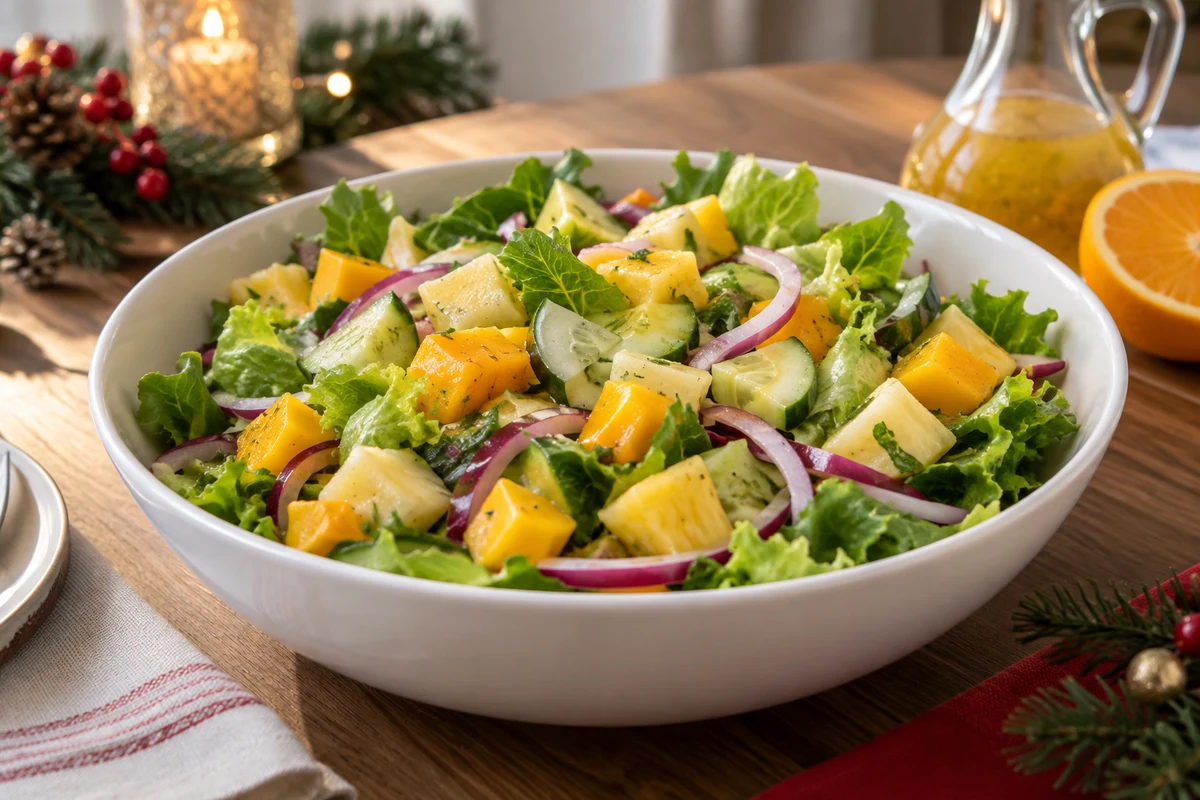
This tropical Christmas salad combines mango, pineapple, salad leaves, avocado and toasted nuts with a citrus dressing. Sweet fruit, sharp dressing and crunchy vegetables make a colourful side dish. Allow roughly 20–30 minutes for the basic salad; the generous batch can serve 6–8 or more people, depending on portions and the rest of the meal.
Tropical Christmas salad brings a fresh, colourful contrast to a festive spread. Mango and pineapple sit alongside crisp leaves and a citrus dressing in a recipe that suits a Brazilian-style Christmas meal or a lighter side to a winter roast.
Ingredients for tropical Christmas salad
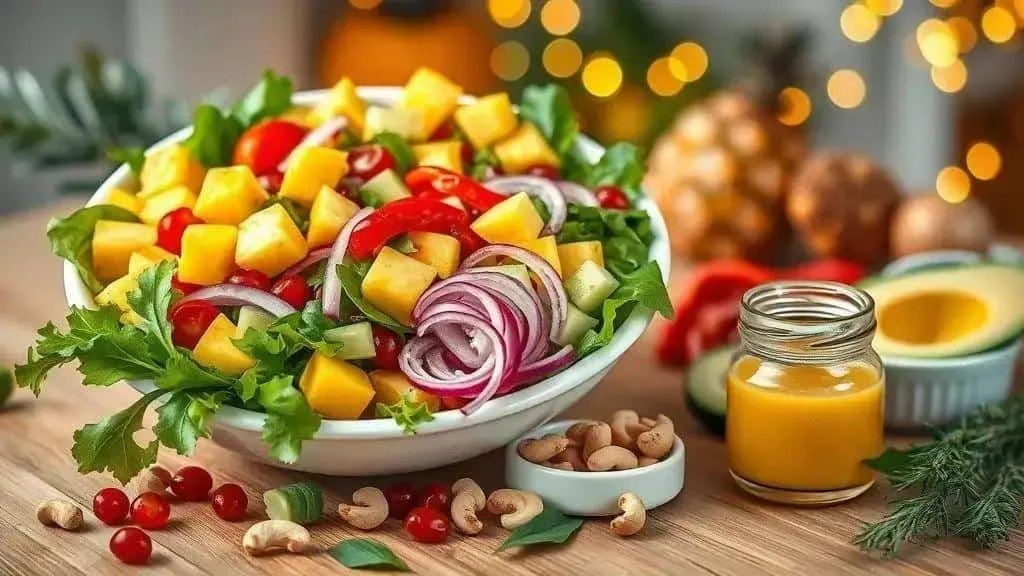
Choose fresh ingredients for this tropical Christmas salad, balancing sweetness, acidity and crunch. Fruit sizes vary considerably: the original gives approximate weights without specifying whether they include peel, so use the fruit counts as a guide and adjust the dressing to the prepared quantity.
- 2 ripe mangoes, approximately 500g in the original’s estimate, cut into cubes — diced papaya is an alternative.
- 1 medium pineapple, approximately 700g in the original’s estimate, peeled, cored and cubed — well-drained tinned pineapple is a convenient alternative.
- 150g salad leaves, such as lettuce, rocket and watercress — baby spinach or romaine lettuce also work.
- ½ small red onion, very thinly sliced — use spring onion for a milder flavour.
- 1 small red pepper, sliced or diced — yellow or orange pepper can be used instead.
- 200g cherry tomatoes, halved — diced larger tomatoes are an alternative.
- 1 medium cucumber, sliced, removing a watery seed centre if necessary. A typical long supermarket cucumber works well.
- 1 medium avocado, cubed just before serving — drained tofu can provide a different, softer alternative, although it will not taste the same.
- ½ cup pomegranate seeds — dried cranberries or a little granadilla pulp give a different sweet-sharp finish.
- ⅓ cup toasted nuts, such as cashews, almonds or walnuts, chopped.
- 2 tablespoons chopped fresh herbs, such as coriander or mint — parsley gives a milder flavour.
- Citrus dressing: 4 tablespoons lemon or lime juice, 3 tablespoons extra virgin olive oil, 1 tablespoon honey or agave syrup, and salt and black pepper to taste. Orange juice makes a sweeter dressing; if using cider vinegar instead of citrus, start with less and adjust to taste.
Quick tips and substitutions
Choose ripe mangoes that are still firm enough to dice; very soft fruit releases more juice. For a less fruit-heavy salad, replace some mango with extra leaves. Cheese or thoroughly cooked chicken can make it more substantial. Toast nuts briefly in a dry pan, or check them regularly in an oven at 170°C; 5–8 minutes is a guide, not a fixed requirement. Add avocado just before serving.
How to make tropical Christmas salad
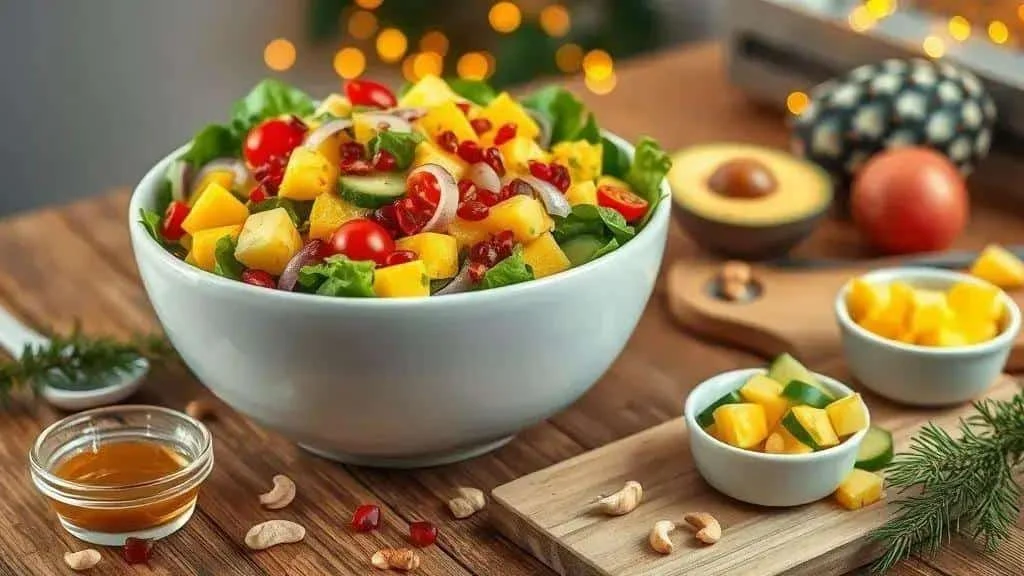
- Wash and dry: wash produce as appropriate under running water, including fruit before peeling, and follow any ready-to-eat leaf packet instructions. Dry the leaves thoroughly with a salad spinner or clean kitchen paper.
- Prepare the mangoes: cut the cheeks from either side of each mango’s flat stone. Score the flesh carefully without cutting through the skin, then scoop out even cubes, about 1.5cm across. Work on a stable board.
- Prepare the pineapple: remove the skin and tough core, then cut into pieces similar in size to the mango. Drain tinned pineapple thoroughly if using.
- Slice the vegetables: thinly slice the red onion, cut the pepper into strips, slice the cucumber into half-moons and halve the cherry tomatoes.
- Mix the dressing: shake 4 tablespoons lemon or lime juice, 3 tablespoons olive oil, 1 tablespoon honey or agave, a little salt and black pepper in a securely closed jar, or whisk in a bowl.
- Toast the nuts: warm ⅓ cup nuts in a dry frying pan over medium heat, stirring frequently, until fragrant and lightly coloured. Check closely rather than waiting a fixed 5–8 minutes; nuts burn quickly. Cool, then chop.
- Arrange the leaves: spread 150g salad leaves over a large serving bowl or platter.
- Add fruit and vegetables: distribute the mango, pineapple, onion, pepper, cucumber and tomatoes over the leaves.
- Dress gradually: begin with about half the dressing and toss gently with two serving spoons. Add more only as needed so the leaves are not saturated.
- Finish: add the freshly cut avocado, pomegranate seeds, toasted nuts and chopped herbs, folding gently if necessary.
- Taste and serve: adjust salt, pepper or citrus juice and serve promptly. If waiting up to an hour, refrigerate at 5°C or below; for the best texture, leave the dressing and nuts separate until serving.
Practical tips
- Mango texture: ripe but firm fruit cuts neatly and is less likely to make the salad watery.
- Tinned pineapple: choose pineapple in juice if you prefer to avoid syrup, and drain well. Rinsing syrup off does not give a precise or guaranteed reduction in calories.
- A more substantial version: add thoroughly cooked chicken or some crumbled feta, considering the rest of the meal and the number of servings.
- Without honey: use agave or maple syrup for a vegan dressing, or omit sweetener if the fruit is sweet enough.
- Different crunch: savoury granola can replace nuts, with its ingredients checked for allergens. A little pork crackling gives a non-vegetarian alternative with a different salt and fat content.
- Timing: assemble shortly before serving to keep leaves crisp and avocado fresh.
Vegan, chicken, prawn and cheese variations
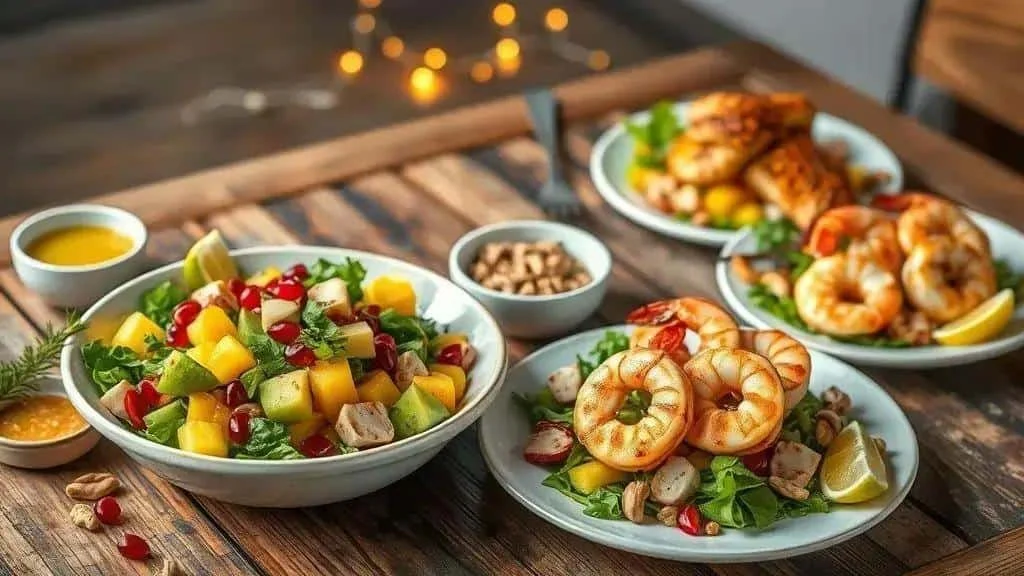
Adapt tropical Christmas salad with one of the following variations, keeping the fruit and vegetables at the centre of the dish.
Vegan variation
Use plant-based ingredients throughout, including the sweetener in the dressing.
- 2 ripe mangoes, cubed; the original’s approximate 500g is only a guide.
- 1 medium pineapple, peeled, cored and cubed; fruit size and prepared yield will vary.
- 150g mixed leaves, such as lettuce, rocket and baby spinach.
- ½ red onion, thinly sliced.
- 200g cherry tomatoes, halved.
- 1 medium cucumber, sliced, removing excess watery seeds if needed.
- 1 medium avocado, cubed just before serving.
- ⅓ cup toasted cashews or almonds.
- ½ cup pomegranate seeds.
- Dressing: 4 tablespoons lemon or lime juice, 3 tablespoons olive oil, 1 tablespoon agave syrup, salt and pepper.
Pumpkin seeds give an alternative to nuts, but check the guest’s specific allergy requirements and possible cross-contact rather than treating seeds as universally safe. Cooked tofu seasoned with citrus and herbs is an optional addition.
Grilled chicken variation
Chicken makes the salad more substantial. Adjust the amount and serving size if it is intended as a main course.
- 300g chicken breast, seasoned with salt, pepper and 1 tablespoon citrus juice, then thoroughly cooked and sliced.
- The remaining salad ingredients — mango, pineapple, leaves, tomatoes, avocado and the other additions from the main recipe.
- 1 tablespoon olive oil, for cooking.
Cook the chicken thoroughly in a suitable pan or grill. Timing varies with thickness; a clean food thermometer should show 70°C for two minutes or 75°C for 30 seconds at the thickest part. Keep raw chicken and its utensils away from salad ingredients. Add freshly cooked chicken only if serving immediately, or cool promptly and refrigerate before assembling a cold salad.
Prawn variation
Prawns provide a seafood alternative for a festive meal.
- 300g medium prawns, peeled and prepared, thawed safely in the fridge if frozen.
- 1 garlic clove, finely chopped.
- ½ tablespoon sweet paprika, or black pepper to taste.
- 1 tablespoon olive oil, for cooking.
- The remaining main-recipe ingredients.
Warm the oil, briefly cook the garlic without burning it, then add the seasoned raw prawns and cook thoroughly until opaque throughout, following packet instructions where provided. A fixed 2–3 minutes is not suitable for every size. Serve immediately with the salad, or cool promptly and refrigerate before combining. Ready-cooked prawns need different handling according to their label.
Vegetarian cheese variation
Cheese gives a creamy, salty contrast. Choose a product suitable for vegetarians if that is required.
- 150g feta or goat’s cheese, crumbled or cubed.
- ⅓ cup walnuts or pecans, toasted and chopped.
- Optional orange flavour: the original mentions orange butter without giving a recipe or quantity. For this cold salad, use a little orange zest in the existing dressing instead if you want that citrus note.
Fold in the chilled cheese shortly before serving so it stays in distinct pieces.
Tips for every variation
- Balance: add the dressing gradually so acidity does not overwhelm the fruit.
- Crunch: keep nuts separate until the last moment.
- Warm additions: freshly cooked chicken or prawns can contrast with cold leaves only when serving straight away. For a make-ahead salad, cool and refrigerate the cooked additions separately first.
- Preparing ahead: undressed components can be kept covered in the fridge for a few hours; the original suggests up to six hours. Add avocado, dressing and nuts near serving time.
Dressings for mango and pineapple salad
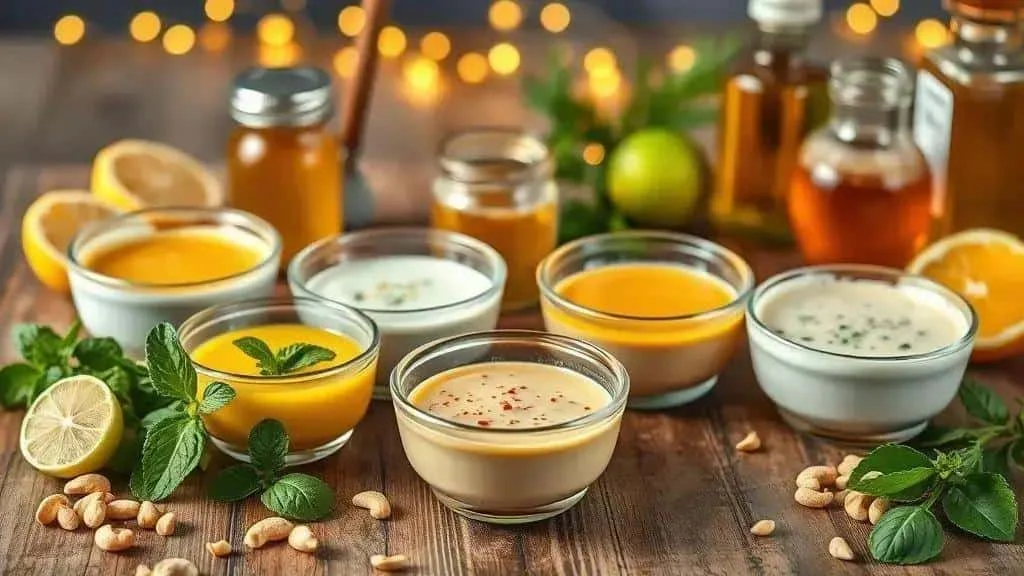
Choose one dressing to balance the sweet fruit. The alternatives below are separate options, not ingredients to combine into a single sauce.
Citrus and honey dressing
- 4 tablespoons fresh lemon juice, or lime juice.
- 3 tablespoons extra virgin olive oil.
- 1 tablespoon honey — use agave syrup for a vegan version.
- Salt and black pepper, to taste.
- Combine the ingredients in a closed jar and shake until mixed.
- Taste and adjust the salt and acidity gradually.
Yoghurt, citrus and mint dressing
- ½ cup plain yoghurt — use unsweetened plant-based yoghurt for a vegan version.
- 2 tablespoons lemon or lime juice.
- 1 tablespoon olive oil.
- 2 tablespoons chopped fresh mint.
- Salt and pepper, to taste.
- Stir the yoghurt and citrus juice together until smooth.
- Fold in the mint and olive oil gently.
- Refrigerate for 10 minutes before using, and keep any unused dressing chilled.
Orange and chilli dressing
- 3 tablespoons fresh orange juice.
- 2 tablespoons olive oil.
- 1 teaspoon finely grated orange zest.
- ½ teaspoon finely chopped mild red chilli, optional, removing seeds if preferred. Brazilian dedo-de-moça chilli is the original suggestion.
- Salt, to taste.
- Mix the orange juice, oil and zest in a bowl.
- Add the chopped chilli gradually and season to taste.
- Use soon after making for a fresh citrus aroma, refrigerating if not serving immediately.
Balsamic and mustard drizzle
- ½ cup balsamic vinegar.
- 1 tablespoon honey or maple syrup.
- 1 teaspoon Dijon mustard.
- Gently simmer the balsamic vinegar in a small saucepan until reduced by roughly half.
- Remove from the heat and stir in the sweetener and mustard.
- Let it cool, then drizzle sparingly over the salad.
Citrus seasoning
- 1 teaspoon sea salt for the seasoning mixture; you do not need to use it all on the salad.
- ½ teaspoon ground black pepper.
- 1 teaspoon dried lemon zest, or freshly grated zest if using immediately.
- ½ teaspoon soft brown sugar, optional.
- Mix the ingredients. Only a fully dry mixture belongs in a dry storage jar; make a fresh-zest version for immediate use rather than keeping it at room temperature.
- Sprinkle lightly before serving and taste before adding more, especially if the dressing is already seasoned.
Practical tips
- Add a little at a time: too much dressing softens the leaves.
- Sweetness and acidity: very sweet mango may need a little more citrus juice.
- Texture: add toasted nuts and seeds at the last moment.
- Taste first: adjust the dressing before pouring it over the salad.
Serving tropical salad at Christmas

When serving tropical Christmas salad, consider portion size, the other dishes and how to keep prepared ingredients chilled.
Portions and temperature
- Yield: allow about 6–8 generous side portions, or more smaller buffet servings. The actual yield depends on the fruit sizes and prepared weights.
- Portion guide: 120–150g can be a small side portion and 200–250g a larger serving, but these figures do not account for the whole recipe’s variable yield. A main course may also need a substantial protein or other accompaniment.
- Temperature: keep the prepared salad at 5°C or below until serving. Do not use the original’s 8–12°C range as a storage temperature, particularly when adding chicken, prawns or cheese.
Presentation
- Bowls and platters: plain white or pale ceramic shows off the fruit and leaves.
- Layers: start with leaves, arrange fruit and vegetables above them, then finish with nuts and seeds.
- Festive detail: pomegranate seeds and a few washed edible herb leaves add colour.
Serving with main dishes
- Roast turkey or chicken: the sweet-sharp salad contrasts with a rich roast. Brazilian menus may also feature Chester, a branded roasting chicken.
- Fish and seafood: citrus and fruit work well alongside thoroughly cooked prawns or baked salmon.
- Rich or smoky dishes: the fresh fruit and leaves provide a lighter-tasting contrast.
Drinks
- Light white wines: Sauvignon Blanc or Vinho Verde are options for adults who choose to drink alcohol.
- Sparkling wine: a dry sparkling wine or prosecco can accompany the fruit and citrus.
- Alcohol-free choices: sparkling water with citrus or a citrus iced tea also works well.
Preparing for the meal
- Ahead of time: wash and prepare most fruit and vegetables up to four hours ahead, keeping them covered and refrigerated separately. Leave avocado until later.
- Nuts: toast and cool them before serving, keeping them dry and separate from the salad.
- Dressing: keep it separately in the fridge and add just before serving to avoid wilting the leaves.
- Place in the menu: offer a small starter portion or serve alongside the richer main dishes.
Storage and final checks
- Do not over-dress: add gradually and taste.
- Avocado: cut and add shortly before serving to limit browning.
- Remaining ingredients: undressed components kept safely chilled are best used within 24 hours for quality. Follow any shorter product instructions and do not save salad that has spent too long unrefrigerated.
Choosing the ingredients and understanding nutrition
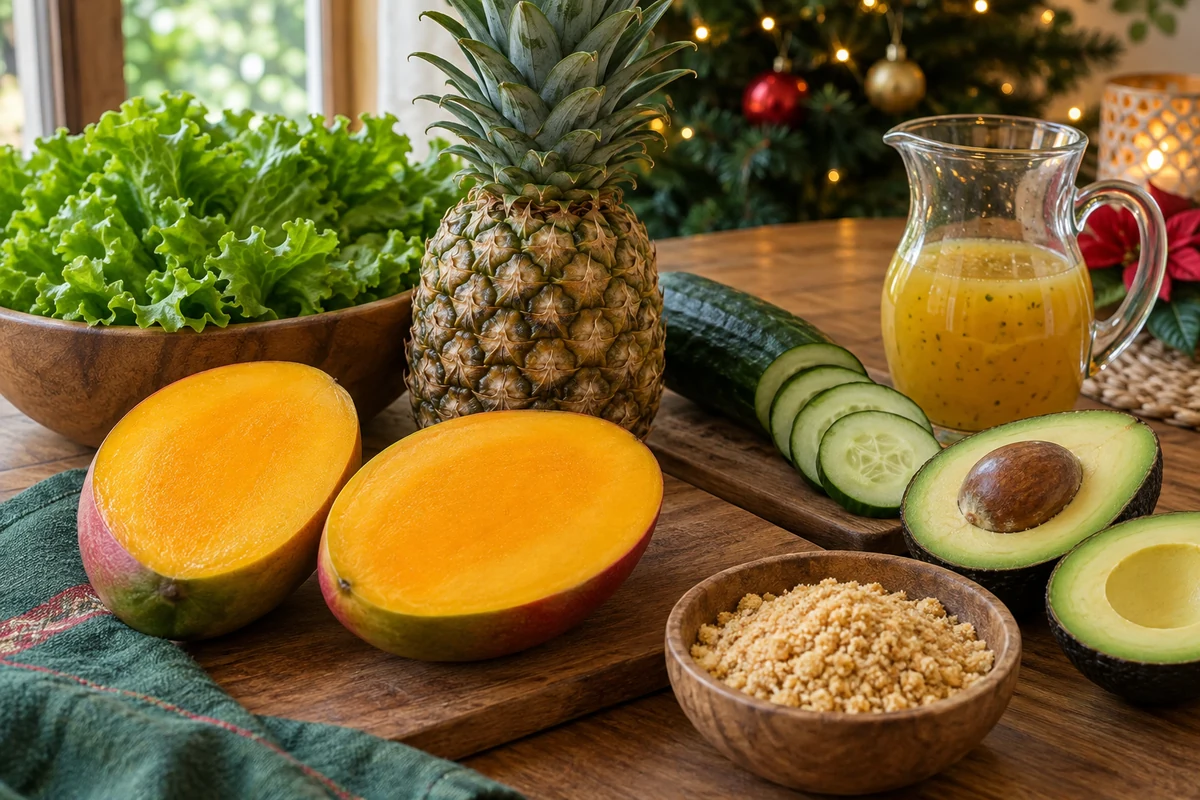
Mango, pineapple, avocado and nuts contribute different flavours, textures and nutrients. This is a food recipe, not a treatment or a promise of specific health benefits.
A closer look at the ingredients
- Mango: some varieties are more fibrous than others. Choose ripe fruit that still holds its shape when diced.
- Pineapple: it contains bromelain, a group of protein-breaking enzymes. That does not establish that eating this salad treats digestive problems or inflammation.
- Avocado: its soft, rich flesh gives the salad creaminess without needing a creamy dressing.
- Pomegranate: the juicy seeds add a sharp contrast and bright red colour.
- Nuts: toasting changes their aroma and gives a useful contrast to soft fruit. The Brazilian word castanhas here refers to nuts such as cashews, not necessarily chestnuts.
Putting nutrition in context
- Mango: it contributes fruit to the meal; portion size and the wider diet matter more than treating one ingredient as an immunity booster.
- Pineapple: enjoy it for its flavour. Research on bromelain products does not justify labelling a portion of pineapple salad an anti-inflammatory treatment.
- Avocado: it provides unsaturated fats, but adding it does not by itself guarantee an improvement in cholesterol.
- Salad leaves: they add variety to the fruit and vegetables in a balanced diet, with nutrient amounts depending on the leaves and portion.
- Pomegranate and tomatoes: they provide different plant foods and flavours; avoid turning that into a claim that this particular recipe prevents disease.
- Nuts: they add protein and fat as well as crunch. Use a portion that suits the meal and account for allergies.
Choosing and storing produce
- Mango: choose fragrant fruit that gives slightly but is not collapsing or damaged.
- Pineapple: choose sound fruit without mould or fermentation. Refrigerate cut fruit in a covered container and, for this salad, prepare close to serving rather than relying on a blanket three-day allowance.
- Avocado: refrigerate a ripe whole avocado if not using immediately and cut shortly before serving.
- Leaves and tomatoes: wash as appropriate, dry well and keep prepared ingredients refrigerated.
- Nuts: cool completely after toasting and keep in a dry, airtight container, following the packet’s storage advice.
Building a balanced combination
- Fruit with avocado or olive oil: combine contrasting textures and use only enough oil to dress the salad. There is no need to promise a measured nutrient-absorption benefit from this unanalysed recipe.
- Citrus and leaves: lemon or lime gives flavour contrast; this recipe has not been assessed as a source of a particular amount of iron.
- Pineapple with a main course: its sweet-sharp taste complements grilled food, but it should not be presented as a digestive remedy.
- Soft fruit and crunchy nuts: the contrast makes the dish more varied. How filling it is depends on the amount eaten and the rest of the meal.
Making tropical Christmas salad is a simple way to bring colour and freshness to the table. Mango, pineapple and crunchy ingredients give a pleasing contrast of flavours and textures.
For more recipe ideas and practical Christmas tips, follow our social channels and explore the I Love Christmas blog.
Thank you for reading. Share your version with us, and enjoy a colourful festive meal!
Tropical Christmas salad: frequently asked questions
How can I stop the avocado browning?
Cut it just before serving and toss gently with a little lemon or lime juice. Citrus can slow browning but does not replace refrigeration.
Can I prepare the salad ahead?
Yes. Prepare most fruit and vegetables up to four hours ahead and keep covered in separate containers in the fridge at 5°C or below. Add avocado, nuts and dressing shortly before serving.
What can I use instead of mango or fresh pineapple?
Diced papaya can replace mango, and well-drained tinned pineapple is a convenient substitute for fresh. Adjust the dressing to the fruit’s sweetness.
How can I make it more substantial?
Add thoroughly cooked chicken, cooked prawns or suitable cooked tofu, adjusting the amount for your servings. Serve freshly cooked additions immediately, or cool and refrigerate them separately before assembling a cold salad.
Which drinks go well with this salad?
Citrus sparkling water or iced tea are simple alcohol-free choices. For adults who drink alcohol, a light white or dry sparkling wine is another option.
Sources and Further Reading
- Food Standards Agency: cooking food safely
- Food Standards Agency: chilling, freezing and defrosting food
- NHS: the Eatwell Guide
- NCCIH: bromelain and the limits of the evidence