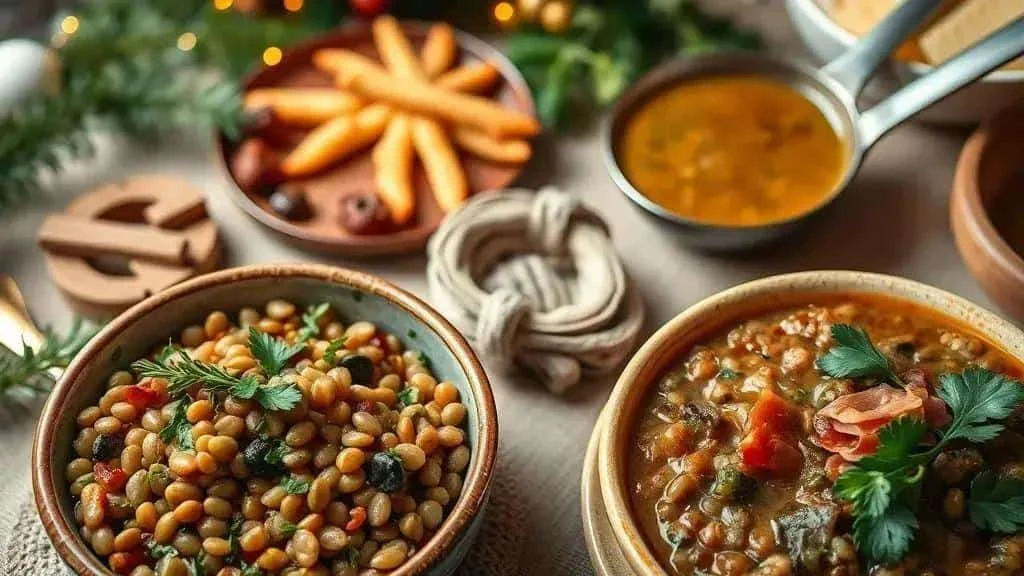
New Year lentil dishes combine a tradition of wishing for prosperity with practical, comforting food. Warm salad, creamy soup and lentils with bacon are three recipes to try, alongside seven further ideas. Choose suitable ingredients for vegetarian, vegan or gluten-free variations, and follow the cooling and storage guidance when preparing ahead.
New Year lentil dishes can bring flavour and meaning to a family celebration. Looking for affordable ideas, from a simple side dish to a warming bowl of soup? Start with these recipes and variations.
Why lentils symbolise good luck at New Year

Lentils are associated with good luck and prosperity because their small, rounded shape suggests coins. Eating them at New Year is a well-known Italian tradition, and lentil dishes also feature in Brazilian celebrations. The symbolism expresses a hopeful wish for the year ahead; it is not a promise of financial success.
Origins and meaning
Food often plays a part in expressing wishes for abundance. Lentils can represent prosperity and stability at the New Year table. Stories about them protecting a household from financial difficulties belong to folklore, rather than being factual claims about what a meal can achieve.
Traditions and symbolic rituals
- Serve lentils with the New Year’s Eve meal or at midnight as a symbolic dish.
- Some versions of the custom involve keeping a few dry lentils in a pocket or purse as a good-luck token. Keep these separate from food intended for eating.
- Share lentil soup or stew as an expression of wishing the family an abundant year.
Cultural variations
Italian lenticchie are one example of the tradition. Salads, soups and lentil side dishes offer other ways to bring it to the table. Brazilian versions often include bacon, vegetables or herbs, combining familiar flavours with the symbolism of New Year.
Practical tips
- There is no need for a large helping: a small portion is enough to take part in the custom.
- Choose a manageable dish that can be prepared ahead, such as soup or a lentil salad, and refrigerate it promptly if it is not being served straight away.
- For a vegetarian option, use vegetable stock and season with herbs, garlic and olive oil.
Beyond the tradition: lentils provide protein and fibre and can be part of a varied, balanced diet. The ingredients added to them also affect the nutritional content of the finished dish.
How to choose and cook lentils
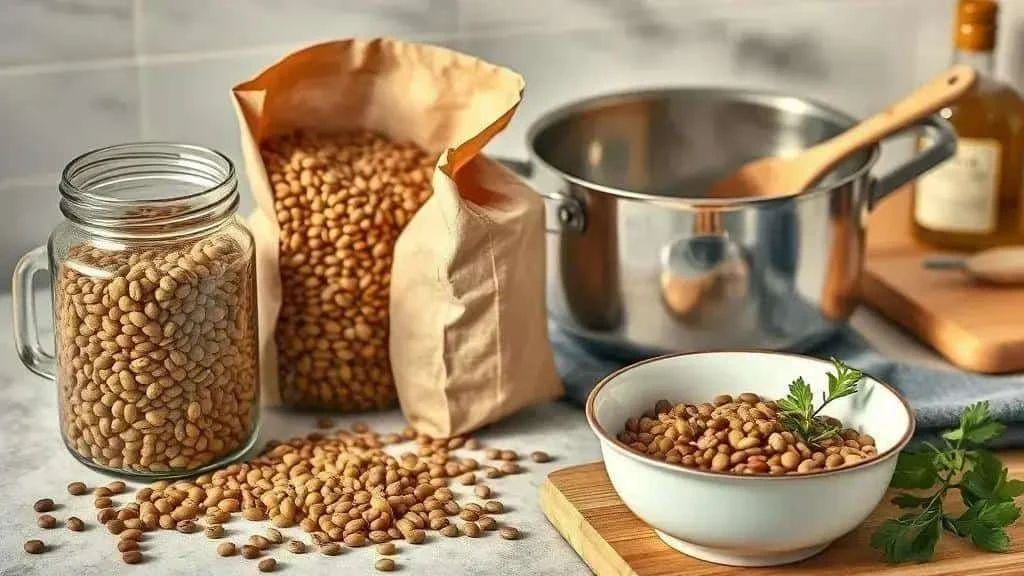
Choosing and cooking lentils starts with the right variety, a careful rinse and enough cooking time to reach the texture your dish needs.
Choosing your lentils
- Check their appearance: choose dry lentils without signs of damp or spoilage. Whole green and brown lentils tend to have an earthy flavour, while split red lentils soften more quickly.
- Match the variety to the dish: use green or brown lentils for salads and stews, and split red lentils for purées and creamy soups.
- Check the packaging date and condition: older lentils may take longer to soften. Follow the packet’s preparation instructions and check tenderness as they cook.
- Buy from a reliable supplier: choose intact packaging or a well-managed refill shop. Organic lentils are an option, not a requirement for a good result.
Basic ingredients for cooking lentils
- 200 g dried lentils (1 cup) — choose the variety to suit the dish. In a recipe using cooked lentils, 1 cup of cooked chickpeas can replace 1 cup of cooked lentils for a firmer texture; it does not replace 200 g of dry lentils on a like-for-like basis.
- 720 ml water or stock (3 cups) — adjust to the variety and packet guidance. The basic red lentil variation starts with 480–600 ml (2–2½ cups); soup recipes below use more liquid. Cups in these recipes are 240 ml measures.
- 1 bay leaf, optional — for aroma; alternatively, use a sprig of thyme.
- 1 tbsp olive oil or other cooking oil — for flavour and sautéing. Mild coconut oil is another option if it suits the dish.
- Salt, to taste — adjust towards the end, particularly when using stock, so the finished dish is not too salty.
- Optional chopped onion and garlic — sauté before adding the lentils for extra flavour.
How to cook lentils, step by step
- Sort and rinse: put the lentils in a sieve, remove any small stones or debris, and rinse under running water.
- Optional soaking: lentils generally do not need soaking. If you choose to soak whole lentils for about 30 minutes, drain and rinse them before cooking; do not rely on this to guarantee a shorter cooking time or easier digestion.
- Measure the liquid: start with 1 cup of whole lentils to 3 cups of water, or 1 cup of split red lentils to 2–2½ cups, unless the packet or individual recipe specifies otherwise.
- Sauté the aromatics: heat the oil in a medium saucepan. If using onion and garlic, cook gently until softened without burning the garlic.
- Add the lentils and liquid: stir in the rinsed lentils, bay leaf and water or stock, then bring to the boil.
- Reduce the heat: simmer with the lid off or partly covering the pan. The original guide suggests 15–25 minutes, but the variety and age of the lentils can require a longer cooking time; follow the packet and cook until tender.
- Check the texture: begin checking after about 10 minutes and then at roughly 5-minute intervals. Whole lentils for a salad should be tender all the way through while holding their shape; lentils for a purée can soften further.
- Adjust the seasoning: taste near the end and add salt and pepper as needed. This helps control the final seasoning, especially if the liquid has reduced.
- Finish: drain surplus liquid if necessary, remove the bay leaf, and add a little olive oil and fresh herbs if desired.
Practical tips and common mistakes
- Avoid over-seasoning: stock and bacon can already contain plenty of salt. Taste before adding more; seasoning at the end is a way to control saltiness, not a rule that salt must always be withheld for lentils to soften.
- Treat timings as a guide: split red lentils may soften in 10–15 minutes, and some green or brown lentils in 20–25 minutes. Others take longer, so check the packet and tenderness rather than serving them by the clock alone.
- Use stock for flavour: vegetable stock works for meat-free dishes; chicken stock is an option for other versions.
- Store safely: cool cooked lentils promptly and refrigerate within 1–2 hours at 0–5°C. Eat within 48 hours or freeze in portions. Up to 3 months is a suggested freezer quality window, not a validated shelf life for every recipe.
- Choose the consistency: drain salad lentils well and cool promptly if serving chilled. For soup, let some of the lentils break down to thicken the liquid.
10 New Year lentil dish ideas at a glance

These 10 lentil dish ideas offer different ways to celebrate New Year. Three have fuller recipes below; the others are starting points for variations rather than fully tested recipes with fixed yields.
A quick guide to the dishes
- Warm lentil salad — green lentils with red onion, cherry tomatoes and parsley, served warm or chilled. Allow around 35–40 minutes for preparation and cooking, or longer if your lentils need it.
- Creamy red lentil soup — lentils blended with carrot, onion and stock. The lentils may simmer in 15–20 minutes, with additional time needed for chopping, sautéing and blending.
- Lentils with bacon and herbs — brown lentils with browned bacon, bay and thyme make a hearty side dish.
- Lentil and vegetable stew — combine lentils, potatoes, carrots and tomatoes, then simmer until everything is tender for a substantial main course.
- Seasoned lentil pâté — blend cooked lentils with garlic, tahini or olive oil, and lemon for a meat-free starter or toast topping.
- Lentil and rice pilaf — mix cooked lentils and rice with onion and cumin for a simple, generous side dish.
- Lentil balls — mash cooked lentils with oats and herbs, shape and bake until cooked through. Use in sandwiches or as part of a main meal, adjusting the mixture so it holds together.
- Lentil curry — combine lentils with curry spices, ginger and coconut milk for an aromatic vegetarian dish, using suitable stock.
- Lentil-stuffed peppers — fill roasted peppers with cooked lentils and tomatoes, adding cheese if wanted, then heat through.
- Sweet spiced lentils — try a small portion of well-cooked lentils sweetened with honey and cinnamon for a different festive dish. Do not give honey to children under 1 year old; use a suitable alternative when needed.
Quick tips for choosing a dish
- Use split red lentils for purées and creamy soups, and green or brown lentils for salads and stews.
- Season thoughtfully — fresh herbs, olive oil and a little lemon juice or vinegar can bring out the flavour.
- Plan ahead — prepare suitable dishes the day before, cool and refrigerate promptly, then serve chilled or reheat once until steaming hot throughout.
Warm lentil salad: ingredients
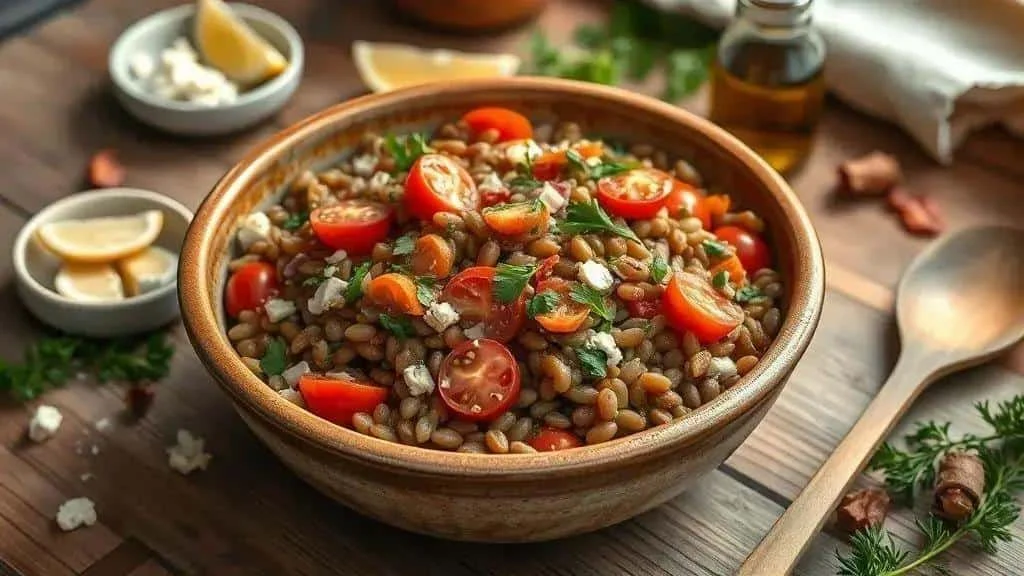
For the warm lentil salad, you will need:
- 200 g dried green lentils (1 cup) — sorted and rinsed. Brown lentils are an alternative; follow their packet instructions.
- 720 ml water or vegetable stock (3 cups) — stock adds flavour. Chicken stock is an option for a non-vegetarian version.
- 1 bay leaf — or a sprig of thyme, for cooking the lentils.
- 1 tbsp olive oil — for sautéing the onion and garlic. A neutral vegetable oil also works.
- 1 tbsp extra virgin olive oil — for the dressing. Avocado oil is an alternative.
- ½ medium red onion — finely sliced. Use a regular onion or spring onions for a different flavour.
- 1 garlic clove, chopped — or ½ tsp garlic powder, added without letting it burn.
- 10–12 cherry tomatoes — halved, or replace with 1 chopped medium tomato.
- 1 small carrot, grated — for colour and texture. Alternatively, use ½ cup grated courgette.
- 2 tbsp chopped fresh parsley — or coriander or chives, to finish.
- 2 tbsp lemon juice — or cider vinegar or white wine vinegar, for the dressing.
- 1 tsp Dijon mustard — to help combine the dressing. Another mustard or 1 tbsp plain yoghurt gives a different, milder dressing; yoghurt is not suitable for a vegan version unless plant-based.
- Salt and black pepper, to taste — adjust after tasting the cooked lentils and dressing.
- Optional: 75 g chopped bacon or 100 g crumbled feta — bacon adds smokiness; feta adds a salty finish. Choose vegetarian-labelled feta if required.
Notes and practical substitutions
Cook until tender but intact for a salad: the lentils should have no hard centre, yet still hold their shape. If preparing ahead, cool and refrigerate promptly, keeping the dressing separate until shortly before serving.
- Cooking time: allow roughly 20–25 minutes for green or brown lentils, but follow the packet and extend the time if they are not tender.
- Seasoning: adjust salt at the end so you can account for the stock, dressing and optional bacon or cheese.
- Serving: serve freshly made and warm, or promptly chilled. For a cold salad, taste again before serving and adjust the lemon or vinegar and oil if needed; do not leave it sitting out for a prolonged period.
How to make warm lentil salad
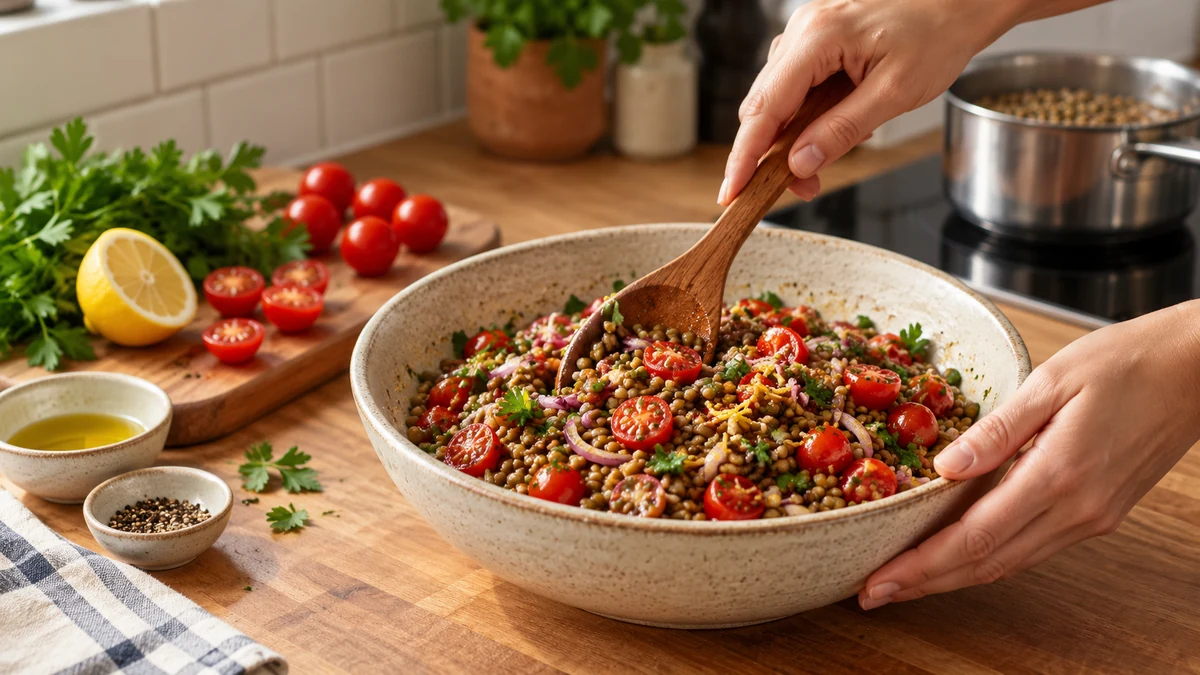
Follow these steps to make the warm lentil salad:
- Sort and rinse: place 200 g lentils in a sieve, remove any stones or debris, and rinse under running water.
- Optional soaking: whole lentils can be soaked for 20–30 minutes, then drained and rinsed, but this is not normally necessary. Follow the packet rather than assuming a particular reduction in cooking time.
- Measure the liquid: use 720 ml water or stock for the 200 g green or brown lentils. The smaller 480–600 ml quantity mentioned in the basic guide is for red lentils, which are less suitable for this firm-textured salad.
- Cook: add the bay leaf, bring to the boil, then reduce the heat and simmer until tender but still holding their shape, starting to check within 20–25 minutes or as directed on the packet. Drain and remove the bay leaf.
- Sauté the aromatics: heat 1 tbsp olive oil in a frying pan and soften the ½ red onion for about 2–3 minutes. Add the chopped garlic and cook briefly, taking care not to burn it.
- Prepare the extras: if using bacon, cook 75 g thoroughly until crisp, then drain. Sauté the halved cherry tomatoes for 1–2 minutes to soften them slightly, whether or not you are adding bacon.
- Make the dressing: whisk together 1 tbsp extra virgin olive oil, 2 tbsp lemon juice, 1 tsp Dijon mustard, salt and pepper. This follows the ingredient list; the original method used 3 tbsp oil, which you can treat as a richer variation rather than an additional amount.
- Assemble: put the warm lentils in a large bowl with the cooked onion and garlic, tomatoes and grated carrot.
- Dress and mix: pour over the dressing and fold together gently. Taste and adjust the seasoning.
- Finish: add 2 tbsp chopped parsley and, if using, the 100 g crumbled feta or reserved cooked bacon.
- Serve warm or chilled: serve the freshly made salad warm. For a cold version, cool promptly, refrigerate and adjust the dressing just before serving.
- Storage: refrigerate within 1–2 hours in a covered container at 0–5°C and eat within 48 hours, or sooner if an ingredient’s instructions require it. Keep the dressing separate when preparing ahead.
- Approximate total time: 35–40 minutes for preparation, cooking and assembly, with extra time if the lentils need longer to soften.
Tips for beginners
- Check as you cook: begin checking the texture after about 15 minutes so the lentils become tender without falling apart.
- Taste before adding salt: stock, bacon and cheese affect the seasoning, so make the final adjustment after cooking.
- Drain well: too much cooking liquid can dilute the dressing and make the salad watery.
- Keep the equipment simple: a sieve, saucepan, non-stick frying pan and large mixing bowl are all you need.
Warm lentil salad: variations
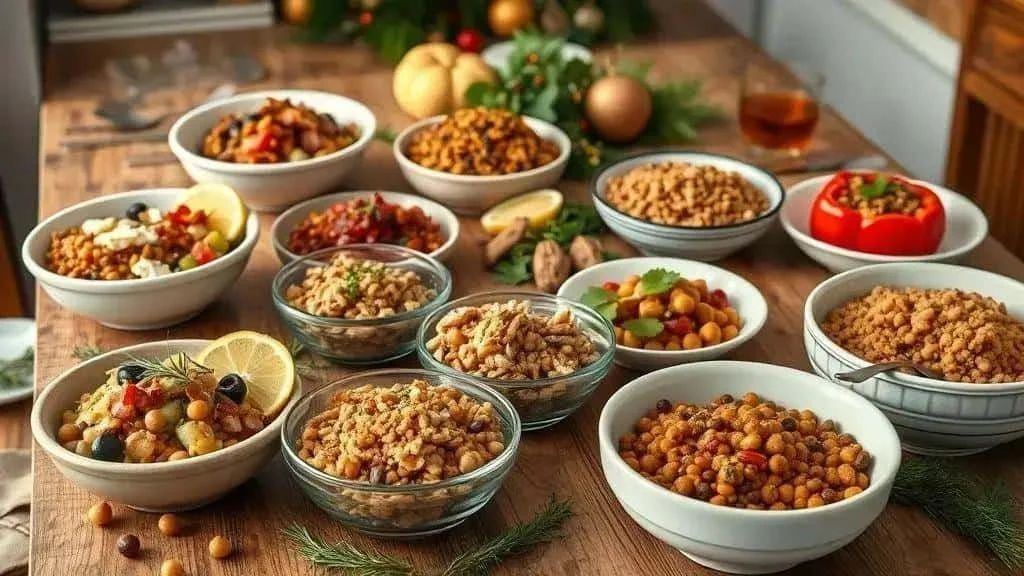
Try different ways to adapt the warm lentil salad, changing its flavour, making a vegan version or adding a festive finish.
Mediterranean-style salad with feta
Add a salty, fresh contrast with feta, olives and cucumber. Serve in small portions as a starter.
- Suggested additions: 100 g crumbled feta, 8–10 sliced black olives, ½ cucumber, diced, and lemon zest.
- Substitution: use seasoned tofu for a dairy-free variation, checking its ingredients. Goat’s cheese offers another flavour but is not automatically lactose-free or suitable for a milk allergy.
Crispy bacon and herbs
For a non-vegetarian salad, thoroughly cooked, crisp bacon adds a smoky contrast to the lentils.
- Suggested additions: 75–100 g chopped bacon, cooked through until crisp, fresh thyme and black pepper.
- Tip: drain surplus bacon fat before mixing it into the salad so the dressing does not become greasy.
Chickpeas and seeds
Add cooked chickpeas and seeds for extra texture and another source of plant protein.
- Suggested additions: 1 cup cooked chickpeas, 2 tbsp pumpkin or sunflower seeds, and optional tahini dressing.
- Substitution: shelled edamame offers a different flavour and texture; cook it according to the packet before adding.
Citrus and herbs
A lemon and herb dressing gives a fresh finish, especially when serving the salad chilled.
- Suggested dressing variation: 3 tbsp lemon juice, 1 tbsp honey or agave syrup, and chopped parsley and mint. Use agave for a vegan version; honey is unsuitable for children under 1 year old.
- Tip: add orange zest for another layer of citrus aroma.
Cumin and chilli
Ground cumin and chilli flakes add warmth without making the preparation complicated.
- Suggested additions: 1 tsp ground cumin, ¼ tsp chilli flakes and caramelised red onion.
- Substitution: use mild smoked paprika instead of chilli for smokiness without the same heat. The flavour will be different.
Rice or quinoa salad bowl
Adding a cooked grain makes the lentil salad more substantial and suitable as the basis of a main meal.
- Suggested additions: 1 cup cooked basmati rice or quinoa, and ¼ cup toasted walnuts or other nuts.
- Tip: cook the grain in suitable stock for flavour. If preparing rice ahead, cool it within 1 hour and refrigerate for no more than 24 hours before eating or reheating once until steaming hot.
Curry and coconut milk
Curry spices and creamy coconut milk turn the warm salad into a comforting, aromatic dish.
- Suggested additions: 1 tbsp curry powder, 100 ml coconut milk and fresh coriander to finish. Cook the spices briefly with the aromatics before adding the coconut milk and lentils.
- Substitution: an unsweetened plant-based drink gives a more neutral flavour, but is usually thinner than coconut milk; add gradually to avoid a watery result.
Peppers stuffed with lentil salad
Serve the lentils inside roasted peppers for a colourful presentation.
- Suggested ingredients: 4 medium roasted peppers, 1 cup warm seasoned lentils and optional grated cheese. This amount of lentils provides a small filling for each pepper; increase it if serving a substantial main course.
- Tip: roast the peppers with olive oil and salt until tender before filling, then heat the assembled dish through. Use vegetarian-labelled cheese when needed.
Crunchy toppings and aromatic finishes
Finishing touches such as toasted nuts, seeds and lemon zest can change the texture and flavour. A little honey is another option for those who want sweetness, subject to dietary needs.
- For texture: try flaked almonds, pistachios or juicy pomegranate seeds.
- To finish: add a little good olive oil and fresh herbs just before serving.
Lentils with bacon and herbs: ingredients
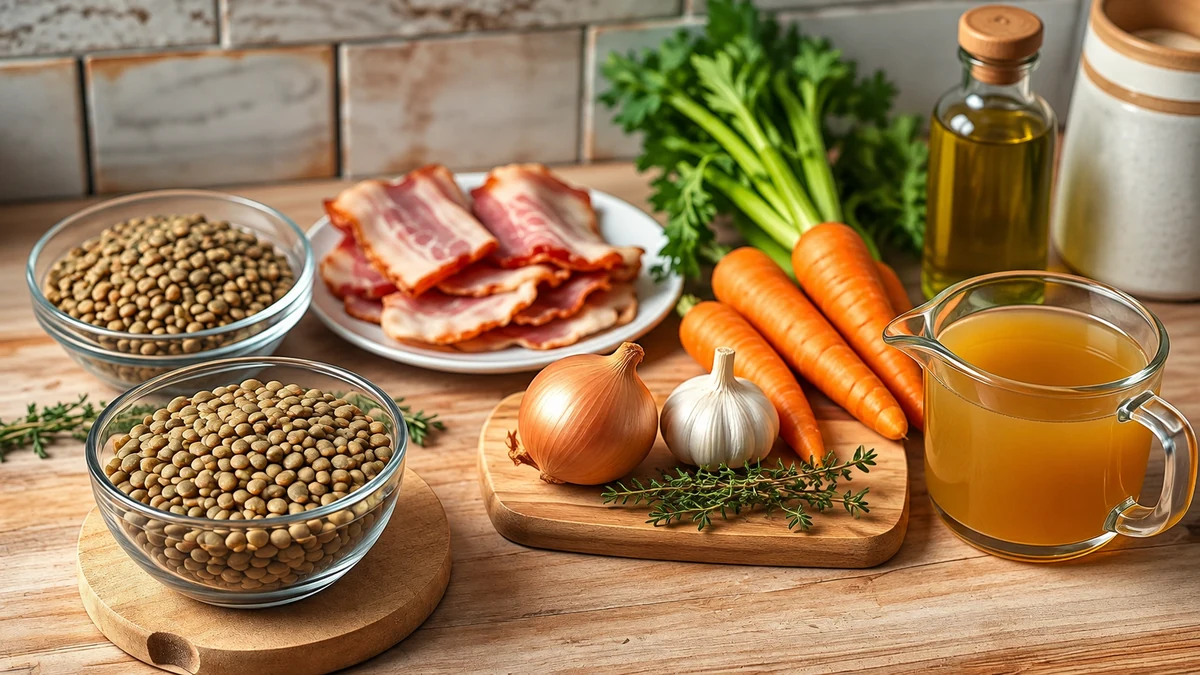
Gather these ingredients for the lentils with bacon and herbs before you start:
- 200 g dried lentils (1 cup) — sorted and rinsed. Alternatively, use 2 cups cooked lentils, rinsing tinned ones first. This is a shortcut variation, not an exact dry-to-cooked yield: use much less stock and heat only until everything is hot, rather than following the dry-lentil simmering step.
- 150 g diced bacon — pancetta or smoked turkey bacon are alternatives. Compare labels if fat content matters; turkey bacon is not automatically a lower-fat choice.
- 1 medium onion — finely chopped, or 2 sliced spring onions for a milder flavour.
- 2 garlic cloves — chopped or crushed, or ½ tsp garlic powder.
- 1 medium carrot — finely diced, or ½ cup diced courgette.
- 1 celery stick, optional — chopped. If omitting it, add a little more pepper or herbs to taste.
- 720 ml hot vegetable or chicken stock (3 cups) — for the dry-lentil version. If using a stock cube, dilute according to its packet instructions rather than assuming every cube is suitable for this volume.
- 1 bay leaf — or a sprig of fresh thyme, for simmering.
- 1 tsp fresh thyme or ½ tsp dried thyme — alternatively, use a smaller amount of chopped rosemary, which has a stronger flavour.
- 2 tbsp chopped fresh parsley — or coriander or chives, to finish.
- Up to 2 tbsp olive oil — for sautéing, reducing to 1 tbsp when using bacon, or using the retained bacon fat instead. A neutral cooking oil also works.
- ½ tsp smoked paprika, optional — or a pinch of cumin for a different flavour.
- Salt and black pepper, to taste — add carefully because the bacon and stock may already be salty.
- 1 tbsp red wine vinegar or lemon juice, optional — to brighten the dish before serving. A touch of honey gives sweetness instead, not the same acidic balance; omit it for a vegan version or food for a child under 1.
Practical notes
- Using dried lentils: soaking is normally unnecessary. An optional 20–30-minute soak may alter the cooking time, but tenderness and the packet instructions remain the guide.
- Final seasoning: taste after cooking before adding salt, allowing for the bacon and reduced stock.
- Bacon: cook thoroughly until browned and crisp, then drain surplus fat if you prefer a less oily finish.
- Approximate yield: the version using 200 g dried lentils makes around 4 side-dish portions, depending on what else you serve.
How to make lentils with bacon and herbs
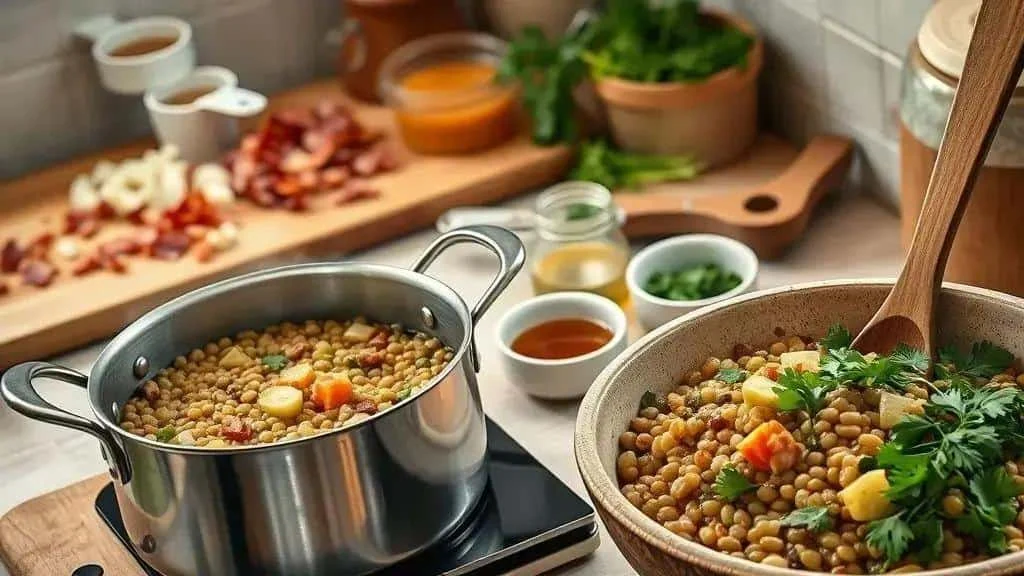
- Prepare the ingredients: rinse and drain 200 g lentils. Dice 150 g bacon, chop 1 medium onion and 2 garlic cloves, and finely dice 1 carrot and the optional celery stick.
- Cook the bacon: heat a medium saucepan over a medium heat and cook the bacon thoroughly until browned and crisp. Lift it out with a slotted spoon and drain on kitchen paper on a plate away from the hob.
- Choose the cooking fat: leave about 1 tbsp bacon fat in the pan, or remove the fat and use 1 tbsp olive oil instead. You do not need both amounts.
- Sauté the aromatics: soften the onion for about 2–3 minutes, then add the garlic and optional smoked paprika and cook for roughly 30 seconds without burning.
- Add the vegetables: stir in the carrot and celery and cook for another 2–3 minutes to start softening them.
- Add the lentils and stock: stir in the dry lentils, 720 ml hot stock or water and the bay leaf, then bring to the boil. For the cooked-lentil shortcut, add only enough liquid to moisten and heat through; do not use the full dry-lentil quantity of stock.
- Simmer gently: partly cover the pan and cook until the dry lentils are tender, stirring occasionally. Allow around 20–25 minutes as an initial guide, extending the time according to the packet and texture.
- Check the texture: start checking after about 15 minutes. Add more hot liquid if the pan is drying out before the lentils are fully tender.
- Season: remove the bay leaf and taste before adding salt and pepper, remembering that the bacon will add more seasoning.
- Return the bacon and herbs: add the cooked bacon and 1 tsp fresh thyme or ½ tsp dried thyme. Stir and heat for another 1–2 minutes, or until everything is hot throughout.
- Balance the flavour: if wanted, add 1 tbsp red wine vinegar or lemon juice before serving. Taste and make any final seasoning adjustment.
- Finish: take off the heat and sprinkle over 2 tbsp chopped parsley. Add a little extra virgin olive oil if desired.
- Store and reuse: cool promptly and refrigerate within 1–2 hours at 0–5°C, then eat within 48 hours or freeze. Reheat only once, stirring with a little water or stock until steaming hot throughout. Use a safely stored portion as a side or pepper filling; turning leftovers into another dish does not restart their storage time.
Practical tips
- Drain surplus fat: rest the cooked bacon on kitchen paper before adding it, keeping the paper away from heat sources.
- Vegetarian variation: replace the bacon with smoked tofu or sautéed mushrooms, and use vegetable stock and oil rather than chicken stock or bacon fat.
- For more flavour: use a well-flavoured homemade stock and the optional smoked paprika, tasting before adding further salt.
- For a creamier texture: lightly mash some of the cooked lentils with the back of a spoon before finishing.
Lentils with bacon and herbs: variations
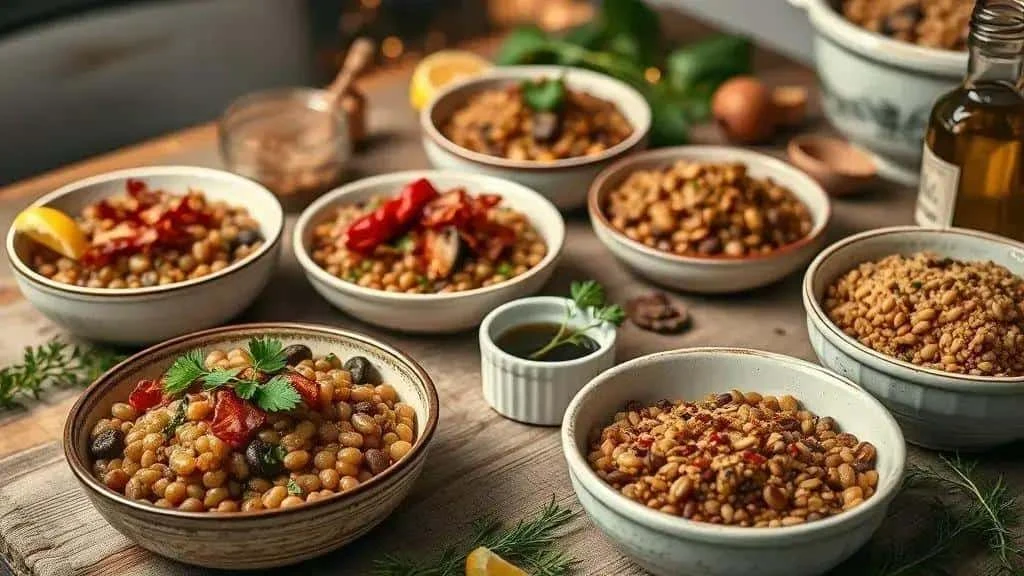
Adapt the lentils with bacon and herbs to your taste and the rest of your New Year menu with these variations.
Turkey bacon variation
Replace pork bacon with turkey bacon for a different smoky flavour. Check the nutrition information if you are choosing it to reduce fat or salt, as products vary.
- Suggested ingredients: 150 g diced turkey bacon, 1 cup dried lentils, stock, onion, garlic and thyme, using the main recipe’s method and cooking the bacon fully.
- Substitution: choose smoked tofu for a meat-free version and use vegetable stock.
Smoky mushroom variation
Well-browned mushrooms bring texture and a deep savoury flavour in place of bacon.
- Suggested ingredients: 200 g chopped shiitake or portobello mushrooms, sautéed until cooked, 1 cup dried lentils, vegetable stock, garlic and rosemary.
- Flavour option: add a little smoked paprika or liquid smoke, following the latter’s label directions because its strength varies.
Paprika and chilli
Smoked paprika and chilli flakes give the dish a warmer, more pronounced flavour.
- Suggested ingredients: ½ tsp smoked paprika, ¼ tsp chilli flakes, bacon or mushrooms, lentils and herbs. These are the total suggested spice amounts, not extra paprika on top of the base recipe.
- Tip: add chilli gradually so it does not overwhelm the lentils.
Grains and seeds
Add cooked quinoa or brown rice and toasted seeds for a more substantial dish with contrasting textures.
- Suggested additions: ½ cup cooked quinoa or cooked brown rice, and 2 tbsp pumpkin or sunflower seeds, stirred into the prepared lentils.
- Substitution: cooked wholegrain oats or barley give a different texture. Barley contains gluten; use certified gluten-free oats if needed. For rice, follow the shorter cooling and storage times given above.
Wine and fresh herbs
Deglaze the pan with a little red or white wine before adding the lentils and stock, then finish with fresh herbs.
- Suggested ingredients: 50 ml red or white wine, fresh thyme and parsley, bacon or a plant-based alternative, lentils and stock.
- Tip: simmer the wine briefly to reduce its sharpness before continuing. Brief cooking does not remove all the alcohol; use stock instead if you need to avoid alcohol.
Festive presentation
Offer small bowls of different variations, finished with fresh herbs, lemon zest or seeds for colour, texture and flavour.
- Serving idea: offer a bacon version, a separate vegetarian mushroom bowl, and a small dish of grains and seeds. Use separate utensils for dishes with different dietary requirements.
- Storage: refrigerate the lentils, cooked bacon or mushrooms, and dressing in separate covered containers when preparing ahead. Keep them chilled until needed, then combine and serve or reheat safely.
Creamy lentil soup: ingredients
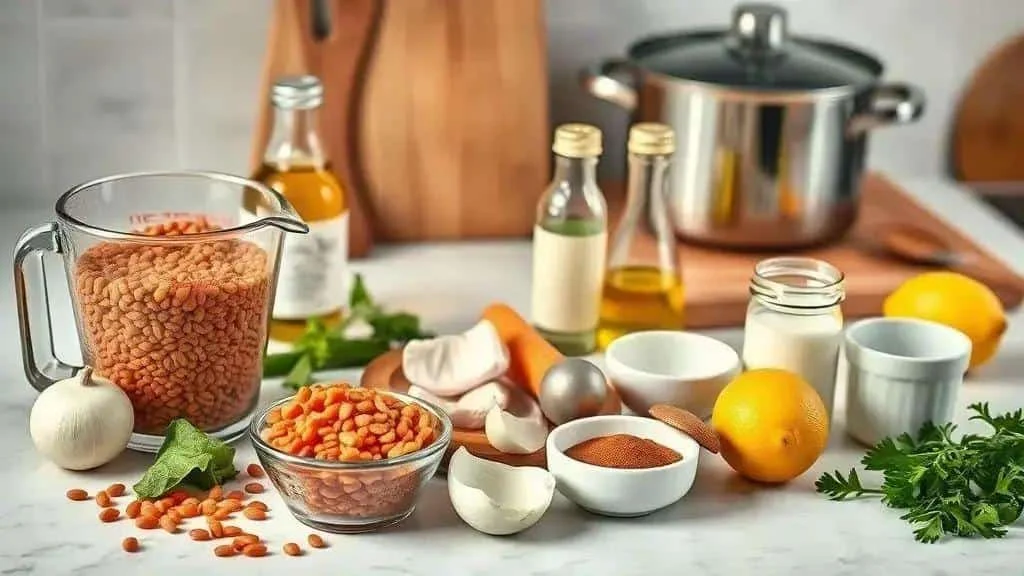
Gather these ingredients for the creamy lentil soup, choosing substitutions to suit your preferences.
Ingredients
- 200 g dried split red lentils (1 cup) — sorted and rinsed. Yellow lentils are another option, but check their packet instructions because varieties differ.
- 960 ml hot vegetable or chicken stock (4 cups) — if making stock from a cube, follow its dilution instructions. Choose vegetable stock for a meat-free soup.
- 1 medium onion — chopped, or 2 sliced spring onions for a milder flavour.
- 2 garlic cloves — chopped, or ½ tsp garlic powder.
- 1 medium carrot — finely diced. Pumpkin or potato gives a different flavour and texture; cook until completely tender.
- 1 celery stick, optional — chopped. Use a little more carrot if preferred.
- 1 bay leaf — or a sprig of thyme, for simmering.
- 1 tsp ground cumin — or ½ tsp mild curry powder for a different warming flavour.
- 1 tbsp olive oil — or a neutral cooking oil, for sautéing. Alternatively, use 1 tbsp butter for a non-vegan version.
- 100 ml cream or 200 ml coconut milk — to finish. Unsweetened oat drink is a thinner alternative; add gradually to reach the consistency you like.
- Salt and black pepper, to taste — adjust after cooking and blending.
- Juice of ½ lemon, optional — to brighten the flavour before serving.
- 2 tbsp chopped parsley or coriander — or chives, to finish.
Practical notes
- Cooking time and texture: split red lentils often soften in 10–15 minutes and break down readily, making them useful for creamy soups. Follow the packet and allow longer if the lentils or vegetables are not yet tender.
- Using green or brown lentils: allow at least the suggested 20–25 minutes, or longer according to the packet, and add more liquid as needed. Their texture and colour will differ from red lentils.
- Final seasoning: taste near the end before adding salt, particularly when using stock.
- For a smoother texture: blend some or all of the soup using equipment suitable for hot liquids, following the safe blending instructions below.
- Approximate yield: around 4 starter portions or 3 main-course portions, depending on accompaniments and the final thickness.
How to make creamy lentil soup
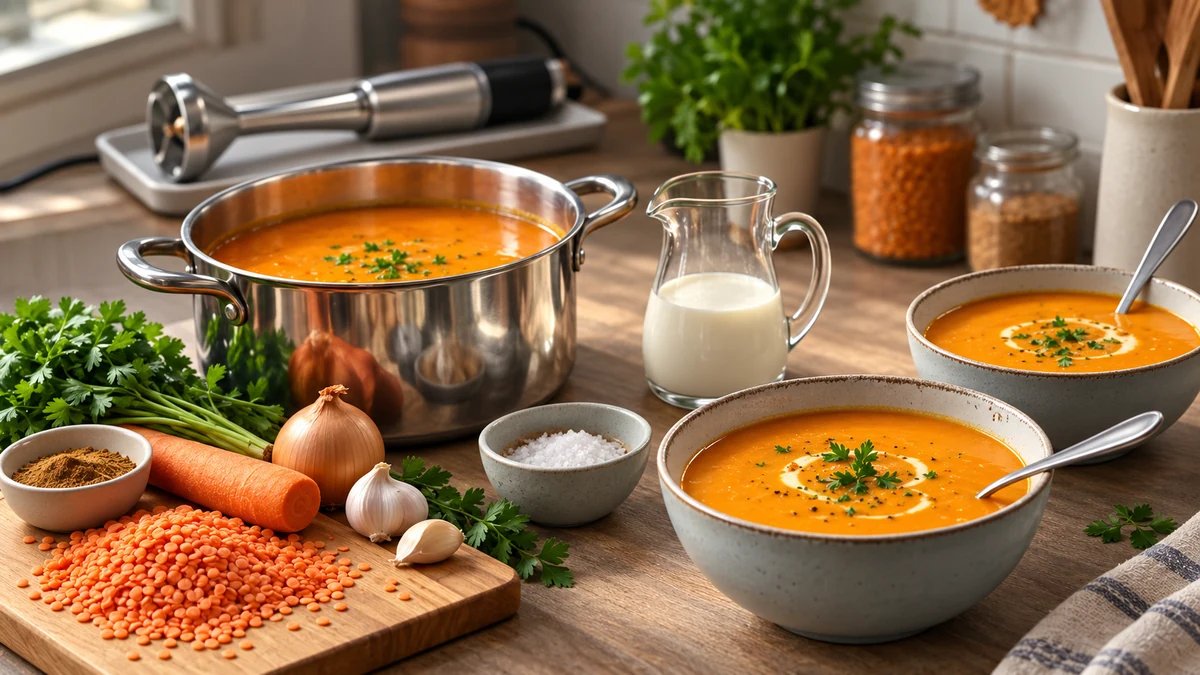
- Sort and rinse: place 200 g split red lentils in a sieve, check for debris and rinse under running water.
- Prepare the vegetables: chop 1 medium onion and 2 garlic cloves, then finely dice 1 medium carrot and the optional celery stick.
- Sauté the base: heat 1 tbsp olive oil in a medium saucepan and soften the onion for about 2–3 minutes. Add the garlic and cook for another 30 seconds without burning it.
- Add the vegetables: stir in the carrot and celery and cook for about 2 minutes to start softening them.
- Add the spices: stir in 1 tsp ground cumin for about 30 seconds, then add the bay leaf.
- Add the lentils and stock: tip in the rinsed lentils, pour in 960 ml hot stock and bring to the boil.
- Simmer: reduce the heat and cook gently, stirring occasionally, until the lentils are very soft and the vegetables are tender. Start checking after 10–15 minutes and continue cooking if needed.
- Remove the bay leaf: take it out before blending. If you used a thyme sprig, remove its woody stem too.
- Blend carefully: take the saucepan off the heat. With a suitable stick blender, keep the blade submerged to reduce splashing. If using a jug blender, follow its instructions for hot liquids, let the soup cool as required and work in small batches. Never put hot soup in a sealed blender not designed for it.
- Finish the texture: stir in 100 ml cream or 200 ml coconut milk, adding water or stock if needed. Return to the heat and heat through. Coconut milk makes the soup vegan only if the stock, cooking fat and all other ingredients are also suitable.
- Season: taste and add salt and black pepper as needed, then the juice of ½ lemon if you would like a sharper finish.
- Serve: ladle into bowls and finish with the 2 tbsp chopped parsley or coriander, a little olive oil and optional smoked paprika.
Practical tips
- Liquid ratio: this soup starts with 200 g split red lentils and 960 ml liquid. Use slightly less liquid for a thicker version, while keeping enough in the pan to cook the lentils without catching.
- Taste before salting: the stock and any salty toppings may provide enough seasoning already.
- No blender? use a potato masher or fork to break down some of the thoroughly cooked lentils and vegetables, leaving a more textured soup.
- Vary the flavour: add cooked roasted carrot, sweet potato or pumpkin for a sweeter variation.
- Without cream: omit the cream or use a suitable plant-based alternative. The texture and nutritional content will depend on the product and quantity you choose.
Storage and reheating
- Refrigerating: divide into smaller containers to cool promptly, refrigerate within 1–2 hours at 0–5°C and eat within 48 hours, or sooner if an ingredient’s instructions require it.
- Freezing: freeze suitable portions promptly and label them. Use within about 3 months for quality; thaw in the fridge and use within 24 hours of fully defrosting.
- Reheating: reheat only once, stirring and adding a little water or stock if needed, until steaming hot throughout. Do not stop at merely warming the surface.
Creamy lentil soup: variations
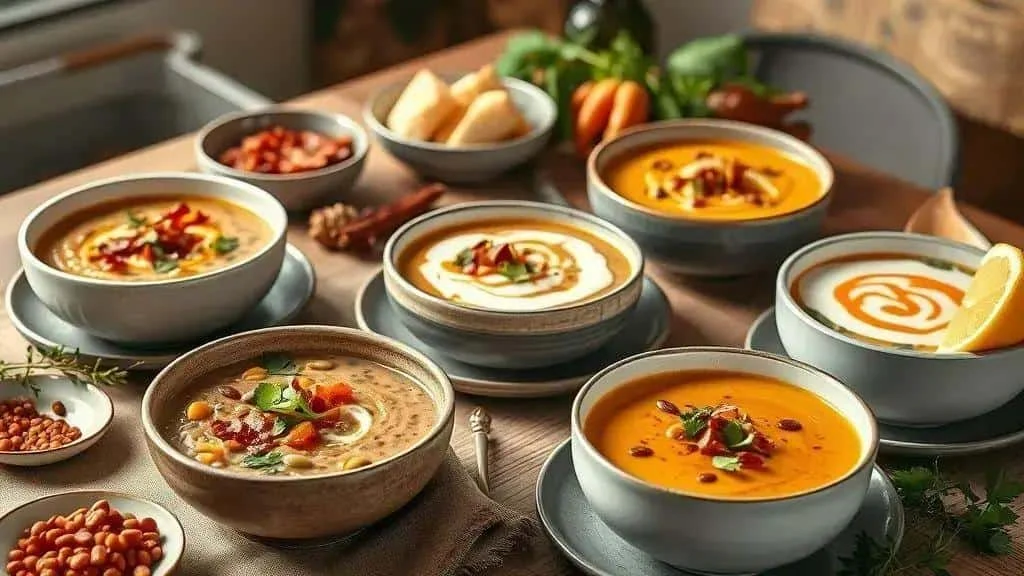
Adapt the creamy lentil soup with these flavour, texture and topping ideas. Use the main recipe as the base and adjust the liquid and cooking time to the lentils you choose.
Creamy vegan variation
Keep the smooth texture with coconut milk, vegetable stock and olive oil, checking that all seasonings and toppings are vegan too.
- 200 g split red lentils (1 cup) — cook until soft and breaking down.
- 960 ml vegetable stock (4 cups) — homemade or prepared according to the stock product’s dilution instructions.
- 200 ml coconut milk — or a suitable oat or soya cream, added to reach the thickness you prefer.
- 1 tsp ground cumin — or mild curry powder to taste.
- Chopped parsley or coriander — to finish.
Smoky variation
Add a smoky note for a more pronounced savoury flavour.
- 1 cup dried lentils — red or brown, allowing for their different cooking times.
- ½ tsp smoked paprika — for the smoky aroma.
- 100–150 g bacon or pancetta — cooked thoroughly and added at the end. For a meat-free version, use sautéed mushrooms with the smoked paprika and vegetable stock.
- Stock as needed — start from the base recipe’s quantity and adjust for the lentil variety and the thickness you want.
Roasted vegetable variation
Roasted vegetables add sweetness and body to the soup.
- 1 cup dried split red lentils
- 1 cup roasted pumpkin or carrot — dice before roasting until tender; sweet potato is another option.
- 1 tsp thyme — to complement the roasted vegetables.
- Optional topping: toasted pumpkin seeds for crunch.
Curry and ginger variation
Add curry spices and ginger for warmth, choosing a mild or hotter blend to suit your taste.
- 1 cup dried lentils
- 1 tbsp curry powder — adjust to the strength of the blend and your preference.
- 200 ml coconut milk — to soften the spice. Plain yoghurt stirred in off the heat gives a tangier alternative, but is not nutritionally identical; choose according to your needs.
- 1 tsp grated ginger — for a fresh, warming note.
Yoghurt and herb variation
Yoghurt adds a tangy, creamy finish. Choose a product you enjoy rather than assuming every yoghurt version has fewer calories than the alternatives.
- 1 cup dried lentils
- 100 g plain yoghurt — stir in off the heat after cooking. Use a suitable plant-based yoghurt, vegetable stock and oil for a vegan version.
- Juice of ½ lemon — add to taste, allowing for the yoghurt’s acidity.
- Fresh parsley or chives — to finish.
Crunchy toppings
Add a contrast of textures just before serving.
- 2 tbsp toasted seeds — pumpkin or sunflower seeds work well.
- Crisp bread or croutons — serve separately, choosing gluten-free products if needed.
- Other options: caramelised onion, thoroughly cooked crispy bacon or grated cheese, chosen to suit the meal’s dietary requirements.
Quick tips for the variations
- Finish after blending: add cream or coconut milk after blending, then heat through. Stir yoghurt in off the heat shortly before serving; add crunchy toppings at the table.
- Balance the flavour: a little lemon juice or vinegar at the end can lift the seasoning.
- Try a small portion first: test extra chilli or curry powder in a spoonful before changing the whole batch.
- Store toppings separately: keep dry toppings crisp in a suitable container and refrigerate perishable toppings promptly.
Serving, storing and adapting lentil dishes
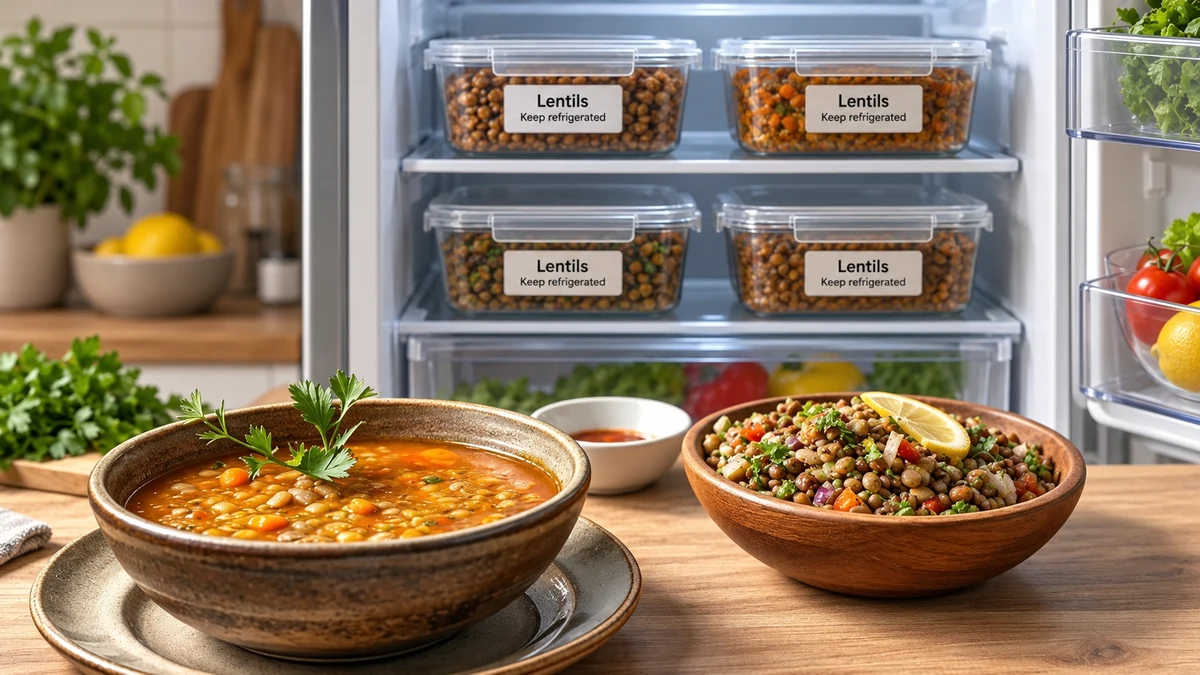
These practical tips help you serve, store and adapt lentil dishes while keeping flavour and food safety in mind.
Serving ideas
- Temperature: serve salads freshly warm or chilled, and soups and stews hot. If holding hot food for a buffet, keep it at 63°C or above; this is the food temperature, not an oven setting.
- Portions: 1 cup cooked lentils, roughly 200 g depending on the variety, is a generous side helping. Use smaller portions as part of a varied festive spread; this is not the same as 1 cup of dry lentils.
- Pairings: serve alongside grilled fish, roast chicken or tofu, with vegetables and rice or quinoa as desired. Lentils themselves also contribute protein and carbohydrate, so adjust the rest of the meal accordingly.
- Finishing touches: olive oil, lemon zest, herbs or toasted seeds add flavour and texture with little extra preparation.
- Presentation: use stable, heatproof bowls for soup and serving platters for salads. Individual portions can make a festive buffet easier to serve.
Safe storage
- Refrigerating: cool cooked dishes promptly in smaller portions and refrigerate within 1–2 hours at 0–5°C. Eat within 48 hours, or sooner if another ingredient requires it. For dishes containing rice, cool within 1 hour and refrigerate for no more than 24 hours before eating or reheating.
- Freezing: freeze promptly in suitable labelled containers or bags. About 2–3 months is a suggested quality window, not a guarantee for every variation. Thaw in the fridge and use within 24 hours of fully defrosting.
- Reheating: reheat only once until steaming hot throughout, adding a little water or stock if necessary. Stir frequently on the hob or between microwave intervals, following appliance guidance so there are no cold spots.
- Dressings: keep the dressing separate and add just before serving to avoid a watery salad.
- Reducing waste: safely stored leftovers can become pepper fillings, pâté or additions to soup and lentil patties. Keep within the original storage deadline and the limit of one reheating; a new recipe does not reset either.
Adapting to dietary requirements
- Vegetarian or vegan: use vegetable stock, olive oil and suitable plant-based cream or milk alternatives. Check every component, including cheese, dressings and toppings; replacing bacon alone may not make the whole dish vegan.
- Reducing salt: cook in water or lower-salt stock and flavour with herbs, lemon and spices. Limit salty additions such as bacon, feta and olives as appropriate.
- Gluten-free: plain lentils are naturally gluten-free, but check packets for cross-contact advice and inspect stock, sauces, spice blends and toppings. Barley contains gluten, and oats should be labelled gluten-free when required.
- Diabetes: lentils can fit into a balanced diet, but they contain carbohydrate and portion size and the rest of the meal matter. Follow your diabetes team’s individual advice about carbohydrate counting; these recipes do not guarantee a particular blood glucose response.
- Lower-carbohydrate meals: use a smaller lentil portion and replace some of the rice with cauliflower rice or grated squash if it suits your meal plan. Lentils still contain carbohydrate, and these swaps do not automatically make a dish ketogenic.
- Allergies: check all ingredients, including sesame in tahini, mustard, celery, milk, soya, nuts and seeds. Separate toppings alone do not prevent cross-contact; use clean utensils and preparation surfaces appropriate to your guests’ needs.
Planning ahead
- Batch cooking: cook a larger quantity, cool it promptly in smaller containers and freeze portions for future meals.
- Separate components: store cooked grains, dressings and other additions separately under suitable conditions to preserve their texture when assembling the dish.
- Party portions: label serving bowls clearly, for example vegan or with bacon, after checking the complete ingredient list. Provide separate serving utensils.
Useful finishing touches
- Acidity: taste before serving and add lemon juice or vinegar gradually if the dish needs brightness.
- Texture: leave some cooked lentils whole and mash others to thicken soups or pâtés without blending everything smooth.
- Cooling: refrigerate cooked food within 1–2 hours rather than waiting indefinitely for it to reach room temperature. Cool rice-containing dishes within 1 hour and follow their shorter storage limit.
A flavourful start to the year
Lentil dishes bring together flavour, tradition and practical cooking at New Year. These three recipes and further ideas offer different textures and seasonings to suit your celebration.
Try a variation
Choose an idea, adjust the seasoning and make substitutions that suit your household. A few thoughtful changes can give the same basic lentils a different place on the table.
Thank you for reading. Follow us on social media for more festive recipes and visit I Love Christmas for more ideas. Share your version and tag us if you would like to show us your New Year meal.
Frequently asked questions about New Year lentil dishes
How long do dried lentils take to cook?
Split red lentils may soften in 10–15 minutes, while some green or brown lentils take 20–25 minutes or longer. Follow the packet instructions and cook until tender throughout; variety and age affect the time.
How should I store leftover lentils?
Cool promptly, refrigerate within 1–2 hours at 0–5°C and eat within 48 hours, or freeze. For rice-containing dishes, cool within 1 hour and refrigerate for no more than 24 hours before eating or reheating. Reheat only once until steaming hot throughout. A 2–3-month freezer window is a quality guide; thaw in the fridge and use within 24 hours of fully defrosting.
Do lentils really bring good luck at New Year?
This is a symbolic tradition: the small, rounded lentils suggest coins and express a wish for prosperity. Sharing the dish can be a meaningful custom, but it does not guarantee good fortune.
How can I make a vegetarian or lower-salt lentil dish?
Use vegetable stock and suitable plant-based ingredients, checking the whole recipe, including fats and toppings. For less salt, choose water or lower-salt stock, limit salty additions and season with herbs, spices and lemon instead.
Which substitutions work well in lentil recipes?
Brown lentils can often replace green lentils in salads and stews; split red lentils suit creamy soups but lose their shape. Sautéed mushrooms or smoked tofu can replace bacon, with vegetable stock for a meat-free dish. Check cooking times and other dietary requirements for each substitution.
Sources and Further Reading
- Food Standards Agency: chilling, freezing and defrosting
- Food Standards Agency: cooking and reheating
- Food Standards Agency: allergen guidance
- NHS: foods to avoid for babies and young children
- GOV.UK: cooking and hot holding
- USDA: nutrient retention factors, including alcohol after cooking
- Italia.it: New Year traditions in Italy
- Diabetes UK: pulses and diabetes
- Food Standards Agency: rice safety