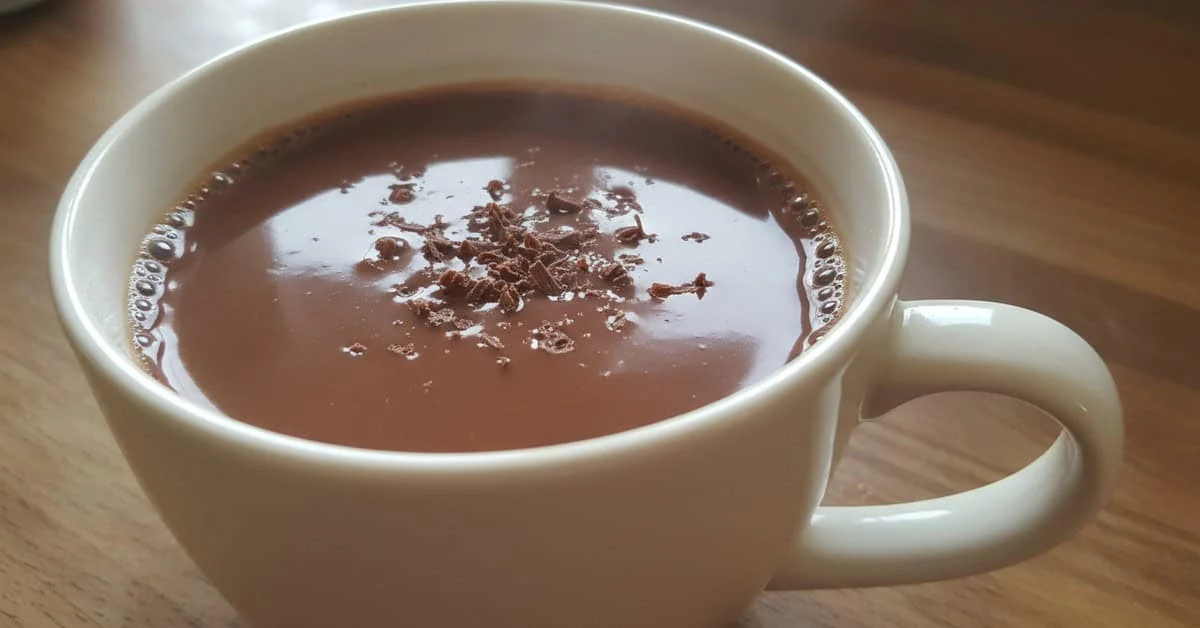
This creamy Christmas hot chocolate combines whole milk, dark chocolate, cream and winter spices. Follow the method for a smooth, lightly thickened drink, then explore a plant-based version, optional additions for adults, festive toppings and ways to use properly chilled leftovers.
A mug of Christmas hot chocolate is a comforting way to end a cold evening. This rich version takes inspiration from thick drinking chocolates, with cinnamon and orange adding a festive aroma. The key is to cook the cornflour before gently melting in the chocolate.
Ingredients for creamy Christmas hot chocolate
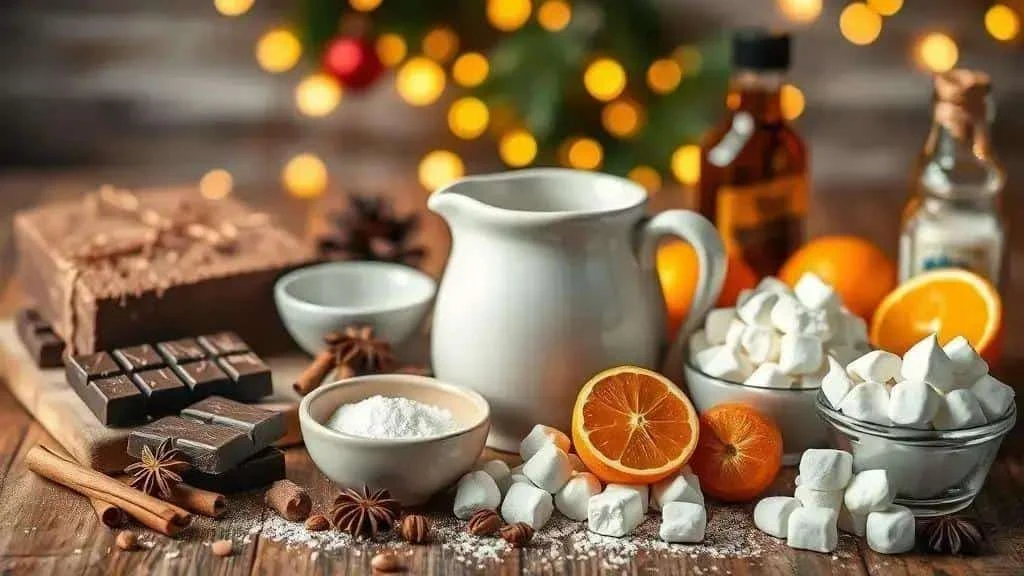
For approximately six small servings of creamy Christmas hot chocolate, about 180–200 ml each before toppings, you will need:
- 800 ml whole milk – reserve 30 ml for the cornflour; use a plant-based drink for the vegan version.
- 200 ml single cream – or coconut cream for a dairy-free alternative.
- 200 g dark chocolate, about 70% cocoa – finely chopped so it melts evenly.
- 2 tbsp unsweetened cocoa powder, approximately 12 g – not sweetened drinking-chocolate powder.
- Up to 3 tbsp caster sugar, approximately 35–40 g – start with less and adjust to the chocolate you use.
- 1 level tbsp cornflour, approximately 8 g – mix with the reserved 30 ml cold milk. Other starches may thicken differently.
- 1 tsp vanilla extract – added towards the end.
- 1 cinnamon stick – to infuse the milk, then remove.
- Finely grated zest of 1 washed orange – optional; avoid the bitter white pith.
- A small pinch of ground nutmeg or cinnamon – to taste.
- A pinch of salt – to balance the chocolate flavour.
- Whipped cream – an optional topping.
- Mini marshmallows – optional and unsuitable for very young children because of the choking risk.
- 1–2 tbsp rum, brandy or cream liqueur – optional for an adults-only batch; keep children’s drinks completely separate.
Substitutions and practical tips
For a vegan version, replace both the milk and cream, choose vegan chocolate and check all toppings. Adjust sugar to taste rather than assuming every chocolate needs the full amount. Cornflour must first be mixed with cold liquid, then cooked in the hot milk. Do not add dry starch straight to the pan or assume another thickener is a direct replacement.
How to make creamy Christmas hot chocolate
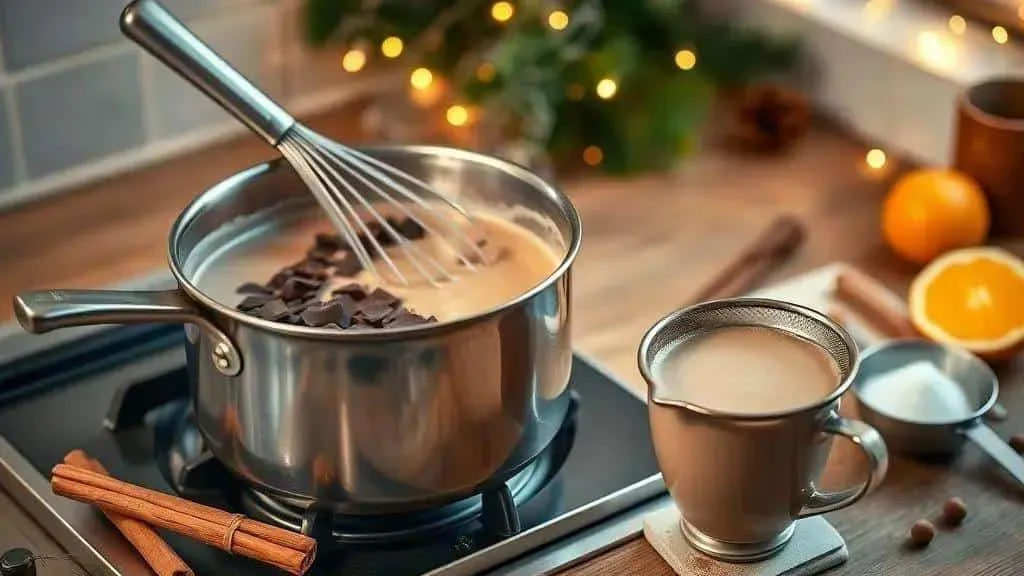
- Prepare the ingredients: chop the chocolate and measure the milk and cream. Stir the cornflour into 30 ml of the measured milk while it is still cold, until completely smooth.
- Warm the base: put the remaining milk, cream, cinnamon stick and optional orange zest in a medium saucepan. Heat gently until steaming, stirring so the milk does not catch.
- Make a cocoa paste: mix the cocoa with a little of the sugar in a small bowl. Stir in about 2 tbsp of the warm milk to form a smooth paste.
- Cook the cocoa and cornflour: whisk the cocoa paste into the pan. Stir the cornflour slurry again, add it and bring to a gentle bubble, stirring continuously. Cook for 1–2 minutes, until lightly thickened; avoid a fierce boil or scorching.
- Melt in the chocolate: turn the heat down very low and add the chopped chocolate. Stir until melted, smooth and glossy. Do not keep boiling once the chocolate has been added.
- Finish the flavour: remove the cinnamon stick and add the vanilla, salt and a little nutmeg if using. Taste a cooled spoonful and adjust the sugar. Add any alcohol off the heat, only to a clearly separate adults-only portion.
- Check the consistency: stir in a little warm milk if it is too thick. The drink thickens further as it cools. If it is still thin, check that the cornflour mixture has cooked properly rather than adding uncooked starch.
- Strain if preferred: pour through a fine sieve into a heatproof jug to remove the orange zest and any small lumps.
- Serve: pour carefully into heatproof mugs and add your chosen toppings. Allow children’s portions to cool to a comfortable drinking temperature and leave out alcohol, cinnamon sticks and choking-risk toppings.
- Chill leftovers promptly: transfer to shallow containers, cool and refrigerate within 1–2 hours. Keep at 5°C or below and use within 48 hours. Reheat only the portion needed, once, until steaming throughout, then allow it to cool enough to drink.
Quick tips
Chocolate with a flavour you enjoy makes the biggest difference. Stir along the bottom of the pan to prevent scorching. For the plant-based version, check the chocolate and toppings as well as the milk and cream replacements; dark chocolate is not automatically dairy-free.
Variations: plant-based, spiced and adults-only versions
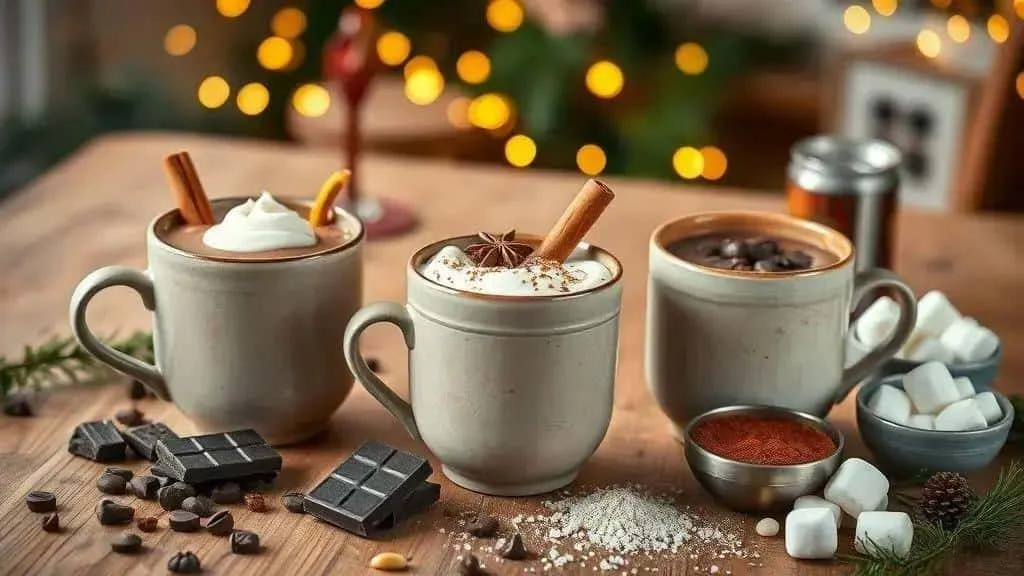
Plant-based version:
- 800 ml oat or almond drink – alternatively, use 400 ml oat drink and 400 ml coconut milk for a more noticeable coconut flavour.
- 200 ml coconut cream – use a pourable cooking product, not a solid block of creamed coconut.
- 200 g vegan dark chocolate – check the ingredients and allergen information.
- 8 g cornflour – mix with 30 ml of the measured cold plant drink, then cook as in the main method.
Winter spice ideas
Start lightly with spices: they should complement the chocolate rather than dominate it.
- Cinnamon and nutmeg: infuse the base with one cinnamon stick and finish with a small pinch of nutmeg.
- Orange and cardamom: add orange zest and one or two lightly crushed cardamom pods, then strain before serving.
- Mixed festive spices: try a small pinch each of ground cloves and allspice with ½ tsp cinnamon. Cloves are strong, so add more only after tasting.
An optional version for adults
Add alcohol off the heat to an adults-only batch or measured adult serving. Warming it does not make it alcohol-free. Keep the plain batch and serving utensils separate for children and anyone avoiding alcohol.
- 1–2 tbsp dark rum for the full batch: brings a mellow flavour alongside dark chocolate; use proportionately less for a single serving.
- 1 tbsp brandy for the batch: adds a different aromatic note without needing a large quantity.
- 1 tbsp cream liqueur for the batch: adds sweetness and creaminess. For children, omit it entirely and use the plain recipe.
Other simple adjustments
Small changes can alter richness and sweetness. Check ingredient labels whenever catering for an allergy or dietary restriction.
- For extra richness: add another 20–50 ml cream, then taste before adding any more sugar.
- For less sweetness: reduce the added sugar. A higher-cocoa chocolate tastes more bitter, so choose one you enjoy.
- For a smooth texture: mix cornflour with cold liquid and whisk it in thoroughly before cooking.
- For a festive finish: choose whipped cream, orange zest, sifted cocoa or chocolate shavings; use marshmallows only where age-appropriate.
Serving ideas: mugs, toppings and Christmas presentation
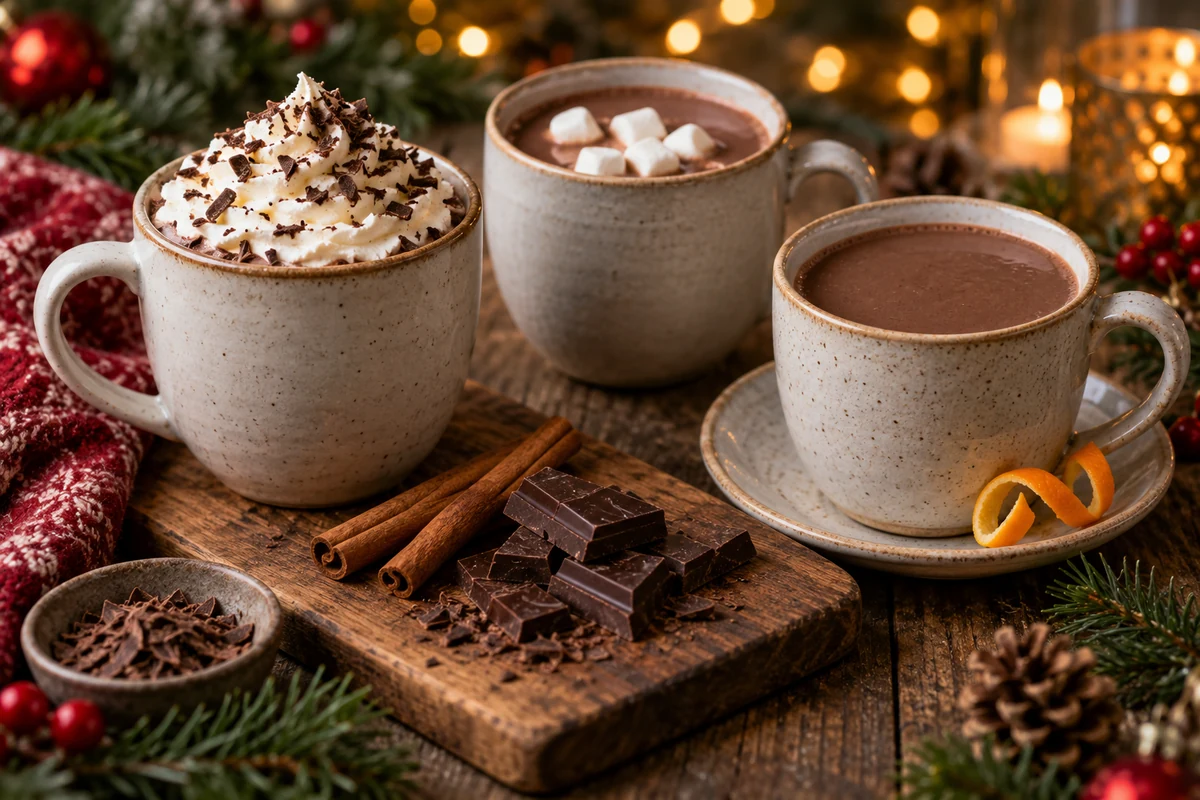
Warm heatproof mugs with hot water for a minute or two, then empty and dry them before pouring in the creamy hot chocolate.
Choosing mugs
- Ceramic mugs of around 250 ml: leave room above a modest serving for cream or chocolate shavings.
- Enamel mugs: give a rustic look, but the rim and handle can become very hot. Handle with care.
- Heatproof glass mugs: show the chocolate and topping clearly. Use glass intended for hot drinks.
- Small children’s mugs: use a manageable portion, no alcohol and a comfortably warm temperature. An adult should check before serving.
Finishing touches
- Freshly whipped cream: spoon on just before serving so it holds its shape briefly.
- Mini marshmallows: add sweetness as they melt; leave them out for very young children.
- Orange zest: a small pinch per mug adds citrus aroma without overwhelming the chocolate.
- Chocolate curls or shavings: use dark chocolate for contrast against whipped cream.
- Cinnamon sticks: can decorate an adult’s mug, but should be removed before drinking and kept out of children’s portions.
- Cocoa or nutmeg: a very light dusting gives an aromatic finish.
- A cinnamon-sugar rim: moisten the rim with a little orange juice and dip into cinnamon sugar, if you want a sweeter finish.
Putting together a Christmas drinks tray
- Warm and pour: check the consistency and pour slowly into prepared heatproof mugs.
- Add toppings: finish with cream and orange zest or chocolate shavings just before serving.
- Use a stable tray: arrange the mugs on a level surface with napkins nearby, leaving space to lift each handle.
- Keep decorations separate: place decorative greenery and dried orange slices away from the food, mug rims and hot surfaces.
- Offer something to nibble: shortbread, ginger biscuits or a small slice of panettone work well with a rich drink.
- Separate the adult additions: keep spirits and liqueurs clearly labelled, away from children, and add them only to adult servings.
Practical touches: a little warm milk can loosen a thick serving. Avoid leaving the chocolate unattended on the hob, where it can scorch. A simple tray and a few safe decorations are enough to make the occasion feel festive.
Hot chocolate and European Christmas traditions

Today’s hot chocolate appears in many winter celebrations, but there is no single European recipe. Its history also reaches far beyond Europe, to the cacao-growing regions and drinking traditions of the Americas.
A little history
- A fashionable luxury: chocolate became an expensive drink in European courtly life. Hampton Court’s surviving chocolate kitchens offer a glimpse of its preparation for the royal household in the early eighteenth century.
- Different consistencies: Spanish and Italian drinking chocolates often inspire today’s thicker versions, although recipes vary between homes, cafés and regions.
- A wider story: cacao originated in the Americas. Its arrival in European kitchens was connected with colonial trade, rather than the invention of chocolate in Europe.
Winter celebrations
A warm chocolate drink fits naturally into a Christmas-market visit or an evening at home after a winter walk. It can be served as a small treat rather than a large dessert-sized portion.
- Regional accompaniments: try a little stollen or panettone, or choose the festive biscuits your household already enjoys.
- Something for different guests: serve the plain drink as the main recipe, with any adult-only additions kept separately and clearly identified.
Flavour combinations
Cinnamon, nutmeg, cardamom and orange zest can each change the character of the drink. Simple combinations often work best: dark chocolate with orange, or chocolate with a gently infused cinnamon stick.
- Texture: melted bar chocolate adds richness, while the small amount of cooked cornflour gives extra body.
- Accompaniments: cream, chocolate shavings and a biscuit are optional additions, not essential ingredients.
Making the recipe your own
Family recipes and café styles differ, and plant-based versions offer another way to enjoy the drink. Keep the proportions consistent when changing ingredients, then adjust the flavour in small steps.
A useful cooking habit: gentle heating helps infuse spices and melt chocolate evenly. This practical technique matters more than claiming one universal Christmas tradition.
Storing and using leftover hot chocolate
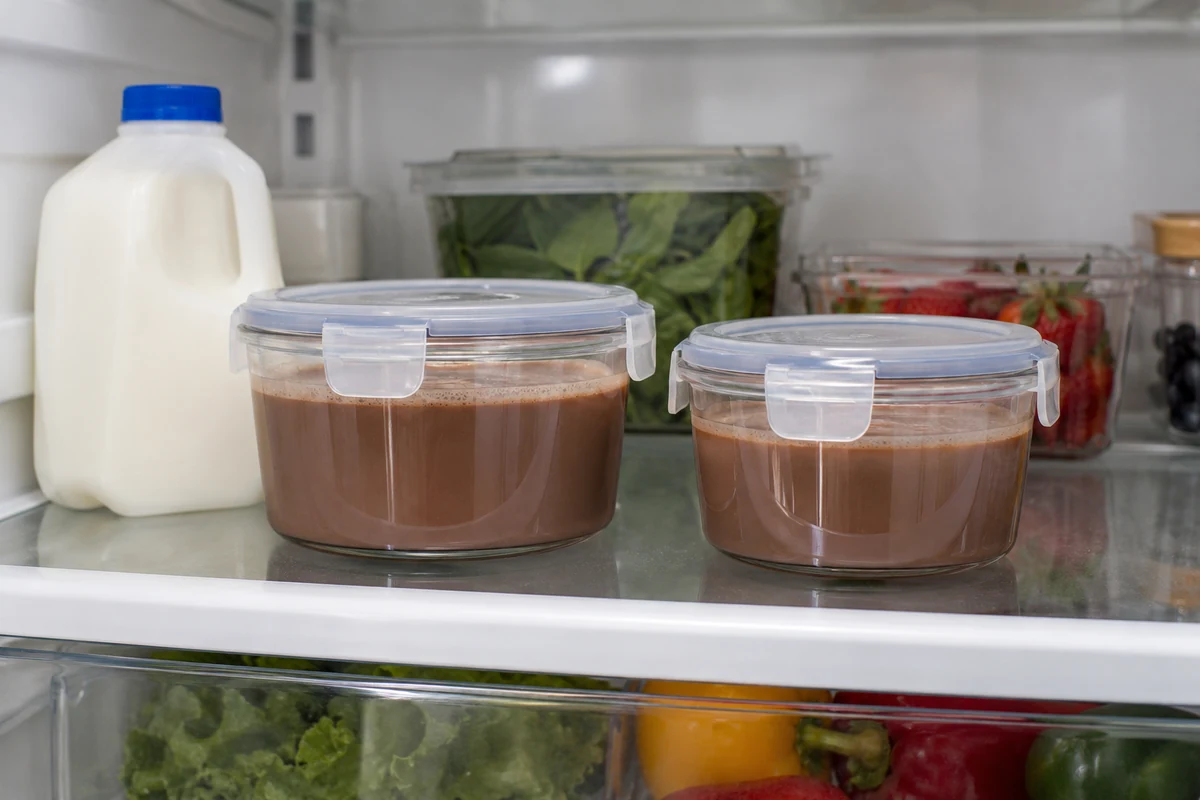
Cool leftover hot chocolate promptly in shallow containers and refrigerate within 1–2 hours. Do not leave a large pan on the counter until it has cooled completely.
Storage
- Use suitable containers: choose clean food-safe containers with lids that close securely.
- Keep refrigerated: store at 5°C or below and use within 48 hours of making it. Label the preparation date.
- Freeze in portions: allow space for expansion and use within a month for best quality. Some separation after thawing is possible.
- Cool efficiently: divide into small containers to release heat quickly. Refrigerate within 1–2 hours; do not wait indefinitely for room temperature.
- Keep covered: protect the drink from contamination and strong fridge odours.
Reheating
- Use a saucepan: warm a single portion, stirring frequently, until steaming throughout. Let it cool to a comfortable drinking temperature before serving.
- Loosen if needed: add 1–2 tbsp milk per portion and ensure the whole mixture heats through.
- Avoid vigorous boiling: heat thoroughly without prolonged hard boiling, which can damage the texture or scorch the base.
- Use the microwave carefully: heat in short bursts, stirring between them to eliminate cold spots. Use a microwave-safe container.
- Check storage history: discard any portion left warm too long or kept beyond the recommended time. Smell and taste cannot prove that food is safe; do not taste it to check.
Ideas for properly chilled leftovers
Christmas chocolate milkshake
- Blend 250 ml properly chilled hot chocolate with two scoops of vanilla ice cream. Add a little cold milk if necessary; ice cubes are optional.
- Serve immediately in a cold glass, with a few chocolate shavings if liked. Use the leftover base within its original 48-hour storage window.
A simple frozen chocolate dessert
- Mix 300 ml chilled chocolate drink with 200 ml cream. Taste and add a little sugar only if needed.
- Freeze in a shallow freezer-safe container, stirring every 30 minutes for the first two hours, then allow several more hours to firm up. The texture will be icier than churned ice cream. Freeze while the base is still within its storage window, and thaw only the portion needed.
Quick egg-free chocolate pudding
- Warm 300 ml of the drink. Mix 8 g cornflour with 30 ml cold milk, then whisk the slurry into the pan.
- Bring to a gentle bubble and stir for 1–2 minutes until thickened. Divide into small dishes, cool promptly and refrigerate for about two hours to set. Reusing the drink does not restart its storage time: eat within 48 hours of making the original base.
Useful precautions
- Reheat only once: warm just what you need and discard the remainder of a reheated serving.
- Do not taste suspect leftovers: discard spoiled or improperly stored food, even if its appearance seems normal.
- Thaw small portions: defrost in the fridge and use within 24 hours of full thawing.
- Restore the texture: whisk gently while reheating, adding a splash of milk if necessary.
A warming Christmas treat
This creamy Christmas hot chocolate combines dark chocolate with familiar winter flavours. Start with the basic recipe, keep spices balanced and choose toppings that suit your guests. A small mug can make a cosy finish to a festive evening.
Thank you for reading. Explore more seasonal recipes and ideas on the I Love Christmas blog, and share your favourite festive combinations with us.
Christmas hot chocolate: frequently asked questions
Can I make this hot chocolate vegan?
Yes. Replace the milk with an oat or almond drink and the cream with coconut cream. Use vegan chocolate and suitable toppings, and follow the same cornflour-cooking method. Check labels for allergens as well as animal-derived ingredients.
How can I make it creamy without adding more cream?
Cook the measured cornflour properly and melt the chocolate gently. These already give the recipe body. If changing the amount of cream, test a small batch first; different milks and plant drinks produce different textures.
How should I store and reheat leftovers?
Cool in small containers and refrigerate within 1–2 hours at 5°C or below. Use within 48 hours. Reheat a portion only once until steaming throughout, stirring well, then cool to a comfortable drinking temperature. Do not use taste or smell as a safety test.
Which chocolate works best?
Dark chocolate around 60–75% cocoa gives a pronounced chocolate flavour. Use a milder bar if preferred and reduce the added sugar accordingly. Choose chocolate you enjoy eating, rather than relying on cocoa percentage alone.
Can I add alcohol?
For adults who want it, add a small measured amount of rum, brandy or cream liqueur off the heat. The recipe suggests 1–2 tbsp for the full batch, not for every mug. Keep children’s servings entirely alcohol-free and separate; heating does not guarantee the alcohol has gone.
How do I balance the spices?
Start with one cinnamon stick and a small pinch of nutmeg. Add orange zest or one lightly crushed cardamom pod if liked. Taste a cooled spoonful and adjust gradually so the spices do not overwhelm the chocolate. Remove whole spices before serving.
Sources and Further Reading
- Historic Royal Palaces: the chocolate kitchens at Hampton Court
- Food Standards Agency: chilling food safely