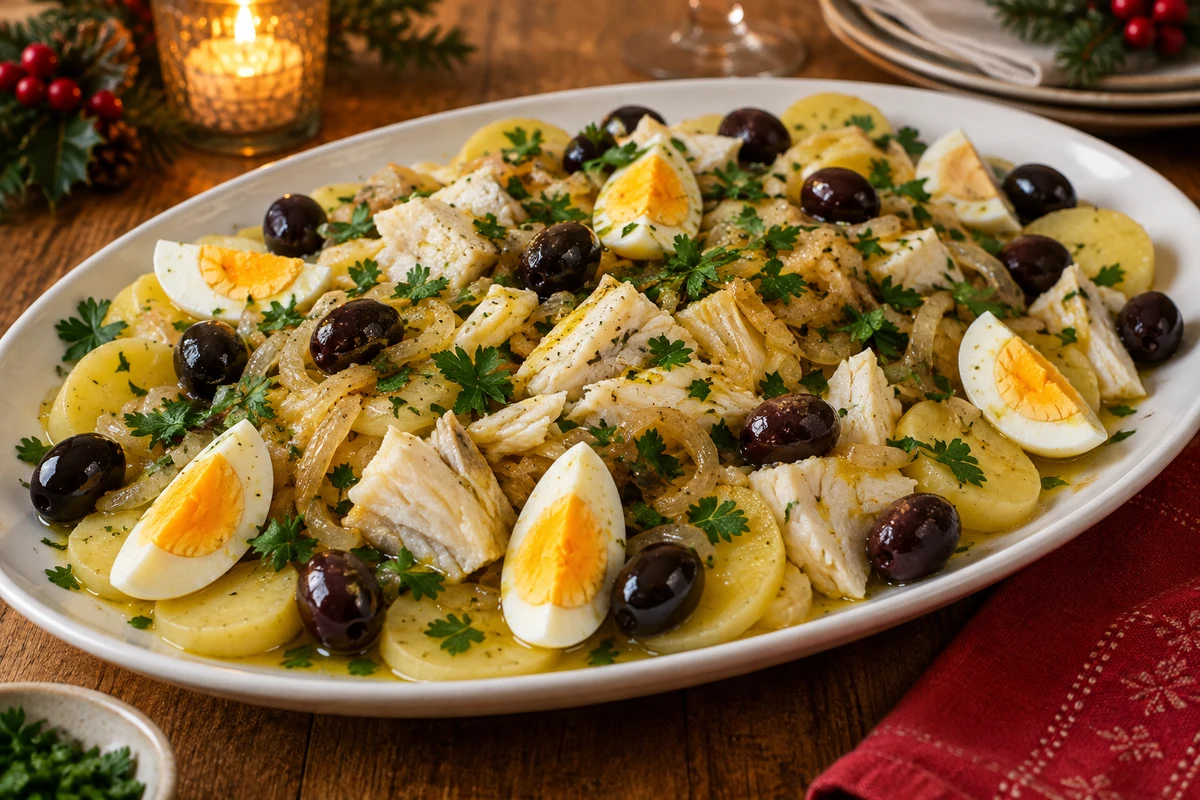
This Christmas salt cod and potato dish is a home-style adaptation of bacalhau à Gomes de Sá. It combines fish, softened onions, eggs, olives and olive oil, with guidance on soaking and cooking the cod before assembly. The recipe has been reviewed editorially but has not been kitchen-tested; follow your fish supplier’s preparation instructions.
For a Christmas salt cod dish with Portuguese influences, try this Gomes de Sá-style combination. The following method explains the preparation stages and offers optional budget and vegetable variations, without claiming that every variation is the original recipe.
Ingredients for Christmas salt cod, Gomes de Sá style
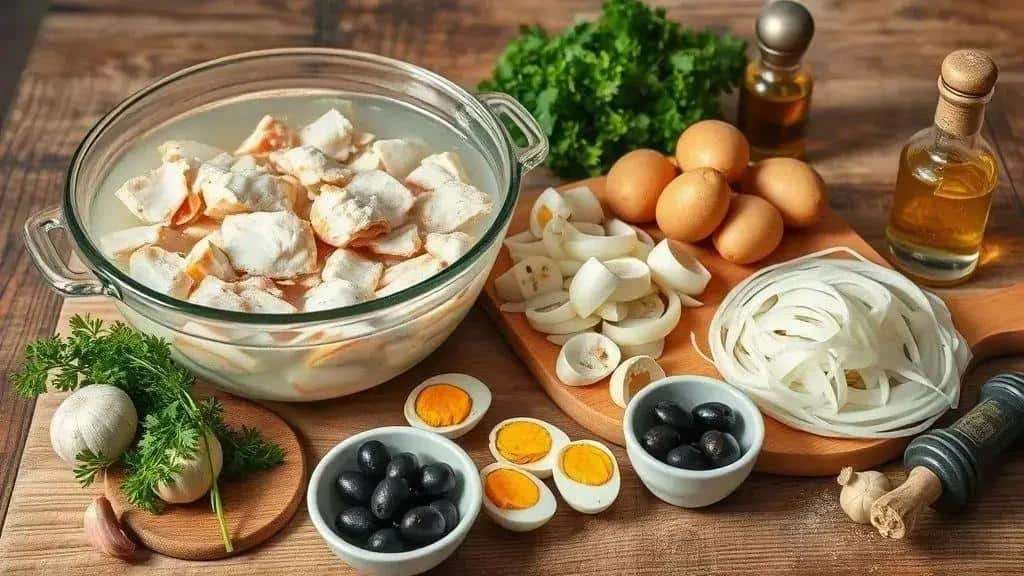
For this Gomes de Sá-style Christmas salt cod, gather the following ingredients. The main recipe and the two variations have separate quantities: choose one version before starting.
Ingredients and substitutions
- 800 g–1 kg prepared, desalted cod — use the drained weight after soaking and removing skin and bones, or buy ready-desalted pieces. If buying dry salted cod, ask your supplier how much will provide this prepared quantity.
- 1.2 kg potatoes — choose a variety that holds its shape when boiled, peel and slice. Replacing some with sweet potato creates a different variation.
- 3 large onions — thinly sliced; red onions are an optional variation in colour and flavour.
- 4–6 eggs — hard-boiled and sliced for serving.
- 150–200 ml extra virgin olive oil in total — use 100–150 ml for the onions and reserve 50 ml for assembly; do not add a further unmeasured amount.
- 100 g pitted black olives — green olives can be used instead; their saltiness varies by product.
- 3 tablespoons chopped fresh parsley — to finish. Coriander changes the traditional flavour and is optional.
- 2 bay leaves — for the onions; remove before serving.
- Salt and black pepper, to taste — add salt only after tasting a fully cooked piece of fish, as residual salt and olives may be enough.
- Up to 2 tablespoons lemon juice or vinegar, optional — add gradually to taste. Wine is a different option and is not suitable when avoiding alcohol.
- 1 garlic clove, optional — finely chopped, to cook with the onions.
Preparation tip: never taste raw soaked fish to judge saltiness: cook a small piece first. Have the boiled potatoes, cooked cod and hard-boiled eggs ready before assembling the dish.
How to make Christmas salt cod, Gomes de Sá style
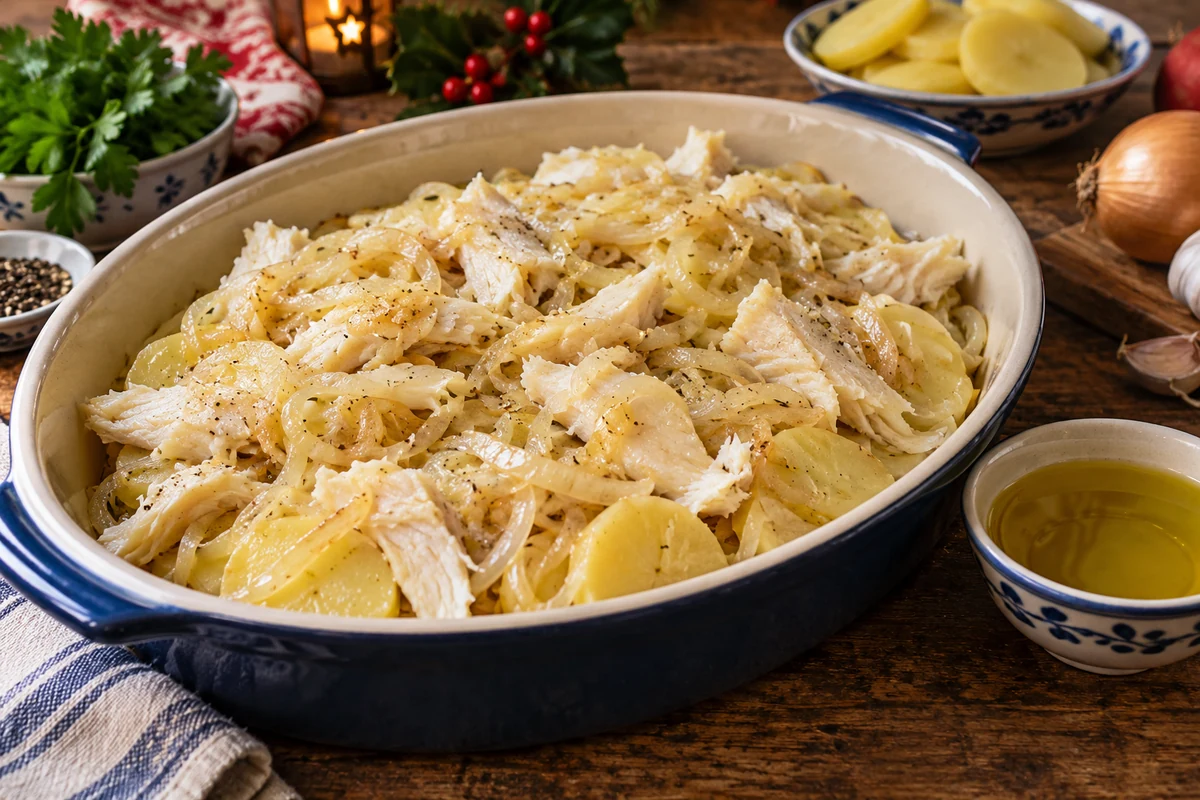
Prepare the desalted cod, potatoes, eggs, sliced onions, olives and measured oil. Desalting does not cook the fish, and ready-desalted does not mean ready to eat.
Step-by-step method
- Desalt if needed: follow the supplier’s instructions, using cold water in a covered food-safe container in the fridge. Depending on thickness and curing, soaking may take a day or several days; change the water regularly. Ready-desalted cod normally skips this stage.
- Cook the potatoes: cut into 0.5–1 cm slices and simmer until just tender but still holding their shape, roughly 10–12 minutes depending on thickness. Drain carefully and avoid oversalting the water.
- Hard-boil the eggs: lower the 4–6 eggs carefully into boiling water and cook until the whites and yolks are firm, usually around 9–11 minutes depending on size. Cool promptly, peel and slice.
- Cook and flake the cod: gently poach the desalted fish according to its instructions until opaque and easily flaking throughout. Do not rely on soaking alone. Remove the skin and all bones, checking carefully, and separate into medium flakes with clean utensils.
- Soften the onions: heat 100–150 ml of the measured oil in a large pan. Add all 3 sliced onions, the bay leaves and optional garlic; cook over a medium-low heat until soft and lightly golden, about 15–20 minutes. Remove the bay leaves.
- Combine fish and onions: fold the fully cooked cod into the onions and heat through gently for a few minutes. Taste before adding any salt and avoid breaking up all the flakes.
- Assemble: arrange a layer of cooked potato in an ovenproof dish, followed by some cod and onion, olives and sliced egg. Repeat in shallow layers if needed, reserving some eggs and olives for the top.
- Finish the surface: drizzle over the reserved 50 ml oil and add the remaining eggs and olives. This is part of the total oil quantity already listed.
- Heat the assembled dish: if all components are freshly cooked and hot, you can serve straight away. Otherwise heat at 180°C conventional / 160°C fan until steaming hot throughout. A freshly assembled warm dish may take 10–15 minutes; a chilled one takes longer. This stage is not a substitute for cooking the fish properly first.
- Finish with parsley: let the piping-hot dish stand briefly so it is comfortable to serve, then add the chopped parsley and optional lemon juice to taste.
- Serve: use a broad spoon to portion the fish and potatoes together. Bread or a green salad are simple accompaniments; rice is optional.
- Store and reheat: cool leftovers promptly in smaller portions and refrigerate within 1–2 hours. Eat within 48 hours or freeze. Reheat only once, until steaming hot throughout; a fixed 10–12 minutes may not be enough.
Time-saving option: ready-desalted cod avoids home soaking, but still needs cooking unless clearly labelled ready to eat. Check for bones and taste only once cooked.
Christmas salt cod variations: budget and vegetable versions

These two variations on Christmas salt cod let you adjust the fish quantity or add vegetables. They are separate versions, so use their quantities instead of the main list.
Budget version
- 600 g prepared, desalted cod flakes — weighed drained and free of skin and bones. Compare actual prices; pieces are not always cheaper than fillets.
- 1 kg potatoes — sliced. Increasing the potatoes changes the fish-to-potato balance rather than creating more fish portions.
- 2 medium onions — thinly sliced.
- 100–120 ml oil in total — use olive oil or replace part with a suitable vegetable oil if that costs less. It changes flavour, not automatically the calorie content.
- 100 g pitted olives — black or green, drained.
- 3 eggs — hard-boiled and sliced.
- 1–2 bay leaves and black pepper — with salt only if needed after tasting cooked fish.
- Prepare the cod: desalt if necessary according to the supplier’s guidance, then cook thoroughly and check for bones. Ready-desalted raw flakes still require cooking.
- Boil the potatoes: cook the slices until just tender, then drain.
- Soften the onions: use most of the measured oil, reserving a little for assembly. Add the bay leaves and cook gently until soft, then remove the leaves.
- Add the fish: gently fold the already cooked flakes into the onions and heat through.
- Build the dish: layer the potatoes, fish mixture, olives and eggs, then drizzle with the remaining measured oil.
- Serve hot: if necessary, heat the assembled dish at 180°C conventional / 160°C fan until steaming throughout. Do not assume ten minutes will heat a chilled dish fully.
Vegetable version
- 700 g prepared, desalted cod flakes — drained and checked for skin and bones.
- 600 g potatoes — sliced.
- 1 red pepper — cut into strips.
- 1 medium courgette — sliced into half-moons.
- 150 g cherry tomatoes — halved.
- 2 onions — thinly sliced.
- 120–150 ml olive oil in total — divided between roasting the vegetables, softening the onions and finishing the dish.
- Chopped parsley, pitted olives and hard-boiled eggs — optional garnishes to taste; their quantities can follow your preferred balance rather than adding the full main-recipe quantities automatically.
- Roast the vegetables: toss the pepper, courgette and tomatoes with a little of the measured oil. Roast at 200°C conventional / 180°C fan until tender and lightly coloured, checking from about 15 minutes.
- Cook the potatoes: boil the slices until just tender and drain.
- Soften the onions: cook gently in some of the remaining oil until soft and lightly golden.
- Cook and add the cod: poach the desalted fish until opaque and flaking, then remove any bones and fold it into the onions. A brief stir-fry alone is not a reliable cooking time for pieces of different sizes.
- Combine in the serving dish: add the potatoes, cod mixture and roasted vegetables. Use the remaining measured oil, with olives and eggs if wanted.
- Heat through: put the dish back in the oven if necessary until steaming hot throughout, rather than relying on an eight-minute warming time.
Variation tip: seasonal vegetables may help with cost and variety. Reduce the total oil if you prefer less, and finish with fresh herbs; changing oil type alone does not make the dish lower in energy.
Choosing, desalting and storing salt cod
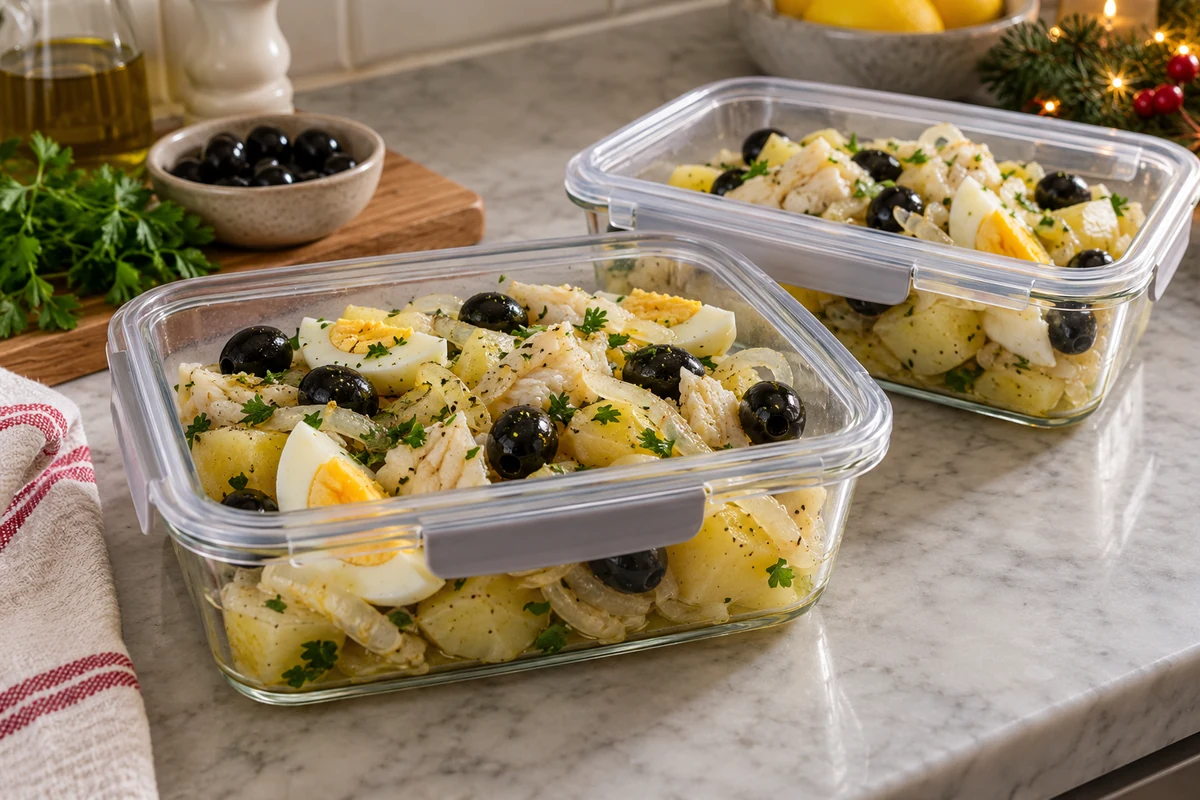
Read the label and identify whether your cod is dry salted, already desalted, frozen or ready to eat. These products have different preparation and storage requirements.
Choosing cod
Product type: ready-desalted pieces are convenient for this flaked dish. Condition: buy from a reliable supplier, follow use-by dates and storage instructions, and reject damaged packaging or spoiled fish. Smell alone does not prove safety. Thickness: thicker dry-salted pieces generally need longer soaking than thin pieces.
Portions: allow roughly 150–200 g prepared fish per adult as a main course, or less alongside several other mains. This refers to fish weight, not the weight of the complete potato dish.
Practical desalting guidance
- Keep it cold: soak in cold water in a covered food-safe container in the fridge, never on the kitchen counter.
- Change the water: replace it regularly as directed by the supplier; around every 6–8 hours is a common starting routine, but the product instructions take priority.
- Allow enough time: soaking varies with the cut and curing. Thin pieces may need around a day, while thick pieces can need several days. Do not treat 48 hours as a universal maximum or soak an already-desalted product unnecessarily.
- Avoid warm water: do not try to shorten soaking by leaving fish in warm water. Keep it refrigerated throughout.
- Check saltiness safely: cook a small piece fully before tasting. If more soaking is needed, return the remaining uncooked fish to fresh cold water in the fridge.
- Check for bones: remove skin and bones carefully after cooking and before flaking into the dish.
Storing the fish
Dry-salted cod: follow the packaging or supplier’s storage instructions. Do not assume every salted product is safe in a warm cupboard or in breathable wrapping.
Desalted cod: keep covered in the fridge at 5°C or below and cook promptly according to its use-by and preparation instructions. Repeated water changes do not extend its safe storage life.
Freezing: freeze only when the product instructions allow it, in suitable sealed portions. Thaw in the fridge and use within 24 hours of fully defrosting. Do not assume previously thawed raw fish can simply be frozen again.
Mistakes to avoid
- Soaking outside the fridge — keep the fish cold during the entire desalting process.
- Using warm water — this is not an appropriate shortcut.
- Adding salt before checking — taste a fully cooked sample and remember that olives also contribute salt.
A convenient shortcut: buy ready-desalted cod from a reliable supplier. It saves soaking time, but still needs the cooking and storage steps stated on the package.
Assembling and presenting the Christmas dish

Have a heatproof dish, clean serving spoon and a trivet ready before bringing the meal to the table. Keep decorations out of the food.
Arranging the layers
- Potato base: spread the cooked slices evenly so every portion includes some potato; use shallow layers rather than a tightly packed mound.
- Fish layer: distribute the cooked cod flakes gently, keeping some larger pieces intact.
- Onions: if not already folded through the fish, spread the softened onions over it. Use the same prepared onions rather than cooking an extra batch.
- Eggs and olives: arrange the hard-boiled egg slices and pitted olives across the surface.
- Olive oil: drizzle with the portion reserved from your measured total.
- Fresh herbs: add chopped parsley shortly before serving.
- Serving temperature: if reheating, heat the centre thoroughly first. Let the dish stand briefly before serving, but do not leave fish and eggs on display at room temperature for a prolonged meal.
Simple table decorations
- A clear centrepiece: let the serving dish take centre stage, with low arrangements or battery LED candles placed safely away from food and utensils.
- Christmas details: use a small garland or a few pinecones on a separate decorative tray. Keep paint, glitter and foliage out of serving dishes.
- Crockery and cutlery: neutral plates show off the fish, potatoes and olives. Put spare serving utensils nearby.
- Napkins and texture: cloth napkins and a simple runner can finish the table without buying a complete new set.
- Lighting: keep the table warmly lit but bright enough for guests to see their food clearly.
Finishing and serving
- Portion evenly: use a wide spoon to lift some potato, fish and onion together.
- Accompaniments: put bread and salad in small serving dishes. If serving rice too, make only what you need and follow its separate cooling and storage guidance.
- Identify variations: label dishes clearly and mention fish and egg allergens, plus any introduced by stock or other substitutions.
- Final touch: parsley and the reserved drizzle of oil are enough; there is no need to add oil at every serving stage.
Background, drink pairings and side dishes

Bacalhau à Gomes de Sá belongs to Portugal’s varied salt-cod cooking traditions. This home adaptation can be served with simple sides and drinks that suit your guests.
A little background
- Salt cod: salting and drying preserve fish, while soaking prepares it for cooking. Bacalhau has a well-established place in Portuguese food culture.
- Gomes de Sá style: the dish is associated with Porto and combines cod with potatoes and onions. This guide uses the familiar egg-and-olive finish without claiming to reproduce a single definitive historic recipe.
- Texture: gentle cooking and careful folding help keep recognisable flakes instead of a dry, finely shredded mixture.
- Cost and convenience: compare prepared weights and local prices. Ready-desalted pieces save time, but their cost advantage is not guaranteed.
Optional wine pairings
- Fresh white wine: a Vinho Verde or Alvarinho is one option for guests choosing alcohol. Serve according to the bottle’s recommendation.
- Unoaked Chardonnay: another possible pairing with the fish and olive oil.
- Dry rosé: can suit the vegetable variation; personal preference matters more than a rigid rule.
- Light red wine: a gently tannic Pinot Noir or similar style is an option for red-wine drinkers.
- Other drinks: offer sparkling water with lemon or another alcohol-free choice. Beer or brut sparkling wine are optional alternatives, not a necessary part of the meal.
Side-dish ideas
- Rustic bread: for the juices left on the plate.
- Simple green salad: rocket or mixed leaves provide a fresh contrast.
- Plain rice: an optional extra if your guests want it; the main dish already includes potatoes.
- Roasted vegetables: peppers, courgettes and cherry tomatoes add colour.
- Extra olives or egg: serve small amounts separately if wanted, keeping any spare cooked eggs chilled until needed.
Serving reminders
- Heat properly: ensure the fish is cooked and any reheated dish is steaming throughout, then allow a brief pause before eating.
- Finish simply: use the reserved olive oil and parsley, rather than repeatedly adding more oil.
- Portion estimates: the earlier 150–200 g guide refers to prepared fish per adult; potatoes, eggs and sides add to the complete serving weight.
- Drink choices: make an alcohol-free option as easy to choose as wine.
Ready for the table
Gomes de Sá-style cod and potatoes offers a welcoming Christmas centrepiece. Desalt according to the product, cook the fish properly, measure the oil once and keep the assembly straightforward.
Thank you for reading. If you make the dish, share your experience and explore more festive ideas on the I Love Christmas blog.
Adapt the accompaniments to your guests and enjoy the meal together.
FAQ — Christmas Salt Cod, Gomes de Sá Style
How long should I soak salted cod?
Follow the supplier’s instructions. Thin pieces may need around a day and thicker pieces several days, depending on the curing. Keep the fish in cold water in the fridge and change the water regularly. Ready-desalted cod generally does not need soaking.
Can I use ready-desalted cod?
Yes. It saves soaking time, but usually still needs cooking. Read the label, check for bones and taste only a fully cooked sample before deciding whether to add salt.
How should I store leftovers?
Cool in smaller portions and refrigerate within 1–2 hours. Eat within 48 hours or freeze promptly if suitable. Thaw in the fridge, use within 24 hours of full defrosting and reheat only once until steaming hot throughout.
Can I substitute potatoes, olives or oil?
You can replace some potato with sweet potato or roasted vegetables and use green rather than black olives. Reducing total oil changes the amount used; replacing olive oil with vegetable oil does not automatically make the dish lighter. Substitutions create variations on the original style.
Which drinks go with the dish?
Sparkling water with citrus is a simple choice. For guests choosing wine, a fresh Vinho Verde, Alvarinho, unoaked Chardonnay or dry rosé can work. Follow the bottle’s serving guidance and offer alcohol-free alternatives.
Can I prepare parts of the recipe ahead?
Yes. Complete desalting as directed and prepare cooked components close to the meal. Cool cooked food promptly, refrigerate covered and use within 48 hours. A chilled assembled dish needs enough oven time to become steaming hot throughout; a fixed eight-minute warming time is not sufficient guidance.
Sources and Further Reading
- Food Standards Agency: Cooking Your Food
- Food Standards Agency: Chilling, Freezing and Defrosting Food
- Visit Portugal: Porto
- Riberalves: Portuguese Salt Cod