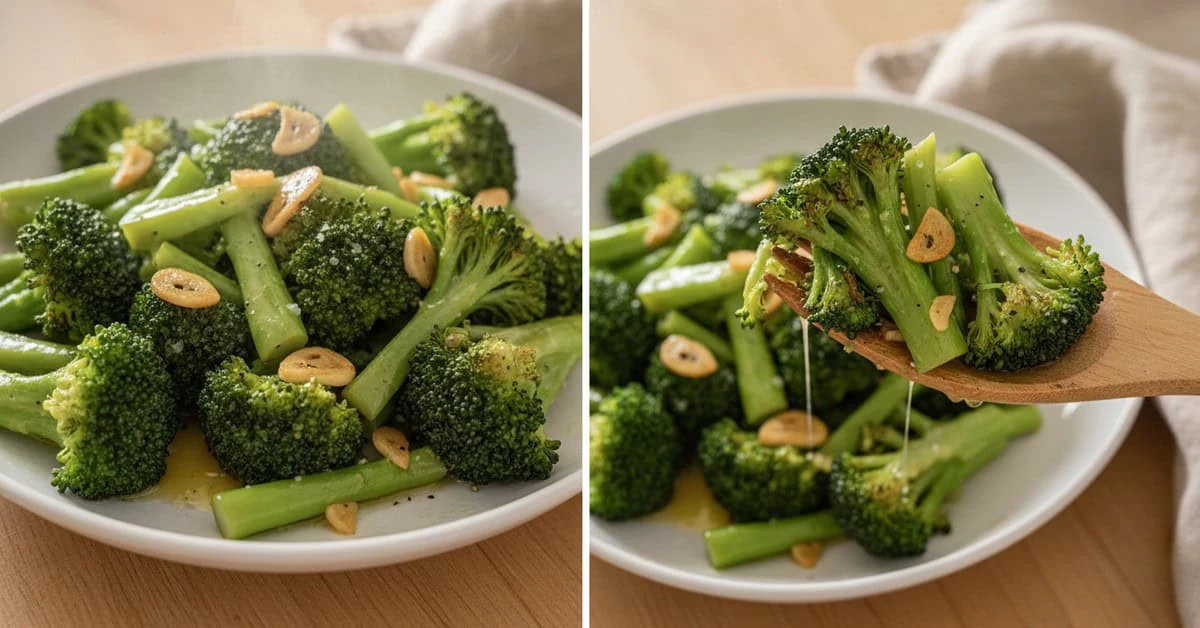
For garlic butter broccoli, briefly cook the florets, drain well and toss them in butter and oil with gently cooked garlic. Finish with pepper and optional lemon. This guide includes an olive-oil version, a cheese gratin, texture tips and safe ways to store and reheat leftovers.
Garlic butter broccoli is a straightforward accompaniment to Christmas dinner or a weekday meal. Even-sized florets, careful draining and gently cooked garlic help produce tender broccoli with lightly browned edges.
Ingredients for garlic butter broccoli
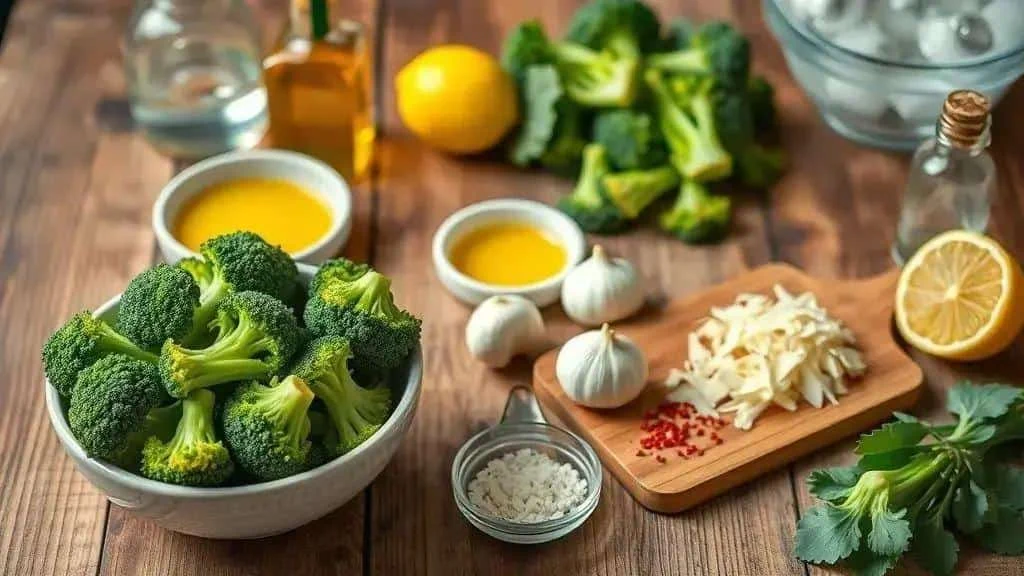
Ingredients for garlic butter broccoli:
- 500 g broccoli florets, firm and fresh, washed and drained.
- 30–45 g butter, starting with 30 g. For the vegan version, use the oil quantities given below instead.
- 1 tablespoon olive oil. Adding oil does not stop the milk solids in butter from burning, so control the heat.
- 3–4 garlic cloves, thinly sliced or finely chopped. Alternatively, use ½ teaspoon garlic granules or powder, adding it with the broccoli rather than frying it alone.
- Up to ½ teaspoon salt, to taste. Use less with salted butter or a cheese topping.
- Freshly ground black pepper, to taste.
- Juice of ½ lemon, optional; add gradually to taste.
- 2 tablespoons grated hard cheese, optional. Choose a vegetarian-labelled alternative to Parmesan for vegetarian guests, or nutritional yeast for a vegan version.
- A pinch of chilli flakes, optional.
- Water for cooking and optional iced water for cooling. An ice bath is useful when preparing ahead, but unnecessary if finishing the broccoli straight away.
Substitutions and practical notes
Vegan version: use 2–3 tablespoons olive oil in total instead of all the butter and oil, and replace the cheese with nutritional yeast. For softer broccoli: increase the initial cooking time slightly. For browned edges: drain and dry the florets before frying, without burning the garlic. Storage: cool promptly, refrigerate within two hours and eat within 48 hours or freeze.
How to make garlic butter broccoli
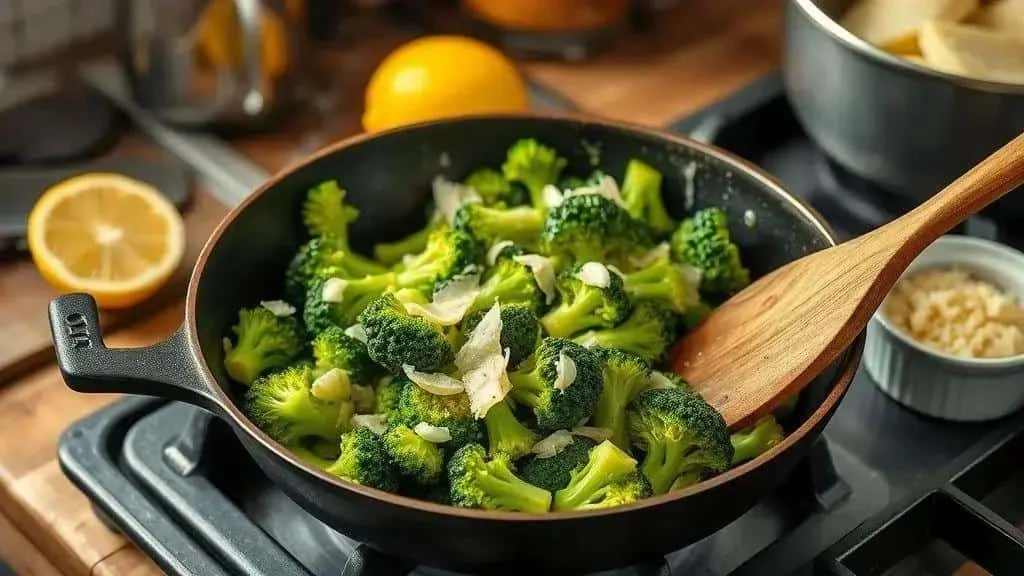
- Prepare the broccoli: cut 500 g broccoli into similar-sized florets. Peel tough outer stalks if using them and slice the tender inner stems thinly.
- Bring water to the boil: use a saucepan large enough for the florets. The cooking water can be left unsalted; season the finished dish to avoid repeatedly adding the full salt quantity.
- Blanch: add the florets and cook for about 2–3 minutes until bright green and beginning to soften. Larger or softer-preferred pieces need longer.
- Drain: if cooking immediately, drain and dry well. For advance preparation, cool briefly in iced water, then drain thoroughly and refrigerate promptly.
- Warm the pan: melt 30 g butter with 1 tablespoon oil in a wide frying pan over medium heat. Keep the butter from smoking.
- Cook the garlic: add the sliced garlic and stir for around 30–60 seconds until fragrant and just beginning to colour. Do not let it burn; lift it out briefly if it colours before the broccoli is ready.
- Add the broccoli: toss the well-drained florets through the butter. Cook for about 2–4 minutes until tender to your liking, hot throughout and lightly browned in places, returning any reserved garlic at the end.
- Season: add salt gradually, black pepper and optional lemon juice. Scatter over the optional cheese or nutritional yeast just before serving.
Quick practical tips
- Vegan substitution: use 2–3 tablespoons oil in total instead of the butter and oil combination, and omit dairy cheese.
- Softer texture: blanch for about 3–4 minutes, checking with a fork rather than relying only on the clock.
- Reheating: heat safely chilled leftovers once until piping hot throughout. A splash of water and a lid can help the centre heat before the edges burn.
Without blanching: use smaller florets, fry briefly, then add a splash of water and cover to steam until tender. Uncover to let excess moisture evaporate; add the garlic near the end so it does not burn during the longer cooking time.
Getting the broccoli texture right
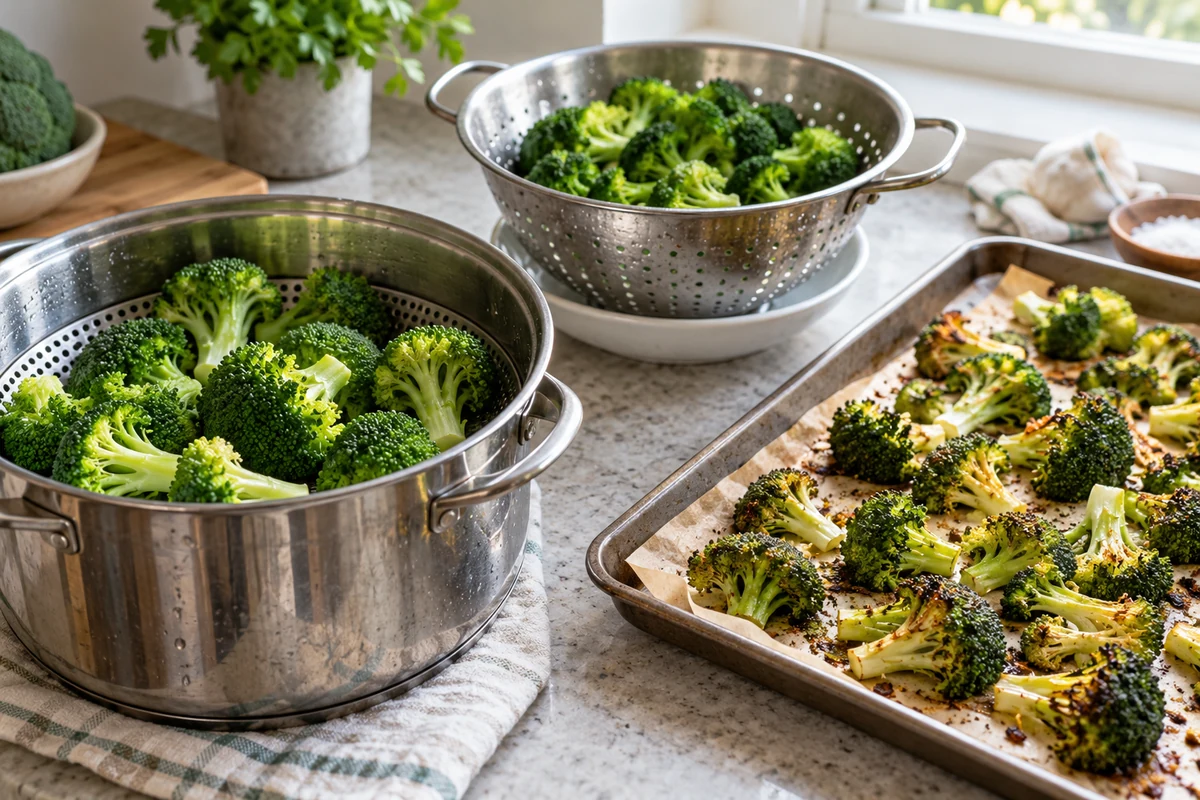
Choose firm florets and cut them evenly. Drain well before browning, and use a pan large enough to avoid a deep, steaming pile.
Cooking methods
- Blanching: cook in boiling water for about 2–3 minutes, then drain. An ice bath stops cooking quickly when preparing ahead, but is optional for broccoli that goes straight into the frying pan.
- Steaming: steam for about 4–6 minutes, checking tenderness and allowing longer for large florets.
- Roasting: spread dry florets in one layer with 1–2 tablespoons oil. Roast at 220°C conventional or 200°C fan for roughly 15–20 minutes, turning once and checking for tender stems and browned edges.
- Sautéing: briefly cooked, well-drained florets usually need about 2–4 minutes in a frying pan. Raw florets take longer and may need a little water and a lid; the two methods are not interchangeable at the same timing.
- Microwaving: put florets in a microwave-safe dish with 1–2 tablespoons water and a vented cover. Start with 2–3 minutes, stir carefully and continue until tender and hot, following the appliance’s guidance.
- Sous vide: if using this method, follow a reliable recipe and your appliance’s instructions for the size of florets and intended storage. A short generic time is not a substitute for a complete method.
Texture tips
- Dry the florets: blot away excess water after draining so they brown more readily.
- Avoid crowding: cook in batches if necessary to give the broccoli contact with the pan.
- Cool only when needed: iced water is helpful for advance preparation, but it is not compulsory when serving immediately.
- Control the heat: enough heat encourages browning, but excessive heat burns butter and garlic before the stems soften.
- Season gradually: taste near the end, especially with salted butter or cheese.
- Finish with lemon: add a little juice just before serving. Extra butter or oil is optional, not essential.
- Check with a fork: the stems should be tender to your preference without the florets falling apart.
- Reheat thoroughly: use the pan or oven to heat leftovers throughout; crisp edges alone do not show that the centre is hot.
Vegan and cheesy broccoli variations
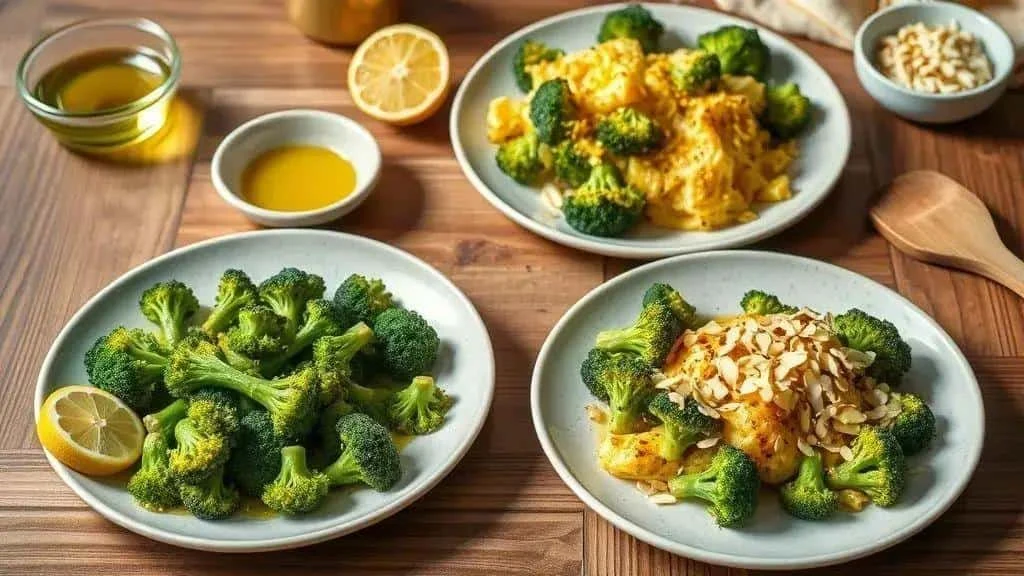
Vegan garlic broccoli
This version replaces all the butter and cheese with oil and an optional savoury plant-based topping.
- 500 g broccoli florets, washed.
- 2–3 tablespoons olive oil in total.
- 3 garlic cloves, sliced or chopped.
- Juice of ½ lemon, added to taste.
- 1–2 tablespoons nutritional yeast, optional. For a different creamy finish, use 2 tablespoons tahini loosened with lemon and a little water; tahini contains sesame.
- Salt and black pepper, to taste
- Blanch the broccoli: cook for about 2–3 minutes, then drain thoroughly. Cool in iced water only if preparing ahead.
- Warm the oil: use a wide frying pan over medium heat.
- Add the garlic: cook briefly until fragrant and lightly coloured, taking care not to burn it.
- Add the broccoli: toss the drained florets in the oil and cook until tender, lightly browned and hot throughout.
- Finish: add salt, pepper, lemon and the optional nutritional yeast.
Texture: blanch a little longer for softer broccoli. If starting with raw florets in the pan, allow extra cooking time and use a splash of water under a lid if needed.
Cheesy broccoli gratin
A richer variation with cream and a golden cheese topping, suitable as a side dish.
- 500 g broccoli florets, washed.
- 30 g butter, or 2 tablespoons olive oil.
- 1 garlic clove, finely chopped.
- 120 ml double cream. A dairy-free version also needs suitable replacements for butter and cheese, not just the cream.
- 100 g grated Cheddar or low-moisture mozzarella, divided equally between sauce and topping. Check vegetarian suitability where needed.
- 2 tablespoons breadcrumbs, optional.
- Salt and pepper, to taste
- Part-cook the broccoli: blanch for about 2–3 minutes and drain well.
- Make the sauce: melt the butter gently, cook the garlic briefly, then add the cream and 50 g cheese. Stir over low heat until combined without boiling fiercely.
- Assemble: coat the broccoli in sauce in a small ovenproof dish. Add the remaining 50 g cheese and optional breadcrumbs.
- Bake: cook at 200°C conventional or 180°C fan for roughly 10–15 minutes, or until the broccoli is tender, the centre piping hot and the top golden. A chilled assembled dish takes longer.
- Serve: rest for a couple of minutes, then serve hot.
Dietary alternatives: for dairy-free, use oil, plant cream and dairy-free cheese. For gluten-free, choose suitable gluten-free breadcrumbs and check the other ingredients; ground almonds are a different, nut-containing topping.
Toasted almonds and lemon zest
A simple variation with a crisp nut topping and fresh lemon aroma.
- 500 g broccoli florets
- 2 tablespoons olive oil
- 2 garlic cloves, thinly sliced.
- 3 tablespoons flaked almonds.
- Finely grated zest of 1 lemon.
- A pinch of chilli flakes, optional.
- Salt and pepper, to taste
- Toast the almonds: stir in a dry pan until lightly golden, watching closely, then transfer to a plate.
- Cook the broccoli: blanch for about 2–3 minutes or steam for 4–6 minutes, adjusting for size and preference, then drain.
- Cook the garlic: warm the oil and gently cook the slices until just beginning to colour.
- Combine: add the broccoli and toss until hot and tender, then season.
- Finish: remove from the heat, add the almonds and lemon zest and serve.
Alternatives: use walnuts or pine nuts if suitable for your guests. A small splash of balsamic vinegar gives a different finish; add gradually.
Serving ideas: these variations work with rice, pasta, grilled dishes or Christmas dinner.
Seasoning and Christmas dinner pairings
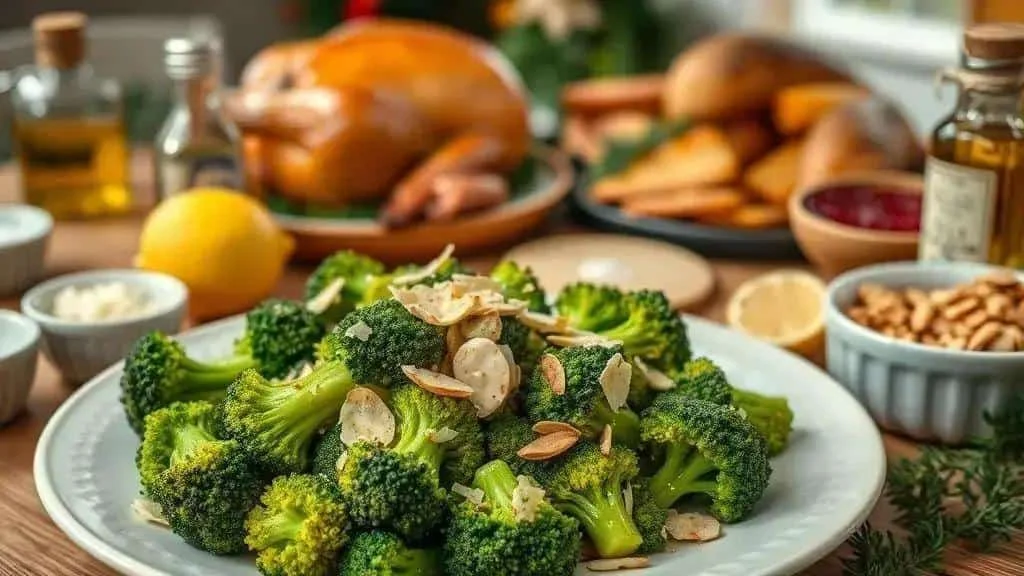
A few well-chosen seasonings are enough for garlic broccoli. Choose a finish that complements the main dish rather than adding every option at once.
Useful seasonings
- Salt, up to ½ teaspoon, adjusted gradually across the whole dish.
- Freshly ground black pepper, a small pinch to taste.
- Lemon juice and zest, added just before serving.
- Chilli flakes, about ⅛–¼ teaspoon for a gentle kick, optional.
- Chopped parsley, about 1 tablespoon for a fresh finish.
- Finely chopped thyme or rosemary, about ½ teaspoon, optional; use sparingly.
Finishing touches
- A little extra butter: up to a teaspoon if you want a richer finish; it is optional.
- Grated hard cheese: about 2 tablespoons, using a vegetarian-labelled alternative where appropriate.
- Nutritional yeast: 1–2 tablespoons for a dairy-free savoury topping.
- Toasted flaked almonds: 1–2 tablespoons add crunch; make the nut ingredient clear.
Christmas dinner pairings
- Roast turkey or chicken: lemony broccoli gives a fresh contrast to a rich roast dinner.
- Roast beef or pork: thyme or rosemary links the broccoli to the roast’s seasoning.
- Grilled fish: garlic and lemon broccoli suits salmon and other fish.
- Roast potatoes or potato gratin: tender green florets contrast with crisp potatoes or a creamy sauce.
- Festive rice and Brazilian farofa: a little lemon helps balance these richer accompaniments.
- Drinks: serve sparkling water with lemon, or an optional light white or sparkling wine for adults who drink alcohol.
Planning the meal
- Finish near serving time: the broccoli keeps its best texture when the final frying is done shortly before eating.
- Balance the menu: use less salt or cheese if the main course and other sides are already strongly seasoned.
- A genuinely vegan portion: cook a separate portion with oil and no dairy cheese. Offering oil beside broccoli already cooked in butter does not make that broccoli vegan.
- Presentation: a little parsley and lemon zest is enough for a bright finish.
Storing and using leftover broccoli
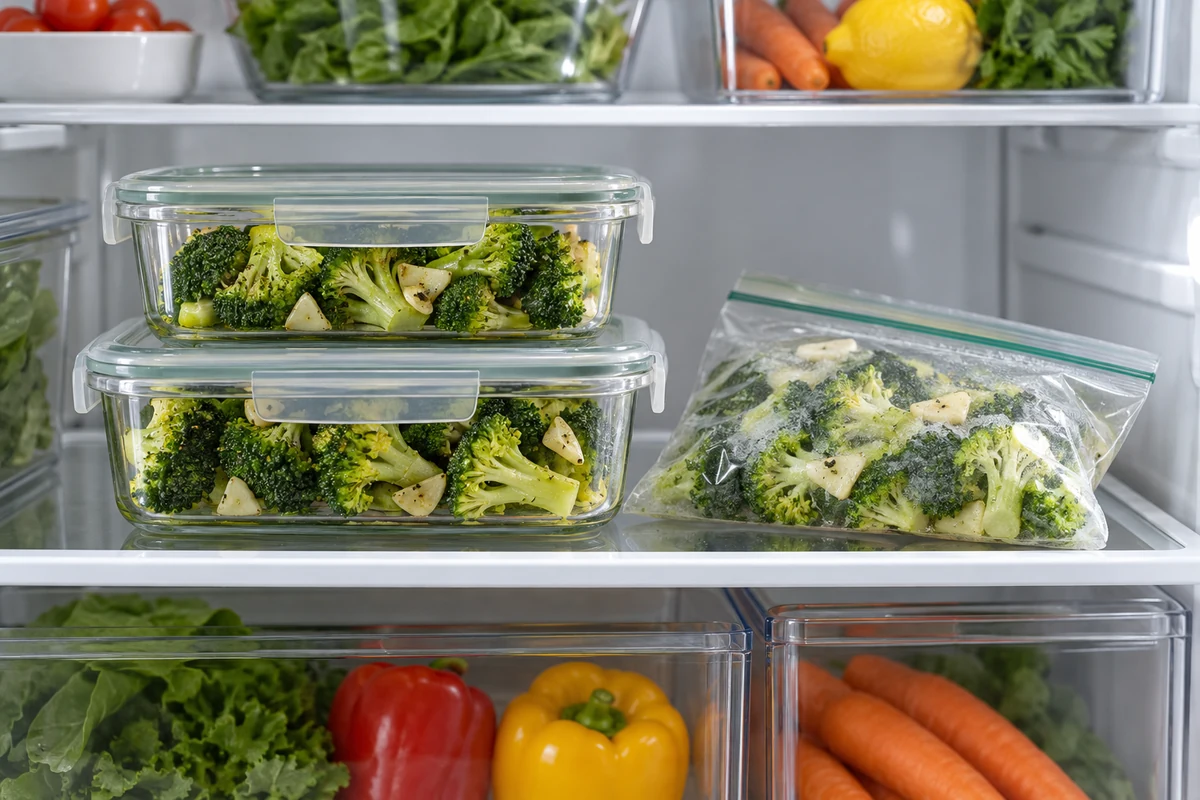
Store cooked broccoli promptly and use it within a short period. Turning leftovers into another dish does not reset their storage time.
Storage
- Fridge: cool promptly in a shallow container, refrigerate within two hours and use within 48 hours.
- Freezer: freeze cooled cooked leftovers in small suitable containers for up to three months for best quality. They do not need blanching again; blanching is a separate preparation step for raw broccoli.
- Label: record the cooking and freezing dates.
- Cool promptly: use small shallow portions rather than leaving a large hot pan out for hours. Get leftovers into the fridge within two hours.
Defrosting and reheating
- In the fridge: defrost covered and use within 24 hours of fully defrosting.
- For immediate use: a microwave’s defrost programme can be used according to its instructions, followed straight away by thorough reheating.
- In a pan: add a little oil or butter if needed, plus a splash of water. Cover briefly and stir until the broccoli is piping hot throughout, then uncover to dry the surface.
- In the oven: spread out in an ovenproof dish at 180°C conventional or 160°C fan. Heat until piping hot throughout; the time depends on the quantity and starting temperature.
- In the microwave: use a microwave-safe dish and vented cover, add a splash of water and heat in short bursts, stirring and checking the centre.
- Check the centre: reheat only once, until piping hot throughout. A clean food thermometer can confirm 75°C for 30 seconds or an equivalent safe time and temperature.
Ways to use leftovers
- Omelette or frittata: chop the broccoli and add to beaten eggs with suitable seasonings. Cook until the egg is set and the broccoli heated thoroughly; timing depends on thickness.
- Soup: blend with stock, softened onion and a little cream or plant milk, then bring to a thorough heat.
- Pasta or risotto: add early enough for the broccoli to become piping hot, then finish with cheese or nutritional yeast.
- A warm grain bowl: thoroughly reheat the broccoli and serve with freshly cooked grains, suitable nuts and dressing.
- Gratin: cover with sauce and cheese in a small ovenproof dish, then bake until piping hot in the middle, not merely browned on top.
- A broccoli spread: blend safely chilled broccoli with suitable nuts, oil, lemon and garlic. Keep refrigerated and use within the original leftover storage period; this is not a shelf-stable pesto.
- Fritters: add chopped broccoli to a complete fritter recipe with measured egg and flour, then cook through. The combination needs a proper method rather than an unspecified amount of binding ingredients.
Safety and flavour reminders
- Refrigerated time: use cooked broccoli within 48 hours or freeze it. Three months in the freezer is a quality guide, not a replacement for safe handling.
- Deterioration: discard broccoli that is slimy, mouldy or has an unusual smell. Normal appearance does not prove food has been stored safely.
- Adjust seasoning: once the food is safely heated, add lemon or pepper as needed. Do not taste suspect leftovers to test safety.
- Texture: a pan or oven can dry the surface, but thoroughly reheating the centre comes first.
- Portions: freeze small servings to avoid defrosting more than needed.
Broccoli in everyday cooking
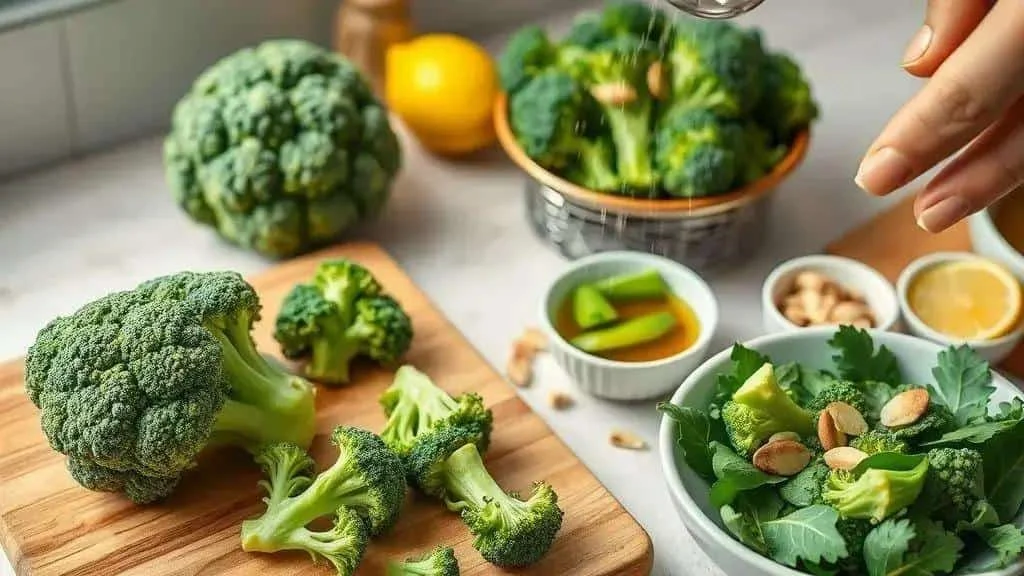
Broccoli is easy to include in different meals. The most useful choices for this recipe concern freshness, texture and the overall balance of ingredients rather than promises of specific health effects.
Useful details
- Kitchen uses: florets can be steamed, roasted, boiled briefly or pan-cooked.
- The stalk: peel away a tough outer layer and slice the tender centre rather than automatically discarding it.
- Related vegetables: broccoli belongs to the brassica group, alongside cabbage and cauliflower.
- Health claims: this recipe is not a detox treatment or a way to prevent illness. Research on individual plant compounds should not be turned into promises about one meal.
- Varieties: standard heads and sprouting types differ in shape, so adjust the cutting and cooking time.
- Colour: choose fresh-looking florets, but colour alone cannot measure their nutrient content.
Keeping the meal balanced
- Vegetable variety: include broccoli alongside other vegetables over the week rather than relying on one ingredient.
- Portions: serve it as part of a meal with suitable protein and starchy foods.
- Seasoning: garlic, pepper and lemon add flavour without requiring large quantities of salt.
- No special promises: an everyday vegetable side need not be described as anti-ageing or protective against a named disease.
- Dairy choices: butter and cheese add richness; use measured amounts and suitable alternatives if required.
- Salt awareness: consider the salt already present in butter, cheese and the rest of the meal.
- The finished recipe: the amount of butter, oil and cheese affects its richness, so the cooked dish is not automatically low-calorie.
- Individual needs: adapt the recipe to dietary advice you already follow rather than treating it as a substitute for that advice.
Getting the best from the broccoli
- Cook to your preferred tenderness: steaming or brief boiling gives a different texture from roasting.
- Raw broccoli is a separate option: fresh broccoli can be washed and cut finely for a salad, but frozen broccoli should be prepared according to its packet rather than assumed ready to eat.
- Use measured fat: a little oil or butter carries the garlic flavour without needing an excessive coating.
- Cut evenly: similar-sized florets and thinly sliced stems cook more predictably.
- Avoid overcooking: check the stems while cooking so the florets do not collapse before serving.
- Store fresh broccoli appropriately: keep refrigerated according to its packaging and use while firm and fresh-looking. Cooked leftovers have the shorter storage guidance above.
Conclusion
Garlic butter broccoli is a flexible side dish for Christmas or everyday meals. Drain well, keep the garlic from burning and choose the finish that suits your menu.
Thank you for reading. Follow our social channels for more practical recipes and visit I Love Christmas for festive cooking ideas. Let us know which variation you enjoyed.
FAQ – Garlic Butter Broccoli
How should I store leftover garlic broccoli?
Cool promptly in shallow portions, refrigerate within two hours and eat within 48 hours or freeze. Cooked leftovers do not need blanching again. Defrost in the fridge and use within 24 hours of fully defrosting.
Can I make it without butter?
Yes. Use 2–3 tablespoons olive oil in total instead of the butter-and-oil mixture. Replace dairy cheese with nutritional yeast for a vegan version.
How can I keep broccoli from becoming soggy?
Drain and dry the florets, avoid overcrowding and cook only until tender to your preference. Roasting or a brief pan finish gives browned edges; do not burn the garlic while trying to crisp the broccoli.
Can I freeze broccoli already cooked with garlic?
Yes, if it has been handled safely. Cool promptly and freeze in small portions. It may be softer after thawing; use within three months for best quality, then defrost safely and reheat only once if serving hot.
Is the recipe suitable for children?
Adapt the salt, chilli and texture to the child’s age and needs. Cook until comfortably tender, cut into suitable pieces and consider milk, nut or sesame allergens in the chosen variation.
How can I prepare it ahead for Christmas dinner?
Briefly cook the broccoli, cool quickly, drain and refrigerate covered. Shortly before serving, finish with garlic and butter or oil until piping hot throughout, then add lemon and any topping. Keep within the original 48-hour storage period.
Sources and Further Reading
- Food Standards Agency: cooking food safely
- Food Standards Agency: chilling, freezing and defrosting food safely