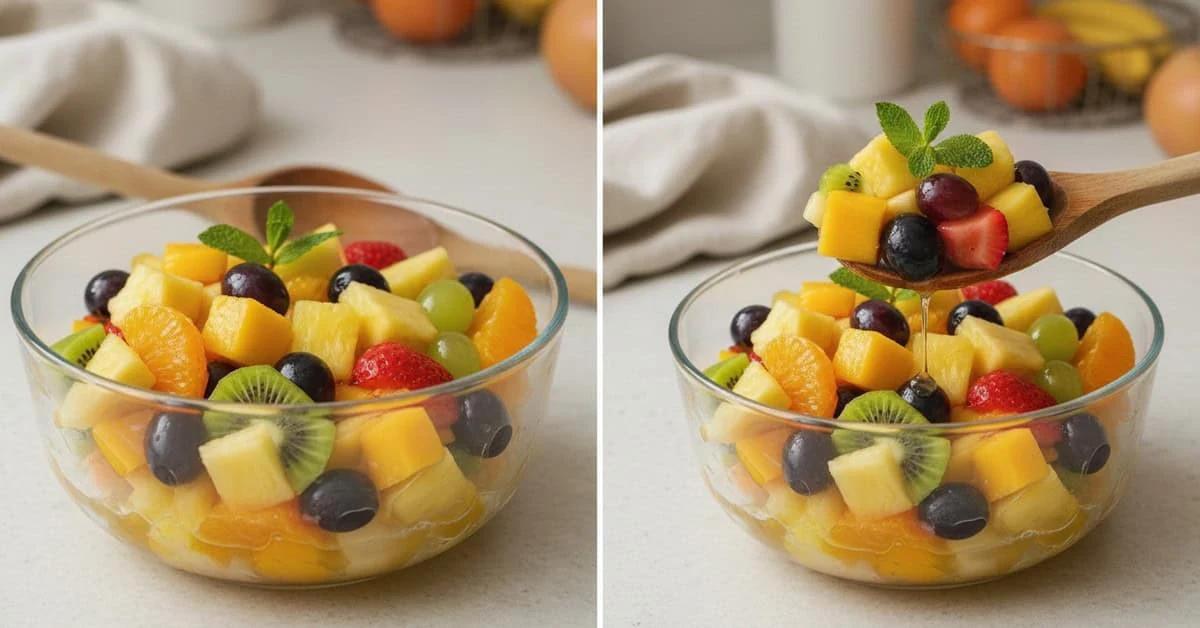
Christmas fruit salad combines fresh fruit, a little honey and optional spice for a colourful finish to a festive meal. This Brazilian-inspired version is easy to adapt with yoghurt or a vegan dressing; choose ripe fruit available where you live and keep it chilled until serving.
Christmas fruit salad offers a refreshing change after a rich Christmas dinner. Honey, citrus and a pinch of spice bring the fruit together in a simple dessert you can prepare without turning on the oven.
Ingredients for Christmas fruit salad
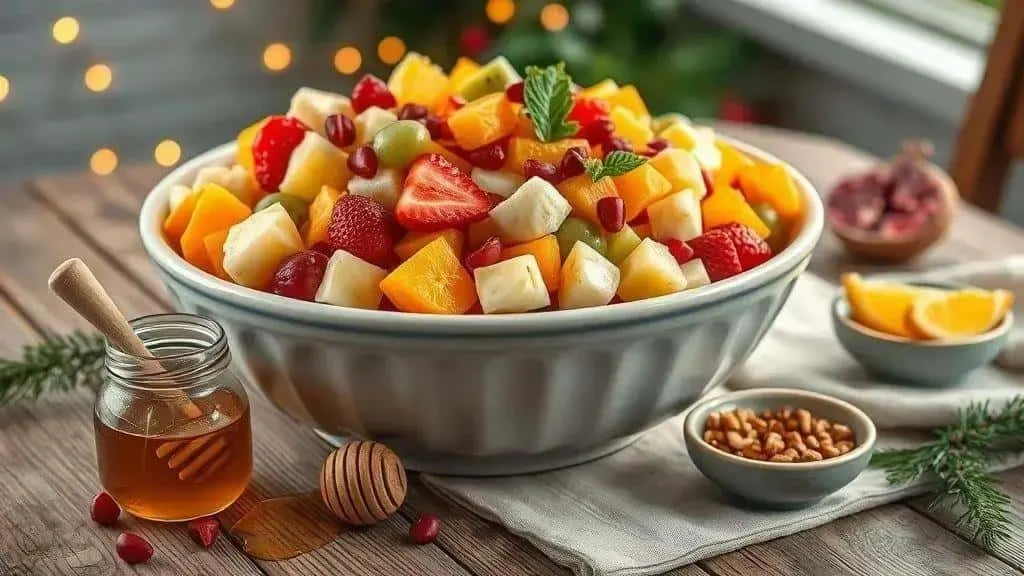
These quantities make a generous bowl of Christmas fruit salad: roughly 8–10 substantial portions, or more small portions alongside other desserts. The fruit weights are prepared weights. Tropical fruit reflects the Brazilian original; for a British winter variation, include pears, apples and clementines rather than assuming every ingredient is locally in season.
- 2 large oranges, peeled and segmented – about 400 g prepared; clementines or mandarins also work.
- 500 g prepared pineapple, diced – from a fresh pineapple, or well-drained tinned pineapple in juice.
- 250 g seedless grapes – halve lengthways for adults; cut lengthways into quarters for young children.
- 3 kiwis, peeled and sliced – about 200 g; replace with firm, ripe pear or apple if preferred.
- 150 g strawberries, hulled and cut up – use only if good quality and available; extra pear or clementine is a useful winter alternative.
- 2 firm apples, cored and chopped – toss with a little of the measured lemon juice to slow browning; ripe, firm pears also work.
- 2 ripe bananas, sliced just before serving – or use diced ripe mango.
- 80 g pomegranate seeds – for colour and crunch; a smaller handful of dried cranberries gives a different, sweeter texture.
- 4 tbsp honey – use less if the fruit is very sweet, or replace with maple or agave syrup for a vegan version. Do not give honey to babies under 12 months.
- 2 tbsp lemon juice – balances sweetness and helps slow browning; lime juice is an alternative.
- 1 tbsp finely grated lemon zest, optional – use washed, unwaxed fruit and avoid the bitter white pith; orange zest also works.
- A small handful of fresh mint leaves – to finish; a few sweet basil leaves offer a different flavour.
- 30 g chopped walnuts or almonds, optional – serve separately if catering for different diets. Omit nuts for anyone with a nut allergy and check other ingredients for cross-contact.
- 120 g plain yoghurt, optional – or a suitable coconut or soya yoghurt for a vegan creamy version.
Ingredient tips and swaps
- Wash fruit under running water and dry it well before cutting. Start with clean hands, a clean board and clean utensils.
- Cut firm fruit into similar-sized pieces so the salad is easy to serve and eat.
- Add banana just before serving to limit browning and softening.
- Taste the fruit before adding extra honey or maple syrup: you may need less than the suggested amount.
- Lemon juice can help apples and pears retain their colour, but it does not disinfect fruit or make refrigeration unnecessary. Keep the prepared salad covered in the fridge and aim to eat it within 24 hours.
- Choose ripe fruit to suit your budget and local season. In Britain at Christmas, much of the tropical fruit and fresh berries will be imported.
How to make Christmas fruit salad
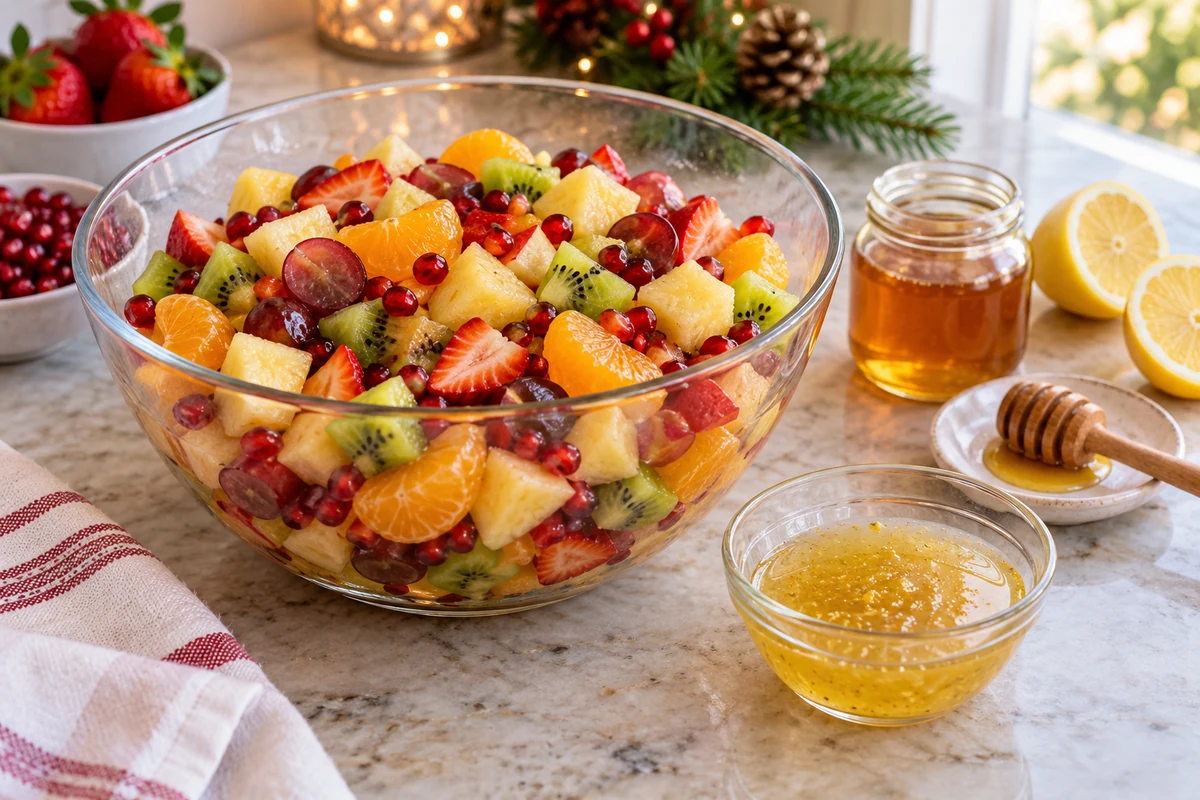
Set out your ingredients and equipment, then prepare the firmer fruit before the delicate fruit and dressing.
Step-by-step method
- Wash the fruit: rinse under running water, including fruit you will peel, and dry with clean kitchen paper or a clean cloth. Scrub firm skins gently where appropriate.
- Prepare your equipment: use a stable chopping board, a sharp knife, a large bowl, two serving spoons and a small bowl for the dressing.
- Cut the firmer fruit: remove the pineapple skin and tough core, core the apples and peel the kiwis. Cut into bite-sized pieces for adults. Prepare softer, age-appropriate pieces separately for young children.
- Prepare the delicate fruit: halve or quarter the strawberries, halve grapes lengthways for adults, and set aside the pomegranate seeds. Grapes for young children should be quartered lengthways, not served whole.
- Leave the banana until last: slice it just before serving, or use ripe mango if you prefer.
- Mix the honey dressing: combine the honey, lemon juice and optional zest. Start with less honey if the fruit is sweet. Maple syrup can replace the honey.
- Add optional spice: stir in ¼ tsp ground cinnamon or a small pinch of ground ginger if you would like a gently spiced Christmas flavour.
- Combine the fruit: put the prepared fruit in the large bowl, leaving the banana aside. Add the dressing and turn gently with two spoons without crushing the pieces.
- Taste and adjust: add a little more lemon juice or honey if necessary. For a creamy salad, fold in the optional yoghurt, or serve it separately.
- Chill and finish: cover and refrigerate for 30–60 minutes. Just before serving, add the banana, pomegranate seeds and mint; offer the chopped nuts separately.
- Store carefully: keep covered at 5°C or below and eat within 24 hours for best quality. If preparing ahead, keep the dressing and delicate fruit separate until nearer serving time.
Honey, yoghurt and vegan fruit salad variations
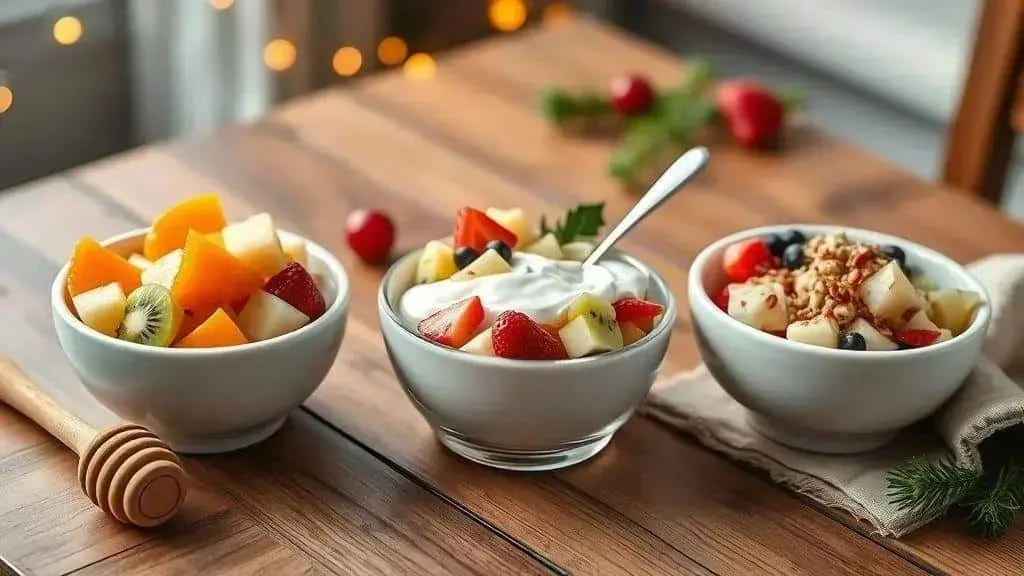
Choose one of these three dressings for your Christmas fruit salad. They are alternatives, so there is no need to add all three to the same bowl.
Honey and citrus variation
This simple dressing gives the fruit a glossy finish with a little sweetness and a fresh citrus aroma.
- Up to 4 tbsp honey – adjust to the sweetness of the fruit.
- 2 tbsp lemon juice – balances the honey and helps slow browning.
- 1 tbsp finely grated lemon zest, optional – for a pronounced citrus aroma; use less if preferred.
- ¼ tsp ground cinnamon, optional – for a gently spiced finish.
- Mix the dressing: stir the honey, lemon juice and zest together until evenly combined.
- Loosen thick honey: stand its container in warm water briefly, or warm a suitable small dish very gently. Let it cool before adding to the fruit.
- Dress the fruit: drizzle over the prepared fruit and turn gently to coat.
- Finish: add the optional cinnamon and scatter over pomegranate seeds.
Yoghurt variation
Plain yoghurt gives the salad a creamy texture and a slight tang. Keep it separate until serving if you want the fruit to stay firmer.
- 120 g plain yoghurt – choose the texture and fat content you prefer.
- Up to 2 tbsp honey – taste before adding it all, or leave it out.
- 1 tsp vanilla extract, optional – for a mellow flavour.
- 1–2 tsp lemon juice, to taste – yoghurt is already tangy, so add gradually.
- Mix the dressing: stir the yoghurt, honey and optional vanilla together in a small bowl.
- Adjust the flavour: add the lemon juice a little at a time and taste before adding more sweetness.
- Add to the fruit: fold the yoghurt through gently, keeping the fruit pieces intact, or offer it in a separate jug.
- Serve chilled: keep refrigerated until ready to serve.
Vegan variation
Replace the honey with maple or agave syrup and use a plant-based yoghurt if you would like a creamy dressing.
- Up to 4 tbsp maple or agave syrup – start with less and adjust to taste.
- 120 g plain plant-based yoghurt, optional – coconut or soya works well; check allergens.
- 1 tbsp lemon juice – to balance the dressing.
- 2 tbsp chopped nuts or seeds, optional – for example almonds, cashews or sunflower seeds; choose according to guests’ dietary needs.
- Make the vegan dressing: stir the syrup and lemon juice together, adding the plant-based yoghurt if using.
- Choose firm fruit: pineapple, apple and ripe, firm pear hold their shape well against a creamy dressing.
- Add crunch at the end: offer the nuts or seeds separately, or scatter them over immediately before serving.
- Store separately: refrigerate the dressing and prepared fruit in covered containers and combine them shortly before serving.
Choosing your variation
For a simple, glossy salad, choose honey and citrus. For a creamy finish, use yoghurt. For a vegan option, use maple syrup and, if wanted, plant-based yoghurt.
Assembling, storing and serving your fruit salad
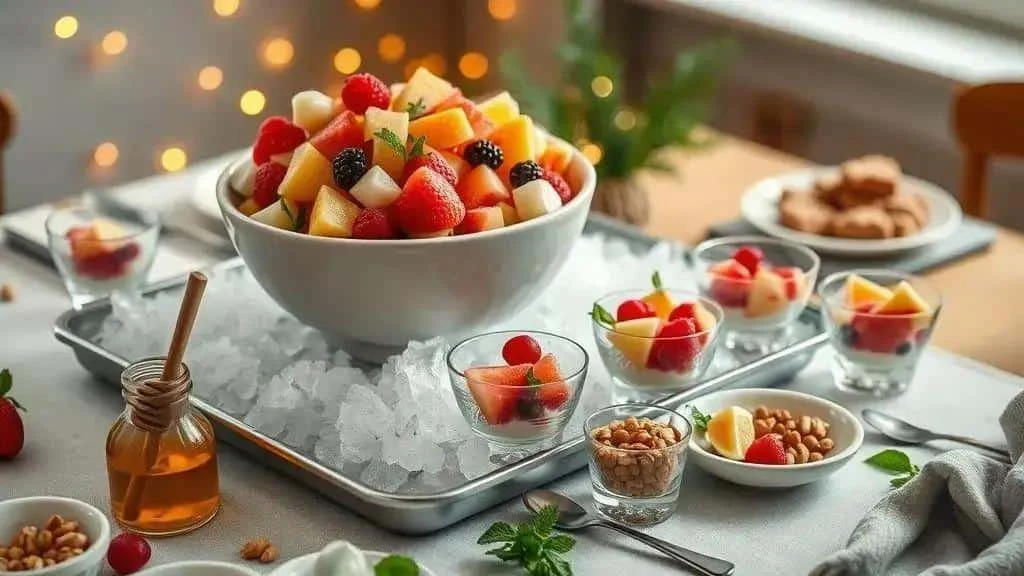
Prepare the bowls, dressing and garnishes in advance so you can assemble the salad quickly and keep it cold.
Assembly
- Balance colours and textures: combine juicy citrus, firmer apple and softer fruit for an appealing mix.
- Layer or mix: arrange individual glasses in layers, or combine everything gently in a large serving bowl.
- Keep the dressing separate: add it nearer serving time to reduce the amount of juice the fruit releases.
- Add banana last: slice and fold it through just before serving.
- Finish with fresh garnishes: use washed mint, citrus zest and pomegranate seeds for colour.
Storage
- Temperature: keep the prepared fruit and dressing in the fridge at 5°C or below.
- Keeping time: aim to eat the salad within 24 hours of preparing the fruit; softer pieces may deteriorate sooner.
- Suitable containers: use clean lidded containers or a covered bowl.
- Avoid excess liquid: drain tinned fruit thoroughly and add only as much dressing as needed.
- Slowing browning: a little lemon juice helps apples and pears retain their colour. It is not a substitute for clean preparation or refrigeration.
Serving at Christmas
- Chill before serving: refrigerate for 30–60 minutes, then bring the salad out when you are ready to eat.
- Portion size: allow around 120–150 g per person alongside other desserts. This large recipe makes considerably more than six portions of that size.
- Individual portions: use small bowls, glasses or pots to make serving easy.
- Help-yourself serving: put out a small bowl with a clean serving spoon and offer dressings separately; replenish from the fridge as needed.
- Keep serving hygienic: use clean utensils, avoid topping up an old bowl with fresh salad and do not leave chilled food sitting out throughout a long party.
Practical planning tips
- Prepare ahead: wash and cut firmer fruit up to the day before, keep it covered in the fridge and serve within 24 hours. Leave banana and delicate garnishes until last.
- Label the variations: identify honey, yoghurt and vegan options clearly so guests can choose.
- Use an ice tray: sit the serving bowl securely over crushed ice, keeping meltwater out of the food. This helps keep it cool but does not replace temperature control.
- Check dietary needs: identify milk, nuts, soya and any other allergens. For young children, adjust fruit size and texture and omit hard nut pieces; keep honey out of portions for babies under 12 months.
- Add finishing touches last: mint, nuts and other crunchy garnishes look and taste best when added just before serving.
Choosing fruit for Christmas: flavour, season and variety
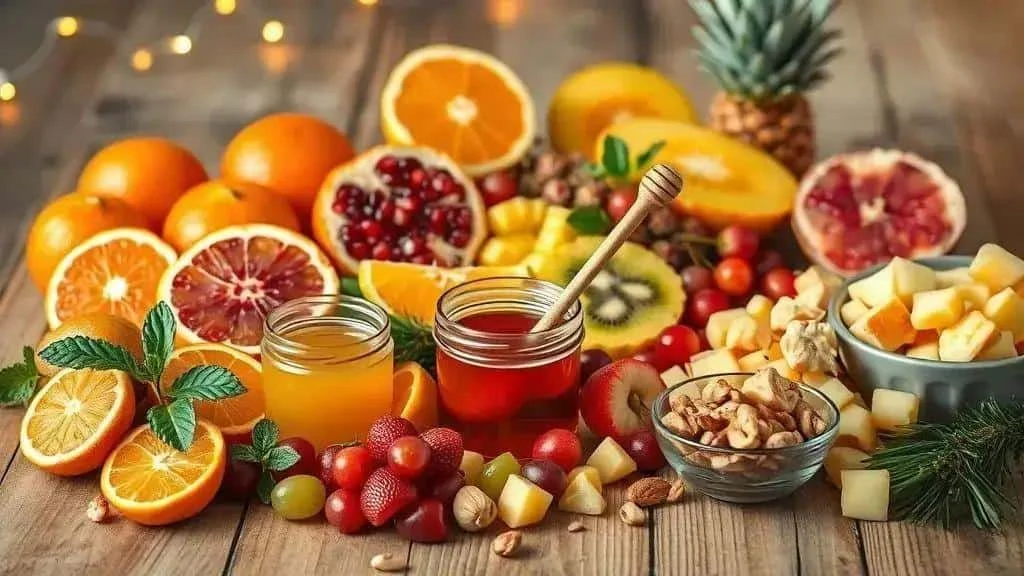
A bowl of Christmas fruit can reflect the season where you live as well as family traditions. The Brazilian original suits a summer celebration; this version also offers practical choices for a British winter.
Fruit ideas
- Pomegranate: its ruby-coloured seeds make a striking finishing touch without needing elaborate decoration.
- Citrus: oranges, mandarins and clementines bring bright flavour and fit naturally into a British Christmas fruit bowl.
- Pineapple: its sweet-sharp flavour gives the salad a tropical character; well-drained tinned pineapple is a convenient alternative.
- Local choices: apples and pears can replace some tropical fruit. Check origin and availability rather than assuming that everything on a Christmas display is grown locally.
Fruit as part of a varied meal
- Variety: citrus, kiwi, apples and other fruit contribute different flavours and nutrients; there is no need to present one combination as a special health treatment.
- Keep claims realistic: a fruit dessert does not undo a rich meal or act as a detox. Enjoy it for its flavour as part of a varied diet.
- Texture and fibre: fruit pieces retain their texture and fibre, making a different dessert from strained juice or a sweet syrup.
- Freshness: juicy fruit is refreshing alongside heavier dishes; offer drinking water as well.
Budget and waste
- Compare seasonal options: ripe, readily available fruit may offer better value. Local origin alone does not tell you the full environmental impact of a product.
- Reduce waste: buy the amount you need, use ripe fruit promptly and refrigerate prepared portions.
- Use suitable citrus zest: finely grate washed, unwaxed peel before juicing, avoiding the bitter pith.
Making the most of your ingredients
- Choose ripe but firm fruit: it should taste good while holding its shape after cutting.
- Balance sweet and sharp: combine sweeter fruit with citrus and taste before adding honey.
- Serve within 24 hours: this helps preserve the prepared salad’s texture; keep it covered at 5°C or below.
- Use simple extras: a little citrus zest, mint or an optional spoonful of yoghurt can add interest without a complicated dressing.
A familiar dish with room for variation
Fruit salad is easy to adapt to the people around your table. You can keep the tropical flavours of the Brazilian recipe or use more apples, pears and clementines for your own Christmas gathering.
What to serve with Christmas fruit salad
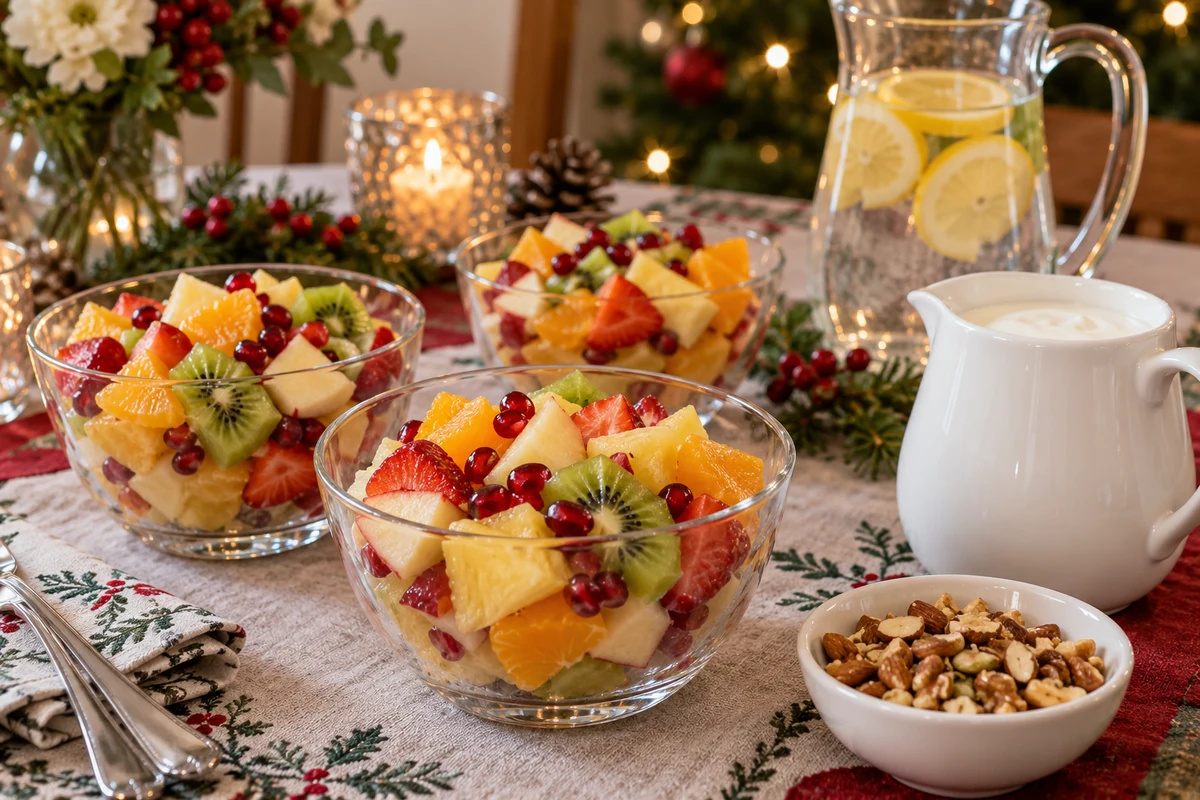
Pair your fruit salad with something creamy, crunchy or gently sweet, depending on what else is on the Christmas table.
Food pairings
- Fresh cheese: a small spoonful of ricotta or another mild fresh cheese adds a creamy contrast.
- Ice cream or semifreddo: vanilla ice cream works particularly well with pineapple and citrus; add it only when serving.
- Creamy desserts: panna cotta, Brazilian coconut pudding or a yoghurt dessert can be served alongside a small portion of fruit.
- Cake and biscuits: panettone, plain vanilla cake or butter biscuits make simple accompaniments.
- Crunchy toppings: offer toasted flaked almonds, chopped nuts or granola separately and check their allergens.
Drink pairings
- Brut sparkling wine or prosecco: an optional pairing for adults who drink alcohol.
- Dessert wine: a small glass can accompany sweeter fruit if that suits your menu and guests.
- Alcohol-free options: sparkling water with lemon, iced hibiscus tea or a citrus-and-mint mocktail.
- A warm option: offer herbal tea for a cosy winter finish.
Presentation ideas
- Individual servings: portion the fruit into small bowls, glasses or pots.
- Layered glasses: alternate fruit with a little yoghurt, adding granola or nuts at the last moment.
- A sharing bowl: finish a large bowl with citrus zest and fresh mint.
- A choice of dressings: arrange a few small bowls for the honey, yoghurt and vegan variations.
- Simple tableware: clear glass or pale crockery lets the colours of the fruit stand out.
Portions and timing
- Allow for your whole menu: 120–150 g of fruit per person is a useful starting point when other desserts are also available; scale the recipe down for a small gathering.
- Bring it out at serving time: chill the salad beforehand rather than leaving it on the table for 30–60 minutes before anyone eats.
- Offer dressings separately: this preserves texture and allows guests to choose the amount they want.
- Keep toppings crisp: add nuts and granola immediately before eating.
Christmas finishing touches
- Fresh garnishes: use mint leaves, fine citrus zest and pomegranate seeds.
- Festive surroundings: place decorations and LED candles away from the serving bowl. Do not put ornamental foliage, glitter or non-food decorations in the salad.
- Texture contrast: finish individual adult portions with a spoonful of yoghurt and a little chopped nut topping if suitable.
- Clear labels: identify each dressing and any allergens, including those in optional toppings.
Enjoy a fresh finish to Christmas dinner
A bowl of Christmas fruit salad with honey and citrus is a straightforward way to finish a festive meal. Ripe fruit, a balanced dressing and a few simple garnishes are all it needs.
Choose honey, yoghurt or a vegan dressing, and adapt the fruit to what is available and what your guests enjoy.
Thank you for visiting. Follow us on social media for more festive ideas, and explore the I Love Christmas blog for more recipes and inspiration.
Share the recipe with someone you would like around your Christmas table, and enjoy preparing your celebration.
Christmas fruit salad: frequently asked questions
Which fruit works best in Christmas fruit salad?
Choose ripe, firm fruit such as orange, pineapple, apple, kiwi and grapes. In a British winter, pears and clementines are useful alternatives to out-of-season berries. Prepare fruit appropriately for young children.
How can I stop fruit salad becoming watery or brown?
Drain tinned fruit well, avoid too much dressing and add banana just before serving. A little lemon juice slows browning in apple and pear, but the salad still needs to be covered and refrigerated.
Can I make fruit salad ahead?
Yes. Prepare the firmer fruit up to the day before and keep it covered at 5°C or below. Eat within 24 hours of preparation, adding the dressing, banana and delicate garnishes nearer serving time.
How do I make this fruit salad vegan?
Replace honey with maple or agave syrup. For a creamy version, use a suitable plant-based yoghurt and check the ingredients and allergens of any toppings.
What goes well with fruit salad at Christmas?
Plain yoghurt, vanilla ice cream, panettone, mild fresh cheese or optional toasted nuts all work. Offer sparkling water or herbal tea, with wine as an optional choice for adults.
Sources and Further Reading
- Food Standards Agency: chilling, freezing and defrosting food safely
- NHS: preparing food safely for babies and young children
- NHS: foods to avoid giving babies and young children