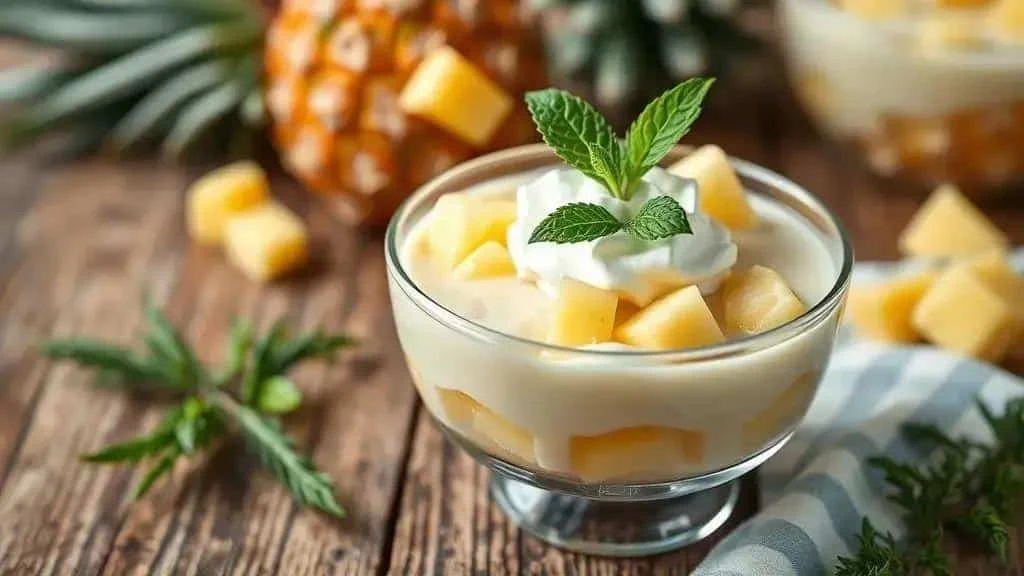
Christmas pineapple cream dessert combines cooked pineapple, condensed milk and cream in a soft, spoonable pudding. Known here by its festive Brazilian name, Creme de Papai Noel, it can be decorated with red fruit and coconut. Chill it thoroughly before serving and use suitable alternatives for any dietary variation.
This Christmas pineapple cream dessert brings a refreshing tropical flavour to the Christmas table. Its pale cream and red fruit decoration give it a festive appearance without complicated piping or baking.
Ingredients for Christmas pineapple cream
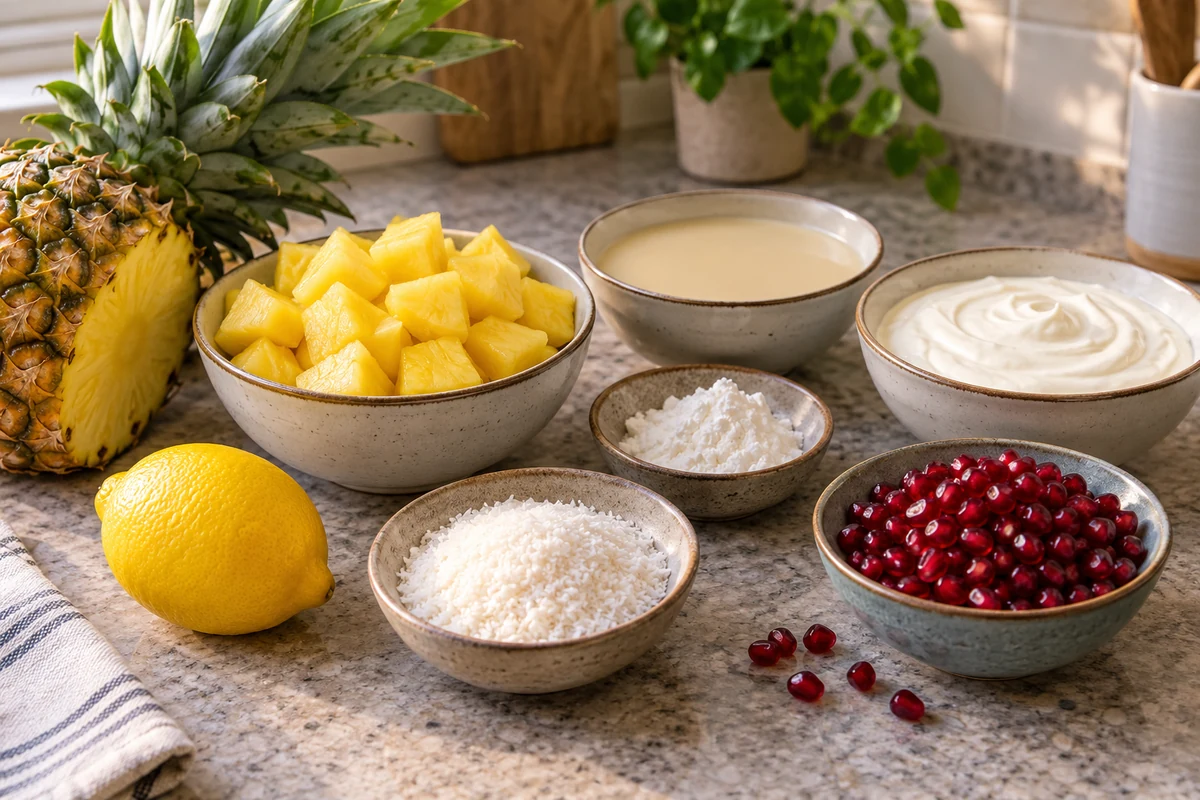
For this Christmas pineapple cream, measure the prepared fruit rather than relying on the size of a whole pineapple. The recipe below makes a soft dessert to serve in glasses, not a moulded pudding.
- 500 g peeled, cored pineapple, chopped – plus a few extra pieces for decoration if wanted; alternative: 500 g well-drained tinned pineapple in juice, measured after draining.
- 1 tin sweetened condensed milk, 395–397 g – for sweetness and body; alternative: a similar amount of plant-based condensed milk, noting that texture varies by product.
- 200 ml double cream for the base – for richness; alternative: thick coconut cream or a suitable plant-based cream.
- 150 ml additional double cream, measured before whipping – to fold in once the base is cold; alternative: a plant-based cream specifically labelled suitable for whipping.
- 15 g cornflour and 180 ml water – use 120 ml water with the fruit and 60 ml to make the cornflour slurry; thickener note: this spoonable version does not need gelatine. Gelatine and agar are not direct replacements for cornflour or for each other.
- 1 tsp vanilla extract – for flavour; alternative: a little finely grated citrus zest.
- Finely grated zest of 1 washed, unwaxed lemon, optional – for aroma rather than to remove sugar.
- A small pinch of salt – optional, to balance the flavour.
- 30–50 g desiccated coconut, optional – a light topping rather than a thick, dry layer; alternative: a small amount of chopped nuts or toasted flaked almonds if suitable for your guests.
- About 80 g pomegranate seeds or drained, pitted cherries – for a red festive garnish; alternative: sliced strawberries.
Quick ingredient notes
If using tinned pineapple, choose fruit in juice and drain it well. Do not simply omit the condensed milk, which also contributes body. For a dairy-free or vegan version, replace both creams and the condensed milk with suitable plant-based products. The cornflour thickener is already vegan.
Keep the cream for whipping cold. Measure the cornflour accurately and cook it in the fruit base; do not stir raw cornflour or extra gelatine into the finished chilled dessert to correct its texture.
How to make Christmas pineapple cream
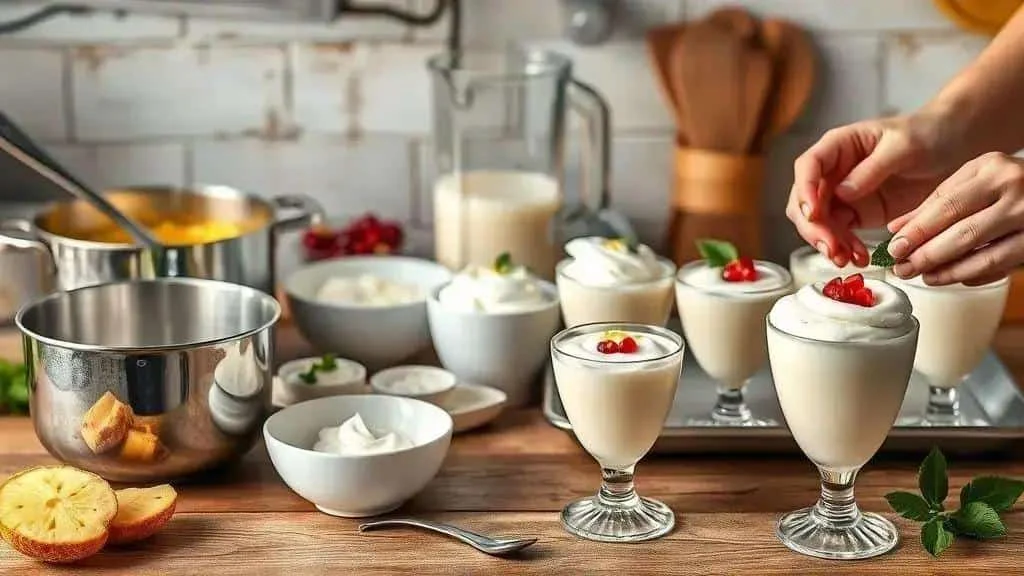
Follow these steps to make the Christmas pineapple cream, allowing enough time to cool the cooked fruit and chill the assembled dessert.
- Prepare the pineapple: peel, core and chop enough fruit to give 500 g. Any pieces reserved for decoration are additional to that amount. For tinned fruit, weigh 500 g after draining.
- Cook the fruit base: put the pineapple and 120 ml water in a saucepan. Simmer until the fruit softens, about 8–12 minutes depending on the pieces. Mix 15 g cornflour with 60 ml cold water, stir into the pan and bring back to a gentle bubble, stirring for 1–2 minutes until thickened.
- Blend the base: allow the fruit to stop steaming, then blend using equipment suitable for warm ingredients. Never seal hot liquid in a blender not designed for it. Once the fruit is cool, blend with the condensed milk, 200 ml cream, vanilla and optional salt until smooth.
- Keep the texture spoonable: no gelatine or agar is needed in this version. For a dessert that must set firmly in a mould, use a separately formulated recipe: adding a whole sachet of gelatine or 10 g agar here would change the result considerably.
- Cool promptly: transfer to a clean, shallow covered container, cool and refrigerate within 1–2 hours of cooking. Chill until cold throughout before folding in whipped cream.
- Whip and fold: beat the additional 150 ml cold double cream to soft peaks. Fold it gently into the cold pineapple base with a spatula, keeping as much air as possible.
- Check the consistency: the mixture should be creamy and spoonable. If unusually thick, fold in a spoonful of cream. If soft, chill it thoroughly and serve in glasses rather than adding unmeasured setting agents.
- Portion and decorate: divide between glasses or spoon into a serving dish. Add a light scattering of coconut, red fruit and optional lemon zest or mint shortly before serving.
- Chill again: refrigerate the finished dessert for at least 2 hours, until cold throughout. Keep at 5°C or below until serving.
- Practical tip: chill the bowl and beaters before whipping the cream. Taste the cooled pineapple base before adding anything extra; condensed milk already makes it quite sweet.
Simple serving variations
Dairy-free or vegan version: choose suitable plant-based condensed milk, base cream and whipping cream, retaining the cornflour method. For individual layered desserts, add biscuit crumbs or a nut topping just before serving and check those ingredients against the intended diet.
Lactose-free and vegan pineapple cream variations
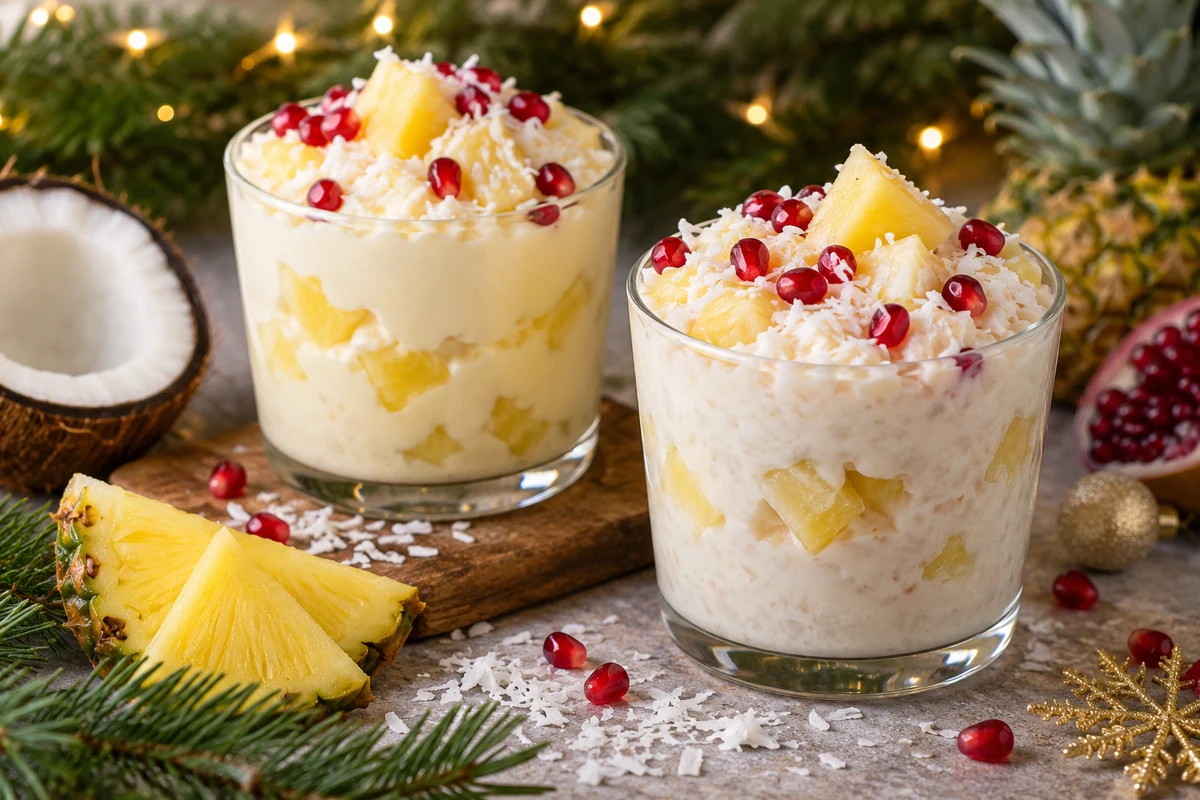
You can adapt the Christmas pineapple cream, but product choice matters. Lactose-free dairy is not suitable for a milk allergy, and a plant-based cream that pours well may not whip.
Lactose-free variation
Ingredients:
- 500 g prepared pineapple – peeled, cored and chopped, or well-drained tinned fruit.
- 395–397 g lactose-free sweetened condensed milk – or a suitable plant-based alternative if unavailable.
- 200 ml lactose-free cream for the base – this portion is blended, not whipped.
- 150 ml lactose-free whipping cream, measured before whipping – choose a product explicitly suitable for whipping.
- 15 g cornflour and 180 ml water – 120 ml for cooking the fruit and 60 ml for the slurry.
- 1 tsp vanilla extract and optional finely grated lemon zest.
- 30–50 g desiccated coconut and about 80 g pomegranate seeds – optional garnishes.
Product notes: chilling a low-fat pouring cream will not necessarily make it whip. Follow the product instructions or use a suitable plant-based whipping cream. Keep the cornflour base; no additional gelatine is required.
- Cook the pineapple base: simmer the fruit with 120 ml water until tender, then add the cornflour mixed with the remaining 60 ml water and cook at a gentle bubble for 1–2 minutes.
- Blend the base: cool the cooked fruit, then blend with the lactose-free condensed milk, 200 ml base cream and vanilla.
- Chill: cool promptly and refrigerate until cold throughout; do not leave the mixture at room temperature for several hours.
- Fold in the whipped cream: whip the separate 150 ml portion according to its instructions, then fold gently into the cold base.
- Portion and decorate: spoon into glasses, refrigerate and add the coconut and fruit shortly before serving.
Vegan variation
Ingredients:
- 500 g prepared pineapple – peeled, cored and chopped, or well-drained tinned fruit.
- 395–397 g plant-based sweetened condensed milk – choose a ready-made product, or follow a complete homemade recipe and weigh the finished amount.
- 200 g thick coconut cream – for blending into the base, not coconut water or thin coconut drink.
- 150 ml plant-based whipping cream, measured before whipping – follow the product’s chilling and whipping instructions.
- 15 g cornflour and 180 ml water – divide the water between fruit and slurry as in the main recipe.
- No additional agar required – cornflour and whipped cream provide the soft, spoonable consistency intended here.
- 1 tsp vanilla extract and optional finely grated lemon zest.
- 30–50 g desiccated coconut and about 80 g sliced strawberries or pomegranate seeds – optional garnishes.
Substitution notes: aquafaba is a foam rather than a direct replacement for cream’s fat and richness, so it is not used as a one-for-one swap here. Homemade reduced coconut milk also needs a defined finished weight and consistency.
- Cook the pineapple: simmer with 120 ml water until tender; add the cornflour mixed with 60 ml cold water and cook, stirring, for 1–2 minutes at a gentle bubble.
- Make the vegan base: cool the cooked pineapple, then blend with the plant-based condensed milk, coconut cream and vanilla.
- Cool and chill: transfer to a shallow covered container and refrigerate promptly. Do not add agar to a cold mixture; this version does not need it.
- Fold in the plant-based cream: whip the separate cream according to its instructions and gently fold it into the cold pineapple base.
- Assemble: portion into glasses, chill for at least 2 hours and garnish just before serving.
Tips for either variation
Chill the whipping ingredients as directed on the pack. Different dairy-free products give different textures; try a small batch first if serving for an occasion. Do not correct a soft mixture by adding arbitrary amounts of agar.
Christmas presentation ideas

Clear glasses show the contrast between the pale pineapple cream and red fruit. Simple decorations are enough to give it a Christmas feel.
- Serving size: use small glasses and allow roughly 120–150 g per person alongside other desserts, or a larger portion when this is the only pudding.
- Colour contrast: combine pale cream with red pomegranate, cherries or strawberries and a small green mint leaf.
- Texture: add biscuit crumbs, chopped nuts or toasted coconut immediately before serving.
- Layers: alternate a little cream and fruit in glasses; keep crunchy toppings separate until the last moment.
- Simple decoration: finely grated citrus zest or a small flower sold specifically as edible makes a neat finishing touch.
- Serving temperature: keep the dessert chilled until you are ready to serve it.
Assembling individual glasses
- Add a base: if serving straight away, put a small spoonful of biscuit crumbs in each glass. Otherwise leave the crumbs until serving time.
- Add cream: spoon in a layer of pineapple cream and gently level it.
- Add fruit: use a small spoonful of well-drained pineapple pieces or red fruit.
- Add optional crunch: scatter in a little toasted coconut or another suitable topping if eating immediately.
- Finish the layers: add another spoonful of cream, leaving room for the garnish.
- Decorate: finish with pomegranate seeds or pitted cherries, a mint leaf and a little coconut or lemon zest.
- Keep refrigerated: if assembling from an already chilled dessert, return the glasses to the fridge until serving. The completed cream needs at least 2 hours’ chilling after folding in the whipped cream.
Serving and planning tips
- Use a tray: arrange the glasses on a stable serving tray so you can move them easily.
- Keep portions even: use the same spoon or scoop for each glass.
- Prepare ahead: you can portion the cream up to 8 hours before serving, within the overall 48-hour storage limit. Leave crunchy toppings until the end.
- Use a sharing dish: spoon the cream into a clear bowl and arrange red fruit over the top.
- Set the table simply: soft lighting helps the fruit colours stand out, but keep decorative lights, candles and foliage away from food.
Pineapple cream and Christmas celebrations
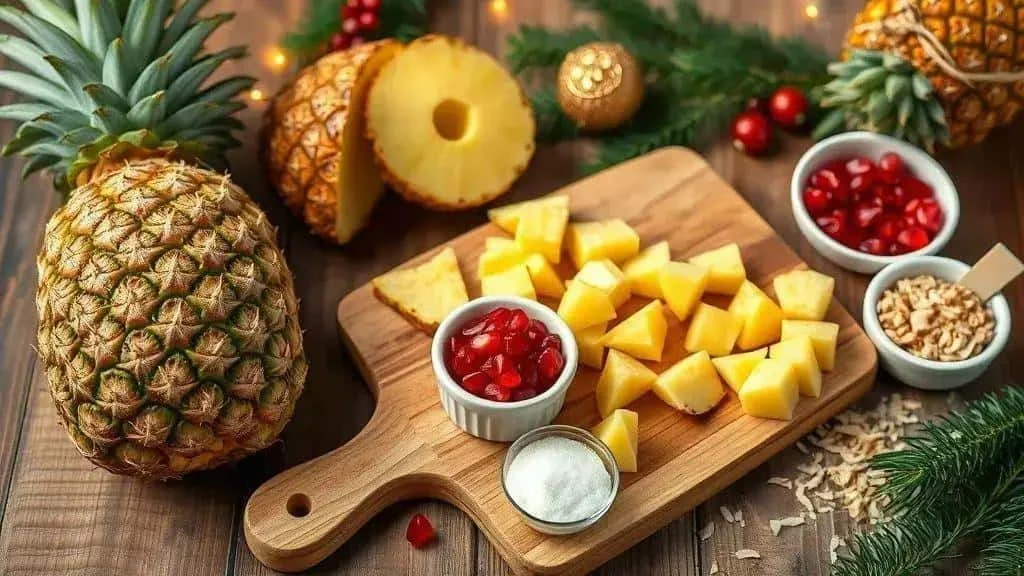
Pineapple provides the sweet-sharp flavour in this Christmas pineapple cream. It is a tropical alternative to richer baked Christmas puddings.
A few useful notes
- The fruit: pineapple gives the dessert its distinctive aroma; using good-quality ripe fruit matters more than elaborate decoration.
- The festive look: red fruit, pale cream and a little green mint provide the Christmas colour scheme.
- The name: Papai Noel is the Brazilian Portuguese name for Father Christmas. Here, it is a playful name for the decorated dessert rather than a claim to one fixed historical recipe.
- A Brazilian influence: chilled tropical fruit desserts suit Brazil’s summer Christmas and also offer a refreshing contrast on a British winter menu.
- Fresh or tinned: fresh pineapple varies in sweetness and texture; tinned fruit is convenient and usually softer. Drain it well and compare prepared weights, not tin sizes.
- Keep health claims modest: this is a sweet cream dessert, not a digestive treatment or a way to offset a heavy meal.
Practical fruit tips
- Choosing pineapple: look for a pleasant fruity smell and firm fruit without mould, leaking juice or badly softened areas.
- Cutting it: remove the top and base, cut away the skin and eyes, then remove the tough core before weighing and chopping the flesh.
- Balancing flavour: use ripe fruit and taste the cooled base. If very sharp, a little extra condensed milk sweetens it, but does not actually remove its acidity.
- Adding colour: combine yellow pineapple with red fruit for a simple festive garnish.
- Adding crunch: a small amount of toasted coconut or biscuit crumbs gives contrast without overwhelming the cream.
Storage, yield and ingredient swaps
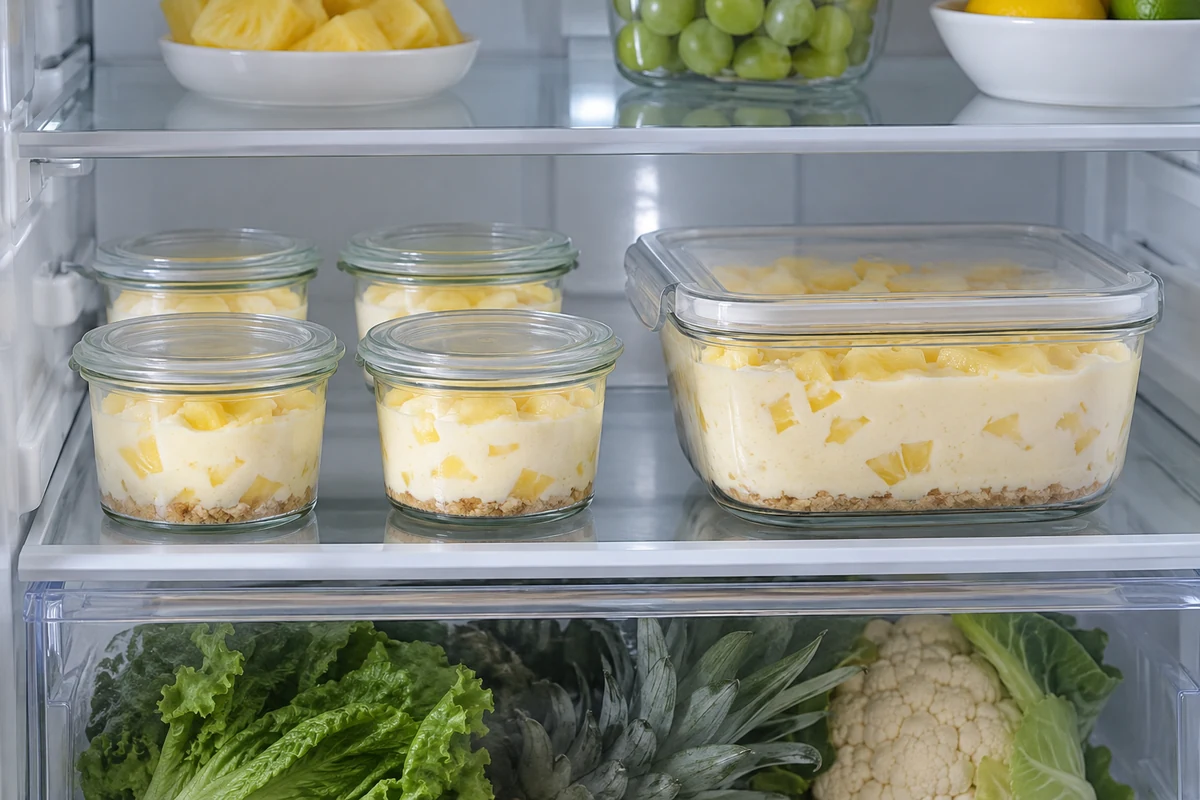
Proper storage keeps your Christmas pineapple cream cold and helps preserve its texture. Allow cooling and chilling time before planning when to serve it.
Storage
- Fridge: store covered at 5°C or below and use within 48 hours of preparation, or sooner if an ingredient’s instructions require it. Adding toppings later does not restart that clock.
- Freezer: the fresh dessert has the best texture. You may freeze a small trial portion of the base without the folded-in whipped cream for up to a month for quality, but cornflour and dairy mixtures can separate after thawing.
- Covering: use clean, food-safe lidded containers. If using food wrap against the surface, make sure it is suitable for the food and temperature.
- Portioning: small containers cool and thaw more evenly and help avoid taking out more than you need.
Yield
Expect roughly 1.3–1.5 kg of dessert before optional toppings, depending on evaporation and products used. Whipping affects volume, so weigh or measure your finished batch rather than relying on a fixed litre yield:
- About 8 generous portions, depending on glass size;
- Around 10–12 smaller portions when served alongside other Christmas desserts.
Thawing and finishing
- Thaw in the fridge: allow enough time for the portion to thaw fully, usually overnight rather than assuming every container will thaw within 6 hours.
- Check the texture: gently stir the thawed base; some liquid separation is possible.
- Be realistic about recovery: brief mixing may smooth the base, but it cannot always restore a split or watery mixture. Do not use freezing as a way to extend the life of dessert already kept too long.
- Finish with fresh whipped cream: fold it into the cold, fully thawed base and keep refrigerated. Use within 24 hours of fully defrosting.
- Serve cold: take out only what you need and return the remaining dessert promptly to the fridge.
Useful substitution notes
- Condensed milk, 395–397 g – use a similar amount of a suitable plant-based product. A short mixture of coconut milk and sugar is not guaranteed to yield an equivalent tin without a complete recipe.
- Base cream, 200 ml – thick coconut cream or a suitable plant-based cream can be used, with some change in flavour and texture.
- Cream for whipping, 150 ml before whipping – use a product intended to whip. Ready-whipped topping and aquafaba do not necessarily give the same volume, fat content or stability.
- Cornflour, 15 g – use the measured amount in the cooked base. Rice flour and arrowroot behave differently, so they need their own tested proportions and cooking method.
- Gelatine and agar – neither is required in this soft dessert. Do not treat 10 g agar as equivalent to a sachet of gelatine; strength and setting method differ.
- Coconut topping, 30–50 g – use a modest amount of chopped nuts or flaked almonds instead, if appropriate for guests’ allergies and ages.
Reducing waste
- Portion before chilling: individual servings make it easier to use only what is needed.
- Label clearly: write the preparation date, variation and relevant allergens on containers; colour alone is not a reliable way to identify dietary suitability.
- Using leftovers: a safely stored portion can be layered with biscuit crumbs for another serving, but it remains subject to the original 48-hour limit or the 24-hour limit after thawing.
A refreshing Christmas dessert
This Christmas pineapple cream is a colourful, spoonable pudding with a Brazilian festive influence. Select suitable products if making a lactose-free or vegan variation, rather than assuming every cream substitute behaves alike.
Keep it refrigerated and add fruit and crunchy garnishes shortly before serving. A small scattering of pomegranate seeds or a mint leaf can finish the dessert neatly.
If you make it, share your photos and explore the I Love Christmas blog for more seasonal recipes and ideas.
Thank you for reading. Follow our social channels and come back for more Christmas inspiration.
Christmas pineapple cream: frequently asked questions
How long does pineapple cream keep in the fridge?
Keep it covered at 5°C or below and use within 48 hours of preparation, or sooner if an ingredient’s instructions require it. Garnishing later does not extend the storage time.
Can I freeze pineapple cream?
It is best fresh. If needed, freeze a trial portion of the base without folded-in whipped cream for up to a month for quality. Texture may separate. Thaw fully in the fridge and use within 24 hours.
How can I make it vegan?
Use plant-based condensed milk, coconut or plant-based cream for the base, and a plant-based cream suitable for whipping. Keep the cornflour method; no gelatine or agar is needed.
Can I make it less sweet?
Choose pineapple in juice rather than syrup and add no extra sugar. Reducing condensed milk also reduces body, so try a small batch first. Lemon zest adds aroma but does not reduce the amount of sugar.
Can I assemble the glasses in advance?
Yes. Portion them up to 8 hours ahead and keep refrigerated within the overall storage limit. Add coconut, biscuit crumbs or other crunchy toppings just before serving.
How can I thicken it without animal gelatine?
The main recipe uses 15 g cornflour cooked in the pineapple base, then folds in whipped cream once cold. It is designed to remain spoonable. For a firm moulded dessert, use a separately formulated recipe rather than adding an arbitrary quantity of agar.