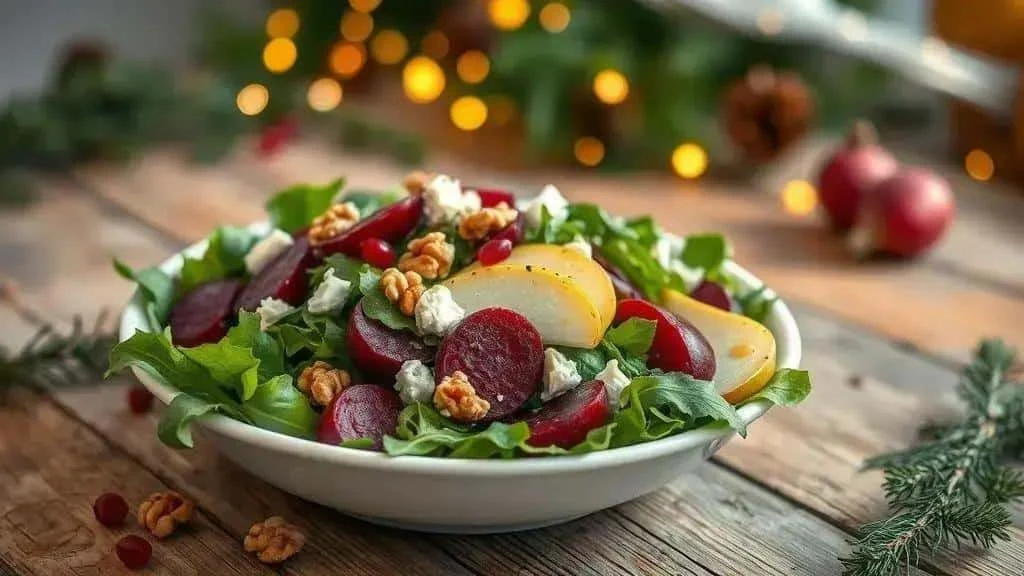
This festive Christmas salad combines mixed leaves, cooked beetroot, pears or apples, pomegranate seeds, toasted nuts and cheese. A balsamic or citrus dressing brings the ingredients together. Prepare the components ahead, then assemble just before serving; tofu and maple syrup make useful vegan substitutions.
A festive Christmas salad brings colour and contrasting textures to the table without a complicated last-minute preparation. This version combines earthy beetroot, crisp fruit and a tangy dressing.
Ingredients for the festive Christmas salad
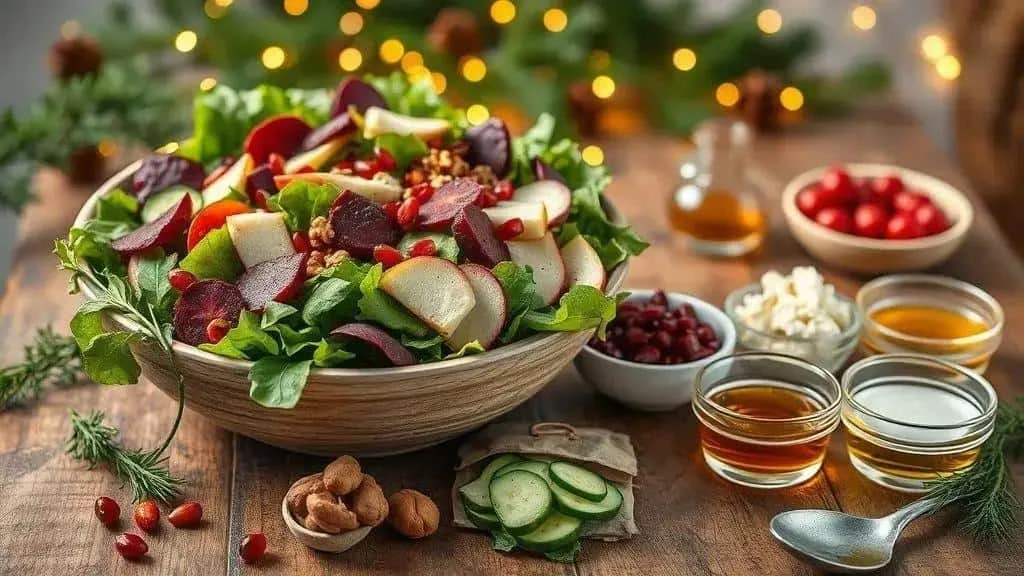
For this festive Christmas salad, gather the ingredients below. Where cups are used, measure by volume with a 240 ml cup; do not treat this as an equivalent weight in grams.
- 200 g mixed salad leaves – rocket, lettuce and watercress, or baby spinach if preferred.
- 2 medium beetroot – cooked or roasted, cooled and cut into cubes or slices.
- 2 firm pears – thinly sliced, or use 2 crisp apples such as Fuji.
- 1 cup pomegranate seeds – for colour and juicy texture. Fresh cranberries are much tarter and are not a like-for-like substitute.
- 60 g toasted walnuts or pecans – roughly chopped; toasted almonds are another option.
- 100 g goat’s cheese or feta – crumbled. Choose a cheese suitable for your guests’ dietary needs; ricotta salata is another option.
- 10–12 cherry tomatoes – halved.
- ½ cucumber – thinly sliced, with the watery seed core removed if preferred.
- ¼ red onion – very thinly sliced.
- ⅓ cup dried cranberries – optional, for extra sweetness.
- 100 g cooked, peeled chestnuts – optional, roughly broken into pieces for an additional festive ingredient.
- Salt and black pepper – to taste.
Dressing ingredients
Mix the following dressing, adding only as much as the leaves need:
- 4 tbsp extra virgin olive oil.
- 2 tbsp balsamic vinegar – or lemon juice for a sharper alternative.
- 1 tbsp honey – or maple syrup for a vegan dressing; use less if preferred.
- 1 tsp Dijon mustard – optional, to help bring the dressing together.
- Salt and pepper – to taste.
Easy substitutions
Practical swaps: For a vegan salad, use seasoned ready-to-eat tofu instead of cheese and maple syrup instead of honey. For a nut-free version, omit all nuts and chestnuts and use suitable toasted pumpkin seeds, checking labels and cross-contamination risks. Plain ready-cooked beetroot saves time; drained pickled beetroot works too, but changes the flavour.
How to make the festive Christmas salad
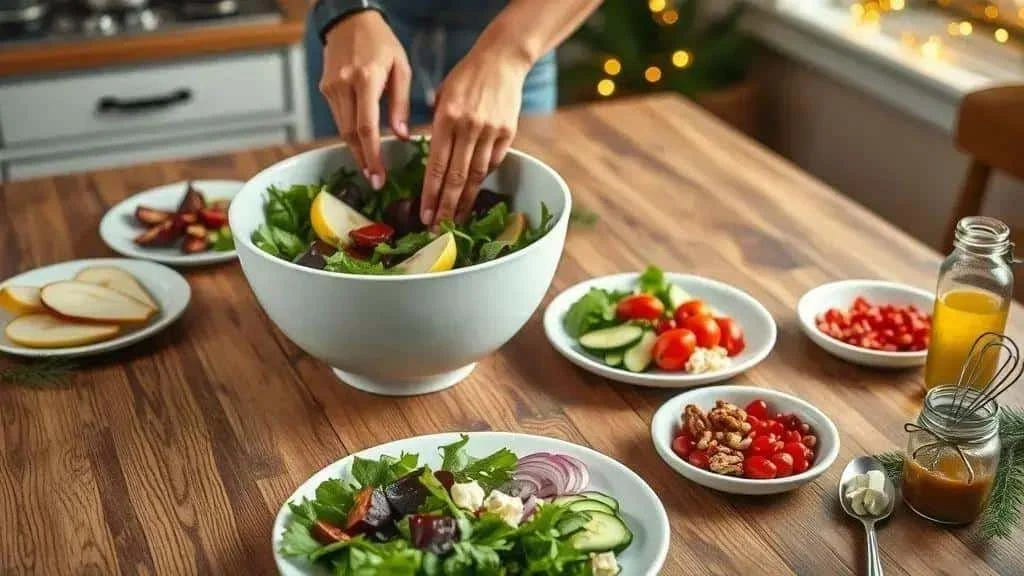
- Cook the beetroot: Wash the two beetroot, wrap in foil and roast at 200°C, or 180°C fan, until tender when pierced. Start checking after 35–45 minutes, allowing longer for large ones. Alternatively, simmer until tender, starting checks after 30–40 minutes. Cool promptly, peel and slice or dice.
- Toast the nuts: Spread the 60 g walnuts or pecans on a tray and toast at 180°C, or 160°C fan, for roughly 5–8 minutes, checking frequently. Cool and roughly chop.
- Prepare fruit and vegetables: Thinly slice the pears shortly before assembly; a few drops of lemon juice can limit browning. Halve the tomatoes and thinly slice the cucumber and red onion.
- Prepare the leaves: Wash the 200 g leaves if required by the pack, dry thoroughly and tear larger leaves into manageable pieces.
- Whisk the dressing: Combine the 4 tbsp oil, 2 tbsp balsamic vinegar, 1 tbsp honey or maple syrup and optional 1 tsp Dijon mustard. Season lightly and whisk until blended. Taste and adjust the balance before dressing the salad.
- Assemble: Toss the dry leaves gently with 2–3 tbsp dressing. Arrange the beetroot and pear over them, then add the tomatoes, cucumber and onion.
- Add the finishing ingredients: Scatter over the pomegranate seeds, optional dried cranberries and chestnuts, crumbled cheese and toasted nuts. Add more dressing only if needed and check the seasoning.
- Prepare ahead safely: Cool cooked beetroot and refrigerate within 2 hours, then use within 48 hours. Keep the dressing covered and chilled separately and use within 48 hours, or sooner if an ingredient requires it. Store cooled toasted nuts separately in an airtight container. Assemble shortly before serving.
Practical tips
- Dry the leaves well: Excess water dilutes the dressing and makes the salad soggy.
- Simple swaps: Ready-to-eat seasoned tofu replaces cheese in a vegan version; crisp apples can replace pears.
- Save time: Use plain ready-cooked beetroot, or drain pickled beetroot well and adjust the dressing’s acidity.
- Serve promptly: A wide, shallow platter shows off the ingredients and makes serving easy.
Christmas salad variations: vegan, less rich and extra festive
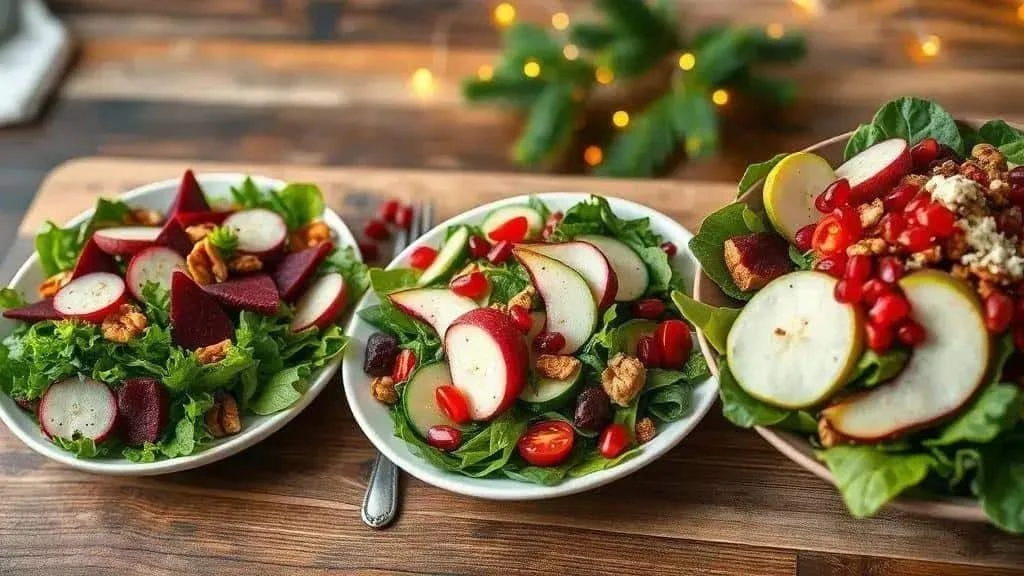
Try these three versions of the festive Christmas salad, choosing one set of changes to suit your guests.
Vegan version
Replace cheese and honey with suitable plant-based alternatives.
- Cheese alternative: Use 100 g seasoned firm tofu suitable for eating without further cooking, crumbled or cubed.
- Sweetener: Use 1 tbsp maple or agave syrup instead of honey, or less to taste.
- Crunch: Keep the 60 g toasted walnuts or pecans, or use suitable pumpkin seeds for a nut-free variation, omitting all other nuts and chestnuts too.
- Dressing: Whisk 4 tbsp olive oil, 2 tbsp balsamic vinegar, up to 1 tbsp maple syrup and an optional 1 tsp Dijon mustard.
Less-rich version
Reduce the nuts, cheese and oil while keeping plenty of leaves and vegetables. The nutritional result depends on the ingredients and portion size.
- Leaves: Keep the 200 g mixed leaves, choosing the varieties you enjoy.
- Fruit: Use one sliced crisp apple instead of two pears for a smaller amount of fruit; apples are not automatically a lower-sugar choice in equal portions.
- Nuts: Reduce to 30 g lightly toasted walnuts.
- Cheese: Use 50 g of your chosen cheese, a suitable reduced-fat alternative, or omit it.
- Dressing: Mix 2 tbsp olive oil with 2 tbsp cider vinegar, adding lemon juice to taste, plus herbs and pepper. Add gradually rather than pouring it all on.
Extra-festive version
Emphasise colour and texture with fruit, creamy cheese and a few sweetened nuts.
- Fruit: Use the two sliced pears, 1 cup pomegranate seeds and optional ⅓ cup dried cranberries.
- Cheese: Keep the 100 g crumbled goat’s cheese or feta.
- Sweetened nuts: Toss the toasted walnuts or pecans with up to 1 tbsp honey or maple syrup and a small pinch of salt, then cool before adding.
- Finishing touches: Arrange on a shallow platter with a few larger leaves underneath and finish with washed microgreens or lemon zest.
Tips for all three versions
- Temperature: Cool cooked beetroot and toasted nuts before adding them so they do not wilt the leaves. Keep perishable prepared ingredients chilled until assembly.
- Assembly: Add dressing just before serving to preserve the leaves’ texture.
- Substitutions: Drained ready-cooked or pickled beetroot saves time. A small amount of dried fruit gives a different texture if fresh fruit is unavailable.
Dressings for the Christmas salad
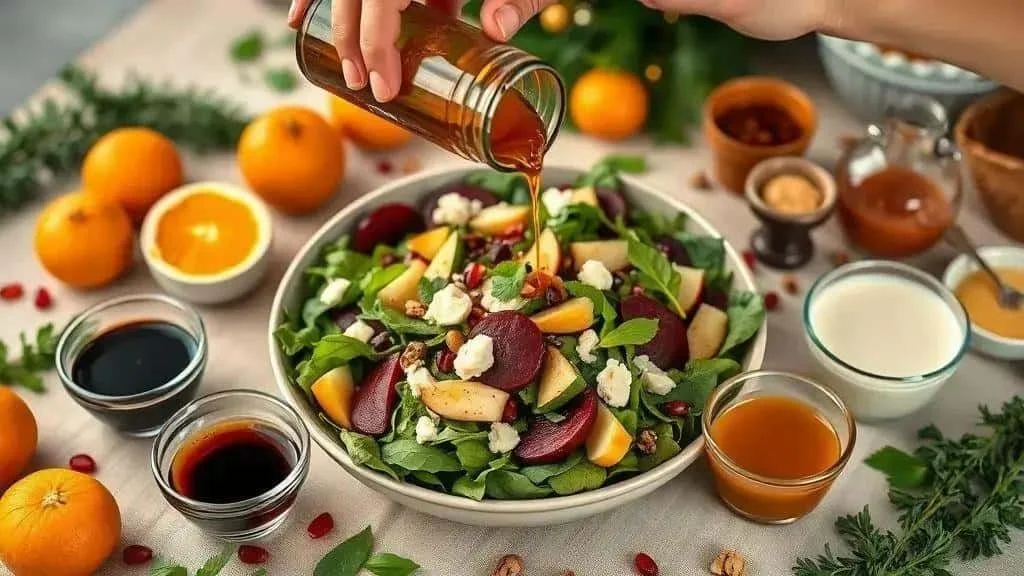
Choose one dressing for the festive Christmas salad. These are alternatives, not a list of sauces to use together.
Classic balsamic vinaigrette
A gently sweet dressing that complements beetroot and pears. This version uses less honey than the main recipe; adjust to taste.
- 4 tbsp extra virgin olive oil
- 2 tbsp balsamic vinegar
- 1 tsp honey, or maple syrup to taste for a vegan version
- 1 tsp Dijon mustard, optional
- Salt and black pepper, to taste
- Mix the vinegar, honey or syrup and mustard in a small bowl.
- Add the oil gradually, whisking with a fork.
- Season and taste before adding to the salad.
Orange vinaigrette
A fresh citrus alternative for pears and delicate leaves.
- 3 tbsp fresh orange juice
- 2 tbsp olive oil
- 1 tsp cider vinegar
- 1 tsp honey, or maple syrup
- Finely grated zest of ½ orange
- Salt and pepper, to taste
- Combine the juice, vinegar and honey or syrup.
- Whisk in the oil gradually.
- Finish with orange zest and seasoning.
Yoghurt and herb dressing
A creamy alternative with a tangy flavour; choose unsweetened yoghurt.
- 150 g low-fat natural yoghurt, or a suitable plain plant-based yoghurt
- 1 tbsp olive oil
- 1 tbsp lemon juice
- 1 tbsp chopped fresh herbs, such as parsley, chives or mint
- Salt and pepper, to taste
- Mix all the ingredients in a bowl until smooth.
- Taste and adjust the lemon, herbs or seasoning. Keep chilled until serving.
Honey and mustard dressing
A stronger-flavoured dressing to pair with nuts and cheese.
- 2 tbsp Dijon mustard
- 1 tbsp honey, or maple syrup
- 3 tbsp olive oil
- 1 tbsp cider vinegar
- Salt and pepper, to taste
- Combine the mustard and honey or syrup.
- Add the vinegar, then whisk in the oil gradually.
- Adjust the seasoning and refrigerate until needed.
Balsamic reduction for finishing
Use a little as a finishing drizzle rather than a full dressing.
- 1 cup balsamic vinegar
- 1 tbsp sugar or honey, optional
- Heat the vinegar in a small saucepan over a low heat, adding the optional sweetener if using.
- Simmer until reduced by about half, stirring occasionally. Stop while still pourable, as it thickens further when cool.
- Cool before drizzling a small amount over the salad.
Dressing tips
- Balance: Combine acidity from vinegar or citrus with oil and, if wanted, a little sweetness.
- Taste first: Adjust the dressing before it goes onto the leaves.
- Use sparingly: Start with a small amount and add more only as needed.
- Texture: Mustard helps an oil-and-vinegar dressing combine; yoghurt makes a different, creamy dressing.
Assembling and serving the Christmas salad
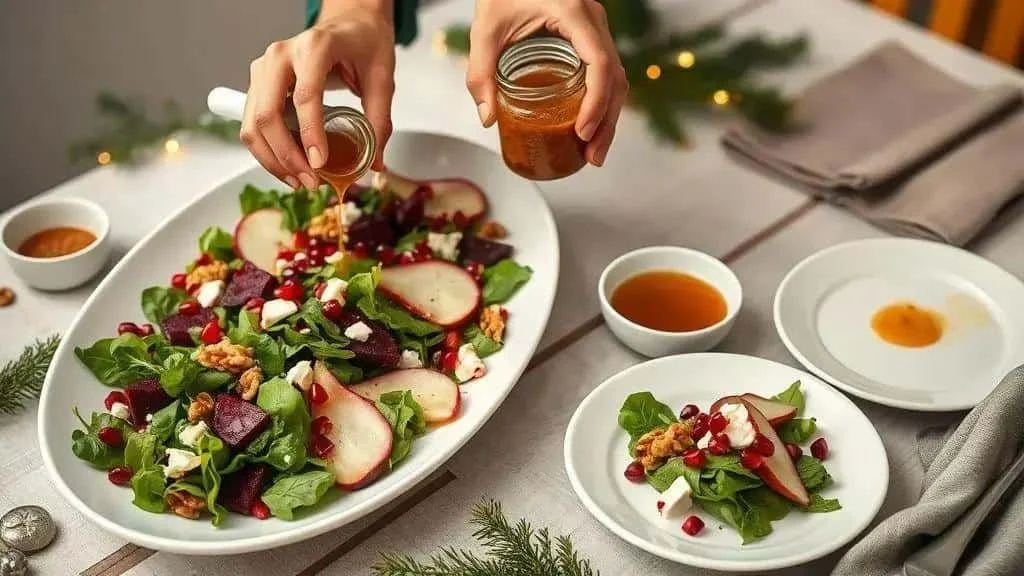
For an attractive festive Christmas salad, organise the components before dressing the leaves. A shallow platter shows the colours, while individual plates make portioning easier.
Assembling a platter
- Start with the leaves: Spread the 200 g dry salad leaves across a wide platter.
- Add colourful layers: Arrange beetroot and pear slices over the leaves, then add the tomatoes, cucumber and onion.
- Scatter over fruit: Add the pomegranate seeds and optional dried cranberries.
- Add crunch: Scatter over the 60 g toasted nuts, keeping some larger pieces if preferred.
- Add cheese: Distribute the 100 g crumbled cheese, or the chosen alternative, over the salad.
- Dress at serving time: Drizzle lightly or offer the dressing in a small jug alongside.
Planning portions
- As a side with several dishes: Allow roughly 100–150 g of assembled salad per adult.
- For a buffet: Around 80–120 g per person is a starting guide, depending on the other food available.
- For children: Serve according to age and appetite. Whole nuts are unsuitable for young children; omit them or prepare an age-appropriate alternative.
- As an individual starter: Roughly 70–100 g of finished salad per plate is a useful guide, not a nutritional prescription.
Assembling individual portions
- Divide the leaves: Share the measured leaves between the plates rather than assuming each small starter needs 50–70 g of leaves alone.
- Add beetroot and pear: Arrange a few slices on each plate, sharing the prepared quantity evenly.
- Add the vegetables and seeds: Divide the tomatoes, cucumber, onion and pomegranate between portions.
- Finish with nuts and cheese: Share out the measured quantities so smaller starter portions stay balanced.
- Add dressing: Spoon over a little dressing or offer it separately.
Presentation details
- Contrast: Pale serving dishes make the beetroot, leaves and pomegranate stand out.
- Volume: Arrange leaves loosely rather than pressing them down.
- Garnish: Add a little lemon zest, washed microgreens or a few cheese shavings if liked.
- Keep it fresh: Use cooled beetroot and nuts, and keep cheese, tofu, prepared vegetables and leaves chilled until assembly.
- Check a sample portion: Assemble one plate first if you want to balance the colours and quantities before serving everyone.
Make-ahead tips
- Prepare components: Cook and chill beetroot up to 48 hours ahead. Toast the nuts and store separately once cool.
- Assemble late: Combine delicate leaves, fruit and dressing shortly before serving.
- Transport chilled: Use an insulated bag with ice packs for perishable ingredients. Carry the dressing separately and assemble at the destination.
Storage, advance preparation and festive pairings
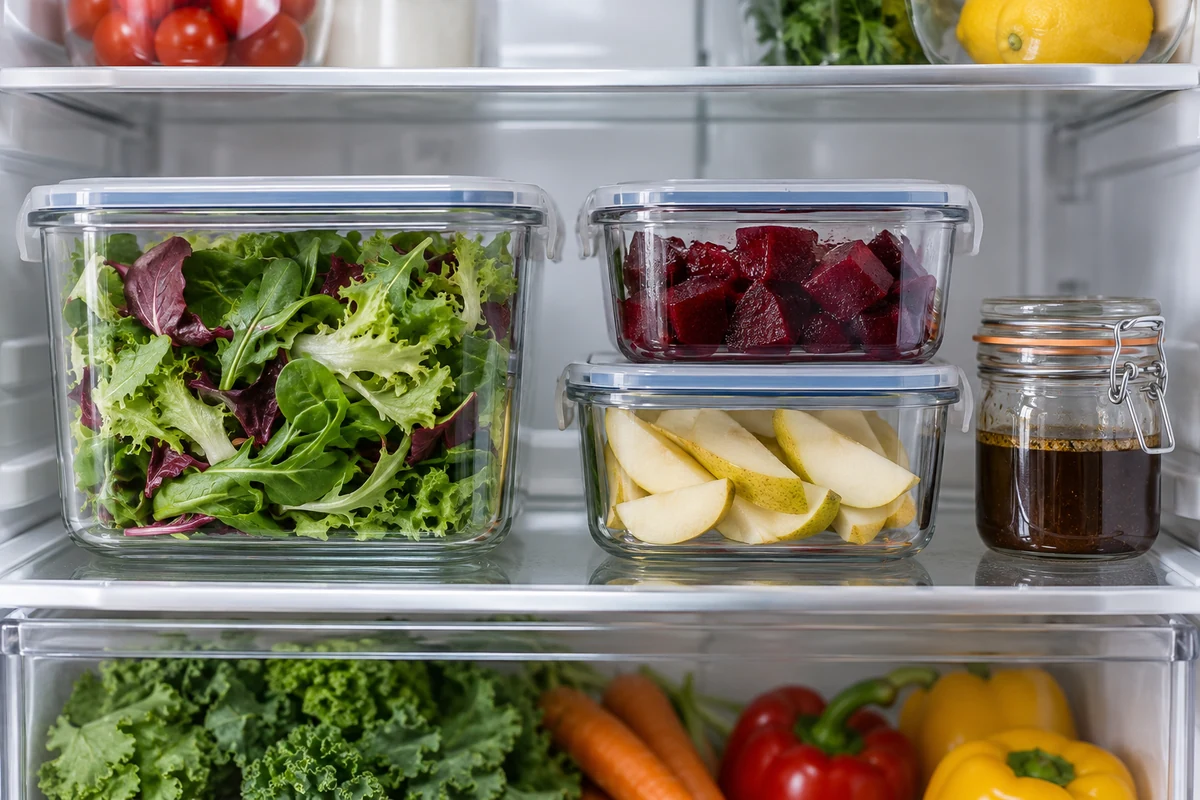
Keep the components of the festive Christmas salad separate until serving. This helps preserve texture as well as keeping perishable ingredients chilled.
Storing individual components
- Leaves: Wash if required, dry thoroughly and keep covered in the fridge. Prepare close to serving, ideally within 24 hours, and follow the pack’s date guidance.
- Cooked beetroot: Refrigerate within 2 hours and use within 48 hours. Slice pears shortly before serving rather than cooking them for this recipe.
- Nuts and chestnuts: Keep cooled toasted walnuts or pecans dry and airtight. Cooked chestnuts are a separate, perishable ingredient: follow their pack’s refrigeration and use-after-opening instructions.
- Cheese and tofu: Keep covered in the fridge and follow their use-by and after-opening instructions. Take out only what you need for assembly.
- Dressings: Keep covered and chilled separately and stir or shake before using. Use these homemade dressings within 48 hours, or sooner if any ingredient needs it.
Organising advance preparation
- A day or two ahead: Cook and promptly chill the beetroot, toast the nuts and prepare your chosen dressing within the storage limits above.
- Pack separately: Keep each ingredient in its own suitable container.
- Finish shortly before serving: Slice the fruit and combine the salad and dressing about 10–15 minutes before eating, or at the table.
- At another venue: Keep perishable ingredients cold during transport and refrigerate on arrival; assemble there with the dressing separate until needed.
What to serve alongside
- Roast turkey or chicken: Tangy vinaigrette and juicy pomegranate provide a contrast to the roast.
- Roast pork or cured meats: Pears and toasted nuts offer contrasting flavours and textures.
- Rice and farofa: The salad adds colour alongside these familiar Brazilian festive sides.
- A menu with a sweet fruit dessert: Use less honey in the dressing if you want the savoury courses less sweet.
Last-minute practical tips
- Slightly limp leaves: A brief soak in cold water followed by thorough drying may restore some crispness. Discard spoiled or slimy leaves rather than trying to revive them.
- Quick swaps: Drained ready-cooked beetroot and crisp apples are useful alternatives.
- Dressing quantity: Offer it separately so guests can add their preferred amount.
- Taste and appearance: Try a small assembled portion before dressing the whole platter.
Ready for the festive table
This Christmas salad brings together crisp leaves, soft beetroot, juicy fruit and toasted nuts. Adapt it to your guests, prepare the sturdy components ahead and dress shortly before serving.
Follow our social channels and explore I Love Christmas for more seasonal recipes and ideas.
Share your favourite combination and return for more ways to organise a festive meal.
Festive Christmas salad: frequently asked questions
Can I prepare the salad ahead?
Yes. Cook and promptly refrigerate the beetroot, toast the nuts and make the dressing up to 48 hours ahead, respecting any shorter ingredient storage instructions. Keep components separate and chilled as needed, then slice the pears and assemble just before serving.
How should I store the beetroot, nuts and cheese?
Refrigerate cooked beetroot within 2 hours and use within 48 hours. Store cooled toasted walnuts or pecans dry and airtight. Keep cheese, tofu and cooked chestnuts chilled according to their pack instructions, taking them out for assembly only when needed.
How can I make a vegan version?
Use suitable seasoned ready-to-eat tofu or avocado instead of cheese and maple syrup instead of honey. If choosing the yoghurt dressing, use a plain unsweetened plant-based yoghurt. Keep the pomegranate and toasted nuts for colour and texture.
Which dressing suits pears, beetroot and pomegranate?
Balsamic vinaigrette pairs well with sweet fruit and earthy beetroot. Orange vinaigrette offers a citrus alternative. Taste and adjust the acidity and sweetness, and add dressing gradually so the leaves stay crisp.
How much salad should I allow for each guest?
As a guide, allow about 100–150 g of assembled salad per adult when it is a side, or 80–120 g at a buffet with several dishes. Small starters may need 70–100 g. Adjust for appetite and age; omit whole nuts for young children.
Sources and Further Reading
- Food Standards Agency: chilling, freezing and defrosting safely
- NHS: foods to avoid giving babies and young children, including whole nuts