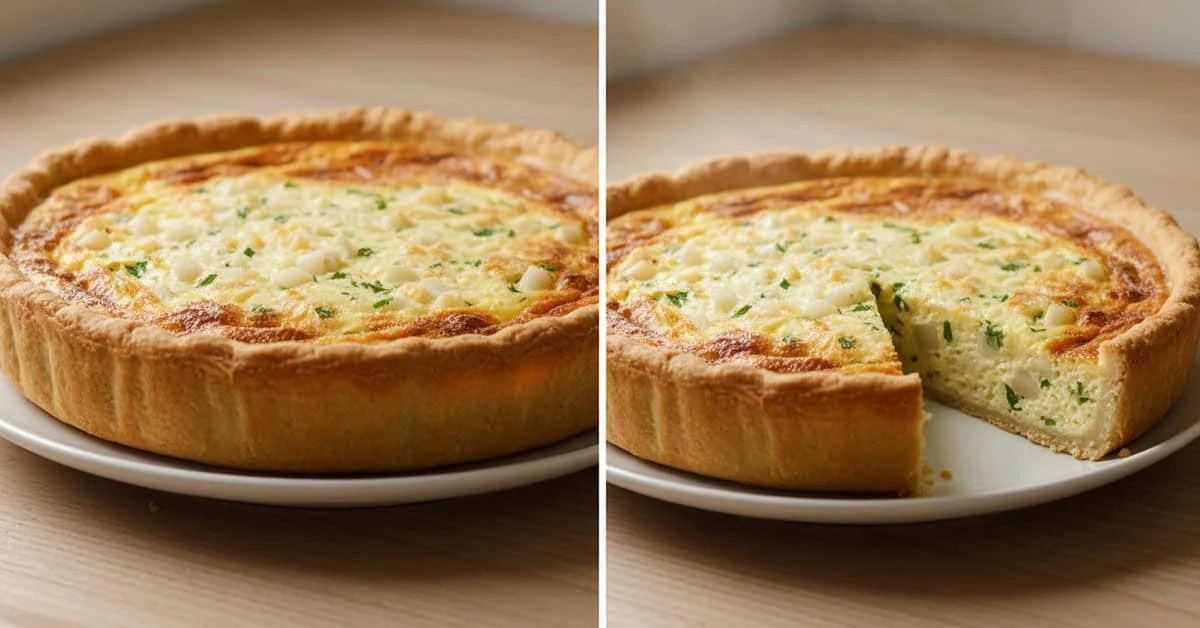
Hearts of palm and cheese quiche combines shortcrust pastry with well-drained hearts of palm, eggs, cream and grated cheese. A little nutmeg complements the filling. Bake until properly cooked and set, serve with salad, and cool and refrigerate leftovers promptly for use within 48 hours.
Hearts of palm and cheese quiche is a creamy, savoury option for lunch, brunch or a festive buffet. These steps explain how to prepare the pastry, keep moisture under control and make a filling that slices neatly.
Ingredients for hearts of palm and cheese quiche
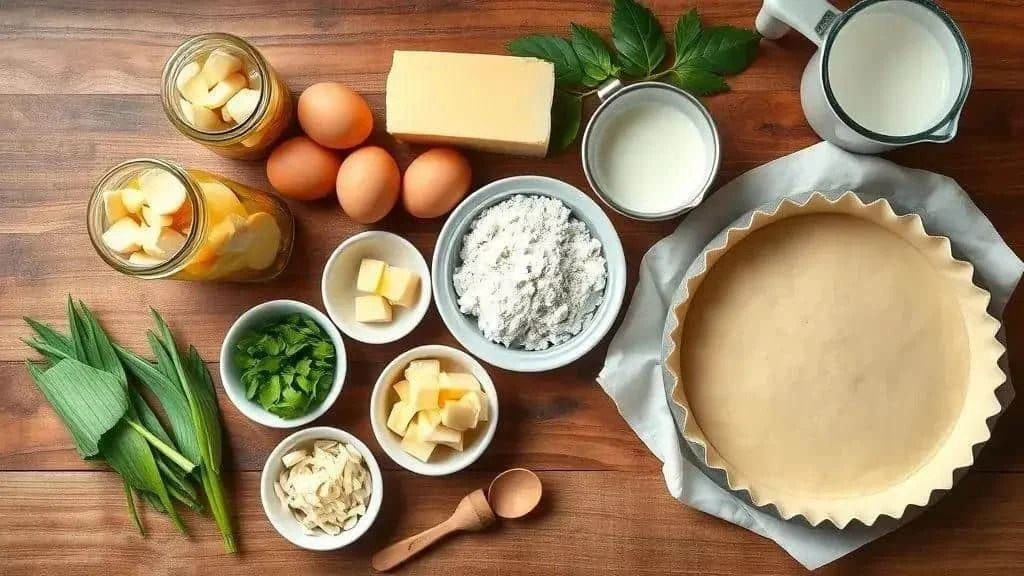
For this hearts of palm and cheese quiche, gather the following ingredients:
- 200 g plain flour – plus a little for rolling. For a gluten-free version, use an appropriate tested pastry recipe or ready-made gluten-free shortcrust rather than assuming a straight flour swap will work.
- 100 g cold butter – cubed. A suitable firm baking block can replace it; check ingredients if avoiding milk.
- 1 egg – for the pastry.
- Ice-cold water, only as needed – have 40–60 ml available, but add a teaspoon at a time after the egg and stop as soon as the dough comes together. You may need much less.
- A pinch of salt – for the pastry.
- 200–300 g drained canned or jarred hearts of palm – sliced. Use a commercially prepared product and follow its label instructions.
- 200–250 g grated cheese in total – mozzarella, a mild melting cheese or a mixture. If using Parmesan for extra flavour, include up to 50 g within this total. Choose vegetarian-labelled cheese if required.
- 3 large eggs – for the filling.
- 200–250 ml cream – or a mixture such as 150 ml cream and 100 ml whole milk. Using all milk gives a different, less rich texture.
- 1 small onion, optional – finely chopped, with 1 tbsp oil or butter for softening it.
- Salt, black pepper and ground nutmeg – to taste; season cautiously because the cheese and hearts of palm may already be salty.
- 1–2 tbsp chopped parsley – for the filling or to finish.
- A little butter or oil for greasing the tin
Substitutions and practical notes
Drain the hearts of palm: drain thoroughly and pat gently with kitchen paper so excess brine does not loosen the filling.
Cheese choices: mild melting cheeses give a softer flavour; a little Parmesan-style cheese adds more intensity. Vegetarian, lactose-free and dairy-free are different requirements, so check labels rather than treating them as interchangeable.
Pastry options: replacing up to about 30% of the plain flour with wholemeal gives a more rustic pastry and may change its water needs. For gluten-free pastry, follow a recipe designed for your flour blend.
Cream or milk: cream gives a richer filling. A cream-and-milk mixture is an alternative, keeping the total liquid within the stated quantity.
How to make hearts of palm and cheese quiche
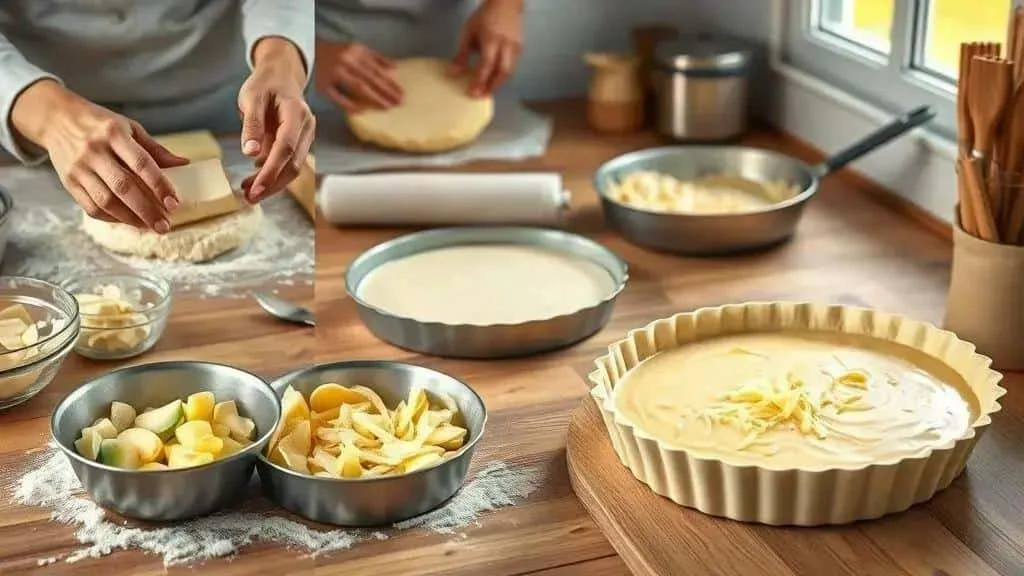
Follow these steps for hearts of palm and cheese quiche, checking the pastry and filling as they cook rather than relying on time alone.
- Make the pastry: mix flour and salt, add cold butter cubes and rub in with your fingertips until the mixture resembles breadcrumbs.
- Bring it together: mix in 1 beaten egg, then add cold water a little at a time only if needed. Form a disc without kneading, wrap and refrigerate for about 30 minutes.
- Preheat the oven: set to 180°C conventional/160°C fan while the pastry rests.
- Line the tin: roll on a lightly floured surface and line a 24–26 cm quiche tin, fitting the pastry gently into the corners without stretching. Trim as needed and lightly prick the base with a fork.
- Blind-bake: line with baking paper and baking beans. Bake for about 10–12 minutes initially, or until the sides have set, then carefully remove the paper and beans. Bake for another 3–5 minutes or longer as needed until the base looks dry and begins to colour. Thickness and tin material affect the timing.
- Prepare the vegetables: if using onion, soften it in the listed tablespoon of oil or butter. Add drained chopped hearts of palm and cook briefly, allowing any excess moisture to evaporate. Set aside to cool before adding to the egg mixture.
- Mix the filling: whisk 3 eggs with the cream or measured cream-and-milk mixture. Stir in the grated cheese, a little seasoning, parsley if using in the filling, and the cooled hearts of palm mixture. Do not taste after adding raw eggs.
- Fill the pastry case: pour the combined filling into the blind-baked shell, spreading the solids evenly. Stop below the rim; tin depths vary, so do not force in excess filling.
- Bake: bake at 180°C conventional/160°C fan for around 30–40 minutes, allowing longer if needed, until the filling is set and cooked through. It should not have a liquid centre. A clean food thermometer reading of 75°C for 30 seconds is one suitable check; touching the surface is not a reliable safety test.
- Rest and serve: allow about 10–15 minutes to settle before carefully removing from the tin and slicing.
Practical tips
Avoid a watery filling: drain the hearts of palm well and pat dry. Whisk the egg mixture just until combined rather than adding lots of air.
Simple variations: replace up to 50 g of the cheese with Parmesan-style cheese, or replace part of the cream with milk while keeping the stated total quantities.
Storage: cool promptly and refrigerate within 2 hours, then use within 48 hours. Reheat only once until steaming hot throughout. The oven keeps pastry crisper than a microwave, but check the centre rather than relying on a short fixed time.
Hearts of palm and cheese quiche variations
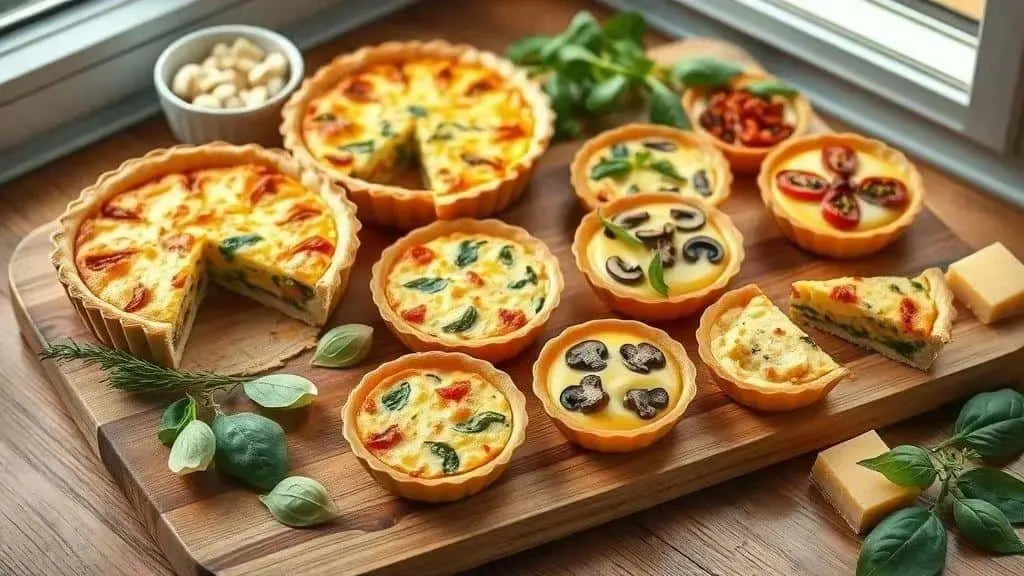
These ideas change the flavour and texture. Replace some existing filling ingredients where needed so the tin is not overfilled.
Spinach and ricotta quiche
Use 150 g cooked, well-drained spinach and 150 g ricotta in place of some hearts of palm and cheese. Squeeze the spinach thoroughly. Cottage cheese or tofu gives a different texture and may need extra draining; do not assume an identical result.
Sun-dried tomato and basil quiche
Add 50 g chopped sun-dried tomatoes and a handful of chopped basil. Reduce the cheese to about 150 g if preferred. Drain oil-packed tomatoes; rehydrate dry-packed tomatoes according to their instructions and drain well.
Mushroom and thyme quiche
Cook 150–200 g sliced mushrooms with a little oil and garlic until their liquid has evaporated, then cool. Use in place of some hearts of palm and add about 1 tsp fresh thyme. For more savoury flavour, replace part of the cheese with Parmesan-style cheese or add a little soy sauce, checking allergens and salt.
Bacon and caramelised onion
Add 100 g thoroughly cooked diced bacon and a cooked caramelised onion, reducing other solids as necessary. Drain excess fat. Smoked tofu is an alternative for a vegetarian version, with suitable cheese; turkey bacon is another flavour option rather than a guaranteed lower-fat substitute.
Vegan quiche variation
For a different filling, try blending 300 g silken tofu with 200 ml plant-based cooking cream, 2 tbsp nutritional yeast and 1 tbsp cornflour, plus vegan grated cheese. This is a separate variation whose firmness depends on the products used. Follow a tested vegan quiche method for baking, and use egg-free, dairy-free pastry too; changing the filling alone does not make this recipe vegan.
Mini quiches
Use individual tins around 8–10 cm across, dividing pastry and filling to fit. Smaller quiches may begin to set after 18–25 minutes at the stated temperature, but check that they are fully cooked. Cool promptly before freezing portions for up to about 1 month for quality, then thaw safely and reheat thoroughly.
Tips for all variations
- Control moisture: drain hearts of palm, squeeze spinach and cook moisture out of mushrooms before adding them.
- Balance cheeses: use smaller amounts of stronger cheeses and keep the overall quantity and tin capacity in mind.
- Season gently: black pepper, nutmeg and fresh herbs complement the creamy base.
Pastry, texture and seasoning tips
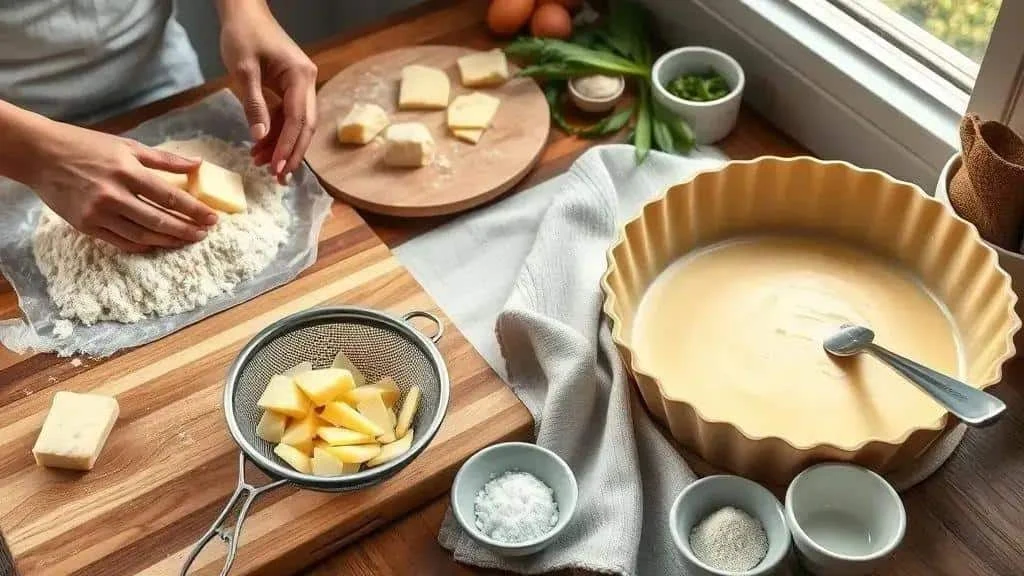
A few simple checks help the pastry bake properly and the filling set without becoming watery.
Making crisp pastry
Use cold butter and add water sparingly. Bring the dough together without kneading, then refrigerate for around 30 minutes before rolling. Resting and avoiding stretching help reduce shrinkage.
Rub cubed butter into the flour with your fingertips and stop before it becomes greasy. Work quickly when rolling. This is a shortcrust pastry rather than a laminated puff pastry.
Why blind-bake the base?
Blind-baking gives the pastry a head start before the wet filling is added. Use baking paper and beans until the sides hold their shape, then remove them and bake until the base is dry and beginning to colour. Adjust the suggested times to your tin and pastry thickness.
A creamy but properly set filling
For the 3 filling eggs, use 200–250 ml cream, or a measured mixture such as 150 ml cream and 100 ml milk. Drain the hearts of palm well rather than trying to compensate for extra liquid later.
If experimenting with a firmer custard, a little cornflour dispersed in some of the measured cold liquid can change the texture. Adding more cream produces a softer mixture and may affect cooking time; it is simpler to use the stated ratio for the first batch.
Seasoning without overwhelming the hearts of palm
Use salt cautiously because the cheese and brined hearts of palm may already supply plenty. Add pepper and a small pinch of nutmeg, with parsley or chives for freshness. Taste cooked vegetables before adding raw eggs, not the uncooked custard.
Quick fixes
- Watery filling: improve draining and blind-bake the base. Do not add extra liquid from the jar.
- Shrinking pastry: let the dough rest and fit it gently into the tin without pulling it taut.
- Liquid centre: return the quiche to the oven and check again, shielding the edges if needed. Resting cannot make an undercooked egg filling safe; confirm it is cooked before taking it out.
- More flavour: replace 30–50 g of the mild cheese with Parmesan-style cheese, or reserve a little of the listed cheese for the top.
Before baking: check that the pastry shell is prepared, the hearts of palm are drained, the filling is evenly mixed and the oven is preheated.
Storing and using leftovers
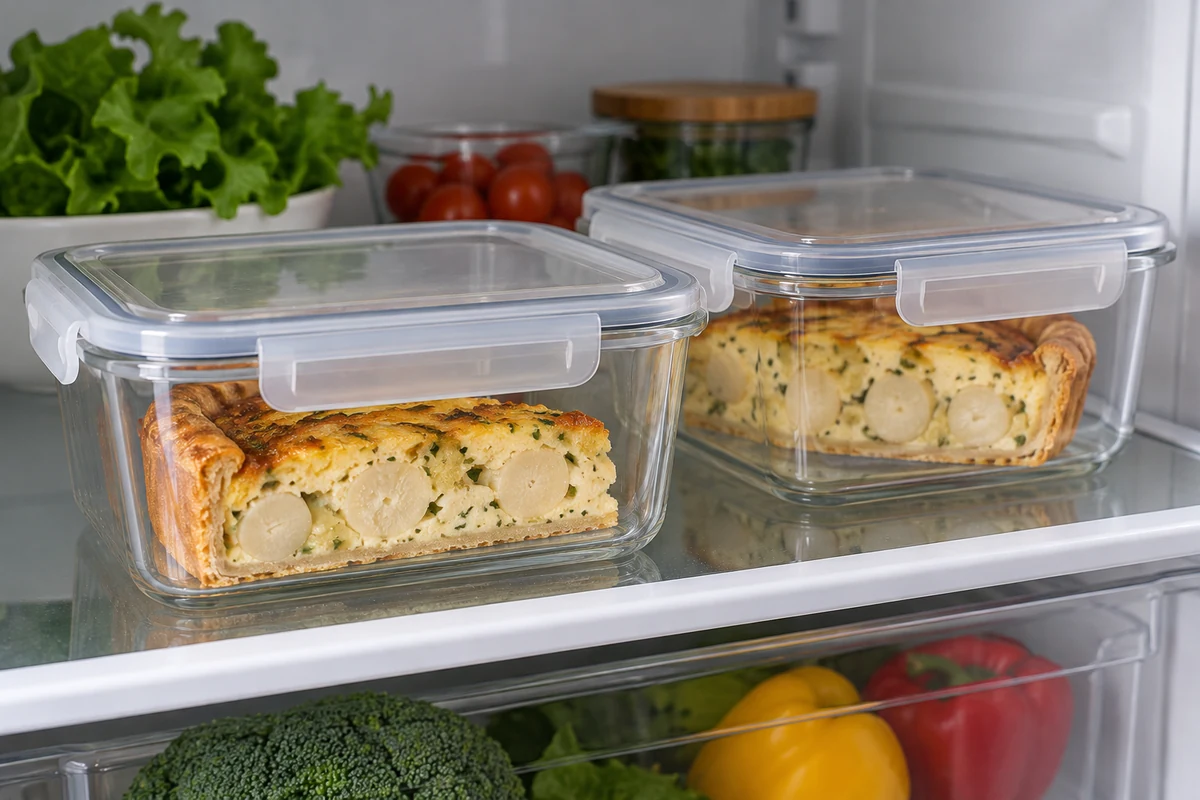
Plan to cool and store leftovers promptly, and keep track of whether they have already been reheated.
Fridge storage
- Timing: cool promptly and refrigerate within 2 hours of cooking, not two hours after an unlimited cooling period. Use within 48 hours.
- Packaging: divide into portions and store covered in suitable containers to prevent drying and contamination.
- Fridge temperature: keep at 5°C or below, away from raw meat or fish and according to your fridge’s storage guidance.
Freezing
- Prepare portions: cool cooked quiche promptly, wrap individual slices well or use freezer-safe containers, and freeze without leaving it out for hours.
- Quality guidance: plan to use within about 1 month for best texture. Label and date the portions.
- Thawing: thaw covered in the fridge until fully defrosted; the time depends on slice size. Use within 24 hours of fully defrosting.
Reheating methods
- Oven: place thawed slices in a preheated oven around 180°C conventional/160°C fan. Heat until steaming hot throughout, checking the centre. Reheat only once; thickness and starting temperature determine the time.
- Air fryer: follow the appliance guidance, leaving room for circulation and checking both the centre and pastry edges. A browned crust does not prove the filling is hot.
- Microwave: use a microwave-safe plate, follow standing-time guidance and check for cold spots. The pastry may soften. A fixed 60–90 seconds is not reliable for every portion.
- Frying pan: a thick slice can remain cold in the middle while its base browns. An oven or microwave is easier to control; whichever method is used, the centre must become steaming hot.
Ideas for using safely stored leftovers
- Small portions: cut the quiche into smaller pieces and heat thoroughly for a snack platter rather than breaking it up and treating it as fresh uncooked filling.
- Frittata-style variation: if adding safely stored quiche pieces to beaten eggs, cook the new egg mixture fully and ensure every piece heats through. This counts as the leftovers’ one reheating and does not extend their storage time.
- Sandwich or wrap: a thoroughly reheated slice can be served in bread with fresh leaves and a little dressing, then eaten promptly.
- With salad: serve warmed quiche pieces alongside a freshly prepared salad. Heat the pieces through rather than merely browning the outside.
- Savoury crêpe filling: small pieces may be used in a crêpe if heated thoroughly and served immediately. Avoid repeatedly cooling and reheating them in different dishes.
Food safety reminders
- Limit time out of the fridge: refrigerate cooked food within 2 hours. For a buffet, put out small portions and keep reserves chilled; discard food left out beyond the safe time rather than trying to rescue it by reheating.
- Avoid refreezing reheated portions: thaw only what you need and reheat once.
- Do not rely on smell: discard spoiled food, but remember that normal appearance and smell cannot prove food is safe after poor storage.
Pairing and presentation ideas
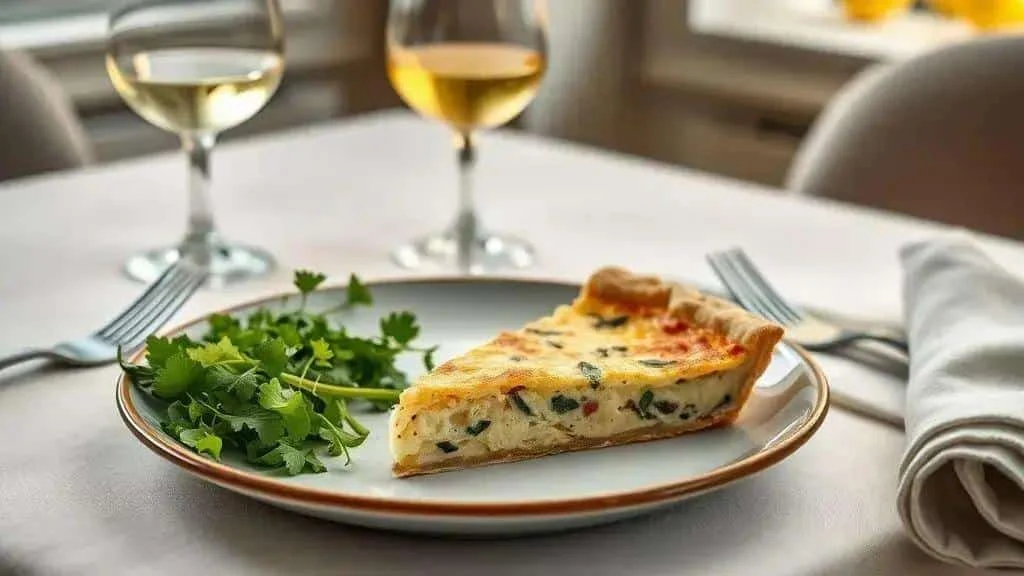
Serve hearts of palm and cheese quiche with simple accompaniments that contrast with its rich filling.
Drinks and side dishes
- White wine: Sauvignon Blanc or unoaked Chardonnay is an option for adults who drink alcohol.
- Sparkling rosé: another optional pairing with the cheese filling.
- Beer: a light beer or witbier can accompany an informal meal.
- Alcohol-free drinks: try herb lemonade, hibiscus iced tea or sparkling water with lemon.
- Sides: a citrus-dressed leaf salad, slow-roasted tomatoes or a small bowl of soup works well.
Serving temperature and portions
Serve after a brief rest from the oven, or serve safely chilled quiche soon after taking it from the fridge. Do not leave it at room temperature for a long period to change its texture.
- Individual portions: choose slice size according to appetite and side dishes. A small slice can suit a light lunch with a substantial salad.
- Starters or brunch: offer smaller slices or one or two mini quiches, depending on their size and the rest of the menu.
Plating the quiche
Keep it simple: place a slice on a plate with salad alongside and enough space to cut it comfortably.
- Use plain white or dark serving ware to make the filling stand out.
- Angle the slice slightly so the pastry base and filling are visible.
- Wipe any spills from the plate rim with clean kitchen paper before serving.
Garnishes and finishing touches
- Fresh herbs: parsley, chives or suitable washed microgreens add colour and flavour.
- A final seasoning: add a little grated cheese or black pepper if desired, remembering the filling is already rich.
- Contrasting flavours: a small portion of citrus relish or sun-dried tomatoes can accompany the creamy filling.
Utensils and serving details
- Cutlery: provide a fork and knife for slices, or suitable small plates for mini quiches.
- Serving: use a broad slice or spatula to lift portions without breaking the pastry.
- Resting: wait about 10–15 minutes after baking before unmoulding and cutting, once the filling has settled slightly.
Occasions and presentation variations
- Brunch or lunch: pair with salad and bread, adding other dishes according to appetite.
- Buffet or party: group mini quiches by flavour and label allergens clearly, including wheat, milk and egg in the standard version.
- Picnic: pack chilled slices in food-safe containers and carry them in a cool bag with ice packs. Keep cold until serving.
Hearts of palm and cheese quiche is a versatile choice for lunch, brunch or a snack, with a crumbly pastry shell and creamy filling.
Try a variation once you are familiar with the base recipe. Drain the vegetables carefully, check the filling is properly cooked and store leftovers promptly.
Thank you for reading. Visit the I Love Christmas blog for more recipes, seasonal ideas and practical cooking tips.
Let us know in the comments which version you tried and how you served it.
Hearts of palm and cheese quiche: frequently asked questions
How long can I keep the quiche in the fridge?
Cool promptly and refrigerate within 2 hours of cooking. Keep covered at 5°C or below and use within 48 hours. If reheating, do so only once until steaming hot throughout.
How do I avoid a watery filling?
Drain the hearts of palm well and pat dry. Blind-bake the pastry case and keep the egg-to-liquid ratio within the recipe’s quantities.
Can I replace the cream or eggs?
Part of the cream can be replaced with milk for a different texture. An egg-free or vegan filling needs an appropriate tested method, such as a tofu-based quiche; a fully vegan version also needs egg-free, dairy-free pastry and suitable cheese.
How do I make the pastry crisper?
Use cold butter, avoid overworking, chill the dough and blind-bake the shell until the base is dry before adding the filling. Keep excess vegetable moisture out of the custard.
Can I freeze the quiche?
Yes. Cool promptly, wrap portions well and freeze for up to about 1 month for quality. Thaw fully in the fridge, use within 24 hours of defrosting and reheat once until steaming hot throughout.
Sources and Further Reading
- Food Standards Agency: cooking and reheating safely
- Food Standards Agency: chilling, freezing and defrosting safely