Explore eight Christmas drinks with cinnamon, cloves, pomegranate and other festive flavours. This collection includes cocktails, alcohol-free variations, jug recipes and serving ideas; it is a selection of recipes, not a verified ranking of online searches.
Christmas drinks can bring colour and seasonal flavour to a celebration. These eight ideas include recipes, alcohol-free variations and presentation tips for sharing with family and friends.
What makes these drinks feel festive

Christmas drinks combine seasonal flavours with familiar aromas. Cinnamon, citrus and creamy textures can recall earlier celebrations and complement a festive meal.
Ingredients and qualities to look for
- Seasonal flavours: cinnamon, cloves and nutmeg give drinks a recognisably festive aroma.
- Colour: berries, rosemary and pomegranate seeds make attractive garnishes.
- Familiarity: variations on classic recipes can recall family celebrations.
- Choice: alcoholic and alcohol-free recipes give guests different options.
- Availability: choose fruit such as cranberries, oranges and pomegranates according to local availability and price; these vary by country and season.
- Convenient serving: many of these recipes work in a punch bowl or jug.
- Presentation: colourful drinks can be part of the table decoration as well as the refreshments.
- Food pairings: citrus and spice can provide a contrast to rich dishes.
- Budget: simple ingredients can still produce an attractive drink.
Practical preparation tips
- Prepare a punch base: mix it in a large jug and offer garnishes separately.
- Offer an alcohol-free version: replace all alcoholic ingredients with suitable juices or sparkling water. Simply reducing or diluting alcohol does not make a drink alcohol-free.
- Use fresh garnishes: washed citrus peel, herbs and fruit add aroma and colour.
- Balance the sweetness: taste before serving and add a little lime or lemon juice if needed.
- Serve at the right temperature: keep cold drinks refrigerated until serving and warm drinks comfortably hot, not scalding.
A drink does not need to be fashionable to work well at Christmas. Ease of serving, balanced flavour and an attractive garnish are useful starting points.
Choosing drinks for your Christmas meal

Consider your guests, menu and available preparation time. Think about preferences, dietary requirements and how each drink fits the food.
Main considerations
- Your guests: consider age, alcohol preferences, allergies and vegan diets.
- Food: citrus drinks can contrast with rich dishes, while creamy drinks may suit dessert.
- Alcohol-free choice: offer at least one clearly labelled option with the same attention to flavour and presentation.
- Temperature: warm drinks suit cold evenings; chilled drinks can suit heated rooms or a Brazilian summer Christmas.
- Preparation: choose manageable recipes, such as punches and jug drinks.
- Ingredients: favour fruit and spices that are easy to obtain.
- Garnishes: orange peel, herbs and pomegranate seeds can brighten the table.
- Cost: compare ingredients and choose substitutions that suit your budget.
- Alcohol awareness: measure spirits and label drinks clearly. Offer water and food, but do not rely on either to cancel alcohol’s effects. Choose alcohol-free drinks if driving.
A quick planning method
- List your guests: note preferences and dietary requirements.
- Review the menu: identify its main flavours.
- Choose two or three drinks: for example, a familiar cocktail, a variation and an alcohol-free option.
- Try the pairing: taste a small serving alongside the main dish before the occasion.
- Plan quantities: work out jug volumes and serving sizes for your guest list.
- Prepare garnishes separately: let guests finish their drinks as they prefer.
Useful serving tips
- Use a shared alcohol-free base: keep separate, clearly labelled jugs if adding alcohol to one version.
- Label the jugs: state whether each drink contains alcohol and list relevant allergens; colour alone is not a clear label.
- Keep sweetener separate: guests can add syrup to taste. Honey is not vegan and must not be given to babies under one.
- Prepare ahead: choose bases that can be chilled in advance, adding fizzy ingredients at serving time.
A little planning makes it easier to offer drinks your guests enjoy without complicating the meal.
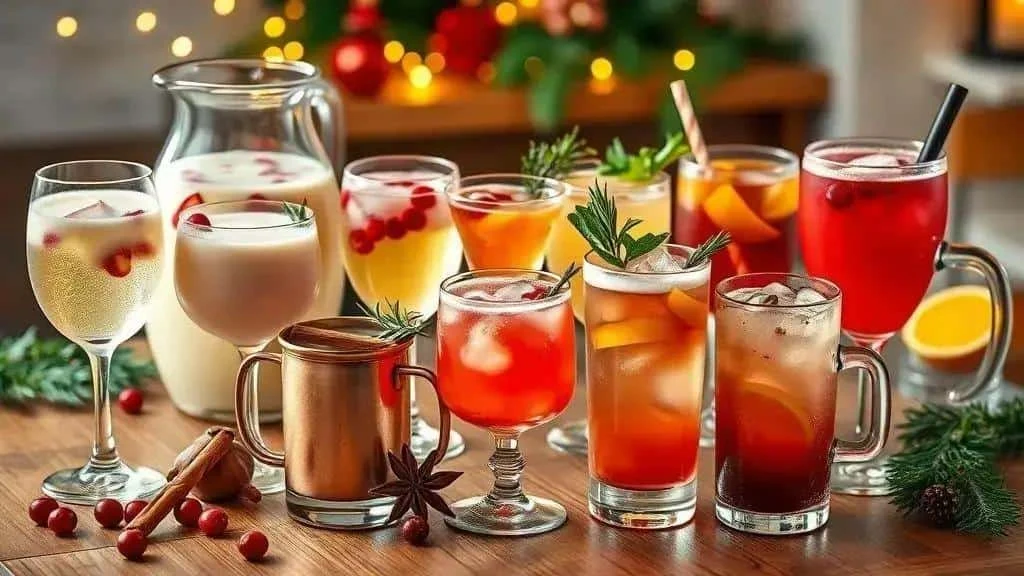
Eight Christmas drinks to try
-
Christmas clericot
This fruity white-wine punch combines berries and citrus. Easy to serve in a jug, it is a refreshing choice; a light flavour does not necessarily mean a low alcohol content.
- Flavour: fresh and fruity
- Garnish: apple slices and grapes
-
Sparkling pomegranate punch
Sparkling wine, pomegranate juice and citrus make a colourful punch. It looks attractive on the table and can be mixed in a jug for a gathering.
- Flavour: fruity and slightly sweet
- Garnish: pomegranate seeds and orange peel
-
Creamy eggnog
Nutmeg and vanilla give this rich Christmas drink its aroma. Make it with or without alcohol, following the cooked-egg method below.
- Flavour: creamy and aromatic
- Garnish: a little freshly grated nutmeg
-
Cranberry and orange caipirinha
This variation on a Brazilian cocktail uses cranberries for colour and tartness, with orange to balance them. It suits those who enjoy citrus flavours in a chilled drink.
- Flavour: citrusy and tart
- Garnish: orange and cranberries
-
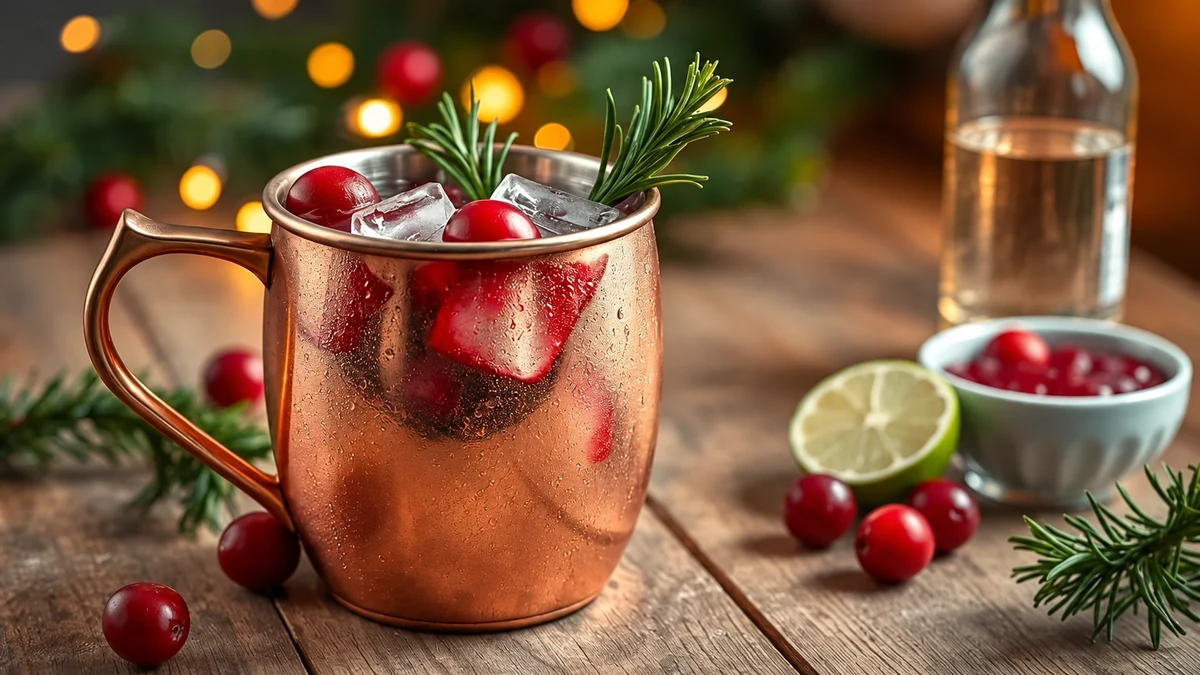
Christmas Moscow mule
Ginger, lime and cranberry give this cocktail a festive variation. Serve in a glass or a food-safe lined mug with fresh herbs.
- Flavour: spicy and refreshing
- Garnish: rosemary and cranberries
-
Spiced hot chocolate with rum
Chocolate, cinnamon and optional rum make a rich warm drink. It suits a cold evening or guests who prefer hot drinks.
- Flavour: sweet and spiced
- Garnish: cinnamon and chocolate shavings
-
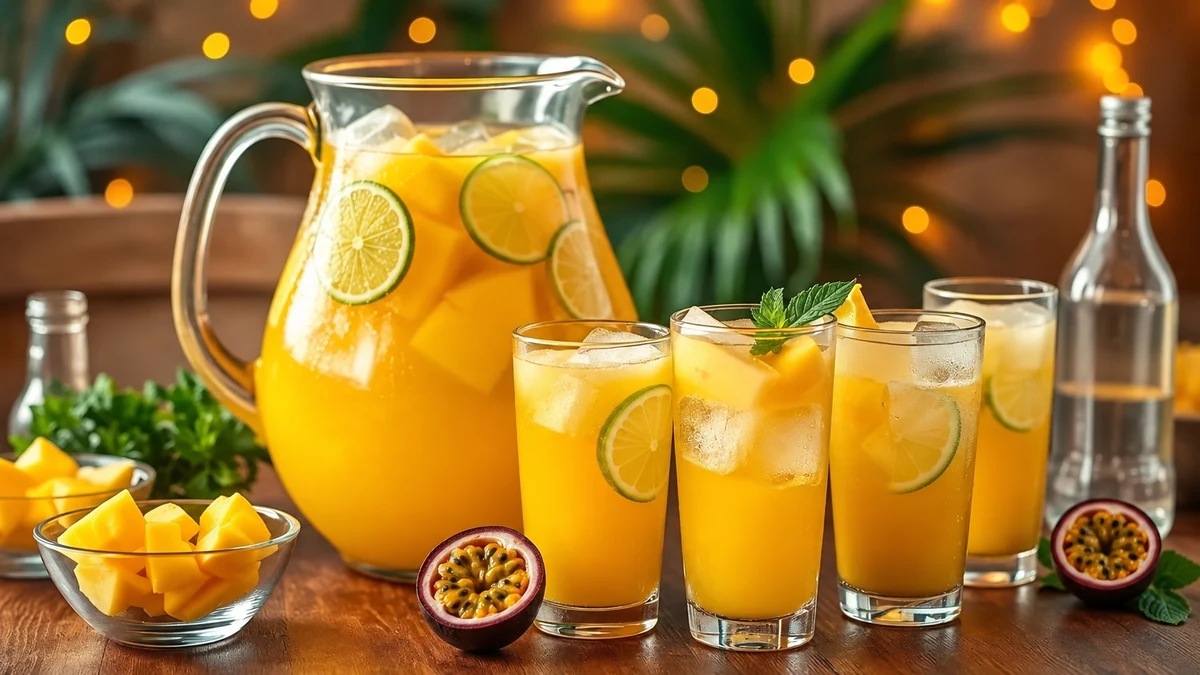
Alcohol-free tropical punch
Tropical juices, sliced fruit and sparkling water make a colourful punch. It provides an option for guests avoiding alcohol; serve modest portions, as juice still contains sugar.
- Flavour: fruity and refreshing
- Garnish: mango and mint
-
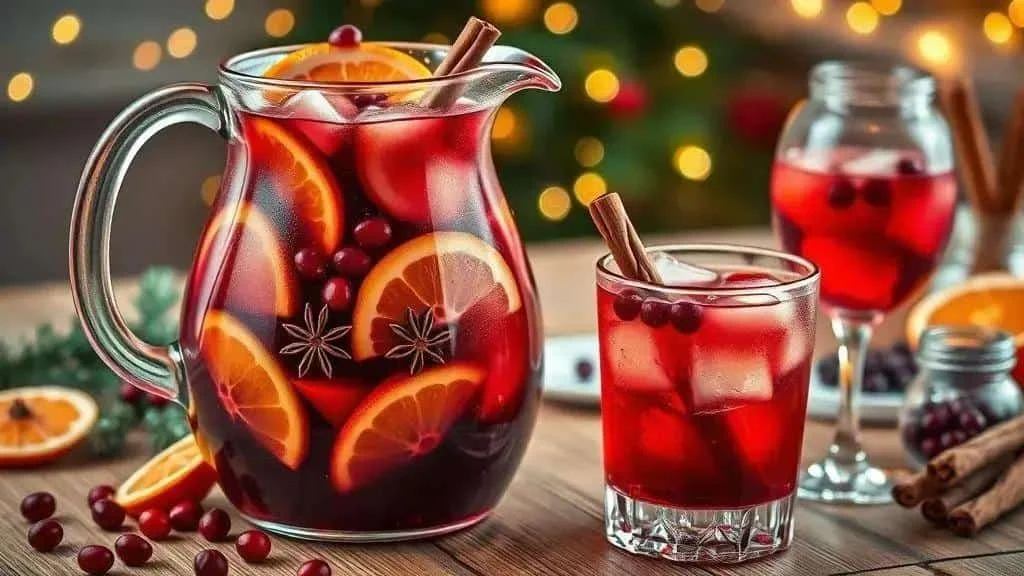
Spiced Christmas sangria
Red wine, fruit and cinnamon make an aromatic sangria, served chilled or gently warmed. Choose the version that best suits the meal.
- Flavour: fruity and spiced
- Garnish: apple and cinnamon; remove whole cloves before drinking
Christmas clericot: ingredients and method
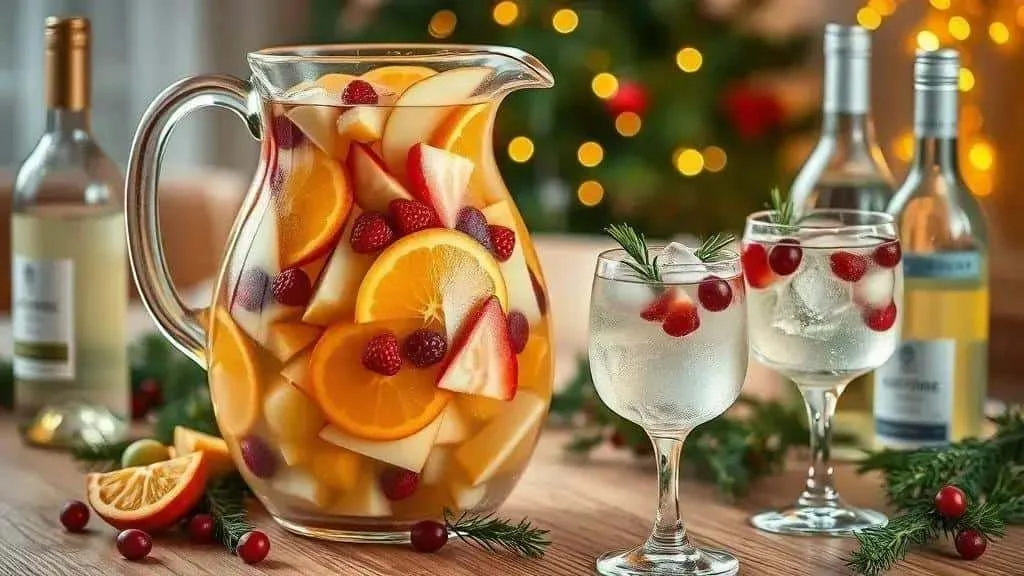
To make Christmas clericot, prepare the fruit base ahead and add sparkling ingredients just before serving. Cups below refer to measuring cups, not drinking mugs; use the stated metric quantity where provided.
Ingredients for Christmas clericot
- 750 ml dry white wine – choose a fruity wine; alternatively, use 750 ml sparkling wine, adding it only at serving time.
- 300 ml sparkling water or soda water – tonic water is a more bitter alternative.
- 1 measuring cup sliced strawberries – washed and hulled.
- 1 medium apple, diced – leave the washed skin on for colour, or use a pear.
- 10 grapes, halved – green or red.
- 1 orange, thinly sliced – reserve some slices for garnish.
- ½ measuring cup orange juice – or pineapple juice for a tropical variation.
- 2 tablespoons sugar or simple syrup – adjust to taste; syrup and dry sugar do not have identical sweetness by volume.
- Ice, as needed – add at serving time.
- Mint or rosemary sprigs – washed, for garnish.
How to make Christmas clericot
- Add the fruit: put the strawberries, apple, grapes and orange in a large jug.
- Add the sweetener: sprinkle over the sugar or stir in the syrup gently.
- Pour in the juice: add the half cup of orange juice and stir to dissolve the sugar.
- Add the wine: pour in the white wine and stir gently. If using sparkling wine, reserve it for the final step.
- Chill: refrigerate the mixture for at least an hour to let the flavours combine.
- Finish before serving: add the sparkling water and, if using it, the reserved sparkling wine. Stir gently.
- Fill the glasses: add ice, pour in the clericot with some fruit and garnish with herbs.
- Adjust: taste and add a little syrup if needed; it dissolves more easily than sugar in a cold drink.
- Alcohol-free variation: replace all the wine with apple or white grape juice and retain the sparkling water.
Variations and serving ideas
- Sparkling variation: use brut sparkling wine, adding it at the last moment.
- Extra citrus aroma: add a little orange or lemon zest.
- More colour: add pomegranate seeds.
- Serve separately: offer prepared fruit, sparkling wine and sparkling water in clearly labelled containers so guests can choose.
Sparkling pomegranate punch: ingredients and method
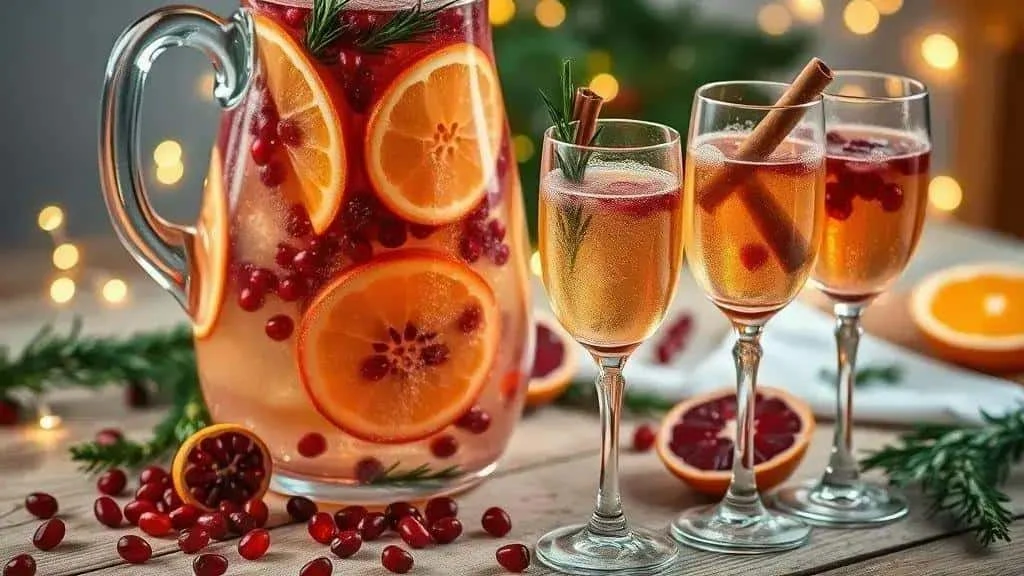
- 750 ml chilled brut sparkling wine or prosecco – for an alcohol-free version, use a suitable 0.0% alternative or sparkling grape juice and omit the liqueur too.
- 250 ml unsweetened pomegranate juice – alternatively, dilute cranberry concentrate according to its label and measure 250 ml.
- 200 ml sparkling water – or tonic water for a more bitter flavour.
- ½ measuring cup pomegranate seeds – for colour and texture.
- 1 medium orange, thinly sliced – washed and deseeded, or use mandarin slices.
- 2 tablespoons simple syrup or honey – adjust to the juice’s sweetness; use syrup for a vegan version.
- 60 ml orange liqueur, optional – such as triple sec; omit entirely for the alcohol-free version.
- Ice, as needed – add only when serving.
- Rosemary sprigs and cinnamon sticks – optional garnishes.
How to make sparkling pomegranate punch
- Chill the ingredients: refrigerate the sparkling wine and juice for at least two hours.
- Prepare the jug: add the pomegranate seeds and orange slices.
- Add the syrup: stir it gently through the fruit without crushing it.
- Add the juice: pour in the 250 ml pomegranate juice and stir.
- Add optional liqueur: stir in the 60 ml if making the alcoholic version.
- Chill briefly: refrigerate this base for 30 minutes.
- Add the sparkling ingredients: just before serving, gently stir in the chilled wine and 200 ml sparkling water.
- Serve: add ice to glasses if wanted, distribute some fruit and pour in the punch.
- Garnish: finish with rosemary and, optionally, a cinnamon stick.
- Adjust the flavour: add a little syrup for sweetness or sparkling water for a milder taste. Extra water dilutes the drink but does not remove the alcohol already added.
Variations and quick tips
- Alcohol-free version: use sparkling grape juice or a suitable 0.0% alternative and omit the orange liqueur. Check all labels if avoiding alcohol completely.
- Warm variation: gently warm the pomegranate juice with cinnamon and cloves, strain and combine with warmed still red wine instead of sparkling wine. Heating does not make it alcohol-free.
- Different fruit: try thin pear or apple slices.
- Prepare ahead: mix and refrigerate the fruit-and-juice base on the morning of the meal; add fizz just before serving.
- Presentation: clear glasses and large ice cubes show off the colour.
Creamy eggnog: ingredients and method
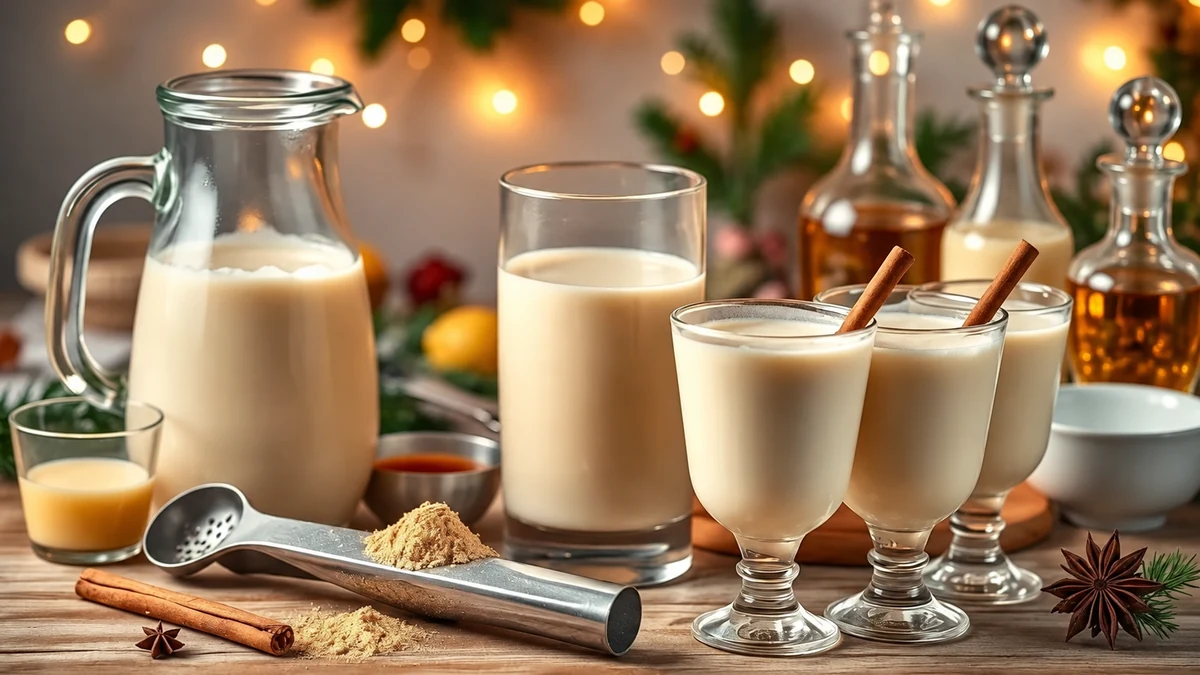
- 4 large egg yolks – pasteurised yolks are a suitable choice; follow the cooked method below. Avocado or coconut cream is not a direct replacement for the setting and thickening properties of eggs.
- 100 g sugar – adjust sweetness to taste; demerara adds a deeper flavour.
- 500 ml whole milk – a plant-based drink changes the flavour but does not make this egg-containing recipe vegan.
- 250 ml whipping cream – coconut cream is a dairy-free alternative, provided the milk is replaced as well.
- 120 ml rum, brandy or bourbon, optional – for the whole batch, not each glass; omit for an alcohol-free version.
- 1 teaspoon vanilla extract – choose alcohol-free vanilla flavouring if required.
- ¼ teaspoon grated nutmeg – plus a little for serving.
- 1 cinnamon stick, optional – for infusing the milk.
- 2 pasteurised egg whites, optional – only use a product labelled suitable for uncooked use if folding them in at the end. Otherwise omit this addition.
How to make creamy eggnog
- Measure the ingredients: have the milk, cream, eggs and sugar ready, along with a clean food thermometer.
- Whisk yolks and sugar: beat the four yolks with 100 g sugar until pale and slightly thickened.
- Heat the dairy: warm the milk, cream and optional cinnamon stick until steaming, without boiling.
- Temper the yolks: slowly whisk a ladleful of warm milk into the yolk mixture, keeping it moving so the eggs do not scramble.
- Cook the custard: return everything to the pan and stir over low heat until slightly thickened and at least 71°C throughout, checking with a thermometer. Do not boil; coating a spoon alone is not a temperature check.
- Flavour and cool: remove the cinnamon, add the vanilla and ¼ teaspoon nutmeg, then cool promptly by standing the pan in cold or iced water and stirring.
- Add optional alcohol: once cooled, stir in 120 ml rum, brandy or bourbon for the whole batch. Alcohol does not replace safe cooking or chilling.
- Refrigerate: cover and refrigerate within one to two hours of cooking, then chill for at least two hours until thoroughly cold.
- Optional lighter texture: whisk the pasteurised whites to firm peaks and fold in just before serving, only if the product is suitable for uncooked use. Do not add raw unpasteurised whites to the cooked custard.
- Serve: pour into glasses or mugs and add a little nutmeg; cinnamon or chocolate shavings are optional garnishes.
- Storage: keep covered at 0–5°C and use within 48 hours of preparation, or sooner if an ingredient label requires it. Stir gently if separated and keep serving batches small.
Variations and practical tips
- Alcohol-free version: omit the spirit and use alcohol-free vanilla flavouring. Check rum flavourings rather than assuming they contain no alcohol.
- Vegan alternative: choose a separately tested egg-free recipe using plant-based milk and cream. Aquafaba and avocado behave differently from cooked yolks and are not interchangeable in this method.
- Egg safety: use the measured 71°C cooking step and pasteurised products for any uncooked egg addition. For vulnerable guests, avoid uncooked additions and follow their dietary guidance.
- Sweetness: taste only after the eggs are cooked. A little maple syrup can adjust sweetness before chilling; honey is not suitable for babies under one.
- Presentation: clear glasses, freshly grated nutmeg and a cinnamon stick make a simple finish.
Cranberry and orange caipirinha: ingredients and method
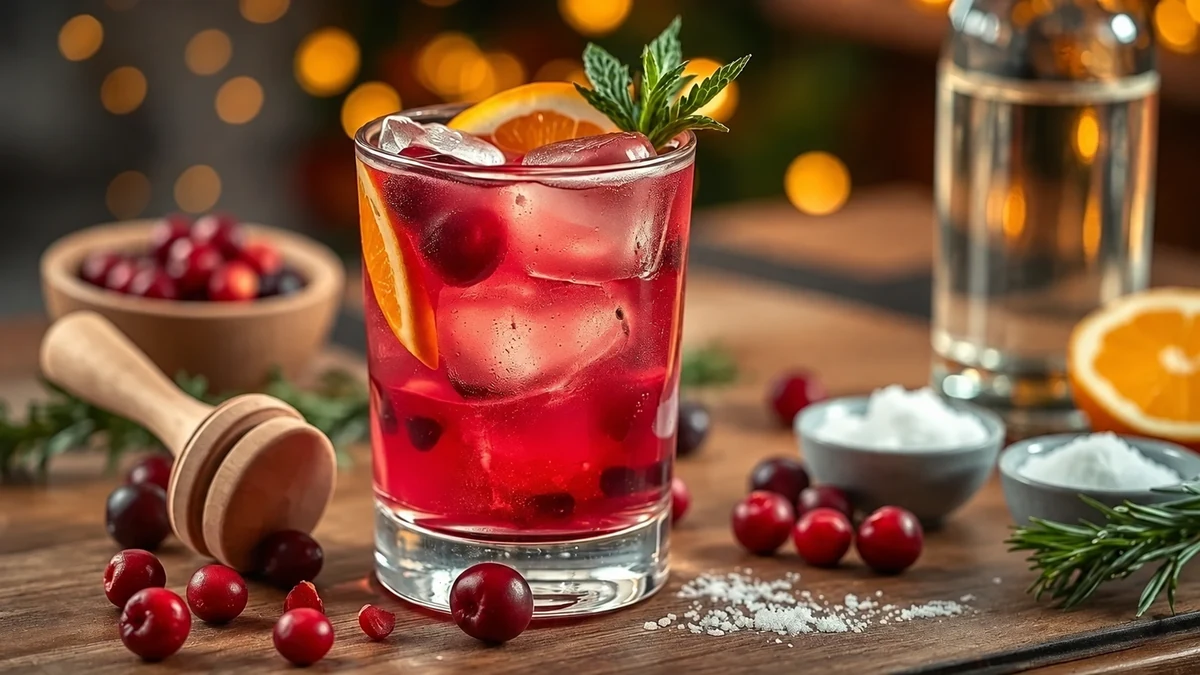
- 60 ml cachaça – or vodka for a different flavour. This is a generous spirit measure; serve as a measured adult cocktail, not a low-alcohol drink.
- 120 g fresh or frozen cranberries – weigh them, as half a cup is not reliably 120 g; alternatively use 100 ml cranberry juice for a smoother drink.
- 1 small orange – thinly sliced; a mandarin makes a sweeter variation.
- ½ lime – cut into four pieces, or use 15 ml lime juice.
- 2 tablespoons demerara sugar – adjust to taste; alternatively start with 20 ml simple syrup and adjust, since the sweetness is not identical.
- Large ice cubes – for serving.
- Garnish: cranberries, an orange slice and rosemary or mint.
How to make a cranberry and orange caipirinha
- Choose a glass: use a clean, sturdy tumbler large enough for the fruit, liquid and ice.
- Add the fruit: put in the cranberries, orange pieces and lime. Thaw frozen berries in the fridge first; if using the juice alternative, add it with the cachaça.
- Sweeten: add the sugar or syrup.
- Muddle gently: press the fruit to release juice without grinding the citrus peel, which can make the drink bitter.
- Add the spirit: pour in the 60 ml cachaça and stir to combine.
- Add ice: fill the remaining space with large cubes, leaving room to stir safely.
- Finish: stir briefly and garnish with berries, orange and herbs.
- Alcohol-free version: replace the cachaça with sparkling water and use 80–100 ml cranberry juice instead of whole berries. Add the sparkling water last and adjust sweetness.
- Jug version: multiply the ingredients by six and muddle in a large bowl. Refrigerate the base and add ice and garnishes at serving time; measure individual servings.
- Final adjustment: taste and add a little syrup or lime juice if needed.
Practical tips
- Avoid over-muddling: gentle pressure releases juice without excessive bitterness from the peel.
- Use large ice cubes: these help keep the drink cold without melting as quickly as crushed ice.
- Balance tartness: cranberries are sharp; adjust sweetness or add a little orange juice.
- Presentation: a clean glass rim, visible fruit and fresh herbs make a simple festive finish.
- Preparing ahead: refrigerate the fruit base and add cachaça and ice when serving. The standard caipirinha is not fizzy; only the sparkling-water variation has bubbles to preserve.
Christmas Moscow mule: ingredients and method
- 60 ml vodka – cachaça makes a different alcoholic variation; use sparkling water for the alcohol-free version.
- 15 ml fresh lime juice – measure the juice, since fruit yield varies.
- 150–200 ml chilled ginger beer – or ginger ale with 10 ml ginger syrup. Check the label: some ginger beers contain alcohol.
- 30 ml cranberry purée, syrup or juice, optional – these differ in sweetness, so adjust to taste.
- Large ice cubes – for serving.
- Garnish: 6–8 washed cranberries and a rosemary sprig
- A lime slice – for garnish.
How to make a Christmas Moscow mule
- Chill the vessel: use a glass or a mug with a food-safe lining suitable for acidic drinks. Chill in the fridge rather than freezing unsuitable glassware.
- Prepare the cranberry component: measure 30 ml juice, syrup or prepared purée. A few muddled garnish berries will not reliably produce that amount.
- Add the liquids: put ice in the vessel, then add 60 ml vodka, 15 ml lime juice and the optional cranberry component.
- Top up: slowly pour in 150–200 ml chilled ginger beer.
- Stir gently: two or three turns with a long spoon are enough to combine the drink without losing too much fizz.
- Garnish: add a few cranberries, rosemary and the lime slice.
- Adjust the flavour: add 5–10 ml simple syrup if too tart, or more ginger beer for a milder taste. Dilution does not remove the alcohol in the glass.
- Party jug: multiply quantities by six to eight. Chill the still base, then add ginger beer, ice and garnishes just before serving.
Variations and quick tips
- Alcohol-free: replace vodka with sparkling water and choose ginger beer and cranberry juice with no alcohol. Add both fizzy ingredients last.
- More ginger: try 5–10 ml ginger syrup or a few thin slices of fresh ginger.
- Presentation: a suitable lined mug, large ice cubes and rosemary give a festive appearance.
- Vessel safety: do not use bare copper for acidic drinks. Choose a vessel sold as suitable for this purpose, with an intact food-safe lining, or use glass.
- Prepare ahead: make and refrigerate cranberry purée on the day; assemble the drink when serving.
Spiced hot chocolate with rum: ingredients and method
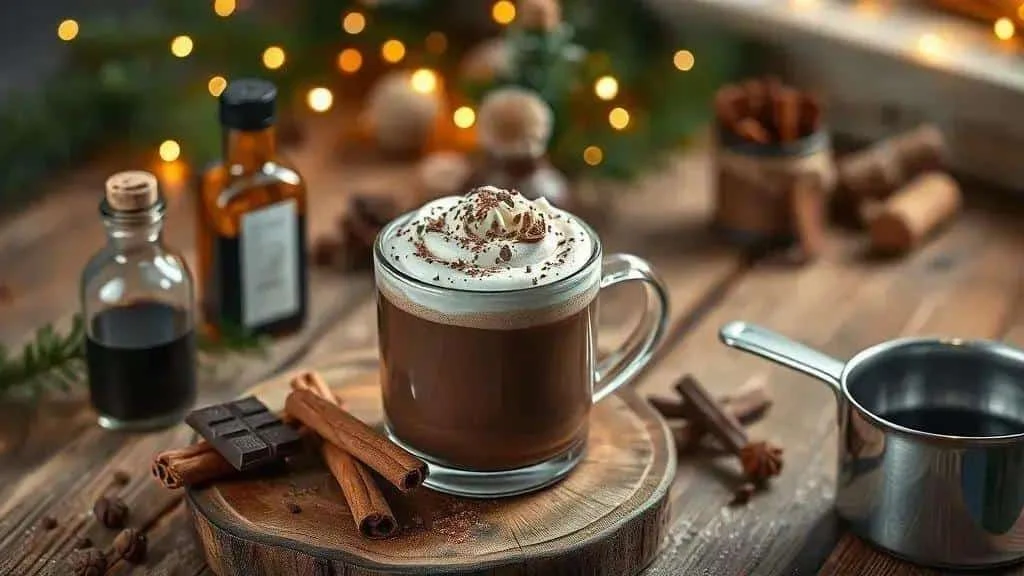
Spiced hot chocolate with optional rum is a rich drink for a Christmas evening. Keep the base alcohol-free and add measured rum only to adult servings that request it.
Ingredients
- 500 ml whole milk – or a full-bodied oat or almond drink, checking allergens.
- 200 ml fresh cream – coconut cream is an alternative; a vegan version also needs plant-based milk and chocolate.
- 100 g chopped dark chocolate – 55–70% cocoa, or milk chocolate for a sweeter version.
- 2 tablespoons unsweetened cocoa powder – for a deeper chocolate flavour.
- 2 tablespoons sugar – adjust to taste; maple syrup is an alternative.
- 1 cinnamon stick – for infusing.
- 2 cloves – remove before serving.
- A pinch of grated nutmeg – to finish.
- 30–45 ml dark rum per adult serving, optional – this is not the amount for the whole pan. Coffee liqueur is another alcoholic option; omit both for alcohol-free servings.
- Whipped cream and chocolate shavings, optional – for garnish.
Method
- Warm the dairy: combine 500 ml milk and 200 ml cream in a pan and heat until steaming without boiling.
- Infuse the spices: add the cinnamon and cloves and leave over gentle heat for five minutes, stirring occasionally.
- Mix cocoa and sugar: blend them with a little warm milk in a separate bowl to make a smooth paste.
- Melt the chocolate: stir the chopped chocolate into the warm milk until smooth.
- Combine: stir the cocoa paste into the pan over low heat.
- Check the texture: cook gently for two to three minutes, stirring; add a little more milk if too thick.
- Remove whole spices: strain out the cinnamon and cloves, then warm gently if needed.
- Add optional rum: remove the pan from the heat. Divide into servings, then add 30–45 ml rum only to the adult cups that request it, leaving other servings alcohol-free.
- Serve: add optional whipped cream, a little nutmeg and chocolate shavings. Allow very hot drinks to cool to a comfortable temperature.
- Storage: cool the unused base promptly, refrigerate within one to two hours at 0–5°C and use within 48 hours or the shortest ingredient limit. Reheat only once until steaming throughout. Adding rum does not extend this storage period.
Variations and quick tips
- More spice: add a thin ginger slice during infusion and remove it with the whole spices.
- Vegan version: use oat drink, coconut cream, vegan chocolate and a suitable sweetener. For an alcohol-free version, omit rum and choose alcohol-free vanilla flavouring if using it.
- More cocoa: add an extra tablespoon for a stronger flavour, mixing it into a smooth paste first.
- Presentation: serve in mugs with a cinnamon stick or mint garnish, keeping garnishes easy to remove.
- Sweetness: taste before adding sweet toppings and adjust gradually.
Alcohol-free tropical punch: ingredients and method
- 1 litre pineapple juice – use strained juice if preferred; mango juice gives a different, often sweeter flavour.
- 500 ml orange juice – or mandarin juice.
- 500 ml well-chilled sparkling water – coconut water makes a still alternative.
- 300 ml mango nectar or diluted mango pulp – passion fruit juice is a sharper alternative.
- 120 ml lemon juice – or lime juice; add gradually to suit the fruit.
- Up to 3 tablespoons simple syrup, optional – honey is an alternative for guests over one year old, but is not vegan.
- 1 measuring cup diced ripe mango – peeled.
- 1 measuring cup diced pineapple – fresh or thawed in the fridge.
- ½ measuring cup passion fruit pulp with seeds, optional – for flavour and texture.
- Large ice cubes – for serving.
- Garnishes: lemon slices, mint and thin kiwi or strawberry slices.
How to make alcohol-free tropical punch
- Chill the liquids: refrigerate juices and sparkling water before mixing.
- Prepare the fruit: wash, peel where needed and cut into even pieces.
- Mix the base: combine the pineapple juice, orange juice and mango nectar in a large jug or punch bowl with room for fruit and fizz.
- Balance the flavour: stir in the lemon juice gradually, then add syrup only if needed, up to the listed quantity.
- Add the fruit: gently stir in the mango, pineapple and optional passion fruit pulp.
- Chill: refrigerate for 30–60 minutes to combine the flavours.
- Add fizz and ice: just before serving, stir in the 500 ml chilled sparkling water and add ice.
- Serve: include a little fruit in each glass and finish with mint and citrus.
- Larger gatherings: scale the recipe to your serving plan; keep extra sparkling water separate until needed.
- Without added syrup: omit the optional sweetener if the juices are sweet enough. Banana purée and mango nectar still contain sugars and do not make the punch sugar-free.
Variations and quick tips
- For children: offer a small portion diluted with still water if preferred. Adding more juice does not reduce sugar or necessarily reduce acidity; adapt fruit pieces to the child’s age.
- Creamy variation: try 150 ml coconut milk in a small test batch first, as acidic juice may cause separation; keep it chilled.
- Presentation: colourful fruit and large ice cubes make an attractive jug.
- Prepare ahead: make and refrigerate the juice-and-fruit base on the morning of the event; add sparkling water and ice when serving.
- Quantity planning: 250–300 ml per guest is a catering estimate when other drinks are available, not a recommended juice intake. Smaller glasses and water alongside are useful.
Spiced Christmas sangria: ingredients and method
- 750 ml dry red wine – a young, fruity wine; replace with red grape juice for an alcohol-free version.
- 120–150 ml brandy or orange liqueur, optional – omit or replace with orange juice in the alcohol-free version.
- 70 g sugar or up to 4 tablespoons honey – adjust to taste; simple syrup is another option, not an exact volume-for-volume equivalent.
- 1 medium orange, thinly sliced – washed and deseeded.
- 1 medium apple, diced – leave the washed skin on for colour, or use a pear.
- ½ measuring cup pomegranate seeds – for colour and texture.
- ½ measuring cup fresh or frozen cranberries – or 100 ml cranberry juice.
- 2 cinnamon sticks – for infusing.
- 4 cloves – remove before serving.
- 1 star anise, optional – remove before drinking.
- 200–300 ml sparkling water or ginger ale – keep separate until serving.
- Large ice cubes – for the chilled version.
Method
- Prepare the fruit: put the orange, apple, cranberries and pomegranate seeds in a large jug.
- Add sweetener and spices: stir in the sugar, cinnamon, cloves and optional star anise. A food-safe spice bag makes small whole spices easier to remove.
- Add optional spirits: pour in the brandy or liqueur and stir.
- Add wine: pour it over the fruit and stir gently without crushing the pieces.
- Chill: refrigerate for at least two hours, or four to six hours for a longer infusion.
- Finish: remove the cloves and star anise, then add sparkling water or ginger ale just before serving and stir gently.
- Serve: add ice to glasses, distribute some fruit and pour in the sangria. The two cinnamon sticks flavour the jug; they are not enough to garnish every glass individually.
- Adjust: add a little syrup for sweetness or sparkling water for a milder taste. More water lowers concentration but does not remove the alcohol already in the batch.
- Warm variation: gently warm half the wine with the fruit and spices for five to eight minutes without boiling. Strain and combine with the remaining wine for a warm serving, omitting ice and fizzy additions. It still contains alcohol.
- Storage: keep refrigerated and use within 24 hours; add sparkling ingredients and ice only to the portion being served.
Variations and serving tips
- Alcohol-free: replace wine with red grape juice and all spirits with orange juice; retain the fruit and add sparkling water when serving.
- More citrus: add a little orange or lemon zest during the infusion.
- Fuller flavour: a little concentrated grape juice adds sweetness; replacing wine with port changes both flavour and alcohol strength, so measure carefully.
- Presentation: use a clear jug with visible fruit and pomegranate seeds.
- Quantity planning: 200–250 ml is a possible serving size, not a safe drinking allowance. Alcohol units depend on the wine, added spirits and portion size; offer smaller servings and alcohol-free choices.
Final thoughts
These eight Christmas drinks offer familiar flavours, variations and alcohol-free choices. Try a small batch ahead of the meal and adjust sweetness, temperature and garnishes to your guests’ preferences.
Share your ideas and photographs with family if you wish; a thoughtfully presented drink can be part of a memorable table.
Thank you for reading. Follow our social channels for more seasonal recipes and ideas, and visit I Love Christmas for further articles.
Christmas drinks: frequently asked questions
Which Christmas drinks are included in this collection?
Christmas clericot, sparkling pomegranate punch, eggnog, cranberry and orange caipirinha, a Christmas Moscow mule, spiced hot chocolate with optional rum, alcohol-free tropical punch and spiced sangria. This is a recipe selection, not a verified popularity ranking.
Can I make these drinks without alcohol?
Yes. Replace every alcoholic ingredient, including optional liqueurs, with suitable juice or sparkling water. Check ginger beer, flavourings and alcohol-free alternatives carefully if avoiding alcohol completely. Diluting or warming a cocktail does not make it alcohol-free.
How much punch should I plan per guest?
Use your chosen glass size, guest preferences and other refreshments to calculate quantities. A 200–300 ml serving may be a catering estimate, but is not a health recommendation or safe alcohol allowance. Offer smaller servings, water and alcohol-free choices, and calculate alcohol units from the actual ingredients.
How can I prepare drinks ahead and store them?
Refrigerate fruit, juice and syrup bases promptly and add fizz and ice when serving. Cook eggnog as directed, cool it quickly and keep it at 0–5°C; use it within 48 hours or the shortest ingredient limit. Follow each recipe’s storage guidance rather than assuming alcohol preserves it.
Which garnishes work well for Christmas drinks?
Thin orange slices, pomegranate seeds, cranberries, rosemary, cinnamon and chocolate shavings add colour and aroma. Wash fresh garnishes, make whole spices easy to remove and use age-appropriate fruit pieces for children.
Sources and Further Reading
- FDA: cooked eggnog and egg safety
- Food Standards Agency: chilling and storage
- NHS: alcohol units
- NHS: foods to avoid for babies and young children