Christmas in southern Brazil brings together several cultural influences. German-Brazilian baking and crafts sit alongside gaúcho foods and family customs, with celebrations shaped by each community. This guide explores some of those connections, plus recipes and practical activities inspired by them; it is not a single rulebook for the whole region.
Christmas in southern Brazil can bring cuca, nativity scenes, chimarrão and barbecue into the same family celebration. German heritage is one influence among many, rather than the origin of every local custom. Here are some traditions and home activities to explore while keeping that variety in mind.
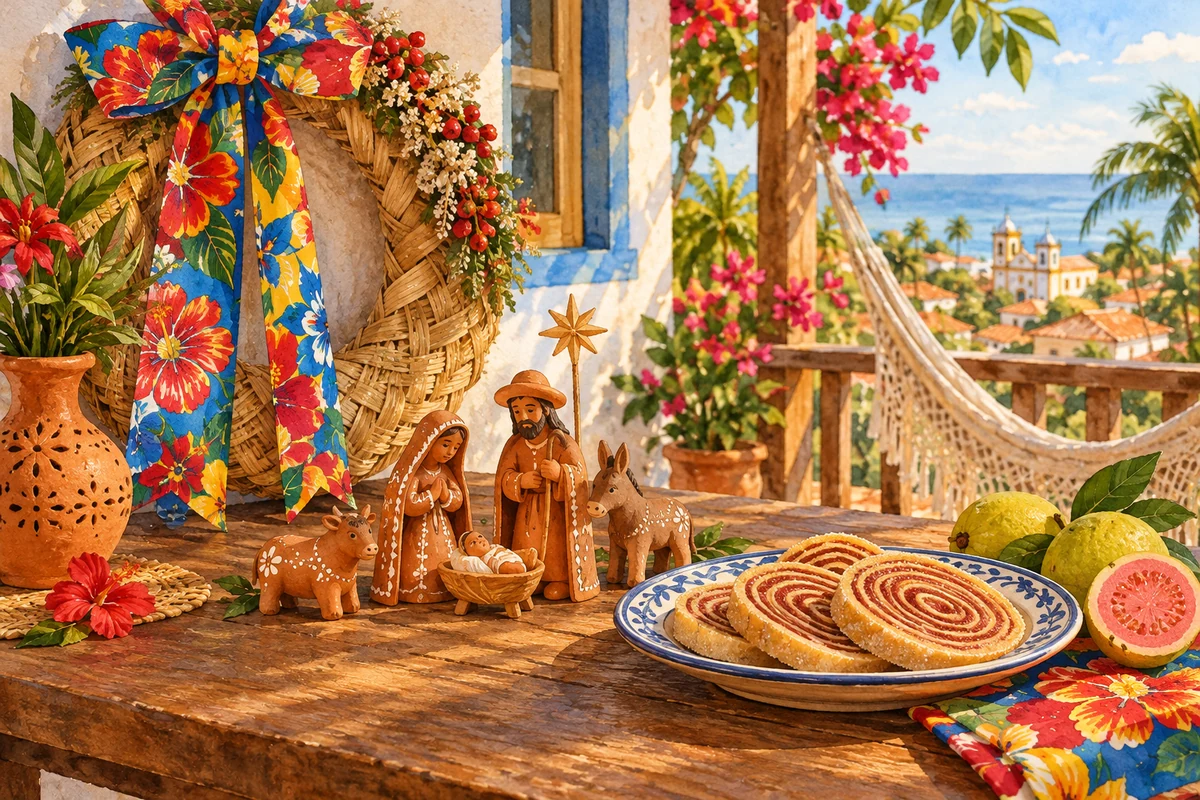
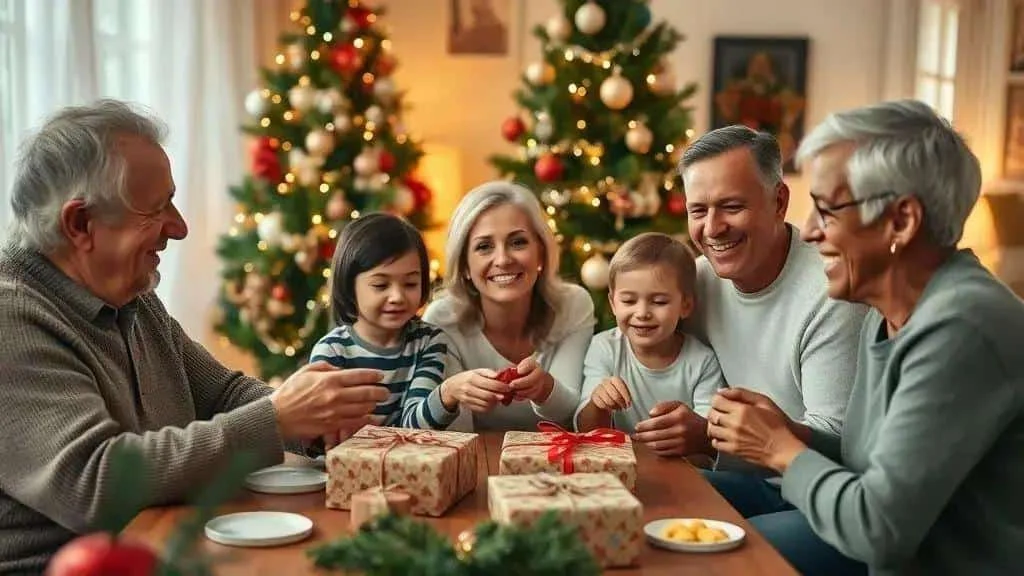
Illustrations in this article are conceptual images, not documentary photographs or evidence of a particular historical event, destination, venue or access route.
German immigration and cultural influence in southern Brazil

German-speaking immigrant communities helped shape the history of places such as Blumenau, Joinville, Novo Hamburgo and Santa Cruz do Sul. Their influence is visible in aspects of architecture, food, language and community life, within a region with many other cultural histories too.
Immigration and settlement
- German immigration expanded during the nineteenth century through settlement projects. Rio Grande do Sul’s state government marks the arrival at São Leopoldo on 25 July 1824 as an important milestone. Source: Rio Grande do Sul: 200 years of German immigration
- Families established rural settlements and towns, building community networks while adapting to different conditions in Brazil.
- As later generations moved into urban life, cultural associations, families and educational initiatives continued to pass on some traditions.
Language and identity
Some communities maintain languages and varieties such as Hunsrückisch and Pomeranian alongside Portuguese. An IPHAN publication documents this linguistic variety in the Pampa region. Their use varies between places and generations; they should not be treated as one uniform German dialect. Source: IPHAN: traditional peoples and communities of the Pampa
Architecture and crafts
Timber-framed buildings, known as enxaimel, are associated with some areas of German settlement. Woodwork, weaving and embroidery can also reflect inherited techniques adapted to local materials. A modern decorative facade is not necessarily an original historic building.
Food with German-Brazilian connections
Breads, sausages, cakes and cuca form part of the food culture in many communities. Cuca is a Brazilian cake with German roots, often made with fruit and a crumb topping, although family recipes differ.
Festivals and celebrations
Community festivals, bands and dance groups keep aspects of this heritage visible. Blumenau’s Oktoberfest is a prominent example of a German-inspired festival in Brazil, but it is a separate celebration rather than a Christmas custom.
Traditions that change over time
German-Brazilian customs have interacted with gaúcho and other Brazilian traditions. Food, music and celebrations therefore reflect adaptation as well as preservation. No ancestry, language or way of celebrating is shared by everyone in southern Brazil.
Christmas in gaúcho communities: faith, music and gatherings

In Rio Grande do Sul, Christmas may bring together family meals, church services, music and community events. Practices vary by household, belief and locality, and people also celebrate in secular ways.
Religious celebrations
Catholic families may attend Missa do Galo, the Christmas night Mass, while other Christian communities hold their own services. Church nativity scenes and Bible readings can form part of the season. These practices are not unique to German or gaúcho culture.
Music and traditional performance
Música nativista is a regional musical tradition associated with Rio Grande do Sul. Accordions, guitars, choirs and dance groups may feature in local celebrations, but a particular Christmas programme should be checked rather than assumed to include them.
Food at the festive table
Family meals can combine familiar Brazilian Christmas dishes with regional favourites such as barbecue, arroz carreteiro, homemade bread and cakes. There is no compulsory gaúcho Christmas menu.
- Churrasco — Brazilian barbecue, with methods that vary from grills to traditional open-fire cooking.
- Arroz carreteiro — a rice-and-meat dish often associated with charque, salted dried beef; versions using cooked barbecue leftovers also exist.
- Bread and cakes — family baking traditions with many local variations.
- Homemade sweets — preserves and desserts chosen according to family preference.
Community events and CTGs
Centros de Tradições Gaúchas, usually called CTGs, are centres devoted to gaúcho traditions. Some host seasonal meals or performances alongside activities run by other local associations. Check whether an event is public, requires booking or has admission conditions.
Children and passing on traditions
Nativity plays, craft sessions, songs and dances can help children learn about family traditions. Participation should be enjoyable and voluntary rather than treated as a guarantee that every custom will continue unchanged.
Contemporary celebrations
Many households combine inherited practices with newer ideas, including shared meals and reused decorations. Christmas falls in the Brazilian summer, so imported winter imagery does not describe the actual season, even where it appears in decorations.
Regional food ideas for the Christmas table
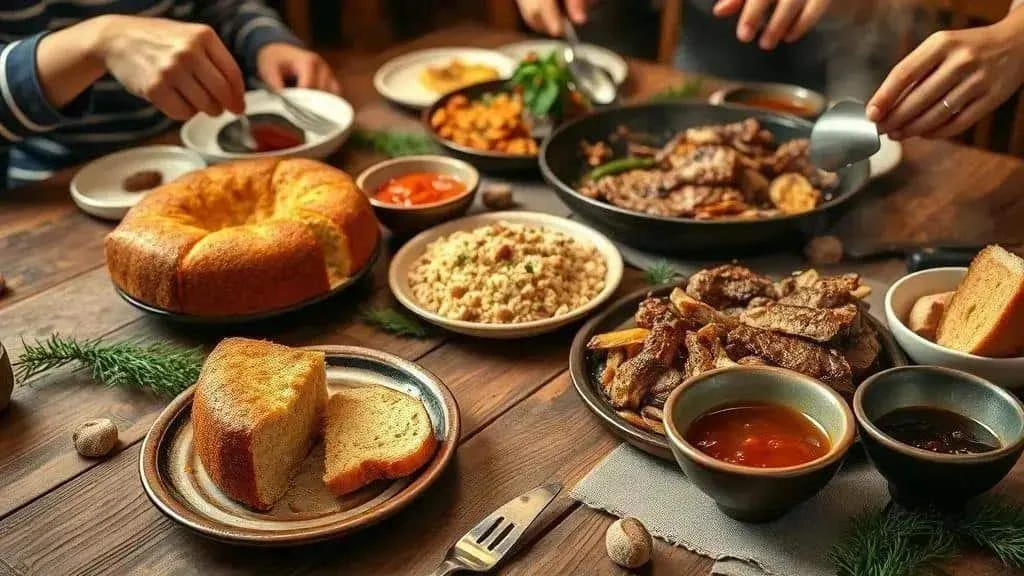
The following home-style recipes draw on German-Brazilian baking and gaúcho food. They are versions to try, not definitive recipes for an entire region. Panettone may also appear on Brazilian Christmas tables, but Italy’s tourism authority identifies its origins with Milan, not Germany. Source: Italia.it: the history of panettone
Apple cuca ingredients
For a 25 × 35 cm baking tin. This is a baking-powder apple cake version; the optional crumb topping is listed below. The extra two tablespoons of sugar used for the apples are included explicitly here:
- 300 g plain flour — for the cake mixture; the original suggests 200 g plain flour plus 100 g wholemeal flour as a variation, which will change the texture.
- 150 g sugar, plus 2 tablespoons for the apples — keep the cake sugar and apple sugar separate until needed.
- 150 g butter, softened — the original proposes 130 ml vegetable oil as a dairy-free alternative, but that substitution has not been tested here and may change the result.
- 2 medium eggs — use a separately tested egg-free recipe if needed. Replacing only the eggs would not make this butter-containing cake vegan.
- 1 tablespoon baking powder — not yeast.
- 1 kg apples — peeled and sliced. Firm pears are a possible variation, with moisture and cooking time checked accordingly.
- 1 teaspoon ground cinnamon — optional, for the apple mixture.
Making the apple cuca
- Prepare the apples: peel and slice the apples, then mix with the extra 2 tablespoons sugar and the cinnamon if using. Set aside while preparing the cake mixture.
- Cream the butter and sugar: beat 150 g butter with 150 g sugar until creamy. Add the eggs one at a time, mixing gently between additions.
- Add the dry ingredients: sift the flour and baking powder together, then mix into the creamed ingredients just until evenly combined.
- Fill the tin: grease and flour the tin. Spread half the mixture over the base, add the prepared apples and distribute the remaining mixture over them without overworking it.
- Bake: place in a preheated oven at 180°C for approximately 35–45 minutes, until golden and a skewer inserted into the cake mixture comes out clean. Allow to cool slightly before slicing; ovens and fruit moisture affect the timing.
- Serve: add a little extra cinnamon if wanted and serve warm with coffee or alongside a family gathering where chimarrão is enjoyed.
Apple cuca variations
- Banana or well-drained tinned peaches can offer a different flavour, but changing the fruit may alter moisture and baking time.
- For an optional streusel topping, rub together 50 g sugar, 50 g butter and 70 g flour, then scatter over the cake before baking.
- For a savoury herb-and-cheese bake, choose a dedicated savoury recipe rather than simply reducing the sugar in this apple cake; the balance of ingredients is different.
Arroz carreteiro ingredients
Approximately six servings:
- 400 g long-grain white rice — prepared according to its packet instructions.
- 500 g prepared meat — desalted, cooked charque or carne-seca, or safely stored cooked barbecue leftovers, chopped or shredded. Cooked shredded chicken is a different variation, not automatically a lower-calorie dish.
- 2 tablespoons oil or cooking fat — for frying the aromatics.
- 1 medium onion, chopped, and 2 garlic cloves, crushed.
- 1 small red pepper, chopped — optional.
- 700 ml hot water or beef stock as a starting amount; check the rice packet and monitor the pan because liquid needs vary.
- Salt and pepper to taste, allowing for the salt remaining in cured meat or stock.
- Chopped parsley to finish.
Making arroz carreteiro
- Prepare the meat: if using charque or carne-seca, follow its instructions for refrigerated desalting and thorough cooking before shredding. Use properly chilled leftovers within their safe storage period; do not repeatedly reheat them.
- Cook the aromatics: heat the oil in a large saucepan and cook the onion until translucent. Add the garlic and cook for about a minute without burning it.
- Add the meat and pepper: stir in the prepared meat and optional red pepper, cooking for three to four minutes to combine the flavours.
- Add the rice: stir in the rice and cook for about two minutes to coat the grains in the seasoned oil.
- Add liquid and cook: pour in the hot water or stock, season carefully and cover. Simmer gently for approximately 15–20 minutes, checking the packet guidance, until the rice is tender and the dish is steaming hot throughout. If needed, add a little more hot liquid rather than allowing it to scorch.
- Finish: remove from the heat, rest covered for five minutes, fluff with a fork and scatter over parsley. Serve promptly. If saving cooked rice, FSA guidance advises cooling it quickly, ideally within an hour, refrigerating it and using within 24 hours; reheat only once until steaming hot throughout. Avoid reheating this dish again if it was made with reheated leftover meat. Source: Food Standards Agency: rice and leftovers
Arroz carreteiro variations
- Add suitable cooked vegetables such as carrots or peas, allowing for their preparation instructions.
- Properly stored smoked barbecue leftovers can give a stronger flavour; use manageable pieces and heat them thoroughly.
- For a vegetarian-inspired variation, use sautéed mushrooms, a suitable smoked plant-based ingredient and vegetable stock. This is an adaptation rather than traditional charque-based carreteiro.
Decorations and nativity scenes: regional craft inspiration
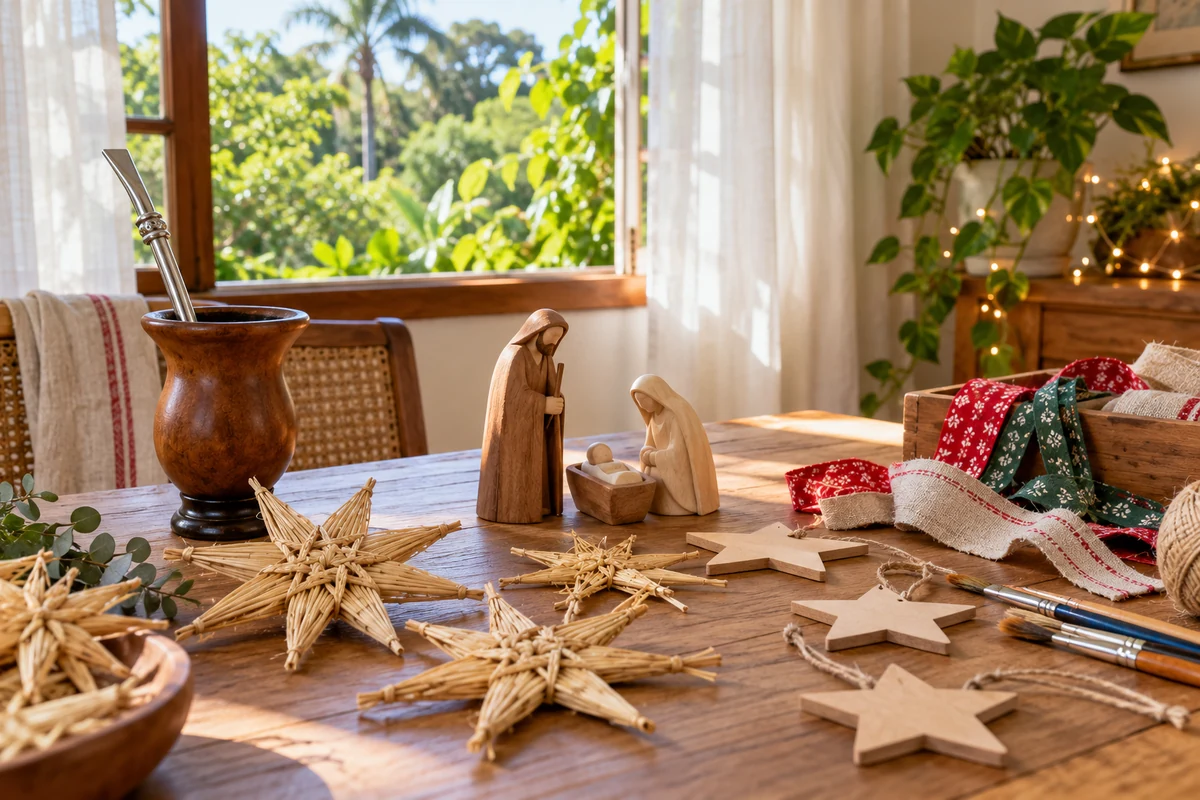
Christmas decorations in some southern Brazilian homes combine German-influenced crafts with other family and regional traditions. Handmade nativity scenes, straw stars and wooden ornaments are possible elements, not universal features of every household.
Materials and craft techniques
- Straw and natural fibres: suitable for stars and ornaments, provided they are clean, dry and stored carefully.
- Woodwork: carved decorations, miniature timber-framed houses and simple wooden pieces can reflect an interest in local architecture and craft.
- Fabric and lace: use bunting, table coverings or a tree skirt in patterns your family enjoys, without assigning a cultural origin to every check or stripe.
- Hand painting: choose paints suitable for the surface, user and intended purpose. Water-based does not automatically mean suitable for every child or food-contact item.
- Reuse: suitable corks, fabric and twigs can become ornaments, reducing the need for some new supplies.
Arranging a nativity scene
- Choose a safe position: use a stable surface where the display is visible but protected from passing people, young children and pets.
- Make a base: create a simple landscape with securely covered boxes and suitable decorative materials. Keep loose small pieces away from anyone who might swallow them.
- Arrange the main figures: position Mary, Joseph and the baby Jesus, with any shepherds and animals around them, following your household’s tradition.
- Add a regional reference: a miniature timber-framed house or a familiar rural detail can personalise the display. This is a creative suggestion, not a prescribed historical layout.
- Use suitable lighting: gentle electric lights can illuminate the scene without glare, installed according to their instructions.
- Protect and clean: dust gently with a soft brush. If using a display cover, keep the arrangement stable and follow any lighting ventilation requirements.
Lighting and safety
Suitable LED fairy lights can provide gentle illumination. Check wiring, use products intended for the location and do not cover lamps or electrical equipment with fabric. London Fire Brigade advises against overloading sockets and recommends switching Christmas lights off before bed or going out. Source: London Fire Brigade: winter and festive lighting safety
German-influenced motifs
Straw stars are associated with German Christmas craft traditions and can represent the Star of Bethlehem. Wooden angels and simple wreaths may also appear in family decorations, but their meanings and styles vary and are not exclusive to one culture.
Adding gaúcho references
A familiar woven cloth, wooden serving bowl or rural miniature can add a personal regional touch. A chimarrão gourd may be displayed as a cultural object; keep hot drinks and liquids safely away from children, electrical items and delicate decorations.
Family craft sessions
Try making straw stars, painting ready-prepared wooden shapes or assembling a simple wreath. Give children suitable tasks, such as choosing colours or attaching large paper pieces, with adults handling sharp or hot tools.
Looking after decorations
- Store dry pieces in suitable boxes; if using desiccant sachets, follow their instructions and keep them away from children and pets.
- Wrap fragile ornaments and separate them so they do not rub against one another.
- Photograph the arrangement if you would like a reference for next year.
Christmas events: choirs, parades and community markets

Southern Brazilian towns hold a variety of Christmas events, some drawing on German-Brazilian or gaúcho traditions and others using broader festive themes. Programmes, locations and access arrangements differ each year.
Choirs and musical performances
Choirs may perform in churches, public squares or event venues. Repertoires can include familiar Christmas songs, German-language pieces or regional arrangements, depending on the group and programme.
Parades and traditional performance
Some programmes include dance groups, musicians or costume displays. Do not assume every parade is short, centrally located or easy to follow on foot: check the organiser’s route, timings and accessibility information.
Community stalls
- Crafts: wooden ornaments, straw stars, embroidery and ceramics may be offered, depending on the event.
- Food: stalls may serve breads, cuca, sausages or regional meals; check the actual menu and dietary information.
- Activities: look for advertised craft workshops, storytelling or children’s performances.
Dates and opening times
Consult the current programme from the municipality, venue or organising association. Confirm dates, transport, booking requirements and weather arrangements rather than relying on a general weekend schedule.
Tips for visitors and stallholders
- Visiting: wear comfortable footwear, take water and prepare for the local summer forecast, including rain or cooler evenings. Check payment options and ask craftspeople about their work.
- Selling: display clear prices, arrange suitable packaging and follow event, food-hygiene and business requirements. Tell the genuine story behind the product rather than inventing a traditional origin.
- With children: check age suitability, supervision and booking for workshops or performances before joining in.
Community and local livelihoods
Markets can provide opportunities for small businesses and craftspeople, as well as places for people to meet. Their cultural and economic effects vary with the event and its organisation.
Waste, access and safety
Use suitable reusable packaging where practical and follow local waste arrangements. Check accessible routes, exits and official signs. Ask organisers about assistance instead of assuming volunteers can meet every need.
Family activities and homemade keepsakes
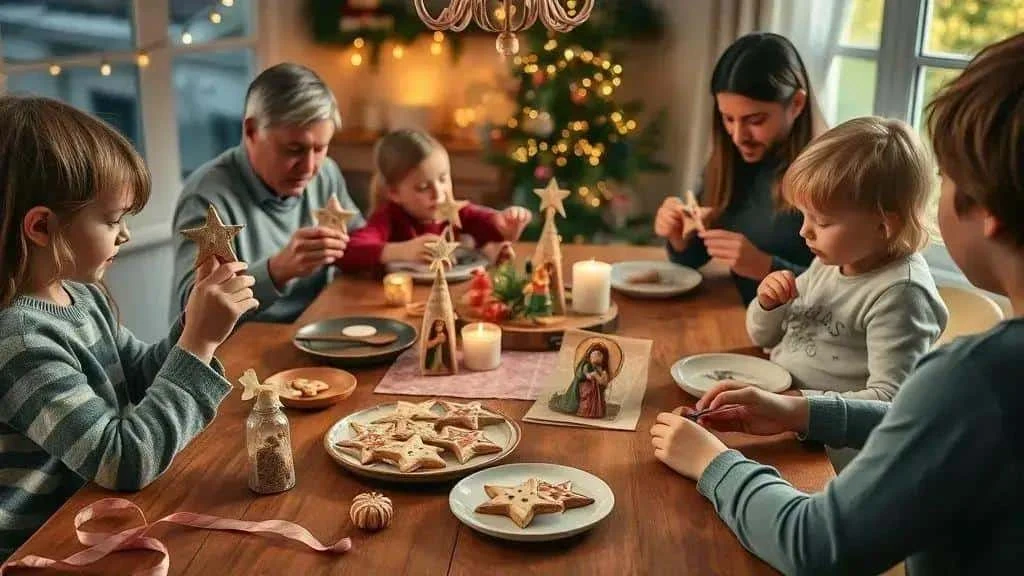
Sharing manageable Christmas tasks can make room for conversation and family memories. Offer different ways to join in, including quieter activities or simply watching.
Activities to try together
- Arrange a nativity scene — let children handle suitable large figures while adults position fragile pieces.
- Share stories and songs — invite willing relatives to recall a Christmas memory or choose a familiar song.
- Make a shared Advent-style countdown — include simple tasks such as creating an ornament, writing a letter or arranging a welcome visit with a neighbour.
- Hold a craft afternoon — make stars or decorate prepared wooden shapes using suitable reused materials.
- Cook together — divide preparation, decorating and packing into safe tasks that suit each person.
A simple ornament workshop
Gather suitable materials before starting:
- Clean craft straw or smooth, blunt-ended sticks
- Age-appropriate rounded scissors
- Suitable PVA glue; hot glue only for adult handling
- Ribbon and string, stored away from young children
- Age-appropriate craft paints and brushes
- Sort the materials: arrange them by type and give each participant a manageable selection.
- Make a basic shape: arrange straw into a simple star or circle and secure it using an appropriate method.
- Decorate: add colour or ribbon. Omit small beads where they could pose a swallowing risk.
- Dry and finish: leave flat until fully dry, then let an adult attach a suitable hanging loop.
Traditions children can help shape
Nativity plays, small meal-preparation tasks and simple gifts offer ways to participate. Encourage questions and choices without requiring every child to enjoy the same activities.
Simple homemade gifts
Choose projects that fit the time and materials available:
1) Decorated biscuits
- Ingredients: 200 g plain flour, 100 g softened butter, 80 g sugar, 1 egg and optional vanilla extract to taste.
- Make the dough: cream the butter and sugar, mix in the egg and optional vanilla, then add the flour to form a dough. If too soft to roll, chill until manageable.
- Shape and bake: roll evenly, cut shapes and bake in a preheated oven at 180°C, checking from about 10–12 minutes. Timing varies with thickness, so check doneness: the edges should be lightly golden and the biscuits baked through.
- Decorate: once completely cool, add a simple icing-sugar-and-water icing and suitable decorations if wanted. Let the icing set before packing in food-safe bags, with ingredient and allergen information.
2) A painted wooden ornament
- Use a smooth prepared wooden shape, appropriate craft paint and a ribbon for hanging. A compatible protective finish is optional and should be handled according to its instructions.
- Prepare: an adult can smooth rough edges with fine sandpaper, removing dust before painting.
- Paint: add a base colour and small details with a suitable brush.
- Finish: allow to dry fully, apply any suitable finish as directed and attach the ribbon.
3) A jar of sweets or baking mix
- Choose a clean food-safe jar with a sound lid. For a dry baking mix, use a complete, tested recipe with measured ingredients; the general idea of layering flour, sugar and cocoa is not itself a recipe.
- Fill the jar: layer the measured dry ingredients from that recipe, or use suitable ready-to-eat sweets kept within their original storage requirements.
- Label clearly: include ingredients, allergens, preparation instructions and an appropriate storage period based on the contents, rather than inventing a shelf life.
Safety, inclusion and suitable materials
- Use appropriate craft products and supervise scissors; adults should handle hot glue.
- Reuse sound fabric and packaging where suitable. Glass containers need careful handling and are not automatically safe for candles or every food use.
- Identify allergens in edible gifts. Make a gluten-free or dairy-free claim only when the ingredients and preparation arrangements support it.
- Offer tasks suited to each person’s abilities, interests and access needs.
Sharing the organisation
Make a short activity list, agree manageable times and share responsibilities: music, photographs, preparation or wrapping. Participation matters more than a perfectly coordinated event.
Reuse, thoughtful spending and modern adaptations
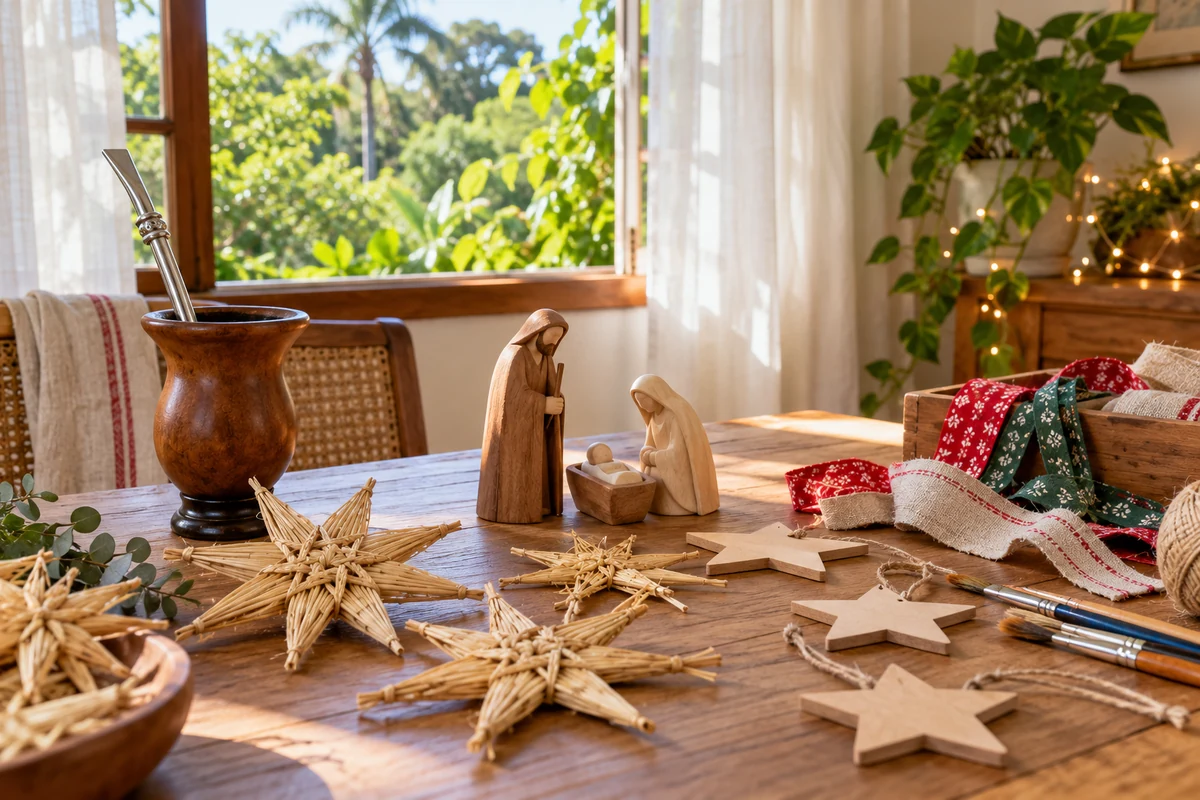
Traditions can evolve without losing their personal meaning. Using what you already have and planning realistic quantities can reduce some waste and expense, although no material or activity is automatically sustainable.
Reusing decorations and materials
Sound boxes can become gift packaging, fabric scraps can become bows and suitable twigs can become wreaths. Straw and wooden ornaments may last for years if cared for; paint, glue and mixed materials affect whether they can eventually be composted or recycled.
- Reuse suitable paper and fabric for wrapping and gift tags.
- Repair safe, repairable ornaments before replacing them.
- Choose suitable finishes and avoid assuming that every natural or water-based material is harmless.
Sharing and keeping costs manageable
Neighbours or community groups may be able to share tools, decorations and skills. Agree on condition, safe use and return arrangements before lending items.
- Arrange an ornament swap if there is interest locally.
- Consider borrowing or hiring decorations where practical, comparing transport, cost and likely reuse.
- Buying from local craftspeople can support local livelihoods; choose items you expect to use and value.
Planning food with less waste
Match quantities to your guests and store food appropriately. Compost only materials suitable for your local system. For readers trying these ideas in Britain, GOV.UK guidance prohibits feeding household kitchen waste to farmed animals, including farm species kept as pets. Source: GOV.UK: prohibited kitchen waste in farm animal feed
- Plan portions: prepare a realistic amount and use safely stored leftovers within the relevant time limits.
- Consider seasonal produce: locally available fruit and vegetables may be useful choices, but location alone does not establish a lower environmental impact.
- Use suitable reusable containers: clean food-safe boxes and bags can help with storage and transport, keeping chilled food cold.
- Separate waste correctly: provide containers for the recycling and food-waste streams actually accepted locally.
Reuse workshops for the community
Transform suitable fabric scraps into decorations and cardboard tubes into stars. Reused bottles can hold decorative stems rather than improvised naked flames. Such activities can share local skills while making use of existing materials.
- Collect suitable clean supplies and discard damaged or unsafe items.
- Plan simple projects matched to participants’ abilities.
- Save notes or photographs if you would like to repeat a successful idea.
Lighting and energy use
Suitable LED fairy lights can use less electricity than comparable older lighting. Limit their operating hours and switch them off before bed or going out, following the product instructions.
- Use a compatible timer where helpful, without treating it as a substitute for checking equipment.
- Avoid overloaded sockets and buy lighting suitable for the intended indoor or outdoor use.
Thoughtful gifts and shared celebrations
Experiences, suitable donations, useful local products and reusable gifts may suit your household. A Secret Santa with an agreed spending limit can keep costs manageable without making handmade gifts compulsory.
- Encourage suitable reusable wrapping or use existing packaging.
- Make a shared countdown with practical acts such as donating requested items or offering welcome help to a neighbour.
- Share ideas as options, leaving room for different budgets and beliefs.
Christmas in southern Brazil includes many overlapping histories. German-Brazilian and gaúcho traditions are part of that story, alongside other influences, with food, music, crafts and family memories taking different forms in different homes.
Try a regional recipe, a simple craft or an activity shared across generations. Suitable LED fairy lights, reused decorations and thoughtful buying can be practical choices without needing to turn the celebration into a competition.
Thank you for reading. Follow our social channels for more ideas, recipes and crafts, and visit the I Love Christmas blog for further inspiration. Enjoy the festive season.
Christmas in southern Brazil: frequently asked questions
Which southern Brazilian cities have German-Brazilian heritage?
Blumenau, Joinville, Novo Hamburgo and Santa Cruz do Sul are examples with important German-Brazilian histories. This is not a ranking, and each city has other cultural influences as well.
Which foods could feature in a regional Christmas meal?
Cuca, breads, sausages, arroz carreteiro or barbecue may suit a family menu. Panettone is also popular in Brazil, but its origins are Italian rather than German. Choices vary between households.
How can children take part in Christmas traditions?
Offer suitable craft projects, songs, stories, nativity activities where appropriate and supervised kitchen tasks, allowing them to choose how they participate.
How can I reduce waste in Christmas decorations?
Reuse sound materials, care for ornaments so they last, share decorations where practical and use suitable lighting for limited periods. Consider actual reuse rather than assuming a material is automatically sustainable.
Where can I find Christmas markets and events in the region?
Check current information from municipalities, venues, cultural associations and CTGs. Confirm the specific dates, location, booking and access arrangements before travelling.
How can families support their German-Brazilian language heritage?
Family conversation, community teaching, choirs and cultural groups can support language use. Follow the particular language or variety relevant to the community, respecting different levels of fluency and interest.
Sources and Further Reading
- Rio Grande do Sul: 200 years of German immigration
- IPHAN: traditional peoples and communities of the Pampa
- Italia.it: the history of panettone
- Food Standards Agency: rice and leftovers
- London Fire Brigade: winter and festive lighting safety
- GOV.UK: prohibited kitchen waste in farm animal feed