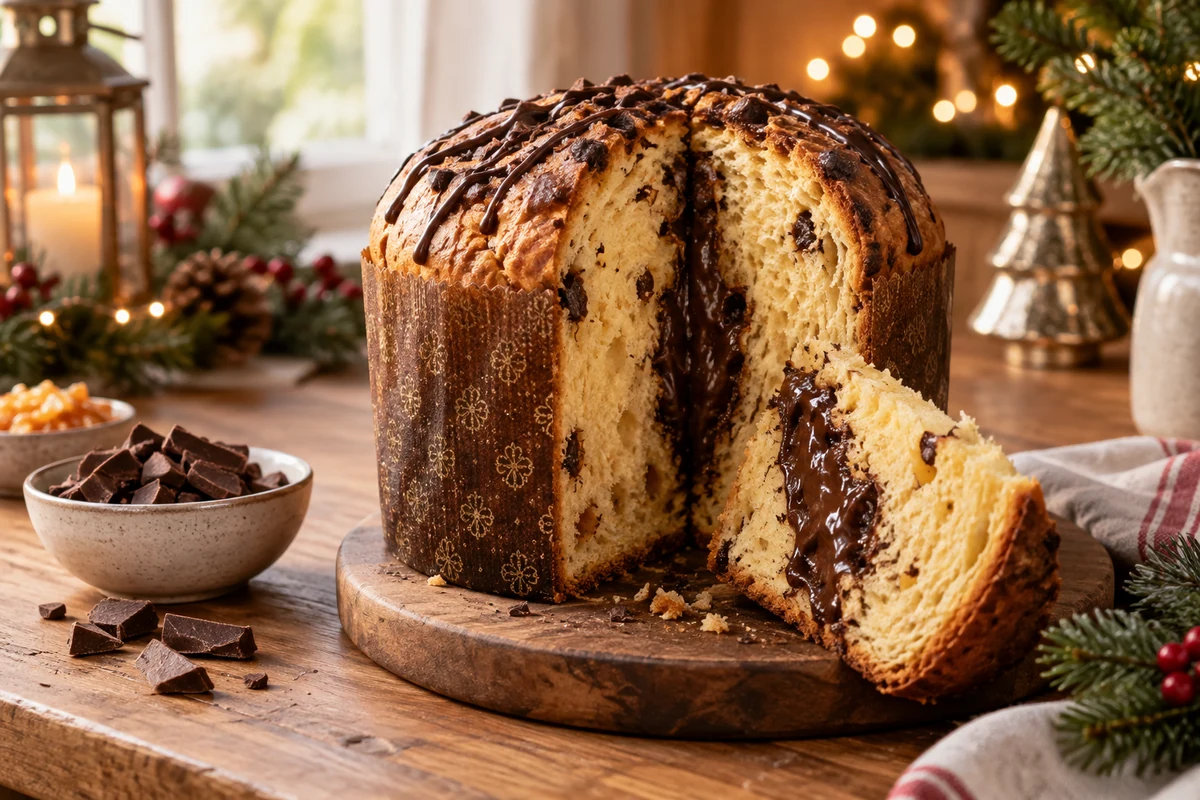
Chocolate-filled panettone turns a ready-baked sweet bread into a Christmas dessert. Make a thick chocolate ganache, hollow or slice the loaf, fill it gently and chill before cutting. The cream filling makes refrigerated storage essential.
A chocolate-filled panettone is an inviting addition to a Christmas table. This guide explains how to prepare the ganache, keep the loaf intact and serve neat slices without making the filling too runny.
Ingredients for Chocolate-Filled Panettone
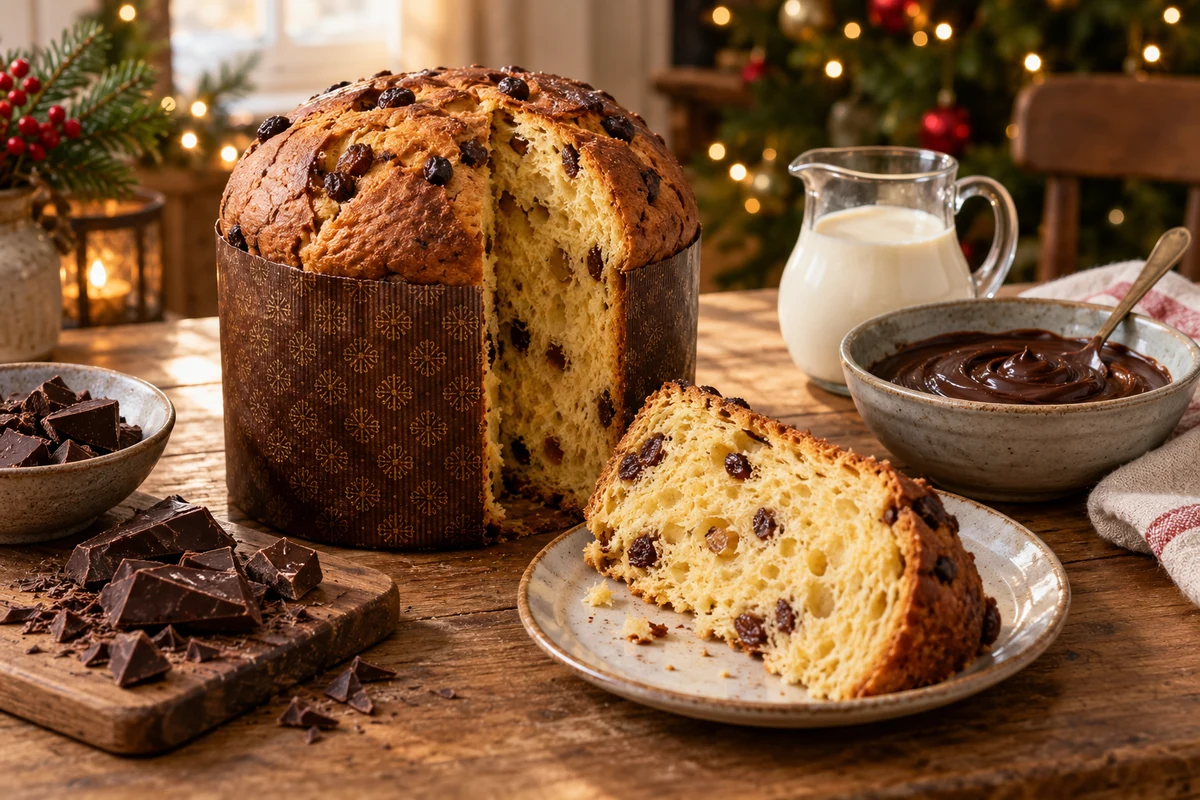
For this chocolate cream-filled panettone, start with a bought or fully baked homemade loaf. The quantities below make a batch of ganache; the amount that fits will depend on the loaf and how you cut it.
Panettone: the Quick Option
- 1 plain or traditional panettone, 500–750 g — choose a fruit-free version if you prefer a simpler flavour.
- Whipped cream, optional — for a separately prepared, aerated filling variation. The original does not specify a pack size or proportion, so it is not required for the main recipe; adding cream does not necessarily reduce calories or sugar.
Chocolate Ganache Filling
- 300 g dark chocolate, chopped — around 50–60% cocoa gives a balanced flavour. Milk chocolate makes a sweeter, usually softer ganache and may need a different cream ratio.
- 200 ml double cream — do not replace this with an entire 300 g tin of cream and assume the same consistency.
- 30 g unsalted butter — for a smooth finish. The suggested alternative of 25 g solid coconut oil changes flavour and setting behaviour, so treat it as a variation.
- 2 tablespoons cocoa powder (optional) — use unsweetened cocoa for a stronger chocolate flavour.
- Up to 50 g icing sugar (optional) — taste the cooled mixture first. With sweet chocolate, reduce or omit the extra sugar.
- 1 teaspoon vanilla extract — or a little orange zest for a festive variation.
Useful Equipment
- Piping bag with a wide nozzle — optional, for placing the filling neatly.
- Silicone spatula — for mixing and spreading.
- Stable board or serving plate — plus a long serrated knife for cutting the loaf.
Notes and Substitutions
If baking from scratch, follow a complete tested panettone recipe. The original’s outline of 500 g flour, 100 g sugar, 10 g dried yeast, 4 eggs, 150 ml milk, 100 g butter and orange zest is not a complete method and does not yield just one 750 g loaf. A ready-made panettone lets you concentrate on the filling.
For a dairy-free variation, check the panettone itself as well as the chocolate, cream and butter. Coconut cream can replace the dairy cream in a suitable ganache formula, but the setting texture may change. Higher-cocoa chocolate and no added icing sugar can reduce added sweetness without making the dessert sugar-free.
For extra texture, add 50 g chopped candied fruit or some toasted nuts to the filling. Check allergies before choosing nuts.
How to Make Chocolate-Filled Panettone
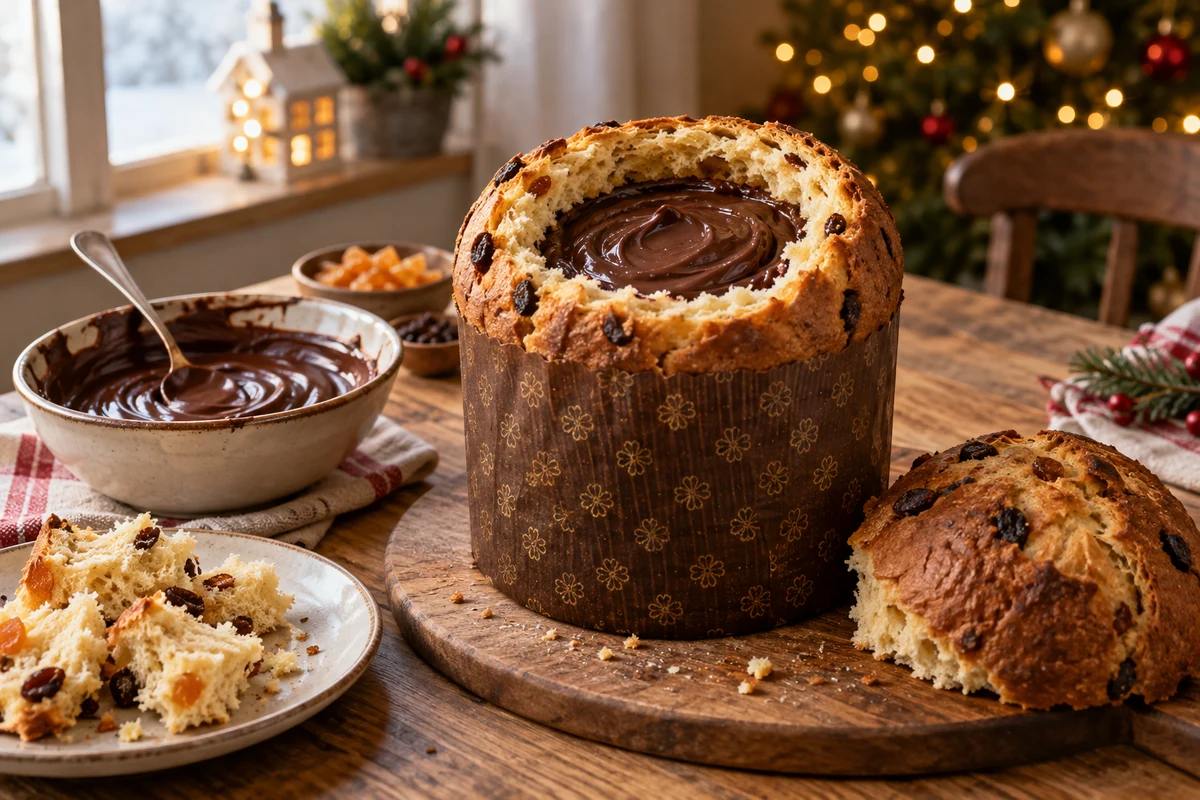
- Make the ganache: place 300 g chopped dark chocolate in a heatproof bowl. Heat 200 ml double cream until just below boiling, pour over the chocolate and leave for a minute. Stir until smooth, then incorporate 30 g butter and the vanilla. Sift in optional cocoa or icing sugar gradually if using. Cool until thick and pipeable, checking after about 30–40 minutes; chill briefly if needed.
- Open the loaf: cut off the domed top with a long serrated knife and set it aside. Scoop out some crumb, leaving a sturdy wall and base of at least about 1–1.5 cm, or thicker if the bread is fragile. Keep the removed crumb for another use.
- Easier alternative: slice horizontally. Cut the panettone into a top and bottom layer, then spread filling between them instead of hollowing it out.
- Check the filling: it should hold its shape softly without running. If too firm, warm very gently over a water bath or in 5–10-second microwave bursts, stirring between each. Do not pour hot ganache into the loaf.
- Fill gently: spoon or pipe ganache into the open cavity in small amounts. Do not force the nozzle into intact bread or keep squeezing against resistance, which can split the walls.
- Level: smooth the filling without packing it tightly. For the layered version, spread an even layer, up to about 1–2 cm where the bread can support it. You may have filling left over.
- Close: replace the top gently, remove any filling from the outside and add a small decorative finish if desired.
- Chill: cover and refrigerate for about 1–2 hours, or until the filling is firm enough to cut. Chilling time varies with the chocolate and the size of the loaf.
- Decorate: use chocolate shavings, sifted cocoa, toasted nuts or candied fruit. An optional syrup made by heating 1 tablespoon water with 1 tablespoon sugar can be cooled and brushed on sparingly; avoid making the bread soggy.
- Serve: bring out only what you plan to serve, allowing around 20–30 minutes for the filling to soften in a cool room. Cut gently with a serrated knife and return leftovers promptly to the fridge.
- Store: keep covered at 5°C or below and use within 48 hours, or sooner if an ingredient’s use-by date requires it. Freeze suitable portions promptly if keeping longer; thaw in the fridge and eat within 24 hours of full defrosting. Fresh cream and fruit fillings may change texture when frozen.
Tips and Substitutions
- Dairy-free: use a suitable dairy-free loaf, chocolate and fat as well as a tested coconut-cream filling. Changing only the cream is not enough.
- Sweeter chocolate: milk chocolate sets differently. Use an appropriate ganache ratio rather than trying to correct a soft filling simply by shortening refrigeration.
- Festive additions: try 50 g chopped candied fruit or 40 g nuts in the ganache, allowing room in the loaf for the extra volume.
- Leftover crumb: use it in a thoroughly baked bread pudding, toast it for a dessert topping or follow a suitable recipe for chilled chocolate truffles.
Chocolate-Filled Panettone Variations
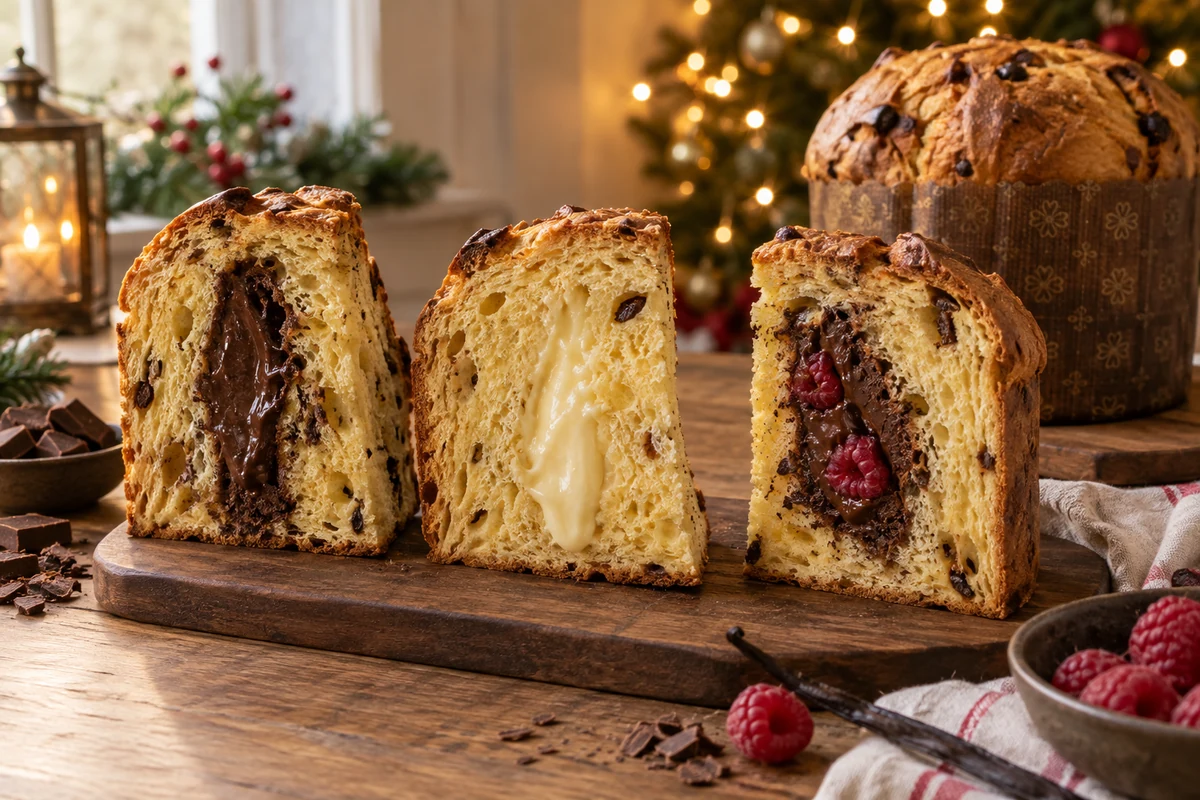
These ideas give chocolate cream-filled panettone different flavours and textures. Use a filling that is thick enough for the loaf, and keep perishable versions refrigerated.
Alternative Fillings
- Dark chocolate ganache: the main recipe uses 300 g dark chocolate and 200 ml double cream. This makes more than some 500–750 g loaves can hold. Coconut cream behaves differently from thin coconut milk, so do not treat them as equivalent substitutes.
- Soft brigadeiro: use a tested filling recipe with condensed milk, butter and unsweetened cocoa. The original suggests one tin, 1 tablespoon butter and 3 tablespoons cocoa, but gives no tin weight; confirm it before cooking. Cool the filling before use. Cocoa percentage is not a substitute for specifying unsweetened cocoa powder.
- Dulce de leche and walnuts: combine 300 g dulce de leche with 50 g chopped walnuts. Pecans or almonds give different flavours, but are not suitable substitutes for someone avoiding nuts.
- Chocolate-hazelnut spread: use 250–300 g spread, softened only enough to work with. Pure hazelnut paste and peanut butter have different sweetness, texture and allergens, so they are variations rather than identical replacements.
- White chocolate and berries: make a filling with 250 g white chocolate and 100 ml cream, then cool before folding in 50 g washed, well-dried chopped berries. Chill and serve promptly; fresh fruit reduces storage flexibility.
- Vegan filling idea: 200 g vegan chocolate with 200 ml coconut cream and an optional teaspoon of coconut oil gives a softer mixture than the main ganache. Check that it sets sufficiently, and use a vegan panettone too.
- Crunchy filling: fold up to 60 g chopped biscuits, toasted bread pieces or praline into ganache shortly before assembly. They soften over time; check ingredients for nuts and gluten.
- Alcohol, optional: add 1–2 tablespoons rum, orange liqueur or cream liqueur for adults who choose to consume alcohol. This uncooked addition remains in the filling and may soften it.
How Much Filling to Use
- Starting guide: allow roughly 250–400 g filling for a 500–750 g loaf, but stop before weakening or overfilling the shell. The recipe makes a larger batch; refrigerate any excess promptly.
- Consistency: cool or briefly chill runny ganache until it is spreadable. Check after 30–60 minutes rather than assuming that this timing suits every mixture.
- Distribution: use a wide piping nozzle or spoon, then smooth with a small spatula without compressing the bread.
Christmas Decoration and Presentation
- Simple finish: chocolate shavings, a little cocoa or icing sugar.
- Festive details: candied fruit or decorations labelled edible. Whole nuts are unsuitable for children under five; choose toppings to suit your guests.
- Topping: spread a little melted chocolate over the dome or apply a light brush of cooled syrup. These are optional extras, not required for the filling to work.
- Individual servings: place slices or small portions in dessert dishes with a little extra filling. Cutting slices does not turn them into separately baked mini panettones.
Dietary Variations
- Lactose-free or dairy-free: check every ingredient, including the loaf. Vegan chocolate and coconut cream do not remove dairy already in panettone or butter. Lactose-free dairy is also not suitable for a milk allergy.
- Less added sugar: choose a higher-cocoa chocolate and omit optional icing sugar. The loaf and chocolate can still contain sugar; this is not a sugar-free dessert.
- Gluten-free: use a suitable bought gluten-free panettone or a tested gluten-free bread recipe. Check fillings and prevent cross-contact with wheat crumbs and utensils.
- Aerated filling: a tested mousse-style filling can combine cooled ganache with whipped cream. This changes texture and refrigeration needs and is not automatically lower in fat or sugar.
Filling, Assembly and Storage Tips
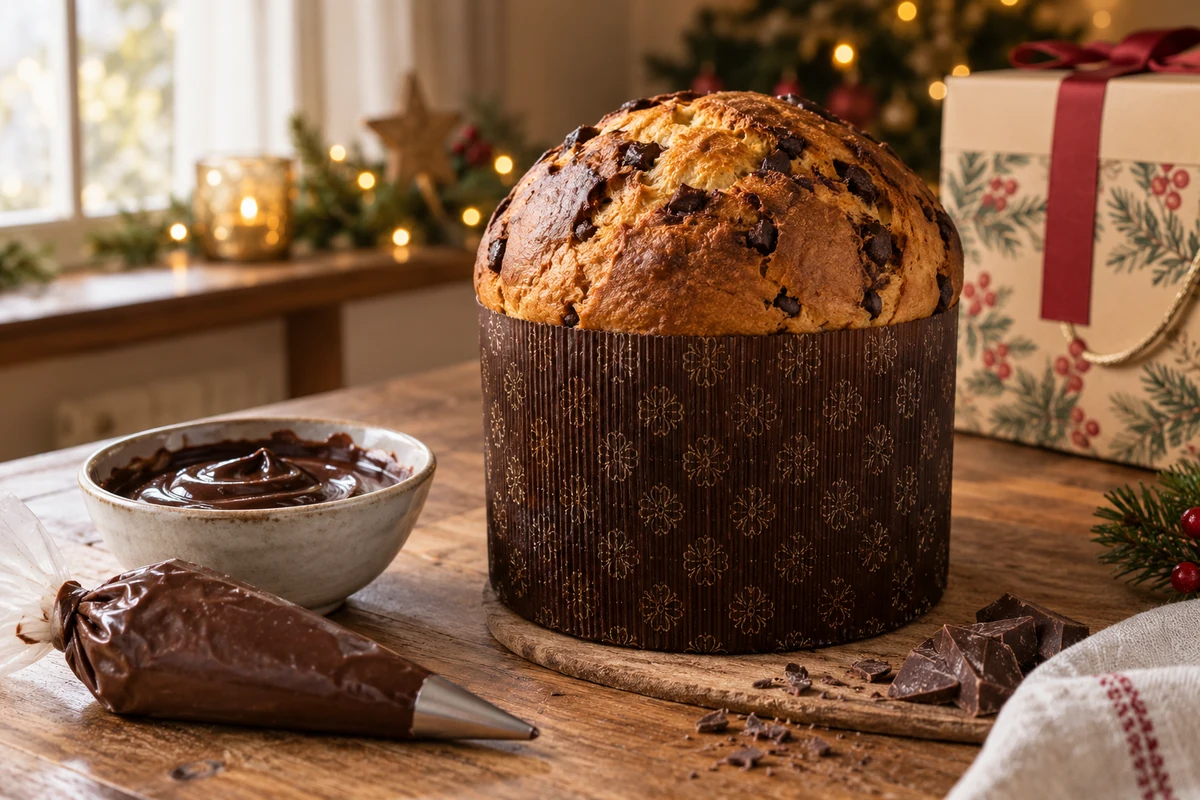
Filling Tips
- Temperature: fill with cool, thick, spreadable ganache, not a hot liquid. Then close the loaf and refrigerate it.
- Quantity: start with about 250–350 g for a 500–750 g loaf and add more only if it fits comfortably. Capacity matters more than using every gram of the batch.
- Texture: let the ganache cool before deciding it is too thin. Changing the chocolate or cream quantity changes the formula, so make small, considered adjustments if necessary.
- Crunch: a separate variation can use 50–80 g chopped nuts, biscuits or praline. Do not add this on top of every other suggested inclusion.
- Extra flavour: orange zest, a pinch of salt or an optional tablespoon of liqueur can complement the chocolate.
- Fresh fruit: wash and dry it well, fold into cooled filling and chill promptly. Dried or candied fruit introduces less moisture but still needs checking for allergens and suitability.
Assembly Checklist
- Cut the top: use a serrated knife on a stable board and remove the dome carefully.
- Remove some crumb: leave a sound base and walls at least about 1–1.5 cm thick, increasing this if the loaf is fragile.
- Prepare the filling bag: use a wide nozzle and cool, pipeable ganache, or simply use a spoon.
- Fill the cavity: build up the filling gently in the open hollow, leaving room to replace the top. Stop if the bread begins to split.
- Level: smooth the surface with a spatula without forcing the mixture down.
- Optional crunch: add your chosen nuts or biscuit pieces, considering guests’ dietary needs.
- Close: put the top back with only light pressure.
- Chill: cover and refrigerate for around 1–2 hours, checking that the filling has firmed before cutting.
Storage and Transport
- Refrigeration: store covered at 5°C or below for up to 48 hours, respecting any earlier ingredient use-by date. Let serving portions soften briefly in a cool room rather than leaving the whole loaf out for hours.
- Freezing: if the filling is suitable, freeze portions promptly with baking paper between slices. Thaw in the fridge and use within 24 hours of full defrosting. Cream and berries may lose texture; freezing does not reset an ingredient’s prior storage history.
- Transport: use a sturdy container and chilled transport with ice packs for this perishable dessert. Keep it cold until serving.
- Fresh fruit fillings: plan to eat them promptly. Removing visible fruit later does not make an older filling safe to keep longer.
Wrapping and Serving
- Festive wrapping: place the loaf in food-safe packaging inside a decorative box. Keep pine sprigs, ribbons and other non-edible decorations outside the food-contact layer.
- Hygiene and labelling: wash hands, use clean equipment and add ingredients, allergens, preparation date and refrigeration instructions. Gloves do not replace handwashing.
- Portions: cut slices around 2–3 cm thick if the loaf holds together, and garnish with suitable dried fruit or washed mint.
- Gifts: small filled panettones need the same refrigerated storage and chilled delivery as a full-size loaf.
Serving Ideas and Drinks
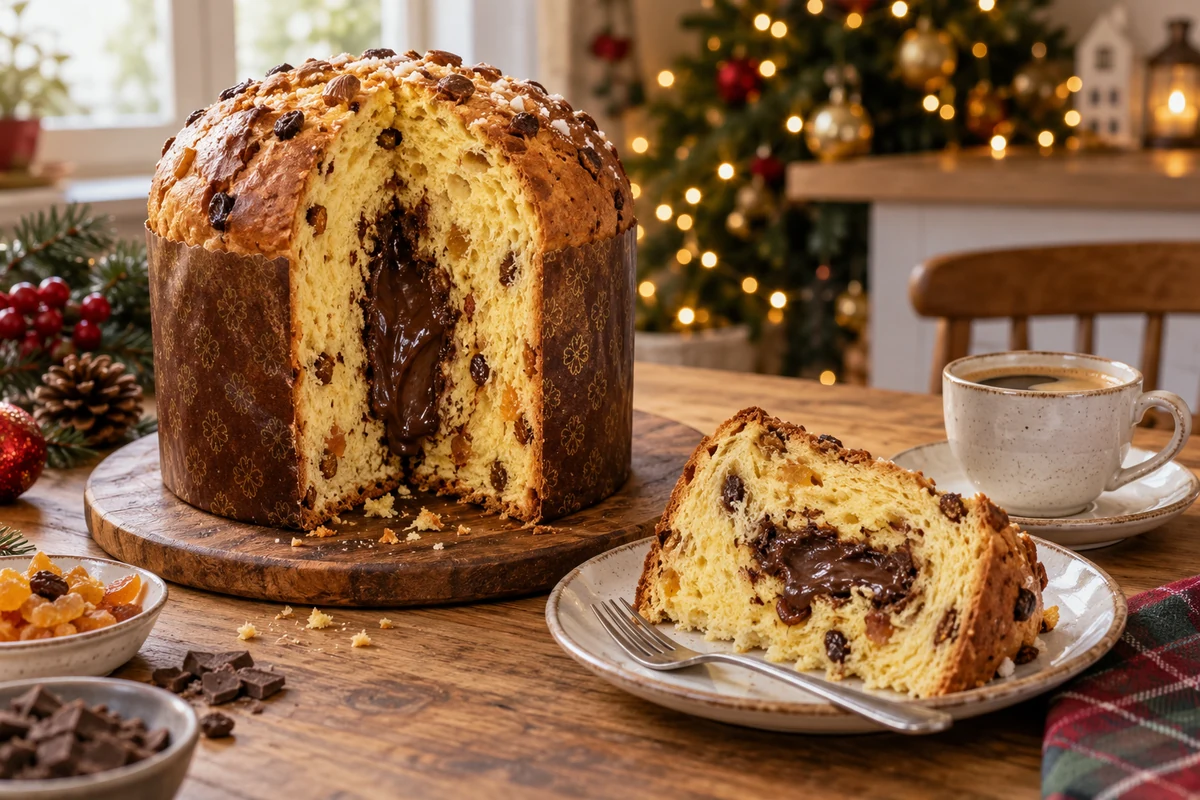
Serve chocolate cream-filled panettone in modest slices and choose drinks that suit your guests. Coffee, tea and other alcohol-free options work well alongside optional wine pairings.
A Few Background Notes
- Origins: panettone is associated with Milan. Filled versions are a variation on the sweet bread; no precise invention date is needed to enjoy them.
- Texture: airy bread contrasts with the smooth chocolate filling.
- Brazilian Christmas tables: panettone is enjoyed as a seasonal sweet, and filled versions are also given as gifts.
Drinks to Serve Alongside
- Espresso: a small coffee, around 30–60 ml according to preference, offers a contrast to the sweet filling.
- Filter coffee: practical for a larger gathering. Serve at a comfortable drinking temperature rather than prescribing a very hot 65–75°C.
- Light red wine, optional: some guests may enjoy Pinot Noir or a young Merlot, although dry wines can taste sharper beside a sweet dessert. Follow the bottle’s serving guidance.
- Port or dessert wine, optional: offer a small measure to adults who choose alcohol, alongside alcohol-free alternatives.
- Liqueurs, optional: orange liqueur or a small measure of rum is another adult serving choice. Rum is a spirit, not an amaro.
- Hot chocolate: choose dairy or a suitable plant-based milk. Allow it to cool appropriately before serving children.
Presentation
- Neat slices: use a long serrated knife and gentle sawing movements after allowing the serving portion to soften briefly.
- Portion size: a 2–3 cm slice is a starting point; adjust for the richness of the filling and the rest of the meal.
- Serving plate: a simple platter shows off the chocolate. Add shavings, dried fruit or washed mint sparingly.
- Gift box: wrap the food safely, place baking paper between slices if needed and attach decorations to the outside. Include clear chilled-storage instructions.
Ideas for Different Occasions
- Christmas dinner: serve a slice on a dessert plate with a little candied fruit and the guest’s chosen drink.
- Christmas breakfast: offer smaller portions with coffee or tea. Extra honey or cream is optional, as the dessert is already rich and sweet.
- Gifting: individually wrapped mini loaves can be attractive, provided they stay refrigerated and are delivered chilled.
Final Serving Tips
- Match to taste: stronger coffee contrasts with sweet chocolate, but pairing is personal rather than a fixed rule. Offer a simple alcohol-free choice.
- Serving temperature: about 20–30 minutes out of the fridge can soften the portion being served in a cool room. Keep the rest chilled.
Conclusion
A chocolate cream-filled panettone makes a practical Christmas dessert when you begin with a ready-baked loaf. A thick filling, sturdy bread walls and proper chilling help it hold together.
Choose one variation, adjust sweetness to taste and remember that a cream-filled loaf needs refrigerated storage and prompt use.
Visit the I Love Christmas blog for more seasonal recipes and serving ideas.
If you try this dessert, share the filling you chose and how you served it.
FAQ — Chocolate Cream-Filled Panettone
How long can I keep filled panettone in the fridge?
Keep it covered at 5°C or below and use within 48 hours, or sooner if an ingredient requires it. Allow only the portion being served to soften briefly outside the fridge. The original five-day claim has not been established for this homemade filling.
How can I stop the filling leaking when I cut it?
Use cool, thick ganache, avoid overfilling and keep sturdy bread walls and a base. Close and chill for about 1–2 hours, checking that it has set, then cut gently with a serrated knife.
Can I use a bought panettone?
Yes. Use a 500–750 g ready-made loaf that holds together well. A fruit-free version gives a simpler chocolate flavour, but a traditional fruit loaf also works.
How can I make a lactose-free or dairy-free version?
Check the loaf, chocolate, cream, butter and toppings. A suitable coconut-cream ganache can be used with a compatible loaf, but changing cream alone does not remove other dairy. Lactose-free dairy products are not suitable for a milk allergy.
What drinks go with chocolate-filled panettone?
Coffee, tea and hot chocolate are straightforward choices. Adults who choose alcohol may enjoy a small port or dessert wine; pairing depends on taste, and alcohol-free options should be equally available.
Sources and Further Reading
- Food Standards Agency: chilling, freezing and defrosting food
- NHS: foods to avoid for babies and young children