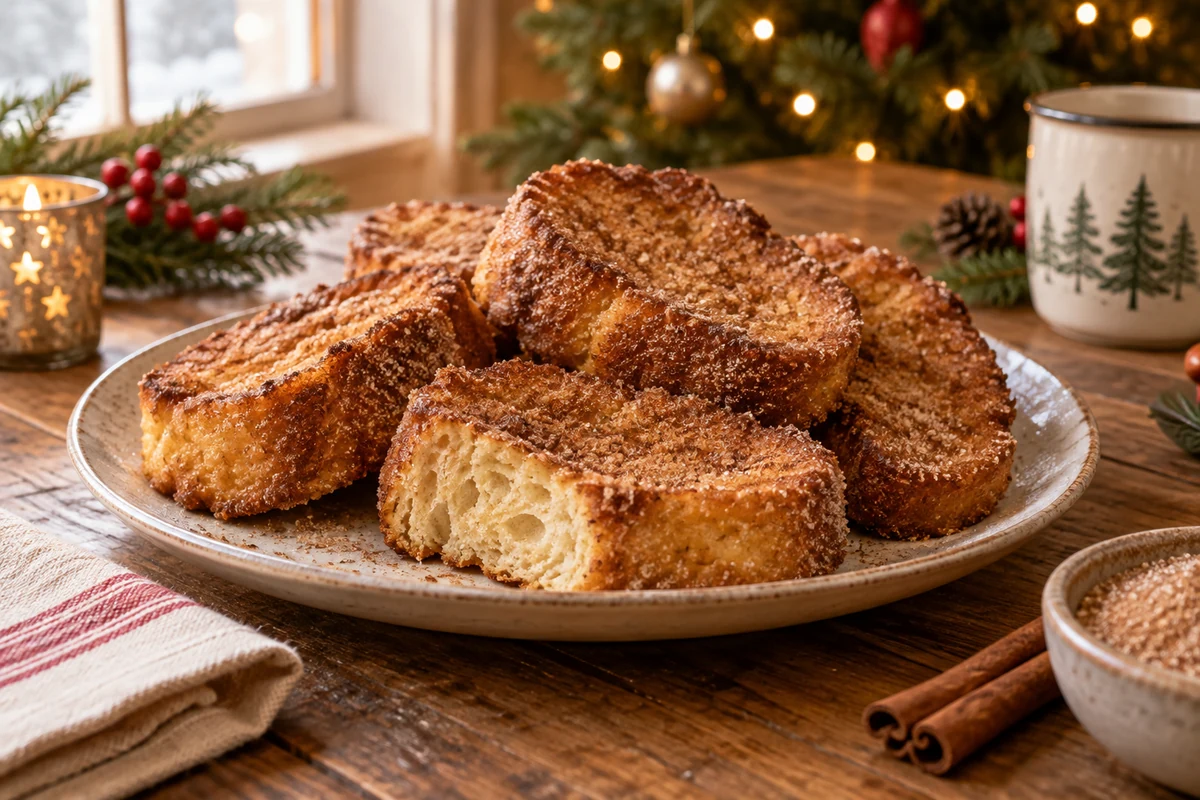
Christmas rabanada is a sweet bread dish similar to French toast: day-old slices are soaked in milk and egg, fried until cooked through and finished with cinnamon sugar. Even slices, controlled soaking and suitable oil temperature help create a golden outside and soft centre.
Christmas rabanada is a familiar festive treat in Brazil, with the comforting scent of cinnamon and warm bread. This fried version includes practical guidance on soaking and cooking, plus baked and plant-based variations.
Ingredients for Traditional Fried Christmas Rabanada
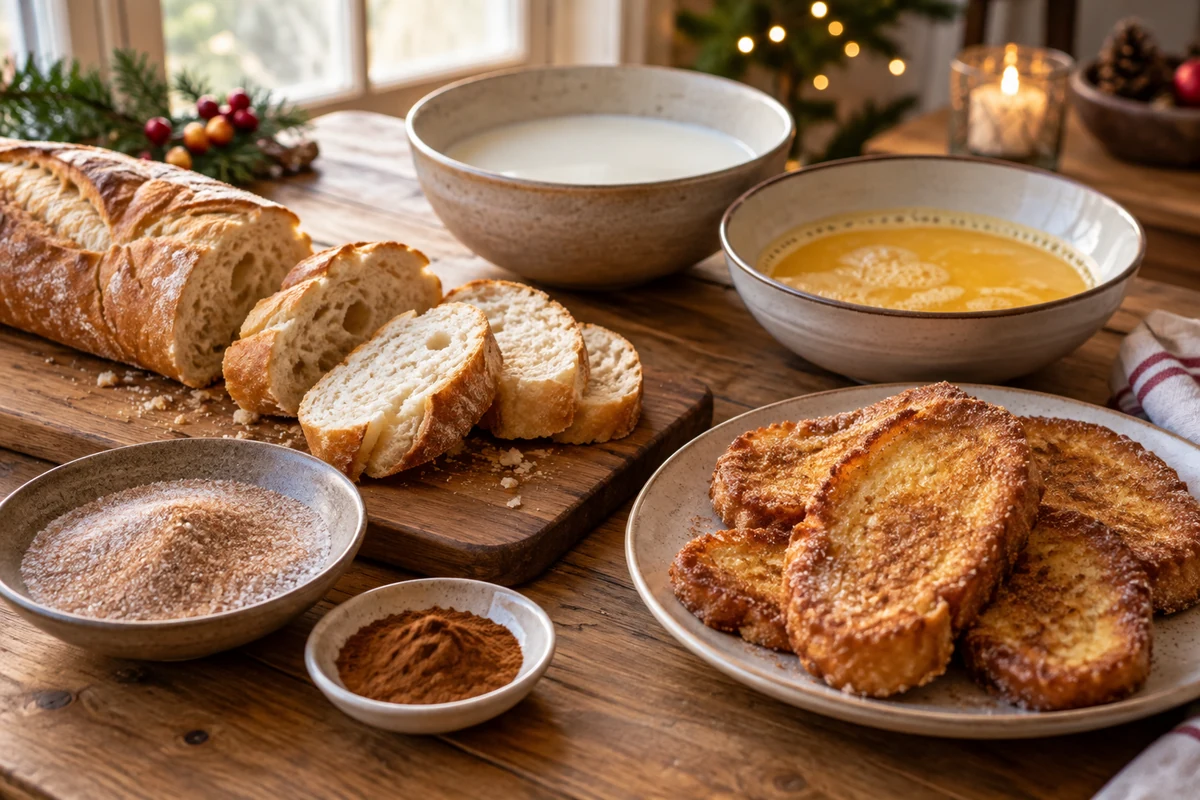
For traditional fried Christmas rabanada, gather the ingredients below. Expect roughly 10–12 slices, depending on the loaf’s shape and how thickly you cut it.
- 400–500 g day-old crusty white bread — such as a baguette-style loaf, cut about 2 cm thick. This weight is not one small Brazilian bread roll. Brioche gives a softer, richer result.
- 500 ml whole milk — semi-skimmed or a suitable unsweetened plant-based drink can be used. A plant drink changes flavour; extra cornflour is not automatically needed in the egg-based mixture.
- 3 large eggs — beaten. For an egg-free version, see the separate plant-based variation below; it will not behave exactly like egg.
- 4 tablespoons sugar — for the soaking mixture, plus another 4 tablespoons for coating if using the finishing quantities below.
- 1 teaspoon ground cinnamon — for the soaking mixture, plus another teaspoon for coating.
- 1 teaspoon vanilla extract — optional; orange zest is an alternative.
- A pinch of salt.
- Butter, optional, up to 50 g for finishing the batch — the original’s 50 g is not equivalent to 2 tablespoons. Oil alone is sufficient for frying; avoid adding water-containing butter to a deep pool of hot oil.
- Vegetable oil for frying — such as rapeseed or sunflower oil. The amount depends on the pan; the original’s approximately 500 ml is not a required amount for every pan.
- Icing sugar — optional, for serving.
- 1 teaspoon finely grated orange zest — optional; use this once, whether alongside or instead of vanilla.
Quick Ingredient Tips
- Use day-old bread that is slightly dry but free from mould. It generally holds together better during soaking than very fresh bread.
- For a fully vegan version, check the bread as well as the milk and cooking fat, and replace the eggs using the separate variation. Plant-based milk alone does not make the main recipe vegan.
- Cut even slices about 2 cm thick so the centres and surfaces cook at a similar rate.
- Use fresh, suitable frying oil and monitor it with an appropriate thermometer, aiming for 170–180°C. Temperature control helps avoid greasy bread and burnt outsides.
How to Make Traditional Fried Christmas Rabanada
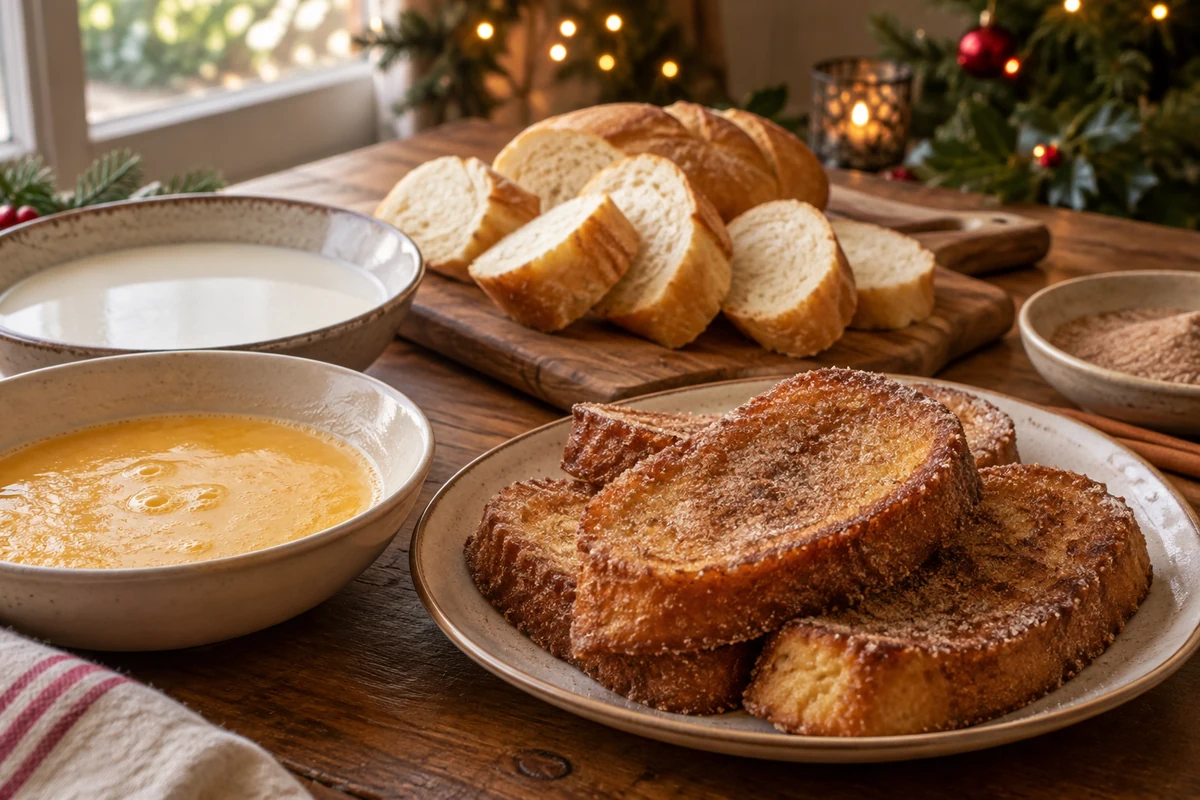
Prepare the traditional fried Christmas rabanada in small batches, keeping the raw egg mixture separate from cooked slices.
- Set up: have shallow bowls, a whisk, a stable deep-sided frying pan, a suitable frying thermometer, long tongs or a spatula, kitchen paper and a wire rack ready. Cut the bread into even slices.
- Mix the soaking liquid: whisk together 500 ml milk, 3 eggs, 4 tablespoons sugar and 1 teaspoon cinnamon, with the optional vanilla or orange zest and a pinch of salt.
- Heat the oil: add enough for shallow frying, roughly halfway up a bread slice, while leaving generous headroom in the pan. Heat to 170–180°C using a suitable thermometer. A knife tip is not a reliable temperature test. Never leave the pan unattended.
- Soak the bread: begin with about 3–5 seconds per side, adjusting to the bread’s dryness. Let excess liquid drip back into the bowl; the slice should be moistened without falling apart.
- Optional extra egg coating: the main mixture already contains eggs, so a second dip is unnecessary. If you choose one, it requires additional beaten egg beyond the three listed, and all of the coating must cook through.
- Fry: lower the slices carefully into the oil without crowding. Start checking after 1½–2 minutes per side, but continue as needed until the centres are cooked through and the egg has set; colour alone is not enough.
- Optional butter finish: if desired, brush a little melted butter onto cooked slices away from the frying oil. Do not pour water-containing butter into a deep pool of hot oil, where it can spit.
- Drain: lift out with tongs or a slotted spatula, drain briefly on kitchen paper and transfer to a rack rather than stacking immediately.
- Coat: combine an additional 4 tablespoons sugar and 1 teaspoon cinnamon on a plate. Turn the warm slices in the mixture, using as much or as little as you prefer.
- Serve: offer warm rabanada on its own or with a little icing sugar, condensed milk, honey or jam. Toppings are optional; do not give honey to children under one.
- Cool and store: cool leftovers promptly and refrigerate within two hours, using within 48 hours. For reheating, 180°C for 8–10 minutes is a starting guide, not a guarantee: heat until steaming hot throughout and reheat only once.
Practical Tips
Day-old bread: use even slices around 2 cm thick and adjust the soaking time to their dryness.
Heat control: oil that is too hot browns the outside before the middle cooks. Lower the heat if necessary and allow the oil to recover between batches.
Flavour: orange zest adds freshness; replacing part of the white sugar with brown sugar gives a different flavour but does not make the dish sugar-free.
Frying Tips for a Golden Outside and Soft Centre
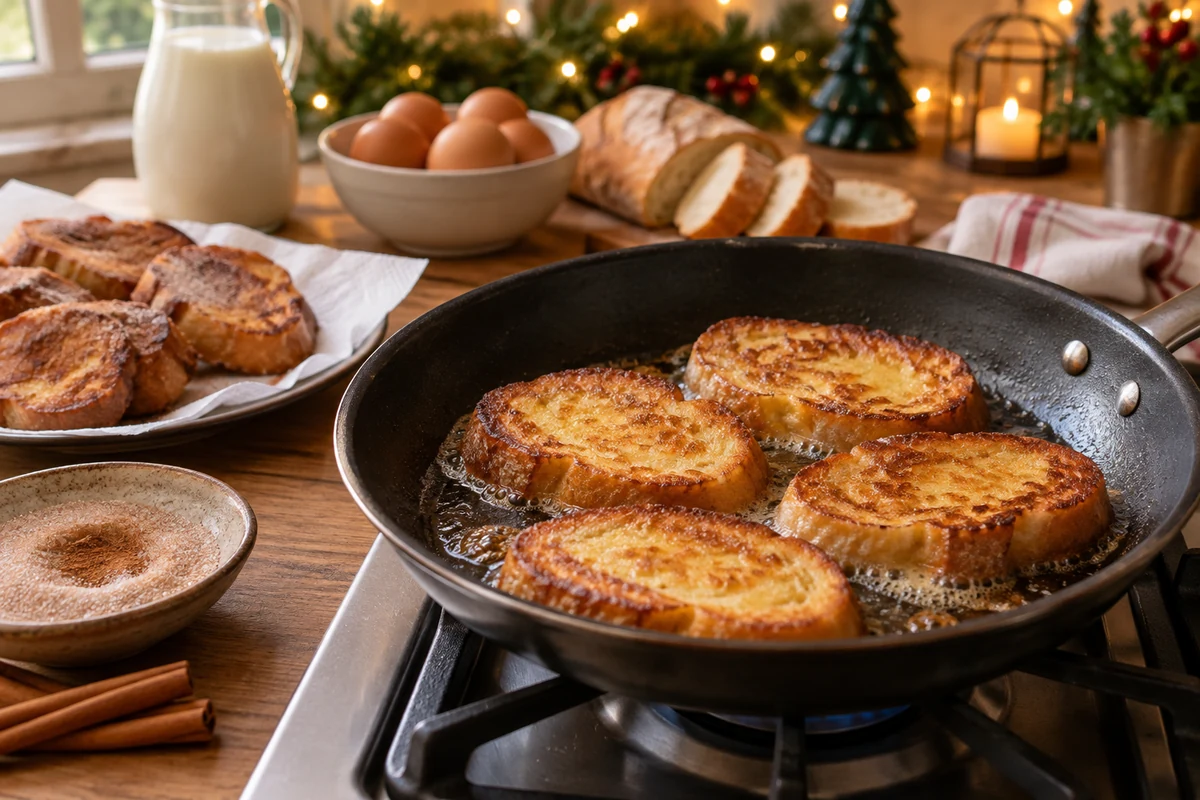
A few careful steps help rabanada hold its shape and cook evenly. Bread type, thickness and soaking all affect the result.
Oil Temperature
Aim for 170–180°C and use a thermometer designed for frying. Bubbling around a piece of bread cannot tell you an exact temperature. Reduce the heat if the surface colours too quickly.
Soaking Time
Start with 3–5 seconds per side. Dry, dense bread may need a little longer, while soft brioche needs less. Stop before the slice becomes fragile.
Slice Thickness
Slices around 2 cm are a useful starting point. Crusty bread gives a firmer edge, while brioche makes a softer, richer version.
Small Batches
Fry only as many slices as fit comfortably, often 2–4 depending on the pan. Leave space to turn them safely and check the centre of a sample slice before assuming the batch is done.
Butter and Oil
Butter is optional. Mixing it with oil does not stop its milk solids burning, and its water content can cause spitting. A light butter finish after frying is simpler than adding it to the hot oil.
Draining and Finishing
Drain briefly, then coat while warm with cinnamon sugar. Keep honey or condensed milk on the side if you want the surface to stay crisp for longer.
Troubleshooting
- Greasy or soggy slices: check that the oil is hot enough, shorten the soak if the bread is saturated and avoid crowding the pan.
- Burnt outside, undercooked centre: lower the heat and check slice thickness. Cook until the centre is hot and the egg set, rather than serving based on colour alone.
- Bread breaking apart: use a firmer loaf, let freshly cut bread dry briefly if necessary and reduce the soaking time.
Safety and Storage
Use long utensils, keep children away and never leave hot oil unattended. If oil catches fire, do not move the pan or use water; get out and call the emergency services. Let oil cool completely before handling it. Reheat refrigerated rabanada at 180°C for about 8–10 minutes, extending the time until steaming hot throughout.
Baked and Plant-Based Rabanada Variations
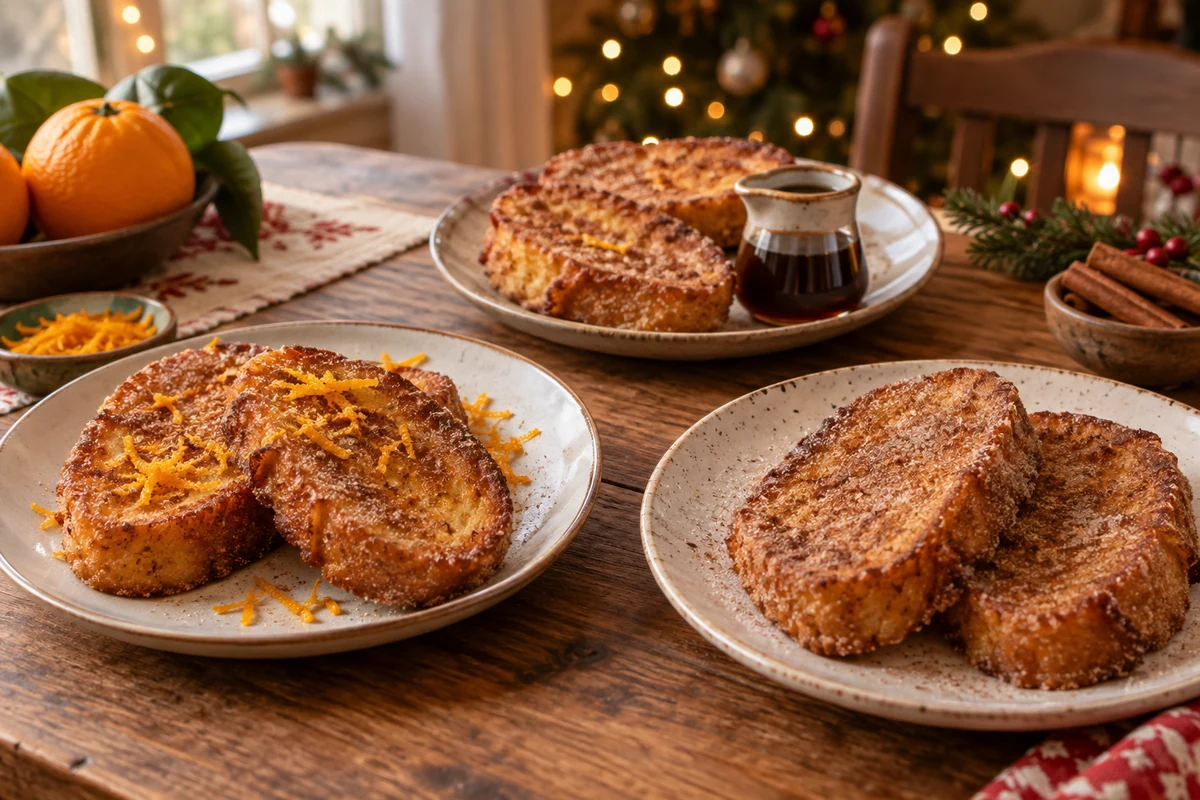
Baking avoids a pan of frying oil and can use less added fat. An egg-free version has a different coating, so try one slice before committing the whole batch.
Baked Rabanada
This version uses a lightly greased tray and a small amount of fat on the bread. The texture will differ from fried rabanada.
- 10 slices day-old bread, around 2 cm thick — a firm loaf or brioche.
- 500 ml milk — whole or a lower-fat milk according to preference.
- 3 large eggs — keep these for a dependable egg coating; yoghurt is not an identical egg replacement.
- 4 tablespoons sugar — white or demerara.
- 1 teaspoon ground cinnamon.
- 1 teaspoon vanilla extract — optional.
- 2 tablespoons melted butter — for brushing, or a suitable cooking oil used sparingly. Any final cinnamon-sugar coating is extra.
Baked Method
- Preheat: set a conventional oven to 200°C and prepare a baking tray with suitable baking paper or a light coating of fat.
- Mix: whisk the milk, eggs, sugar, cinnamon and optional vanilla together.
- Soak: dip each slice briefly, starting with 3–5 seconds per side, and arrange in one layer without overlapping.
- Brush: apply a thin coating of melted butter or suitable oil.
- Bake: begin checking after 10–12 minutes, turn and allow roughly another 6–8 minutes. Adjust to the oven and bread, ensuring the egg mixture is set and the centre cooked through.
- Finish: coat with optional additional cinnamon sugar while warm and serve.
Plant-Based Rabanada: Fried or Baked
This variation uses flaxseed in place of egg. It will have a different flavour and texture, so test a slice and adjust the soaking rather than expecting an identical result.
- 10 slices day-old vegan bread — check for milk, butter, eggs and honey in the loaf.
- 500 ml unsweetened plant-based drink — such as oat, soya or almond. An optional tablespoon of cornflour can give the coating more body; whisk it into cold liquid and cook it through.
- 3 tablespoons ground flaxseed and 9 tablespoons water — mix and leave for about 5 minutes to thicken. This is a different coating, not a nutritionally or functionally identical egg replacement.
- 4 tablespoons sugar — coconut sugar is another sugar, not a sugar-free substitute.
- 1 teaspoon cinnamon.
- 2 tablespoons suitable vegan baking fat or coconut oil — optional for brushing a baked version. For frying, use an appropriate vegetable oil instead.
Plant-Based Method
- Thicken the flaxseed: mix with the measured water and leave for about 5 minutes.
- Combine: whisk the plant-based drink, flax mixture, sugar and cinnamon, with optional vanilla if desired. Whisk any cornflour into the cold liquid first.
- Dip: begin with 3–5 seconds per side and handle the bread gently. Test one slice before soaking more.
- Cook: use the baked method as a guide, or fry in oil at 170–180°C. Begin checking after 1½–2 minutes per side but cook until the coating is set and the centre hot; timing may differ from the egg version.
- Optional fat: brush a little suitable vegan fat onto the baked version. Do not add water-containing spreads to hot frying oil.
- Finish: add optional extra cinnamon sugar and serve warm.
Variation Tips
- Citrus: a little orange zest adds fragrance to the soaking mixture.
- Sugar flavour: try half white and half brown sugar for a different taste, without describing it as a healthier or sugar-free swap.
- Creamy toppings: serve dulce de leche, a suitable vegan alternative or jam on the side. A stuffed version needs a separate method so filling does not leak into hot oil.
- Bread texture: a firm loaf is easier to handle; brioche is richer and more delicate.
Storing and Serving Rabanada at Christmas
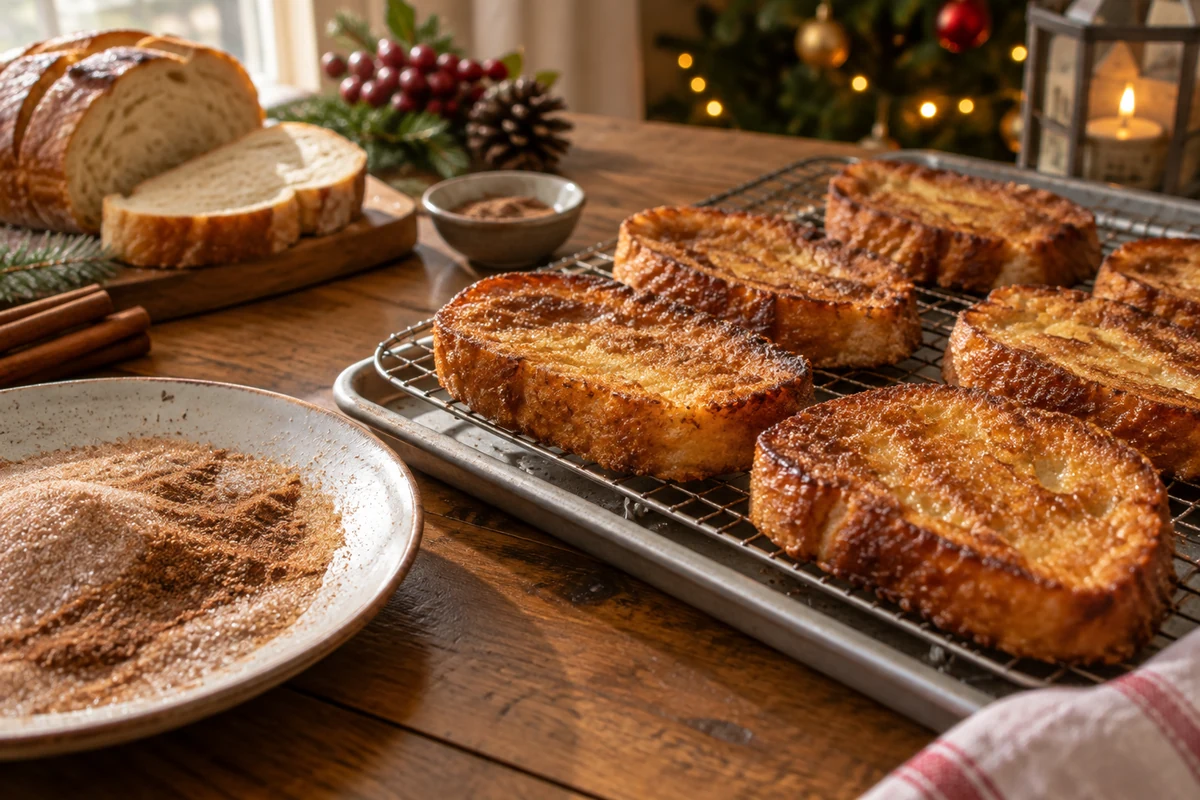
To keep rabanada enjoyable at the table, cook close to serving where possible and handle leftovers promptly.
Storage
Cool leftovers promptly, refrigerate within two hours and use within 48 hours. Keep in a covered container at 5°C or below, with baking paper between layers.
Freezing can soften the texture, but portions can be frozen promptly in a single layer and then packed in a freezer container. Thaw in the fridge, use within 24 hours of full defrosting and reheat only once.
Reheating
- Oven: 180°C for around 8–10 minutes is a starting guide. Continue until steaming hot throughout, checking the centre of a thick slice.
- Air fryer: begin with 160–170°C and check after 5–7 minutes, turning partway. Appliances vary; the centre must become steaming hot.
- Frying pan: warm over moderate heat, turning carefully. The original 2–3 minutes per side may not be enough for thick refrigerated slices, so check the middle.
- Microwave: use short intervals until hot throughout, allowing for uneven heating. A brief oven finish can improve the surface, but 20–30 seconds alone is not a dependable reheating instruction.
Setting the Table
Serve freshly cooked slices on a wide platter. Put toppings in separate bowls so guests can choose their own portions.
- Decoration: use cinnamon sugar or orange zest. Whole cinnamon sticks are decorative rather than something to bite into.
- Accompaniments: condensed milk, dulce de leche, jam, vanilla ice cream or berries. Honey is unsuitable for babies under one.
- Presentation: use clean edible herbs if desired; keep unidentified foliage and non-food decorations away from the food.
Portions and Serving Ideas
Allow around 1–2 slices per person, depending on their size and the rest of the menu. Serve warm, letting portions cool appropriately for children.
- Drinks: coffee or tea are easy choices. Port or sparkling wine can be optional choices for adults who drink alcohol.
- Timing: reheat close to serving and check that every slice is hot through.
- Crispness: add liquid toppings only at the table rather than soaking the whole platter.
Final Serving Tips
Cook in manageable batches and serve promptly. A barely warm oven is not reliable hot holding; for home serving, avoid leaving milk-and-egg dishes lukewarm for a long period.
Rabanada and Brazilian Christmas Traditions

Christmas rabanada is familiar on Brazilian festive tables. It turns day-old bread into a sweet dish that can be shared after dinner or with a seasonal coffee.
Related Traditions
Rabanada belongs to the wider family of soaked and cooked bread dishes often described in English as French toast. It is also part of Portuguese Christmas traditions, while Brazilian households have their own variations.
Ways Families Vary the Dish
- Using bread well: slightly dry bread can become a festive dessert rather than being wasted. This does not mean mouldy bread is suitable.
- Flavour choices: orange zest, condensed milk and dulce de leche are possible additions; preferences vary between households.
- Occasions: it can be served at Christmas dinner, a December gathering or a quiet festive breakfast.
- International parallels: related dishes differ in bread, liquid, spices and the way they are cooked and served.
A Shared Home Recipe
Family recipes and bakery versions can differ considerably. There is no need to claim one universal method: this recipe combines the milk and eggs, while other versions dip bread into them separately.
Serving Traditions
Warm slices with cinnamon sugar and coffee make a simple serving combination. Extra sauces can stay on the side for guests who prefer them.
Other Variations
- Optional alcohol: some versions use port or rum. Leave these out for anyone avoiding alcohol; cooking does not guarantee complete removal.
- Family preferences: bread type, sweetness and soaking time are often the details people remember from a particular household’s recipe.
- Baked and plant-based versions: offer different ways to prepare the dish, but ingredients and texture need to be considered rather than assuming every substitution is equivalent.
These variations leave room for personal taste while keeping the familiar combination of warm bread and cinnamon at the centre of the dish.
Conclusion
Making traditional fried Christmas rabanada is straightforward when you control the oil temperature, use suitable bread and cook the centres thoroughly. Start with one test slice to judge soaking and timing.
Try the baked or plant-based variation for a different approach, and add citrus zest or a little brown sugar if you enjoy those flavours. Reheat leftovers only once, until steaming hot throughout.
Explore the I Love Christmas blog for more festive recipes and seasonal ideas.
FAQ — Christmas Rabanada
How should I store leftover rabanada?
Cool it promptly and refrigerate within two hours in a covered container at 5°C or below. Use within 48 hours, with baking paper between layers to prevent sticking.
What oil temperature should I use?
Aim for 170–180°C, using a thermometer suitable for frying. Reduce the heat if the outside browns before the middle cooks. A knife tip or bubbling bread is not an accurate temperature measurement.
Can I replace the milk or eggs?
A suitable plant-based drink can replace milk, but replacing eggs changes the coating. The separate flaxseed version is a variation to test, not an identical swap. For a vegan dish, check the bread, fat and toppings too.
How do I reheat rabanada without making it too soft?
An oven at 180°C or air fryer around 160–170°C can help restore the surface. The suggested 8–10 or 5–7 minutes are starting points; continue until steaming hot throughout. Reheat only once.
How much rabanada should I serve per person?
Allow roughly 1–2 slices per person, adjusting for slice size, toppings and the other dishes being served.
Sources and Further Reading
- Visit Portugal: Christmas traditions
- London Fire Brigade: pan fires
- Food Standards Agency: cooking food safely
- Food Standards Agency: chilling, freezing and defrosting food