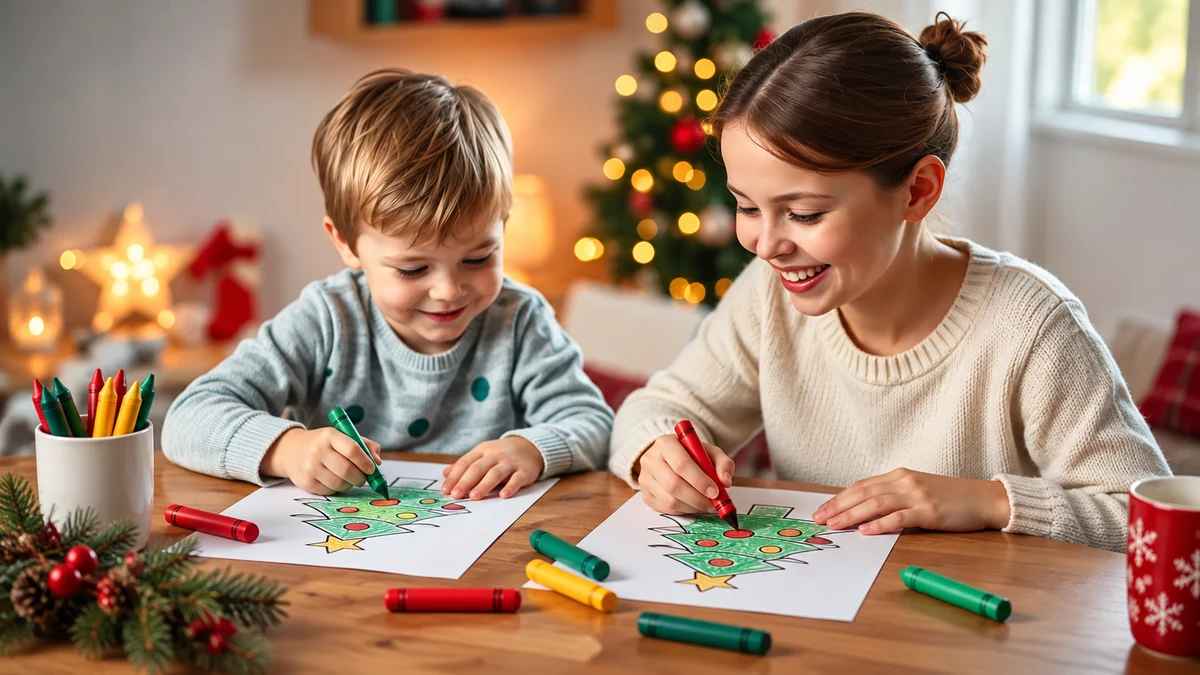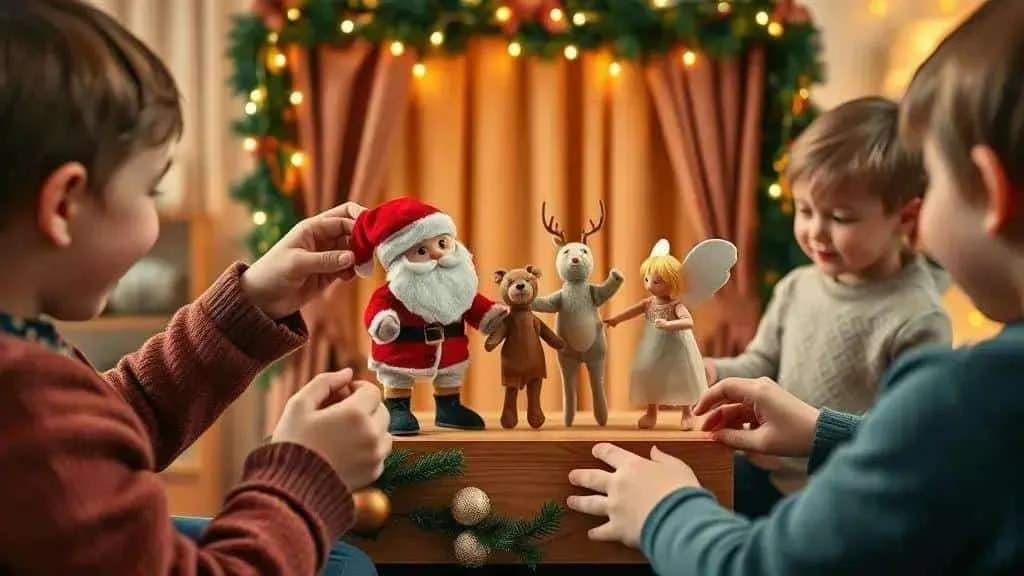
Christmas puppet theatre combines storytelling, making and imaginative play. Simple puppets and short scenes give children opportunities to practise speaking, turn-taking and cooperation. Adapt materials, roles and timing to the children involved, whether at nursery, school or home.
Christmas puppet theatre brings seasonal stories to life through play. A small scene about helping a friend or sharing a gift can become a creative activity for children and adults together. These practical ideas cover simple materials, short scripts and ways for everyone to take part.
Illustrations in this article are conceptual images, not documentary photographs or evidence of a particular historical event, destination, venue or access route.
Why choose Christmas puppet theatre as a learning activity?
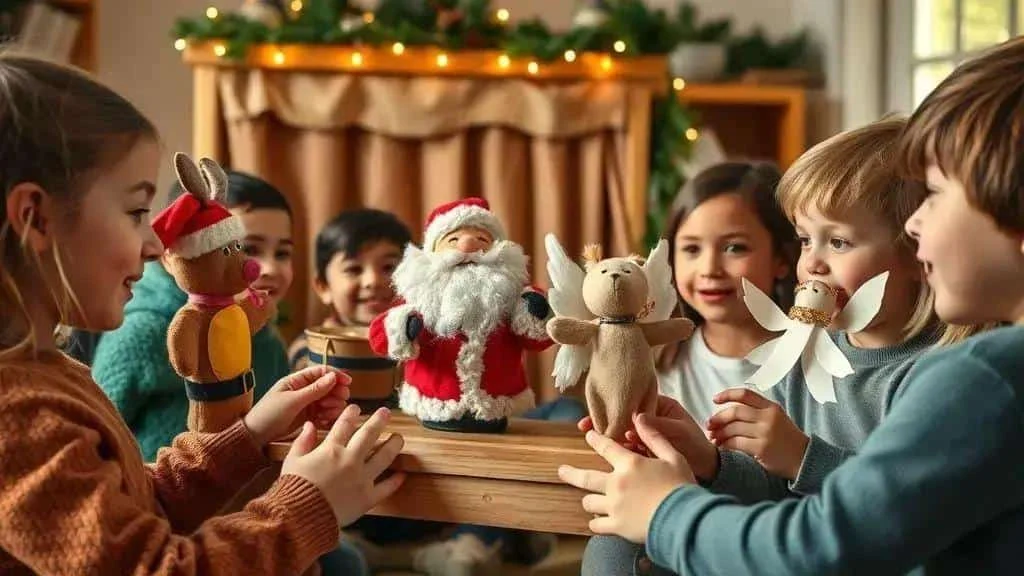
A Christmas puppet show offers a playful setting for exploring language, feelings and cooperation. It can be adapted to different ages and interests without an elaborate stage.
Opportunities for learning
- Imagination and language: inventing dialogue, characters and stories gives children opportunities to try new words and express ideas.
- Feelings and relationships: acting out a simple situation can prompt discussion about emotions, kindness and ways to resolve disagreements.
- Movement and attention: handling suitable puppets and props offers practice in coordinating movements and following a short sequence.
- Teamwork: sharing roles and building a story together creates opportunities for turn-taking and cooperation.
- Flexible, affordable materials: clean reused materials can keep costs down, with adaptations chosen for the children’s access and safety needs.
Practical ideas for school or home
- Timing: try a short session and adjust it to the group; 20–30 minutes may suit some older children, while younger children may need much less.
- Group size: a small group, perhaps four to eight children, can make sharing easier, depending on the support available.
- Materials: clean socks, paper bags, card, suitable glue, fabric and child-appropriate paints can work well under supervision.
- A simple script: use a few short scenes with a clear beginning, middle and ending.
- Taking turns: rotate roles when children want to try something different.
Linking the activity to learning
A Christmas puppet show can support storytelling, counting props, trying seasonal vocabulary and discussing traditions. After the performance, invite children to explain what happened. Present religious stories appropriately for the setting and include children whose families celebrate differently or do not celebrate Christmas.
Quick activity ideas
- A shared mini-play: invite each child to contribute a line, gesture or sound.
- Exploring feelings: discuss how the characters might feel and act out possible solutions to a problem.
- Spot the detail: ask children to find or remember a few objects in the scenery.
- An audio story: try telling the scene through voices and sound effects, with a visual alternative for children who need one.
Start with one familiar seasonal idea, a couple of simple puppets and a short scene. Let the children help shape the activity rather than aiming for a polished production immediately.
Affordable materials for puppets and scenery
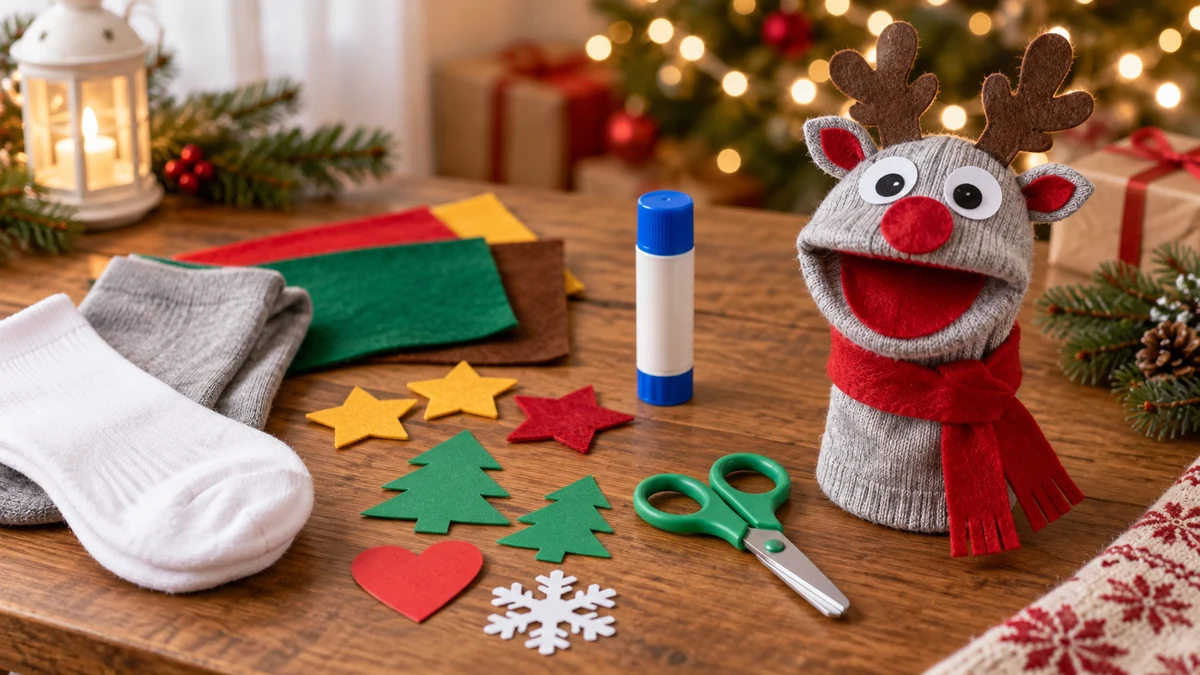
Choose materials suited to the children’s ages and abilities. Check reused items for damage, dirt, sharp edges and small detachable parts before using them.
Materials and simple alternatives
- Clean socks: one sock can make a hand puppet. An adult can help with any sewing or secure fabric attachments.
- Paper bags or folded card: use clean, suitable paper materials for a puppet body. Do not substitute plastic bags for children’s puppets.
- Cardboard boxes: an adult can cut a stage opening in a shoebox or larger box and cover rough edges.
- Broad card handles or smooth craft sticks: choose blunt, suitable supports for older children under supervision. Avoid pointed barbecue skewers.
- Fabric and felt scraps: use clean pieces for clothes and decorations, avoiding long loose loops or strings.
- Drawn faces: draw eyes rather than using buttons or loose plastic eyes where young children could detach and swallow them.
- Child-appropriate glue and tape: follow product instructions and allow attachments to dry before play.
- Washable paints and pens: select products appropriate for the children’s age and intended use.
- Paper decorations: larger card shapes can suggest snow, stars or a beard without loose cotton wool or tiny pieces accessible to toddlers.
- Optional lighting: normal room lighting is often enough. Any extra light should be adult-operated and positioned away from fabric, children and walkways.
Making simple puppets
- Sock puppet: place a hand inside a clean sock and decide where the mouth will move. Add a drawn face or securely attached, age-appropriate details.
- Paper-bag puppet: decorate a suitable bag with a face and use its folded base as the moving mouth, without adding pointed handles.
- Glove puppet: decorate a clean glove with simple details. An adult should handle sewing; avoid tight elastic, loose loops or detachable small pieces.
- Small-box puppet: an adult can prepare a smooth-edged box puppet for tabletop use, adapting its size and movement to the child.
Inexpensive Christmas scenery
- A cardboard-box stage: decorate the outside and add paper scenery. Keep the structure stable and any curtain clear of faces and walkways.
- A paper backdrop: paint a simple tree, starry sky or seasonal scene on a large sheet.
- Reused decorations: use large, clean card shapes for trees and presents. Keep bottle tops, corks and other small objects away from young children.
- Lighting precautions: battery lights are not risk-free. Keep batteries, wires and lights out of reach, use secure battery compartments and avoid button-battery decorations in children’s play materials. Source: Child Accident Prevention Trust: button-battery safety
- Moving scenery: older children can move simple card props using suitable blunt handles under supervision.
Cleaning, storage and reuse
- Cleaning: choose washable materials where possible and let everything dry before storing. Hot glue, if needed, should be handled by an adult away from children.
- Organisation: store dry puppets in labelled containers, keeping storage bags away from young children.
- Reuse: repair suitable puppets or turn them into different characters, discarding damaged parts that cannot be made safe.
- Safety: avoid small detachable parts for under-threes and any child likely to mouth objects. Supervise craft scissors and keep sharp tools and hot glue for adults.
A practical kit: keep a small supply of clean socks, card, suitable glue, washable paint and boxes, checking materials before each session.
Planning a short Christmas play step by step
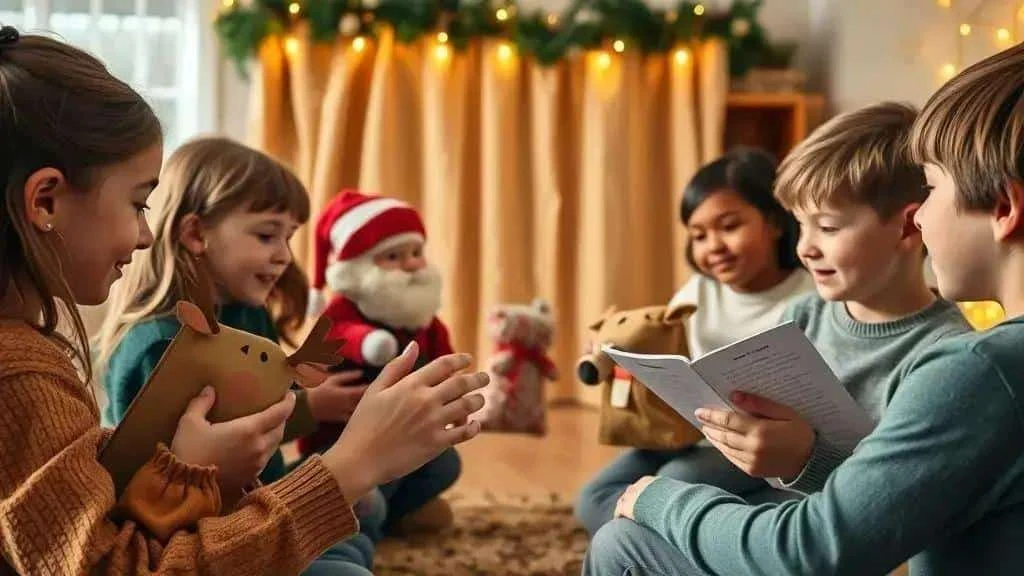
- Choose the aim and length: focus on an idea such as kindness, friendship or a seasonal tradition. A five- to ten-minute play may be enough, with shorter versions for younger children.
- Choose the story: use three short scenes: an introduction, a simple problem and a resolution. Repeated phrases can help children join in.
- Share the roles: choose a manageable number of characters and offer speaking, movement, sound and scenery roles according to each child’s preferences.
- Write the script: use short sentences and clear stage directions, such as [enters], [exits] and [snow effect]. Put each speaker’s words on a separate line.
- Prepare puppets and props: make simple characters from suitable socks, paper bags or gloves, with safe card or fabric details.
- Set up the stage: use an adult-prepared box or stable tabletop area with a simple backdrop. Extra lighting is optional, not essential.
- Keep rehearsals manageable: spread practice over a few short sessions. Begin with the story, then try movements, voices and entrances, adjusting the time to the group.
- Agree on cues: use a clear word, gesture or gentle sound to signal a scene change.
- Add simple sound effects: try safe instruments, a short recording or tapping footsteps at a comfortable volume. Give clear cues to the child handling each effect.
- Perform and reflect: arrange a comfortable audience area, try a run-through and afterwards invite children to discuss what they enjoyed or found difficult.
Keeping the activity accessible
- Short scenes: a minute or two can be enough for one part of the story.
- Flexible prompts: use pictures, spoken reminders or simple cue cards instead of requiring every child to read or memorise lines.
- Choice of role: ask children how they want to participate and adapt the stage or equipment. Do not automatically assign backstage roles because a child is disabled or shy.
- Taking turns: offer opportunities to swap roles between performances without pressuring anyone to do so.
- Suitable materials: check attachments before use, keep small parts away from young children and supervise craft activities.
A simple three-scene outline
Scene one: introduce the characters and their wish to help someone.
Scene two: a small problem appears, such as a missing present or a decoration that needs fixing.
Scene three: the characters cooperate and finish with a message about kindness.
Activities after the performance
- A conversation: ask how a character might have felt and what helped them.
- Drawing or writing: invite children to draw a favourite moment or describe it in a sentence.
- A making session: use suitable leftover materials to create another character and discuss reuse.
Exploring feelings, vocabulary and traditions
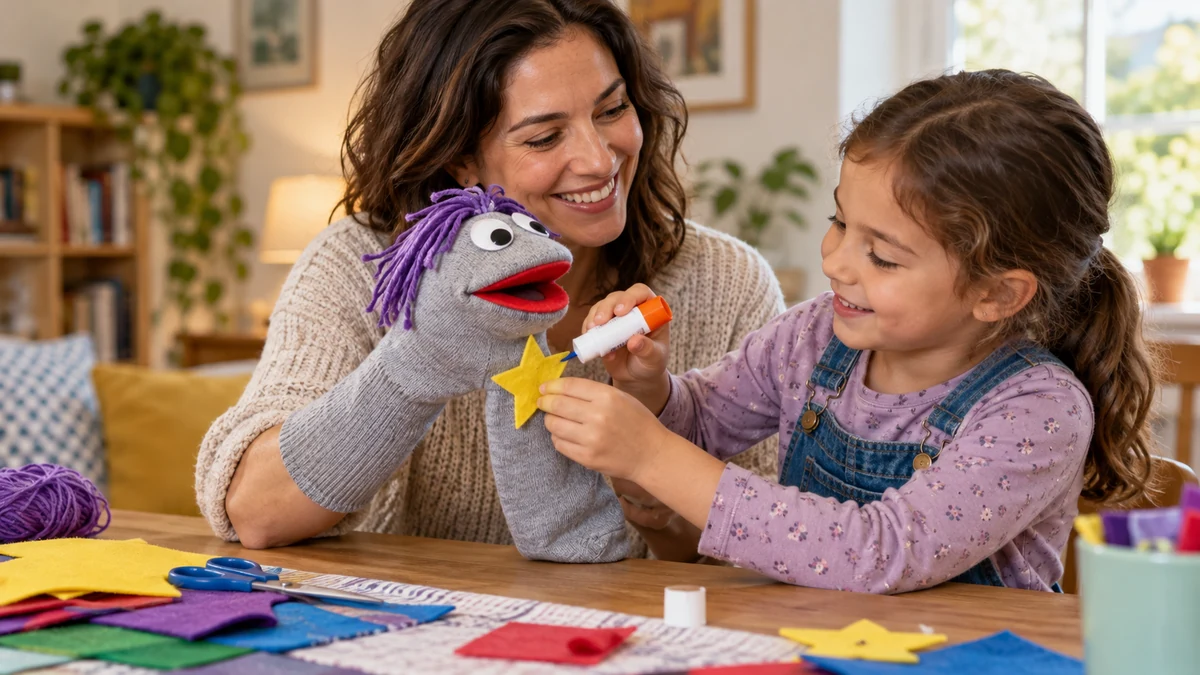
Short activities can connect the story with feelings, new words and seasonal traditions in ways children can explore through play.
Activities about feelings
- Feelings cards: show different expressions and invite children to choose one for a character or themselves. Let them pass rather than requiring personal explanations.
- A solutions theatre: act out a small problem, such as a missing present, and let pairs or small groups suggest different solutions.
- An emotions box: put drawings of feelings in a box and take turns showing one through a puppet, voice or gesture. Keep participation optional.
Vocabulary activities
- Seasonal word bingo: use cards with familiar pictures and words such as tree, star and present. Read words aloud and help children find matches.
- An illustrated word collection: invite each child to draw a word and add a short sentence, with writing support where needed.
- A rhyming game: try simple pairs such as snow and glow, then let the puppets perform a short verse.
Exploring traditions and culture
- A shared story: begin a seasonal tale and invite each willing child to add a sentence, gesture or picture.
- A Nativity scene: where appropriate to the setting, use safe figures to explore the Christian Christmas story. Offer a suitable alternative and respect different family beliefs.
- Food and songs: let puppets describe a simple recipe or perform a short song. Any real cooking needs adult supervision and checks for allergies and dietary requirements.
Connecting these activities to the play
- Use ideas in the scenes: add a new word or a feeling the group has discussed.
- A short warm-up: try a brief vocabulary or expression game before rehearsal, shortening it when attention fades.
- Playful reflection: ask questions such as “Which character felt happy?” or “What new word did you try?”
- Adapt the support: offer shorter versions, pictures, spoken prompts or written cues according to individual needs.
A few useful materials
- Picture and word cards, simple puppets, paper, crayons and safe scenery pieces.
- Age-appropriate instruments or adult-controlled sound recordings for actions and changes of mood.
Versions for nursery, school and family gatherings
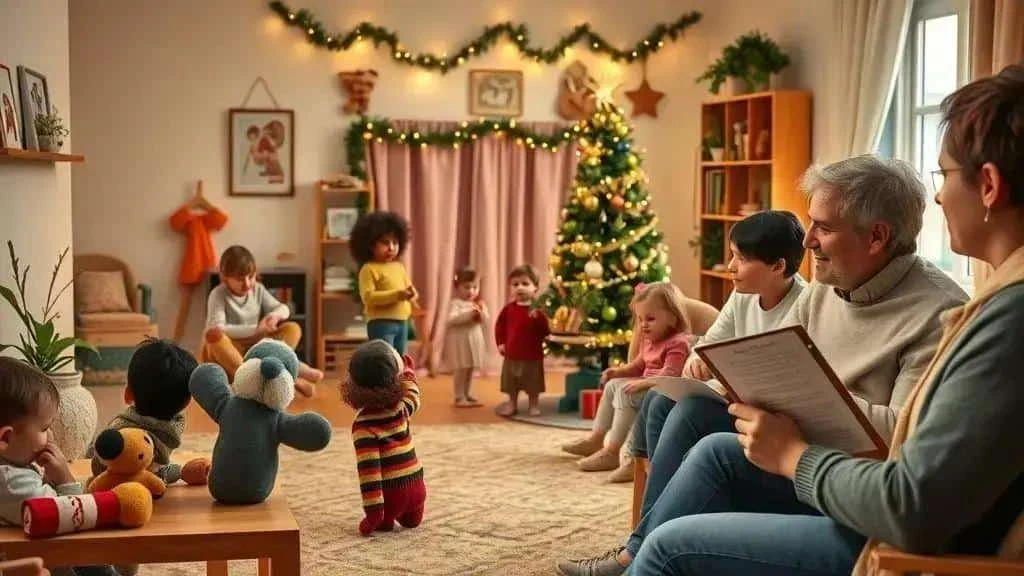
Adapt the story, equipment and pace to the people taking part. No single format suits every child or setting.
Nursery and toddler groups
- Length and pace: keep adult-led scenes very short and stop or change activity when children lose interest.
- Characters: use a few clear figures, gentle gestures and repeated phrases or songs.
- Materials: choose washable, age-appropriate puppets without loose parts, cords or accessible batteries.
- Participation: offer simple, supervised interactions with suitable puppets rather than unrestricted access to homemade craft props.
- Safety: inspect puppets before use, supervise closely and remove any damaged or detachable parts immediately.
School groups
- Length and structure: a few short scenes may suit primary-age children; adjust the duration to their interests and support needs.
- Learning aims: include storytelling, simple counting or respectful discussion of seasonal traditions.
- Different responsibilities: offer writing, performing, sound and scenery tasks without making one role more important than another.
- Script support: use short sentences, repetition and clear visual or spoken cues.
- Reflection: discuss the story or invite a drawing afterwards, keeping the emphasis on participation rather than a perfect performance.
Family gatherings
- Mixed ages: choose gentle humour and a story everyone can follow, with safe materials for the youngest child present.
- Audience involvement: invite singing, clapping or a simple repeated phrase without demanding participation.
- A practical set-up: use a stable stage, comfortable seating and clear access routes.
- Keeping a memory: make a small craft souvenir or record the performance only with appropriate permission, respecting children’s and families’ wishes about sharing.
Inclusive adaptations
- For blind or partially sighted children: offer suitable tactile puppets, verbal descriptions and time to explore the set safely.
- For deaf children: agree on useful visual prompts, text or appropriate signing with the child and their support network; printed words alone will not suit everyone.
- For mobility needs: adjust stage height, reach and puppet controls so the child can choose an active role comfortably.
- For sensory or communication needs: offer predictable cues, visual schedules, quieter alternatives and breaks according to individual preferences.
A practical checklist
- Rehearsals: several short sessions may work better than one long practice.
- Equipment: prepare puppets, a stable stage, props and a repair kit kept under adult control.
- Planning: agree on the story, scenes and roles in advance, leaving room for children’s ideas.
- Family involvement: invite carers to watch or help with suitable preparations where practical.
- A simpler alternative: keep a shorter version ready if time or attendance changes.
Remember: clear cues, suitable materials and meaningful choices matter more than an elaborate production.
Final thoughts
Christmas puppet theatre offers an enjoyable way to explore stories, language and kindness together.
With simple materials and flexible practice, children can help create a shared performance and memorable seasonal activity.
Thank you for reading. Share your craft ideas if you wish, taking care with any photographs or recordings involving children.
Explore the I Love Christmas blog for more seasonal activities and creative inspiration.
Frequently asked questions about Christmas puppet theatre
What ages can take part?
Very young children may enjoy a brief adult-led scene with suitable puppets. Older children can help make, write or perform a play. Adapt the activity to individual abilities and interests rather than age alone.
Which materials are affordable and suitable?
Clean socks, card, paper bags, washable fabric and child-appropriate paints can work well. Avoid plastic bags, pointed skewers, loose small parts and accessible batteries, especially around young children.
How much rehearsal time should I allow?
Start with a few short sessions and adjust them to the group. A brief performance is often enough; stop or take breaks when children become tired or lose interest.
How can disabled children take part?
Ask what support each child needs and which role they want. Adapt stage height, controls, cues, sound or visual information rather than automatically assigning a limited backstage role.
How can the activity explore feelings, words and traditions?
Use a simple problem in the story, introduce a few new words and discuss different ways families celebrate. Afterwards, invite conversation, drawing or another short scene.
What safety precautions matter during the workshop?
Check materials and attachments, supervise craft tools and keep hot glue and sharp cutting tools for adults. Avoid choking hazards, plastic bags, long loose cords and accessible batteries, and check the finished puppets before play.
Sources and Further Reading
- Department for Education: Development Matters
- Child Accident Prevention Trust: button-battery safety
- GOV.UK: small-object hazards for children