Homemade Christmas eggnog combines eggs, milk, cream, sugar and spices, with bourbon, rum or brandy added only if wanted. This version cooks the yolk mixture and chills it promptly. Optional uncooked whites must be pasteurised and suitable for that use; a plant-based drink is a separate adaptation rather than a direct egg-for-aquafaba swap.
Homemade Christmas eggnog brings a rich, spiced flavour associated with American Christmas celebrations. There is no single definitive original recipe: this is a cooked, chilled version with practical serving options and clearly separated variations.
Ingredients for American-style Christmas eggnog
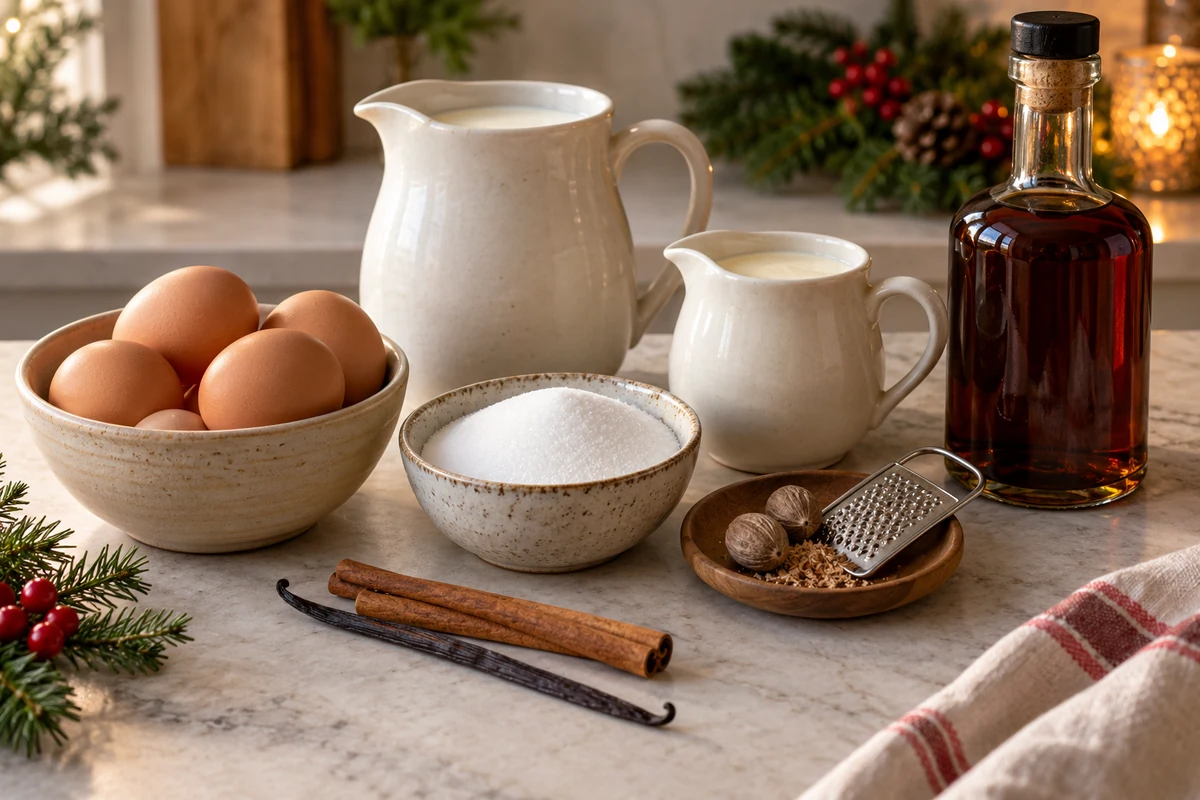
For this eggnog, gather the following ingredients. Keep the basic cooked method distinct from the optional plant-based adaptation.
- 4 large eggs, separated – use all four yolks in the cooked base. Only two whites are optional for aeration, and those must be pasteurised and labelled suitable for uncooked use; otherwise leave them out. Reserve the other whites for a separate cooked dish.
- 500 ml whole milk – semi-skimmed gives a lighter result. Lactose-free dairy milk is another option; oat or almond drink changes the flavour and requires checking other ingredients too.
- 250 ml pasteurised whipping cream – a practical UK equivalent for the rich cream in the source. A lighter variation uses 200 ml milk plus 50 ml soya cream, with a different texture.
- 100 g granulated sugar – weigh it rather than relying on cup size. Demerara or light brown sugar changes the flavour; about 80 g honey is a separate sweeter-tasting variation, not an exact equivalent.
- 1 teaspoon vanilla extract – or the scraped seeds of one vanilla pod. Choose alcohol-free flavouring when the finished drink must be alcohol-free.
- ½ teaspoon freshly grated nutmeg – for the batch, with a little extra to garnish. A small pinch of cinnamon is optional.
- A pinch of salt – to balance the flavour.
- 120–180 ml bourbon, rum or brandy, optional – for the whole adult batch. For an alcohol-free version, omit it; add 60–100 ml extra milk only if the chilled consistency needs thinning.
- 2 pasteurised egg whites, optional – from the eggs above only if suitable for uncooked use, or from an appropriately labelled pasteurised product. Omit them if uncertain; the cooked yolk base is already creamy.
- Cinnamon sticks and a little grated nutmeg, to garnish – optional.
Substitutions and preparation notes
Cook the yolk mixture to 71°C, checked with a food thermometer while stirring continuously. Do not rely on thickness alone or describe an unmeasured heating step as pasteurisation. Any whites added afterwards remain uncooked, so use suitable pasteurised whites or omit that step.
A plant-based version needs all eggs and dairy removed. Oat or almond drink, coconut cream and optional whipped aquafaba can make a spiced drink with a different texture; follow the separate adaptation below rather than substituting aquafaba for four whole eggs in the cooked method.
For an alcoholic batch, begin with 120 ml and keep the amount measured. Reserve and label alcohol-free portions before adding spirits. Never use a taste test to decide whether a drink is alcohol-free; also check flavouring labels.
Use fresh dairy within its use-by date and grate the nutmeg just before preparation for a clear spice flavour.
How to make Christmas eggnog
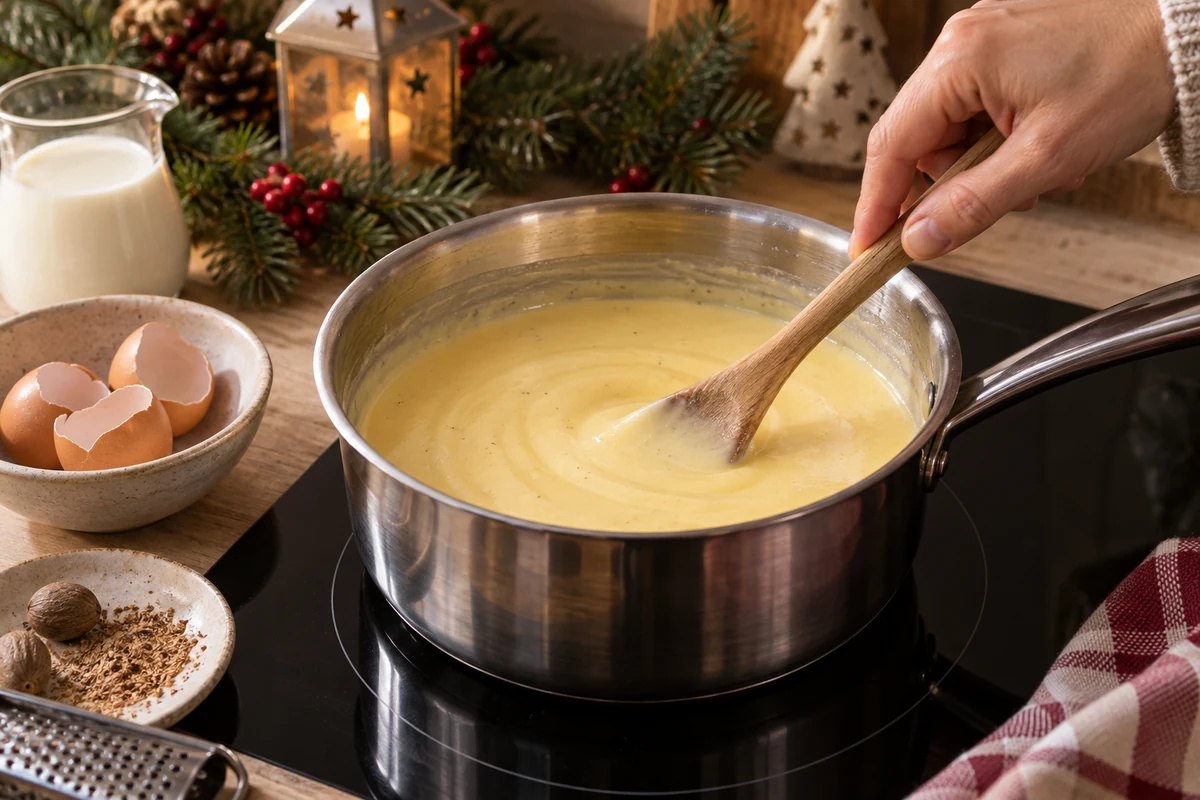
- Separate the eggs: put the four yolks in a clean bowl. Keep the whites covered in the fridge for another cooked use, unless using suitable pasteurised whites for the optional aeration step.
- Whisk the yolks and sugar: whisk the four yolks with 100 g sugar until paler and slightly thickened, about 2–3 minutes by hand or around a minute with an electric whisk.
- Warm the milk and cream: gently heat 500 ml milk and 250 ml cream in a medium saucepan, with the pinch of salt, until hot but not boiling.
- Temper the yolks: gradually whisk a ladleful of hot milk mixture into the yolks. Continue slowly until about one-third has been incorporated, avoiding a sudden addition that could scramble them.
- Cook the base: return everything to the saucepan and stir constantly over a low heat, reaching the base and corners. Check that the mixture reaches 71°C with a clean food thermometer. Coating the back of a spoon is a texture cue, not an alternative temperature check; do not let it boil.
- Add the flavouring: take the pan off the heat and stir in the vanilla and ½ teaspoon nutmeg. Wait until the base is cold before adding any measured bourbon, rum or brandy, and reserve alcohol-free portions first.
- Cool promptly: stand the pan in cold or iced water and stir, keeping bath water out of the mixture. Transfer to clean shallow containers and refrigerate within 1–2 hours. Cover and chill thoroughly for at least two hours; an overnight rest is optional and counts towards the total storage time.
- Optional foam: only if the product is pasteurised and suitable for uncooked use, whisk the equivalent of two egg whites to soft peaks using clean equipment and fold into the cold base just before serving. Do not add ordinary uncooked whites after cooking the yolks.
- Keep variations separate: omit the spirit for an alcohol-free batch, loosening with a little milk if necessary. For a vegan drink, omit both yolks and whites as well as dairy and use the separately described plant-based mixture.
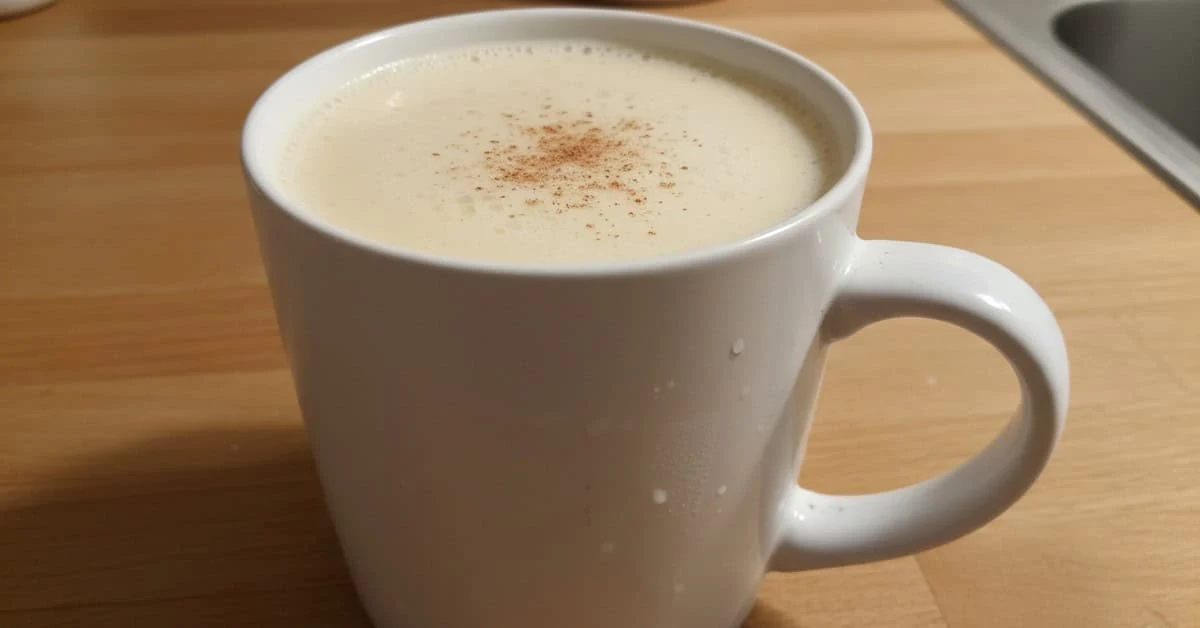
- Serve: pour chilled eggnog into small glasses or mugs and finish with a little nutmeg and optional cinnamon. Clearly label alcoholic portions; tasting cannot verify the absence of alcohol.
- Store: refrigerate in a clean, closed container at 5°C or below and use within 48 hours of preparation, or sooner if an ingredient’s instructions require it. Stir gently before serving if it has separated.
- For beginners: use a low heat, stir continuously and measure the temperature. Omitting the optional whites makes the process simpler without losing the cooked base’s creamy character.
Food-safety essentials
The cooked method and prompt refrigeration are essential. Alcohol is a flavouring here, not a reliable way to make raw eggs safe or extend storage. Keep alcohol out of portions intended for children, pregnant guests or anyone avoiding it, and omit optional uncooked toppings when serving people at higher risk.
Alcoholic, alcohol-free and plant-based variations
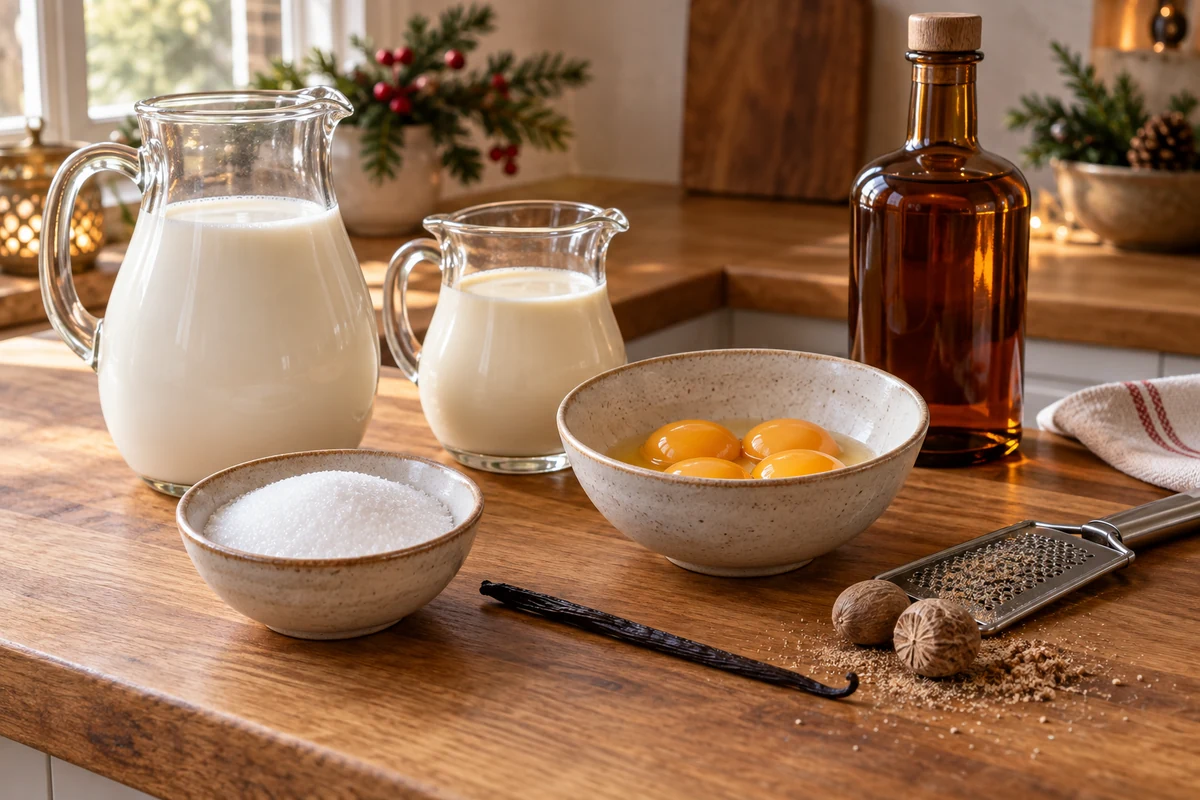
These variations change flavour and texture. Follow the cooked method for the egg-based versions; the vegan adaptation is a different drink and has not been tested as a one-for-one substitute.
With bourbon, rum or brandy
For the cooked base using four yolks, 500 ml milk and 250 ml cream, the following are optional:
- 120–180 ml bourbon, dark rum or brandy – for the entire batch, beginning with the smaller quantity.
- Up to ½ teaspoon additional vanilla extract – only if wanted after the original teaspoon, rather than an essential second addition.
- A little freshly grated nutmeg – to finish each serving.
Tip: add spirits only after cooling, away from heat or flames, and record the amount. Do not add the full batch quantity again to individual glasses.
Without alcohol
Keep the cooked dairy-and-yolk base, with these changes:
- Omit the 120–180 ml spirit. No replacement is essential; if the chilled drink is too thick, stir in 60–100 ml extra milk gradually. Extra cream makes it richer, not thinner.
- Optional alcohol-free rum flavouring – follow its label for the dose, or use up to ¼ teaspoon suitable almond flavouring if allergens are not an issue.
- Optional coffee note: a teaspoon of strong coffee adds a different flavour; use decaffeinated coffee if preferred.
Tip: chill until completely cold and use alcohol-free vanilla or other flavouring where required. Do not rely on a product’s name alone.
Plant-based adaptation
For a separate egg-free and dairy-free spiced drink, omit every egg and dairy ingredient from the original. The following quantities are a starting variation; they do not reproduce a yolk custard exactly:
- 120 ml aquafaba, optional – the liquid from suitable ready-to-eat tinned chickpeas, whisked separately for foam.
- 500 ml creamy oat or almond drink – check allergens and whether it is already sweetened.
- 150–200 ml coconut cream or plant-based cream – for body; different products behave differently.
- Up to 100 g sugar, adjusted to taste – or a smaller, gradually added quantity of maple syrup. These sweeteners are not identical by weight.
- 1 teaspoon vanilla and ½ teaspoon grated nutmeg – choose suitable flavourings for the intended version.
Method: gently warm the plant drink, cream and sugar just enough to dissolve the sugar, then stir in flavourings and cool promptly. Chill thoroughly. If wanted, whisk aquafaba separately and fold into the cold drink just before serving; follow the tin’s storage instructions. Do not add raw cornflour as a thickener.
Flavour and presentation ideas
Choose one or two simple finishing touches rather than adding every option:
- A cinnamon stick – as a visible decorative stirrer, removed before drinking.
- Freshly grated nutmeg – a light dusting at serving time.
- Other spices: a small pinch of cardamom or, if wanted, up to ¼ teaspoon extra nutmeg across the whole batch.
Suit the guest: clearly identify alcohol, eggs, dairy and relevant plant-drink allergens. For those at higher risk from foodborne illness, use the fully cooked base without uncooked egg toppings and take particular care with refrigeration.
Eggnog and Christmas traditions
Eggnog is associated with North American Christmas celebrations and is often discussed alongside older British milk-based drinks. Its history is more varied than a single ‘original recipe’ suggests.
Older drinks and the name
Histories of eggnog often link it to posset, an older British drink made with milk and alcohol. The precise derivation of eggnog is disputed; proposed links to ‘nog’ and ‘noggin’ should be presented as explanations, not proof of one definite origin.
A North American festive drink
Eggnog became associated with celebrations in North America, with recipes using spirits such as rum or brandy alongside eggs, dairy and spices. Ingredients and preparation have varied between households and periods.
A few points of interest
- Hot and cold traditions: older milk drinks and modern eggnog do not all use the same serving temperature. This recipe is designed to be cooked and then chilled.
- The Washington attribution: a boozy recipe is widely attributed to George Washington, but the attribution should not be treated as established fact. It is not the source of the recipe on this page.
- Different household versions: some use whisky, others rum or brandy, and many omit alcohol. There is no single spirit that every household in a country uses.
- Familiar spices: nutmeg and cinnamon are common flavourings, adjusted to personal taste.
- Modern handling: cooked egg bases and suitable pasteurised products allow a different approach from recipes that call for untreated raw eggs.
- Beyond the glass: eggnog flavours also appear in desserts and seasonal coffee drinks.
A drink to share: a jug of eggnog can be part of a winter gathering, served in small portions with its ingredients clearly identified.
Practical tips and ingredient substitutions
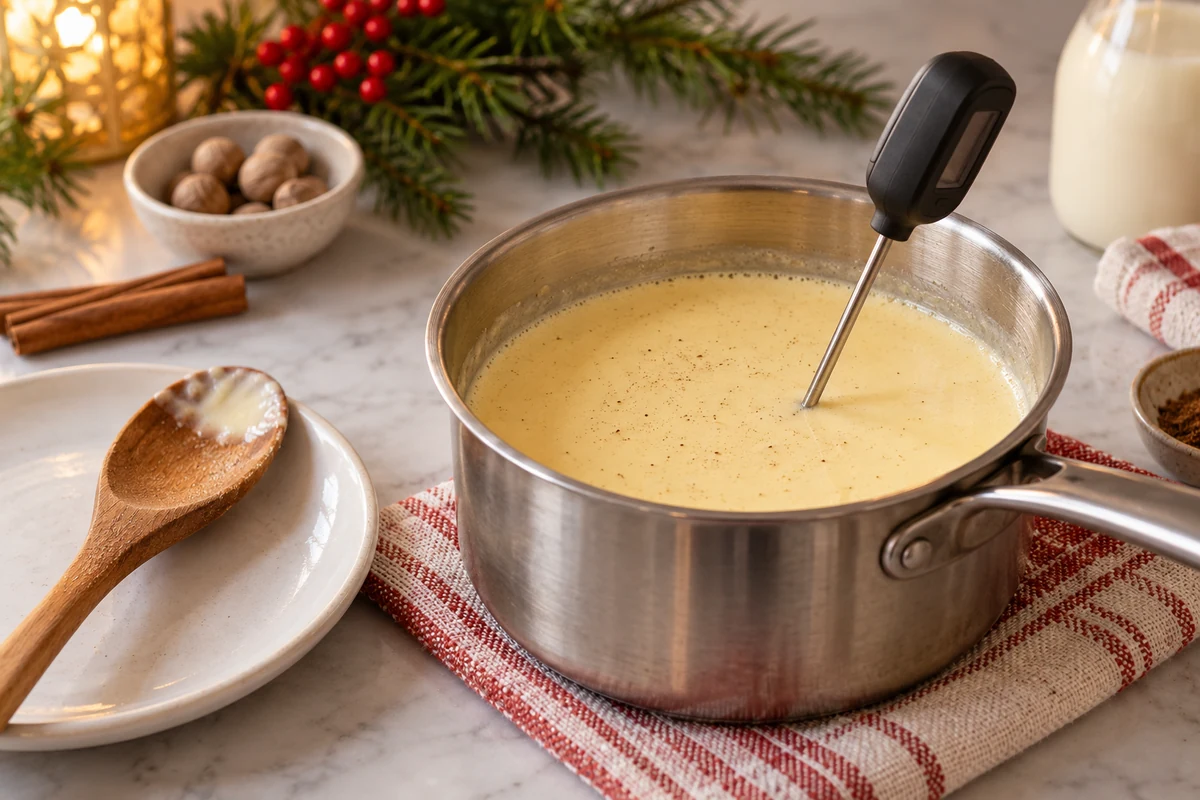
Start with measured ingredients: use fresh dairy, separate eggs carefully and cook the yolk mixture with a thermometer. Decide whether the batch will contain alcohol before serving and keep alternatives separate.
Handling the cooked mixture
Check the cooked base reaches 71°C throughout while stirring. Cool promptly, cover and refrigerate at 5°C or below, using within 48 hours of preparation or sooner if ingredient instructions require it. Optional whites must be suitable pasteurised products; omitting them avoids adding uncooked egg after the cooking step.
Common substitutions
- Whole milk, 500 ml → lactose-free dairy milk, or a creamy plant drink for a different flavour. Lactose-free milk is still dairy and is not suitable for a milk-protein allergy.
- Cream, 250 ml → for a dairy-free adaptation, start with 150–200 ml coconut or plant cream and loosen with a little plant drink. Changing the cream alone does not make an egg-containing recipe vegan.
- Sugar, 100 g → a gradually added quantity of honey or maple syrup changes both flavour and texture. Honey is not vegan; taste and adjust rather than assuming an exact substitution.
- Optional egg-white foam → whipped aquafaba can provide a different foam, but the yolks must also be omitted for a vegan drink.
- Bourbon or rum, 120–180 ml → simply omit for the alcohol-free version, adding a little extra milk only if needed for consistency.
Adjusting flavour and texture
For a lighter variation, replace 50–100 ml of the cream with the same volume of milk. For extra sweetness, dissolve another tablespoon or two of sugar during preparation. Use the stated nutmeg as a starting point, with a small pinch of cardamom or a little suitable almond flavouring only if wanted.
Useful equipment
- A food thermometer: checks the mixture’s actual temperature. A thickened appearance alone cannot verify the cooking step.
- A fine sieve: removes small cooked lumps for a smoother texture; it cannot make an undercooked mixture safe.
- A whisk or electric whisk: useful for yolks, cream or the optional suitable pasteurised whites or aquafaba, with clean equipment for each stage.
- Resting: an 8–24 hour refrigerated rest is optional and falls within, not in addition to, the total storage limit.
Measured service: label each jug and keep alcohol-free portions separate before adding spirits. Taste can guide sweetness, but it cannot measure alcohol content or prove its absence.
Serving Christmas eggnog
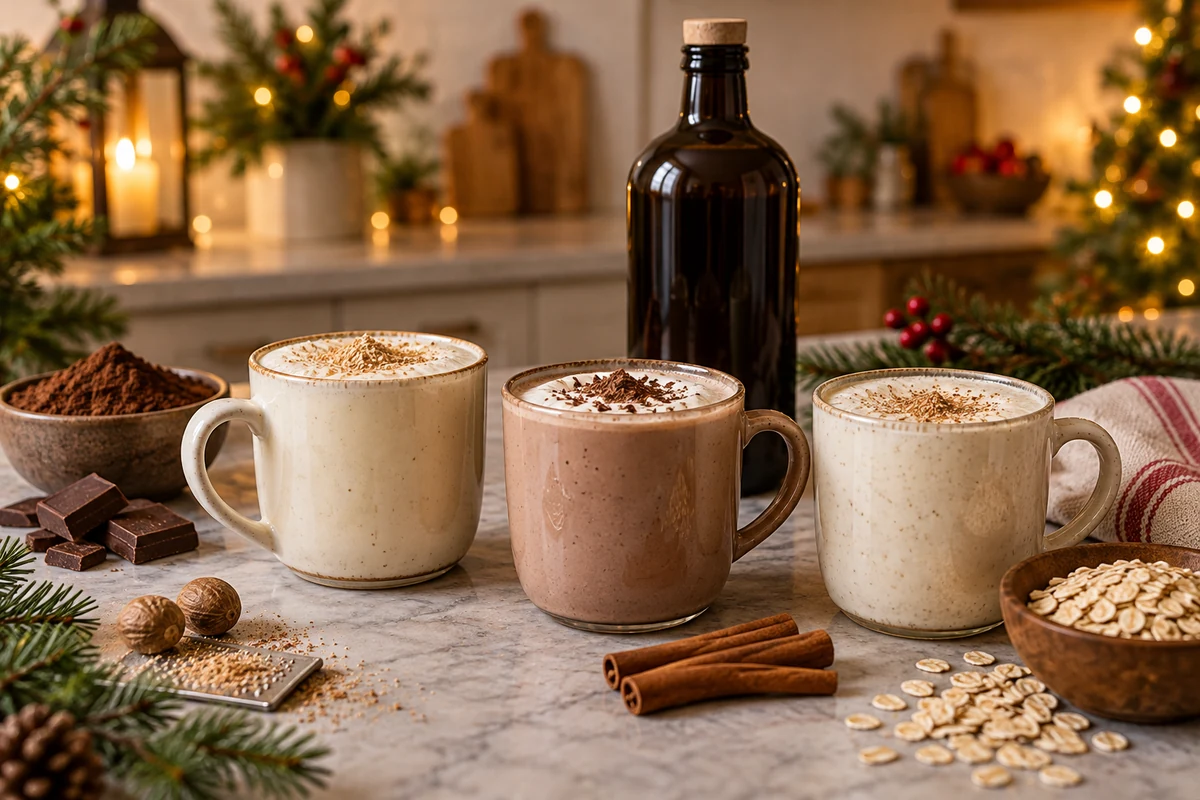
Serve this eggnog thoroughly chilled, taking out only what is needed. It is a chilled recipe; avoid leaving a large jug lukewarm or repeatedly warming and cooling it for service.
Glasses and garnishes
- Small glasses or mugs: choose suitable vessels that hold modest servings comfortably. Clear glasses show the creamy colour.
- Grated nutmeg: add just a light dusting to each portion.
- Cinnamon stick: use as a decorative stirrer and remove before drinking.
- Whipped cream: a small spoonful of freshly whipped pasteurised cream adds richness. If using an egg-white topping, it must be a suitable pasteurised product; ordinary raw whites are not recommended here.
- Orange peel: a thin strip of washed peel gives a citrus aroma. Keep the garnish simple rather than adding unidentified berries or non-food decorations.
Food pairing ideas
- Christmas bakes: panettone, buttery biscuits or Brazilian rabanadas — festive French-toast-style slices — offer different textures alongside the drink.
- Chocolate desserts: a small truffle or slice of chocolate tart can suit the sweet spices.
- Mild cheeses: choose products suitable for your guests; a rich cheese and a creamy drink may suit some tastes more than others.
- Dried fruit and nuts: dates, dried apricots and pecans make a simple festive accompaniment, with allergens identified.
- Spiced cakes: these can echo the drink’s flavours. Clearly identify any additional alcohol in desserts when serving alcohol-free guests.
Yield and portion sizes
- Approximate yield: the cooked dairy-and-yolk base is intended for around six small servings. Exact volume changes with evaporation, optional foam and added liquid, so measure the finished batch rather than guaranteeing six identical 150 ml portions.
- Optional spirit: 120–180 ml across six portions is about 20–30 ml per portion. Add it to the batch or individually, not both, and keep quantities measured.
- Alcohol-free servings: reserve them before adding spirits and use suitable flavourings, with clear labels and separate utensils.
Preparing for Christmas dinner
- Make ahead: cook and cool the base promptly, then chill until needed. An overnight rest is convenient, but it does not restart the storage clock.
- Arrange a small serving tray: provide nutmeg, cinnamon sticks and a little chilled whipped cream so guests can choose a garnish.
- Keep spirits separate: if offering individual additions, have an adult measure them into clearly identified servings and keep bottles away from children.
- Label the jugs: use clear written labels for alcoholic, alcohol-free and plant-based versions; decorative ribbons alone can be confusing.
- Use clean utensils: avoid returning tasting spoons to the jug and keep serving utensils separate between versions.
A festive finishing touch
A tray, a checked napkin and a few decorations outside the glasses can create a Christmas setting. Keep artificial foliage and lights away from the drink. Practical presentation means the ingredients remain clear, the portions easy to serve and the unused base chilled.
Serving with care
Clearly state whether a jug contains alcohol, eggs, milk or other allergens. Use the cooked base and appropriate toppings, and keep alcoholic servings separate from those intended for children, pregnant guests or anyone avoiding alcohol.
Storing eggnog and preparing it ahead
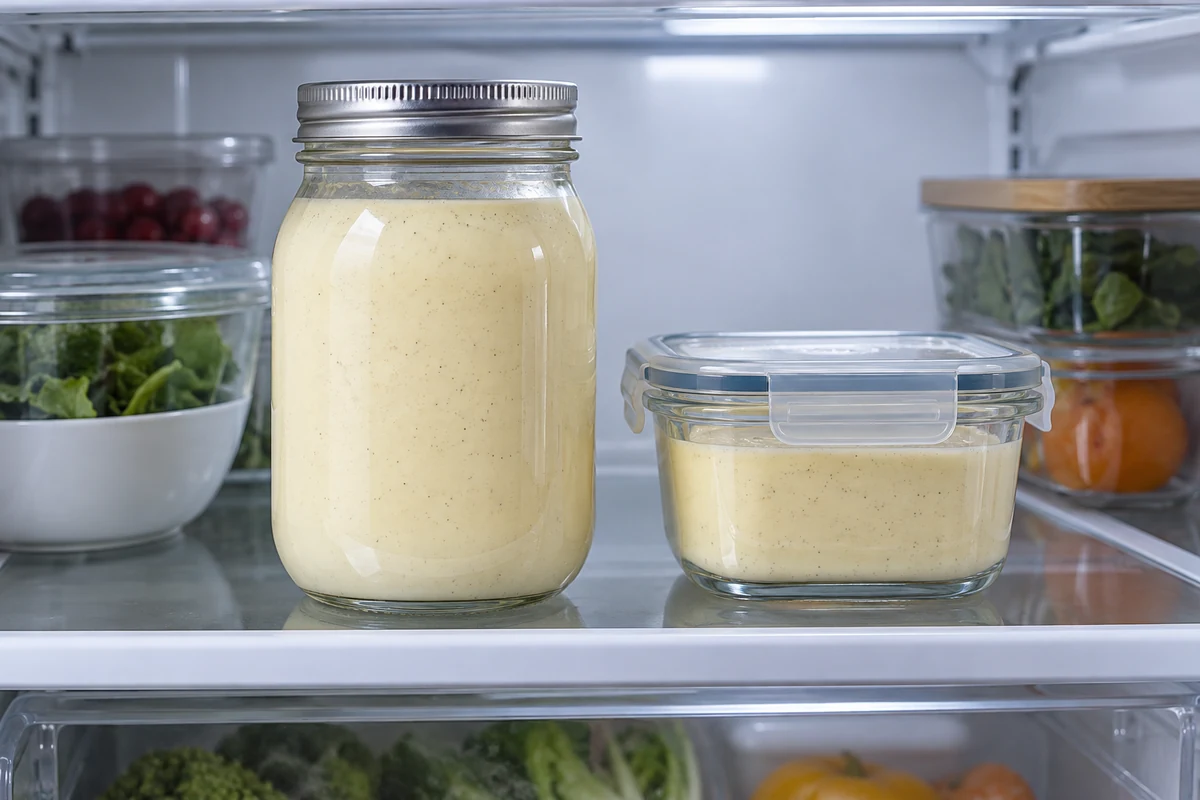
Treat eggnog as a perishable homemade egg-and-dairy mixture. Cooking, cooling, clean containers and refrigerated storage all matter; the optional spirit does not remove those requirements.
How long to refrigerate it
- Alcohol-free cooked version: use within 48 hours of preparation, stored at 5°C or below, or sooner if an ingredient requires it. This recipe does not recommend an untreated raw-egg version.
- Cooked base with optional pasteurised whites: keep the same 48-hour overall limit and follow the egg product’s instructions; adding whites later does not create a new storage period.
- Version with added spirits: do not extend its storage to three to five days on the assumption that the alcohol preserves it. Follow the same short chilled-storage approach.
Suitable storage
- A clean, closed container: use a lidded jug or container that protects the mixture from contamination.
- A reliably cold fridge shelf: keep the jug away from the door and use a fridge thermometer to check the temperature.
- Preventing a skin: suitable food-contact film may be placed against the cooled surface before covering, following the film’s instructions.
- Stir before serving: gently recombine normal separation with a clean utensil. Stirring cannot correct spoilage or unsafe storage.
Freezing and texture
Freezing can make the mixture separate or become grainy. If you want to try it, freeze a small portion of the cooked alcohol-free base first, while still fresh:
- Leave out whipped whites and toppings and use a freezer-safe container with expansion space. Try using the test portion within one month for quality; the result is not guaranteed to retain its original texture.
- Thaw in the fridge until fully thawed, then stir and use within 24 hours. Added fresh milk or cream does not reset that deadline. Do not refreeze the thawed drink.
- For the best freshly aerated presentation, prepare chilled eggnog rather than relying on a frozen batch. Add suitable foam or whipped cream only at serving time.
A make-ahead sequence
- Cook the base: heat the tempered yolk, milk, cream and sugar mixture to 71°C, verified with a thermometer, while stirring. Keep the cooked method even if the yolks are pasteurised.
- Cool promptly: use a cold-water bath and stirring, then shallow clean containers. Get the mixture into the fridge within 1–2 hours.
- Add spirits only to cold adult portions: separate and label the alcohol-free portion first, then add the measured spirit if wanted.
- Chill thoroughly: allow at least two hours, with an optional overnight rest within the total storage period.
- Add optional foam just before serving: use only whites labelled pasteurised and suitable for uncooked use, or suitable aquafaba for the separate vegan drink. Fold gently into a cold portion.
- Finish the flavour: adjust sweetness if needed and add a light dusting of nutmeg. Do not make unmeasured alcohol additions to a shared jug.
When to discard eggnog
- An unexpectedly sour or fermented smell is a reason to discard it, not to taste it for confirmation.
- Unexpected curdling or persistent lumps after storage are also reasons to discard the mixture.
- Visible mould means discard the whole batch. Normal appearance does not prove safety if storage instructions or use-by times have been exceeded.
Reminders
- Cook the yolk base properly; use suitable pasteurised products for any optional uncooked egg topping, or leave it out.
- Keep clearly labelled alcohol-free portions separate and avoid uncooked egg toppings for guests at higher risk.
- Use clean utensils, cool promptly and maintain refrigeration.
- Date the container when the base is first prepared so that an overnight rest or a later addition does not obscure its age.
A creamy Christmas drink to enjoy
Homemade eggnog combines a cooked custard-style base with festive spice. Measured ingredients, gentle heat and careful chilling make the method easier to follow.
Choose an alcoholic or alcohol-free cooked version, or explore the separate plant-based adaptation. These instructions have been reviewed for clarity and consistency, not physically kitchen-tested; variations can change texture and yield.
For more Christmas recipes and seasonal ideas, visit the I Love Christmas blog and follow our social channels.
FAQ — Homemade Christmas eggnog
Does this recipe use raw eggs?
The yolks are cooked in the dairy mixture to 71°C, checked with a thermometer. The optional whites are added cold, so they must be pasteurised and suitable for uncooked use, or omitted. Cooking the yolks does not make subsequently added raw whites safe.
How do I make it without alcohol?
Omit the spirit and use alcohol-free flavourings. The cooked base needs no replacement for the spirit, but 60–100 ml extra milk can loosen it if necessary. Separate and label the portion before any spirits are added elsewhere.
What if I need a lactose-free version?
Use lactose-free dairy milk and cream, or a suitable plant drink and plant-based cream with a different texture. Check every ingredient. Lactose-free dairy still contains milk proteins; removing dairy does not remove the eggs or make the drink vegan.
Can I make it ahead, and how long will it keep?
Cook, cool promptly and refrigerate. An overnight rest is optional; use the mixture within 48 hours of initial preparation, or sooner if ingredient instructions require it. Added alcohol or pasteurised whites does not justify extending that limit.
How can I make it lighter and frothier?
Fold in softly whipped pasteurised whites labelled suitable for uncooked use just before serving, or leave the cooked base as it is. Whipped aquafaba is an option for the separate plant-based drink, with all yolks and dairy omitted too.